X-PAC

Archive for the ‘Guest Post’ Category

Competition-In-Arms: Pendleton Hosts

Wednesday, December 2nd, 2020

CAMP PENDLETON, Calif. —

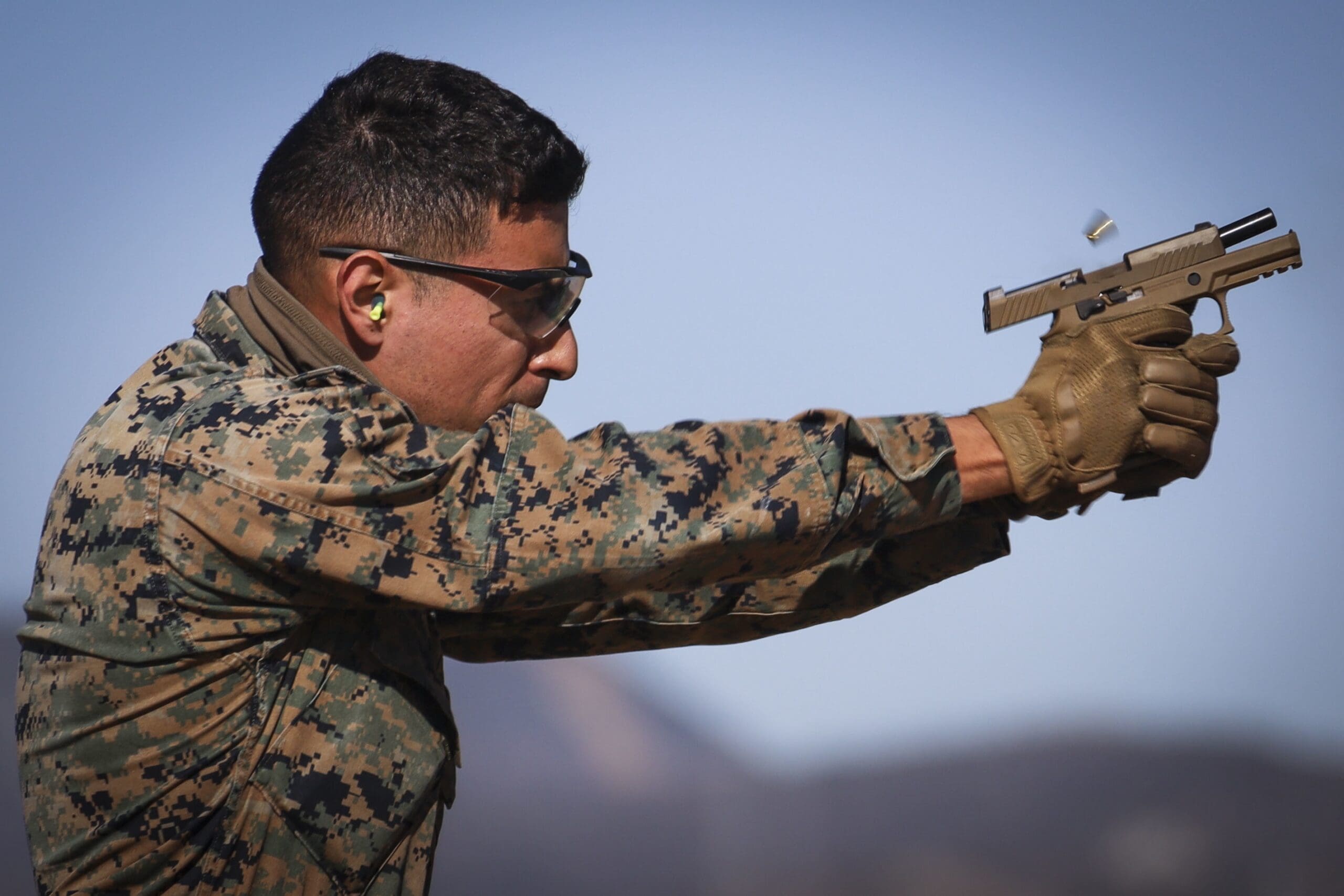
Marine Corps Base Camp Pendleton hosted a Marine Corps Marksmanship Competition for the first time in seven years.

The competition at Pendleton is the first part in a series of events for the 2021 Competition-In-Arms Program, which will end with a championship match in April at Marine Corps Base Quantico, Virginia.

As part of the program, the Marine Corps Shooting Team is coordinating and supervising five regional MCMCs held on Marine Corps bases across the world. Marines of all different trades are being encouraged to volunteer to participate in the event.

“We had operators, vehicle operators, engineers, infantrymen, intelligence Marines, and others,” said U.S. Marine Col. Carlos Jackson, the commanding officer of Weapons and Field Training Battalion, Marine Corps Recruit Depot San Diego, who hosted the completion aboard Pendleton. “They will be able to take back the skills they learned here and train others, which is all we can really hope for.”

Participants received a total of 12 training days over a two week period where they were given instruction on advanced pistol and rifle positions, firing while moving, dynamic target engagement and more.

“My biggest take away is learning how to run stages, think critically under stress and engage multiple targets in a dynamic environment.”

Sgt Evan Nicholas, a Combat Logistics Regiment 45 metal worker

“Marines who participate will not only get their annual pistol and rifle qualification taken care of but they’ll also learn how to use their weapons in an environment like they’ve never done before,” said Sgt. Evan Nicholas, a metal worker with Combat Logistics Regiment 45, 4th Marine Logistics Group. “It’s unlike any other course of fire that you’ll experience in the Marine Corps.”

The program is designed to significantly enhance participants’ proficiency in the use of individual small arms by refining fundamental marksmanship skills, learning marksmanship techniques, and pushing through mental and physical boundaries in a competitive forum.

According to Jackson, the goal of the MCMC is to make a more confident, more competent, more capable and lethal Marine to send rounds downrange, and that’s exactly what the Marines did on Pendleton over the last two weeks.

At the end of the competition, Marines were awarded for their hard work. The top 10 percent for rifle and pistol stages earned a MCMC medal, and the best performing rifle and pistol teams were awarded a trophy.

The next competition is slated to be at MCB Camp Smedley D. Butler in Okinawa, Japan, December 6-8.

Story by LCpl Kerstin Roberts, Marine Corps Base Camp Pendleton

Photo by Sgt Jeremy Laboy
UPDATE – Frank Woods – Belt Set Up

Tuesday, December 1st, 2020

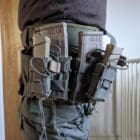
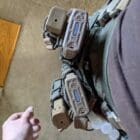
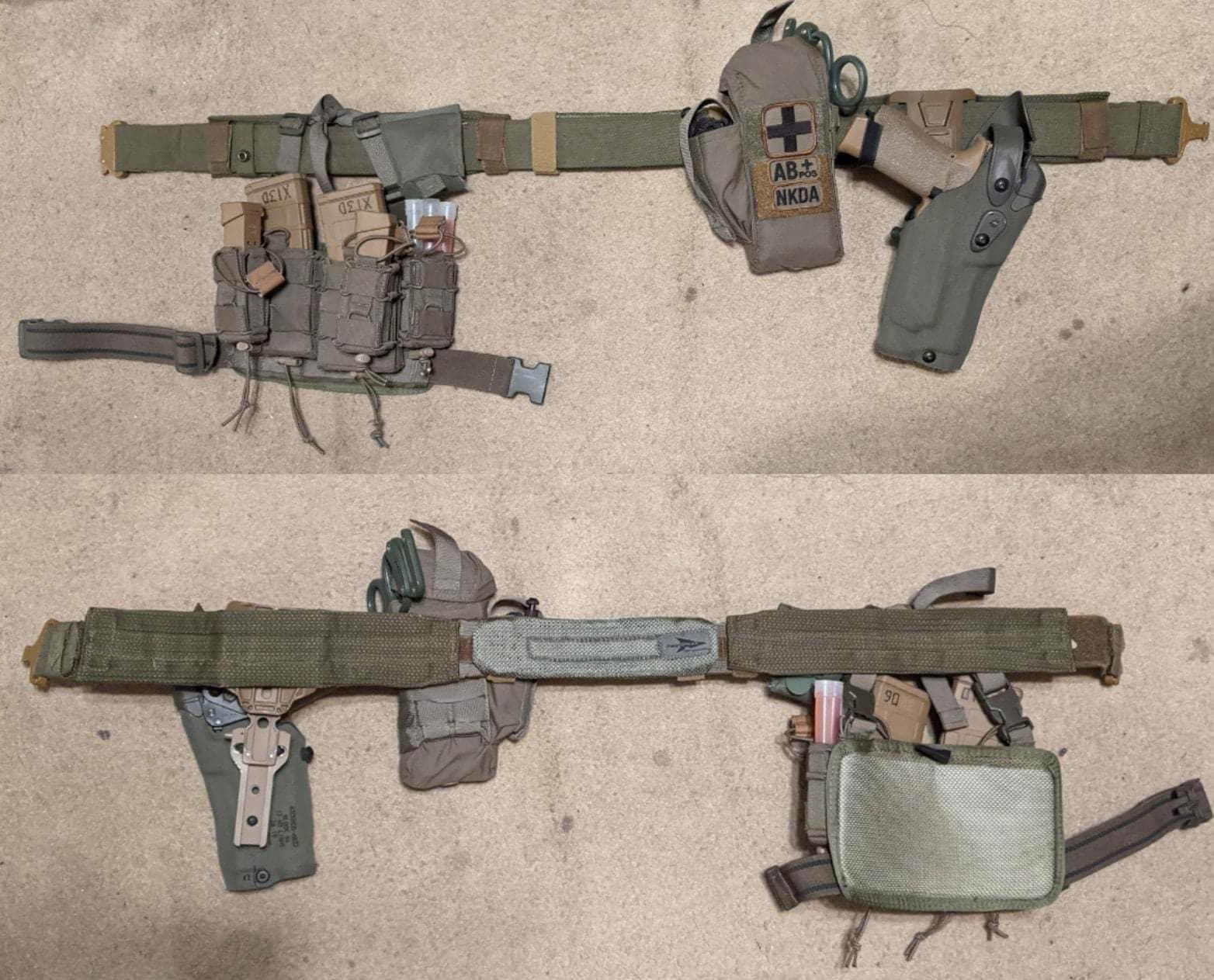
Since I’ve been asked about my belt setup a few times recently, and I needed to take new pictures of my belt as it’s currently set up anyway, here’s what I use:


– Emdom MM CM Belt

— Emdom MM CM Belt pads (Left & Right)

— First Spear AGB point pad (Center)

– Safariland 6305RDS ALS/SLS

— Glock 34 Gen 5 MOS/RMR, Ranger Green variety

– S&S Precision Holster Extender w/ GRT adjustable ride height mount

– Dark Angel Slim Gen 2 IFAK

– HSGI leg rig, blank MOLLE platform

— Tyr Tactical Combat Adjustable Pouches

— 2x Rifle, 3x Pistol

– Blue Force Gear Ten Speed Dump Pouch

This setup retains pistol, IFAK, and consistent point of reload regardless of which torso worn LBE is being used, if any. The Tyr Tactical pouches are like a better version of the TACO, and accommodate 5.56 & 7.62 sized mags easily, while offering additional retention between both the bungees and the interior surface of the pouches not being slick smooth plastic.

The belt itself is lined with PALS webbing, which allows for pouch attachment without a big thick padded sleeve. The belt pads, while making the belt fit tighter, add a friction lock of sorts that prevents the belt from rotating while I’m wearing it.

Though the S&S adjustable ride height holster mount hasn’t given me a problem, and helps when going from sitting to standing/walking, I’ve been seriously considering switching over to the True North Concepts, LLC MHA if it means I can:

1.) Delete the forward cant and situate the holster straight up and down.

2.) Using a leg strap would provide for the holster staying secure against my leg and not pulling outward and away from my leg while trying to draw the pistol. That’s always annoying.

I upgraded/replaced the dragon whatever buckle that comes with the Emdom MM CM belt with a 2″ aluminum cobra buckle from Milspec Monkey.

Leg rig allows me to spread the load and distribute the weight and not have it all concentrated at/on my belt line. I do that shit at work as mandated by policy, I’m not a huge fan. Reloads are located where my hand naturally falls at my side.

UPDATE – 23 March, 2021

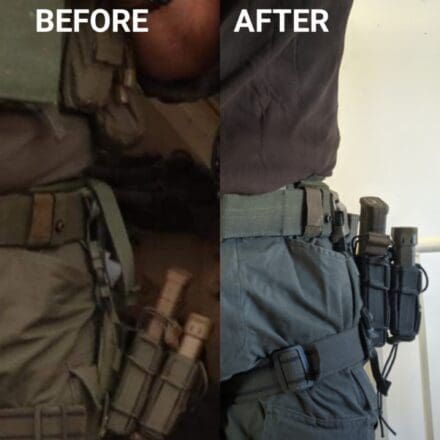
Since this article was posted, I have modified my HSGI leg rig so that it would stop sagging and tilting outwards/away from my body under the weight of the loaded magazines, due to the slack in the straps.

I’ll walk you guys through it in case you wanna do it on your own.

This modification took some minor effort to make it work, but nothing difficult and nothing permanent. The end result is that the leg rig rides much higher and conforms to my leg without sagging or tilting away, much to my satisfaction.

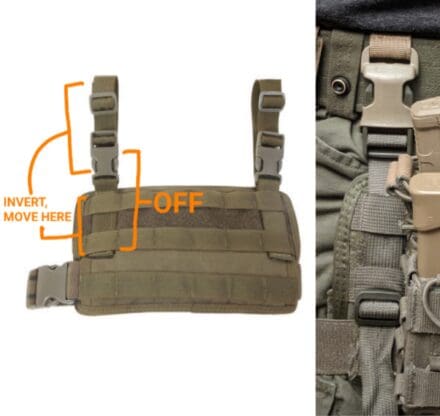
First I unclipped the buckles and took the leg rig off the belt, then I removed the male end buckles and the straps they were sewn into from the belt.

Then I got a good grip on the female end buckles attached to the leg rig itself (they’re attached via velcro, just give em a decent yank and they’ll come off,) and set them aside.

I put the QASM buckle loops (2″ variety) onto my belt and looped their straps through the PALS webbing on the inside of the belt.

Then I took the male end buckle loops, and slipped them through the PALS webbing on the leg rig upside down, reversed from their original orientation. Now the buckles are facing up, and the tri-glide is keeping them locked into the PALS webbing.

Ideally, I’d like to find male end buckles sewn into hook side velcro backed nylon straps, not unlike the female side buckles that come with the leg rig initially that I took off. Maybe I can send the ones I have to someone that can modify them.

Otherwise, tying a knot in the excess nylon strap under the tri-glide will keep it from pulling through the tri-glide under tension while it’s clipped in. Honestly though, the leg strap itself keeps enough tension on my leg to keep the rig from moving up and down.

After it’s all said and done, clip the newly located male end buckles on the leg rig into the QASM buckles on the belt, put it on, fasten the leg strap, and marvel at the new height and non-droopy stature of your leg rig platform.

Go forth and slay.

The Navy’s New Fitness Test Is Here – What You Need To Know

Tuesday, December 1st, 2020

From MC1 Mark D. Faram, Chief of Naval Personnel Public Affairs

The Navy will hold a single, six-month physical fitness assessment cycle during calendar year 2021, allowing the service to resume fitness testing while limiting Sailor exposure to COVID-19. That cycle will also see the Navy rollout the forearm plank, which as a replacement the curl-up, and the 2000-meter row as a new optional cardio event.

The Navy will hold a single, six-month physical fitness assessment cycle during calendar year 2021, allowing the service to resume fitness testing while limiting Sailor exposure to COVID-19.

The cycle was announced in NAVADMIN 304/20, released Nov. 18. The message also detailed rollout plans for the forearm plank, which will replace the curl-up, and the 2000-meter row as a new optional cardio event.

“Shifting the PFA cycle to March allows Navy to execute the PFA after the primary influenza season, leveraging outdoor venues as the weather warms,” Vice Adm. John B Nowell, Jr., the chief of naval personnel, wrote in the message.

The shift also “acknowledges the fact that while vaccines and therapeutics are expected to be available, their timing and impact are unknown.”

July’s NAVADMIN 193/20 announced the spring 2021 restart of the normally semi-annual Navy Physical Fitness Assessments, after two cycles were canceled due to COVID-19. Out of an abundance of caution, the Navy decided to proceed with the single cycle option for 2021 as the COVID crisis shows no signs of abating yet.

The Navy will resume two testing cycles once conditions permit. The Department of Defense has long mandated all services conduct annual fitness testing.

However, COVID-19 mitigation measures in place since the spring allow services to waive the requirement as a force protection measure.  The message notes that permission will carry over to allow Echelon II Commanders to waive the 2021 cycle if COVID 19 prevents its safe execution.

Where conditions permit, the message said, all Sailors must participate in the single 2020 cycle, meaning exemptions for scoring excellent or above from the previous cycle will not apply.

Going forward, however, those who score excellent or outstanding on the 2021 PFA will be exempt from participation in the first PFA cycle of 2022.

The message also details how the new plank and 2000-meter row optional cardio events will fit into the physical testing process as well as how they’re expected to be accomplished and graded. It’s the first major change to the assessment since the Navy introduced fitness assessments in the early 1980s.

Sailors have long complained about the curl-up. As Navy researchers studied the exercise, they found it was not a true test of abdominal strength. Also, it did not prepare Sailors to better accomplish shipboard tasks. In fact, curl-ups have been linked to an increased risk of creating or aggravating lower back injuries.

The forearm plank, however, is a functional movement required in 85 percent of regular shipboard tasks, including pushing, pulling, lifting and carrying.

The forearm plank uses isometric contraction to activate key abdominal and trunk muscles, mimicking the main function of the abdominal musculature – to act as stabilizers to resist the spine from moving while strengthening the lower back.

Training for the forearm plank strengthens the body’s core, improves posture, and reduces the risk of lower back injuries throughout a Sailor’s career.

Because there is overlap in the muscle groups used for the push-up and the forearm plank, the decision was made to conduct the push-up event first, followed by the plank and cardio portions.

This sequence was used in the initial tests. Researchers found it allows for maximum performance on the push-ups while limiting residual fatigue during the forearm plank.

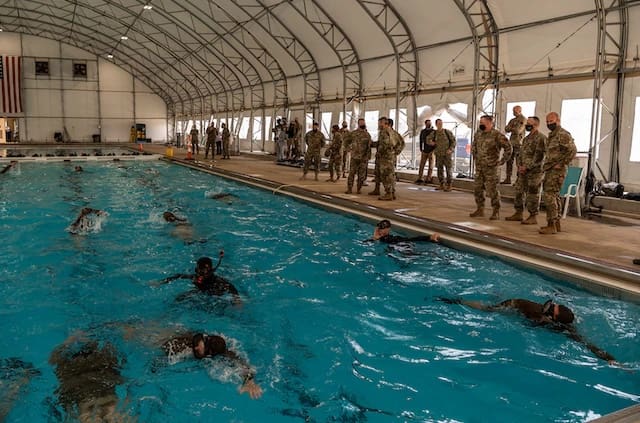
The cardio portion’s new addition will be a 2000-meter row on the “Concept-2 Rower.” The other options remain as the 12-min stationary cycle, 500-yd/450-m swim, and 1.5-mile run. 

A non-weight bearing, low impact exercise, rowing reduces stress on the legs, while providing a great full-body cardio workout as it works 80 percent of the body’s muscles. 

A big benefit of the Concept-2 Rower is that it’s space saving and thus able to be easily used on any naval vessel as well as at shore installations.

A detailed description of how each of the new events will be conducted can be found in NAVADMIN 304/20.  As previously announced, the Navy will give Sailors a one-cycle grace period for the forearm-plank. Though the event will be conducted during the 2021 Cycle, it won’t officially count until 2022.

Initial performance standards for scoring the forearm plank and 2000-meter row were developed by the Naval Health Research Center (NHRC) and are available to both individuals and command fitness leaders on the Navy Physical Readiness Program website at www.public.navy.mil/bupers-npc/support/21st_Century_Sailor/physical.

Disruptive Technology Levels the Battleground for US Space Force

Monday, November 30th, 2020

Catalyst Accelerator’s (Catalyst), Cyber for Space Applications, launched eight small businesses into the reaches of the U.S. Space Force, with its sixth accelerator Demo Day on November 19, 2020. Powered by Air Force Research Laboratory, Space Vehicles Directorate and sponsored by Booz Allen Hamilton, the cohort of small businesses concluded its 12-week accelerator, gaining traction into moving technology from commercial application to the military warfighter.

Cyber applications have long been the mainstay in the Department of Defense, but with the creation of the U.S. Space Force, a rigorous hunt for disruptive cyber technology has begun. No longer is the warfighter confined to air, land, sea and cyber. Space is now a contested domain, with near-peer adversaries with comparable capabilities, unsettling operations in both the public and private sectors. U.S. data exfiltration by malicious actors is staggering. In 2019 it was estimated that 6.5 million documents per day were stolen by U.S. adversaries, according to keynote speaker Brigadier General D. Jason Cothern, Vice Commander of Space and Missile Systems Center.

The U.S. Space Force is tasked with protecting America’s interests in space, deterring aggressive acts and sustaining operations in this far-off region. With this in mind, Catalyst’s Cyber for Space Accelerator invited small businesses to apply to become a cohort company and demonstrate how their technology might “secure the next generation of space operations and increase resiliency.” “We had a team of 19 people that helped us choose the best companies for this cohort and judging from the response of subject matter experts from Industry and the Department of Defense over the course of the Accelerator, our selection was excellent. I look forward to these companies gaining the traction they need to get their technologies into the hands of the United States warfighters, making the cyber-physical systems they rely on more relevant and secure in the 21st Century fighting domain!” says KiMar Gartman, Program Director of Catalyst Accelerator.

With the support of LinQuest, the platform sponsor, the twelve-week all-virtual accelerator helped cohort companies mature their messaging, understand the government space and pivot their technology to meet the needs of the warfighter. The cohort received guidance from industry and government Sherpas and subject matter experts like Pikes Peak Small Business Development Center; spoke to operational warfighters to determine their needs; were instructed on the acquisition process; and began building relationships with key personnel interested in their technology. Gentry Lane, CEO and Founder of ANOVA Intelligence explained her experience with Catalyst’s accelerator, “I’ve been through other accelerators but Catalyst was different.

They absolutely delivered on their promise to connect us [cohort companies] with people in the U.S. Space Force that make decisions about purchasing and using our technology.”

Demo Day, sponsored by Lockheed Martin, was the Accelerator’s culminating event in which government and industry scouts learned about the cohort’s dual-use technologies that will disrupt space cyber and place the U.S. in an even better position to dominate space. Cohort companies rose to the challenge and presented technologies that will improve warfighter capability today and well into the future. The cohort company pitches can be viewed at catalystaccelerator.space/cacsa

Special Warfare Preparatory Course Changes the Way Airmen Train

Sunday, November 29th, 2020

JOINT BASE SAN ANTONIO-CHAPMAN TRAINING ANNEX, Texas – The Air Force’s Special Warfare Training Wing has refined its training program for Airmen attempting to enter the Tactical Air Control Party, Special Tactics or Guardian Angel weapons systems, in an effort to create more well-rounded future operators.

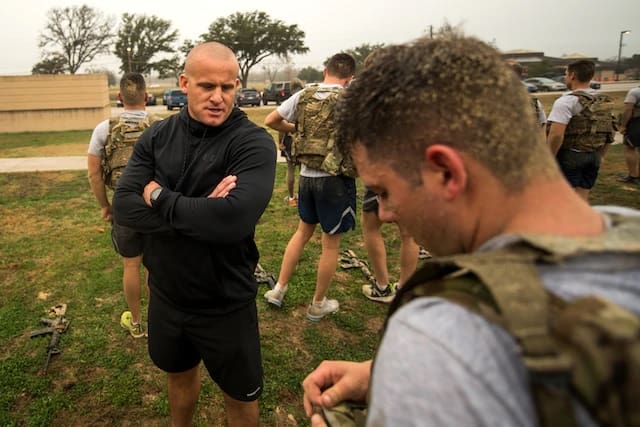
Following graduation from Basic Military Training, new enlisted Airmen interested in becoming a candidate for a career in special warfare must complete the eight week Special Warfare Preparatory Course (SWPC). In this course, training coaches, dieticians, counselors and other staff members expose Airmen to the tools needed to become successful within the various special warfare training pipelines. Upon completion of SWPC, Airmen enter into the course of initial entry for their particular career field.

“Our course is meant to better develop operators,” said Master Sgt. Michael Blout, Special Warfare Preparatory Course superintendent. “We are providing better, more well-rounded training, which provides the Air Force with more capable operators straight out of the training pipeline.”

This deliberate approach to training takes a more holistic edge involving multiple disciplines and modalities consisting of strength & conditioning, mental toughness, nutrition, sleep hygiene and active recovery. Additionally, the SWPC staff incorporates Human Performance monitoring to track conditioning throughout the 8 week course. This Human Performance capability informs the staff on the level of effectiveness for each of the SW candidates.

“In the past, candidates arrived unprepared both mentally and physically for the rigors of the special warfare pipeline, which drove historical levels of high attrition,” said Chief Master Sgt. Todd Popovic, Special Warfare Training Wing command chief. “However, this course provides a firm foundation to educate and prepare each Airmen for what’s ahead and has proven to decrease attrition in the follow-on courses.”

For more information on special warfare career fields visit www.airforce.com/careers/indemand-careers/special-warfare.

By 1st Lt Jeremy Huggins, Special Warfare Training Wing

Navy Sunday – The Navy First Jack

Sunday, November 29th, 2020

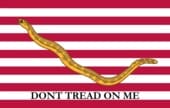
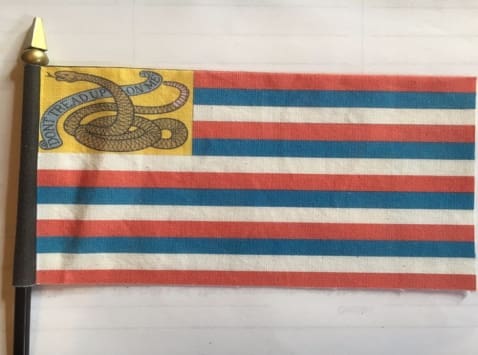
I wanted to write about the U.S. Navy’s first Jack and the history of “Don’t tread on me” in the U.S. Navy, to give people the history of it and to show where it came from and that it had nothing to do with anything other than to tell the King of England we don’t work for you no more. The Navy Jack is not to be confused with the Gadsden flag (yellow flag with a collided up snake, see below). Which possibly started as the flag of South Caroline and later the first Commodores of the U.S. Navy fleet.  

The rattlesnake (specifically, the Timber Rattlesnake) is especially significant and symbolic to the American Revolution. The rattle has thirteen layers, signifying the original Thirteen Colonies. Additionally, the snake does not strike until provoked, a quality echoed by the phrase “Don’t tread on me.”

 The United States Navy originally started as the Continental Navy, established during the American Revolution by the Continental Congress by a resolution of 13 October 1775. There is a widespread belief that the Continental Navy ships flew a jack consisting of alternating red and white stripes, having the image of a rattlesnake stretched out across it, with the motto “Don’t Tread on Me.” That is actually hard to prove as “fact.” But there was a letter in 1778 that John Adams and Benjamin Franklin wrote to the Ambassador of the Kingdom of Sicily, thanking him for allowing entry of U.S. ships into Sicilian ports. The letter describes the U.S. flag according to the 1777 Flag Resolution but also tells a banner of “South Carolina, a rattlesnake, in the middle of the thirteen stripes.

It is well documented that the rattlesnake and the motto “Don’t Tread on Me” were used together on several flags during the War of Independence or The American war’ / ‘the war with America ‘as the British call it. The only question in doubt is whether the Continental Navy used a red and white striped flag with a rattlesnake and the motto “Don’t Tread on Me” as its Jack. The evidence is inconclusive, but there are a lot of reasons to think it was. There is reason to believe that the Continental Navy Jack was simply a red and white striped flag with no other adornment.

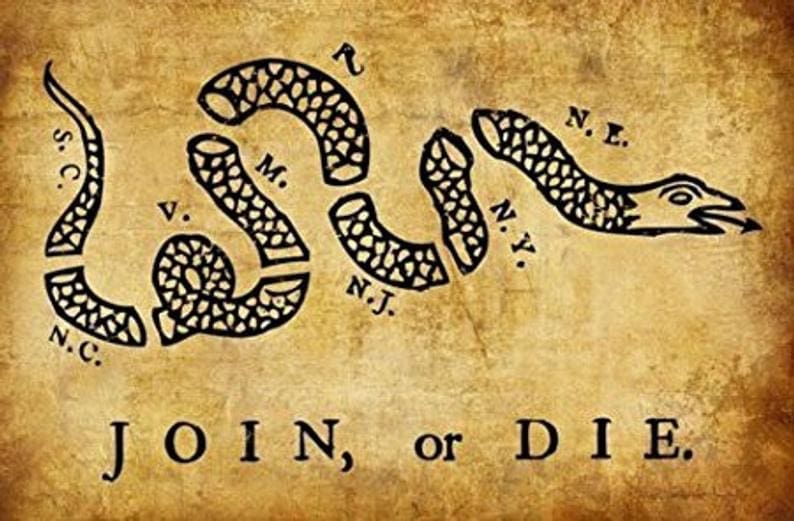
The rattlesnake emerged as a symbol of the colonies of North America about the time of the Seven Years War or the French and Indiana war( the Seven-year war was a global conflict that involved every great European power from 1756-1763 ) when the motto “Join or Die.” first appeared in Benjamin Franklin’s Pennsylvania Gazette in 1754, like a political cartoon reflecting on the Albany Congress. It was intended to get the Americans to join against the French during this time.

By the time of the War of Independence, the rattlesnake, frequently used in conjunction with the motto “Don’t Tread on Me,” was a common symbol for the United States, its independent spirit, and its resistance to tyranny. Two American military units of the Revolution are known to have used the rattlesnake and the “Don’t Tread on Me” motto: Proctor’s Independent Battalion of Westmoreland County, Pennsylvania, and Sullivan’s Life Guard during the Rhode Island campaign of 1777. The rattlesnake and the motto also appeared on military accouterments, such as drums, and state paper currency, during the Revolution.

The rattlesnake’s image and the motto “Don’t Tread on Me” certainly had associations with the Continental Navy.

On 27 February 1777, a group of Continental Navy officers proposed that the full-dress uniform of Continental Navy captains include a gold epaulet on the right shoulder with “the figure of a Rattle Snake Embroidered on the Strap . . . with the Motto don’t tread on me.” 

In early 1776 Commodore Esek Hopkins, the first and only commander in chief of the Continental Navy fleet used a personal standard (flag) designed by Christopher Gadsden of South Carolina. This flag consisted of a yellow field with a coiled snake and the motto “Don’t Tread on Me.” There is no doubt about the authenticity of Hopkins’s standard, usually referred to as “the Gadsden flag.”  

The only written description of the Continental Navy jack contemporary with the American Revolution appears in Commodore Hopkins’s “Signals for the American Fleet,” January 1776, described as “the striped jack.” No document says that the Jack had a rattlesnake or motto on it. Elsewhere, Hopkins mentions using a “striped flag” as a signal. Since American merchant ships often displayed a simple red and white striped flag, there is a good chance that the striped Jack to which Hopkins refers was the same striped flag used by American merchant ships.

An 18th-century portrait of Esek Hopkins shows him where several warships are displayed. One flies a white flag, with a tree, and the mottos “Liberty Tree,” and “An appeal to God.”(posable Massachusetts first flag, and as the U.S. Navy was started in Mass) Another warship flies a striped flag with a rattlesnake and the motto “Don’t Tread Upon Me.”

The flags in these prints are not at the bow, where a jack would go, but at the stern, the proper place for the national ensign. Again, the pine tree flag was the flag that Mass wanted as the Nation ensign and used by all ships from Mass, and again the Navy was born in Mass, so it goes to say that might have that flag on there. Also, let’s be clear that New England and South Caroline basally started the war. So it also goes to say they would be on our ships. The historical evidence makes it impossible to say whether the Continental Navy used the striped rattlesnake flag as its Jack.

Simultaneously, the evidence suggests strong connections between the symbol of the rattlesnake with the motto “Don’t Tread on Me” and the United States’ earliest naval traditions. Fast forward to 9/11/ 2002. The Navy authorized all active merchant and coast guard ships to fly the First Navy Jack on their bow in port. They did this on the first anniversary of 9/11. Before then, the longest servicing ship was the only ship that was allowed to use it to show they were the oldest commissioned ship still in service (not counting the USS Constitution). All U.S. Navy personal adopted it in the Persian Gulf to wear on their shoulder fighting in the War on Terroir. It is still allowed to be worn on the Navy Working Uniform. The Navy has since gone back to the tradition of only the oldest ship using the “don’t tread on me” flag. Now the USS Blue Ridge. I hate to think this is happening because people think it means something that it doesn’t. So, it is clear that the flag has a long history with the Navy and the U.S.

I wanted to write this because it is now apparently a racist symbol. I am tired of things being highjacked by groups, and, let say, someone who has served 26 years in the Navy can’t wear it, or people think they are a racist. I am not pollical (I say as I write this). If you are a racist, white, black, green, blue, whatever color you are, go out and make a shirt that says “I am a racist” stop taking things from our history that have nothing to do with race and saying that it does. Stop taking history and twisting it into something for yourself. Man, up if you want to be a racist, come up with your own symbol. Don’t make it complicated. Make hats, shirts, and stickers that just say you are a racist. That way, it won’t confuse you or your buddies, and everyone will know where you stand. But don’t use something that has meant so much to this great country’s history and claim it implies something that it never has.

Marines Prepare for European Deployment

Sunday, November 29th, 2020

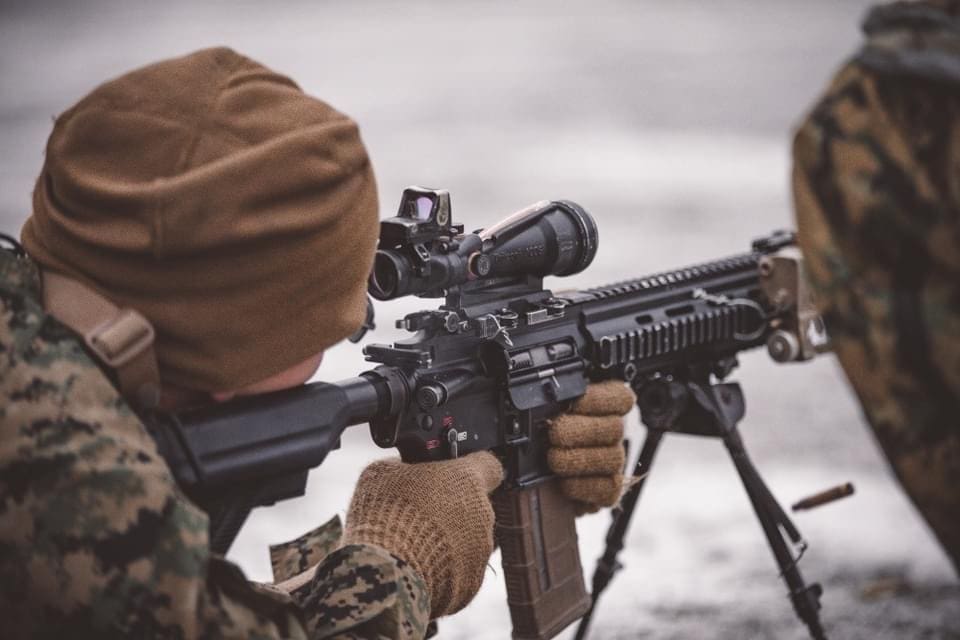
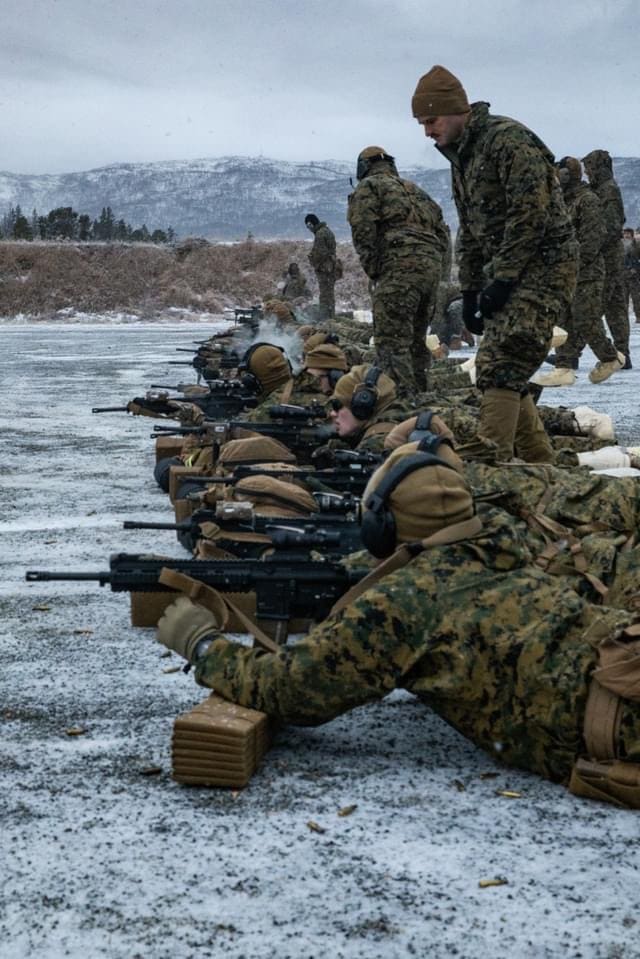
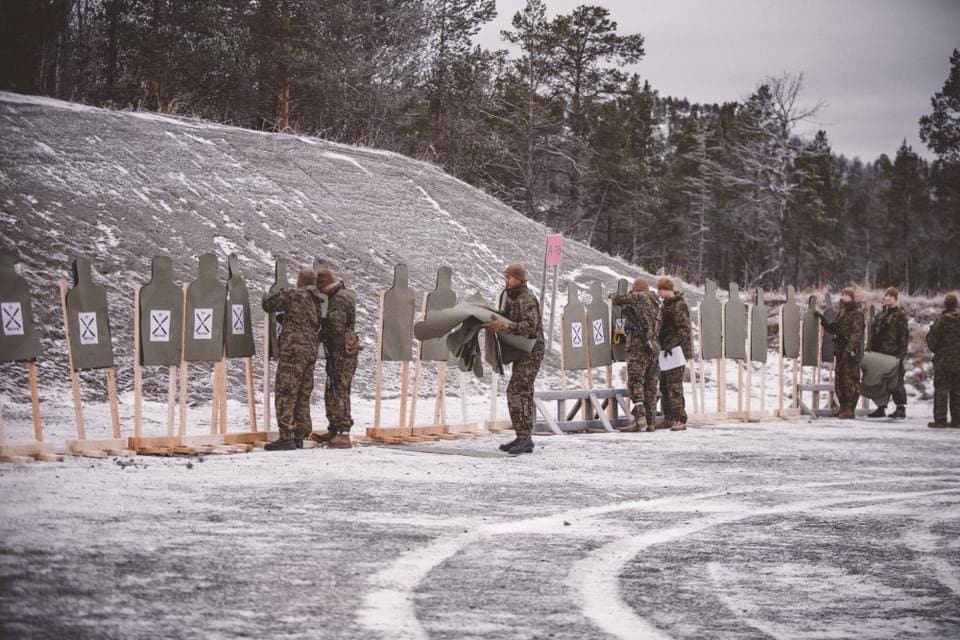
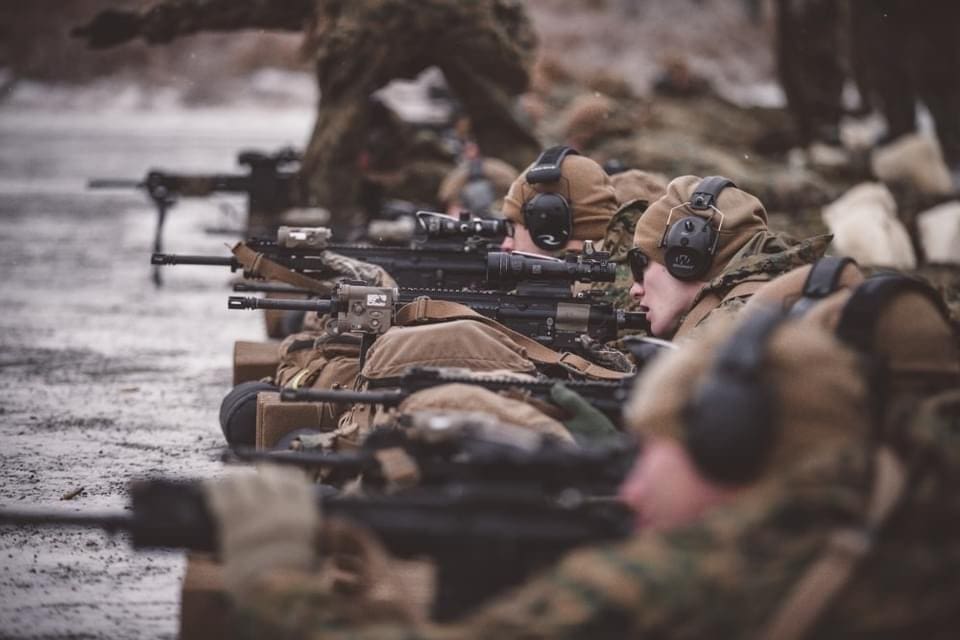
Marines with 3rd Battalion, 6th Marine Regiment zeroed their weapon optics as one of the first training exercises they will be conducting with Marine Rotational Force Europe 21.1. Marines are preparing for arctic cold weather, mountain warfare training, and enhancing interoperability with our Norwegian Allies.

U.S. Marine Corps photos by 2nd Lt. Kayla Olsen and Lance Cpl. Patrick King

FirstSpear Friday Focus – Black Friday Sales & X-RAY Episode 1 Launches

Friday, November 27th, 2020

FirstSpearTV presents X-RAY Team Episode 1.

Check out our nonstandard, nonstocking items page for our Black Friday and cyber Monday sales.

For FirstSpear sale items, go to:  www.first-spear.com/non-stocking-non-standard