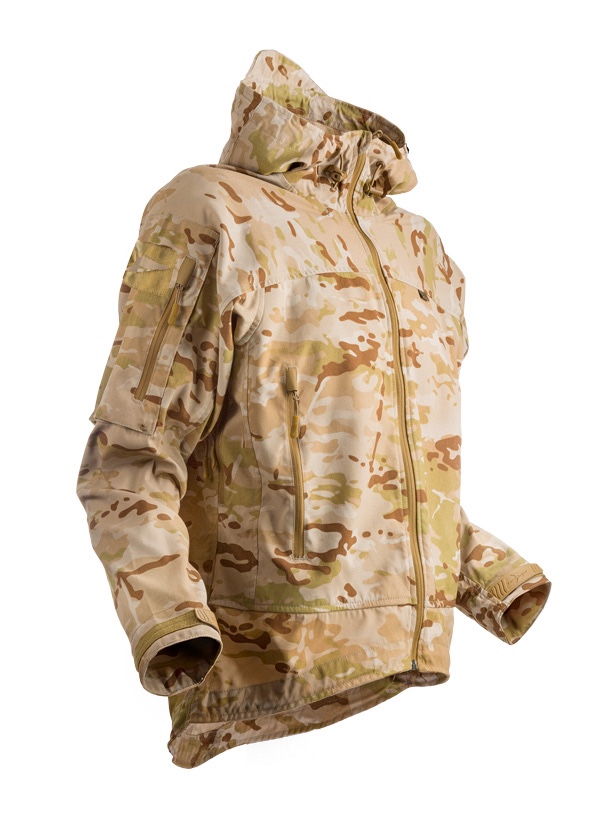
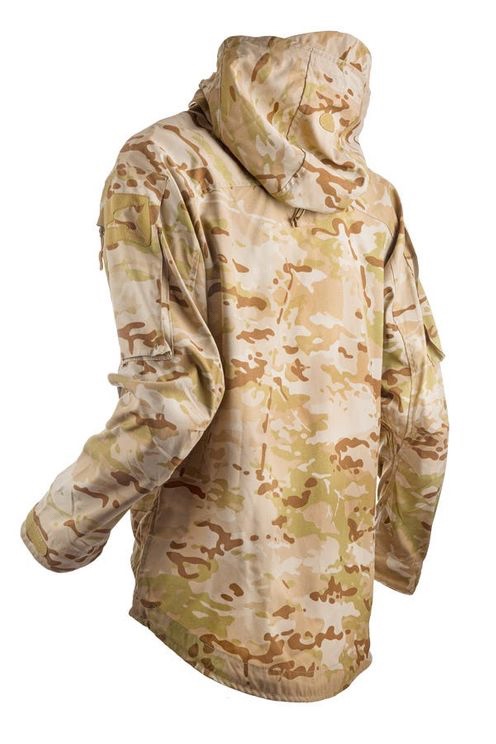
Salomon Forces Genesis MID GTX

Archive for the ‘Guest Post’ Category

10th SFG(A)’s Winter Warfare Detachment Introduces New Winter Training

Saturday, May 1st, 2021

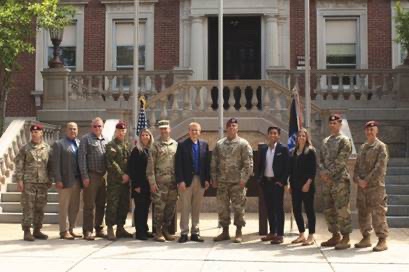
FORT CARSON, Colo. — The Winter Warfare Detachment (WWD) at 10th Special Forces Group (Airborne) introduced a new training course this year to expand on the unit’s winter operational capabilities. The development of this knowledge and skillset is essential to ensuring success in arctic missions.

The Winter Warfare Course (WWC) is designed to train, evaluate and certify Special Forces Operational Detachment-Alphas (SFOD-As) within 10th SFG(A). The training covered backcountry mobility, avalanche awareness and preparedness, winter survival, snowmobile operations and advanced riding techniques, and special operations small unit tactics on skis and snowmobiles.

“The course itself has been a natural progression for moving 10th Group forward. I believe that it is paramount that we continue to develop, expand and modernize our capabilities to operate in austere winter environments. Conducting ever-improving training in this spectrum will ensure that 10th SFG(A) remains the tip of the spear for winter warfighting capability,” said the WWD’s NCO in charge (NCOIC). “The Winter Warfare Detachment, our initial mission was to expand the expertise, knowledge and capability of cold weather training and operations within 10th Group.”

To facilitate the end state, the WWD initiated the Winter Mobility Instructor Course, now known as the Cold Weather Instructor Course (CWTIC). This course is designed to validate instructors who become CWT trainers, planners and facilitators at the battalion level.

“The CWTIC is designed to develop professional instructors for units using a standardized certifying course,” said the NCOIC. “They come to our course to be validated as cold weather training instructors and return to their units as capable instructors and leaders for their units’ CWT events.”

To increase 10th SFG(A)’s capabilities and further the arctic mission, the detachment implemented the WWC. Unlike the instructor course, the WWC is designed as a validation and training exercise for SFOD-As deploying to high north and arctic regions. It ensures that teams are operationally capable in these extreme cold weather environments, and are prepared for joint training exercises with their allies in the high north region.

The success of the WWC emphasizes the development, expansion and modernization of 10th SFG(A)’s capabilities to operate in austere winter environments. In the harsh climate of the high north and arctic regions, the ability to shoot, move and communicate becomes even more challenging. The WWC prepares Green Berets and Paratroopers for these operations, and focuses on the critical tasks needed in order to succeed.

“We need to maintain our expertise and our capability, and expand to ensure we are the best in operating in cold weather and high north regions, because that is our operational area. Our success depends on us having this expertise.”

10th Special Forces Group (Airborne) Public Affairs Office

Editor’s note: The full names and identifications of those serving in the 10th Special Forces Group (Airborne) are withheld due to safety and security of the Soldiers and their Families.

US Army Funded Research Could Enable Biotechnology Advances in Medicine, Protective Equipment, Sensors

Saturday, May 1st, 2021

RESEARCH TRIANGLE PARK, N.C. — New Army-funded synthetic biology research manipulated micro-compartments in cells, potentially enabling bio-manufacturing advances for medicine, protective equipment and engineering applications.

Bad bacteria can survive in extremely hostile environments — including inside the highly acidic human stomach—thanks to their ability to sequester toxins into tiny compartments.

In a new study, published in ACS Central Science, Northwestern University researchers controlled protein assembly and built these micro-compartments into different shapes and sizes, including long tubes and polyhedrons. Because this work illuminates how biological units, such as viruses and organelles, develop, it also could inform new ways to design medicine, synthetic cells and nano-reactors that are essential for nanotechnology.


“These results are an exciting step forward in our ability to design complex protein-based compartments,” said Dr. Stephanie McElhinny, program manager at the U.S. Army Combat Capabilities Development Command, known as DEVCOM, Army Research Laboratory. “Being able to control the size and shape of these compartments could enable sophisticated bio-manufacturing schemes that are customized to support efficient production of complex molecules and multi-functional materials that could provide the future Army with enhanced uniforms, protective equipment and environmental sensors.”

Further down the road, these insights potentially could lead to new antibiotics that target micro-compartments of pathogens while sparing good bacteria.

“By carefully designing proteins to have specific mutations, we were able to control assembly of the proteins that form bacterial micro-compartments,” said Dr. Monica Olvera de la Cruz, professor of materials science and engineering and chemistry at Northwestern who led the theoretical computation. “We used this also to predict other possible formations that have not yet been observed in nature.”

Many cells use compartmentalization to ensure that various biochemical processes can occur simultaneously without interfering with one another. Made of proteins, these micro-compartments are a key to survival for a wide variety of bacterial species.

“Based on previous observations, we have known that the geometry of micro-compartments can be altered,” said Dr. Danielle Tullman-Ercek, associate professor of chemical and biological engineering at Northwestern who led the experimental work. “But our work provides the first clues into how to alter them to achieve specific shapes and sizes.”

To study these crucial compartments, the Northwestern team turned to Salmonella enterica, which rely on micro-compartments to break down the waste products of good bacteria in the gut. When the researchers genetically manipulated a protein isolated from Salmonella, they noticed the micro-compartments formed long tubes.

“We saw these weird, extended structures,” Tullman-Ercek said. “It looked like they used the varying building blocks to form different shapes with different properties.”

By coupling the mechanical properties of the compartment with the chemicals inside the compartment, Olvera de la Cruz and her team used theoretical computation to predict how different mutations led to different shapes and sizes. When six-sided proteins assembled together, they formed long tubes. When five-sided proteins assembled together, they formed soccer ball-shaped icosahedrons. The team also predicted that proteins could assemble into a triangular samosa shape, resembling the fried, South Asian snack.

Understanding this process could lead to bio-inspired building blocks for various engineering applications that require components of varying shapes and sizes.

“It’s like building with Legos,” Tullman-Ercek said. “It’s not desirable to use the same shape block over and over again; we need different shapes. Learning from bacteria can help us build new and better structures at this microscopic scale.”

In addition to the U.S. Army, the Department of Energy, the National Science Foundation and the Sherman Fairchild Foundation supported this research.

By U.S. Army DEVCOM Army Research Laboratory Public Affairs

FirstSpear Friday Focus: Medical Kit

Friday, April 30th, 2021

This week’s FS focus looks at medical kit and items, including a pack, IFAK Medical Thong and two pouches.

The Medical Trauma Assault Pack (MTAP), Thin Profile features a large zippered pocket allowing access to the contents. It also integrates the bungee attachment points to secure odd sized items as well as three “tear out” pockets which can be tossed to others providing aid. An easily accessed grab handle will allow the pack to be hung in vehicles or airframes.

The Special Operations Forces (SOF) Medical Pouch securely holds organized, individual first aid items. A half-moon zipper allows rapid access to the inside of the pocket and also enables quick closure. Attach to your platform with FirstSpear 6/12 or 6/9. Loop faced fabric square on the exterior allows for mounting of FirstSpear Cell Tags.

The FirstSpear Tourniquet Pouch is designed to securely hold one CAT or TQs Style tourniquet, or similar sized medical supplies. With a highly visible red release tab, the pouch opens quickly to allow instant access to the tourniquet. Utilizing the FirstSpear 6/9 attachment system this pouch can be attached to all 6/12™ platforms and also compatible with older MOLLE systems. Additionally, it can be directly attached to FirstSpear’s line of belts including the Assaulters Gun Belt (AGB) and Line One Belt.

The Improved IFAK Med Thong has some new features that will help you in the field. It has a 6/9 attachment style and 6/12 slits have been added in key areas of this item which has increased its versatility so it will now work with the FS TQ Pocket or the new Rapid Access Pocket Pressure Dressing. The thong is also capable of fitting a variety of IFAKS. When space on your chest rig or plate carrier is at a premium, this component will let you add a few extra critical items that you would rather not have in your pack or left behind. The thong will accommodate a variety of IFAK sizes from 5″x7″x3″ to a 5″x9″x3″.

For more information, check out www.first-spear.com/pockets/medical-pockets.

Platoon Leader Designs App to Help Soldiers Earn Their EIB

Thursday, April 29th, 2021

U.S. Army service members now have a new training aid to help them earn the coveted Expert Infantryman Badge, a mobile app.

1st Lt. Egor Krasnonosenkikh, an infantry officer assigned to 4th Battalion, 23rd Infantry Regiment, 2nd Stryker Brigade Combat Team, 7th Infantry Division on Joint Base Lewis-McChord used self-taught programming skills to design an app, “EIB Pro,” to help train his Soldiers.

Just as the Combat Infantryman Badge was intended to be an award for U.S. service members whose primary mission was to close with and destroy the enemy, the Expert Infantryman Badge was instituted to build and maintain esprit de corps within U.S. infantry units. In order for any infantryman to earn the coveted badge, they must demonstrate expertise in their profession’s tasks and drills.

Since its creation, it has been downloaded over 11,000 times and in 65 different countries.

Videos, written instruction, a step-by-step guide, tasks, conditions and standards for EIB tasks are all provided within the app. There’s even a progress tracker that measures your task confidence, repetitions per lane and a “station deep dive” that tracks progress per event.

“So, I think the catalyst was definitely COVID. I was at home and on my computer anyway, so I figured I’d do something that’s useful to the army. I got my EIB the year before I made my app, and I really disliked that little book that we got, which always got destroyed easily,” he said.

At the time, he was a platoon leader and really wanted to see Soldiers in his unit get their EIB, he said. Some Soldiers even had to practice while at home, an environment that he felt would be hard to train in just using a small book.

Soldiers found the app to be a useful training tool, he said.

His battalion ended up having the highest success rate that year, 28.5%, almost double the Brigade average.

“There were Soldiers that told me without my app, they don’t think they would have gotten it. I’ve even heard that from captains and majors,” said Krasnonosenkikh.

He learned how to program on his own using YouTube videos and online resources. Growing up, he had a big interest in video games and what it took to make them, he said.

He spent his early years in Russia, before his uncle invited his mother and himself to move to the United States where he pursued an education and eventually a commission in the U.S. Army.

Soon, he’ll be developing apps, officially, for the military as a member of U.S. Army Futures Command.

He’s also currently working on an education app geared towards squad leaders and team leaders to make Army doctrine more accessible.

The app is free to download, available on the Android and iPhone store and receives updates by 1st Lt. Krasnonosenkikh himself.

By Jerod Hathaway

Army, ASU Publish Human-Autonomy Communication Tips

Tuesday, April 27th, 2021

ABERDEEN PROVING GROUND, Md. — Army and Arizona State University researchers identified a set of approaches to help scientists assess how well autonomous systems and humans communicate.

These approaches build on transformational scientific research efforts led by the Army’s Robotics Collaborative Technology Alliance, which evolved the state of robots from tools to teammates and laid the foundation for much of the service’s existing research into how humans and robots can work together effectively.

As ideas for autonomous systems evolve, and the possibilities of ever-more diverse human-autonomy teams has become a reality; however, no clear guidelines exist to explain the best ways to assess how well humans and intelligent systems communicate, Army researchers said.

“The future Army is going to have complex teams in terms of how they will involve autonomy in different ways,” said Dr. Anthony Baker, postdoctoral scientist at the U.S. Combat Capabilities Development Command, known as DEVCOM, Army Research Laboratory. “There is a clear need to be able to measure communication in those types of teams because communication is what defines teamwork. It reflects how the team thinks, plans, makes decisions and succeeds or fails.

If you can’t measure how the team is doing, you can’t do anything to improve their performance, their decision-making, all of those things that make it more likely for the Army to maintain a decisive overmatch on the battlefield and for the warfighter to accomplish the mission, he said.

In the recently published Human-Intelligent Systems Integration journal paper Approaches for Assessing Communication in Human-Autonomy Teams, researchers listed 11 critical approaches for assessing communication in human-autonomy teams. Baker said their focus is to change Soldier involvement with those systems.

The approach considers communication structure:

· Who is saying what to whom and when

· Dynamics, or how interaction patterns evolve over time

· Emotion, which looks at how information is communicated through facial expressions and vocal features like tone and pitch

· Content, which draws on different aspects of words and phrases themselves

“If we want Soldiers and intelligent systems to work well together, we have to have the right measurement tools to analyze and study their communication because communication is so critical to how well they can perform,” Baker said.

As lead author on the paper, Baker said it won’t be enough to study these things after the teams are fielded.

“We need the measurement tools while those teams and technologies are being developed by the Army,” he said.

Because multi-domain operations are fundamentally dependent on improving the efficiency and optimization of communications within and between domains, the goal of this cross-cutting work is for these systems to be able to work with teams more naturally, he said.

According to Baker, this work may also provide a critical roadmap for analyzing communication in complex human-autonomy team structures such as those forecasted for Next Generation Combat Vehicle operations.

“There may be a time when a smart, load-carrying mule robot should carry a squad’s extra gear completely independently and without Soldier involvement, but there is also a push in some areas to make it so that if systems do need to involve Soldiers, they can do so in a way that’s more natural for the Soldiers, like working with a human teammate,” Baker said.

Consider how a Soldier telling a robotic system, “I need you to take that gear up the hill and wait an hour before going to the next zone,” is much easier than inputting a series of buttons and switches on a remote control.

“We want intelligence assessments, command and control decisions and other important things like that to be possible with less Soldier involvement, but we still want Soldier engagement for some things, and we want it to be easier,” Baker said. “Hence why the RCTA had a large focus on making Soldier-robot interactions more efficient.”

The Robotics CTA was a decade-long research initiative began in 2009 that coalesced a community of researchers from the Army, academia and industry to identify scientific gaps and move the state of the art in ground combat robotics. Strategic investments in Army-led foundational research resulted in advanced science in four critical areas of ground combat robotics that effect the way U.S. warfighters see, think, move and team.

Baker said it laid the groundwork for a lot of how the Army thinks about human-robot interaction and drove the shift in how government and industry look at robots as teammates, rather than just tools.

The laboratory’s Human-Autonomy Teaming essential research program, Human-Autonomy Teaming essential research program, or HAT ERP, continues down paths started in the RCTA, which laid broad building blocks for how to describe, model, design and implement new ways of partnering humans and robots, which are intelligent systems with physical forms.

“RCTA was not interested in explaining or providing ways to study communication between human teammates, instead being aimed at how humans and robots communicate,” Baker said. “Our work looks at it from the perspective that we will need ways to study the communication of any type of team–whether or not those teams currently involve any number of robots or autonomy. We want to be agnostic to the overall makeup of the team, so we provide communication assessments suitable for many different scenarios.”

These communication assessment approaches also apply to Soldier-only teams as well.

“Imagine a future human-autonomy team that has to re-task an autonomous vehicle to go join another platoon, and now the team is just humans only,” he said. “Our work seeks to provide the literature with ways to analyze communication in those teams, no matter what they look like or what they’re supposed to do, so that we can draw conclusions about how well they are working together and accomplishing their goals.”

Future research will seek to validate some of the approaches identified in the paper using datasets collected from Next Generation Combat Vehicle lab studies and field experiments, Baker said.

DEVCOM Army Research Laboratory

Air Force Rewrites Basic Doctrine, Focuses on Mission Command, Airpower Evolution

Monday, April 26th, 2021

MAXWELL AIR FORCE, Ala. (AFNS) —

Air Force Chief of Staff Gen. Charles Q. Brown, Jr. recently signed perhaps the most sweeping change of Air Force basic doctrine in the service’s history, marking a major milestone in the service’s strategic approach to “Accelerate Change or Lose.”

Core themes to the revised Air Force Doctrine Publication-1: The Air Force are the foundation and evolution of airpower and the concept of mission command.

“When it comes to airpower, it’s about the fact that we can fly, fight and win anytime and anywhere. That is tried and true – how we exploit the air domain, operating in and through the air domain,” Brown said. “That’s what we’ve done since we became an Air Force, and that’s what we’ll continue to do. How we do that might change based on what we see happening in the world and where technology might take us.”

With the Air Force recently releasing its new mission statement – To fly, fight and win … Airpower anytime, anywhere – the general said that “leaders need to ensure that all Airmen – active duty, Guard, Reserve or civilian – understand how much they contribute to airpower.”

The document defines the concept of mission command as a return to the philosophy of mission accomplishment guided by the commander’s intent, while operating in environments characterized by “increasing uncertainty, complexity and rapid change.”

“To drive commander’s intent, we have to be very broad in our thinking,” he said. “We have to give Airmen the leeway, without being very prescriptive, to lead and execute while still meeting intent. When Airmen are empowered, they’ll be able to make things happen that we didn’t even think about.”

In the document’s “CSAF Perspective on Doctrine,” Brown reminds Airmen: “Leaders must push decisions to the lowest competent, capable level using doctrine as a foundation for sound choices.” This core idea resonates throughout the rewrite.

AFDP-1 also updates the legacy airpower tenet of “centralized control, decentralized execution” to “centralized command, distributed control and decentralized execution.” This evolution allows for a framework from which to develop new operating concepts, strategies and capabilities to address rapidly changing and increasingly challenging operating environments.

Brown’s new focus on mission command and centralized command, distributed control and decentralized execution postures the Air Force to execute what he lays out in his “Accelerate Change or Lose” vision: “We must focus on the Joint Warfighting Concept, enabled by Joint All-Domain Command and Control and rapidly move forward…”

While AFDP-1 marks a significant departure from the generally slow pace of change in doctrine, it represents the significant change in focus by the Air Force from retrospective and incremental to future-focused and poised to seize opportunity.

Doctrine represents the best practices and principles that articulate how the Air Force fights. The recent rewrite of AFDP-1 represents a consolidation from 141 pages to 16 pages and a refinement of “the most fundamental and enduring beliefs describing airpower and the Airman’s perspective.”

With the March 2021 release of the “Interim National Security Strategic Guidance,” President Joe Biden reminded the nation “the distribution of power across the world is changing, creating new threats.”

AFDP-1 is poised to reorient the Air Force for the era of great power competition and accelerated change.

Air University Public Affairs

Jolly Green II Completes Developmental Testing

Monday, April 26th, 2021

EGLIN AIR FORCE BASE, Fla. (AFNS) —

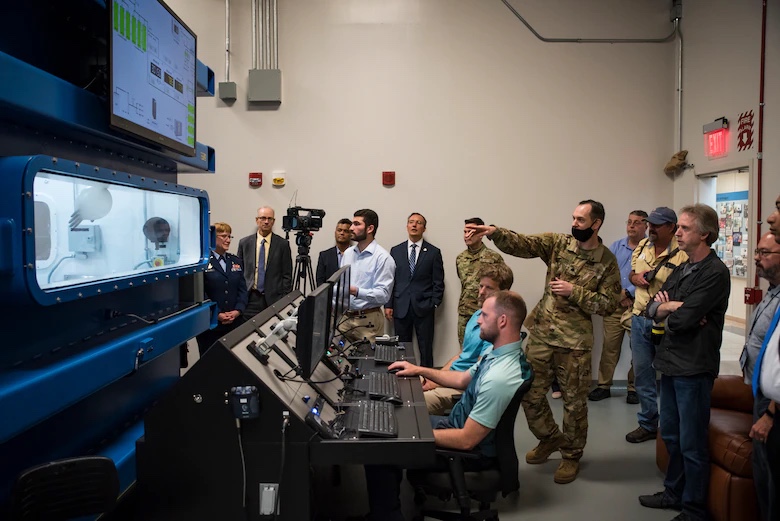
The Air Force’s new combat search and rescue helicopter, the HH-60W Jolly Green II, completed its developmental test program at Eglin Air Force Base, April 13.

The final test by the Sikorsky and Air Force team was on the aircraft’s weapon systems. The goal of the test was to both demonstrate the performance of the weapons while optimizing weapon-system configurations.

“The timely completion of this test program represents an amazing accomplishment by the HH-60W Integrated Test Team,” said Joe Whiteaker, the 413th Flight Test Squadron HH-60W flight chief. “The team consistently overcame tremendous adversity through a mix of innovation and sheer determination.”

The result of those labors ensured both the warfighter and the program’s decision-makers were well-informed on the Jolly Green II’s performance.

The test efforts began May 2019 with the first HH-60W flight. The aircraft arrived at Eglin AFB to the 413th FLTS November 2019, although various tests took place in other locations. The integrated test team accumulated more than 1,100 flight test hours across six aircraft testing the full spectrum of aircraft systems.

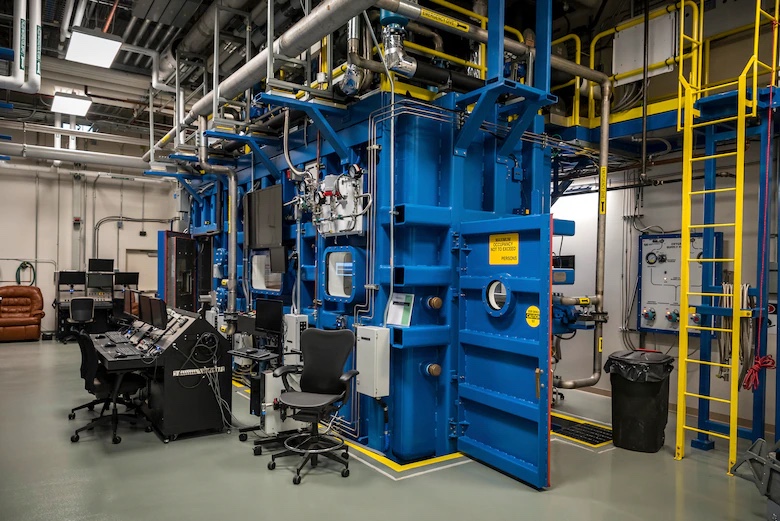
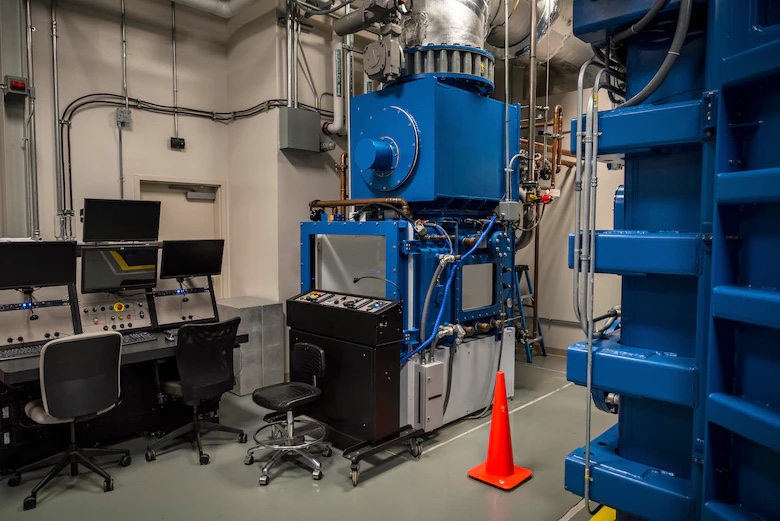
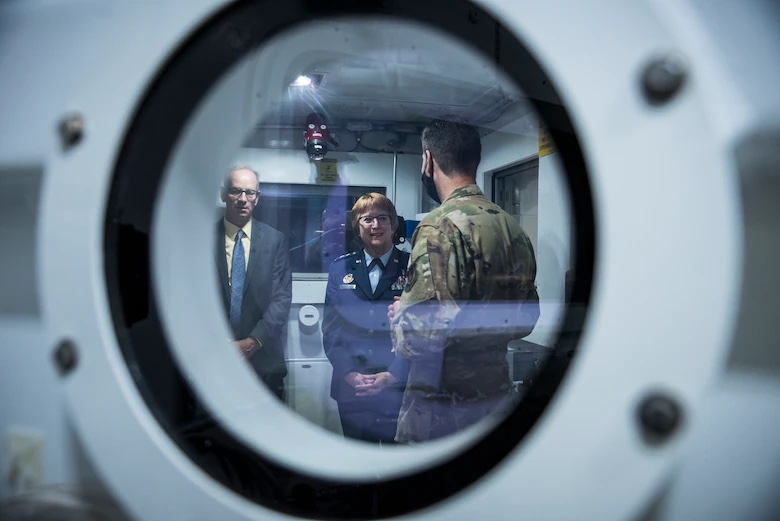
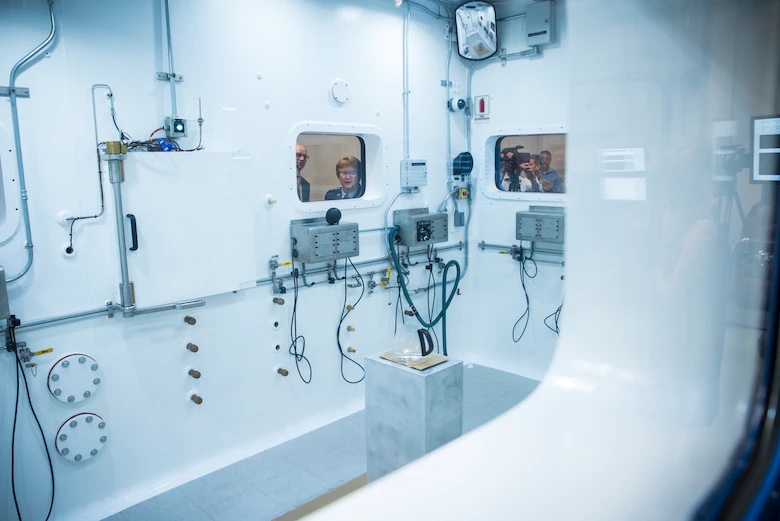
Some of the notable developmental tests included aircraft performance, communications systems, environmental tests at McKinley Climatic Lab, aerial refueling, data links, defensive systems, cabin systems, rescue hoist and live-fire of three weapon systems.

The test aircraft will be modified for operational use before being transferred to their respective Air Force rescue unit. The Jolly Green II’s developmental test mission will move to the Combat Search and Rescue Combined Test Force for follow-on testing at Nellis AFB, Nevada in 2022.

“I am incredibly proud of the many people from so many organizations who have come together to pull off a really challenging test program,” said Lt. Col. Wayne Dirkes, the 413 FLTS commander. “The team’s relentless focus on keeping the end in mind, aligning activity with their goals and moving forward quickly with discipline resulted in execution of a safe and highly successful test program in the face of incredible pressure.”

Story by Samuel King Jr., Eglin Air Force Base Public Affairs

Additional photos by MSgt Tristan McIntire

SCUBAPRO Sunday – Charles Upham

Sunday, April 25th, 2021

In honor of ANZAC day on the 25th of April, I wanted to share a story about an amazing ANZAC soldier. For those unfamiliar, ANZAC is the acronym formed from the initial of the Australian and New Zealand Army Corps. It started when the Australian and New Zealand soldiers in Egypt were grouped before the landing on Gallipoli in April 1915. The acronym was first written as “A & NZ Army Corps”; however, clerks in the corps headquarters soon shortened it to ANZAC as a convenient telegraphic code name for addressing telegram messages. Australia and New Zealand both observe ANZAC Day, which is their Memorial Day to remember their fallen.  It starts with a sunrise service, followed by ANZAC biscuits and beer with brothers and family.  ANZAC Day started as a remembrance of the invasion of Gallipoli (a plan hatched by Winston Churchill, the First Lord of the Admiralty in WWI), but now it is used as a Remembrance Day for all who have been lost to war.  

I had the privilege of spending an ANZAC day in Perth a few years back and it was amazing to see how similar we are to our brothers in the Pacific. So, on the 25th of April, raise a glass to all of our brothers that have helped support us in everything we have done and helped promote freedom in the world. The ANZACs are the only countries that have been with the U.S. in every war we have fought since WWI, including Vietnam and the Global War on Terror.

Now….to the amazing soldier I mentioned.

Charles Upham is a true warrior in every sense of the word. He was a Captain in the 20th BN, 2nd New Zealand Expedition Force who served in Europe and North Africa during WWII. He is considered the highest decorated Commonwealth soldier of the war. Captain Upham is one of only three people to receive the Victoria Cross (VC) twice (the UK’s version of the Medal of Honor). He is the only person to receive the award twice in World War II.

Only three men in history have earned a second VC. The other two who managed this feat were medical officers: Col A. Martin-Leake, who received it in the Boer War and the First World War; and Capt N. G. Chavasse, killed in France in 1917, who was the only soldier to be awarded the VC twice during World War I. Interestingly, Chavasse’s family was related to Upham’s.

Captain Upham was awarded his first VC in May 1941 during the Battle of Crete on the Greek island. Upham led his platoon over 3,000 yards without heavy weapons during the initial phases of the fighting and took a heavily defended German position head-on. He single handly destroyed 3 German machine gun positions with grenades and a pistol coming within a dozen yards of the last.  Afterward, he helped evacuate the wounded under heavy fire, and when it appeared an entire company was about to be cut off in the fighting, he was sent to retrieve them. He covered over 600 yards through enemy territory to recover the platoon and led them to safety. He would later organize a counterattack on the advancing German forces that killed over 50 of the enemy before falling back. As he pressed forward, 2 Germans popped out and fired upon him, where Upham played dead. He crawled to a tree with only one functioning arm to prop up the rifle and took out the two Germans as they advanced upon him.  Later, still heavily wounded, he led his platoon and, through clever tactics, duped a section of German troops into exposing themselves, at which point he quickly cut down 22 with a Bren light machine gun.


The Battle of Crete lasted 11 days, and when it was over, Upham had put together an excellent resume for gallantry that could only be rewarded with the United Kingdom’s highest military honor.

He was awarded his second VC while in Egypt during the Battle of El Alamein. During the attack, he was wounded once again. Despite his injuries, he managed to destroy an entire truckload of Germans with hand grenades. He then moved on and destroyed a tank, several gun emplacements, and vehicles, even though he was shot through the elbow and his arm was broken. The enemy launched a massive counterattack. His company held its position till it was reduced to only six survivors.  Upham was eventually taken prisoner.

As a POW, Capt. Upham attempted several escapes to include jumping off a moving truck, jumping off a moving train, and, on one occasion, he tried to escape in broad daylight by climbing the fence. When a prison guard threatened to shoot him, Upham calmly ignored him and lit a cigarette. (that’s some James Bond stuff right there). He was later transferred to Colditz Castle and remained there until the end of the war.

It was reported that when King George was told about the recommendation being made for Upham’s second VC, the King remarked to Major-General Howard Kippenberger that a “bar to the cross” would be “very unusual indeed” and enquired firmly and asked, “Does he deserve it?” Kippenberger replied, “In my respectful opinion, sir, Upham has won it several times over.”

After the war, Capt. Upham moved back to New Zealand and became a farmer.  It is said that for the remainder of his life, Upham would allow no German manufactured machinery or cars onto his property.