RESEARCH TRIANGLE PARK, N.C. — Round, smooth and iridescent, pearls are among the world’s most exquisite jewels; now, these gems are inspiring a U.S. Army research project to improve military armor.
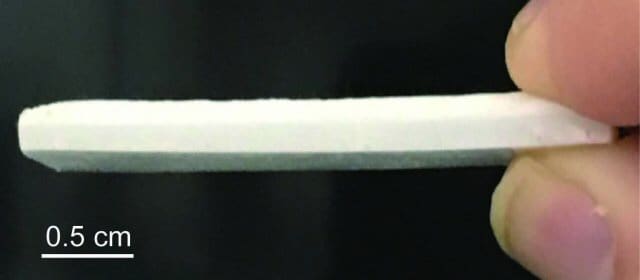
By mimicking the outer coating of pearls (nacre, or as it’s more commonly known, mother of pearl), researchers at University at Buffalo, funded by the Army Research Office (ARO), created a lightweight plastic that is 14 times stronger and eight times lighter (less dense) than steel and ideal for absorbing the impact of bullets and other projectiles.
Photo Credit: Shutterstock
ARO is an element of the U.S. Army Combat Capabilities Development Command’s Army Research Laboratory.
“The material is stiff, strong and tough,” said Dr. Shenqiang Ren, professor in the Department of Mechanical and Aerospace Engineering, a member of University of Buffalo’s RENEW Institute, and the paper’s lead author. “It could be applicable to vests, helmets and other types of body armor, as well as protective armor for ships, helicopters and other vehicles.”
Photo Credit: Courtesy University at Buffalo
The bulk of the material is a souped-up version of polyethylene (the most common plastic) called ultrahigh molecular weight polyethylene, or UHMWPE, which is used to make products like artificial hips and guitar picks.
When designing the UHMWPE, the researchers studied mother of pearl, which mollusks create by arranging a form of calcium carbonate into a structure that resembles interlocking bricks. Like mother of pearl, the researchers designed the material to have an extremely tough outer shell with a more flexible inner backing that’s capable of deforming and absorbing projectiles.
“Professor Ren’s work designing UHMWPE to dramatically improve impact strength may lead to new generations of lightweight armor that provide both protection and mobility for Soldiers,” said Dr. Evan Runnerstrom, program manager, materials design, ARO. “In contrast to steel or ceramic armor, UHMWPE could also be easier to cast or mold into complex shapes, providing versatile protection for Soldiers, vehicles, and other Army assets.”
This is what’s known as soft armor, in which soft yet tightly woven materials create what is essentially a very strong net capable of stopping bullets. KEVLAR is a well-known example.
The material the research team developed also has high thermal conductivity. This ability to rapidly dissipate heat further helps it to absorb the energy of bullets and other projectiles.
The team further experimented with the UHMWPE by adding silica nanoparticles, finding that tiny bits of the chemical could enhance the material’s properties and potentially create stronger armor.
“This work demonstrates that the right materials design approaches have the potential to make big impacts for Army technologies,” Runnerstrom said.
By U.S. Army CCDC Army Research Laboratory Public Affairs
This is the thirty-seventh installment of ‘Max Talk Monday’ which shares select episodes from a series of instructional videos. Max Velocity Tactical (MVT) has established a reputation on the leading edge of tactical live fire and force on force training. MVT is dedicated to developing and training tactical excellence at the individual and team level.
This is a discussion, with video examples, of tactical training videos that MVT has posted. It attempts to give clarity to what is happening in the videos, how tactical training is run with training objectives for specific drills, along with the effects of range restrictions. Max addresses common internet complaints about what the students are doing in the videos, and provides perspective.
This is the fourth installment of ‘Max Talk Monday’ which shares select episodes from a series of instructional videos. Max Velocity Tactical (MVT) has established a reputation on the leading edge of tactical live fire and force on force training. MVT is dedicated to developing and training tactical excellence at the individual and team level.
Max is a tactical trainer and author, a lifelong professional soldier with extensive military experience. He served with British Special Operations Forces, both enlisted and as a commissioned officer; a graduate of the Royal Military Academy Sandhurst. Max served on numerous operational deployments, and also served as a recruit instructor. Max spent five years serving as a paramilitary contractor in both Iraq and Afghanistan; the latter two years working for the British Government in Helmand Province, Afghanistan.
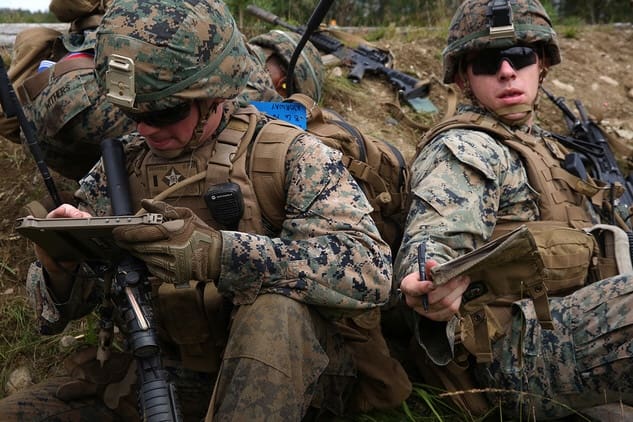
During Island Marauder 2019, Marines will demonstrate the effectiveness of several Marine Corps Systems Command technologies—including a handheld system that helps the warfighter navigate on the battlefield.
The Marine Air-Ground Task Force Common Handheld is a tablet-based communication system that enhances situational awareness on the battlefield. The device enables dismounted Marines to leverage commercial smart devices to plot and share locations.
The device includes pre-installed tactical applications to eliminate the need to juggle multiple technologies for various capabilities, lightening the load for the warfighter.
“MCH is essentially an interactive tactical mapping program with a GPS navigation software and a chat functionality,” said Maj. Richard Beeson, MCH project officer at MCSC. “The technology feeds the battalion’s current operational picture with real-time friendly force positions and allows this battlespace awareness to be shared down to the squad-leader level.”
The tablet feeds the information into Networking On-the-Move, while simultaneously transmitting it to the Combat Operations Center, where command leaders can use the information to make critical battlefield decisions.
Through MCH, commanders can disseminate orders, graphics and digital data, providing Marines the ability to visualize the commander’s intent and scheme of maneuver.
“It helps Marines to share enemy locations in real-time in an easily understood digital, moving map format,” added Beeson.
MCH enables warfighters to pass messages to one another in real-time—similar to text messaging—allowing the commander to make faster, more effective, decisions. It also assists the warfighter in deciphering whether an explosion was caused by enemy or friendly fire.
“MCH is a Command and Control situational awareness system that gives the squad leader and platoon commander a better understanding of the battlefield to make tactical decisions,” said Justin Meidinger, an engineer for MCH. “This system helps them have a better idea of what is going on around them.”
Earlier this year, the Corps fielded an early release version of the system to Marines. In fiscal year 2020, the warfighter will receive an updated version of the MCH that allows Marines to communicate with one another through several additional joint communication systems.
Later this month at Island Marauder, Marines will demonstrate the effectiveness and interoperability of MCH by linking it with other satellite technologies. The risk-assessment evaluation is intended to reduce miscommunication among Marines who use communication technologies. Beeson raved about the benefits of MCH and how the system supports the warfighter.
“MCH allows for communication, collaboration and coordinating among units,” said Beeson. “It helps everyone to be on same page. MCH increases the digital lethality of Marine infantry squads while reducing the risk of friendly fire.”
By Matt Gonzales, MCSC Office of Public Affairs and Communication | Marine Corps Systems Command
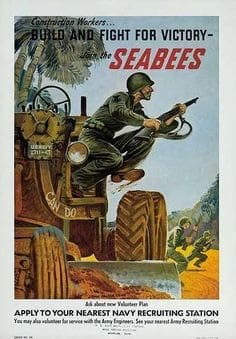
On September 1, 1942, the first Seabee unit to serve in a combat area, the Sixth Naval Construction Battalion (SeaBees), arrives on Guadalcanal.
I am not going to tell the story as there is a movie (with John Wayne one of the seven he dies in) and I posting a link at the bottom of an excellent article about them. What I am going to say is SeaBees are some of the hardest working people you will ever find. I would rather have 1 SeaBee that 5 other people. They have made almost all the camps I have been in since the first gulf war in 91 thru Iraq in the 2000s and they never stop working on them to making them better. They build they fight; (they can’t read or write) (that was a joke) you tell them you need something, and they will find it or make it. Indeed some of the unsung heroes of the military.
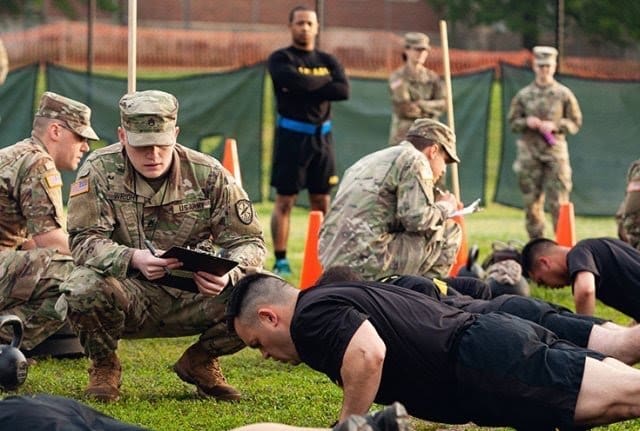
WASHINGTON — The Army is built upon the individual Soldier, and the battlefield of the future demands Soldiers who can excel under intense physical and cognitive demands. The new Army Combat Fitness Test breaks with over three decades of the Army Physical Fitness Test. The Army plans to roll out the test by October 2019 and replace the APFT as the Army’s fitness test of record by October 2020.
To succeed, the Army must address new training, evaluation, and equipment requirements. The Army is taking an innovative approach to implementing the ACFT by utilizing field tests, practice ACFTs, and qualifying all noncommissioned officers and officers as graders.
WHAT’S NEW?
As stated by Maj. Gen. Malcom Frost in 2018, the new test yields three key advantages:
– It measures strength and conditioning that accurately mimics the movements necessary on the battlefield.
– It is gender and age neutral with standards corresponding to the demands of the Soldier’s duty.
– The test itself promotes an Army-wide culture of physical fitness.
Instead of training to pass an arbitrary strength standard of push-ups and sit-ups, Soldiers must maintain a healthy lifestyle and train for overall strength and conditioning. Research shows this will decrease injuries, which will increase the number of deployable Soldiers. The Australian army instituted similar training in 2016 and decreased their trainee injury rate by 40 percent. The money saved in decreased injury rates and the increase in deployable Soldiers is worth the cost of purchasing the required equipment.
In April 2019, the ACFT Mobile Training Team held an ACFT demonstration for more than 100 Army inspectors general at the World Wide Inspector General Conference. During this demonstration, Col. Ray Herrerra, command inspector for U.S. Army South said, “After taking the test, I believe the ACFT is a substantial improvement toward determining readiness, and it better prepares Soldiers than our current annual test.”
ACFT MILITARY TRAINING TEAMS
In order to implement the ACFT properly, the Army is training a core group of trainers to prepare their own units and administer the test. The MTTs prepare and certify new Army Master Fitness instructors and mid-level supervisors to train Soldiers to administer the ACFT. This approach trains the trainers without negatively impacting active duty readiness, and integrates the new test regime at maximum efficiency before it is officially implemented across the force.
In July 2018, the Army published Executive Order 219-18: The Implementation of the Army Combat Fitness Test, which officially established 30 Active Duty, 10 USAR (Reserve), and 10 ARNG (National Guard) NCOs/officers to serve on the ACFT MTTs across the force.
In May 2019, as part of the Association of the U.S. Army National Security Studies team, Maj. Joseph Flores and Master Sgt. Shelly Horner (ACFT MTT team leads) were interviewed about the Army’s effort to train the trainers and the requirements involved in the certification process. According to Flores and Horner, the MTTs are responsible for training three levels of graders, Levels I-III, each with its own distinct knowledge, skills, and abilities.
LEVEL I — ACFT GRADER
The ACFT Grader will complete a one-day validation training offered by a locally-sourced ACFT Level II or Level III Grader-Instructor.
ACFT Level I Grader has the knowledge, skills, and ability to:
• Validate a testing location
• Validate the testing equipment to standard
• Grade the 6 ACFT test events to standard
• ACFT Level I Grader may be used to familiarize their unit with the ACFT and prepare Soldiers to take the test and/or receive training from Level II Graders.
LEVEL II — ACFT GRADER
The ACFT Level II Grader will complete the two-day validation training offered by the U.S. Army Physical Fitness School or U.S. Army Center for Initial Military Training. Or by a locally-sourced ACFT Level III Grader-Instructor. The ACFT Level II Grader may not train/validate other Level II Graders.
ACFT Level II Grader has the KSA to:
• Serve as a testing officer in charge/ noncomissioned officer in charge to administer a unit ACFT
• Validate a testing location
• Validate the testing equipment to standard
• Grade the six ACFT test events to standard
• Administer a 90-day record ACFT
• Train ACFT Level I Grader by providing the three-hour validation
LEVEL III — ACFT (MASTER FITNESS TRAINER PERSONNEL)
The ACFT Level III Grader-Instructor must hold the Master Fitness Trainer certification and will complete the three-day validation training offered by the MTT or U.S. Army CIMT.
ACFT Level III Grader-Instructor has the KSA to:
• Serve as a testing OIC/NCOIC to administer a unit ACFT
• Validate a testing location
• Validate the testing equipment to standard
• Grade the six ACFT test events to standard
• Administer a 90-day record ACFT
• Train ACFT Grader (Level I) by providing the three-hour certification course.
• Train ACFT Master Grader (Level II) by providing the two-day certification training.
Currently, more than 6,000 Soldiers have received formal ACFT Level II-III Grader Validation training from one of the ACFT teams. Since Level II and III graders are allowed to train others at a lower level, it’s hard to document how many other graders have been trained to the Level I standard. The Army’s plan is that all NCOs and officers receive an ACFT Grader Level Validation before implementation of the ACFT.
PREPARATION
The Army Combat Fitness Test Training Guide has multiple examples of the movements and exercises involved in the ACFT and has equipment substitutions (like an ammo can, water can, or sandbag in place of kettlebells or medicine balls) for those deployed or without access to the ACFT lane equipment. For additional information on exercises and movements, consult the Army doctrine on exercise: FM 7-22: Army Physical Readiness Training.
For injured Soldiers, and those on permanent profile, the U.S. Army CIMT is developing alternate events, to be officially approved on Oct. 1, 2019. These events may include the stationary bike, swimming events, or rowing.
For more information on the ACFT, go to the official Army website: www.army.mil/acft. It includes instructions, photos, and videos for each of the events. It also contains instructions, photos, and videos for three different preparatory exercises per event to help Soldiers train for the October 2020 implementation date.
*If NCOs and officers are interested in obtaining their ACFT certification from one of the MTTs, they can contact their unit’s first sergeant.
Sometimes you don’t know what you need until it’s presented to you…
Robert Winner, USAF (Ret)
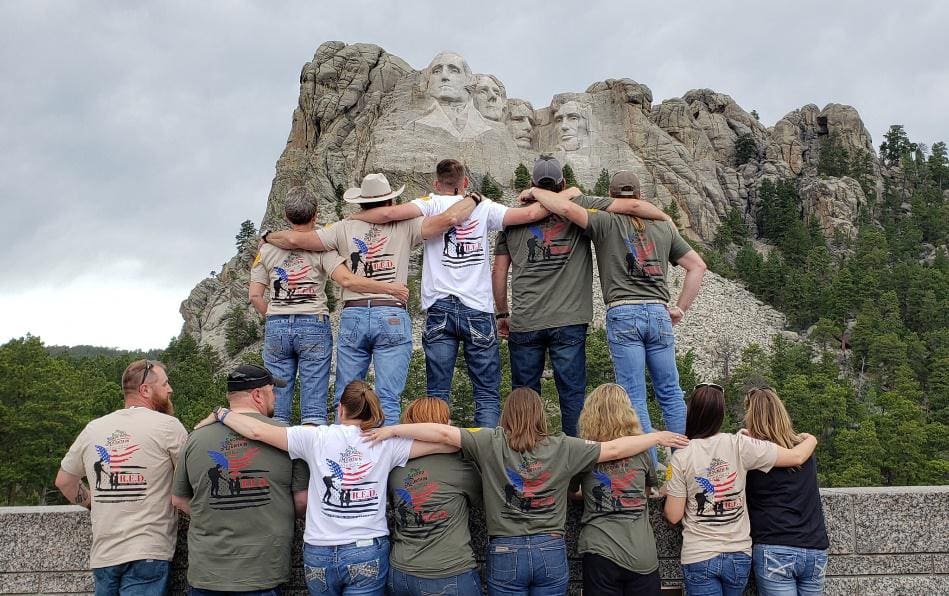
Back in June I was invited to spend time with fellow Military, Veterans and First Responders at the Zilis-Sacred Mountain Retreat Center (Z-SMRC) in Deadwood South Dakota. I can honestly say this proved to be one of the most rewarding experiences of my life.
For years I’ve had a really good handle on my demons, both the good and bad ones. Enough so that others sought out my counsel in dealing with their own chaos. Well, this weekend at Z-SMRC was a pinnacle moment for me.
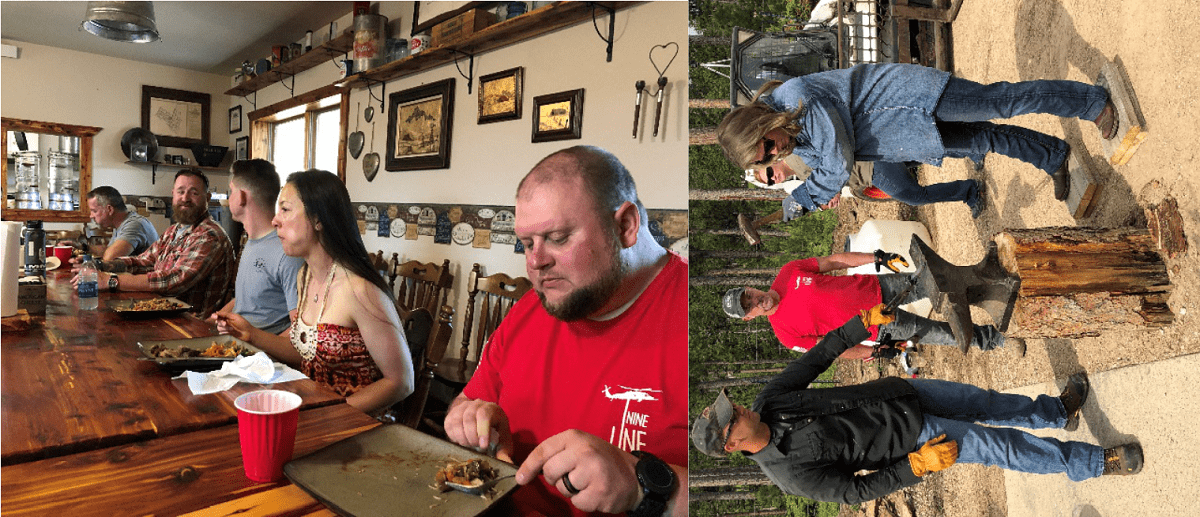
I spent time with, shared stories, laughed and cried with x8 amazing heroes. I watched strangers from different backgrounds with different stories and different scars come together to become friends and inevitably become a new family. Over the course of the retreat: Combat Vets laughed and cried about the excitement and chaos or war, LEOs laughed and cried about the dregs of society and EMS personnel laughed and cried about the whims of fate and the evil of the human spirit. Our group of x4 women and x4 men included: retired Dallas cop, retired USAF cop, an Army Trauma Nurse, an Army Infantryman, an Army Engineer, EMTs and a Fire Fighter/ Paramedic. We had a broad spectrum in our class which although from different paths had very similar scars of service.
The weight of the world is that of demons left unchecked and unsupervised. Through our peer-to-peer support and teamwork everyone walked away a week later stronger and wiser and more capable of quelling the noise.
There are good and bad to every story, but this story ends with strangers building bonds that transcend friendship and created a lasting family. Different clans coming together as one tribe, a tribe of amazing people who believe in a higher calling, service before self and a dedication to this country that runs deeper than blood.
Enough good cannot be said for the amazing work that Jerrid Geving and Emily Kruger have done in putting together the Zilis-Sacred Mountain Retreat Center and this program.
Hands on work to build up a team, Equine therapy because horses heal souls, blacksmithing knives from RR nails, Leather working to make sheaths, Yoga, group trips, etc.
The ebb and flow of the Z-SMRC was spot on perfect and the cast/ crew was amazing. We had some pretty great folks pass through while we were on deck, fellow graduates of the program, supporters who brought their craft and trade with them for us to experience and a Gold Star family stopping by to say hello.
To be honest I feel humbled and honored to have been a part of it. The transformation of folks involved was truly phenomenal. In a case or two we literally helped each other snatch a soul back from the edge.
I’ll be returning to the Black Hills to help as often as I’m invited because I believe in their mission and goals 110%. The beauty of the Zilis-Sacred Mountain Retreat Center is that it is a No Cost program for the attendees. Airfare (or gas reimbursement), lodging, food, activities… all covered by the Z-SMRC program.
Not all wounds can be healed, not all the screams can be silenced and yet it is the helping hands of family, friends and strangers that help guide the path forward through the darkness of uncertainty. Not all demons can be snuffed out but it is possible to control the demons and turn down the volume on the chaos. Contact the Zilis-Sacred Mountain Retreat Center if you, a loved one or a coworker/ friend are in need of these services.
If you have questions or wish to recommend someone to attend the program, please reach out to Emily: SACREDMTN18@GMAIL.COM or Rob: ROBERT.WINNER.ZSMRC@GMAIL.COM
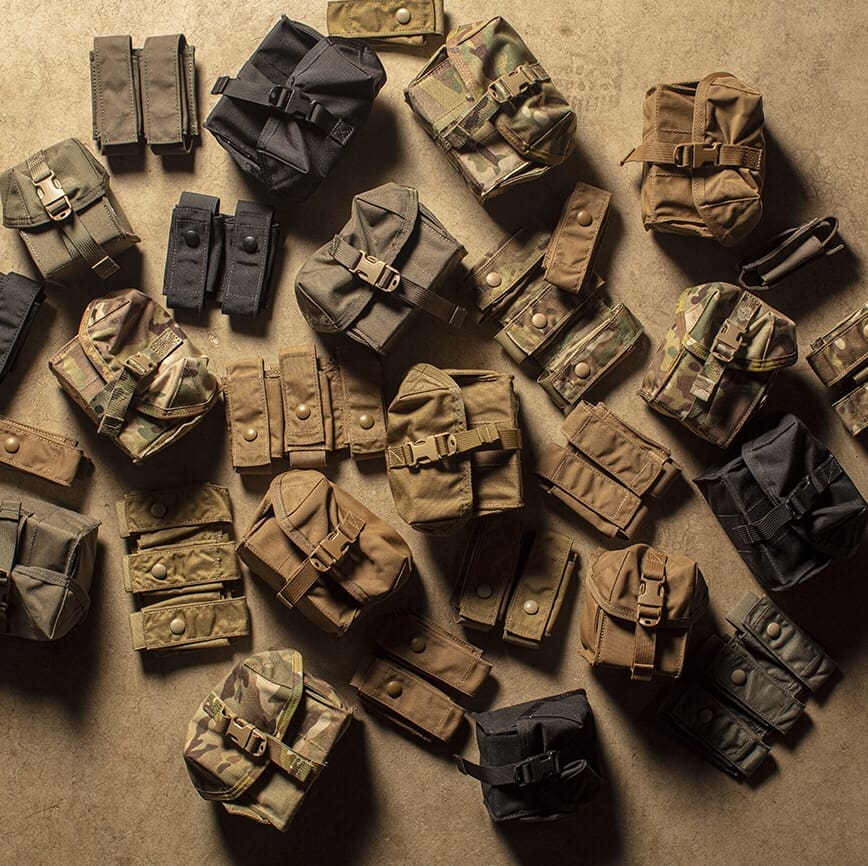
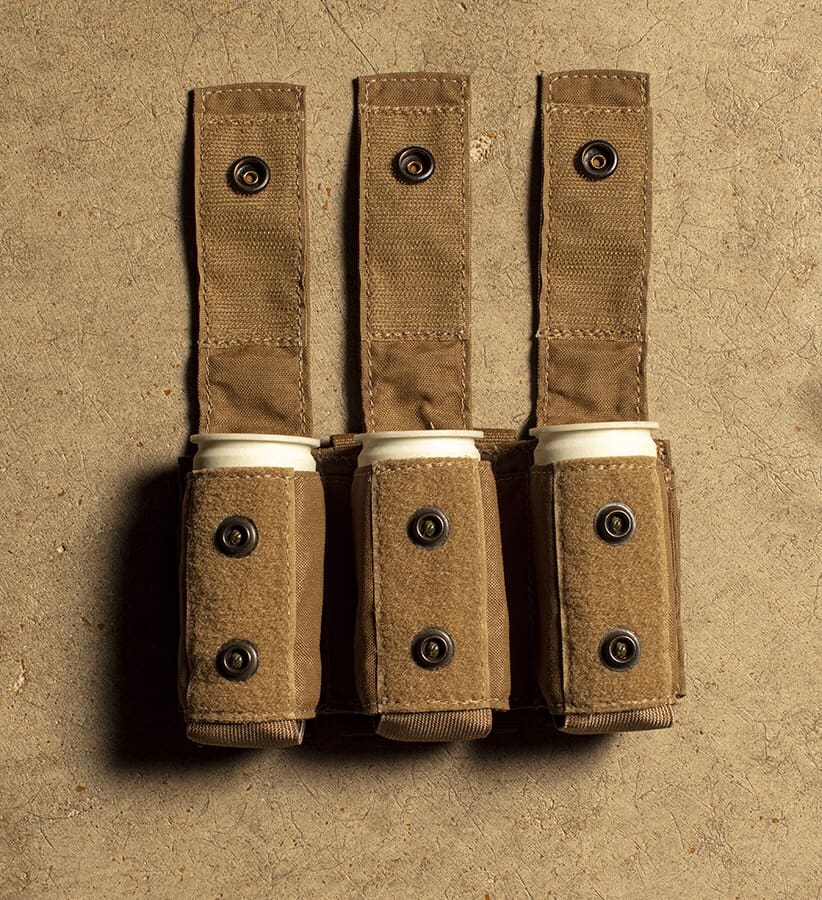
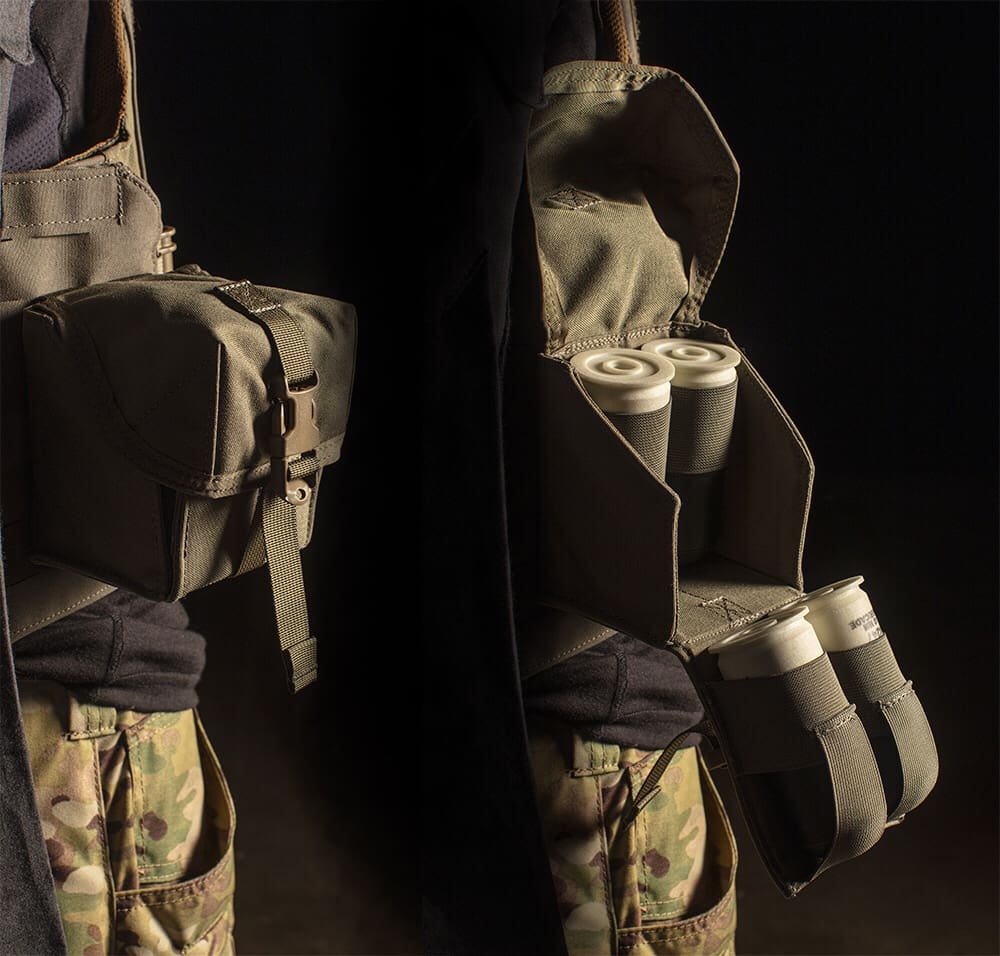
The FirstSpear Non-Stocking Non-Standard section has just been updated with a variety of 40mm grenade pockets designed for FS professional users. Built to fit any standard 40mm style round with a wide range of configurations available including single, double, triple pockets with 6/9 or MOLLE attachment style as well as the FirstSpear 4 and 6 Pack secured with a SR buckle for quick access to multiple rounds.
Non-Stocking Non-Standard items are 100% brand new first quality goods that have been designed and built at the request of FS Professional users to meet a unique mission set. Limited quantities, sizes and colors are available while supplies last. No backorders, all sales are final.
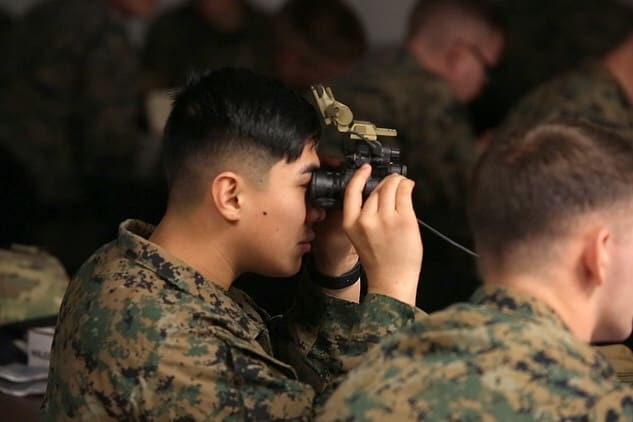
Less than 11 months after seeking industry proposals for a new helmet-mounted night vision system, Marine Corps Systems Command has awarded a contract to provide an updated system to Marines.
Harris Corporation of Roanoke, Virginia, was awarded a maximum $249,000,000 firm-fixed-price, indefinite-delivery/indefinite-quantity contract Sept. 6, for the purchase of the Squad Binocular Night Vision Goggle system. Approximately 14,000 systems will be delivered, and the work will be completed by September 2024.
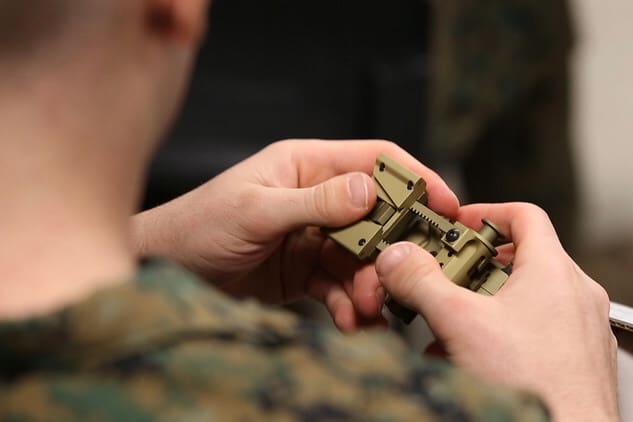
The SBNVG combines two systems: a binocular night vision device and enhanced clip-on thermal imager. It is lighter than the current Army/Navy Portable Visual Search devices, or AN/PVS-15. The SBNVG also has improved depth perception, and the ability to detect and recognize targets in extreme low light, in inclement weather and in the presence of obscurants.
“Additionally, the use of white phosphor provides a greater capability to see at night with more clarity, giving Marines enhanced situational awareness,” said Lt. Col. Tim Hough, program manager for Infantry Weapons at MCSC.
The Corps previously used an existing Defense Logistics Agency contract to procure 1,300 systems to see how an interim solution could best meet the capability requirement.
“We made the investment to procure the 1,300 systems and fielded them to two infantry battalion, so we already had a good, robust understanding of the technology we were chasing,” said Roberto Gonzalez, team lead for Combat Optics at MCSC. “That allowed us to quickly get through the source selection process [for this contract].”
Using full and open competition, MCSC also realized approximately $70 million in savings across the Future Years Defense Program.
Marine infantry units will be the first to receive the new night vision goggles when fielding begins in the spring of 2020.
“Awarding this SBNVG contract and fielding these systems to the warfighter is one more step toward increasing the command and control, lethality and ability of the infantry squad to overwhelm our adversaries,” said Hough.
Story by Monique Randolph, MCSC Office of Public Affairs and Communication | Marine Corps Systems Command