GORE-TEX Professional

Archive for the ‘Guest Post’ Category

Max Talk 36: Train How You Fight: Firearms Training Methodology to Win The Fight

Monday, September 9th, 2019

This is the thirty-sixth installment of ‘Max Talk Monday’ which shares select episodes from a series of instructional videos. Max Velocity Tactical (MVT) has established a reputation on the leading edge of tactical live fire and force on force training. MVT is dedicated to developing and training tactical excellence at the individual and team level.

A discussion about training methodology for tactical training and shooting sports, both competition, and tactically focused.

This is the fourth installment of ‘Max Talk Monday’ which shares select episodes from a series of instructional videos. Max Velocity Tactical (MVT) has established a reputation on the leading edge of tactical live fire and force on force training. MVT is dedicated to developing and training tactical excellence at the individual and team level.

Max is a tactical trainer and author, a lifelong professional soldier with extensive military experience. He served with British Special Operations Forces, both enlisted and as a commissioned officer; a graduate of the Royal Military Academy Sandhurst. Max served on numerous operational deployments, and also served as a recruit instructor. Max spent five years serving as a paramilitary contractor in both Iraq and Afghanistan; the latter two years working for the British Government in Helmand Province, Afghanistan.

Website: Max Velocity Tactical

YouTube: Max Velocity Tactical

Army Looks to Enhance Mission Command with Robotic Swarms

Sunday, September 8th, 2019

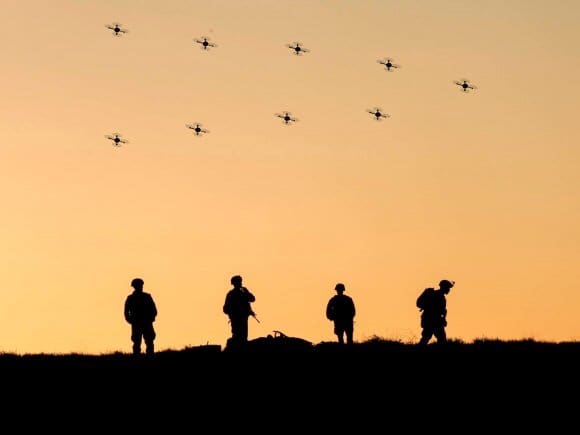
ABERDEEN PROVING GROUND, Md. — Army Futures Command, or AFC, is exploring the extent to which swarming formations of robotic systems could be used to enhance mission-command capabilities for Army small units.

Scientists and engineers within AFC’s Combat Capabilities Development Command, or CCDC, are exploring the potential to deploy unmanned aerial systems, or UAS, and unmanned ground vehicles, or UGV, to act as complementary swarm components.

Swarming is a method of operations where multiple autonomous systems act as a cohesive unit, actively coordinating their actions.

Once mobilized, the swarms would enable small units to quickly implement manned-unmanned teaming, or MUM-T, for a variety of mission types. Data would flow quickly from the swarm back to Soldiers, mounted or dismounted, who could then provide further instructions, if necessary, to the swarms.

“The Army is looking to swarming technology to be able to execute time-consuming or dangerous tasks. The Army wants robustness, flexibility and persistence, so we’re moving away from controlling through tele-operating and trending toward commanding,” said Osie David, a chief engineer in CCDC’s center for Command, Control, Communications, Computers, Cyber, Intelligence, Surveillance and Reconnaissance — or C5ISR.

Autonomous swarms are designed to complement, not replace, human capabilities as the robotics will assist Soldiers in their complex decision-making process on the battlefield, said David, who noted that the C5ISR Center is exploring the extent to which swarming robotics can support commanders and their staff during the execution of mission command.

Mission command is the Army’s philosophy of command and a warfighting function that promotes freedom and speed of action. It combines the centralized intent from the commander with the decentralized execution of subordinate commanders, who then decide how best to achieve the commander’s objectives.

In executing mission command, commanders must have a broad perspective, understanding and knowledge of activities throughout complex operational environments. Swarming technologies provide versatility for a ground force commander to accomplish different mission sets based on the reconnaissance requirements, said RJ Regars, a systems engineer in the C5ISR Center’s Command, Power and Integration Directorate, or CP&ID.

“Swarm technology, with a potential combination of unmanned aerial and ground vehicles, is ideally suited for difficult-to-maneuver environments like cities, forests or caves. The swarms could move quickly and quietly while tracking specific targets in locations where a traditional Army formation cannot quickly maneuver while sending data to units several miles away,” Regars said. “The ability to continuously patrol an area or route and quickly convey that data back to the unit is extremely valuable.”

A key goal of the project will be how best to combine a Soldier’s cognitive skills with autonomous robotics systems.

To better define and conceptualize the best tactics and applications of future swarming capabilities for mission planning, technical experts from the center met with Soldiers and Marines at Fort Benning, Georgia, to gain insights from their operational expertise.

“The swarming technology provides versatility for how a ground force commander could employ UAS or UGV swarms to accomplish different mission sets based on the recon requirements,” said Capt. Michael McCarty, an Army Infantry officer. “It’s definitely a positive for me as a future commander.”

So far the feedback has centered on reducing cognitive overload by filtering and prioritizing data for actionable information and developing simple-to-use systems that would free up Soldiers to perform other warfighting functions.

“Swarming improves the ability to target specific locations with minimal collateral damage because we can identify our targets ahead of time. When we combine manned and unmanned systems, it’s a force multiplier that turns a platoon into a company,” said Capt. Troy Makulec, an Army Armor officer. “Whether it’s ground or aerial swarming, it improves the likelihood of survival for our Soldiers on the ground.”

By Dan Lafontaine, CCDC C5ISR Center Public Affairs

SCUBAPRO Sunday – Head and Chest Protection

Sunday, September 8th, 2019

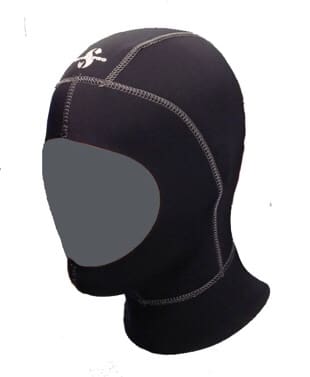
As we are starting to get into fall and the water begins to get colder. You will have to start looking at, adding more to what you wear when you dive. One of the best ways to add warmth without adding a lot more rubber is to add a hood and a vest. The vest helps keep your chest warm, from the tie you enter the water. I like a vest because it helps with that first blast of cold water that always hits your chest. Since you lose about 75 percent of your body heat through your head even if the water is warm, you will lose heat thru it. Hoods and vest are usually made from neoprene and are designed for wearing in either warm or cold water.  Again, as with wetsuits, the thicker the hood/vest, the better it is for colder water. One of the most significant drawbacks to diving, in general, is the thinker anything is, gloves, suit, or hood the more mobility you lose. There are two types of hoods, warm and cold water.  Warm water hoods are less cumbersome and typically cover your head and neck. They can be used for warmth and to help protect your head.

Warm vs. Coldwater Hoods

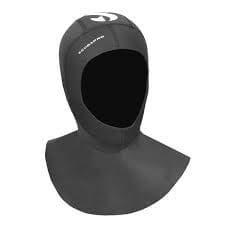
When diving in cold water, a thick neoprene hood that covers your head and neck will be the most practical. The thicker the neoprene, the warmer you head will be. Coldwater dive hoods typically have a sizable bib, which can be tucked into your wetsuit at the neck opening. The bib reduces the transfer of water and keeps the diver that much warmer. The bib comes down to cover the neck and some of the chest, like a bib for kids. There is also hooded vest, and those cover the head and the chest. Cold-water hoods cover some or all of the diver’s forehead and jaw/chin areas, and it also includes a good part of the diver’s cheeks. It tries to leave as little of the diver’s face exposed to the cold water as possible — ordinary just room for the mask and the regulator.    

Warm-water dive hoods are much thinner and typically do not have large bib like cold-water hoods. Warm water hoods and vests are suitable for long-duration diving in warm water. It isn’t so thick that you overheat from the start, but with a long dive, you will start to get cold. If you are warm, you can also vent the hood/ vest, and as the dive goes on, you will be warmer. You can even sometimes start the dive without the hood, and then if you are cold, you can put it on. Hooded vests are good for that as you can just pull the hood up as you are diving.

The right fitting dive hood should not be too loose; if you’re going for a cold-water hood, it should feel snug around your cheeks and jaw and should cover most of your forehead.  Still, it should not feel too tight – if it is uncomfortable around the throat or facial area, then you’ll need to go up a size. Basically, if the hood creates discomfort along the face or neck/throat, it is too small. If water freely flows in and out of the hood, it is too big. Too loose a hood will not protect you from the elements at all, as water will be able to flow in and out freely. Layering is the key to warmth when diving.

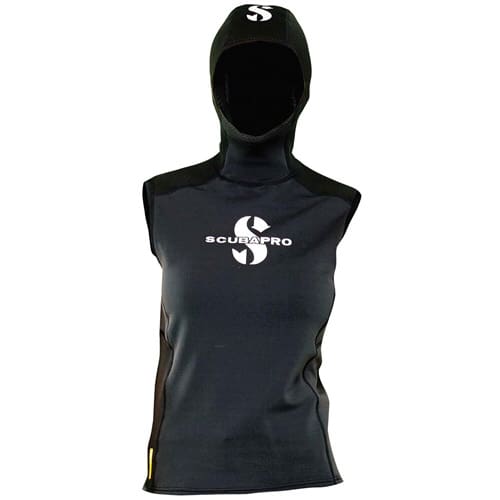
SCUBAPRO’s line of Hoods, Vest and Hooded Vest can provide that extra layer to help keep you warmer longer when diving. The SCUBAPRO 2.5/0.5mm Unisex Hooded Vest is just what you need for a little extra warmth on colder water dives. When you are in warm water locations, add a hooded vest over a spring suit or under a Shorty or Fullsuit, you add warmth and will be able to stay in longer. The vest is easy to don and doff and is fast drying for days that have multiple dives. The vest is 2.5mm thick in the hood chest and back and 0.5mm thick on the ultra-stretch side panels.

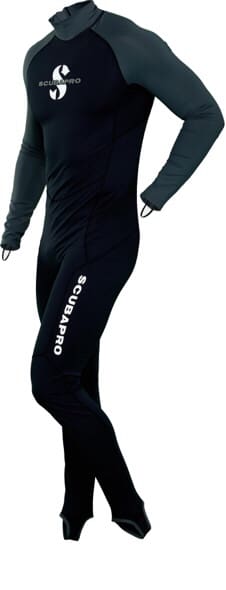
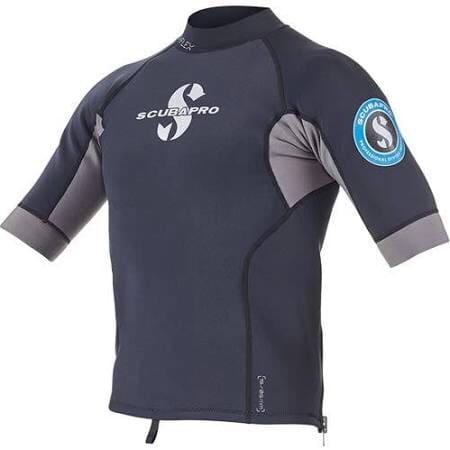
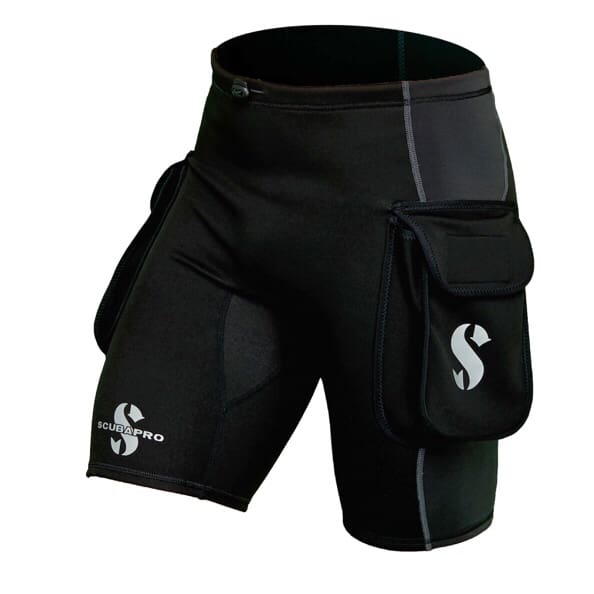
SCUBAPRO has also updated its popular Hybrid line, which includes a thermal long sleeve top, cargo shorts, and a sleeveless hooded vest. The line also consists of a full suit that is great for long-duration warm water dives or under cammies to help keep you warm. The Hybrid Hooded Vest’s ultra-comfortable neoprene/nylon blend does a great job of protecting your torso and head, two critical areas for minimizing heat loss, providing comfort, warmth, and protection where you need it most. On the underside of the nylon panels, a micro-plush interior makes the vest warm and cozy.

This fleece fabric absorbs less water, which keeps heat against the body, increasing overall warmth. It also dries quickly. This hooded vest can be worn by itself or layered over a long-sleeve thermal rash guard to increase warmth and protection and built with a mix of quality 1.5mm X-Foam neoprene for warmth and durable nylon for stretch and comfort. Highly versatile ideal for divers, snorkelers, paddle boarders, swimmers, and anyone that needs more protection from the elements to include long boat rides. I have used pieces in this line for an Alcatraz swim(1.5mile), and it worked great.  Unique styling keeps you warm, protected, and looking good — form-fitting for that sleek, hydrodynamic look and feel.

Marine Corps Announces Winners of Elbow, Knee Pads Prize Challenge

Friday, September 6th, 2019

MARINE CORPS BASE QUANTICO, Va. —

Marine Corps Systems Command completed its second of a series of prize challenges in August, awarding cash to two businesses for their innovative ideas in creating knee and elbow pad protection for the warfighter.

The Knee and Elbow Pad Equipment Challenge called for innovators to submit ideas for replacing the Corps’ current knee and elbow padding. From May to July, MCSC received creative prototypes from various organizations—but two companies stood out from the rest.

Team G-Form, known for their padding technology for athletes, was the overall winning team, receiving $4,000. Team Viconic Defense—a Michigan-based company whose technology supports military vehicles—won the innovation prize and took home $1,000.

“We really wanted to explore the innovative market,” said Guy Callahan, the project officer for Cold Weather Clothing and Equipment in MCSC’s Infantry Combat Equipment program office. “The challenge enables new chemistry that affords a greater type of protection for knees and elbows.”

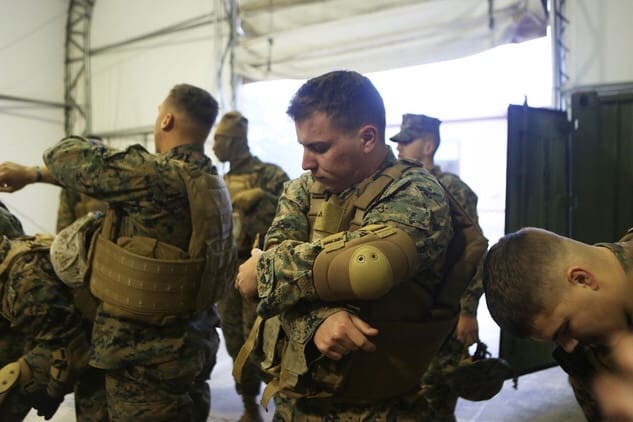
MCSC sought a padding solution to provide greater comfort and blunt-force protection that integrates into the Corps’ uniform, without compromising marksmanship, said Callahan. Based on the physical submissions received, a panel of Marines concluded that Team G-Force demonstrated the greatest overall potential for padding.

G-Form is honored to win Marine Corps Systems Command’s Knee and Elbow Pads Challenge,” said Glen Giovanucci, the company’s chief executive officer. “We pride ourselves in developing the best impact protection that is truly comfortable to wear. This recognition is a testament to the hard work and commitment of our research and development, and factory operations teams.”

Team G-Form’s mission is to provide innovative gear comfortable enough to wear and strong enough to prevent injury. The company is an active participant in the Semper Fi Fund annual event in Grass Valley, California, and will donate their $4,000 prize to this event.

Many of the innovation submissions shared similar concepts. However, the panel decided that Team Viconic Defense offered the most cutting-edge solution and blunt-force protection. The company expressed appreciation for the recognition.

“It’s an honor for Viconic to win the Innovation Prize of the U. S. Marine Corps Knee and Elbow Pad Equipping Challenge,” said J.B. Audi, vice president for Viconic Defense. “Viconic is pleased to partner with the Marine Corps in the goal of better protecting our warfighters.”

Since 2010, the federal government has conducted more than 1,000 challenges and has awarded prizes to everyone from students to small business owners, according to challenge.gov. The Prize Challenge offers to the program office a cost-effective market research vehicle to identify the current market space.

In April, MCSC awarded monetary prizes for ideas to improve the Corps’ helmet retention system.

“These challenges offer some really cool, cutting-edge concepts,” said Callahan. “We get some very creative submissions.”

The competition leveled the playing field for smaller businesses with whom the Corps does not traditionally work, said Callahan. He said prize challenges spark interest in many innovators and give them an opportunity to support the warfighter.

“That is a significant benefit of these challenges,” said Callahan. “It gets your nontraditional market players out in the open.”

The prize challenge winners demonstrated the potential to use nontraditional materials to improve comfort and impact protection. Further research and development is required to determine the best method for integrating improvements into existing knee and elbow pads.

By Matt Gonzales, MCSC Office of Public Affairs and Communication | Marine Corps Systems Command

FirstSpear Friday Focus – FS OEM Partner Series – SAFRAN Optics 1

Friday, September 6th, 2019

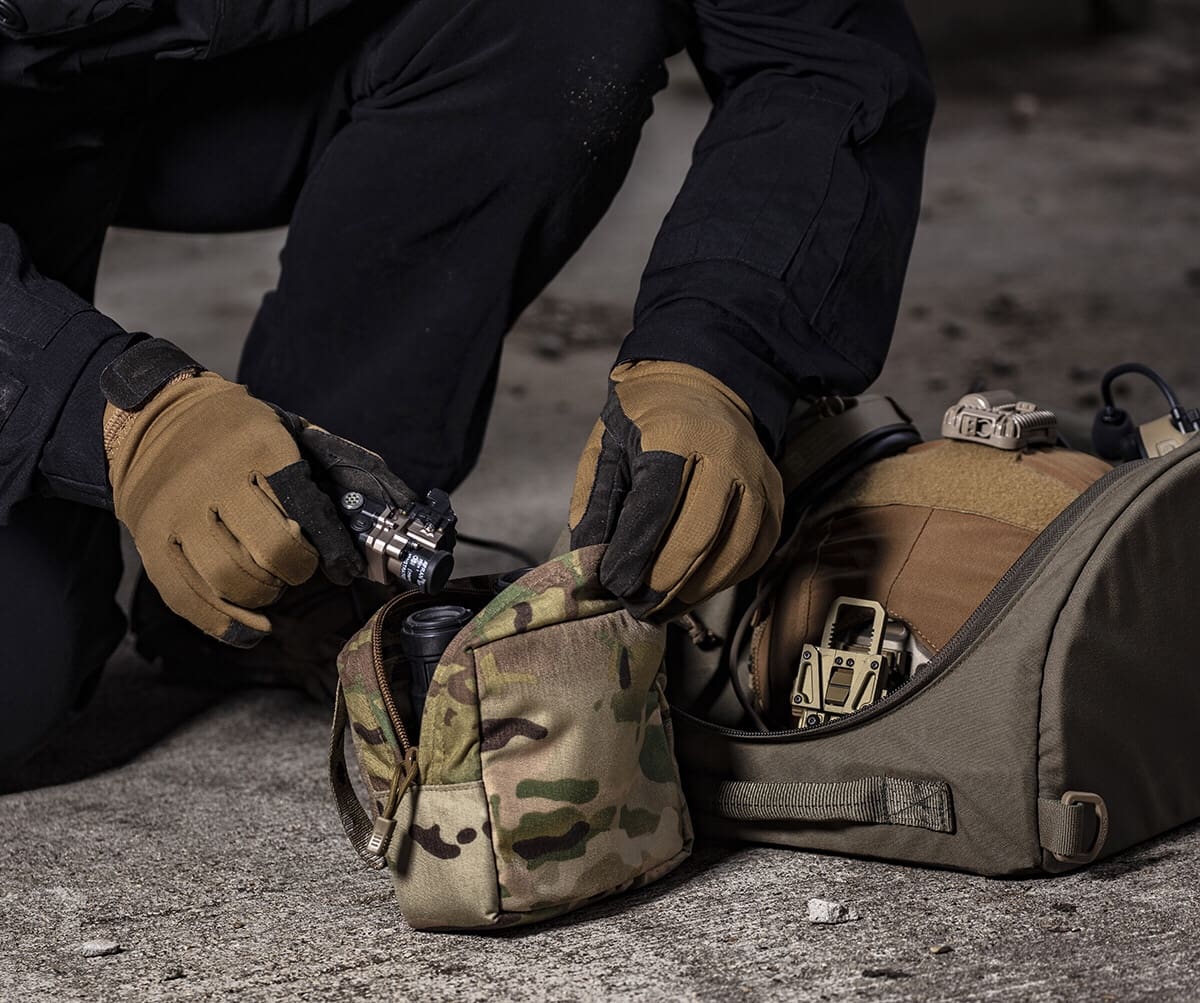
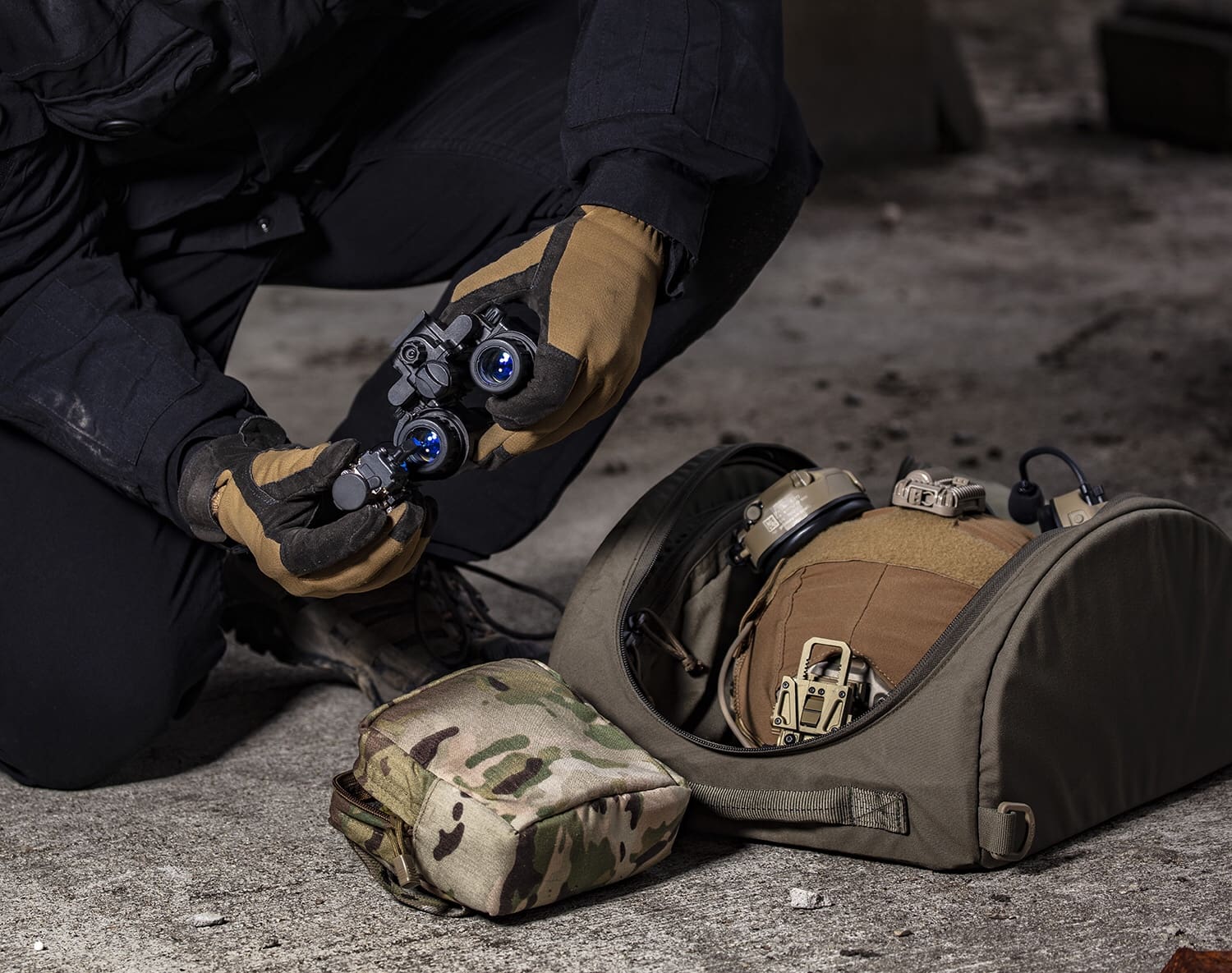
Today we have another edition of FirstSpear’s OEM Partner Series. This time we are featuring one of FirstSpear’s OEM customers: SAFRAN Optics 1, a global leader in the design and production of electro-optic systems. FirstSpear manufactures several padded pouches and pockets to secure and protect some of SAFRAN Optics 1 most advanced systems like the E-COSI.

What is an E-COSI?

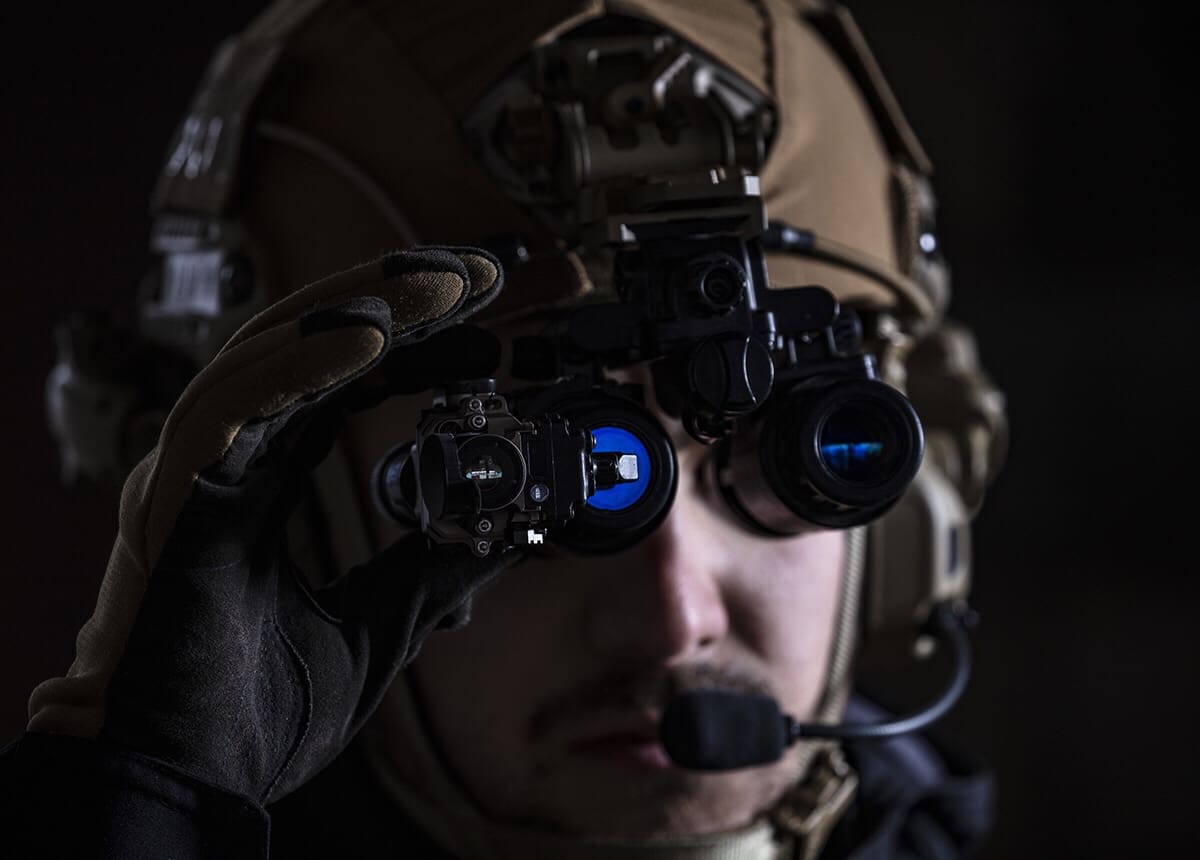
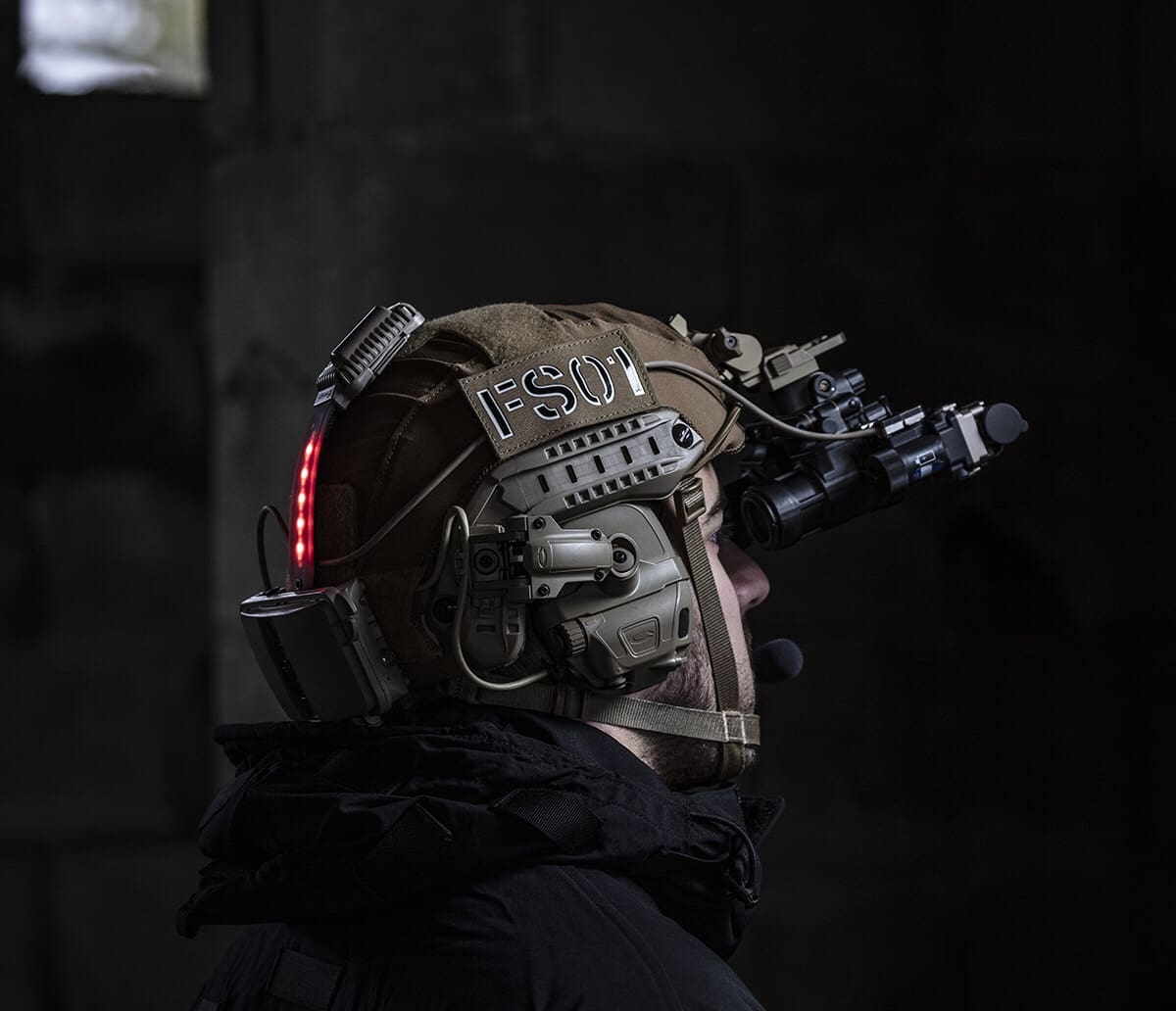
The Enhanced Clip-On SWIR Imager (E-COSI) increases situational awareness by overlaying an optically aligned SWIR (Shortwave Infrared) on a user’s existing NVDs. Its AR (Augmented Reality) capability has a HUD (Head’s Up Display) that provides real-time, geo-referenced, XML-based AR as well as navigation and route execution guidance.

E-COSI Highlights

· Single battery operation (3.5+ hrs), or with external battery pack (up to 24hrs)

· Compact and lightweight, attaches in seconds onto simple brackets, no tools required

· Simple push-button controls

· Becomes a remote HUD for identifying teammates, targets and route execution

· MIL-STD-810 Tested

· Comes with a custom FirstSpear Berry Compliant soft pouch

· Has an optional see-through day option (for See-Spot operation), stay tuned for a continuation of our OEM Partner Series with Optics 1, focusing on their E-COSI See-Spot Extender, a 2x magnification direct view see-spot device.

Why was the E-COSI originally developed?

Optics 1 works directly with government customers to understand threats on the battlefield and develop innovative, technological solutions to counter those threats. A government customer sought our excellence in electro-optics for the development of a SWIR weapon sighting system. The device required the ability to see SWIR energy while wearing NVDs, used in conjunction with a SWIR laser aiming/illumination device. Together, we developed the E-COSI clip-on device which has been fielded to most branches of the US Military, and foreign allied forces.

How did the relationship between FirstSpear and Optics 1 begin and why did Optics 1 ultimately choose FS manufacturing?

Optics 1 and FirstSpear have been working together for 3 years. FirstSpear maintains a reputation for proven performance and has always been easy to work with in the development of pouch systems for our electro-optic devices.

Any new product developments between Optics 1 and FS in the future?

FirstSpear is Optics 1’s go-to partner high quality custom material solutions. As we develop new products we always consider FirstSpear as our partner for device pouches.

For more information about the E-COSI, contact Safran Optics 1, T: 603-296-0469, E: sales@optics1.com

www.optics1.com

Soldier Holistic Lethality Demonstration Provides Insight into Soldier Technology Needs

Thursday, September 5th, 2019

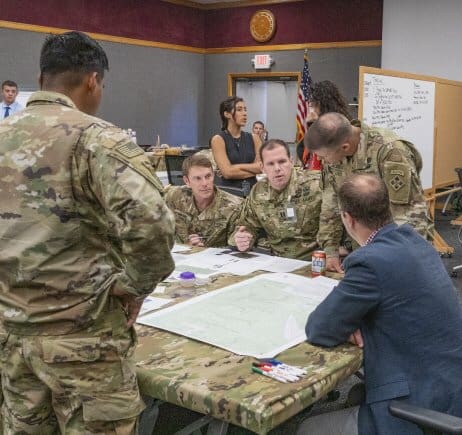
NATICK, Mass. — A Soldier Holistic Lethality Demonstration, or SHLD, Wargame and Familiarization Overview took place recently at the U.S. Army Combat Capabilities Development Command Soldier Center. The event was part of a larger ongoing SHLD effort by CCDC Soldier Center that has included gathering data from ongoing Soldier touchpoint participation, which has enabled CCDC SC to identify technology gaps, as well as prioritize suites of technologies that will enhance capabilities for the future squad of 2028 to 2040.

The technical lead for the wargame was Lisa King-Schiappa, team lead for the Protection Technology Development, Expeditionary Protection Branch in the Expeditionary Maneuver Support Directorate, or EMSD, at the CCDC SC. King-Schiappa also leads CCDC SC’s overall SHLD effort. Terry Twitchel of the CCDC SC’s Soldier Squad Interface Team served as the operations lead for the wargame.

The wargame represented a collaborative engagement between CCDC SC’s world-class scientists and engineers and Soldier participants to determine what technologies will best address the needs of individual Soldiers and Soldiers operating in Squads in highly dangerous, highly mobile conditions. The purpose of the wargame was also to advance integrated protection solutions for Soldiers and squads that not only meet technological and strategic needs, but that are also lightweight and not easily detected.

CCDC SC is dedicated to using science and technology to ensure America’s warfighters are optimized, protected, and lethal. CCDC SC supports all of the Army’s Modernization efforts, with the Soldier Lethality and Synthetic Training Environment Cross Functional Teams being the CCDC SC’s chief areas of focus. The center’s science and engineering expertise are combined with collaborations with industry, DOD, and academia to advance Soldier and squad performance. The center supports the Army as it transforms from being adaptive to driving innovation to support a Multi-Domain Operations Capable Force of 2028 and a MDO Ready Force of 2035. CCDC SC is constantly working to strengthen Soldiers’ performance to increase readiness and support for warfighters who are organized, trained, and equipped for prompt and sustainable ground combat.

During the recent wargame, 10 CCDC SC technologies were tested as part of a series of vignettes, inspired by real-world scenarios and played out by Soldier participants. The event brought together the work of several CCDC SC directorates, including EMSD, the Aerial Delivery Directorate, the Combat Feeding Directorate, Soldier Protection & Survivability Directorate and the Soldier Performance Optimization Directorate.

The technology solutions inserted into the wargame included an improved camouflage face paint that enhances warfighter survivability due to increased signature performance and protection; quick-reaction camouflage spray paints in various military camouflage colors for use on textiles and plastics that will provide signature reduction; Joint Services spectral mitigation on uniforms/textiles/plastics that will result in visual, near infrared, and longwave infrared signature reduction; an industrial chemicals/materials water purification device; Soldier-Borne Sensor enhancements; the Joint Precision Air Drop System, or JPADS; the Close Combat Assault Ration; Li-Fi Network for Command Posts; a Squad Net that integrates light-based data mesh network technology with Soldier-mounted visual sensors and communications; and a fires-based decoy that provides physical deception of high value assets.

Participants in the three-day event included Soldiers from the Maneuver – Capabilities Development and Integration Directorate (M-CDID), Fort Benning, Georgia, and the 52nd Brigade Engineer Battalion (BEB) 2nd Infantry Brigade Combat Team, 4th Infantry Division, Fort Carson, Colorado, and CCDC SC, Natick, Massachusetts.

“It’s a data collection event, with 16 Soldiers participating,” said King-Schiappa. “We are not only going to look at CCDC-SC technologies that were down-selected, we are also driving data collection to identify technology gaps or products we should be working on.”

Soldier participation and input has played an important role in the progression of the SHLD effort overall.

“This exercise, and other similar Soldier touchpoints, are invaluable to this organization,” said Craig Rettie, deputy director of the CCDC Soldier Center. “The Soldier Center, much like other R&D organizations, has the resources to tackle many problems or create new battlefield opportunities for the Soldier. So the question comes down to: ‘Are we solving the right problems or creating the right opportunities for them?’ The only way to honestly answer that question positively is to truly introduce the voice of the Soldier into our decision-making processes from front to back. Everything from how our technical workforce conceptualizes future work to how we prioritize and fund that work, etc. The past three days represents a concrete example of how the Soldier Center is moving closer to the voice of the Soldier through organic interactions and dialog, all of which are firmly grounded in the operational backdrop of multi-domain operations.”

King-Schiappa said that the SHLD effort has identified that Soldiers and squads lack integrated and synchronized protection solutions, and it has resulted in the research of advanced suites of technology solutions that provide the squad additional standoff through improved situational awareness, enhanced mobility and holistic protection.

She explained that Soldier touchpoint data is used to determine integrated synchronized protection solutions that correlate to mission success.

“SHLD will also inform and help to shape other Soldier Lethality efforts,” said King-Schiappa.

Sgt. Maj. William Smith of M-CDID, Fort Benning, participated in the wargame and noted the exercise’s value.

“Anytime we get a chance to get Soldiers in a room and get their feedback on new technologies and what will work in the field benefits the Army,” said Smith.

His sentiments were echoed by another participant Capt. Idi Mallari, 52 BEB, 2 IBCT, 4ID, Fort Carson, Colorado.

“I think that to bring our Soldiers here to see the different kinds of technology and how they can be used in a mission is very beneficial,” said Mallari.

CCDC SC recognizes that Soldier input is essential to advancing technologies.

“It is extremely valuable to get feedback from Soldiers who may be using the equipment we are developing and to get the complied data that helps us understand what the operational impact of these technologies could be on the mission,” said Tom Reynolds, branch lead for Expeditionary Protection Branch in EMSD. “The other thing that we scientists and engineers get excited about with the wargames is seeing the creativity that Soldiers bring to the table in envisioning the use of items we are developing in ways we haven’t thought of. This allows us to tweak designs to better fit those uses.”

Story by Ms. Jane Benson (CCDC SC)

Photo by Mr. Richard Walunas (CCDC SC)

Canadian Army – Uniform, Camouflage and Equipment Modernization Process Marches On

Wednesday, September 4th, 2019

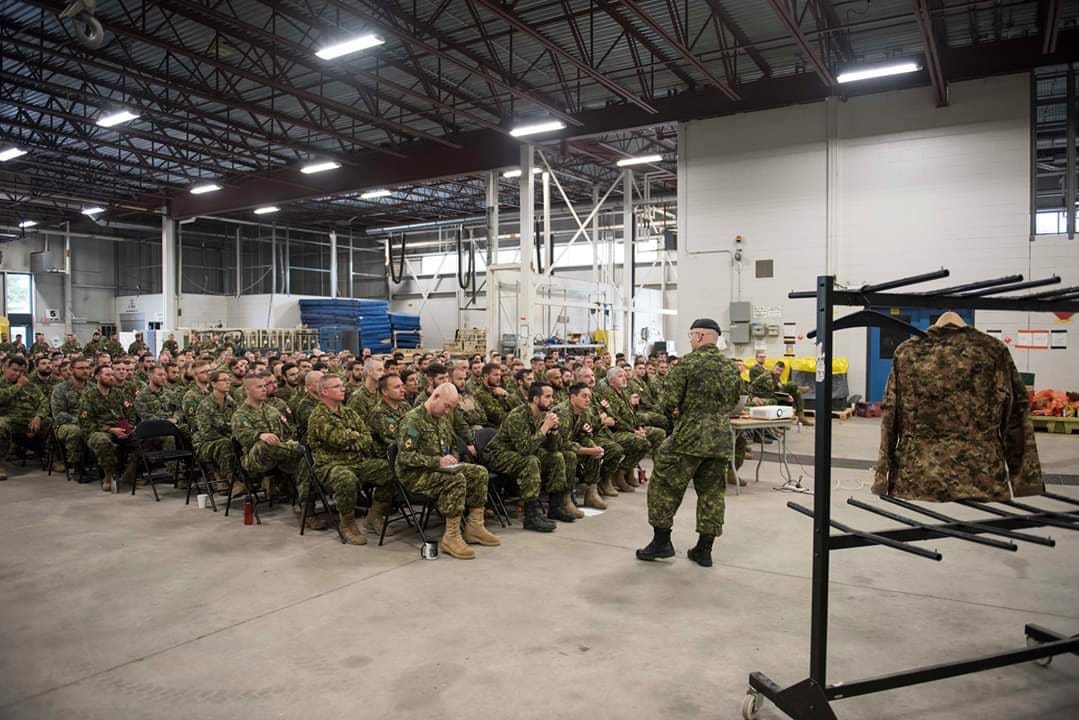
Lieutenant-Colonel Raymond Corby speaks to 3rd Battalion, The Royal Canadian Regiment, about the Soldier Clothing and Equipment Modernization Trial at Garrison Petawawa on September 4, 2019. Photo By: Private Robert Kingerski PA01-2019-0286

Ottawa, Ontario — Some 600 soldiers at 4th Canadian Division Support Base (4 CDSB) Petawawa will soon be standing out as they help the Canadian Armed Forces test a new Canadian Disruption Pattern (CADPAT) to help select a replacement camouflage for the current iconic woodland and arid CADPAT patterns.


The original distinctive CADPAT, revolutionary for its time, was initially developed in 1997. It is most closely associated with the Canadian Army but it is also worn by Navy and Air Force personnel when they work within Army lines.

Canadian Special Operations Forces personnel wear another pattern, MultiCam, which is not being replaced.

Since CADPAT was issued, there have been a number of advances made in camouflage research, specifically protection from detection by infra-red and other night vision systems.

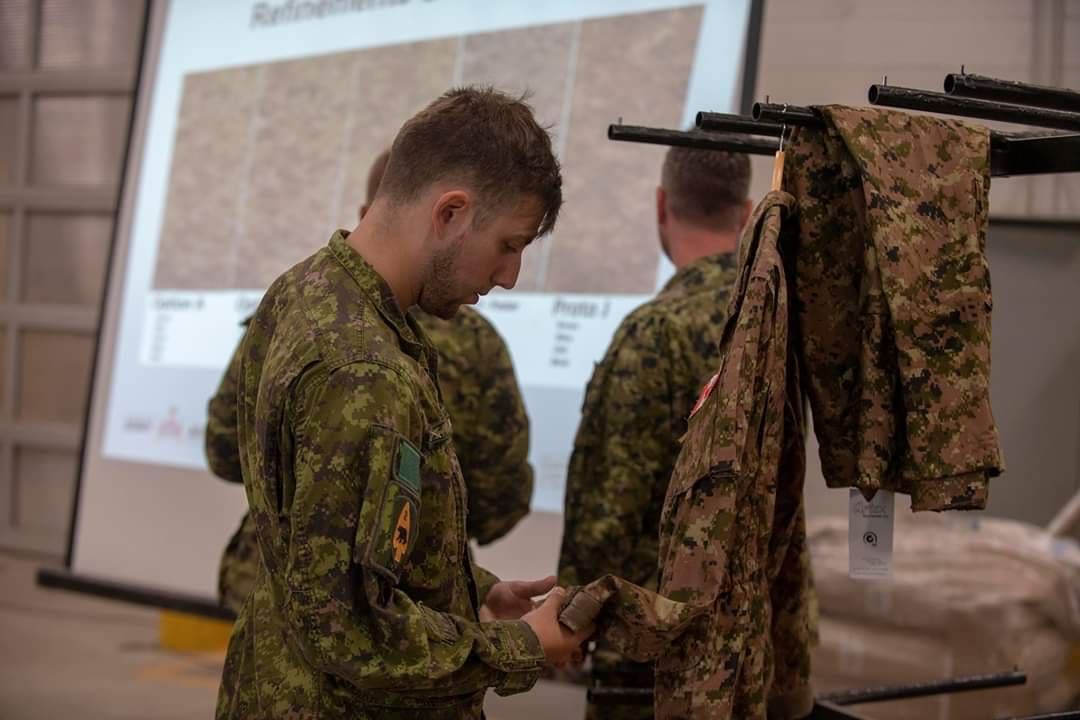
Starting at the end of September 2019, 3rd Battalion, The Royal Canadian Regiment will begin wearing coats and trousers, shell fragmentation protective body armor, bush caps, helmet covers and rank patches in the “Prototype J” mid-spectrum pattern.

This new four-colour pattern falls in the middle of the camouflage spectrum, not overly emphasizing brown or green tones.

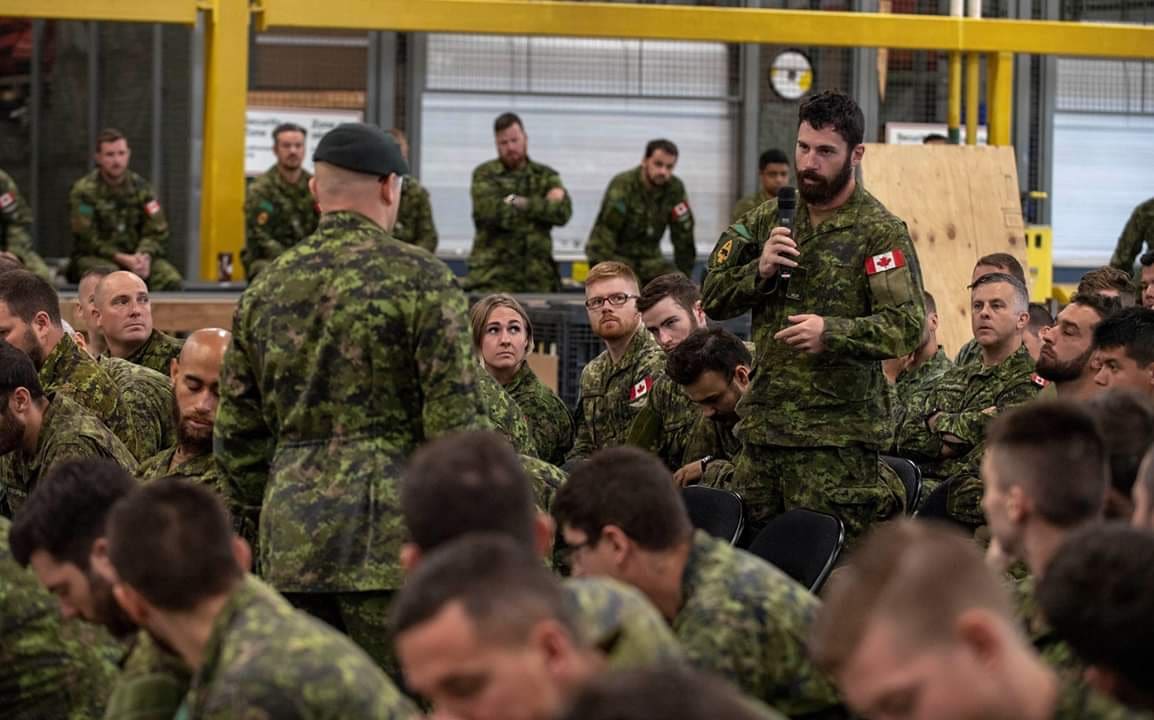
A member of 3rd Battalion, The Royal Canadian Regiment, asks a question to Lieutenant-Colonel Raymond Corby about the Soldier Clothing and Equipment Modernization Trial at Garrison Petawawa on September 4, 2019. Photo By: Able Seaman Elizabeth Ross PA02-2019-0286-007

While there have been over a dozen patterns tested, this is the first pattern to be taken out of a lab and tested using real soldiers, who are undergoing rigorous training for overseas operations. There will likely be adjustments made to the pattern resulting from this trial.

The trial will last until July 2020. During this time, the Human Factors Support Cell from the Soldier Systems Directorate within Director General Land Equipment Program Management will seek user feedback about the “Prototype J” pattern by conducting large-scale questionnaires.

The team will also conduct data collection, focus groups, and 3D body scanning to define how the current operational uniform and personal equipment can be improved.

This study will also include seeking out soldiers of smaller stature, including but not exclusively women, to ensure that the next generation of clothing and equipment fit the widest variety of soldiers possible.

A member of 3rd Battalion, The Royal Canadian Regiment, inspects the prototype uniform from the Soldier Clothing and Equipment Modernization Trial at Garrison Petawawa on September 4, 2019. Photo By: Able Seaman Elizabeth Ross PA02-2019-0286-012

The Soldier Operational Clothing and Equipment Modernization (SOCEM) project, led by the Canadian Army Director of Land Requirements, in cooperation with Assistant Deputy Minister (Materiel) and Defence Research and Development Canada, has been working for over two years on harnessing technological advances to improve the functionality of Canadian Armed Forces operational uniforms and equipment.

The goal is operational clothing and equipment that protect and fit better while lightening the load carried by soldiers.

Transitioning to a single pattern from the current temperate woodland (green), and arid (tan) will also create efficiencies in terms of logistics.

With the final decision expected no later than 2022 and a full roll out 2027, the interim years will see mixed uniforms and equipment as items in the new pattern are gradually acquired and put into service.

By Eric De Lafontaine, Manager – Soldier Operational Clothing and Equipment Modernization, Directorate of Soldier Systems Program Management

Army Closer to Delivering New Infantry Squad Vehicle

Tuesday, September 3rd, 2019

DETROIT — The Army is one step closer to fielding a new infantry squad vehicle after naming three industry leaders to develop prototypes, Aug. 23, 2019.

The $1 million mock-up contract makes strides toward the Army’s goal of producing new ISVs in 2020.

“The modernized vehicles will provide enhanced tactical mobility for an infantry brigade combat team to move quickly around the battlefield,” said Steven Herrick, Ground Mobility Vehicle product lead, U.S. Army Program Executive Office Combat Service & Combat Service Support, adding the vehicles will have ability for “repositioning operations to provide commanders greater freedom of movement and action.”

In February 2019, the Army approved a procurement objective and plans to purchase 649 ISVs.

A nine-Soldier infantry squad, along with associated equipment, will comfortably maneuver in the vehicles up to 5,000 pounds, Herrick added.

The scheduled delivery date for all three competing teams is Nov. 13, at Aberdeen Test Center in Maryland for initial assessment. The competing teams include Oshkosh Defense/Flyer, GM Defense, and SAIC/Polaris.

“Upon their arrival at the Maryland proving ground, all designs will compete in several performance, operational, and characteristics tests. Evaluations are scheduled to run through December,” Herrick said.

Following their early trials, the vehicles will be moved to Fort Bragg, North Carolina, to undergo their second round of testing. Once there, they will be subject to operationalized assessments through a series of tests on how effective the prototypes work for Soldiers.

“The Army plans to down select to one company for production in the second quarter of fiscal year 2020,” Herrick said. “This selection will be based largely on Soldier input and response to a formal request for proposal for production.”

The ISVs have been intended to provide ground mobility vehicle capabilities to the Army since the original model.

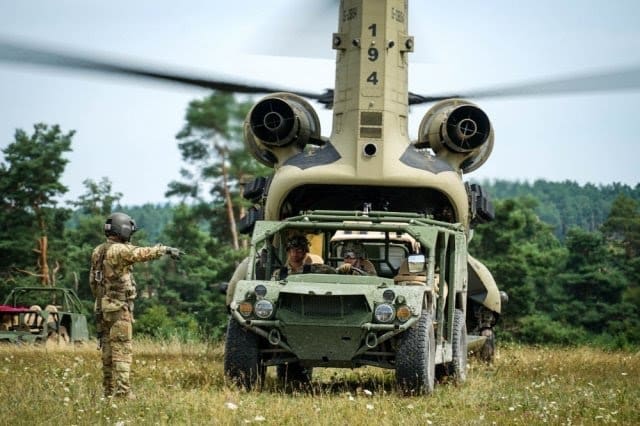
At first, the Army started looking toward industry to develop the new ISV in September 2018. Lightweight vehicles are essential to increase speed in combat and provide ability to be transported by helicopter into austere locations, Herrick said.

“Ground mobility vehicles provide flexibility for entry operations, permissive and non-permissive, to counter threat anti-access strategies through the use of multiple entry points — air-drop, air-land, and air-insertion,” he said.

By Thomas Brading, Army News Service