TYR Tactical

Archive for the ‘Guest Post’ Category

Space Force to Accept Air Force Reserve Volunteers for Part-Time Positions

Sunday, September 7th, 2025

ARLINGTON, Va. (AFNS) —  

Air Force Reservists in space-related career fields interested in volunteering to join the U.S. Space Force as Guardians serving in a part-time capacity can apply from Sept. 3 to Oct. 10.

This transfer option is part of the Space Force Personnel Management Act, which was signed into law as part of the Fiscal Year 2024 National Defense Authorization Act. The first phase of PMA, which selected Air Force Reservists for full time Space Force roles, was completed June 2025.

When fully implemented, PMA will enable the Space Force to create a new model of service that integrates active-component Guardians and Air Force Reservists serving in space-focused career fields into a unified service that offers both full- and part-time service options. This new construct will permit the Space Force to forego the use of Reserve component forces to fill steady-state, full-time requirements and will maximize talent alignment to service needs.

“This part-time opportunity is an important next step toward fully integrating the talent we need into a single component, best equipped to ensure readiness and achieve our nation’s warfighting missions,” said Chief of Space Operations Gen. Chance Saltzman.

Air Force Reserve eligibility includes:

· Air Force Reserve Officers who hold the following Core IDs: 13S; 17X; 14N; 6X.

· Air Force Reserve Enlisted Airmen who hold the following Control Air Force Specialty Codes: 1C6X1; 1N0; 1N1; 1N2; 1N3; 1N4; 1N8; 1D7X1; 1D7X2; 1D7X3.

· Eligibility outside of 13S and 1C6 must have space experience. The Transfer Board will review duty history to ensure at least one prior assignment in a space organization is reflected.

· Eligible service members must be fully trained in the career field in which they are applying.

Selected Airmen must transfer in their current career field, with the following exceptions: Officers selected from the 61X, 64P, and 65X career fields will re-core to 62E or 63A Space Force Specialty Codes. Enlisted E-8s and E-9s selected for transfer will re-core to the 5Z800 or 5Z900 SFSCs.

“The Space Force is about to integrate some of the most professional space operators,” said Chief of the Air Force Reserve and Air Force Reserve Command Commander Lt. Gen. John Healy. “I have no doubt they will be key to advancing security in the space domain.”

In time, the Air Force Reserve, like the Air Force, will no longer maintain space operations as career fields, meaning Reservists with 13S and 1C6 specialties must volunteer to transfer to the Space Force or re-train under a different Air Force Specialty Code.

Officers selected for transfer to part time duty positions incur a minimum three-year service commitment. Enlisted Airmen must enlist in the Space Force for a minimum of three years, maximum six years.

Air Force Reservists who transfer into the Space Force with 15-18 years satisfactory service will be allowed to remain in a part-time work role until they qualify for retirement. Once retirement eligible, the member must participate in the Guardian Assignment Timeline for a full time or part time work role. These members may elect to participate in the GAT at any time for a full-time work role prior to retirement.


Interested Air Force Reservists can apply via MyVector (Common Access Card-required) and can access additional application details and requirements on the Space Force Transfer page. It is important to note that the Air Force Reservist to part-time Space Force transfer opportunity is distinct and separate from the Air National Guard to full-time Space Force transfer opportunity.

Secretary of the Air Force Public Affairs

USSOCOM Hosts a Change of Responsibility

Saturday, September 6th, 2025

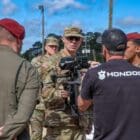
MACDILL AIR FORCE BASE, Florida — U.S. Special Operations Command held a change of responsibility ceremony, Sept. 5, 2025, at the Davis Conference Center.


U.S. Army Command Sgt. Maj. Andrew J. “AJ” Krogman assumed responsibility as the U.S. SOCOM command senior enlisted leader from U.S. Army Command Sgt. Maj. Shane W. Shorter, who held the position for more than three years.

U.S. Army Gen. Bryan P. Fenton, commander of U.S. SOCOM, hosted the event and reflected on the importance of noncommissioned officer leadership.

“SOF [Special Operations Forces] NCOs are the manifestation of our first SOF Truth, humans are more important than hardware – and truly – they are SOF’s credentials,” said Fenton. “And as our credentials, they lead the largest part of the SOF enterprise, our enlisted force, and set the example through their decades of service, of competence, confidence and character.”

Shorter thanked senior leaders from across the joint force and international SOF allies who attended the ceremony.

“Special Operations Forces are known as pathfinders and trailblazers, but it takes courageous leaders like all of you to clear those paths,” said Shorter. “The way every senior officer in this enterprise empowers NCOs sets a gold standard not only for SOCOM but for the entire military and our partners across the globe.”

As he passed the colors, Shorter said he was confident about the future of the command.

“I can think of no one better suited to assume the responsibilities at the pinnacle of Special Operations NCO leadership, advising at the helm of a 70,000-person global enterprise, than Command Sgt. Maj. Krogman,” he said. “You exemplify the best of special operations leadership. SOCOM is incredibly fortunate to have you stepping into this vital role.”

Fenton echoed that confidence, noting Krogman’s extensive special operations experience, including his role as the Joint Special Operations Command senior enlisted leader.

“Command Sgt. Maj. Krogman, you are known as a creator, innovator, out-of-the-box thinker, atypical and non-traditional,” said Fenton. “You are exactly what SOF needs.”

Krogman thanked Fenton for his support and described the transition as seamless and the mission ahead as urgent.

“The significance of U.S. SOCOM’s role today cannot be overstated. In an ever-changing global landscape, the need for special operations is more critical than ever – these are America’s elite warriors at the tip of the spear, ready to respond to any challenge with precision, agility and unwavering resolve,” said Krogman. “As we look to the future, the importance of special operations will only grow, and I am honored to be part of this vital mission. I am eager to work alongside each of you, to listen, to learn, and to lead with compassion and determination.”

Story by Michael Bottoms, U.S. Special Operations Command

Photos by TSgt Marleah Miller

FirstSpear Friday Focus: Skirmisher Firearms Training Bag

Friday, September 5th, 2025

The SKIRMISHER FIREARMS TRAINING BAG is a purpose-built solution for organized, low-profile transport of firearms and training gear. It’s designed to hold one (1) AR-style take-down rifle using an internal retention strap, as well as three (3) full-sized handguns—including weapon lights—in padded, protective pockets. 

Designed with efficiency in mind, the Skirmisher includes four hook-and-loop magazine attachment straps, each capable of securing multiple magazines. The top center bin allows for quick access to loose “top-up” rounds, while additional spacious pockets accommodate ear pro, eye pro, boxed ammo, and other mission-critical accessories.

Constructed with padded protection in all the key areas, this bag ensures safe transport for your expensive optics, lasers, and lights while providing multiple carry options—backpack, single-strap sling, or grab-and-go using the continuous-length webbing handle. Its discreet exterior design keeps your loadout under the radar, ideal for those operating in non-permissive or urban training environments.

The Skirmisher’s versatile internal layout and secure compartments help streamline pre-range loadout and post-range teardown. Whether you’re running drills, attending a course, or keeping your tools at the ready for emergency response, the Skirmisher delivers rugged, adaptable performance.

Built for serious shooters who demand efficient capability without compromise, this bag blends durability with tactical practicality. The Skirmisher isn’t just a firearm transport solution—it’s a mobile command center for your range day.

To request an estimate click image above or visit First-Spear.com/Request-For-Estimate. FirstSpear is the premier source for cutting edge-tactical gear for military, law enforcement and those who train. For more information visit First-Spear.

British Soldiers Advance from Flying to Fighting with Drones

Friday, September 5th, 2025

From maintenance to flying one-way missions to strike the enemy, soldiers have progressed their skills from flying to fighting with drones for the first time.

First Person View (FPV) Uncrewed Aircraft Systems (UAS) provide a precision strike capability on the battlefield and are being used to great effect by the Ukrainian Armed Forces. Flown using a virtual reality headset and carrying small explosive charges, the manoeuvrability of FPV UAS means they can punch above their weight and cost, such as flying through an open hatch to destroy an armoured vehicle by exploding inside it.

We’re teaching soldiers from the ground up how to configure and fly FPV UAS and then how to fight with them, working as a team alongside reconnaissance drones to find and strike targets.

COLOUR SERGEANT DANNY WADE, 2ND BATTALION THE PARACHUTE REGIMENT

At the Bramley ranges in Hampshire, a three-week workshop (7-25 July) has taught soldiers already trained to fly FPV UAS about how to fight with them – known in military jargon as One Way Attack (OWA). The training was split between classroom lessons, flight simulators and training in the field to teach soldiers how to work with reconnaissance UAS to fly strike missions, while avoiding being targeted by enemy UAS and Electronic Warfare capabilities.

The workshop was delivered by 2nd Battalion The Parachute Regiment’s UAS Platoon, the first to be set up in the Army. The instructors have trained at the Army’s UAS Centre at Lulworth as OWA team commanders and were cascading their skills to qualify soldiers from across 1st (UK) Division as OWA operators.

Colour Sergeant Danny Wade, commander of 2 PARA’s UAS Platoon, lead the training.

“We’re teaching soldiers from the ground up how to configure and fly FPV UAS and then how to fight with them, working as a team alongside reconnaissance drones to find and strike targets,” he said. “It’s very different training and FPV flying is a hard skill to learn, but everyone has put the effort in and progressed well.

This is where warfare is going, and it is interesting to be part of it. The skills I’ve learnt are very different to what you would expect an infantry soldier to do.

KINGSMAN KAIDYN HILTON, 1ST BATTALION THE DUKE OF LANCASTER’S REGIMENT

“The entry point is for a soldier to have 30 flying hours on a simulator, and across the three weeks they’ll have logged another 100 hours both on the simulator and flying. The ability to fly accurately is more important than speed, because we want to able to hit exact points on a target to maximise the damage.”

Kingsman Kaidyn Hilton, of 1st Battalion The Duke of Lancaster’s Regiment, said his unit had used UAS for reconnaissance assets “for some time”, but OWA was “something new”.

“FPV drones are hard to fly, because you are fully in control of it, whereas a normal drone is basically on autopilot and you’re directing it where to go,” he said. “It can be disorientating because when you’ve got the goggles on you need to really concentrate on flying, and you’re getting told information about the tactical situation by someone who is outside the bubble that you are in. There’s a dose of adrenaline, because you know you’ve got control of a weapon that can hit bigger targets more quickly than the infantry used to be able to do. 

“This is where warfare is going, and it is interesting to be part of it. The skills I’ve learnt are very different to what you would expect an infantry soldier to do.”

It’s been a steep learning curve for us with a lot of trial and error. There’s so much to think about, from logistics to command and control, and how we coordinate UAS with artillery and air support.

COLOUR SERGEANT DANNY WADE, 2ND BATTALION THE PARACHUTE REGIMENT

PARA’s UAS Platoon, formed in late 2024, is at the forefront of bringing OWA into how the Army fights. It has taken part in 2 PARA exercises as both friendly and enemy forces to get the battalion thinking about operating with and against drones.

CSgt Wade said: “The battalion took the decision to create a specialist platoon to really make the most of UAS. This is an entirely new class of weapon and, as yet, there’s no formal Army doctrine on OWA. It’s been a steep learning curve for us with a lot of trial and error. There’s so much to think about, from logistics to command and control, and how we co-ordinate UAS with artillery and air support.

When I joined up, drones were a niche capability somewhere in the artillery world, and I would never have thought that in my career I would be training infantry soldiers as pilots.

COLOUR SERGEANT DANNY WADE, 2ND BATTALION THE PARACHUTE REGIMENT

“We’ve looked hard at the technology, studied how the Ukrainians and NATO armies are using it, and developed our own tactics. This workshop is about sharing our thinking and skills for the soldiers we’re training to take back and adapt to suit their unit’s role and approach.”  

CSgt Wade joined the Army in 2008 and has deployed on operations in Afghanistan twice.

“When I joined up, drones were a niche capability somewhere in the artillery world, and I would never have thought that in my career I would be training infantry soldiers as pilots,” he said.

“At first, there wasn’t much enthusiasm for UAS, because the culture was that paratroopers are about kicking down doors and clearing trenches. But there’s been a real shift, because everyone can see what’s happening with UAS in Ukraine and that they are going to feature massively on future battlefields.”

Via British Army

MOD Crown Copyright

Visit OSI at ATA 2025 in Indianapolis

Thursday, September 4th, 2025

Come join OSI / Ocean State Innovations as we present the latest fabric & textile products for all your production needs at the upcoming ATA Show in Indianapolis, Indiana – Booth # E1806 – November 5th – 7th, 2025

US, Indonesian, Japanese Personnel Perform Airborne Jump at Super Garuda Shield 25

Thursday, September 4th, 2025

BATARAJA, Indonesia — Paratroopers from U.S. Army’s 1st Special Forces Group, 11th Airborne Division, Tentara Nasional Indonesia and Japan Ground Self-Defense Force jumped into the Bintang drop zone during an airborne operation on Aug. 27, 2025.

The combined force exited the aircraft over a designated drop zone, executing a coordinated airborne operation designed to strengthen interoperability between partner nations. The event highlighted shared tactics, techniques and procedures that enable multinational forces to integrate effectively during combined operations.

“It’s important that we do this type of training particularly with our multinational partners,” said Lt. Col. Scott Smith, Combined Joint Task Force Commander, assigned to the 11th Airborne Division. “Bringing additional nations into the fight introduces new challenges and risks, but that’s exactly why we do it here, in Bataraja. It’s far better to build that trust, refine that coordination, and push through the friction now, rather than wait until we’re in the middle of a real-world crisis.”

Prior to the jump, all participating paratroopers completed sustained airborne training. The training included reviews of aircraft exit procedures, body positioning and parachute landing techniques. Despite language differences, the universal nature of airborne operations allowed for a seamless execution between the countries.

Planning and execution of the jump required continuous coordination among jumpmasters, pilots and the drop zone safety officer. Communication throughout the operation ensured safe conditions from departure to landing.

“As the drop zone safety officer, it’s my job to enforce every requirement throughout the airborne operation,” said the 1st Special Forces Group DZSO. “If we miss even one, these paratroopers aren’t just facing a rough landing, they’re facing unnecessary risk, and that’s something I won’t allow in my drop zone.”

This was not the first airborne operation for Super Garuda Shield. Similar training took place in previous iterations in 2023 and 2024, reinforcing the continuity of combined airborne capabilities.

“The ability for three different nations to be able to execute a multinational airborne operation in unfamiliar drop zones is very difficult and it takes a lot of work from a strong team,” said 1st Lt. Joshua Walkup, assigned to 2nd Infantry Brigade Combat Team (Airborne), 11th Airborne Division.

Following the jump, service members from the participating nations held a wing exchange ceremony at the Baturaja Combat Training Center. During the event, paratroopers presented each other with their nation’s airborne wings, symbolizing an airborne tradition and reinforcing a shared commitment to regional security cooperation.

“For multiple nations to come together in a wing exchange shows just how deep the airborne bond runs,” said Lt. Col. Smith. “This isn’t just about tradition, it’s about trust, respect, and building combat-ready relationships with our allies that will carry onto the battlefield.”

The ability to conduct combined airborne operations is an important shared strategic capability for partner forces. Airborne insertion provides commanders with flexible options for rapid response across diverse terrain. Through training together, partner nations improve their ability to integrate during combined operations, ensuring they can respond effectively when required.

By SPC Brandon Vasquez

Army Announces Additional Competitive Award for Next Generation Command and Control (NGC2) Prototyping Efforts

Wednesday, September 3rd, 2025

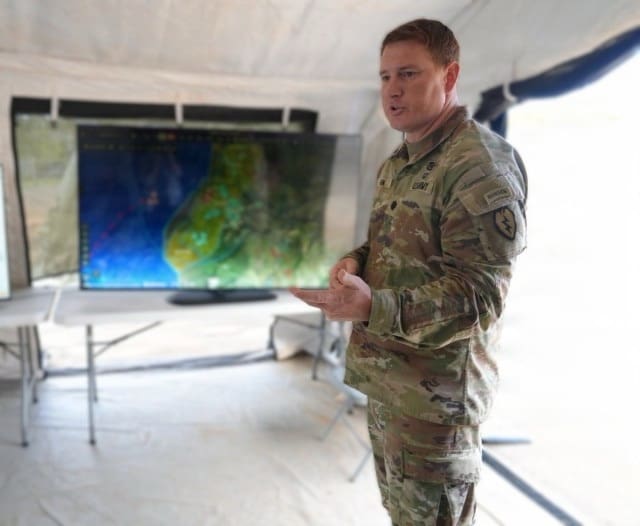
ABERDEEN PROVING GROUND, Md. — The U.S. Army has awarded a new Other Transaction Authority (OTA) agreement to Lockheed Martin Rotary and Mission Systems and their team of non-traditional innovators and commercial technology providers. This agreement aims to advance the Army’s Next Generation Command and Control division-level prototyping and experimentation by delivering an integrated data layer capability to the 25th Infantry Division.

Next Generation Command and Control, or NGC2, is the Army’s new, innovative approach to equipping commanders with the data they need to make better, faster decisions than the enemy amid rapid technological change.

The OTA was awarded through the NGC2 competitive Commercial Solutions Offering (CSO) on behalf of Program Executive Office Command, Control, Communications, and Network (PEO C3N) for $26 million with a not to exceed period of performance of 16 months.

The new OTA builds on the Army’s recently extended NGC2 OTA agreement to Team Anduril, which also includes several teamed industry partners. Vendor teams participating in NGC2 are flexible, allowing the Army to collaborate with the team leads to adjust capabilities and participants based on prototyping outcomes. Additionally, the Army is accepting proposals on the CSO for potential future team lead or component integration into the NGC2 technology stack.

“This isn’t the end of competition, this is the beginning. Through these two industry team lead agreements, we’ll evaluate different models for shared responsibility and aligned incentives during the NGC2 prototyping phase. We don’t want to have great capabilities simply at the start — we want a durable partnership model that keeps pace with an ever-evolving American tech sector and creates continual opportunity to find and insert the best technology solutions,” said Joseph Welch, deputy to the commanding general, Army Futures Command. “By encouraging companies to self-organize and team with each other and enabling them to integrate and solve these problems directly with the operational force, we will be able to rapidly and continuously improve the command and control capabilities we deliver to Soldiers.”

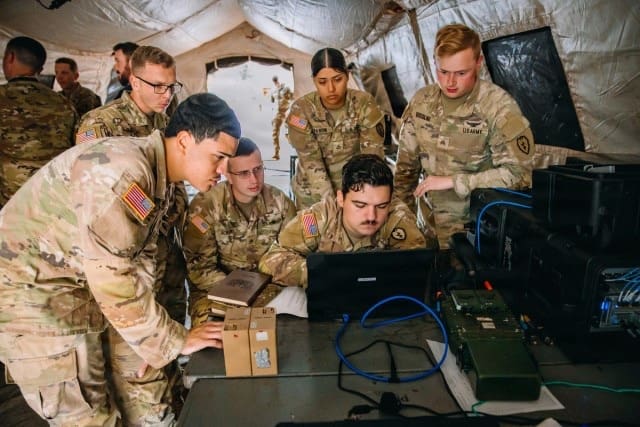
In July, the Army continued an OTA agreement to Team Anduril to maintain NGC2 momentum from Project Convergence experimentation. The agreement will deliver a NGC2 prototype architecture to the 4th Infantry Division, which is conducting prototyping across applications, data, infrastructure, and transport within a full “technology stack.” The Team Lockheed Martin OTA will focus on the integrated data layer, allowing the Army to assess NGC2 software options. These options will be supported by the C2 Fix transport and infrastructure capabilities already fielded to the 25th Infantry Division. The OTA also supports the Army’s goal of increasing competition and creating multiple opportunities for vendors to contribute technology to the NGC2 ecosystem.

“Next Generation Command and Control is about accelerating transformation and optimizing the innovation of both industry and our warfighters to deliver critical Warfighting capabilities at speed,” said Jesse Tolleson, acting assistant secretary of the Army for Acquisition, Logistics and Technology. “This is not business as usual and reflects exactly what we are trying to achieve through transformation across the Army and the acquisition community.”

Lessons learned by the 4th Infantry Division and 25th Infantry Division will provide insights into how heavy and light units will apply NGC2 differently. These efforts will also examine how NGC2 elements function across the technology stack, with a focus on the data layer’s ability to ingest, transport, and organize data from multiple warfighting systems. Additionally, they will inform future fielding considerations for the broader Army.

“The pace at which we are moving with NGC2, both in terms of contracting and getting the equipment into the hands of Soldiers, is exceptional and laser focused on making our formations faster and more lethal,” said Brig. Gen. Shane Taylor, PEO C3N. “The NGC2 CSO is one way we are transforming our acquisition approaches to drive continuous competition and equip Soldiers with technologies that will win in the future fight.”

Previously fielded with the Army’s C2 Fix capabilities — which provided a “fight tonight” division communications architecture with a mix of military and commercial off-the-shelf capabilities as a down payment on NGC2 transformation — the 25th Infantry Division is postured to demonstrate how NGC2 software capabilities operate with C2 Fix hardware.

“At the 25th Infantry Division, we are humbled to play a role in bringing Next Generation Command and Control into the hands of Soldiers,” said Lt. Col. Eugene Miranda, spokesperson for 25th Infantry Division. “This effort is about giving our leaders and formations the ability to sense, decide, and act faster together than any adversary. By working alongside our industry partners and allies, we are learning in real time how human skill, disciplined processes, and emerging technologies can come together to strengthen deterrence and win in the Indo-Pacific. We are proud to contribute to this Army-wide transformation, knowing that every lesson we learn here helps drive the change our Army needs at the speed of need.”

Through NGC2, the Army is transforming not only technology, but also processes in requirements, resourcing, acquisition and contracting. The NGC2 competitive CSO enables continuous open solicitation with specific “decision windows,” allowing vendors to support rapid integration of new capabilities. During the most recent CSO opportunity for NGC2 prototyping with 25th Infantry Division, more than 80 vendors submitted team lead or component provider proposals.

“Contracting for NGC2 is not just about buying a product; it’s about investing in strategic partnerships with vendors,” said Danielle Moyer, executive director, Army Contracting Command – Aberdeen Proving Ground. “By continuing to embrace open dialogue and collaboration with industry and offering an environment that continues to leverage competition across all aspects of the NGC2 ecosystem, we can better equip our Soldiers with the most agile and innovative technology available.”

By PEO C3N Public Communications Directorate

HACS (Helmet Accessory Chassis System) 00

Tuesday, September 2nd, 2025

WTF’s HACS (Helmet Accessory Chassis System) 00 offers cable organization and accessory mounting for your Ops-Core FAST Bump and BASE helmets.  Helmet Accessory Chassis System 00 is laser cut from, depending on the color chosen, Berry compliant Tegris® or CURV® self reinforced composite thermoplastic.  Included VELCRO® Brand ONE-WRAP® keeps cable neat and tidy.

Optional accessories included battery insert, battery insert carrier, general purpose pouch, and more to come.

Check out the overview video youtu.be/VWovd9dHx7o.

We’ll be supporting more models of helmets over the coming months.  As with all WTF products, HACS is proudly manufactured in the USA with Berry & NIR compliant materials by well compensated, skilled labor.

wtfidea.com