Phantom Lights

Archive for the ‘Guest Post’ Category

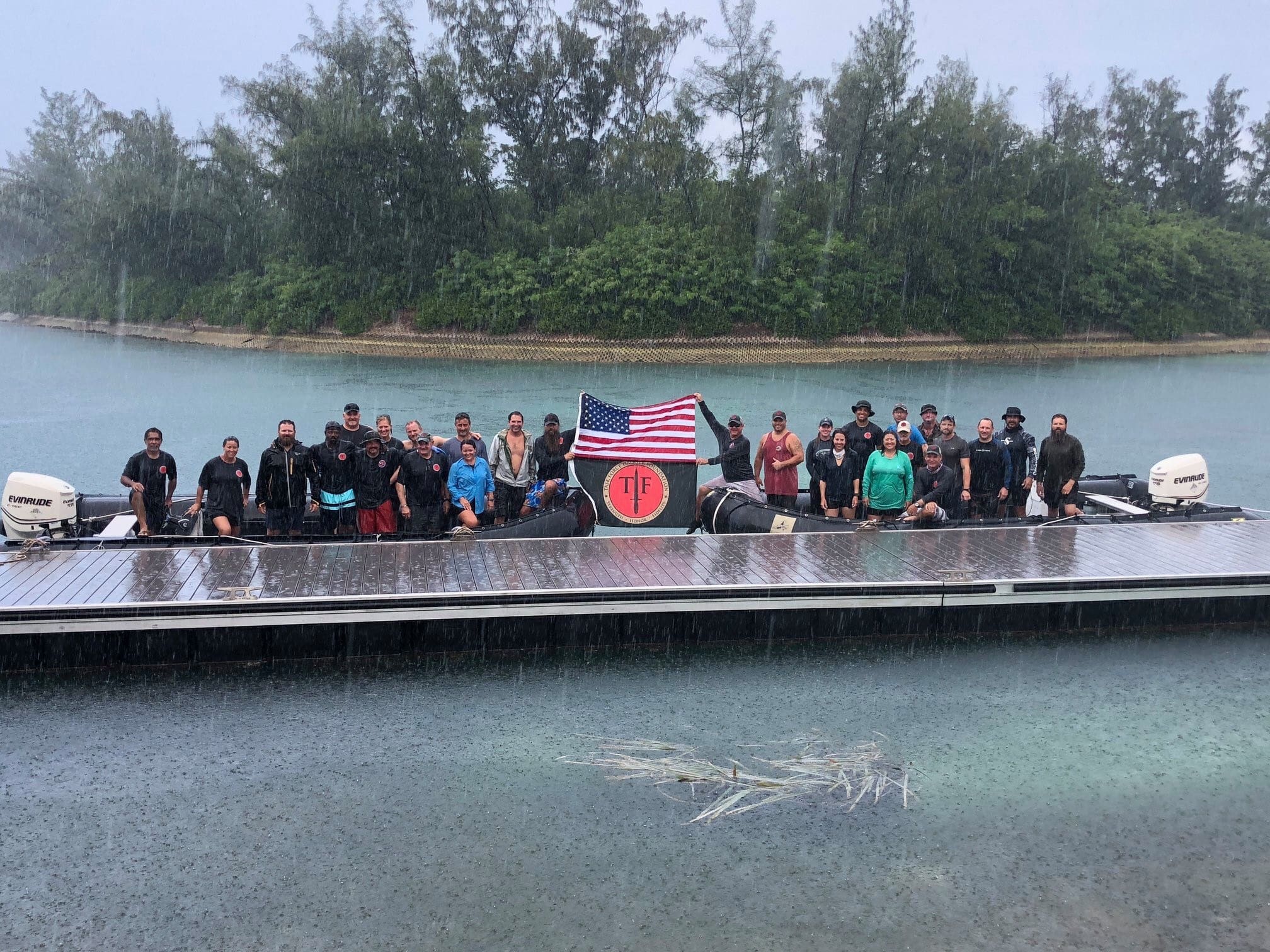
Task Force Dagger Assists Department of POW/MIA Accounting Agency in Repatriating American Casualties from the Battle of Saipan

Monday, July 15th, 2019

From the hand of Mark Stephens, USA (Ret):

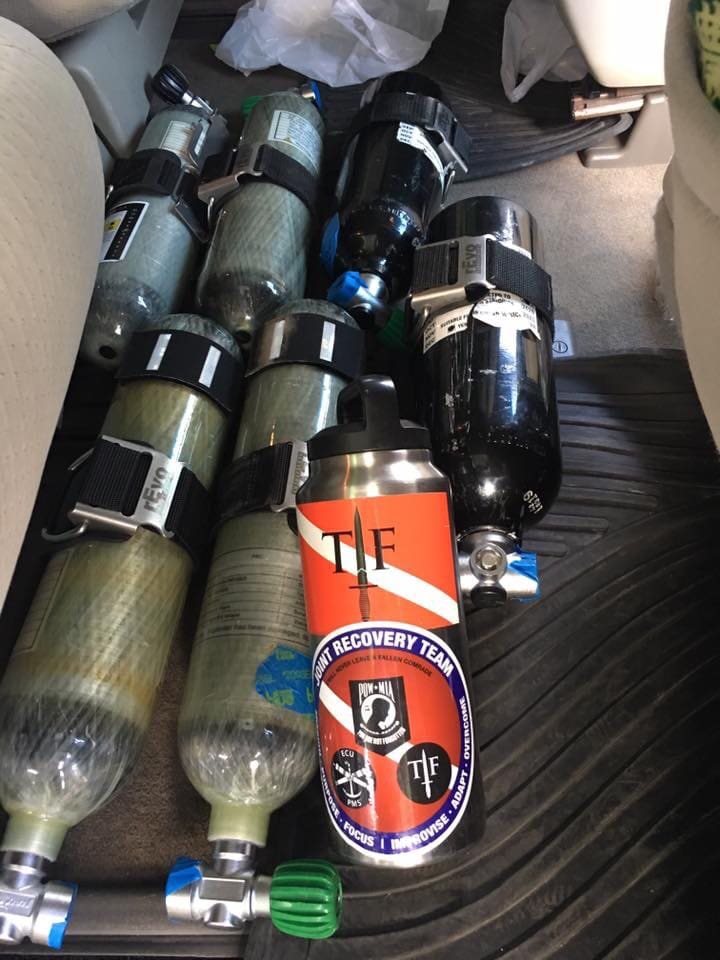
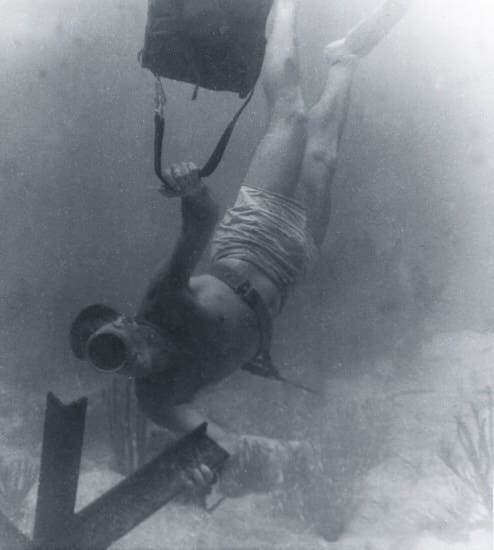
It is my honor to be a part of something so humbling this 75th Anniversary of events that occurred in 1944 during WWII. Out of respect to the families and a much deserved notification process I am not at liberty to discuss our mission in great detail but what I can say is we are returning to Saipan to look for and excavate WWII losses from the Battle of Saipan. We will be excavating a site possibly associated with a F6F-3 Hellcat that was found by our team last year. Several Hellcats were lost during 1944 and we are hoping to excavate and correlate the site with a loss with the hopes of a recovery. Also we will be searching for a B-29 that went down with the entire crew on a mission in 1944. It will involve magnetometer, side scan sonar, and ROV investigation followed by shallow to deep CCR (rebreather) target diving.

The mission is a continued collaboration and teaming of the Department of POW/MIA Accounting Agency (DPAA), East Carolina University Marine Archeological Department (ECU) and Task Force Dagger Foundation (TFDF). The TFDF team will be made up of some of our leadership/staff and SOF members that need Mission, Purpose and Focus. These three words, implemented, are incredibly important and impactful to those the foundation serves and supports.

We have received support from many in industry and other great Americans. These types of missions need to continue. It’s great to see so many knowing we can never forget! This is a promise our country made to everyone that has or is serving in our military.

www.taskforcedagger.org

New Cyber-Enabled System Provides a Key Countermeasure to Drone Threats

Sunday, July 14th, 2019

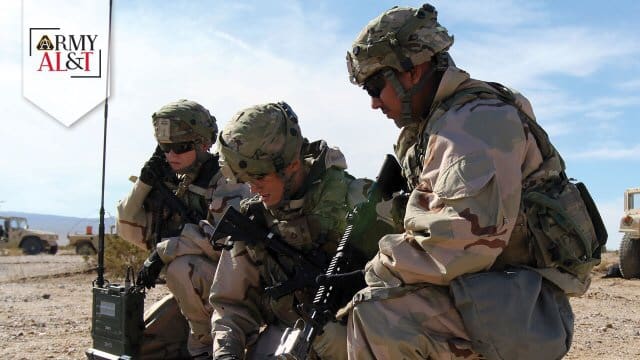
MOJAVE DESERT, Calif. — In the desert of the National Training Center, Soldiers got an opportunity to try something completely new. Along with the challenges of 14 grueling days of force-on-force and live-fire training exercises, the 3rd Brigade Combat Team, 1st Cavalry Division (3/1 CD) tried out a cyber-based prototype that complements electronic warfare systems to combat enemy drones, which are a growing threat to U.S. ground troops.

Using the Army’s enhanced cyber-enabled Counter-Unmanned Aerial System (C-UAS) capability, Soldiers with the 3/1 CD were able to detect and counter common small drones during their training. The new prototype alerted Soldiers to the presence of a drone and provided a means to target it, for protection across the brigade.

This integration of cyber-enabled prototypes with existing signal, intelligence and electronic warfare capabilities allowed the Soldiers to fix on a target and engage their fires cell, said Capt. Christopher Packard, electronic warfare and cyber electromagnetic activities chief for the 3/1 CD.

“That’s the goal right there, to reach the commander’s end state and to meet his intent for lethal targeting–those are some of the main concepts to focus on,” Packard said. “I think we’ve done well here, getting intelligence information as it’s passed …. that we can use for targeting. I’m looking forward to seeing where this goes in the future.”

CYBER SOLUTION SOUGHT

While the Army has a wide variety of solutions to counter drones, the new capability focused on bringing precision cyber techniques to bear as a complement to those other C-UAS systems. A small group of software developers within the U.S. Army Cyber Command (ARCYBER) and the Defense Digital Service custom-built software, developed a user-focused design and modified commercial off-the-shelf equipment to create pilot systems in early 2018.

Growing demand for a more robust and scalable solution generated a need for a rapid prototype. The Defense Digital Service completed the specialized software of the pilot system and transitioned development of a prototype to the Army Rapid Capabilities and Critical Technologies Office (RCCTO), which crafted an acquisition approach that integrated software and hardware. Working with Tobyhanna Army Depot and ARCYBER, RCCTO launched prototype production in November.

In less than three months, the integrated team sprinted and surged to deliver the new cyber C-UAS capability to the 3/1 CD. The new system is an interim solution that will continue to evolve as the Army applies direct Soldier feedback to improving design and performance. The integrated team is incorporating feedback from the unit’s rotation at the National Training Center (NTC) at Fort Irwin, California, which took place Jan. 7-25, as they develop a phase two prototype, to be delivered later this summer.

“This effort allowed the 3/1 CD to receive valuable C-UAS training ahead of their upcoming mission set,” said Jack Dillon, RCCTO’s cyber lead. “It also provided critical feedback that we are already feeding into the next version.”

A FAST-MOVING TEAM

Receiving a request to produce a never-used-before, cyber-enabled C-UAS on Aug. 22 and delivering it by Nov. 12 is not business as usual. However, ARCYBER, RCCTO and Tobyhanna, working in lockstep, were able to deliver.

“The RCCTO and Tobyhanna helped out with taking it from an advanced prototype and turning it into an engineering design model,” said 1st Lt. Aneesh Patel, with ARCYBER’s Cyber Solutions Development Detachment — Georgia, 782nd Military Intelligence Battalion, 780th Military Intelligence Brigade. “We designed our own hardware and schematics, but what we didn’t have was the proper ability to scale, and I think that’s important in a bridging strategy and for any prototype.”

The ability to turn a concept into a small package of operational prototypes for use by a unit required a proper yet flexible acquisition strategy that would also set the foundation for increased production later. In turning a concept into an operational prototype, Tobyhanna had to put together a complete drawing package using items from the depot and create the prototype while keeping to strict quality standards.

“We must do everything per Army regulations,” said Joe Lynn, a project manager for Tobyhanna Army Depot, located in Pennsylvania. “So, once everyone came on-site and saw what we do here, and that we’re basically a one-stop shop from concept to combat, it brought a better understanding.”

The process also required constant communication. This came in the form of coordination on the ground during the NTC rotation with the unit’s electronic warfare Soldiers, and during biweekly technical and synchronization meetings involving Tobyhanna, ARCYBER, the Defense Digital Service and RCCTO. Tobyhanna also hosted multiple face-to-face meetings to expeditiously solve technical questions and challenges. On the project management end, RCCTO worked in parallel to address typical program, legal and budget reviews. Of particular note, in addition to constructing the prototype from an engineering concept, the RCCTO, ARCYBER and Tobyhanna put in place a training plan for the 3/1 CD.

SOLDIER INPUT, ON THE GROUND

This rapid approach unfolded on the ground at NTC, as Soldier input went directly to engineers on-site so that they could make changes quickly, sometimes within hours.

“Having that agility really made it possible to have mission success and also to get a lot of feedback to better the system,” Patel said. “Being a newer system and a new tool for a maneuver unit, there are going to be a lot of things we don’t know as [cyber] engineers, and a lot of their specific needs for the capability that may not have gotten through to us. So being out there was very important to this and any other project like it.”

For example, to enhance the overall training experience, RCCTO, Tobyhanna and ARCYBER were able to quickly design and deliver custom mounting systems consisting of cables, brackets and other hardware for vehicle and fixed-site implementation during the prototype deployment at NTC. This fixed-site configuration, part of the unit’s tactical operations center (TOC), was a new design put together days before the unit received it, and proved paramount to Soldiers’ effectiveness in using the system.

“We fielded a completely new configuration kit, the TOC kit,” said Capt. Adam Schinder, commander of the Expeditionary Cyber Support Detachment, 782nd Military Intelligence Battalion. “It was perhaps the most successful implementation of the C-UAS solution. As a result of being statically configured and continuously monitored and plugged in, the unit found the TOC kits extremely successful.”

During the 3/1 CD’s rotation, ARCYBER embedded five Soldiers with the NTC’s opposing force who had the ability to attack the unit with their own “enemy” drones, thus providing more realistic training.

“The system was able to give the supported unit situational awareness of drones that threatened the formation across a wide front,” Schinder said. “It alerted the unit to the presence of the drone, and then it provided automated force protection at the request of the operator. Simply put, we flew the drones, we deployed the devices and we successfully defeated the threat.”

CONCLUSION

This phase-one cyber precision drone detection system will be followed by an upgraded phase-two version slated for delivery to the U.S. Special Operations Command for an operational assessment this summer. Phase two will maximize the capability’s operational life span by incorporating multiple software updates to improve performance. Both efforts will begin to help inform the Army’s overall requirements for cyber-based C-UAS.

Already, RCCTO and ARCYBER are coordinating with partners in the C-UAS community to optimize investments and share technical cyber approaches. They are also advancing new versions that are software-based for easy portability into mounted and dismounted C-UAS platforms.

“Ultimately, the momentum gained through this partnership will increase cyber integration into equipping efforts within the multidomain operations paradigm,” Dillon said. “It’s a great example of the type of partnership that can produce meaningful operational prototypes while setting conditions for transition to programs of record.”

By Nancy Jones-Bonbrest

This article is published in the Summer 2019 issue of Army AL&T magazine.

SCUBAPRO Sunday – Blisters

Sunday, July 14th, 2019

When you are doing a lot of diving, or you dive for the first time in new fin or a new dive shoe/ boots, you might tend to rub raw spot on the tops of your ankles, the backs of your heels or even on your toes. If you don’t have the option and you have to dive for whatever reason, say you are in the middle of your work up, or you are overseas and as part of your job you have to dive.  

Prevent Blisters

There are different types of socks for diving, neoprene, lycra, and the good old fashion wool dive socks, to help keep your feet warm and also protect from blisters. You can also try and wear everyday athletic socks. Wearing socks under your dive boots stop the booties from rubbing against your skin. Instead of rubbing against your ankles and heels, the boots rub against the socks. Socks also make donning and doffing your wetsuit easier. This is a good bonus for wearing socks. Even if your dive boots fit you perfectly, they still may rub your foot raw, if you dive enough or you get sand in your booties when you go thru the surf to get sand in your bootie. Wearing socks can help prevent some of these problems.

First, I am not a doctor, so take all of this as you will. I know there are 100s of ways to do this. This is what I have done in the past, and it worked for me

Treating Blisters

The key to preventing blisters is to eliminate friction. Shoes and boots should be well broken in, and you should make an effort to keep your socks as dry as possible by changing them when your feet get hot and sweaty or by taking your shoes or boots off periodically to let your feet and socks dry out when you take a snack break. That is how it is done on land, but in the water, you will be wet. So you will need to try and keep sand out of your booties as much as possible. If you are diving something new. Start with a short duration dive so you can break it in.

So there are basically two ways to treat a blister. First is to leave it alone and not pop it and treat by keeping it intact and basically leave it alone, time will heal it.  Drain it if needed. Second is to pop the blister. Once it is popped the best thing to do is treat it with Tincture of Benzoin. This will hurt, but it will help dry it out faster. Cover it with something the same way you usually would. Most people say to cut the center out of a bandage, so it looks like a donut and put it around it. Then put another one on top of the first one. This is to help stop the bandage from sticking to it. This can also be done with duck/riggers tape. Once a blister has been broken, it should be cleaned, disinfected, and then bandaged. Before bandaging the wound, an antibiotic ointment should be applied. Research has shown that the application of Neosporin or triple antibiotic gel will help kill off infecting bacteria after two applications and accelerate the healing process.



Unbroken blisters that are painful should be drained. This is caused by the build-up of fluid in the blister, so removing it will help relieve the pain. First, disinfect the area. Prick with a clean sterilized needle. Leave the skin overlying the blister in place to prevent infection. Apply antibiotic gel to the site of the needle pricks and cover with a bandage. After your dive replace the dressing at some point. You can let it dry out overnight if you want.


Tincture of Benzoin on a q-tip is a bonding agent that can also be used to seal the roof of the blister to the exposed skin underneath. It already contains alcohol, so a separate application is unnecessary. It will hurt, but it will help dry it out, and it should heel faster.


FirstSpear Friday Focus – FirstSpear V17 Catalog

Friday, July 12th, 2019

Now available for digital download, FirstSpear has launched their latest catalog, V17. Check out some of the latest advancements in land and maritime based body armor technology, technical apparel, and more.

Or, you can download it at www.first-spear.com/first-spear-catalog.

Aircrew Gets New Anti-Smoke Goggles

Thursday, July 11th, 2019

KEESLER AIR FORCE BASE, Miss. (AFNS) —

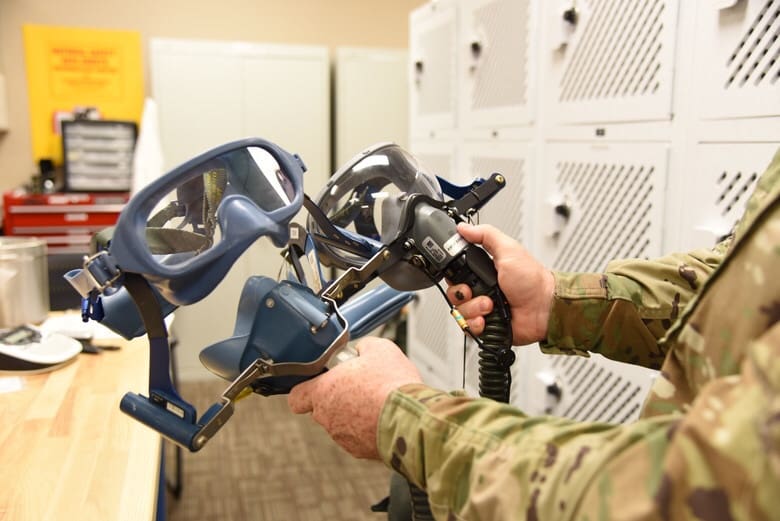
If smoke starts filling up a C-130J Super Hercules aircraft, the aircrew reach for their anti-smoke goggles. For more than 20 years the ASGs have been a basic four part system, until now.

With innovation, the new ASGs are now a three-part system. The suspension frame itself is still made the same with the nape pad attached, while the goggles and oxygen mask portion have been upgraded.

“The ones that we are replacing have the same basic frame, but the goggles and the oxygen mask are two separate pieces,” said Tech. Sgt. Ronald Patton, 403rd Operation Support Squadron aircrew flight equipment craftsman. “Before, you would need to put the oxygen mask over your mouth and nose, then pull the frame up and place the nape pad at the back of your head. Once that was in place you would put the goggles on and pull the straps on both sides to tighten them.”

The way the new ASGs work is still the same concept, except now the goggles and oxygen mask are one piece, so when you place the oxygen mask over your nose and mouth, the goggles are put on at the exact same time, saving time and making them quicker to put on and operate.

“The new masks are made similar to ones that firefighters use,” said Master Sgt. Ray Reynolds, 403rd OSS aircrew flight equipment supervisor. “The older goggles had a narrower field of view, while the new ones allow the aircrew to be able to use their peripheral vision.”

As a part of the AFE duties, they are required to make sure the equipment operates the way it is supposed to, be able to fix the equipment and replace any parts as needed.

Patton said that when the new ASGs came in, the manufacturer sent a ‘fix’ in with the mask to ensure they operated as designed. This ‘fix’ was a single screw that needed to be replaced on the front of the mask.

“Every part on the ASG system is replaceable, which helps to make sure they last,” Reynolds said. “Looking at the order of parts that could be damaged from easiest to hardest. The first thing is the hose, the second thing being the communication cord and the third is the microphone and then onto the remaining parts.”

AFE technicians are also required to test the pull disconnect on the air hoses to ensure that they will not come unattached from the oxygen hose on the aircraft too easily. This pull test requires a minimum of 12 pounds to a maximum of 20 pounds of pull before the hose on the mask would release, ensuring that there is some resistance before it disconnects.

If the disconnect is not between the 12 to 20 pounds of pull, then they have to fix the connector to correct the amount of pressure to meet the requirement, Patton said.

“We are also required to conduct pre-flight, post-flight, periodic maintenance, 30-day and 120-day inspections on the ASGs,” Patton said.

The 30-day inspections consists of basic checks. A visual examination is conducted and they look for cuts, tears, abrasions, discolorations, rust, anything other than normal, looking for anything that is obviously defective. A cleaning is done and the components are tested to ensure they work.

The 120-day inspection is the same inspection, but with a full break down of all of the components and a deep clean, checking the integrity of the components that you cannot see, Reynolds said.

“It is not that the old ASGs were replaced because they were faulty, they worked exactly as they were designed to. It seems like they just needed to improve on the integrity of the system itself,” Patton said. “Will it operate better under stressful situations, will it be easier to repair if it does break, does it have as many subcomponents that can break, does the aircrew member find it easier to don, and can the aircrew operate better in the environment, were questions that they asked when designing the new system.”

To improve the ASG system, they took a mask similar to a firefighter’s mask and the quick don suspension frame and made it one system, then they added the communications portion, Reynolds said.

“So they are doing something right, because if they hadn’t created this one, the ones that we have still work. I have been in this career field for more than 30 years and this is only the third version that I have seen,” Reynolds said.

“While the older ASG masks still work and some are still located on our C-130J aircraft, we are working to replace them on all of the aircraft” Patton said. “We currently have six sets in service and have replaced more than half of the 815th Airlift Squadron’s ASGs with a new quick don system and we expect to have them all of our aircraft by the middle of August, after the current inspection cycles are complete.”

By Jessica L. Kendziorek, 403rd Wing Public Affairs

Brigantes Presents – High Angled Solutions – Optimus Polaris Optifuel versus MSR Whisperlite Universal

Wednesday, July 10th, 2019

With a dramatic increase in military interest in the polar regions there has been a huge drive to reinvest and update the equipment that our militaries use to survive and fight in these incredibly harsh environments.  Arguably one of the most important pieces of equipment is your stove.  It is critical to keeping you fed and watered.


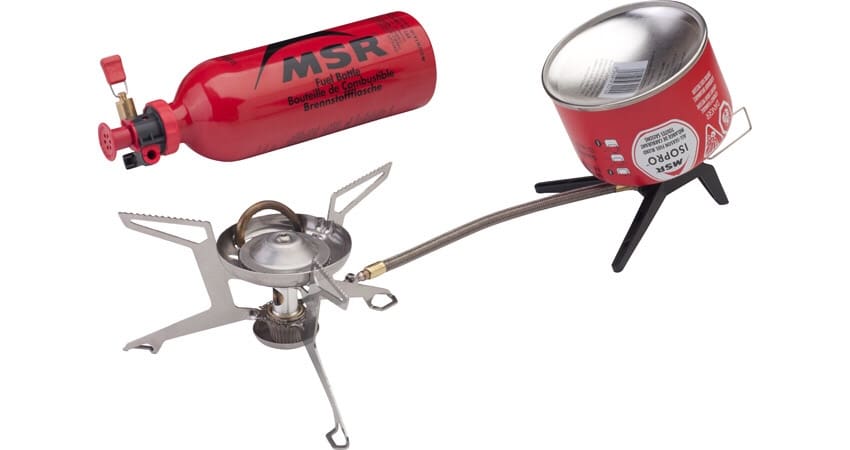
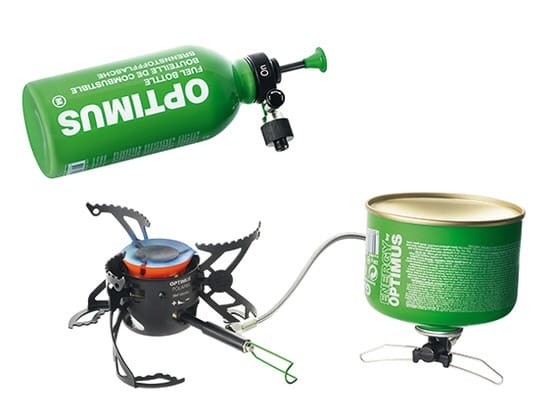
On the market at the moment are a small number of truly flexible and adaptable stoves. Of these the MSR Whisperlite Universal and the Optimus Polaris Optifuel offer the ability to burn all liquid and cannister fuel types. Although it must be pointed out that both the fuel jet and regulator have to be changed, to switch between certain fuels, on the MSR.

They both follow a similar construction with three wide legs and a central burner head.  The MSR has a wider burner which could possibly reduce boil times but could also increase fuel consumption.  The control arm on the Optimus provides excellent and delicate control of the flame making it much easier to avoid flares. The pump on the Optimus is completely metal and therefore more robust than the MSR.

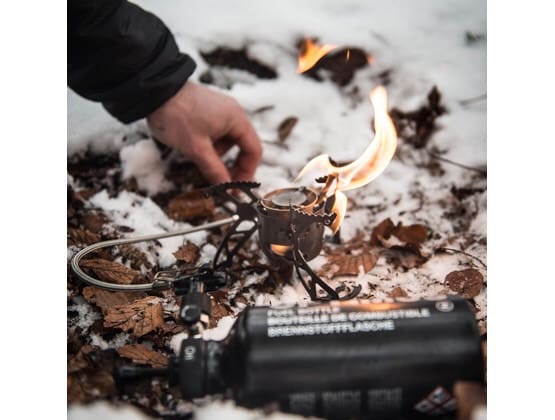
The lighting process for both is very similar and once it has been practiced a couple of times you can get exceptionally proficient in not accidently adding a sunroof to your tent.  Cooking in tents is necessary in the extreme cold but does have its risks, including fire and CO poisoning.

Whilst burning the MSR is noticeably quieter. There is a “silencer” available for the Optimus but this is not yet manufacturer approved.  Whether the noise difference is significant for the end user is debatable.

Shutting the stoves down is where there is a key difference.  The way in which you flip the bottle over on the Optimus does leave a completely dry system which is excellent at preventing fuel leaking into your equipment.

Cost wise the Optimus is more expensive but it does come with some very useful additional features and the ability to burn all fuels without modification.  Overall both are well recognised around the world and have had extensive use in the arctic environment.  The way that light forces operate in these environments does bring a number of specific challenges that these stoves manage to work around.

For more information get in touch by email on international@brigantes.com or for UK customers tribe@brigantes.com.  

www.brigantes.com

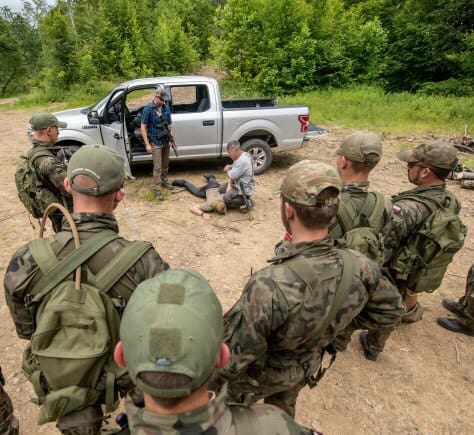
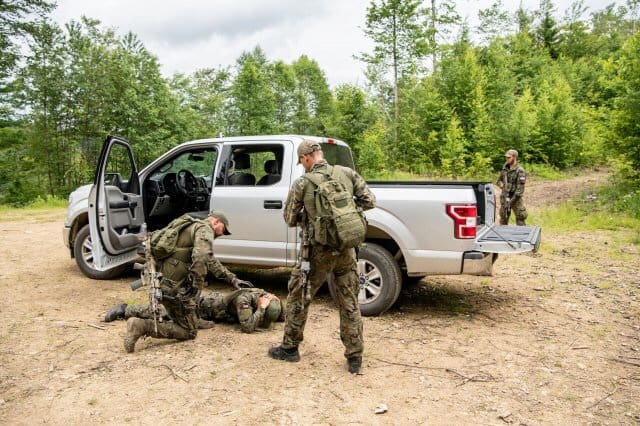
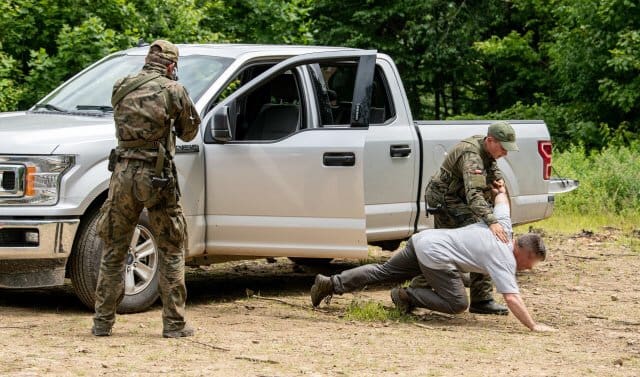
19th SFG(A) Conducts Exercise Ridge Runner with Polish, Latvian Allies in West Virginia

Tuesday, July 9th, 2019

CHARLESTON, W. Va. — West Virginia Army National Guard (WVARNG) Special Forces Soldiers with the 2nd Battalion, 19th Special Forces Group (Airborne) recently completed the first irregular and unconventional warfare training iteration for members of the Polish Territorial Defense Forces and Latvian Zemmessardze as a part of the Ridge Runner program in West Virginia.

Ridge Runner is a WVARNG training program that provides various National Guard, active duty, and North Atlantic Treaty Organization (NATO) ally nation armed forces training and experience to in irregular and asymmetrical warfare tactics and operations.

Both nations have newly established national guard-type forces for their militaries, the Territorial Defense Forces for Poland and the Zemmesardze for Latvia, that are focused on the defense of their homeland and resistance against an aggressor.

“The conclusion of this Ridge Runner training is an exceptionally important milestone for both West Virginia and our allies in Poland and Latvia, who we have a longstanding relationship within our State through the State Partnership Programs with the Illinois and Michigan National Guards,” said Maj. Gen. James Hoyer, Adjutant General of the West Virginia National Guard. “West Virginia is the perfect venue for our highly trained special forces to help these two nations’ military forces develop the skills vital to their mission at home, which is extraordinarily important in this era of geo-political uncertainty.”

“This exercise provides us a unique set of skills needed in developing our unconventional warfare skill sets,” said Marek Zaluski, acting public information officer for the Polish Territorial Defense Forces. “Our primary role is similar to that of the National, which is to support the local communities. In addition, we serve as a reserve base for conventional forces. Here at Ridge Runner, we developed skills beyond that. We’ve learned how to work with Special Forces, serve as liaisons, how to speak the same language, have the interoperability and cooperation.”

He continued, “We greatly appreciate the opportunity to train with the West Virginia National Guard, through Ridge Runner and the State Partnership Program. All those skills being developed go right along with what we learn at home. The soldiers who came with us for this exercise were specifically handpicked from a larger group because they represent the skills needed to operate with the Special Forces community as liaisons, pathfinders, and as people who are the points of contact in case of an unconventional warfare situation.”

Ridge Runner’s mission is to develop and execute irregular warfare training across the State of West Virginia that contributes to the development of Special Operations Forces’ (SOF) and General-Purpose Forces’ (GPF) irregular warfare understanding and capabilities, in order to support national security.

The Ridge Runner program operates in different parts of the state because of its diverse training needs and the terrain the State of West Virginia offers. Ridge Runner is held numerous times per year to train forces in both the United States and around the world.

The State Partnership Program (SPP) is a National Guard Bureau initiative that links states and territories with partner countries around the world to foster mutual interests, establish long-term relations, enhance U.S. national security interests, and promote political stability. Through the SPP program, the Illinois National Guard is partnered with Poland and the Michigan National Guard is partnered with Latvia.

Story by CPT Holli Nelson, West Virginia National Guard

Photos by Edwin Wriston

Max Talk 29: How to React in a Gunfight…..the RTR Drill Explained!

Monday, July 8th, 2019

This is the twenty ninth installment of ‘Max Talk Monday’ which shares select episodes from a series of instructional videos. Max Velocity Tactical (MVT) has established a reputation on the leading edge of tactical live fire and force on force training. MVT is dedicated to developing and training tactical excellence at the individual and team level.

It is vital to understand how to react to effective enemy fire. Those first few moments under fire can make all the difference between life or death. This video cuts through the nonsense and provides tactical context to what combat veterans know – how to react to enemy fire, how to train to blow through the possible freezes, and how to best stack the odds for survival. Do not confuse tactical cool-guy shooting with real drills with real tactical context. Train to win the fight!

Detailed explanations can be found in the MVT Tactical Manual: Small Unit Tactics.

Max is a tactical trainer and author, a lifelong professional soldier with extensive military experience. He served with British Special Operations Forces, both enlisted and as a commissioned officer; a graduate of the Royal Military Academy Sandhurst. Max served on numerous operational deployments, and also served as a recruit instructor. Max spent five years serving as a paramilitary contractor in both Iraq and Afghanistan; the latter two years working for the British Government in Helmand Province, Afghanistan.

Website: Max Velocity Tactical

YouTube: Max Velocity Tactical

Excellence in Tactical Training.