Do you have what it takes? The Air Force’s Special Operations Tactical Air Control Party Airmen, or SOF TACPs, are ground special operators who direct air power on the battlefield. Specifically, these Airmen call in air and ground strikes while embedded with a special forces team, such as the Army Rangers or Navy SEALs. These SOF TACPs are selected from the conventional TACP force to integrate air and ground in Air Force Special Tactics, with only 5% of TACPs serving in special operations. The majority of SOF TACPs are assigned to the 17th Special Tactics Squadron, who have been continuously deployed “outside the wire” since 9/11.
FORT EUSTIS, Va. — Army senior leaders have approved a new strenuous fitness test designed to better prepare Soldiers for combat tasks, reduce injuries and lead to ample cost savings across the service.
The six-event readiness assessment, called the Army Combat Fitness Test, is intended to replace the current three-event Army Physical Fitness Test, which has been around since 1980.
Beginning October 2020, all Soldiers will be required to take the new gender- and age-neutral test. Before that, field testing set to begin this October will allow the Army to refine the test, with initial plans for up to 40,000 Soldiers from all three components to see it.
“The Army Combat Fitness Test will ignite a generational, cultural change in Army fitness and become a cornerstone of individual Soldier combat readiness,” said Maj. Gen. Malcolm Frost, commander of the Army’s Center of Initial Military Training. “It will reduce attrition and it will reduce musculoskeletal injuries and actually save, in the long run, the Army a heck of a lot of money.”
At least six years of significant research went into the test’s development as researchers looked at what Soldiers must do fitness-wise for combat.
“Throughout that research and testing, the goal was to provide our leaders with a tough, realistic, field-expedient assessment of the physical component of their Soldiers’ individual readiness,” said Sgt. Maj. of the Army Daniel A. Dailey. “The ACFT is scientifically-validated and will help better prepare our Soldiers to deploy, fight, and win on any future battlefield.”
Roughly 2,000 Soldiers have already taken the test, previously called the Army Combat Readiness Test. They also provided feedback as part of the Army Training and Doctrine Command and Forces Command pilots that began last year at several installations.
“The current PT test is only a 40 percent predictor of success for performing in combat and executing warrior tasks and battle drills,” Frost said. “This test is approximately an 80 percent predictor of performing based on our ability to test the physical components of combat fitness.”
SIX EVENTS
While the ACFT still keeps the 2-mile run as its final event, it introduces five others to provide a broad measurement of a Soldier’s physical fitness. The events are completed in order and can take anywhere from 45 to 55 minutes for a Soldier to finish.
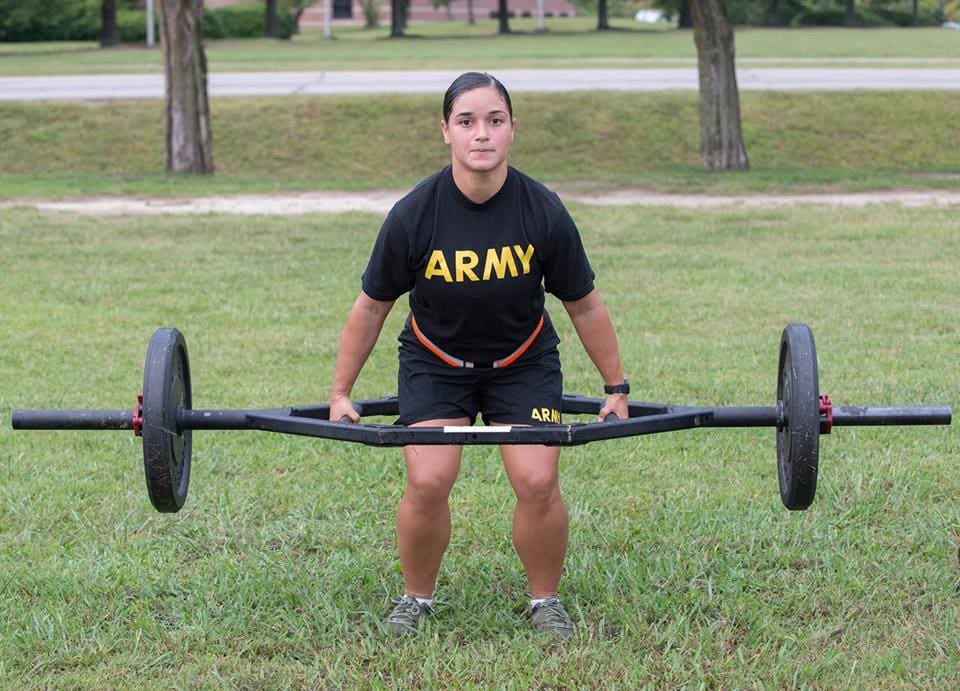
— Strength deadlift: With a proposed weight range of 120 to 420 pounds, the deadlift event is similar to the one found in the Occupational Physical Assessment Test, or OPAT, which is given to new recruits to assess lower-body strength before they are placed into a best-fit career field. The ACFT will require Soldiers to perform a three-repetition maximum deadlift (only one in OPAT) and the weights will be increased. The event replicates picking up ammunition boxes, a wounded battle buddy, supplies or other heavy equipment.
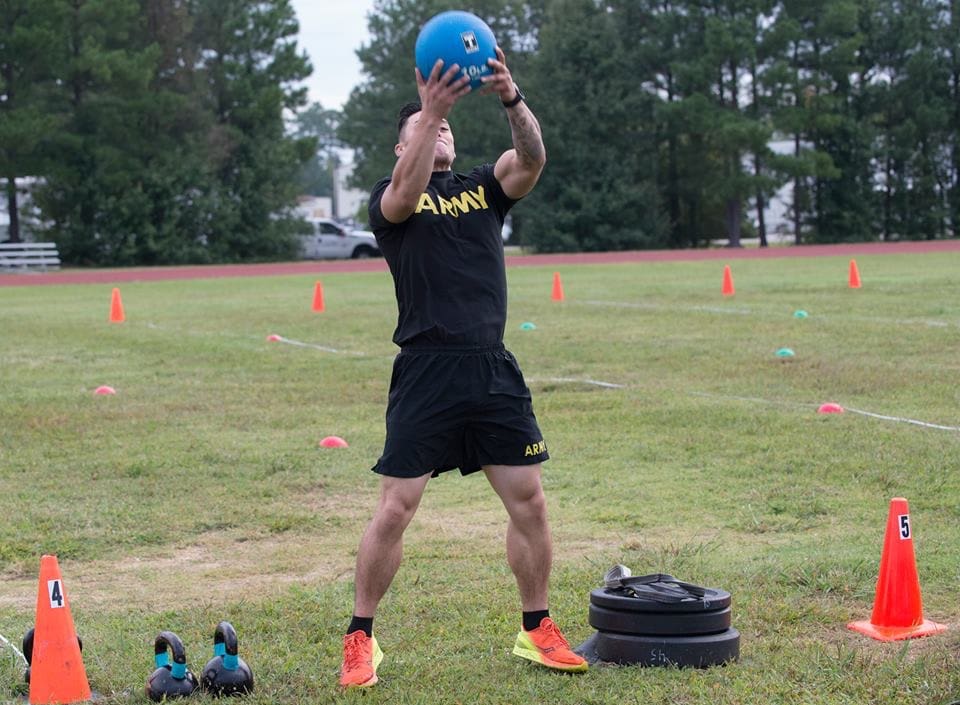
— Standing power throw: Soldiers toss a 10-pound ball backward as far as possible to test muscular explosive power that may be needed to lift themselves or a fellow Solider up over an obstacle or to move rapidly across uneven terrain.
— Hand-release pushups: In this event, Soldiers start in the prone position and do a traditional pushup, but when at the down position they release their hands and arms from contact with the ground and then reset to do another pushup. This allows for additional upper body muscles to be exercised.
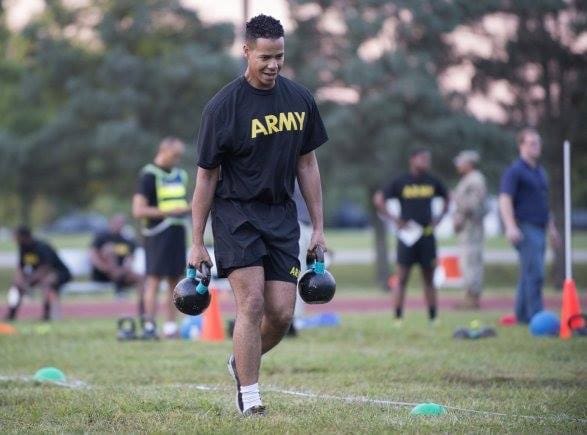
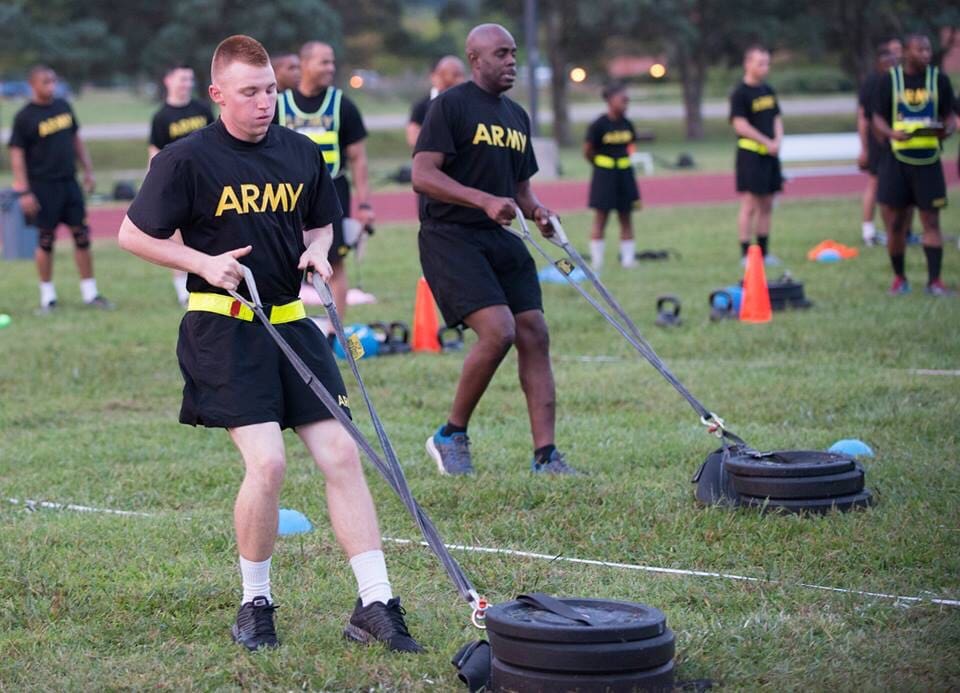
— Sprint/drag/carry: As they dash 25 meters five times up and down a lane, Soldiers will perform sprints, drag a sled weighing 90 pounds, and then hand-carry two 40-pound kettlebell weights. This can simulate pulling a battle buddy out of harm’s way, moving quickly to take cover, or carrying ammunition to a fighting position or vehicle.
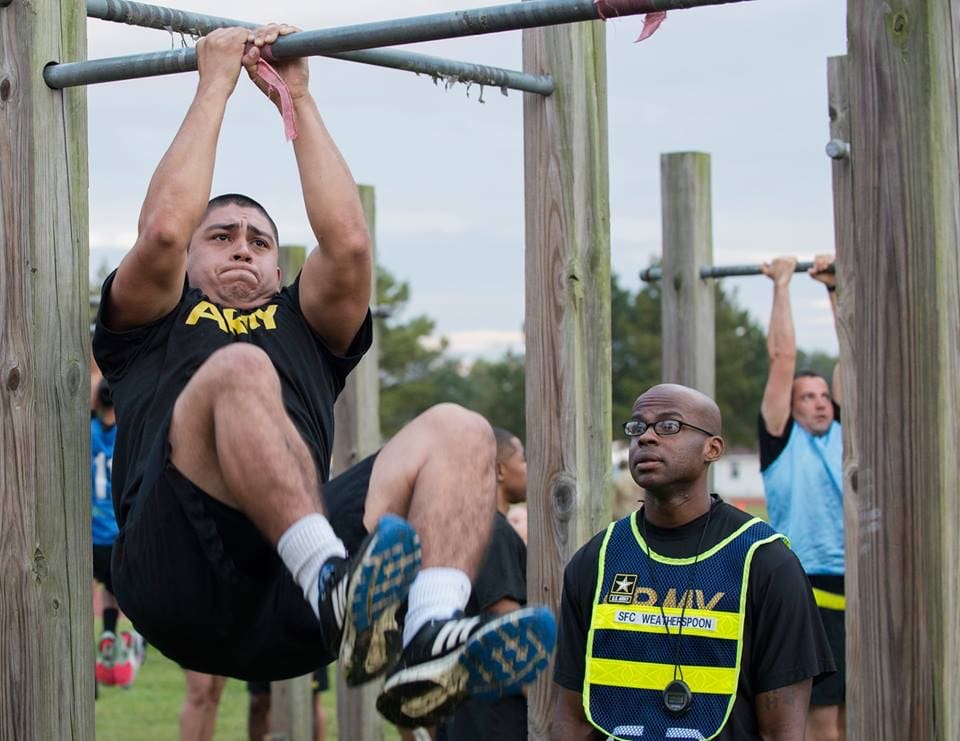
— Leg tuck: Similar to a pullup, Soldiers lift their legs up and down to touch their knees/thighs to their elbows as many times as they can. This exercise strengthens the core muscles since it doubles the amount of force required compared to a traditional situp.
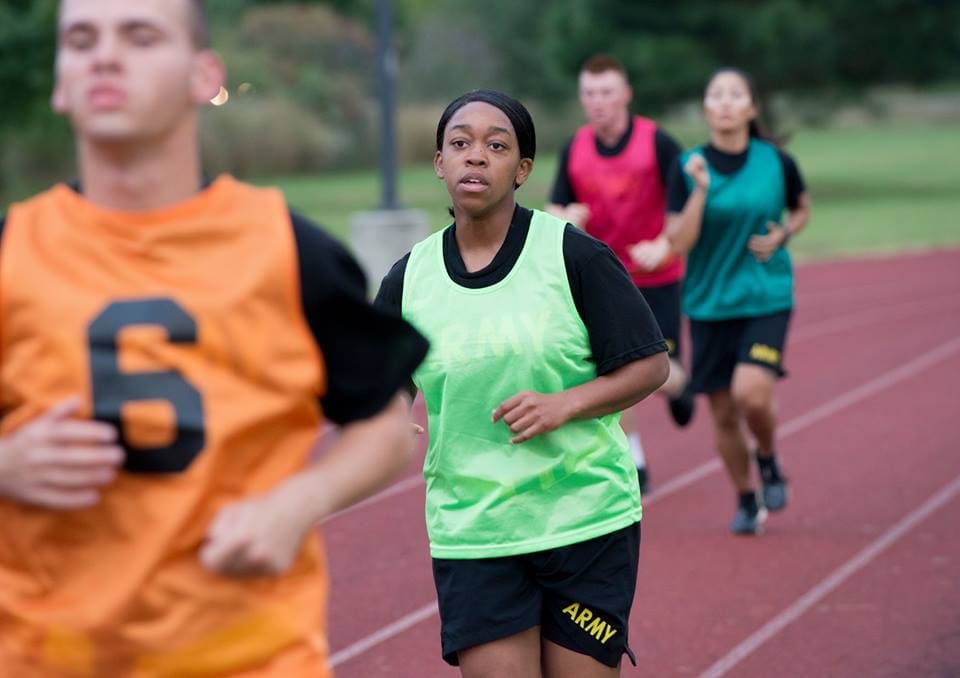
— 2-mile run: Same event as on the current test. In the ACFT, run scores are expected to be a bit slower due to all of the other strenuous activity.
The ACFT gauges Soldiers on the 10 components of physical fitness: muscular strength and endurance, power, speed, agility, aerobic endurance, balance, flexibility, coordination and reaction time. The current test only measures two: muscular and aerobic endurance.
TEST SCORING
The vast majority of policies with the APFT will likely be carried over to the new test.
Scoring could be similar with 100 points for each event for a maximum of 600. Minimum scores, however, may change depending on a Soldier’s military occupational specialty. Soldiers in more physically demanding jobs may see tougher minimums, similar to how OPAT evaluates new recruits.
“The more physically challenging your MOS, the more you’ll be required to do at the minimum levels,” said Michael McGurk, director of research and analysis at CIMT.
Another difference is that there are no alternate events planned for this test, he said.
Soldiers will still get adequate time to rehabilitate from an injury. But under a new “deploy-or-be-removed” policy, Defense Secretary James Mattis said in February that troops who are non-deployable for more than 12 months will be processed for administrative separation or referred to the disability evaluation system.
“Generally speaking, somebody who has a long-term permanent profile that precludes taking a fitness test may not be retainable for duty in the Army,” McGurk said.
At about $20 million, the new test will be more costly for the Army to conduct. A single lane of equipment at full retail value is about $1,200. A battalion set of equipment will range from $12,000 to $20,000. Those prices will likely drop as the Army buys more sets at wholesale.
Equipment should last about 10 years, meaning it will cost less than $3 per Soldier over time.
“If I have a femoral neck fracture in the hip of a Soldier, that injury will cost the government about $1 million,” McGurk said. “So, if I avoid 20 of those injuries a year I’ve paid for the program for the next 10 years for equipment. The potentials on return are very significant.”
COST AVOIDANCE
The Army estimates $4 billion is spent each year due to injuries, non-deployable Soldiers, accidents and other health-related costs.
As part of its culture change, the Army is building a Holistic Health and Fitness System to produce healthier and fitter Soldiers. The new test is one piece of the system, in addition to the OPAT, the improvement of fitness centers, and healthier options at chow halls.
Army researchers studied foreign militaries that have rolled out similar holistic programs and found them to be highly successful.
The Australian army, for instance, introduced it to their basic training and saw a roughly 30 percent reduction in injuries.
“Do I know we’re going to have a 25-30 percent reduction? No, but I certainly hope we will,” McGurk said. “We think [the test is] well worth it and it’s the right thing to do for Soldiers in any case.”
Feedback from Soldiers so far has also been overwhelmingly positive.
“As we all know, physical fitness training can become rather monotonous if people train the same way,” McGurk said. “So, a lot of them saw this as a great change and how it required them to use different muscles.”
While some Soldiers may disagree with replacing the current test, McGurk said that fitness has come a long way from 40 years ago when the APFT was first developed.
“In 1980, running shoes were relatively a new invention,” he said. “The Army was still running in boots for the PT test back then. Change is difficult, but we’re an Army that adapts well to change.”
ARMY VISION
In early June, senior leaders outlined what the Army should focus on over the next decade to retain overmatch against potential adversaries.
The 2028 vision statement, signed by the Army’s secretary and chief of staff, calls for modernized equipment, particularly the development of autonomous systems. It also stresses the need for physically fit and mentally tough Soldiers to fight and win in high-intensity conflict.
“Technology is going to be dominant and we need a lot of things that we’re looking at through modernization,” Frost said. “In the end, you still need the United States Army Soldier to be able to seize and hold terrain.”
The ACFT is a foundational method, leaders believe, that the Army can use to start a new era of fitness and obtain Soldier overmatch in combat.
“The current leadership … has really coalesced and understands the importance of fitness itself and the importance of the PT test to drive that change in culture,” Frost said. “They’ve made the decision and we’re ready to execute.”
This article discusses the fielding of EW Systems to the 1st Infantry Division. However, similar systems have also been fielded to the European-based 2nd Armored Cavalry Regiment and 173rd Airborne Brigade. In fact, those forward deployed systems have been used to conduct the first live Electronic Attack scenarios since the end of the Cold War.
FORT RILEY, Kan. — For today’s commander, having a clear picture of the battlefield is almost as much about understanding the electromagnetic spectrum as is it about reading a map.
To better equip and train brigades to compete against near-peer adversaries with sophisticated electronic warfare, or EW, capabilities, the U.S. Army recently delivered new EW prototypes to the 1st Brigade Combat Team, 1st Infantry Division ‘Devil’ Brigade, marking the first unit stateside to receive the systems after completing fielding to select Europe-based units in February.
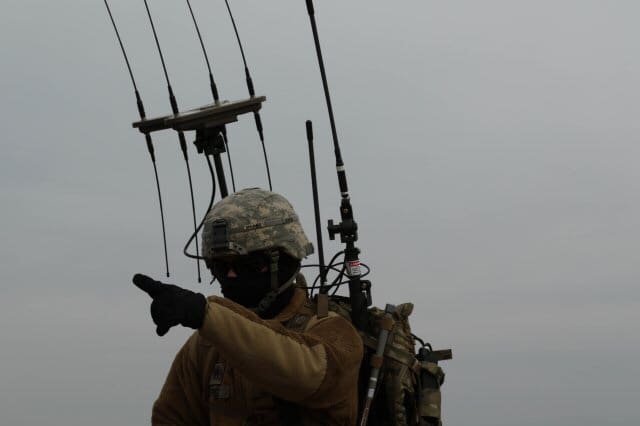
Staff Sgt. Kristoffer Perez, Cyber Electromagnetic Activities section, 1st Armored Brigade Combat Team, 1st Infantry Division, points toward a nearby objective during the final day of training with his section’s new electronic warfare equipment at Fort Riley, Kan. The 1st Brigade Combat Team, 1st Infantry Division is the first unit stateside to receive the systems after completing fielding to select Europe-based units in February. (Photo Credit: U.S. Army photo by Sgt. Michael C. Roach, 19th Public Affairs Detachment)
The training in the United States prepares the units for future potential deployments where they will use the new technologies in theater, and helps spread updated electronic warfare technology, knowledge and tactics throughout the force.
“This is really driving us to answer the question, ‘how do we, as EW professionals, get better tactically?'” said Warrant Officer 1 Christopher Mizer, an electronic warfare technician with the 1st Brigade Combat Team, 1st Infantry Division. “Up until recently, the EW sections have been mostly planners on the brigade and battalion staffs, as well as the higher level. Now, our EW Soldiers can effectively move and maneuver and support the other warfighting functions with equipment on the ground, and that’s really driving us in how we train from here on out.”
This integrated package of EW capabilities, consisting of mounted, dismounted, and command and control systems for electronic sensing and jamming, were fielded to the 1st Brigade Combat Team, 1st Infantry Division at Fort Riley in March. In May and June, the unit’s electronic warfare officers, or EWOs, had a chance to use the equipment at the Army’s National Training Center at Fort Irwin, located in California’s Mojave Desert.
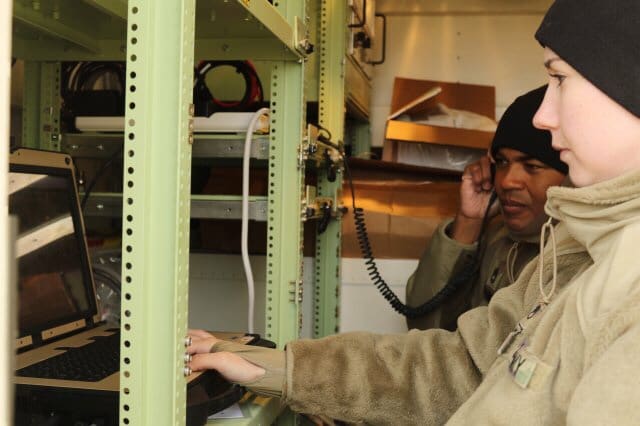
Sgt. 1st Class Gregory Robinson (left), Electronic Warfare noncommissioned officer in charge, 1st Armored Brigade Combat Team, 1st Infantry Division, works alongside Staff Sgt. Susan Bradbury, Electronic Warfare noncommissioned officer, 1st Armored Brigade Combat Team, during the final day of training with their new electronic warfare equipment at Fort Riley, Kan. in April 2018. (Photo Credit: U.S. Army photo by Sgt. Michael C. Roach, 19th Public Affairs Detachment)
Yet instead of working alongside the rest of their brigade at the NTC, which will come later this year, the EW Soldiers of the 1st Brigade Combat Team, 1st Infantry Division were at the NTC to participate as part of the Opposing Force, or OPFOR. The EWOs were able to push the equipment during operational scenarios by electronically locating the “blue” or friendly forces on the battlefield, passing that information to the OPFOR commander and even applying some jamming effects against the friendly forces.
“This was our initial test of the equipment away from home station in a realistic operational environment,” said Sgt. 1st Class Gregory Robinson, electronic warfare non-commissioned officer in charge with the 1st Brigade Combat Team, 1st Infantry Division. “When our brigade goes to the NTC later this year we’ll be able to integrate the equipment within our organic brigade, using the equipment in the same environment but this time against the OPFOR.”
The systems are prototypes that serve as an interim solution until the Army’s enduring EW programs of record can be fielded. Together, they provide electronic protection, as well as the ability to detect and understand enemy activity in the electromagnetic spectrum, and disrupt adversaries through electronic attack effects.
“Recognizing this is a prototype system, it is still a step in the right direction,” Mizer said. “We haven’t had a system within the electronic warfare community that looks at the electromagnetic spectrum and forces Soldiers to think through what they are seeing, how that affects their commander’s mission, and how they can affect the spectrum to enable the commander.”
The Army Rapid Capabilities Office and Project Manager EW & Cyber developed and delivered the prototypes in response to an Operational Needs Statement from U.S. Army Europe. The 1st Brigade Combat Team, 1st Infantry Division is the first brigade to receive the equipment and train with it in the continental United States. Units in Europe, including the 2nd Cavalry Regiment, 173rd Airborne Brigade and 2nd Armored Brigade, 1st Infantry Division were provided the equipment and have also used it operationally in exercises this spring, including Saber Strike and the Joint Warfighting Assessment.
Together these units in Europe, and now the 1st Brigade Combat Team, 1st Infantry Division, are adapting electronic warfare techniques for the brigade and below and providing valuable feedback on how to employ or “fight” the systems on the battlefield. The prototype fielding and training has also provided a chance for the different units to examine how to task organize cyber and electronic warfare personnel as they integrate the systems within their formations.
“If we did nothing electronic warfare-wise until we actually field a program of record EW system, we would be significantly farther behind,” Mizer said. “We wouldn’t know how to integrate them, operate them, maintain them or fight those systems when we get them. This is really informing that process. It’s forcing our EW Soldiers to look at the intellectual problem of determining how you fight an EW system. That’s something the Army hasn’t really done in almost three decades.”
That input is helping to feed information back into the enduring solutions. This approach, where the RCO worked with the program of record developer PM EW&C to adapt existing systems and incorporate emerging technologies to provide new EW effects and meet an emerging threat, enabled the Army to rapidly move an interim solution to the field in 12 months. The Army will continue this phased fielding approach, which incrementally builds EW capability through direct Soldier input and as new technologies are made available.
At the NTC, for example, the 1st Brigade Combat Team, 1st Infantry Division Soldiers were able to work directly with equipment developers on improvements to the systems, some of which could be incorporated over the next several months.
“We were able to work with the engineers and identify items that needed to be fixed,” Robinson said. “We expect some improvements shortly before we take the equipment back to our brigade’s rotation at the NTC later this year. We did point out that the systems need a more user-friendly interface and improvements are needed with the integration between the mounted and dismounted systems so we can get better end results from the information we’re receiving.”
By Nancy Jones-Bonbrest, U.S. Army
Posted in CEMA, Guest Post | Comments Off on Army Electronic Warfare Prototypes Reach First CONUS Brigade
WASHINGTON — In 2019, the Army will extend one-station unit training for Infantry Soldiers from 14 weeks to 22 weeks. Changes to the program are meant to increase Soldier readiness, making them more lethal and proficient before they depart for their first duty assignment, according to the Infantry School commandant, Col. Townley R. Hedrick.
Col. Jackson J. Seims relinquishes command of the 2nd Battalion, 54th Infantry Regiment, 198th Infantry Brigade to Col. Thomas J. Siebold Wednesday, April 27, 2016 at Kanell Field, Fort Benning, Ga. In 2019, the Army will extend one-station unit training for Infantry Soldiers from 14 weeks to 22 weeks. In 2019, the Army will extend one-station unit training for Infantry Soldiers from 14 weeks to 22 weeks. (Photo Credit: U.S. Army photo by Patrick A. Albright, Maneuver Center of Excellence)
The new OSUT program will include expanded weapons training, increased vehicle-platform familiarization, extensive combatives training and a 40-hour combat-lifesaver certification course, said Hedrick.
Further, the change will include increased time in the field during both day and night operations and include an increased emphasis on drill and ceremony maneuvers.
A NEEDED CHANGE
For the past 44 years, Infantry Soldiers were trained in a 14-week program of instruction. Ten weeks were allocated to basic military training, and an additional four were reserved for training Infantry-specific skills, Hedrick said. The Infantry career field makes up approximately 15 to 17 percent of the total force.
U.S. Army Infantry Soldiers-in-training assigned to Alpha Company, 1st Battalion, 19th Infantry Regiment, 198th Infantry Brigade, begin their first day of Infantry one-station unit training (OSUT) February 10, 2017 on Sand Hill, Fort Benning, Ga. In 2019, the Army will extend one-station unit training for Infantry Soldiers from 14 weeks to 22 weeks. (Photo Credit: U.S. Army photo by Patrick A. Albright, Maneuver Center of Excellence)
Discussions about changing OSUT began shortly after Secretary of Defense James N. Mattis identified the need to re-establish readiness and build a more lethal Infantry force, Hedrick said. And the Army Vision, recently published by Secretary of the Army Mark T. Esper and Chief of Staff of the Army Gen. Mark A. Milley, reinforces the defense secretary’s priority.
“Extending OSUT is about increasing our readiness and preparing for the future,” Sgt. Maj. of the Army Daniel A. Dailey said. “This pilot program is the first step toward achieving our vision of the Army of 2028. With more time to train on critical Infantry tasks, we’ll achieve greater lethality.”
In response to the increased focus on readiness, specifically within the Infantry force, leadership within the U.S. Army Infantry School approached the 198th Infantry Brigade, which trains all Army Infantry forces, and asked what could be done to make better Infantry Soldiers.
“We asked them if they had a longer training pipeline, what could they do with it,” Hedrick said.
In turn, the U.S. Army Maneuver Center of Excellence and the Infantry School started a combined effort with the 198th Infantry Brigade and the U.S. Army Training and Doctrine Command to develop an improved 21-week OSUT program. After consulting with the Army chief of staff, however, the combined OSUT team was directed to extend the new program to 22 weeks and include combat water survival training, he said.
The preliminary 22-week OSUT pilot program is slated to start this July with a graduation date scheduled for December, the commandant added.
The new 22-week OSUT should begin in 2019, sometime between July and October.
With the upcoming 22-week course, the Infantry School has already identified what new Soldiers will be part of the improved training, Hedrick said.
“U.S. Army Recruiting Command has already gone back to those identified personnel, regenerated their contract, and let them know that they would be part of the first classes to execute a new and improved training program,” Hedrick said.
THE NEW PROGRAM
Under the new OSUT program, Soldiers will get more training with their M4 rifle and increased hands-on experience with the M240 machine gun and the M249 squad automatic weapon.
“So across all the Infantry weapons, they will get more bullets,” Hedrick said. “And they will also shoot more at night, rather than just doing a day familiarization fire.”
In addition to increased weapons training, Soldiers will receive more field training experience, including tactical training repetitions that focus more on squad formations during day and night operations, he said. The goal is to help trainees understand where they fall within a fire team or rifle squad and make them more proficient while operating in the field.
“We looked at land navigation and individual Soldier skills,” Hedrick said. “Under the new course, a Soldier will do an individual day and night land navigation course on their own. They will also do a basic combative certification. That improves the mental and physical toughness of Soldiers coming through the Infantry OSUT.”
Additionally, the Infantry School has added six days of vehicle platform training to the new program. Under the 14-week program, Soldiers only received one day of training with their assigned vehicle. During the new course, Soldiers assigned to a Stryker or Bradley unit will learn how to drive and perform maintenance on their assigned vehicle.
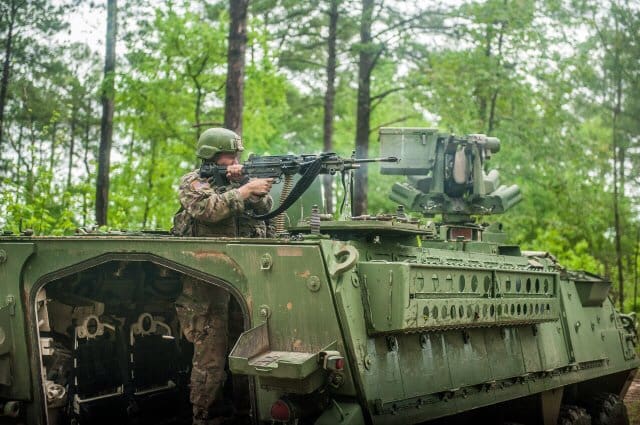
A U.S. Army Infantry Soldier-in-training assigned to Alpha Company, 1st Battalion, 19th Infantry Regiment, 198th Infantry Brigade, engages the opposing force (OPFOR) May 2, 2017, with a M249 Squad Automatic Weapon (SAW) on a Stryker to provide support-by-fire during a squad training exercise, Fort Benning, Ga. In 2019, the Army will extend one-station unit training for Infantry Soldiers from 14 weeks to 22 weeks. (Photo Credit: U.S. Army photo by Patrick A. Albright, Maneuver Center of Excellence)
Furthermore, a more significant emphasis on drill and ceremony has been built into the new curriculum.
“It is all about conditioning, following commands and working as a unit, so you will see an increasing level of discipline through drill and ceremony,” the commandant said. “We think this gets us to the objective of a more expert and proficient Soldier.”
Changes to the program create an extended and more gradual training process to help decrease injuries caused by lack of nutrition or poor conditioning, Hedrick said
“We’ve developed a set of metrics, with the U.S. Army Research Institute for Behavioral and Social Science Solutions to try and evaluate how the Soldiers are doing during the 22-week pilot program versus the 14-week program,” Hedrick said. “We’ve got an evaluation plan to try and look at ourselves and see if the product coming out has an improved proficiency — like we think it will.”
MANNING AND FUTURE OSUT CHANGES
With an increased time of training, the Infantry School must expand from five to eight battalions to ensure the same annual throughput of approximately 17,000 well-trained Soldiers. Fortunately, resources and facilities are available at Fort Benning to support the new program, Hedrick said.
Additionally, the Infantry School has been working with TRADOC to ensure they have enough drill sergeants in place to meet the 2019 launch date for the new 22-week OSUT.
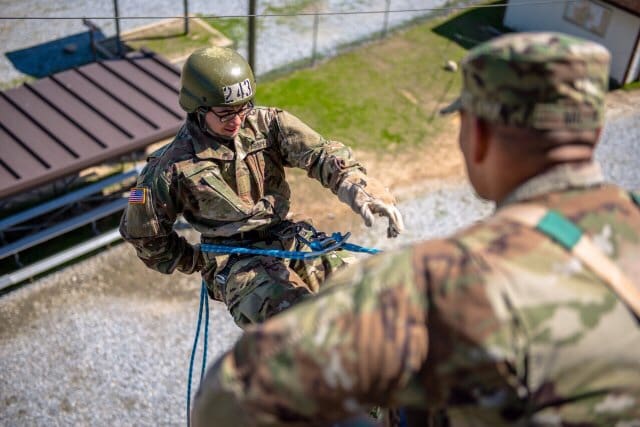
A U.S. Army Infantry Soldier-in-training assigned to Alpha Company, 1st Battalion, 19th Infantry Regiment, 198th Infantry Brigade, rappels off Eagle Tower March 4, 2017, on Sand Hill, Fort Benning, Ga. In 2019, the Army will extend one-station unit training for Infantry Soldiers from 14 weeks to 22 weeks. (Photo Credit: U.S. Army photo by Patrick A. Albright, Maneuver Center of Excellence)
Under the current 14-week program, three drill sergeants are responsible for training a platoon of 60 Soldiers. For the 22-week program, the Infantry School is looking to augment OSUT companies with six additional Infantry instructors.
Overall, the additional instructors provide a better student-to-instructor ratio during certain aspects of the course, the commandant said.
At the conclusion of the 22-week pilot, the OSUT team will review the results and determine what parts of the program need to be re-sequenced. The pilot will also be used to determine the list of tasks assigned to each instructor, Hedrick said.
In addition to the changes to the Infantry School’s curriculum, the Army is looking at extending other OSUT programs. Currently, the U.S. Army Armor School and U.S. Army Engineer School are performing internal analyses of their curricula to determine what resources will be needed to extend their own programs.
“Extending Infantry OSUT will allow us to allocate more time to honing the necessary skills to provide greater capability to our commanders,” Dailey said.
With our first major change to Infantry training in 40 years, he said, we are investing in future Army readiness, which will ensure we are prepared to deploy, fight and win our Nation’s wars when called upon to do so.
FORT IRWIN, Calif. — Cyber warriors from U.S. Army Cyber Command and its 780th Military Intelligence Brigade (Cyber), 1st Information Operations Command, and the Army Cyber Protection Brigade, are supporting 3rd Brigade Combat Team, 1st Armored Division training and readiness as part of ARCYBER’s ongoing Cyberspace Electromagnetic Activity, or CEMA, Support to Corps and Below, or CSCB, program.
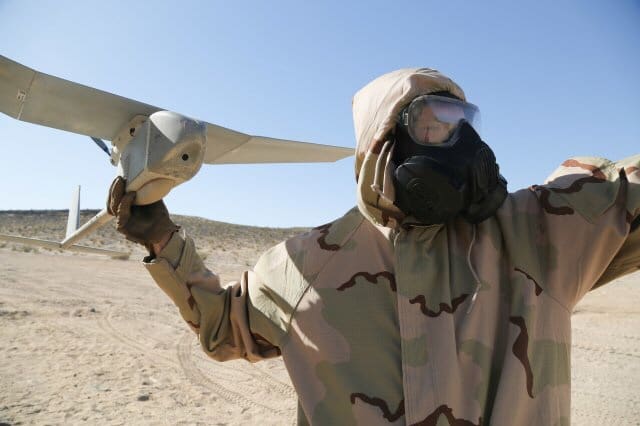
A Soldier with 3rd Armored Brigade Combat Team, 1st Armored Division, launches an RQ-11 Raven unmanned aerial vehicle during Decisive Action Rotation 18-08 at the National Training Center at Fort Irwin, Calif., June 3, 2018. (Photo Credit: U.S. Army photo by Spc. Dana Clarke)
Under CSCB, Army Cyber elements have been providing the 3rd Brigade Combat Team with cyberspace support during its train-up and current participation in Decisive Action Rotation 18-08 at the National Training Center here.
The CSCB initiative, which has supported select BCT rotations at the Army’s Combat Training Centers since 2015, improves readiness by helping Army maneuver units to integrate CEMA into their processes and operations. The program embeds cyber warriors into a brigade’s CTC preparation and training to develop unit cyberspace capabilities, requirements, planning and operations and integrate cyber with its multi-domain operations initiatives and key related warfighting processes such as intelligence, reconnaissance, communications, electronic warfare and information operations.
Soldiers of the 780th Military Intelligence Brigade embedded with the 3rd Brigade Combat Team, 1st Armored Division, establish a location to conduct cyberspace operations during Decisive Action Rotation 18-08 at the National Training Center at Fort Irwin, Calif., June 6, 2018. (Photo Credit: U.S. Army photo by Sgt. Jeff Storrier)
CSCB helps Army maneuver units to leverage networks as a warfighting platform and a key organic element of multi-domain operations in an increasingly complex and technical battlespace without borders. The program improves the readiness of Army maneuver units to defend cyber key terrain and exploit cyberspace opportunities in response to real-world contingencies. It is also helping the Army to develop cyberspace requirements and capabilities, define and integrate operations in a rapidly evolving warfighting domain, and build the understanding that protecting people, systems and networks from attacks in cyberspace is a shared responsibility of commanders at all levels.
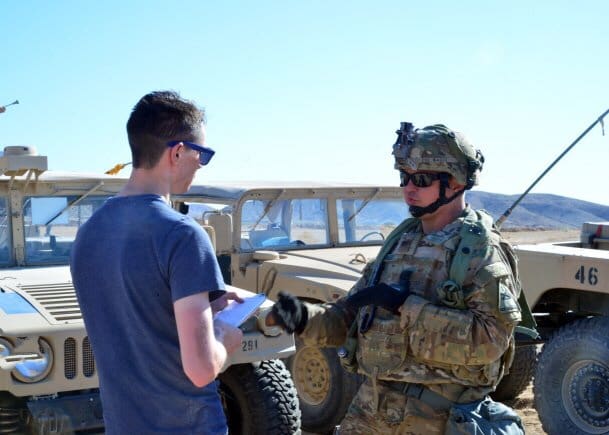
Col. Robert Magee, commander of the 3rd Brigade Combat Team, 1st Armored Division, discusses his brigade’s operations and the integration of cyberspace operations into its concept of maneuver with Military Times reporter Mark Pomerleau in an interview during the 3rd BCT’s participation in Decisive Action Rotation 18-08 at the National Training Center at Fort Irwin, Calif., June 6, 2018. To enable and develop the cyber capabilities of brigades training at NTC and merge cyber effects into BCTs’ approach to multi-domain operations, elements from U.S. Army Cyber Command’s ongoing Cyberspace Electromagnetic Activity Support to Corps and Below program provide tactical cyber forces and incorporate cyberspace planning into brigade mission command and decision-making processes. Embedded with the brigades during their training rotations, cyber warriors both become part of the BCT’s operational force and enable its staff to unite cyber efforts with key related warfighting disciplines such as intelligence, reconnaissance, communications, electronic warfare and information operations. (Photo Credit: U.S. Army photo by Sgt. Jeff Storrier)
“The bigger picture is that at the corps, division and brigade levels, having that (CSCB) team embedded into the formation will allow me to leverage some other assets, which will potentially effect and decisively change the situation on the ground,” said 3rd Brigade Combat Team commander Col. Robert Magee.
By U.S. Army Cyber Command
Posted in CEMA, Guest Post | Comments Off on Cyberspace-Electromagnetic Activities Program Builds Maneuver Unit Readiness
WASHINGTON (AFNS) — The Air Force announced today that each UH-1N Huey location will receive replacement aircraft.
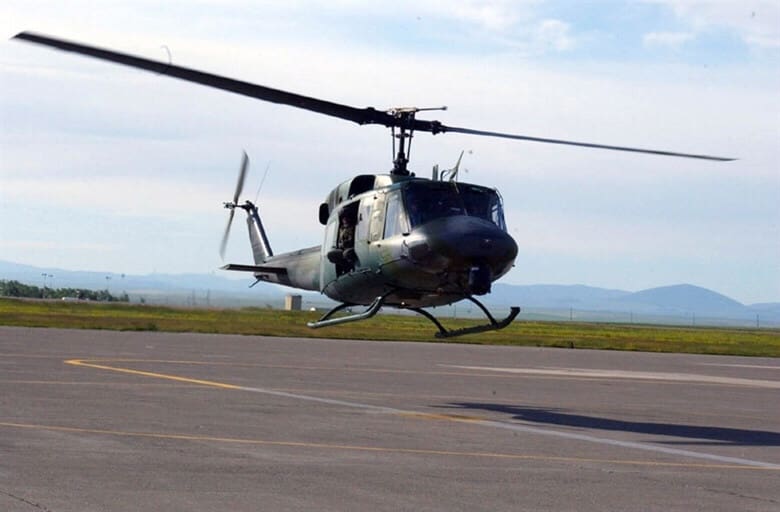
A UH-1N Huey helicopter prepares to land at Malmstrom Air Force Base, Mont. Air Force bases currently flying the UH-1N will receive upgraded aircraft sometime between 2020 and 2032. (U.S. Air Force photo)
The Air Force is replacing the UH-1N Huey 46-year-old fleet by procuring new replacement aircraft to support four missions – Nuclear Deterrence Operations, Continuation of Government Operations, Survival School support, and Test and Training.
Current UH-1N Huey locations include Eglin Air Force Base’s Duke Field, Florida; Fairchild AFB, Washington; FE Warren AFB, Wyoming; Joint Base Andrews-Naval Air Facility Washington, Maryland; Kirtland AFB, New Mexico; Malmstrom AFB, Montana; and Minot AFB, North Dakota.
The Air Force UH-1N Huey replacement program supports the Defense Department’s principal priority to maintain a safe, secure and effective nuclear deterrent that safeguards the homeland, assures allies and deters adversaries. The replacement for the UH-1N Huey will feature significant improvements in the areas of speed, range, endurance, payload capacity and survivability.
Each stateside active duty UH-1N Huey location will receive replacement aircraft pending the outcome of the environmental analysis.
The 2016 Vice Chairman of the Joint Chiefs of Staff Joint Requirements Oversight Council approved the purchase of new aircraft to replace the 46-year-old UH-1N Huey fleet. A contract award for the new aircraft is anticipated later this year with deliveries planned for 2020-2032.
Last time we looked at ways that troops can harness power from vehicles either while on the move or stationary. There may be times though when a vehicle or vehicle battery isn’t available, or when the tactical situation requires noise discipline that prevents running a vehicle engine.
Besides the audible signature, a running engine also produces a significant thermal signature – and it requires fuel of course as well. Using a field generator also incurs these same drawbacks, as well as the fact that it needs to be transported out to the location in the first place.
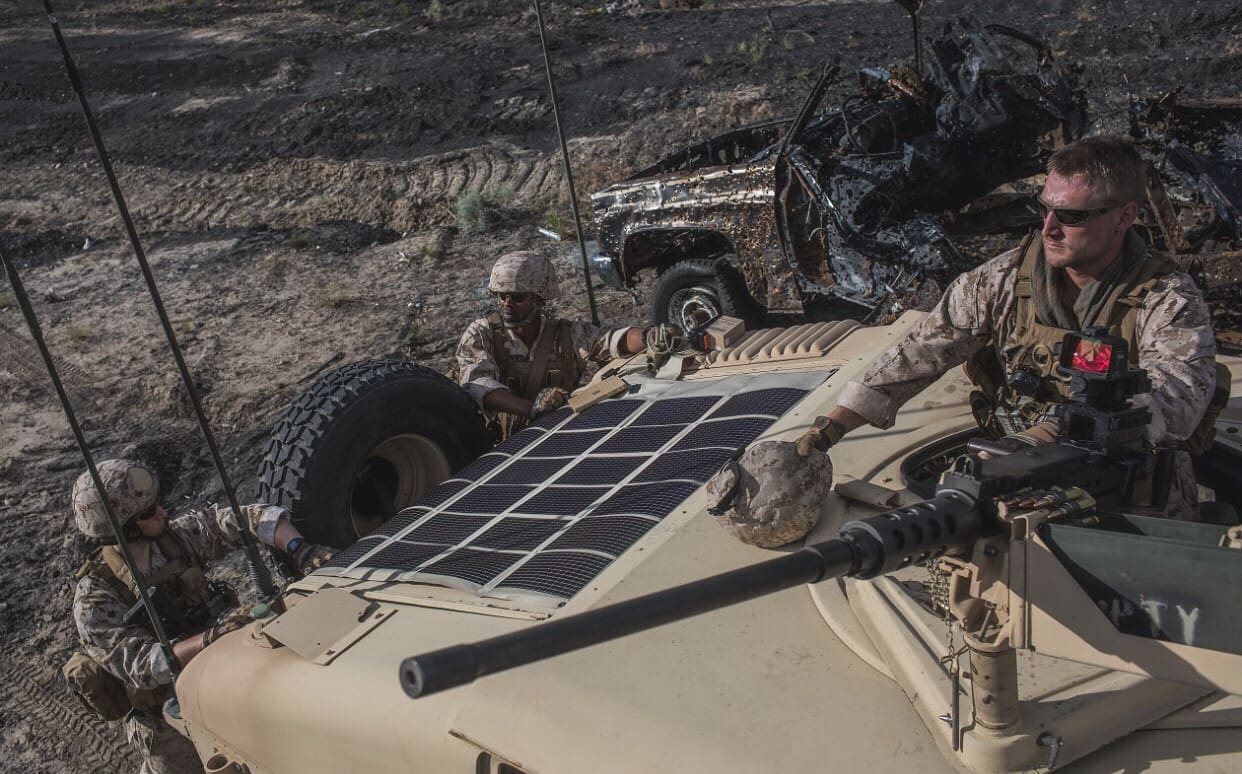
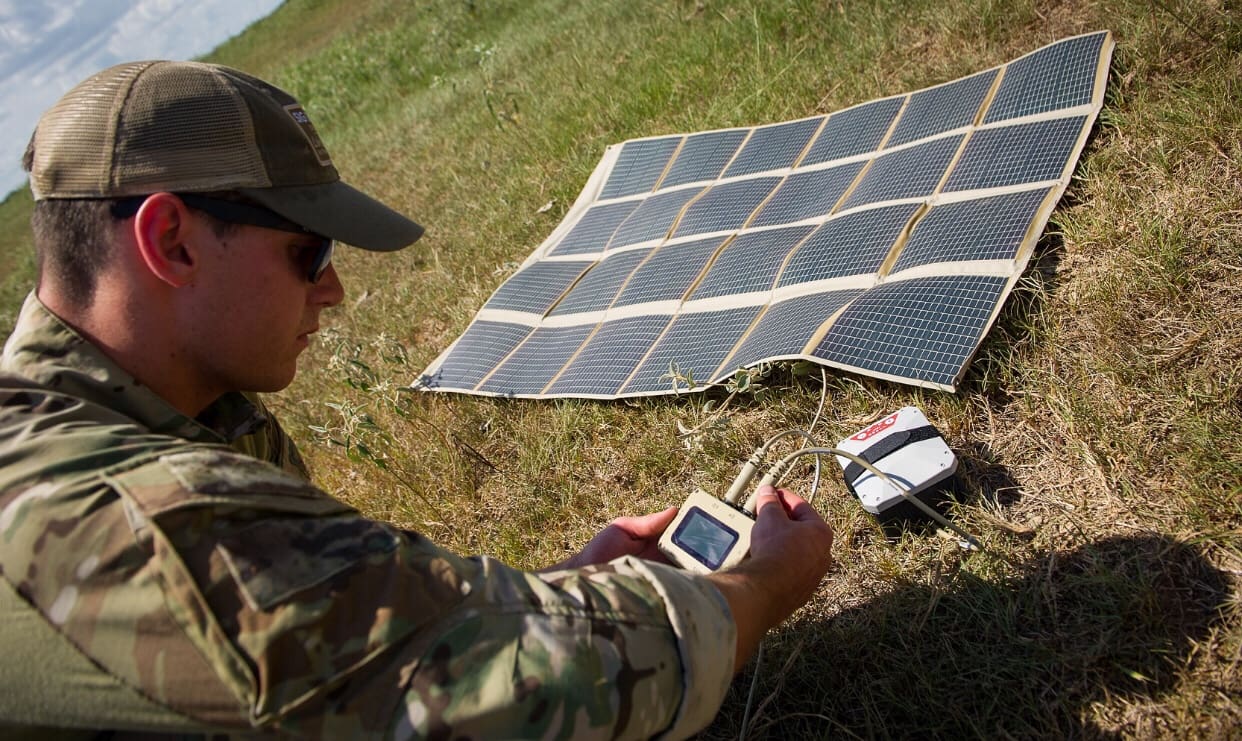
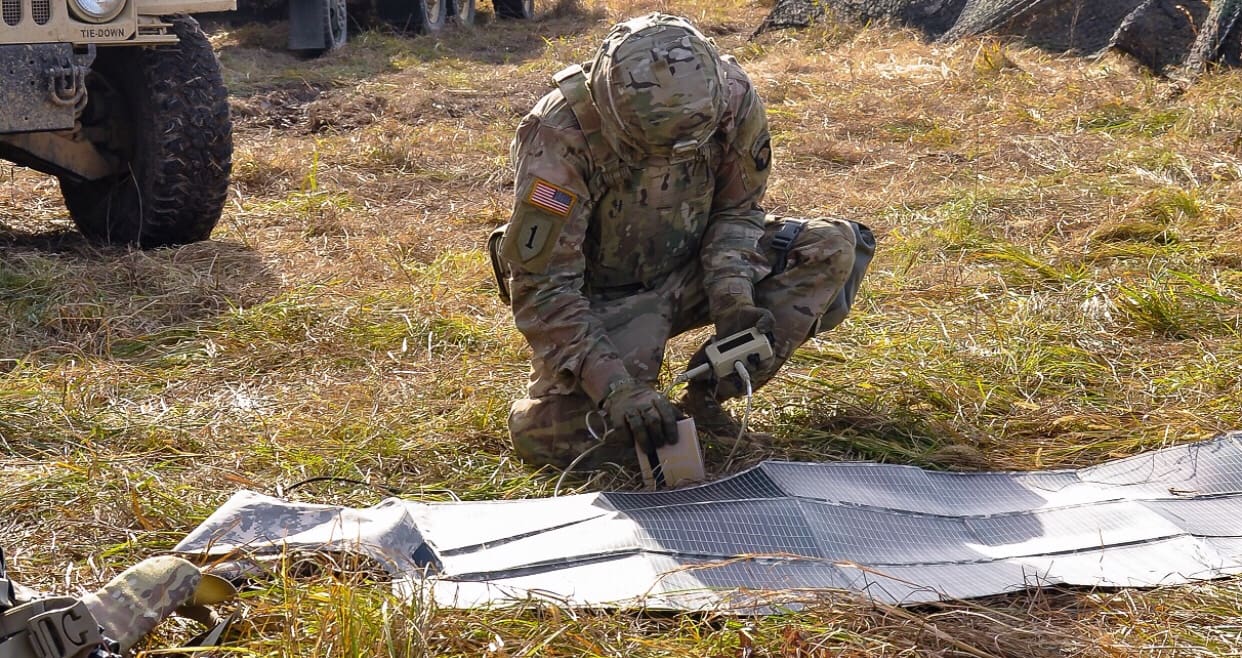
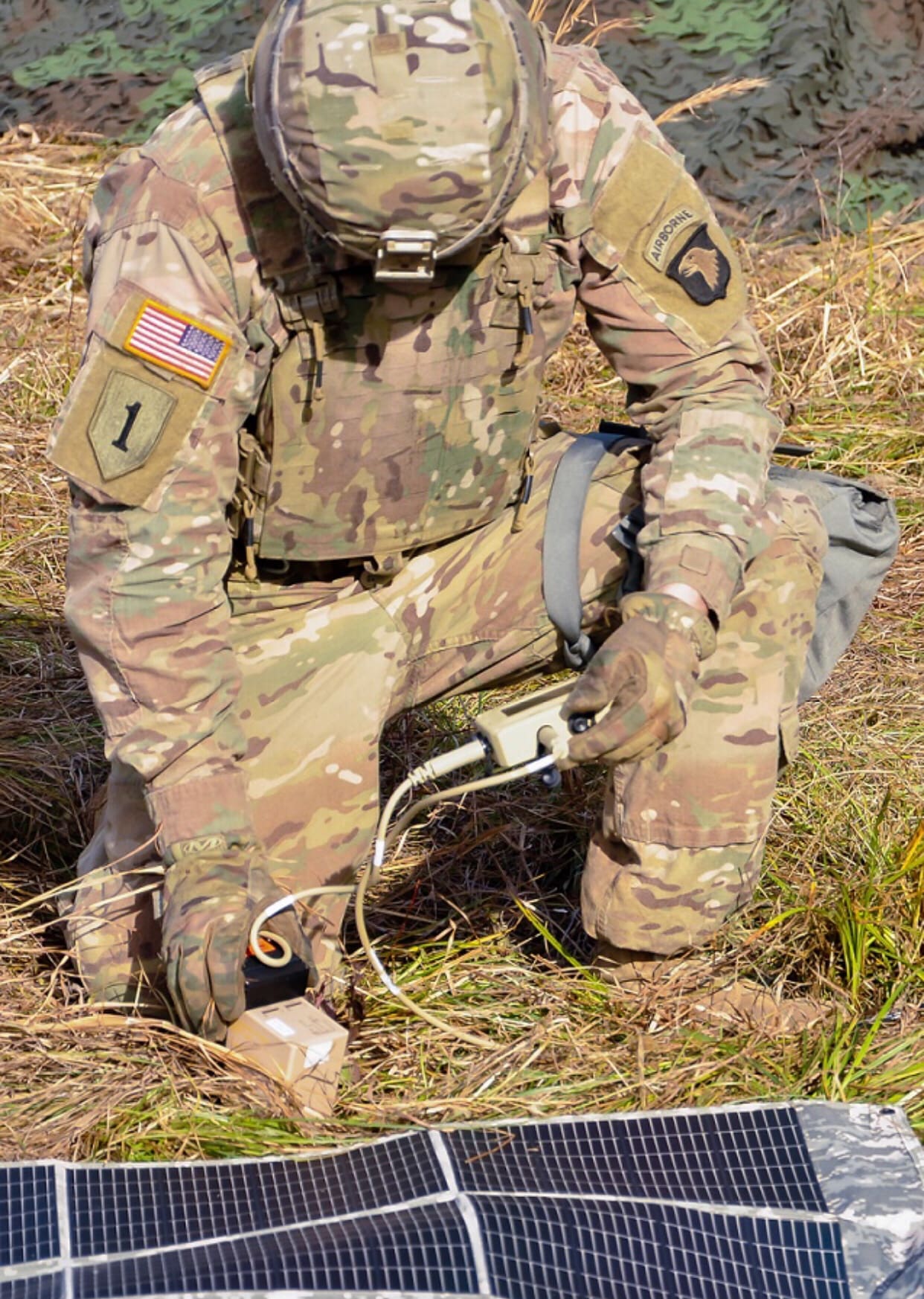
To get around all of these drawbacks the military has been a leading accelerator of portable solar power solutions. Solar power is free, plentiful, and safe and easy-to-use. Because of all this, a lightweight, folding solar blanket is included with every Nett Warrior system, and all PTX power management kits also include a solar blanket as a standard item as well.
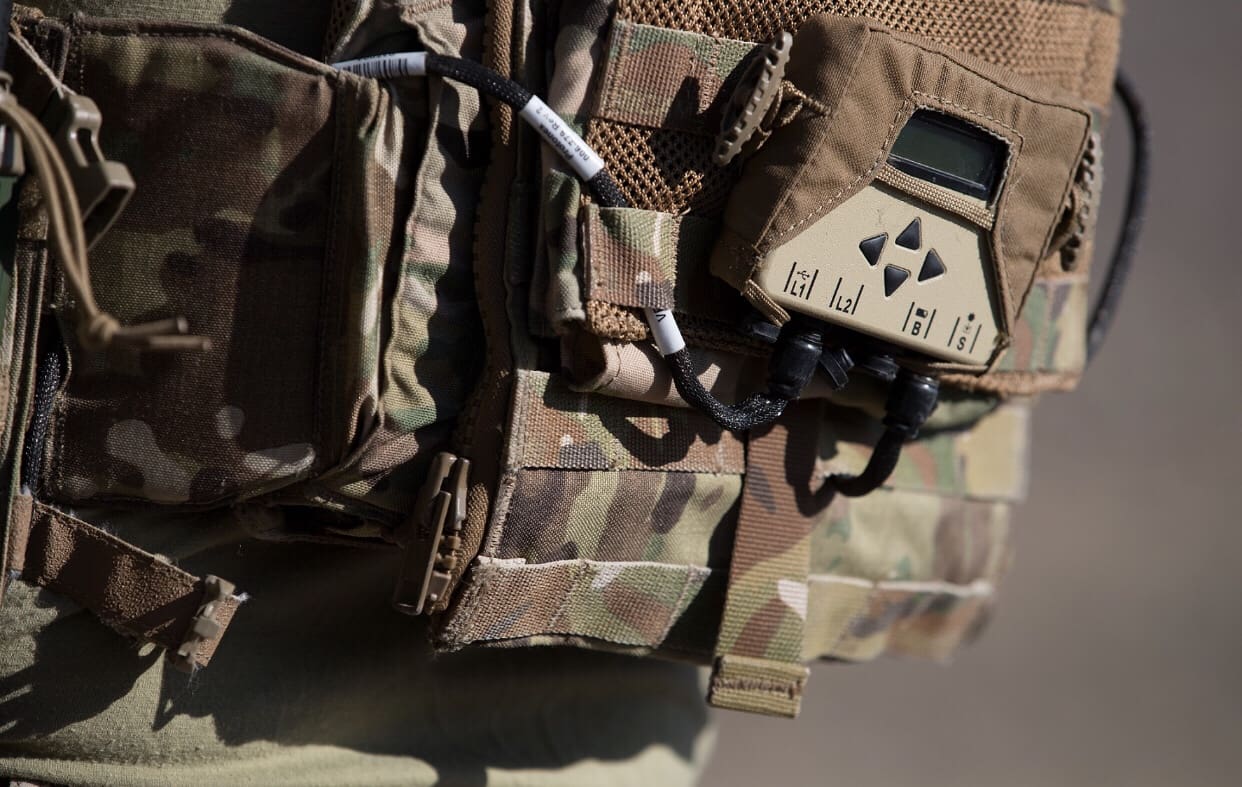
There are nonetheless a few techniques and procedures to bear in mind. First; when connecting a solar blanket to the SPM-622 Squad Power Manager, make sure to plug it into Port #3 or #4 (a sun burst icon is printed on the case next to those ports for extra clarity); then connect a rechargeable battery to Port #1, #2, #5 or #6. On the PTX VPM-402 Vest Power Manager, the solar blanket is connected to Port “S” and the rechargeable battery to Port “B”.
Why does a battery need to be connected as well? Because the sun’s power constantly varies but phones, radios, and laptops require steady power, the Power Manager requires a battery in order to “even out” the power generated by the solar blanket. The best battery to use is one that you would want to keep charged anyway – such as a BB-2590 or a Conformal Wearable Battery.
Furthermore; a solar blanket or panel only works in direct sunlight, even a slight amount of shade (or passing clouds) can severely limit the amount of energy the solar blanket can produce. Try to aim the blanket directly at the sun, or to drape the blanket over something to get the best angle on the sun. When the solar blanket is generating at peak output the PTX Power Manager will automatically divert any excess energy to keep the battery charged. If the power output from the solar blanket dips, the Power Manager will automatically pull power from the battery as needed.