TYR Tactical

Archive for the ‘Guest Post’ Category

US Army To Begin Fielding Squad Designated Marksman Rifle In September

Sunday, June 10th, 2018

WASHINGTON — The new Squad Designated Marksman Rifle, or SDM-R, is scheduled to be fielded at the brigade level starting in September, according to the Program Executive Office Soldier.
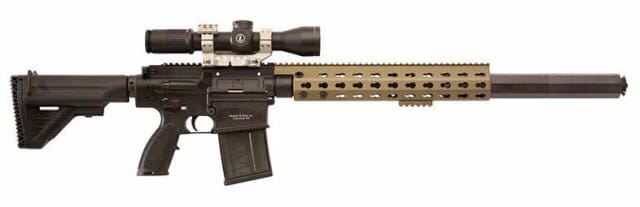
The new SDM-R is based on the Heckler and Koch G28E-110 Compact Semi-Automatic Sniper System, or CSASS, and will provide infantry, scout, and engineer squads the capability to engage with accurate rifle fire at longer ranges, said Capt. Weston Goodrich, assistant program manager for Soldier Weapons, PEO Soldier.

The SDM-R improves lethality by increasing the effective range a force can engage with an enemy. The new rifle was on display in the Pentagon courtyard May 24-25, along with 50 other technologies designed to increase infantry squad lethality.

“The Army’s current rifle technology is most effective below the 300-meter range; however, Soldiers are fully capable of fighting beyond that threshold,” Goodrich said. Comparatively, snipers are typically used at 600 meters and beyond.

“The new rifle addresses the 300 to 600 meters range gap outlined in the 2015 U.S. Army Small Arms Capabilities-Based Assessment,” Goodrich said.

“The Army is working to equip each squad with a predetermined amount of marksman rifles,” he added. The rifle is capable of firing either M80A1 Enhanced Performance Rounds or XM1158 Advanced Armor Piercing Rounds.

The new rifle will be equipped with a different buttstock and barrel twist than the CSASS model and carries a base weight of about 9.9 pounds. The rifle will also be outfitted with the SIG Tango 6 variable 1×6 power scope.

CSASS — COMPACT SEMI-AUTOMATIC SNIPER SYSTEM

In addition to the new squad rifle, the CSASS is slated to undergo production qualification testing and should be approved for limited user testing sometime in early 2019.

“The CSASS is smaller, lighter, and more ergonomic, as the majority of the changes were requested by the Soldiers themselves,” said Victor Yarosh, who works on the program at Soldier Weapons. “The rifle is easier to shoot and has less recoil, all while shooting the same round as the M110. [Additionally,] the CSASS has increased accuracy, which equates to higher hit percentages at longer ranges.”

As a replacement for the M110 — which is a longer, heavier, less ergonomic semi-automatic sniper rifle — the CSASS was developed to support snipers as they execute a broad spectrum of missions.

“An Army sniper is a kind of force enhancer because they execute a number of missions,” Yarosh said. “They provide a surveillance mission where they use their high-powered scope to observe activity downrange. A sniper can pin down an enemy force through sniper concealment and engagement to provide the right shots at the right time. They can also prevent an enemy force from moving out of cover, which allows our maneuver forces to exploit the enemy by moving into a better position and engage.”

The CSASS will feature a new suppressor and muzzle brake that allows for rapid successive follow-on shots with a reduced chance of detection. Furthermore, the new rifle will have higher power daytime optics, which will enhance a sniper’s surveillance capability and positive hostile identification at longer ranges.

7.62 LIGHTWEIGHT SMALL CALIBER AMMUNITION PROGRAM

The Army is also working on a replacement for conventional brass ammunition casings to help reduce the load on personnel and weapon platforms and improve mobility, according to Todd Townsend with PEO Ammunition.

“We’re currently working on drop-in replacement ammunition for the existing 7.62 family of weapons optimizing for the M240 family of machine guns,” Townsend said. “Ounces are pounds. So if we can take a pound out of a Soldier’s weight load, a Soldier could be more effective by carrying other important things.”

Currently, the program is evaluating three casing concepts and comparing them to the weight of brass ammunition. The first one is a stainless steel metal injection molded case. The second is a brass case with a polymer body. And the last is stainless steel with a polymer body, Townsend said.

PEO Ammunition is slated to launch into the testing phase sometime in the coming months. Portions of the test data from the new rounds will be sent back to the developers to help improve the product.

“We’re looking at doing a full-up qualification by fiscal year 2021. We are aiming for a fielding by FY22,” he said.

Program managers responsible for the new 7.62 ammunition program have partnered with the other services, including U.S. Special Operations Command, and forces in the United Kingdom.

“We’re looking at other calibers as well. One of them is 50-caliber round,” Townsend said. “We will continue to coordinate within all test areas to make sure that we don’t do redundant or unnecessary testing.

“The Joint Light Weight Integrated Product Team ensures that all the services are all working toward one common goal of lightening a load.”

By Devon L. Suits, US Army
Marines To Field On-the-move Communications System This Fall

Friday, June 8th, 2018

MARINE CORPS BASE QUANTICO, Va. —

Marine Corps Systems Command is improving the way Marines communicate with a reliable and convenient on-the-move system.

The Mobile User Objective System, or MUOS, is a narrowband satellite communication system that uses commercial cell phone technology to increase access to voice and data communication while on the battlefield. The Marine Corps will be the first service to widely deploy the system as it has already fielded thousands of MUOS-capable AN/PRC-117G radios over the previous six years. Ultimately, the firmware within the radios will be updated to support the MUOS waveform and three new antenna kits will be added to support multiple operational configurations.

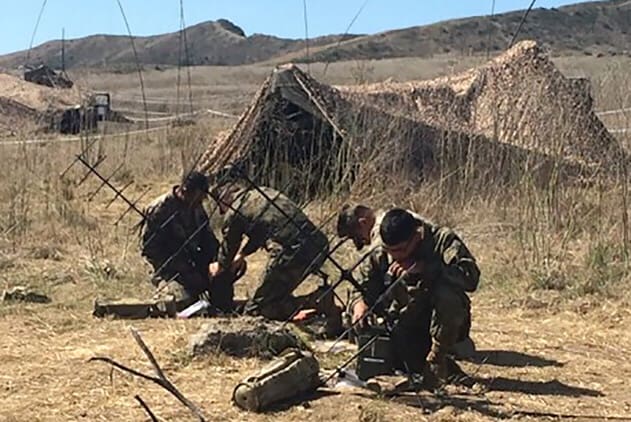
Marines from the 1st Marine Division test out the Mobile User Objective System at a Field User Evaluation in Camp Pendleton, California. MUOS is a satellite communication system that uses commercial cell phone technology to increase access while on the battlefield. Marine Corps Systems Command will begin fielding MUOS in the fourth quarter of 2018. (U.S. Marine Corps photo by Eddie Young)

“MUOS provides several advantages over legacy SATCOM,” said Capt. Shawn Avery, MUOS project officer in Command Element Systems at MCSC. “The most obvious to the operating forces will be the increased accessibility. This will allow us to explore new operating concepts by pushing on-the-move voice and data connectivity to the squad level.”

MUOS is designed to support users who require mobility, higher data rates and improved operational availability. The updated technology in the system offers a more secure and reliable beyond line-of-sight communication capability. The MUOS waveform will be added to the AN/PRC-117G and future multi-channel radios within the Marine Corps inventory.

“Previously, infantry companies had limited access to SATCOM, but now company commanders can employ their Marines beyond line of sight with a higher degree of confidence in maintaining those critical [command and control] links,” said Avery.

The three antenna kits that will be fielded within MUOS include: a traditional directional antenna for better data performance at-the-halt; a dismounted on-the-move antenna which enables voice and data access when mobile; and a vehicular kit that modifies the AN/VRC-114’s to accept MUOS.

MUOS is comprised of a space-based segment, a ground-based segment connected over fiber optic cables between multiple continents, and a software-defined radio terminal capable of running the MUOS waveform.

The new satellites are more robust and have more individual carriers, which allows the signal to be focused on a smaller geographic footprint, Avery said. This improvement enables on-the-move access while improving overall reliability in vegetation, urban environments and other extreme conditions where legacy SATCOM was challenged.

Additional improvements include the ability to roam, similar to a cell phone. Marines can begin in the continental United States, and then deploy and have immediate access to another satellite on the ground providing unmatched operational flexibility.

“The system takes some stress off of the operators, allowing them to walk around on patrol without the range constraints of terrestrial networks,” said Avery. “And in the past, users didn’t have access to the Defense Information System Network over SATCOM. We either had to hold terrain to extend terrestrial links to provide DISN access, which incurs significant operational risk, or lease commercial capabilities which have proven costly. With MUOS, we’re meeting the data exchange requirements of today’s force with equipment that is organic to the Marine Air-Ground Task Force.”

Initial fielding for the MUOS is scheduled for the fourth quarter of 2018, with initial operational capability planned for the first quarter of 2019.

By Kaitlin Kelly, MCSC Office of Public Affairs and Communication | Marine Corps Systems Command

Widget Wednesday – Power Scavenging

Wednesday, June 6th, 2018

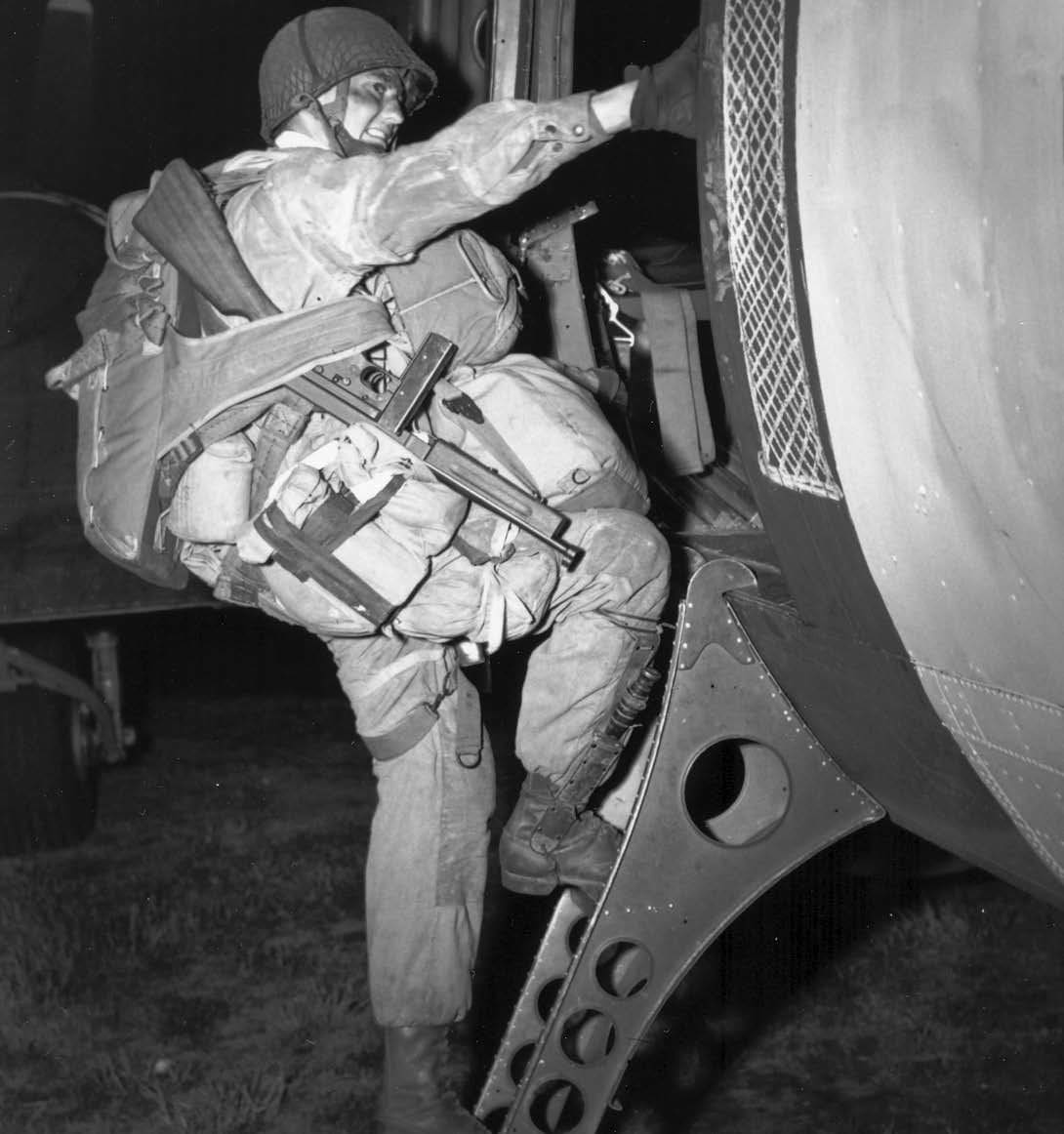
Seventy-four years ago the province of Normandy France erupted as the greatest airborne, amphibious, and special operations campaign in history was launched. Heavily-armed, and carrying as much ammo as they could stand up with, “Little Groups of Paratroopers” (and Commandos) swarmed over the beaches and countryside. Taking out lines of communication and holding strategic locations, they spread the “fog of war” and created havoc and confusion behind enemy lines – tying down enemy armored units that otherwise could have succeeded in pushing the invasion back into the English Channel. The ultimate victory they ensured came at a heavy price, and with a fair amount of havoc and confusion on the friendly side as well.

D8044759-E6F7-45E7-8EB6-AFA2E769D175

Fast forward to the conflicts of today and we have made great strides in developing technologies that penetrate The Fog of War. But this capability has also come with the added weight penalty of lots of batteries – what we call ‘The Battery Burden’.

0C041A8B-3A0F-4957-BA64-B96AE00C352B

Finding ways to reduce the number, variety, and weight of batteries that troops have to carry has been a multi-faceted effort across different Services and industry partners. Replacing non-rechargeable batteries with rechargeable ones has helped; replacing heavy, bulky standard batteries with slimmer, lighter, flexible Conformal Batteries has helped; and replacing up to 35 pounds of battery weight with a couple of pounds of Power Management Kit has helped tremendously as well.

CFF2F9F4-002D-4794-B9EE-47F3262F76B6

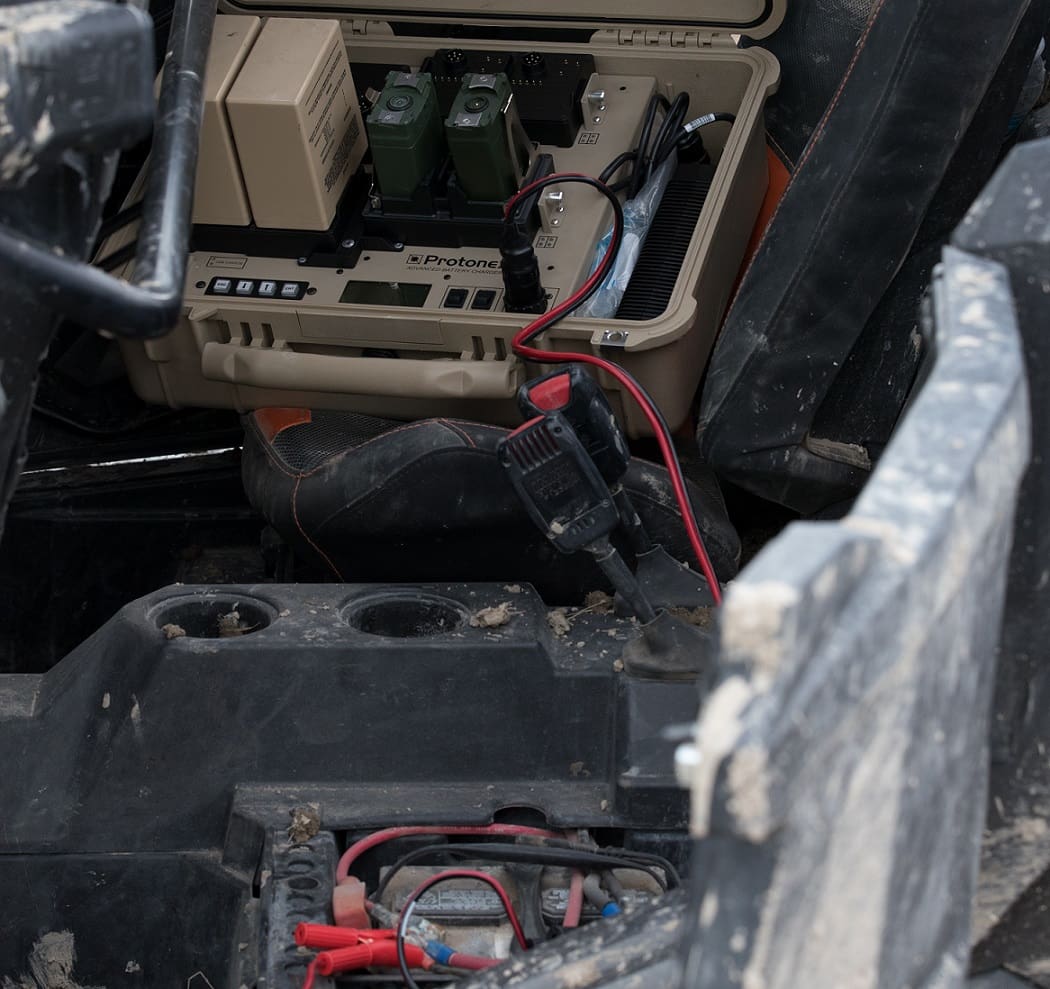
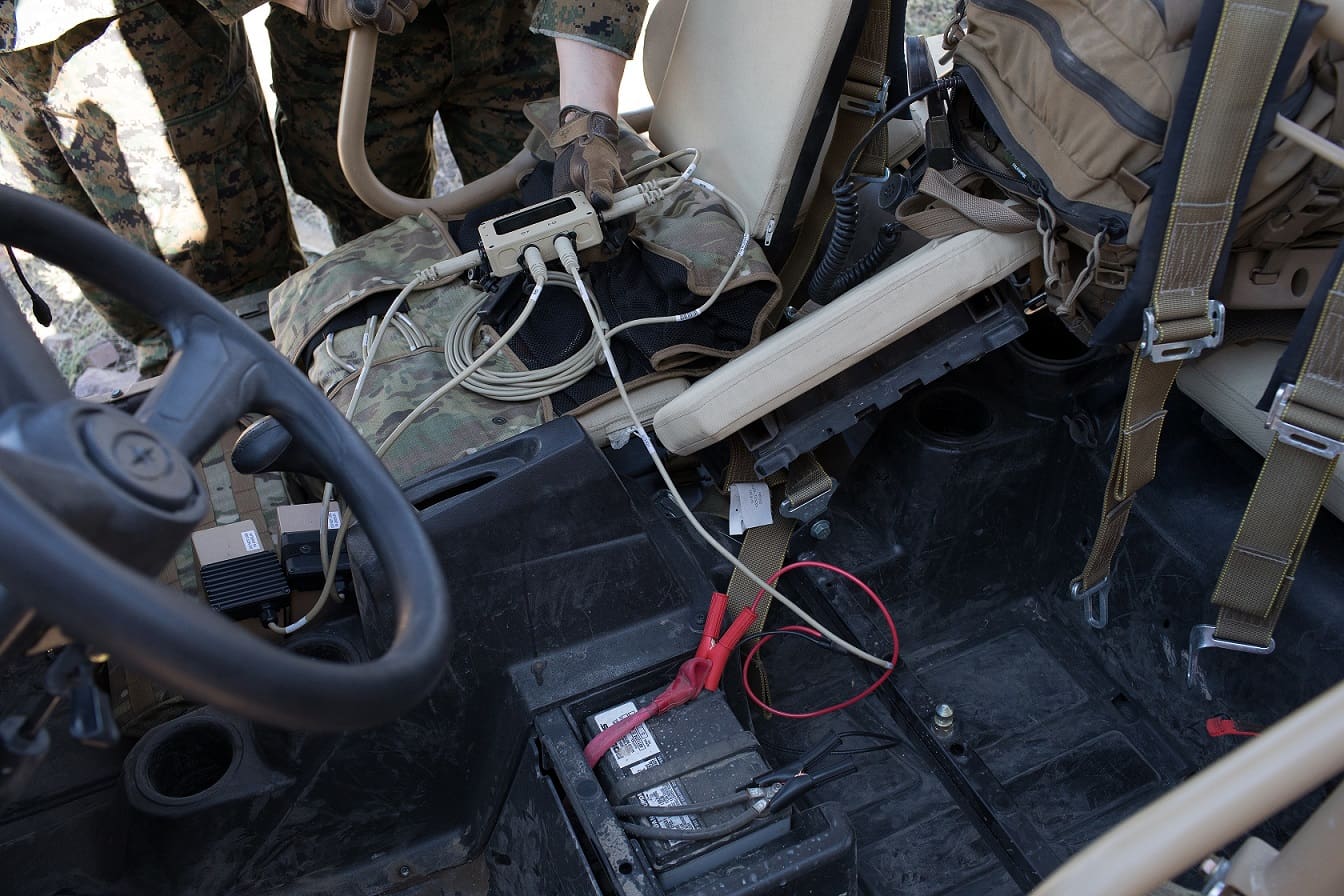
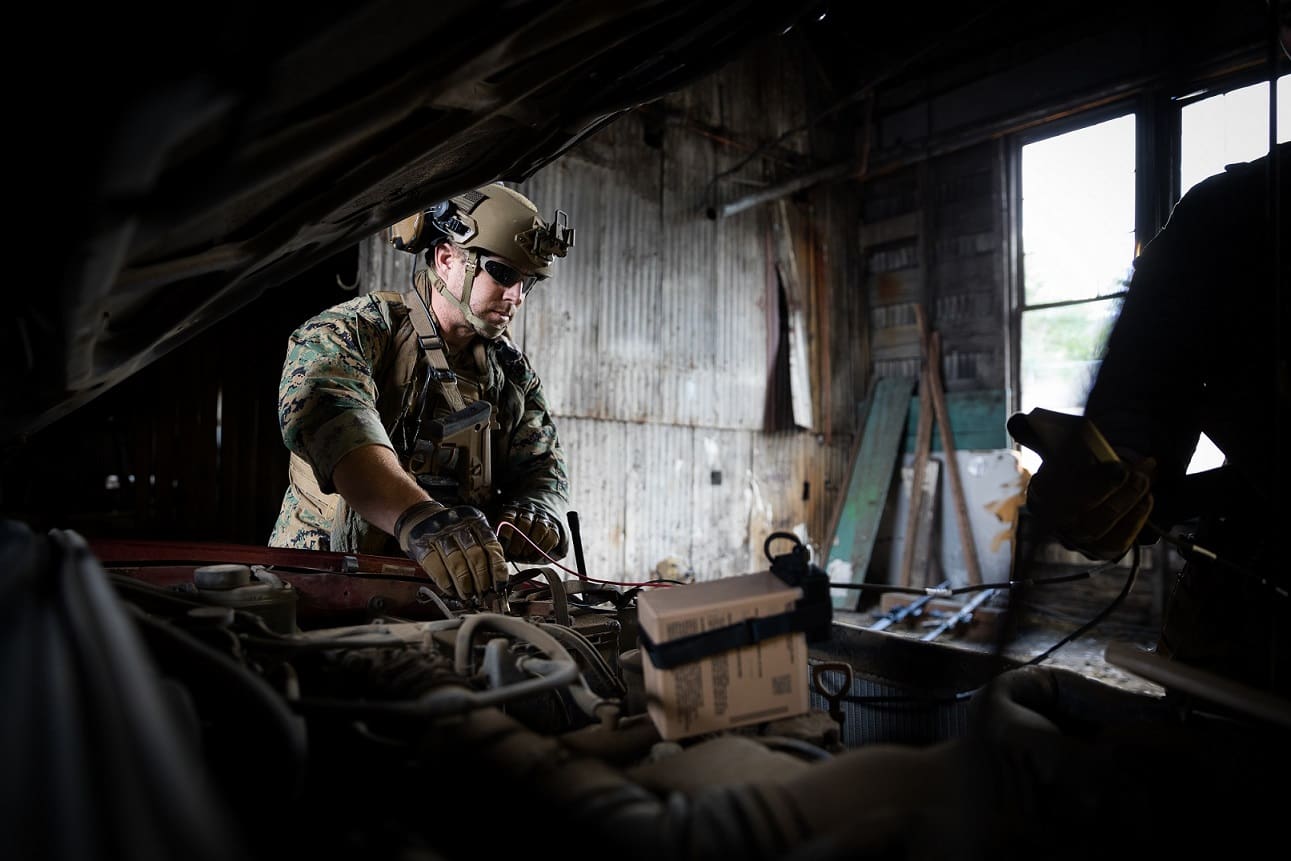
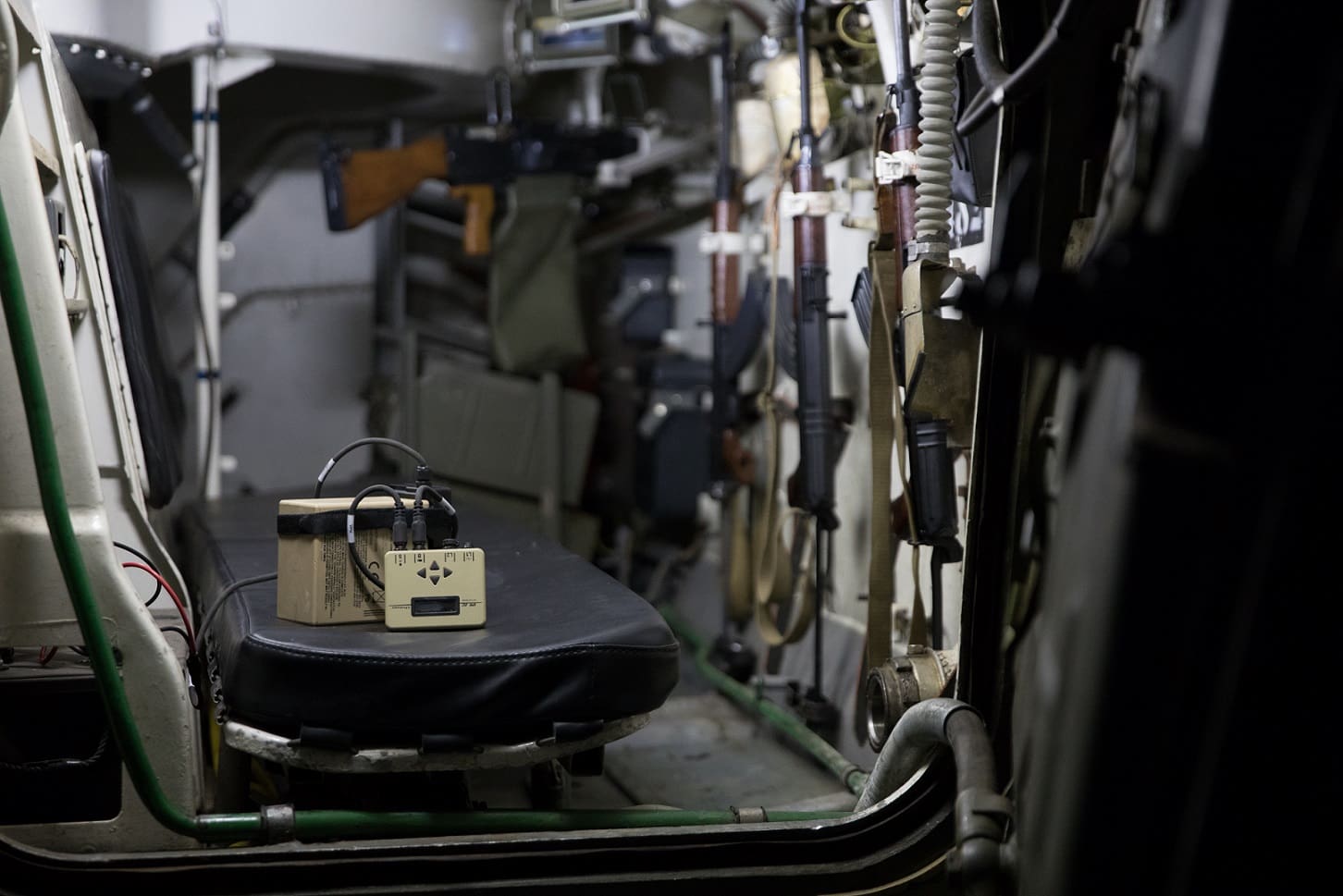
An SPM-622 Squad Power Manager and a few cables is like having a multi-tool for power in your rucksack. With such a system, troops can “scavenge” power from vehicle batteries or power-out ports and from solar panels or blankets to recharge their batteries anywhere. Our rugged ABC-812 Adaptive Battery Charger and pocket-sized VPM-402 Vest Power Manager also have a scavenger mode as well. Having this power-scavenger ability gives small units flexibility, logistical independence, and increased operational effectiveness.

E797D2A5-AA3D-4C2E-82AF-69CFF891F225

The PTX range of vehicle power scavenging solutions include the following:
• NATO Slave Connector – 12V to 33.5V at 10A charge and discharge
• ‘Cigarette Plug’ – 10V to 14.4V at 5A charge and discharge
• Alligator battery clips – 6V to 55V at 20A discharge

331B857E-3D42-4CE3-9F5D-E07D9CE36B2C

An important fail-safe measure is also pre-programmed into the system – when scavenging power from a vehicle battery with the engine switched off, the system monitors the battery’s state of charge and will automatically shut off before it’s drained beyond its capacity to restart the vehicle.

9A637D42-C88A-4E04-B877-95A59C233008

For further information about our full range of power management solutions, visit www.PTXnomad.com or contact the Team.Room@Protonex.comand see us next week at Eurosatory with our French allies PROCOMM-MMC, on booth B697 in Hall 5A.

USMC Awards Sole Source Contracts For Cold Weather Boots And Socks

Saturday, June 2nd, 2018

MARINE CORPS BASE QUANTICO, Va. —

Marines will stay warm during ambient cold weather operations with new boots and socks.

Marine Corps Systems Command intends to award sole source purchase orders for two types of Intense Cold Weather Boots and Intense Cold Weather Socks to improve Marines’ performance in cold weather environments. A total of 2,000 boots and 50,000 pairs of socks will be delivered from four vendors by Sept. 28.

“Based on market research, industry days and events such as Modern Day Marine, we narrowed our decision for the orders down to two companies for cold weather boots and two for socks,” said Todd Towles, program analyst for the Clothing and Equipment Team at MCSC.

There are currently no Marine Corps issue boots designed for use in the -20 to 20 degrees Fahrenheit range. The Temperate Weather Marine Corps Combat Boot was designed for a temperature range between 20 to 60 degrees Fahrenheit, and the Extreme Cold Weather Vapor Barrier Boot was designed for a range between -65 to -20 degrees Fahrenheit.

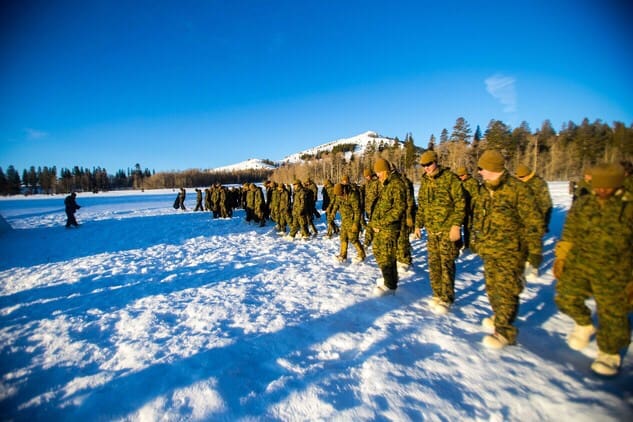
U.S. Marines and Sailors clean up trash before leaving their campsite at Marine Corps Mountain Warfare Training Center in Bridgeport, Calif. Marine Corps Systems Command intends to award sole source purchase orders for two types of Intense Cold Weather Boots and Intense Cold Weather Socks to improve Marines’ performance in cold weather environments. (U.S. Marine Corps photo by Sgt. James Treviño)

This effort to acquire the cold weather boots and socks will help MCSC evaluate commercial off-the-shelf solutions and offer the potential to reduce or eliminate the current environmental protection gap, said Towles. The socks will have much higher wool content than the polypropylene wool socks Marines currently use. Additionally, the Clothing and Equipment Team is hopeful the new gear will offer increased water repellency, comfort and insulation in extreme cold weather environments.

MCSC’s Program Manager Infantry Combat Equipment will conduct a field user evaluation December 2018 through March 2019. The team will gather input from Marines as they wear the ICWB and ICWS prototypes at the Mountain Warfare Training Center, Fort McCoy and Norway.

Feedback regarding fit, form and function will be collected along with how well both prototypes of the ICWB and ICWS perform in sub-zero temperatures.

“The Army is conducting evaluations with similar boots and socks, so there is potential to have some consistency with our results and products,” said Lt. Col. Chris Madeline, program manager for ICE. “Marines will keep the prototype boots through the duration of testing. Once data is collected, it will inform future acquisition decisions and allow the Corps to purchase boots and socks that bridge the gap between the existing cold weather boots.”

The Clothing and Equipment Team falls under Program Manager Infantry Combat Equipment at MCSC.

By Kaitlin Kelly, MCSC Office of Public Affairs and Communication | Marine Corps Systems Command

Editor’s Note: The Intense Cold Weather Sock Contract was awarded to FITS Technologies and Ellsworth & Co. The Intense Cold Weather Boots will come from Belleville Boot Co and Dannebrog Boot Co.

Electronic Warfare Prototypes Improve Operational Understanding Against Near-Peer Threats

Saturday, May 19th, 2018

With the Army moving EW branch personnel into Cyber branch, and the creation of Cyber Electro Magnetic Activities teams, it’s almost as if they’re putting the band back together. The one they disbanded just after the turn of the century.

MCLEAN, Va. — An adversary is spotted positioning fighters along the border of an ally nation. As U.S. Army forces are quickly deployed, one unit is under special instructions: detect and survey the adversary’s electronic warfare jammers and emitters.

As vital as this information is for the commander’s situational awareness, a few months ago mapping out the electromagnetic spectrum would have been much more difficult.

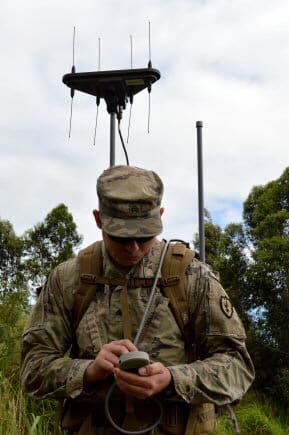
Sgt. Jessie Albert, an electronic warfare specialist assigned to 2nd Battalion, 35th Infantry Regiment, 3rd Brigade Combat Team, 25th Infantry Division, trains on the Wolfhound Radio Direction Finding System at Schofield Barracks, Hawaii, on April 11, 2018. (Photo Credit: U.S. Army photo by Staff Sgt. Armando R. Limon)

While only a simulated experiment, the realism of this scenario reflects how the Electronic Warfare Officers of the 2nd Cavalry Regiment must operate to ensure freedom of maneuver for ground forces. To help them do this, the Army recently rolled out its initial set of EW capabilities for brigade and below, giving Soldiers at the lowest echelons operating in a contested environment the ability to detect, identify and locate targets within the electromagnetic spectrum.

Now, just a few months after the 2nd Cavalry Regiment and other Europe-based units received the integrated package of mounted, dismounted, and command and control EW capabilities, a small group of EWOs traveled to the U.S. to see the next phase of upgrades, participate in simulated scenarios based on potential real-world missions, and provide feedback on how they would fight with the new systems. The simulation experiment, or SIMEX, helps the Army evaluate the operational value of the capabilities by determining whether the operators can accomplish the mission under the scenario-based exercise.

“Prior to this fielding, there was no equipment in the Army inventory to do what we’re doing today,” said Chief Warrant Officer 2 Michael Flory, an Electronic Warfare Technician for 2nd Cavalry Regiment. “The EW community was organized around that counterinsurgency fight, and you were essentially a staff advisor for other capabilities. Now we are capable of offering the commander not just information, but decisions for him to make and assets he can deploy and control himself.”

Delivered in response to an Operational Needs Statement from U.S. Army Europe, the technologies are interim solutions designed as a bridge to enduring EW programs of record that are still in development. The Army Rapid Capabilities Office and the Project Manager for Electronic Warfare & Cyber teamed with 2nd Cavalry Regiment and other receiving units on a rapid prototyping approach to shape system design, performance, functionality and training to meet operational needs in the near- and mid-term.

“This is the short-term [solution] until something more long-term comes along,” Flory said. “So it really helps to bridge that gap. It helps the commander see the electromagnetic spectrum that he’s responsible for fighting in.”

The 2nd Cavalry Regiment EWOs came from Europe to take part in a two week-long SIMEX, designed to help improve operational understanding and effectiveness of the EW prototypes. The event played out in a MITRE lab in McLean, Virginia, which accommodates over 50 personnel representing the operational roles of “blue” or friendly forces, and “red” or enemy forces. The SIMEX lab provides the appropriate computer infrastructure to conduct simulation experiments with real military Command, Control, Communications, Computers, Intelligence, Surveillance and Reconnaissance, or C4ISR, systems.

This experiment allowed the 2nd Cavalry Regiment EWOs to use their newly fielded capabilities in various operationally relevant scenarios in order to identify best tactics, techniques and procedures. The event brought together in one room the Soldiers who use the capabilities, the engineers who are designing them, the project manager responsible for fielding the program of record solution, and the RCO team delivering the interim prototypes.

“Development works out a lot better when you have direct user feedback,” said Capt. Kevin Voss, assistant product manager for Electronic Warfare Integration. “With the SIMEX, we can modify and tweak through constant feedback and constant interaction with the operators. We can map out what they need, based on how they use it in the field.”

One scenario required the EWOs to detect communications between enemy forces’ headquarters and insurgents, then send an Unmanned Aerial Vehicle to confirm. Other scenarios involved detecting enemy jammers, networks and UAV communications; determining if a report that their network is being jammed is real or false; and intercepting, detecting, identifying and locating the source of interference that is affecting their communications.

By the end of the SIMEX, which concluded May 4, the Soldiers were becoming experts at utilizing their new kit of capabilities in order to command the electromagnetic spectrum.

“The SIMEX is not focused on the individual system,” said Nickee Abbott, who was one of the lead RCO engineers on the prototypes. “Instead, it’s about integration and operational understanding. It’s looking at the package of capabilities and how the Soldiers leverage that under realistic threat scenarios.”

With the engineers and operators working side by side, some of the suggested changes were made over lunch or by the next morning.

“This is a great way to give feedback,” said Staff Sergeant Justin Dugan, EW Non-Commissioned Officer for 2nd Cavalry Regiment. “It’s an opportunity to spend concentrated hours on the equipment in a simulated environment with the engineers that are developing it, [so we are] able to turn to the engineers or PM and say, ‘Why does it do that instead of this, or could it do this?’ And it’s incredible to see that information go straight from the operators’ thought process into the engineers’ thought process, and [they] immediately start working on it. ”

Flory agreed, adding that the experiment also provided valuable training experience.

“Sometimes there is a disconnect [between] the engineer level and the user at the tactical level,” he said. “We’re trying to help illustrate where we live and fight, versus where they come to work. It’s showing them what is most valuable to us, and they’ve been incredibly receptive.”

The Soldiers also evaluated some new capabilities their fielded prototypes currently don’t have, in order to inform whether future iterations of the EW prototypes or programs of record should include added features, such as a sensor that provides a potentially wider and clearer image of the electromagnetic environment, and improved signal identification. Some software updates to the fielded systems are already on track to be delivered this summer, with additional “Phase 2” upgrades to the prototypes expected throughout 2018 and 2019.

By Nancy Jones-Bonbrest, Army Rapid Capabilities Office

Marine Corps Wants New Military Ski Systems with Universal Bindings

Saturday, May 19th, 2018

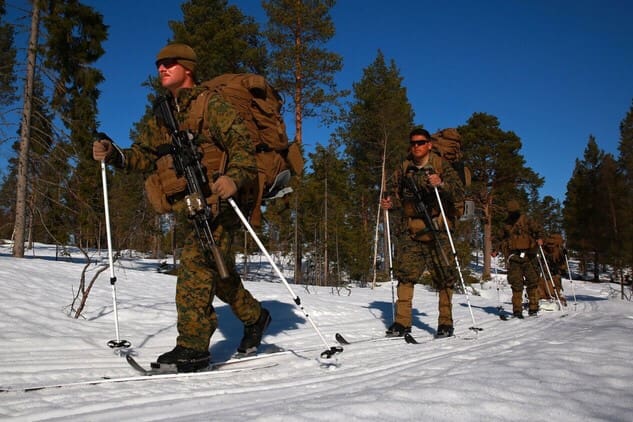
Marines and Sailors with Marine Rotational Force-Europe 18.1 ski toward their next objective during a winter warfare training exercise at Haltdalen Training Center, Norway, April 12. The Marine Corps is searching for a new ski system with universal bindings. Marine Corps Systems Command will release a Request for Information to formally conduct market research and inform the contracting strategy. (U.S. Marine Corps photo by Gunnery Sgt. Clinton Firstbrook)

MARINE CORPS BASE QUANTICO, Va. —

The Marine Corps is searching for a new ski system that can withstand harsh conditions during training and cold weather missions.

The goal is to acquire a system with ski sets that are compatible with the Corps’ Extreme Cold Weather Vapor Barrier Boots and the Intermediate Cold Weather Boots, eliminating the need to purchase new specific ski boots. The sets will include the skis, poles and universal bindings.

In order to deliver an over-the-snow capability before the end of fiscal year 2019, Marine Corps Systems Command will release a Request for Information to formally conduct market research and inform the contracting strategy. MCSC will then establish a 5-year Indefinite Delivery Indefinite Quantity contract with an initial order of 1,500 military ski systems with universal bindings.

Currently, the Army’s Program Executive Office Soldier is also evaluating skis with universal bindings, and the Army’s 10th Mountain Division has procured and used similar systems with favorable results.

“When we went to contract the NATO ski system last year, there were delays in procurement,” said Christopher Woodburn, Capabilities Development director of the Deputy Maneuver Branch at Combat Development and Integration. “Because of the Army’s exploration with cold weather equipment, we know there are other sources for a ski system that will satisfy the Marine Corps requirement and offer the capability more rapidly.”

MCSC gathered feedback from Marines at the Mountain Warfare Training Center to ensure the future ski system chosen will meet mission requirements and improve existing cold weather equipment. Marines want a lighter, low-maintenance and easy-to-use system that is also easy to learn for new or intermediate skiers.

“We’ve been talking to Marines at MWTC to make sure the current equipment they have is still viable, and we also made a few updates to the Marine Corps Cold Weather Infantry Kit,” said Capt. Ryan Moore, project officer in Infantry Combat Equipment at MCSC.

The Marine Corps Cold Weather Infantry Kit is comprised of multiple components, including avalanche probes, hatchets, shovels, snow saws, cook sets, thermoses, a tent and anything else Marines need to survive in a cold weather environment. Each kit serves four people and is pulled on a sled by Marines on skis.

The RFI will help MCSC assess possibilities and find a solution to field the ski system to scout snipers, reconnaissance Marines and select infantrymen.

“We are trying to do our due diligence with tax payers’ money to make sure we get the best value, while also pushing out capabilities as quickly as we can to Marines,” said Woodburn.

Infantry Combat Equipment is part of the Ground Combat Element Systems program at MCSC.

By Kaitlin Kelly, MCSC Office of Public Affairs and Communication | Marine Corps Systems Command

US Army Soldiers Outshoot Marines at Sniper Course

Tuesday, May 15th, 2018

MARINE CORPS AIR STATION NEW RIVER, N.C. – Every Marine is a rifleman but soldiers stole the shooting awards from recent students of the Scout Sniper Course 1-18 who graduated at Camp Geiger on Marine Corps Air Station New River, April 13.

The SSC normally only teaches Marines, but among the graduates of Course 1-18 were two soldiers who became the “high shooter” and “high stalker” of the class.

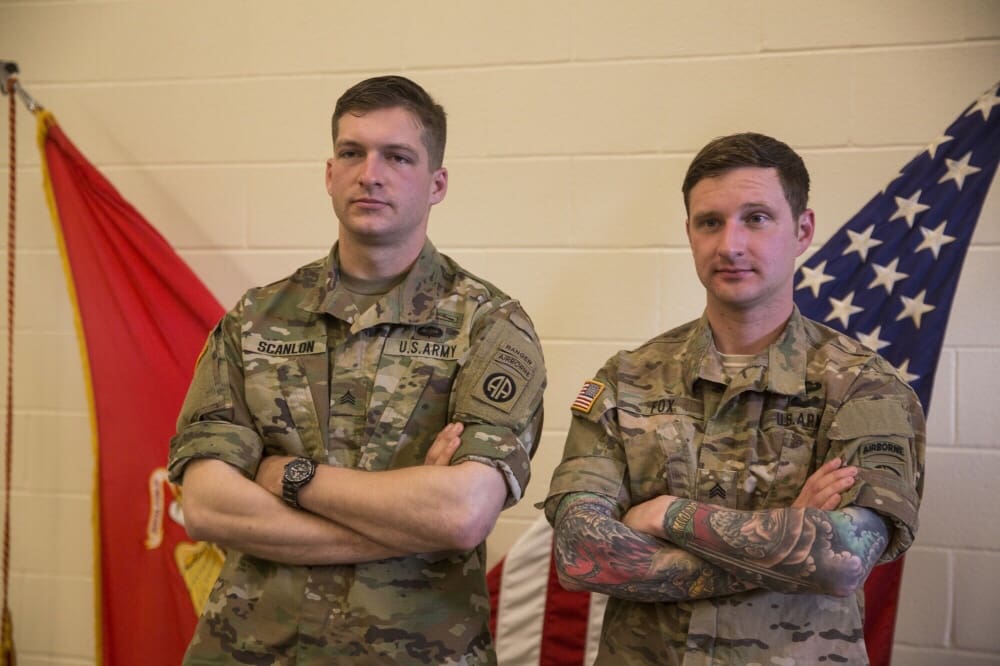
Army Sgt. Clinton Scanlon, left, stands next to Army Sgt. Bryce Fox, right, after graduating the Scout Sniper Course at Camp Geiger on Marine Corps Air Station New River, April 13. The graduating class of 1-18 hosted the two Soldiers who became the course’s “high shooter” and “high stalker.” Scanlon and Fox are Soldiers from the 2d Battalion, 505th Infantry Regiment. (U.S. Marine Corps photo by Cpl. Madrigal)


“Sgt. [Clinton] Scanlon and Sgt. [Bryce] Fox were both previous Army sniper graduates and we had an expectation that they would at least be familiar with the skills that we teach in this course,” said Staff Sgt. Craig Chandler, acting chief instructor, SSC 1-18. “They were both extremely easy to work with and they shared their knowledge with the other students in the class who aren’t as familiar. Some of the things that were different to them that they had to adapt to was that they don’t shoot the M40A6. They shoot the M2010 and they don’t shoot known marksmanship.”

Although the Soldiers had to adapt to the way Marine snipers operated, it didn’t stop them from being the best in the class.

“I scored the highest point average on the ten graded stalks we do,” said Fox. “Stalking is when you put grass, leaves and any natural vegetation around you on your body and then you sneak up [on a target] using individual movement techniques. You take a shot without being seen and then you shoot again. The [instructors] do a walking sequence to try and lock on you. If you don’t get found, you pass.”

Scanlon graduated the class as “high shooter” for scoring the best overall score on the rifle ranges.

“We did go through U.S. Army Sniper School so I think we definitely had a leg up on some of the fresh Marines right out of the fleet,” said Scanlon. “It was clear that everyone here knew what they were doing and the instructors were able to get the guys here shooting very well.”


Both soldiers enjoyed working alongside Marines and look forward to future opportunities to train together.

“It was a great course that has all the information to get a sniper going in any community, Army or Navy,” said Scanlon. “After this, I’d like to attend one of the advanced Marine Corps Sniper courses, but for now I’m going to go back to my unit to get my guys trained up on the things I learned here.”

Story by Cpl. Juan Madrigal

State of the Infantry: Updates to Marksmanship, Training

Monday, May 7th, 2018

FORT BENNING, Ga. — The U.S. is being challenged by a number of near-peer adversaries and, to a certain extent, terrorist organizations, said Brig. Gen. Christopher T. Donahue, Infantry School Commandant, Maneuver Center of Excellence.

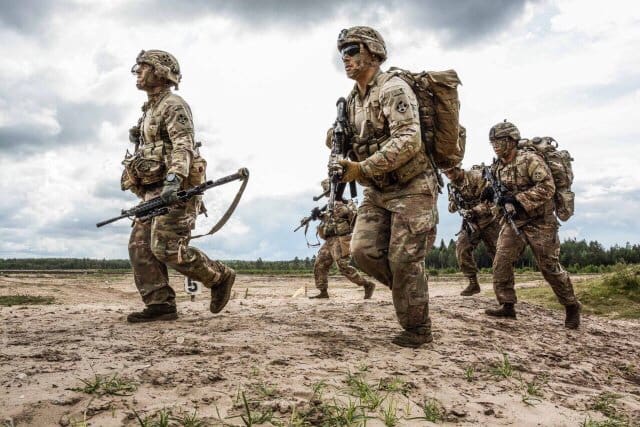
Riflemen with 4th Infantry Division at Rukla Training Area, Lithuania, Aug. 24, 2017. T (Photo Credit: Photo courtesy of Lithuanian Land Forces)

“We still have the capability to defeat them all but we are at a point where we have to improve the mental and physical toughness of the infantry and ensure we’re incorporating new technologies and capabilities to ensure we remain the decisive force for the military,” he added.

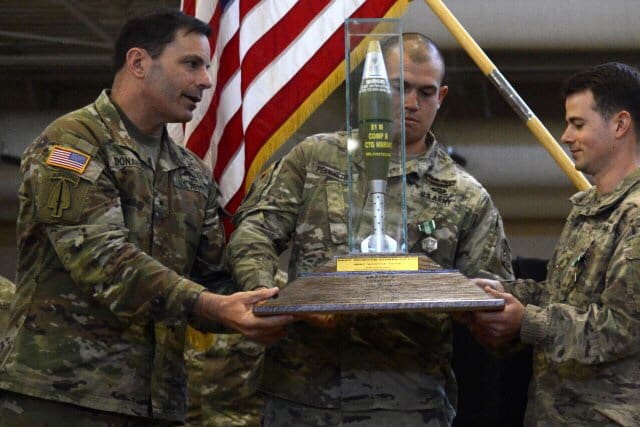
Brig. Gen. Christopher T. Donahue, Infantry School Commandant, Maneuver Center of Excellence, congratulates Soldiers of the 82nd Airborne Division, who won the Best Mortar Competition during Infantry Week, April 2018 at Fort Benning, Ga. (Photo Credit: David Vergun)

Donahue spoke after attending the April 16 awards ceremony for the inaugural Best Mortar Competition. The competition was part of the April 13-20 Infantry Week here.

The general addressed several initiatives that the Army is taking to ensure the infantry retains overmatch.

One of the most fundamental responsibilities the Army has is ensuring that the right people are being selected for the Infantry Branch, he said, describing the infantry as “the 100,000 who close with the enemy.”

The Army is doing that through reform of its talent management system, he said. “We want intelligent, physically fit people who are capable of enduring hardships against a near peer.”


At higher echelon, the Office of the Secretary of Defense is also examining the attributes of a successful infantryman with its Close Combat Lethality Task Force, he added.

Once these people are recruited into the Infantry Branch, it’s important that they master infantry basics right off the bat, he said. “You can’t do anything without mastering the basics. You have to be very good at that.”

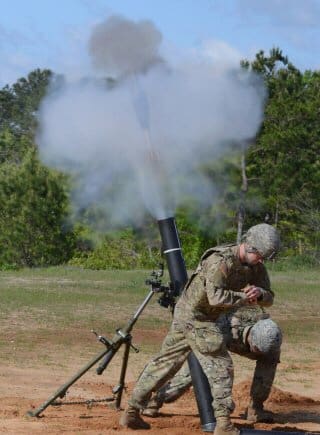
Soldiers compete in Best Mortar Competition during Infantry Week, April 2018 at Fort Benning, Ga. (Photo Credit: David Vergun)

In July, the Army will run a pilot to extend the Infantry One-Station Unit Training out to 21 weeks, he said, explaining that OSUT is the equivalent of Basic Combat Training and Advanced Individual Training.

Lengthening OSUT “will help ensure we’re producing the right person that can walk into a unit, ready to fight, win and survive,” he said.

In another initiative, the Army will be transitioning to a new marksman qualification test, he said. Soldiers will still be given 40 rounds, but instead of just shooting prone and from a foxhole, they will shoot prone, prone unsupported, kneeling and then standing — all within six minutes. “It will reflect what we think you’ll be doing in combat.”

Soldiers compete in the Combatives Tournament during Infantry Week, April 2018 at Fort Benning, Ga. (Photo Credit: David Vergun)

Soldiers will also be trained to fight in austere environments where communications is degraded or denied, he said, terming it a “multi-domain environment” that includes space, cyber, urban and even subterranean battle.

Donahue noted that when he was a lieutenant going through infantry training, Soldiers were taught how to continue the fight despite severed communications with headquarters. “We’ve got away from that, but we’re going back to doing that.”

What he didn’t learn as a lieutenant, he said, was how to deal with social media that the enemy will use to gain an advantage. That too is being incorporated into the schoolhouse.

To fight and win also means equipping Soldiers with the right technology and capability, he said. Cross-functional teams will be going after that in the new Futures Command.

For instance, virtual reality will enable Soldiers to get a lot more training in than they normally would with live-training only. Virtual training environments allow commanders to run Soldiers through many more repetitions, at no extra cost, before going to validate in a live environment.

Col. Townley Hedrick, deputy commandant for the Infantry School, said that the Army is developing a functional fitness test that will better prepare Soldiers for the rigors of combat.

Hedrick spoke after attending the Combatives Tournament awards ceremony, another Infantry Week event, held concurrently with the Best Mortar and Best Ranger competitions.

While vigorous and repetitive training is important, “when you compete at anything, it makes people up their game to the highest level,” he said. “You can train and train and train, but it’s actually competition that takes you to that final level of precision and perfection.”

Hedrick predicted that there will be more competitive events coming throughout the Army similar to those featured here during Infantry Week.

By David Vergun, Army News Service

(Follow David Vergun on Twitter: @vergunARNEWS)