Some things are top secret and must not get out to the public under any circumstances, but it just keeps happening – this time we are the bastards who leak Longhorn 4.1 before the official release.
Filmed and cut by www.stefan-czech.info


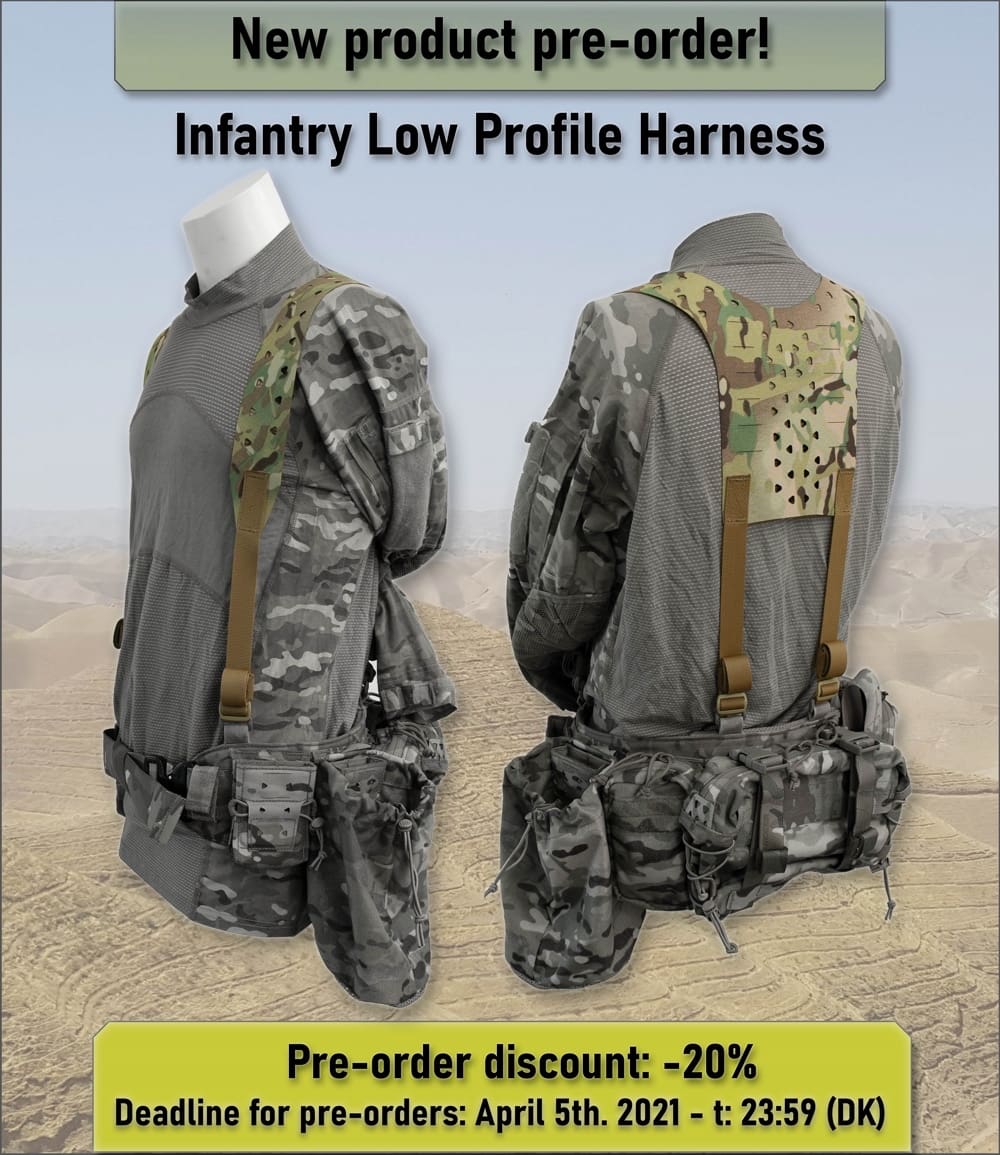
The Infantry Low Profile Harness is designed to be worn under a body armor system and help the operator to stabilize the belt during movement as well as distributing weight and is constructed from one piece of laser-cut Squadron Laminate – except the webbing – which makes it very thin and flexible. The laser-cut holes along the spine and shoulder pieces, allows for sweat and heat to pass through them, for a higher level of comfort.
For this pre-order we offer a 20% discount, already applied to the price in the shop.
More information can be found here: www.tardigradetactical.com/products/infantry-low-profile-harness
The all new PAFA MK3 Medic Pack has been designed with SOF Medics to create a primary aid kit that is fully configurable, with a comprehensive array of removable internal and external pouches that can be arranged to suit the user’s needs.

The PAFA MK3 Medic Pack is available in two kits, both with an array of pouches and accessories.

The Standard kit includes a Velcro in hydro/splint/long item pouch, Velcro in IV Organiser Pouch with elastic retainers for bungs, cannulas and giving set, also included are two Velcro backed medium and two large rectangle zippered organisation pouches with vinyl windows and colour coded removable tabs for easy recognition of organisation pouches and a small mesh topped pouch.

The Advanced kit includes all the above items from the Standard kit plus a pair of MOLLE zippered accessories pouches, Tac Evac PAFA soft litter and modular equipment insert with elastic shock cord to hold various items.
Yeah, I get it, “Operator Skin Care Lotion,” yuck! But the reality is that your skin is your body’s largest organ and it takes a beating, particularly while doing the things SSD readers do. These products were created by Danish SOF Vets.

Operators Skincare Sun Lotion with SPF 30/50 will let you perform at your best for hours in the sun by effectively protecting you against the harmful UVA and UVB rays, that otherwise would turn your skin red as a steamed lobster.
There are three products so far, After Sun Care along with 30 SPF and 50 SPF Sun Protection. They are non-greasy, which I appreciate and waterproof.
Check them out at www.operatorsskincare.dk.
TOBYHANNA ARMY DEPOT, Pa. – Tobyhanna Army Depot personnel extended the organization’s reach last month when they traveled to a Romanian seaside community to train allies of the United States.
A two-person team traveled to Constanta, Romania last month to conduct Defense Advanced GPS Receiver (DAGR) New Equipment Training (NET) for Romanian Air Force artillery battalions. NET is an enduring workload for the depot and delivers training to military units after receipt of new assets, ensuring Warfighters across the globe know how to use lifesaving equipment on the battlefield.
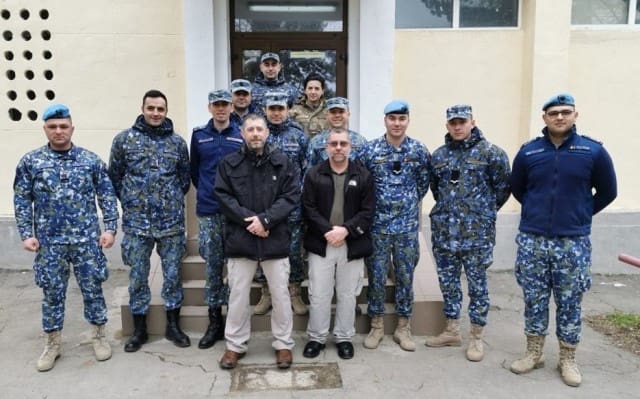
Depot personnel spent a week instructing Romanian Airmen on the overall operations of the DAGR, typically used as part of the Patriot missile system. While NET missions often encompass a wide range of service members, this iteration of the training focused on a targeted group of 11 users, who were educated on the functionalities of DAGR. Students learned through classroom instruction as well as hands-on, practical exercises designed to ensure they could perform to Army Standards when operating the asset. Tobyhanna’s instructors gave the students rave reviews for their enthusiasm.
“The Romanian Airmen were very sharp and quick to learn. They made our job easy,” said Gregory Wirth, a training instructor in the Field Logistics Support directorate. Fellow training instructor Vincent Zuranski agreed.
“We had a great rapport with the class,” they said, adding that one highlight of the trip was the authentic Romanian food the Airmen treated them to every day. Wirth and Zuranski also noted the region’s rich history, home to many ancient Greek and Roman settlements.
The mission was the NET team’s first excursion out of Northeastern Pennsylvania since the onset of the COVID-19 pandemic. While travel into the country was relatively easy, returning home to Tobyhanna was a significant challenge, according to Wirth.
“Because COVID-related guidelines are always changing, there was uncertainty about what we’d need to do to get back to the U.S.,” said Wirth. “We ended up needing a negative COVID test for return travel through Germany – not something easy to navigate while in a foreign country where you don’t speak the language. Luckily, our students and personnel at the embassy helped us obtain the necessary information so we could get home.”
Despite the challenges, the duo said the opportunity to travel was more than welcome.
“As someone who travels for a living, I found it difficult to not be able to support our important missions across the world. It was extremely exciting to get back out on the road to support our Warfighters,” Zuranski said.
In addition to DAGR, Tobyhanna provides NET for military personnel on the Common Remotely Operated Weapons System (CROWS) and a variety of other systems. The mission is directly aligned with the depot’s long-range strategic plan, Toby 2028, specifically the C5ISR Readiness and Shape the Future lines of effort.
The program benefits all members of Team Tobyhanna, according to Eric Walker, who supervises the NET team.
“NET ensures Soldiers worldwide get the training they need to keep themselves, and the world, safe. When our NET instructors return home, they share any new knowledge with the depot employees who are responsible for repairing the equipment here on-post. It’s win-win and a program we’re proud very to support.”
Tobyhanna Army Depot is a recognized leader in providing world-class logistics support for command, control, communications, computers, cyber, intelligence, surveillance and reconnaissance (C5ISR) systems across the Department of Defense. Tobyhanna’s Corporate Philosophy, dedicated work force and electronics expertise ensure the depot is the Joint C5ISR provider of choice for all branches of the Armed Forces and industry partners.
Tobyhanna’s unparalleled capabilities include full-spectrum logistics support for sustainment, overhaul and repair, fabrication and manufacturing, engineering design and development, systems integration, post production software support, technology insertion, modification, foreign military sales and global field support to our joint warfighters.
About 4,000 personnel are employed at Tobyhanna, which is located in the Pocono Mountains of northeastern Pennsylvania. Tobyhanna Army Depot is part of the U.S. Army Communications-Electronics Command. Headquartered at Aberdeen Proving Ground, Maryland, the command’s mission is to empower the Soldier with winning C5ISR capabilities.
By Danielle E. Weinschenk, Lead Public Affairs Specialist
Coventry, UK. NP Aerospace, a global armour manufacturer and vehicle integrator, has re-engineered the Ridgback and Mastiff platforms for an Urgent Capability Requirement (UCR) in Mali, Africa, under the UK Ministry of Defence (MoD) Protected Mobility Engineering & Technical Support (PMETS) Contract.

The off-road mobility upgrade contract, awarded in May 2020, is valued at c. £7m and covers 12 vehicles and associated spares. It has enabled proven, heavy armoured vehicles held within the protected mobility fleet to be used to protect British Army troops in challenging operational terrains. Optimising current platforms has significantly reduced delivery timescales, ensuring our soldiers are safer, faster.
As engineering authority for the protected mobility fleet, NP Aerospace is leading the project with support from companies including HORIBA-MIRA, Horstman, Texelis, Timoney, Tyron and Universal Fabrications. A number of vehicles have already been deployed on operation during COVID-19 restrictions with the first wave delivered in just over 80 working days.
New vehicle systems have been implemented within the Ridgback and Mastiff to increase mobility, enhance safety and introduce new capabilities. These enhancements include state-of-the art, independent suspension systems incorporating Ride Height Control, along with upgraded driveline, steering and braking systems, central tyre inflation systems and increased diameter tyres.

Brigadier Anna-Lee Reilly, Head Vehicle Support Team for Defence Equipment & Support (DE&S), the procurement arm of the UK Ministry of Defence, commented: “Our close relationship with NP Aerospace has been fundamental in our ability to deliver this capability to the Army in unprecedented timelines. From requirement to delivery, we have worked hand-in-hand to develop, trial and ultimately deploy this capability on operations in less than a year. Reviews have been extraordinarily positive, and the added capability has helped ensure that our soldiers are able to conduct their operations in a safer and more effective manner.”
David Petheram, Chief Operating Officer, NP Aerospace, said: “The off-road mobility upgrade is a significant development for the UK MoD. It has potential to extend the life of Ridgback and Mastiff which have saved lives on operation, whilst delivering performance improvements to match other high mobility vehicles. Reduced vehicle vibration has lessened driver and passenger fatigue, providing a better working environment for operational tasks. Mobility improvements have enabled a proven platform to be used in theatres of operation previously unachievable for standard vehicles.
“Whilst the upgrade was driven by a specific Urgent Capability Requirement, we see this development having a much wider impact. By using experienced NP Aerospace staff alongside off the shelf components, NP Aerospace has cut costs significantly and enabled UK MoD to handle new combat environments without the burden of developing a completely new platform.
“The speed at which we and our partners have re-engineered the platforms, with fully functional prototypes delivered in just over 80 working days, has shown that we have the capabilities to meet challenging military requirements even in a global pandemic with supply chain restrictions.”
A total of over 700 Mastiff and Ridgback vehicles have been armoured and integrated by NP Aerospace over the last 15 years for use in various operational theatres.
Milrem Robotics, the European leading robotics and autonomous systems developer and Marduk Technologies, the provider of world-class Counter Unmanned Aerial System (C-UAS) solutions jointly launched a unique mobile autonomous C-UAS platform that offers protection against loitering munition and surveillance drones.
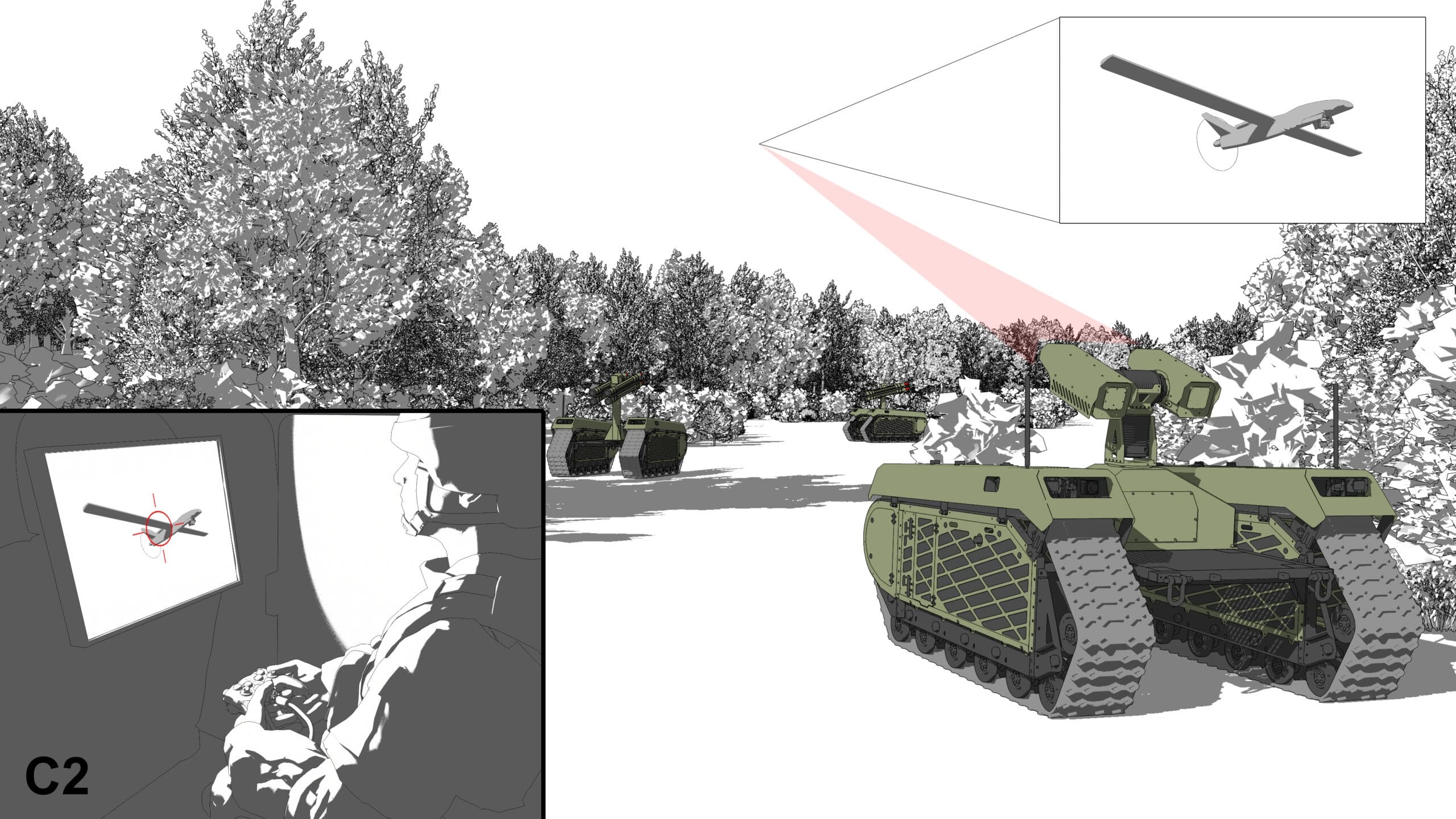
The jointly developed system features the electro-optical C-UAS platform Marduk Shark and the THeMIS unmanned ground vehicle (UGV). This mobile solution provides frontline forces with an independent ability to accurately detect, classify and target loitering munition and other flying objects. It uses the most advanced Artificial Intelligence and Machine Learning models.
The mobile C-UAS platform can be integrated with kinetic and non-kinetic weapon systems and with different sensors and effectors such as radar, radio frequency detector, jammer, laser, etc.
Currently, most C-UAS solutions are used stationary, however, utilizing mobile platforms with autonomous capabilities gives defences forces the flexibility to relocate them according to the threat assessment. Mobility also provides early warning for the forces in various positions.
“Frontline forces on the move are most exposed to adversary drones. The mobile autonomous C-UAS platform gives our customers an additional layer of protection and extends our product portfolio, which lets us provide more capabilities for our defence customers,” said Martin Simon, the CEO of Marduk Technologies.
“Autonomous UGVs equipped with a C-UAS payload create a new capability on the battlefield that allows forces to focus on their main task of engaging the adversary while UGVs provide better situational awareness and force protection,” said Kuldar Väärsi, CEO of Milrem Robotics.
FROG.PRO, with the goal of offering the public solutions aimed at a continuous improvement of the service provided, develops the new SWAT COBRA Belt Kit and TIER1 COBRA Belt Kit.
The products are designed and developed to meet the needs of both professionals and enthusiasts from every sector.
The SWAT COBRA Belt Kit is designed to offer operators employed as Quick Reaction Force an extremely light and minimal first line, ideal for operations requiring maximum agility or the use of vehicles.

The kit consists of:
• n.1 COBRA Raider Belt
• n.1 Trousers Inner Belt
• n.1 Pistol-SMG-1-EOT
• n.1 Pistol-1-VF
• n.1 Multi-1-EOT

The TIER1 COBRA Belt Kit instead will provide the operator with a first “combat proof” line, with plenty of accessories and fully modular to allow the operator to face any situation while equipped in the best possible way.

The kit consists of:
• n.1 COBRA Operator Belt
• n.1 COBRA Trousers Inner Belt
• n.1 Pistol-SMG-1-EOT
• n.1 Pistol-1-VF
• n.1 Multi-1-EOT
• n.1 Orthos Med Pouch

The AustriAlpin COBRA® D-Ring buckle boasts a breaking load of 18 kN (1835 kgf). It is in fact specifically designed to prevent accidental opening: the safety system allows opening only if not in traction and only by simultaneously pressing both release buttons.
The D-ring, with a breaking load of 22 kN (2243 kgf), can be used to attach PRLs or other accessories for rappelling or emergency.
This composition, embellished with various flagship products of the brand such as the COBRA Operator Belt and the ORTHOS Med Pouch, reflects the “must-have” of every first-line operator.
The Pistol-SMG-1-EOT and the Pistol-1-VF pouches are able to accommodate most of the gun magazines on the market but can also be used, if necessary, to carry accessories such as a CAT Tourniquet, a multi-tool or a flashlight.
The Multi-1-EOT pouch, on the other hand, is designed to carry AR-15, AR-10, SR-25, SCAR 17, AK and similar rifle magazines.
Within each of the aforementioned kits, is also provided a series of One-Wrap velcro straps that allow the operator to effectively, but at the same time easily attach each pocket to the tactical belt, enabling a both comfortable and rapid transition between various configurations.
Its design is in fact the result of a relationship of close collaboration and a continuous exchange of feedback with the Special Forces Operators from national and international units; relationships that FROG.PRO continues to pursue, recognizing their fundamental importance for the development of products always at the vanguard.
FROG.PRO SWAT COBRA Belt Kit
FROG.PRO TIER1 COBRA Belt Kit