Aquaterro

Archive for the ‘International’ Category

Rheinmetall and SATIM Sign Technology Supply Agreement: Support for German Bundeswehr in SAR Programme

Saturday, December 27th, 2025

The technology group Rheinmetall, based in Düsseldorf, and SATIM Monitoring Satelitarny, a Polish deep-tech company specialising in the AI-supported analysis of synthetic aperture radar (SAR) imagery, have signed a technology supply contract. The content is the support of the German customer’s satellite-based reconnaissance program. The agreement formalises SATIM’s role as a technology supplier to Rheinmetall for the delivery of intelligence, surveillance, and reconnaissance (ISR) capabilities for the Bundeswehr.

Under the contract, SATIM will supply AI-based capabilities that transform large volumes of complex radar imagery into actionable information. The agreement supports SPOCK-1, the German satellite reconnaissance program awarded to Rheinmetall ICEYE Space Solutions. SATIM will provide its technology as a supplier within the European Union, while Rheinmetall will operate the system independently in Germany.

Timo Haas, CEO of Rheinmetall Electronics: “Our partnership with SATIM marks another important milestone in advancing Rheinmetall’s strategy to strengthen our capabilities and footprint in an increasingly digital and connected battlespace. By combining our expertise and technologies, we are building a powerful foundation for faster, data-driven decision-making and superior situational awareness for our customers. This collaboration is another example of cutting-edge and combat-ready solutions at speed.”

Jacek Strzelczyk, CEO of SATIM: “The contract between SATIM and Rheinmetall combines the agility and innovation of a deep-tech start-up with the scale and mission experience of a global defence prime. Together, we will deliver effective solutions that support Germany’s national security priorities and will strengthen allied defence capabilities. This milestone demonstrates the maturity of our technology and its alignment with Germany’s ISR requirements.”

The technology supply contract brings together Rheinmetall’s system integration expertise and its established position in the German defence  market with SATIM’s AI-based data analysis capabilities. The collaboration is intended to enhance situational awareness, support informed decision-making, and enable timely operational responses in a complex and evolving security environment.

DroneShield Secures $6.2M Asia Pacific Contract

Friday, December 26th, 2025


Image: DroneShield DroneSentry-X Mk2 as part of NATO Exercise Bold Machina 25 in the Netherlands

  • DroneShield has received a $6.2 million contract for an Asia Pacific military end-customer.
  • Delivery and cash payment is expected in 2026.

DroneShield Limited (ASX:DRO) (DroneShield of the Company) is pleased to announce it has received a standalone contract for $6.2 million from an in-country reseller for delivery to a military end-customer in an Asia Pacific country. The reseller is a wholly-owned subsidiary of a multi-billion dollar, global, publicly listed customer that is contractually required to distribute solutions to a major Asia Pacific military government department. The solutions include selected 3rd party hardware, interoperable with DroneShield’s command-and-control software platform, DroneSentry-C2. DroneShield expects to complete the delivery and receive payment in 2026.

Cutting-edge Drone Defence Technology: Italy Receives Its First Skynex Air Defence System from Rheinmetall

Friday, December 26th, 2025

Handover to the Italian Army at the Sabaudia base has been completed

The Italian Army has received its first Skynex air defence system from Rheinmetall. On 18 December 2025, the first Skynex battery was handed over to the Italian Army at the Comando Artiglieria Controaeri (Air Defence Artillery Command) in Sabaudia. This gives the Italian Army the capability to defend against air attacks at close and very close range. In particular, it will enable effective countermeasures against drones, which – as seen in the war in Ukraine – are playing an increasingly important role in current and future conflicts and are bringing warfare into cities.

It was only in January 2025 that Rheinmetall Italia S.p.A., Rome, received the order to deliver the first system with a total value of €73 million. The contract also includes an option for three additional systems.

Italy is the first NATO member state to introduce Rheinmetall’s Skynex technology Skynex technology including the Revolver Gun Mk3 35mm. The order is thus an important corner stone in Rheinmetall’s strategy of establishing a new standard in the field of cannon-based air defence for international armed forces. NATO member Romania also recently opted for Skynex in combination with another type of gun already in service there (GDF-009 twin guns). Skynex air defence systems are already proving their quality to the Ukrainian armed forces in the harsh conditions of war, protecting people and property from airborne threats.

The Skynex Air Defence System

Skynex is a cannon-based air defence system and is therefore especially suitable for close-range protection where guided weapons cannot operate effectively. The 35mm Revolver Gun Mk3 cannons have a cadence of 1,000 rounds per minute and a range of up to 4 kilometres. The system uses programmable Ahead ammunition that is resistant to electronic countermeasures and ensures precise target engagement. In terms of cost-effectiveness, the ammunition is significantly more efficient than comparable missile-based systems.

Operational successes in the Ukraine underline the efficiency with which the cannon-based air defence system can defend against air targets – especially cruise missiles and drones.

Skynex is based on the concept of separating the airspace surveillance from the effectors. Italy has opted for the configuration with the XTAR 3D radar from Rheinmetall, which can monitor the airspace in a radius of up to 50 km.

Thanks to its existing modularity, the required resources can be connected to the command-and-control network depending on the mission. Skynex offers great autonomy in terms of sensors and effectors, as to integrating a wide range of modern air defence systems into the system. The only requirement is the presence of a dedicated tracking unit.

In addition to individual sensors and effectors, existing air defence systems such as Rheinmetall’s Skyshield and Skyguard families can also be integrated into the new architecture as firing units. The detected air situation is displayed in a remote command-and-control centre on a map with the sensors and effectors positioned in the field, thus easing a target assignment to the air defence assets connected to the system. 

Mehler Systems’ 2025 Year in Review

Friday, December 26th, 2025

FULDA, GERMANY (22.12.2025)

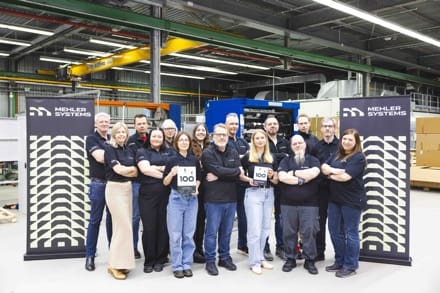
As 2025 draws to a close, Mehler Systems reflects on a year defined by structural strengthening, continued innovation, and the delivery of large-scale protection programmes across global markets. Throughout the year, the group focused on expanding its capabilities, increasing production capacity, and reinforcing long-term partnerships with defence and security organisations worldwide.

During the year, Mehler Systems expanded its technological base through the acquisition of a majority stake in Stilmotor Extra Protection Srl (SXP), adding specialised expertise in body armour and riot protection. The group now comprises eight companies with more than 1,600 employees across Europe.

Production capacity was further increased through infrastructure investments, including a new production hall in Zrenjanin and upgrades to sewing operations. These investments supported higher output while maintaining consistent quality standards across product categories. Testing and validation remained a core focus, with extensive internal ballistic testing and certification activities conducted in cooperation with specialised laboratories.


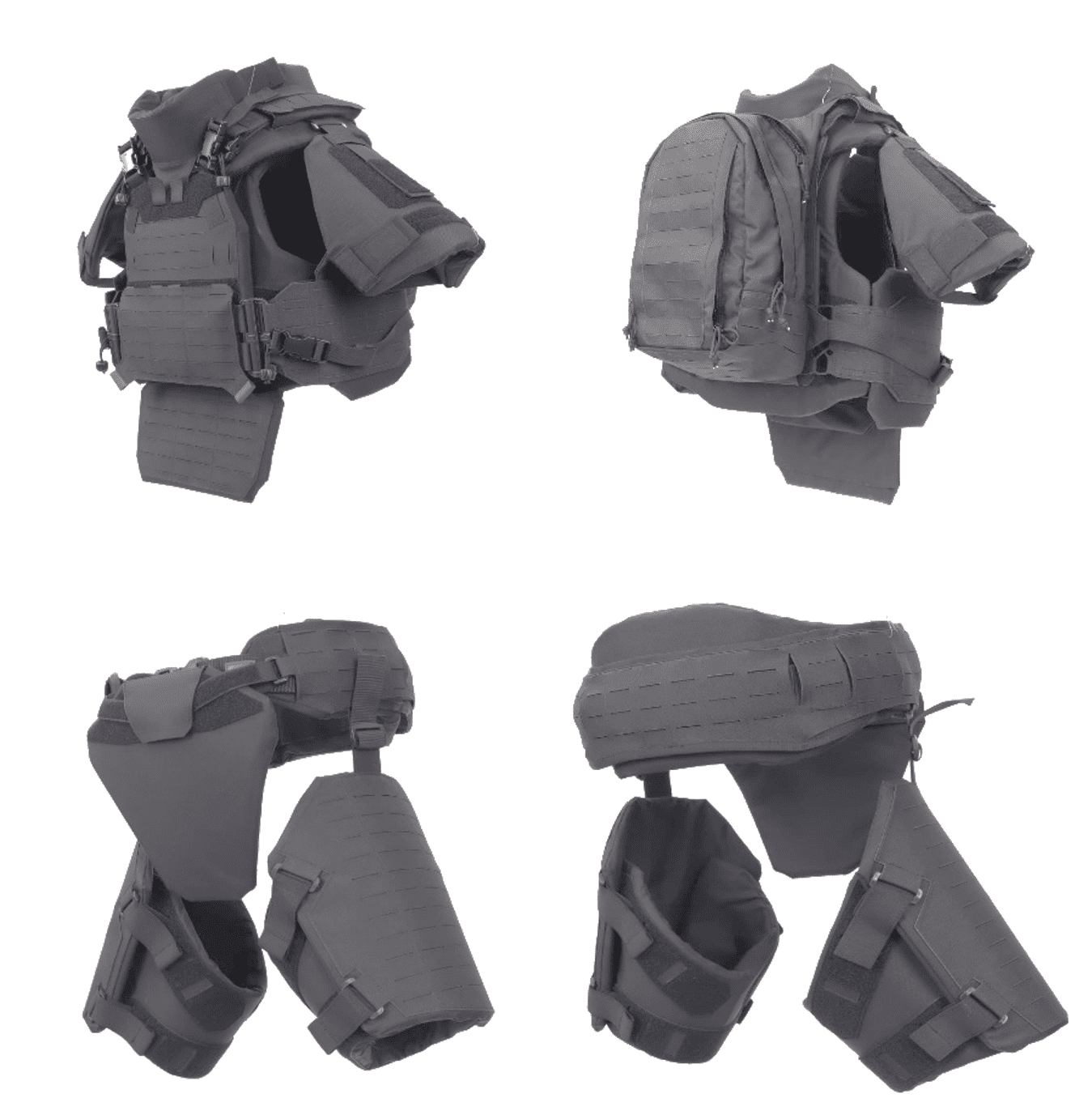
Product development continued at high intensity, resulting in the introduction of hundreds of new solutions across ballistic protection, load-bearing systems, and tactical clothing. A key milestone was reached as more than one million Mehler Systems protective vest systems entered operational use worldwide, reflecting long-term programme continuity.

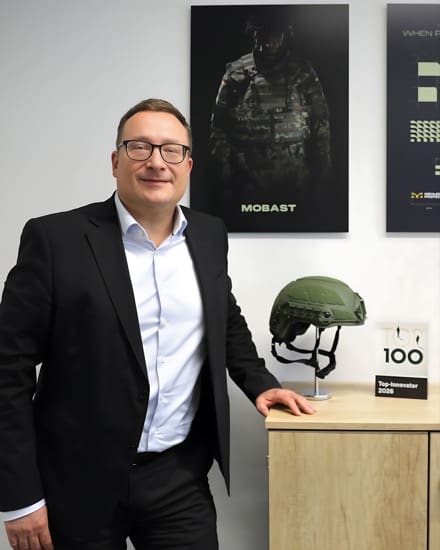
Several major programmes underscored the group’s ability to deliver at scale. The MOBAST programme for the German Armed Forces was completed fully on time with zero rejected units, requiring rapid scaling of production capacity and close coordination across the group.

Alongside operational achievements, Mehler Systems invested in leadership development and talent, with key management appointments and continued workforce growth across the group. The company also maintained an active international presence through trade shows, partner engagement, and professional exchange.

Looking ahead, Mehler Systems remains focused on strengthening its foundations, advancing development, and delivering reliable protection solutions for defence and security professionals operating in demanding environments.

For further details, visit the Mehler Systems 2025 Yearly Review.

Next-Generation Drone Pilots Face Off at Comp

Wednesday, December 24th, 2025

Army’s newest drone and robotics talent went head-to-head at Victoria Barracks last month in the finals of Rise of the Drones and War of the Machines.

The culmination of months of training, designing and testing at Battle Lab’s MakerSpace sites across the country had finals competitors assembling, configuring, flying and repairing first-person-view (FPV) drones and robotic ground systems. 

The event represents a step forward in building Army’s uncrewed systems capability, with 161 new FPV drone pilots and 98 uncrewed ground vehicle operators trained through the MakerSpace program.

Commander Battle Lab Colonel Pete Allan said the competitions played an important role in supporting Army’s future capability needs.

“We’re clearly seeing that robotics and automated systems are reshaping how militaries fight, so activities like Rise of the Drones and War of the Machines are part of how Army rapidly adapts at the forward edge,” Colonel Allan said.

The Battle Lab MakerSpace training model, originally conducted over six weeks, was condensed to four weeks to demonstrate the ability to accelerate capability when required. 

‘There are lessons to be learned from Ukraine and the Middle East. Innovating in the FPV space is critical.’

Participants received instruction and mentorship as they progressed from assembly to simulation to live flights. Some completed the initial training in less than three days.

Competitor Captain Jesse Wood, of Headquarters 7th Brigade, said the training was highly relevant to contemporary warfare.

“There are lessons to be learned from Ukraine and the Middle East. Innovating in the FPV space is critical,” Captain Wood said.

“The course stepped us through UAV fundamentals, flight characteristics, basic controls and customising the software and settings. We also spent time in simulation before our first flight.”

Private Dan Leeks, a competitor from the 8th/9th Battalion, Royal Australian Regiment, said the program armed him with the skills and confidence to employ FPV drones.

“We learned how to solder the boards and motors, program the drones and test-fly them. I started with no experience, but now I’d be confident employing them in my job,” Private Leeks said.

By Captain Andrew Lee, ADF

Reinforcement of the Bundeswehr’s Puma Fleet: Rheinmetall and KNDS Deutschland to Supply 200 Infantry Fighting Vehicles to the German Army – Contract Value Around €4.2 Billion

Monday, December 22nd, 2025

It has commissioned Projekt System & Management GmbH (PSM), a joint venture between Rheinmetall and KNDS Deutschland (KNDS), to supply 200 Puma Infantry Fighting Vehicles (IFVs). The corresponding amendment to the existing framework contract has now been signed at the Federal Office for Equipment, Information Technology and In-Service Support of the Bundeswehr (BAAINBw) in Koblenz. The contract will take legal effect in January 2026. The total gross volume of the procurement is €4,2 billion gross of which KNDS will receive €2.1 billion and €2.1 billion will go to the Rheinmetall subsidiary Rheinmetall Landsysteme GmbH. Both companies are implementing the project as subcontractors. The first vehicles are scheduled for delivery in mid-2028. 


In May 2023, the BAAINBw awarded PSM GmbH a framework contract for the delivery of the Puma IFVs, with an initial order for the first 50 vehicles upon signing the contract. This contract has now been enlarged. In addition to the 200 combat vehicles ordered to date, the contract also includes the procurement of corresponding protection modules and storage containers. Furthermore, a contract amendment for the S2 construction status is planned for mid-2026. The aim is to eliminate obsolescence and implement additional capabilities such as drone defence, based on the turret of the Jackal armoured vehicle. 

 The Puma IFV is the primary weapon system of the German armoured infantry and is one of the world’s most powerful and modern systems of its kind. It can accommodate a crew of nine, including the commander, the gunner and the driver, as well as a unit of six soldiers. In addition to its highly effective modular protection, the Puma has a unique level of assertiveness and the capability to be deployed in networked operations. 

Between 2023 and 2024, the BAAINBw commissioned the comprehensive modernisation of 297 Puma IFVs from the Bundeswehr’s stocks that do not yet comply with the S1 series standard. The retrofit, which will be completed in 2029, includes the integration of high-resolution day and night vision camera systems, the multi-role light guided missile system (MELLS in German) and the integration of digital radio equipment. 

Largest Order for Laser-Light-Modules: Rheinmetall to Supply LLM-VarioRay Units for the Bundeswehr’s New Assault Rifle – Order Value Several Hundred Million Euros

Monday, December 22nd, 2025

The Bundeswehr has commissioned Rheinmetall to supply Laser-Light-Modules for the German Armed Forces. Following the budget approval by the German Bundestag’s Budget Committee on 3 December 2025, the first definitive call-off has now been made under the framework agreement concluded in June 2021. This agreement entails the delivery of ‘LLM-VarioRay’ Laser-Light-Modules, scheduled for delivery over the next seven years. In addition, there is the option to procure further LLM-VR modules. These can be delivered additionally within the agreed time frame. This fixed call-off has a net order intake of several hundred million Euro for Rheinmetall. The devices are manufactured by Rheinmetall Soldier Electronics in Stockach at Lake Constance. This is the largest order intake in the history of the Rheinmetall subsidiary.

“We are grateful for the trust that the Bundeswehr has placed in our battle-proven tactical combat enhancers”, said Erkan Yildirim, CEO of Rheinmetall Soldier Electronics. “The LLM-VarioRay is one of our most versatile devices. The largest order in our company’s history is an incentive for us to continue delivering cutting-edge technology. Provided that the customer places a corresponding call-off, we could also deliver the additional optional quantity within the agreed period of seven years. This would provide both the Bundeswehr and us at Rheinmetall with planning security”.
The Rheinmetall LLM-VarioRay Laser-Light-Module is part of the latest generation of devices of this type. The Laser-Light-Modules are primarily used on the handguns of the infantry and dismounted forces, and serve to detect, identify and mark targets.

Weighing approximately 250 grams, including its mount, the LLM-VarioRay can be attached to any assault rifle via a MIL-STD 1913 rail/STANAG 4694 and can be operated via a trigger cable. It features a powerful white light LED, a red-light laser marker, an infrared laser marker and an electrically focusable infrared illuminator. The light source can be selected and adjusted stepless using a rotary switch. The device is equipped with a fully integrated, factory-aligned laser block. This laser block allows for easy adjustment and alignment of the visor and the weapon.

Equipped with night vision and thermal imaging devices, the German Armed Forces can thus accomplish their missions throughout the entire spectrum of operations, regardless of day- or night-time and in all weather conditions.

The LLM-VarioRay product family is also part of the German soldier system ‘Future Soldier – Extended System (IdZ-ES)’ and is likewise used in the British Army as the Laser-Light-Module MK3 and in the Swiss Army as the Laser-Light-Module 19.

Rheinmetall’s product portfolio encompasses a wide range of infantry equipment, including various targeting and illumination modules. These were developed in order to increase the tactical value of modern handguns. The LM-VTAL (Laser Module – Variable Tactical Aiming Laser) has been in operation at the Bundeswehr’s special operation forces for several years.

GoTAK and Solace Communications Deliver Next Generation C4ISR Capabilities in Central Africa with TAK OS

Monday, December 22nd, 2025

GoTAK is proud to highlight a recent operational deployment delivered in partnership with Solace Communications, bringing a full TAK OS enabled C4ISR capability and mission-focused training to an allied partner force in Central Africa.

This deployment demonstrates how TAK OS, when paired with resilient communications, integrated sensors, and operator-led training, transitions from a platform into a field-proven operational capability—supporting situational awareness and mission execution under real-world conditions.

Fielding TAK OS in Operational Environments

Over the course of recent deployments, Solace Communications successfully fielded an integrated C4ISR stack built around TAK OS, delivering a common operating picture directly to operators and commanders in the field. The capability included:

  • Cloud-hosted and local TAK OS environments
  • Resilient connectivity via GlobalLink
  • Live UAS ISR feeds delivered directly to operators’ EUDs
  • Edge-based AI object detection and sensor integration
  • A fused, real-time intelligence picture via Solace Fusion

From the GoTAK perspective, this deployment reflects the intended design philosophy of TAK OS: a networked operational layer that connects sensors, operators, and decision-makers across multiple transport paths and environments.

Proven Capability, Moving Toward TRL 9

The system operated as a fully integrated capability under field conditions, supporting sustained situational awareness and mission execution. As a result, Solace Communications has demonstrated TRL 8 across this integrated architecture, with planned upgrades already underway to advance toward TRL 9 through continued operational use.

These upgrades include transitioning deployed GlobalLink units to the Pro configuration, adding:

  • Local server hosting and off-grid power
  • Local TAK OS hosting for disconnected operations
  • LTE and SATCOM failover connectivity
  • Direct integration with MANET radios

This architecture reduces latency, removes dependence on backhaul connectivity, and enables sustained operations in disconnected, denied, and degraded environments.

Training That Enables Sustained Operations

Alongside capability delivery, Solace Communications provided end-to-end TAK OS and MANET training, deliberately structured to move beyond basic familiarization. Training tiers included:

  • Foundational instruction for operators new to TAK OS and MANET
  • Advanced configuration and network management for technical staff
  • Train-the-trainer modules to support independent sustainment and scale

This approach ensures TAK OS is not just deployed, but understood, trusted, and operationally owned by the teams using it.

A Shared Vision for Operational TAK

This Central Africa deployment highlights the strength of the partnership between GoTAK and Solace Communications. When TAK OS is combined with resilient transport, edge processing, and real-world training, it becomes a force multiplier—extending situational awareness at the edge and beyond, across time, distance, and connectivity constraints.

From integrated ISR feeds to fused intelligence and resilient communications, this deployment underscores what can be achieved when TAK capabilities are delivered by teams who understand operational reality.

GoTAK looks forward to continuing our collaboration with Solace Communications as TAK OS capabilities expand into new environments and mission sets.