FirstSpear

Blunt Force: The Underreported Threat Of The Security Professional

February 5th, 2022

What is ‘blunt force’, and what type of injuries result from blunt force impact?

Please let me answer this question in the shortest possible way, without throwing some hyper intellectual medical terminologies at you, I don’t understand myself. Let me do it in reasonable simple and understandable terms, and more importantly, within context of this article.

Severe injuries and deaths resulting from blunt force trauma are some of the most common cases encountered by forensic pathologists. For instance, almost all transportation fatalities, including those involving road traffic collisions and pedestrians being hit by vehicles result from blunt force trauma.

Blunt force trauma is also the consequence faced by homeland and private security professionals after being hit by a solid object, such as a fist, foot, knee, elbow, iron bar, extendable baton, baseball bat, crowbar, brick, bottle, can, chair, fire extinguisher, to name but a few, or indeed after being pushed hard against another solid object e.g. door, wall, floor or car or down a flight of stairs etc.

Something that remains widely underreported since shootings and stabbings seem to make more dramatic headlines in the mainstream media.

When asking a couple of law firms how they would define ‘blunt force trauma injuries’ they responded with the following answers:

“A severe traumatic episode caused to the body (or head) with the sudden introduction of a blunt instrument used with great force.”
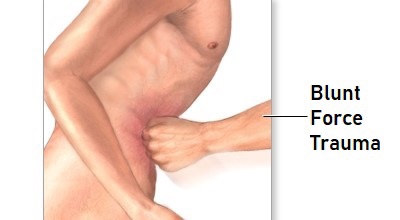
“Blunt force trauma is when the body is hit with an object that is blunt, or not sharp, with enough force to cause significant damage”.

According to Wikipedia, blunt abdominal trauma (BAT) comprises 75% of all blunt trauma and is the most common example of this injury.

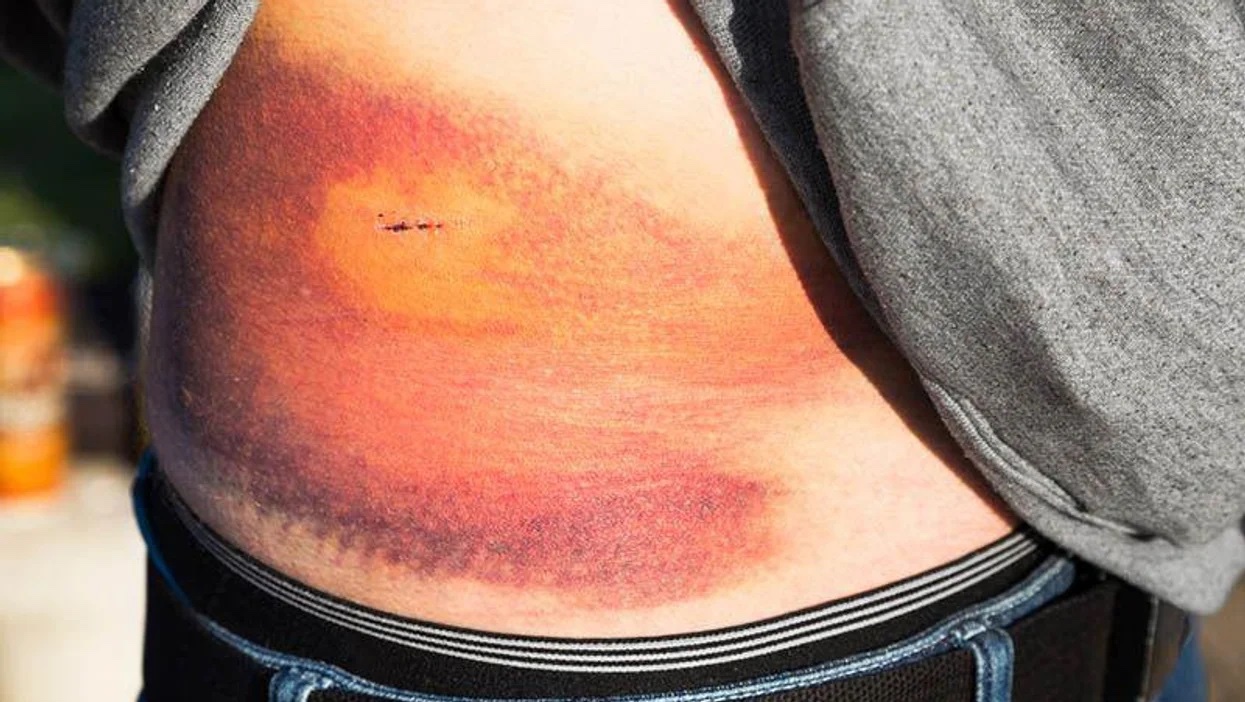
The severity of such injury is mostly determined by the speed, velocity, size and weight of the object, and can range in severity from a tiny bruise to internal haemorrhages, bone fractures, cardiac tamponade, airway obstructions/rupture, and in the worst-case scenario result in ruptured organs, rapid internal bleeding and ultimately your death.

I do believe most security professionals will be aware of the potential severity of injuries resulting from blunt force. But I don’t believe many will chose to document and report every incident of this nature. “Too much admin”, some may say, and “it’s part of the job”, others will state.

Many security professionals have a reasonable understanding of the most realistic risks and threats they face, and subsequently are either being issued, or they themselves invest in body armour.

However, it is worth noting that any type of flexible body armour made from either an aramid fibre (i.e. Kevlar®) or a polyethylene (i.e. Dyneema®) including the latest high performance body armour produced by top secret manufacturers at top secret locations for top secret agencies, do not offer anywhere near enough protection from this specific operational risk. 

On a domestic level (meaning homeland or private security, rather than military) the risk of being punched, beaten, kicked, or faced by someone throwing stuff at you is hundred times higher than being stabbed or shot.  Therefore, it is rather saddening to see that more than 99% of body armour issued to domestic homeland security professionals offer insufficient protection from this specific risk.

Again, in the context of a good body armour, the key objective must be to offer sufficient levels of protection from the most realistic threats and risks you faces whilst on duty.
I urge you to make a conscious decision when investing in such type of PPE.  Simply ask yourself the question, what is the most important criteria for YOU?  The concealability, the weight, the thickness, or the level of protection from the risks and threats you have identified?

If the concealability of a body armour is key for you (i.e. covert operations and surveillance) then you may well need to look for the thinnest body armour, and the ‘blunt force trauma’ protection may have to become of secondary importance.  

However, please understand that in general the most likely risk you face on a daily basis, is also the one you should seek protection from, and as I have stated earlier on in this article, the probability of you getting punched, hit, kicked or pushed around or have someone throwing stuff at you is far greater than the risk of being stabbed or shot.

To achieve the maximum level of protection from blunt force trauma injuries a body armour would have to be of a rigid structure, rather than a soft/flexible structure. Two diverse protective devices which highlight in a brilliantly understandable way the importance and the effectiveness of such protection are:

1. Motorbike Helmets: Never mind the fact that wearing a helmet is law when riding a motorbike. Wearing a helmet during a motorcycle crash significantly reduces the risk of damage to one’s skull, traumatic brain injury, and even death, countless studies have shown. We all know motorbike helmets are of a rigid/solid structure.  They would not offer the blunt force protection and perform to the level it is required if the structure would be soft or flexible.

2. Riot Shields:  A riot shield is a lightweight protection device, typically deployed and used by police in almost every country during riots, protests and mass disturbances. They are typically constructed from a rigid material to offer maximum levels of protection from attacks with blunt weapons and thrown projectiles.  The officers’ lives depend on the performance of this piece of equipment. Again, to offer this high level of blunt force protection, it is required for its structure to be rigid, not soft or flexible.

The most in-depth research study on ‘blunt force trauma injuries’ or in more tactical terms ‘backface signature injuries’ sustained while wearing such body armour was produced by Marianne Wilhelm back in 2008, and is titled “Injuries to law enforcement officers: The backface signature injury”. It really is worth a read.

This great piece has raised important questions regarding the protection afforded to officers wearing personal body armour, along with the current test methods used to assess the true performance of the equipment. Some test results showed that some revealed deformations exceeding the NIJ Standard’s backface signature limit. Such increased deformation can lead to serious injuries, including blunt force trauma or backface signature injuries, which have occurred in the field over and over again.

Although your body armour might be successful in containing the round fired by a weapon or the knife thrusted at you by a hostile individual, it might not protect you from the impacting energy during other types of assaults, unless it is offering you officially certified protection from this precise risk.  The most respected standard for body armour in relation to blunt force trauma protection is Germany’s VPAM (Vereinigung der Prüfstellen für Angriffshemmende Materialien und Konstruktionen) Standard, titled: “Testing of Impact Resistance against Throwing and/or Striking Objects” and its rating will be W1 (lowest) – W9 (highest).

It is also worth pointing out that our Technical Director Colin Mackinnon, a man who served 26+ years with the UK’s Police Forces, delivered an online presentation to a large audience of security professionals recently.  Following his presentation, he asked a question: “Does your armour protect against knife, spike, needle, and blunt force trauma?”

Out of those questioned 55% of people did not know what protection their vests provided.

About the Author

Robert Kaiser is the CEO and Founder of PPSS Group, a UK headquartered company specialising in design, production, and supply of high-performance body armour. Robert and his senior team all have significant level of operational frontline experience in military, law enforcement or homeland security.  His written word has been featured in several industry leading, international publications.
Arctic First Responder Course Preps Paratroopers for Extreme Conditions

February 5th, 2022

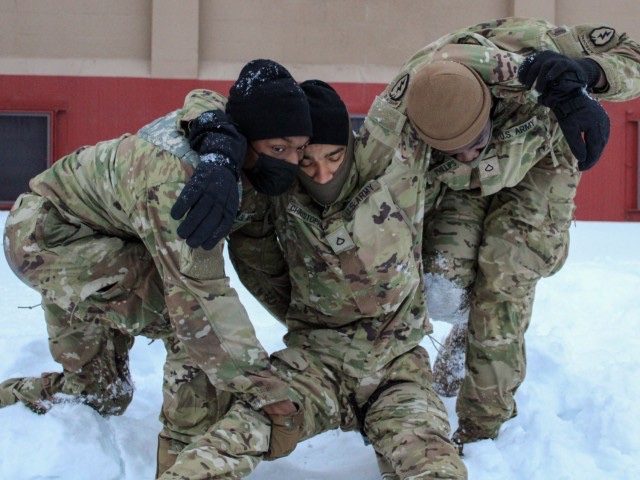
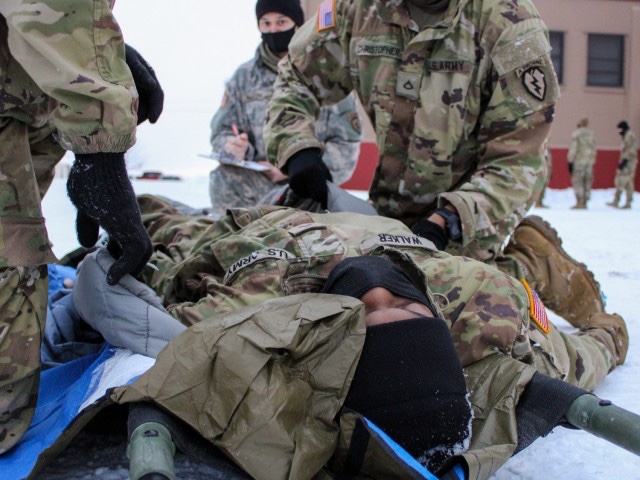
JOINT BASE ELMENDORF-RICHARDSON, Alaska — Jan. 10-14, 2022, Paratroopers with the 4th Infantry Brigade Combat Team (Airborne), 25th Infantry Division, “Spartan Brigade,” completed the inaugural Arctic First Responder Course held at Joint Base Elmendorf-Richardson, Alaska.

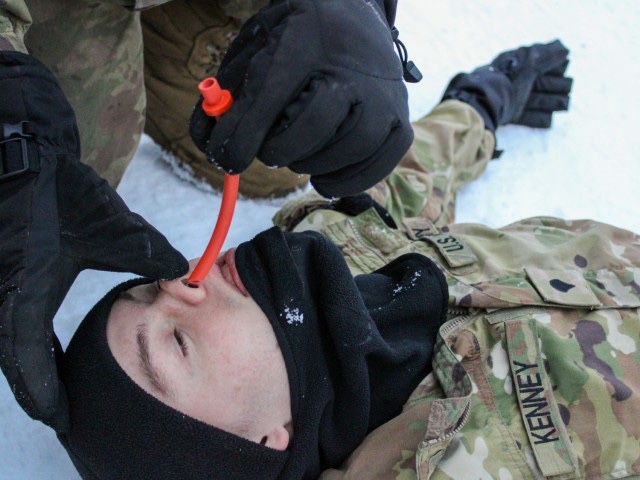
The Arctic First Responder Course is a prototype Combat Lifesaver Course that adapts Tactical Combat Casualty Care for operations in the Arctic environment. It was developed using lessons learned by medical personnel during exercise Arctic Warrior 21, where temperatures exceed -40F. The course prepares Arctic Paratroopers to provide lifesaving aid in any environment.

“Every Soldier should take part in an Arctic First Responder style training,” said Spc. Kenyi Foster from Avalanche Company, 725th Brigade Support Battalion. “This course has better prepared me for any combat situations I may face and helped me in being able to administer aid in any weather condition.”

Spartan Paratroopers from the 725th BSB learned cold weather injury identification, treatment and prevention. They also learned about and exercised patient transport and packaging in extreme cold weather environments.

The training comes as the 725th BSB prepares to support JPMRC 22-02 — a home station combat training center rotation in March that takes place in Central Alaska where winter weather can be unpredictable and dangerous.

“I now feel more comfortable if I’m ever under fire and know I have to administer aid whether that’s in the Arctic or the desert,” said Spc. Lisvette Vasquez from Avalanche Company, 725th BSB. “After taking this course I feel I could proficiently perform in medical lanes for ESB as well as know medical related questions for any Soldier of the month board.”

The Spartan Brigade is the only airborne infantry brigade combat team in the Arctic and Pacific theaters, providing the combatant commander with the unique capability to project an expeditionary force by air in both Arctic and Pacific environments.

Story by MAJ Jason Welch

Photos by 2LT Paul Campbell

AirBoss Defense Group Strengthens Senior Leadership Team

February 4th, 2022

New Management Structure Reflects Company’s Significant Growth and Talent Acquisition

JESSUP, Md., — AirBoss Defense Group (ADG) is pleased to announce that it has added significant strength to its senior leadership team following a period of sustained growth. Since ADG’s founding in early 2020, the company has become the leading source for survivability solutions including high demand personal protective equipment (PPE) for the military, law enforcement, first responders, and health care providers. As a result, ADG is attracting top-tier industry talent and strengthening the executive team to continue building upon the company’s strong track record.

Mr. John Johns has been promoted to Chief Operating Officer (COO) of AirBoss Defense Group. John joined ADG as the Chief Strategy Officer (CSO) in October 2020 following senior executive assignments with the U.S. Government and industry, which included 10 years as a Deputy Assistant Secretary of Defense, U.S. Department of Defense. During his time as CSO, John’s focus has been on strategy, sales, operations, and merger and acquisition activity. Over the last year, he has been instrumental in ADG winning and executing key contracts, solidifying ADG as a leading domestic supplier of survivability and protective solutions. His performance has demonstrated the highest level of capability and professionalism and has enabled the growth of the organization.

Dr. Andrew Rogers has been hired to take over the role of Chief Strategy and Growth Officer. In Andrew’s most recent role, he served as Vice President, Strategic Initiatives Group at General Dynamics Mission Systems (GDMS), growing the Undersea Defense Systems business by sixty-five percent in three years, securing new work in both core offerings and adjacencies, and returning double-digit earnings. He has built and grown businesses, acted as an advisor to private equity firms, serves on non-profit and private company boards, and is the former president of QinetiQ North America (QNA), a high-tech leader in unmanned survivability robotics systems research and development (R&D) and production. Andrew will utilize his considerable skills and lead the company into the next phase of expansion.

Andrew received his Ph.D. in Applied Marine Physics/Ocean Engineering from the University of Miami Rosenstiel School of Marine and Atmospheric Science and has furthered his studies in management at the Harvard Business School, Georgia Institute of Technology, and Massachusetts Institute of Technology (MIT) Sloan School.

AirBoss Defense Group CEO Patrick Callahan said, “The addition of Dr. Andrew Rogers and the well-deserved promotion of John Johns will allow ADG to accelerate our rapid growth and puts in place the leadership necessary to assure our continued success. ADG’s results continue to attract the best talent with extensive industry experience. These actions will enable ADG to expand our reach, maximize our capability, and leverage the strongest and most creative people in this industry. We are always looking for top-tier talent to join our exceptional team as we meet and exceed our business goals.”

www.adg.com

Emissary NANO Carrier

February 4th, 2022

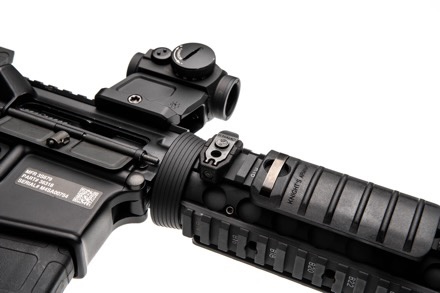
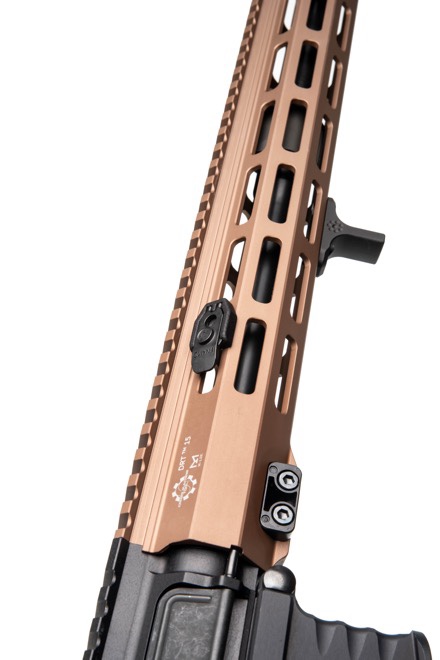
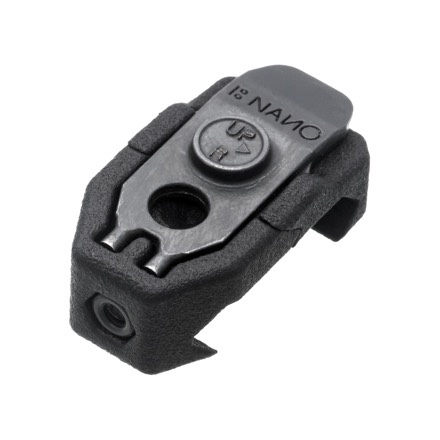
Emissary’s NANO Carrier is a simple solution to carry the Multitasker NANO Tool on board their gun. The NANO is a versatile little tool that can be used for a multitude of different tasks like zeroing optics/lasers or tightening down accessories.

Both Mlok and Picatinny are available. $12 for the standalone carrier and $22 for the carrier bundled with a Multitasker NANO Tool.

Free shipping on all orders.

emissarydevelopment.com

SOFWERX – Optical Character Recognition (OCR) Translation Collaboration Event

February 4th, 2022

SOFWERX, in collaboration with USSOCOM Science and Technology (S&T) Joint Acquisition Task Force (JATF), will host a series of events to identify solutions for optical character recognition text to text translation technology from Industry, Academia, Laboratories, and other interested organizations. The desired end state is to understand the current capabilities and determine if those solutions are compatible with ongoing translation efforts.

The Phase I collaboration event kicks off on 16 March 2022 with other events to follow.

RSVP NLT 02 March 2022 11:59 PM ET to participate.

Details at events.sofwerx.org/optical

The Skyranger 30 HEL – Rheinmetall’s Hybrid Solution for Threat-Commensurate, Modern Mobile Air Defence

February 4th, 2022

Laser on board: The Skyranger 30 HEL is a hybrid solution designed to thwart the full range of future airborne threats. Here, the interplay of a 30mm automatic cannon, guided missiles, and a high-energy laser (HEL) results in a mix of effectors unique in this combination. Teamed with a matching sensor mix, the Skyranger 30 HEL can monitor airspace autonomously, while simultaneously selecting the optimum effector in response to emerging threats. The Skyranger 30 HEL can protect mobile units on the march or critical stationary infrastructure and facilities from aerial threats. No matter what the initial situation, an appropriate response is always readily available, assuring adherence to legal requirements and the avoidance of collateral damage.

Thanks to its longstanding experience in the field of ground-based air defence and adherence to a clear technical road map for a future laser weapon system, Rhein¬metall is able to integrate mechanically and systemically a full range of advanced capabilities into a wheeled or tracked mobile platforms such as the Boxer multipurpose wheeled armoured vehicle* or the tracked Lynx KF41 armoured vehicle. Thanks to the highly flexible Skymaster fire control system and state-of-the-art sensors, the effectors achieve maximum tactical impact.

Rheinmetall’s HEL effectors consist of a laser source and laser guidance system, both of which are integrated into the vehicle, along with a laser weapon station built into the turret that simultaneously serves as a platform for the electro-optical sensors. The laser weapon station tracks targets automatically, neutralizing them with a laser beam. Thus, the Skyranger 30 HEL is capable of effectively defending assigned airspace with three different effectors – an automatic cannon, guided missiles, and a high-energy laser – with the appropriate level of intensity.

Featuring a rate of fire of 1,200 rounds per minute, the 30mmx173 KCE revolver gun is the world’s top-performing weapon in this calibre. Programmable time-delay ammunition enhances the probability of hitting even the smallest aerial targets. The Skyranger 30 HEL’s guided missiles increase the system’s operational flexibility and maximum range.

In live trials, current technology sample systems for laser weapon systems have successfully achieved laser outputs of 20kW. The ability to increase this figure to 100kW is already an integral feature of this technology. The laser weapon station used here has its own sensors for identifying and tracking targets. Subassemblies coordinated by Rheinmetall to interoperate harmoniously produce the outstanding beam quality of Rheinmetall laser sources even at high-output levels, meaning that they can be directed at the target with high precision. The carrier platform’s sophisticated mechanical design assures 100% coverage of assigned airspace. Laser outputs of up 20-50 kW are planned for the first realization phase.

Late last year, the Skyranger HEL was presented in public for the first time at a counter-drone event held by the Swiss procurement agency armasuisse in Bure, Switzerland, sparking great interest from the experts present at the event.

*Produced in cooperation with industrial partners

Whiskey 5 – DNS Alpha

February 4th, 2022

WHO

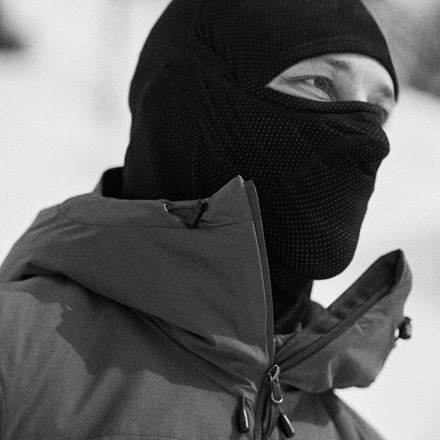
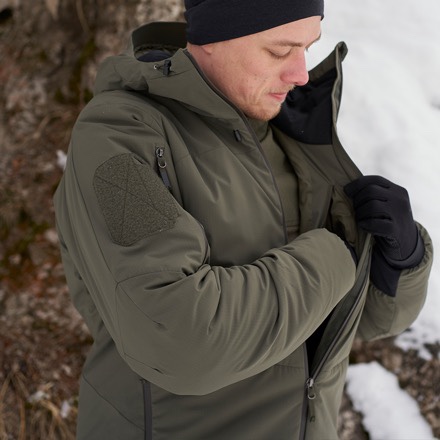
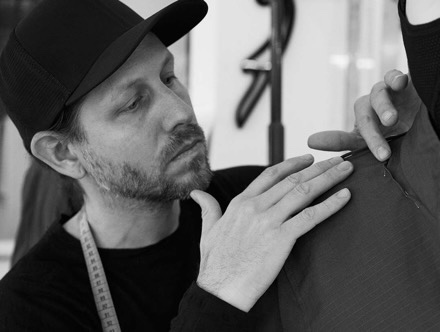
Development Never Stops Alpha: A team that combines specialists in clothing technology, with those from the Military.

Marcel Geser is the head of the development team. In recent years he has been the man that leading outdoor clothing manufacturers have turned to when their in-house development team could not solve a task. For this he has won ISPO and ECO awards.

Tim Vetter is the contact person for government and the military. He was involved in logistics for the German Special Operations Forces and later the managing director of the most innovative manufacturer of tactical equipment in Germany.

Together they form the backbone of DNS Alpha.

WHAT

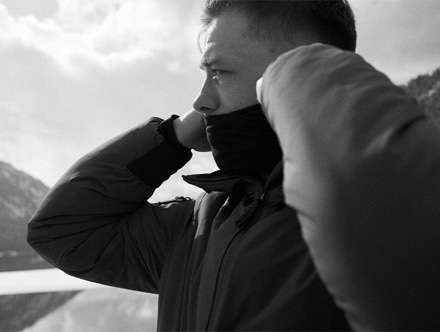
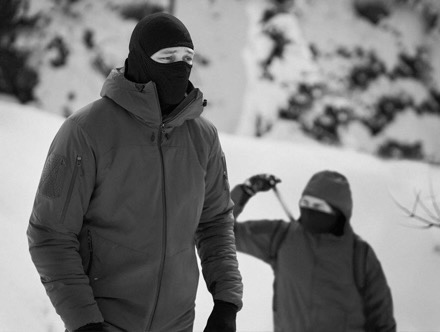
Their collective mission is to provide the most demanding end-users on the planet with the best clothing possible.

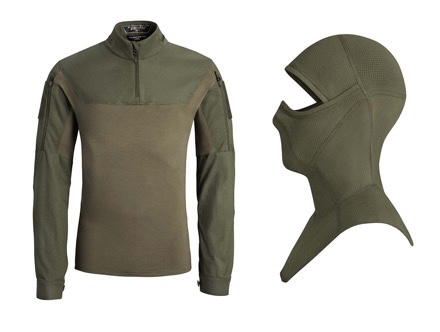
As a licensed partner of Gore-Tex, Cordura and Outlast, DNS Alpha is able to offer highly specialized fabrics. When no suitable fabrics are available, we develop them with our partners. Examples of those are an elastic FR fabric and the toughest merino quality on the market.

In the DNS Alpha clothing system, all layers are perfectly coordinated. So your size is always your size.

DNS Alpha works in constant close contact with their end-users. This already includes highly specialized units where materials and design are tailored to their specific needs.

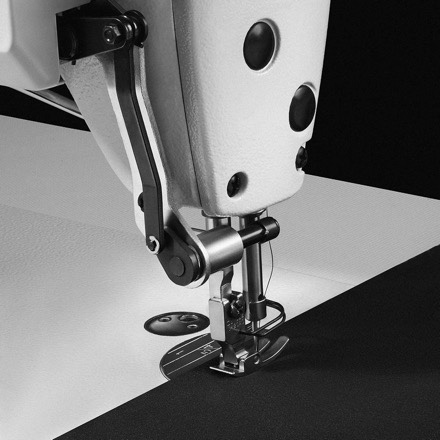
Also, having our own sample production capability in Germany makes it possible to react quickly to feedback, and to produce new prototypes, custom-made products and small series in short timeframes that our customers demand and need.

WHERE

DNS Alpha currently operates from three locations:
the head office is in Switzerland, and both, the design studio and sales office that is currently responsible for Europe and the Middle East, are located in and near Munich, Germany.
DNS Alpha works with selected manufacturers, primarily in Europe for its current production. And is currently looking at several production facilities beyond that, such as in the USA to offer all clients production where they want it.

DNS Alpha is currently available through a worldwide network of dealers which can be found HERE.

The companies in the network have many years of experience in selling high end Military, Law Enforcement and Outdoor brands to their respective end-users.

WHEN

The DNS Alpha team not only has over a decade of cooperation with the leading brands in the outdoor industry behind them, but also military experience, ranging from personal deployments to working with end-users on innovation and procurement. With each project, new experiences were gained and further technologies developed. Over this period, DNS Alpha has evolved and created innovations that are years ahead of its competitors.

WHY

DNS Alpha knows from experience that every task and mission brings with it special requirements in terms of the cut of an item, and the materials used. The solution starts with using the right materials, and then tailoring that to the intended use. When a material that fits the use does not exist, DNS Alpha is in the position to make that material, together with our partners. We believe that material and product development should come from the same source to create real meaningful innovations.

Anyone who has tried and tested a DNS Alpha product will notice the difference compared to all others.

Development Never Stops

FirstSpear Friday Focus— MultiPurpose Pack in Manatee & Woodland Camo

February 4th, 2022

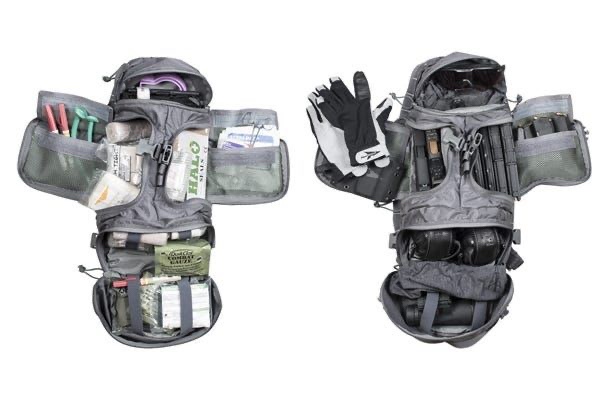
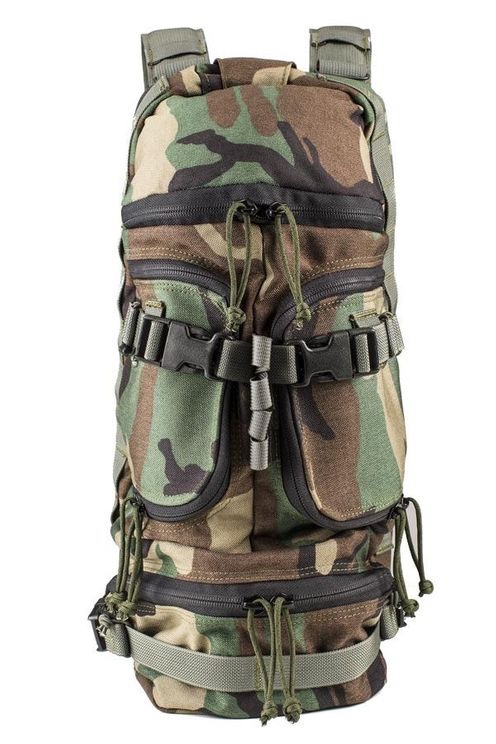
It’s here in Woodland & Manatee! The MultiPurpose Pack was originally developed as a medical pack for a U.S. Special Operations unit, this pack can easily be adapted for use as a range bag, E&E pack, or 1-day pack. Features include hydration compartment, padded shoulder straps, 5 external pockets and compression straps.

• 5 external pockets including large hydration compartment
• Low profile padded shoulder straps
• Exterior compression straps
• Exceptional low profile range bag
• Developed as a med bag for a US SOF element
• Made in the USA

Currently available in woodland, manatee and ranger green.

For more information check out, www.first-spear.com/multi-purpose-pack .