Arena Training Facility


Arena Training Facility
Arnold Defense, the St. Louis based manufacturer of 2.75-inch rocket launchers, will have a number of variants of their world-renowned rocket launchers on display at this year’s Association of the United States Army (AUSA) exhibition, taking place 11-13 October 2021, in Washington DC.
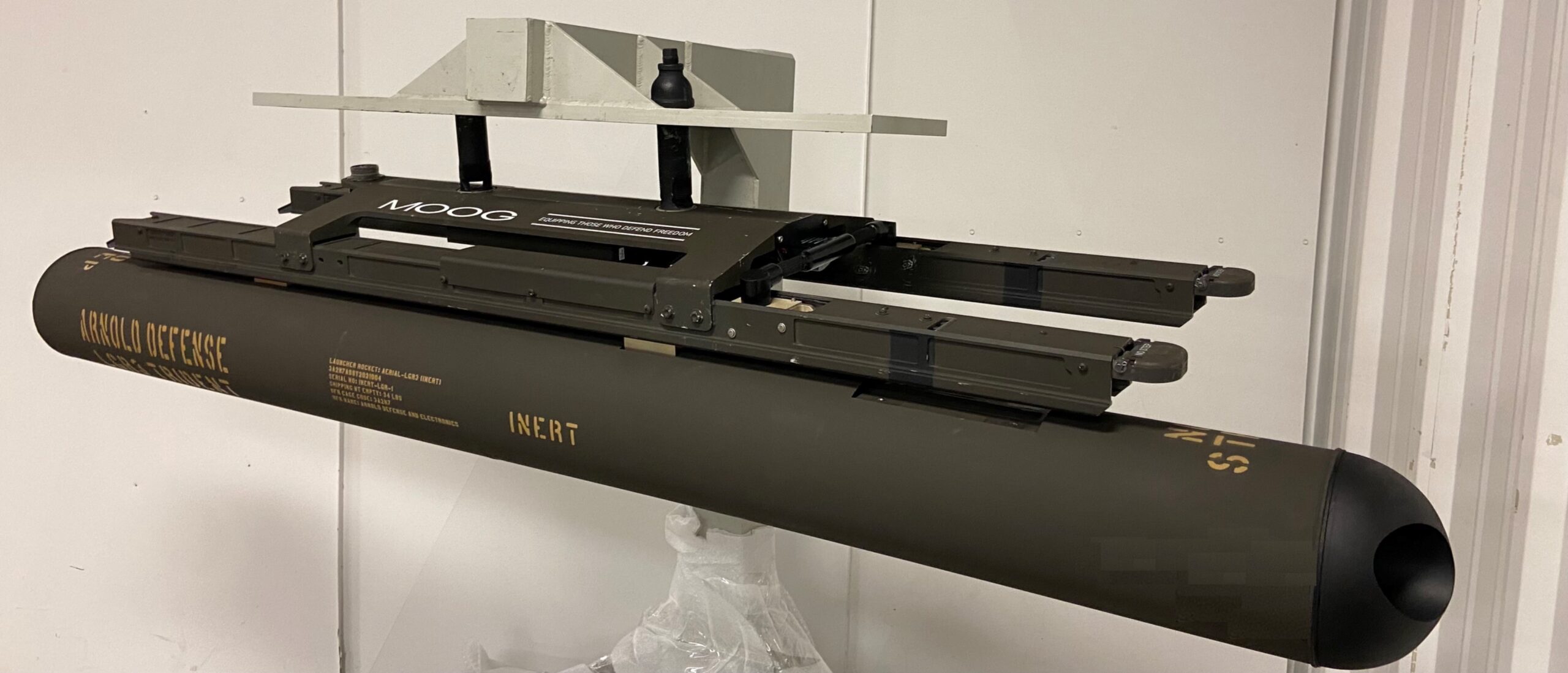
Arnold Defense will be showcasing three rocket launcher systems at the event. The LAND-LGR4 ‘FLETCHER’ land-based launcher will be displayed in the Kongsberg booth (2147) mounted on their Protector RWS. The 23-round MLHS will be displayed in the BAE Systems booth (1210/1220) mounted on a ‘common deck’ platform from MSI Defense Solutions. Being shown in public for the first time is a prototype concept demonstrator 3-round air launcher named the “Trident” which can be seen in the Moog booth (7601) mounted on their Lightweight Dual Rail Launcher (DRL). The new Trident launcher is in development, but following a planned future test program, it is expected to deliver the following capability benefits: utilizes existing missile launcher interface for mounting and system control of Laser Guided Rockets (LGRs); significant weight saving over other launcher variants; no software changes to existing Fire Control required; Modular Open Systems Approach (MOSA) adaptation for digital control of analog rockets (Moog Trident Interface Unit- TIU); common missile interface across multiple platforms for maximum LGR strike capability; each Trident carries up to three (3) LGRs, providing a lethal weapons load of guided rockets.
Arnold Defense is the world’s largest supplier of rocket launchers for military aircraft, vessels and vehicles; they have manufactured more than 1.2 million 2.75-inch (70mm) rocket launchers since 1961 for the U.S. Armed Forces and a number of NATO customers. They design and manufacture rocket launchers that can be customized for any size, weight, capacity, or form factor for platforms in the air, on the ground or at sea.
Arnold’s core products include the 7-round M260 and 19-round M261 commonly used by U.S. Army helicopters; the thermal coated 7-round LAU-68 variants and LAU-61 Digital Rocket Launcher used by the U.S. Navy; and the 7-round LAU-131 and SUU-25 flare dispenser used by the U.S. Air Force. For land or sea-based operations, Arnold offers the FLETCHER, a 4-round laser target designated rocket launcher and the MLHS 23-round launcher. Arnold Defense first launched the revolutionary FLETCHER system at DSEi in 2017 and announced a new capability development program for FLETCHER at DSEi in September 2021.
Doug Wallace, President at Arnold Defense said: “We’re pleased to be displaying a number of variants of our air and land-based launchers at AUSA, working in collaboration with our partners BAE Systems, Kongsberg, Moog and MSI Defense Solutions.” He added: “being seen for the first time is our prototype ‘Trident’ 3-round air launcher that is currently in development, aiming to deliver significant capability enhancements to the warfighter”.
www.arnolddefense.com/arnold-defense-announces-next-generation-fletcher-development-program
SIG SAUER, Inc. is proud to be an ardent supporter of the National Shooting Sports Foundation (NSSF) and leads the industry in support of the organization and its’ mission to promote, protect, and preserve the hunting and shooting sports.
Each January, NSSF hosts SHOT Show – the industry’s premier tradeshow. As a strong supporter of NSSF, and an industry leading manufacturer, SIG has maintained a very large presence at SHOT Show and we continually grow our support for the organization, and our show presence, year after year. However, after thoughtful consideration, deliberation and a review of current circumstances, SIG SAUER has made the decision to not exhibit at the upcoming 2022 SHOT Show and will alternatively be making a $500,000 donation to NSSF to support both its mission and ongoing critical support of our industry.
For over 30 years SIG SAUER has attended SHOT Show, and we did not come to this decision without much thoughtful deliberation. Our number one priority throughout the pandemic has been, and will remain, our employees. SIG SAUER has an extremely large presence at SHOT Show sending over 140 employees to the show and our pre-show Range Day event. Maintaining this presence, or even a scaled back minimum presence for 2022, represents a significant health risk to all 2,600 of our employees across our 13 U.S. locations, as individuals attending the show return to our facilities and risk continued exposure to our entire employee base.
Additionally, based on the circumstances as they are known to us today, it is incumbent upon us to review this decision from a financial perspective. For the first time in many years, the SHOT Show space was redrafted, necessitating the need for a complete booth re-configuration and design. Out of pocket expenses from this point forward will be well over $1 million and based on the uncertainty of large scale shows and events, this expense is not financially prudent.
In closing, SIG SAUER would like to once again note the important and essential work of the NSSF on behalf of our industry and reiterate our support for the organization and its mission.
Safran Optics 1’s Small Lightweight Acquisition Marker Designator (SLAM D) fills the role of multiple battlefield devices; a tripod-mountable high-power designator, a high-power NIR pointer with pulse feature, a see-spot observation device with laser spot tracking and PRF code counting, and a handheld laser acquisition marker. Designed for one handed operation, it was envisioned to safely designate a target at 5 km but in testing they have performed out past 8 km.
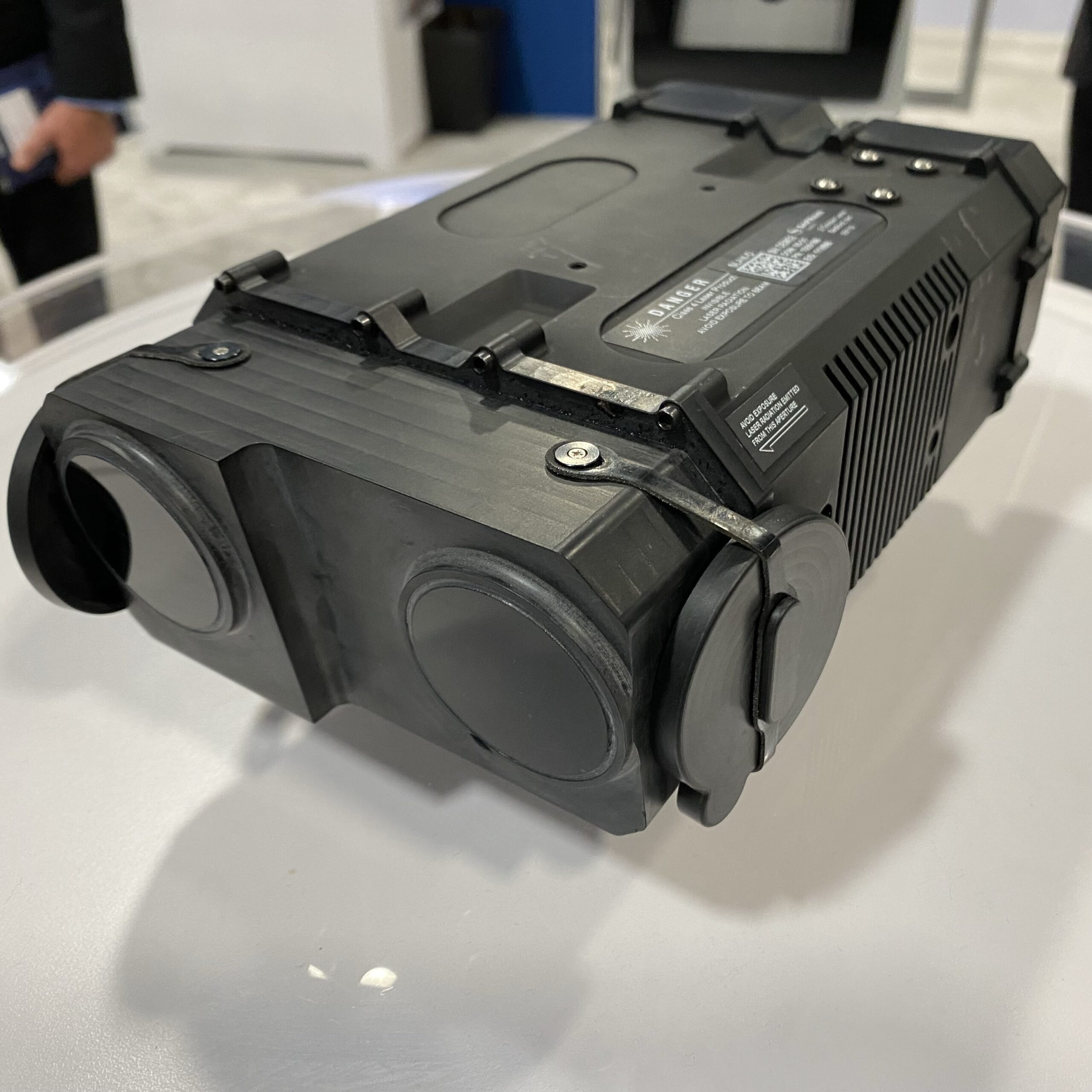
SLAM D’s high-performance Asynchronous Laser Pulse Detection SWIR camera core detects, tracks and brackets laser energy while deciphering up to three laser PRF codes simultaneously.
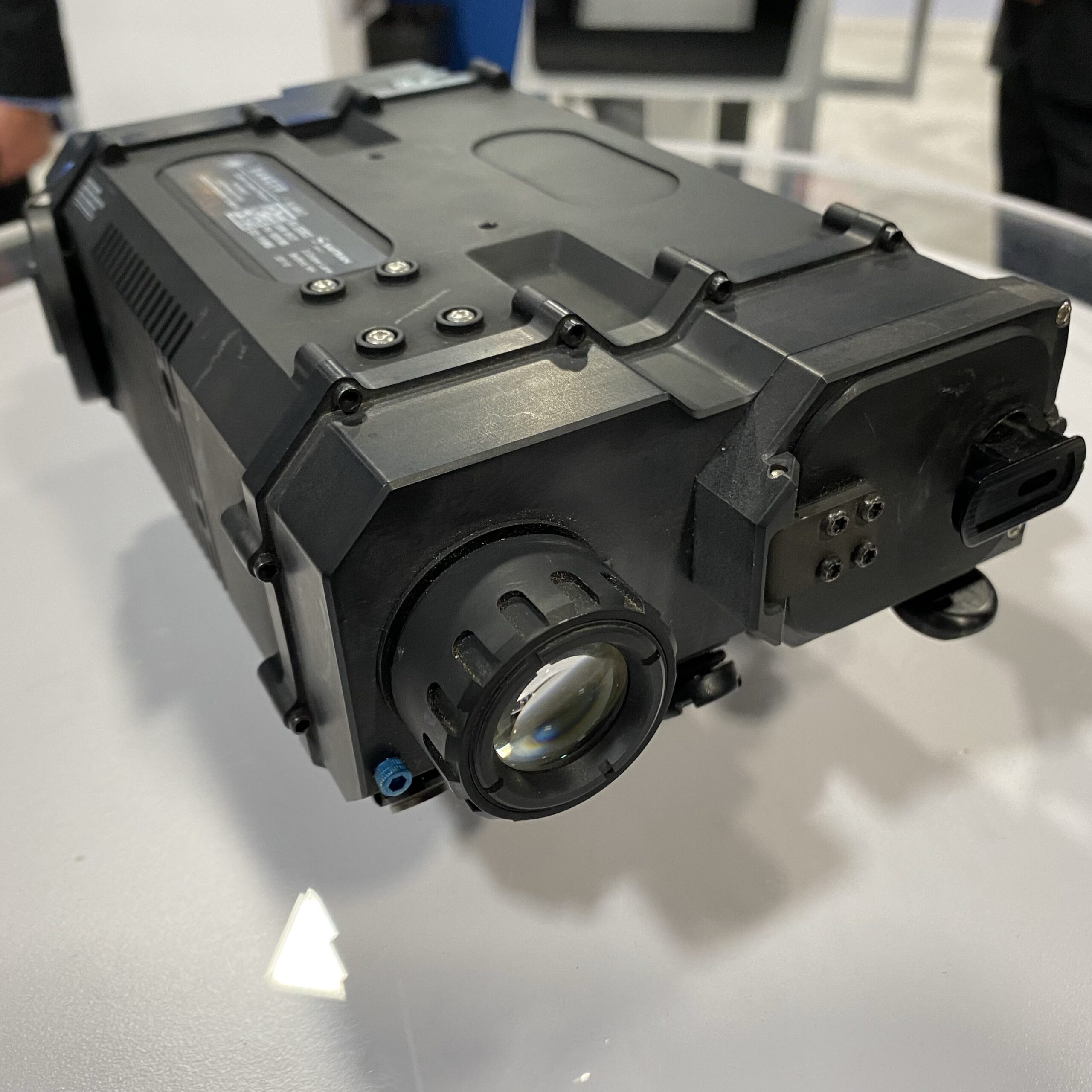
SLAM D serves as a STANAG 3733 compliant laser device, filling the role of long- range designation and LGB hosting during TGO. The user can program up to three different PRF code presets to allow the user to quickly cycle between codes to designate for different CAS aircraft, or set the code on the fly when an air weapons team checks on station unexpectedly.
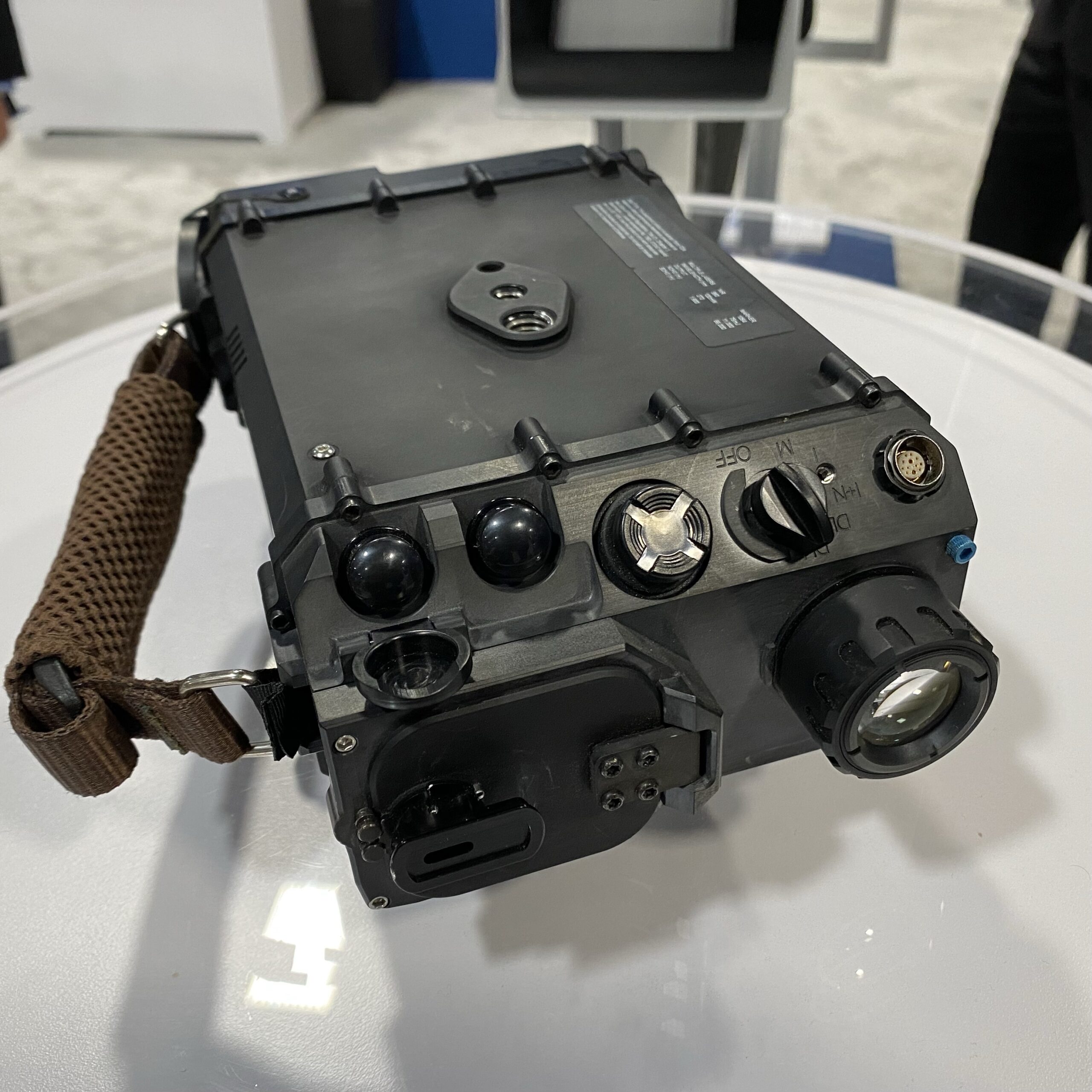
Above, you can see the bottom of the SLAM D which gives a better view of the controls and tripod mount.
Additionally, Safran Optics 1 donated $10,000 today to Fisher House which provides housing for military families receiving medical care at major military and veteran medical care facilities.

Seen above are (l-r) Bob Lachance, VP Business Development at Safran Optics 1; COL Walt Kennedy (USA, Ret), Director, Business Development of Safran Optics 1; Marshall Banks, Director of Community Relations at Fisher House Foundation; Joseph Bogosian, President and CEO of Safran Optics 1.
Mr Banks said that they have just opened House number 92 and 93 cents of every Dollar donated goes toward the program. Visitors stays for free while family members receive medical treatment.
You can join in Safran Optics 1 in giving to Fisher House by following this link.
SIG gave us an update on their SPEAR MCX line. All of these firearms were developed for the defense side and will be offered as commercial variants.
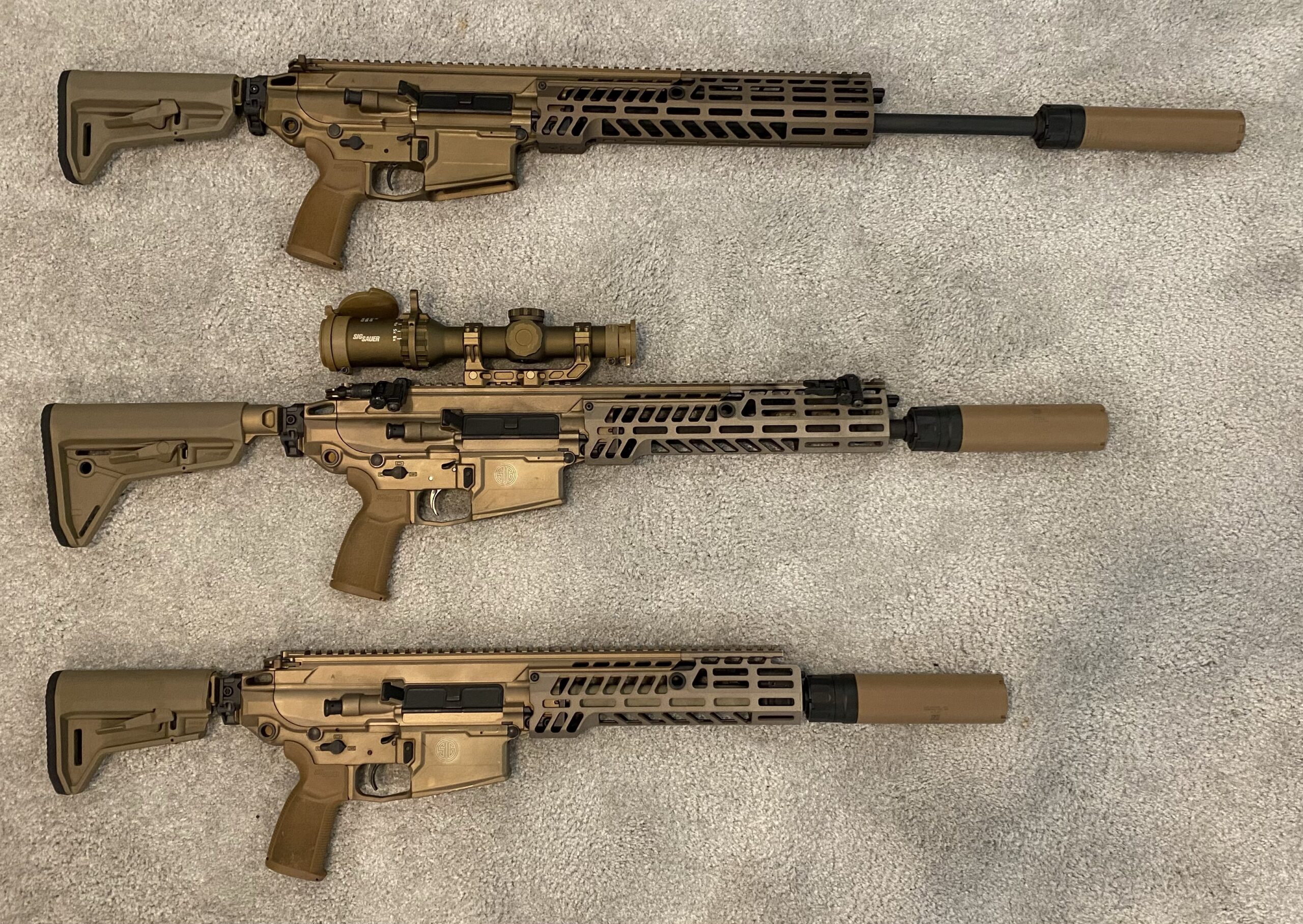
The top gun is 20” in 6.5 CM which will be offered as a commercial version with a shorter barrel.
Middle is the NGSW gun in 6.8 x 51. Plans are in the work for a commercial version in .277 SIG FURY.
Bottom is the SIG SPEAR MCX 8” which serves as a heavy version of the Rattler. It features a 8” barrel and will initially be offered in .308, followed by 6.5 CM.
Hendrick Motorsport is exhibiting with ADS, Inc and showing the latest version of the Silent Tactical Energy Enhanced Dismount (STEED) which features a ballistic shield mount with third wheel and Blackbridge Defense Shadow Mount for an M240/M249 machine gun.
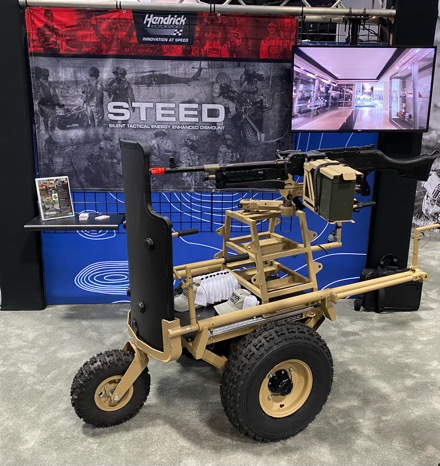
STEED is is an all terrain, electric power cart. It has zero emissions and can carry up to 500 lbs over complex terrain including stairs and can be used in water.
October 10, 2021 – Israel Aerospace Industries (IAI) has been selected by Israel’s Ministry of Defense (IMoD) as the prime contractor and integrator for developing the concept and technologies for the future Armored Fighting Vehicle for the IDF – the Carmel – following IAI winning a demonstration of the technologies between Israel’s defense companies. At the conclusion of a successful live demonstration of a two-man, closed hatches armored fighting vehicle (AFV), IAI was selected by the IMoD to develop the next phase of the Carmel: development and demonstration of technologies for a multidimensional combat team, which will enable significant improvement in the system maneuverability.
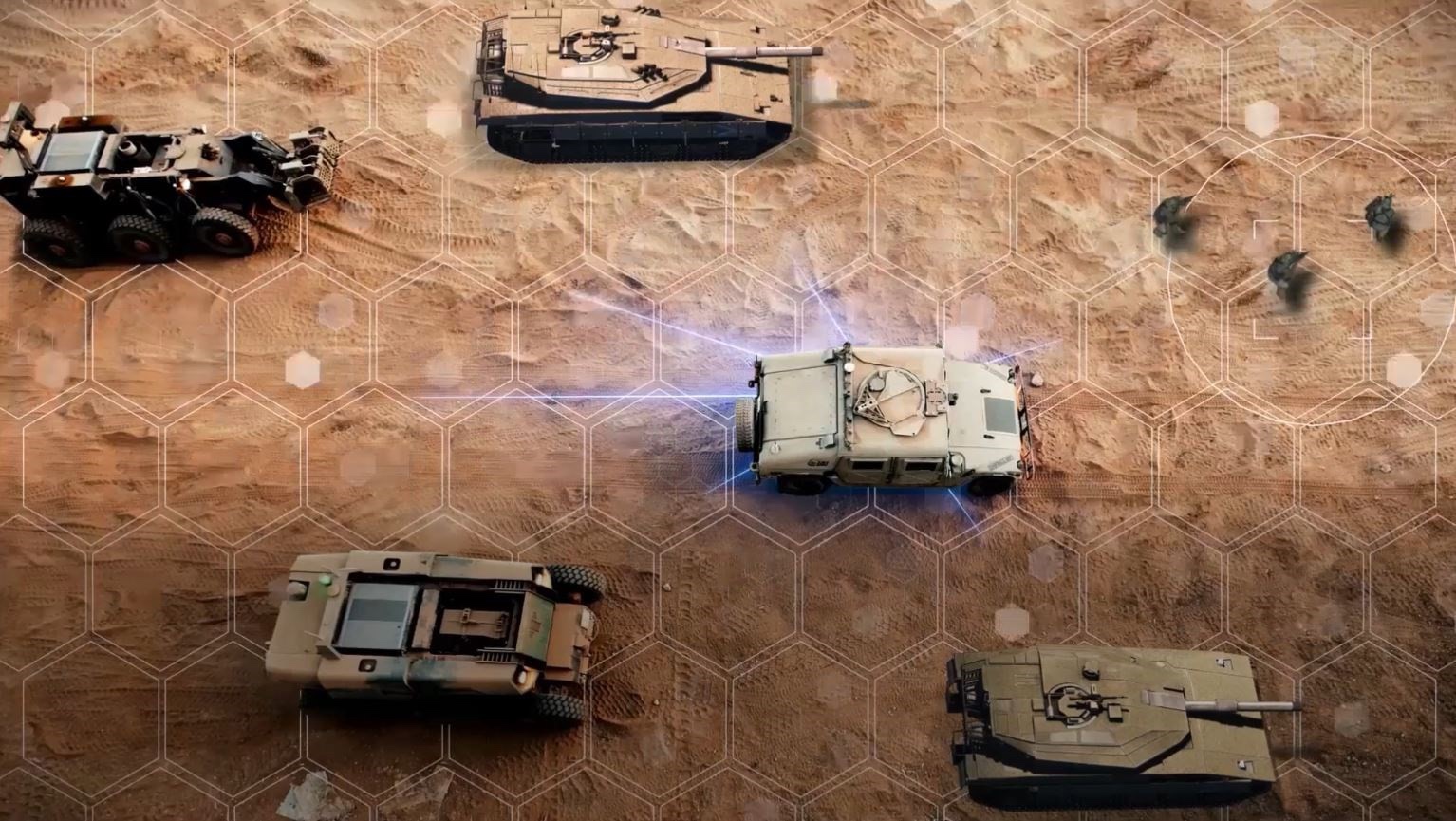
With the Carmel demonstration, IAI has developed and proven a combat concept in which an AFV, with closed hatches, is operated by a two-man man crew and can successfully cope with existing and future challenges on the battlefield. This solution is based on automatic and autonomous systems that complement the two-man team, and operate the central subsystems – the vehicles’ mission planning and management, situational awareness, driving and lethality. These capabilities allow the team to define, supervise and interfere only when there is a necessity or need, and enables to cover a wider area of concern while effectively meeting the challenges faced by the maneuvering forces. The system has the ability to locate and destroy time-sensitive targets with small footprints, through quick acquisition and effective engagement of targets.
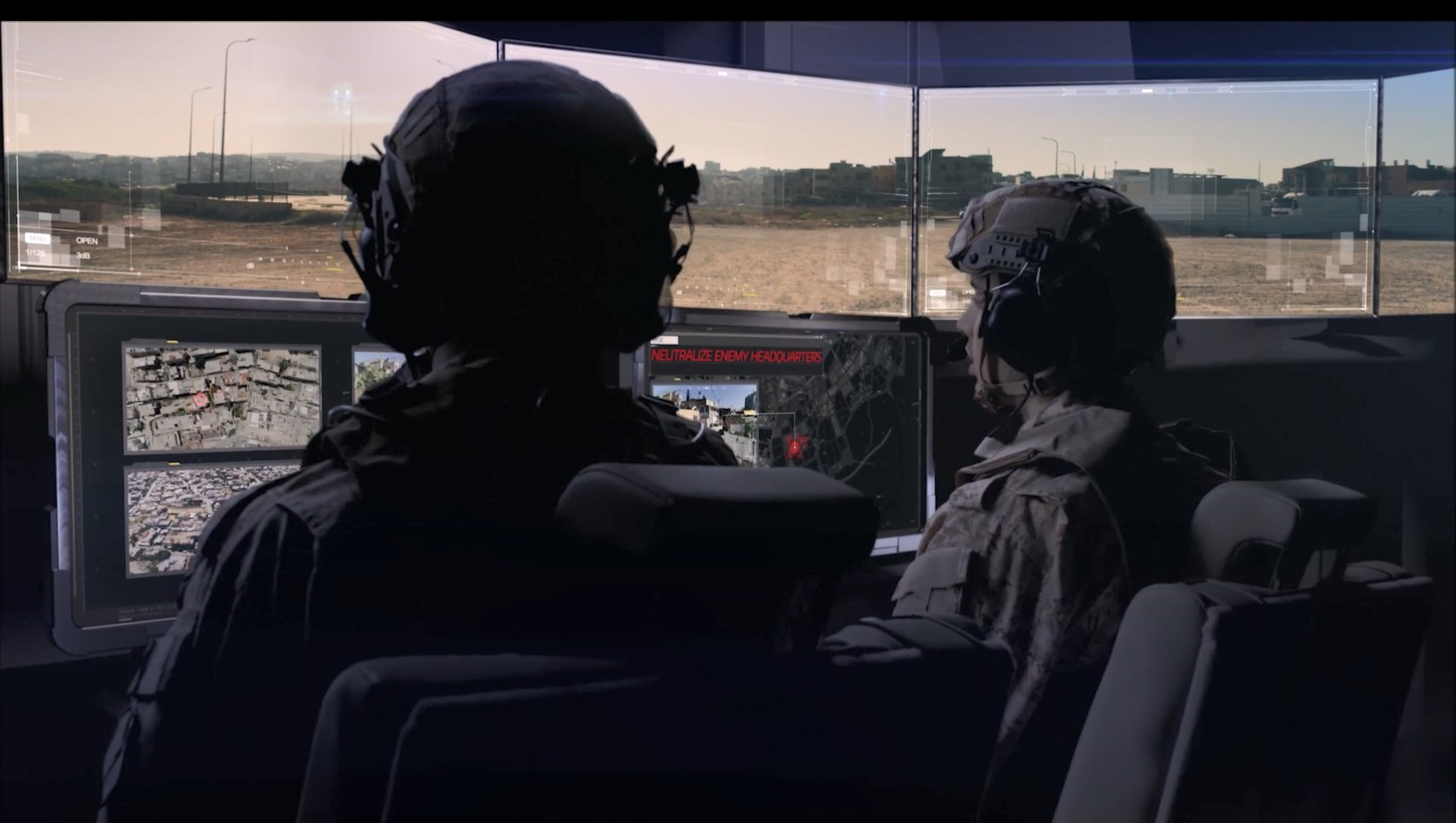
The Carmel concept is groundbreaking on a global scale, and has grabbed the attention of many industries and militaries around the world. The program combines an innovative operational concept with the latest and most advanced state-of-the-art technologies, which provide solutions in the future battlefield based on a small team, and extensive reliance on autonomous capabilities based on artificial intelligence (AI), all while minimizing the risk to human lives in a ground campaign, minimizing collateral damage, and streamlining battle management.
IAI President and CEO, Boaz Levy:“We are very proud that the IMoD and the Land Forces Division selected the Carmel solution presented and developed by IAI. The central principles behind the company’s concept of land combat include intelligence gathering and acquisition of targets in the battlefield, conducted autonomously. The Carmel solution, as demonstrated by IAI, brings to the world of land combat the concept of system of systems championed by IAI, and includes a combination of capabilities, systems, groundbreaking innovation and connection to the world of artificial intelligence as an additional strategic capability the IDF can use in the future battlefield. Carmel will enable complex ground operations with less risk to human lives, which will transform ground combat strategy as we know it today.”
The central technologies IAI is developing for land maneuvering forces include:
• Command System – the brain, in charge of planning and managing the combat team’s missions autonomously.
• Situational Awareness System – combining advanced capabilities in the areas of radars, SIGINT, and electro-optics, simultaneously locating threats on land, in the air and more that fall within the combat team’s field of interest, classifying targets in real time and quickly and accurately differentiating and prioritizing between friend or foe.
• Lethality System – in charge of classifying and prioritizing targets in real time, by allocating the most appropriate lethal tool for each target from a range of munitions at the combat team’s disposal.
• Mobility System – in charge of planning optimal routes of advancement for each of the vehicles in the combat team during missions.
• Operations System – team members can observe the battlefield in several dimensions, and thus gain a better understanding, and an innovative user interface will enable combat soldiers to receive optimal decisions when they are required to make them.
IAI’s ELTA Division is home to Israel’s intelligence and radar systems that develops groundbreaking strategic systems like special-mission aircraft, national cyber arrays, land robotics systems, drone defenses, border patrol defense systems, and more. IAI is a focal point of national and global technological knowhow in the fields of air defense, radars, satellites, unmanned vehicles, civil aviation and cyber.
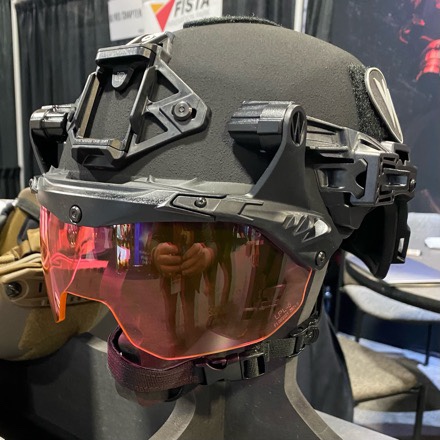
Team Wendy is working with ESS/Oakley to introduce a laser protective version of their visor. Available soon.