Phantom Lights

Uvision Advances Sensor-to-Effect Operations at Scale

October 14th, 2026

Eight-canister HERO 120 MCL combines scalable, distributed launch capability with AI-enabled CORTEX mission management

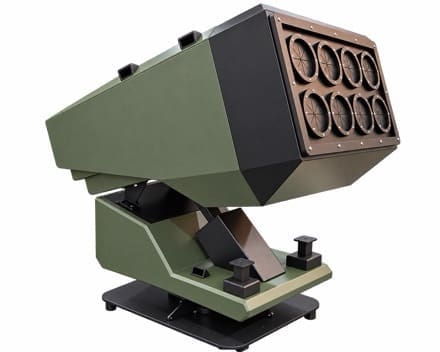
Washington, D.C., October 13, 2026 – Uvision, a global leader in loitering munition systems and integrated precision strike solutions, is showcasing at AUSA 2026 a scalable approach to deploying and managing distributed effects, orchestrated through its CORTEX AI-Enabled Battle Intelligence and Mission Management System and demonstrated through an eight-canister Multi-Canister Launcher (MCL) configuration for the HERO 120.

Designed for remote operation, the MCL accommodates up to eight HERO 120 loitering munitions and can be deployed in mobile, fixed and containerized configurations, across land and maritime platforms. Integrated with CORTEX, the MCLoperates as part of a broader sensor-to-effect network, connecting sensing, decision-making and precision effects.

One application of this approach is persistent border defense. Across extended border areas, launch nodes can be positioned in mobile and fixed configurations and connected through CORTEX with ISR and other sensing assets, linking persistent surveillance with precision response across multiple sectors.

At AUSA, Uvision is also showcasing the integration of Wayland Autonomy’s IRIS airborne ISR payload with Tactical CORTEX, extending the sensing layer with wide-area ISR and onboard target generation, including in GPS-denied environments. Together with Uvision’s expanding range of launch systems and effectors across the HERO, VIPER and PEREGRINE families, the integration addresses both sides of the operational challenge: expanding the information available to forces while increasing the range and flexibility of effects available for mission execution.

“It’s not just about having more effects in the field. It’s about having them where you need them, when you need them, and giving forces the flexibility to use the right capability for the mission,” said Dr. Ran Gozali, CEO of Uvision. “That’s what we’re focused on: bringing sensing, mission management and a broader range of effects together in a way that gives forces more options and greater operational flexibility.”

IAI and SIG SAUER Announce Successful Firing Test of FIRE STORM 250 Airborne Machine Gun

October 14th, 2026

Washington DC. Israel Aerospace Industries (IAI) and SIG SAUER have completed a firing test of FIRE STORM 250, an innovative tactical unmanned system (UAS) equipped with a SIG SAUER MICROLIGHT Remote Controlled Weapon Station (RCWS) mounted with a M250 machine gun. The successful test demonstrated the system’s ability to combine airborne surveillance, target identification and precision firepower in a realistic battlefield scenario, providing tactical forces with an organic airborne capability for missions including Close Air Support (CAS), border security, suppressive fire and homeland security.

Guy Bar Lev, President and CEO of Israel Aerospace Industries (IAI), stated, “The future of the battlefield will be determined by the power of weapons systems, and by the ability to integrate intelligence, technology, and operational capabilities into a single, precise, and effective solution. The successful test demonstrates our vision of developing integrated solutions that provide forces in the field with an operational advantage, expand their capabilities, and enable them to address the evolving challenges of the modern battlefield. Our collaboration with SIG SAUER reflects the importance we place on strategic partnerships with leading companies worldwide, bringing together complementary capabilities to deliver innovative solutions to the market. We will continue to lead the next generation of unmanned systems, driven by our commitment to strengthening Israel’s security and meeting the needs of our customers and partners around the world.”

Moshe Levy, EVP and GM of IAI’s Military Aircraft Group,said, “The next generation of unmanned systems will be defined not only by autonomy, but by how effectively they integrate sensing, decision-making and action within the operational environment. FIRE STORM 250 brings these capabilities into a single operational loop, enabling tactical forces to extend their reach and maintain continuous awareness while retaining human control over engagement decisions. The firing test demonstrates the potential of this approach in a realistic operational scenario.”

During the test, FIRE STORM 250 system hovered over the simulated battlefield, identified targets using its onboard camera and engaged them in both single-shot and semi-automatic firing modes. Firing was conducted from varying distances and altitudes, demonstrating the system’s operational flexibility, integrated safety and accuracy under different conditions.

FIRE STORM 250 is designed to put persistent surveillance and firepower directly in the hands of tactical forces. The system can remain airborne for up to three hours while carrying 200 rounds of ammunition, and its VTOL configuration enables takeoff and landing from forward areas without requiring a runway or dedicated aviation infrastructure.

The system integrates the SIG SAUER RCWS, the world’s lightest aerial RCWS. With a complete combat-ready weight of only 53 pounds, including the RCWS, the M250 machine gun, and 200 rounds of ammunition, the system delivers stabilised precision fire. Sensor information and fire-control data are combined into a unified targeting solution, giving the operator a continuous operational picture and supporting a rapid sensor-to-shooter cycle.

Sali Okanin, Israel General Manager for SIG SAUER, commented, “FIRE STORM 250 brings together the most advanced technologies in the world including IAI’s drone platform and SIG SAUER’s MICROLIGHT RCWS mounted with the M250 machine gun to deliver a new level of operational flexibility. We’re proud of the new SIG SAUER M250, which is combat-proven technology. It is a belt-fed platform with greater range than legacy systems and weight savings that not only provide squad-level benefits but also make drone capabilities possible.”

FIRE STORM 250 maintains a human-in-the-loop fire-control architecture, with the operator receiving real-time sensor imagery, target-tracking data and engagement options, while retaining control of the engagement process and authorising the use of fire. This combines advanced automation with human judgment and operational control.

Powered by a multi-fuel internal-combustion engine, the system can be refueled in the field using commonly available operational fuel, avoiding lengthy battery-charging cycles or specialised aviation infrastructure. The platform is rapidly deployable and designed to accompany tactical units with limited manpower and support requirements. It can support various missions including persistent overwatch for manoeuvring forces, intelligence gathering, force protection, border defence, protection of strategic sites and special operations.

Multiple systems can operate simultaneously to provide persistent day-and-night surveillance. At the same time, the system can also provide advance observation, identify threats along movement routes and maintain overwatch during operations and extraction.

FIRE STORM will be on display at the IAI booth (HALL C, Booth #3525) and the SIG SAUER booth (Hall E, Booth #8015) at AUSA 2026 in Washington, DC.

Future Focused: Vice Chief of Staff of the Army Details Army Autonomy Advancements

October 14th, 2026

WASHINGTON — General Christopher LaNeve, Vice Chief of Staff of the Army and Acting Chief of Staff of the Army, has selected U.S. Army Futures and Concepts Command for redesignation as U.S. Army Futures and Autonomous Systems Command (FASCOM).

Gen. LaNeve’s decision follows the release of Acting Secretary of the Army Adam Telle’s Army Autonomous Initiatives memo on October 1. “This goes beyond drones,” said Gen. LaNeve. “FASCOM will pioneer operational concepts that harness autonomous capabilities across all warfighting functions.”

Led by a three-star general officer, FASCOM will consolidate, integrate and ultimately accelerate the work of the Combat Capabilities Development Command, Medical Research and Development Command, 75th Innovation Command, Joint Modernization Command and the Transformation Decision Analysis Center. This change unifies expertise that the new Portfolio Acquisition Executive for Autonomy will depend on to meet Acting Secretary Telle’s directive to rapidly integrate autonomous technologies across the Army.

One of the first challenges Gen. LaNeve issued to FASCOM was to develop corps-level autonomous capabilities. Each of the Army’s five corps will test equipment, evaluate tactics and make recommendations on accomplishing autonomous mission sets. This approach leverages experimentation to validate concepts that can then be scaled across the Army, according to Gen. LaNeve. As this top-down approach is pursued, the Vice Chief of Staff noted that he will continue “clearing the way for Soldiers to innovate and solve tactical problems with the tools they have on hand.”

The Army’s autonomous development plan includes the testing of an autonomous fires battery and autonomous watercraft company in I Corps, an autonomous armored reconnaissance company in III Corps, an autonomous breaching company in V Corps, autonomous aerial ISR and lift companies in XVIII Airborne Corps, and the pairing of manned and unmanned rotary wing aircraft in 8th Army. This last experiment, initially conceptualized at the Army Aviation Center in Fort Rucker, Alabama, gives attack aviation pilots direct control of UAS sensors to enable over-the-horizon targeting and synchronize manned-unmanned fires. “Fort Rucker is unique in that we can bring together warfighting experts and cutting-edge commercial capabilities to test technology the way we intend to fight it. To ensure that we move swiftly to achieve the Army’s autonomy goals, as of today Fort Rucker will serve as our UAS Autonomy Center of Excellence,” said Gen. LaNeve.

The Vice Chief of Staff’s direction to FASCOM also includes the creation of capability-based formations centered on autonomous long-range fires, protection, tanks, logistics and obstacle breaching. These capabilities were specifically selected for their role in enabling operational maneuver and are aligned to the four elements of convergence, strike, close battle, and endurance outlined in the operational warfighting guidance released by the U.S. Army last week.

Notably, these experimental formations will receive some of the Army’s first 390A Robotic Technicians. The move, first announced by Gen. LaNeve at the Maneuver Warfighter Conference in September, expands the assignment of trained autonomy and robotics specialists beyond special operations units to more swiftly proliferate expertise across the force.

“We’ve got to change our approach from bolting on technology to rethinking how we fight,” declared Gen. LaNeve. “Acting Secretary Telle and I see things the same way. Technology doesn’t fight; Soldiers do. Our job is to get them the best kit; theirs is to make it lethal. It’s that magic between industry, leadership, and Soldiers that keeps our Army ahead of anyone looking to do America harm.”

By U.S. Army Public Affairs

American Military University & American Public University Launch New AI Certificate, Two New Finance Programs and Six New Microcredentials for First Responders

October 13th, 2026

New Offerings Equip Students with In-Demand Skills for Leadership and Growth
CHARLES TOWN, W.Va., Oct. 12, 2026 — To help prepare students for tomorrow’s opportunities, American Military University(AMU) and American Public University(APU) part of American Public University System are launching a new AI Certificate, two new finance programs, and six new micro credentials for first responders (called NanoCerts®).

Registration is now open for all offerings at both AMU and APU.

“We have an ongoing commitment to help our students become tomorrow’s leaders, and a significant part of that is providing academic pathways that align with rapidly changing workplace demands,” said Dr. Elizabeth Joy Johnson, Provost of AMU and APU. “We are proud to expand our finance curriculum, add an innovative certificate focusing on AI and add several career-relevant NanoCerts® for first responders as we continue to educate those who serve us in our communities.”

The expanded career-relevant offerings include a Bachelor of Science in Finance and a Master of Science in Finance, which explore the principles of financial management and how they apply to businesses. This includes corporate finance, investment management practices, and the institutions and markets that shape global capital.

The undergraduate AI certificate program equips students with foundational knowledge of practical applications for generative AI and large language models (LLMs). Students will learn how to support complex tasks and solve real-world problems with artificial intelligence. This includes applying ethical, legal, and governance principles relevant to military and federal contexts.

The new offerings also include six new undergraduate NanoCert® programs:

  • NanoCert® Basics of Emergency Management;
  • NanoCert® Disaster Management Fundamentals;
  • NanoCert® Emergency Management Communications;
  • NanoCert® Community Risk Reduction Chief;
  • NanoCert® Battalion Chief;
  • NanoCert® Administration Chief;

NanoCerts® are three-course programs focused on upskilling to quickly meet career or professional development goals. These NanoCerts® can provide knowledge that federal, state, and local first responders need as they pursue leadership opportunities, build specialized expertise, or expand responsibilities in fire service and emergency management. In addition, the NanoCerts® are specifically designed to stack into the Bachelors in Emergency and Disaster Management, and the Bachelors in Fire Science Management offered at AMU and APU1.

The new offerings complement numerous related undergraduate and graduate programs, including the Bachelor of Science in Artificial Intelligence and other programs in emergency services and disaster management as well as homeland security. AMU further supports first responders through the Everyday Heroes Grant, a 20% special tuition grant designed for emergency services professionals and their extended families (spouses, dependents, parents, siblings, and legal partners).

To learn more about AMU and APU’s public-safety focused programs, visit: www.amu.apus.edu/online-colleges-and-schools/school-of-security-global-studies.  

AMU and APU offer 200-plus programs from associate up to master’s and doctoral degrees, with monthly class starts. Visit here for more info: www.amu.apus.edu/academic/degrees-and-programs/program-finder.

New SIG SAUER XRAY9-CUAS Electro-Optic Provides Counter Drone Targeting and Engagement

October 13th, 2026

Advanced disturbed reticle technology utilizes remote weapon station platform applied to a mounted electro-optic

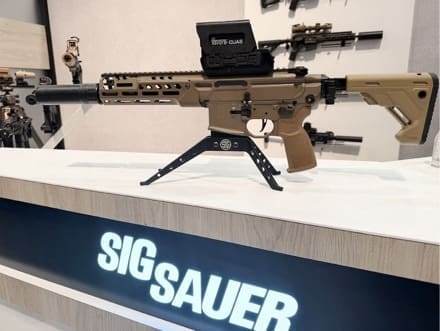
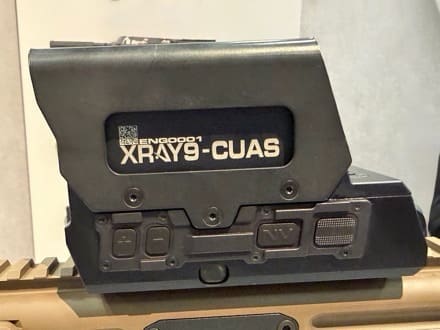
NEWINGTON, N.H., (October 13, 2026)– SIG SAUER, an industry-leading manufacturer of cutting-edge firearms, electro-optics, ammunition, and advanced concepts, unveiled at the Association of the United States Army (AUSA) trade show the SIG SAUER XRAY9-CUAS. The all-new counter unmanned aircraft systems (CUAS) electro-optic from SIG SAUER combines several technologies to deliver a new capability to combat drone attacks. 

“We fast-tracked the XRAY9-CUAS because the capability is needed for today’s battlefield,” said Andy York, President, SIG SAUER Electro-Optics. “Our heritage began and continues in firearms. We’re also driving innovation in remote weapon stations and electro-optics because at our core our focus is to protect and support our men and women in uniform. With the XRAY9-CUAS, a soldier can point and shoot to combat drones with the new electro-optic compensating for a range of factors to eliminate the threat.”

Mounted to a counter-UAS weapon system, the XRAY9-CUAS uses advanced electro-optical technologies to quickly engage drones, similar to the targeting system in the SIG SAUER remote-controlled weapon station.

The XRAY9-CUAS uses a proprietary SWIR laser rangefinder system and onboard slew-rate sensors to instantly calculate drone distance, speed, and vector and create a custom disturbed reticle with dynamic targeting solutions. The XRAY9-CUAS can be integrated with CMOS and thermal sensors to provide a day, night, and fused capable fire control system.

The XRAY9-CUAS tracks and engages up to 300 yards with exact capabilities varying depending on drone size. The small and lightweight optic is 5.25’’x2.5’’x3.3’’ (LxWxH) and 24 ounces. Battery life is up to 50 hours with continuous use, and the display is 640×480 with a window size of 48mm clear aperture.

Elsight Launches a Precise Positioning Solution for Uncrewed Systems in GNSS-Denied Environments at AUSA 2026

October 13th, 2026
  • The only GNSS-denied positioning solution built on a patented multi-signal fusion solution that delivers high precision geolocation
  • Compact and cost-effective, delivering reliable positioning with or without GPS
  • First product of its kind with built-in active GPS spoofing detection

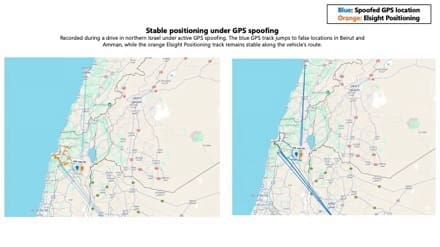
ALLEN, Texas, and WASHINGTON, D.C., October 12, 2026– Elsight (ASX: ELS), provider of mission-critical connectivity for uncrewed systems, today announced its new Positioning capability, delivering accurate geolocation for autonomous platforms across air, land and maritime domains in GPS-denied, GPS-jammed, and GPS-spoofed environments.

The launch comes amid ongoing global GPS jamming and spoofing, as growing usage of uncrewed systems push electronic warfare to the center of tactical planning. Jamming and spoofing tools once limited to specialist units are now fielded broadly by regular forces.

Elsight’s Positioning capability is built on a patented cellular-based solution that determines platform location using cellular network measurements, enabling precise geolocation when GPS is unavailable, degraded, or actively spoofed. A multi-source fusion engine continuously layers in additional available inputs – including cellular Timing Advance (TA), surrounding base station signals, GPS when verified reliable, and motion and velocity vectors – to improve accuracy and resilience. Active GPS spoofing detection cross-references GPS against cellular-derived position in real time, firing an alert when the two diverge.

“GPS has become a critical vulnerability in contested environments,” said Elsight CEO Yoav Amitai. “Our Positioning product removes that dependency entirely, giving uncrewed systems the ability to know exactly where they are, regardless of what is happening to the environment around them. Every alternative tells you how far you’ve moved. We tell you where you are. It is a fundamentally different approach to positioning.”

Key features:

  • High precision geolocation, not relative positioning – the technology knows exactly where the uncrewed drone or vehicle is, not just how far it has moved from a starting point
  • Patented cellular-based core – operates on entirely different infrastructure than GNSS, making it inherently resistant to GPS jamming, spoofing, and electronic interference that would compromise satellite-dependent systems, and works on any network available, regardless of ownership or origin.
  • Multi-source fusion – continuously combines all available inputs and automatically adapts as signal availability changes, with no reliance on any single source 
  • Active GPS spoofing detection – cross-references GPS against cellular-derived location data in real time; fires an alert automatically when the two diverge beyond a threshold
  • Zero additional hardware for existing Halo customers – delivered as a software or feature unlock
  • Operates with no GPS, no internet, no visual reference, no communications link – in darkness, at sea, and in conflict zones

Key Benefits:

  • Uses GPS as the default, uses cellular only when GPS is unavailable
  • Adds resilience without requiring large, heavy, or prohibitively expensive navigation equipment
  • A practical and scalable solution, leveraging standard GPS performance in normal operations and an additional layer of resilience when operating in GPS-denied environments
  • Small, lightweight, affordable solution

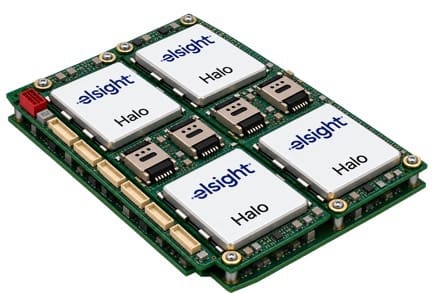
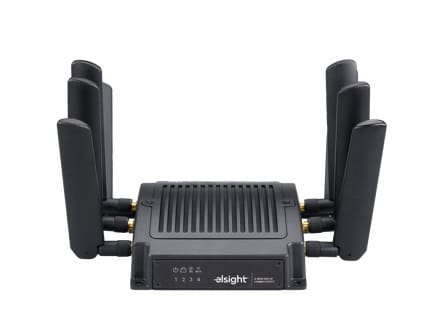
Elsight’s Positioning application requires no additional hardware for existing customers, and is fully integrated into Halo, the company’s flagship mission enablement product. Halo extends uncrewed operations beyond visual line of sight, free from ground infrastructure constraints, across air, land, and maritime domains. It intelligently bonds cellular, satellite, and RF communications into a resilient connectivity layer that always picks the optimal path.

Battle-tested with over 500,000 operational hours across 100+ active customers deployed in complex, high-intensity combat environments, Halo is included on the DCMA Blue List.

Abram Scientific Awarded Up To $8.3 Million under a DARPA Contract to Advance Rapid, Portable Blood Coagulation Diagnostics for Trauma Care

October 13th, 2026

MENLO PARK, Calif., Oct. 13, 2026 — Abram Scientific, a medical device company focused on advancing next-generation coagulation diagnostics, today announced that it has been awarded a contract of up to $8.3 million from the Defense Advanced Research Projects Agency (DARPA) to advance its rapid, handheld blood coagulation testing platform CoagCare™ for use in trauma settings. This funding comes on the heels of another $2 million DARPA contract that Abram Scientific received in October 2025 to support miniaturization of the CoagCare system.

Across both military and civilian trauma care, severe blood loss and the resulting inadequate oxygen delivery to tissues are among the leading causes of preventable death following traumatic injury. Although conventional blood products are essential to saving lives, their dependence on continuous cold-chain storage, limited shelf life, and reliable donor supplies presents substantial logistical challenges, particularly for far-forward military units and first responders in other austere or resource-limited environments. DARPA’s Resuscitation and Prevention of Ischemia-Induced Dysfunction (RAPIID)1 program seeks to address these challenges by developing a shelf-stable blood analog system, and rapid point-of-care (POC) diagnostics to adjudicate and administer the blood analog system.

Abram Scientific’s CoagCare system is a novel diagnostic platform designed to rapidly assess and characterize blood coagulation status and provide actionable information that can help improve clinical outcomes. The POC system combines a compact meter with a single-use diagnostic test card, and proprietary technology that rapidly measures the viscoelastic properties and density of whole blood.2 CoagCare is designed to characterize the blood coagulation process from clot formation through clot breakdown or lysis in less than 10 minutes, providing information that may help identify bleeding or clotting abnormalities and guide optimal coagulation management.

The CoagCare system represents a significant advancement in global coagulation diagnostics, addressing key limitations of conventional technologies such as thromboelastography (TEG®) and thromboelastometry (ROTEM®).3 Whereas these existing systems can require 30–60 minutes to complete a measurement, CoagCare is designed to provide a comprehensive assessment of the blood coagulation process in less than 10 minutes from a single drop of blood. Its compact, portable and vibration-insensitive design is intended to enable coagulation testing in challenging environments – ambulances, MEDEVAC helicopters, and other remote or austere settings – where conventional laboratory conditions may not be available, and timely coagulation information can inform life-saving decisions on blood transfusion.

This DARPA funding augments the Series A funding in Abram Scientific, led by global pharmaceutical leader Octapharma AG in February 2026, to accelerate the development and secure FDA 510(k) clearance for the CoagCare system’s use in civilian patient blood transfusion management during trauma and surgical procedures. Under the DARPA RAPIID program, CoagCare will be optimized to adjudicate the administration of shelf-stable blood analog components developed under the program. The funding will also support the establishment of manufacturing capabilities for both the CoagCaremeter and disposable test card; and the development of a military-focused system design that builds on the platform’s portability and potential for operation in austere environments to enable use in far-forward operational settings. Importantly, the military and civilian configurations will utilize the same disposable test card, enabling a common, scalable manufacturing platform across both applications.

“Rapid access to actionable coagulation information can be critical for saving lives in trauma care, when every minute matters,” said Abhishek Ramkumar, CEO, Founder, Abram Scientific. “This DARPA award recognizes the importance of bringing laboratory-quality coagulation information closer to the patient and supports our efforts to develop a platform that can ultimately serve both military and civilian medicine.”

About Abram Scientific
Headquartered in Menlo Park, California, Abram Scientific was founded by Dr. Abhishek Ramkumar, CEO, and inventor of the CoagCare platform technology. The technology is protected by 17 U.S. and internationally granted patents with multiple patent applications currently under prosecution. Abram’s CoagCare system is not yet cleared by the U.S. Food and Drug Administration for marketing in the United States.

About Octapharma AG
Octapharma is one of the world’s largest human protein manufacturers, developing and producing therapies from human plasma and human cell lines. Headquartered in Lachen, Switzerland, Octapharma has over 11,000 employees and serves patients in 120 countries across Immunotherapy, Hematology, and Critical Care.

With seven R&D sites, five manufacturing facilities in Europe, and more than 195 plasma donation centers in the U.S. and Europe, Octapharma has delivered trusted therapies for over 40 years. The company is committed to improving lives through innovation, quality, and a deep focus on patient care and clinical partnership. To learn more please visit www.octapharma.com.

References

Defense Advanced Research Projects Agency (DARPA). Resuscitation and Prevention of Ischemia-Induced Dysfunction (RAPIID) Program. https://www.darpa.mil/research/programs/rapiid

Ramkumar A, Knotter H, Herron N, et al. A novel, point-of-care (POC) portable meter & disposable card, viscoelastic coagulation diagnostic platform for hemostasis management with complete results including fibrinolysis in under 10 minutes. Res Pract Thromb Haemost. 2024;8(Suppl 2):PB0094. https://www.rpthjournal.org/article/S2475-0379(24)00199-7/fulltext.

Hartmann J, Hermelin D, Levy JH. Viscoelastic testing: an illustrated review of technology and clinical applications. Res Pract Thromb Haemost. 2023;7(1):100031. https://doi.org/10.1016/j.rpth.2022.100031


Northrop Grumman and Barrett Firearms Forge Strategic Collaboration on Precision Grenadier System

October 13th, 2026

Strategic alliance will advance Precision Grenadier System, getting capability to the warfighter faster

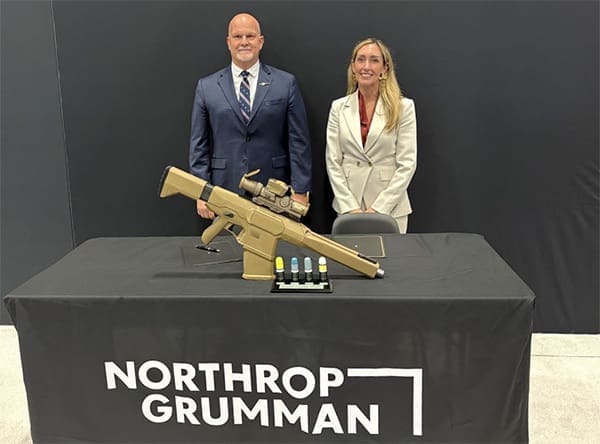
Strategic agreement signing between Northrop Grumman and Barrett. Pictured are Bryan James, CEO of Barrett, and Jenna Paukstis, Vice President and General Manager of the Weapon Systems Division at Northrop Grumman. (Photo Credit: Northrop Grumman)

WASHINGTON – Oct. 12, 2026 – (PHOTO RELEASE) Northrop Grumman (NYSE: NOC) and Barrett Firearms entered a teaming agreement to produce the weapon portion of the Precision Grenadier System (PGS), a shoulder-fired, 25mm grenade launcher. Northrop Grumman is advancing PGS and accompanying ammunition development to address domestic and international customer needs.

Under this agreement, Barrett Firearms will manufacture the weapon portion and integrate the inductive setter, allowing the warfighter to program Northrop Grumman’s 25mm suite of ammunition.

Working together, Northrop Grumman and Barrett bring proven expertise in both commercial and military weapons production, enabling rapid innovation and delivery to domestic and international allies. Barrett will produce the PGS weapon at their Nashville, Tennessee, facility.

Northrop Grumman’s PGS is a shoulder-fired, 25mm grenade launcher providing the infantry squad with a capability to effectively defeat targets in defilade, close quarters battle as well as small, unmanned aircraft systems (sUAS).

For more on the Precision Grenadier System, click here.