GORE-TEX WINDSTOPPER

MATBOCK Monday Scepter Jump Assault Pack

May 18th, 2020

SCEPTER JUMP ASSAULT PACK

Good morning and Happy MATBOCK Monday,

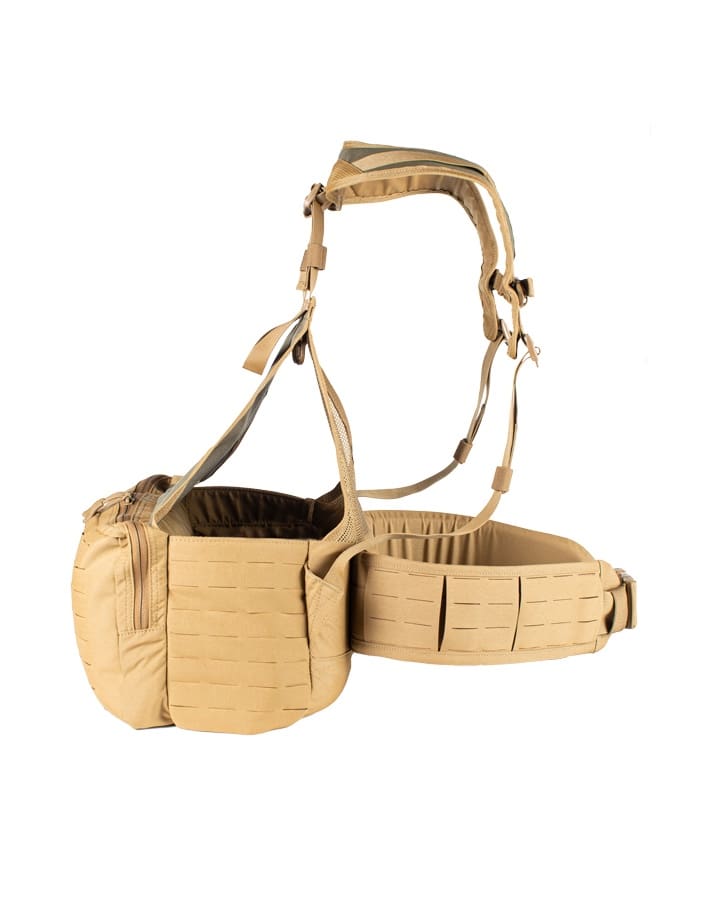
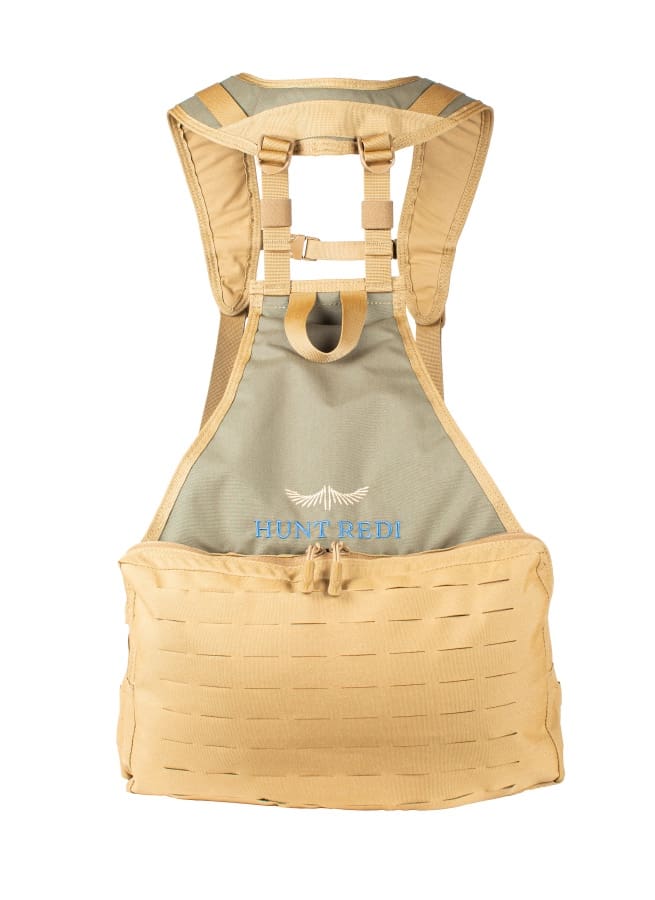
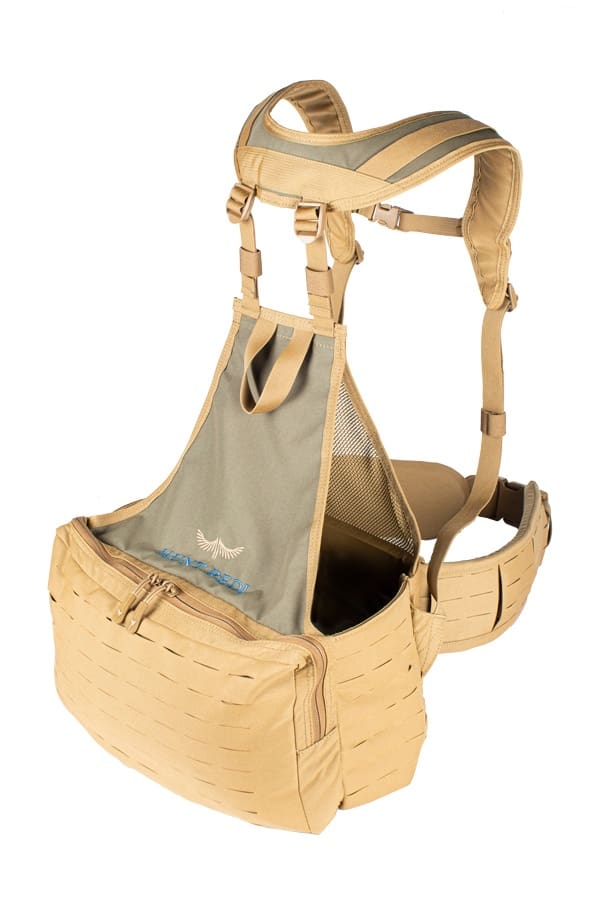
The Scepter Jump Assault Pack is specifically reinforced and designed for jump operations. All strapping is either continuous or connected in the backing of the pack to include the two connection loops meant for attachment to the parachute itself via release lines. Additionally, the system has a 1 pull release system for a primary weapon system. The weapon is mounted and jumped in the horizontal position and then can be released with one pull to give the jumper instant access to the primary weapon if necessary. The belly band of the parachute mounts across the top third of the pack, just above the primary weapon to keep it secure during the jump. The entire front flap of the containment system is released by this mechanism. For easy stowage, the flap can be snapped back into place instead of reweaving the pull handle. The pack also allows integration with the SS precision jump board across the back via webbing and Velcro.

Don’t forget to join Jim and Casey on Monday at 4:30 PM EST as they go live Instagram to demo the pack and answer all of your questions!

www.matbock.com/products/jump-assault-pack

Mustang Survival – Callan Waterproof Shorts

May 18th, 2020

Summer is upon us and Canadian brand Mustang Survival has updated their Callan Waterproof Shorts.

Made from MustanG Survival’s MarineSpec MP, a water and wind proof fabric, these seam sealed shorts feature a reinforced seat, slash pockets at the front, and a single thigh pocket.

Offered in Admiral Gray or Mid Gray, sizes Small – 2XLarge.

?mustangsurvival.com/collections/outerwear/products/callan-waterproof-shorts

Therm-a-Rest Vesper Quilt

May 17th, 2020

The Vesper Quilt from Therm-a-Rest is rated to 32 deg F (0 C) but weighs just 15 oz, stuffing down to the size of a one liter water bottle. That’s thanks to the 900-fill Nikwax Hydrophobic Down.

Remember, this isn’t a sleeping bag, it’s a quilt, that you wrap up in, so consider it appropriate for three seasons. Or, use it in conjunction with a cold weather clothing system.

One feature that’s pretty cool, is that it will integrate with a Therm-a-rest mattress. Plus, there’s a nice footbox, built-in.

Available in regular and tall lengths, there’s also a model that goes down to 20 deg F (-6 C).

SCUBAPRO Sunday – Nova Series Lights

May 17th, 2020

The SCUBAPRO Nova series of lights has long been a standard for recreational and professional divers around the world. SCUBAPRO has updated its range of underwater lights with the new Nova 850 and Nova 250 dive lights. All the lights in the series have been updated with new colors and features. All lights are available in a non-reflective matte black, blue accents aluminum body while still providing the same lightweight long-term durability.

The new Nova 250 is a versatile dive light that can be stored in the smallest BCD pocket or mounted on a helmet or the rail of a gun. It offers three modes: 100% power, 50% power, and Flash, it is also equipped with an over-pressure valve to release battery off-gassing, making it the safest small light on the market. Delivering 250 lumens of illumination, Double O-ring seals ensure watertight integrity. An extended light head shroud prevents the light beam from blinding other divers. They have over-pressure valve releases battery off-gassing – a safety feature not commonly found on dive lights of this size. A depth rating of 492ft/150m ensures worry-free lighting in virtually all diving conditions. It can be used with the Ops-Core single clamp. So, it can fit on any ACH Rail helmet.  

The Nova 850 series replaces the previous 720 models, with an updated lumen rating and brighter beam. The lights are available as either the Nova 850, which uses 3 C-cell batteries or the more compact 850R, which uses a single rechargeable lithium-ion cell. Both models are also available in a ‘Wide’ version, The Nova 850 Wide delivers the same illumination and offers the same features as the Nova 850 but is equipped with a wider 80° beam. All the models are constructed from heavy-duty aluminum, and depth-rated of 492ft/150m ensures worry-free lighting in virtually all diving conditions.

The powerful Nova 2100 SF (Spot Flood) multi-use dive light offers both a 65° wide beam and a 15° spot beam to perfectly match different diving situations. Five light modes plus an emergency signal mode provide lots of versatility, with one-button control for easy operation. Extremely reliable, the waterproof battery compartment is isolated, so even if the O-ring seal fails, water cannot reach the internal electronics. The Nova 2100 SF comes as a set with both a large and a small a Goodman handle, plus a pistol grip handle and a GoPro adapter. 

Dual beams include a powerful 2100 lumen 65° wide beam and 800 lumens 15° spot beam. Wide beam features 6 Cree XM-L2 LEDs; the spot beam features 1 Cree XPL LED. Five primary light modes: 100% Flood, 50% Flood, 100% Spot, 50% Flood + 75% Spot, and 25% Flood + 50% Spot. Hidden emergency signal mode offers a one-second blink interval or an SOS Morse code. Just push and hold the power button for four seconds to activate. Simple one-button control lets you power on and off, adjust brightness, and switch beam angle. It provides 55 minutes of burn time at full power and constant brightness. The light is depth tested to 328′ (100 meters). Corrosion-proof metal light head improves heat dispersion and increases durability.

AFRL Adapts PJ Tactics for COVID-19 Monitoring

May 17th, 2020

WRIGHT-PATTERSON AIR FORCE BASE, Ohio – The Air Force Research Laboratory is leveraging tactics from the Air Force pararescue (PJ) community, employing a new tool that can monitor multiple patients’ vital signs, helping to alleviate the lean doctor-to-patient ratio that many medical facilities are facing amidst COVID-19.

“One of the struggles doctors and nurses are having in highly-affected hospitals right now is similar to what PJs deal with—a high ratio of patients assigned to a low ratio of medical personnel,” said Dr. Greg Burnett, Airman-Machine Integration Product Line lead in AFRL. “Add in the contagion element, and our team saw the emergent need to adapt our medical monitoring tool for widespread use so that multiple patients could be cared for remotely.”

So Burnett and his team have been hard at work adapting this agile technology, originally developed for PJs to use down range, for hospitals and other health care facilities so they too can monitor the vitals of more patients.

The solution is a medical monitoring tool called the Battlefield Assisted Trauma Distributed Observation Kit, or BATDOK. The original version of this tool has been under evaluation by military medics for about four years and was deployed operationally about a year ago. Developed in AFRL’s 711th Human Performance Wing, it is a smartphone-based medical information software tool that can take in sensor data for real-time health-status monitoring for multiple patients. The team has made improvements along the way to this Android application with the help of direct feedback from operators down range using the device.

This adapted version, however, removes the combat casualty care aspects of the medical monitoring tool, said Burnett, but still allows for the remote monitoring sharing of patient vitals and secured networked data dissemination. These features can help prepare doctors and nurses as they work to maintain situational awareness over multiple patients—while also working to maintain their own health and safety.

But with this newer, more streamlined vital-monitoring version of BATDOK, the AFRL team will collaborate and receive direct feedback from their new customers—healthcare providers at the Wright-Patterson Medical Center. AFRL began the first of three phases of testing with BATDOK at the base medical center in mid-April.

This first phase involves comparing data of a single patient who has agreed to have vitals monitored using both traditional methods as well as using BATDOK. The time required for each phase is unknown, but each phase will have increased patients and providers.

“Clinical practice guidelines for patients infected with COVID-19, released by the Department of Defense and the Defense Health Agency, strongly recommend continuous oxygen monitoring,” said Dr. Roger Shih, WPMC Internal Medicine director.

Shih said the ability to monitor multiple patients remotely also alleviates the need for medical personnel to change out personal protective equipment (PPE) for individual patient checks.

BATDOK’s tablet interface is user-friendly, Shih explained, and the software is straightforward and intuitive. It allows a single provider to monitor up to two dozen patients with real-time monitoring of their oxygen saturation and pulse.

The BATDOK team’s software development co-leads, 2nd Lt. Matthew Dickinson and 2nd Lt. Corey Mack, discussed how the data moves remotely.

“Monitoring the patients remotely is done through a sensor embedded in the pulse oximeter that is placed on the patient’s finger,” said Dickinson.

Mack added that the sensor transmits vitals remotely to tablets or to workstations that the nurses or other healthcare providers can then monitor.

From a nursing perspective, traditional practice is for the nurses to go to a single location, a telemetry station, to observe the patient’s heart rate, respiratory rate and oxygen saturation, explained Maj. Gary Webb, WPMC Medical Surgical Unit flight commander.

But with BATDOK, which is used through an app on a cell phone, Webb explained that nurses can monitor their patients wherever they are on the unit.

“The benefit of this,” Webb said, “is that if an alarm is going off, the nurse can immediately look at the BATDOK app to see which alarm has sounded and address it. It saves much needed time in this situation.”

All-in-all, BATDOK could allow Wright-Patterson Medical Center to rapidly scale up their ability to perform continuous oxygen monitoring for patients infected with COVID-19, while also keeping staff safer and decreasing use of PPE, said Shih.

The AFRL team, some who have family members in the hardest hit areas of this pandemic, are honored to put their skills to good use.

“It means a lot to the BATDOK team to be able to do our part in stemming the tide of the COVID-19 pandemic,” explained Mack. “Working directly with those who need and use the technology we build has always been a driving factor behind the success of BATDOK. So when we heard there was a need during this crisis, we started working on potential solutions.”

Story by Gina Marie Giardina, Air Force Research Laboratory

Photo by Wesley Farnsworth

DMade Bags

May 17th, 2020

Family Portrait – 1000D Multicam Black. XL, Original Dopp, Stubby, and Pencil size. Made to order, in a variety of colors and patterns.

www.dmadebags.com

Streamlight Upgrades Lumens of Popular TLR Models

May 16th, 2020

TLR-1 HL, TLR-2 HL, TLR-2 HL G, and TLR-1 HPL Now Offer 1,000 Lumens

Streamlight Inc., a leading provider of high-performance lighting devices, announced it has improved the output of four of its TLR® high lumen (HL) gun-mounted lights, including the TLR-1 HL®; the TLR-2 HL®; the TLR-2 HL® G, and the TLR-1 HPL®.  Each model now delivers 1,000 lumens of blinding white light.

“Tactical users and outdoor enthusiasts alike will appreciate the increased brightness of these rugged, yet compact and lightweight TLR models,” said Streamlight President and Chief Executive Officer Ray Sharrah. “The TLR-1 HL®, TLR-2 HL® and TLR-2 HL® G are designed to provide full situational awareness, offering a wide beam pattern that is similar to a floodlight for a variety of tactical maneuvers such as clearing a dark room, searching alleys, or other outdoor uses.  The high performance TLR-1 HPL® also functions as a high lumen light, while delivering a brighter hotspot which puts more light on a target at a distance.”

In addition to their enhanced lumen capability, the TLR-1 HL®, TLR-2 HL®, and TLR-2 HL® G also now offer 20,000 candela and a 283-metre beam distance, while the TLR-1 HPL® provides 60,000 candela and a 490-metre beam distance. Each light has a continuous run time of 1.5 hours. The TLR-2 HL® also is equipped with a 640-660 nanometre integrated red aiming laser for long-range targeting, while the TLR-2 HL® G features a 510-530 nanometre green aiming laser to improve focusing on targets, particularly in daylight.

The upgraded lights feature the latest in LED technology, including a shock-proof high-power LED. All four models also feature strobing capability, offering the added benefit of being able to signal in the field or disorient targets. The enhanced TLR models can be quickly and safely attached to most weapons, without the need for users to put their hands in front of the muzzle. They mount directly to all MIL-STD-1913 (Picatinny) rails and handguns with Glock-style rails, and offer highly accurate sight repeatability when remounting.  A key kit with six interchangeable keys is included to securely fit each light to the broadest array of rails. All of the models are fabricated from 6000 series machined aluminum, feature impact-resistant construction and have been extensively live-fired tested. They each use two included 3-volt, CR123A lithium batteries.

The TLR-1 HL® weighs 122.5 grams with batteries, while the TLR-2 HL® and the TLR-2 HL® G both weigh 138.3 grams with batteries; all three lights measure 8.6cm in length. The TLR-1 HPL® weighs 158.8 – 167.3 grams and measures 12.2 – 13.3cm with batteries, using a standard or remote switch, respectively.

The TLR-1 HL® and TLR-1 HPL® are IPX7 rated for waterproof operation to 1 metre for 30 minutes, while the TLR-2 HL® and TLR-2 HL® G offer an IPX4 rated design for water-resistant operation.

The TLR-1 HL®, TLR-2 HL®, TLR-2 HL® G, and TLR-1 each comes with Streamlight’s Limited Lifetime Warranty.

For additional information, visit streamlight.com

Corps Strength – Day in and Day out

May 16th, 2020

As a PT instructor and fitness author, one question I’ve been asked many times is: What do I think is the most important factor in staying in shape and maintaining a healthy body
weight? Diet? Workout routine? Attitude? Lifestyle? The fact is that achieving and maintaining a high level of health and fitness has several different components that all need to come together for long term success. However, when asked to name the most important factor I always give the same answer: Consistency. Consistency specifically in this case means the ability to follow a fundamentally sound (but not necessarily perfect), exercise routine and eating plan. To follow it not for a few months, a summer, a deployment, etc. but for life.

People who follow me on Instagram, know that I post my workouts: THE DAILY BEATDOWN”. It’s like a training log for me (helps keep me honest) and I also hope it provides some motivation to those who follow me. Based on the feedback I get, it does. The fact is I follow others on IG for the same motivation. Some are fitness professionals, military people, gifted athletes and other various mutants that are doing things physically I couldn’t do on my best day, but my favorites are just everyday people who work hard at staying fit. Their true life stories and efforts always give me inspiration to work toward my own goals and I’ve learned a lot from their practical experience. With all that, the main point I try to get across with the picture of my G-Shock showing the time I roll out for PT is that just about every day, day in and day out, rain or shine, home or when on the road, working or off, cold weather or hot; I put in the work. I punch that PT time clock and I have for over 40 years now. I’m convinced that my blue-collar, enlisted Marine approach to this has been the biggest key to my long-term success. I’m also convinced that just getting up and getting it done can overcome a lot of other less than perfect aspects of any program.

Now am I saying that you need to get up at 0430 almost every day and PT like I do? I could say that, as it has worked great for me and it might for you too. But for most people, it probably wouldn’t work, not long term anyhow. The point is that when I help people on their fitness plan and achieving their goals, it’s about finding out what works for them, not me. However, whenever you figure out what routine works best for you, the most important point is that you actually do it and do it on a regular basis. Regular in my opinion means daily. My simple rule on work out frequency is that I plan to PT for 1 hour, first thing in the morning, every day. I’m not foolish about it though, as I will take a day off when I need to, but I do my level best not to go two days in a row without some PT. On average this comes to a day off, every 4-5 days. With this mindset must also come with the understanding that to do this type of every day routine, you must widely vary the intensity and variety of your training to keep your mind and body from burning out. There are some (many) programs that preach the opposite mindset. Meaning that you should take a lot of time off for recovery and then when you do train, train at a very high intensity. In my experience that is a sure recipe for injury and burnout. Both of which lead to long periods of doing nothing. BTW, doing nothing is the easiest habit to develop and one of the hardest to break.

So how do you maintain the long-term motivation to workout and eat right (most of the time), almost every day? Well, it helps to have a high pain tolerance and somewhat OCD personality like myself. But for everyone there are positive and healthy ways to ingrain the long-term exercise and eating right habit. First, you have to figure out how to make this part of your life, not your life. Contrary to popular belief, as much as I like to PT, my life doesn’t revolve around it, it’s just part of my life, like sleeping, eating or dropping a deuce. Just a natural part of my day, not something I consider forced, or a hill I have to climb over to get to my life. The fact is great health and fitness allows me to do the things I like to do: climb mountains, hike, kayak, rock climb, mountain bike, play many different sports and do it all at pretty intense level. Not by any means what you would call a professional level, but at a level that allows me very few limits as far as participation goes. What I mean by that is while I may not be able to speed climb Mt. Rainier, I did successfully climb it without requiring an extreme effort, or suffering any injuries. I also had to do very little specialized training to prepare. My normal everyday routine was really all I needed. Plus, even at age 59 (and being the oldest member of our climbing team by 15 years) I was able to enjoy it. Make no mistake, it wasn’t easy, but not by any means a real physical struggle.

Just as getting good sleep supports your ability to work, play and stay healthy. You should think of PT the same way. Nobody would consider just not sleeping? Well, you’d say that’s not your choice as if you try to go without sleep you’ll just collapse at some point. True, and it’s just as true that if you go without regular exercise and good food your health will eventually collapse also. It will take longer and may be less dramatic, but have no doubt, your health will collapse. On the way to that collapse you will slowly be able to do less and less, and feel more and more like shit. Hey we all get old, sick and die, that’s life. You’re born and at some point, you die. Same for all of us. However, the different is what happens between the two, which can be vary greatly by our own efforts and habits.

The keys to developing the fitness habit, is really the same with embedding any good habit. First you have ease into it with small but consistent changes. Then over time slowly ramp up to the level that will get you to your goals while remaining sustainable. This is maybe the most common mistake that people make in this area. They try to do too much, too fast. It overwhelms their body, life style and mental state and they quickly fall back to nothing. You have to figure out your goal first and then from there design a solid (and simple) plan to get there. The plan needs to consider many different things in addition to your end goal, to include the time you’re giving yourself to get there. This is very important. Goals, both long and short term need a time line. I learned a long time ago the only real difference between a goal and a dream is a time limit. I want to earn a college degree in 4 years is a goal. I want to get a degree someday is just a dream, a fantasy. Your goals need a time limit if you’re serious about achieving them. However, if you aren’t that serious and are happy with just dreaming about great health, fitness and getting your weight right, have at it. That’s easy to do, but remember it’s just a dream, not real and not ever likely to become real. It’s just the way this stuff works.



Of course the mechanics of how to structure your workouts and eating are very important also. The surprising thing though is that this part really isn’t that complicated, certainly not as much as people make it. There is more good information out there on eating right and working out than you could ever need, like my book for example. But, it will take some trial and error to get it tailored for you, but that is the same in any endeavor like: running a business, a military unit or sports team. As they say about combat: The best plans can quickly become useless and have to be adjusted as you go, but prior planning is indispensable. Start with a simple basic plan and adjust as you go. Having no plan and just trying to wing it will fail. Again it’s just the way this stuff works.

The bottom line is getting and staying in shape requires goal setting, some planning, a little experimenting and above all else consistent long-term effort. However, it’s not rocket science and certainly doesn’t require nowhere near the time and effort as the most important things in life do: like earning a living, getting an education, or keeping a family together. However, I will contend that every minute invested in a sound fitness program will pay you back many times over in your health, your mental state and in your life overall. In fact it’s one of the best time investments any person could make to improve their life. I know this not only from my own life, but from witnessing this in an untold number of others. So do yourself a favor and invest a little time and effort in yourself every day, you’re worth it.

I hope everyone is staying safe and we are all over the hump on this pandemic and we can all get back to work and our lives soon. Till next month:

“Be Safe Always, Be Good when you Can”.

Semper Fi

MGunz