SIG SAUER - Never Settle

Milipol 25 – Crispi Elite

December 2nd, 2025

Italian boot maker Crispi showed us what’s coming for their Elite line designed for military and security professionals.

The Crispi AT4 is the lowest upper (4″) of the three new models. Like the other two it incorporates GORE-TEX and a CRISPI Air Mesh + Felt Active Carbons removable insole and shock absorbing midsole.

All three models share this same Vibram sole.

Next is the AT6 GTX which features a 6″ upper and GORE-TEX Performance Comfort lining and rubber rand.

We’ll wrap it up with the AT8 GTX which features an 8″ upper and GORE-TEX Performance Comfort lining along with a rubber rand.

www.crispi.it/en/shop-online/elite

Milipol 25 – M-TAC Drone Pack

December 2nd, 2025

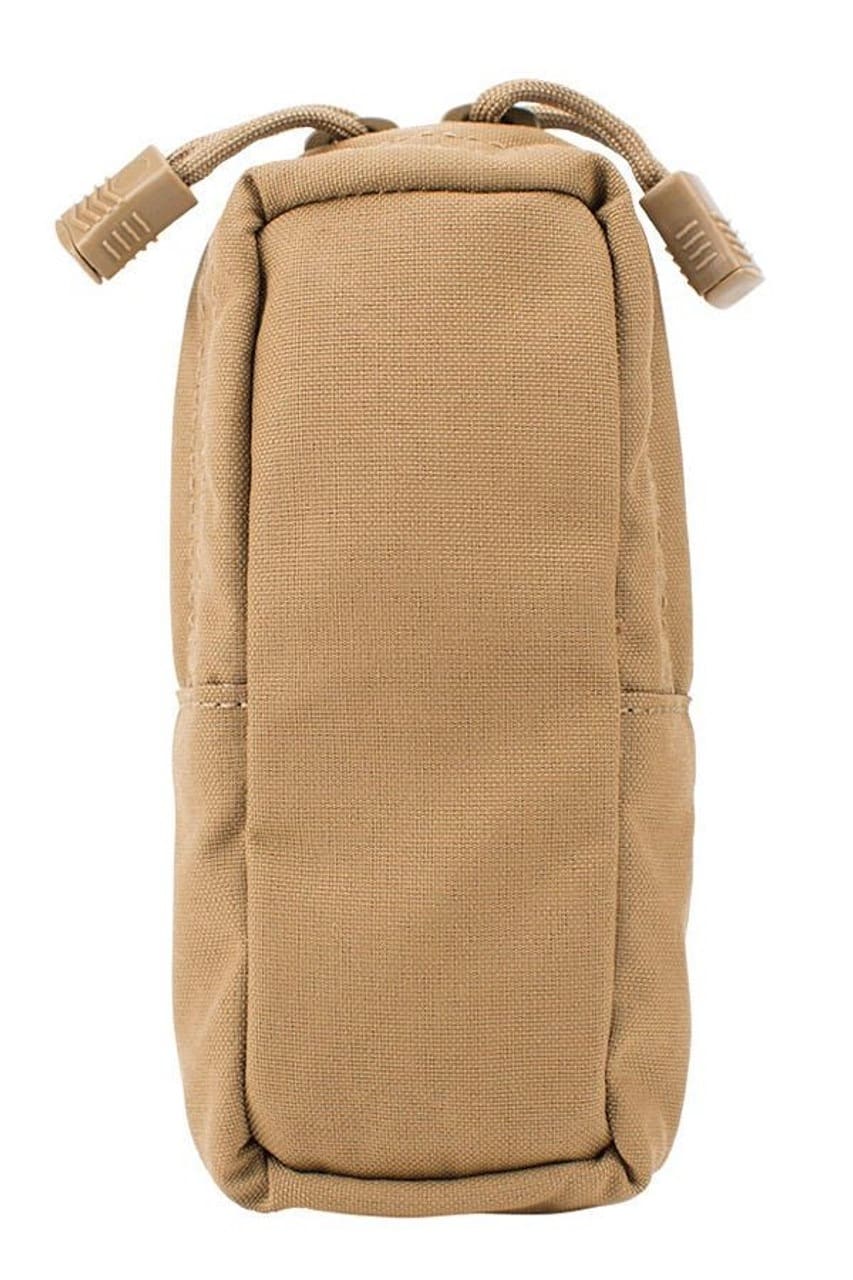
At Milipol quite a few companies offered drone specific load carriage packs like this example from Ukraine’s M-TAC for 7″ drones with capacity for seven and controller. I expect to see a lot more of this in the near future.

Milipol 25 – Eagle Ind MMAC 3.0

December 2nd, 2025

Eagle Industries gave us a rare treat by showing something hot off the sewing table, the “MMAC 3.0.” The reason I put the name is quoted is that this latest variant of their flagship Multi-Mission Armor Carrier likely won’t retain this variant number.

It can be configured with Tubes fasteners at the shoulders and cummerbund, along with laser cut laminate construction. Additionally, there push-to-talk (PTT) attachment points at upper left and right chest and a kangaroo-style cummerbund retention flap.

Here you can see some of the panel and cummerbund options.

Like other carriers produced by Eagle, it is Berry compliant and comes in Small – XLarge sizing options.

Aegis Kinetic Group Vertex 2.0 Plate Carrier

December 2nd, 2025

Aegis Kinetic Group is proud to announce the long-awaited release of our Vertex 2.0 Plate Carrier and Operating System. Since the release of Vertex 1.5 two years ago, we have been focused on optimizing our design approach and our manufacturing processes to create a product that strikes an effective balance between affordable production cost and a professional feature set. Initially designed for maritime applications, the Vertex has also shown its performance across various environments, including during professional deployments to the Arctic and Ukraine.

Made from water-resistant 500D Cordura laminate and weighing 15.2 oz, the Vertex can fit any S/M/L plate variant using Velcro® OneWrap adjustment tabs and a loop-lined plate backer (XL plates are compatible, depending on plate thickness). Ballistic plates are top-loaded into the front and rear panels of the Vertex, and the reinforced bottom ensures plate security during wear. An open design encourages immediate drainage during maritime and over-the-beach operations. The Vertex also features native wire routing beneath the carrier’s surface, sewn-in shock cord lashing points and other mounting options for PTTs, and integrated attachment loops for FIRSTSPEAR TUBES® Buckles and other quick-release options. The Vertex can be attached to existing S/M/L slick plate carriers to increase capability, and collapses for packing in a rucksack, duffel bag, or cargo pocket. Designed with third-party compatibility in mind, the Vertex is capable of accepting both hook/loop and shock cord cummerbunds. It is also compatible with placards using Crye-style attachments, G-Hooks, and buckles. The Vertex 2.0 Plate Carrier will be supported by the Vertex Operating System, which includes additional components such as removable front and rear load-bearing frames as well as unique placard, cummerbund, and pouch options. These and other products will be released periodically throughout the remainder of 2025 and 2026.

The Vertex 2.0 Plate Carrier and Operating System are designed and manufactured in the U.S.A. with Berry Compliant laminate and thermoplastic materials. For MIL/LE sales, email sales@aegiskineticgroup.com. Product variants with improved hydrophobic performance and flame-resistant properties, as well as other unit-specific customizations, are available upon request.

www.aegiskineticgroup.com

Noctu – Flex System

December 2nd, 2025

Noctu is a company founded out of necessity. Years of wear and tear on the body under the weight of body armor and packs led to the desire to look at load carriage from a completely different angle. From that, the Flex System was born.

Designed to carry loads from 60-80 lbs, the Flex System allows you to shift the burden from your shoulders to your hips, on-the-fly.


It’s offered as a full system complete with flex belt (which is recommended for full load carriage support) or as the Thoracic Flex which is essentially that back panel alone. Due to different torso lengths, it’s sized Small, Medium, and Large. It’s important to note, neither system is rated or intended for climbing, fall arrest, rappelling, or any load-bearing use that involves suspending body weight.

Rather than introduce yet another armor carrier into the fray, Flex integrates with most front panels available.

How It Works

The core of the Flex system is the Feather Frame crafted from 3-D molded carbon fiber which is both light and rigid. Next are the Shoulder Wraps; padded for comfort with built-in channels for comms cabling and adjustable Fidlock posts for Rapid Access Kit retention. 

At your waist is the Belt. Made from laser cut Cordura laminate, it offers plenty of PALS slots and is sized for proper fit. Padded, it uses Cobra buckles for reliability and durability. At the rear of the belt is the Removable Pivot Joint which serves a socket for the Link. Remove the Link and the belt and Thoracic Flex are independent and can be used alone.

The Link attaches to the Thoracic Flex which mimics the spinal column, rear ribs, and accessory muscles to take the load off of the torso and transfer it to the hips.

Both the full and Thoracic kits incorporate the Rapid Access Kit (RAK), a backpack system which is intended for loads of 20-40 lbs. Ferro Concepts has also developed an interface to allow use of their zippered back panels on the frame.

The RAK (Rapid Access Kit) utilizes Thoracic and Lumbar Frame Sheets which are PALS compatible and made Tegris. These sit atop a carbon fiber frame which interfaces with Stainless Steel and Aluminum components (for corrosion resistance) to attach the load. This is facilitated with either single or double pull of Release Actuators.

Here you can see the entire kit laid out with all of the components.

Availability

Current lead times are just a few weeks but that is sure to increase as they run through their initial supply of components. As a small business, each sale funds the next.

Learn more at www.noctu.co.

Ranger Course Marks 75 Years of Leadership Development

December 2nd, 2025

FORT BENNING, Ga. — The U.S. Army Ranger Course has served as the Army’s crucible for developing the functional skills and mental toughness required of platoon and squad leaders in close combat for three-quarters of a century. The course marked its 75th anniversary on Nov. 25, 2025, affirming its vital, continuing role in creating adaptive and decisive leaders for the modern force.

Honoring the Legacy

The celebration, hosted by the Airborne and Ranger Training Brigade, began with the dedication of the Col. Ralph Puckett Jr. Memorial, marking the official kickoff of the anniversary observance. This statue now resides near Hurley Hill, within Camp Rogers, a location described by retired Brig. Gen. Pete Jones as a “sacred place for generations of Rangers” seeking to earn the coveted tab. Puckett’s lifelong dedication was not just to the fight, but to his troops. The statue, depicting the colonel at attention and saluting, fulfills his specific wish to be positioned “overlooking Ranger graduations,” a detail shared by retired Col. Rob Choppa. This ensures that as candidates begin their intense journey, they appreciate the benefactor whose standard they strive to meet. Puckett, who organized and led the first Ranger company in the Korean War, embodies the selfless courage and resolute leadership that remain the core requirement for every graduate.

Maneuver Center of Excellence Commander, Maj. Gen. Colin P. Tuley, emphasized Colonel Puckett’s profound influence: “The generations of Soldiers mark their encounter with Colonel Puckett as pivotal to their journey toward leadership.” Tuley noted that Puckett believed that you could take good men and “by combat-focused, realistic, high-standard training, turn them into combat infantrymen, effective Soldiers, Rangers.” Tuley added that the course reveals true character, stating about Puckett, “The Battle at Hill 205 didn’t make him who he was—it revealed who he was.”

Evolution of the Crucible

The core mission of the Ranger Course—to develop leaders who perform effectively under extreme stress—remains unchanged, but the curriculum has undergone significant, necessary adaptation since its formal origin in 1950 during the Korean War. The course began with the formation and training of 17 Airborne Ranger companies, including the first and only all-Black Ranger Company—the Second Ranger Company—which served with distinction.

Originally a 59-day program, the course length and content have shifted repeatedly to meet the demands of the global strategic environment. Ranger training became mandatory for all Army officers in 1967 during the Vietnam War before returning to a volunteer status in 1972. Originally established as The Ranger Department, the training structure was managed by various committees until 1987. These specialized committees included the Morgan Team (City Week), the Darby Committee, the Rogers Team, the Light Leaders Course, the Long Range Surveillance Leaders Course, Merrill’s Platoon, and B.co Rangers. The Department evolved into the current ARTB structure in the late 1980s, eventually consolidating its operations at Camp Rogers after the formation of the 4th Ranger Training Battalion in 1987. The changes were always reflective of the threats facing the nation; for instance, a dedicated desert phase was notably added in the 1980s before being removed in the mid-1990s as strategic focus shifted.

The Ranger Course remains the premier small-unit tactical leadership course precisely because of its commitment to evolution and continuing relevance. A critical shift occurred in 2015 when the course was permanently opened to women, following the successful completion by Capt. Kristen Griest and 1st Lt. Shaye Haver. Today, the course is set at 62 days and retains its brutal efficacy across three distinct phases: Darby (patrolling fundamentals), Mountain (terrain-specific operations), and Swamp (waterborne and sustained logistics), ensuring that every graduate, regardless of gender, can execute complex dismounted operations anywhere in the world.

The Enduring Standard

Reflecting on his graduation in 1979, retired Command Sgt. Maj. Jerry Klein (Ranger Class 6-79) provided a clear perspective on the internal transformation and enduring standards of the course. Klein emphasized that the fundamental requirement is not simply to meet basic physical and tactical metrics. While proficiency is essential, the true difference between Rangers and other Soldiers is the conditions under which Rangers perform and operate. “Ranger standards are Army standards, Klein explained, however, “ARTB deliberately heightens the difficulty of the training, intentionally making the circumstances far worse than anyone can imagine.” This is not arbitrary cruelty; it is a vital part of the curriculum.

This focus on internal resilience and condition-based leadership is precisely why the core of the Ranger Course has remained constant throughout the last 75 years. The essential objective has never changed: to guarantee that a leader, deprived of sleep, food, and comfort, can still execute the mission, maintain discipline, and prioritize their Soldiers. The Ranger Course is not designed to measure existing knowledge; it is designed to measure character, resilience, and the capacity for moral and physical endurance—qualities that are essential in every conflict, regardless of the technology or strategic era.

Looking to the Future

Following the Puckett statue dedication ceremony, the celebration transitioned to a large family day at Camp Rogers. This included a 5K run, a cornhole tournament, and various family activities, all supported by live music and food vendors. Concurrently with the family events, the ARTB provided interactive displays demonstrating the course’s history and current training methods. These displays, managed by the brigade’s four training battalions (4th, 5th, and 6th Ranger Training Battalions, and 1st Battalion, 507th Parachute Infantry Regiment), highlighted equipment, training vehicles, waterborne capabilities, and the abilities represented within the ARTB, with 6th RTB also providing demonstrations featuring reptiles. Retired Master Sgt. Max Mullen, a Ranger Hall of Fame inductee, reminded attendees of the course’s rich history, stating simply: “The past is power to the future.”

Col. Stewart C. Lindsay, ARTB commander, tied the anniversary celebration to the course’s forward vision. He noted that while the fundamentals remain unchanged, Ranger training must prepare leaders for an operating environment that is “faster, more complex and more technologically enabled” than anything that has come before. Lindsay detailed modernization efforts, including digitizing student tracking and issuing new night vision devices. He also highlighted a crucial return to foundational Soldier skills: the reintroduction of direct combat training events like combatives (hand-to-hand combat) and the bayonet assault course, both slated for implementation by April 2026. Lindsay stressed that these changes are essential, not cosmetic, as the next fight will demand Rangers who can operate in contested airspace, denied communications, and under constant surveillance. He concluded by affirming the mission’s enduring relevance: “Ranger training matters. It will matter even more in the future. When the next fight comes – and it will – our nation will once again call on Rangers, and Rangers will answer the call as they always have. We’ll lead the way.”

Seventy-five years on, the Ranger Course continues its vital role of transforming volunteers into highly capable leaders, ensuring the Army maintains decisive combat power at the small-unit level—a relevance that remains absolute in the modern, complex battlefield.

By CPT Stephanie Snyder

Milipol 25 – Snigel Designs

December 1st, 2025

Swedish gear manufacturer Snigel Designs has been around for quite awhile and they shared this example from 1990.

Made from Woodland camouflage parapack, which was the material du jour, this light pack looks to have seen quite a bit of use.

Milipol 15 – Adept Armor

December 1st, 2025

Adept Armor offered us a sneak peek at a few new items they’ve been working on. One of the things I appreciate about Adept Armor is that they look at things from a different perspective, trying out new materials and old materials in new ways.

Take for instance the Novasteel Breastplate which is intended as Ballistic Riot Armor. It offers:

  • Handgun threats to Level IIIA
  • Knives to well beyond Knife-3
  • Spikes to well beyond Spike-3
  • Blunt impacts to well beyond 100 J
  • Ballistic up-armor plate boosts protection to RF1

You can also see the Ballistic Mandible which is fitted to the High-Cut Helmet.

These items are made from Novasteel which is fully VPAM 3 compliant, and is capable of stopping a wide variety of potent special threats, including:

• 7.62x25mm Tokarev at 1650 feet per second.

• 5.7x28mm ball rounds at over 2000 feet per second.

• 9x19mm 80gr. solid copper spun (SCS) rounds at carbine velocities.