Salomon Forces Genesis MID GTX

Ocean State Innovations Expands Stock Gladiator I Stretch Woven Line with MultiCam Alpine

July 28th, 2026

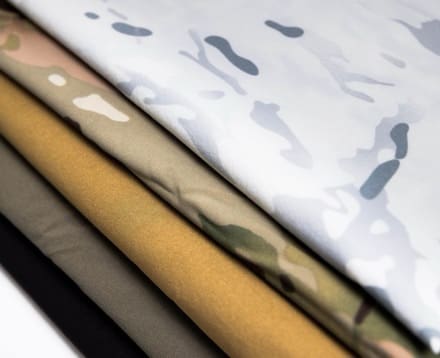
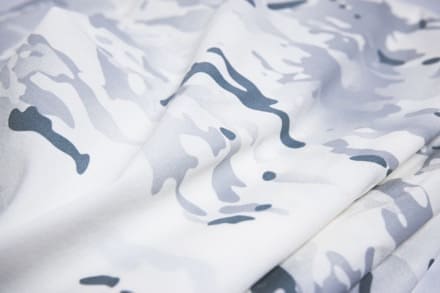
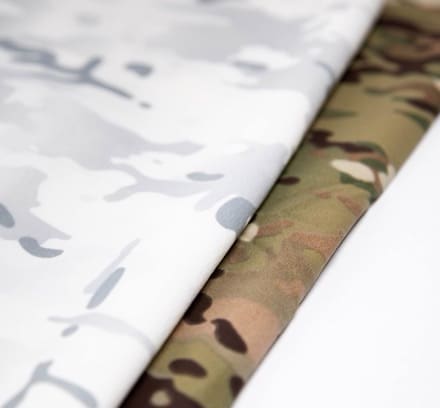
Ocean State Innovations (OSI) is pleased to announce the addition of MultiCam® Alpine to its stock line of Gladiator I Stretch Woven, joining the existing stocked colors of MultiCam®, Black, Coyote, and Ranger Green.

Manufactured by Tweave and offered exclusively through Ocean State Innovations, Gladiator I is a premium 91% nylon / 9% spandex stretch woven engineered for demanding tactical and outdoor applications. The fabric delivers exceptional durability, four-way stretch, and comfort, making it an ideal choice for combat apparel, tactical gear, outerwear, and performance equipment.

In addition to standalone garment applications, Gladiator I can also be laminated into advanced 2-layer and 3-layer waterproof/breathable constructions, providing designers and manufacturers with a versatile platform for next-generation military and outdoor products.

With the addition of MultiCam® Alpine, OSI continues to expand its stocked technical fabric offerings, giving customers faster access to premium camouflage and solid-color solutions for both commercial and military programs.

For more information or to request samples, contact Ocean State Innovations or visit OSInnovate.com.

2nd Marine Regiment Tests First-Ever Group 3 UAS Capabilities at the Conventional Level

July 28th, 2026

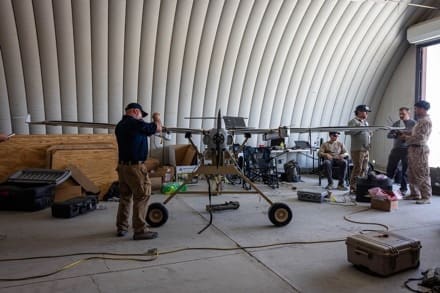
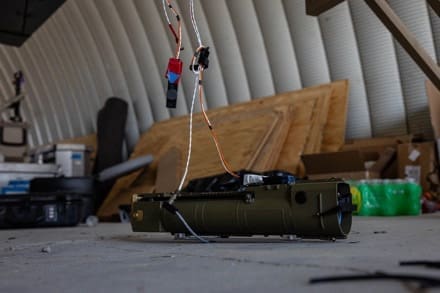
MARINE CORPS AIR GROUND COMBAT CENTER TWENTYNINE PALMS, Calif. – Amidst the remote sands and sweltering heat of the California desert, 2nd Marine Regiment, 2nd Marine Division, embarks on the U.S. Marine Corps’ pioneer test of the JUMP 20-X equipped with the Switchblade 300 Block 20 at the conventional level during Service Level Training Exercise 4-26.

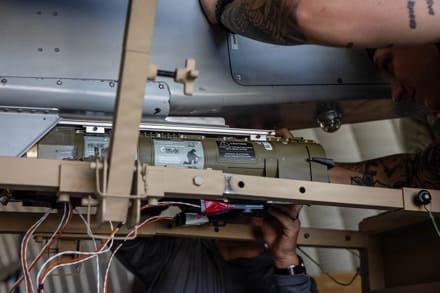
JUMP 20-X is a Group 3 unmanned aircraft system possessing capabilities of 12 hours in-air flight time, electro-optical infrared camera payloads, a 115-mile operational range, and up to 30-pounds of payload capacity—leading to one of Jump 20-X’s biggest assets: the Switchblade 300 Block 20, a loitering munition released from the undercarriage of the JUMP 20-X.

On July 16th and 17th, 2nd Marines experimented JUMP 20-X equipped with the Switchblade 300 Block 20 munition alongside developer, AeroVironment. In a groundbreaking success for the regiment, they accurately engaged a target 25 kilometers into the battlespace.

“[Switchblade 300 Block 20] can be launched, go into a holding pattern as you look for your adversary and you can directly fly some organic precision fires that are tube launched from Marines on the ground,” said CWO2 Christopher Leone, the 2nd Marine Regiment intel operations and fusion officer; and intelligence, surveillance and reconnaissance tactical controller. “For the JUMP 20-X experiment that we’re doing, AeroVironment has tested its capabilities to launch that same ground loitering munition from the belly of the bird itself.”

Incorporating the Switchblade 300 Block 20 into the battlefield gives the Marine Corps an additional loitering munition that organically incorporates with troops on the ground–similar to Organic Precision Fires-Light that is currently used by infantry units–and provides fires at the regiment level to engage the adversary.

“We at 2nd Marines are the first ones testing a Group 3 asset at the Regimental level,” Leone said. “[The Marine Corps has] the Marine Unmanned Aerial Vehicle Squadrons 1, 2, and 3 that fly the MQ-9s in the Group 5 level of assets, but it would be great for the Regiment because we’re outside of the [air] wings. We’re supporting the Ground Combat Element that doesn’t have an asset that can fly as far as the Group 5, so this is something that hasn’t been tested before.”

2nd Marines realizes the positive impact this Group 3 asset will have in future operations as it provides capabilities not found in the Marine Corps’ other assets.

2nd Marine Regiment has only USMC Group 1 Program of Record in their arsenal to include the Puma AE, and quadcopters such as SkyDio X2D and Sky Raider, stated Leone.

With Group 1 assets having small duration flight times ranging from 30 minutes to an hour and a half and limited flight distance, the JUMP 20-X stands out for its longevity and ability to travel miles into deep battlespace.

“[JUMP 20-X] is big for us, and to fly it into the regimental deep space as we’re looking to shape fires in the environment for our battalions to keep moving towards the next objective–none of our current PORs that are Group 1 would be able to go that far,” Leone said. JUMP 20-X is a product of AeroVironment, who is also the producer of the Marine Corps’ Puma AE. Having that working relationship with the company, 2nd Marines reached out in February of this year, interested in their Group 3 capabilities.

“As the [2nd Marine] Regiment, this is the first conventional unit to at least test and do a combat research and development agreement with AeroVironment,” Leone said, referring to the predominant units working with AeroVironment being special forces across the Department of War. “We invited AeroVironment out here for our mid-planning conference, all in support of SLTE 4-26, and they agreed upon it and are in direct support of the regiment to give us this capability.”

As of now, 2nd Marines does not have any Small Unmanned Aircraft System Operators, MOS 7316, who have the training to fly Group 3 assets.

We’re trying to fix the lack of pilots for Group 3 through this week’s testing, experimentation and research, Leone said. Currently, MOS 7300 Marines fly the Group 2 Stalker and Group 5 assets.

Through learning side-by-side with AeroVironment contractors, who operate JUMP 20-X for the Marines at SLTE 4-26, 2nd Marines is confident that with their support through MDMX and MWX force-on-force later this August, they’ll be ahead of the curve in targeting the adversary–advancing the Marine Corps’ future of UAS capabilities deep into the ever-changing battlefield.

Story by Sgt Alexis French, 2nd Marine Division

Saab Receives Order for GlobalEye

July 27th, 2026

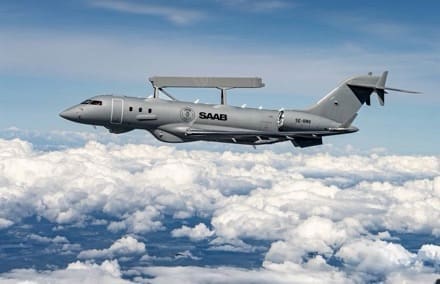
Saab has received an order for two GlobalEye aircraft from a country in the Middle East region. The order value is SEK 10.1 billion, and deliveries will take place in 2030. 

“This order underscores our commitment to providing customers with mission-proven, multi-domain AEW&C capability. The increasing international interest in GlobalEye reflects its effectiveness and reliability in modern air defence operations”, says Micael Johansson, President and CEO of Saab.

GlobalEye is an advanced multi-domain AEW&C solution with an array of active and passive sensors that provide long-range detection and identification of objects in the air, at sea and over land. By providing real-time information to joint forces, GlobalEye enables enhanced situational awareness of the surrounding areas and early detection of threats.

Due to the nature of the industry, circumstances concerning the customer and national security interests, no further information regarding this order or the customer will be provided.

American Suppressor Association Applauds Major Step For Suppressor Exports

July 27th, 2026

Washington D.C. – On July 23rd, the Trump Administration posted two coordinated interim final rules, transferring “sound suppressors for non-automatic and semi-automatic firearms” from State Department jurisdiction to the Commerce Department. The new rules, which will take effect on November 20, 2026, will allow American suppressor manufacturers to compete with certain products in commercial markets abroad. 

“With this change, the Trump Administration has taken a major step towards allowing American hunters to travel with their suppressors and American businesses to compete in thriving, well-established international commercial markets,” said Knox Williams, Executive Director of the American Suppressor Association. “For more than a decade, the ASA has led the charge to legalize the commercial exportation of suppressors. Not only will American hunters be able to better protect their hearing, but this change will also create hundreds of jobs at a time when our country needs them most.”

The effective prohibition on the commercial exportation of suppressors was based on the bureaucratic misconception that suppressors, also known as silencers, are capable of eliminating the noise of a gunshot. Simply put, they cannot. On average, suppressors reduce the noise of a gunshot by 20 – 35 decibels (dB), roughly the same sound reduction as earplugs or earmuffs.

According to the National Hearing Conservation Association (NHCA), “although firearm suppressors do not completely eliminate the risk of [noise-induced hearing loss] from firearm noise, the risk can be significantly reduced…Therefore, NHCA supports the use of firearm noise suppressors…to reduce hazardous firearm noise exposures.”

Join us in the fight to help protect and expand your right to own and use suppressors by becoming an ASA Member at  www.ASAMember.com.

Peregrine X7 FPV Drone

July 27th, 2026

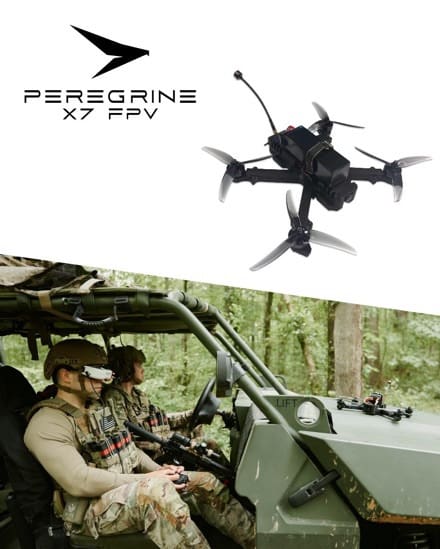
The PEREGRINE X7 FPV from Litefighter Tactical is a 7″ drone with a max speed up to 120 mph, payloads up to 6 lbs, and a high-clarity, low-latency FPV camera for superior situational awareness.

litefighter-tactical.com/product/peregrine-x7-fpv

The MOHOC Spine

July 27th, 2026

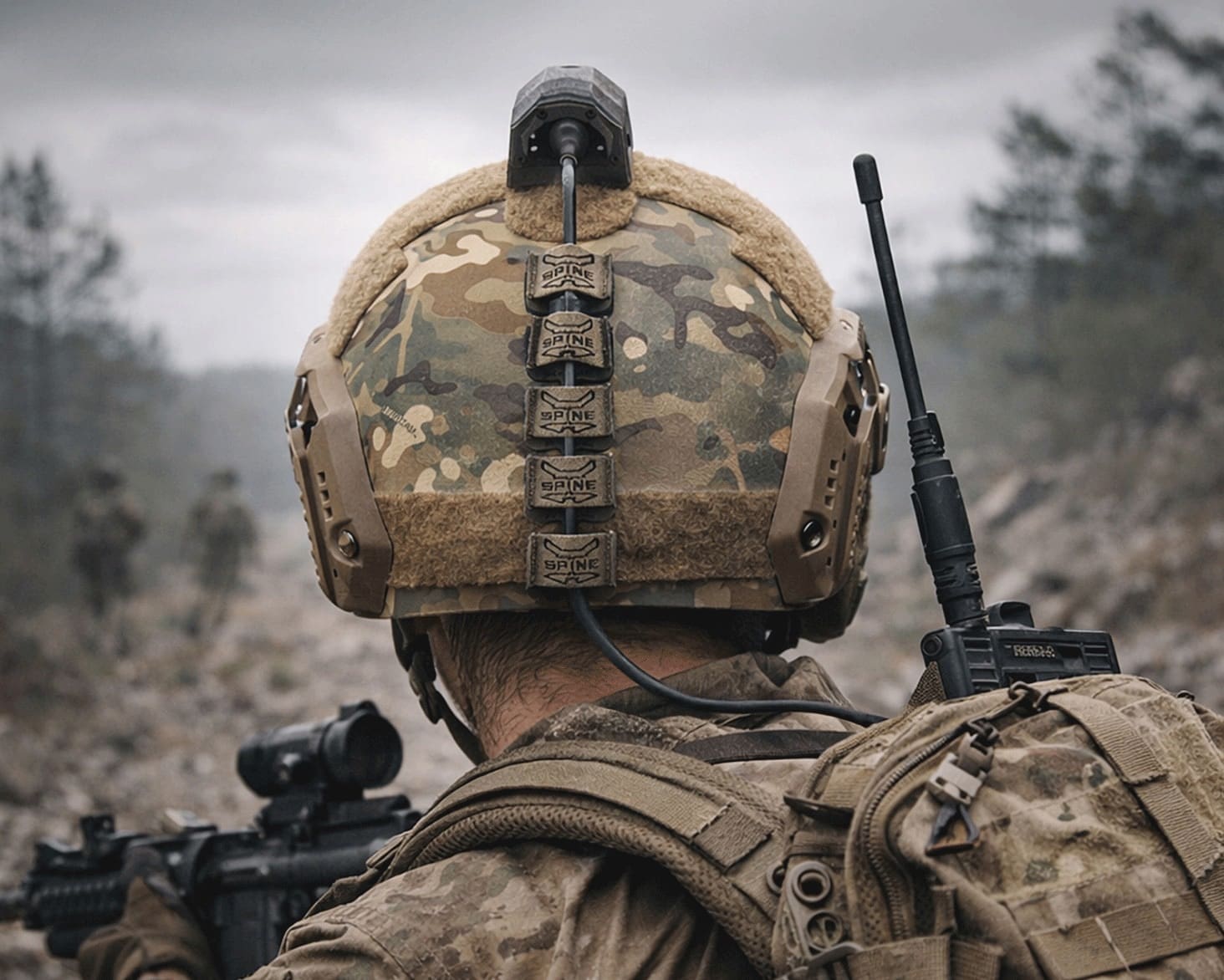
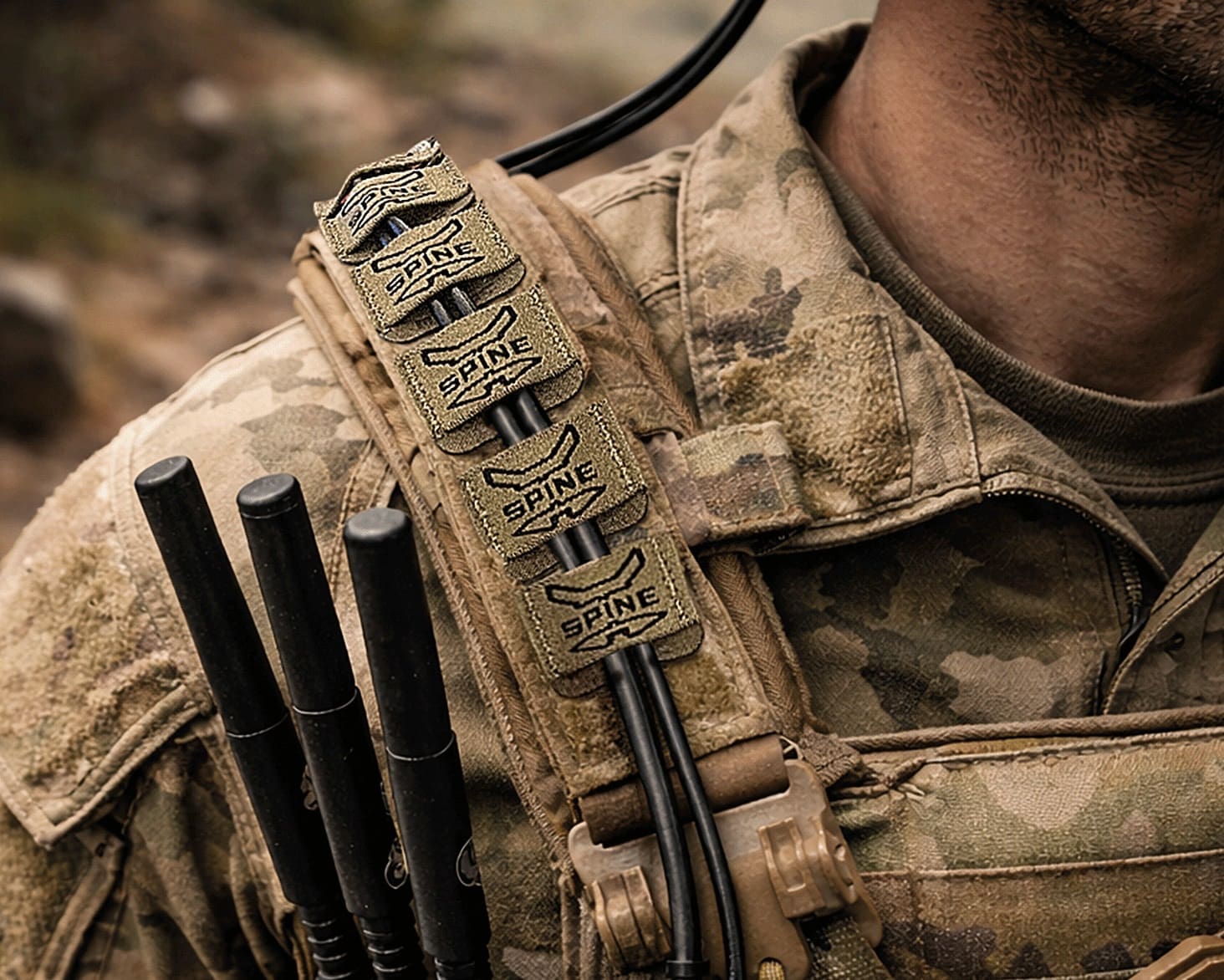
Spine is a cable management system for helmets designed to keep them flush.

Features:

•Modular stitched sections allow multiple entry/exit points and precise cable routing on helmets and body-worn platforms.
•Cut between segments without loss of integrity. Use single sections or extend, curve, and overlap for complex cable pathways.
•Designed for MOHOC® Cameras; adaptable to any cabled device on helmets, chest rigs, packs, vehicles, K9, and beyond. Works seamlessly with MOHOC® Shoulder Mount.
•Keeps cables aligned and flat against helmets, shoulders, torso, and dismounted gear.
•Supports a wide-range of commercial and MIL-SPEC cables with elastic webbing over tactical nylon. Hook backing integrates with loop patches; adhesive loop included
•Available as single units or 3-packs with purpose-built MOLLE pouch. Custom models available.

www.mohoc.com/product/spine

Seeing Further, Striking Deeper: Unpacking the Army’s Launched Effects Portfolio

July 27th, 2026

FORT IRWIN, Calif.— To secure a decisive warfighting advantage, Army Aviation must project power beyond the enemy’s threat ring. By penetrating and defeating an adversary’s Integrated Air Defense Systems (IADS) from a standoff distance, Army Aviation opens critical corridors that allow the subsequent infiltration of joint systems, precision fires, and other manned and unmanned assets.

Above the high-desert sands of Fort Irwin during Project Convergence-Capstone 6 (PC-C6), Army Aviation demonstrated decisive air-launched capabilities in contested airspace. The U.S. Army proved it was actively delivering integrated sensor-to-shooter lethality to the tactical edge by pairing two Active/Passive Infrared launch effects (LEs) — which successfully executed the mission to detect, identify, locate, and report (DILR) the threat — with a third, “lethal LE” Long-Range Precision Munition (LRPM) that executed the terminal strike.

PC-C6 is the premier Army-hosted experiment that allowsthejointforceandmultinational alliesand partnersto integrate people, equipment, and technologies to support continuous transformation efforts aimed at shaping how future warfighters willoperatein fast-paced, high-techenvironments.

Understanding the Portfolio: Finding and Finishing

The LE portfolio is not a single drone; it is a comprehensive ecosystem of diverse capabilities categorized by range (short, medium, long) and payload (lethal, non-lethal, electronic warfare, and enabling reconnaissance through sensing) tailored to meet specific mission requirements.

Through persistent experimentation at PC-C6, Army Aviation demonstrated the critical interplay between these variants. Operating deep within contested territory, reconnaissance assets like the LE-Medium Range (LE-MR) utilized the Integrated Tactical Network (ITN) within the Next Generation Command & Control (NGC2) ecosystem to push real-time targeting coordinates back to the corps echelon. By treating data as a weapon system, this seamless flow enabled rapid decision-making to determine follow-on kinetic operations. Once a target was identified, the lethal sub-variant of the portfolio was called upon to finish the mission.

What truly distinguishes the LE portfolio is its capacity for collaborative, autonomous operations. Rather than functioning as isolated assets, multiple LEs can dynamically network to operate as a “wolfpack,” overwhelming adversary air defenses through synchronized, multi-domain effects. Designed to be low-cost and attritable, these systems offer a highly tactically survivable solution for penetrating Anti-Access/Area Denial (A2/AD) environments. This strategic blend of autonomy and affordability allows commanders to project persistent sense and strike capability and maintain overmatch without unnecessarily risking manned aviation platforms.

From Prototype to Production: The LRPM Milestone

The primary lethal asset within this comprehensive ecosystem is the LRPM. At PC-C6, the Army achieved a significant operational milestone by validating the first production-line LRPMs when, in a separate demonstration, a manned aircraft successfully employed the munition, which independently identified and terminated a high-priority threat in contested environment.

Transitioning past the prototype phase distinguished the LRPM from existing standoff munitions. This successful evaluation solidifies its role as the dedicated lethal effect of the LE family and establishes a clear path for targeted FY27 fielding.

The Integration Enablers: LEDGR and UVC

The Launched Effects Dispenser for Ground and Rotorcraft (LEDGR) and Universal Vehicle Control (UVC) architecture act as a universal interface. Rather than building custom launch tubes and cockpit hardware for every new system, this standardized, modular architecture allows aircrews to plug, play, and control diverse LE payloads. These enablers will allow the Army to employ these capabilities at scale by FY27.

Maximizing Survivability and Lethality

The core philosophy driving this modernization is simple: push autonomous assets into harm’s way instead of manned aircraft.

“Launched Effects are not just stand-alone tools; they are networked combat enablers,”said Dan Bailey, Deputy Director, Aviation Future Capability Directorate (AFCD).”By standardizing our launch and control systems, we’re giving the Combat Aviation Brigades the flexibility to dynamically deploy multiple capabilities, share critical targeting data on the fly, and secure a decisive overmatch against peer adversaries.”

By deploying LE via standardized systems like LEDGR, commanders can maintain continuous pressure on the enemy while preserving valuable aviation assets. However, this capability extends far beyond just protecting aviation. By systematically dismantling the enemy’s theater long-range artillery, drone networks, and rocket systems, LE preserves the combat power of the ground maneuver force. Neutralizing these deep-area threats creates a protective umbrella for Maneuver Brigades, drastically increasing overall force survivability while enhancing mission success.

Looking Ahead: Future Technology Demonstrators

The Army also utilized PC-C6 to evaluate future concepts within the LE-MR category. Emerging technology demonstrators designed for significant speed and range were assessed as multi-use platforms capable of carrying both lethal and non-lethal payloads. While these specific systems are currently in the technology demonstration phase rather than formal programs of record, they represent the continuous evolution of the LE portfolio to meet future operational demands.

Through rigorous experimentation in realistic tactical scenarios, the Army ensured that when LE capability reaches the operational force, it will provide a decisive warfighting advantage.

By Nelson Ballew

BFG Monday: Why Did Blue Force Gear Build a Tailed Sling?

July 27th, 2026

Blue Force Gear® built one of the most successful tailless rifle slings in the world.

Then we built a tailed one.

On the surface, that does not make much sense.

The Vickers Combat Applications Sling™ (VCAS™) helped redefine the modern two-point rifle sling by eliminating the loose webbing shooters had long accepted as part of an adjustable design.

Approaching two decades of service, the Vickers Sling has been widely adopted across the U.S. military. It is issued with the Marine Corps’ M27 Infantry Automatic Rifle and authorized for use with the M4, M4A1, and M16 series. More than 250,000 Vickers Combat Applications Slings are in use across the branches of the U.S. military.

It did not simply become another sling. It became one of the standards by which modern combat slings are measured.

So, when Blue Force Gear introduced the GMT Sling®, short for “Give Me Tail,” the reaction was understandable:

“Wait. Why?”

The short answer is adjustment range.

Some experienced users wanted the ability to make larger changes in sling length as they moved between no kit, body armor, packs, specialized equipment, and cold-weather clothing. They preferred the flexibility of a free-running tail.

The GMT Sling was built for them.

It was not intended to replace the Vickers Sling. It gave Blue Force Gear a purpose-built option for shooters with a different requirement.
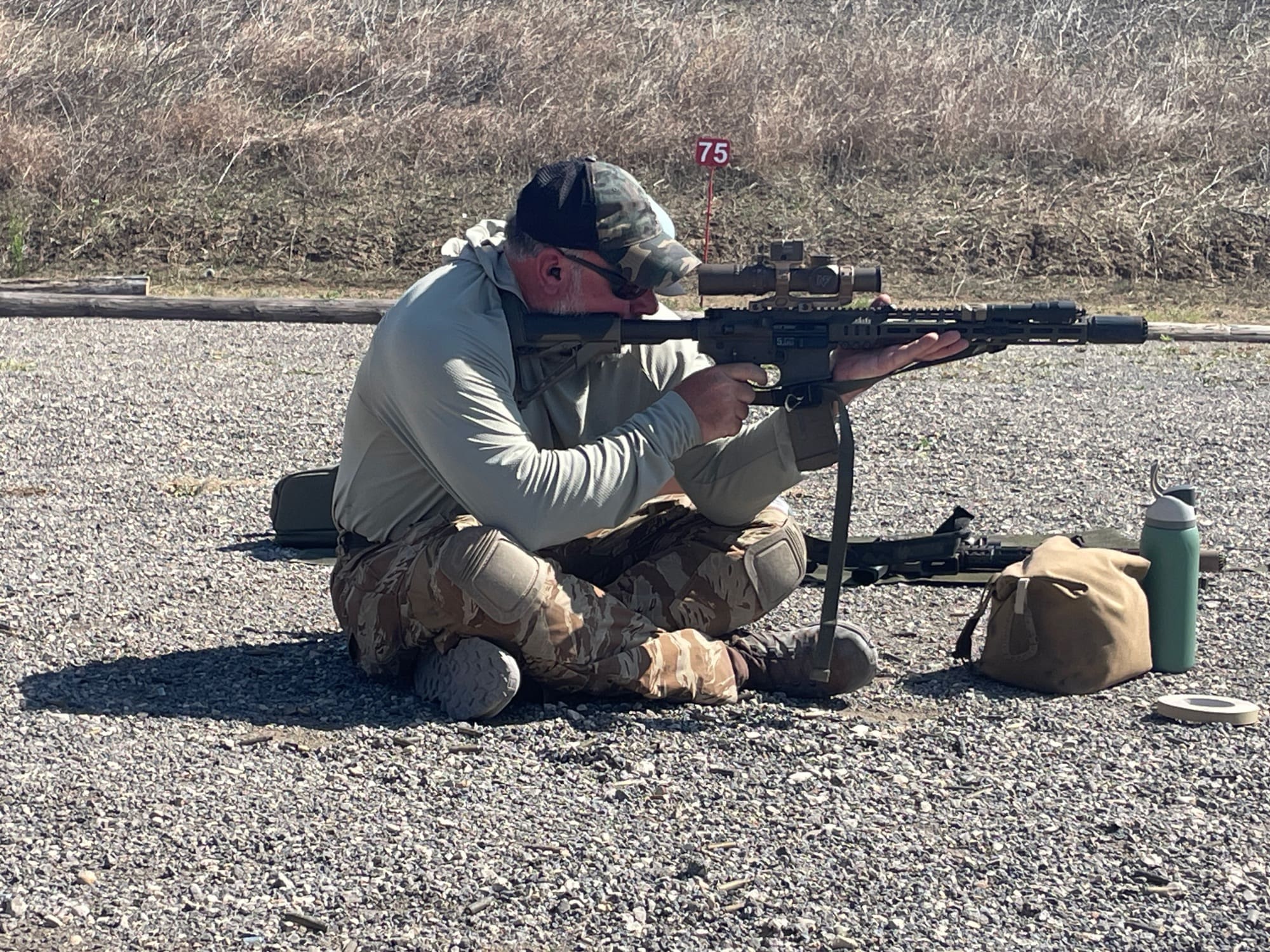

Photo courtesy of Chuck Pressburg, Presscheck Training and Consulting, LLC

A Sling Has to Work With Everything You Wear

A rifle sling seems simple until you spend an entire day living with one.

A setup that feels right on a flat range can feel completely different after hours spent working around vehicles, moving through confined spaces, carrying a pack, or adding layers of equipment.

The rifle may not change. Everything around it does.

Some shooters prioritize a streamlined rifle with no loose material to manage. Others need a broader adjustment range because their equipment and working conditions changesignificantly.

That is the fundamental difference between the Vickers Sling and the GMT Sling.

The Vickers Sling: The Proven Standard

Developed alongside retired U.S. Army Special Forces veteran Larry Vickers, the Vickers Sling uses a captured-tail, quick-adjust system that allows the shooter to tighten or loosen the sling without leaving excess webbing hanging from the rifle.

There is no free-running tail to manage.

That matters around vehicles, doorways, vegetation, and other equipment where loose webbing can become a distraction or interfere with movement. The result is a clean, simple sling trusted by military personnel, law enforcement officers, competitors, hunters, and armed citizens.

That level of acceptance was earned through years of use. The Vickers Sling solved a real problem without adding unnecessary complexity.

For shooters who prioritize simplicity, snag reduction, and a streamlined rifle, it remains the proven choice.

The GMT Sling: A Purpose-Built Alternative

The need for a broader adjustment range is best explained by retired U.S. Army Sergeant Major and firearms instructor Chuck Pressburg:

“When picking a sling, range of adjustment is important to me. A sling should have the range of slider adjustment to be tight enough to shoot sling-supported alternate firing positions while I’m slick with no kit on, and loose enough to engage targets off the hard side after digging a corner, in full kit, while wearing breaching tools, PAPR or even a mission pack on my back. The GMT’s open tail design creates that wide spectrum of adjustment rapidly without having to resize the sling in the friction adaptors.”

The GMT can be pulled tight for retention or sling-supported shooting, then opened substantially when equipment, clothing, or shooting position requires more room.

That additional range comes with a tradeoff. Thin, uncontrolled webbing can twist, snag on equipment, enter a magwell, or otherwise interfere with the rifle.

Blue Force Gear built the GMT around those known issues rather than ignoring them.

Building a Better Tailed Sling
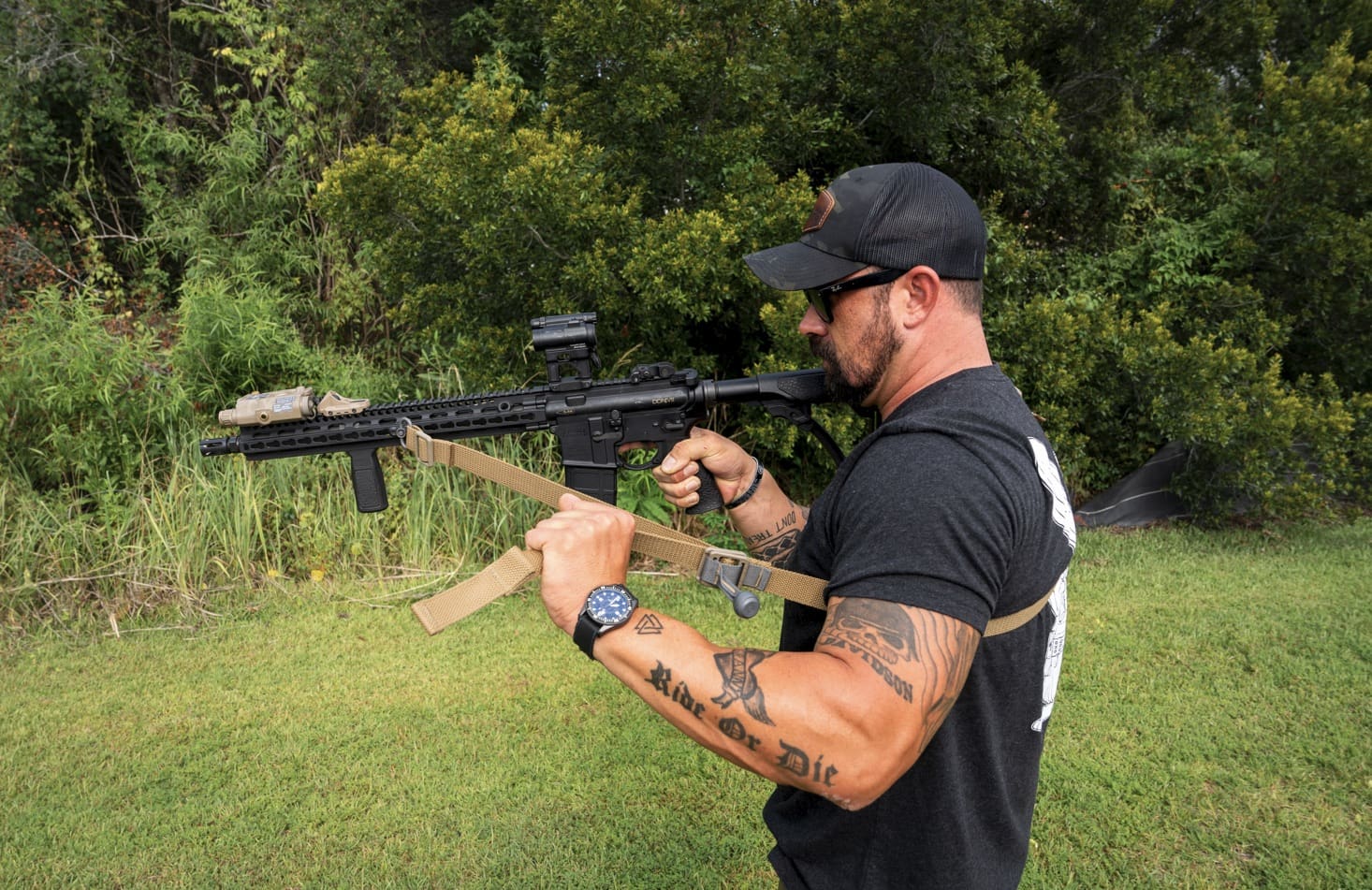
The GMT was designed from the ground up as a modern tailed sling.

Its custom double-locking buckle interface adjuster provides consistent tension when tightening and loosening the sling. Once set, it stays in place until the user intentionally adjusts it.

Instead of the thin webbing commonly found on legacy tailed designs, the GMT uses proprietary solution-dyed CORDURA® nylon webbing. The material has greater thickness and softness for comfort while retaining the durability required for hard use.

The end of the tail is reinforced and stiffened, making it easier to locate and control while reducing the chance of it finding its way into the trigger guard, magwell, or surrounding equipment.

The goal was not to eliminate the tail. It was to preserve the adjustment experienced users wanted while addressing the weaknesses associated with older free-tail designs.

Which BFG Sling Fits Your Requirement?

Choose the Vickers Sling if:

• You prioritize a streamlined, captured-tail design.

• You want to minimize loose material around the rifle.

• Your equipment configuration remains relatively consistent.

• Simplicity and snag reduction are your primary concerns.

• You want rapid adjustment without managing a free-running tail.

Consider the GMT Sling if:

• You prefer a free-tail design.

• You move between substantially different equipment configurations.

• You need a broader usable adjustment range.

• You use sling tension in alternate or supported shooting positions.

• Your need for additional adjustment outweighs your preference for a captured-tail system.

The Standard Remains. The Options Expand.

The Vickers Sling remains one of the most recognized and trusted combat slings in the world. Nearly two decades of service, widespread military use, and continued support of the Marine Corps speak for themselves.

The GMT expands the BFG sling family for experienced shooters who need the adjustment range of a free-running tail, built with modern materials and purpose-designed hardware.

The question is not which sling is universally better.

The question is what you need your sling to do.

Want the proven, streamlined, captured-tail design? Explore the Vickers Sling.

Need the extended adjustment range of a purpose-built free-tail sling? Explore the GMT Sling.

Equipment should solve problems, not create them.

About Blue Force Gear

Blue Force Gear® is a leading innovator in lightweight tactical equipment, best known for producing some of the world’s most trusted weapon slings. The company continues to redefine load carriage with its Ten-Speed® multi-use pouches, MOLLEminus® platforms, and patented Helium Whisper® attachment system.

Driven by a commitment to performance and weight reduction, Blue Force Gear® engineers its products using proprietary ULTRACOMP® high-performance laminate materials, delivering durability without unnecessary bulk. This relentless focus on innovation, combined with precision manufacturing and attention to detail, has positioned the brand at the forefront of modern tactical gear.

Blue Force Gear® is a Great Place to Work® Certified company, reflecting its dedication not only to the warfighter, but to the people behind the mission.

For more information, visit www.blueforcegear.com.