FirstSpear

Persistent Experimentation: PC-C4 Transforms ‘How We Fight’

February 26th, 2024

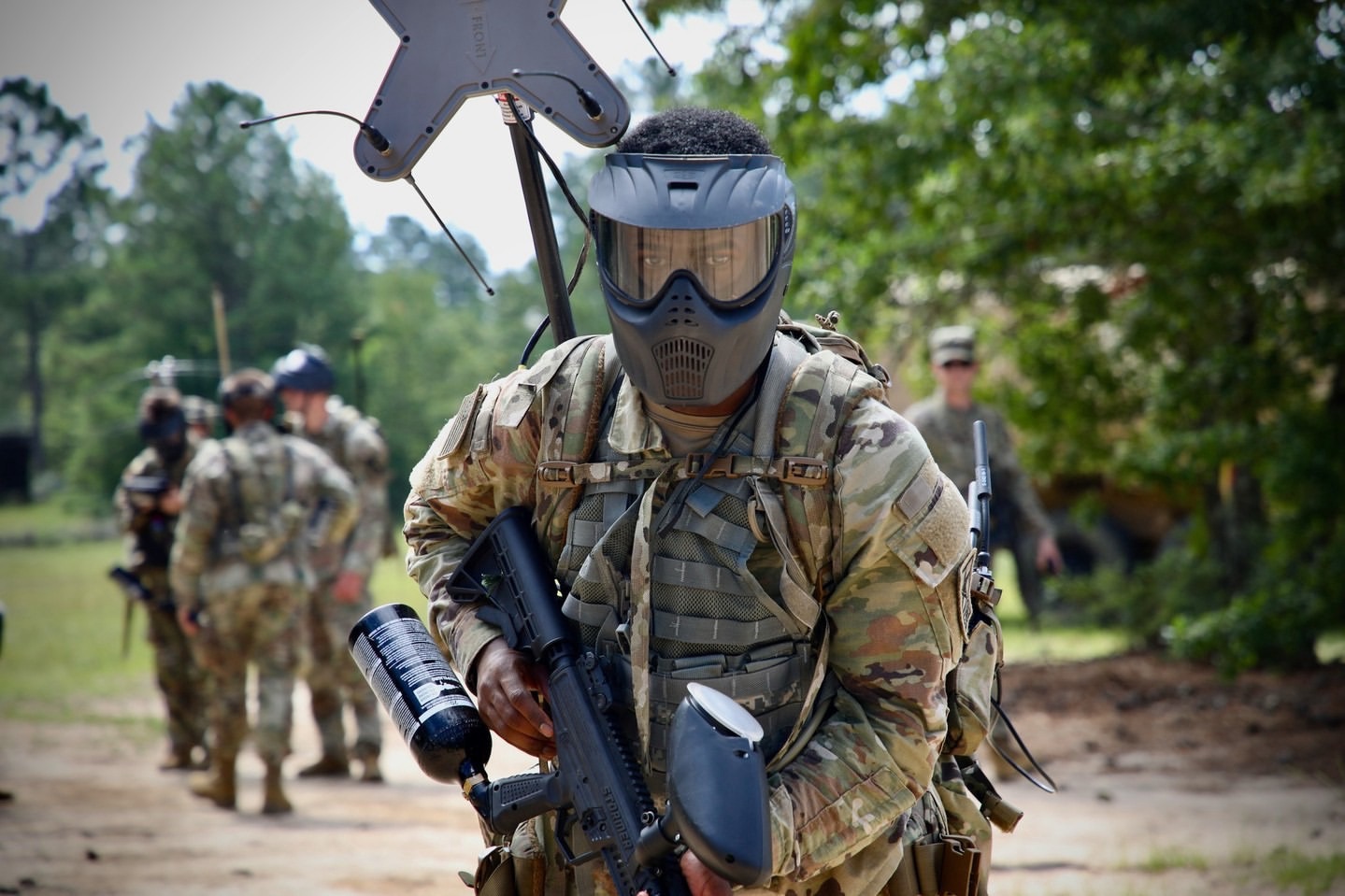
CAMP PENDLETON, Calif. — Following months of preparation, the U.S. Army is ready to experiment with groundbreaking conc

epts and cutting-edge technologies at Project Convergence Capstone 4. The experiment will take place during the coming months at locations around the West Coast.

Hosted by Army Futures Command and the U.S. Army, PC-C4 is a joint and multinational event that marks a significant milestone as the largest Project Convergence experiment to date. The experiment aims to impart crucial insights on joint service emerging and transforming technologies, future concepts and future formations. Furthermore, it seeks to enhance collaboration among joint and allied partnerships by facilitating cross-domain military operations and unified strategic approaches.

This iteration of PC-C4 is informed by more than a year of persistent experimentation in locations around the Indo-Pacific and Europe.

“Army Futures Command has initiated the concept of persistent experimentation,” said Douglas Fletcher, chief of staff for the Joint Modernization Command. “It is a continuous campaign, not just in one year, but over multiple years, and then pointed at the future.”

The past year of persistent experimentation took place during various military exercises throughout the Pacific and Europe, and included both real-world scenarios and training missions. These exercises strategically integrated new war-winning capabilities that are now set to play a pivotal role in PC-C4.

The concept of persistent experimentation is the deliberate insertion of future capabilities and prototypes into ongoing training missions, serving as learning opportunities for their integration into operational forces. The objective of this approach is to construct a roadmap of experimental capabilities, refining and enhancing these experiments at each turn.

The continuous experimentation provides invaluable lessons and perspectives, informing future iterations of Project Convergence Capstones and propelling Army transformation toward delivering the Army of 2030 and envisioning the Army of 2040, said U.S. Army Col. Zachary Miller, JMC commander and the PC-C4 deputy director.

“We’ve made some important advances in the past year as we experimented with Joint force and multinational transformation around the globe, including the Philippines, Alaska, Germany and Poland,” Miller said. “But the most important thing we did during those experiments was lay the groundwork for what we want to learn and accomplish at Project Convergence Capstone 4. We are now well prepared to make progress on how we fight in areas like long-range precision fires, integrated air missile defense, cyber, space and human-machine integration.”
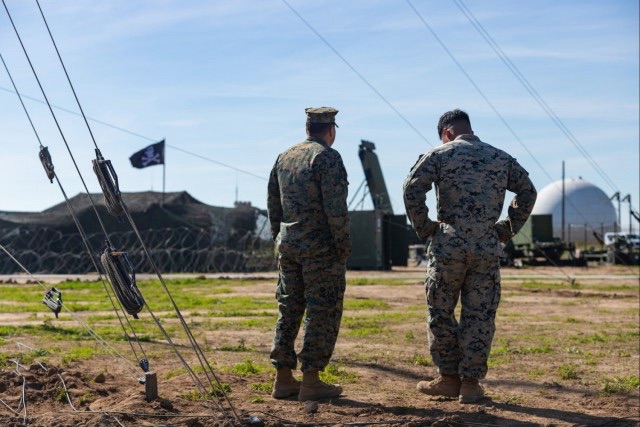
In the first Project Convergence Capstone of 2020, participation was limited to the U.S. Army. Subsequent iterations in 2021 and 2022 witnessed a progressive expansion, welcoming multinational allies and Joint forces to the experiment. Now, with PC-C4, this iteration is hosting the largest-ever involvement of multinational allies and partners to date with militaries from the United Kingdom, Australia, Canada, New Zealand, France and Japan.

“As we look to how we will fight in the future, should we be called upon, it will take all the services, and it will take national partners in the theater to help us win,” Fletcher said.

The focal point of the PC-C4 experimentation will revolve around the domains of deep sensing, integrating fires, including offensive capabilities like counter-strike capabilities and contested logistics within a maritime setting.

“The focus of these experiments isn’t necessarily new,” Fletcher said. “But we are able to test them in a much more meaningful way in this environment.”

PC-C4 holds the promise of offering profound insights into the future of warfare and the chance to explore emerging capabilities across air, land, space and maritime components. Furthermore, the outcomes of these experiments serve as essential data for informing adjustments in doctrine, organizational structures, training protocols, leadership development initiatives, material acquisitions and personnel strategies.

By SPC Hunter Grice, 24th Theater Public Affairs Support Element
Saab Receives Support Order for Norway’s Combat Training Centre

February 25th, 2024

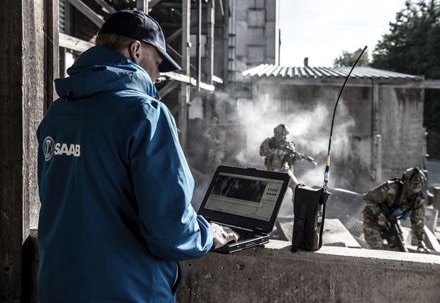
Saab has received an order from the Norwegian Defence Materiel Organisation regarding support, service and maintenance for the Combat Training Centre in Rena. The order value is approximately SEK 190 million and the contract period is 2024-2027.

The contract also includes on-site support for four additional training and simulation locations in Norway, as well as at Rena. 

“We are pleased to continue our long-term support to the Norwegian Armed Forces’ training systems. With this contract, we ensure that the Norwegian Armed Forces have the required interoperable training capabilities today and in the future,” says Joakim Alhbin, head of business unit Training & Simulation within Saab’s business area Dynamics.

The Norwegian Armed Forces have been using Saab’s training and simulation systems since 2004 and this contract contributes to the Armed Forces’ retaining the capability to train units up to brigade size, in-country as well as abroad. The systems are fully interoperable with NATO and other allied countries, which is crucial in multinational live exercises with simulators. Norway’s training partners include, among many others, the US, Sweden, Finland and the Netherlands.

Through innovative use of technology and a well-proven training philosophy, Saab offers world leading training solutions and capabilities enabling interoperability and true realism for land forces. Saab offers solutions for live training, live fire training, virtual training and training services. 

2024 Direct Action Gear Catalog

February 25th, 2024

Direct Action’s brand new catalog just landed. You can browse it without getting up from your chair! Just click on this link.

US Army Holds EW Warfighters Forum

February 25th, 2024

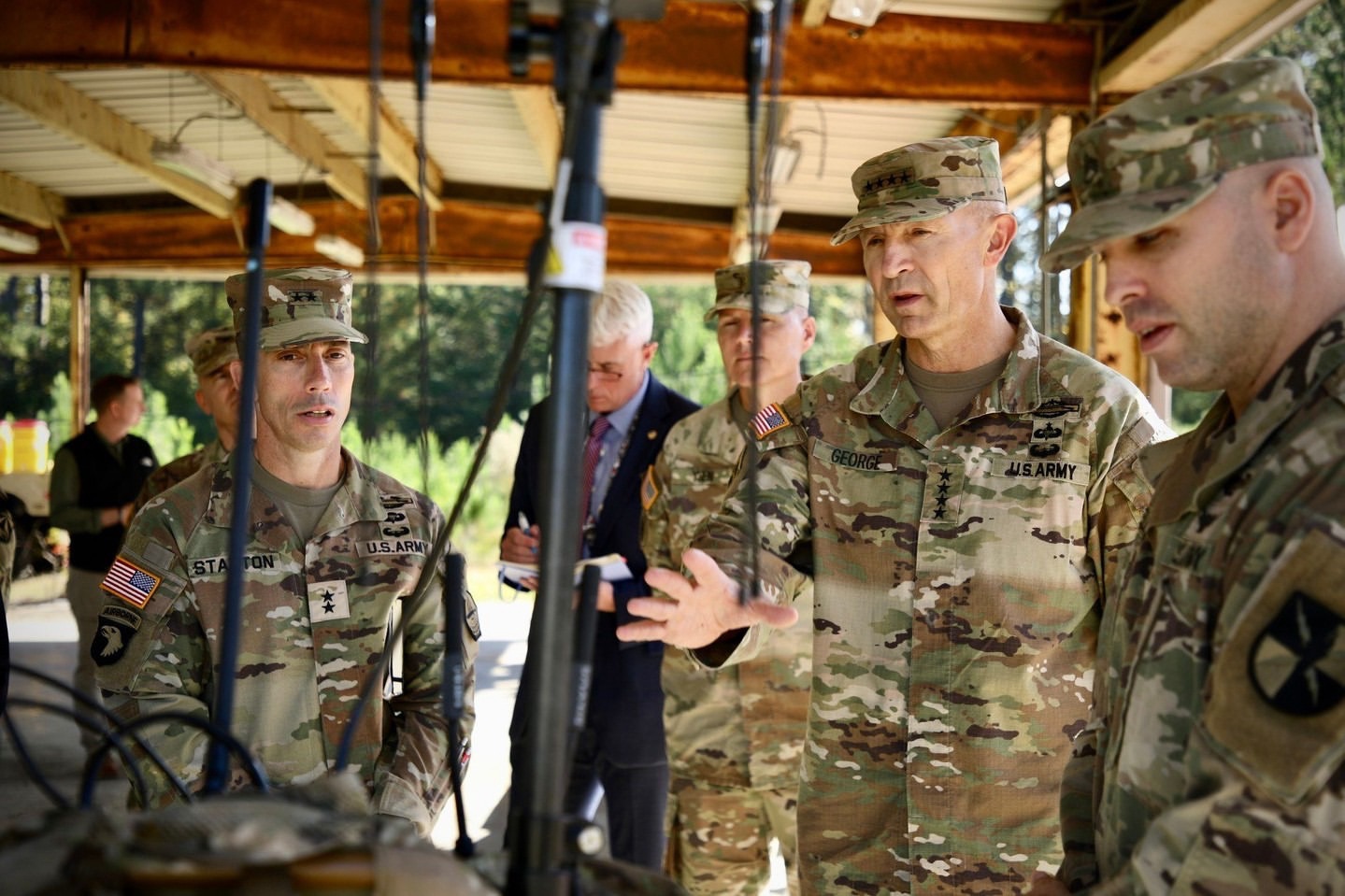
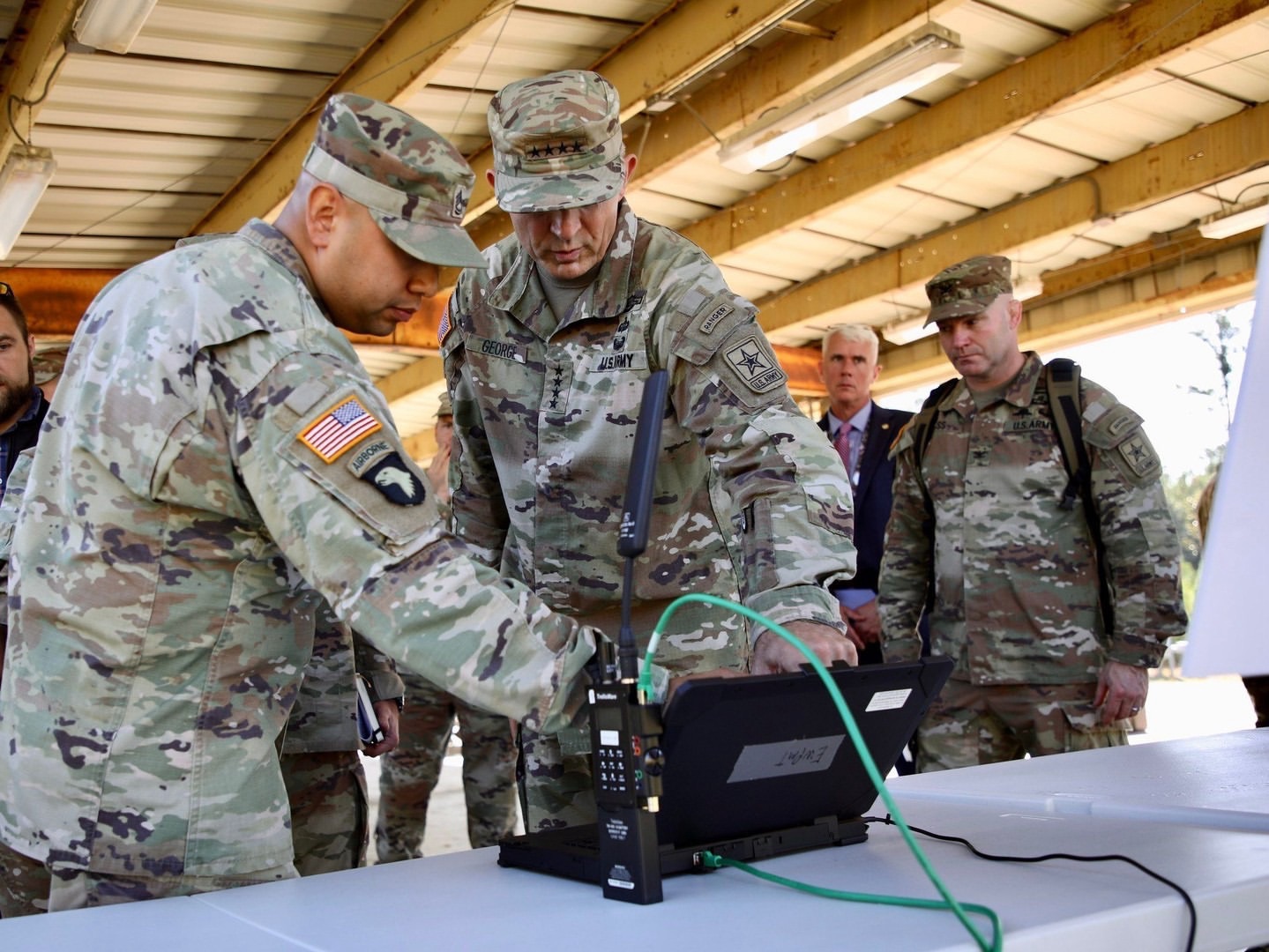
Last week leaders from across the Cyber, Signal and Intelligence communities participated in the EW Warfighters Forum, at NSA-Georgia, located at Ft Eisenhower.

The event focused on changing Army culture and finding novel solutions to technologically evolve our warfighters. Discussions focused on emerging threats, current and future capabilities and fielding requirements for the Army of 2030.

Record-Breaking Army Astronaut Receives Rare Qualification Device

February 25th, 2024

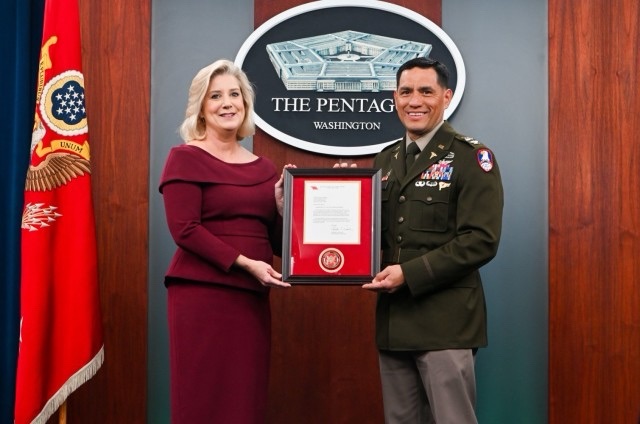
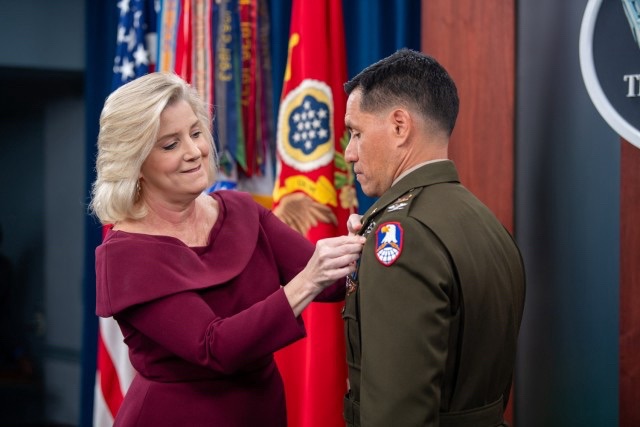
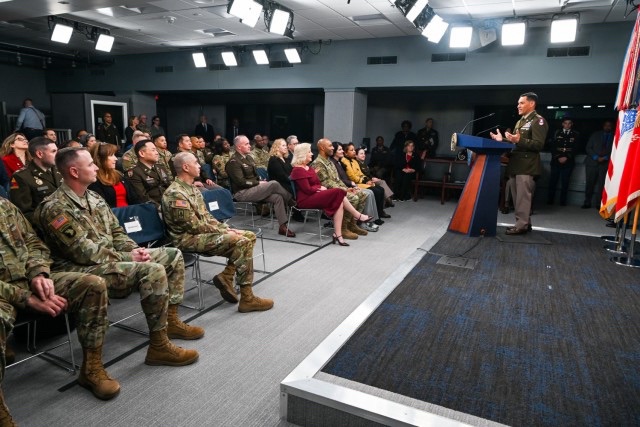
WASHINGTON — Secretary of the Army Christine Wormuth awarded Col. Frank Rubio the Army Astronaut Device during a pinning ceremony at the Pentagon today.

Rubio spent 371 days aboard the International Space Station from 2022-2023 breaking the record for the longest spaceflight for an American astronaut.

“Col. Rubio, you are a stellar example of the Army’s core values and what it means to lead a life of service,” Wormuth said. “You inspired audiences around the world as you orbited the Earth for 371 days, and now, back on Earth, you continue to inspire others as you share your experience with the public.”

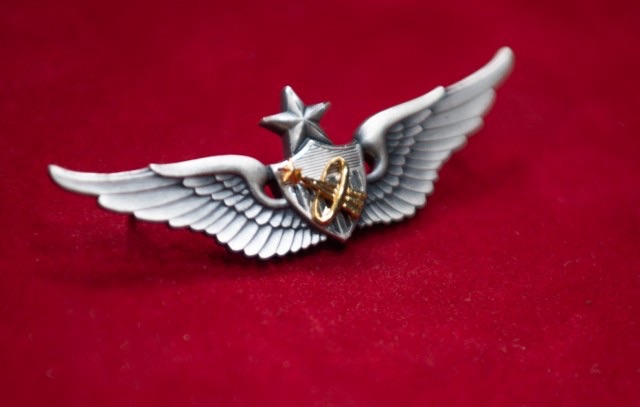
The Army awards the astronaut device to personnel who complete at least one operational mission in space. With the award, Rubio joins Col. Anne McClain and Col. Andrew Morgan as the only active-duty Soldiers authorized to wear the device.

Army astronauts choose which specialty badge the device is placed on for their uniform. Rubio will wear his on his senior aviator badge.

A former UH-60 Black Hawk pilot, Rubio flew more than 600 combat flight hours during several overseas deployments. He then transitioned to the medical field as a family physician and flight surgeon before being selected as a NASA astronaut in 2017.

He served as a flight engineer for Expeditions 68 and 69, supporting numerous research projects including particle vibration experiments, biological testing and 3D tissue printing while also performing three spacewalks outside of the station.

“What an incredible honor it is to represent the Army,” Rubio said. “And honestly, the biggest honor for me out of this badge is the fact that to me it’s the ultimate team badge. You absolutely cannot get to space on your own. It takes a team of thousands to get you to space.”

Rubio launched into space Sept. 21, 2022 aboard a Russin Soyuz spacecraft alongside cosmonauts Sergey Prokopyev and Dmitri Petelin. The crew’s initial six-month mission was pushed into a year-long stay following a space debris strike that caused their return capsule to lose all its coolant.

The trio logged more than 157 million miles during the mission and circled the globe nearly 6,000 times until finally returning to earth Sept. 27, 2023.

Back home, Rubio plans to continue working with NASA as they further their mission and he hopes to eventually return to space one day.

“There [are] few things where you can say ‘my job represents humanity,’ and that is a powerful thing to be a part of,” he said. “It’s just such an incredible experience to be able to inspire the next generation, contribute to science, technologies that we’re developing that [are] going to help humanity in ways that we probably can’t imagine right now.”

The Army has worked closely with NASA to advance space exploration since the beginning of the U.S. space program, and that partnership has produced 19 Army astronauts.

“These uniquely skilled and extremely qualified people represent the very best and most talented officers and warrant officers from within the Army,” Wormuth said. “As we humans explore further into space, and NASA returns to the moon and sets its sights beyond to Mars, the Army will continue to play an important role in the exploration of space long into the future. And we will build on the research that Col. Rubio did on the International Space Station for 371 record-setting days.”

Story by Christopher Hurd, Army News Service

Photos by SFC Nicole Mejia and Deonte Rowell

2024 Crye Precision Catalog

February 24th, 2024

Here’s a link to the 2024 Crye Precision catalog.

Tactical Tailor Offering Ruck Mods Again

February 24th, 2024

Ruck Mods are back at Tactical Tailor.

tacticaltailor.com/products/bags-packs-rucks/bags-packs-rucks-rucksack-mods

Air Force to Re-Introduce Warrant Officer Rank, Other Major Changes

February 24th, 2024

AURORA, Colo. (AFNS) —  

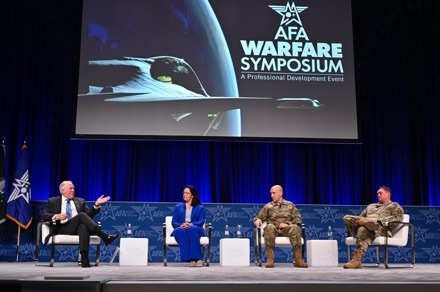
To best optimize itself for Great Power Competition, the Air Force plans to, among other things, bring back warrant officers within the cyber and information technology professions, said Air Force Chief of Staff Gen. David W. Allvin during a presentation Feb. 12 at the Air Force Association’s 2024 Warfare Symposium.

That change was among two dozen announced by senior Air Force officials. Each change is specifically designed to prepare the service for strategic power challenges from competitors like China and Russia.

“Both China and Russia are actively developing and fielding more advanced capabilities designed to defeat U.S. power projection,” said Secretary of the Air Force Frank Kendall. “The need for modernization against capable, well-resourced strategic adversaries never stops. But modernization isn’t the only thing we need to do to be competitive. Today we are announcing 24 key decisions we have made to improve both the readiness of the current force and our ability to stay competitive over time, to continuously generate enduring competitiveness.”

Those changes, Kendall said, focus on people, readiness, power projection and capability development and are implemented within the Department of the Air Force, the Air Force and the Space Force.

Spotlight: Science and Tech
Within the Air Force, Allvin explained, the service is looking to better attract and develop cutting-edge talent, specifically within information technology and cyber fields. The service plans to expand technical tracks for officers and create technical tracks for enlisted, and to also reintroduce the rank of warrant officer within the information technology and cyber fields as a way to maintain technical leadership with those skills.

“We know there are people who want to serve. They just want to code for their country. They would like to be network attack people and do that business,” Allvin said. “But everybody needs to see themselves into the future beyond just this assignment or the next. So, developing that warrant officer track for this narrow career field, we anticipate will drive that talent in and help us to keep that talent. There’s something specific about this career field, why it’s attractive and it’s a nice match for a warrant officer program. The pace of change of the cyber world, the coding world, the software world — it is so rapidly advancing, we need those airmen to be on the cutting edge and stay on the cutting edge.”

The Air Force had warrant officers when it was created in 1947, after being split off from the U.S. Army. But the service stopped appointing warrant officers in the late 1950s.

Allvin also discussed changes in the way the Air Force will conduct exercises. The plan is for the service to implement large-scale exercises and mission-focused training which encompasses multiple operations plans to demonstrate and rehearse for complex, large-scale military operations, he said.

“We’re going to reorient ourselves to more large-scale exercises rather than a smaller scale that have been a product of the last two to three decades,” Allvin said. “Large-scale means multiple weapons systems, multiple capabilities, coming together in a combat-simulated environment and showing our ability to execute the mission that’s going to be expected of us in the high-end conflict.”

Exercises in recent years, he said, have already been getting bigger. But those enhancements have been driven at the local level, not from the top down. That will change.

“Our Air Force needs to institutionalize this,” he said. “And we’re going to do that.”

He said the Air Force is looking at fiscal year 2025 for its first large-scale, multi-combatant command exercise targeted at Indo-Pacom.


Chief of Space Operations Gen. Chance Saltzman said a change underway within the Space Force is to enhance readiness by implementing standards that reflect operations under contested conditions rather than those of a benign environment.

“The legacy force that we had, our roots … were built around efficiency, built around a benign environment,” he said. “So, the standards for readiness that we kind of held our forces to was different. It wasn’t built for the domains that we’re facing, a contested domain.”

Now, Saltzman said, the Space Force must rewrite its standards for readiness centered around a contested domain, rather than an uncontested domain.

Spotlight: DoD Space Strategy
That, he said, means in part having the right mix of officers, enlisted personnel and civilians in Space Force units. It also means training must be aimed at more than just procedural competency.

“As soon as you put a red force in the mix, as soon as you put a threat in the mix, it radically changes your training,” he said. “You have to have advanced training, you have to have tactics training, you have to understand how you work together, in-comms, out of comms, with other units, in order to continue to achieve the kinds of effects in a contested domain when an adversary, a capable adversary, is doing everything they can to stop you from being successful.”

Space Force, he said, will build a training infrastructure and a test infrastructure to validate its tactics so operators will know more than just how to operate equipment — but will be successful against an adversary.

Kristyn Jones, who is currently performing the duties of the under secretary of the Air Force, also pointed to changes at Department of the Air Force level. There, she said, among those changes, the department expects to create an Air Force Integrated Capabilities Office to lead capability development and resource prioritization. The office is expected to drive Department of the Air Force modernization investments.



“We’ll be looking at capabilities across our services, not in stovepipes,” she said. “We’re enabling end-to-end creation of effects. This organization will help us to prioritize our investments and will be responsible for working with us to determine the next iteration of operational imperatives.”

By C. Todd Lopez, DOD News