XC3 Weaponlight

MATBOCK Acquires Hawk Distributors, Inc, Expanding Advanced Manufacturing Capabilities Near Fort Bragg, NC

March 2nd, 2026

VIRGINIA BEACH, VA – 2 March 2026MATBOCK, a leader in military and tactical technology development, today announced its strategic acquisition of Hawk Distributors, Inc., a contract cut-and-sew manufacturing company based in Sanford, North Carolina. The facility is strategically located approximately 35 minutes from Fort Bragg, in the heart of North Carolina.

This acquisition establishes MATBOCK Manufacturing, a new division dedicated to expanding MATBOCK’s vertically integrated production capabilities. The move combines MATBOCK’s reputation for designing lighter, more effective tactical equipment with Hawk Distributors’ nearly two decades of proven production expertise.

Hawk Distributors, founded in 2012 by Air Force veteran Terry Earle, has a rich history of manufacturing high-quality soft goods, from tactical gear and military apparel to commercial products for major brands. Under the acquisition, the company’s 40,000-square-foot facility, its skilled and diverse workforce, and its leadership will be retained. 

“The acquisition of Hawk and the establishment of MATBOCK Manufacturing is a critical step in our mission to support the warfighter,” said Sean Matson, Co-Founder and CEO of MATBOCK. “We are extremely excited about the current capabilities and the exceptional quality of work produced at the Sanford facility. This vertical integration allows us to control the entire product development lifecycle, from initial design to final production, ensuring every stitch meets our uncompromising standards. We are preparing to invest millions more to introduce even more advanced manufacturing technologies here.”

The Sanford facility is a robust production center, currently equipped with 110 sewing machines and two advanced, continuous-feed laser cutters with auto-alignment rollers.

Current services offered by MATBOCK Manufacturing include:

Contract Cut and Sew

Product Prototyping and Sampling

Technical Pattern Development and Grading

Past production highlights a diverse portfolio, including advanced tactical equipment (plate carriers, pouches, tactical packs), specialized apparel (uniforms, hoodies), rugged baggage (backpacks, range bags), and outdoor gear (tents, hammocks).

Within the next 2 weeks, MATBOCK will have four production Selective Laser Sintering (SLS) 3D printers to immediately increase production and capabilities. 

Looking ahead, MATBOCK Manufacturing plans to aggressively expand its service offerings to become a single-source solution for complex manufacturing needs. Planned future capabilities include RF welding, production-scale 3D printing, CNC machining, and injection molding. This will further strengthen the domestic supply chain and provide government and industry partners with a reliable, innovative, and USA-based manufacturing partner.

For inquiries about our capabilities or to get a quote on one of our services, please reach out to oem@matbock.com. Check out www.matbockoem.com for more details.

1st Special Forces Group (Airborne) Parachute Riggers Make History on Joint Base Lewis-McChord

March 2nd, 2026

JOINT BASE LEWIS-McCHORD, Wash. — Parachute riggers assigned to Group Support Battalion, 1st Special Forces Group (Airborne) successfully executed the first drop of a Joint Precision Airdrop System (JPADS) at Joint Base Lewis-McChord (JBLM) on Feb. 12.

After nearly three years of planning and coordination with JBLM range control, the successful proof-of-concept demonstration facilitates future training and operational capabilities for 1SFG(A) and other adjacent units assigned to JBLM.

The JPADS is a self-steering, GPS guided airdrop platform consisting of a canopy and an autonomous guidance unit, capable of landing within 100 meters of its target. The demonstration unit notably utilized Modular Autonomous Guidance Unit 3.0 which incorporates GPS denied vision guided capability.

During the demonstration, the system carried a payload of 535 pounds suspended weight and was released from a CH-47 Chinook helicopter 4,750 above ground level.

The drop was followed by a military freefall pass simulating a Green Beret Operational Detachment Alpha (ODA) team securing the payload on the ground. Then 1SFG(A) parachute riggers conducted a proficiency jump, where all rigger personnel jumped with a static line parachute that they packed themselves, demonstrating confidence in their product.

Chief Warrant Officer 2 Wade Head, Group Airdrop Systems Technician, emphasized the operational significance of the capability.

“This is important because we can provide sustainment to the warfighter from a distance, that keeps the aircrew and aircraft safe.”

Operationally, ODA teams from the 1SFG(A) employ JPADS to deliver equipment and mission-critical items. These can be dropped at a desired impact point or sent to a pre-determined location for later retrieval. In some instances, a military freefall ODA pushes the JPADS first, immediately followed by an airborne operation, resulting in the personnel and equipment arriving to the desired impact point simultaneously.

“Now [the ODA teams] will be able to get their infiltration training locally, versus going to Yakima or somewhere else.” Said Sgt. 1st Class Mia Schwartz, Senior Airdrop Operations NCO.

A mixture of unit representatives from 2nd Ranger Battalion, 75th Ranger Regiment, 593rd Corps Sustainment Command and I Corps, attended the event to observe the demonstration. The Washington Army National Guard supported the event providing a CH-47 Chinook helicopter for the JPADS and airborne operations.

Planning the JPAD training came with challenges, particularly due to the installation’s proximity to adjacent roadways, neighborhoods and nearby towns. Organizers worked to mitigate risks while demonstrating the system’s precision and reliability. Most notably JBLM range control assisted 1SFG(A) with navigating safety protocol and ensuring safe implementation. This coordination provides a template for adjacent JBLM units to replicate similar training in the future.

The ability to train JPADS operation underscores the importance of the logistical support provided by the Group Support Battalion to mitigate interdiction of ground and sea lines of communication to the Special Forces Operators. By successfully completing this training both 1SFG(A) and conventional forces assigned to JBLM can better prepare for future operations.

By SGT Alec Byrd

US Army Activates Capability Program Executive (CPE) Enterprise Software and Services (ES2)

March 1st, 2026

?

FORT BELVOIR, Va. – On Feb. 25, the Hon. Brent Ingraham, Assistant Secretary of the Army for Acquisition, Logistics and Technology, joined leaders from the former U.S. Army Program Executive Office (PEO) Enterprise in unveiling the acquisition organization’s new name, logo and colors at an activation ceremony. The organization is now officially known as Capability Program Executive (CPE) Enterprise Software and Services (ES2).

As one of the Army’s 13 newly designated capability program executives, CPE ES2 will continue its core mission of delivering software and services that drive operational readiness, providing seamless support for mission-critical systems and warfighting capabilities. CPE ES2 will report directly to Hon. Ingraham and continue to work closely with the Army Chief Information Officer on technology initiatives.

According to Miranda Coleman, CPE ES2’s acting Capability Program Executive, the organization will remain focused for the rest of fiscal year 2026 on operationalizing low-code/no-code, delivering at speed, maturing Agile practices, maintaining adaptability and flexibility, and managing talent.

“We have a lot of work ahead of us, but I’m confident we’re off to a fantastic start,” said Coleman, whose team highlighted several CPE ES2 software programs for Hon. Ingraham at a pre-ceremony capability demo.

As part of the organization’s transition to becoming a capability program executive, CPE ES2 has renamed its four portfolios to align with Army domains and better convey their areas of focus:

Project Manager (PM) Integrated Personnel and Pay System – Army is now PM Human Resources and Force Management (PM HR-FM).

PM Enterprise Business Systems and Convergence is now PM Logistics and Finance (PM LOG-FIN).

PM Defense Integrated Business Systems is now PM Acquisition, Training and Readiness (PM AT&R).

Project Director (PD) Enterprise Services is now PD Business Technology Solutions (PD BTS).

An updated organizational chart with all CPE ES2’s leaders, portfolios and product offices is available on the newly updated CPE ES2 website.

By Erika Christ

Nixie Works Restocks Packing Cubes

March 1st, 2026

Nixie Works just restocked their 2WIDE and Micro Packing Cubes.

Packing cubes are a great way to keep your gear organized and accessing important items quicker without having to dig through packs/pouches. They also enable you to easily transfer the contents of a pouch to another kit, or to your ruck.

Made of Berry compliant 200D nylon packcloth, these cubes slide in and out of your pouches easily, and scrunch down to almost nothing, while still being durable and water resistant.

There’s 2 sizes: the 2WIDE and the Micro. 2WIDES obviously fit inside our 2WIDE GP Pouch. Our 3WIDE GP Pouch will hold a 2WIDE + a Micro, and our Mag Pouch will hold a Micro. You can mix and match these pouches and packing cubes to hold practically anything.

As always, made by real Americans in the USA.

www.nixieworks.com

National Guardsmen Train to Use Small Drones

March 1st, 2026

FORT INDIANTOWN GAP, Pa. – National Guard Soldiers from various backgrounds, skillsets and military occupational specialties attending a 10-day small unmanned aircraft system operator course, or sUAS, are learning how to operate small drones.

The course, which began Feb. 19 and ends Feb. 28, is being conducted by the 166th Regiment – Regional Training Institute.

“It’s been a great course,” said Sgt. Stephen Scharf, a student from 1st Battalion, 111th Infantry Regiment. “It’s a very evolving world, so there are a lot of new ideas coming out. A lot of things are changing very rapidly.

The course is structured to encourage students to adopt a tactical mindset and understand how the things they learn can be integrated into a large-scale combat operation, said Sgt. 1st Class Brandon Wahl, the sUAS operator course manager.

“One of my main goals here is to make it as realistic as we can,” he said. “So, it’s important for everyone to know how to operate one, because at any point you could be tasked with operating it.”

Several members of the 111th Engineer Brigade, West Virginia National Guard, attended the course because their unit is deploying soon. They’ll be using these drones on their deployment, Spc. Simon Bertram said.

“For infantry, it’s very necessary for reconnaissance,” Bertram said. “Getting more drone operators will be very beneficial.”

Other attendees of the course came to learn a new skill. Scharf said the course has been very informative.

“It’s an evolving world, and a lot of things are changing very rapidly,” he said. “The instructors are doing their best to stay on top of it and disseminating that info.”

Scharf mentioned that this course and the information it provides have been beneficial not just for himself but for the Army as a whole.

“It’s something that as we develop this, more doctrine gets established,” he said. “It’s going to be something that you’re going to see more widespread throughout both the Guard and the Army.”

The course is open to National Guard members of all military occupational specialties.

“There are infantrymen here, some of them are engineers,” Wahl said. “One of the students is an intel guy. There’s all kinds of jobs that come through.”

“All of these different jobs in the Army will be affected by sUAS’s,” Scharf said. “Sometimes that might be that you have to figure out how, which is a great thing.”

By SGT Kayden Bedwell

Ruger Expands Upgraded 10/22 Line with 10 Versatile New Models

February 28th, 2026

Sturm, Ruger & Company, Inc. (NYSE: RGR) is excited to announce the introduction of 10 new models of its recently upgraded 10/22® rifle. Each new model builds on the proven performance of the 10/22, enhancing a platform celebrated for its rugged reliability, adaptability and iconic status in the rimfire world.

With this expansion, the upgraded features previously available only in select versions are now offered in a broader range of configurations. All new models include a BX-Trigger®, a match bolt release and – for non-takedown models – a receiver with an integrated rear cleaning port for simplified maintenance.

These new models offer versatility to match a wide range of shooter preferences to fit almost any need. Consumers can choose from threaded or non-threaded barrels of various lengths, takedown or traditional models and stock options ranging from Magpul® and Hogue® to Ruger polymer, modular and wood.

For more information about the iconic 10/22 rifle and these upgraded models, or to learn more about the extensive line of award-winning Ruger firearms, visit Ruger.com.

Platatac – Peacekeeper Mk 5

February 28th, 2026

Platatac’s Peacekeeper Mk 5 is their flagship chest rig after years of development and refinement.

Features:

  • Space for up to 6 x 30 Round AR/M4 style magazines or each pouch can accommodate 2 x AK magazines, or a single 20 Round 417/.308 magazine
  • 2 x Accessories/Water bottle/GP/ANPRC 152 pouches with front zip admin pockets
  • 1 x Large Velcro mesh pocket with included Velcro in zip
  • 2 x Tweave 4 way stretch pockets at the flanks
  • 1 x Horizontal zippered pocket with webbing loops to attach elastic loop inserts to carry a TQ, Plasti Cuffs or Cyalume
  • PALS areas between pouches and on the sides of the GP pouches to attach additional MOLLE-compatible pouches
  • Velcro sandwich for sub load pouches to boost carrying capacity
  • Colour matched velcro loop for IFF, C/S or Flag patch with embroidered Platatac logo
  • Sewn drainage holes in all pouches

Offered in an amazing 18 colors and patterns.

Get yours at platatac.com/products/platatac-peacekeeper-mk5-chest-rig.

Soldiers Engage with Advanced Battlefield Sensor Prototypes

February 28th, 2026

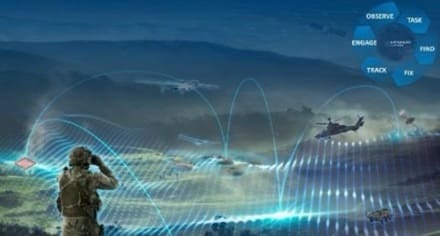
From Feb. 2-6, 13 Soldiers from the 1st Armored Division, the Maneuver Center of Excellence (MCoE), and the Fires Center of Excellence, participated in a Soldier Touch Point (STP 0) at Fort Belvoir to engage with some of the Army’s latest technology under development—FALCONS.

FALCONS, which stands for Future Advanced Long-range Common Optical/Netted-fires Sensors, is set to replace the Long Range Advanced Scout Surveillance System (LRAS3). FALCONS integrates cutting-edge commercial technologies with advanced military sensors, including the Army’s third-generation Forward-Looking Infrared (3GEN FLIR) system.

Lt. Col. Ryan Welch, who leads Product Manager for Ground Sensors (PM GS) which manages the FALCONS program, said FALCONS will enhance Soldier performance where it matters most.


“FALCONS will improve the effectiveness of the Soldier on the battlefield by improving upon the legacy system, LRAS3/FS3, providing overmatch to our Scouts and Fire Supporters,” said Welch.

Designed for both mounted and dismounted operations, FALCONS pinpoints targets with precision to support a wide range of Army and joint munitions—whether precision-guided, near-precision, or conventional. Its networked architecture directly connects Scouts and Fire Supporters, accelerating coordination and shortening the kill chain.

One of the improvements with FALCONS includes the addition of artificial intelligence.

“FALCONS will integrate advancements in AI and machine learning into the most powerful IR [infrared] sensor on the battlefield to support Aided Target Detection and Recognition (AiTDR), which will reduce the cognitive load on operators,” Welch said.

The STP 0, led by Research and Technology Integration’s (RTI) Sensor Evaluation and Digital Prototyping Division (SEDP), focused on eliciting feedback on initial vendor designs including ergonomics, button layout, and Graphical User Interfaces (GUI).

STPs are testing and feedback events where Soldiers provide insights on how systems or equipment undergoing development will be used in the field. The touch points provide helpful input to vendors, testers, researchers and acquisition experts on the capabilities Soldiers will need.

During SPT 0, Sgt. 1st Class Daniel Agriesti with the MCoE provided soldiers with a familiarization session on LRAS3 – an integral step needed to understand FALCONS prototypes during feedback sessions. Additionally, he participated in the Soldier touch point as a subject matter expert to provide feedback from a user perspective.

The feedback included how the hands of Soldiers interact with prototype components.

“How do they feel, how do they work, are they getting in the way, are they too big,” said Agriesti. “Especially with the new generation of Soldier[s] coming along they are a lot more gaming oriented based on what studies have told us.”

Engineering psychologists facilitated discussion and evaluation in the STP focus groups, meticulously documenting Soldier interactions with the prototypes and their verbal feedback.

Colleen Gerrity, one of several engineering psychologists who evaluated feedback at STP 0, said it is crucial her team is involved early on

“I feel like this Soldier touch point is unique because we are involved at the beginning of the process,” said Gerrity. “This is great because we are able to apply the academic rigor of research, design, and evaluation to ensure that the feedback is robust.

The feedback gathered during the event will accelerate the design process by enabling the early identification and mitigation of potential design flaws

STP 0 also underscored the importance of having fire support specialists and calvary scouts at future touch points, as their feedback, particularly on the GUI and operation of FALCONS, is essential to ensure vendor designs translate into something both intuitive and operationally effective

“STP 0 will inform future vendor designs as they prepare to transition into the initial design phase of the FALCONS prototyping,” Welch said.

He added that feedback from the touchpoint included Soldier preferences on handgrip design and button layout, the benefits of biocular versus binocular display, and the formatting of basic GUIs.

“The information gleaned will result in a more ergonomic design optimized for usability and employment in the diverse battlefield conditions that our Soldiers fight in across the globe,” Welch said.

Story by Michael Bortot, Capability Program Executive – Intelligence, Electronic Warfare & Sensors