SIG SAUER - Never Settle

Archive for March, 2026

KOR Receives Contract Award from US Special Operations Command for Advanced Protective Systems

Thursday, March 26th, 2026

Modular, Vacuum-Rigidizing Military Equipment Protection System for Drones, Optics, and Mission-Critical Gear.

[SCOTTSDALE, AZ] KOR is honored to announce the award of a contract from the U.S. Special Operations Command (USSOCOM) for its advanced KOR Protective System, a modular, reusable military equipment protection system designed to safeguard mission-critical equipment in the most demanding operational environments.

This award validates KOR’s breakthrough approach to protective packaging for defense applications, supporting operators who require reliable shock and vibration protection, rapid deployment, and adaptable load configurations across dynamic mission profiles.

KOR 4214 Double Panel Protective System

A New Standard in Military Equipment Protection

The KOR Protective System represents a fundamental shift away from traditional foam-based inserts and fixed-case solutions. At its core is a proprietary vacuum-rigidizing structure (VRS) a dynamic material system that transitions from flexible to rigid on demand, conforming precisely to the shape of any object and locking it securely in place.

Unlike traditional foam systems that degrade, require custom cutting, and limit flexibility, KOR delivers a scalable protective case alternative to foam, enabling:

Instant Customization — Forms around virtually any equipment profile without tooling

Reusable Protective Packaging — Supports multiple missions with a single system

Superior Shock & Vibration Protection — Engineered for high-impact, vibration-intensive environments

Reduced Logistics Burden — Eliminates foam replacement and multiple case types

Load Stabilization & Impact Attenuation — Secures equipment while distributing energy across the structure

Berry Compliant Materials — Designed to meet U.S. defense sourcing requirements

How the KOR Protective System Works

The KOR system uses vacuum-rigidizing panels to create a secure, adaptive protective structure:

1. Equipment is placed within a flexible/fluid panel system

2. Air is removed to form a rigid, molded structure

3. The system locks the equipment in place, eliminating movement

4. Impact forces are absorbed and distributed across the internal medias millions of touch points

This process enables a modular protective system that adapts instantly without fabrication, tooling, or waste.

Built for Mission-Critical Performance

From drone protection and UAV transport systems to night vision optics, weapons platforms, and sensitive electronics, KOR is engineered to perform where failure is not an option.

The system can function independently or integrate into existing ruggedized cases, providing a flexible military-grade packaging solution that enhances both protection and operational efficiency.

Applications Across Defense and Tactical Operations

KOR Protective Systems are deployed across a wide range of use cases, including:

– Drone and UAV transport protection

– Night vision and optical systems storage

– Weapons and tactical gear transport

– Sensitive electronics and communications equipment

– Field-deployable mission kits

– Law enforcement and federal agency operations

This versatility positions KOR as a leading solution for rugged equipment transport across military, defense logistics, and high-value commercial sectors.

Operational Advantage Through Adaptability

Traditional protective systems lock users into fixed configurations. KOR enables continuous adaptation:

– Rapid reconfiguration in the field

– Support for evolving payloads and equipment upgrades

– Reduced preparation time and faster deployment cycles

– Consistent protection across changing mission requirements

KOR is not just a protection system, it is a force multiplier for modern operations.

Supporting the Future of Defense and Beyond

As defense technologies evolve across autonomous systems, advanced optics, and portable electronics, the need for intelligent, scalable protective packaging systems continues to grow.

While designed for military and special operations, KOR is increasingly adopted across law enforcement, aerospace, and commercial equipment transport, delivering unmatched versatility and sustainability.

About KOR

KOR is a U.S. based innovator in modular protective systems, specializing in vacuum-rigidizing technology that redefines how sensitive and high-value equipment is transported, stored, and deployed.

Built for durability, adaptability, and performance, KOR systems are trusted by operators and organizations that demand uncompromising protection.

“KOR isn’t just protecting equipment, it’s redefining how operators deploy, adapt, and move mission-critical gear in real time.”

Learn more:

www.kortechnik.com

Explore KOR’s modular protective packaging systems, technical specifications, and deployment applications at: www.kortechnik.com
DOT&E Report on Next Generation Squad Weapons, Ammunition and Fire Control

Thursday, March 26th, 2026

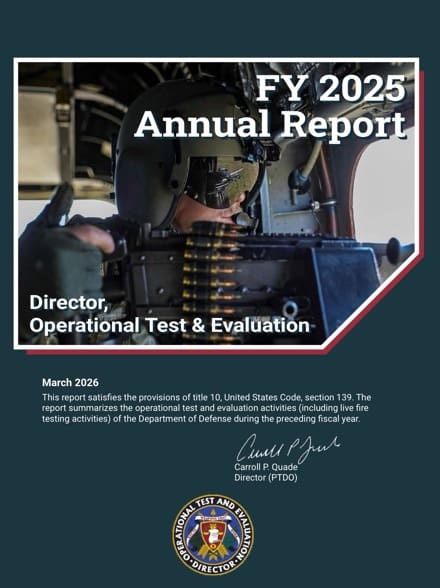
On 13 March, 2026, the Department Of War’s Director, Operational Test and Evaluation Office (DOT&E) released their 2025 annual report to Congress. DOT&E provides oversight for acquisition related testing of new capabilities and releases an annual report. The report covers acquisition programs from each of the services and United States Special Operations Command, as well as missile systems. You can check it out here.

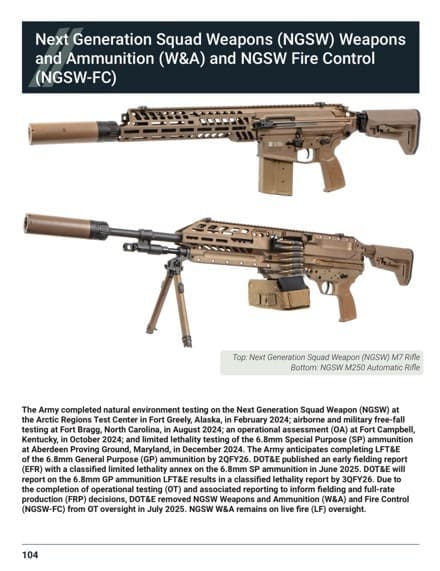
This article concentrates on the Next Generation Squad Weapons (NGSW) and Ammunition (W&A) and NGSW – Fire Control (FC) section.

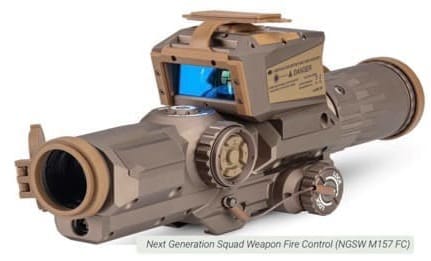
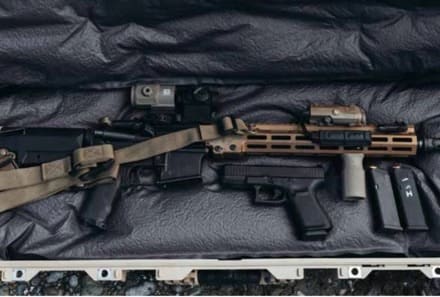
As a reminder, the NGSW system includes the M7 Rifle, M250 Automatic Rifle, 6.8mm ammunition common to both weapons, and XM157 Fire Control mounted on each weapon. Recently added to the NGSW program is the XM8 Carbine. The M7, XM8, and the M250 are replacements for the 5.56mm M4/M4A1 carbine and M249 Squad Automatic Weapon currently used in the close combat force (CCF).

I’d like to note that the report refers to the XM157 FC without the eXperimental designation prefix it continues to carry. Over the years I have noted such instances of small details slipping through the cracks on their reports which remain at a very generic, high level for executive use.

NGSW is being procured under two separate Middle Tier of Acquisition programs: weapons and ammunition in one and Fire Control in the other. These are not traditional procurement programs but rather much more adaptive and fast paced. The NGSW W&A are manufactured by SIG SAUER, Inc, and the NGSW-FC is manufactured by Sheltered Wings, Inc, doing business as Vortex Optics.

According to the report, the Army completed an Operational Assessment of the NGSW system in October 2024 and limited lethality testing of the 6.8mm SP ammunition in December 2024 to support the planned transition of both the NGSW W&A and NGSW-FC programs from the MTA rapid fielding pathway to separate major capability acquisition programs in 3QFY26. The Army anticipates completing Live Fire Test & Evaluation (LFT&E) of the 6.8mm GP ammunition by 2QFY26. NGSW is no longer under DOT&E oversight for Developmental or Operational Testing. It has completed those tests. It does however, remain under Live Fire oversight.

The Army anticipates completing LFT&E of the 6.8mm GP ammunition at Aberdeen Proving Ground by 2QFY26. DOT&E will report on the 6.8mm GP ammunition LFT&E results in a classified lethality report in 3QFY26.

An Early Fielding Report (EFR) assessed individual soldier and squad performance using the NGSW system on static and maneuver ranges; highlighted the weapons’ suitability and soldiers’ safety concerns; and compared performance of the SP ammunition to that of current ammunition against specific types of targets.

Overall results of testing revealed these comments regarding the EFR report:

– Individual soldiers consistently qualified with their NGSW and, when firing on the variable distance range, demonstrated the ability to engage targets at extended distances.

– The 6.8mm SP ammunition generally provides increased lethality over the M855A1 (i.e., the SP ammunition for the legacy M4A1 weapon) against the tested targets.

– Improvements to system reliability, safety, human-systems integration, and compatibility with cold weather operations are needed.

– During the OA, soldiers reported negative physiological effects caused by the noxious off-gassing from their weapons, as well as concerns about the extreme heat from the weapons’ suppressors after firing.

– Most M250s equipped with M157s did not retain zero during the OA or the airborne test.

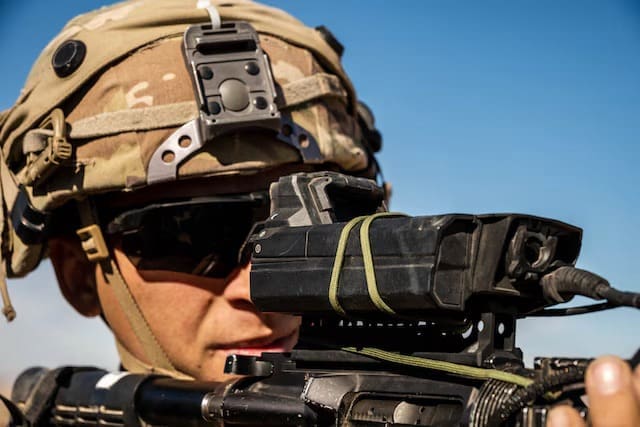
– Ergonomic complaints about the M157 persisted.

– The NGSW is compatible and safe for use during static line and military free-fall airborne operations.

In the end, the report leaves this lone recommendation:

The Army should:

1. Address the recommendations in the June 2025 EFR and classified limited lethality annex.

Naturally, we have no idea what is the classified annex. In fact, no information has been released regarding ammunition performance of NGSW than a mention that it performs similar to the commercial 270 WSM cartridge. However, considering the NGSW program remains under DOT&E oversight for the LFT&E portion of testing, we may learn more in the future.

Until then, NGSW remains a fast track program that has fielded over half of its basis of issue plan.

MARTE – Main ARmoured Tank of Europe

Wednesday, March 25th, 2026

Key Facts:

  • Half-Time successfully reached at the EDF-Project “MARTE”
  • Actions on track: First technical work packages closed, significant Milestones and Deliverables achieved and approved
  • Strong European industry cooperation confirmed

Bonn, 23.03.2026

The European defence sector entered a new era of industry- and Ministry of Defence-cooperation in the domain of Main Battle Tanks. Funded by the European Defence Fund (EDF), the MARTE project (Main ARmoured Tank of Europe) is far more than a technology project, it is a cornerstone for Europe`s strategic autonomy and military relevance in high intensity land warfare.

MARTE aims to design Europe`s future Main Battle Tank as a system complete that will dominate future battlefields. MARTE sets new standards in multinational capability development by harmonizing the requirements of in total 11 European Member States involved (Germany (lead), Belgium, Estonia, Finland, Greece, Italy, Netherlands, Norway, Romania, Spain and Sweden), including lessons learned from current conflicts. The overall ambitious project goal is to achieve Preliminary Design Review (PDR) maturity within only 24 months.

One year after the official Kick-Off in December 2024, the MARTE project, coordinated and led by MARTE ARGE GbR, a joint venture company between KNDS Deutschland GmbH & Co. KG and Rheinmetall Landsysteme GmbH, now has successfully reached a decisive midterm milestone.

Building on the strong foundation laid at project start, the consortium confirms substantial progress across technical, organizational and strategic aspects within the past 12 months.

Guided by the MARTE Core Team, consisting of MARTE ARGE GbR, KNDS Deutschland GmbH & Co. KG and Rheinmetall Landsysteme GmbH (all Germany), Leonardo SPA (Italy), Indra Sistemas SA (Spain) and SAAB AB (Sweden), the MARTE consortium has managed to complete several technical Work Packages and to submit key deliverables to the granting authority, the European Commission in accordance with the agreed schedule.The results achieved include a comprehensive Concept of Operations as well as a full set of requirements for a future Main Battle Tank System. Led by SAAB AB, the consortium partners engaged in close collaboration with the participating Ministries of Defence (MoDs). This joint effort resulted in a consolidated and harmonized baseline, explicitly incorporating the needs of the participating MoDs, representing the future customers. In addition, under the leadership of Indra Sistemas S.A., the consortium carried out an extensive market survey. Numerous partners contributed their expertise to evaluate the availability, technological readiness and performance capabilities of relevant technologies and subsystems across the European defence market.

With all submitted deliverables formally approved by the European Commission, a strong foundation has been established to advance into the next stage of the MARTE project. This phase focuses design and architecture activities of the overall MBT system and its subsystems, with KNDS Deutschland GmbH & Co.KG, Rheinmetall Landsysteme GmbH and Leonardo SPA taking the lead in driving these key activities.

The General Assembly, held in November 2025 in San Sebastián (Spain) and hosted by MARTE ARGE GbR, gathered all consortium members and key stakeholders at the project’s halfway point.

Beyond presenting the results achieved to date, the event offered insights into ongoing activities, ensured full alignment on the roadmap towards the targeted Preliminary Design Review, and thereby reaffirmed MARTE as one of the most consequential defence programs embedded in the EDF.

The achievements reached to date, the strong industrial collaboration across Europe, and the continued active engagement of the participating Ministries of Defence collectively position MARTE as a decisive strategic investment in Europe’s technological sovereignty and defence innovation.

Steadicopter Launches Dedicated UAS Academy to Train Global Operators and Technicians on Advanced Rotary UAV Missions

Wednesday, March 25th, 2026

March 23, 2026 – Steadicopter, a leading developer and manufacturer of rotary unmanned aerial systems (UAS), has announced the launch of its dedicated Steadicopter UAS Academy, a comprehensive training program designed to equip customers with the operational expertise required to maximize the capabilities of the company’s advanced rotary UAV platforms.

The academy provides structured training programs delivered by Steadicopter’s expert instructors, many of whom bring extensive operational, aviation, and unmanned systems experience. The courses are designed to provide operators, mission commanders, and technical teams with deep knowledge of rotary UAS operations, enabling them to effectively deploy the systems across a wide range of operational environments.

The curriculum places a strong emphasis on fully leveraging the unique advantages of rotary UAS, including persistent hovering, precision deployment, and operational flexibility. Trainees learn how to apply these capabilities across a broad spectrum of mission applications such as intelligence, surveillance and reconnaissance (ISR), maritime operations, border security, tactical deployment, and special missions.

To ensure highly effective learning outcomes, the Steadicopter UAS Academy integrates state-of-the-art digital training tools and simulation-based learning aids, supported by an advanced LMS (Learning Management System). This digital infrastructure allows operators to develop mission planning, system operation, and decision-making skills within realistic digital environments before transitioning to live operational scenarios—significantly reducing training time while optimizing resource utilization.

A key feature of the academy is its global accessibility, enabled through Steadicopter’s robust LMS. This allows customers to conduct training, qualification, and ongoing personnel currency programs from virtually anywhere in the world, minimizing the need for travel, reducing operational downtime, and delivering a highly cost-effective training solution while accelerating time-to-readiness.

“Modern unmanned operations require more than advanced platforms – they require highly skilled personnel who understand how to fully exploit the capabilities of those systems,” said Noam Lidor, CEO of Steadicopter. “The Steadicopter UAS Flight Academy, supported by our advanced LMS, was established to ensure our customers gain the operational knowledge, mission expertise, and confidence needed to maximize the unique advantages of rotary UAS across a wide spectrum of missions. By combining expert instruction with advanced digital training technologies, we are enabling operators and technicians around the world to achieve operational readiness faster, more efficiently, and with significantly reduced training overhead – regardless of their location.”

The launch of the academy reflects Steadicopter’s ongoing commitment to supporting its customers not only with advanced unmanned systems, but also with the knowledge and operational expertise required to fully realize their potential in the field.

TacJobs – TYR Tactical Is Hiring

Wednesday, March 25th, 2026

WE’RE HIRING | Join the TYR Tactical Team

TYR Tactical is growing and we’re looking for driven professionals ready to be part of a mission-focused team at our Corporate Headquarters in Peoria, AZ.

– Senior Accounting Manager

– Shipping & Receiving Associate

– Inventory Control Specialist

– Manufacturing Costing Administrator

If you thrive in a fast-paced environment, value excellence, and desire to work at a company that is dedicated to protecting the lives of those who protect us, we welcome you to apply:

View full job descriptions and apply here.

Record-Setting 80-Mile Terrestrial Mobile Troposcatter Communications Link Demonstrated by TrellisWare and TSC

Wednesday, March 25th, 2026

A live demonstration was conducted before members of NATO’s BLOS Comms Capabilities Team, with representatives from multiple allied nations in attendance.

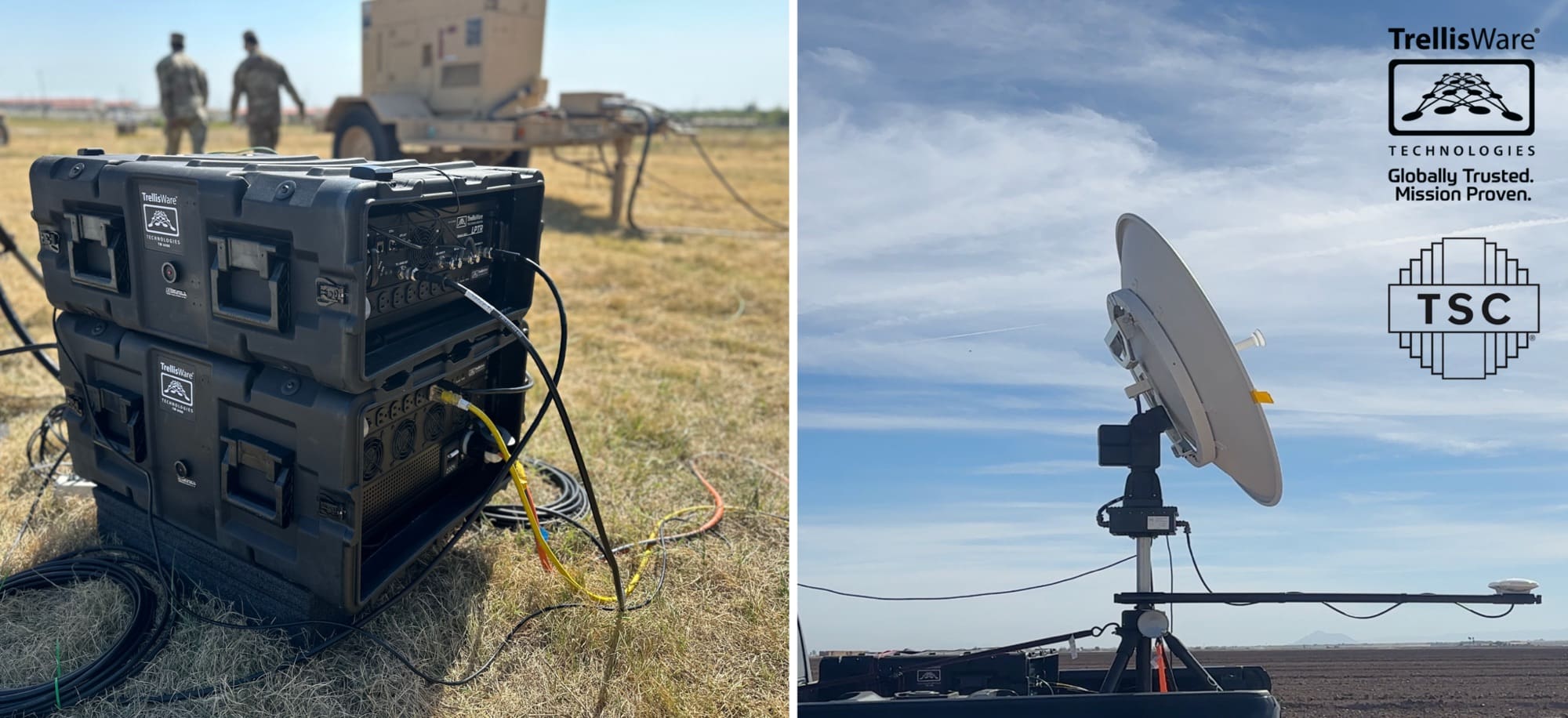
San Diego, CA, March 24, 2026 – TrellisWare Technologies, Inc., the global leader in resilient waveforms and interoperable tactical radios, today announced that the company, through its partnership with TSC, a high-technology company providing its customers with sensors, effectors, and solutions for communication, precision engagement, surveillance, and intelligence missions, has successfully demonstrated mobile, terrestrial troposcatter communications at an industry-best link distance exceeding 80 miles, transmitting real-time voice, Position Location Information (PLI) and video across mountainous terrain in San Diego, California.

“The success we demonstrated, definitively proves that mobile troposcatter can provide reliable, high-capacity communications across significant terrain obstacles if you’re working with the right provider,” said Marcus Tooker, Director of Commercial Products for TSC. “Our ability to sustain voice, video, and PLI connectivity over an 83-mile link, while in motion, underscores the operational flexibility, resilience, and the now proven nature of the joint capabilities between TrellisWare and TSC.  And this can be done anywhere in the world.”

The demonstration, which utilized the TSC Mobile Tracking System 3.0 (MTS3.0), originated from TrellisWare’s headquarters in San Diego, California, and established a beyond-line-of-sight connection to a mobile vehicle 83 miles away in Westmorland, CA, over the broad Laguna Mountain range (altitude exceeding 5,200 feet); proving the value of TrellisWare’s advanced signal processing for troposcatter communications.  Assuming the same transmit power and antenna gain, TrellisWare’s Advanced Constant Envelope-Troposcatter (ACE-T) waveform has a more than 1.5x link-distance advantage over other troposcatter waveforms.

The troposcatter link was also used to connect TrellisWare’s industry-best TSM™ MANET (Mobile Ad-hoc Network) on either side via a Multi-Network Bridge (MNB).  This sets a record for an on-the-move troposcatter link in a terrestrial environment, which has substantially more challenging troposcatter propagation conditions than a maritime or littoral environment.

“Unlike traditional, fixed-site troposcatter systems, the solution we demonstrated with TSC was able to maintain connectivity even while the mobile unit traveled at speeds up to 30 miles per hour, despite the very narrow beamwidths of the high-gain antennas required to combat the large losses of a troposcatter link,” said Scott Enserink, Lead Engineer for Troposcatter Communications at TrellisWare.

Key Demonstration Highlights Include:

  • On-the-move operation at speeds up to 30 mph.
  • Live voice and video transmission.
  • Bridging of two remote TSM MANET networks.
  • Mountainous terrain obstruction.
  • Real-time mapping and PLI updates on ATAK tablet.
  • International defense and industry audience for portions of the testing.

“The fact that the system successfully delivered voice and video traffic and bridged two MANETs across the 83-mile path clearly demonstrates the operational viability of troposcatter for BLOS communications for expeditionary and maneuvering forces,” added COL (Ret.) Garth Winterle, the former US Army Project Manager for the Integrated Tactical Network and current Director of European Business Development for TrellisWare.

The event confirms that there is now a functional and proven solution for the increasing demand for resilient, beyond-line-of-sight communications capable of operating in contested, congested, satcom-denied, and infrastructure-limited environments.

www.trellisware.com

Thin Air Gear Introduces the Next Evolution: Olympus Lite Deployment Bag

Wednesday, March 25th, 2026

Since its introduction in 2007, the Olympus™ Deployment Bag has become a trusted loadout solution for military professionals, with tens of thousands of units fielded across the force. Developed by Thin Air Gear and refined through four generations, the Olympus™ platform continues to set the standard for durability, modularity, and mission-ready organization.

Building on that proven foundation, Thin Air Gear introduces the Olympus Lite™ Deployment Bag—a next-generation evolution designed to deliver the same field-proven performance in a lighter, fixed-volume configuration.

This is not a redesign. It is a refinement of a system already trusted in deployment.

20% Lighter. 20% More Capacity.

The Olympus Lite™ is engineered to improve efficiency without sacrificing capability:

• 12 lbs vs. 15 lbs – 20% lighter

• 8,160 cu in vs. 6,750 cu in – ~20% more usable space

Note: The 6,750 cubic inch figure represents the Olympus™ in its collapsed (unexpanded) configuration. When expanded, the Olympus™ increases to approximately 9,000 cubic inches.

Reducing weight while increasing usable capacity directly impacts mobility and loadout efficiency.

Dimensions & Fixed-Volume Design

Olympus Lite™: 30″ x 17″ x 16″ (fixed volume)

Olympus™ (Gen 4): 30″ x 15″ x 15″ (expandable)

The Olympus Lite™ increases internal volume through added width and height, eliminating the need for expansion panels.

Built on a Proven Platform

The Olympus Lite™ retains the core features that made the original Olympus™ a category leader:

• Wheelable, fully ruckable design

• Durable 1000D Cordura® construction

• ABS frame system with 360° closed-cell foam protection

• Modular three-shelf internal organization system with full Velcro adjustability

• YKK® #10 lockable zippers

• Double-stitched, bartacked construction

It also retains one of the most recognized features of the platform:

Patented 4″ Shark Wheels (dual ball bearing, 200 lb load capacity)

They are retained because they work.

Enhanced Access & Mobility

The Olympus Lite™ maintains the usability features operators rely on in movement:

Top-access lid with integrated pocket for quick access into the main compartment

Stowable backpack straps for rapid deployment and hands-free movement

Designed for movement and transitions without friction.

Next-Generation Handle System

Derived from the upcoming Gen 5 Olympus™ platform, the Olympus Lite™ introduces an upgraded telescoping handle with a three-position locking system:

• Stow Mode – fully locked down

• Mid Position – optimized for shorter pull height

• Full Extension – standard height for rolling under load

This upgraded system improves durability, ergonomics, and control in real-world conditions.

Mission-Ready Configuration Options

The Olympus Lite™ is optimized for users who prefer a fixed-volume loadout, offering consistent capacity without the need for expansion.

For units requiring expanded capacity, the original Olympus™ platform remains available, offering up to approximately 9,000 cubic inches of storage, supporting a wide range of mission profiles.

Together, the Olympus™ and Olympus Lite™ platforms provide operators with two distinct, purpose-built configurations:

Olympus™ – expandable, adaptable loadout

Olympus Lite™ – fixed-volume, streamlined efficiency

Continuing the Olympus™ Legacy

As Thin Air Gear prepares to release the full Gen 5 Olympus™, the Olympus Lite™ represents the next step in that evolution—combining over 15 years of real-world feedback with targeted improvements in weight, capacity, and usability.

Availability

The Olympus Lite™ Deployment Bag is now available for unit evaluation and procurement.

For specifications, inquiries, and ordering:

thinairgear.com or anthony@thinairgear.com


About Thin Air Gear

Thin Air Gear designs and manufactures deployment-grade loadout systems and tactical travel gear trusted by military professionals. Veteran-owned and field-tested, each product is engineered for durability, mobility, and long-term use, designed to perform under operational conditions and repeated deployment cycles.

Joint Interagency Task Force Awards Critical Counter-UAS Contract

Tuesday, March 24th, 2026

Joint Interagency Task Force 401 has successfully executed additional contract awards as part of Domestic Shield to procure counter-unmanned aerial systems capability in support of U.S. Northern Command and U.S. Strategic Command.

The combined contract, valued at $6.1 million, includes the purchase of 210 SmartShooter Smash 2000LE systems and one AeroVironment Titan Cerberus XL system. This milestone expands the layered defenses that protect installations and critical defense infrastructure from the emerging UAS threats in the U.S.

“We need a layered defense that includes distributed sensing, the ability to track in real time, and capabilities to engage with both non-kinetic and kinetic countermeasures,” said Army Brig. Gen. Matt Ross, task force director. “This purchase does not solve that problem, but it’s a step in the right direction.”

He added that both contracts were executed at a record pace, underscoring JIATF 401’s commitment to cutting through red tape to deliver critical counter-UAS capability at the speed of relevance during combat operations in support of Operation Epic Fury.

The rapid award timeline reflects strong coordination across requirements, contracting and mission stakeholders to ensure timely responses to operator needs.

Additionally, two radar systems have been assigned to support the National Capital Region in coordination with the Department of Homeland Security, enhancing the region’s ability to detect and counter emerging UAS threats. Ross said this strategic move strengthens local defense capabilities, ensuring that critical infrastructure remains protected.

In support of this reconfiguration, JIATF 401 is also advancing the integration of the Lattice system, a cutting-edge, tactical user interface for command-and-control of counter-UAS that links sensors and effectors across installations and agencies. This integration will boost response times and strengthen national defense, enabling more agile and effective counter-UAS operations.

The task force is pioneering acquisition reform practices to ensure the services and the entire joint force receive the critical technologies they need to maintain the operational advantage and keep America safe.

By Army Lt. Col. Adam Scher, Joint Interagency Task Force 401