This is a great video featuring Knights Armament Co’s Jack Leub on their suppression technology.


This is a great video featuring Knights Armament Co’s Jack Leub on their suppression technology.
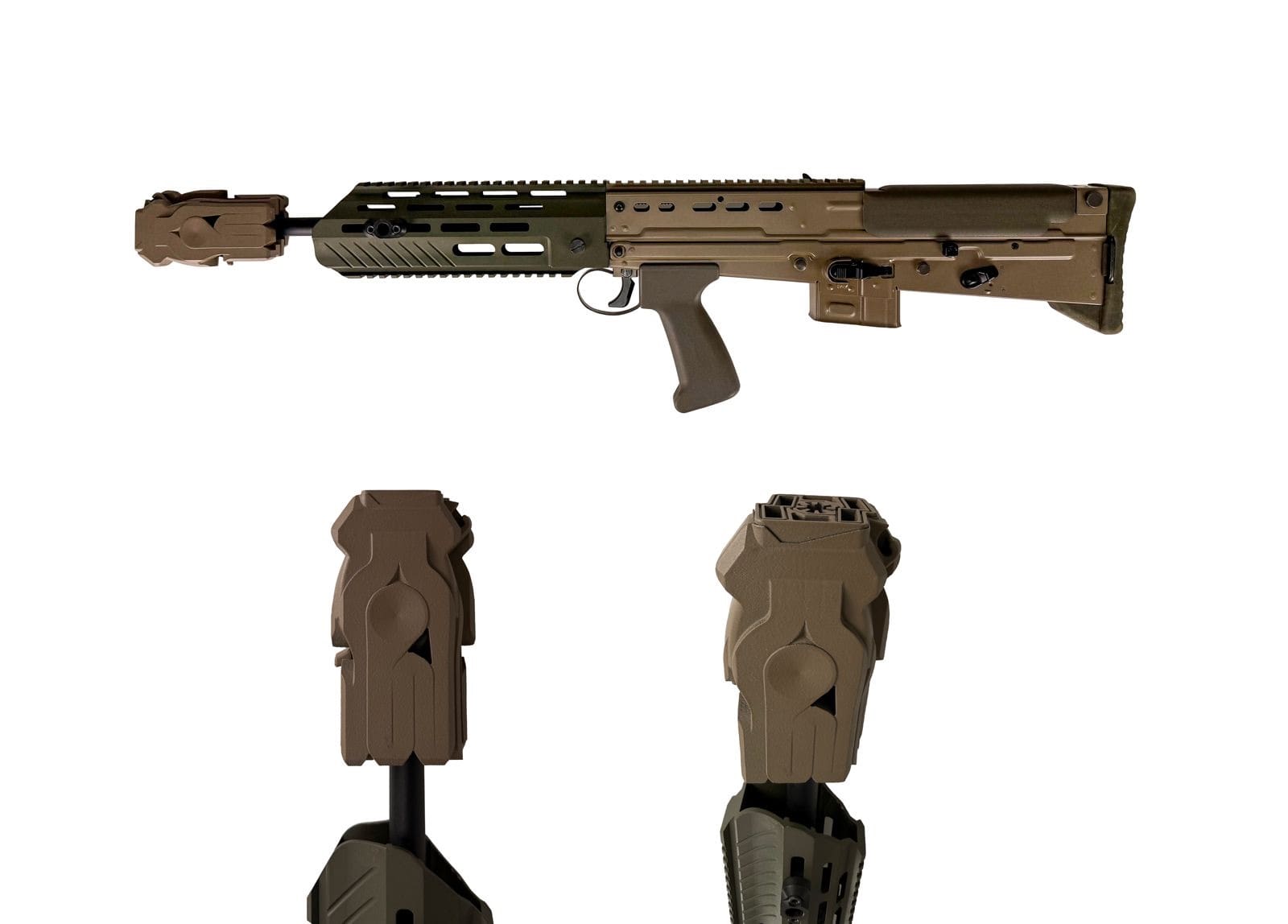
I found this image online of a British SA80 equipped with the Strategic Sciences Corporation Multi Function Muzzle Device, an innovative 3D printed suppressor recently adopted by the Canadian Armed Forces for use on their new Canadian Modular Assault Rifle.
Due to its over the barrel dosing, it only adds 1″ to the overall length.
What if the UK followed suit?
Who
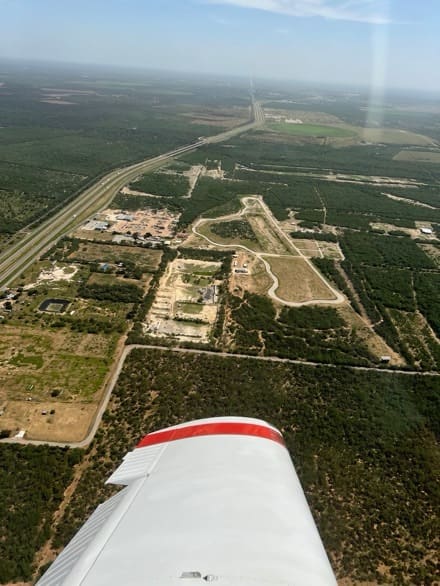
The Ranch Texas is a Tier-1 training facility serving OGAs, federal agencies, military units, law enforcement, first responders, and vetted civilians. Founded by Chad Timney—a former pro-shooter, law enforcement firearms instructor, executive protection experienced, and training facility developer with over 20 years of experience—The Ranch TX was designed to close the gap between flat-range training and real-world application.
The leadership and instructional cadre includes professionals with backgrounds in U.S. Special Operations, military, law enforcement, anti-trafficking, tactical medicine, firefighting, emergency response, K9 training, executive protection, and government program management. Programs are developed and delivered by subject matter experts with real-world operational experience.
The Ranch TX also supports government and agency training initiatives, offering scalable program development, interagency training environments, and mission-specific customization.
What
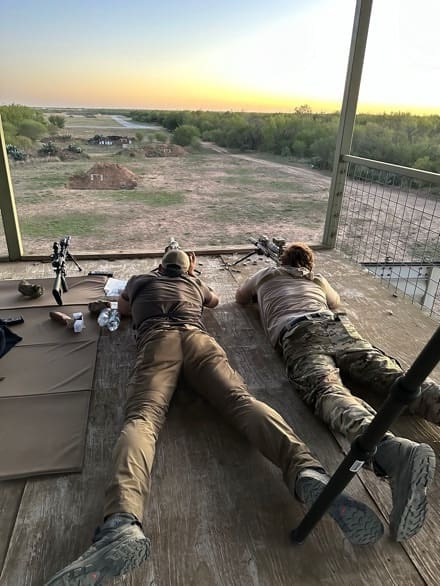
The Ranch TX is a 300+ acre tactical training complex delivering immersive, scenario-based training across multiple operational disciplines:
– Close Quarters Battle (CQB) & Small Unit Tactics (SUT)
– Firearms training (pistol, rifle, SPR/DMR, low-light, night operations)
– Force-on-force (UTM/SIMS) and live-fire CQB
– Mechanical, ballistic, and explosive breaching
– Tactical driving & high-threat mobility (executive protection / PSD)
– TCCC / TECC / CLS (NAEMT-aligned medical training)
– Fireground and multi-agency response training
– K9 training (obedience, behavior modification, protection, working dogs)
Law enforcement training programs are designed to support POST/TCOLE-aligned continuing education and real-world application, with an emphasis on integration across patrol, SWAT, tactical medics, and command-level decision-making.
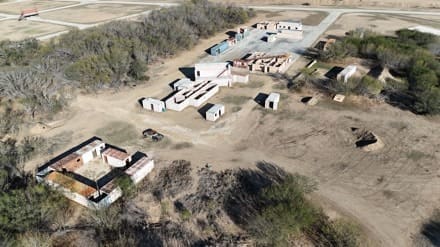
The facility is purpose-built for realism, safety, and repeatability at scale. Infrastructure includes:
– 11,000 sq. ft. live-fire shoothouse (largest commercial in the U.S.A.)
– 175,000 sq. ft. urban training environment (MOUT site)
– 14 firearm ranges, including SPR tower (700+ yards)
– Vehicle mobility driving tracks (including WPS-certified asphalt track (U.S. State Department standard)
– Off-road mobility terrain and unimproved road course
– Breaching campus for mechanical, ballistic, and explosive entry
– Dedicated explosive training area with observation bunkers
– Field operations and HLZ/DZ capable training zones
– DoD-compliant and ATF-aligned armory and storage capabilities

In addition to training, The Ranch TX operates The Ranch Media—an in-house production arm that creates high-end, real-world content for defense, tactical, and outdoor brands. This allows companies to test, validate, and showcase equipment in authentic environments with real operators.
Where
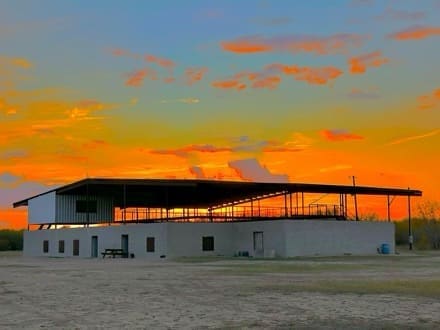
The Ranch TX is located in Dilley, Texas, approximately 50 minutes south of the San Antonio airport.
The location provides a rare combination of scale, accessibility, and operational freedom—allowing units to conduct training that would be restricted or limited in most environments. Located in south Texas, its proximity to major military installations and law enforcement agencies makes it an ideal CONUS training destination.
On-site infrastructure includes lodging, dining, classrooms, and mission planning spaces, enabling full-spectrum, multi-day training evolutions for individual units or multi-agency operations.
When
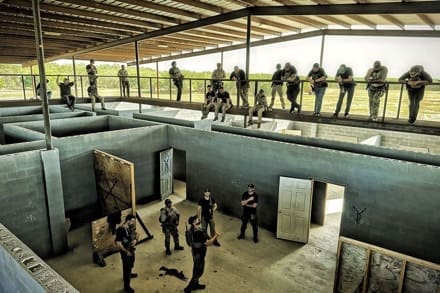
The Ranch TX has rapidly evolved into a national-level training destination, supporting ongoing programs for military, federal, state, and local agencies, as well as private sector operators.
In addition to year-round training, The Ranch also hosts large-scale training events, including Police Week (May 14–17, 2026), a free national training symposium for sworn law enforcement. The event brings together instructors, agencies, and industry partners for multi-discipline training, operational collaboration, and knowledge exchange.
The facility continues to expand its infrastructure and program offerings to meet increasing demand for high-fidelity, scenario-based training environments.
Why
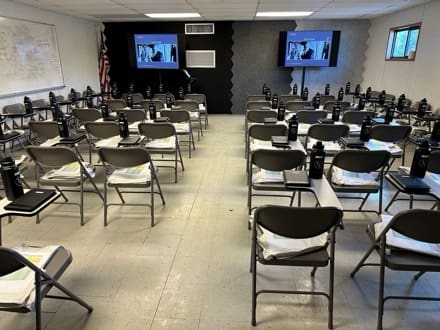
Because flat-range proficiency alone does not translate to real-world performance.
The Ranch TX exists to enhance survivability through realism, pressure, and repetition. Training is designed to force decision-making under stress, integrate multiple skillsets, and expose individuals and teams to the complexity of real-world environments.
Core training priorities include:
– Decision-making under pressure
– Integration of shooting, movement, communication, and medical response
– Low-light and limited-visibility operations
– Team-based problem solving in confined and dynamic environments
– Immediate feedback and after-action review (AAR)
The Ranch provides a controlled environment where units can safely train at a level that reflects real operational demands—without the limitations typically imposed by space, policy, or infrastructure.
When repetition meets realism, performance becomes instinct.
Website: RanchTX.org
Location: Dilley, Texas
Contact: Chad@RanchTX.org
Researching for a presentation I gave last summer at the National Defense Industrial Association Future Forces Conferences on robotics and drones I realized that while the US Army is working diligently to field drones in large numbers, it’s just a drop in the bucket once they figure out how many ground robotic systems they’ll need. To illustrate my point I explained that at the time, the US Army had an inventory of around 3,900 aircraft and 700 enduring capability drones. Meanwhile, there were ~420,000 ground vehicles making it about 11:1 ground to air systems. I expect we’ll see a similar ratio of ground to air robotics once the capability fully settles into the enterprise and those ground robots will take many forms and perform many duties. This capability is just the beginning.
According to a Special Notice released last week, Capability Program Executive (CPE) Mission Autonomy is actively pursuing a UGV designed to autonomously support maneuver formations in the critical “last tactical mile”. This advanced UGV, owned by maneuver formations, will both sustain Platoon and Company formations by delivering essential supplies/energy and will evacuate wounded personnel from the point of injury to a casualty collection point. This dual use UGV shall feature a configurable payload to meet the dynamic needs of maneuver formations.
The UGV must be capable of teleoperation, autonomous navigation, and beyond-line-of-sight communications, and execute resupply and CASEVAC missions with minimal reconfiguration.
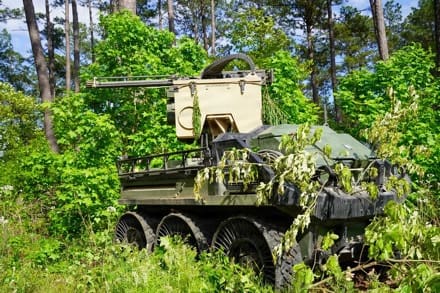
The modern battlefield is characterized by persistent enemy surveillance and rapid application of lethal effects at and behind the forward line of troops (FLOT), making any movement to and from the FLOT highly vulnerable. This environment challenges commanders’ ability to resupply units and evacuate casualties. The Army refers to the critical distance between the FLOT and supported units as the “Last Tactical Mile” – the final segment of ground over which supplies, equipment, or personnel must be moved under the greatest threat from enemy observation and fires. This phase is often the most dangerous and logistically complex, requiring innovative solutions to ensure mission success and force protection.
The UGV should be capable of supporting the sustainment needs of a dismounted Rifle Platoon or Company Headquarters for extended operations (reference ATP 5-0.2-1 Staff Reference Guide Volume 1, Unclassified, for Battalion weight needs). It should be able to transport various classes of supply and operate autonomously across diverse terrains and environments, maintaining reliable communications with supported units. The UGV should be able to navigate both on- and off-road routes, including areas without GPS, and support situational awareness. It should minimize detectable signatures and emissions during operations, including in the final approach to supported units.
The UGV should be capable of being reconfigured by the maneuver unit for multiple roles, including casualty evacuation. It should be able to autonomously transport at least two (2) casualties from the point of injury to a designated collection point, without causing additional harm to the patient. The cargo area should be modular and provide accessible power and data connections.
The UGV must support integration and collaboration within networked operational environments and be interoperable with current and future command and control systems. The solution must provide open and exposed APIs for integration with common control and mission autonomy applications.
Interested parties have until 28 April to respond. Learn more at www.sam.gov
Photo above: A Hunter Wolf unmanned ground vehicle assigned to Charlie Battery, 3rd Battalion, 320th Field Artillery Regiment, 3rd Mobile Brigade, 101st Airborne Division (Air Assault), holds a steady overwatch position with a mounted remote operated .50-caliber machine gun during a combat simulation exercise at the Joint Readiness Training Center, Fort Polk, Louisiana, April 13, 2026. (US Army photo by MSG Anthony Hewitt)
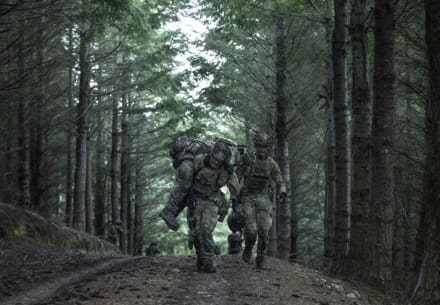
Exploiting enemy communications has never been more important for New Zealand Army Electronic Warfare Operators. As warfare continues to evolve technologically, maintaining their technical abilities, tactical mindset and overall fitness is imperative.
21 APRIL, 2026
As enemy troops advance up the southern coast of the fictional island of Panay, an Anzac Battle Group has mobilised in response.
As the two forces prepare to stand-off along the main road artery north, a smaller team of NZ Army specialist Electronic Warfare Operators skirt around the Western flank.
Working alongside an infantry company their mission is to destroy enemy reconnaissance assets and deny them the opportunity to gather their intelligence.
That was the aim of Exercise Raven Dawn held recently in South Canterbury, where NZ Army soldiers gained the advantage in the recon space, which according to Lieutenant S, Officer in Charge of the exercise, is vital for any mission success.
“A Radio Reconnaissance Team (RRT) can provide a wide range of recon and intelligence support,” said Lieutenant S.
“They observe, identify, and report on enemy activities within the electromagnetic spectrum to support commanders in gaining an advantage. Their information can provide immediate warning of imminent enemy action, support targeting of enemy locations and feed into a combined intelligence picture.”
The main purpose of the exercise was to put new Electronic Warfare Operators through their paces on radio reconnaissance operations, with three teams of six operators working together during the scenario.
Lieutenant S said it’s difficult, challenging work with operators carrying up to 50kg packs through difficult terrain. But no matter the physical toll, they cannot lose focus as they operate in forward, vulnerable areas.
“They are exposed to enemy reconnaissance teams and drones, and so strict adherence to noise, light and thermal signature discipline is imperative,” Lieutenant S said.
“Beyond the physical fitness and understanding of our own equipment, they also have to be aware of enemy operations and doctrine, have an in-depth understanding of the electromagnetic spectrum and enemy communication practices, and be able to effectively communicate all of that back to their commanders.”
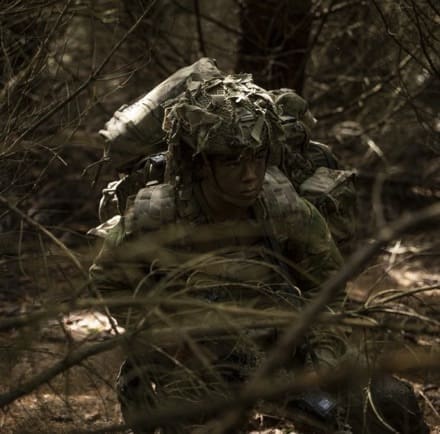
Fictional enemy forces in the exercise utilised unmanned aerial systems (UAS) to survey the area looking for the Kiwi operators, and they would identify personnel if not camouflaged well enough.
Which is where the hide comes in.
“Building an effective hide demands an in-depth understanding of why and how things are seen in the bush,” said Lieutenant S.
“A well-camouflaged hide will break up the shape of its occupants, utilise natural materials to blend in and allow for effective employment of claymore mines and the detachment machine gun to repel enemy. It’s effectively a gillie suit but for a team of six, including their weapon systems and electronic warfare equipment.”
Commanding Officer of 1st Command Support Regiment, Lieutenant Colonel Emily Hume said it’s vital for signallers and Electronic Warfare Operators to keep pushing their abilities in testing, challenging conditions, for which there is no better test than New Zealand terrain.
“Operating across the full signals and electronic warfare spectrum demands technical mastery, tactical awareness, and the resilience to adapt under pressure,” Lieutenant Colonel Hume said.
“Equally important are the fundamental soldiering skills—navigation, endurance, teamwork, and fieldcraft—that underpin our ability to fight, survive, and support the force in any environment.”
From New Zealand Defence Force

Berryville, AR — Wilson Combat is proud to announce the immediate acquisition of the Guncrafter Industries brand and assets, bringing together two of the most respected names in American custom firearms manufacturing. This strategic acquisition unites decades of innovation, precision engineering, and uncompromising craftsmanship under one banner while preserving the distinct heritage that defines each brand.
Founded by Bill Wilson, Wilson Combat has built a global reputation for producing world-class 1911 pistols, premium defensive firearms, and high-performance accessories trusted by professionals and enthusiasts alike. Guncrafter Industries, founded by Alex Zimmermann, is widely recognized for its pioneering development of the .50 GI cartridge and its line of meticulously crafted single and double stack 1911 pistols, earning a loyal following through its commitment to quality, reliability, and attention to detail.
“This is a natural fit for both companies,” said Bill Wilson, Founder and CEO of Wilson Combat. “Guncrafter Industries has built an outstanding reputation for innovation and craftsmanship, and we share a common philosophy when it comes to quality and performance. We are excited to welcome their team and continue building on the strong foundation they’ve created.”
The acquisition reflects a shared commitment to excellence. Both companies emphasize hand-fit precision, rigorous testing, and a relentless pursuit of performance in every firearm produced. Customers can expect continuity in product quality, customer service, and the unique identity that has made Guncrafter a standout name in the custom pistol market.
Operations will continue with a focus on maintaining Guncrafter’s established product lines while leveraging Wilson Combat’s advanced manufacturing capabilities, engineering expertise, and distribution network to support future growth and innovation. The combined strengths of both organizations will create new opportunities for product development while reinforcing the standards customers expect.
Alex Zimmermann will remain involved in an advisory and developmental capacity, ensuring continuity and guiding future innovation.
Wilson Combat remains committed to honoring the legacy of Guncrafter Industries while building upon its success—ensuring both brands continue to represent the finest traditions of American firearms craftsmanship. During this transition, we ask for your patience and understanding as we work through integration details and align operations.
A note to our Guncrafter Customers:
As we integrate the Guncrafter brand into the Wilson Combat family of companies, please bear with us while we work through the details. Our focus is on getting this right, so every Guncrafter customer continues to receive the quality and service the brand is known for. More updates will follow in the coming weeks, including information on existing orders, service, and what’s next for the lineup. Thank you for your patience. We look forward to serving you.
I got a chance to look at Beretta’s new Training Gear Collection during last week’s NRA Annual Meeting & Exposition in Houston.
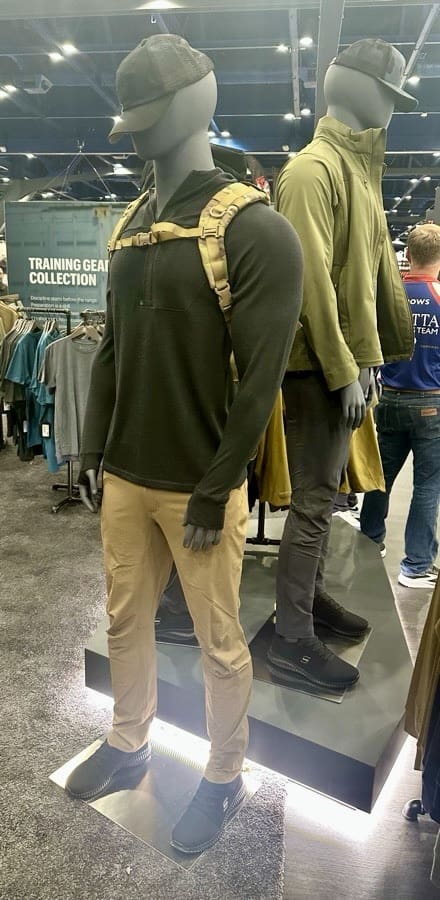
Developed in collaboration with elite shooters to enhance performance on the range and in competition, the line is moves with the body, manages moisture thanks to fabric selection, reinforced seams, and four-way stretch systems.
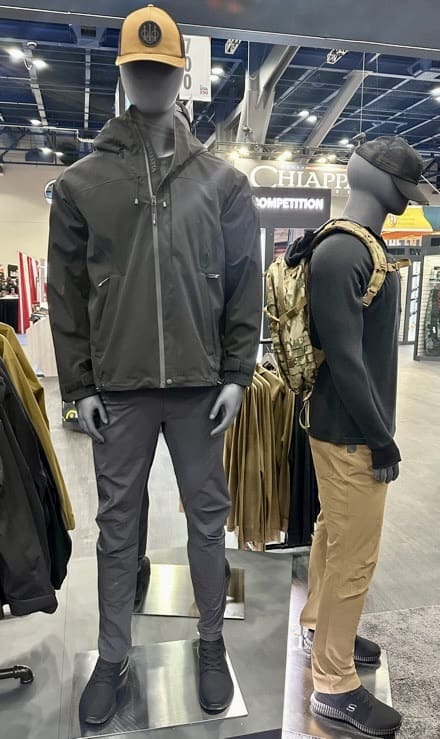
Collection Highlights:
Everything looked great, but I picked up the Merino Hoody. It’s super comfy and kept me cozy on the flight home. Sizing is spot on.
www.beretta.com/en-us/clothing/shop-by-collection/defense-training-gear-collection
Marine Corps Base Quantico, Va. —
In a pivotal step for infantry modernization, the Marine Corps has successfully completed Initial Operational Test and Evaluation (IOT&E) and the early capability release of the Organic Precision Fires-Light (OPF-L) system.

Managed by the Program Manager for Ground Weapons Systems (PM GWS) at Portfolio Acquisition Executive Marine Corps (PAE MC), the OPF-L gives infantry battalions a significant advantage through organic precision strike power. With features like waypoint navigation and target-locking, Marines can guide the munition to its target while maintaining full situational awareness. This allows battalions to strike beyond the enemy’s threat range and dynamically shape the battle before closing with the enemy.
This milestone illustrates how far the program has come in just two years since contract award. “Speed and acceptance of risk have always been the drivers behind this effort, and we have identified any and all opportunities to remove roadblocks and push the limits of acquisition to move quickly,” explained LtCol Jesse Hume, from the Organic Precision Fires program office.
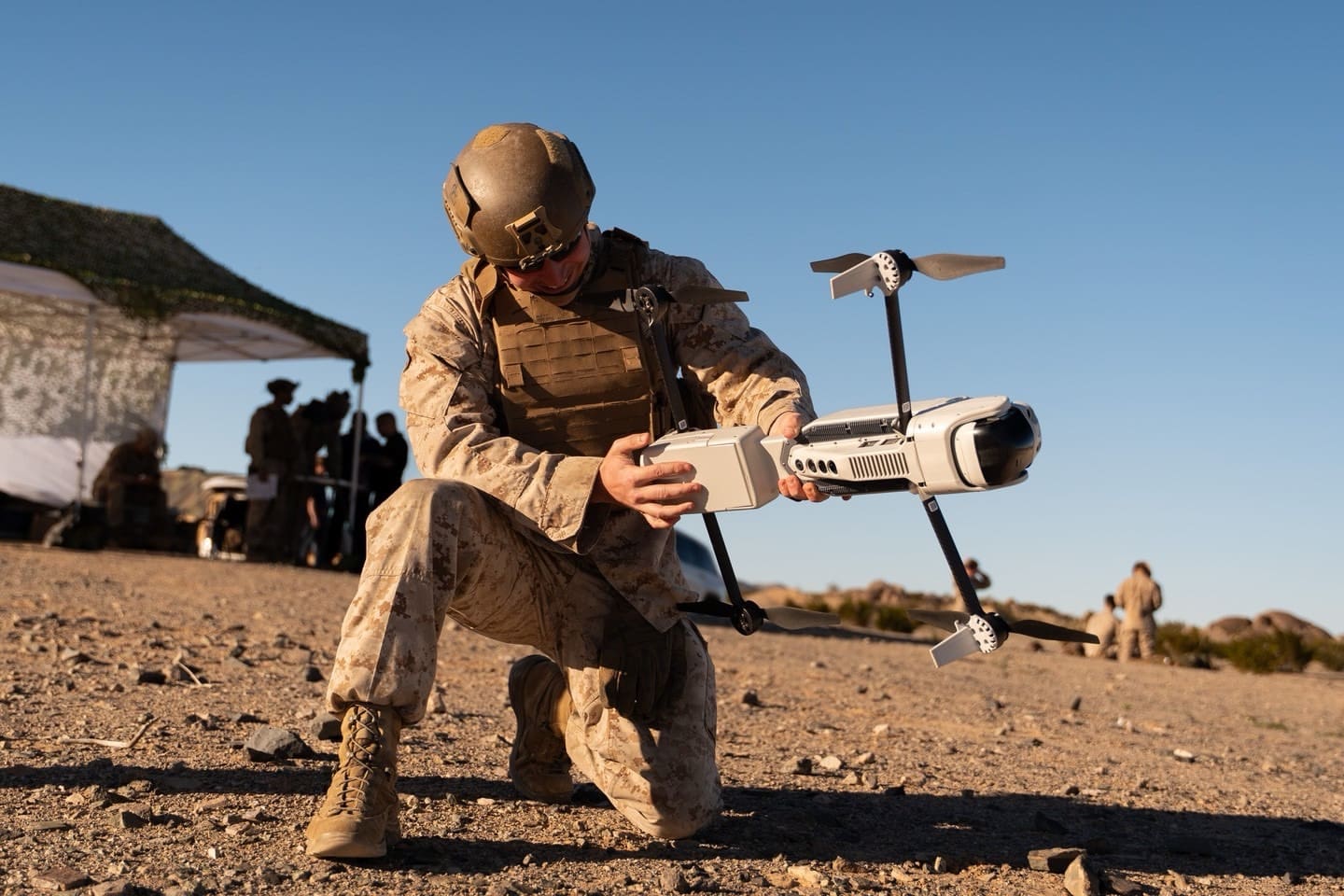
The comprehensive IOT&E tested the full operational sequence of the OPF-L systems. From mission planning and system deployment to target acquisitions, positive identification, and simulated engagement, the event confirmed that the hardware, software, and most importantly, the warfighter, are ready for deployment. This success demonstrates a maturing capability and proves the system’s effectiveness and seamless integration with established infantry tactics.
“This weapon system is important to the Marine Corps because it allows our maneuver element to close on the target without putting any support by fire in the line of sight of the enemy,” said 1st Lt Jaime Alarcon an infantry officer within 1stBattalion, 7th Marine Regiment, 1st Marine Division. “The system allows us to get effects on the target without exposing any of our warfighters to that target.”

The feedback gathered from Marine’s will be vital for refining the training pipeline and informing the final procurement strategy to field the capability at scale. “This early capability release allows us to learn incrementally. If it’s safe, we put it out there, and Marines help refine the solution,” explained Tyler Hall, a project officer for OPF-L at PM GWS.
The capability release signifies a major step forward in the Marine Corps’ Force Design efforts. It moves the concept of a more lethal, distributed, and agile force from a strategic goal to a tactical reality and ensures the infantry squad remains the most decisive element on the modern battlefield.
By Addi Vander Velde, Office of Public Affairs & Communication