Colt

Archive for September, 2026

Safran Selected to Supply MOSKITO and SHARPCROW Observation Systems for the Bundeswehr

Tuesday, September 8th, 2026

As the prime contractor of the Infanterist der Zukunft program on behalf of the Bundeswehr, Rheinmetall Electronics has placed a major order with Safran Electronics & Defense, building on the long-standing and successful collaboration between the two companies. Under this contract, Safran Electronics & Defense will deliver a significant volume of optronic systems, including over a thousand MOSKITO systems and several hundred SHARPCROW systems to equip the Bundeswehr’s medium and heavy infantry forces.

?As part of this program, Safran Electronics & Defense has been selected to provide advanced portable observation systems that enable German infantry forces to better understand their environment, detect and identify targets, and quickly share critical information on the battlefield.

The MOSKITO is a compact, lightweight multifunction observation system combining day and night vision, laser range-finding and precise target geolocation. It enables rapid detection, identification and localization of targets across a wide range of operational environments.

The SHARPCROW is a handheld electro-optical observation system integrating thermal imaging, low-light imaging, a direct optical day channel, target location capabilities and digital reporting functions. Together, these features provide enhanced situational awareness and support faster, more informed tactical decision-making.

“This new order underscores the Bundeswehr’s confidence in our technologies and in our ability to equip the modern soldier with the advanced capabilities required for today’s land operations. We are proud that these systems will be manufactured in Germany by Safran Electronics & Defense, further strengthening our partnership with the Bundeswehr and the German defense industry.” said Marzell Schiller, CEO of Safran Electronics & Defense Germany.

The Bundeswehr is accelerating the modernization of its dismounted forces through additional procurements under the proven Infanterist der Zukunft (“Infantryman of the Future”) soldier system. As the German Armed Forces’ flagship infantry modernization program, Infanterist der Zukunft aims to enhance soldiers’ effectiveness, survivability, command and control, mobility and endurance by equipping them with advanced, digitally connected capabilities.

ORIGIN and WITU Unveil BLAZE with Latest Version of Warhead at MSPO

Tuesday, September 8th, 2026
  • Latvia’s ORIGIN is introducing its autonomous counter-drone interceptor BLAZE at MSPO with the latest version of a directional fragmentation warhead developed by Poland’s WITU (Wojskowy Instytut Techniczny Uzbrojenia).
  • The module was engineered by WITU specifically for BLAZE and the demands of modern counter-drone operations, combining a focused effect against aerial targets with multiple layers of mechanical, electronic and software-controlled safety.
  • The warhead carries a NATO stock number, making BLAZE the first NATO-codified interceptor drone available with a STANAG-compliant warhead module.
  • ORIGIN is scaling manufacturing partnerships across Europe to meet growing demand from NATO countries.

RIGA, Latvia & KIELCE, Poland (8 September 2026) –  ORIGIN, the Latvian defence technology company, and Poland’s Military Institute of Armament Technology (WITU, Wojskowy Instytut Techniczny Uzbrojenia) are introducing BLAZE, an autonomous counter-drone interceptor, with the latest version of a directional fragmentation warhead, at MPSO in Kielce. WITU designed the warhead specifically for ORIGIN’s BLAZE, combining a focused effect against aerial targets with multiple layers of mechanical, electronic and software-controlled safety. The module carries a NATO stock number, making BLAZE the first NATO-codified interceptor drone available with a STANAG-compliant warhead module.

The BLAZE warhead is a compact directional high-explosive fragmentation module built specifically for intercepting unmanned aerial threats. Rather than adapting an existing munition, WITU engineered the warhead from the outset as an integral part of BLAZE. Weighing 700 grams, it directs a concentrated pattern of high-velocity steel fragments toward the target, delivering the required effect while keeping the interceptor light and agile.

WITU designed and built the Electronic Safe and Arm Device (ESAD), the electronic system that governs how and when the warhead activates. The explosive charge, directional fragmentation package, electronically controlled fuze and mechanical safety mechanisms are combined within a single precision-engineered module. The warhead remains safely disarmed until defined flight conditions are met, can be armed and disarmed repeatedly in flight, and automatically returns to a safe state if an engagement is cancelled, allowing BLAZE to return and land. It initiates at a precisely controlled moment during the terminal intercept.

Col. Piotr Ruli?ki, Head of the Center for Ballistics and Unmanned Systems at the Military Institute of Armament Technology (WITU), said: “The ESAD we built for ORIGIN’s BLAZE meets the same safety and standardisation requirements we apply across our work for the Polish armed forces. We designed it from the ground up for counter-drone engagements, with the safety and control features that mission demands. Partnering with ORIGIN lets our expertise support allied NATO forces, which is a good example of how Polish and Baltic industry can build on each other’s strengths.”

Beyond the WITU partnership, ORIGIN has partnered with several electronics manufacturers with operations across Europe to scale up production of BLAZE interceptors to meet growing demand from NATO countries. In line with the interceptor’s modular design, this lets end users take on a larger share of their own supply chain where that suits their procurement needs. 

Origin’s BLAZE interceptor will be showcased at WITU’s stand (booth number: 2-E08) at MSPO in Kielce, Poland from 8 to 11 September 2026. 

UF PRO Connects with the Law Enforcement Community at NTOA 2026

Tuesday, September 8th, 2026

KOMENDA, SLOVENIA (7 September 2026)

UF PRO joined law enforcement professionals from across North America at the 2026 National Tactical Officers Association (NTOA) Law Enforcement Operations Conference & Trade Show.

Held on 30 and 31 August at the Gaylord Opryland Resort & Convention Center in Nashville, Tennessee, the event provided a focused setting for tactical teams, instructors and decision-makers to exchange knowledge and examine equipment for law enforcement operations.

At Booth 449, visitors could explore UF PRO clothing systems for combat, patrol and cold-weather use and examine how individual garments and accessories work together across different operational settings.

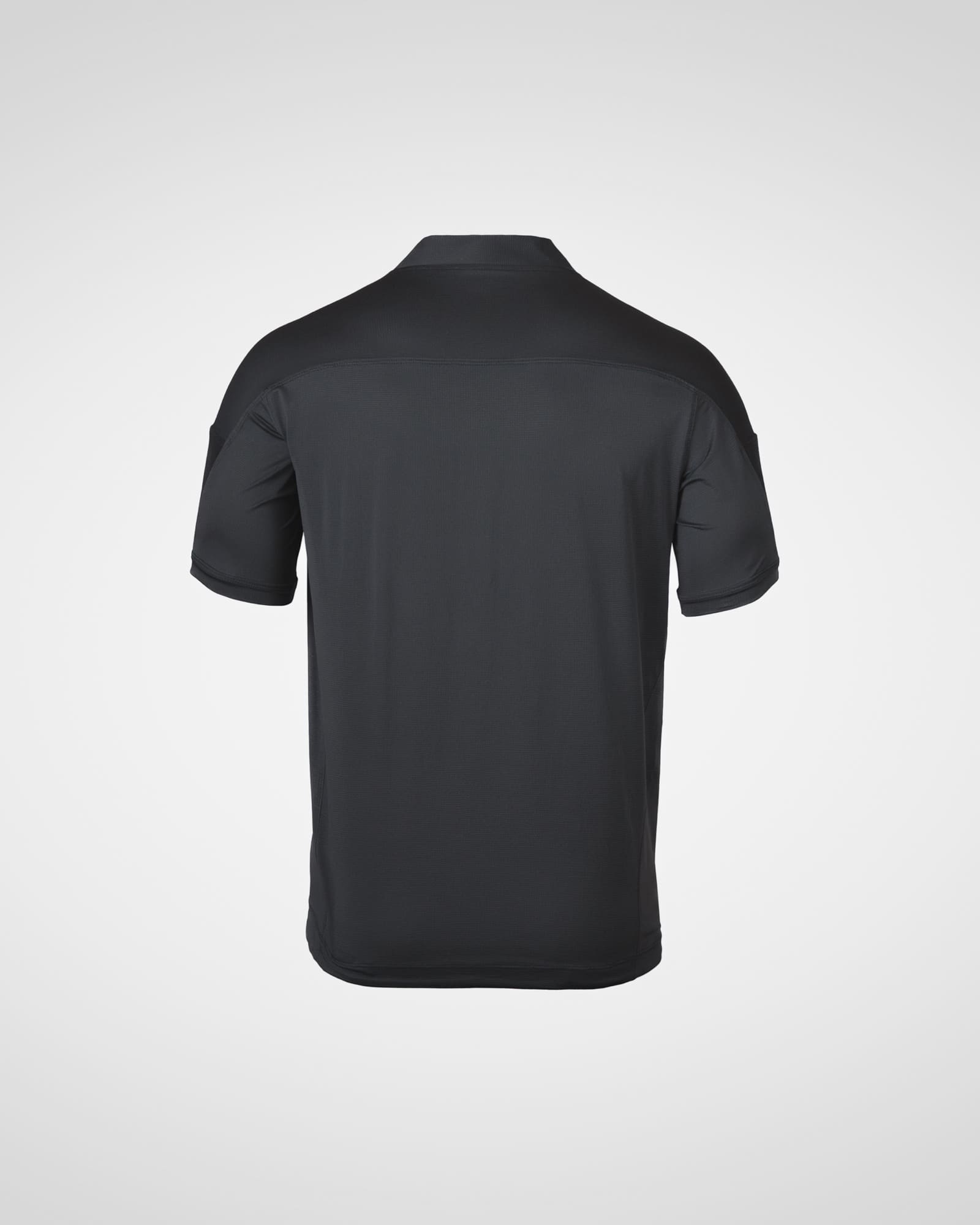
The display featured the Striker TT and Striker XT Gen.3 Combat Uniforms. The Striker TT BDU is developed for operations in hot and humid conditions, while the Striker XT Gen.3 BDU combines durability, mobility and comfort for demanding tactical use. The AcE Plus Gen.3 Tactical Winter Jacket provides protection in cold weather, while the P-40 Responder Shirt is designed for first responders operating in warmer conditions. The P-40 All-Terrain Gen.3 Pants offer versatility across different environments, while the P-40 Urban Gen.2 Pants are suited to everyday duty and urban operations. Striker Gen.3 Boonie Hats and 3D Tactical Knee Pads completed the selection.

Hands-on inspection and try-on gave visitors the opportunity to assess the fit, materials and functional details of the garments and compare solutions for different roles and environments.

Beyond the product display, NTOA offered an important opportunity for UF PRO to speak directly with members of the North American law enforcement community.

These conversations help maintain a close connection between product development and operational reality, while strengthening UF PRO’s presence in the U.S. law enforcement market.

Further information about UF PRO and its tactical clothing systems is available at ufpro.com.

EOTECH Partners with Project K-9 Hero

Tuesday, September 8th, 2026

Since its inception, EOTECH has been providing life-saving equipment to law enforcement agencies around the world. This market has been a key contributor to EOTECH’s success and to recognize this, EOTECH is proud to support organizations that support this community. Today, EOTECH is partnering with Project K-9 Hero, a worthy organization that honors the unwavering dedication of retired Police K-9’s and Military Working Dogs.

EOTECH’s parent company, American Holoptics, recently took ownership of Armasight, a manufacturer of quality Night Vision and Thermal products. Part of that acquisition included a inventory of Pet Supplies. On behalf of American Holoptics and EOTECH, we are proud to donate the inventory, in its entirety, to Project K-9 Hero. Totaling over $8 million dollars, this donation will help generate the necessary funds for new building construction and expansion.

“It’s unfortunate, but often the work and sacrifice of K-9s and working dogs often go unnoticed,” said Lisa Kemp, Director of Marketing for EOTECH. “This organization recognizes the importance of the role K-9s play, the dedication they provide to the departments, and the safety and security they provide to the community.”

Project K-9 Hero’s purpose is to ensure the best quality of life for our nation’s retired Police K-9s and Military Working Dogs by providing assistance with medical costs, prescription food, rehabilitation, rehoming, and end-of-duty services. They provide education programs to the public, government agencies, and elected officials on the costs and responsibilities of owning a retired K-9 Hero. Their sanctuary is a 177-acre Rehabilitation & Rehoming Facility for retired K-9 Heroes to receive a second chance when they no longer have a home or an owner that can meet their specialized needs.

“We at Project K-9 Hero are very humbled and grateful to receive this donation worth over $8 million dollars. It is our goal to put the proceeds of this inventory towards our Capital Campaign, which will inevitably save the lives of retired Police K-9s and Military Working Dogs who are facing euthanasia,” said Jason Johnson, CEO and Founder of Project K-9 Hero. “I want to personally thank the EOTECH team for choosing Project K-9 Hero as the stewards of this generous gift. I will personally ensure that we will use this gift to ‘Protect Those Who Protected Us.'”

Drone Round Counter-UAS Ammunition Integrated Into Marine Corps Indoor Simulated Marksmanship Trainer

Tuesday, September 8th, 2026

Drone Round announced today that its 5.56x45mm L Variant counter-UAS cartridge has been integrated into the Indoor Simulated Marksmanship Trainer (ISMT), the U.S. Marine Corps virtual small arms training system produced by InVeris. The integration gives Marines a way to build engagement skills with the multi-projectile round on the same simulators already installed at bases across the Corps, timed to the arrival of the first live deliveries.


USMC photo by Ashley Calingo

The Marine Corps has purchased 400,000 L Variant cartridges to date and has stated its intent to procure an additional one million rounds in fiscal year 2027, which begins October 1. Deliveries to Marine Corps ammunition supply points are underway and expected to be complete in September, with Marine Expeditionary Force commanders determining which units receive the ammunition first.

That fielding timeline created an immediate training requirement. Counter-UAS engagements demand a different skill set than conventional marksmanship, including target lead on fast-moving aerial threats at close range. Live rounds issued to units are intended for operational use, not familiarization.

As part of the Marine Corps’ Indoor Simulated Marksmanship Trainer (ISMT) Tech Refresh, InVeris will introduce a new counter-unmanned aircraft systems (C-UAS) training capability. This enhancement will enable Marines across the force the ability to engage with aerial drone threats with their individual weapon in a simulated environment. By integrating C-UAS training with the M27 IAR simulator and fielding it across more than 200 ISMT systems, Marines will be able to repeatedly practice detecting, tracking, deciding when to engage, and engaging aerial threats. Because the capability is built on InVeris’ existing COTS platform, additional scenarios, threats, and courses of fire will continually be developed as the UAS threat and Marine Corps tactics, techniques, and procedures evolve.

“The round was built so a Marine could use the rifle already in their hands, and the training has to work the same way, on the simulators already in the building. Getting the virtual capability out at the same time as the ammunition means a Marine can practice the engagement before the moment they need it.” said Kirk Fernandez, co-founder and CEO of Drone Round.

“This partnership reflects the innovation the Marine Corps needs — taking the training infrastructure they already trust and readying it for Counter-UAS defense. InVeris is proud that our platform allows us to build this capability into the ISMT Tech Refresh rather than standing up something entirely new. This is what it means to grow with our customer’s mission.” said Clyde Tuggle, CEO of InVeris.

The Marine Corps has been building counter-drone proficiency into general-purpose forces through 2026. The service introduced its first counter-small unmanned aerial system lanes during Service Level Training Exercise 4-26 in July at Marine Corps Air Ground Combat Center Twentynine Palms, with Marines engaging aerial targets using organic small arms alongside non-kinetic electronic warfare techniques. Soldiers with the U.S. Army XVIII Airborne Corps have trained with Drone Round ammunition since April 2026.

The L Variant separates into five projectiles after firing to increase probability of hit against small drones. It is effective to 100 meters, requires no modification to standard 5.56mm NATO weapons, and is full-auto and suppressor capable. Drone Round has also developed L and K Variants in 7.62x51mm.

Special Operations Forces Tackle Unseen Threat of Blast Exposure

Tuesday, September 8th, 2026

The U.S. special operations forces community is actively tackling the invisible threat of repeated blast overpressure to protect warfighters’ brain health without compromising combat readiness.

This is important since, in just six months of initial entry training, a SOF soldier will fire thousands of small arms rounds, employ hundreds of flash-bang devices, and conduct dozens of explosive breaches. For these operators, low-level blast exposure of less than four pounds per square inch is not a rare incident, but rather a daily, unavoidable reality of their training and operational environments. 

Managing this risk factor presents a massive challenge. The scientific community suspects that cumulative, repeated blasts could cause long-term cognitive effects, yet there are currently no validated thresholds to guide medical decisions or return-to-duty timelines.  

Simply tracking the blasts is a logistical hurdle because current sensors are often bulky, competing for precious space on an operator’s mission-essential gear. Furthermore, vendor data rarely synchronizes smoothly with standard military systems, and there is little agreement on how peak pressure and incident pressure meaningfully accumulate. 

“More importantly, current sensors only measure the blast wave itself, leaving a critical human gap with no event-linked cognitive, physiological or biomarker data for the operator standing in its path,” said Army Sgt. Maj. Chris McNamara, 3rd Operations Support Group human weapon system director. 

To bridge these scientific and operational gaps, the SOF community launched aggressive, data-driven initiatives like the Elite Force Pilot Team. 

“This specialized task force is evaluating how to implement high-fidelity monitoring during high-risk training and operations,” McNamara said. “Their goal is to ultimately standardize how leaders make risk and readiness decisions.”

The objectives of the pilot team are to mitigate effects of blast overpressure by monitoring high-risk training and operations. They have used lessons learned to improve return-to-duty and return-to-shoot protocols and correlate blast overpressure to clinical outcomes by using evidence-based biomarkers. 

McNamara highlighted the operational reality of these efforts, noting that a delicate balance exists between collecting timely data and not disrupting the tempo of training. He emphasized the essential need to identify accurate and nonintrusive methods for collecting data on blast exposure, cognitive performance and biomarkers.

“As the scientific community strives to find clarity in exposure measurement, leaders at all levels must simultaneously be equipped with relevant and effective risk-mitigation tools,” said Kathy Lee, director of warfighter brain health policy at the Office of the Assistant Secretary of War for Health Affairs.

Instead of waiting for universal medical standards to be finalized, SOF leaders are already implementing physical changes to training and equipment. One innovation is the multiuse charge housings for enhanced target effect, a flexible charge housing designed to optimize breaching operations while safeguarding service members.

Made of nontoxic, inert materials, the system is dual purposed for sheet explosives and detonation cords. By using advanced 3D computer modeling and wave-shaping design techniques, the housing focuses blast energy toward the target, allowing for a lower net explosive weight. This optimization delivers identical target-defeat capabilities while reducing hazardous blast overpressure on the warfighter by 25-60%.

The system is highly intuitive, significantly reduces charge preparation, builds time to maximize training efficiency and is currently being positioned for expanded military distribution.

“Our priority is to field technology that treats the operator as our premier weapon system,” said Chris Wilson, division lead for human weapon system at the U.S. Special Operations Command’s Science and Technology Directorate. “Innovations like [the housing] prove we don’t have to choose between lethality and safety. By using advanced engineering to shape the blast physics, we are actively lowering the physical toll on the human weapon system while keeping our operators sharp, lethal and in the fight longer.”

For SOF members, the firing ranges and facilities are being redesigned based on advanced modeling of blast waves. New construction materials are also being used that absorb shockwaves.

Operators are also seeing improvements in their standard gear. This includes the increased use of updated weapon suppressors, heavy weapon simulators and strict helmet policies.

Researchers are even using biometric instrumented head forms to measure exactly what happens inside a helmet during a blast, leading to improved helmet padding systems. For industrial hygiene monitoring, new hard-copy and mobile applications are being developed to streamline the recording of blast overpressure data directly in the field.

Ultimately, the overarching warfighter requirement remains clear: a low-burden sensor with integrated power and interoperable data that clinicians can actually use to monitor health.

By taking decisive action today, U.S. Special Operations Command is taking proactive steps to improve brain health, detect early warning signs and implement preventive measures to extend operational longevity, enhance mission readiness and ensure the long-term health of SOF warfighters.

By Derik Crotts, Office of the Assistant Secretary of War for Health Affairs

Edgar Brothers Collects the Keys to Its New Headquarters and National Defence Manufacturing & Innovation Centre

Monday, September 7th, 2026

Macclesfield, Cheshire — 3 September 2026

Edgar Brothers has collected the keys to its new headquarters and National Defence Manufacturing & Innovation Centre (NDMC). Fit-out of the building will now begin.

The purpose-built 70,000 sq ft facility is eight miles from the current Macclesfield site. Operations will continue there while the new building is fitted out, with the full move due to be completed in Q1 2027.

The NDMC supports the firm’s plans for continued growth in contracting and distribution, whilst allowing for moves in to manufacturing, testing, education and training. That means British jobs and a stronger UK industrial base as the company enters its 80th year.

“Proud day today as we picked up the keys to our new Edgar Brothers NDMC and Headquarters. There’s still plenty of work ahead to turn it into the finished product, but it feels fitting that as we move into our 80th year we now have a place that will be as impressive as our history. On a personal level, it feels real now. I couldn’t be prouder of every member of the team who has played a massive part in getting us here. Roll on 2027!”

IAN GORDON, MANAGING DIRECTOR, EDGAR BROTHERS

edgarbrothers.com

BFG Monday – Why MOLLE/PALS Compatibility Matters

Monday, September 7th, 2026

MOLLE/PALS compatibility allows users to mount pouches and accessories across plate carriers, chest rigs, battle belts, packs, and other load carriage platforms without being locked into a single brand or proprietary system.

That compatibility matters because most military units, law enforcement agencies, and individual users are not building complete loadouts from scratch. They are improving equipment that has already been purchased, fielded, configured, and trained with.

A new pouch may be lighter or more capable, but those improvements mean little if the pouch does not work with the equipment already in use. The best upgrades improve a proven system rather than forcing the user to replace it.

Blue Force Gear® has spent years developing lighter load carriage equipment while maintaining compatibility with the MOLLE/PALS standard. Technologies including Helium Whisper®, MOLLEminus®, and ULTRACOMP® reduce unnecessary material and weight without requiring users to abandon their existing platforms.

What Is the Difference Between MOLLE and PALS?

MOLLE stands for Modular Lightweight Load-carrying Equipment. It refers to the broader load carriage system used to carry and organize mission-essential equipment.

PALS stands for Pouch Attachment Ladder System. It is the grid of horizontal attachment points found on plate carriers, chest rigs, belts, packs, and other tactical equipment. MOLLE-compatible pouches attach to this grid by weaving their attachment straps through the pouch and the platform.

The terms MOLLE and PALS are often used interchangeably, but they do not mean exactly the same thing. PALS is the attachment grid. MOLLE is the larger load carriage system that uses it.

The distinction is less important than the practical result: a properly designed MOLLE-compatible pouch should attach securely to a correctly constructed PALS platform, even when the pouch and platform come from different manufacturers. This open compatibility is one of the primary reasons the system remains widely used across professional load carriage equipment.

Why Does MOLLE/PALS Compatibility Matter?

MOLLE/PALS compatibility gives users the ability to configure and improve their equipment without replacing the entire load carriage system.

A military unit may already have hundreds or thousands of issued plate carriers, belts, chest rigs, and packs in service. A law enforcement agency may have established equipment requirements, training procedures, and standardized pouch placement. An individual user may have spent years refining a loadout around a specific mission or job.

Moving to a proprietary attachment system can create additional costs, training requirements, logistical challenges, and equipment limitations. A compatible solution allows the organization or user to upgrade individual components while keeping the rest of the system in place.

That provides several practical advantages:

• Pouches can move between compatible carriers, belts, chest rigs, and packs.

• Users can upgrade individual components as requirements change.

• Organizations can modernize equipment in phases.

• Familiar pouch placement and established procedures can remain intact.

• Existing equipment investments do not have to be abandoned.

• Users can select equipment based on capability rather than ecosystem restrictions.

Compatibility does not prevent innovation. It makes useful innovation easier to adopt.

How Blue Force Gear® Improved the MOLLE/PALS Standard

Traditional MOLLE construction typically relies on multiple layers of fabric and sewn webbing. That approach provides a proven attachment surface, but the added layers, stitching, hardware, and individual components also create weight and bulk.

Blue Force Gear approached the problem differently. Instead of replacing MOLLE/PALS with a closed attachment system, BFG® developed materials and construction methods that reduce unnecessary weight while remaining compatible with existing equipment.

The foundation of that approach is ULTRACOMP, BFG’s high-performance laminate. ULTRACOMP combines structural stability, abrasion resistance, and strength in a lightweight material that resists stretching and water absorption. It allows BFG to replace heavier assemblies made from multiple layers of nylon, fabric, and webbing with a more efficient construction.

That material technology supports two complementary BFG systems: Helium Whisper and MOLLEminus.

What Is Helium Whisper®?

Helium Whisper is Blue Force Gear’s patented MOLLE pouch attachment system.

Traditional pouch backers can require numerous layers, straps, stiffeners, snaps, and pieces of sewn webbing. Helium Whisper replaces that construction with a laser-cut ULTRACOMP backer that uses fewer parts while remaining fully compatible with MOLLE/PALS platforms.

The Helium Whisper system reduced a legacy pouch back panel from 27 individual parts to six and reduced the listed back-panel weight from 83.3 grams to 44.2 grams. No additional proprietary platform is required to mount a Helium Whisper pouch to a compatible carrier, belt, vest, or pack.

For the user, the benefit is straightforward: the pouch mounts where a traditional MOLLE pouch would mount, but the attachment system carries less unnecessary material.

Helium Whisper can be found across BFG’s magazine pouches, medical pouches, utility pouches, and other load carriage products.

What Is MOLLEminus®?

MOLLEminus applies the same weight-reduction philosophy to the platform itself.

Rather than sewing rows of webbing onto a fabric base, MOLLE attachment points are laser cut directly into a single layer of ULTRACOMP. This removes layers of material while maintaining compatibility with Helium Whisper and traditional MOLLE attachment systems.

MOLLEminus is used across BFG plate carriers, chest rigs, belts, and other load carriage platforms. It gives users a lightweight attachment surface without restricting them to MOLLEminus-specific pouches.

A MOLLEminus platform can accept Helium Whisper pouches, traditional MOLLE pouches, and other properly designed MOLLE-compatible equipment. The user gains the weight and bulk reduction of a modern platform without giving up access to the existing MOLLE/PALS ecosystem.

Can Helium Whisper® Pouches Fit Traditional MOLLE Platforms?

Yes. Helium Whisper pouches are designed to mount to standard MOLLE/PALS platforms, including compatible plate carriers, chest rigs, tactical belts, packs, and vests.

A user does not need a MOLLEminus platform to use a Helium Whisper pouch. The pouch can be added to existing equipment as an individual upgrade.

The reverse is also true. MOLLEminus platforms remain compatible with traditional MOLLE pouches. Users can keep current pouches, add new ones over time, or combine attachment types based on their requirements.


This interchangeability prevents the upgrade from becoming an all-or-nothing decision.

How Do You Know Whether a MOLLE Pouch Will Fit?

Before adding a pouch, verify that the platform has enough available rows and columns for the pouch’s attachment footprint. The pouch width, platform dimensions, and attachment method should all be considered.

A properly designed MOLLE-compatible pouch should attach to a compatible PALS platform when enough mounting space is available. Attachment straps should be woven through both the pouch and the platform to create a secure connection.

Users should also consider whether the pouch location interferes with other equipment, movement, accessibility, armor, vehicle seating, or mission requirements.

How Compatibility Supports Incremental Modernization

Replacing an entire load carriage system at once is not always practical. Equipment may be tied to existing contracts, fielding schedules, approved product lists, training requirements, or unit procedures.

MOLLE/PALS compatibility gives organizations a more realistic path forward. Heavier legacy components can be replaced as budgets, equipment life cycles, and mission requirements allow.

An organization could begin with frequently used components such as magazine pouches, medical kits, or general-purpose pouches. Those products can integrate with equipment already in service. Additional components can be upgraded later without making the original improvement obsolete.

Individual users gain the same flexibility. A lighter magazine pouch, medical kit, or general-purpose pouch can be added without rebuilding the entire loadout.

The user keeps the carrier, belt, or chest rig that already works while reducing weight where it makes the most sense.

Compatibility Preserves Equipment Placement

Compatibility also helps preserve consistent equipment placement.

Users develop familiarity with the location of magazines, medical equipment, communication tools, and other mission-essential items. Equipment placement is often reinforced through repetition, organizational requirements, and training.

Moving to a completely different attachment system can require more than replacing hardware. It may change how equipment is positioned, accessed, and managed.

A compatible pouch allows the user to reduce weight or improve capability while keeping critical equipment in a familiar location. The pouch changes. The established setup does not have to.

Lightweight Gear Should Work With What You Already Have

Modern equipment should reduce the burden on the user, not create a new one.

That is why MOLLE/PALS compatibility remains important. It gives military units, law enforcement agencies, and individual users the freedom to select better components without committing to a closed system or replacing equipment that continues to perform.

Blue Force Gear developed ULTRACOMP, Helium Whisper, and MOLLEminus to make proven load carriage systems lighter and more efficient while preserving the compatibility professional users depend on.

The goal is not to replace everything. It is to remove unnecessary weight from the equipment already trusted to do the job.

Frequently Asked Questions

What Does MOLLE Stand For?

MOLLE stands for Modular Lightweight Load-carrying Equipment. It is the broader modular load carriage system commonly used with PALS attachment grids.

What Does PALS Stand For?

PALS stands for Pouch Attachment Ladder System. It is the attachment grid used to mount compatible pouches and accessories to tactical platforms.

Are MOLLE and PALS the Same Thing?

No. PALS is the attachment grid, while MOLLE is the broader equipment system that uses it. The terms are often used interchangeably when discussing tactical pouches and platforms.

Will MOLLE Pouches Fit a MOLLE-Compatible Plate Carrier?

Yes, provided the carrier has a properly constructed PALS field with enough rows and columns for the pouch’s attachment footprint. Users should verify the available mounting space, pouch dimensions, and attachment method before purchasing.

Are Helium Whisper® Pouches MOLLE Compatible?

Yes. Helium Whisper pouches are designed to mount to compatible MOLLE/PALS carriers, belts, chest rigs, vests, and packs without requiring an additional proprietary platform.

Can Traditional MOLLE Pouches Attach to MOLLEminus®?

Yes. MOLLEminus is compatible with Helium Whisper and traditional MOLLE attachment systems.

Do I Need to Replace My Carrier to Use a Helium Whisper®Pouch?

No. A Helium Whisper pouch can be mounted to an existing compatible MOLLE/PALS platform, allowing individual pouches to be upgraded without replacing the carrier.