Phantom Lights

Author Archive

AFRL’s XQ-67A Makes 1st Successful Flight

Thursday, March 14th, 2024

WRIGHT-PATTERSON AIR FORCE BASE, Ohio (AFNS) —  

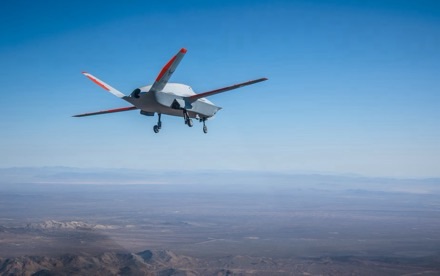
The Air Force Research Laboratory’s Aerospace Systems Directorate successfully flew the XQ-67A, an Off-Board Sensing Station, uncrewed air vehicle Feb. 28, at the General Atomics Gray Butte Flight Operations Facility near Palmdale, California.

The XQ-67A is the first of a second generation of autonomous collaborative platforms. Following the success of the XQ-58A Valkyrie, the first low-cost uncrewed air vehicle intended to provide the warfighter with credible and affordable mass, the XQ-67A proves the common chassis or “genus” approach to aircraft design, build and test, according to Doug Meador, autonomous collaborative platform capability lead with AFRL’s Aerospace Systems Directorate. This approach paves the way for other aircraft “species” to be rapidly replicated on a standard genus chassis.

This new approach also responds to the challenge of Great Power Competition by speeding delivery of affordable, advanced capability to the warfighter.

“This approach will help save time and money by leveraging standard substructures and subsystems, similar to how the automotive industry builds a product line,” Meador said. “From there, the genus can be built upon for other aircraft — similar to that of a vehicle frame — with the possibility of adding different aircraft kits to the frame, such as an Off-Board Sensing Station or Off-Board Weapon Station.”
So, what is an autonomous collaborative platform?

“We broke it down according to how the warfighter sees these put together: autonomy, human systems integration, sensor and weapons payloads, networks and communications and the air vehicle,” Meador said.

“We’ve been evolving this class of systems since the start of the Low Cost Attritable Aircraft Technologies initiative,” he added.

The major effort that initially explored the genus/species concept was the Low Cost Attritable Aircraft Platform Sharing, program, which fed technology and knowledge forward into the OBSS program that culminated with building and flying the XQ-67A, Meador said.

“The intention behind LCAAPS early on was these systems were to augment, not replace, manned aircraft,” said Trenton White, LCAAPS and OBSS program manager from AFRL’s Aerospace Systems Directorate.

In late 2014 and early 2015, the initial years of the LCAAT initiative, the team began with some in-house designs, for which Meador credits White, who led the studies early on that evolved into the requirements definition for the Low Cost Attritable Strike Demonstrator, or LCASD, Joint Capability Technology Demonstration. The LCASD team defined, designed, built and tested the XQ-58 for the first time in 2019.

“The first generation was XQ-58, and that was really about proving the concept that you could build relevant combat capability quickly and cheaply,” White said.

The OBSS program built upon the low-cost capability that LCASD proved by leveraging design and manufacturing technology research that had taken place since the first generation and was directed to reduce risk in the development of future generations, White added.

“We had always intended from the start of LCAAT to have multiple vehicle development spirals or threads of vehicle development,” White said. “Then once the vehicle is proven ready, you can start integrating stuff with it, such as sensors, autonomy, weapons, payloads and electronics.”

With the XQ-67A, the team is using the platform-sharing approach or drawing leverage from automotive industry practices.

“We are looking to leverage technology development that’s been done since XQ-58, since that first generation,” White added.

With advancements in manufacturing technology since the XQ-58, the team aimed to use that system and the technology advancements to create a system design with lower cost and faster build in mind.

“It’s all about low cost and responsiveness here,” White said.

The team began discussing LCAAPS in 2018, focusing on the notion of “can we provide the acquirer with a new way of buying aircraft that is different and better and quicker than the old traditional way of how we build manned aircraft,” Meador said. “Which means we pretty much start over from scratch every time.”

Instead, the team considered the same approach that a car manufacturer applies to building a line of vehicles, where the continuous development over time would work for aircraft, as well. 

“It’s really about leveraging this best practice that we’ve seen in the automotive and other industries where time to market has decreased, while the time to initial operating capability for military aircraft has increased at an alarming rate,” White said.

With this genus platform, White said a usable aircraft can be created faster at a lower cost with more opportunities for technology refresh and insertion if new models are being developed and rolled out every few years.

AFRL harnesses science and technology innovation for specific operational requirements to ensure meaningful military capabilities reach the hands of warfighters. The XQ-67 is the first variant to be designed and built from this shared platform, White said.

“The main objectives here are to validate an open aircraft system concept for hardware and software and to demonstrate rapid time-to-market and low development cost,” he added.

This project looked at incorporating aspects of the OBSS and the OBWS to different capability concepts. The OBSS was viewed as slower while carrying sensors but have longer endurance, while the OBWS was considered faster and more maneuverable, with less endurance but better range.

“We wanted to design both of those but figure out how much of the two you can make common so we could follow this chassis genus species type of approach,” Meador said.

XQ-67A has been just over two years in the making, moving quickly through the design, build and fly process. While the team initially worked with five industry vendors, AFRL decided at the end of 2021 to exercise the opportunity to build the General Atomics design.

This successful flight is initial proof that the genus approach works, and aircraft can be built from a chassis.

“This is all part of a bigger plan and it’s all about this affordable mass,” Meador added. “This has to be done affordably and this program — even though there’s an aircraft at the end that we’re going to get a lot of use out of — the purpose of this program was the journey of rapid, low-cost production as much as it was the destination of a relevant combat aircraft.”

This signals to other companies that there is a new approach to constructing an aircraft, moving away from the conventional method of starting from scratch, Meador said.

“We don’t have the time and resources to do that,” Meador said. “We have to move quicker now.”

By Aleah M. Castrejon, Air Force Research Laboratory Public Affairs
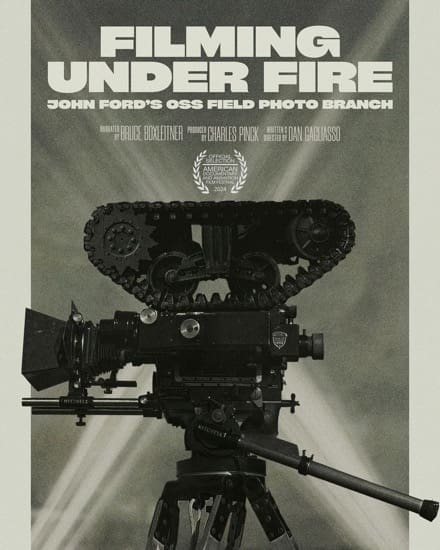
“Filming Under Fire: John Ford’s OSS Field Photo Branch” from the OSS Society

Wednesday, March 13th, 2024

Hollywood director John Ford, who commanded the Off ice of Strategic Services Field Photographic Branch, received six Academy Awards, including four for Best Director.

His WWII service is the subject of the OSS Society’s new short documentary, “Filming Under Fire: John Ford’s OSS Field Photo Branch”

vimeo.com/osssociety/filmingunderfiretrailer

Tactical Distributors – Tiger Shark Sun Shirts in New Patterns


Wednesday, March 13th, 2024

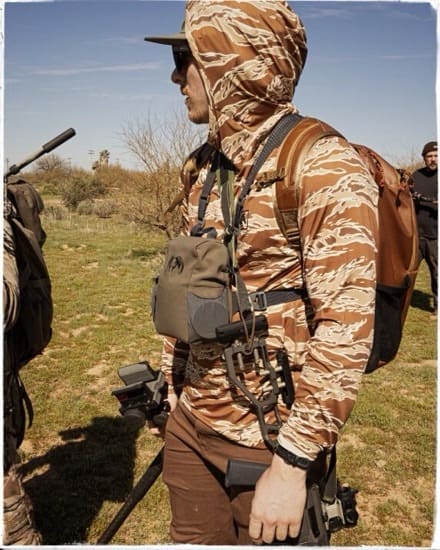
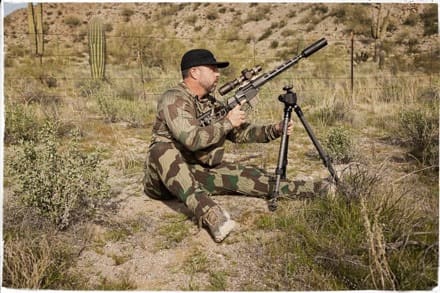
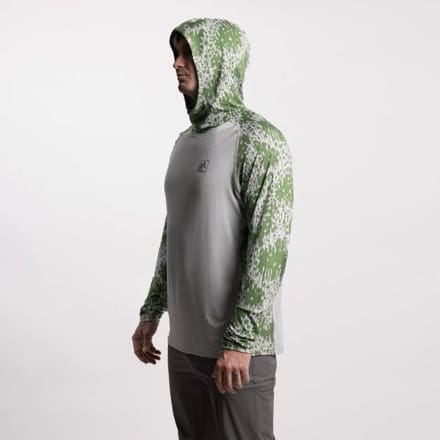
Made from the same 4-way stretch fabric as their Shooter Shirts, the Tiger Shark Sun Shirt is meant to protect you from sun damage. It incorporates moisture wicking material with a hood and thumb cuffs for maximum coverage.

Offered in Desert Tigerstripe, Bulgarian Frogskin, and Splittertarn in sizes Small – 3XLarge.

www.tacticaldistributors.com/products/td-tiger-shark-sun-shirt-2-0

Air Force Special-Order Uniforms Provide Accommodations

Wednesday, March 13th, 2024

WRIGHT-PATTERSON AIR FORCE BASE, Ohio (AFNS) —  

Military uniforms are designed to accommodate most body types, but many individuals face difficulty finding a good fit based on unique proportions or even medical needs.

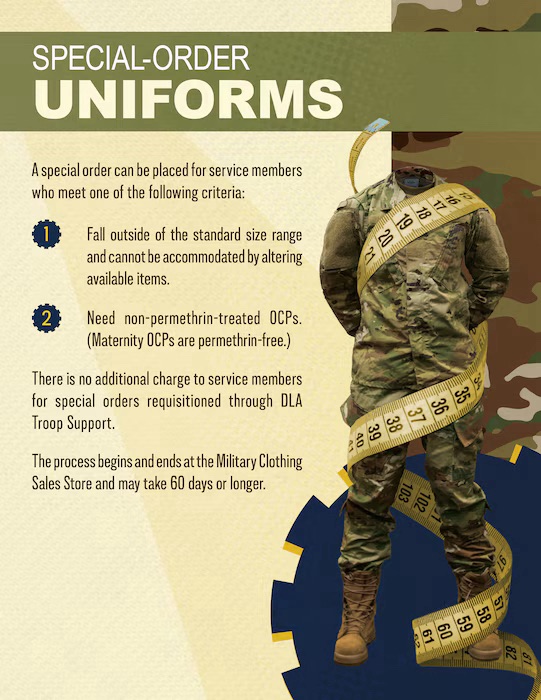
The Air Force provides special-order – often used interchangeably with special-measurement which is the most common type of special order – uniforms to service members who fall outside of the standard size range. There are also options for those who need non-permethrin-treated operational camouflage pattern, or OCP, uniforms. Permethrin is an insect repellent. The special-order process allows service members to comply with military standards and maintain a professional appearance without incurring additional costs.


“What the customer pays is the standard price of the item,” said David James, Defense Logistics Agency Troop Support Customer Cell chief. The DLA Troop Support customer is the Army Air Force Exchange Service, or AAFES, which operates the Military Clothing Sales Store, or MCSS, on behalf of the Department of the Air Force.

“MCSS locations purchase uniforms from DLATS [commonly used as an abbreviation for DLA Troop Support] at cost and sell at cost,” said Shawn Martinson, AAFES military clothing buyer. “If a service member requires clothing or footwear that is unavailable in the sizes provided in store and they cannot be accommodated by altering an available item, the military clothing associate prepares a special-measurement requisition through DLATS.”

When the Air Force transitioned to OCPs, Lt. Col. Katie Henschel, a program manager with the U.S. Transportation Command, noticed she broke out in hives during duty days.

“I had red, bumpy, itchy skin all along my arms and legs whenever I was in uniform; however, over the weekend, my skin would return to normal,” Henschel said. “My medical provider suspected an allergic reaction to the permethrin-treated OCPs. Their advice was to see if non-permethrin-treated OCPs were an option.”

The special-order process begins and ends at the MCSS.

First, a service member tries on several standard sizes to determine if a common size garment can be used. If not, the store associate indicates the best fitting standard size, describes how the garment fits improperly, and takes the service member’s body measurements.

Forms for special-order uniforms are completed and submitted to either DLA Troop Support or the Air Force Clothing and Textile Liaison Office, or AFCTO. The AFCTO, part of Agile Combat Support’s Human Systems Division, assists those unfamiliar with the special-order process by guiding them and reviewing their requests for completion prior to submission to DLA Troop Support. Upon receipt of the special-order request, DLA Troop Support puts the order on contract with their vendor. Finally, the DLA Troop Support vendor develops the requested item and ships it to MCSS for customer pickup.

The special-order process for footwear is similar but may require a visit to a healthcare provider if a medical condition is confirmed or suspected. A healthcare professional will take foot measurements and tracings and fill out required forms. The paperwork is then given to MCSS for requisition.

“Most special orders can be filled in 60 days, but depending on the item there may be exceptions,” James said.

By Maj Tiffany Low, Air Force Life Cycle Management Center, Agile Combat Support Directorate

Gingers Tactical Gear – TOTEM Pouches

Tuesday, March 12th, 2024

I met a great crew of young men from Poland who are building some awesome gear. They’ve got a whole line of cool stuff but I wanted to show you their new TOTEM pouches.

Attachment.png

Offered in 5.56, 7.62, and 9mm versions, they feature injection molded inserts.

1__#$!@!#__Attachment.png

Fixed PALS webbing has been replaced with a stiff mounting surface which together with dedicated mounting straps ensures stable mounting. I’ve never seen anything quite like it.

2__#$!@!#__Attachment.png

3__#$!@!#__Attachment.png

4__#$!@!#__Attachment.png

The integrated PALS slots not only give the TOTEM pouches their name, but also enable stacking of pouches. Additionally, the bottom of the pouch is partially open, preventing moisture from collecting inside.

5__#$!@!#__Attachment.png

The Tegris mounting plates are ambidextrous and the rifle TOTEM pouches can be mounted vertically or horizontally, while the pistol pouches can be mounted vertically or at 45 degrees.

Available in 7 colors and made in Poland from American materials.

gtg.com.pl/en/shop

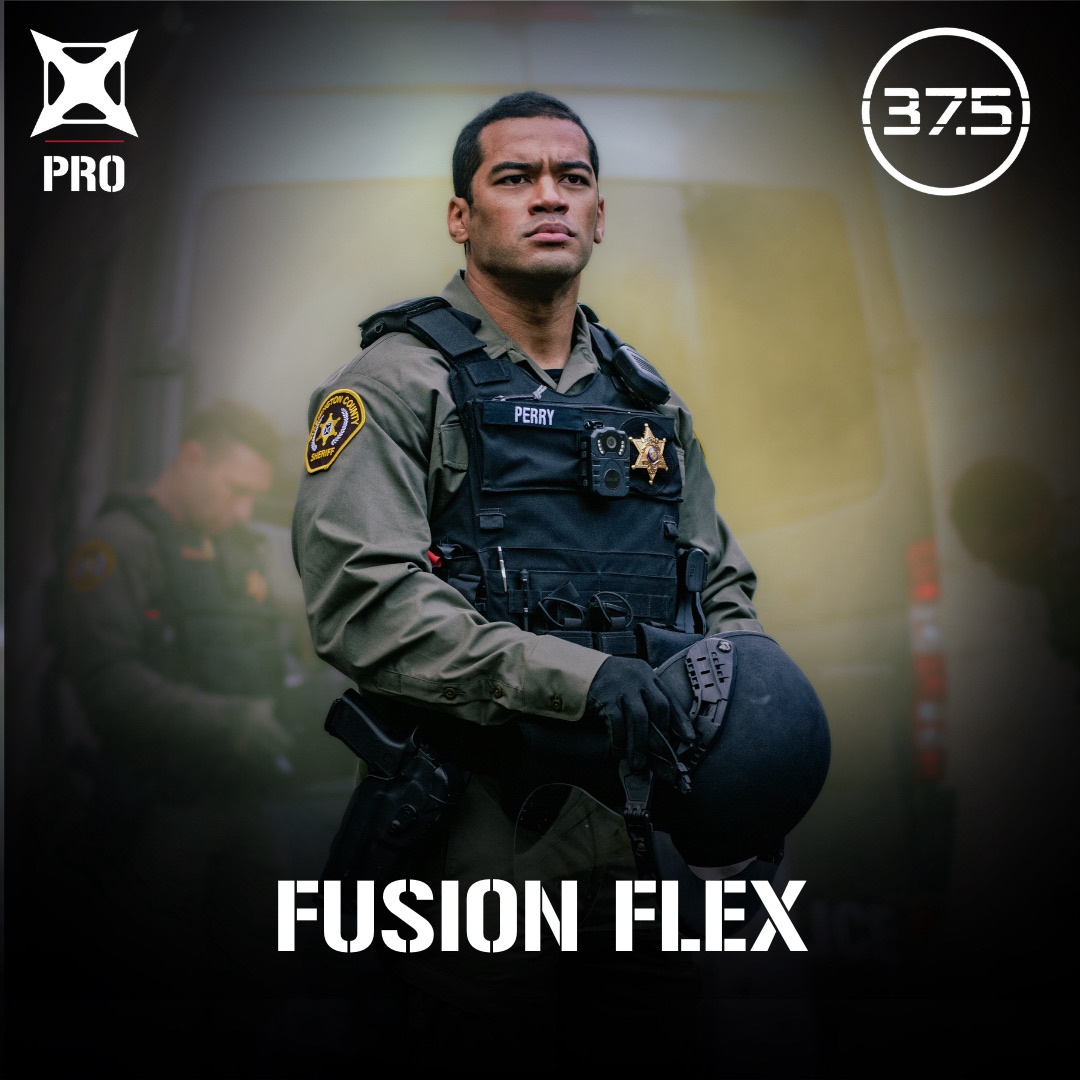
Tactical Tuesday: Feel the Coolness of Fusion Flex, Powered by 37.5 Technology

Tuesday, March 12th, 2024

Fusion Flex is the first Vertx Pro uniform that ingeniously integrates 37.5® Technology into both shirt and pants. Think of this evaporative cooling technology as your personal thermostat, keeping sweat at bay and your body temperature just right for ultimate comfort. Plus, it’s a natural odor-buster that stays effective for the garment’s entire lifespan.

Available in four colors and tailored fits for both men and women – Fusion Flex provides comfortable flexibility without compromising its durability.

Check out the Fusion Flex Collection and other Vertx products with 37.5® Technology.

Beretta PMX Now Available In Tigerstripe

Monday, March 11th, 2024

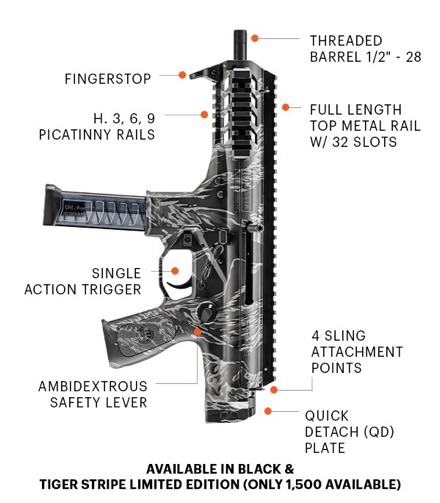
Beretta is offering a semi-auto pistol version of the PMX submachine gun introduced in 2017.

This direct blow back design features a threaded 6.9″ cold hammer forged barrel (½” x 28 tpi) and Picatinny rails at 12, 3, 6, and 9 o’clock as well as ambidextrous controls.

Initially available only in Black, there are a limited number (1,500) in Black Tigerstripe.

www.beretta.com/en-us/product/pmxs

AARDVARK Tactical’s PROJECT7 Armor Updates XPV, Expands Production

Monday, March 11th, 2024

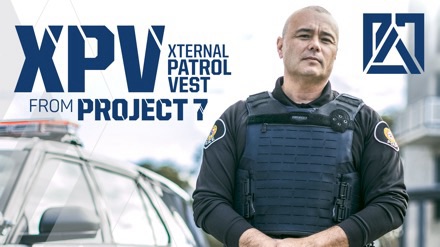
La Verne, CA: PROJECT7 Armor is pleased to announce new additions to the in-demand Xternal Patrol Vest (XPV) product line as well as the company’s production process. Effective immediately, the XPV is available in a new Uniform style carrier as well as two new colorways, navy blue and tan 499. In addition to the expanded XPV product options, PROJECT7 (P7) is increasing production capacity for all products. Both updates are driven by increased demand for PROJECT7’s industry-leading tactical armor systems.

The XPV launched in the spring of 2023 and since then, has been in demand by law enforcement and firefighters. The platform was designed to reimagine how police officers, detectives, K-9 handlers, firefighters, and paramedics are armored. The new uniform carrier and two new color options come in response to customer demand and bring the total number of color options to seven.

This product update aligns with the XPV’s intended goal to provide customizable solutions for individual officers. The vest offers the benefits of a four-panel, tactical vest shape in a patrol-compatible vest that has multiple configurations to fit specific use cases. The XPV can be worn with its external carrier and ballistics alone or, for missions that require concealment or when wearing a Class A uniform, the optional internal concealable carrier and ballistic panels can be worn under a uniform or street clothes.

One of the XPV’s most revolutionary features is the four-panel design. While traditional patrol vests utilize a two-panel construction (front and rear), the XPV’s four-piece design (front, rear, and two cummerbunds) supports better sizing and greater coverage without sacrificing comfort. This improves mobility and wearability over traditional two-panel designs while also providing better coverage. Unlike other vests on the market, the XPV adapts to officers over time, offering a continuous fit over the service life of the vest regardless of officers’ weight fluctuation or changes to body composition.

In addition to the updated XPV product options, PROJECT7 is also expanding its production capacity across its product lines. This is in response to a near 100% growth in PROJECT7 sales year-over-year. With the culmination of years of research, development, consultation, and testing, PROJECT7 has grown to offer a wide variety of platforms, helmets, and ballistic shields – aimed at providing the right solution for every user and threat.

Speaking about the development of PROJECT7, founder Jon Becker said, “We are extremely excited to expand the XPV product line and grow our manufacturing capability. When we started PROJECT7, it was our dream to build the absolute best possible armor system in direct cooperation with our end users. The rapid adoption we have seen, combined with our clients’ love for the brand has made that dream a reality and we are profoundly grateful for all the support. An end user entrusting their safety to PROJECT7 is the highest possible compliment we can receive.”

To learn more about the XPV, visit https://shop.aardvarktactical.com/pages/project-7-armor-xpv To learn more about all of PROJECT7’s products, visit www.project7armor.com