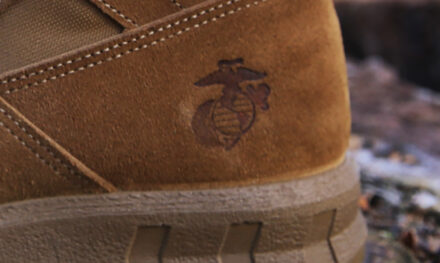
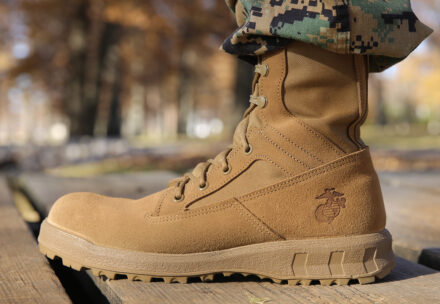
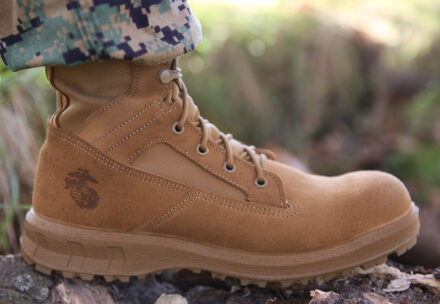
Belleville Boot Company is introducing the newest Marine Expeditionary Footwear – the 510 MEF – representing a breakthrough in combat boot technology and one of the lightest boots authorized for Marines to wear.
Fusing a moccasin-like Strobel constructed upper to an ultralight polyurethane (PU) midsole, the 510 MEF proves to be one of the lightest, most flexible, and most durable combat boots on the market. Designed to perform; the 510 MEF maintained stability, durability, and comfort across the multiple environments tested by Marines.
In addition, the 510 MEF features:
Cool-Mesh hydrophilic lining to wick moisture away from the foot
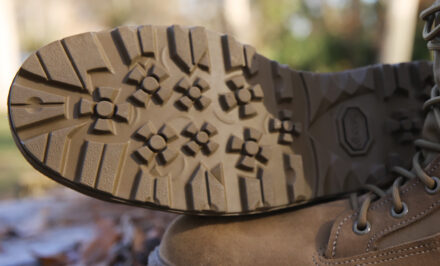
Long-wearing Vibram® 100% rubber outsole
Low-density PU midsole to minimize weight and enhance shock absorption
Berry Compliant / USMC Certification #001375
The 510 MEF will be available in most Marine Corps Exchange stores (MCX) in late February 2022 as well as online at bellevilleboot.com.
For more information about the Belleville 510 MEF boot, visit www.bellevilleboot.com; connect on Instagram @bellevillepublicsafety.
Posted in Advertiser, Boots, Press Release | Comments Off on Belleville Boot Company’s New Ultralight Certified Marine Corps Combat Boot
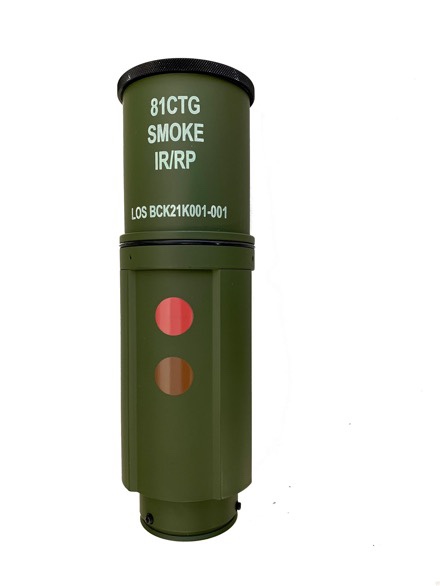
Maske 81mm – Rheinmetall unveils new version of its tried-and-tested, fast-acting smoke/obscurant grenade
Rheinmetall has developed a new version of its tried-and-tested, highly effective Maske smoke/obscurant grenade.
Like other smoke/obscurant grenades of the Maske family, the Maske 81mm is based on a bimodular, bi-spectral ammunition concept. It consists of a fast-acting decoy module that generates intense blooming thanks to proven decoy technologies. It is paired with a long-lasting concealment module whose visible and infrared smoke/obscurant interrupts the enemy’s line of sight in both the visual and infrared spectrum. As a result, the Maske smoke/obscurant grenade provides armoured vehicles with effective protection from visual and infrared optical aiming devices as well as target sensor heads, laser target illuminators and laser rangefinders.
The Maske 81mm can be launched from any 81mm cal. smoke grenade dispenser, including legacy launchers. This makes the Maske 81mm particularly interesting for customers who use heavy fighting vehicles equipped with smoke grenade launchers of former Warsaw Pact make.
Furthermore, Maske fast-acting smoke/obscurant grenades also come in a wide variety of other calibres.
Posted in Advertiser, Ammo, Press Release | Comments Off on Maske 81mm – Rheinmetall’s Smoke/Obscurant Grenade
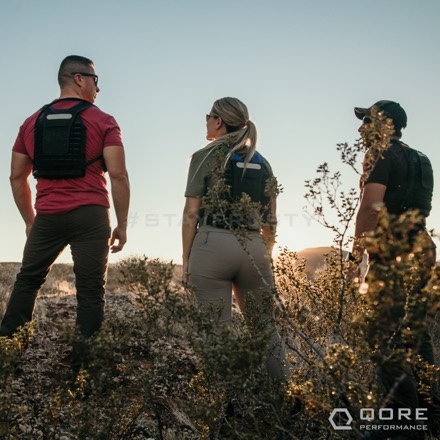
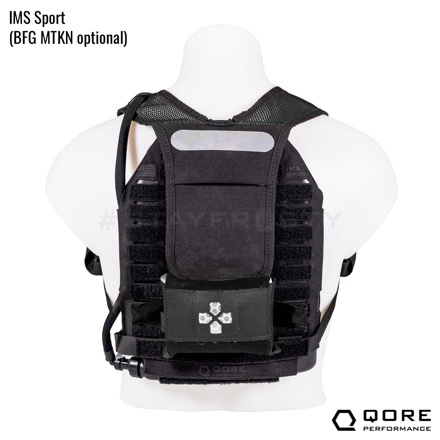
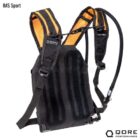
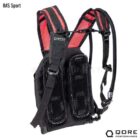
Sterling, VA: Answering calls from outdoor enthusiasts of all types to make the environmental inoculation and performance-enhancing powers of IcePlate Curve available beyond military, law enforcement, and commercial enterprise users, Qore Performance, Inc., is releasing the newest addition to their popular IMS (IcePlate MOLLE Sleeve) line: IMS Sport.
IMS Sport provides the duty-grade thermoregulation and hydration for which IcePlate is known, but in a slim and ergonomic backpack-style form factor that is just as easily worn under a jacket as it is over a moisture-wicking t-shirt or even bare skin; ideal for year-round use in skiing, snowboarding, hunting, hiking, SUP, range safety, and more. Crafted with their unique IcePlate EXO (ICE) laminate for an incredible strength-to-weight ratio, IMS Sport powers athletes in every outdoor environment.
“IMS Sport brings our vision to Build A Superhuman Future one step closer,” says Justin Li, Qore Performance Co-Founder and CEO, “by unlocking the incredible power of IcePlate Curve for outdoor enthusiasts. The positive physiological boost provided by IcePlate Curve is unmatched. This is the next frontier in human performance and IMS Sport now makes this capability available to a whole new segment of the population.”
Available in Blaze Orange, Range Red, Obsidian Black, Royal Blue and Safety Yellow, IMS Sport is in-stock and shipping now. IMS Sport Sleeve and IcePlate® Curve are 100% Made in the USA from US materials.
As the inventors of specialized and consumable thermoregulation for PPE users, Qore Performance bridges the gap between human and machine. Their IceAge Ecosystem protects over 30,000 daily active enterprise safety users. In addition to their military, law enforcement, and civilian customers, dozens of America’s Fortune 1000 companies including Dutch Bros Coffee, Boeing, Charlotte Area Transit System, Marathon Petroleum, Valvoline Instant Oil Change, Costco, and FedEx, depend on Qore Performance to safeguard their teams in the field. Qore Performance enterprise customers have worked over 4,000,000 hours since 2017 without a single heat injury.
SWANSBORO, N.C. – February 1, 2022 – High Speed Gear® is honored to announce the addition of Maj. Gen. Brian Winski, U.S. Army (Ret.) to its Board of Directors.
Mr. Winski has recently retired from 37 years of honorable and faithful service from the United States Army. During Mr. Winski’s service he has served as the Commander of the famed 101st Airborne Division. Some of Mr. Winski’s other assignments include service with the 82nd Airborne Division, 1st Cavalry Division and 3rd Infantry Division. A proven leader, Mr. Winski has participated in multiple combat operations during Operation Desert Storm, Operation Enduring Freedom and Operation Iraqi Freedom. Among many awards, Mr. Winski has earned notable personal awards such as the two Distinguished Service Medals, three Legions of Merit, six Bronze Star medals including one for Valor for his actions under fire in Baghdad, Iraq in 2006, Combat Infantryman Badge with star noting combat experience in two campaigns, along with Master Parachutist Jump Wings. Among Mr. Winski’s awards, he has also attended schools and courses such as Ranger school, Airborne, and Air Assault to name a few.
“I have an intense passion for ensuring our warfighters and law enforcement have the best equipment possible.”, said Mr. Winski. “High Speed Gear® products and Comp-Tac® Holsters do just that – it is exceptional gear that provides unparalleled protection, mobility, and versatility and makes the user more capable and effective. It’s no surprise that some of the most elite units in the service equip their warriors with HSGI products.”
Mr. Winski will be joining a team of six other members on the High Speed Gear® Board of Directors.
“We are very excited to have Mr. Winski come aboard the High Speed Gear® and Comp-Tac® family.”, said Chief Operating Officer Bill Babboni. “Mr. Winski brings knowledgeable, first-hand experience to our team which we at High Speed Gear® and Comp-Tac® value most.”
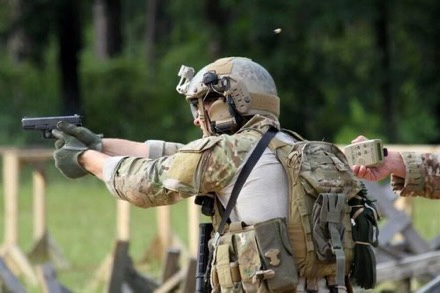
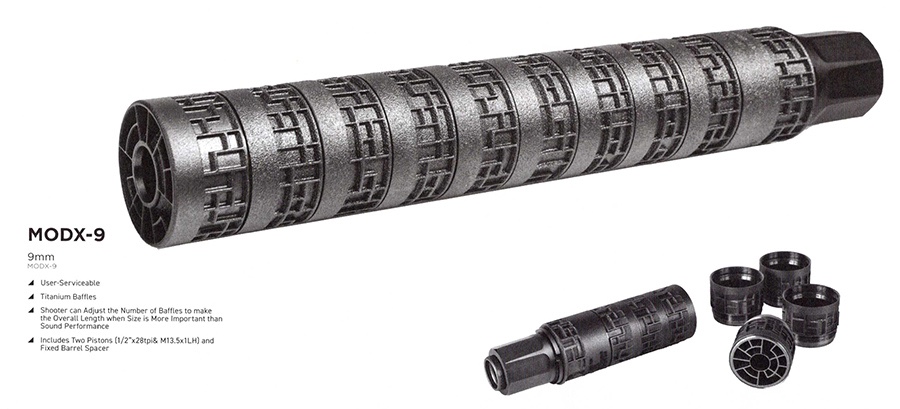
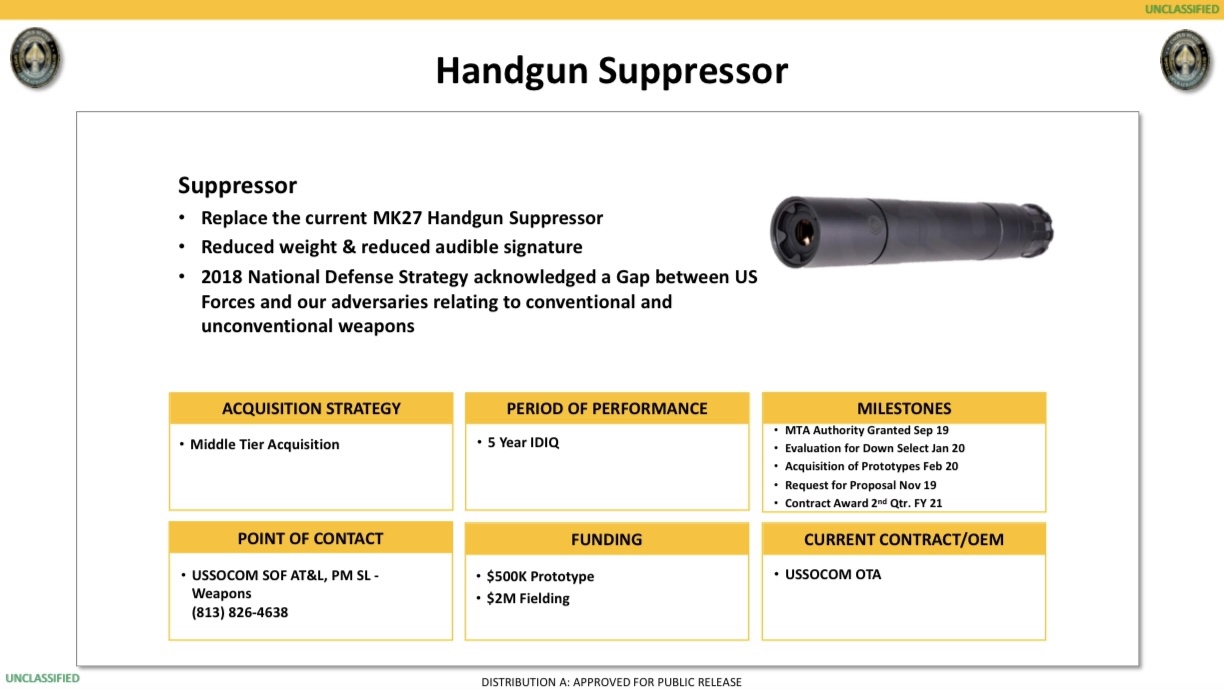
Last fall, USSOCOM selected the SIG MOD-X9 in 9mm as the suppressor for use with the Mk27 handgun, a SOF unique pistol which is known commercially as the Glock 19 and is currently in service in several variants.
The user configurable MOD-X9 Suppressor is comprised of seven, 3D-printed titanium baffles and an encapsulator with 21-points of impact adjustment. The length is adjustable from 3.25 inches to 7.5 inches, the weight is adjustable from 5 ounces to 8 ounces, and the sound is adjustable from 127.4dB to 145.3dB.
With a handgun suppressor requirement on the books for years, the capability was finally acquired via an Other Transactional Authority acquisition which saw several manufacturers offer commercially available suppressors compatible with the Glock handgun.
Participating vendors demonstrated their suppressors to the command during a private range event in 2020. Then, they selected two suppressors to move forward with operator testing and a technical evaluation at Naval Surface Warfare Center – Crane which handles procurement of weapons for Special Operations Forces. The result was selection of the SIG MOD-X9.
Due to the nature of the procurement, traditional steps aren’t necessarily followed so unfortunately, there has been no public notice of the buy. Regardless, the first tranche of suppressors for the Mk27 handgun should be hitting units by this summer.
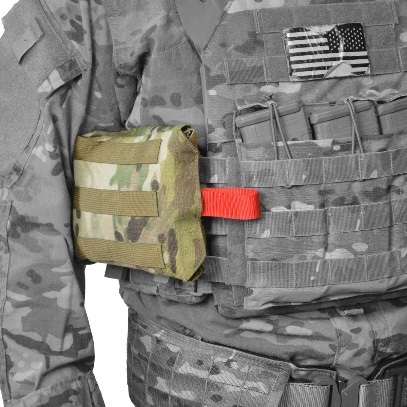
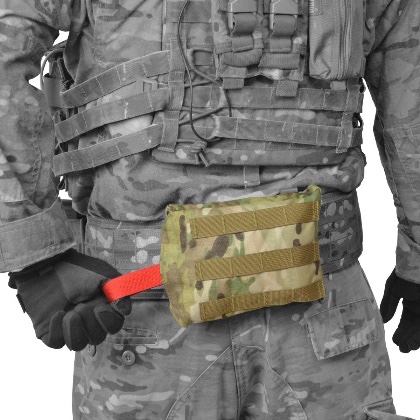
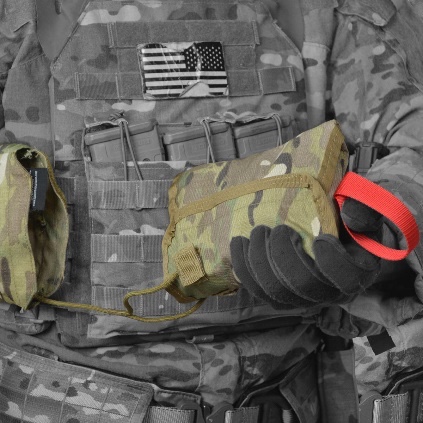
The TacMed™ Adaptive First Aid Kit, or AFAK, is a compact kit that provides an individual soldier or law enforcement officer with the necessary lifesaving equipment to effectively treat injuries commonly associated with combat trauma.
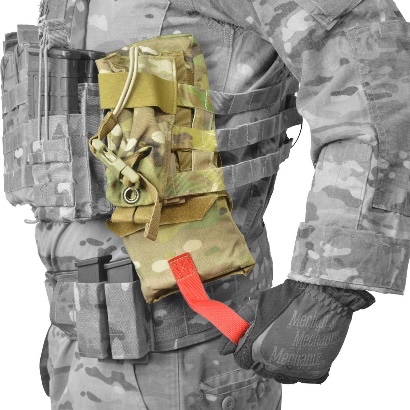
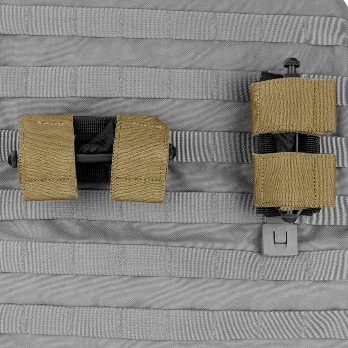
The innovative design of the pouch and included tourniquet strap allow for the kit to be mounted either vertically or horizontally to any MOLLE surface, allowing the user to take advantage of unused space and prioritize preferred individual equipment layouts.
The AFAK can also be adapted to a MOLLE belt for operators that require a self-aid capability when not able to find space on a body armor system.
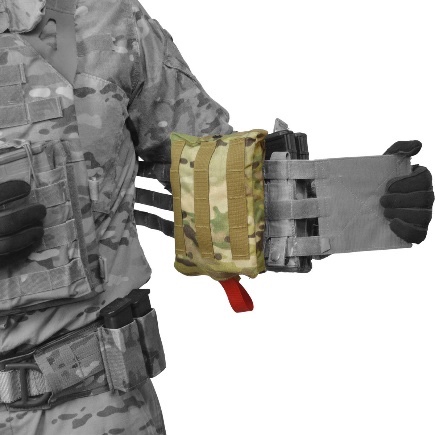
The removable insert and optional lanyard allow for “small of the back” placement with positive retention of the kit.
An additional MOLLE platform on the exterior of the pouch aids in maximizing available space for user equipment preference. The included tourniquet strap system is also fully adaptive for vertical and horizontal placement based on user preference for access with both hands.
New Inside-the-Waistband Nylon Holster is Moldable to Virtually Any Handgun
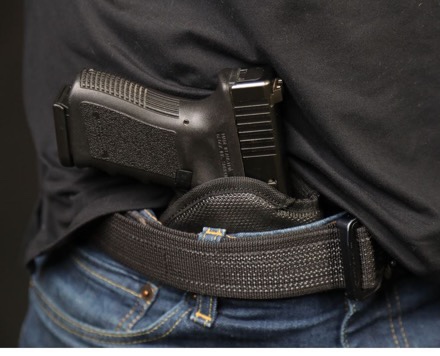
VIRGINIA BEACH, Va. – January 18, 2022 – Blackhawk®, a leader in law enforcement and military equipment for over 20 years, announces the introduction of its new TecGrip FormLok™ IWB holster, the industry’s first nylon holster that can be custom molded to fit almost any handgun. The TecGrip FormLok makes for a straightforward and simple concealed carry solution with all the TecGrip performance shooters know and love, but now with more passive retention and a customized fit.
Finding a compatible holster with today’s wide variety of available handguns can be a daunting task, especially for certain handguns like Walther, SCCY, Taurus and others, or for guns with special configurations such as threaded barrels and optics. TecGrip FormLok makes finding the right holster easy, no matter your handgun.
The TecGrip FormLok is crafted with moldable Memory-Lok® material which, when used with the included “dunk bag” and T-handle molding tool, allows a user to mold the holster to fit their specific handgun and leverage passive (friction) retention. The holster is also re-moldable. Consumers who buy a similar sized handgun later, can simply re-mold the FormLok to the new gun. The holster can also be molded to accept optics with its low-cut front sight track channel.
The exterior of the holster is covered in a textured material which clings to fabric and the body, providing users with a no-clip, inside-the-waistband carry solution. Optics compatible, the TecGrip FormLok utilizes low-cut, sight-track geometry that maintains a slim design. The holster is also completely ambidextrous and comes with a low-profile shirt guard to make it a more flexible and comfortable carry option for any shooter.
With six sizes available to fit a wide spectrum of handguns from micro sub compacts to full-sized autos, all TecGrip FormLok models have an MSRP of $54.95. The new holster will be shown publicly for the first time during the 2022 SHOT Show and will be available at retail this April. To learn more about the TecGrip FormLok or other Blackhawk holsters, check out Blackhawk.com.
As a leading senior creative manager for multiple industry brands, Rose now leads SENTRY’s marketing in catalog, advertising, packaging, social and event efforts.
Virginia Beach, Va. (January 2022) – SENTRY Products Group, a leading manufacturer and distributor of products focused on protection, storage, and transportation of outdoor, military, and law enforcement equipment, signed an industry creative veteran, Jeff Rose, to spearhead SENTRY’s new marketing initiatives as the Director of Marketing and Creative.
Rose’s previous 18-year experience was as Creative Director with Vista Outdoor and the ATK family of companies. He built and led creative teams that propelled the companies’ extensive product lines into industry-leading brands that generate billions of dollars in annual revenue. His “roll up his sleeves” style of leadership allowed him to engage with multiple teams to create effective creative assets. With efficiency key to the success of generating and managing multiple creative products, Rose produced a sophisticated workflow management system to organize, traffic, and archive job requests and work processes for the development of assets for multiple campaigns and new product launches. His deep passion for branding and communicating through various visual communication platforms that cover the print and digital spectrum is evident in the new direction of SENTRY Tactical.
“This is a coming home moment for me,” said Rose. “After several years working on the agency side, I was given the chance to work with one of the industry’s most entrepreneurial companies in the early 2000s. It was there I learned about our unique industry and was allowed to find my creative voice. Since then, I was able to work with a major player in the outdoor industry and was responsible for their brand’s look and feel, and communicated the brand through print and digital platforms. At SENTRY I am now working alongside many of the same individuals as when I started in the industry. I am honored and excited to be part of the SENTRY Tactical team.”
“Jeff has a big task bringing our various brands together under the SENTRY banner,” Terry Naughton, President of SENTRY, added. “In his experience, he has tackled the same situation, in which he must tell the story of the many brands without losing sight of the story and mission behind the brand. Having worked directly with Jeff in the past, I am confident he will not only handle the marketing challenge, but he will also be integral in making this company internationally recognized.”
Posted in Advertiser, Industry, Press Release | Comments Off on Jeff Rose Brings Over 20-Years of Innovative Marketing and Creative Experience as the New Director of Marketing at SENTRY Products Group