HyperStealth Biotechnology has released a webpage specifically dedicated to cataloging their EuroSpec series of camouflage patterns.

www.hyperstealth.com/EuroSpec-history


HyperStealth Biotechnology has released a webpage specifically dedicated to cataloging their EuroSpec series of camouflage patterns.
www.hyperstealth.com/EuroSpec-history
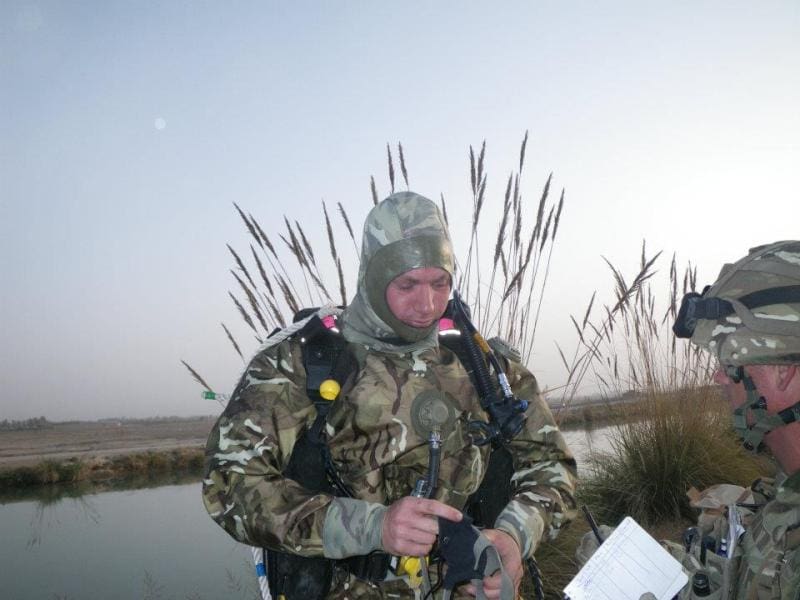
Amazingly, the UK MoD has even procured Dry Suits in MTP but serving troops still can’t purchase anything in the pattern.
K. Dominic Cincotti is calling 2012 the year of camouflage and he might just be right. Camo is going to be all over the place in 2012, (just don’t hold your breath waiting for the US Army to make a decision anytime soon). However, plenty of new camouflage patterns and signature management technologies are going to become available for those in need. One of the companies at the forefront of this new emphasis is Cincotti’s company, Special Operations Apps.
In a press release, Cincotti said, “Camo, a multibillion-dollar business, will make huge gains in 2012, because it will mark a turning point in how camo is designed and made. Camouflage design has changed very little for centuries — until now, but new technologies, focused on how we design and manufacture camo, will produce a new shift in this market estimated to be in the billions.” We couldn’t agree more.
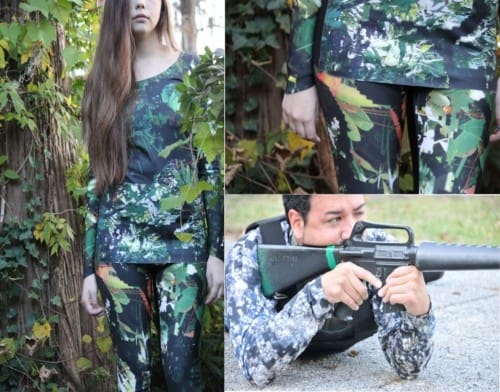
SOA has already begun to bring customized camouflage to the individual operator level with CamoScienceâ„¢ HD which combines a smartphone camera with an onboard app to produce a specialized camouflage pattern specifically for the area photographed (as seen above). The results are tuned for the environment it is produced in and can be exported for rapid, digital printing. But that’s just the tip of the iceberg. SOA and their sister company MW R&D have just been issued a patent for their new Modern Warfare Camoâ„¢ technology. In fact, it’s just been featured on popsci.com.

According to SOA, “Modern Warfare Camoâ„¢ is both active and adaptive simultaneous multispectral camouflage.” US Army SF Veteran David Mullins, SOA’s team leader of subject matter experts said, “This is a truly significant patent that has been issued to MW R&D because it is a future-proofed solution we have now.” It’s a stealth camo technology that combines high-definition video imagery, a flexible thin-film display, multiple layers of sensor-blocking nanomaterials, and miniaturized thermoelectric array devices. Together, these countermeasures mimic the operating environment, producing multispectral simultaneous adaptive concealment.
Velcro USA Inc, has announced its official launch of printed loop technology at Outdoor Retailer Winter Market 2012. This product allows loop product to blend with the camouflage patterns of soldier and professional user uniforms, thereby improving overall performance of clothing and individual equipment. That’s right, camouflage printed Velcro is finally available.
In a press release Velcro USA had this to say:
“Printed loop technology has been a priority for Velcro USA Inc since it was determined by the Department of Defense that signature management is paramount for our men and women in uniform. Focusing on every opportunity for improvement in signature management necessitated the development of previously unavailable printed loop that would blend seamlessly into combat uniforms.”
This isn’t the first time that Velcro has developed new products specifically for the military. They went on to say, “Velcro USA Inc has been working with the DoD for several decades to develop hook and loop technologies that directly meet unique mission needs. The company has recently invested significant energy in a robust research effort to arrive at next-generation products that improve performance of uniform and equipment for our soldiers and end-users. Notably, printing on loop type material is extraordinarily difficult, particularly when ensuring that the stringent technical requirements of the DoD are met.
“This printed loop technology is a breakthrough product that greatly enhances soldier performance in combat and meets a direct need of the US military. We are extremely proud at Velcro USA Inc. to work with the DoD to develop solutions for the needs of our men and women in uniform,†said Will Tagye, Senior Marketing Manager-Government for Velcro USA Inc. “Our employees in New Hampshire are dedicated to manufacturing in the United States and ensuring that we do not lose the capability to develop and field these vital technologies for our soldiers and professional users. This is just the beginning of many new exciting products to expect out of Velcro USA Inc.â€
The new printed hook and loop technology is available to DoD contractors and other tactical and commercial customers now. Interested parties may see the technology firsthand on several new pieces of equipment at the Shooting Hunting and Outdoors Show (SHOT) in Las Vegas, January 17-19, 2012 or at the Velcro USA Inc. Booth, #155-317, at Outdoor Retailer Winter 2012 taking place in Salt Lake City, January 19-21, 2012.

As signature management becomes more and more important, even the smallest of details need to be tended to. Liquid Icon, Inc realizes this and has developed a low infrared coating for protective eyewear that reduces IR signature under thermographic imaging. Liquid’s IR “Brimstone” Coating is an IR absorbing material equivalent to the resistive coating applied to military vehicles. It reduces IR reflection under illumination and is exclusively available on Liquid’s low profile Hellfire glasses/goggle model. The all encompassing Hellfire is ANSI Z87.1 – 2010 certified and utilizes a rapid transitioning photochromic ballistic lens installed into a 6061 billet alloy frame.
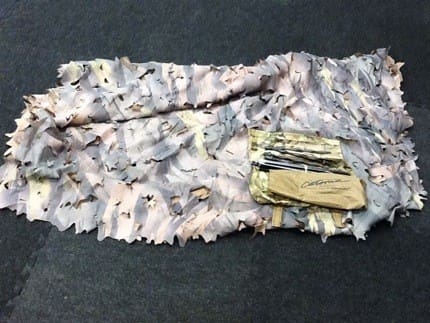
What started out as a project for snipers has evolved into an entire family of camouflage patterns. DEPSOC360 Camouflage Technology primarily relies on shape obfuscation to break up the very distinct silhouette of the human body. Additionally, it “is designed in layers, starting with solid base colors that represent the finest textures of the Military Operating Environment (MOE) and multiple layers of large asymmetric shapes that are typical of the natural scale and shape of the background texture, but not necessarily specific.”







MMI Tactical would like to know which of these patterns would suit you best for hunting. Visit their Facebook page and help them out.
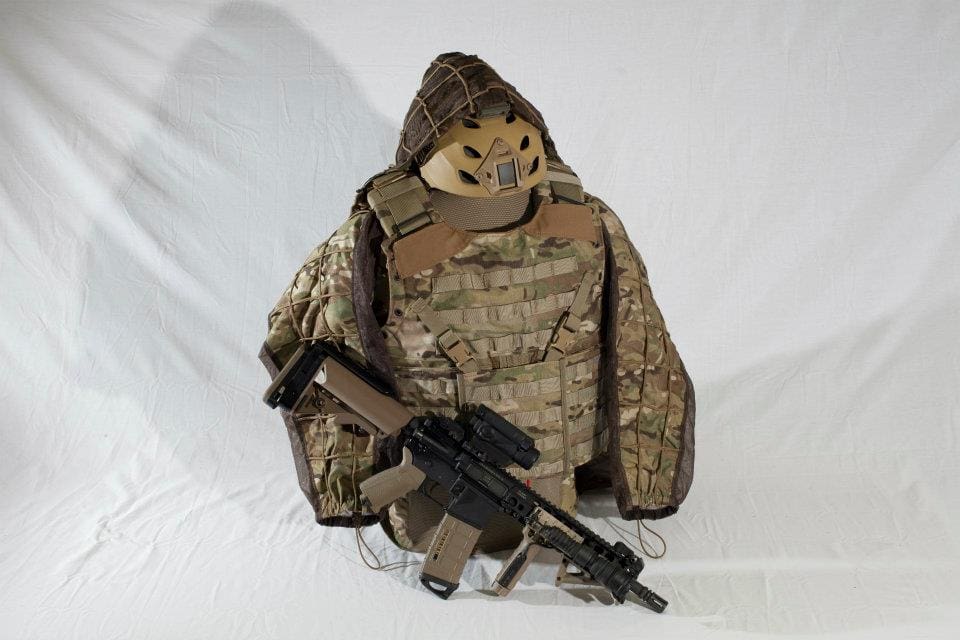
The A.R.C.C. (Armored Releasable Carrier & Concealment) from Battleline Industries has been in development for about a year-and-a-half. It is a modular armored carrier that accepts the popular BALCS cut soft armor and any standard SAPI, ESAPI or steel plate. According to Battleline Industries there are six distinct features that set it apart from its competitors.
1. It’s ability to take modular lightweight concealment “ghillie” panels which consist of two sleeve sections and a torso hooded section for the back that can be set up for different environments utilizing multiple sets of panels that are purchased separately. This way the sniper doesn’t have to make a new ‘ghillie suit” every time he goes somewhere new. This allows the sniper the ability to add more concealment than his regular carrier provides him depending on the mission specific need.
2. The A.R.C.C.’s one cable pull release system is very unique in the sense that the whole release action happens on the front panel. There is no more cable running to the back of the carrier system like most versions and no 3’ cable pull to get the carrier to cutaway. Another issue the A.R.C.C. solves is that the cable on the front panel only has a 10″ pull and runs very little risk of binding or getting pinched where the medic would be unable to pull the release like other variations. The problem with other products is the solider goes down and all his armor, gear and body weight is pinching the release cable in the back because of the release design.
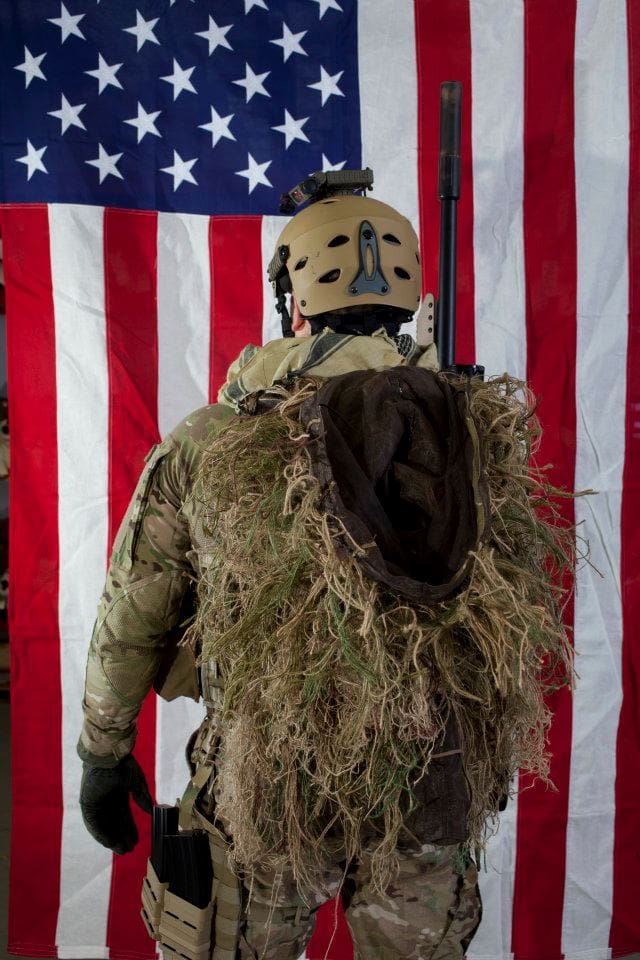
3. The A.R.C.C. uses no Velcro in crucial spots. The ONLY Velcro on the A.R.C.C. is used to close the plate harness and soft armor compartment which is against the operator’s body. This feature insures noise discipline and a carrier that won’t fall apart because it was held together by Velcro and the combat field conditions destroyed it from ever sticking together again.
4. The A.R.C.C. has a feature to accept a modular/removable 2″ leg sub-load adapter which allows the user to attach a holster or sub-load to the carrier and not the belt holding his pants up. This distributes the weight across the carrier and shoulders for a more comfortable feel without the operator having to pull up on his pants every five minutes.

5. The A.R.C.C. has a fully adjustable modular plate harness that accepts multiple sizes and thickness of hard armor.
6. The A.R.C.C. has an extremely durable; two layer Kevlar / Nomex fire resistant liner which protects the operator in a flame environment from the Cordura nylon from melting and dripping on his skin.
Made in USA!
Unheard of until recently, Battleline Industries has been hitting it hard, releasing new product after new product. We look forward to hearing about their next undertaking.
Digital Concealment Systems, makers of the A-TACS line of camouflage has filed suit against Canada-based Hyperstealth Biotechnology Corp in Georgia Middle District Court. It seems to be a peremptory move by DCS after receiving a cease and desist letter from Hyperstealth’s attorney regarding the new FG variant of A-TACS alleging that it is a virtual duplication of several of HyperStealth’s patterns including Ghostex Alpha and Delta, SpecAM, SOPAT, Eurospec, and CAMOPAT which have been public since 2005. Conversely, DCS asserts that their pattern was developed using different methods than those used by Hyperstealth and that A-TACS uses rounded shapes rather than straight, rigid pixilated shapes and contains far different repeat patterns.
Specifically, DCS is seeking judicial declaration of their use of the A-TACS Camo pattern and a ruling that A-TACS FG pattern does not infringe on HyperStealth’s designs.
Digital Concealment Systems v. HyperStealth Biotechnology Corp.
I’ve looked at the various patterns and I don’t see it but Hyperstealth must have felt they had good reason to send the cease and desist letter in the first place. Generally, these things don’t make it to trial and some sort of accommodation is reached. Hopefully, these two firms will as well.
Predator Intelligence has some great coverage of the issue including the exhibits that show the patterns in question.

















































































































