Phantom Lights

Archive for the ‘Contracts’ Category

ATLANTIC SIGNAL Receives Second Consecutive Multi-Year / Multi-Million Dollar Nationwide FBI Tactical Communications Contract for Special Operations Units and Hostage Rescue Team

Wednesday, September 9th, 2020

Atlantic Signal has been awarded its second consecutive multi-year contract to supply tactical communication equipment to both the FBI Special Operations Units (SOU) around the country as well as the Hostage Rescue Team (HRT) located in Virginia.

Having been awarded its initial nationwide FBI tactical communications contract in 2015, Atlantic Signal was challenged in 2019 with developing the next generation of tactical communications to meet a very different set of expectations.

To address an ever-changing radio landscape, the company developed a new multi-application, programmable push-to-talk that can be set up and customized for each individual operator’s specific preferences. The PTT, known as ‘THE SHIELD Push-to-Talk’, allows the Bureau to operate multiple radio platforms, ICS systems, smart phones, chat programs along with cross- banding capabilities. Additionally, custom plug and play cable accessories were designed for ‘THE SHIELD PTT’ systems.

In an effort to save the Bureau key financial resources, the Bureau-specific ‘SHIELD PTT’ model was designed to be compatible with Atlantic Signal radio and accessory cables already being used in the field from the previous 5 year contract purchases.

In addition to ‘THE SHIELD PTT’, Atlantic Signal co-developed an in-the-ear communication system known simply as ‘THE SHIELD’. While other two-way radio, in-the-ear, tactical communication systems utilize transmit microphones in the ear that pass TX via a bone or air microphone located inside the ear, it was Atlantic Signal’s desire to provide a system that utilized a micro-thin, yet robust, noise canceling boom microphone that could be positioned on either the right or left side of user’s face. Further, rather than use high-priced, multiple sized, regularly replaced ear tips, Atlantic Signal is providing custom earmolds for every operator with a secondary back up included as well. This allows for an individualized custom fit with little to no ear fatigue or dislodging issues. While ‘THE SHIELD’ was designed to also allow for multi-sized, disposable ear tips, the Bureau chose the custom earmold model recommended by Atlantic Signal.

The ‘SHIELD PTT’ was designed to allow the Bureau to ‘launch’ multiple comms systems from a single PTT model – thus, in addition to ‘THE SHIELD’ in-the-ear communication system, the Bureau selected  Atlantic Signal’s 3M/Peltor exclusive ComTac VI headset featuring the all new NIB feature.  The ComTac VI offers a new way to adjust the auditory settings of the headset for each mission. Traditionally, a headset has a set frequency response, and the operator can only increase or decrease the volume. The MAP function provides new advanced ambient listening modes that allow access to a variety of gain settings, but with frequency shaping, to enhance auditory performance in five conditions. The MAP Profiles have been designed with a variety of combat and combat support operations in mind.

NIB enables short-range, headset-to-headset communication in high noise environments, without the use of an external communications radio. The NIB function allows for 4 team members to speak simultaneously, and over 60 people, within a 10 – meter radius, to listen at any given time. Audio transmit is activated by either a voice activated switch (VOX) for hands free operations or by push-to-talk. The VOX switch is adaptive, meaning the threshold to activate will adjust automatically to the noise environment. To help reduce user burden, a tactile button has been added to the left ear cup that allows the user to easily turn on or off the function / and switch from VOX to PTT settings. The Bureau tested the ComTac VI extensively before choosing as there was a strong desire to utilize the NIB technology / capability as a wireless intercom – avoiding the expense and installation of additional hardware albeit it hardwired in a vehicle or aircraft or provided as a mounted/dismounted portable solution. The Bureau also selected the company’s wireless, gun mounted push-to-talk, Lo Vis R23 single and dual ear patrol kits and wired HAHO switch.


“It is an honor for our company to continue to provide two of America’s elite tactical units  communications equipment that meets their most stringent requirements. We began this relationship in the early 2010s when the Bureau’s previous supplier simply failed them. We spent nearly two years fine-tuning a multi-comms solution for them back then which resulted in a 5-year nationwide contract being awarded to our company in 2015. We are honored to receive our second consecutive 5-year contract after once again facing considerable competition during the selection phase,” stated Randall Hedrick, President and Managing General Member of Atlantic Signal.

Atlantic Signal is based out of Topeka, KS where they develop, design, manufacture and sell tactical communications and accessories. The company started in 1989 with a focus on tactical law enforcement. Today the company’s clients include NYPD ESU, LAPD, ATF, USMS, CBP, NSW, MARSOC, USCG and the FBI among thousands of military and law enforcement clients around the world.


atlanticsignal.com

L3Harris Technologies Equips the US Army’s Second Unit with Enhanced Night Vision Goggle – Binocular

Tuesday, September 8th, 2020

Highlights:

• U.S. Army unit receives more than 1,000 L3Harris high-tech devices

• Continued collaboration with the U.S. Army to deliver a combat-ready solution for the soldier

• Technology integrates smart data directly into the google enhancing situational awareness

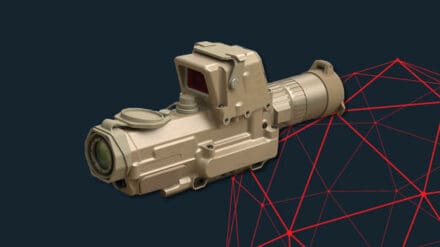
LONDONDERRY, N.H., Sept. 3, 2020 — L3Harris Technologies (NYSE:LHX) has completed delivery of more than 1,000 combat-ready Enhanced Night Vision Goggle – Binocular (ENVG-B) systems to the U.S. Army. This delivery fully equips the Army’s second unit with next generation night vision technology that enhances the soldier’s ability to locate and engage threats and access common operating environment imagery, thus improving the soldier’s situational awareness, mobility and protection.

“The ENVG-B is designed to give soldiers unmatched capability on the battlefield and utilizes our high performance, white phosphor night vision tubes with a thermal channel, enabling a soldier to see and maneuver in zero and low-light situations,” said Lynn Bollengier, President, Integrated Vision Solutions, L3Harris. “Our L3Harris team is proud to continue our collaboration with the U.S. Army to deliver this game-changing, combat-ready system that meets the urgent operational needs of our close combat troops.”

This delivery is part of the initial order the company received under the $391 million ENVG-B Directed Requirement contract from the Army in 2018.

The ENVG-B delivers imagery and data from the battlefield directly to the soldier’s eye. The system includes a new, high-resolution display and an embedded soldier wireless personal area network, rapid target acquisition and augmented reality algorithms to interface with the Army’s Nett Warrior. The complete system will interface with the Army’s family of weapon sights, while enhancing interoperability and data sharing.

Tectonica Australia Secures Over $25 Million in Land 400 Phase 2 and Global Supply Chain Contracts

Friday, September 4th, 2020

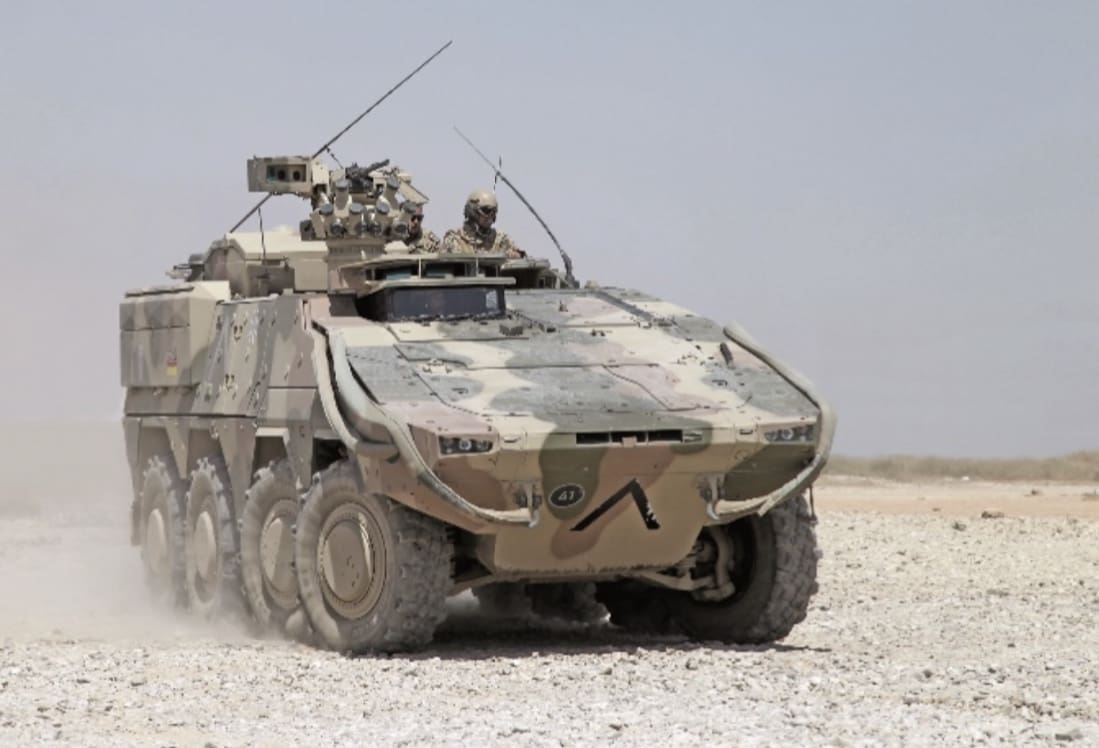
Tectonica is pleased to announce that it has secured a major contract with Rheinmetall Defence Australia for the manufacture of sophisticated camera technology for Army’s new Boxer 8×8 Combat Reconnaissance Vehicles (CRVs) delivered under the Commonwealth of Australia’s Mounted Combat Reconnaissance Capability project (LAND 400 Phase 2).

Under this contract, Tectonica will deliver its ALTERA Local Situation Awareness System (LSAS) on all BOXER 8×8 CRVs to be manufactured at Rheinmetall’s Military Vehicle Centre of Excellence (MILVEHCOE) from 2021.

The LSAS uses visual technologies to provide vehicle crews and operators with improved situational awareness by enabling them to see their surrounding environment by day and by night while remaining protected under armour.

This is the second LAND 400 Phase 2 contract awarded to Tectonica, following on from the September 2019 award to install LSAS on vehicles on the early capability delivery fleet of BOXER 8×8 CRVs currently being built in Europe.

Contributing to the Australian Government’s focus on becoming one of the world’s top 10 defence exporters, Tectonica has also secured a significant export contract to design, develop, manufacture, and export its BANTAM data and power distribution system to the German Army under a contract with Rheinmetall Electronics. The technology will be deployed through the Bundeswehr’s Very High Readiness Joint Task Force (VJTF) and is fitted to every soldier wearing a computerised backpack.

Developed in Australia, with the support of the Defence Science Technology and Australian Defence Force to reduce the bulk and weight carried by soldiers, the BANTAM power system distributes power from a central source and gives the dismounted soldier the freedom to concentrate on their mission, confident that the modular high-tech power management device will last the duration of their mission.

The total value of these contracts awarded to Tectonica is over $25 million.

Tectonica’s Managing Director, David Levy said, “Our partnership with Rheinmetall is a great example of industry working together to strengthen the Australian Defence Force and build sovereign industry capability”.

www.tectonica.net

Atlantic Signal Receives New Contract from United States Secret Service Counter Assault Team

Friday, August 28th, 2020

Atlantic Signal recently received another significant order from the United States Secret Service Counter Assault Team.

Atlantic Signal and the USSS CAT have been doing business for well over a decade. Several product designs as well as added product features of Atlantic Signal products have come from this long-term relationship.

“The USSS CAT has many unique requirements that require something beyond the traditional tactical communications equipment one might correlate with conventional tactical teams. CAT is a specialized tactical unit of the United States Secret Service that provides tactical support to the Presidential Protective Division to protect the President of the United States. The members of CAT are Secret Service Special Agents who have gone through and complete an 8-month course at FLETC in Georgia and have also successfully served multiple years in the Secret Service. Once accepted to CAT, the Agents undergo additional training including counter-ambush tactics and CQB. They are a finely meshed team of professionals at the highest level”, states Randall Hedrick, President and Managing General Member of Atlantic Signal.

USSS Counter Assault, due to their wide ranging mission sets, chose both the Atlantic Signal exclusive Peltor ComTac V circum-aural headset and the DOMINATOR II headset featuring RX audio via both the facial bones and ear canals with the addition of both electronic hearing protection and ambient environmental amplification when the DOMINATOR II earpieces are engaged. Further, Atlantic Signal made unique modifications to CAT’s shoulder microphones for use with their PTT and radio interfaces.

The DOMINATOR II headset push-to-talk assembly features plug and play cables designed and manufactured by Atlantic Signal for their Motorola radios as well as their Harris 6 pin radio models. Custom cables were also designed and manufactured for use with CAT’s key-load adapters.

The ComTac V headset suite, purchased by the team, features the Atlantic Signal WARRIOR Dual Comm push-to-talk. The plug and play cables designed and manufactured by Atlantic Signal can be used with both the WARRIOR and DOMINATOR II PTTS..

Atlantic Signal also provided a custom, coiled cable assembly for use with both push-to-talks and the team member’s smartphones.

Atlantic Signal is based out of Topeka, KS where they develop, design, manufacture and sell tactical communications and accessories. The company started in 1989 with a focus on tactical law enforcement. Today, thirty-one years later, the company’s clients include Customs and Border Patrol, Naval Special Warfare, LAPD, ATF, MARSOC, DEA, US Coast Guard, US Secret Service among thousands of military and law enforcement clients around the world.

atlanticsignal.com

Air Force Life Cycle Management Center Awards Skyborg Contract

Saturday, August 22nd, 2020

WRIGHT-PATTERSON AFB, Ohio (AFNS) —

The Air Force Life Cycle Management Center has awarded multiple indefinite-delivery / indefinite-quantity (IDIQ) contracts to The Boeing Co., General Atomics Aeronautical Systems Inc., Kratos Unmanned Aerial Systems, Inc. and Northrop Grumman Systems Corp.

These initial awards will establish a vendor pool that will continue to compete for up to $400 million in subsequent delivery orders in support of the Skyborg Vanguard Program.

The aim of the Skyborg Vanguard program is to integrate autonomous attritable unmanned air vehicle technology with open missions systems to enable manned-unmanned teaming. This will provide a game-changing capability to the warfighter. The attritable UAV line of effort awarded by this contract will provide the foundation on which the Air Force can build an airborne autonomous “best of breed” system that adapts, orients and decides at machine speed for a wide variety of increasingly complex mission sets.

“Because autonomous systems can support missions that are too strenuous or dangerous for manned crews, Skyborg can increase capability significantly and be a force multiplier for the Air Force,” said Brig. Gen. Dale White, Fighters and Advanced Aircraft program executive officer, who, along with Brig. Gen. Heather Pringle, Air Force Research Laboratory commander, serves as the leadership for the Skyborg program. “We have the opportunity to transform our warfighting capabilities and change the way we fight and the way we employ air power.”

Skyborg is one of three Vanguard programs identified late last year as part of the Air Force Science and Technology 2030 initiative. These high priority Air Force capability development efforts come with an enterprise commitment to deliver game-changing capabilities to transform Air Force operations for the future force.

“Autonomy technologies in Skyborg’s portfolio will range from simple play-book algorithms to advanced team decision making and will include on-ramp opportunities for artificial intelligence technologies,” Pringle said. “This effort will provide a foundational government reference architecture for a family of layered, autonomous and open-architecture UAS.”

The Vanguards are also introducing a novel early partnership between AFLCMC and AFRL due to the need to quickly identify cutting-edge technology and transition directly into the hands of the warfighter.

“The greatest technological edge is for naught if the warfighter can’t use it on the battlefield. That makes the partnership between AFRL and AFLCMC so vital to this program. We can’t allow bureaucratic speed bumps to interfere with our mandate to deliver,” White said.

By Daryl Mayer, Air Force Life Cycle Management Center Public Affairs

Avon Protection Awarded Contract to Supply Respiratory Protection for NATO

Friday, August 21st, 2020

The NATO Support and Procurement Agency (NSPA) has awarded Avon Protection a 10 years contract to supply a complete CBRN personal respirator system. This procurement was led by Finland and Norway to establish technical requirements and demanding end user testing. The framework contract will enable NATO countries and partners to purchase Avon Protection’s market leading respirator system, based around FM50, full suite of filters, MP-PAPR, (Powered Air Purifying Respirator), ST53 (Self-Contained Breathing Apparatus) and accessories.

Understanding the operational flexibility required by NATO forces, Avon Protection have designed a unique modular respirator system to protect NATO troops in the most demanding environments. 

The FM50 respirator and a suite of filters are at the core of the respirator protection system selected by NSPA. Developed in conjunction with the United States Department of Defense to counter the multiple CBRN threats met in modern war fighting, anti-terrorist and peace-keeping operations, the FM50 is the most operationally proven and widely deployed battlefield respirator in the World.  

Commenting, James Wilcox, President, Military at Avon Protection, said:

“We are proud to be awarded this strategically important contract from NSPA and we look forward to working with NATO and their partners to continue to support world leading military capability. This contract demonstrates NATO‘s continued confidence and reliance on Avon Protection to supply product of the highest quality and performance to protect its troops for the forseeable future.”

Hungarian Armed Forces Establish Joint Venture with Rheinmetall to Produce Lynx Infantry Fighting Vehicle

Wednesday, August 19th, 2020

Deal helps the Hungarian Army meet its NATO commitments through continued modernization of the country’s defence industry

Key facts

Major order: Hungary intends to procure the Lynx infantry fighting vehicle

Order volume expected to exceed €2 billion

New Joint Venture for the production of the Lynx in Hungary

First NATO and EU customer for Rheinmetall’s innovative Lynx IFV

With the signing of an agreement in Unterlüss on 17 August 2020, the government of Hungary has embarked on a massive programme worth over two billion euros to modernize the country’s defence industry and military capabilities. The move was announced by Hungary’s Secretariat of the Ministry for Innovation and Technology and the Commissioner for Defence Development. Rheinmetall, Europe’s foremost maker of army equipment, will be cooperating with Hungary to create a joint venture and production facility in Hungary to manufacture the most modern Lynx infantry fighting vehicle.

Hungary is the first NATO and EU member state to choose the Düsseldorf-based Group’s innovative new IFV. The step is of central importance in Hungary’s ongoing programme of military and industrial development, which aims to transform the Hungarian Army as quickly as possible into a world-class fighting force capable of actively addressing security challenges in the Euro-Atlantic region.

In the words of the joint statement read by László Palkovics, Minister of Innovation and Technology, and Gáspár Maróth, Commissioner for Defence Development: “As part of its commitment to NATO, Hungary is replacing its heavy ground forces equipment. Following the tanks and artillery, it is now the turn of the infantry combat vehicles, which form the backbone of the capabilities set. As the most advanced system of its kind, the Lynx has demonstrated its suitability for a central role in the Army’s capabilities spectrum for decades to come. In keeping with earlier promises by the Hungarian government to enhance the nation’s armed forces, this cooperative endeavour extends far beyond the modernization of military technology. Partnering with a major European corporation will result in the modernization of our defence industry and thus to the expansion of our industrial portfolio.”

As Armin Papperger, chairman of the executive board of Rheinmetall AG, explains: “The Lynx’s market breakthrough is a major success for us. And the fact that we were able to convince Hungary – an important EU and NATO partner – to choose this innovative vehicle makes this success all the greater. In making this forward- looking procurement decision, Hungary’s top political and military officials have demonstrated real leadership. Not only does the move place Hungary at the forefront of European army technology. It reaffirms the Hungarian government’s commitment to being a reliable, more militarily effective partner of its NATO allies, a policy which it is pursuing with systematic energy.”

“We’re very proud”, said Mr Papperger, “to be able to make an important contribution to the sustained expansion of Hungary’s defence technology capabilities in cooperation with local industry. We look forward to working together with our Hungarian friends and partners, and will do everything in our power to assure the long-term success of this venture.”

ATAC Wins Air-to-Ground Training for Air Force

Wednesday, August 19th, 2020

Airborne Tactical Advantage Company (ATAC) to Deliver JTAC Training to Air Force Special Operators

Washington, DC — August 13, 2020 — Airborne Tactical Advantage Company (ATAC), part of the Textron Systems segment of Textron Inc (NYSE: TXT), announced today that it has been selected to provide live contract close air support (CCAS) training for Joint Terminal Air Controllers (JTACs) under the U.S. Air Force’s Combat Air Forces Contracted Air Support program.  

A team flying ATAC’s L-39 Albatros and Valkyrie Aero’s A-27 Tucano aircraft will support Air Force Special Operations Command (AFSOC) JTAC training at numerous bases and locations throughout the continental United States.  The contract calls for approximately 900 sorties and more than 1,100 flight hours on tactical ranges annually, with flight operations commencing in the summer of 2020.  This is the first CCAS award the Air Force will grant the contracted air services industry for what could be up to 10 locations under the Combat Air Forces Contracted Air Support program.

“ATAC is proud to support the training of AFSOC JTACs, the gold-standard in their field”, said Scott Stacy, ATAC General Manager. “This work expands on ATAC’s previous air-to-ground training and positions the company for future growth in this important training area”.

The ATAC-Valkyrie team also supports JTAC training under the U.S. Navy’s Terminal Attack Controller Trainer (TACT) program, and recently completed an evolution for the Naval Aviation Warfighting Development Center (NAWDC) on the Fallon ranges. The ATAC-Valkyrie team was competitively selected to participate in the TACT program in April 2019.

ATAC is the global leader of tactical airborne training, having pioneered much of what are now contracted air services industry standards with a fleet of over 90 aircraft, over 60,000 flight hours, and 20 years of operating experience.  ATAC has provided a wide range of contracted air support capabilities to the U.S. Department of Defense (DoD) in locations world-wide, including the continental United States, Hawaii and the Western Pacific region. ATAC has helped train crews from the U.S. Navy, U.S. Air Force and U.S. Marine Corps and regularly operates out of as many as 25 different air bases per year.