Celebrate 20 years of the TLR-1

Archive for the ‘Guest Post’ Category

Trainers & Rescuers: Meet DOD’s Main Mountaineering School Experts

Wednesday, June 12th, 2024

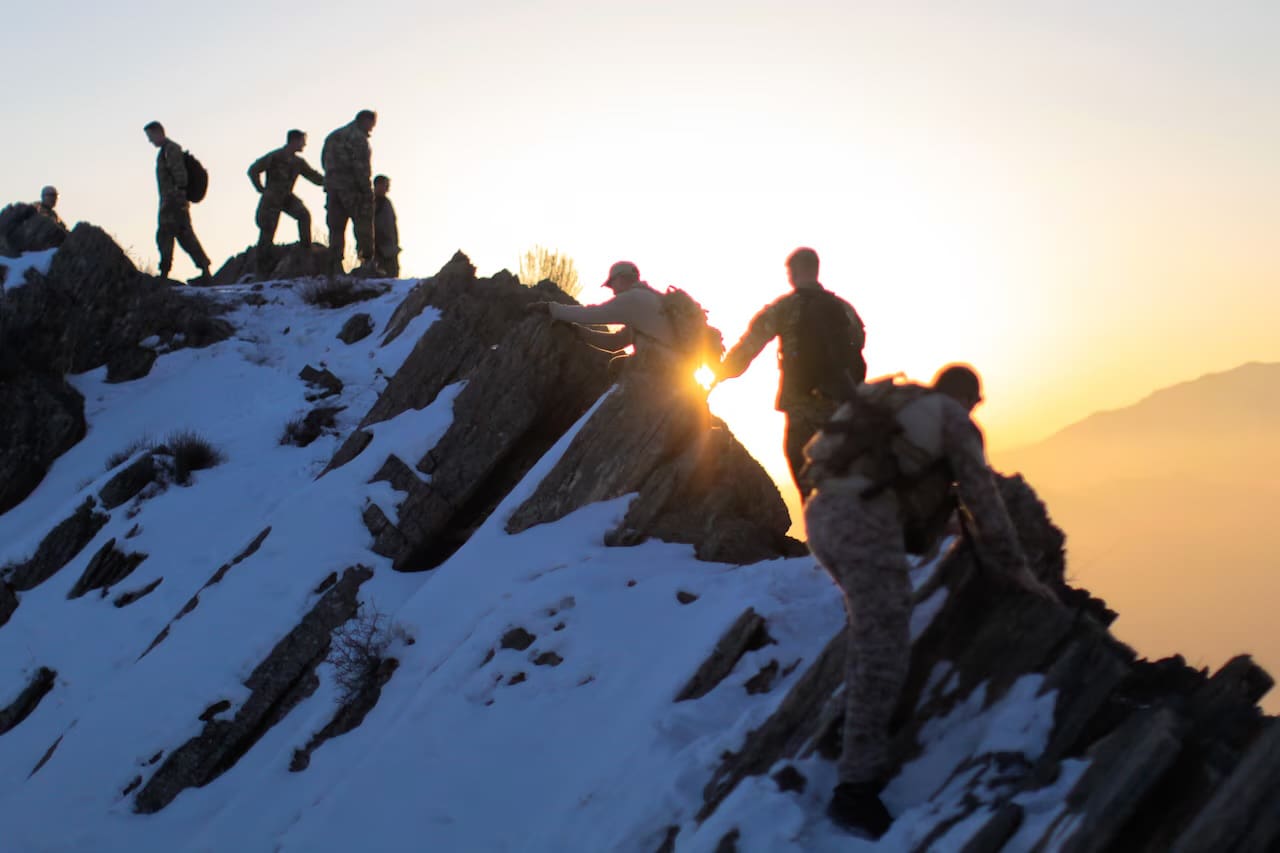
From the harsh ridgelines in Italy during World War II and the frigid peaks of Korea during the 1950s, to the Hindu Kush in Afghanistan, mountaineering has long been a necessary skill for U.S. service members in battle. To deter conflicts and defeat aggression, service members need to be prepared to operate in mountainous terrain.

While the Defense Department has a few schools that train students on mountaineering, its main training center for the past 20 years is the Army Mountain Warfare School near Jericho, Vermont.
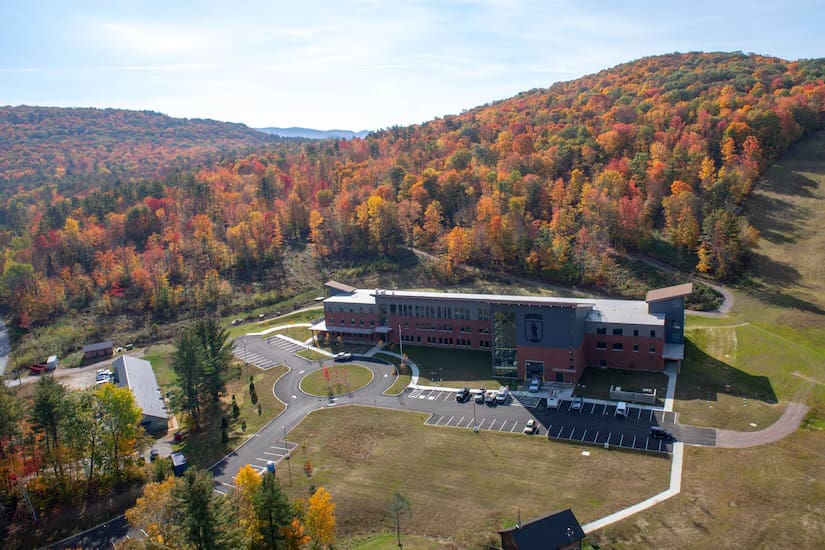
Operated by the Vermont National Guard, the school trains service members from all branches, as well as foreign militaries and civilian teams looking to learn the latest techniques for rescues and other missions. Training runs from basic to advanced for winter and summer conditions, and some courses focus specifically on training for marksmen and operational planners.

When it comes to the Army Mountain Warfare School’s instructors, students are learning from some of the best mountaineers in the world.

The school has 21 full-time Active Guard Reserve members, 14 of whom are instructors. About three dozen other members of the unit are Guard members and reservists who drill and do their annual training there. Many of those who work at the school have also worked with the 86th Infantry Brigade Combat Team (Mountain), which is headquartered down the hill from the schoolhouse.

The instructors have been through most of the school’s courses themselves, but more importantly, they have years of real-life experience. All of them have civilian mountaineering certifications, and since their military status lets them stay in Vermont long-term, they’re able to constantly hone their skills.

Training Students at Home & Abroad

Outside of the courses they teach to U.S. service members, these instructors are also called upon by partner nations to train foreign special forces units. Army 1st Sgt. Max Rooney said the school has sent teams to Kosovo to train security forces on mountaineering skills. They’ve also exchanged tactics and training with other experts in Austria, Switzerland, Senegal, Italy and other countries, often through the State Partnership Program.
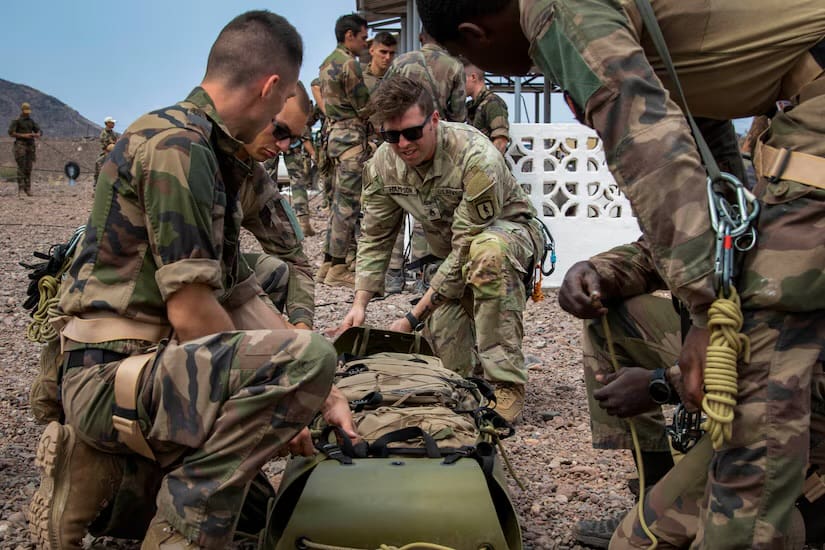
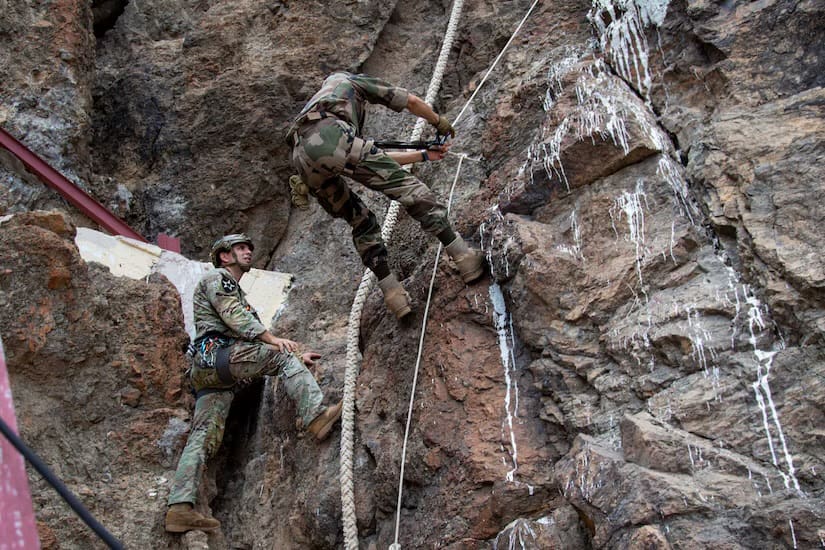
“That’s been a huge part of our training here,” said Army Master Sgt. Bert Severin, the school’s training division noncommissioned officer in charge. “Name a mountainous country and we’ve sent a Mobile Training Team there, either to work with their mountaineering instructors or to teach there.”

Army Maj. Brad Patnaude, the school’s operations officer in charge, said their instructors get invited to more mountain-related exercises than they have the time and funds in which to participate. The courses they teach at the schoolhouse are their major focus.

“The instructors here are amazing. They’ve given us plenty of knowledge,” said Army Staff Sgt. Stephen Vigo, a recruiter with the Connecticut National Guard who took the basic military mountaineer course in March.
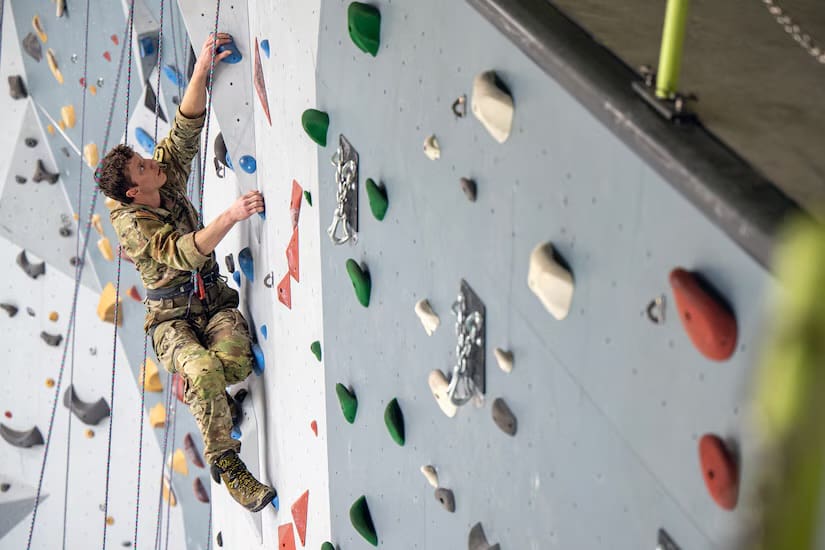
Just like their students, the instructors themselves are always learning because mountaineering techniques, strategies and equipment are constantly evolving, as are the terrain, weather and students. For many of the instructors, that’s what makes it exciting.

“It’s a constant struggle to try to manage risk while at the same time putting out the best possible product for the students,” said Army Sgt. 1st Class Dustin Dearborn. “That requires us to be pretty dynamic in our approach. I think that challenge is what really draws me to working here.”

Resident Experts, Local Heroes 

Perhaps no one is as experienced or qualified in the DOD mountaineering community than Dearborn — at least, that’s according to his fellow instructors, who all put him at the top of the heap when it comes to mountaineering expertise.
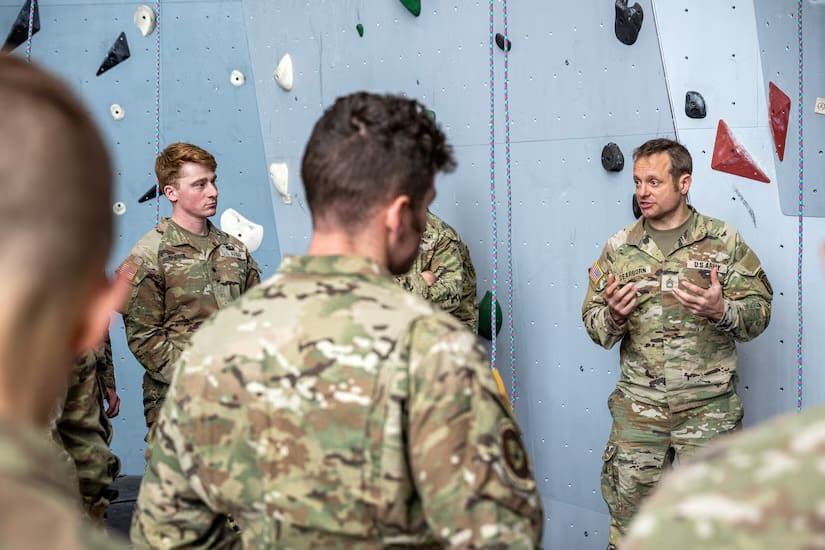
Dearborn grew up as an avid outdoorsman not far from the school’s training site, which made for a natural transition to him joining the school as an instructor in 2001. Since then, his experience has been called upon numerous times to help with local rescue operations over the years.

One involved the rescue of two skiers in 2020 who had ventured into the backcountry near Stowe Mountain Resort. The brothers got lost at night in deteriorating weather and ended up at the top of an ice climbing route. One of them fell off the 220-foot cliff. The second remained stranded at the cliff’s plateau but couldn’t make his way back to safety due to the deep snow, so he called for help. Local rescuers who responded couldn’t access the victims, so they called Dearborn, who led a team of five National Guard soldiers on a mission to reach them.

“We know the terrain pretty well. It’s our backyard,” Dearborn said. “We know the little places to sneak through.”
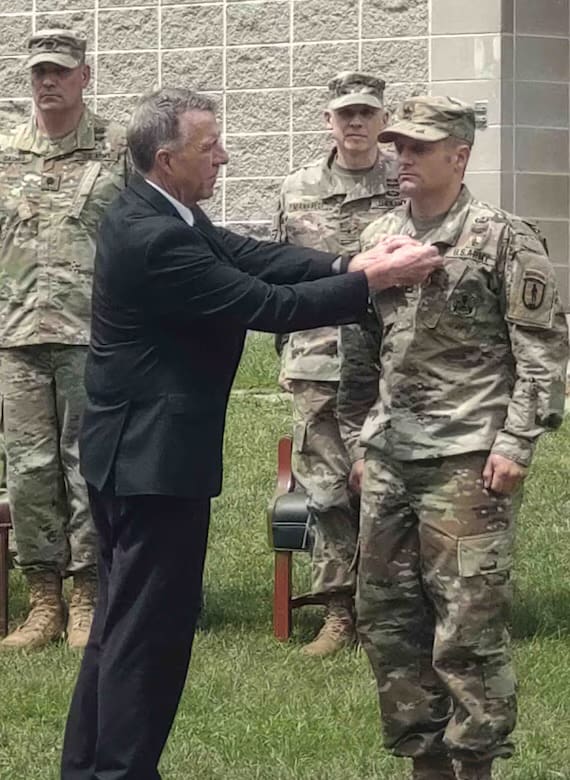
The rescue required Dearborn to conduct multiple risky climbs at night, including a climb up 200-feet of sheer ice. Eventually he reached the skiers, and he and his team were able to lower both victims to a recoverable position.

In June 2021, Dearborn was honored for his efforts with the Soldier’s Medal, the highest award a soldier can receive outside of combat. When asked about the accolade, Dearborn minimized it, saying he was just doing what he was trained to do.

“The Army has invested a ridiculous amount of time and money to send me to courses and to give me the training and experience to be able to do that,” he said. “It would be ridiculous, I think, if — at this point I couldn’t help in that way.”

Dearborn said rescues are something school instructors help with quite often, especially in areas like Smugglers’ Notch, a narrow pass through the Green Mountains that sits between two local ski resorts.
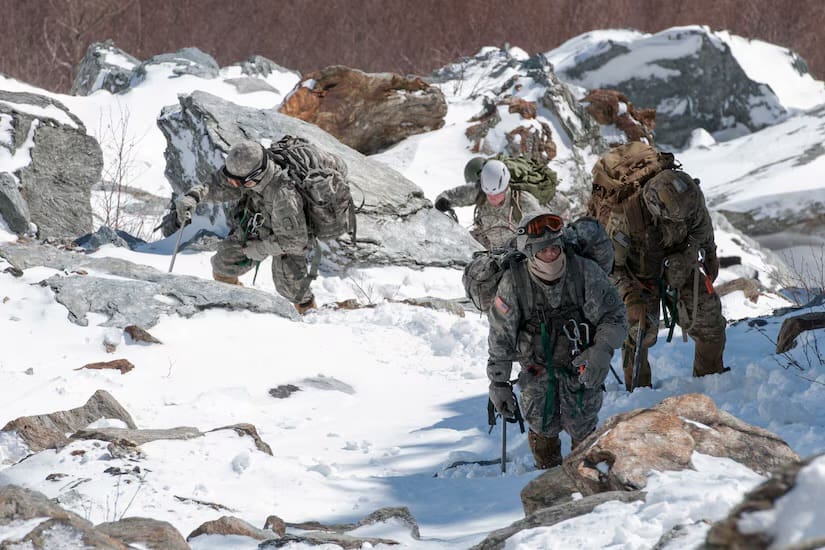
“We’ve [rescued] lots of snowboarders and skiers that have hit trees or tweaked knees and legs,” Dearborn said. “Conveniently, we’re there, and we have the equipment and the personnel and the training, so it’s easy for us to snatch them up before other folks have to get involved.”

Army Staff Sgt. Andrea Okrasinski is one of the few instructors not native to Vermont. Originally from Illinois, the outdoor enthusiast signed up for the Army Reserve at 18 and spent more than a decade serving as a construction engineer and in civil affairs. But when she attended the AMWS in August 2021, she realized that teaching mountaineering was her true passion. She began the process of transferring over, and in June 2022, arrived at the school to start her new career as a full-time instructor.

Okrasinski said that, aside from having the physical mountaineering skills, instructors need to be able to know how to drive, motivate and mentor students.
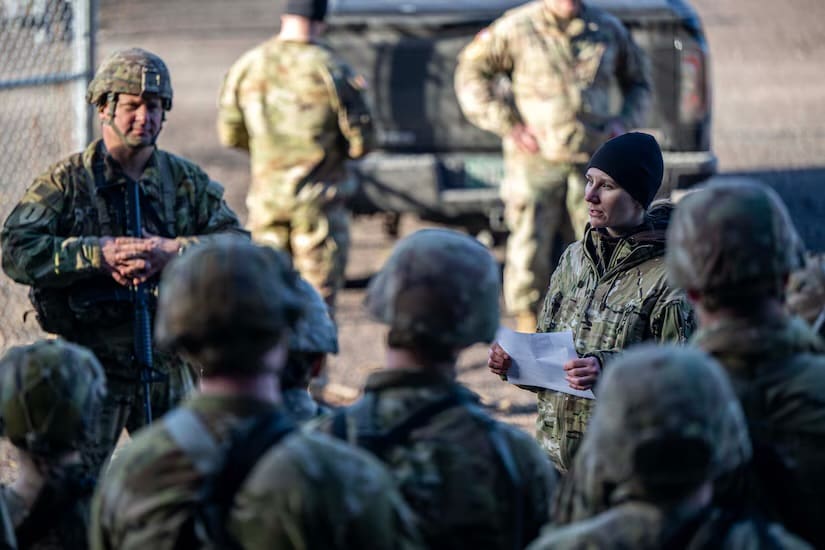
“It’s very selective here, which I think is a good thing for the Mountain Warfare School to have —that need to bring a specific skill set and a specific demeanor,” she said. “Safety is a huge [priority] and having that attention to detail for it is really important.”

Why Vermont?

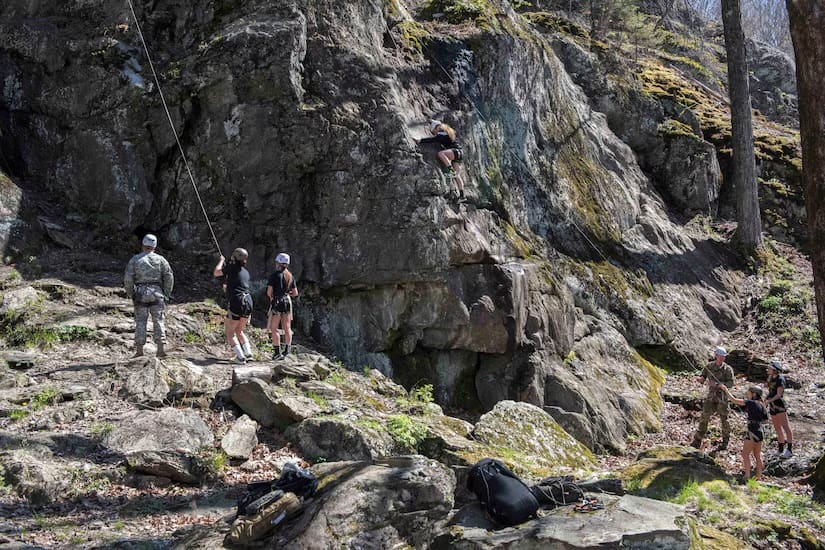
The school’s instructors said they often get asked why they’re based in Vermont and not, say, Colorado’s Rocky Mountains or some other well-known mountainous region. They said the answer is pretty straightforward — their Vermont location is compact, offering a microcosm of everything a mountaineer in training might need to learn in a two-week span.

“We have every training site within 2 miles or 3 miles from here. We have cliffs. We have low elevation as far as altitude … so there’s no climatization needed, whereas in Colorado, that might be an issue. Same thing with the Marine Corps school. They’re at what’s considered a medium altitude, so you have to acclimatize when you get there. Here, you don’t have to,” Severin said. “Everything’s right here — a one-stop shop.”
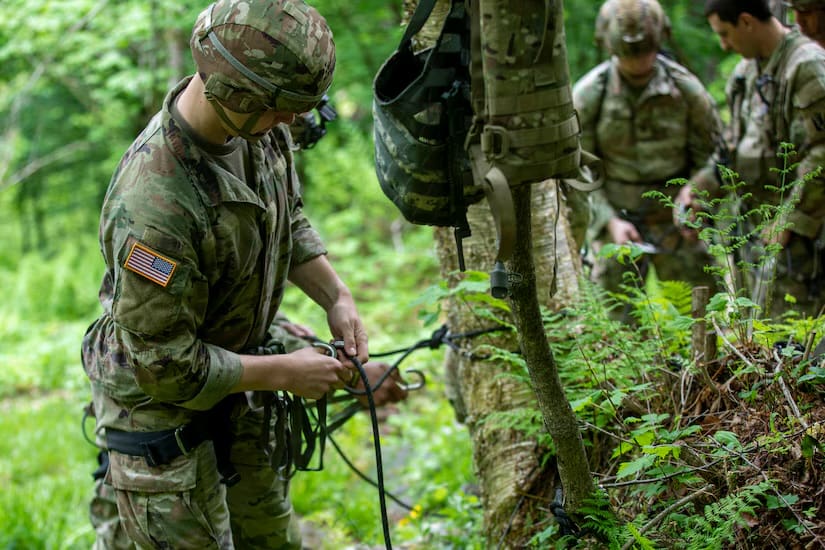
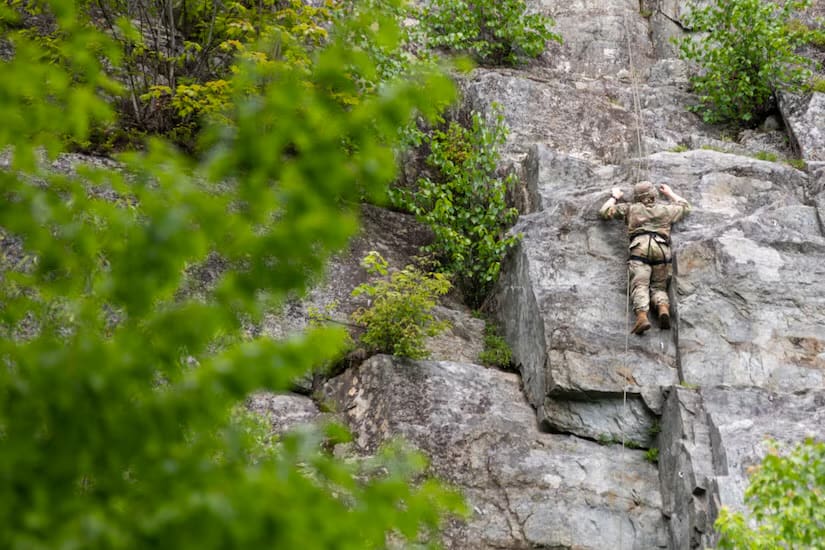
Those who pass the basic military mountaineer course earn the coveted Ram’s Head Device and the military mountaineer additional skill identifier known as the echo identifier. Two other mountaineering schools also grant the echo identifier — the Northern Warfare Training Center in Delta Junction, Alaska, and the Fort Moore Troops School at the 5th Ranger Training Battalion in Dahlonega, Georgia.  

But, according to Severin, the AMWS is more involved in writing the course’s program of instruction, also known as POI, and the material to teach the course. Severin said Alaska’s students are mainly stationed in that state and train on terrain that’s more glaciated, with a focus on tactics for the Arctic as opposed to Vermont’s alpine-style environment.

The Marine Corps Mountain Warfare Training Center near Bridgeport, California, also teaches mountaineering; however, Severin said its students focus more on tactics performed as a unit instead of individually.

The AMWS sees a lot more students come through its doors as well. Officials said they train about 600 students a year, whereas the other schools see up to about 100 for certain specialties.
Keeping Busy

When courses are in session at the AMWS, instructors tend to work 10-12 hours per day, so finding the right work-life balance is sometimes the hardest part of the job.  

“We’re here a lot. We have a lot of courses. We don’t have a ton of time between courses to take our leave, so the amount of laundry that’s piling up right now is getting a little ridiculous,” Okrasinksi joked.

For most of the instructors, it’s the close-knit community they’ve formed that keeps them all coming back day after day.

“We trust each other. We respect each other. We work together and play together and fight with each other and, you know, we listen to each other,” Dearborn said. “And I think it’s a rarity in or outside of the military to have that kind of situation.”

By Katie Lange, DOD News
Tactical Tuesday: Comfortably Conceal Your Gear with the Guardian Stretch Shirt

Tuesday, June 11th, 2024

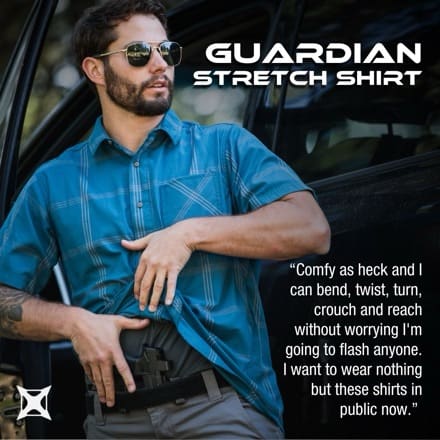
Simply put, the Guardian Stretch Shirt from Vertx® brings tactical concealment to a whole new level. The innovative design seamlessly blends discreet gear carry with mobility and comfort in the field.

The built-in WeaponGuard™ liner shields your skin from abrasions, while the athletic fit and underarm gussets allow for a full range of unrestricted movement. Plus, it’s loaded with purpose-built features like a comms loop, wire pass-throughs, and multiple stash pockets – including two escape and evasion pockets for quick access to essential tools when the situation demands it.

With its functional design and advanced features, the Guardian Stretch Shirt is a must-have for anyone who needs to discreetly carry their gear. Whether you’re in law enforcement, security, or simply want a practical solution for everyday carry, this shirt has got you covered. Shop now at: vertx.com

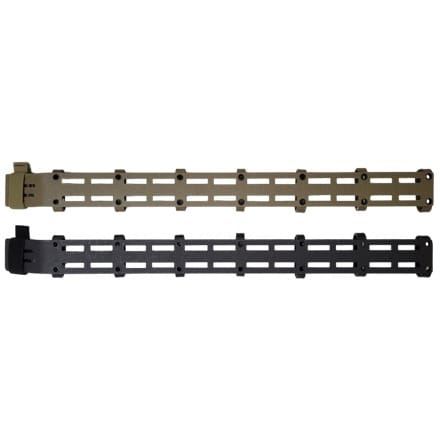
MATBOCK Monday: The Cage – 1 Cage, 2 Belts

Monday, June 10th, 2024

We have simplified the cages, and as of 1 June 2024, we will only offer the cage. The cage works with both the Soteria and HAALO belts.

The cage comes in tan or black.

Where to buy a cage: www.matbock.com/collections/belts-lanyards/products/the-cage

All belts and lanyards: www.matbock.com/collections/belts-lanyards

MATBOCK will have all the products on display at ADS Warrior East in a few weeks at the Virginia Beach Convention Center.

5th SOPS Activates, Bolsters Space Delta 9 Objectives

Monday, June 10th, 2024

WASHINGTON (AFNS) —  

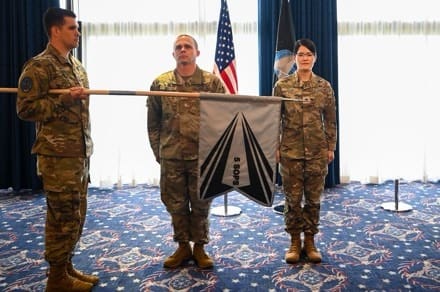
The 5th Space Operations Squadron unfurled their colors during an activation ceremony on Joint Base Anacostia-Bolling, June 3.

The ceremony signified the inactivation of Delta 9’s Detachment 1 and the activation of the 5th SOPS which oversees operations of the X-37B Orbital Test Vehicle, an experimental program designed to demonstrate technologies for a reliable, reusable, unmanned space test platform for the U.S. Space Force.

To begin the ceremony, Maj. Eric Wilson, Det. 1 commander, was awarded the Meritorious Service Medal for his exceptional conduct as commander. Wilson highlighted the promising future of the 5th SOPS under the command of Lt. Col. Latasha Spear.

“Fifth SOPS is under great hands with Lt. Col. Spear as I have no doubt she will ensure 5th SOPS is able to continue the great lineage of excellence that Det. 1 Guardians amplified, ensuring mission readiness for the USSF,” Wilson said.

The 5th SOPS was provisionally activated as Operating Location-A, 750th Space Group, on Oct. 1, 1992. However, its roots began in the early 1960s as the Air Force Satellite Control Facility which established one of the Air Force’s major roles in space – satellite operations.

Brig. Gen. Anthony Mastalir, U.S. Space Forces Indo-Pacific commander, served under the original 5th SOPS from 1995 to 1999 and shared his excitement about the activation of 5th SOPS under DEL 9.

“A heartfelt congratulations to DEL 9 and all the men and women of the 5th Space Operations Squadron,” Mastalir said. “I can’t think of a better mission to assume the legacy and lineage of the original 5 SOPS located at Onizuka Air Station in Sunnyvale, California.”

Mastalir also discussed how the 5th SOPS activation will affect the USSF at large, specifically how their mission will help ensure a free and open Indo-Pacific.

“Space Forces Indo-Pacific is one of the many beneficiaries of the ground-breaking missions that will be executed by this new unit. The knowledge gained through test and experimentation at 5 SOPS will be instrumental in our goal to preserve a free and open Indo-Pacific,” Mastalir added.

During the ceremony, Col. Mark Bigley, DEL 9 commander, further expressed the importance and his excitement of the 5th SOPS activating and continuing a legacy of demonstrating technological advancements of the X-37B.

“The first members of 5 SOPS will continue to set the bar of excellence high as well as mark new heights for the future technology capabilities of the X-37B. It is with great honor I welcome 5 SOPS to the USSF,” Bigley said.

Master Sgt. Joseph Wood, 5th SOPS senior enlisted leader, revealed the colors and raised the guidon initiating the assumption-of-command ceremony for the newly activated squadron.

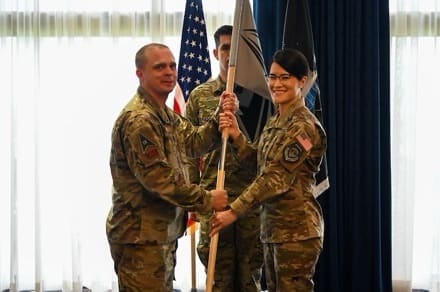
Service members watched as Bigley passed the colors to Spear, entrusting her to lead as the first commander of the 5th SOPS.

Prior to taking command of the 5th SOPS, Spear served as the DEL 5 division chief of joint fires and information operations, Space Forces-Space at Vandenberg Space Force Base, California. During her time in this role, she led joint and combined personnel to deliver space electromagnetic warfare targeting effects and planning as well as command and control operations in alignment with Combined Joint Force Space Component Command.

“To the men and women of the mighty 5th SOPS, I am truly honored to be your first commander,” Spear said. “Fifth SOPS aligns with the objectives of the chief of space operations, Space Operations Command and DEL 9 by contributing to the spacepower of this nation as we collectivity strive to maintain a durable peace for ourselves and our allies in this era of Great Power Competition.”

By 2nd Lt. Danielle Rose, Space Base Delta 1 Public Affairs

Beez Combat Systems – Predator Ghillie SPECTRALFLAGE Veil

Saturday, June 8th, 2024

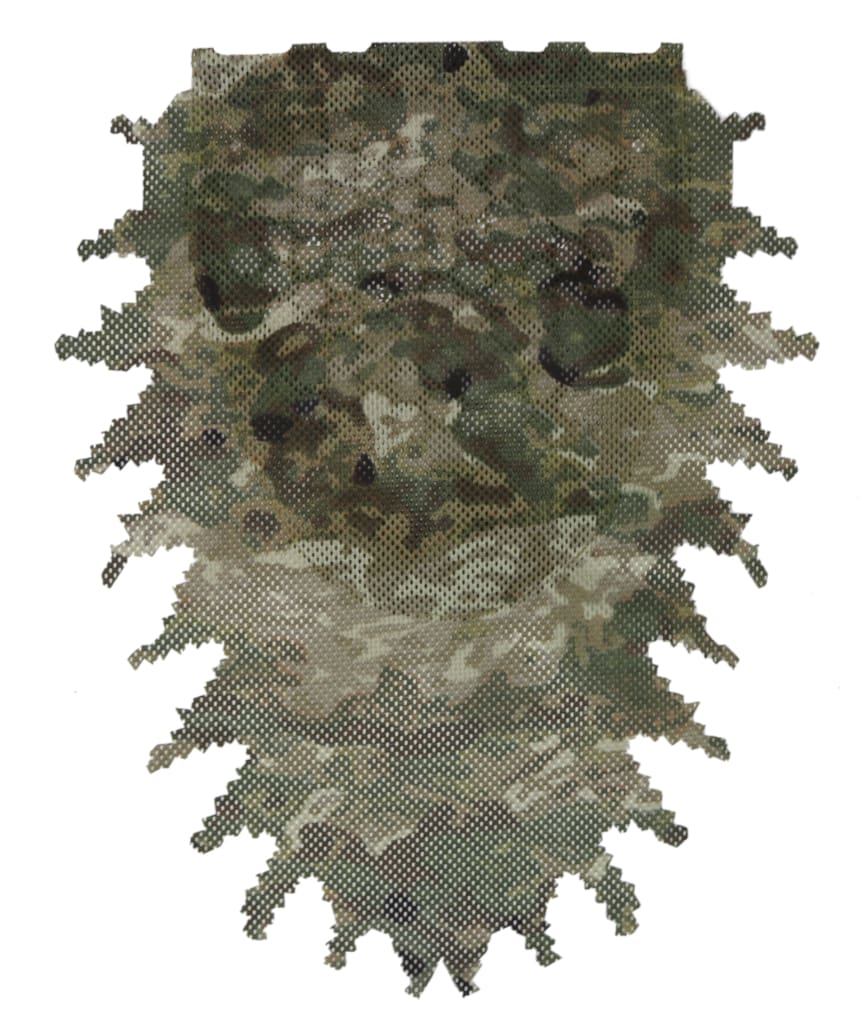
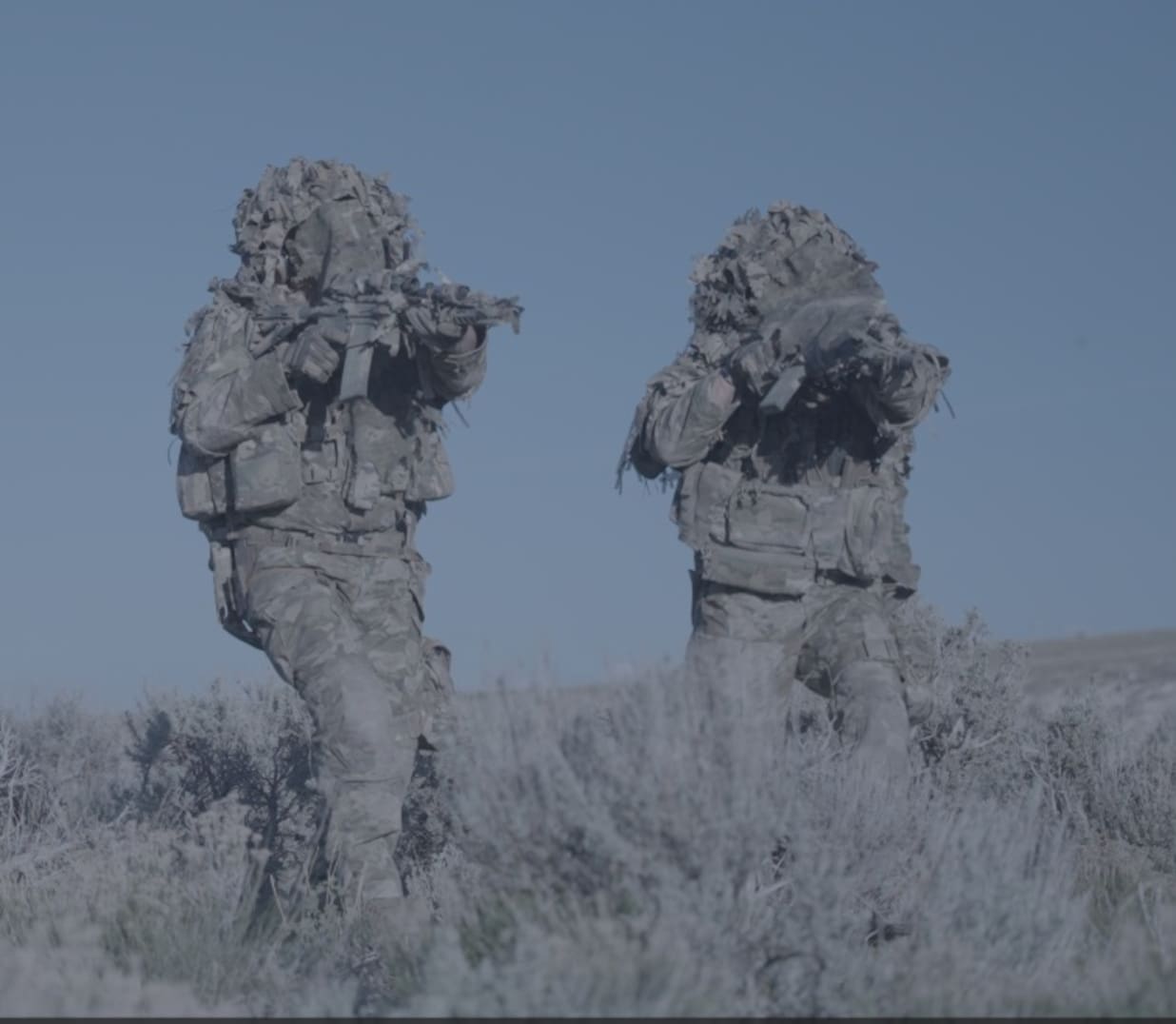
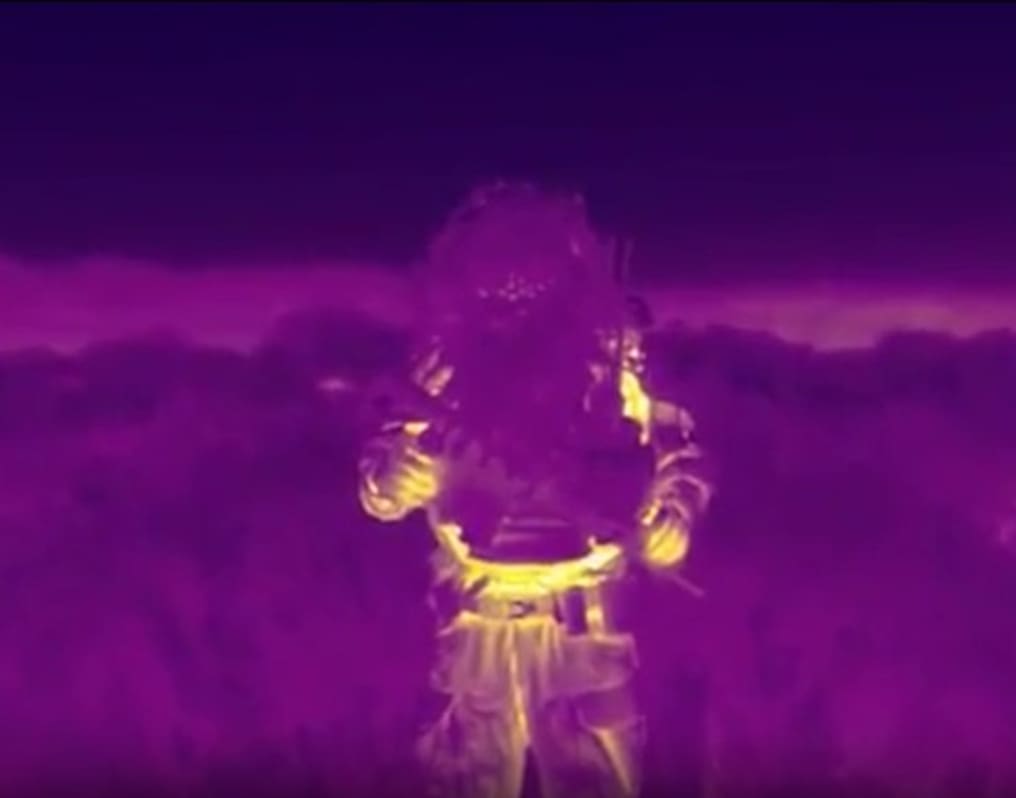
The Predator Ghillie™ SPECTRALFLAGE Veil reduces the VIS (physical visual), UV, NIR and thermal signatures (6µm ~ 15µm, high end of MWIR, LWIR, FIR) of the individual to help avoid being observed and/or targeted by ground-based detection, sUAS, and UAS near-peer threats. The Veil uses complex, next-generation engineering to accomplish the unimaginable: multispectral signature reduction for the individual war fighter against real world thermal and night vision technology.

The Predator Ghillie™ SPECTRALFLAGE Veil is another piece of the SPECTRALFLAGE camouflage system designed to be retro-fitted onto the Cobra/ Viper Lite to help reduce the thermal signature around the head, face, and neck.This is the next evolution in advanced thermal mitigation for the end user. New threats on the battlefield require new solutions as advanced thermal detection and aiming devices rapidly evolve.

Made with the most advanced military grade A-TACS camouflage patterns the Predator Ghillie™ SPECTRALFLAGE Veil provides visual breakup, granting the end user the most advanced concealment solution primarily designed for urban, desert, and open environments.

The Predator Ghillie™ SPECTRALFLAGE Veil is the next advancement in concealment technology. On the battlefield of today, tomorrow, and the future; multispectral concealment is the way.

For additional information and availability – Beez Combat Systems

Soldier’s Injury Spurs Malpractice Claims Policy Changes

Saturday, June 8th, 2024

An Army family’s five-year struggle and advocacy efforts led to major changes in how the Department of Defense considers non-economic payments in medical malpractice claims filed by active-duty service members.

The changes, published May 10 in the Federal Register, say that potential financial damages in medical malpractice claims will no longer be offset or reduced by the compensation otherwise provided by the Department of Defense or the Department of Veterans Affairs. This change will ensure that families receive full compensation for pain and suffering.

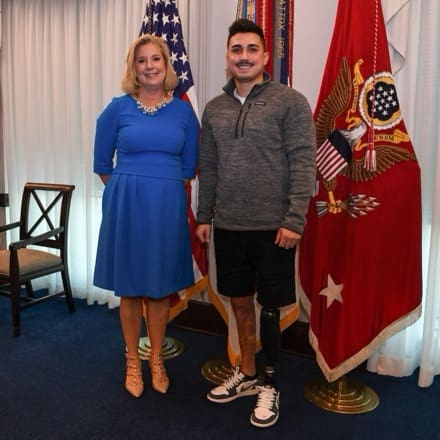
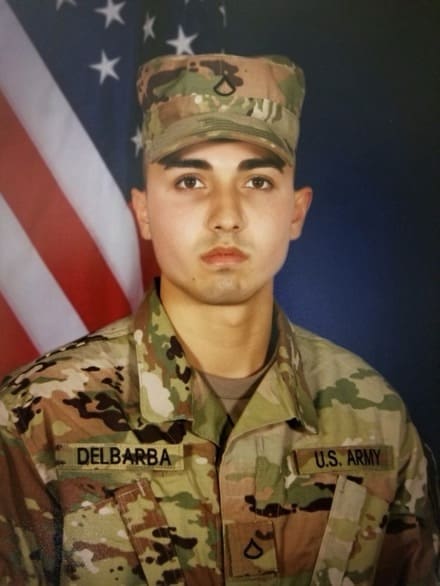
“It wasn’t until the family brought this issue to the forefront that we were able to advocate on behalf of the entire military to remove the offset,” said Secretary of the Army Christine Wormuth. “Pfc. Del Barba and his family deserve the credit for bringing attention to this issue.”

The case began when Pfc. Dez Del Barba, of California, reported to what is now Fort Moore, Georgia, for basic training in January 2019 in preparation for attending Army Officer Candidate School. That February, he became ill and over the course of a week his symptoms worsened.

After numerous visits to sick call, Del Barba was transported to a Columbus, Georgia hospital, where he was diagnosed with necrotizing fasciitis, a form of a flesh-eating infection linked to a Strep A infection.

The Army had earlier received a positive test result for Del Barba’s Strep A infection but had not acted on it.

Placed in a medically induced coma, Del Barba was given a 10% chance of survival. As the infection ravaged his legs and torso, he underwent repeated surgeries in Columbus and at the burn unit at the University of Alabama at Birmingham Hospital to remove skin or tissue.

His left leg was amputated as the infection spread.

“What happened to me did not have to happen. This was preventable,” Del Barba told a Congressional subcommittee.

The Army is currently reviewing Del Barba’s medical malpractice claim.

“My life has changed forever. That once active and healthy 21-year-old man now must deal with a lifetime of challenges and obstacles because of the neglect I suffered,” he said.

“The last five years our family has worked tirelessly not just for our son … but for countless servicemen and women who have been grossly mistreated by the department due to military medical malpractice. This long-overdue change will finally bring some accountability to those responsible for their inexcusable actions. Our nation’s Servicemen and Women, our heroes, deserve better medical care,” the Del Barba family said in an emailed statement.

The DoD policy change also clarifies that future lost earnings may be awarded until the time DoD determines that the claimant is, or is expected to be, medically rehabilitated and able to resume employment.

“In addition to Pfc. Del Barba’s resilience and focus on his own recovery, the most remarkable aspect of his story is how he championed this change for all service members,” explained Secretary Wormuth.

Del Barba’s mother says he earned his bachelor’s degree in business management but cannot and likely will never be able to work.

“There are moments when we may think wecannot, until we change our mindset to say we can. I feel grief for all I have lost, but I am grateful for all that I have. We must stand firm, honor the sacrifices of our heroes, and fight for justice,” Del Barba said in an emailed statement.

The family wants more attention paid to the risk of necrotizing fasciitis, and May 31 is Necrotizing Fasciitis Awareness Day, with a focus on the impact of the disease.

The Del Barba family has also formed a nonprofit, called Operation Dez Strong, to assist children ages 4 through 18 who face or have had an amputation and need assistance in acquiring and adapting to prosthetic devices.

By Jonathan Austin, Army News Service

FirstSpear Friday Focus: NEW Universal Shoulder Strap Kit & Tri-Fold Shoulder Pad

Friday, June 7th, 2024

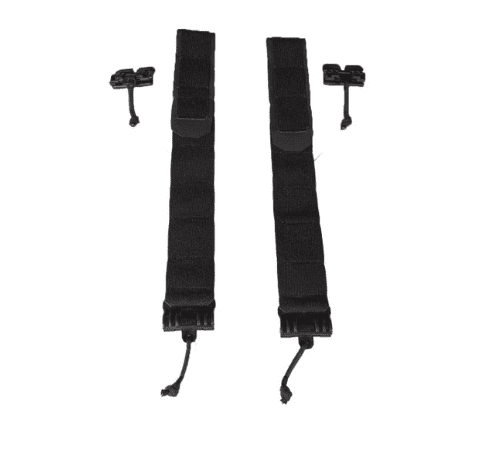
Introducing the universal shoulder strap. It offers end users and teams a myriad of options — it bridges the gap between running a shoulder on all of the platforms. Easily transition or fit a universal shoulder on a Strandhogg, Siege R or AAC. One size shoulder strap would suffice to fit all your sizes. You are able to size up or size down as needed.

The Universal Shoulder Straps come as a pair.

The Universal Shoulder Strap Kit comes as a pair of straps and then a pair of 2-inch female split bar Tubes with a heat shrink pulls.

Please note if you are buying this to swap out a SIEGE R Shoulder, you will need the KIT. End users can cut at bar tacks along the shoulder to shrink down the sizing. Those that buy the kit can also run a FirstSpear ECP on the shoulder as well.

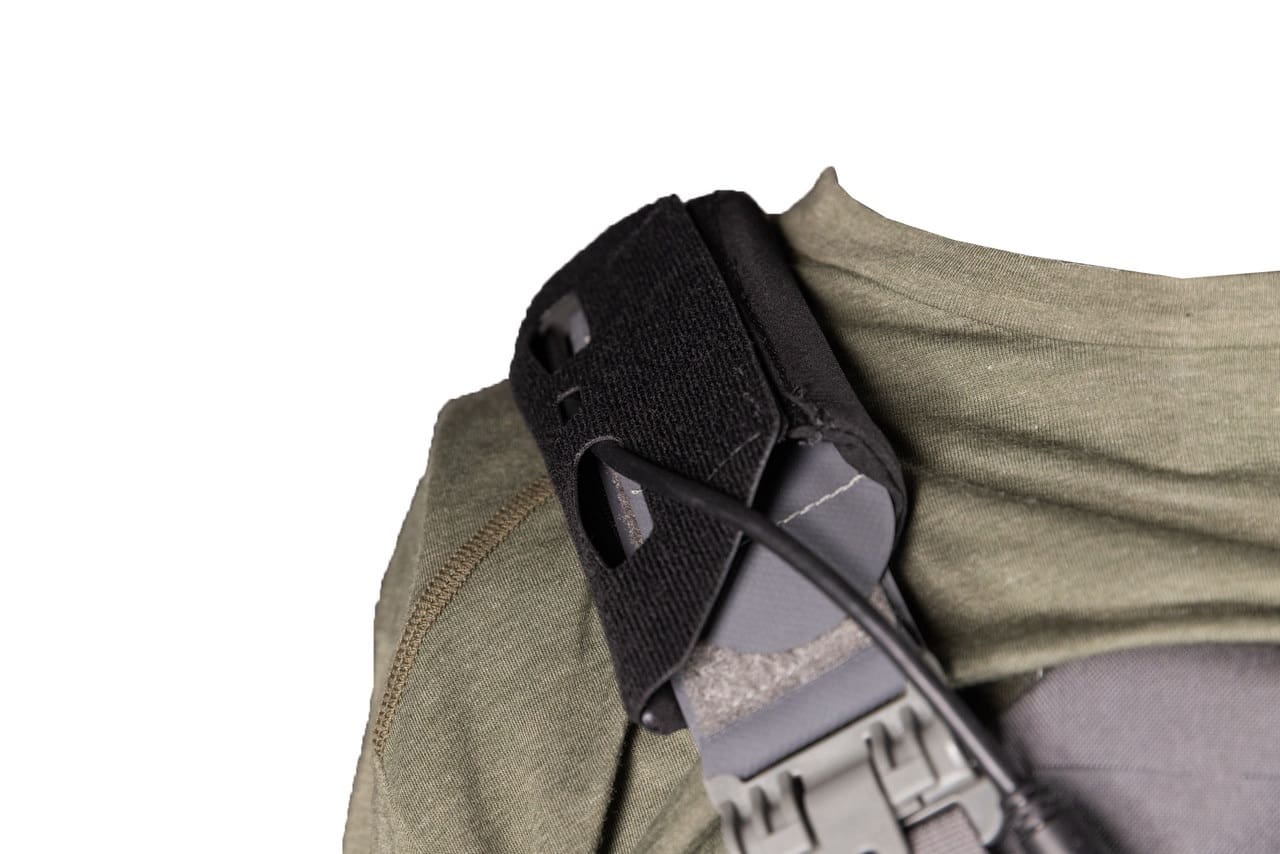
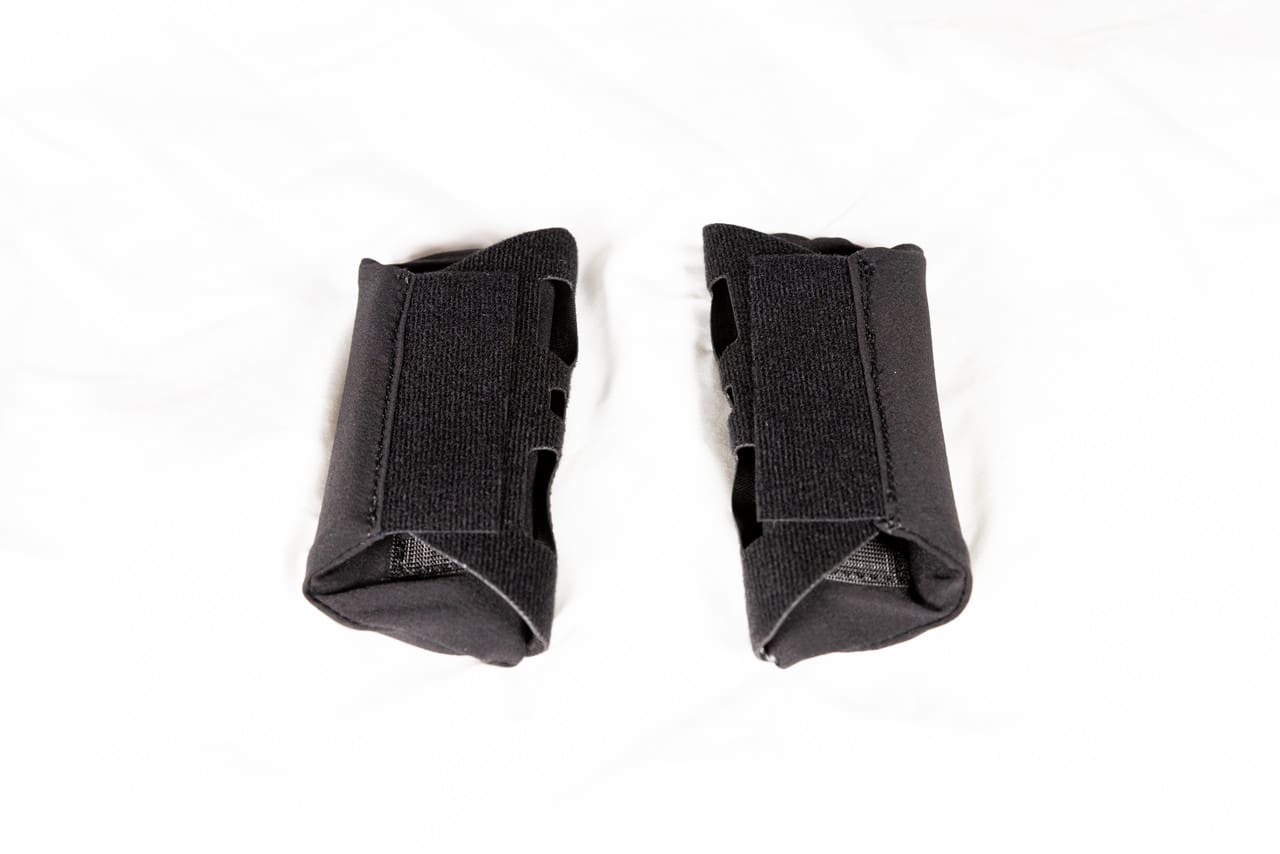
Always innovating, FirstSpear has improved upon this critical comfort item, introducing the Tri-Fold Shoulder Pad. Taking into account field feedback and utilizing new, advanced materials, this load carriage support item has been redesigned to enhance functionality and comfort. The lower tri-fold flap provides cable and tube management with greater security. It also allows end users to purchase a 2-inch female split bar Tube to integrate M.A.S.S. Biceps.

For more information, check out www.first-spear.com/low-profile-tri-fold-shoulder-pad or www.first-spear.com/universal-shoulder-strap-kit-1

Ranger Walks Grandfather’s WWII Path During D-Day Commemoration

Friday, June 7th, 2024

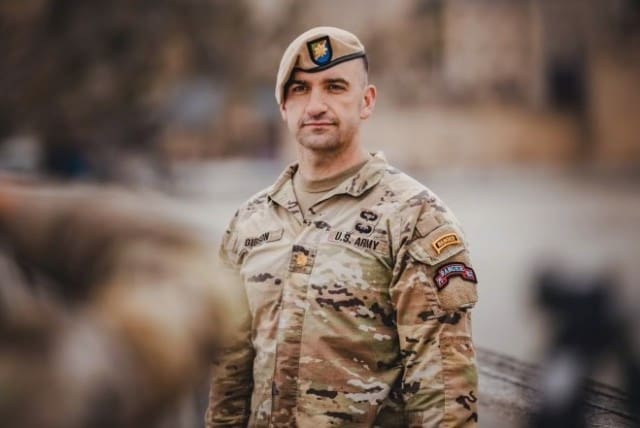
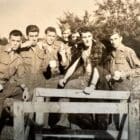
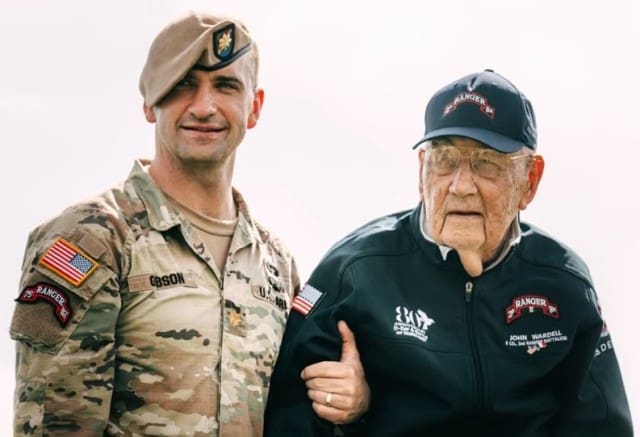
WASHINGTON — As Maj. Jack Gibson waited to board a plane to France last Thursday, he thought about his grandfather and what he went through 80 years ago fighting in Europe during World War II as part of the 2nd Ranger Battalion.

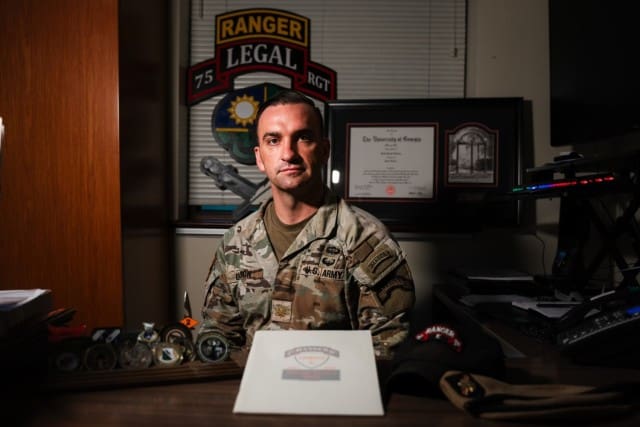
This wasn’t a normal work trip for Gibson, a judge advocate with the 75th Ranger Regiment, this one was special he said, because he was taking part in the D-Day anniversary commemoration and getting a chance to walk the same path his grandfather did so many years ago.

“I was inspired by him to become a Ranger,” Gibson said. “He inspired me by the way he lived his life, how he carried himself, and how he treated people. He was someone I emulated and even though he never really talked a lot about being a Ranger, I knew he was proud of it.”

Gibson and his five siblings spent much time with their grandfather, Jim Shalala, as they grew up in Cleveland. They attended church together every Sunday, played cards, and celebrated holidays. They often saw their grandfather at their youth sporting events cheering them on from the stands.

“He just loved being around people, especially his grandkids,” Gibson said.

When it came time for Gibson to decide on his future path, he followed his grandfather and older brothers into military service. In his junior year of high school, he was selected to attend the U.S. Military Academy.

To congratulate his grandson, Shalala gave him the red and black Ranger scroll he wore on his uniform during the war.

“This was something special to him about his time in service, and he wanted me to have it,” he said. “At the time, I didn’t really know what the 2nd Ranger Battalion was or what [the scroll] meant.”

A year later, Gibson’s grandfather, grandmother and sister passed away from injuries sustained in a car crash. They were traveling home from Louisiana after seeing Gibson’s older brother off before a deployment to Afghanistan.

They were all suddenly gone as Gibson started his military journey. He kept his grandfather’s scroll and learned more about the 2nd Ranger Battalion and their role in liberating Europe as his career progressed.

Prior to the war, the U.S. Army didn’t have special operations forces. That changed in 1942 when the War Department authorized the activation of the first Ranger unit. That was followed by the formation of six more units, including the 2nd Ranger Battalion, which was activated in April 1943.

Shalala was drafted in July 1943 and joined the elite infantry unit as a replacement in Normandy, France. He fought alongside his fellow Soldiers during battles in northern France, western Germany and central Europe until victory was declared in 1945.

After graduating college, Gibson entered the Army as a Medical Service Corp officer with the 3rd Infantry Division. There, he led 44 combat medics taking care of more than 700 Soldiers before being accepted into a transition program to become a judge advocate.

He attended the University of Georgia School of Law as part of the program and met his wife, Meredith, while he was there. He was assigned to the 101st Airborne Division at Fort Campbell, Kentucky after finishing school and he continued to learn more about the Rangers.

During a deployment to Afghanistan in 2018, he worked closely with Rangers and learned about a possible career path as a Ranger judge advocate. This fueled his desire even more. When he got home, he told his command he wanted to go to Ranger School.

“Luckily, I had a brigade commander and a supervisor who were supportive of allowing me to do it,” he said.

He went through the Pre-Ranger Course with the 101st before attending Ranger School in the summer of 2019. The 62-day course pushed the 32-year-old Gibson mentally and physically. During the Ranger assessment phase, he got lost leading a night patrol and got recycled, having to start the course all over.

He used his grandfather and his unit as motivation, learning more about the missions they went on and the hardships they endured. He also thought about his wife, who was pregnant with their first child, and his desire to set an example for his family, the way his grandfather had for him.

He pushed through and passed each phase of training earning his Ranger tab.

“I’ll definitely never forget that feeling,” he said. “It was satisfying for sure, but it’s also one thing to get the Ranger tab and it’s a completely other thing to try out for the Ranger regiment.”

That was next on his list and the timing worked out just right. He was promoted to major in early 2021 and a slot opened at the 75th Ranger Regiment at Fort Moore, Georgia that summer. He applied, went through the interview process, and was selected to attend the Ranger Assessment and Selection Program in the fall.

The eight-week course tests Soldiers in two phases. The first phase assesses their strength of character and leadership skills during ruck marches, land navigation exercises and medical first responder tests. The second prepares Rangers for their duties by developing skills for direct-action combat, airfield seizure, personnel recovery, marksmanship, and explosives.

The final test comes in front of a board to find out whether you make the cut.

“I was actually a lot more nervous during this than I was in Ranger School,” Gibson said. “This was something that I really wanted and as the board deliberated it felt like years but was probably only a few minutes.”

The nervous energy subsided as they called him back in to congratulate him on making it into the regiment. He’s now been with the 75th Ranger Regiment for the last two years, getting a little taste of the experience his grandfather got.

“It was a really cool opportunity to wear a similar scroll that my grandfather wore,” he said. “It was kind of a full circle moment for me. It’s been everything I thought it would be and more.”

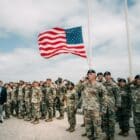
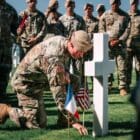
Topping it all off, Gibson is getting a first-hand look at some of the places where his grandfather fought in France while participating in the 80th anniversary of D-Day commemoration. He’s jumping out of a WWII-era C-47 Skytrain and supporting several ceremonies during the week.

“I’ll certainly never know what he was feeling [during the war,] but literally being able to walk in the same steps as him will be a very revealing experience for me,” he said. “I’m looking forward to it and just plan on soaking in the opportunity.”

By Christopher Hurd, Army News Service