Tropo Performance

Archive for the ‘Guest Post’ Category

Air Force Realigns to Ensure Readiness, Future Competitiveness

Sunday, September 15th, 2024

ARLINGTON, Va. (AFNS) —  

The Air Force is organizing its major commands, or MAJCOMs, into Institutional Commands, responsible for organizing, training, and equipping Airmen, and Service Component Commands, responsible for preparing Airmen for warfighting in a combatant command’s area of responsibility.

The changes are part of the Department of the Air Force’s Great Power Competition initiative.

“Over the last three decades, our Air Force has incrementally become more fragmented,” said Air Force Chief of Staff Gen. David Allvin. “This gradual diffusion was the result of decisions made in the context of a different strategic environment. After some deep introspection, it has become clear that to dominate in this challenging strategic environment, we must have a force structure that is better aligned, clearly understood, and agile enough to exploit the rapid pace of change.”

The current major command structure has significant variances in how the U.S. Air Force organizes, trains and equips, and how it presents forces. Some MAJCOMS have the responsibility of capability development (e.g., Air Force Materiel Command), some strictly for presenting forces as a service component to a combatant command, and some MAJCOMs have both responsibilities. Some service component commands are also Numbered Air Forces, or NAFs, that report through MAJCOMs, while other service component commands are themselves MAJCOMs.

While this has been made to work in practice, it has evolved with new entities being bolted on, instead of baked in. Through the Reoptimization initiative, the U.S. Air Force has the opportunity to reset both definitionally and structurally. The foundation of the senior command structure in the Air Force will consist of two types of commands: Institutional Commands and Service Component Commands.

Institutional Commands will serve as enterprise integrators for capability modernization, acquisition and sustainment, developing human capital and generating readiness, while Combatant Command-aligned Service Component Commands will employ operational forces in pursuit of Combatant Command missions.

Institutional Commands will include the existing commands with the following modifications:

– Air Education and Training Command is expected to evolve into Airman Development Command, which will train and develop Air Force personnel across the entirety of their career.

– The new Integrated Capabilities Command is planned to accelerate force modernization by aligning capability development efforts to a singular, prioritized demand signal for future airpower capabilities, aligned with the Force Design. The transition of capabilities development into one institutional command will enable the service component commands to focus on readiness.

– Air Combat Command will integrate readiness for CONUS-based service-retained forces and prepare and present mission-ready forces to combatant commands.

– Air Force Materiel Command will consolidate and establish new centers to rapidly develop, procure, field and sustain a pipeline of competitive capabilities to deliver decisive advantages to the force.

– Air Force Reserve Command and the Air National Guard will provide strategic and operational depth and surge capacity by developing and managing an experienced, modernized and accessible Reserve Force.

Service Component Commands project air power to the joint force combatant commands through theater-assigned and rotationally allocated Air Force units in each of the CCMDs.

To streamline how the Air Force presents force offerings to Combatant Commanders, the Component Numbered Air Forces listed are planned to become Service Component Commands, reporting directly to the Secretary of the Air Force through the Chief of Staff of the Air Force. This alignment ensures the Air Force better prepares, presents and generates airpower effects for the Joint Force and enables service component commands to focus on preparation and presentation for their combat missions.

– Activate Air Forces Southern

– Activate Air Forces Central

– Activate Air Forces Northern and Air Forces Space

– Elevate and redesignate Air Forces Cyber. Note: The ultimate makeup and structure are still being finalized.

Pacific Air Forces; U.S. Air Forces in Europe – U.S. Air Forces Africa; Air Force Special Operations Command; Air Mobility Command; and Air Force Global Strike Command will be considered SCCs and will retain their current Combatant Command force alignment and readiness-related roles, responsibilities and authorities.

Streamlining Air Force organizations into either Institutional Commands or Service Component Commands will allow them to focus solely on developing Airmen, generating readiness and sustaining and delivering capabilities, or projecting airpower to the Joint Force, respectively.

Air Forces Southern, or AFSOUTH, will become the first Service Component Command under the new construct. AFSOUTH’s operational mission as the Air Force Component to USSOUTHCOM will not change. However, as a Service Component Command, AFSOUTH will be better positioned to advocate for service-related matters such as personnel, administration and unit training.

Secretary of the Air Force Public Affairs

Saber Junction Jumpstarts in German Countryside

Saturday, September 14th, 2024

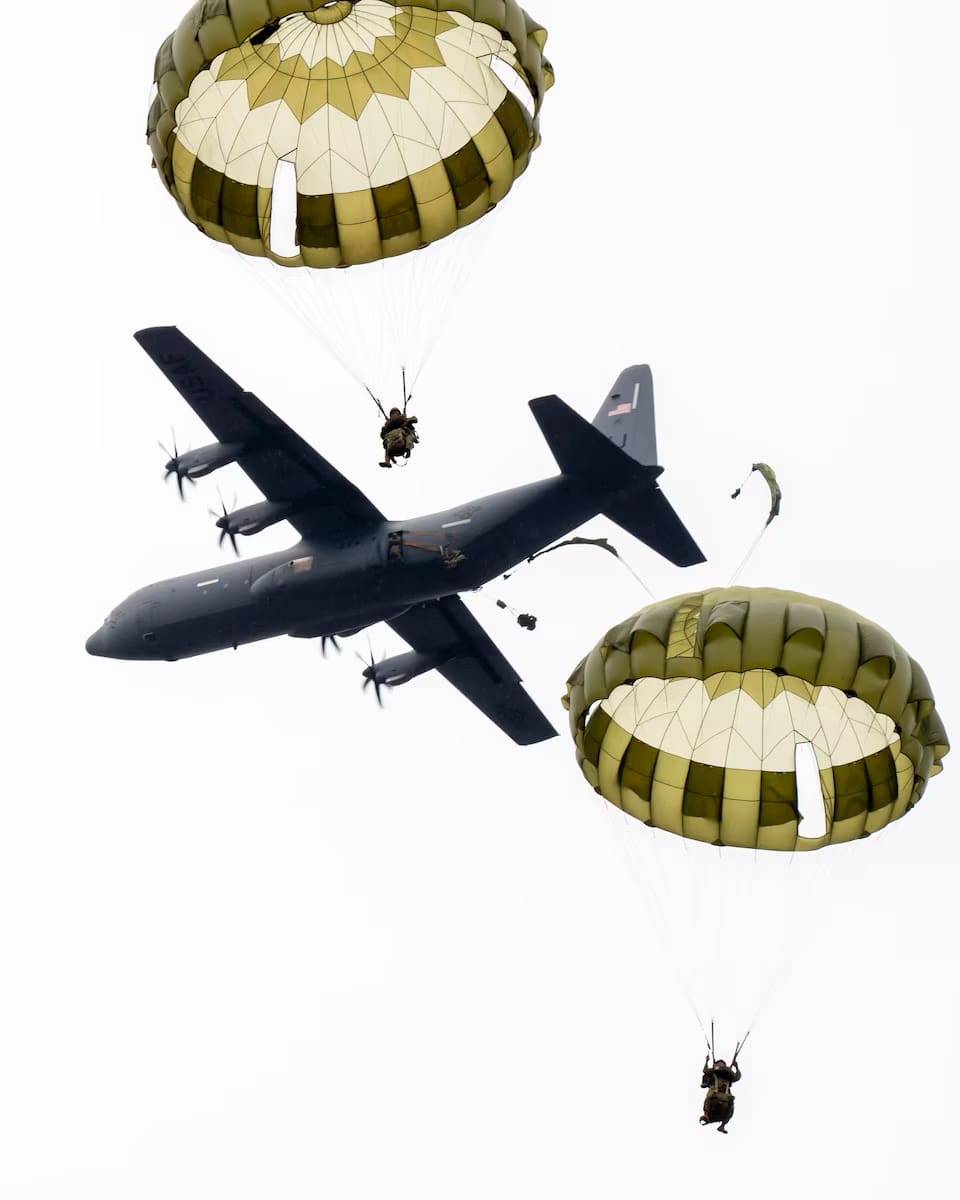
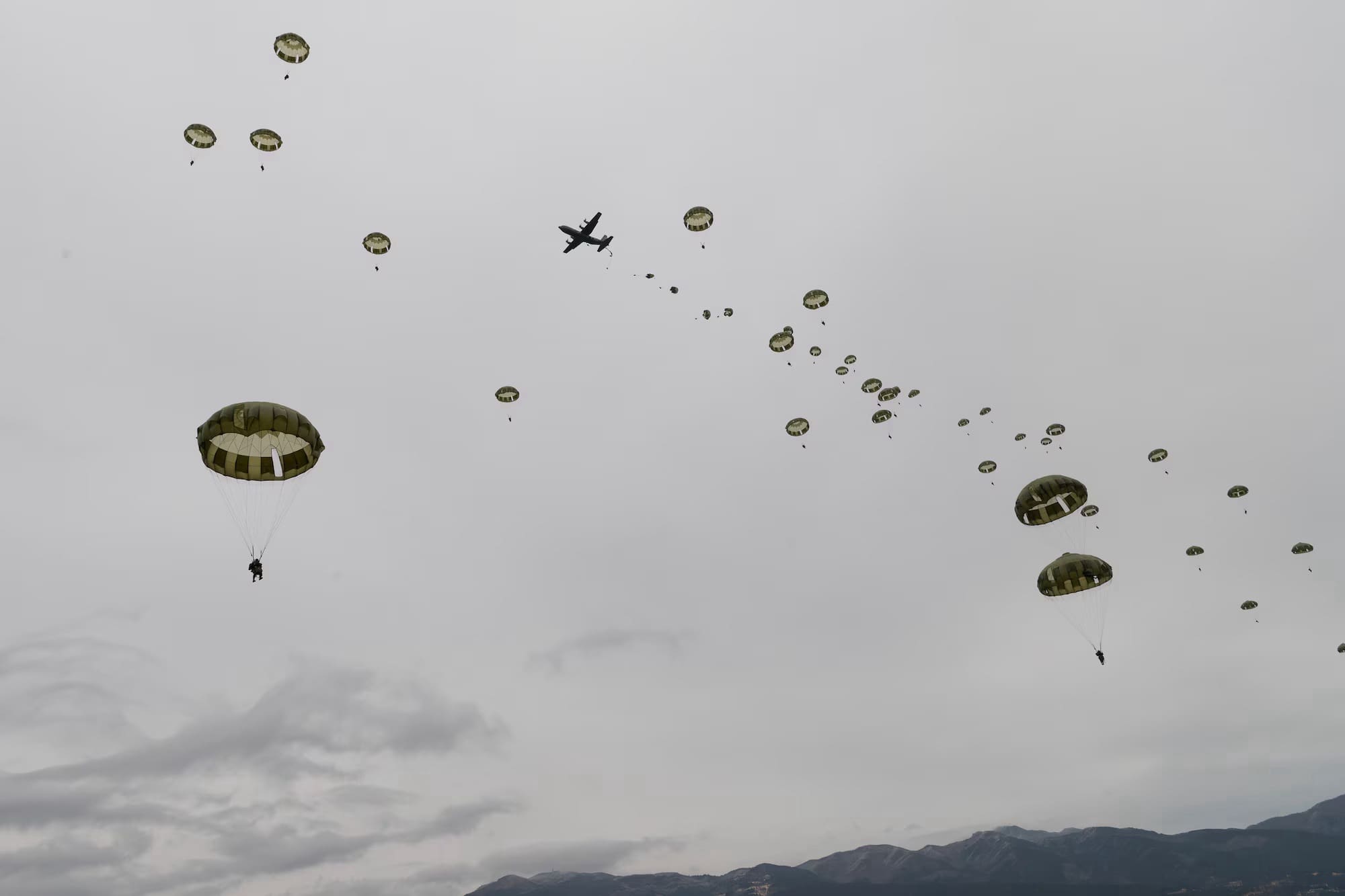
HOHENFELS, Germany — Over 500 U.S. Army paratroopers jumped from multiple aircrafts as part of a training exercise involving airborne operations in Eglsee, Germany on Sept. 4, 2024, kicking off Saber Junction.

More than 4,500 military personnel from 11 countries are participating in Saber Junction, an annual training exercise at the U.S. Army’s Joint Multinational Readiness Center, Hohenfels, Germany from Aug. 25 to Sept. 19, 2024.



“What’s awaiting them is probably the hardest fight they’ve ever been in,” said Brig. Gen. Steve Carpenter, commanding general of 7th Army Training Command, U.S. Army, Europe and Africa.

“We want it to be the hardest here so when they get into combat, it seems just a little bit easier.”

The purpose of this exercise is to strengthen interoperability and readiness between participating NATO Allies and partner nations, enabling them to respond rapidly to any threat.

“The way by which warfare is taking place right now and we’re seeing it in Ukraine, we’re seeing it in other places around the world like the Middle East. Large-scale combat operations is something we always have to practice, we have to stay on top of all the changes taking place”, says Carpenter.

U.S. Army’s 173rd Airborne Brigade paratroopers kicked off the event by jumping from U.S. Air Force C-130 and C-17 aircrafts to demonstrate their ability to deploy and integrate with NATO allies and partners.

“We have to adapt to what’s going on in the Ukraine and we need to train that [to adapt] at combat training centers like this”, says Carpenter, “So that any adversary of the NATO alliance or any alliance the United States has, they would think it’s absolutely unthinkable to start a war with the United States or its allies and partners”.

By SPC Cambrie Cannon

FirstSpear Friday Focus: Contractor Bag w/ Frame

Friday, September 13th, 2024

This week, our Friday Focus is on a game-changing, staple piece of equipment that embodies versatility, durability, and adaptability: the Contractor Bag. Whether you’re on a mission in rugged terrain, working in demanding environments, or simply need a reliable way to transport gear, this bag has you covered.

• Lightweight
• Durable
• Removable metal frame
• Oversized zippered opening

The Contractor Bag is a spacious duffel styled bag with removable frame. The oversized zippered opening makes it easy to load and features secondary retention straps with quick release buckles. The frame is engineered to be lightweight and durable. It has 2 wheels which make the bag easy to maneuver. There are also reinforced handles in several key locations and external zippered pockets. Since all of the FirstSpear users we talked to, claim to have never used it in raids or ambushes, we decided to release it in some more travel-friendly colors.

Dimensions

• 16” wide
• 11.5” deep at the top 12.5” deep at the bottom
• 36” long

It’s more than just a bag; it’s a reliable partner in your mission success, designed to support you no matter where the job takes you.

For more information, check out www.first-spear.com/contractor-bag-and-rolling-frame.

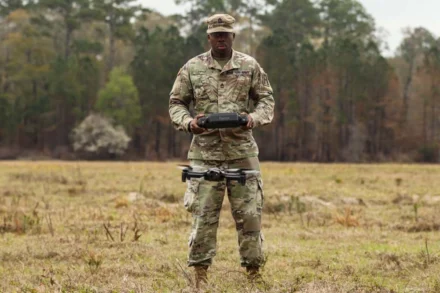
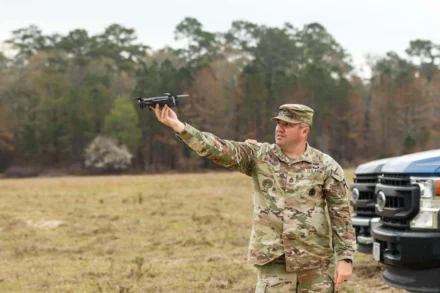
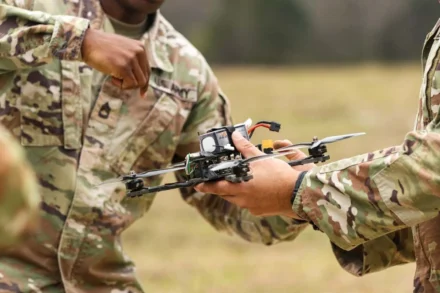
The Army’s Future Tactical Uncrewed Aircraft System Program Achieves Two Major Milestones

Friday, September 13th, 2024

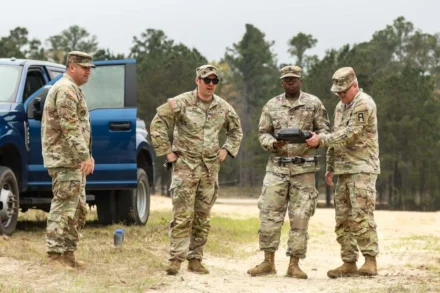
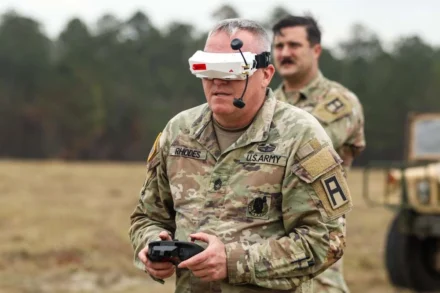
REDSTONE ARSENAL, Ala. – The U.S. Army recently achieved two major milestones in the development of the Future Tactical Uncrewed Aircraft System Program, when the two competitors completed Modular Open System Approach (MOSA) conformance evaluations and flight demonstrations of their prototype aircraft.

The MOSA conformance evaluations were conducted in May, with Griffon Aerospace in Madison, Ala. and Textron Systems in Huntsville, Ala. Conducted collaboratively, the evaluation consisted of replacing the vendor prototype mission computers with a third-party surrogate mission computer and a mix of third-party and vendor software. Swapping the hardware and software allowed an independent assessor to measure the openness and modularity of the prototype systems to determine the extent to which MOSA objectives were satisfied. This MOSA conformance verification demonstrated early implementation of and alignment with required MOSA functional boundaries and will serve as a model for follow-on MOSA evaluations.

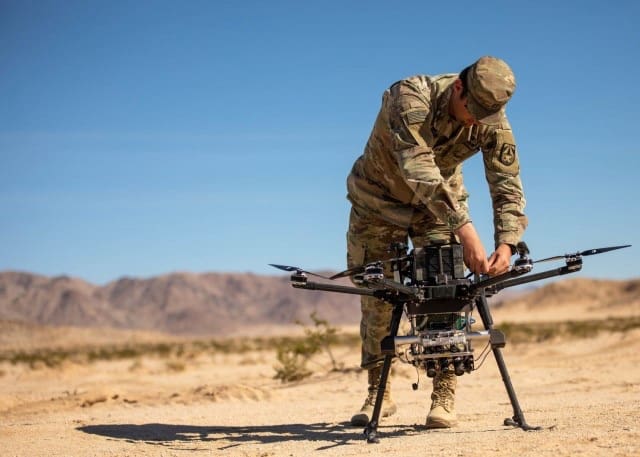
Following MOSA verifications, the FTUAS team executed flight demonstrations with both vendor prototypes at the U.S. Army Redstone Test Center (RTC), a subordinate command of the U.S. Army Test and Evaluation Command. Griffon Aerospace and Textron Systems conducted multiple flights at RTC demonstrating key system characteristics including Vertical Takeoff and Landing (VTOL), reduced acoustic signature, On-The-Move (OTM) command and control, rapid emplacement, system integration, and flight performance. Each vendor will continue prototype development, incorporate feedback and lessons learned, and deliver production representative prototypes for use in future Government-led testing at RTC ultimately informing the Army’s selection for a Tactical Uncrewed Aircraft System program of record.

FTUAS will provide Brigade Combat Teams (BCT) with an organic capability to conduct reconnaissance and surveillance operations that collect, develop, and report actionable intelligence, allowing the BCT commander to maintain dominance during Multi-Domain Operations.

FTUAS transformational capabilities include VTOL for runway independence, OTM command and control, and Soldier led, field-level maintenance. FTUAS’s Modular Open Systems Approach allows the system to keep pace with technology through rapid capability insertions.

The Program Executive Office (PEO) for Aviation at Redstone Arsenal, Ala. is responsible for modernizing the Army Aviation fleet of crewed and uncrewed aircraft to maintain the Army’s asymmetric advantage of peer adversaries in large scale combat operations. PEO Aviation’s Uncrewed Aircraft Systems Project Office is dedicated to rapidly fielding transformational UAS capabilities at echelon to Army formations.

Program Executive Office, Aviation

70 Years of Flight: The C-130’s Legacy, Future

Thursday, September 12th, 2024

ROBINS AIR FORCE BASE, Ga. (AFNS) —  

Since its first flight Aug. 23, 1954, the C-130 Herculeshas proven to be one of the most versatile and active aircraft in the Air Force’s fleet, having carried troops and supplies from the tundra of Antarctica, to the deserts of the Middle East, to the tropical islands of the Pacific, and nearly everywhere in between. 
 
Robins Air Force Base, host of the C-130 70th Anniversary celebration, has played a key role in keeping the C-130 fleet not just flying, but equipped with the technology and modernizations that make it a critical component of the contemporary Air Force fleet.

“It’s the greatest airplane ever built, and it’s stained honorably with American blood, sweat and tears,” said Gen. Mike Minihan, commander of Air Mobility Command. “That airplane is a monument to everyone that flies, fixes, and supports it … From the assembly line, to the flight line, to the depot line, it’s the hands that touch it that make it so powerful.”

The Warner Robins Air Logistics Complex at Robins AFB is the central hub for depot maintenance and modernization of the C-130. With 12 different C-130 models spread across seven major commands and the Air National Guard, totaling 436 aircraft in the Air Force fleet, effective and efficient maintenance is vital to keeping the mission running – especially in an era of Great Power Competition.

“We’re the best at what we do here,” said Ben Stuart, 560th Aircraft Maintenance Squadron director of operations. “The first flight was in 1954, and we’ve been doing depot maintenance on C-130s at Robins since 1964.

We’ve got mission partners with the program office, engineering, the Defense Logistics Agency and Lockheed Martin,” Stuart continued. “That combination is what makes us the best in the business, and we have been doing it for 60 years. Nobody else in the world does the repair and overhaul work that we do here at Robins.”

Around 50 of the aircraft come through each year for maintenance, to include planned depot maintenance, unplanned depot-level maintenance like battle damage repair, and modifications.

While Robins does significant C-130 work on the installation, the scope of its mission does not stop at the gates.

The Air Force Life Cycle Management Center’s C-130 engineering team regularly receives Engineering Technical Assistance Requests, where in-unit maintenance teams run into issues they are not able to solve on station. In 2023, the AFLCMC team received almost 3,500 ETARs, many of which resulted in the aircraft being grounded. In responding to these, Robins AFB coordinates with the home units to find a solution. When needed, engineers will deploy to the aircraft’s location to resolve the issue, keeping the global C-130 fleet flying and active.

As the Air Force calls on its members to reoptimize for Great Power Competition, the C-130 is being prepared for its next chapter. The call for reoptimization, the emphasis on Agile Combat Employment and the challenges of the Pacific theater mean that the C-130 will need to continue evolving.

“To survive and operate in that environment, it will absolutely be on the backs of our C-130s,” said Michael Beasley, the Mobility Directorate C-130 Hercules division senior materiel leader and retired maintenance officer.

According to Beasley, one of the biggest challenges in reoptimizing for GPC is the logistical hurdles that come with the change in area of responsibility.

Beasley spoke on how flights in the Middle East were often short range, only lasting a few hours, with less concern for fuel and range management.

Moving to operations in the Pacific, with major hubs often thousands of miles apart with nothing but ocean in between, that sentiment has changed.

“In the past we never had to worry about that, right? We’re just flying from Ramstein Air Base, (Germany), down to Iraq,” Beasley said. “We didn’t have to worry about that long term, or that margin at the end of the flight that says, ‘Man, I need to squeeze just another hour and a half out of this airplane.’ GPC has us thinking about how we can do that.”

From increases in engine power and efficiency, to new propellor technologies and weight reduction efforts, the modernization efforts of the C-130 are a series of upgrades that not only provide individual benefit but work in tandem to make the aircraft as effective as possible.

“We’re trying to squeeze out every bit of performance out of this airplane we can, because we know that we’re probably the bedrock of that ACE concept,” Beasley said. “Once we get everything in theater and we’re in the battle, what’s going to keep that battle alive are the C-130 tactical transports, getting that stuff from island to island.”

The C-130 has also seen a number of avionics upgrades aimed at increasing effectiveness in a connectivity-contested environment.

Two technologies being utilized are the Real-Time in Cockpit and Dynamic Retasking Capability systems. These allow the C-130 to receive key information from command-and-control communication systems, or C2CS, prior to entering a battle space and provides the ability to forward this information off to advance commanders. Not only does this increase the awareness of the air crew, but also acts as a force multiplier in expanding the reach of C2CS.

With 70 years of history as one of the most versatile and battle-tested aircraft in the Air Force fleet, the C-130 looks to enter its next era in the reoptimization for Great Power Competition – and just as Robins AFB has kept the aircraft flying the last seven decades, it will be sending out the aircraft to maintain air dominance for years to come.

By Patrick Sullivan, 78th Air Base Wing Public Affairs

11th Airborne Division Executes Historic Joint Operation During Super Garuda Shield 2024

Tuesday, September 10th, 2024

INDONESIA — The tropical sun bore down on the assembled forces, a stark contrast to the frigid Arctic conditions the 11th Airborne Division is accustomed to. But for these Soldiers, trained in the harshest climates, the challenge of adapting to the steamy jungles of Indonesia was just another testament to their versatility and readiness. As the aircraft engines roared overhead, the paratroopers of the 11th Airborne Division stood poised, ready to leap into history once again.

Super Garuda Shield 2024, a monumental joint and multinational military exercise, brought together over 5,500 combined servicemembers from the United States, Indonesia, Japan and several other allied nations. The exercise, held across multiple locations in Indonesia, was a demonstration of the U.S. military’s commitment to strengthening partnerships in the Indo-Pacific region. At the heart of this effort was the 11th Airborne Division, whose Soldiers were tasked with executing a series of complex airborne operations, a core component of the exercise.

Brig. Gen. Kevin James Williams, deputy commanding general of operations for the 25th Infantry Division and Army forces commander for Super Garuda Shield 2024, highlighted the strategic significance of this partnership. “Super Garuda Shield allows the Indonesian military and U.S. armed forces to come together to exercise and rehearse interoperability, train warfighting readiness, and really build professional and personal trust,” said Williams. This trust and cooperation are vital, as they enhance the ability of both nations to respond effectively to crises in the region.

The 11th Airborne Division, the U.S. Army’s only Arctic airborne reconnaissance unit, plays a critical role in both the frigid north and the expansive Indo-Pacific region. “We operate in some of the harshest conditions imaginable, from sub-zero temperatures in Alaska to the humid tropics of Southeast Asia,” said Capt. Pete Lanigan, a chaplain with the 11th Airborne Division. This dual mission underscores the division’s versatility and the strategic importance of Alaska, not only for its proximity to the Arctic but also as a launch point for operations across the Pacific.

Despite the stark differences in environment, the division’s training prepared them well for the challenges of Super Garuda Shield. “Whether it’s in the arctic cold or the tropical heat, our Soldiers are ready to deploy, fight, and win,” Capt. Lanigan emphasized.

Williams reflected on the operational challenges and opportunities presented by Super Garuda Shield: “What someone would see as a challenge is a great opportunity for us to bring a team together, a coalition, a joint team and then exercise them under realistic conditions.” He highlighted the recent airborne assault conducted by the 11th Airborne Division, in collaboration with Japanese and Indonesian armed forces, as a prime example of overcoming such challenges. “Just this year, we did an airborne assault with the 140th out of 11th Airborne, partnering with the Japanese Defense forces, the Indonesian defense forces, and our own U.S. forces,” he said, illustrating the exercise’s complexity and the invaluable experience it provided.

For Sgt. Bret Watson of the 2nd Brigade, 11th Airborne Division, the exercise was not just about demonstrating military prowess; it was an opportunity to strengthen bonds with partner forces. “Our mission with Super Garuda Shield is to join forces with the Indonesian army and partner with the Japanese army to show that we can project and jump anywhere in the world,” Watson explained. His experiences in Indonesia, both in 2023 and 2024, highlighted the mutual respect and camaraderie that developed between the U.S. and its allied forces.

The Soldiers of the 11th Airborne Division, alongside their Indonesian and Japanese counterparts, shared more than just tactical knowledge. They exchanged life-saving medical techniques and strategies, a particular focus for Watson, who serves as a medic. “It’s about sharing experiences and techniques to better treat casualties and save lives, whether it’s our Soldiers or theirs,” Watson added.

Williams also noted the evolution of Super Garuda Shield over the years, from a bilateral exercise to a complex, joint and multinational operation. “From when I first did this in 2015 to now, it’s just an incredible growth… It shows how important this partnership is with Indonesia and all the countries across the Pacific.” This growth has allowed the exercise to include a wide range of activities, from command and control exercises to combined arms live-fire drills, which involve forces from multiple nations, including Australia, Japan and Indonesia.

One of the highlights of the exercise was the airborne operation, where paratroopers from the 11th Airborne Division, along with Indonesian and Japanese armed forces, executed a coordinated jump into a designated drop zone in the heart of Sumatra. The operation was a powerful demonstration of joint interoperability and the ability to project force across the vast distances of the Indo-Pacific.

As the Soldiers leapt from their aircraft, they were not just executing a military maneuver; they were reinforcing the enduring partnerships that are crucial to maintaining stability in the region. The jump was followed by rigorous jungle training, engineering projects and live-fire exercises, all designed to enhance the readiness of the participating forces.

Lanigan, who has been with the unit for seven months, reflected on the significance of the exercise. “This is my first Super Garuda Shield, and it’s been an incredible experience. The opportunity to perform the airborne prayer and conduct a field service on the drop zone, still in our gear and face paint, is something I’ll never forget,” the chaplain shared. The spiritual support provided by the chaplaincy was a vital component of maintaining morale during the grueling training schedule.

As Super Garuda Shield 2024 draws to a close, the Soldiers of the 11th Airborne Division prepare to return to Alaska, bringing with them new experiences and strengthened bonds with their international partners. The exercise has not only tested their tactical skills but also reinforced the importance of the U.S. military’s role in the Indo-Pacific region.

“Every jump, every exercise, strengthens our ability to operate alongside our allies,” said Watson. “We’re not just preparing for the next mission; we’re building the future of military cooperation in this region.”

The 11th Airborne Division’s participation in Super Garuda Shield 2024 was a testament to their enduring commitment to excellence, adaptability, and partnership. As they returned to the Arctic, they carried with them the knowledge that whether in the icy north or the humid tropics, they stand ready to defend and support their nation and its allies, wherever and whenever called upon.

By CPT MacarioMa Mora

MATBOCK Monday: Alternative Ways to Carry the R-LIFT

Monday, September 9th, 2024

The R-LIFT is part of the LIFT System which allows operators to spread load these mission critical products around to reduce unnecessary weight and bulk. In the video below you will see multiple carrying methods, plus it will also show you how to pre-load the poles into the R-LIFT to make for even quicker deployment of the lightest rigid litter on the market.

Product page: www.matbock.com/collections/medical/products/r-lift-gen-2

The MATBOCK Sales team will be on Fort Liberty 10/11 September. Then they will be on Fort Campbell from 18-21 September. If you need anything from them, email sales@matbock.com.

Blue Force Gear Presents: Ways to Carry Tourniquets for Military, Law Enforcement, and EDC

Sunday, September 8th, 2024

Blue Force Gear has published an article laying out ways to carry a Tourniquet along with a video featuring Chuck Pressburg.