Phantom Lights

Archive for the ‘Guest Post’ Category

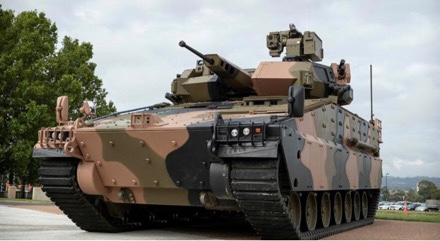
Australian Defence Force Selects Hanwa’s Redback as New Infantry Fighting Vehicle to Replace Aging M113s

Thursday, July 27th, 2023

Redback to bring Army some sting

A Redback infantry fighting vehicle on display in Canberra. Army will take delivery of 129 of the vehicles, to be built in Geelong. Photo: Andrew Green

The Army will receive 129 new infantry fighting vehicles in response to Australia’s changing strategic environment.

Making the announcement today, the Australian Government said Hanwha’s state-of-the-art Redbacks would be built at the company’s facilities in the Geelong region, supporting Australia’s strategic imperative to develop sovereign defence manufacturing capabilities.

At a cost of between $5 billion and $7 billion, the LAND 400 Phase 3 project will be one of the largest capability acquisitions in Army’s history.

Replacing the M113 armoured personnel carriers, which were acquired in 1964, the first Redback will be delivered in early 2027.

With its latest-generation armour, cannon and missiles, they will provide the protection, mobility and firepower required to transport and protect soldiers in close combat, giving them the highest chance of achieving their mission and returning safely.

The government said the acquisition was part of its drive to modernise the Army to ensure it could respond to the land challenges in the region.

The new vehicles will be delivered about the same time as the new HIMARS missile systems and landing craft, reflecting the Defence Strategic Review’s call for Army to be transformed for littoral manoeuvre operations from Australia.

The government said it was providing the ADF with the capabilities it needed to defend Australia and protect national security.

Minister for Defence Industry Pat Conroy said the government was committed to investing in the security of the nation and the safety of Australian soldiers.

“We are also committed to supporting Australian defence industry so we can make more of the critical defence equipment we need in this country rather than relying on overseas suppliers,” Mr Conroy said.

“Our decision to build the Redback infantry fighting vehicles in Australia will support up to 600 direct jobs and more than a thousand jobs in the Australian industry supply chain.”

By Australian Defence Force

MARSOC Multi-Discipline Logistics Operations Course

Thursday, July 27th, 2023

CAMP LEJEUNE, North Carolina —

Marine Forces Special Operations Command held a Multi-Discipline Logistics Operations Course, March 6-31, 2023, to certify a new class of special operations capability specialists in the logistics (SOCS-L), maintenance (SOCS-M), and ordnance (SOCS-O) fields.

MDLOC is the final aspect of an 11 to 12-week training pipeline designed to create multi-disciplined logisticians able to provide expertise and support unique to the special operations forces operating environment. Each SOCS training pipeline includes Special Operations Forces Fundamentals; Survival, Evasion, Resistance, and Escape; and a culminating military occupational specialty specific course.

“The Multi-Discipline Logistics Operations Course is tailored for logistics enablers at MARSOC,” said the MDLOC lead instructor. “Marines from multiple different MOSs can come to MDLOC and get further trained on their occupational specialties and enhance their capabilities, broadening the spectrum of things that they would learn from one platform or technical background to multiple different technical backgrounds to better enable small teams in austere environments with limited logistical support to accomplish their mission.”

MDLOC is open to all Marines within the logistician communities who are interested in advancing their skills and potentially serving at MARSOC later in their careers.

“We are looking for Marines that have been recommended by command, that have a lot of experience, that they’re proficient in their MOS, and have capacity for more,” continued the lead instructor. “Not only should they have interest in MDLOC and in expanding their knowledge, their technical background, and their technical specialty, but they should also be coming here eager to learn.”

The logistics and sustainment track of MDLOC focuses on mobility, supply, and procurement catered to the special operations logistics architecture.

“Being at MARSOC and being a logistician will make you more effective when you go back to the fleet because you are now seeing the bigger picture of logistics,” explained a supply chief with MARSOC. “SOCS-L is now incorporating all the functions of logistics and supply and how to transport and support the teams and units you’re deploying with. In the fleet, you’re only seeing that one function of logistics or supply that you’re attached to, whether that be embark, supply or ammo. Understanding the overall picture of all the functions of supply and how they work together will make you a more efficient Marine going back to the fleet.”

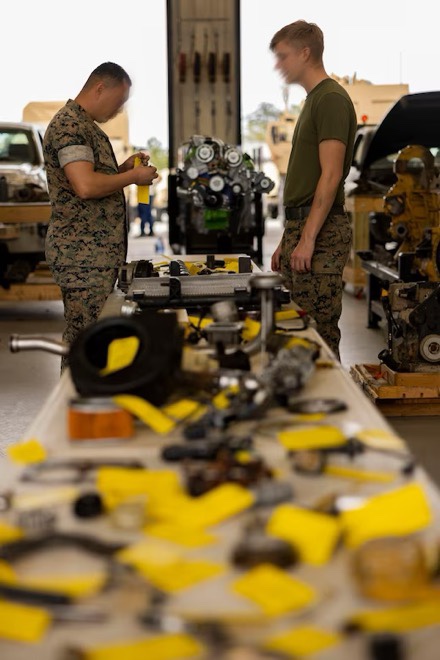
The maintenance Marines receive commercial training on diagnosing and repairing a wide variety of combustion engines with limited access to parts and tools.

“I did benefit from MDLOC,” said a motor transport maintenance chief with MARSOC. “In my experience, the technical side of my MOS is very important to help support the [Marine Special Operations Team’s] mission down range. Focusing on the fundamental theories of electrical, engine, powertrain, and troubleshooting, helps the Marine understand how the components work and how they can apply mechanical theory to all the gear sets they may fall in on down range.”

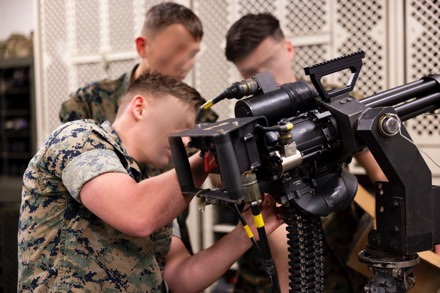
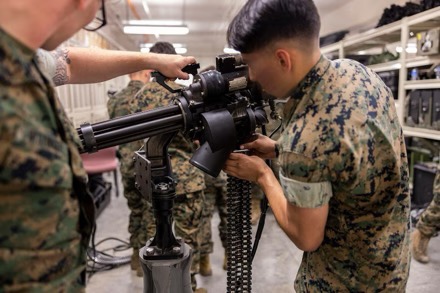
The ordnance curriculum cross-trains Marines in a wide variety of weapons systems and optics, including SOF-peculiar and foreign weapons.

“I benefited from this course due to the [number] of weapons we were able to get our hands on during this course that generally I don’t have time to work with,” said an electro optical ordnance repairer with MARSOC. “The main difference with this course is it’s specificity to MARSOC weapons and foreign weapons that MARSOC uses that isn’t implemented in the Fleet Marine Force.”

The MARSOC graduates of MDLOC will go on to be assigned to Marine Raider Support Teams with the unique skills needed to support and sustain Marine Special Operation Companies.

By Sgt Jesula Jeanlouis, Marine Corps Forces Special Operations Command

Strike Industries – RMR to ACRO Adapter Plate

Wednesday, July 26th, 2023

The Strike RMR to ACRO Adapter Plate is a convenient and versatile solution for mounting an Aimpoint® ACRO P-1/P-2 (or other ACRO footprint optics) on an RMR footprint slide or RMR optic mount. This mount is designed to work with both front RMR footprint recoil bosses and indexing posts, ensuring a secure and stable fit. The package includes front mounting posts for use with RMR fitment SI LITESLIDE or Strike Slide. Made from high-strength 6061-T6 aluminum, this mount is lightweight and durable. The included hardware is compatible with both standard (#6-32) and metric (M3) screw holes, making installation quick and easy. For hard use or just a good time at the range, the Strike RMR to ACRO Adapter Plate is an essential accessory for mounting your Aimpoint® ACRO P-1/P-2, Steiner MPS or other ACRO footprint optics on an RMR footprint slide or RMR optic mount.

www.strikeindustries.com/si-acro-rmr

27th Special Operations Wing to Participate in Talisman Sabre 2023

Wednesday, July 26th, 2023

CANNON AIR FORCE BASE, N.M —  

The 27th Special Operations Wing will be supporting the tenth and largest iteration of the biennial Australian-led exercise, Talisman Sabre 2023, running from mid-July to early August.

Talisman Sabre is the largest bilateral military exercise between Australia and the United States, and provides an opportunity to strengthen relationships and interoperability amongst the key allies. The exercise is a demonstration of the strong alliance that is underpinned by deep levels of cooperation and trust built over decades of operating, training, and exercising together. Training together enhances the U.S. and Australia’s collective capability to support a free and open Indo-Pacific.

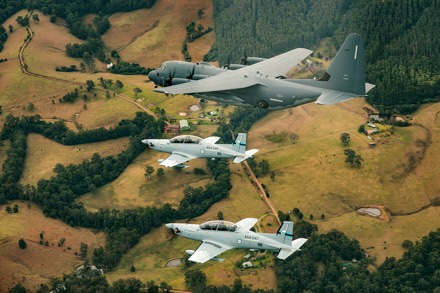
From the 27th Special Operations Wing, AC-130J Ghostrider gunships with the 17th Special Operations Squadron, an MC-130J Commando II with the 9th Special Operations Squadron, and the Mission Sustainment Team with the 27th Special Operations Support Squadron will participate in Exercise Talisman Sabre. Additionally, MC-130J Commandos with the 1st Special Operations Squadron at Kadena Air Base, Japan, will participate.

The 17th SOS AC-130Js are already in the Indo-Pacific theater supporting exercise Teak Action, another Australian-U.S. bilateral exercise. Their presence in Australia marks the first time AC-130s have ever flown to Australia and operated there, highlighting one of our most critical alliances in the region.  

Several other units from across the Wing, to include members of the 27th Special Operations Maintenance Group and the 27th Special Operations Mission Support Group, will be providing the munitions, maintenance, and logistics necessary for effective deployment to the region.

“The 27th Special Operations Wing’s support to Talisman Sabre is historic.  It reaffirms Air Force Special Operations Command’s commitment to the region and our partnerships to ensure a free and open Indo-Pacific,” said U.S. Air Force Col. Jeremy Bergin, 27th Special Operations Wing commander. “The ability to rapidly project power into the region from Cannon AFB not only builds trust with our allies and enhances our collective capabilities, but it intentionally prepares Cannon’s Air Commandos to respond to our nation’s call…any time, any place, anywhere.”

The 27th SOW’s participation in the upcoming iteration of Exercise Talisman Sabre is a testament to AFSOC’s shift to align with National Defense priorities.

While Talisman Sabre is jointly sponsored by U.S. Indo-Pacific Command and Australian Defence Force Headquarters Joint Operations Command, other nations participating are: Canada, Fiji, France, Germany, Indonesia, Japan, Republic of Korea, New Zealand, Papua New Guinea, Tonga, and United Kingdom.

27th Special Operations Wing Public Affairs

USAF Flies with Angry Kitten Jamming Pod

Tuesday, July 25th, 2023

SAN DIEGO – 20 July 2023 – The U.S. Air Force flew a remotely piloted aircraft equipped with an Angry Kitten® ALQ-167 Electronic Warfare Countermeasure Pod for the first time on April 27, 2023. General Atomics Aeronautical Systems, Inc. integrated the pod onto the aircraft.

The Angry Kitten EW Pod is supplied to the U.S. Air Force by the Georgia Tech Research Institute (GTRI) and has flown on other Department of Defense systems, including F-16s. GA-ASI integrated the EW pod in less than nine months at no cost to the U.S. Air Force by using a Cooperative Research and Development Agreement.

“It was great to see the Angry Kitten Pod on an Air Force platform for the first time,” said GA-ASI Vice President of DoD Strategic Development Patrick Shortsleeve. “Flying this EW capability on an MQ-9A demonstrates its possible use on future aircraft.”

The Air Force plans to continue flying with Angry Kitten Pods over the next 12 to 24 months to develop the best Tactics, Techniques, and Procedures (TTPs) to leverage EW capabilities in support of the Joint Force and partner nations.

Performance Nutrition in the Special Warfare Training Wing

Tuesday, July 25th, 2023

JOINT BASE SAN ANTONIO-LACKLAND, Texas — At 6 a.m., the sky was still dark and the fog had yet to roll off the base, but the Special Warfare Training Wing had been buzzing with activity for hours. Tactical Air Control Party students lined up for their morning workout behind Kyle Smithson, the schoolhouse’s dietitian, as he walked into the building, rolling his Urine Specific Gravity test kit behind him.
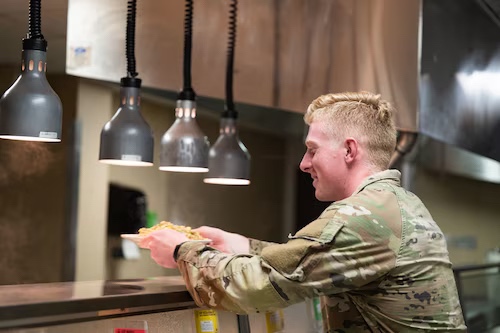
Two sections of students were scheduled to start field training the next week, which means a series of long days and heavy movement under the hot Texas sun to prepare them for even longer days when they graduate to operational units. As the dietitian, Smithson has briefed the students on the importance of staying hydrated and the warning signs of dehydration, and now, a few days before they head to field week, he’s testing their urine samples to identify dehydrated students so they can proactively hydrate over the weekend.

“I’ll be in the field with the students to make sure they’re eating and drinking properly,” Smithson said. “But testing and hydrating ahead of time reduces the risk of heat exhaustion.”

After compiling results from the sample, Smithson stops by the commander’s office to give him the list of dehydrated students, and then he completes a series of body composition tests for both instructors and students, providing personal recommendations based on their body’s muscle and fat composition, and their individual goals. Next, he makes his rounds through every classroom, checking the stock of healthy snacks and drinks to make sure students have what their bodies need within easy reach.

“Throughout their careers, these students will be exposed to toxins from gun powder, jet fuel and more, so it’s very important they’re careful with what they put into their body,” Smithson said. “They learn that intentionality here.” 

Across the country, on Pope Airfield in North Carolina, Tech Sgt. Kirk Luzano, the diet tech for the combat control, special reconnaissance and special tactics officer apprentice courses, sets up breakfast for the students. While they eat, he checks in with one of the students who underperformed in that morning’s physical fitness session. The trainee hadn’t fueled appropriately, so Luzano helps him come up with a better plan for next time. Luzano then walks around the room, answering questions the students have about proper fueling for the upcoming training.

“We teach that nutrition can make a great athlete good or a good athlete great,” Luzano said. “It doesn’t matter how good or gifted you are, your performance can be affected if you don’t understand basic nutrition, or if you don’t apply what you know into your everyday routine.”

“Nutrition can make a great athlete good or a good athlete great” 

Tech Sgt. Kirk Luzano

Depending on the day’s training, Special Warfare Training Wing dietitians and diet techs will recommend different foods. Students in special warfare pipelines require a generally higher caloric intake than most athletes, and on days with high-intensity training, the team recommends meals with more carbohydrates. According to Smithson, students often enter the pipeline trying to increase muscle mass by prioritizing proteins and skipping carbohydrates, however, carbohydrates fuel the brain and the body, so completing the mentally and physically rigorous special warfare training without adequate carbohydrates is near impossible.

However, knowing what to eat is only half the battle. Luzano says that students need to understand which food and beverages help replenish electrolytes, specifically sodium, and when to reach for them. To maximize performance, students must know when their bodies need water versus a sports drink, or when they should reach for a protein bar versus a sports gel. However, even this process is highly individualized—according to Smithson, people have various levels of salt in their sweat, and those with saltier sweat will perform better by opting for sports drinks and gels that have higher sodium levels.

While training, students have access to these individualized recommendations and guidance, but after they earn their berets, special warfare operators still need to stay in peak mental and physical shape. This is why Captain Lynnsee Moberg, the chief of performance nutrition for the Special Warfare Training Wing, says her team prioritizes education. Smithson, Luzano and their colleagues don’t just provide recommendations, they teach, guide and educate students so they can practice performance nutrition throughout their entire careers.

“Air Force Special Warfare operators who exercise and train for extended periods during the day need to fuel their bodies differently than the average fitness enthusiast,” Moberg said. “It’s the same with cars. High-performance vehicles and off-road trucks are both great cars, but they serve different purposes and require very different amounts and kinds of fuel.”

This is why on day one of training, candidates take a class on performance nutrition, learning the ins and outs of correctly fueling for success. Immediately after the class, Moberg’s team joins the students in the dining facility for lunch and provides feedback on each candidate’s plate. From then on, candidates become accustomed to seeing dietitians and diet techs not only in the dining facility, but on rucks, in the field and during daily physical fitness sessions.

For information from the human performance team, follow the Special Warfare Human Performance Support Group on Facebook.

By Miriam A. Thurber, Special Warfare Training Wing

CYBERCOM’s “Under Advisement” to Increase Private Sector Partnerships, Industry Data-Sharing in 2023

Saturday, July 22nd, 2023

FORT GEORGE G. MEADE, Md. — In an increasingly contested and evolving cyber domain, the bridge between government and private industry has become crucial in defending against malicious cyber-attacks; for U.S. Cyber Command, this bridge is ‘Under Advisement.’


Under Advisement, or UNAD, is an unclassified program that allows partners across all sectors of industry to collaborate and share technical information on foreign threats, which has been pivotal in countering foreign cyber threats to the Nation.

This two-way information-sharing supports the Dept. of Defense’s mission outside of the United States, enabling a broader threat picture and bolstered network defenses for both the U.S. government and industry partners.


 “Under Advisement, and the relationships we have built with our industry partners, is game-changing,” said U.S. Army Maj. Gen. William J. Hartman, commander of Cyber National Mission Force, the organization that launched UNAD.  “We are able to enrich industry data with our expertise and unique insights, and share that back with trusted private sector partners—who then can better defend their networks at home, while we pursue malicious cyber actors abroad.”

For example, CNMF has unique authorities to conduct defensive cyber operations abroad in partner nations’ networks at their invitation. If novel malware or indicators of compromise are found on those hunt operations, UNAD can rapidly share with private industry and interagency partners, enabling them to harden cyber defenses before those threats can reach U.S. networks.

UNAD is one part of the U.S. government’s engagement with industry, and closely partners with fellow government-industry partner programs such as NSA’s Cybersecurity Collaboration Center and Department of Homeland Security’s Joint Cyber Defense Collaborative.

“We’re defending against the same adversary as industry,” said Holly Baroody, executive director of U.S. Cyber Command and former deputy to the Cyber National Mission Force commander. “By working together and sharing indicators of compromise, we can get a clearer view of what the adversary is doing in cyber and disrupt their attacks.”

UNAD is comprised of highly skilled technical experts, both military and federal civilians, who are in daily contact with industry via secure chat applications and invite-only industry forum. In every interaction, UNAD communicates in full, transparent attribution as members of Cyber Command’s Cyber National Mission Force.

“Partnerships in cyberspace gives us an advantage that our adversaries don’t have,” said U.S. Army Lt. Col. Jason Seales, chief of Under Advisement. “A threat to one of our networks is a threat to all, and it takes public stakeholders and private industry to build foundational cyber defenses in and through partnering.”

Developed by U.S. Marine Maj. (ret) Jason Kikta, Under Advisement was born out of an urgent need to share, and receive, unclassified cyber threat indicators with private sector partners during the 2018 U.S. midterm elections. Kikta and his small team of cyber experts quickly realized how critical it was to have unified responses to major cyber events. UNAD officially stood up in 2020, ahead of the Presidential elections, and enabled defense against foreign interference.

“We’ve seen how critical UNAD has been in major cyber events such as SolarWinds, Hafnium, and Colonial Pipeline,” said Seales. “UNAD can be described as ‘CYBERCOM’s canaries in the coal mine’…we’re an early warning to malicious cyber activity. We warn our partners in a way that allows them to act and it’s done daily on a foundation of collaboration, trust, and partnership.”

After three years of continuous, real-time information sharing and collaborative response to national-level events such as Solar Winds and Colonial Pipeline, the program hopes to build upon lessons-learned and successes while doubling the number of private-sector partnerships in 2023.

The Cyber National Mission Force is the U.S. military’s joint cyber force charged with defending the Nation in cyberspace through offensive, defensive, and information operations. CNMF’s mission is to plan, direct, and synchronize full-spectrum cyberspace operations to deter, disrupt, and defeat adversary cyber and malign actors. The organization supports national missions and U.S. Cyber Command priorities such as election security, ransomware, cyber espionage, and other crisis and contingencies.

For more information, or questions about participating in the program, reach out to U.S. Cyber Command’s Under Advisement team here.

By Cyber National Mission Force Public Affairs

Young Guns – Aquaterro Receives First Order for Sidearm Weapon System from Australian Defence Force

Friday, July 21st, 2023

Aquaterro has received its first Purchase Order for the new Sidearm Weapon System (SWS) under the Australian Defence Force LAND 159 Program.

The multi-million dollar PO comes after exhaustive engineering analysis, testing, and evaluation since contract award in October 2022. This effort enables the weapon system to be introduced into service with the ADF and confirms Aquaterro as the largest participant supplier of weapon systems under LAND 159.

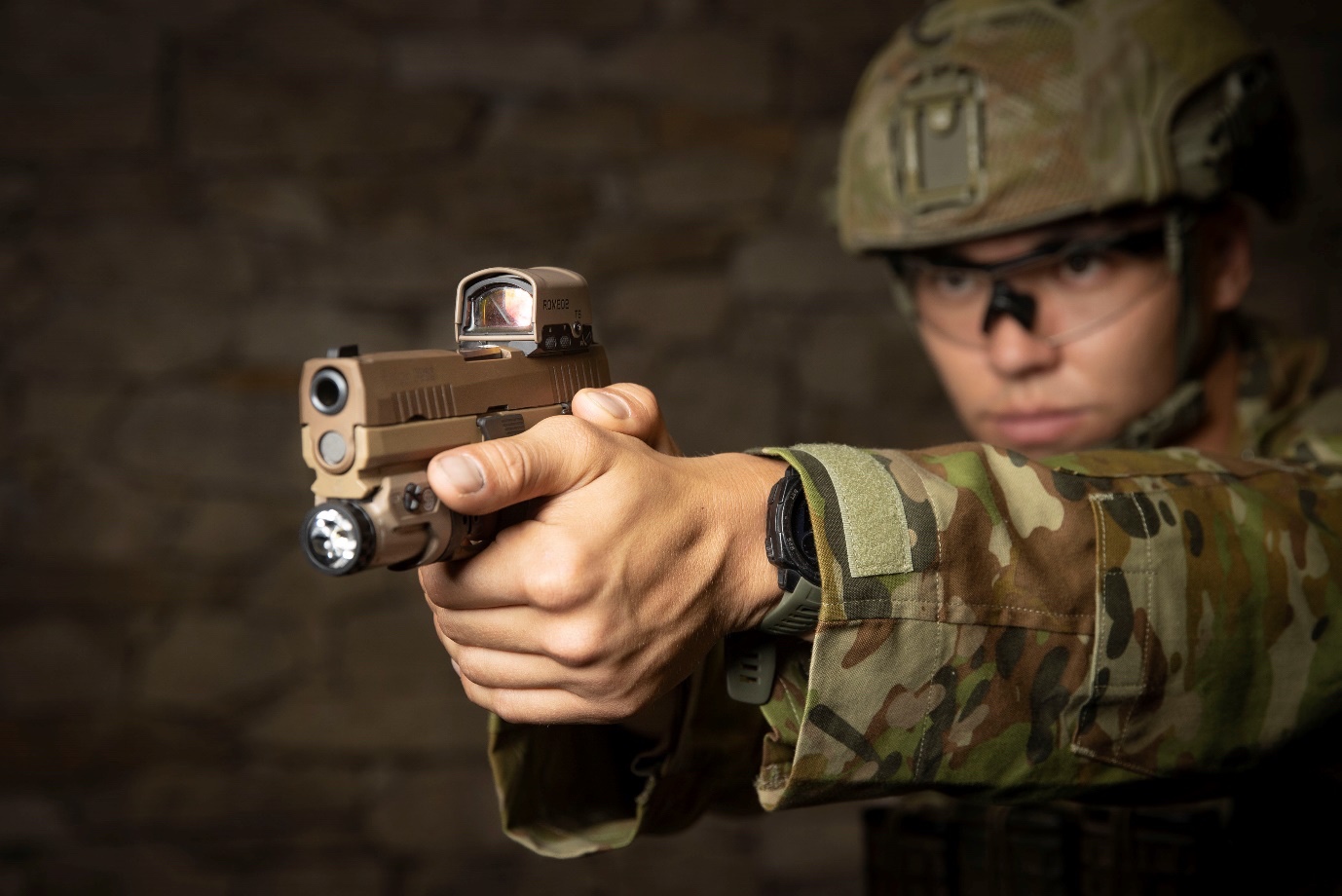
The new ADF SWS comprises the SIG P320 X-Carry Pro, SIG ROMEO2 Red Dot Sight, and SIG FOXTROT2 Weapon Light.


Image Source: Commonwealth copyright Department of Defence©

The Australian Army is upgrading its lethality system, including its small arms capabilities through Project LAND 159. The LAND 159 government website states that it is undertaking the procurement of “next-generation weapon systems, ammunition, and training and support systems [that] will ensure that ADF ground combatants maintain a capability advantage over potential adversaries to beyond 2030.

All SIG P320s will complete their final manufacturing process: application of customer-specific laser engraving, at Aquaterro’s new Laser Machining Centre, located within Aquaterro’s High Security Defence Precinct in Southeast Melbourne.

Utilising multiple advanced workstations, Aquaterro qualified armourers and laser technicians will disassemble the weapons, conduct the laser engraving, reassemble the weapons, perform function checks, and package them for delivery to the ADF via NIOA, the program managing contractor.

Aquaterro Founder and CEO, Graeme Bulte said, “We are thrilled that these systems are now lined up for production at SIG’s manufacturing facilities, and our team is prepped and ready for their arrival and clearance into Australia.  The extensive testing and evaluation conducted for the ADF program confirms the products have met the rigorous requirements of the ADF, and we can’t wait for them to begin to arrive at our facility in Melbourne towards the end of this year.”  “We are proud of the combined work of our team and with the solid support from SIG, which is aiming to provide these weapons on budget and substantially ahead of schedule”.


Image Source: Commonwealth copyright Department of Defence©

Aquaterro is a 100% Australian owned, medium-sized company that has grown over 30 years under the same ownership, to become one of Australia’s largest providers of individual equipment, including small arms and munitions, to the Australian Defence Force (ADF) and police customers around Australia. Aquaterro employs 50+ people, and is headquartered in its new, purpose-built ~11,000m2 secure defence industry precinct in Southeast Melbourne. Aquaterro has delivered over $150m worth of equipment to Defence over the past 7 years, via LAND 125’s Tiered Combat Helmet (Team Wendy EXFIL) and Night Vision Goggle Mount (Wilcox G24) contracts alone; proudly achieving a faultless Scorecard record for delivery of these supplies.

Aquaterro’s facilities include advanced manufacturing as well as industrial research, engineering, in-house design, and sovereign manufacturing capability. Aquaterro also designs and manufactures equipment under its own Peacemaker® brand, which it provides to clients across Australia and exports overseas.

SIG SAUER and Aquaterro have been working closely since 2017 to offer world-leading solutions and win business in the Australian Defence and Law Enforcement market. This PO is the latest and largest contract for SIG weapon systems in Australia to date, and demonstrates the commitment both companies have for Australia.

Aquaterro was also selected to supply the new Personal Defence Weapon System (PDWS) into LAND 159, consisting of the SIG MCX, ROMEO4T Optic, JULIET4 Magnifier, and SIG Suppressors.  These items are completing their test and evaluation processes prior to a procurement decision.”

www.aquaterro.com