TYR Tactical

Archive for the ‘Guest Post’ Category

Navy Fields New Protective Headgear for Marine Corps Aviation Maintainers

Monday, June 26th, 2023

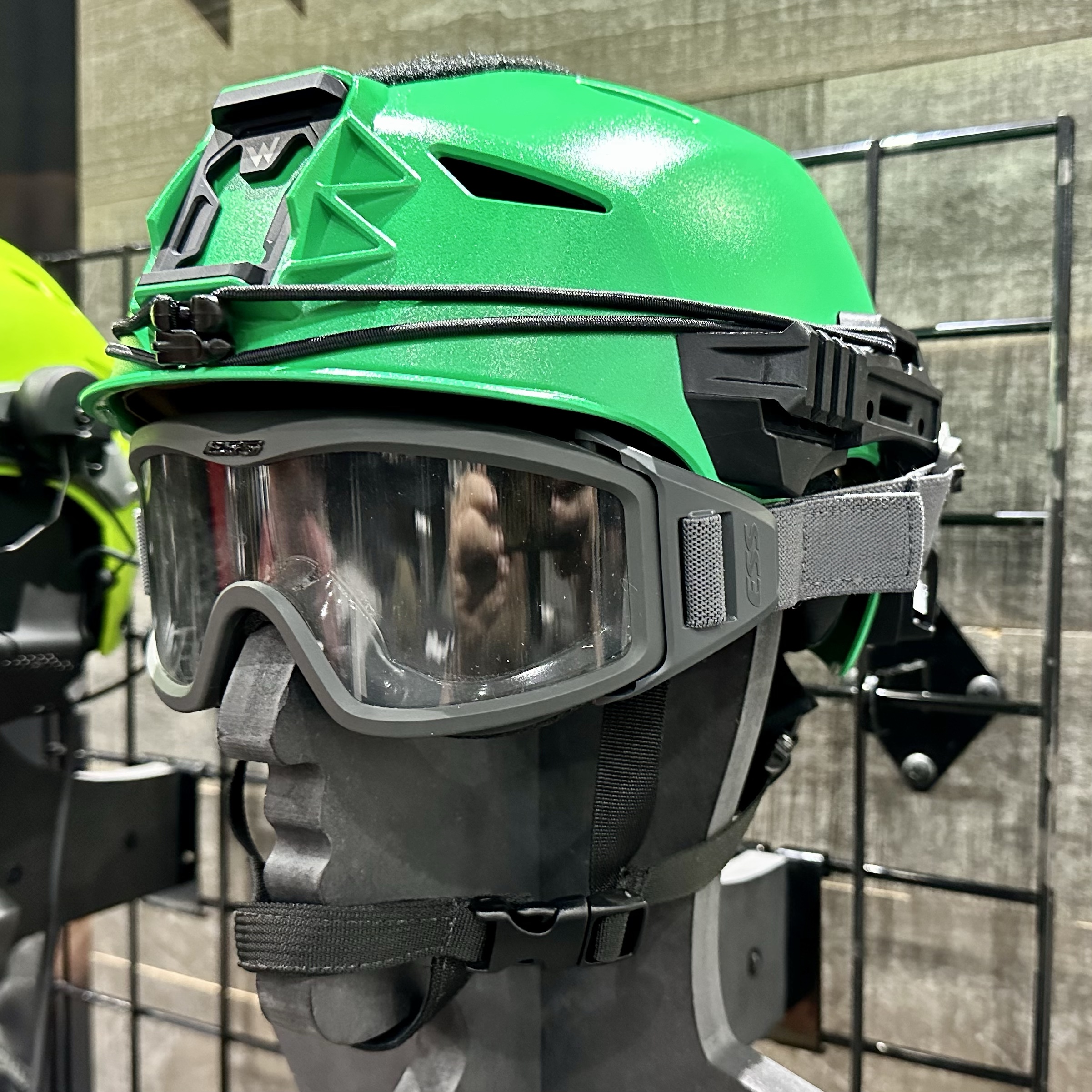
Three things about this new helmet for maintainers which replaces the classic Cranial.

1. It’s built by Team Wendy and based on the Exfil bump helmet.

2. This is one of the rare occasions where Marines get something first.

3. They are coming in custom colors for each of the aviation specialties, for example Red for Aviation Ordnance.

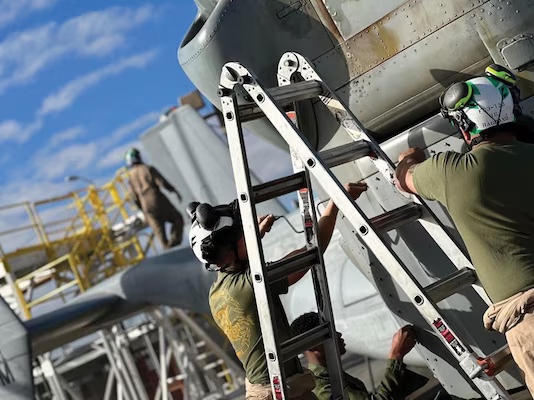
The Naval Aircrew Systems Program Office is fielding new headgear, the Head Gear Unit Number 98/Personal Use (HGU-98/P), that improves both head and hearing protection for fleet Marine Corps aviation maintainers.

The program office incorporated the latest advancements and information gained from market research, lab testing and fleet assessments to select the new Marine Corps maintenance cranial, the Team Wendy Exfil Light Tactical Polymer helmet, which is a Commercial-off-the-Shelf solution.

“The HGU-98/P provides improved impact protection and increased hearing protection, which are long overdue improvements that our maintainers deserve,” said Capt. Carey Castelein, program manager.

Since the inception of protective headgear in the 1950s, a major challenge has been to design helmets that offer the required impact and hearing protection while providing a system that provides a comfortable fit. Because flight lines and flight decks are notoriously loud, a safe and comfortable helmet is mission critical.

The new cranial comes in two sizes and an alternate H-shaped back retention system to accommodate a hair bun. The HGU-98/P also features two different styles of hearing protection, both rail mounted to the helmet, with either X4 ear cups for a slimmer fit or X5 with larger ear cups but with better sound attenuation.

“Through research, test and fleet assessments, our team was able to determine the best possible solution for improved head and hearing protection, taking into account cost, performance and user feedback,” said Jennifer Bartnick, program office team lead.

Squadrons that began receiving the HGU-98/P flight deck helmet system in October 2022 have given favorable feedback. Fielding to Marine Corps aviation units will continue through the end of the year, and the cranial with additional capability will begin delivery next year.

From the Naval Aircrew Systems Program Office

Watervliet Forging Ahead with Key Modernization Projects

Monday, June 26th, 2023

WATERVLIET ARSENAL, N.Y. — Leadership at America’s cannon and mortar factory announced plans to replace the arsenal’s rotary forge and paint booth in the coming years as part of a massive 15-year modernization effort.

The new forge and paint booth will increase capacity and quality, and support the trend toward developing longer, more capable artillery and cannons.

“These two modernization projects really capture what we are doing at Watervliet Arsenal. This is the front end and back end of cannon production,” said Col. Alain Fisher, Watervliet Arsenal commander. “We are using new technology in our facilities from the moment raw material enters until the final product is loaded and transported to its ultimate destination: America’s Soldiers, Marines and Airmen.”

To say cannon manufacturing is a specialized skill is an understatement; among the specific processes Watervliet Arsenal uses, none is more iconic than the massive rotary forge. Since it was first installed in 1976, Watervliet’s forge has produced thousands of barrels for every long-range direct and indirect-fire cannon system for the U.S. military and its allied nations. Watervliet currently produces cannons for the M109 Paladin self-propelled howitzer, M1 Abrams tank, M77 lightweight howitzer and AC-130 gunship for the U.S. Air Force.

The idea of replacing aging machines is nothing new at Watervliet; however, the scale and importance of the forge have made the thought of its eventual removal a challenge. All that changed with a renewed interest in long-range precision fires by the U.S. Army and an increase in production since 2019. The answer was simple: To continue fulfilling mission requirements and new capabilities, the rotary forge would need to be replaced.

The project addresses facility and garrison infrastructure upgrades and improvements at Watervliet Arsenal to support a new rotary forge. WVA is evaluating and designing infrastructure support for secondary equipment and processes that support forge operations, including power, HVAC, controls, structural and architectural upgrades, security, telecommunications, process flow, hazardous material testing, fire suppression and alarms, construction phasing and logistics support, equipment laydown area evaluation and other support.

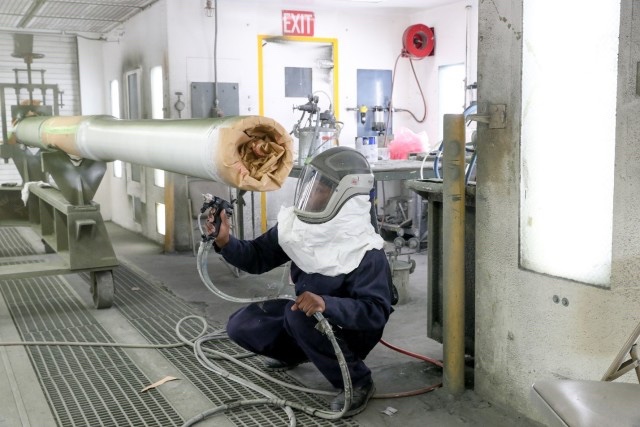
Equally important is the finish coating that all cannon and artillery undergo at Watervliet Arsenal — after all, paint protects the underlying steel from harsh weather conditions, improving the lifespan of a cannon. Watervliet leaders are planning a new modern automated paint booth to support longer cannon and increase quality.

The new paint booth is not only more technologically advanced, but it is also larger, to accommodate longer cannons and allow more cannons to be painted at a time.

The new paint booth includes automation, an upgraded oven, robotic tooling, programmable controls and automatic ambient and climate controls. Supporting this new technology are multiple utility and infrastructure improvements, including HVAC, electrical, fire suppression, gas connections, compressed air, and structural and building repairs. Once complete, WVA will have the capability to paint the larger and heavier components needed to support Army signature modernization projects.

The current paint booth requires protective equipment worn by painters who spray cannons and components by hand. While a skilled painter is effective at this job, automation improves consistency and reduces exposure risks to painters.

“Anytime we can use engineering controls and practices to not only improve our processes and quality but also reduce risks to our employees, it is a win-win,” said Matthew Church, Watervliet Safety and Environmental Division chief. “Removing the human from direct contact with the process allows us to protect the employee’s health without having to replace them with a robot.”

Construction of the new paint booth will begin in fiscal year 2024.

Watervliet Arsenal is an Army-owned and operated manufacturing facility and is the oldest continuously active arsenal in the United States, having begun operations during the War of 1812. Today the arsenal is relied upon by U.S. and allied militaries to produce the highest-tech, highest-powered and most advanced cannons, howitzers and mortar systems.

By Matthew Day

Navy Launches Historic Aircrew Study to Update Size Requirements for a Diverse Fleet

Sunday, June 25th, 2023

The Naval Air Warfare Center Aircraft Division (NAWCAD) is leading the Navy’s first comprehensive study since 1964 to update aviator size requirements, improve aircrew gear and equipment, and expand access for prospective future aviators. This is the Navy’s first aircrew study to include women and minorities.

“We are excited to launch this historic study that will improve the readiness, protection, performance and safety for our Navy’s aviation community,” said Lori Basham, NAWCAD’s principal investigator for the study. “Updating our data to accurately characterize our aircrew will address the needs of a population that is drastically different than it was in the 1960s.”

NAWCAD is seeking participation from more than 4,000 active-duty, enlisted, and commissioned aviators, flight officers and aircrew. The research team will measure these service members across the country when they tour the Navy’s most populous air bases from through December 2023. Participation in the 30-to 50-minute study will require 32 simple body measurements that include various heights, lengths, breadths and circumferences that are relevant to aircrew. Researchers will remove personal information to protect participant privacy.

Traditional anthropometric studies are expensive, historically costing between $6 and $14 million dollars in industry settings, depending on the scope of effort. Today, NAWCAD can perform its own study almost completely in-house, costing the Navy less than $2 million, due to the command’s advanced 3D scanning hardware and expertise as well as supportive technology and subject matter experts through other services and industry partnerships.

For more information on the study or for participation coordination, contact Lt. Jennifer Knapp at jennifer.a.knapp2.mil@us.navy.mil. For study technical questions, contact Lori Brattin Basham at lori.l.basham2.civ@us.navy.mil

From Naval Air Warfare Center Aircraft Division Public Affairs

Today’s Air Commandos Celebrate Tomorrow’s Legends

Saturday, June 24th, 2023

CLOVIS, N.M. —  

Today’s Air Commandos…tomorrow’s legends was the theme throughout the week when the Air Force Special Operations Command Outstanding Airmen of the Year were brought to Cannon AFB, N.M., for two days of professional development, recognition and celebration at the annual OAY banquet held at the Clovis Civic Center, June 8, 2023.
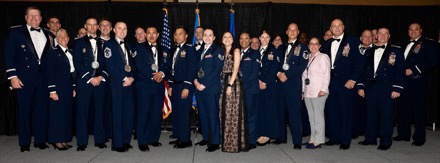
“As America’s Air Commandos, we truly do stand on the shoulders of giants,” said Lt. Gen. Tony Bauernfeind, AFSOC commander, during his speech to the audience of more than 300. “We are each cut from the cloth from those who have come before us, and that’s something to be truly proud of.”

The Outstanding Airmen of the Year were nominated by their leadership and selected by board members based on their exceptional job performance, superior leadership and followership, and the epitome of the whole airman concept. The Airman, Non-commissioned Officer and Senior NCO now compete at the Air Force level-OAY competition. The first sergeant, base honor guard and honor guard manager also move on to compete for Air Force-level awards.

“The mindset of an Air Commando is not built around one specialty code,” the general said. “It runs in the blood of each of us. It pushes us forward to break boundaries and to exceed expectations. Tonight, these winners truly epitomize what it means to be an Air Commando.”

The general went on to thank the winners for their sacrifices and ensured the audience knew “Air Commandos are absolutely our competitive advantage… in every future conflict. And it is clear we are America’s Air Commandos; ready to fight tonight and pathfinding for tomorrow.”

The 2022 AFSOC Airmen of the Year are:

Airman
SSgt Emilee S. Underwood, 492d Special Operations Support Squadron, Duke Field, Fla.

Underwood served as an intelligence analyst in support of Pacific Eagle, backing five aircraft and 297 combat flying hours for Special Operations Command-Pacific’s number one counterterrorism priority. She deployed as the sole intelligence support for the Joint Special Operations Air Detachment-Singapore where she led 22 mission threat briefings, mitigating the risk of three C-146 aircraft and protecting 35 crew members for 431 sorties across 52 airfields. She also managed two major programs where she served as the vehicle control officer to oversee 120 inspection items while also providing quality assurance and preservation of 50 deployed communication assets worth $150,000.

Non-commissioned Officer
TSgt Kimberly R. Mastrocola, 1st Special Operations Wing, Hurlburt Field, Fla.

Mastrocola served as non-commissioned officer in charge of Project Integration for the Wing’s Innovation Cell. She was by-name requested as lead project officer for the Air Force Chief of Staff’s Bravo Hackathon series in addition to leading a liaison fellowship with the Air Force Installation Mission Support Center. She piloted 11 wing-level projects impacting 3,000 Airmen while also overseeing the planning of three Hackathon events that showcased 1,300 members across every branch of service. Mastrocola also led a non-profit STEM program for 10,000 students, facilitating 60 events and instructing 31 courses. Her dedication as a community partner culminated in the award of 41 educational youth grants valued at $161 million.

Senior Non-commissioned Officer
Master Sergeant Jerry M. Scott, 33d Special Operations Squadron, Cannon Air Force Base, N.M.

Scott served as the senior enlisted leader of the 1st Special Operations Support Squadronduring a five-month manning shortage of senior non-commissioned officers. Steering the command’s pivot to integrated deterrence and global power competition, he conquered a historical unit growth of 45 percent to create the Air Force’s largest OSS consisting of 503 Airmen from 75 career fields. He also oversaw 110 deployments embedding combat support into 204 exercises across five geographical areas and onboarded 154 Mission Sustainment Team members to lead agile combat employment efforts. His experience flying five aircraft across three major commands immersed him with tactical, operational and strategic-level experience.

First Sergeant
SMSgt Garrett A. Hetzel, 352d Special Operations Aircraft Maintenance Squadron, Royal Air Force Mildenhall, United Kingdom

As the first sergeant, Hetzel shaped standards for 496 Airmen across and enabled 5,800 flight hours across three areas of responsibility which led to the maintenance group’s first MAJCOM-level Maintenance Effectiveness Award. He also authored a first sergeant management guidebook to assist U.S. Air Forces in Europe and Air Forces Africa Command Chiefs in leading first sergeants. His efforts delivered a boots-on-the-ground perspective in direct support of 35,000 warfighters and their families. He also drove Air Force Southern Command’s initiative to educate the Colombian Air Force on benefits of the First Sergeant. He provided the baseline for a three-day course consisting of 100 senior enlisted leaders.

Base Honor Guard Member
SrA Asawna A. Thomas, 727th Special Operations Aircraft Maintenance Squadron, Cannon Air Force Base, N.M.

Thomas developed 18 Honor Guard members through instruction on 60 standing manuals necessary in the execution of colors and final military funeral honors maneuvers. She pushed two training flights and molded 10 Airmen into elite base honor guardsmen through 855 detail man hours which spanned over 15,000 miles. She was hand-selected to be a pallbearer for Cannon Air Force Base’s first active-duty send-off resulting in establishment of a new wing standard. Her dedication to the community was evident in her 15 hours of service feeding the less fortunate with her church, preserving four lives by dedicating 50 hours to the Airmen Against Drunk Driving program and volunteering at an assisted living facility which created community cohesion and showcased the Base Honor Guard.

Base Honor Guard Member Program Manager
TSgt Jorge Ochoa, 1st Special Operations Force Support Squadron, Hurlburt Field, Fla.

As program manager for Hurlburt Field’s Base Honor Guard, Ochoa led the command’s largest Honor Guard program by guiding 87 Airmen with six elements and overseeing the execution of 2,100 training hours. His efforts delivered 334 military funeral honors across two states and 20 counties. He synchronized Honor Guard and Airmen Leadership School personnel to establish and solidify ceremony sequences and events that resulted in five classes graduating 434 members and the presentation of 55 awards for 22 units. As a mentor, he fostered leadership qualities in his Airmen that empowered his team to train tenant wing personnel and enabled 13 retirement ceremonies and 284 years of service being honored. He was recognized by the community for his work with Junior ROTC students.

Company Grade Officer
Captain Seamus G. Feeley, Detachment 2, 24th Special Operations Wing, Duke Field, Fla.

Feeley served as Mission Commander, Combat Aviation Advisor & Chief of Intelligence when he led 17 advisors on a critical mission to Eastern Europe in an effort to increase unconventional warfare capabilities. He directed the administration of the Air Force’s only Irregular Warfare group where he managed 423 Airmen across four squadrons and earned 17 MAJCOM awards. He also led the first integration of Estonian Special Operations Forces into three multinational exercises, resulting in 26 sorties and the promotion of allied joint civil military activities and Secretary of Defense strategic objectives. He also oversaw a $940,000 communications node, sustaining four secure networks, 25 multiband radios and 15 classified systems without degradation.

Individual Reservist Officer
Major Caesar X. Baldemor, 27th Special Operations Security Forces Squadron, Cannon Air Force Base, N.M.

Baldemor served as the Defense Force Flight Commander at Al Asad Air Base, Iraq, where he led 47 defenders charged with airfield defense. He planned and executed 16 base-wide exercises for 89 quick-reaction force personnel from multiple services. His rehearsals were tested when his team responded to multiple hostile fire events resulting in detecting and deterring enemy ground attacks to the base and zero interruptions to airfield operations. On only his fifth day in country, he led his flight through two complex attacks to the air base. His expedient actions established a southern facing perimeter and thwarted enemy ground efforts. His team’s robust security operations vetted 5.6 million gallons of water and fuel, and 100 tons of food for critical life support of 2,800 base personnel and $3.3 million in airfield infrastructure upgrades.

Civilian Category One
Jennifer L. Post, 1st Special Operations Medical Group, Hurlburt Field, Fla.

Serving as a pharmacy supply custodian, Post managed 232 contracts and a $5 million budget to supply 162,000 life-saving medications for 71,000 patients. She developed and implemented several process improvements that saved 1,000 labor hours and reduced patient wait times by 27 percent. Her attention to detail recouped $541,000 and earned the unit a Defense Health Agency Market’s best contract compliance score. She also powered a highly visible Special Operations Forces Generation tasker quickly staging 450,000 deployment medication kits in support of two combatant commands ensuring 378 deployers were ready and cementing her unit’s recognition as Air Force Special Operations Command’s Surgeon General Clinic of the Year.

Civilian Category Two
Jana L. Brown, 23rd Special Operations Weather Squadron, AFSOC Operations Center, Hurlburt Field, Fla.

As a Supervisory Lead Meteorological Technician, Brown led a global operations team of 27 forecasters in creation of 2,500 products supporting 21,000 flight hours. She identified and corrected a weather forecast briefing deficiency by creating five scenario-based training requirements to enhance certification and qualification standards, reducing errors by 25 percent. In response to a commander priority, she led her section in creating four environmental intelligence training packages that aligned the technical capability of the unit with the National Defense Security Strategy for maritime, arctic, space and tropical forecasting. She also incorporated lessons learned from a leadership course into the squadron’s resiliency day training, promoting team building and unit cohesion.

Civilian Category Three
David Saugstad, 1st Special Operations Civil Engineer Squadron, Hurlburt Field, Fla.

Saugstand served as a structures foreman and maintenance mechanic supervisor when he led four elements of 28 military and three civilian personnel in the completion of more than 2,000 projects val. His team completed 2,000 repairs in support of 1,000 facilities and 77 Special Operations aircraft. When faced with a 25 percent manning reduction, he established a $124,000 gutter repair contract which diverted 1,500 hours of preventative maintenance and uncovered 159 at risk facilities. He also pioneered AFSOC’s small unmanned aircraft system inspection program by analyzing 377 buildings to capture 1,500 data points and preserving $1.5 billion in roof systems. Readying the force for the future, he steered a $448,000 contingency training project and focused the efforts of 22 engineers in the construction of a 2,400 square foot Resiliency Center which enhanced 281 mission-ready Airman’s skills and morale.

Civilian Category Four
Sharon A. Brewer, 1st Special Operations Force Support Squadron, Hurlburt Field, Fla.

Serving as the Flight Chief and Child Development Specialist in the Child and Youth Services Flight, she led 191 civilians, five child development operations and 14 licensed providers to cut wait lists by two months and uphold daily childcare needs for 605 personnel and saving $45,000 through Air Force subsidy. She was hand selected to lead 16 subject matter experts in development of service and program strategies, impacting 72 youth programs and improving quality of life for 265,000 children Air Force wide. Teaming with Florida’s Early Learning Coalition, she amplified six Child Development Programs and received $63,000 and increased grants by 25 percent with a volunteer pre-Kindergarten program. Her efforts resolved childcare needs for 523 families and surpassed national standards by 130 percent.

Air & Space Force Key Spouse
Lina M. Arenas 752d Special Operations Aircraft Maintenance Squadron, Royal Air Force Mildenhall, United Kingdom

Arenas was critical to the success of 235 Airmen and their families as part of a high-demand, rapidly deployable unit, supporting 13 deployments. She provided food and clothing packages for deployment teams and led the creation and distribution of seven newborn care packages enhancing quality of life for impacted members. While attending the annual key spouse symposium, she briefed 96 leaders on the communication limitations between leadership and tri-base area spouses. Her dedication to resolving issues positively impacted families across four wings and their surrounding communities. She also leveraged her emergency management expertise to impart disaster action knowledge in support of a first-of-its-kind, dual-wing crash recovery exercise, readying the installation for crisis response actions.
*It was announced at the banquet that Arenas was also selected as the 2022 Air Force Key Spouse of the Year Award winner.

CMSgt. Anthony Green, AFSOC command chief, closed out the evening by thanking all the supervisors, leaders, families, friends and community members for “pouring into our award winners and supporting them each and every single day to make us the best version of ourselves.”

By Dawn Hart

Air Force Special Operations Command Public Affairs

FirstSpear Friday Focus – No Bubbles, No Troubles v3 T-shirt

Friday, June 23rd, 2023

• Limited Edition

• Performance and Comfort Tri-Blend

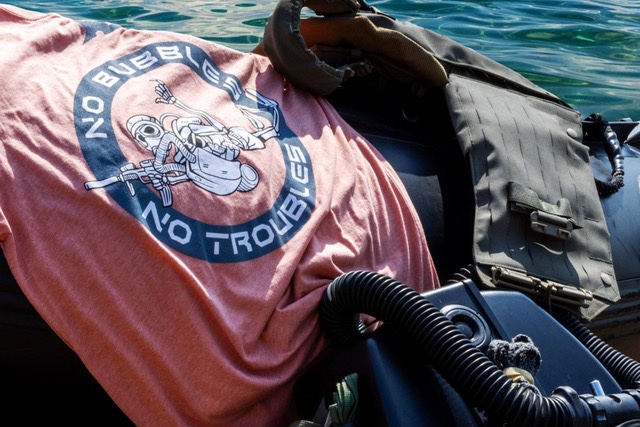
Meet the new No Bubbles, No Troubles v3 T-shirt from FirstSpear – the ultimate summer tee for those who want to look good without sacrificing comfort and performance. It’s got all the features you want without any of that pesky bubble trouble.

Command a little style with our eye-catching design on the back and the bold FirstSpear skull logo on the chest that says you have great taste but don’t need to brag about it. So forget the bubbles and grab the No Bubbles, No Troubles v3, because it’s time to look good and feel even better this summer.

Visit FirstSpear to find American Made kit and accessories, Built For The X.

Look Back: Olive Drab, Haze Blue and Jet Black: the Problem of Aircraft Camouflage Prior to and During WWII

Friday, June 23rd, 2023

Camouflage, in the form of paint applied to aircraft, has been regularly studied and experimented with since the First World War. The use of ground-based or airborne radar to detect enemy aircraft did not have significant application until the British used it successfully during the Battle of Britain in 1940. Until that time and even after, until radar was in widespread use, visual detection of aircraft was the primary means. The Army Air Corps and the wartime Army Air Forces wrestled with a number of aircraft camouflage concepts during the pre-war and wartime years. The final standards, schemes and colors were a compromise, and balanced a number of factors. All of this work was indicative of an air arm that now contemplated the task of executing new, world-wide, missions and operations.


The basic problem of how to camouflage any object starts with the concept of visibility. An object such as an aircraft is visible because it contrasts with its background – either the sky or the ground. The contrast may be in shape, shadow, texture, color, shine (flat to gloss), movement, or any combination of those characteristics. A regular or known shape will identify an object. Shadow and contrast also define it. A light-colored aircraft on a light runway is visible because of its shadow. A dark aircraft on a light runway or a light aircraft on a dark runway is visible because of its contrast. A dark aircraft on a dark runway helps to obscure both conditions. A moving aircraft seen against the sky or against the static terrain is visible because it attracts attention. All these physical factors need to be accounted for to some degree when deciding on camouflage schemes.

Similar to other tradeoffs in aircraft design, when dealing with the practical decisions regarding aircraft camouflage, there are many alternatives to be considered. A single-color scheme is not going to be suitable for all weather and seasonal variations and regular repainting during combat operations is not practical. What works well to hide an aircraft on the ground may be the opposite of what works well for the same aircraft in flight, so a compromise is necessary. The aircraft shape cannot be changed, so experimenting with different painting designs may determine what helps to “break up” the shape and make it less conspicuous.

Paint adds weight to an aircraft which can lower the performance; however, paint does improve resistance to corrosion which reduces maintenance and lengthens the aircraft service life. The paint itself must be durable enough to withstand field use and weather/sun exposure without significant fading or chipping which would reduce the overall camouflage effect. Painting an aircraft adds both material and labor costs, as well as schedule, to aircraft production – a non-trivial consideration during the rapid mass production executed during World War II. National insignia must be applied and must be visible – in some ways defeating the main purpose of camouflage to begin with. Finally, industry must be able to produce the paint in enough quantity and to required finish specifications in order to meet the needs of the Service and a very large aircraft fleet.

As far back as World War I, camouflage schemes were considered for aircraft. One disturbing factor that moderated the search for an effective concealment approach for U.S. aircraft was a report of a high number of “friendly fire” shootdowns of Allied planes by other Allied airmen because they could not distinguish their markings. As a result, the U.S. decided to err on the side of safety adopt the U.K. practice of painting, or “doping,” the fabric aircraft with one solid color, hoping this would reduce the number of accidental shootdowns.

After WWI, the U.S. Army and Navy continued extensive, parallel, and in some cases overlapping, experiments with aircraft camouflage. The research initially was focused on dying different materials and dopes for use on fabric-covered aircraft. As these fabric-covered aircraft gradually gave way to metal-skinned aircraft in the U.S. fleet, the focus changed to evaluating different paint formulations for metal surfaces. In the late 1930s, the Air Corps experimented with a number of camouflage schemes and measured their effectiveness in limited engineering testing. Additional practical trials were then conducted with temporary finishes as part of nation-wide exercises and war games. These temporary finishes were in a wide range of blues, greens, whites, grays and even purple!

By February 1940, with the war in Europe now raging, the Air Corps embarked on a comprehensive, service-wide initiative to test “protective coloration of aircraft, both in the air and on the ground.” The Air Corps had already decided by 1940 to specify a uniform design and color for tactical/combat aircraft, so the question to be answered was, which schemes would be adopted? Several Army and Air Corps organizations, with different and specific responsibilities, contributed to the effort. This extensive study considered many of the factors previously discussed: visibility, application, national insignia, durability, cost, materials, and both in-flight and ground effectiveness. They studied both U.S. Army and Navy and British systems to arrive at the best consensus.

What resulted, in April 1942, was a general standard adopted by both the Air Corps and the Navy. On the Navy side, ship-based aircraft and flying boats would be camouflaged with Non-Specular (lightdiffusing) Medium Blue Gray on the upper surfaces and Light Gray on the undersurfaces. For the Air Corps, Army land-based planes would be Olive Drab on the upper surfaces and Neutral Gray on the lower surfaces. The Army Ground Forces also adopted Olive Drab as the basic camouflage for all of their vehicles during WWII. (Olive Drab, although it appears “green” to the eye, is technically a mixture of black and yellow, Neutral Gray is a mixture of pure black and white only).

The main categories of aircraft considered for application of camouflage were roughly: combat or combat support aircraft (such as transports), high-altitude photographic reconnaissance aircraft that operated alone or in small formations; and night fighters or night bombers which required a special degree of invisibility in the night sky. A separate sub-category of combat aircraft early in the war was anti-submarine patrol planes which needed to be hidden from surfaced submarines so they could make their approach and attack before they were detected, and the sub had a chance to submerge and escape.

During operations overseas in different theaters, local variations of standard schemes were also used. Olive Drab aircraft were also later painted with Medium Green “splotches” or “blotches” around the upper surface leading and trailing edges to better conceal them when parked. Fighters and bombers in desert regions also used colors more suited to the surrounding terrain to break up the shape of the aircraft. In some areas of the world where U.S. Army Air Forces supplies were not available, units applied British Royal Air Force colors to their aircraft, as closely approximating the U.S. standard schemes as they could.

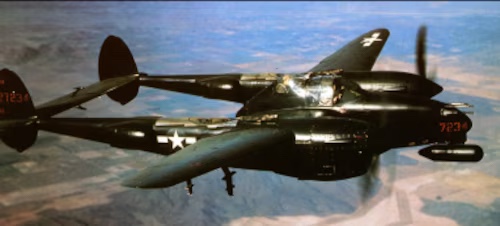
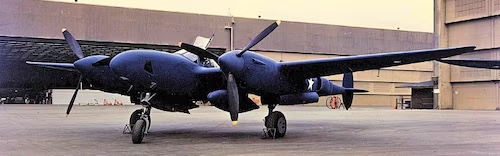
So-called “Haze Paint” for photo-reconnaissance aircraft was an interesting problem. These aircraft normally operated at high altitude, often alone, and required them to fly specific controlled flight patterns to get the necessary photographic coverage of targets. This made them especially vulnerable to interception by fighter aircraft or ground-based air defenses. Considerable efforts on the part of the U.S. Army Air Forces and industry were expended to make these aircraft as invisible as possible through passive defense measures. The aim with this was to increase their chances of mission success. Several special formulas and techniques for haze painting were tried out, principally on reconnaissance versions of the P-38 fighter, known as the F-4 or F-5. The development and use of this special paint was probably studied more extensively than any other aircraft finish during the war. Haze Paint was intended to vary the appearance of the aircraft from blue to white depending on the viewing angle. The scheme was successful at reducing the visibility of the aircraft at high altitudes, but it was highly dependent on application method and expertise of the painter. As a result, to allow the application of these finishes to large numbers of mass-produced aircraft, a synthetic or simpler-to-produce haze paint was developed and used by Lockheed. Over time, scuffing and weathering of Haze Paint on operational aircraft reduced its effectiveness. Further, an additional drawback to sporting a haze finish is that it highlights to the enemy the fact that this is a special reconnaissance aircraft, and therefore potentially unarmed. Other than applications to a small fleet of photo aircraft, Haze Paint and synthetic Haze Paint was only used for a limited period during the war.

Night fighter paint schemes were also heavily researched, and the resulting “best approach” ended up being counter-intuitive to initial assumptions about what finish would work best to hide the aircraft from ground or air observation and reflection of search light beams. After extensive testing on many airframes, it was determined that either a glossy black finish or a standard Olive Drab was actually more effective at this objective than a flat black finish. This was standardized by 1944, when it was directed that all night fighters (P-61s, P-70s and later P-38Ms and P-82s) were to be painted with glossy black and, if possible, polished to a mirror-like finish. (The specification for this gloss black was Jet Finish No. 622, probably where we get the name “Jet Black”). Because of their unique mission, night fighters were the notable exception to the late war AAF directive to cease camouflage painting. In fact, night fighters remained in their glossy black finish even through the Korean War, after which the mission ceased, and the aircraft left the USAF inventory.

Because the Atlantic U-Boat threat to the U.S. East Coast and Great Britain was so immediate, significant resources were put against finding an effective paint scheme for sub-hunting aircraft. The main threat to the aircraft in this mission was not from enemy aircraft, but rather surfaced submarines. The working assumption for these studies was that the aircrew had no more than 30 seconds to strike a sub on the surface before it executed a crash dive. This made visual “stealth” essential. After a series of tests of different finishes at various altitudes, sky conditions and viewing angles, the optimum scheme proved to be: Insignia White on the undersurfaces, leading edges and sides of the aircraft and either Olive Drab or Neutral Gray on the top surfaces. Variations of this specific type of camouflage for the submarine search mission were used by both the U.S. and the U.K. and proved effective for allowing the patrol aircraft approaching from head-on to avoid detection until the last possible moment – and strike submarines on the surface before they had a chance to escape below the surface. The scheme was clearly specified to be used only on aircraft that operated in a theater where “no enemy air opposition is to be expected” because this new design was not optimized for air-to-air concealment.

A special technical concern arose during the war involving detection by infrared (IR) photography. IR aerial photography could be employed to detect and defeat camouflage and “see through” natural haze to find objects on the ground. This technology was still in the early stages, but enough of a concern that the AAF examined families of paints and finishes that would frustrate infrared detection. By July 1942, this work eventually led to the development and application of a special shade of “high infrared-reflecting Olive Drab,” (based on a chromium oxide pigment) that promised the highest degree of protection against IR photography. Aircraft upper surfaces were to be painted with this new finish to mask them from detection by enemy aerial reconnaissance. During the period, the USAAF sourced aircraft paint from as many as a dozen or more different suppliers to ensure they had sufficient stocks on hand to cover the vast wartime fleet.

Throughout the war, there was a continual debate over the overall value of camouflage finishes versus leaving the aircraft in natural metal or unpainted, which offered a bit more extra speed due to either polishing of the surfaces or reduction in weight. There is a speed penalty imposed by rough painted surfaces that increases aircraft drag contrasted against smooth polished metal.

Within the USAAF, there was never a consensus about which property was more important— concealment or speed – so instead they settled the issue by directing that manufacturers cease camouflaging most combat aircraft as of 1943. This instruction applied to most combat aircraft, except some tactical fleets, such as transports or gliders. In light of the progress of Allied forces it also made sense operationally – air superiority over the battlefield was now changing over from Axis to Allied air forces; German progress in radar surveillance and detection made visual concealment less vital, especially in the case of large fleets of hundreds of strategic bombers daily hitting the Third Reich. Additionally, Allied bases in the U.K. and on The Continent were less threatened by surprise air attack because of our own radar coverage. The AAF summarized the situation in April 1943, “Due to the early warning and vectoring capabilities of radar, camouflage is losing its importance when weighed against the cost in speed and weight.” Some local commanders in the Pacific still felt camouflage was necessary for use in some geographic areas.

Reducing the aircraft weight and increasing performance was now offered a better tactical advantage to fighters and bombers. The piston-driven fighter aircraft particularly needed all the speed they could get to deal with the threat from the German jets. There was also the secondary benefit of reduced cost and production time, which facilitated quicker replacement of lost airframes.

Ironically, in spite of all the years of studies and experimentation, at the end of the conflict in 1945, camouflage finishes had almost entirely disappeared from USAAF and then USAF aircraft through the 1950s. By then, radar detection had almost totally eclipsed visual means. Camouflage finishes only made a significant reappearance after operations in Southeast Asia in the 1960s brought back the need to conceal aircraft against the jungle terrain in that particular theater.

The majority of the text for this Look Back is adapted from the Air Materiel Command Historical Study No. 115., Case History of Camouflage Paint, Volumes 1 and 2, January 1947 (research completed to November 1945.) For Further Reading: Bell, Dana: Air Force Colors, Volumes 1, 2, 3., (Nos. 6150, 6151, 6152.) Carrollton, TX: Squadron/Signal Publications Inc. 1979-1980.

 By Brian J. Duddy

Air Force Materiel Command History Office

Full Text:  media.defense.gov/2023/Jun/21/2003245250/-1/-1/1/LOOKBA_1.PDF/LOOKBA_1

Two US Army Soldiers Win Bronze Medals at Shotgun Skeet Nationals

Thursday, June 22nd, 2023

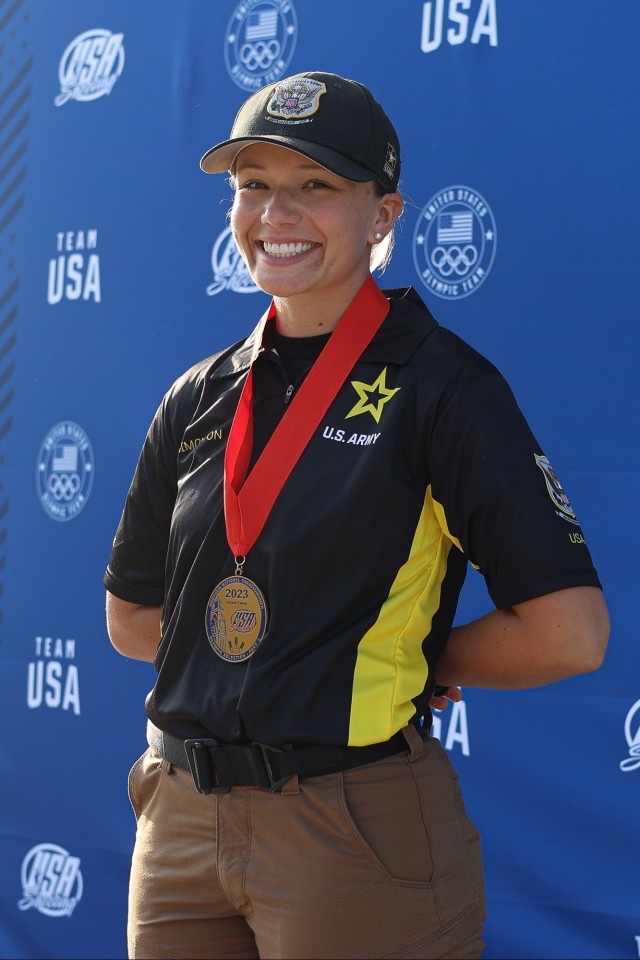
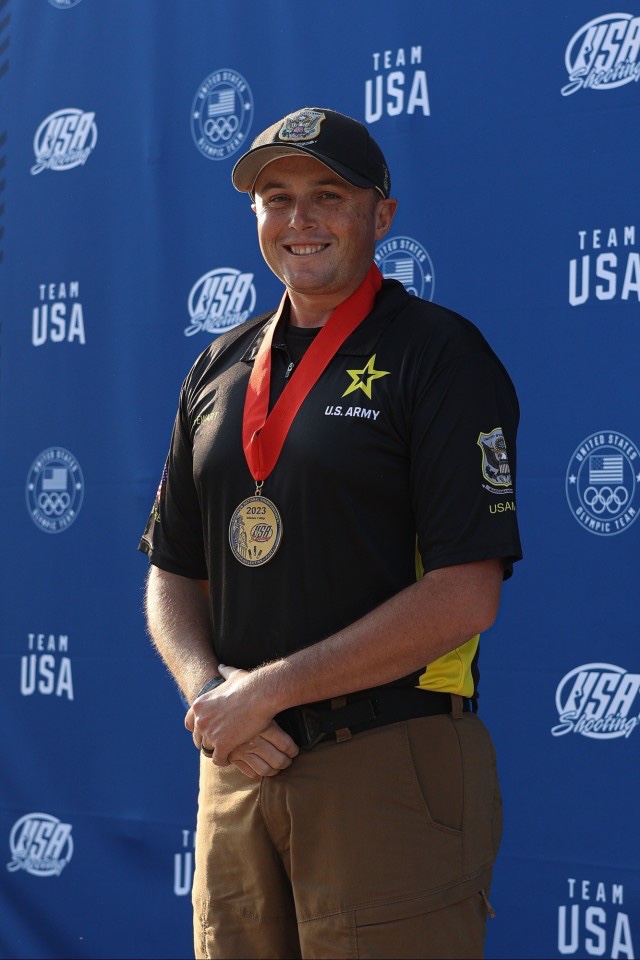
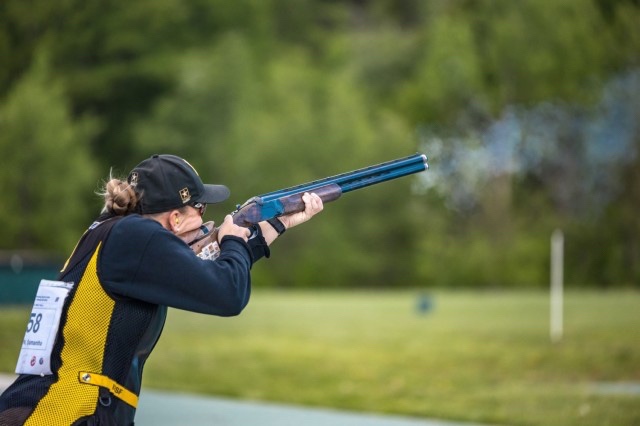
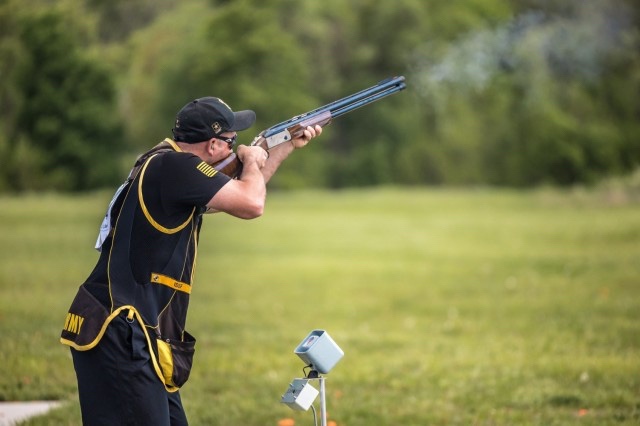
Spc. Samantha Simonton and Staff Sgt. Hayden Stewart both earned Bronze Medals at the USA Shooting 2023 National Skeet Championships in Hillsdale, Michigan May 17 -22.


SPC Samantha Simonton, a marksmanship instructor/competitive shooter with the U.S. Army Marksmanship Unit Shotgun Team.

The competition pitted the Soldiers from the U.S. Army Marksmanship Unit Shotgun Team against more than 60 top skeet athletes from around the United States, including Olympic medalists.


SSG Hayden Stewart, a marksmanship instructor/competitive shooter with the U.S. Army Marksmanship Unit Shotgun Team.

The Championships required each competitor to shoot 10 qualification rounds of 25 targets before the top six were selected to move forward into a Final.

Simonton, a Gainesville, Georgia native, fired off four perfect rounds of 25 and four near-perfect rounds of 24, ending with a total of 241 hits, which was just one hit less than Austen Smith and Dania Vizzi, the Gold and Silver Medalist, respectively.

Stewart, a Columbia, Tennessee native, impressively completed seven of his 10 qualification rounds perfectly, and the remaining three rounds were very strong, missing only one target per round. The Soldier’s near-perfect total score of 247 hits was unfortunately not enough to win the Gold Medal though since many other competitors were shooting near perfect too, said Stewart.

“That match was brutal. I’ve never seen scores that high in the United States before.”

Stress is typically high at National Championships, but this year there was even more pressure since the competition also served as Olympic Trials (Part 1) for the Paris 2024 Games. Not only that, the scores also determined the teams for the upcoming World Championships, World Cup Italy and Pan American Games. Knowing this, Stewart said he really needed to rely on his training in both shooting and resiliency.

“During my rounds, I was telling myself to trust my training and give every shot 100 percent. The three targets I missed, I knew what I had done wrong and made minor adjustments to hit it next time.”

The adjustments worked and Stewart claimed the Bronze Medal behind civilians Connor Prince and Vincent Hancock, who won the Silver and Gold Medals respectively. With only one point separating the top six athletes, a few shoot-offs were required to determine the medals. During all this intense competition, Stewart said all he could do was focus on his shot process.

“I honestly didn’t know what the scores were until the last round. I was focusing on what I needed to do to hit my next target.”


SPC Samantha Simonton, a marksmanship instructor/competitive shooter with the U.S. Army Marksmanship Unit Shotgun Team.

That focus allowed Stewart to qualify for the U.S. National Skeet Team along with fellow USAMU teammates: Simonton and Staff Sergeants Dustan Taylor, Christian Elliott and Mark Staffen.

The National Championship scores were combined with the 2023 Tucson Selection scores to select both the World Championship and World Cup Italy Teams. Taylor, Elliott and Simonton earned spots on these teams.


SSG Dustan Taylor, a marksmanship instructor/competitive shooter with the U.S. Army Marksmanship Unit Shotgun Team.

Taylor’s score, in combination with past performances, qualified him for the Pan American Skeet Team as well.

Getting five of our six Soldiers on the National Skeet Team was something to be proud of, said Sgt. 1st Class Jeffrery Holguin, the USAMU Shotgun Team Chief who is a 2008 Olympian.

“Staff Sgt. Stewart’s 247 and Staff Sgt. Staffen’s 246 are HUGE scores in Olympic Skeet, especially considering the first two days of the competition were cold, wet and windy.”


The International Shooting Sports Federation Italy World Cup is in Lonato July 8 -17. The ISSF World Championships is in Baku, Azerbaijan August 14 – September 1.

The Pan American Games are in Santiago, Chile October 20 – November 5.

By LTC Michelle Lunato

Blue Force Gear Exhibiting at ADS Warrior Expo East

Wednesday, June 21st, 2023

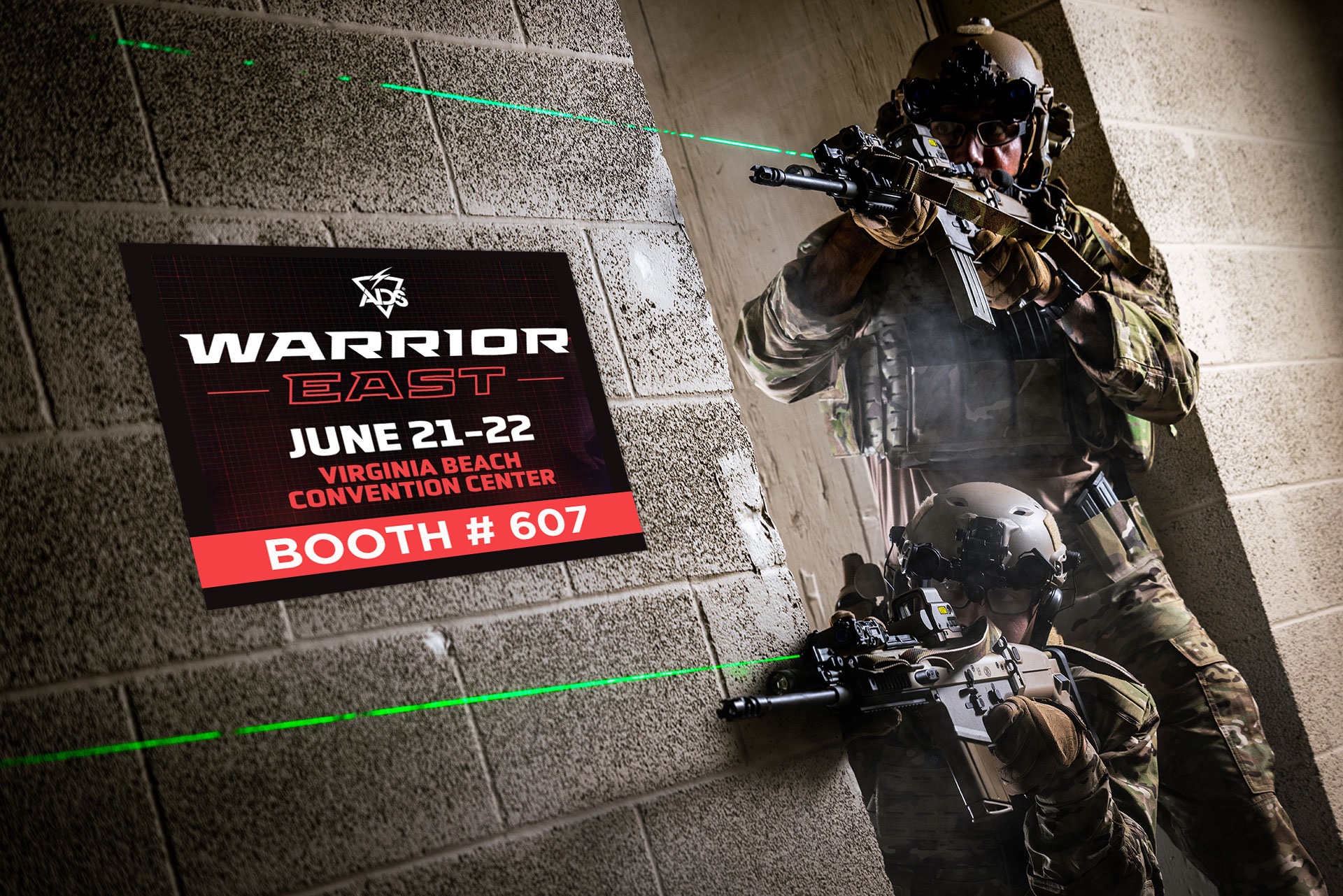
Blue Force Gear will be exhibiting at ADS Warrior Expo East on June 21–22 at the Virginia Beach Convention Center in Virginia Beach, Virginia. Reps will be on hand to talk about Blue Force Gear products. Stop by Booth #607 to meet the team and check out the latest from Blue Force Gear.