My friend Ivan recently attended the Modern Minuteman Course with AMTAC Shooting. He related that it is a pretty cool blending of skills and competition.
Read the whole thing at kitbadger.com/modern-minuteman-course-2022-by-amtac-shooting


My friend Ivan recently attended the Modern Minuteman Course with AMTAC Shooting. He related that it is a pretty cool blending of skills and competition.
Read the whole thing at kitbadger.com/modern-minuteman-course-2022-by-amtac-shooting
Since my slightly out-of-control obsession with CCU/CUs began a couple of years ago, I’ve wanted to make a short post outlining the differences and similarities between the experimental Close Combat and Combat Uniforms.
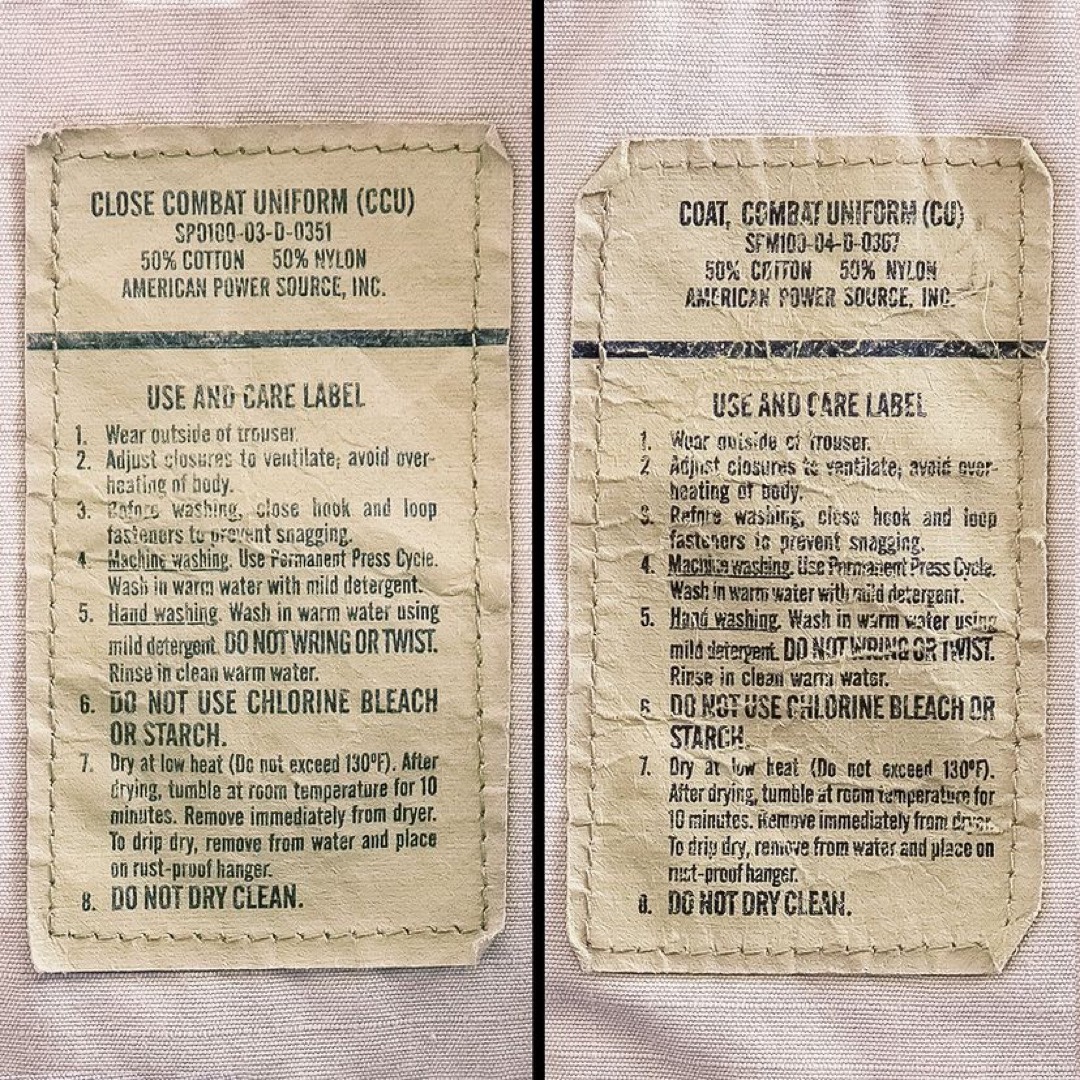
I made a more in-depth post in July of last year (on IG) which goes into much more detail, so definitely check that out if you want to learn a little more about their development and history.
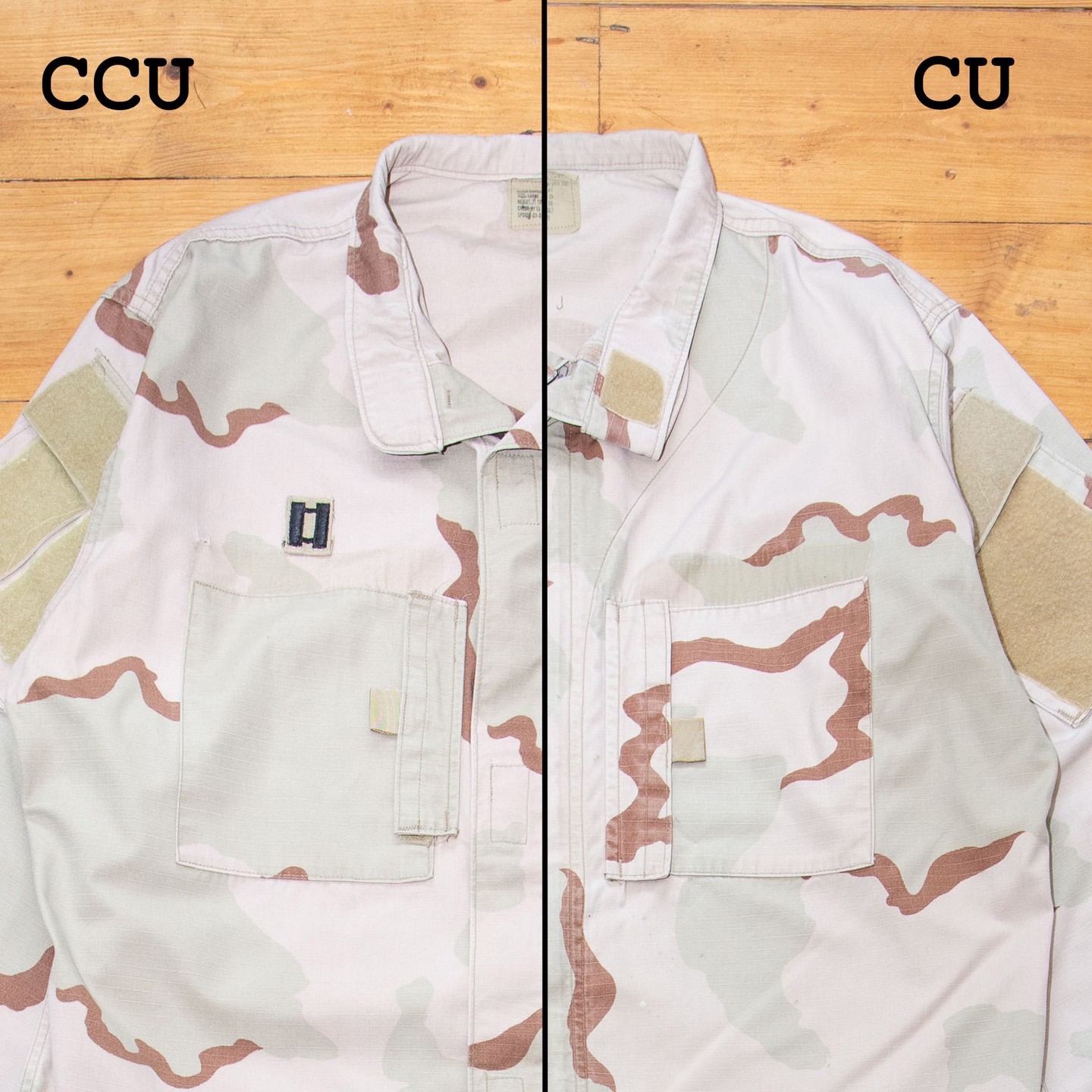
Nevertheless, the first thing that stands out are the shoulder pockets. This is the first thing to look for when identifying a CCU/CU as the pleat on the CCU is quite obvious. This should be enough to identify which pattern you have, but the other smaller changes are interesting to note as they show a clear progression and eventually, evolution into the ACU.
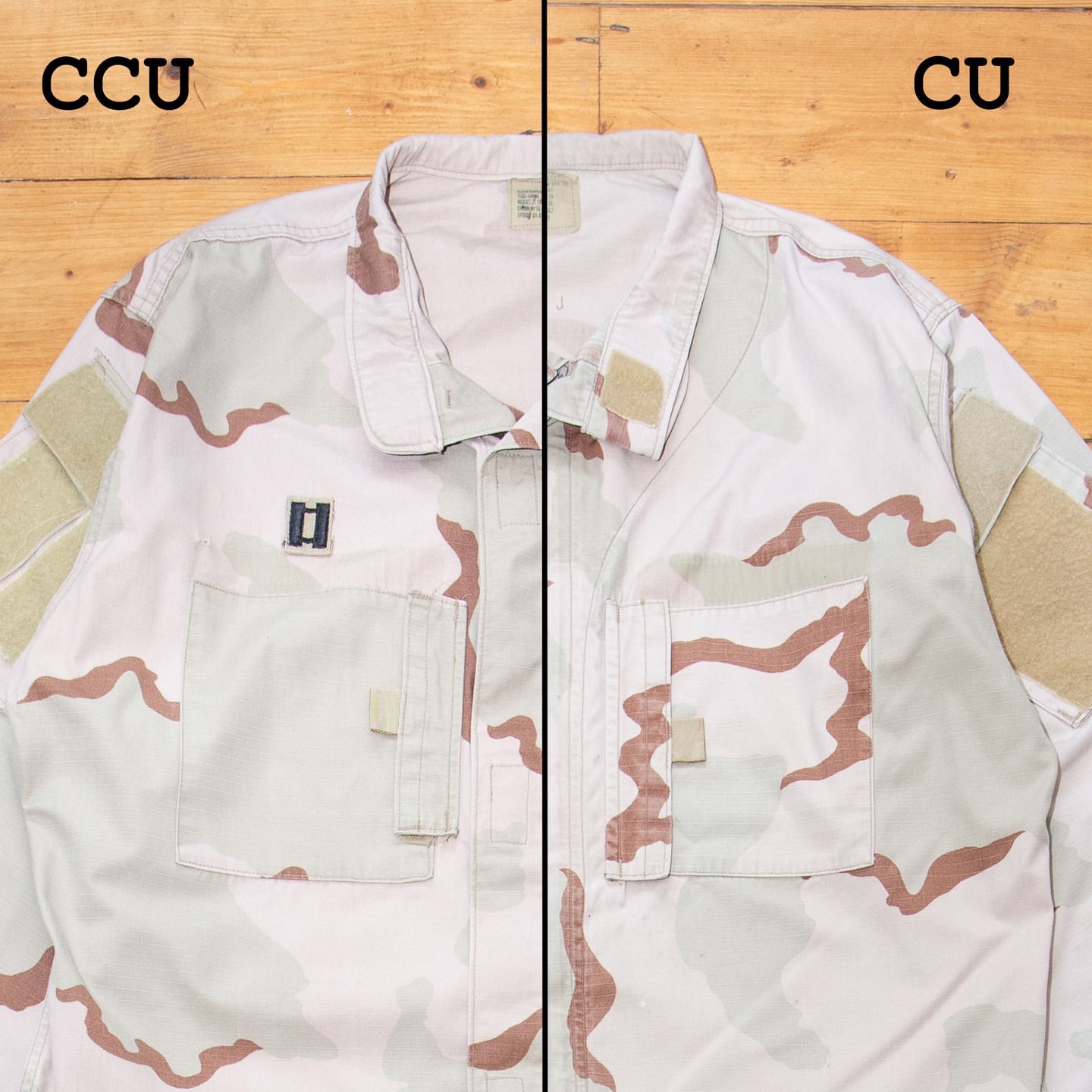
Here is a list of all the design changes that progressed the CCU into the CU:
– Pleats on the shoulder pockets were removed
– Flaps on the front pockets were lengthened
– A vertical line of stitching was added above either chest pocket.
– Pleats removed from the elbow pad pockets
– Velcro patch on the cuff adjustment flap was shortened.
– On some later versions of the CU, the label was moved from under the right breast pocket to under the lower back.
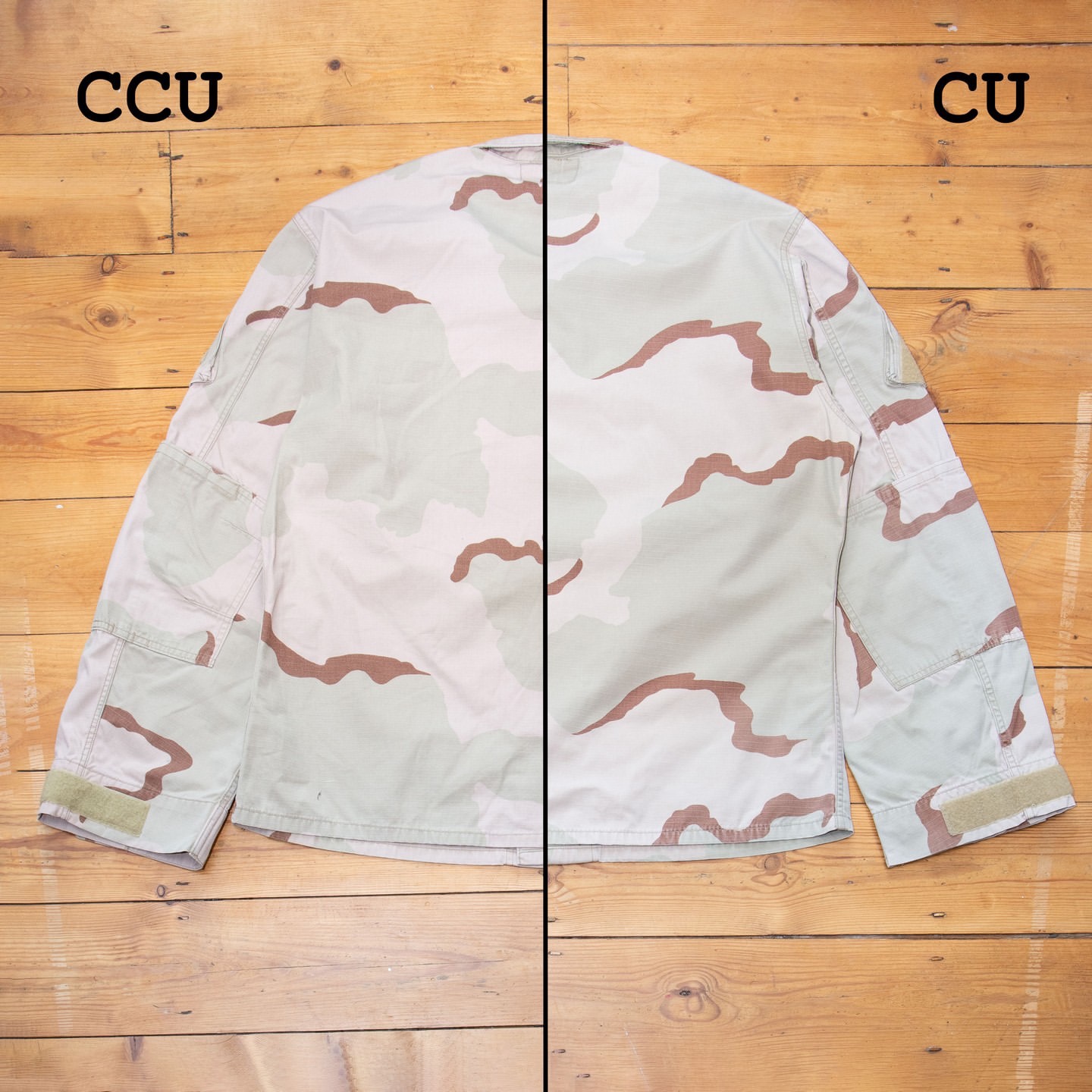
This post only encompasses the coat element of the uniform. A few minor alterations were also made to the trousers, however, they are not particularly noteworthy.
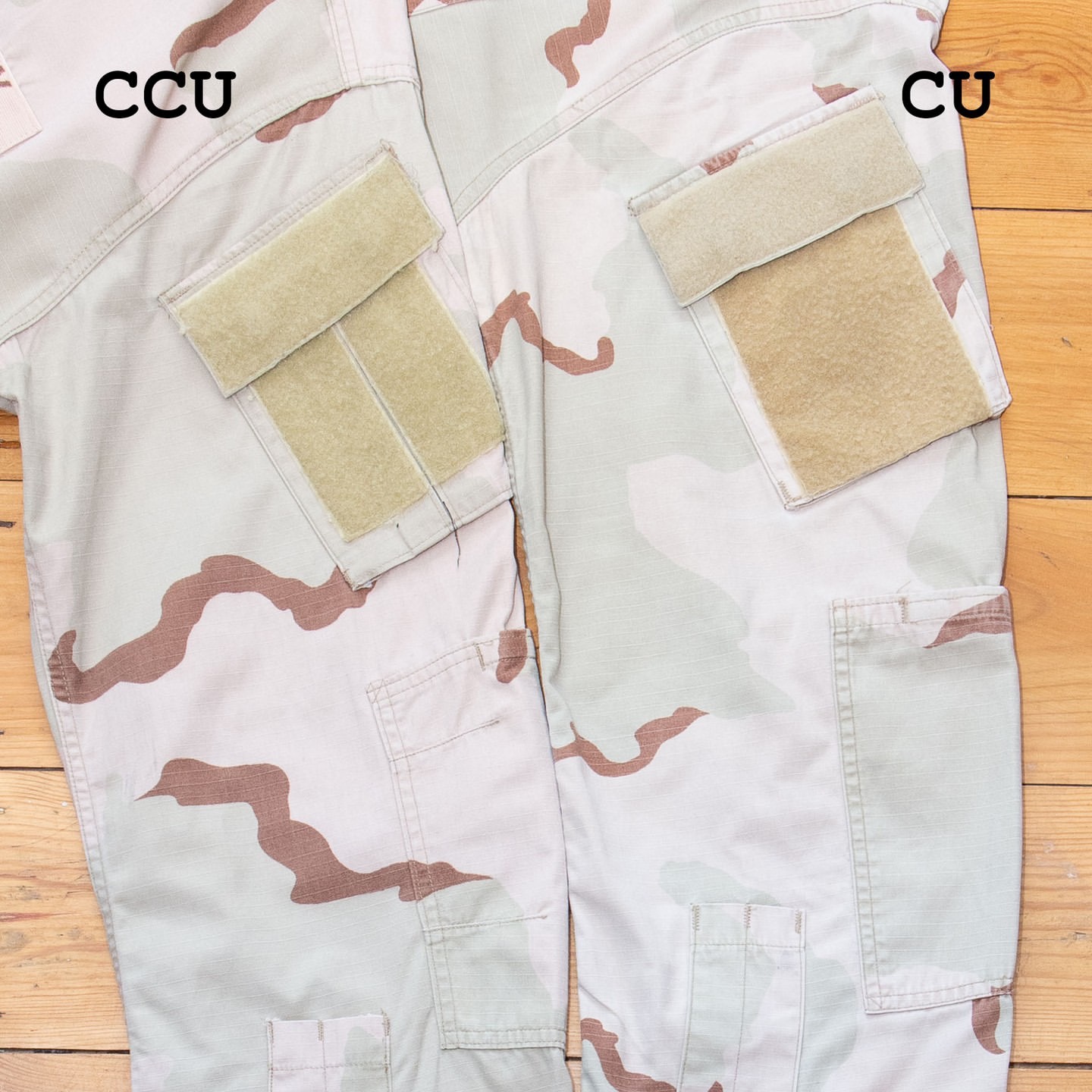
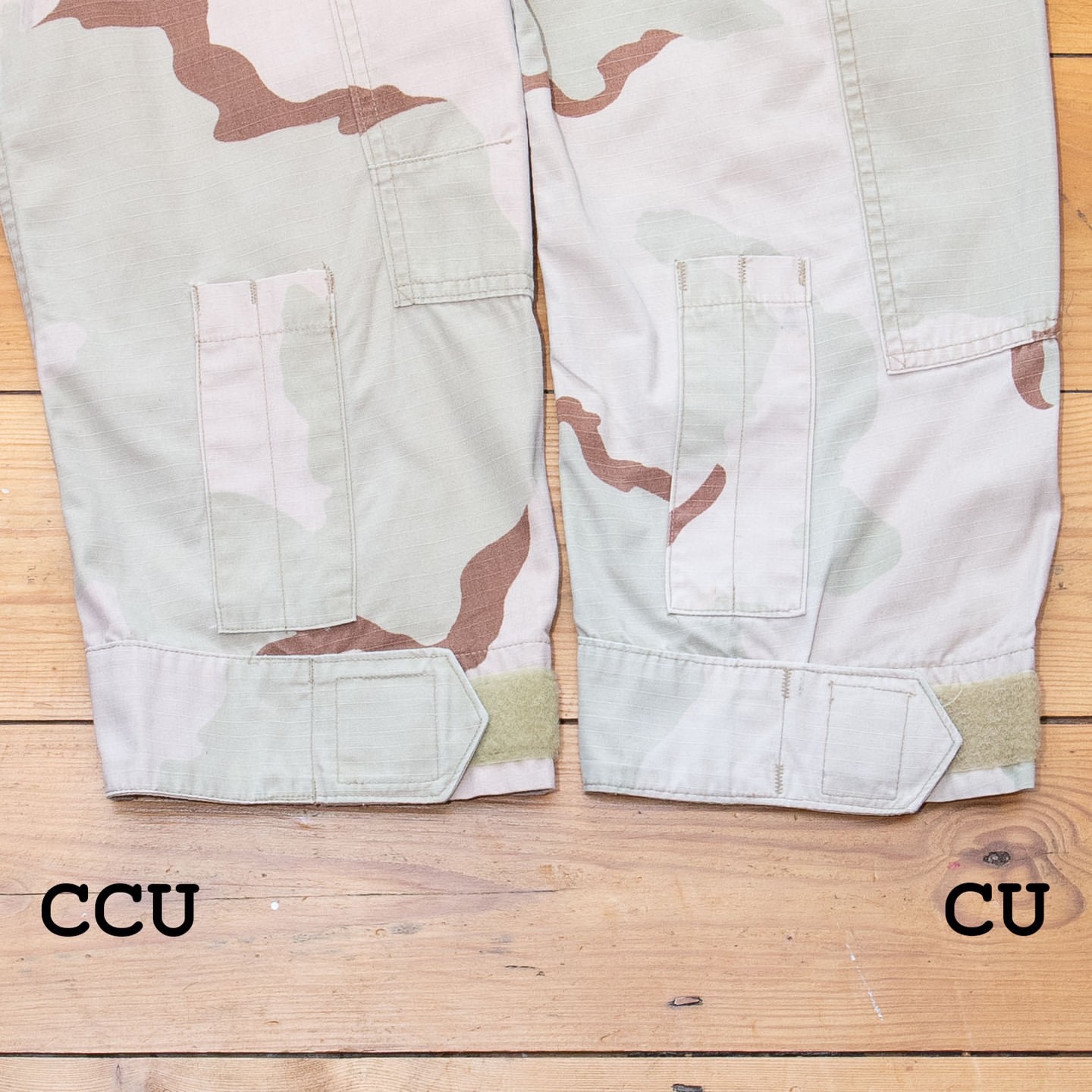
Something that is noteworthy, however, is that both of the coats shown in this post are now available for sale on our website. Check them out at www.omegamilitaria.com.
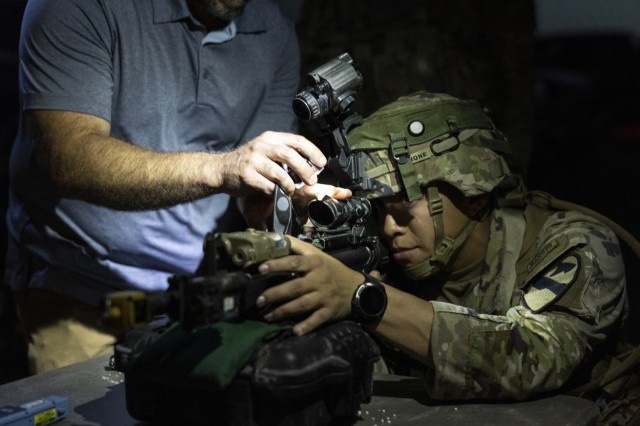
AUSTIN, Texas – To address the need to simulate the effects of key weapons systems more accurately during live training exercises, the Army recently developed the Synthetic Training Environment Live Training System (STE LTS) program.
The STE LTS program will accelerate the evolution of cutting-edge equipment and software to amplify and expand the realism of the operational training environment.
The program specifically seeks to offer improvements to engagements – known as the 12+5 – involving direct and indirect fire; counter-defilade; dropped, placed and thrown objects; guided and autonomous weapons; directed and radiant energy weapons; chemical, biological, radiological and nuclear / plume; and information warfare. It plans to accomplish this task through implementation of enablers in the categories of calculations, network, sensors, terrains and transmitters.
Creation of the STE LTS spans multiple stages from concept development to final product fielding and is thus a collaborative endeavor of Army Futures Command’s Synthetic Training Environment Cross-Functional Team (STE CFT), the Program Executive Office for Simulation, Training and Instrumentation (PEO STRI), the U.S. Army Operational Test Command and the U.S. Army Training and Doctrine Command Project Office Live, among other Army training experts and stakeholders.
The system, which is being built out as part of a five-year, middle-tier acquisition rapid prototype authority managed by the PEO STRI Agile Acquisition Response (STAAR) Team, has been evolving swiftly since its 2021 inception in large part due to the Army’s strategic execution of STE LTS Soldier touchpoints and STAAR Testbed engineering assessments of vendor prototypes.
Soldier touchpoints provide a unique, hands-on venue for Soldiers to test and offer honest feedback on vendor prototypes designed to fulfill STE LTS 12+5 requirements.
Soldier feedback and STAAR assessments often translate into iterative adjustments and upgrades that bring training capabilities closer and closer to meeting Soldiers’ needs.
The opportunity to conduct rigorous testing early in the acquisition life-cycle allows the Army to invest in – or divest from – new technologies more efficiently.
Funneling energy and resources into an improved live training system is important because constraints in training can become constraints on actual battlefields.
“There are two primary objectives for this program. Modernization of existing live training capabilities due to performance constraints and component obsolescence is key, but equally important is the representation of weapons that cannot be trained during force-on-force engagements due to legacy technology limitations,” explained Curtis Leslie, Director of the STAAR Team.
“We’re collaborating with the Army’s science and technology community, traditional and non-traditional industry partners and a bevy of stakeholders to push the limits and provide next-generation technologies that will enable the Army to effectively represent kinetic and non-kinetic battlefield effects, to include near-peer adversary systems for OPFOR units, and ensure the Army maintains overmatch across current and emerging warfighting domains,” Leslie said.
Currently, roughly 60 percent of the Army’s weapons portfolio is being exercised in force-on-force live training environments. The STE LTS program aims to increase the percentage of weapons being used – particularly those that capitalize on breakthrough technologies – to enable a more dynamic training experience for Soldiers.
By combining promising technologies with robust end-user feedback, the Army is improving its ability to develop and implement training that imitates real-life missions.
“We’re making training more realistic,” summarized Lt. Col. T.J. Naylor of the STE CFT.
Naylor, who leads STE LTS capability development, explained that the Army is “looking to improve the amount of weapons the warfighter is able to bring to their training that they could actually use in combat.”
While previous live training mechanisms introduced new-at-the-time simulation enablers, such as lasers, recent advances in terrain imaging and virtual reality ecosystems have opened the door to more precise and interactive technologies.
These next-generation technologies include devices that can be appended to or integrated into existing weapons to enable a digital fire – one that can be traced and evaluated in a manner akin to that of a real fire, but that is visible only to computers and the individuals using those computers.
Such technologies can enhance a Soldier’s ability to operate and maneuver with real weaponry, as well as the Army’s ability to create realistic surrogates when necessary.
The capacity to analyze the digital impact of a weapon’s deployment also means unit commanders can provide more nuanced direction and adjustments during and after live training scenarios.
Equipped with these new resources and a focus on strengthening future readiness, the Army is “at the forefront of pushing the boundaries of technology to improve the capabilities of training, whether that’s through improved laser or non-laser systems, such as geo-pairing or geo-optic training solutions,” Naylor said.
By Maureena Thompson, Army Futures Command
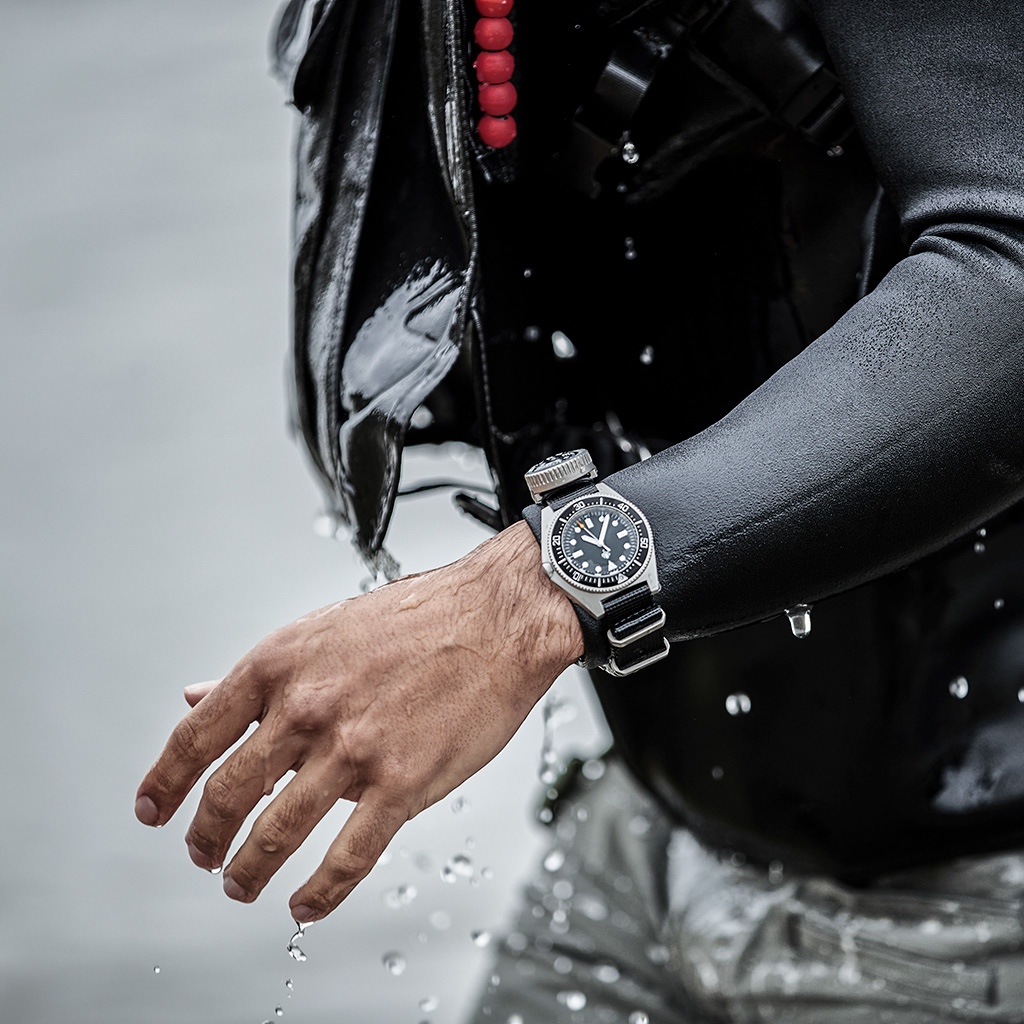
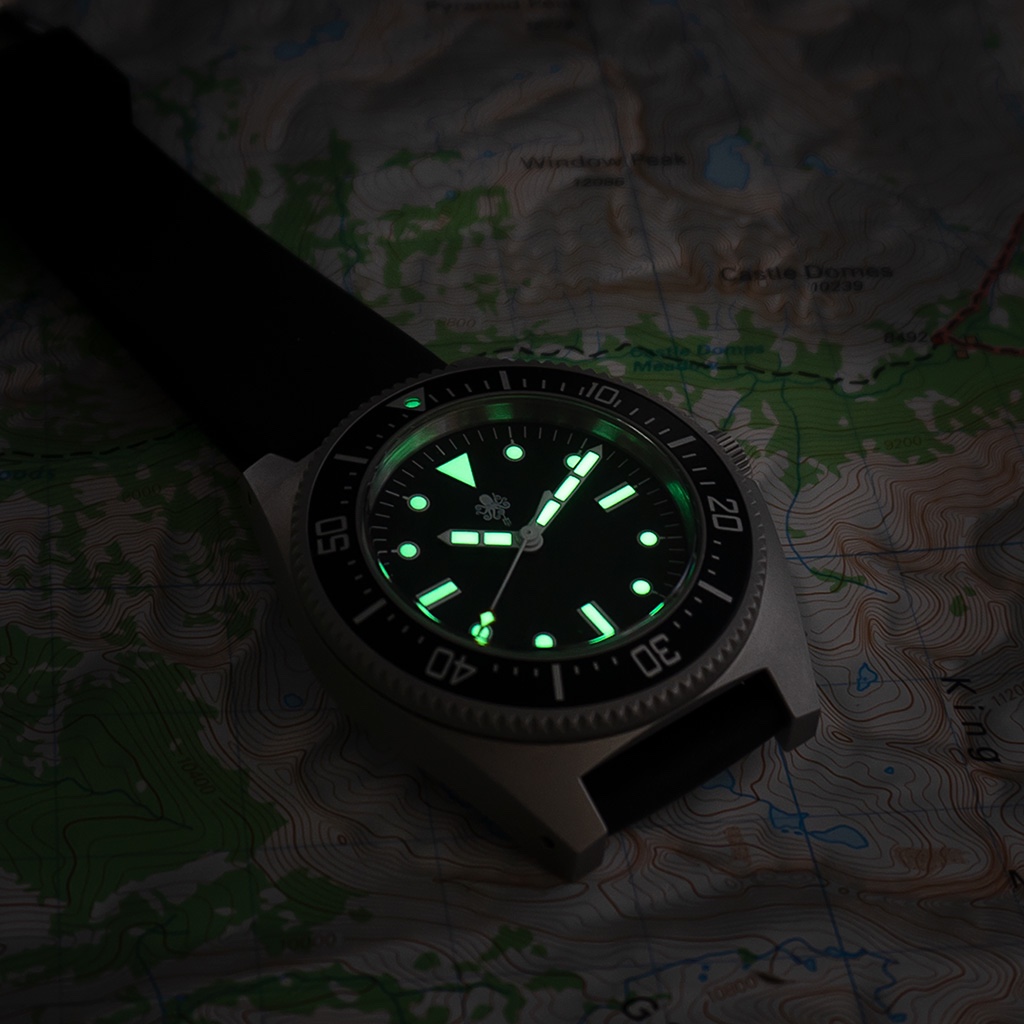
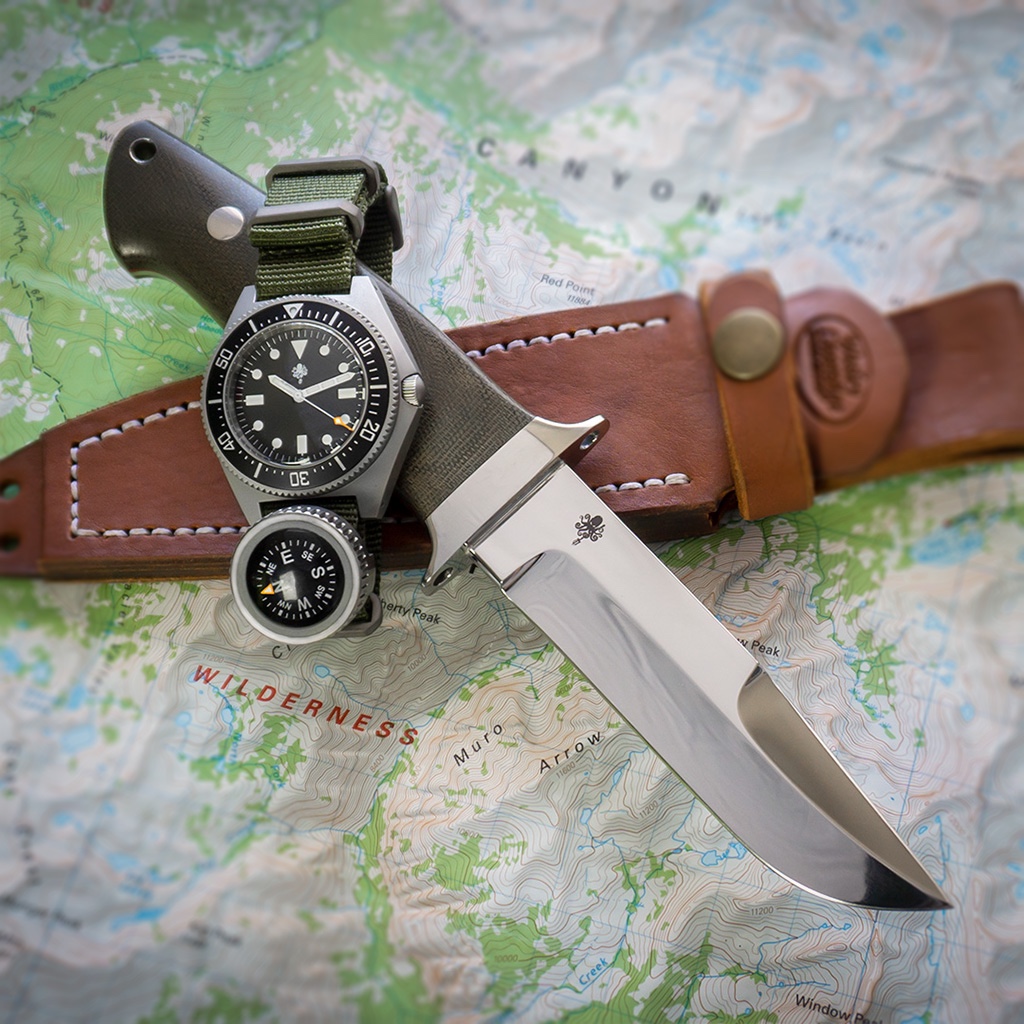
Prometheus Design Werx under their sub-label Special Projects Division, introduces an exclusive dive watch collaboration with MKII Watches for Summer 2022. The Paradive is a dive watch evolved from the US MIL-W-50717, featuring a mechanical SII NE15 automatic movement, a double domed sapphire crystal with AR coating, 316L SS case, diver elapsed bezel, and waterproof to 20ATM/660’. The design and aesthetic are classic, spartan and purpose driven; the consummate “tool watch”. Exclusive details include their SPD Kraken Trident graphic on the dial and an orange tipped sweep hand. The original versions were issued to US Special Forces and CIA maritime units from the 1960s to the early 1980s, and unavailable commercially. This modernized version will be available to the general public.
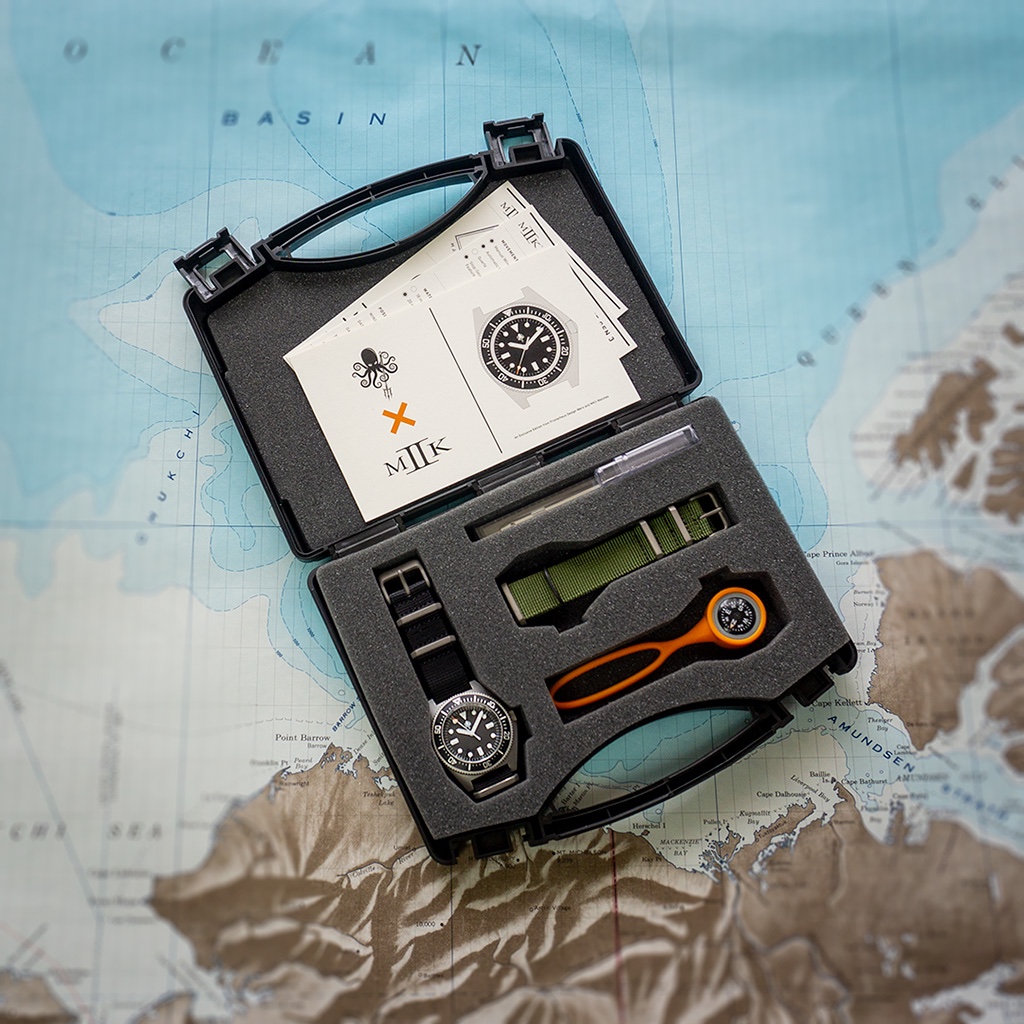
The exclusive SPD X MKII Paradive collaboration will include black and OD green PDW Ti-NATO straps and an Expedition Watch Band Compass Kit.
The Design and R&D Team at PDW states:
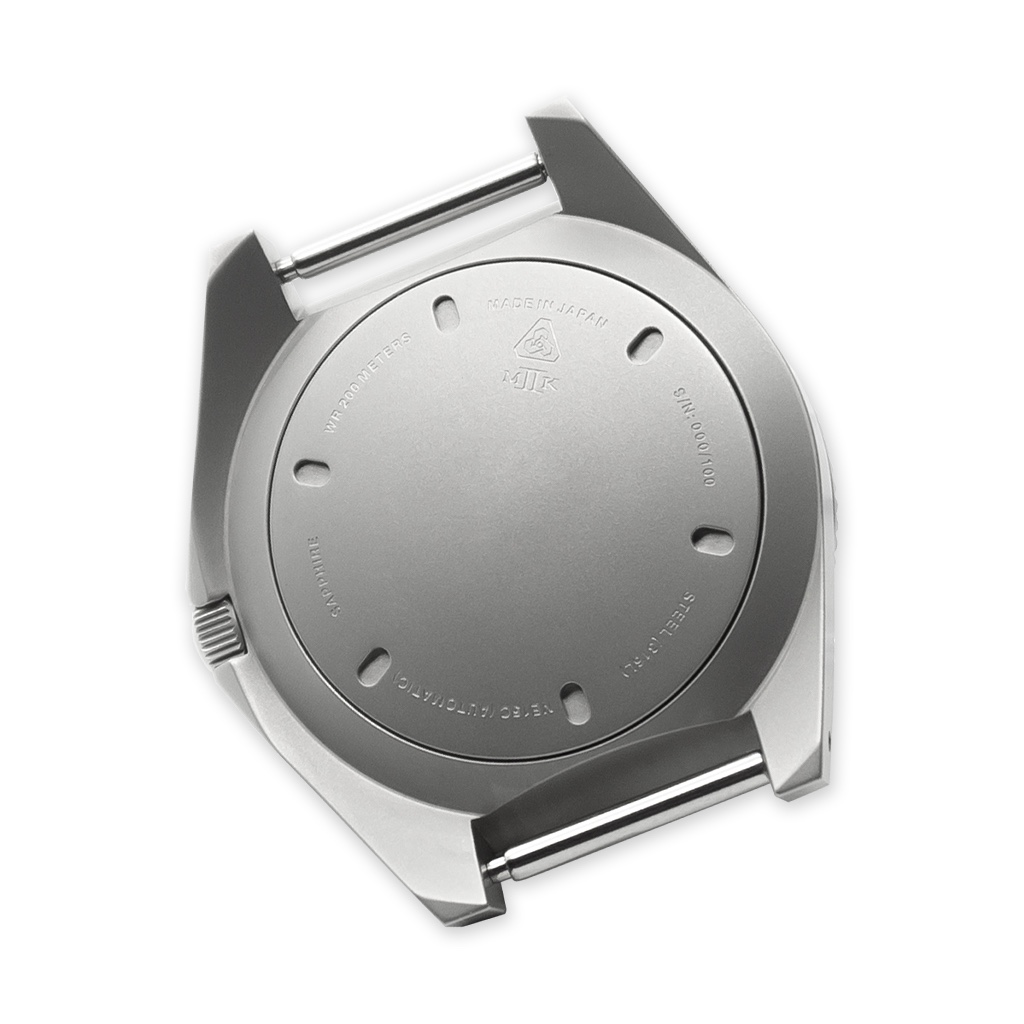
“I’ve known Bill of MKII Watches for around 20 years now and have been a longtime admirer of his work, from his early days with Seiko mods to his contemporary inhouse models inspired by timeless and iconic classics. The MKII Paradive is probably one of his most recognizable models and represents the core of his watch making ethos. It is a watch style as worn by the quiet professionals of an earlier, pre-digital era. We’re big fans of the clean, spartan, and purposeful design of the Paradive. It is an adventurer’s watch, a watch for those who let their actions do the talking. Our edition features the exclusive, subtle details of our SPD Kraken Trident logo on the dial, an orange tipped sweep hand, and a branded case back with serial number.”
The first 50pcs of the SPD X MKII Paradive will be available for $955.00, and a LTD ED Full Set (limited to 5 pcs) paired with a custom Loveless style Chute knife by Wesley Liversage for $1575.00, on July 4th, 2022 at 12:00 noon Pacific via their website, prometheusdesignwerx.com.
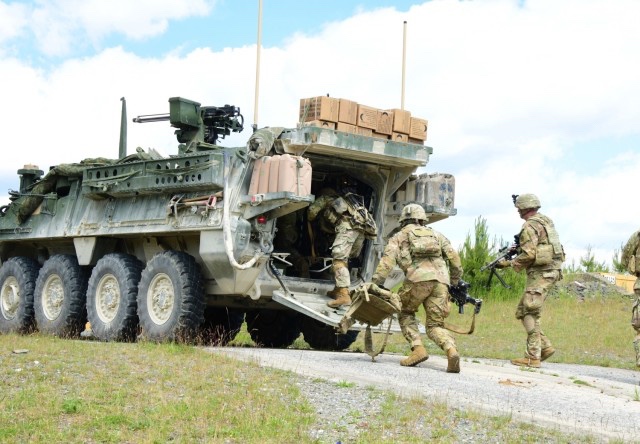
GRAFENWOHR TRAINING AREA, Germany — When conducting mounted to dismounted missions, Stryker Brigade Combat Teams cannot let a little steel get in the way of their network communications.
The 3rd Squadron, 2nd Cavalry Regiment is the first unit equipped with Capability Set 23’s — or CS23 — Integrated Tactical Network. This network, shortened as ITN, is providing Soldiers with flexible network and situational awareness capabilities from inside the hull out to the area of operations on the ground.
The unit recently completed a live-fire training event at Grafenwohr Training Area, with additional events held at Rose Barracks, during which program developers and evaluators from the Program Executive Office Command, Control, Communications Tactical, Combat Capabilities Development Command C5ISR Center and the Army Test and Evaluation Command assessed and measured the operational effectiveness, suitability, and survivability of ITN, including cyber capabilities, as part of their operations demonstration phase 1 with the unit.
The team will use Soldier feedback from the event to incrementally enhance the capability in preparation for Ops Demo Phase 2 in January, 2023. They will assess CS23’s ITN in a force-on-force regimental level exercise with 3rd Squadron.
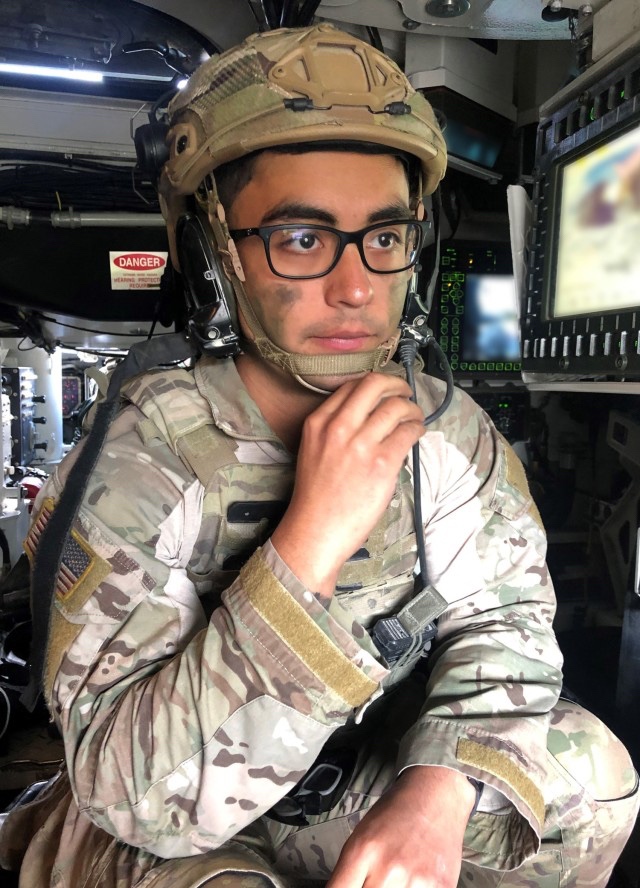
“It certainly isn’t lost on me that 3rd Squadron has been presented with a once-in-a-lifetime opportunity to blaze the trail of ITN integration for not just our Regiment, but for other Stryker Brigade Combat Teams across the Army,” said Lt. Col. Mark Bush, 3rd Squadron, 2nd Cavalry Regiment. “I believe our squadron possesses a myriad of talent at every echelon that is capable of providing cogent and applicable feedback regarding process for fielding and tactical implementation.”
The ITN provides a simplified, independent, mobile network solution comprised of a commercial solutions kit that can be rapidly inserted into the existing tactical network. These capabilities provide commanders with flexible, secure and resilient communications across echelons and will be pivotal to the 3rd Squadron’s mounted, on-the-move and at-the-quick-halt missions as part of their arsenal within the European Command area of operations.
“I am extremely excited that we were able to deliver the latest CS23 networking technologies to the Wolfpack squadron,” said Matt Maier, Project Manager for Interoperability, Integration and Services, assigned to Program Executive Office Command, Control, Communications Tactical. “I think mounted capabilities will be a game changer for units as we achieve the capacity, resilience and convergence goals for the Army’s Unified Network.”
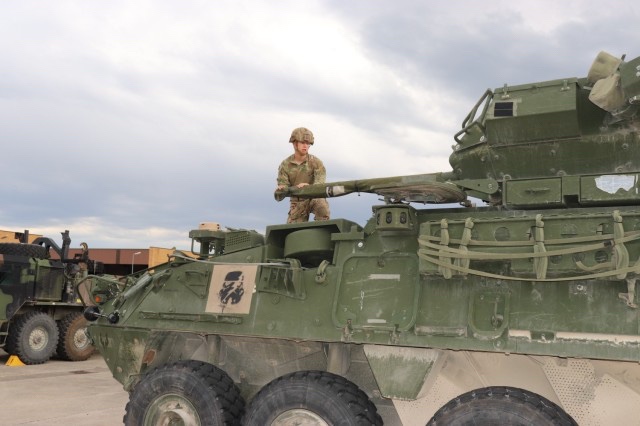
The ITN has been a major component to the Army’s Capability Sets, which began fielding in fiscal year 2021, and are continuing to field in FY 2023, 2025 and 2027. In this end-to-end tactical network approach, each capability set builds off the previous and relies heavily on Soldier feedback.
CS23 ITN includes new capabilities that provide cellular hotspots for vehicles, which allow mounted Soldiers to connect to cloud-based resources with a secure VPN over host nation cellular services as part of their Primary, Alternate Contingency and Emergency Plan. Additional CS23 capabilities provide new Wi-Fi and updated GPS vehicle routing capabilities and multiple-input and multiple-output radios for high-speed command post data exchanges, with both mobile and static command posts.
As did the Infantry Brigade Combat Teams that received CS21’s modernized network systems over the past year, 3rd Squadron is now experiencing firsthand the difference between conducting operations using existing systems versus newer commercially enhanced networked capabilities.
“The biggest thing about ITN is that it is truly an integrated tactical network,” said Staff Sgt. John Mock, 3rd Squadron, 2nd Cavalry Regiment network communications officer in charge of network integration for the unit.
“We aren’t using independent systems that are great on their own but ultimately don’t talk to one another. Now, we can share [ ], messaging services and graphics to allow ease of communications on the battlefield to improve the site picture for our commander for better decision making.”
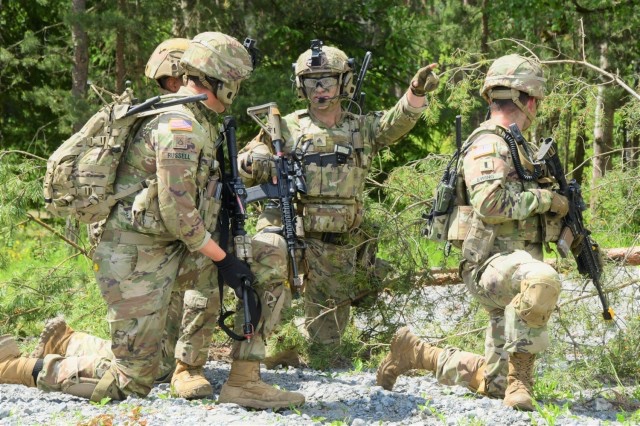
Radios are the primary capability used for ITN communications across the echelons, and for this exercise, the Wolfpack platoons used the PRC-163 Leader Radio for dismounted operations and the PRC-162 Manpack for both dismounts and inside the vehicles.
Spc. Elliott Mazner, who has served in numerous 3rd Squadron, 2nd Cavalry Regiment platoon positions from rifleman to squad leader, covered down as squad automatic weapon gunner for this event. His familiarity with ITN during previous exercises provided him with a strong base to evaluate and provide feedback on these network communications.
“I’m impressed with 163’s ability to communicate outside the truck,” Mazner said. “It’s a radio sitting in someone’s kit with an antenna [outside], but it’s still able to get past the armor in the truck, reach another truck through that armor and communicate with another 163 inside that truck.”
The Android Tactical Assault Kit end-user device is the sister component to the radios for overall situational awareness. It displays real-time friendly and enemy location information, which allows leaders better decision-making capabilities.
“Using the ITN displays details just like it was a Tinder profile for the enemy, where we’re able to see what we’re looking at and the commander can make instant decisions,” Bearden said. “If you don’t have this capability there will be more casualties on the battlefield, which is why this capability is amazing.”
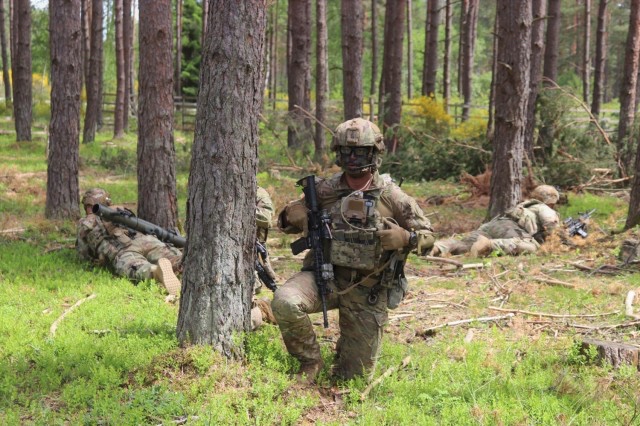
The primary waveform used with ITN is the TSM waveform, which is a commercial mesh waveform that requires line-of-sight and provides a barrage relay, where every radio is a repeater for all network traffic. Providing simultaneous voice, data and position location information, TSM operates in the Secure-But-Unclassified enclave, which enables encrypted data to be transmitted over military or commercial networks, the Internet, cellular networks or compatible but non-military waveforms.
The unit relied heavily on TSM during the multi-national exercise Saber Strike 22 exercise conducted last October, which required movement from Rose Barracks, Vilseck, to Latvia.
“Most useful to our participation in Saber Junction was the voice-over-distance function enabled by the mesh network of our mission command systems,” Bush said. “Experiencing the clarity in communications over long distances, all enabled by individual radios acting as repeaters for each other, was extremely impressive.”
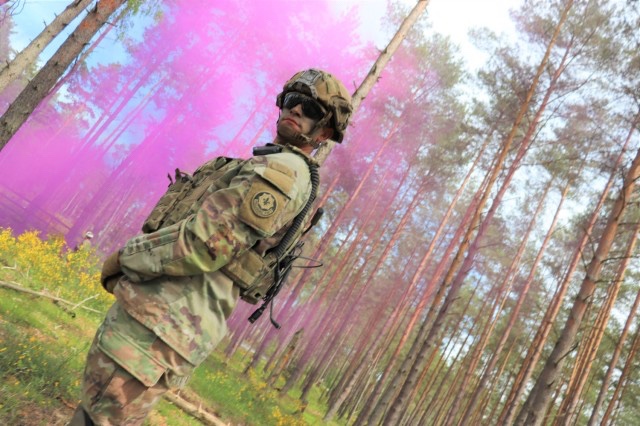
Not that the capabilities performed flawlessly; between the distance covered coupled with early Soldier ITN adopters, the unit faced some challenges as it continued to train on the various ITN components.
“I am very aware that introduction of unfamiliar technology always comes with a steep learning curve,” Bush said. “However, our squadron’s experience of implementing the ITN capability providing very real assurance to NATO allies has been second to none. The situational awareness provided for across digital and voice mediums, for both mounted and dismounted combat troops, has been one of efficiency [that] I have not experienced in 18 years of active service.”
According to Mock, his unit understands that there will be growing pains employing ITN in large scale deployments, but thus far, with every growing pain they have run into, they have come out stronger by identifying the fault and coming up with a plan of action to resolve it.
3rd Squadron received an initial ITN fielding in 2021, and since then it has had many opportunities to see how its feedback has impacted network capabilities.
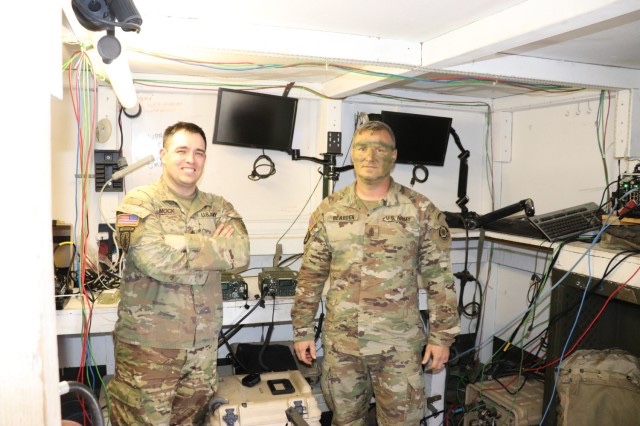
“Between the initial ITN fielding and CS23 Ops Demo, the key points we brought up, whether large-scale problems or small, such as placing a button in a certain place, have been implemented,” Mock said. “The training was leaps and bounds better. The equipment has adapted to us very well and we have adapted to the equipment significantly.”
Now that the exercise has concluded, the Army’s Operational Test Command will gather the instrumented data, surveys and round table information collected during the daily After Action Review meetings to prepare an initial findings report, with a full report planned following Ops Demo Phase 2, noted Maj. Greg Stueve, Operational Test Command test officer for ITN.
The unit will continue to train on ITN at home during low density training events, where Soldiers will go through battle drills using their radios and end-user devices, all the while continuing to provide critical feedback to the ITN team, Bearden said.
“Soldier feedback in support of Army network communications modernization is a must,” Bush said. “We wouldn’t ask our Soldiers to fight with a weapons system that the end-user hasn’t tested. I believe the same principle applies when considering platforms that enable the Soldier’s ability to communicate.”
Bearden agreed.
“This is what survivability on the modern battlefield looks like,” he said. “This is what modernization looks like.”
By Kathryn Bailey, PEO C3T Public Affairs
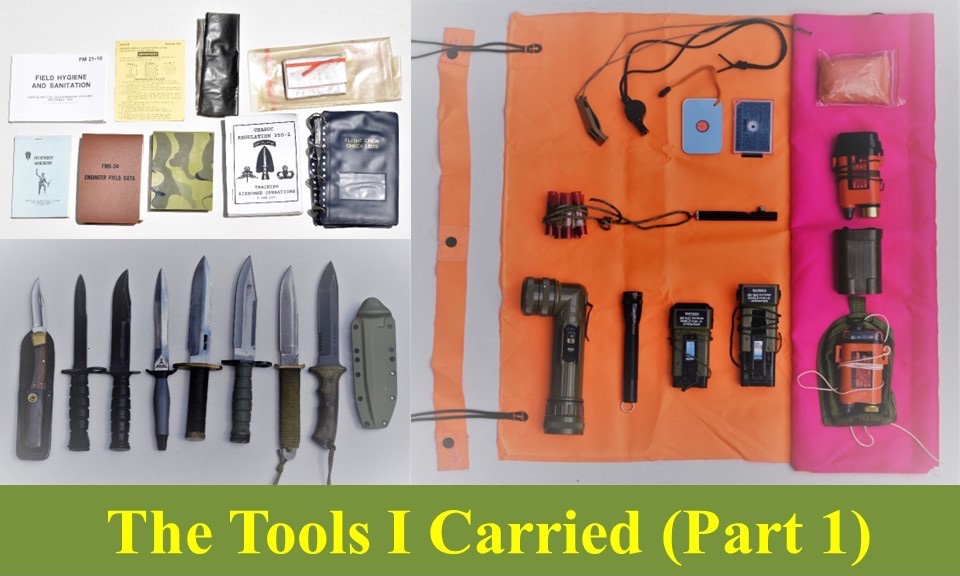
In the past, a reader or two has asked me to do an article or even a series focused on fieldcraft. At first glance, it sounded like a general topic that would be easy to write about. Then I started to think about it and realized that the subject did not lend itself to simple or short parables. Fieldcraft techniques are very situationally dependent. What a soldier does to survive and thrive in the Arctic must be tailored to that environment and, therefore, not necessarily directly applicable anywhere else. Likewise, jungle, mountain, or desert environments, and all the variations from sea level to higher altitudes demand their own unique approaches for success. Of course, urban environments also call for specific “fieldcraft” techniques.
Not to mention techniques unique to dismounted soldiers that are different than those employing watercraft, ground mobility systems, and aircraft. Over my career, I worked in all of those settings and with a good many of the aforementioned land, sea, and air, mobility platforms. I cannot claim to have fully “mastered” any, but I am informed by considerable and diverse experience. Still, I felt the need to eliminate most of the variables to keep it simple and of manageable size. It occurred to me that – regardless of the environment or the mission – there were certain tools that I always carried that I counted on to help me get the job at hand done. Some high-value utensils of fieldcraft that I could share.
That is not to say that I could point to any individual items that I carried religiously from my first assignment to my last. But as I looked back, I realized that there were distinct types of tools that I always carried and found useful. I am going to talk about them in no particular order and provide some explanation as to what, how, when, and why, I used them. The first category would be memory aids. By that, I mean pocket-sized Reference Books and Graphic Training Aids (GTAs) that were readily available to me and other soldiers. I have a sample of some of those items in the picture below to include the Ranger Handbook (camouflage cover), Engineer Field Data, Pathfinder Handbook, Jumpmaster Duties, and so on.
When I was a Pathfinder, that handbook went everywhere with me. It had concise information on load limits and flight characteristics of various fixed and rotary wing aircraft. Checklists for sling load and rappelling operations. How to set up HLZs and DZs. Ground to air signals and radio communication protocols. In short, it had the essential tips of the trade every Pathfinder needed. Of course, through repetition, I committed much of that sort of checklist or “cheat sheet” information to memory. However, I quickly learned that when tired, or under stress, it was best not to rely on memory alone.
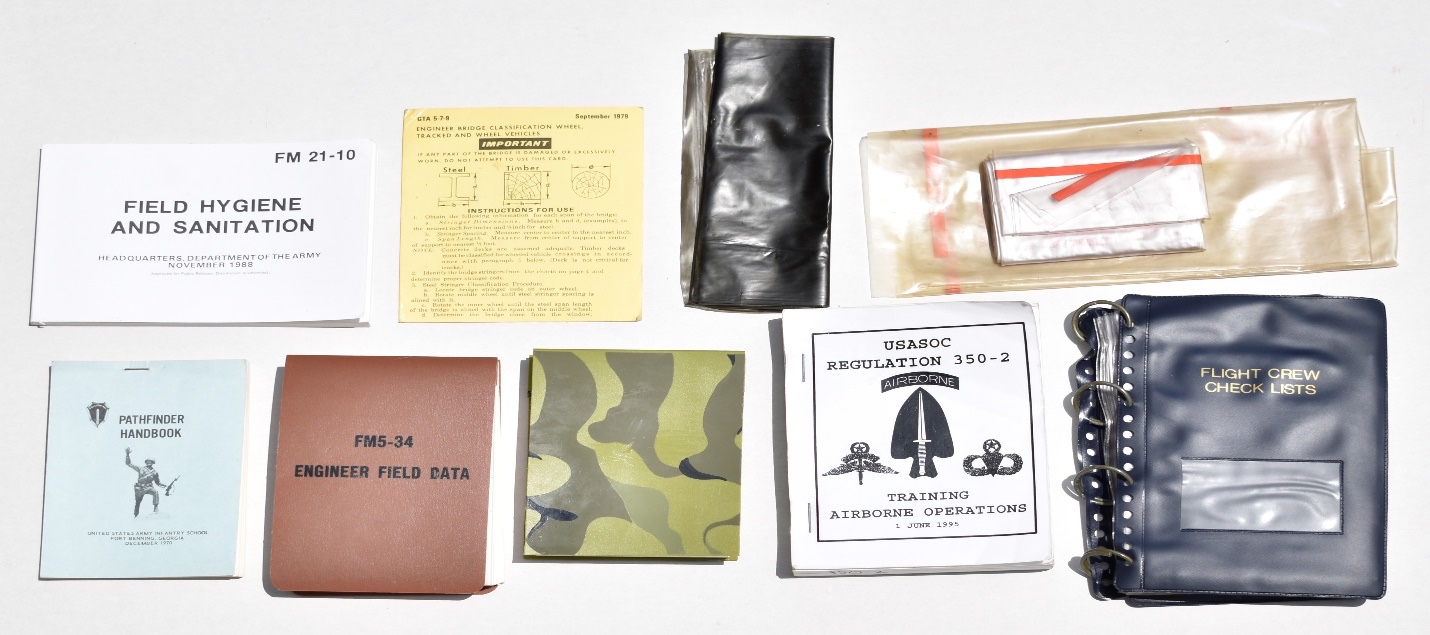
Case in point, the various iterations of the Ranger Handbook have been the go-to book for small unit tactics for decades. Most any Officer or NCO in a unit that does dismounted patrolling uses it as a reference. Indeed, one would be ill advised to plan a patrol without a quick review of the pointers in the book. When I was an Infantry Scout, I also started carrying the Engineer Field Data manual (Brown plastic cover). It had information on Route Reconnaissance and Bridge Classification formulas that directly supported our mission. As does the yellow Bridge GTA “whiz wheel” above it. Not to mention useful information on Demolitions, Field Fortifications, Obstacles, and even Field Sanitation, in one handy package.
Eventually, I started pulling what I considered the critical pieces out of each of the booklets, laminating them, and putting them and the GTAs into a Flight Crew Checklist ring binder (bottom right). It is simply a collection of transparent sleeves held together by metal rings. I replaced the rings on mine with grenade pull rings that would not ever come apart the way the originals sometimes did. I carried the one above for about 25 years. To protect it even more I stowed it wrapped up in a Protective Mask Waterproof Bag (top right). In the days before heavy-duty Ziplock bags, I carried the smaller handbooks in a waterproof “elephant rubber” (dark plastic top center). These “rubbers” come packed – or at least they used to – with mortar ammunition.
Of all the tools I carried over the years, I would expect that the concept of the “Field Knife” requires the least explanation. Soldiers have carried similar sized multipurpose blades for hundreds of years. I have several examples in the picture below. With one exception, they all have a blade that is approximately seven inches long. On the far left is that exception. It was the first knife I ever purchased in the Army. A 4-inch Buck Folder in a leather sheath that I carried on my uniform belt. I quickly found out that it was capable of doing the things that I needed a knife to do in garrison, but was too small for field tasks like cutting camouflage for an M113 APC or clearing fields of fire for a machinegun.
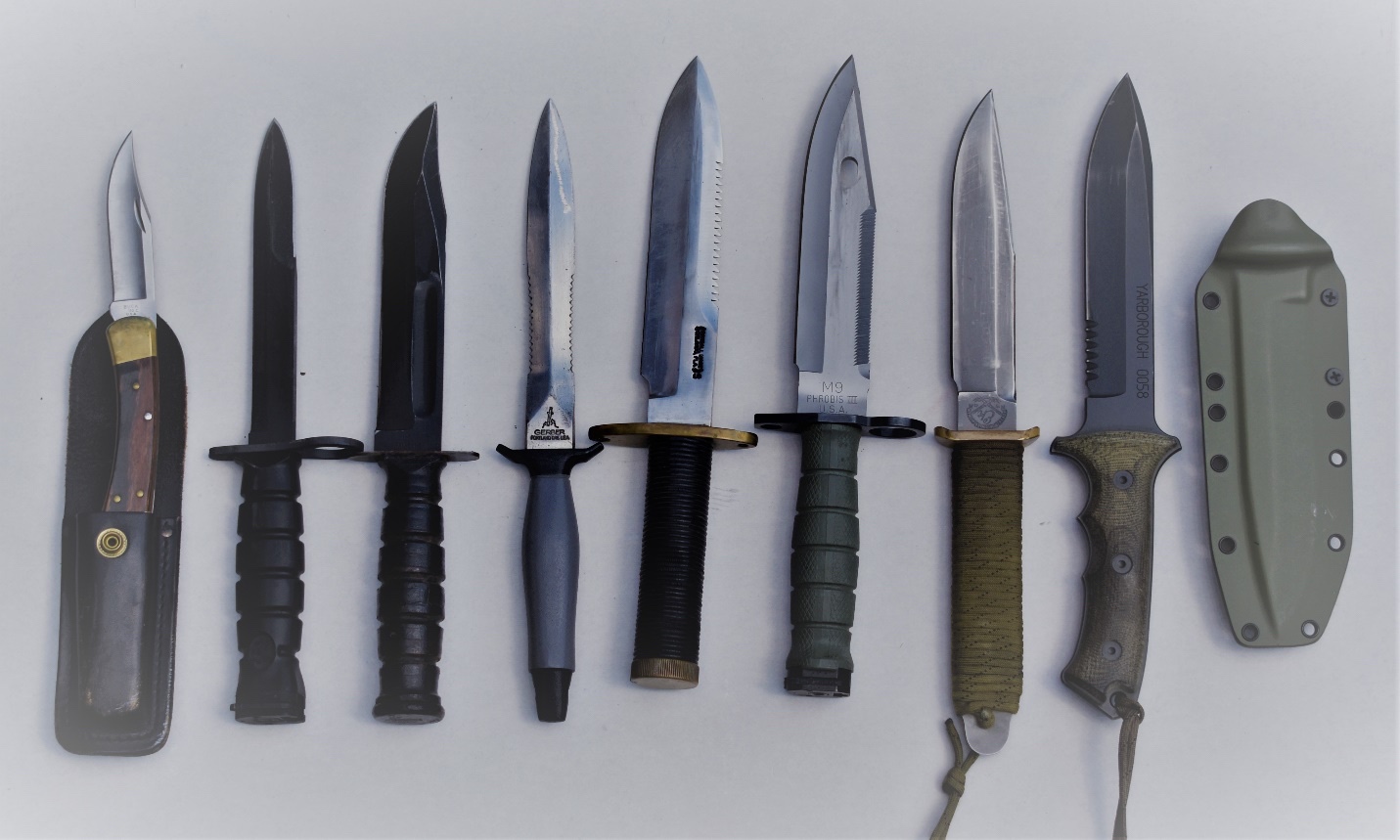
Moving from left to right, the next knife is the M7 Bayonet. The same blade had been introduced as the M3 Fighting Knife in WWII and as the M4 Bayonet for the M1/2 Carbine at the end of the war. The M7 version was issued with the M16 and the M16A1 Rifles starting around 1959. In Germany in the 1970s, the M7 Bayonet was issued virtually every time we drew our weapons from the Armsroom. The one in the picture is the latest version still being produced by Ontario Knives. It is strictly a stabbing weapon. Optimized for the thrust attack on the end of a rifle. It is still a good blade shape for that purpose. However, it is not well suited for those common field tasks I mentioned in the previous paragraph.
Next is the classic “Kabar” style knife. In this case, the more Army friendly Camillus “Fighting Knife” without any USMC logos. When I went down the street from an Infantry to an Aviation Battalion, I was introduced to the Shotgun News – the printed eBay of the day for all things tactical. As soon as I saw the Kabar, I ordered one. It was my first true Field Knife and I have measured every knife since then against it. Cutting camouflage or clearing fields of fire were no longer a problem. I have owned a number of these knives over the years. The first 3 or 4 I broke. Mostly because I kept throwing them at trees when I was bored – or having knife throwing competitions with my buddies. It was not designed for that. Funny, since I stopped throwing them at trees, I have not broken one since.
When I got to Fort Lewis – my first real Stateside assignment – I discovered that there were stores off post that catered to soldiers’ tactical needs. Stores with knives. So, when I saw the Gerber in one establishment’s display case, I had to have it. It looked aggressive. Exactly what a “Fighting Knife” should look like. I liked wearing it on my web gear. But, not surprisingly given the blade shape, it was not a very good Field Knife. I had paid about $70.00 for it so I did not put a big investment like that away immediately. Still, a few months later, I gave up and went back to the trusty Kabar. That is the knife I carried for three years in Hawaii. Then I got to Bragg in 1983, and I found out that Fayetteville had even better stores. Including one that had Randall knives in stock. $300.00 later I owned a Model 18. I carried this one for several years. It is not as easy to sharpen as the Kabar but otherwise, it is a top-of-the-line Field Knife.
Briefly, after the M9 Bayonet was issued with the M16A2 to the 82nd, we started carrying it to the field. It had been sold not just as a Bayonet but also as a multifunctional “Field Knife.” It is not as good a bayonet as the M7, but it actually is a fair Field Knife. Certainly, on par with the old Kabar. The biggest problem, in my opinion, was that the scabbard was too heavy. It was made of excessively thick plastic, had a sharpening stone glued on, and a “wire cutting” lug mounted on the bottom. Plus, it came with a pouch for an M9 pistol magazine. Given a more lightweight sheath option without the accessories, I think more soldiers would have had a favorable opinion of it – or maybe not. The M9 is still the standard issue Army bayonet.
This timeframe (mid-1980s), was also the era of the Army’s “Light Infantry” experiment and I started to actively look for something a little lighter than my Randall. Second from the right, I found an Ek knife that was exactly what I was looking for. Light, simple, strong, and with the “right” blade shape for a Field Knife. I carried this knife through the Q-Course and my next several SF assignments. I probably would have carried it till the end. Except that the Yarborough Knife came along. I picked mine up at the SF Museum the first chance I had. Serial number 0058. I considered just storing it at home and taking some other easier to replace knife overseas. Taking it to combat meant that I had to accept the fact that it might very well get lost or destroyed. Nevertheless, I wanted to see for myself if it was a good Field Knife. I ended up carrying it on duty, exclusively, for the next nine years. I have had no issues or complaints.
One last point about sheaths or scabbards. Most knives I have owned originally came with a leather or nylon web sheath. Some are very well made. Yet, I was never satisfied with them. Leather doesn’t do well in wet conditions, especially if exposed to salt water. Moreover, both leather and web sheaths did not offer great protection for the knife because they tended to be flexible. Practically none offered “positive” security for the knife without straps/snaps that always seemed to get in the way when trying to resheath the blade. The M9 Bayonet scabbard came with two straps. With that in mind, I had a Kydex sheath made for the Ek when I got it and one for the Yarborough (far right) as well. They worked great for me. So much so that I have since bought similar sheaths for almost all of my old fixed blade knives including the Kabar.
Signal devices would be another major category of tools I always needed. When I was designated to be the RTO for my Weapons Platoon Leader in Germany in 1975, I learned that the radio was not simply a means of communication. It really was a leader’s primary weapon – and, together, we were that weapon’s crew. As I became more senior – and, thankfully, radios became smaller – I found myself eventually carrying two IMBTRs set on multiple frequencies, with one or two other individuals, carrying larger radios to support me, within arm’s reach. Even before I retired, data transmissions were already becoming more the norm than voice transmissions. That trend has done nothing but accelerate. Technology is great, but in terms of “fieldcraft,” I am going to highlight less technologically sophisticated options that I always carried – with or without a radio. Things like signal panels, strobes, mirrors, whistles, and flashlights.
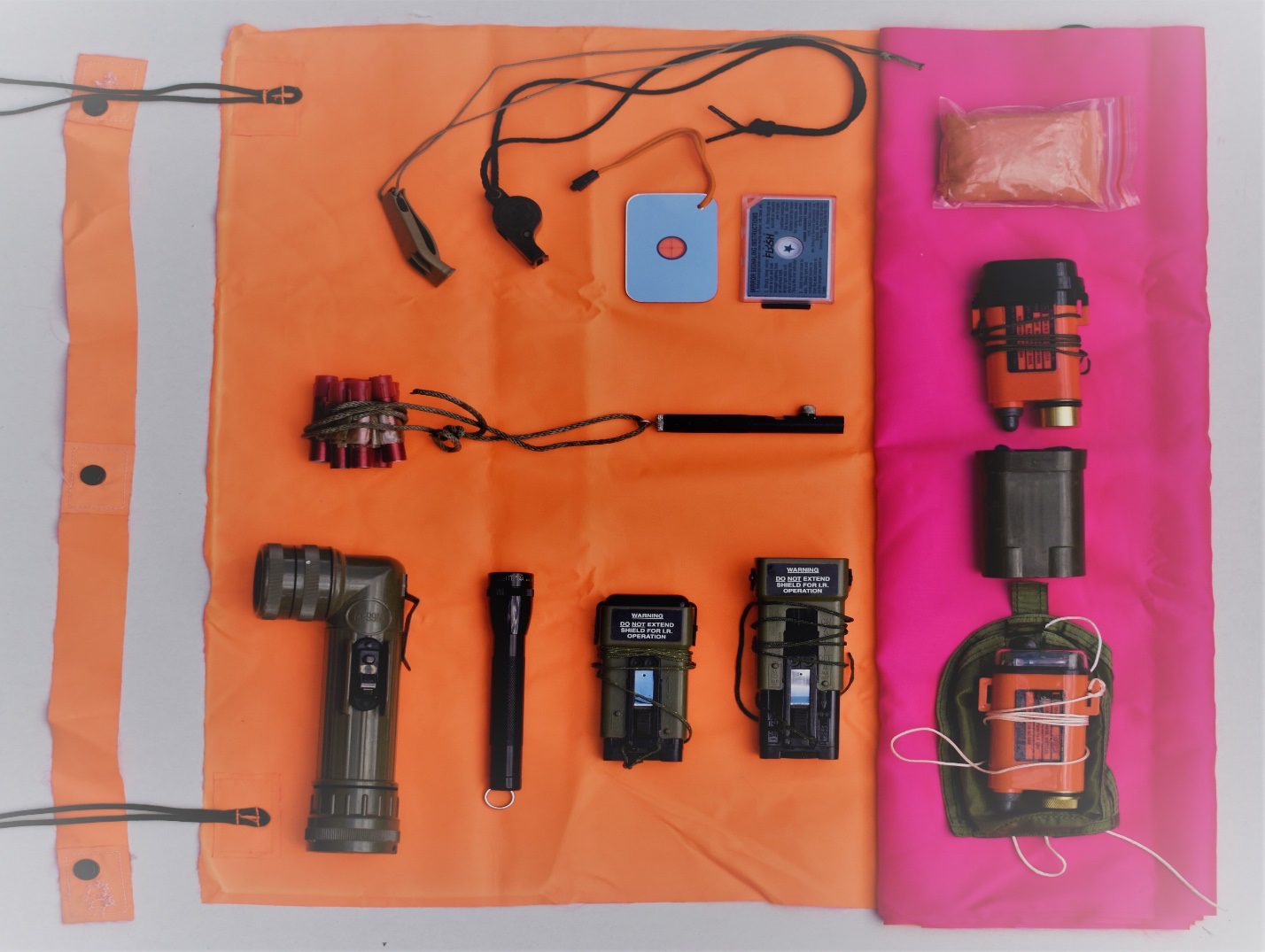
Above, I have laid out some of those items. At the base is a VS 17 Signal Panel. There are at least two versions of this panel in the inventory. The older style, dating from Vietnam, had an OD Green envelope pocket at one end that the panel could be folded into to hide the bright colors. Around the Desert Storm time frame, I started to see versions being issued without that feature. I always preferred the older type. However, I also always modified them the way I learned how to as a Pathfinder. That involved cutting off the two end strips with the snaps as shown on the far left. We then had the 550 cord tiedowns resewn on the panel. We found that we rarely used the snaps and they just made the panel a little heavier and bulkier. Granted, not much weight savings for a single panel; but, if you are carrying 12-15 of these panels – as we routinely would – it made a noticeable difference. I have carried at least one panel modified in this way ever since then. During GWOT, I added one of the smaller thermal IFF Panels (not shown) to my kit as well.
The side of the panel one chose to display depended on the light conditions and the background color. The rule was to use the side with the best contrast to the surroundings. Old timers will recognize the Fulton Flashlight on the bottom left. It was bulky, finicky, and put out about 5 lumens for half an hour on a good night. But from WWII until the mid-80s it was “state of the art” for flashlights – and was all we had. Yeah, even SOF guys. Just to the right is the Mini-Maglite that was better in just about every possible way. Yet, as far as I know, the Army never officially issued them. Instead, Soldiers bought probably tens of thousands for themselves. I do not think anyone went to Ranger School after about 1985 without buying at least one of these in Columbus, Georgia. Eventually, I started using various Surefire Flashlights (not shown) – some I bought and some were issued. After I retired, I found I had a good number of the Maglites lying around. So, I retrofitted them with LED bulbs and Lithium batteries and have them stashed in all my vehicles and around the homestead.
The Pen Flare, center, is a handy pyrotechnic signal device. Once I got issued one in 1976, I never worked without it. Signal mirrors came in glass, metal (not shown), and now plastic versions. All work well enough, glass is usually clearer, metal is the least fragile, and the plastic type can float in case you drop it in water. Whistles, left of the mirrors, come in classic military style with a “pea” or newer “pea less” versions. I have found whistles to be an indispensable leader tool many times over the years. It beats trying to yell commands during high noise events like firefights – in training or combat. A whistle can handily bridge language barriers. As long as everyone has been briefed on what a blast or two on the whistle means before the mission starts. And, of course, it is useful if one gets lost or injured. On the top right of the picture is a silk-weight orange signal panel that used to be part of an aviator’s survival kit. If weight is a real issue, or the VS 17 was left behind in a ruck, this can always be carried in a fatigue pocket and serve as an emergency ground-to-air signal.
Strobe lights (right and center) have also been Aviator and SOF issue since Vietnam. The older version (SDU-5) on the far right was eventually a 5-piece system. It came initially with a green pouch with only a 360-degree white light strobe function (bottom right). This was adequate in the days before night vision devices. To make it more unidirectional for downed piolets to use in hostile territory, a plastic sleeve with blue plastic film on one end was issued (center right). The sleeve fits over the body of the strobe for storage and was then reversed and mounted on the front of the strobe for use. It worked as designed, but was not well liked because it made the package bulkier and hard to fit into or get out of the pouch. The upper right strobe on the display has the IR Cover in place that started to be issued as NODs became more widely available. The downside was that, while invisible to the naked eye, the IR Strobe was still a light that flashed 360 degrees and would be visible to anyone else with NODs. And, no, the sleeve did not mate very effectively with the strobe if the IR Cover was in place.
The green MS2000 Strobes, just to the left of the older orange ones, came out in the late 90s. They were generally issued with the same green pouches and combined all the old functions in a slicker package. The IR cover is attached but can be flipped out of the way for a white light strobe function. The green outer casing can be extended to create the unidirectional blue light function. The green strobe on the right is fully extended. I ran into many a soldier that had no idea that feature was built in. No one had ever shown them how to do much more than turn the strobe off and on. The green strobes used common AA Batteries. The older versions used a military-specific mercury battery. Back in the day, we had to turn a battery in to get a new one. Both versions of the strobe are better with Lithium Batteries. I bought a conversion cap for the older SDU-5 and now it uses 123 Lithiums. Of course, newer, smaller versions have come out over the years. Especially for helmet mounting options. Still, these are very durable devices that reliably do the job. I have had a couple for at least 25 years and they are still soldiering on.
Let me turn now to a protective gear item. I have worn a lot of gloves over the years in cold weather situations. The old school less-than-satisfactory issue leather gloves with wool liners, for example. Those only supplied some insolation value when they were dry – and they were rarely completely dry. In colder and dryer places like Alaska, it was Trigger Finger Mittens and even bigger Arctic Mittens (not shown). They provided better insolation, but little dexterity. The modern Gloves suites that have been issued in the last 20 years or so have been much better and are routinely being changed/upgraded every few years. I have also often used “work gloves” like the issue Gloves, Heavy Duty, aka, “Engineer Gloves” for rappelling or stringing barbed wire; and even specialized staple reinforced gloves to handle concertina wire (not shown).
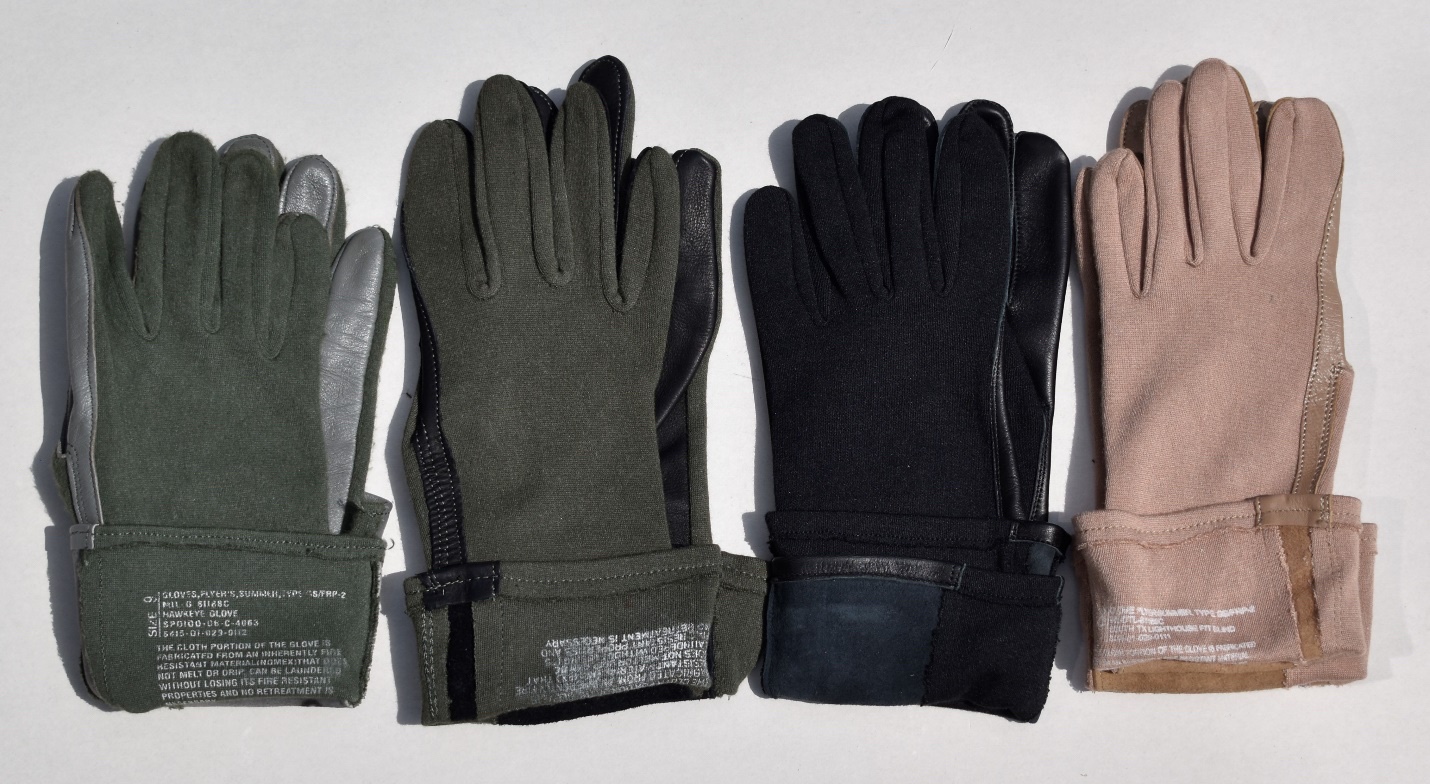
However, the gloves I always had with me in hot, cold, wet, and dry, conditions were the issue Gloves, Flyers, Summer or “Aviator Gloves” like those shown above. I was first issued a pair in 1976 as a Pathfinder in Germany and was never without a pair throughout the rest of my career. The most commonly available type were the ones in Air Force Sage Green with gray leather (far left). Much less common is the OD Green and black leather version adopted for Army Armored Vehicle Crewmen in the late 80s IIRC. I was gifted a pair of those at the M1 Master Gunners Course at Fort Knox in 1993. Some all-black versions were made in the 90s as well, and tan versions were issued during GWOT.
Non-Aviators who could get them, like Pathfinders and MACVSOG, started using them in the 1960s in Vietnam. Following their example, I used them in the field to protect my hands – while preserving dexterity as much as possible – everywhere else the Army sent me. Places like perpetually rainy Fort Lewis and the dryer Yakima training area, the Northern Warfare Training Center in Alaska, the Hawaiian Islands, the Philippines, winters in Korea, multiple trips to the Jungle Warfare Training Center in Panama; a dozen African countries, and even more Middle Eastern and Central Asian countries before and during GWOT. What did they protect me from? Standard risks, like red hot weapons, or vehicles and other metal objects baking in the sun. Or, conversely, in colder climes, they helped me avoid touching cold-soaked items with bare skin. I used them as inner liners for mittens in Alaska and they came in very handy for doing tasks that required more dexterity than the mittens would allow. Reloading M16 Magazines by hand for instance, or clearing a stubborn weapons stoppage, or some routine basic weapons maintenance tasks outside or in any non-heated space.
Everywhere else, they provided at least some protection against common threats like Black Palm and other ubiquitous thorny vegetation; not to mention poison oak, ivy, and the like. Of course, they also protected me from burning myself when tending a fire, or heating some chow, or grabbing a hot canteen cup or other metal containers off a stove or out of a fire. Today, I would still strongly recommend wearing similar light gloves, albeit the more modern versions that are fully touch screen compatible. One caveat, these are thin gloves by design and that means they will wear out faster with hard use than thicker and heavier alternatives. Therefore, I generally kept a couple of spare pairs on hand for contingencies.
I believe that is enough for now. I will do a Part 2 in the near future to cover other “Survival Items” and things like Multitools, Lashing Material, Navigational Aids, Machete and Axe, Weapons Maintenance Kit, Medical/First Aid Supplies, Food, and Water. Even E-Tools and Toilet Paper. As I pointed out as we went along, the things I carried evolved over time and older items were routinely replaced with newer versions as they became available. Moreover, what I carried changed based on my mission requirements. Just as a Medic will rightly have need of different tools of his trade than a Machine Gunner, so does a Leader’s essential tools rightly differ from those of a new Private. In other words, what I carried at any point in my career and talked about in the article, may or may not be specifically relevant to anyone serving today. Times change. It is the concepts and the principles behind the gear choices that are important, not the details.
De Oppresso Liber!
LTC Terry Baldwin, US Army (Ret) served on active duty from 1975-2011 in various Infantry and Special Forces assignments. SSD is blessed to have him as both reader and contributor.
WILL ROGERS AIR NATIONAL GUARD BASE, Okla. —
The 137th Combat Training Flight (CTF) hosted its first female student in the joint terminal attack controller qualification course (JTAC QC).
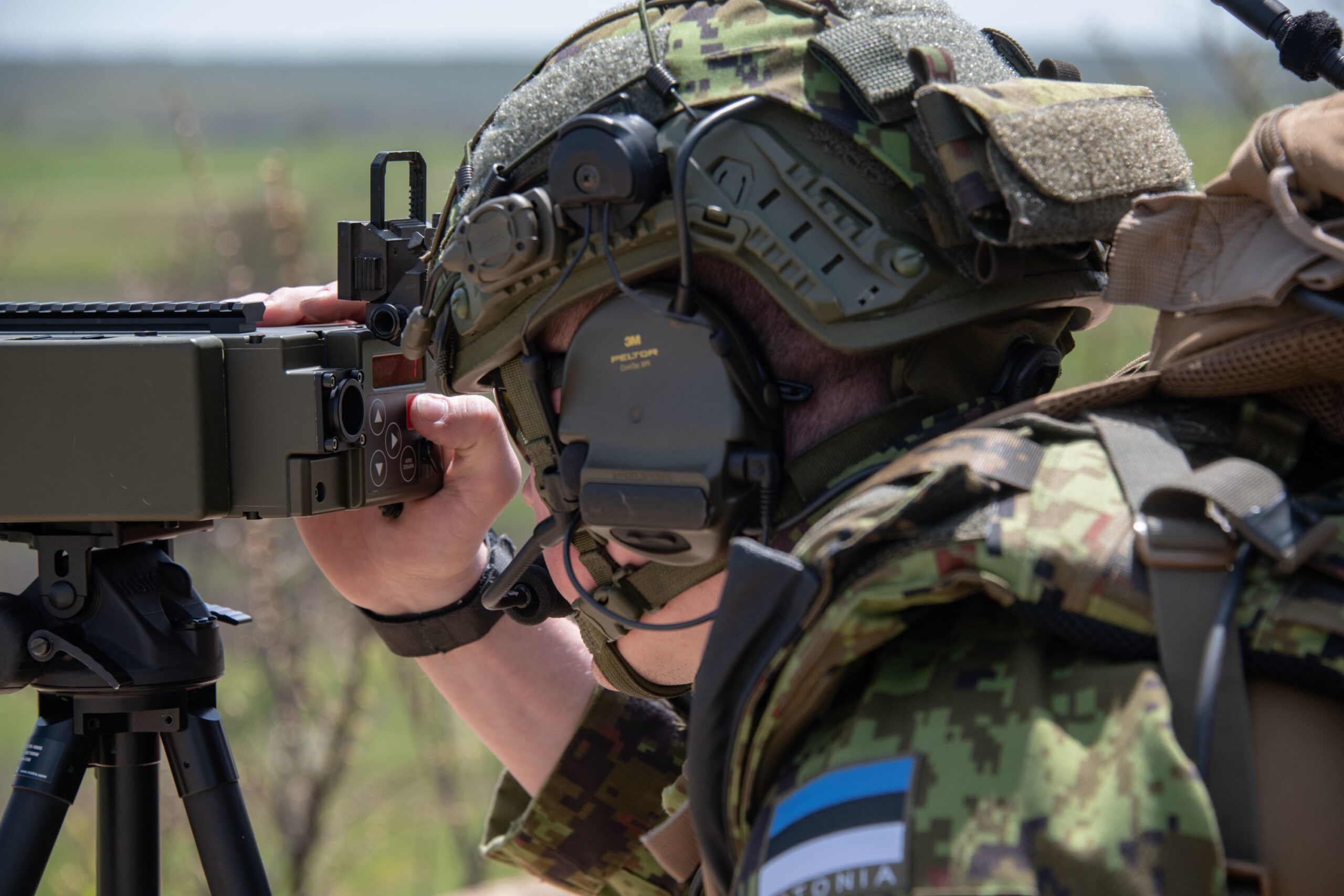
The course, held March 21-April 22, 2022, in Oklahoma City, included two NATO students, an Estonian tactical air control party specialist and a German Air Liaison Officer, who was the first female participant in the 137th CTF JTAC QC.
“I enjoy the spectrum of coalition students we get through here because each one is a very different dynamic for instruction. Some are already trained, and for others it’s their first time passing a 9-line,” said Tech. Sgt. Justin Davis, 137th CTF instructor. “Our students essentially get seven or more full mission profiles in our simulator and three full mission profiles with live contract close air support (CAS) during our field week.”
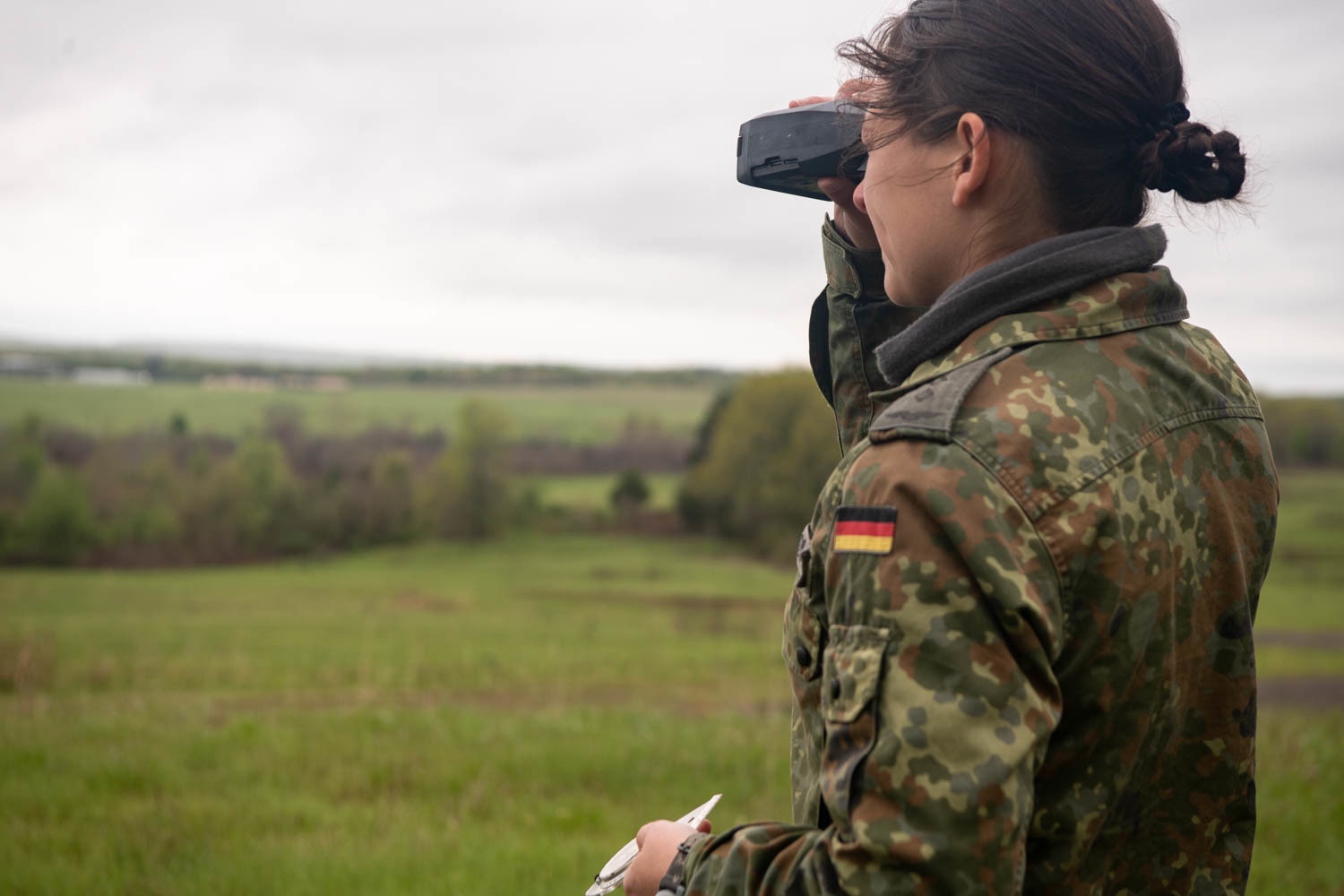
Students go through three phases within the course over five weeks: two weeks of academics, two weeks simulator testing command and control skills in the Advanced Joint Terminal Attack Controller Training System (AAJTS), and field training that consists of daytime and nighttime calls for fire on a training range with contracted CAS aircraft.
“The contract CAS piece makes a big difference in training because it doesn’t have the same flight time restrictions as working with military aircraft,” said Davis. “Students have triple the time, in addition to in-depth instruction in the simulator where we can start and stop scenarios to adjust as needed. All that being said, I don’t know that there’s any one thing in particular that we’re doing right, but I know it’s the combination of things we’re doing right that initially brought NATO coalition partners here and why they continue to send students.”
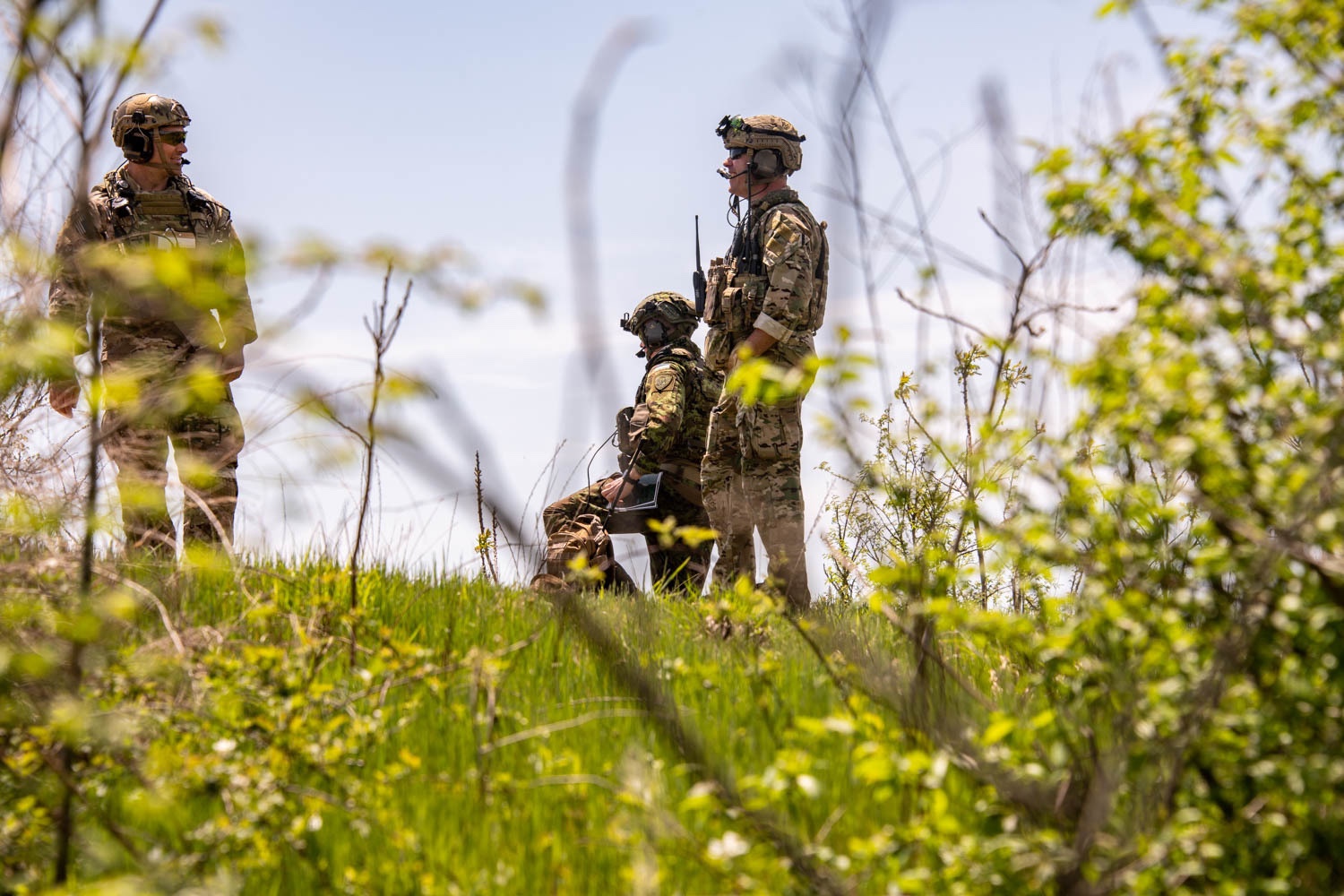
The 137th CTF is one of two schoolhouses in the U.S. able to qualify JTACs and is one of three in the U.S. Air Force. Since 2016, the 137th CTF has hosted students from every U.S. military branch and a dozen NATO partner nations. It is unique as a schoolhouse for its manning ratio between instructors and students. Other class sizes can reach up to two dozen students with only a handful of instructors, whereas the 137th CTF class size allows for nearly a one-to-one ratio that provides time for more personalized and in-depth instruction.
“Several of our international students come here already qualified as JTACs and use our course as a stepping stone to become instructors back home,” said Maj. Jeffrey Hansen, 137th CTF director of operations. “Our instructors are also better for having our coalition partners, especially those already JTAC qualified, as students because their feedback allows us to expand on our training and improve how we teach. Plus, the relationships we have built with international students have been leveraged into continuation training, such as with Estonia through the State Partnership Program.”
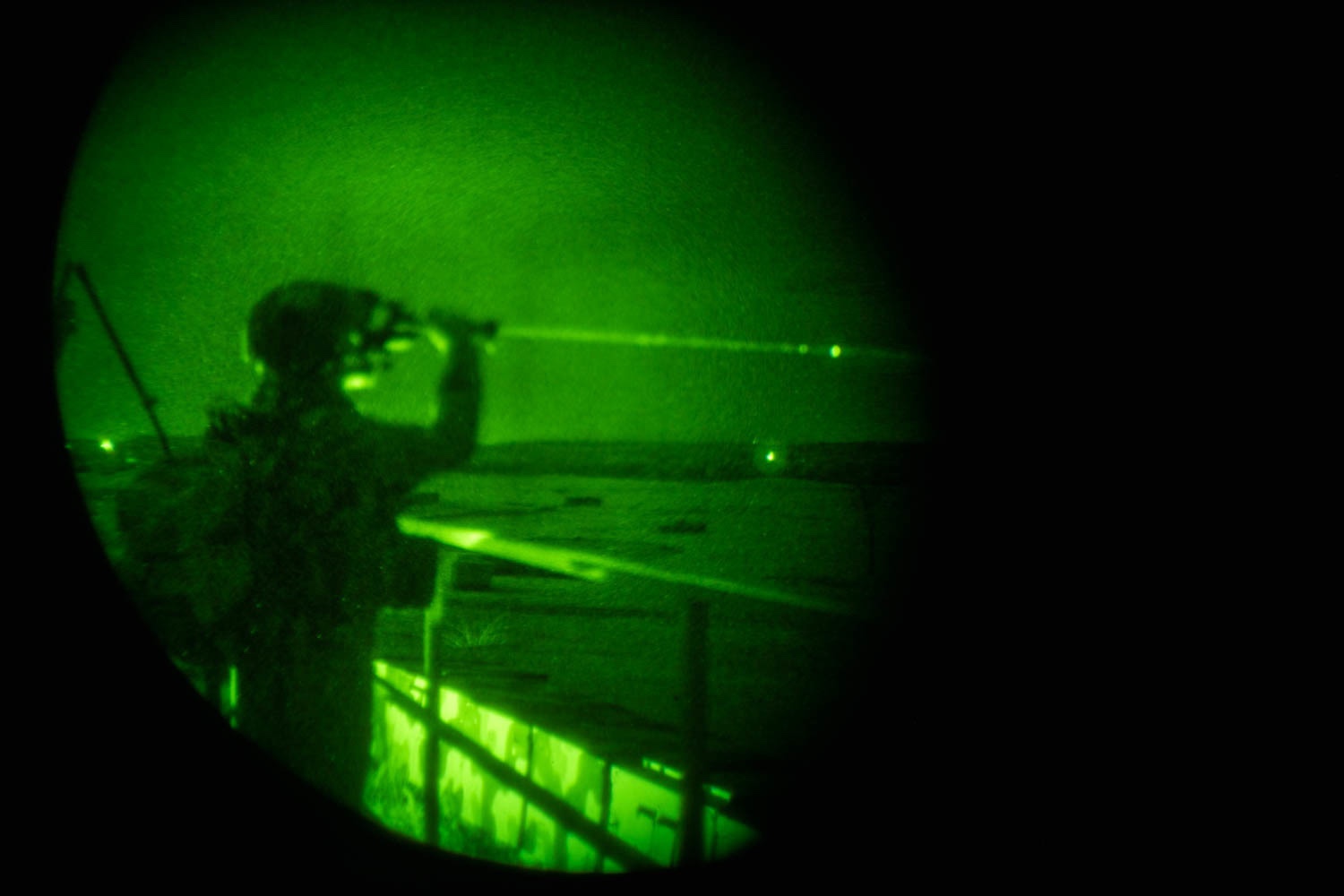
Once graduated from the course, military members have a Department of Defense certification to go into a deployed environment and conduct CAS, which is the ability to provide joint fire close air support to ground forces, with any available U.S. or NATO asset.
“When it comes to military doctrine, especially on the NATO side, it remains vague because you have to incorporate 30 countries,” Hansen noted. “CAS is different because anywhere you go in the world, we all share a language, forming an intense bond. The diversity of our classes and the bonds we form with all of the students who have come through demonstrates firsthand that our shared language forges a connection that transcends any differences between branch of service or nation of service.”
By TSgt Brigette Waltermire
137th Special Operations Wing
JOINT BASE LANGLEY-EUSTIS, Va. (AFNS) —
The Air Force selected LIFT Airborne Technologies to continue with prototype development of a new helmet for Air Force fixed-wing aircrew.
The helmet prototype was chosen after Air Combat Command initiated the search for a next-generation helmet to address issues with long-term neck and back injuries, optimize aircraft technology, improve pilot longevity, and provide better fitment to diverse aircrews.
“The current helmet was based on 1980’s design. Since then, gains in aircraft technology and the demographic of pilots have changed,” said Scott Cota, ACC Plans and Requirements branch aircrew flight equipment program analyst. “The legacy helmet was not originally designed to support advances in aircraft helmet-mounted display systems, causing pilots to fly with equipment not optimized for them, especially our female aircrew.”
The implementation of helmet-mounted devices has added weight and changed the center of gravity, leading to discomfort for operators. In addition, a 2020 Air Force anthropometric study identified the need to add a size small helmet that better optimizes the fit for affected female aviators, Cota said.
The helmet requirement was one of the first initiatives to go through AFWERX, an Air Force organization focused on working with nontraditional defense companies to bring technological innovation, in 2019.
“To better understand advances in technology, seek innovative solutions to current helmet issues, and use vendor competition to drive the initiative, AFWERX was a natural choice,” Cota said.
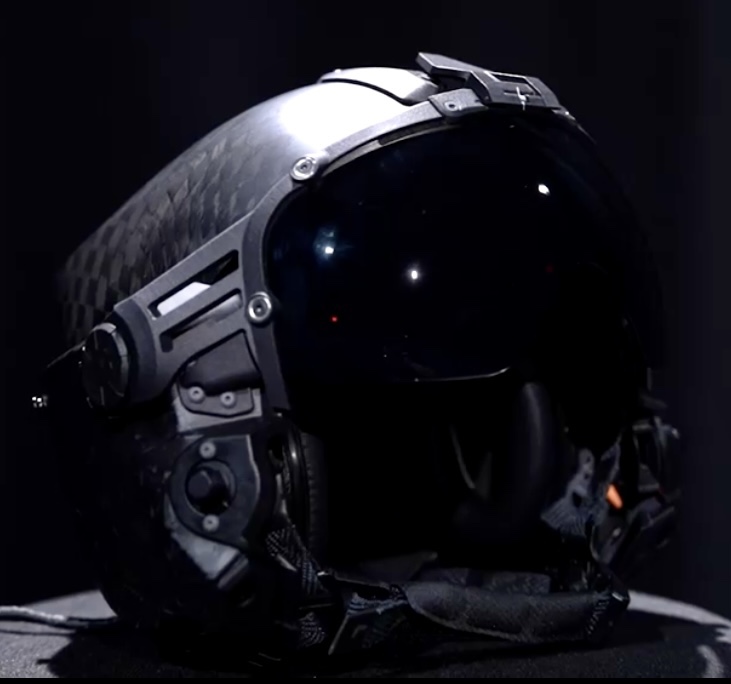
As the lead, Cota worked with other major commands and the Air Force Life Cycle Management Center’s Human Systems Program Office at Wright-Patterson Air Force Base, Ohio, to set the requirements of the new helmet for operators across the Air Force.
Key parameters identified were weight, pilot comfort, optimized fitment and protection, stability, optimized center of gravity, and integration with different helmet-mounted systems.
“Using a streamlined acquisition process to move the program, the AFLCMC took the AFWERX initiative and solicited over 100 different designs from industry. Promising designs were evaluated and submitted for further testing,” said Capt. Timothy James, AFLCMC Human Systems Division of Agile Combat Support Directorate program manager. “The innovative process has allowed us to move faster than a standard acquisition while providing checks and balances to ensure a quality product.”
The Air Force Research Laboratory performed a majority of the testing, but the AFLCMC also worked with the Airmen Accommodations Laboratory, the Life Support Systems Scientific, Test, Analysis, and Qualification Laboratory at Wright-Patterson AFB as well as the 46th Test Squadron and 28th Test and Evaluation Squadron at Eglin AFB, Florida, to narrow the finalist to LIFT Airborne Technologies.
“These new helmets will offer greater applicability and better fit for operators of all sizes, genders and ethnicities,” James said.
The helmet will undergo additional research, testing and improvements prior to the Air Force confirming the prototype design is successful and offering a production contract in 2024. Following production, ACC plans to take a phased approach to deliver the new helmet to all fixed-wing aircrew members across the Air Force, beginning with the F-15E Strike Eagle.
By Lemuel Casillas
Air Combat Command Public Affairs