XC3 Weaponlight

Archive for the ‘Guest Post’ Category

Using VR Through VALOR to Improve Combat Casualty Care

Tuesday, June 7th, 2022

HURLBURT FIELD, Fla. —  

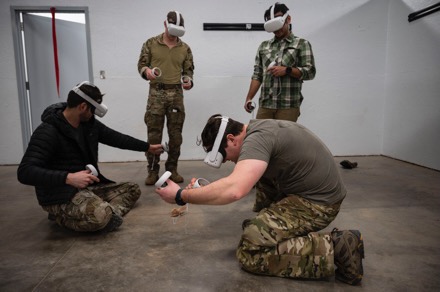
The 24th Special Operations Wing Surgeon General’s office has implemented the use of virtual reality training devices, in partnership with SimX, throughout special tactics to maintain the critical pararescueman’s skill in an ever-changing operational environment.
“The operational mission is going to continue to grow in complexity in the future fight,” said U.S. Air Force Col. John Dorsch, 24th SOW Surgeon General. “The PJs must be prepared to treat both injury and illness in austere environments for longer periods of time with limited reach-back.”


When looking at what the future operational environment may look like, the 24th SOW SG team must consider the implications to operational medicine. Scenarios PJs face could be in low-visibility areas where they have to keep patients alive for longer periods under possible chemical, biological, radiation or nuclear conditions.


“Preparing PJs medically for the future fight will require an advanced interoperable standard, optimized initial and sustainment training, deliberate tech development and integration, and enhanced performance tracking and feedback,” said Dorsch.
The virtual reality program objectives are to improve realism, increase flexibility and reduce cost. Through more than $10 million in Department of Defense Research and Development Funding and the Air Force Small Business Research Innovation Research program, SimX and the 24th SOW have been able to create more than 80 training scenarios including canine treatment and care, blast injuries, severe gas exposure, and more.
These training devices provide intricate and realistic training scenarios that other methods, such as medical dummies, cannot, and improves the effectiveness of the training.
“By using a flexible piece of equipment, we are able to deliberately and efficiently target specific desired learning objectives based on evolving mission requirements,” said Dorsch. “We now have the time and bandwidth to provide trainees with enhanced real-time feedback from the through the program, which grades the trainee on a point system through data analysis and a performance tracking system.”


Currently, there are 14 sites online using the PJ Tactical Combat Casualty Care curriculum, including Air Force Special Operations Command and Air Combat Command. In the future, they plan to expand access to the existing medical training portfolio across all SOF TCCC responder tiers, broaden capabilities and integrate partner force training.
“The VALOR program has increased the availability of efficient and effective medical training and has allowed us to develop complex decision-making, which will improve survival rates in U.S., coalition and partner force combat casualties in the future fight,” said Dorsch. “VR training is critical for ensuring that the highest level of combat trauma and austere medical care are provided by our special operations ground forces. We have only scratched the surface of its incredible potential.”

Story by Capt Savannah Stephens, 24 SOW Public Affairs

Photos by TSgt Carly Kavish

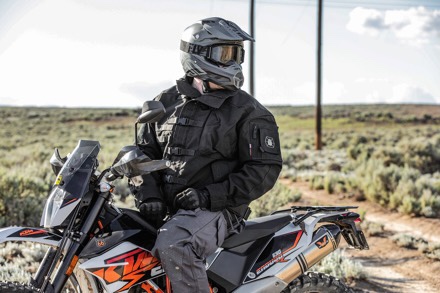
Kitanica heads to Outdoor Retailer for the first time

Monday, June 6th, 2022

Kitanica is bringing its overbuilt line of gear to Outdoor Retailer in Denver June 9th-11th (Booth 35107 Upper Level). In these times of supply chain crisis, Kitanica has managed to pump up production and capabilities to support a new body of retailers and are launching a wholesale program of its U.S. Made and globally sourced products. For more information about becoming an authorized Kitanica retailer contact Chris Cronin at Chris@kitanica.net.

SCUBAPRO Sunday – Mulberry Harbors

Sunday, June 5th, 2022

When you look at WWII, historians, and military people will say, this is what won the war, or that is the reason. Some people say it was the M2 .50 cal machine gun or the Jeep or the M1 Grand rifle. I think there is an excellent argument for all of those things and more. But there were also some fantastic feats of engineering. There were a couple of reasons that the Germans didn’t think that the Allies would land at Normandy. Some of it had to do with the deception plan the Allies used, like having Patton be in charge of a fake Army in the north of England. The other reasons was the fact that there was not a deep-water harbor close enough to make it worthwhile. But the Allies had a secret plan to build their own harbor. The Mulberry harbors were temporary mobile harbor developed during World War II for unloading troops and supplies during the Allied invasion of Normandy.

The British developed them from lessons learned during the ill-fated Dieppe raid two years prior. The Brits discovered that quickly capturing a well-defended port was impossible. They were formed in secret and sunk all over England so they wouldn’t be seen.

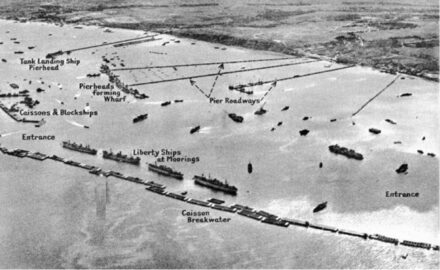
After the successful landing and the establishment of beachheads on D-Day, two Mulberry harbors’, previously constructed in secret at various sites across the UK, were taken in parts across the English Channel and reassembled off Omaha Beach and Gold Beach. Within 12 days of the invasion, the harbors were up and running. The Mulberry Harbor was broken down into three different areas, the Breakwater, the Pierheads, and the Roadways.

The Breakwaters were made from a combination of sinking 70 older merchant ships, steel, and concrete caissons, and concrete type crosses used to help keep it all in place. The breakwater was about 9.5 kilometers long(about 6 miles). In from that was the Pierhead that the ships could tie off to, the last part was the roadways that lead into the shore and was used for the offloading of the personal and supplies to the beach.

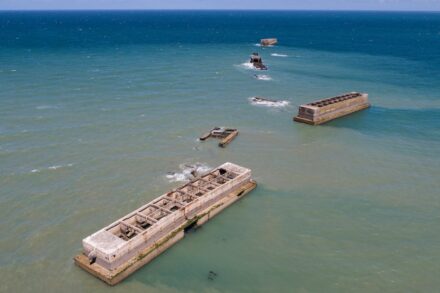
Along with the components of the mulberries, the harbors were protected from swell and waves by blockships deliberately sunk adjacent to the harbor. You can still see parts of the huge concrete blocks sitting on the sand, and more can be seen further out at sea. I have significantly simplified how they were made and what went into them. I am not an engineer and a hell of a lot more when into making the then I talked about.

The Mulberry harbors were intended to be used until a French port could be captured. It was not until six months after D-Day that the port of Antwerp in Belgium was captured. The Mulberry harbor at Omaha Beach was abandoned after it was damaged in a storm on the 19th of June 1944, but the harbor at Gold Beach continued at nearly full capacity for ten months after the invasion. The British Mulberry supported the Allied armies for ten months. Two and a half million men, a half-million vehicles, and four million tons of supplies landed in Europe through the artificial harbors at Arromanches.

Army Modernizes Pacific Expeditionary Signal Battalion

Sunday, June 5th, 2022

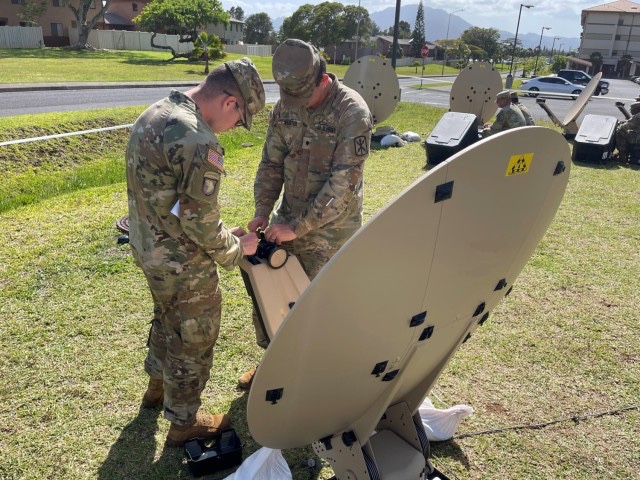
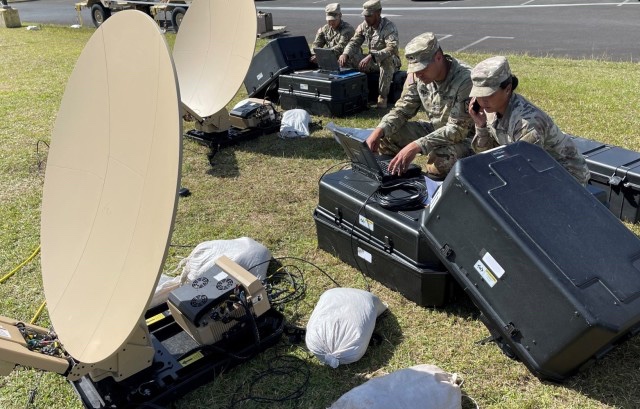
HELEMANO MILITARY RESERVATION, Hawaii — As the 307th Expeditionary Signal Battalion, or ESB, celebrated its 80th birthday on May 27, the Army is converting the unit to an ESB-Enhanced formation. With this conversion comes a smaller, lighter and faster network communications equipment tool suite that will better serve the unit’s unique and varied mission sets.

With companies in both Hawaii and Alaska, the battalion provides global network connectivity on short notice to U.S. Army Pacific and U.S. Army North units, often in harsh locations, from secluded island jungles thousands of miles across the ocean to ice-covered mountains in the Arctic Circle.

“We talk about the tyranny of distance, about the challenges created by the vast number of locations and extreme environments throughout the Pacific; this new expeditionary equipment set will help us to support those missions,” said Col. Lee Adams, commander of the 516th Theater Signal Brigade, to which 307th ESB-E is assigned. “We are always trying to improve and to provide foundational capabilities for the theater Army. This transition to an ESB-E does that for us; it gives us a better capability to enable the theater Army to fight successfully.”

The reduced size and system complexity of the equipment set enables ESB-E units to significantly increase their network support to other units with more nodes and less manpower, while reducing transportation requirements by over 60 percent. The tool suite includes various-sized expeditionary satellite dishes and baseband equipment, high-throughput backhaul radios, and wireless command post technologies. It replaces the unit’s much larger Tactical Network Transport At-The-Halt equipment, formally known as Warfighter Information Network-Tactical, which is often transported across the Pacific via cargo ships. The new equipment set can be transported via commercial airline if needed, in hours versus days or weeks.

Prior to his current position, Adams commanded the first unit to be converted to an ESB-E, the 50th ESB-E, during the planning and initial fielding of the unit’s pilot equipment. The 307th ESB-E conversion marks the sixth unit that the Army has fielded with the new equipment package. The Army’s Project Manager Tactical Network, assigned to the Program Executive Office for Command, Control, Communications-Tactical, began fielding the unit with the Scalable Network Node to the companies in both Hawaii and Alaska in March. Fielding the remainder of the initial baseline systems is expected to be complete by the end of the fiscal year.

The Army’s agile ESB-E acquisition and fielding approach aligns with its two-year incremental Capability Set fielding process, which enables the service to enhance the ESB-E baseline capability in future capability sets if Soldier feedback warrants it, or when evolving commercial technologies become mature enough to be procured. On the current plan, the Army is fielding several ESB-Es per fiscal year until all of the ESBs have been upgraded to the new baseline capability.

“As I talk to the other ESB-E commanders, the [project manager], and its fielding team that is here now, and we get feedback from our Soldiers as they going through the training, I can see firsthand the accumulation of lessons learned and how the equipment set continues to improve,” said Lt. Col. Drew Chaffee, commander of the 307th ESB-E, who also once served as a company commander for the unit.

The ESB-E tool suite is a critical element of Capability Set 21, which delivers smaller, lighter and faster communications systems that are easier to operate and provide increased network communication Primary, Alternate, Contingency and Emergency, or PACE, plan options. The tool suite provides signal path diversity in congested and contested environments, leveraging numerous high-throughput line-of-sight and beyond-line-of-sight capabilities.

“It’s critical to have a good PACE plan, to be able to incorporate different transport that may be more survivable in a particular terrain. Every commander wants more options,” Adams said. “When we are fighting in a battle environment that is degraded, intermittent or just has delayed latency, I have to have different technologies, different pieces of kit that make me more survivable, make us a harder target to hit, yet allows us to stand still to support multi-domain operations at an assured level. And that is what having these different network transport capabilities provide us.”

To enable additional transport paths for improved network resiliency, the Army is working to deliver high-throughput and low latency satellite communications leveraging emerging commercial technologies and services in non-traditional orbits, such as Low Earth Orbit and Medium Earth Orbit. In April, the 307th ESB conducted a demonstration of commercial high-throughput and low latency satellite communications, at the Helemano Military Reservation on Oahu. The unit plans to further experiment with the capability during upcoming U.S. Army Pacific training exercises.

“The name of the game is operational flexibility,” Chaffee said. “This new kit is scalable and tailorable to the mission. We have the operational flexibility to tailor our teams, our equipment set, and our footprint to the requirements based on the mission and the environment that we find ourselves in. This smaller lighter ESB-E kit is going to get us there much more effectively and it highlights the United States’ ability to support and adapt in some of the most austere and remotely located environments in the world.”

By Amy Walker, Project Manager Tactical Network, PEO C3T, public affairs

KC Eusebio Wins Again!

Saturday, June 4th, 2022

Atlanta Arms congratulates our shooter, KC, on his recent Dragons Cup Championship victory

KC won 1st Place Open using Atlanta Arms’ very own .38 Super Comp Elite ammo. When asked how the day went, KC responded “This was one of the hardest matches of the year. Moving steel targets, sliding moving targets, and 107 degree weather made this competition so challenging. My Atlanta Arms Elite ammunition is the driving force in my marksmanship. Always consistent, always the best. Thank you so much to my Atlanta Arms family for always taking care of me.” Congratulations!

Air Force, Space Force Announce Next Hackathon at 3 Locations and Classifications, Enabling Government, Industry, Citizens to Build Emergent Weapons System Capabilities

Saturday, June 4th, 2022

WASHINGTON (AFNS) —  

Applications are now open for the next BRAVO Hackathon, BRAVO 1 Canary Release, which will kick-off July 18-22 simultaneously at Joint Base Langley-Eustis, Virginia; Patrick Space Force Base, Florida; and Eglin Air Force Base, Florida. 

A hackathon is an innovation and software development event commonly employed by technology companies in which teams self-form and urgently develop working prototypes that are later presented to senior leaders. Canary Release takes its name from a data-driven software release technique, leveraged frequently by technology companies where new software is introduced to a sample of users in production for telemetry collection and validation before distributing the software to the remaining population. 

BRAVO hackathons gather engineers, data scientists, data visualization and user experience experts, and product and use case owners from industry, academia, government and citizenry to build operationally focused emergent capabilities with mentorship from senior Department of Defense leaders. At BRAVO 0, the first hackathon’s 11 teams focused on challenges such as: jet sensor visualization and playback, target planning and pairing, multi-jet sensor fusion analysis, artificial intelligence-assisted radar sensor failure mitigation, maintenance visualization and automation/artificial intelligence-assisted personnel recovery. 

Four months after BRAVO 0, one project’s work has been operationalized to the European theatre, while half have been selected by Air Force organizations for additional development, testing and fielding. BRAVO 0 projects produced capabilities related to Secretary of the Air Force Frank Kendall’s operational imperatives in areas such as Air Force Joint All-Domain Command and Control, next generation system of systems, post-flight data analysis and readiness. 

“A senior DoD official recently referred to the capability to deploy updates to SpaceX Starlink in response to data indicating jamming as ‘eye-watering.’ This shouldn’t be the case. Every big tech company and some nation states have already built automated pipelines that collect, aggregate and fuse data to enable such capabilities,” said Stuart Wagner Department of the Air Force chief digital transformation officer. 

“DoD talks a lot about connecting weapons systems but has been too slow to implement groundbreaking, data-driven capabilities. BRAVO hackathons leverage existing Department of Defense technologies to provide hackers the development environment and operational data to rapidly build data-driven kill chains and cognitive electronic warfare capabilities. If you are a cleared or uncleared American citizen with technology skills looking to build national security capabilities during a one-week event, this is your opportunity.” 

Unlike other DoD technical environments, BRAVO hackathons allow hackers to bring open-source software and data into the development environment in minutes providing unprecedented software and data collaboration on operational data. 

The goals for Canary Release are to: validate rapid development in a cloud-based environment across multiple bases, military departments and classifications on operational use cases; provide a new way for American companies, citizens and government employees to develop DoD capabilities; and generalize the BRAVO development model to enable future scaling to partner military departments, combatant commands, U.S. government agencies, and U.S. partners and allies.

“The first BRAVO hackathon set a record for maximum concurrent users on our AI development environment. We agree that we must increase our digital and AI investments to operational use cases, including those identified and built at BRAVO hackathons. We are evaluating opportunities to scale this innovation model to the DoD and federal government enterprise,” said Greg Little, deputy director of Enterprise Capability at the Chief Digital and AI Office, Office of the Secretary of Defense. 

For Canary Release, use cases have been sourced from Air Combat Command, Space Launch Delta 45 and Space Force Chief Technology Information Office. All participants must be American citizens. Participation at the Patrick SFB does not require a security clearance while participation at the remaining bases requires a secret clearance. Companies with employees holding active Special Access Program read-ins are encouraged to apply. 

BRAVO Hackathon intends for 60% of hackers to be government employees or DoD contractors with approval of their government contracting officer with the remainder coming from industry, academia and American citizenry. 

Canary Release is hosted by various organizations within Air Combat Command, Space Launch Delta 45, Space Force Chief Technology and Innovation Office, DAF’s Chief Information Office, 350th Spectrum Warfare Wing, Chief Digital and Artificial Intelligence Office, CyberWorx, AFWERX, Congressional offices from the Command, Control, Communications, Intelligence and Networks Program Executive Office, Office of the Deputy Chief Management Officer, BESPIN software factory and Morpheus among many others. 

About BRAVO hackathon series 

The BRAVO hackathon series is named from Project B, a 1921 series of joint Army-Navy target exercises conducted on surplus ships in response to Army Brig. Gen. Billy Mitchell’s claim that bombers sink battleships. This claim undermined the then-current investments and strategy of the then Department of War. The Secretary of War and Secretary of the Navy authorized Project B to disprove and disgrace Mitchell by demonstrating the insignificance of airpower. Mitchell instead directed his bombers to destroy all the test ships, changing military strategy, defense resourcing for aeronautics and aircraft carriers, and ultimately the Department of War by proving the need for a separate Air Force military department. 

Styled off Project B, BRAVO hackathons are sponsored by senior DoD leaders to provide technical and cultural innovation environments that enable government, academia, industry and citizenry to test and validate bold ideas on real DoD data. 

Application

Department of Defense employees and DoD contractors may apply as either support staff or hackers via Common Access Card login here

Federal employees outside of the DoD or contractors without a Common Access Card may apply here

Industry, academia and citizens interested in being considered to participate via Air Force CyberWorx’s Partnership Intermediary, CCTI, can apply here. Selected participants will receive additional details. 

Project demonstrations are offered to DoD and federal employees through a science fair. Applications are available here

Secretary of the Air Force Public Affairs

FirstSpear Friday Focus: Vertical Entry Belt

Friday, June 3rd, 2022

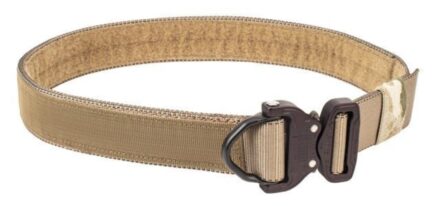
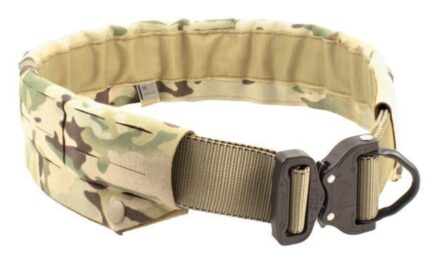
< center >Minimalistic, High-Functioning Battle Belt

The Vertical Entry Belt is engineered for retention functions during specialized operations.

Paired with the Unpadded Assault Belt Sleeve in 6/12 (sold separately), this belt system accepts 6/12, 6/9 and MOLLE style pockets.

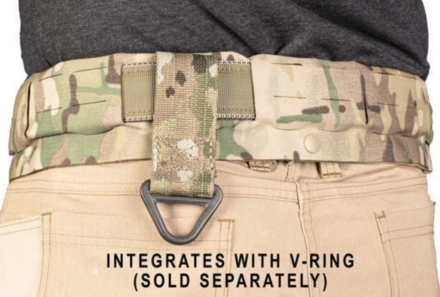
The paired Vertical Entry Belt and Unpadded Assault Belt Sleeve integrate seamlessly with the FirstSpear Base Belt Lite (sold separately). Using the Base Belt to secure the 6/12 Modular Over-flap provides enhanced contact against the body and eliminates the need for suspenders.

The Lanyard V-Ring is an ideal accessory to the Vertical Entry Belt, providing an additional attachment point.

Check out FirstSpear for these and many more products for America’s Warfighter.

AFSOC Incorporates Weapon Systems Cyber Defense in Emerald Warrior 22.1

Friday, June 3rd, 2022

HURLBURT FIELD, Fla. (AFNS) —  

Air Force Special Operations Command recently incorporated defensive cyberspace operations actions, for the first time, into the overall training objectives during Emerald Warrior 22.1.

The exercise fused cyber effects into aircraft operations and employed two mission defense teams, with the cyber defense correlation cell and demonstrated how AFSOC will deploy MDTs to defend weapon systems from cyber-attacks.

The communications and information element within AFSOC developed a realistic scenario to maximize training and awareness of cyberspace threats to aircraft avionics. The identified scenario and events allowed maintainers, cyberspace and aircraft operators, and intelligence and battle-staff members the opportunity to see the impacts of cyber threats to weapon systems, firsthand.


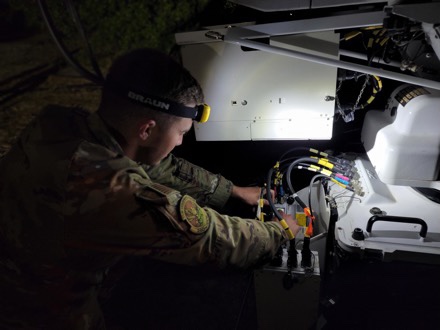
During the exercise, AFSOC staff and MDTs worked with Shift5, a commercial cyber security company, to test and validate a real-time cyber intrusion detection system on an aircraft, and a cyber-incident response software tool within the Cyberspace Vulnerability Assessment/Hunter to assist MDTs in executing cyberspace defense operations.

Shift5’s technology enabled MDTs with the 1st Special Operations Communication Squadron and 27th SOCS, Cannon Air Force Base, New Mexico, to test their training, and raised awareness of cyber threats to the operational community.

The MDT with the 1st SOCS included three personnel with the 87th Electronic Warfare Squadron, Eglin AFB, Florida, and two instructors with the 39th Information Operations Squadron. Additionally, the MDT with the 27th SOCS was augmented by three personnel with the 193rd SOCS at Harrisburg Air National Guard Base, Pennsylvania.


The Defense Enterprise Cyber Range Environment for Command, Control and Information Systems provided a realistic training environment which challenged the participating MDT’s technical, analysis and mission-planning skills, while being actively attacked and challenged by a cyber-red team with the U.S. Army’s threat system management office.

Members with the 318th Cyberspace Operations Group, Joint Base San Antonio-Lackland, Texas, provided a secure data transport between all players and teams on a closed-looped network.

The scenario involved a flying aircraft experiencing a critical event of unknown origins that exercised numerous operational processes, leading to the discovery of a cyber-threat. During the exercise a sortie reported mission computers failures and performed actions enabling the aircraft to “limp home.” When the plane touched down, maintainers with the 901st Special Operations Aircraft Maintenance Squadron executed a cybersecurity checklist and MDTs began to work.

The MDT’s actions saved the maintainers from replacing the mission computers, as well as saving the U.S. Air Force $750,000 for each mission computer that would need to be replaced.

With the realistic training incorporated into Emerald Warrior 22.1, impacts of cyber threats to aircraft, and how those threats affect operations and readiness, ensured aircraft maintainers, MDTs and operators remain ready and relevant to cyber-attacks.

Air Force Special Operations Command Communications and Information