X-PAC

Archive for the ‘Guest Post’ Category

TMS Tuesday – Types of Training: Online vs. In-Person

Tuesday, February 22nd, 2022

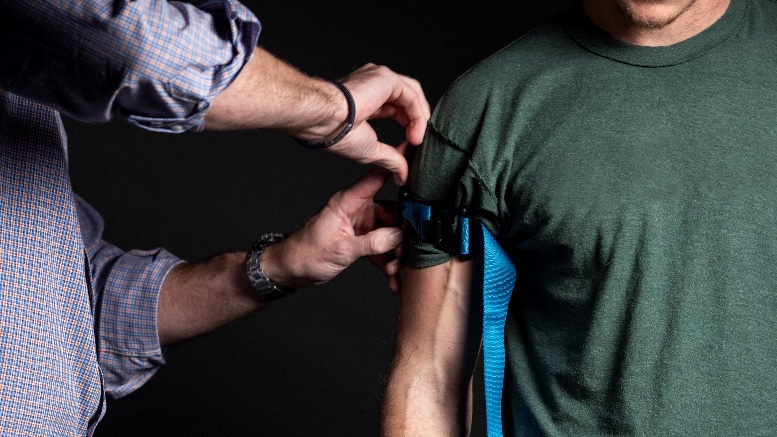
A dryer, a toilet, a flashlight, and a refrigerator door. Although you may not be an expert on these items, you could probably find out how to fix them all by watching a YouTube video. But can you expect the same success by watching a video or taking an online course on a trauma-related skill? Let’s try and figure it out.

Over the years, trauma and austere medicine is often described as a contact sport; let’s face it, when things get hectic, you have got to get in there and get your hands dirty. However, to do this well, you need competent instruction. You will probably not be able to achieve this through online education alone. While online training has its strengths, it’s a poor substitute for quality in-person training for trauma medicine. It all comes down to getting your hands dirty, and that is where online training loses out. Having a competent instructor watching you or watching them demonstrate a task (especially one that you might have to perform under stress) is still not replicable online.
That’s not to say online training is without benefits. For example, in today’s pandemic, factors like ease of access, cost-effectiveness, and social distancing sometimes make online training the only option available for staying current or improving your skills. Here are some ways to use online training to augment and enhance your knowledge, skills, and even improve your in-person sessions:

Pre-Training Materials:

Online materials like videos, PDFs, or PowerPoint presentations you provided to students or read before attending the class. Having a better understanding of the subject before training cuts down on time spent hammering in on more straightforward topics and allows you and the instructor to focus on the more complex subjects.

Post-Training Materials:

Online training works great to refresh our memory after hands-on training is over and later provides reference materials for study.

As you build your skills in trauma medicine, in-person training with a competent trainer teaching solid, evidence-based instruction should always be your first choice. However, using online training to augment this will only make you a more qualified provider in the long run.
At TacMed™, we offer TMS University™, our online training portal, for e-learning and information-sharing to find relevant information of pre-hospital trauma treatment and equipment. This online platform is a great opportunity to have better knowledge pre-training and serves as a great tool to refresh your memory post-training.

For access to TMS University™, check out tacmedsolutions.com/tms-university.
AFR Capabilities Enable Immediate Ocean Rescue

Tuesday, February 22nd, 2022

PATRICK SPACE FORCE BASE, Fla. (AFNS) —

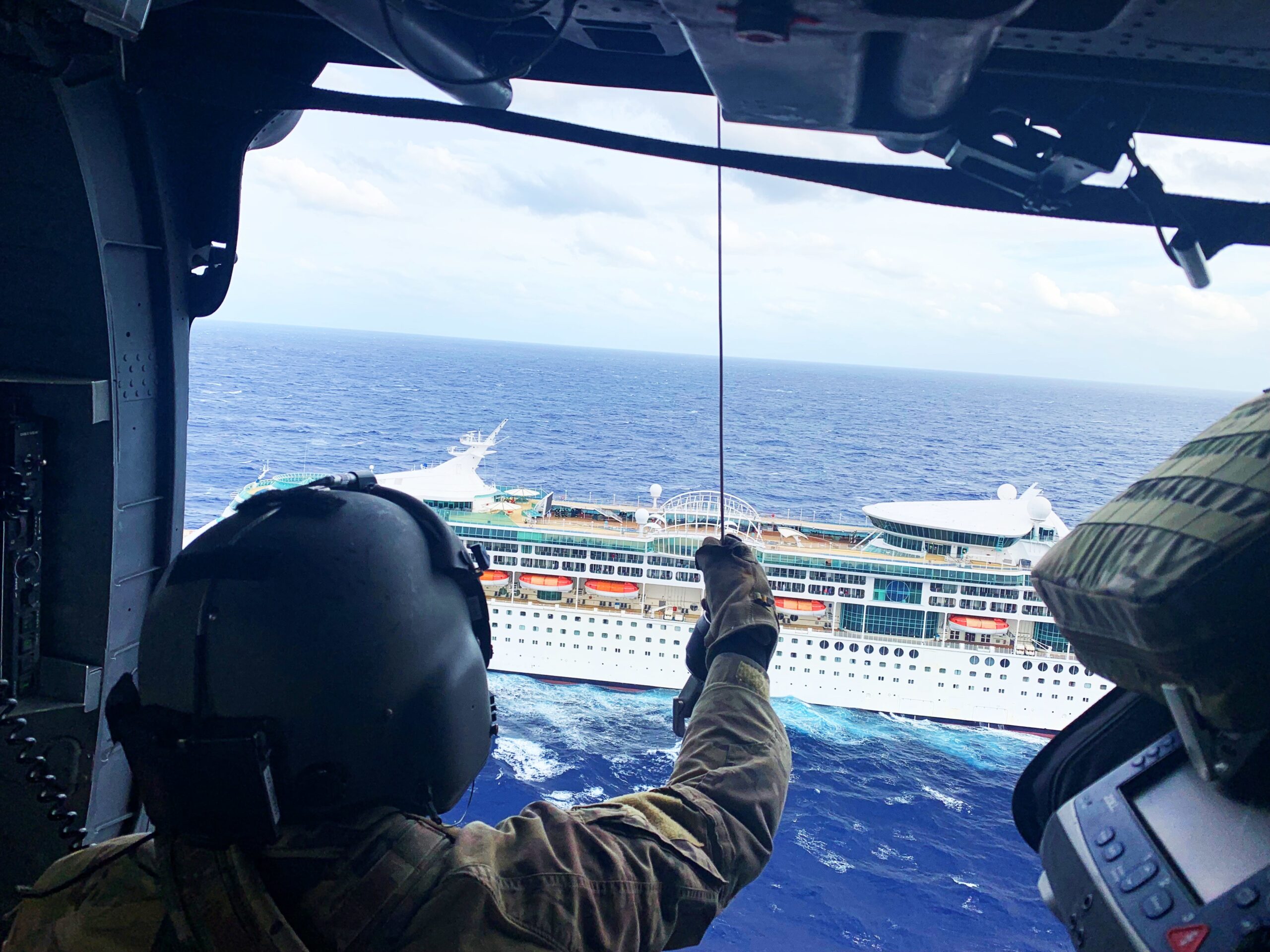
The Air Force Reserve Command’s 920th Rescue Wing conducted a multi-person medical airlift in support of a critically-injured person aboard a cruise ship 600 nautical miles off the coast of Florida, Feb. 15. 

The 920th RQW launched two of its HH-60G Pave Hawk helicopters, two HC-130J Combat King II aircraft, and a team of pararescuemen within three hours of notification to rendezvous with the ship and transport a patient and ship’s nurse to a Florida hospital. 

“The combined capabilities of our special mission personnel and aircraft permitted us to provide immediate support,” said Col. Brian Diehl, 920th Operations Group commander. “Our constant planning and preparation allowed both operations and maintenance teams to shift rapidly from a normal training day to successful completion of this mission with very little notice.” 

In contact with the Air Force Rescue Coordination Center at Tyndall Air Force Base, the team executed the airlift under Defense Support of Civil Authorities. DSCA is the process by which United States military assets and personnel can be used to assist civil authorities during emergencies and other specific events. 

Reaching the ship’s remote location required three aerial refuelings en route, provided by one HC-130J, while the second Combat King II performed double duty as a spare tanker and went directly to the vessel to initiate coordination from the air. 

Once at the location, and under the command of the 920th RQW’s 301st Rescue Squadron, the HH-60s took control, examined the ship and conditions to position successfully from the air, insert two pararescuemen who were hoisted down, and immediately began preparing the patient and ship’s nurse for the emergency transport. Once prepared, the PJs, pilots, and special mission aviators worked in concert to hoist them into the helicopter, where the patient was stabilized while en route to a Florida hospital. 

The entire extraction took less than four minutes. 

“High seas, strong winds, and a ship going 10 knots added a lot of dynamics to this rescue as we worked on getting these people up into the aircraft, but this is what we train for” said a 301st RQS pilot. “When they say that there is a real-world rescue to execute, our focus is on saving lives.” 

The 920th Maintenance Group generated six aircraft and ensured they were crew-ready in less than one hour. This feat required inspecting, fueling, and configuring the aircraft for the mission while executing other aircraft maintenance requirements. 

“Much like our wing exercises that simulate Indo-Pacific region travel over long distances of water in a short period of time, our training and preparation allow us to ensure aircraft are ready for real-world events at a moment’s notice and shows the importance of getting aircraft back to flight line 100% ready for any contingency at any time,” said Lt. Col. George Cole, 920th Maintenance Group commander. 

The rescue mission covered just under 1,100 miles round trip over open ocean and completed in eight hours. 

Based at Patrick Space Force Base, the 920th RQW is AFRC’s only combat search and rescue wing. Its primary mission is to plan, lead, and conduct military rescue operations and missions to deny competitors and adversaries’ exploitation of isolated personnel.

By Lt Col Ian Phillips, 920th Rescue Wing Public Affairs

Army Partners with Small Businesses to Develop Innovations for Aviation Systems

Monday, February 21st, 2022

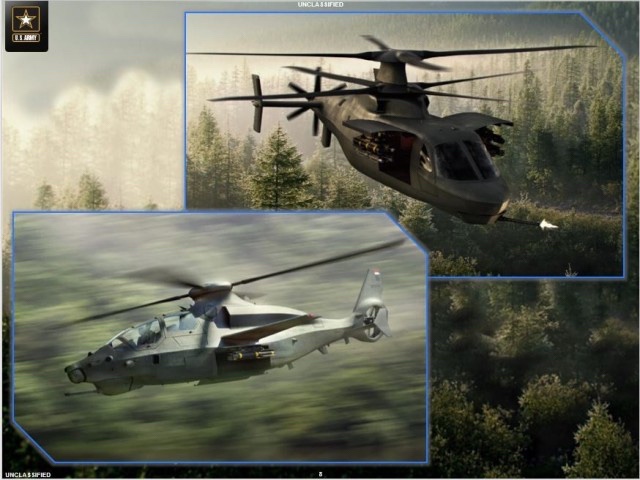
WASHINGTON – The U.S. Army just announced over $5M in new funding contracts with three small businesses to transition their innovative solutions in wind measurement systems, which have the potential to change the future of Army aviation weapon systems.

The companies will each receive up to $1.7M for an 18-month period through the Army Applied Small Business Innovation Research Program, which releases contract opportunities on an ad-hoc, rolling basis for U.S.-based small companies to tackle some of the Army’s most critical priorities.

“We are excited to see small businesses advancing target engagement capabilities in the complex, dynamic environment of tactical Army aviation,” said Charles San Filippo, test and evaluation advisor for the Army’s Future Vertical Lift Cross Functional Team. “As part of an effective, mature, and affordable fire control solution for Future Attack Reconnaissance Aircraft, or FARA, and Future Long-Range Assault Aircraft, or FLRAA, this holistic wind measurement capability will enhance Soldier survivability and lethality against near-peer threats.”

Congratulations to the following companies on their Direct to Phase II awards:

Vadum (Raleigh, North Carolina) for the Wind Measurement and Correction for Aviation Targeting

XeroWind LLC (Falls Church, Virginia) for the Twi Dimensional Path-Integrated Laser Wind Measurement System

Arete Associates (Northridge, California) for the Aviation Targeting Wind Sensor

“If a company is already established with direct customers and commercial sales, and they have a product that’s useful for the U.S. Soldier, they can skip Phase I and submit a Direct to Phase II proposal,” said Dr. Matt Willis, Director, Army Prize Competitions and Army Applied SBIR Program, Office of the Deputy Assistant Secretary of the Army for Research and Technology (DASA (R&T)). “This puts them even closer toward turning over a new technology to the Army that has the potential to be game-changing.”

The Army Applied SBIR Program aims to help small businesses overcome the inherent challenges they face when engaging in government research and development compared to their larger counterparts. The awards offer a unique opportunity for small businesses to interact with the Army and technical subject matter experts, as well as receive feedback on their technology maturation.

“This effort will show that small business innovation, combined with the efforts of proven industry partners, can provide the concentration of resources needed for state-of-the-art development to meet the Army’s mission and make innovative advances for multi-domain operations,” San Filippo said.

The Army Applied SBIR Program recently announced three new contract opportunities in artificial intelligence and machine learning and autonomy. Qualified small businesses can submit proposals through March 3 at noon EST. Full proposal packages must be submitted through the DSIP Portal. Additional information, including eligibility information and how to apply, can be found on the Army SBIR|STTR website.

By Stephanie Price

SCUBAPRO Sunday – Carlson’s Raiders

Sunday, February 20th, 2022

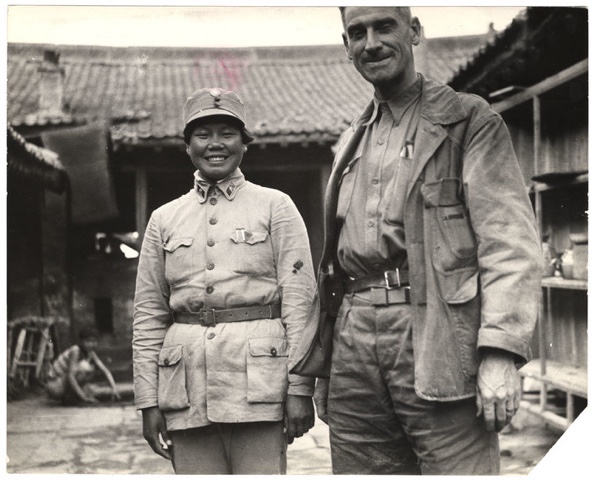
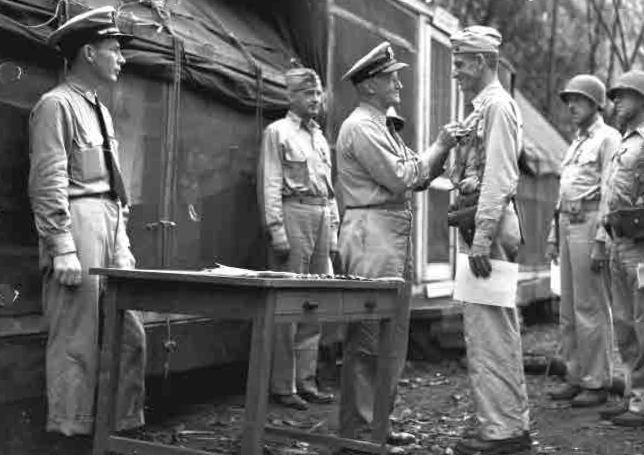
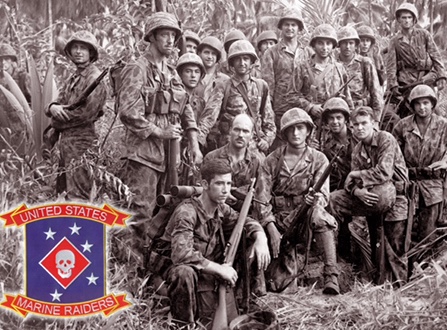
It’s not hard to say that anyone who wanted to be in military Special Forces when they were a kid has watched the movie Gung Ho! So, in honor of Evans F Carlson’s Birthday on the 26th. He was one of the best leaders in military history and helped build today’s Special Forces foundation. He spends over two years in China with the guerrilla, learning unique tactics that he would bring to the U.S. to help fight the Japanese in WW2. We need more leaders like this in the world.

Evans F Carlson enlisted in the U.S. Army at the age of 16 and began his military career in 1912. He served in the Philippines, Hawaii, and Mexico, and less than a year after leaving active duty, he reenlisted in time for the Mexican punitive expedition. During his military service, he was wounded in action in France and was awarded a Purple Heart. He was promoted to Captain in May of 1917 and was made a lieutenant in December of 1917. After the war, he entered the Marine Corps as a private and gained the rank of second lieutenant the following year. Meanwhile, in Nicaragua, he was awarded the first of three Navy Crosses. In 1940, he became an observer in China during the years leading up to World War II and was impressed with the guerrilla warfare being waged against Japanese troops. While he was in Japan, he became convinced that Japan would attack the United States.

He advised General Douglas MacArthur of an impending invasion in the Philippines and the need for guerrilla units in case the Japanese army attacked. However, MacArthur ignored his recommendation.

Carlson returned to the United States and joined the United States Army again. Carlson and Merritt Edson advocated the use of guerrilla warfare as part of the Allied Pacific War effort. After Edson was assigned the 1st Raider Battalion, Carlson received command of the 2nd Raider Battalion.

Approximately 7,000 applied for enlistment in the 2nd Raider Battalion, but many people that applied were rejected. He asked each candidate about the political significance of the war. He later said he favored men with initiative, adaptability and held democratic views. James Roosevelt, the son of Franklin D. Roosevelt, became Carlson’s assistant.

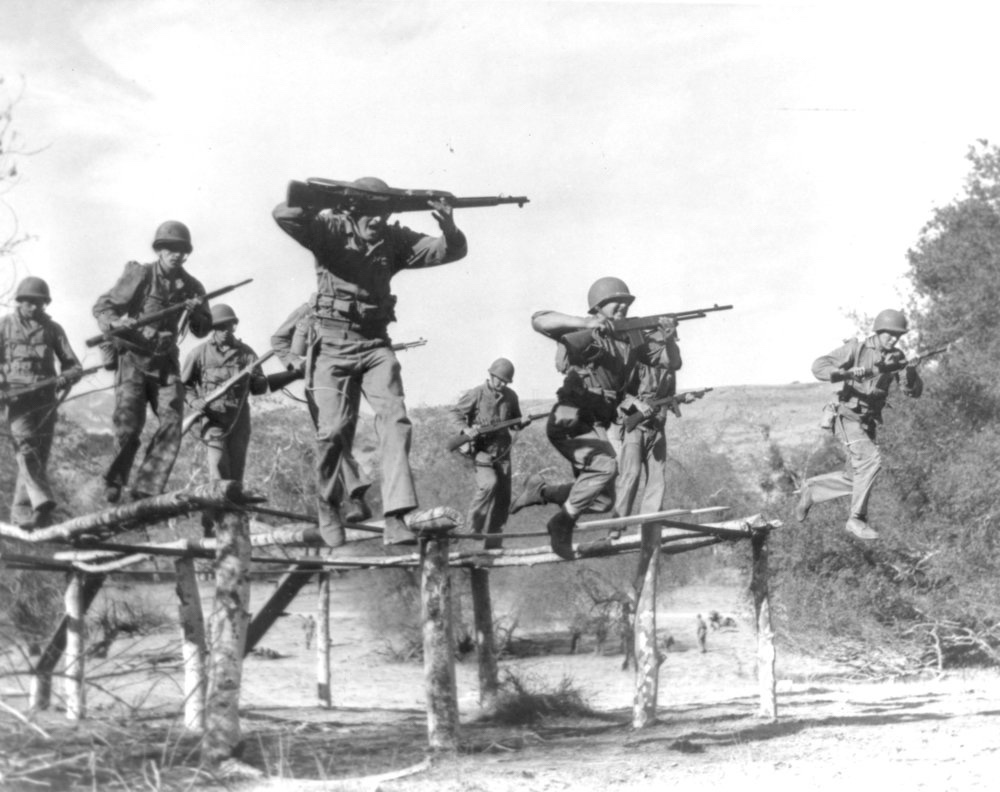
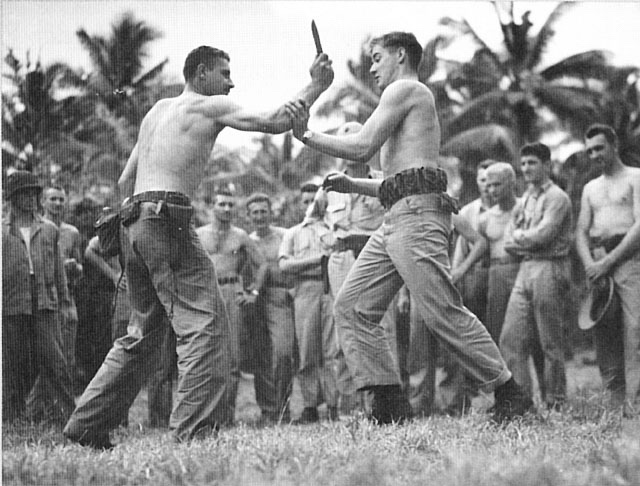
The Raiders learned the tactics employed by the Red Army against the Japanese. This practice involved learning how to kill people silently and quickly. To more effectively imitate the guerrillas of China, Carlson eliminated the privileges of officers. The same level of nutrition, wearing the same clothing, and carrying the same equipment were all factors.

Carlson’s field research into the Red Army convinced him that trust in the men in battle improved their performance and the belief in a better pollical system. So, he would provide information on how undemocratic governments are under Nazi Germany and Japan. Also, he encouraged the men to discuss their vision of a functioning society after the war.

In August of 1943, Carlson and 222 marines left Pearl Harbor and landed on Makin Atoll. After two days of battle, Carlson’s men destroyed the radio station, burned the radio station’s equipment, and captured documents. Thirty marines were among the first to die during the Battle of Tarawa. As a result of this raid, the Japanese fortified the Gilbert Islands.

On 4 November 1943, the Raiders landed on Guadalcanal. During the next 30 days, Carlson’s man killed over 500 enemy soldiers and only lost 17. Carlson had been wounded and was forced to return to the United States for medical treatment.

Carlson’s superiors expressed concern about his unorthodox tactics and ideas. They were also concerned about his relatively close relationship with Agnes Smedley. This radical journalist was involved in campaigning for USA support of communist forces in China to help them defeat the Japanese Army in Asia.

In May of 1943, Carlson was promoted to be the Raider Regiment’s executive officer and was stripped of the direct command of his battalion during the Guadalcanal campaign. Carlson was also upset with his superiors by becoming involved in a controversial project of publishing pamphlets on the contribution of the Afro-Americans in the war. Carlson eventually returned to action in November 1943 at the battle of Tarawa. On Saipan, he received severe wounds when trying to rescue a radio operator who the Japanese had shot.

Carlson eventually returned to action at Tarawa in November 1943. During the Battle of Saipan, he was injured while rescuing a radio operator who the Japanese had shot. Being injured caused him to have to retire from the United States Marines after the war.

Below is the movie.

warfarehistorynetwork.com/2015/07/27/evans-carlson-forms-carlsons-raiders

Tour of Zussman Urban Combat Training Center – Ft Knox

Saturday, February 19th, 2022

Mission Spec provides a short tour of Zussman Urban Combat Training Center (c 2009) at Ft. Knox, one of DODs premiere MOUT facilities.

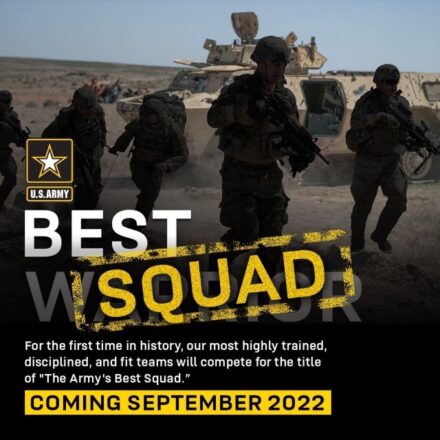
Sergeant Major of the Army Announces Inaugural Best Squad Competition

Saturday, February 19th, 2022

The Army’s Best Warrior Competition is getting an upgrade.

FORT BENNING, Ga. — During his remarks Tuesday to the Maneuver Warfighter Conference at Fort Benning, Georgia, Sgt. Maj. of the Army Michael Grinston announced that groups of Soldiers will compete together in the inaugural U.S. Army Best Squad Competition.

“For over two years I’ve talked about the importance of building a cohesive team that is highly trained, disciplined, and fit,” Grinston said. “Now it’s time to measure ourselves against that standard.”

For purposes of the competition, a “squad” will consist of five Soldiers:

One Squad Leader – Sergeant First Class or Staff Sergeant

One Team Leader – Sergeant or Corporal

Three Squad Members – Specialist and below

The inclusion of a sergeant first class was authorized to account for staff sections not typically led by a staff sergeant.

Specific details on how the squads will be assembled have not been finalized; the Army execution order is expected to be published before the end of the month. Grinston said his intent is for the teams to come from the lowest echelons of command possible.

“We don’t want divisions assembling super-squads,” he said. “But we have to figure out how that looks because each competing command is operated a little differently.”

For example, he said he would be open to allowing Soldiers from across a garrison headquarters and headquarters battalion to compete together even if those Soldiers aren’t in an organic squad.

“I want units to really think about what makes up a squad,” Grinston explained. “’This is My Squad’ isn’t just about the traditional infantry squad. It’s about those small groups of Soldiers who really know and care about each other and hold each other to a high standard of proficiency, discipline, and fitness.”

As the Army continues to modernize and train for large-scale combat operations in a multi-domain environment, Chief of Staff of the Army Gen. James C. McConville said that begins with the squad.

“The foundation of readiness is the individual Soldier and the small unit – from the team and squad levels,” he said. “The best units in the world ensure their individuals and small units are masters of their craft. If you don’t have a solid foundation of readiness, you won’t have agility. You’ll never be able to execute graduate-level operations.”

Grinston said his goal is to assess squads not just on their technical and tactical proficiency, but also on their cohesiveness and ability to work together as a team.

“By the time the squads get to the Army level, we know they’re tactically sound,” Grinston said. “So we’re going to challenge them in ways maybe they haven’t been challenged before, see how they respond when they’re stressed in other ways.”

The Army-level competition doesn’t begin until the end of September, but units will begin assembling and assessing squads now to earn the right to represent their assigned competing commands. In all, 12 teams, including one each from the Army National Guard and Army Reserve, will compete.

Sgt. Maj. of the Army Grinston also plans to select the NCO and Soldier of the Year from among the 60 competitors, but said they won’t necessarily come from the winning squad.

They, along with the best squad, will be announced at the AUSA Annual Convention in October.

By SFC Will Reinier

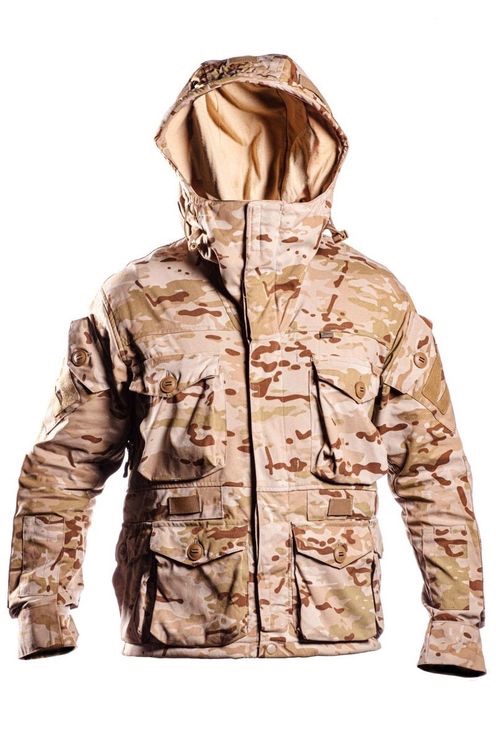
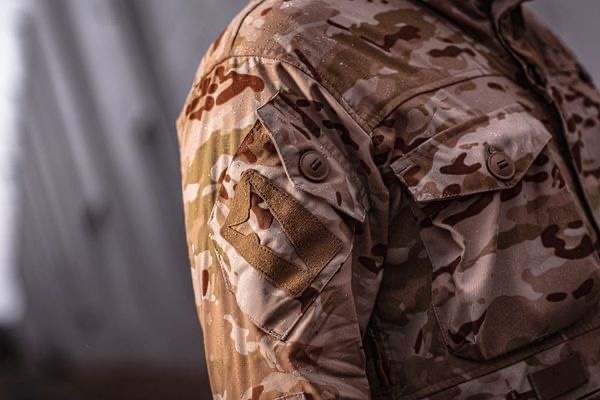
FirstSpear Friday Focus – Squadron Smock Now Available in Multicam Arid

Friday, February 18th, 2022

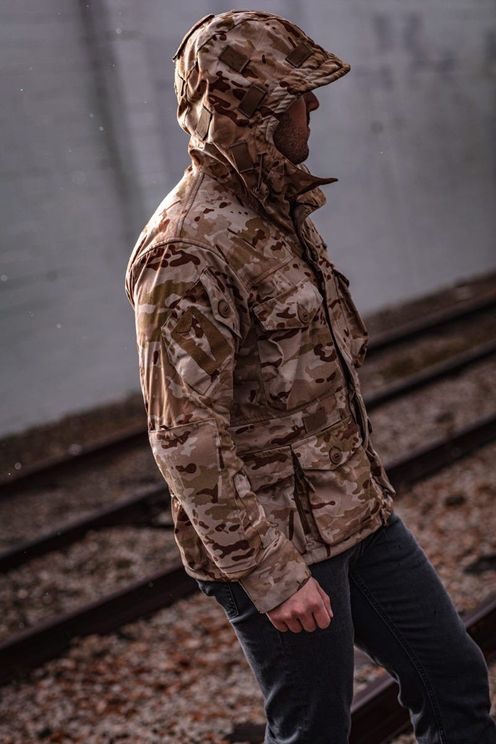
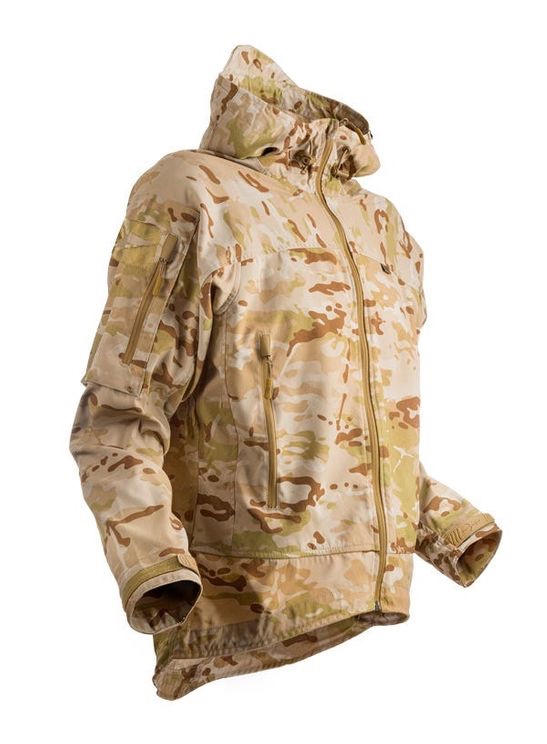
Now available in Multicam Arid— check out the Squadron Smock, an exceptionally popular garment from FS which has maintained its classic design matched with modern high performance materials. The dual layer MID 400 merino package is used throughout the hood, back and shoulders as well as two zippered hand pockets.

With over 18 total pockets this smock serves a load bearing vest style capability many outer garments could not support. An oversized hood works great over the top of a bump lid or helmet.

FirstSpear has also used a low profile padding through the elbow and forearm finished with extra large adjustable cuffs. Webbing attachment points on the back and hood can be used to secure a pack like the ECP or even add foliage for concealment. Like most FirstSpear products the Squadron Smock is 100% American made and Berry Compliant. 

Additionally, we offer our popular Wind Cheater in Multicam Arid as well.

For more information, check out www.first-spear.com/squadron-smock or www.first-spear.com/wind-cheater

Air Force to Phase Out 13O Career Field, Strengthen All Airmen Joint Capabilities

Friday, February 18th, 2022

WASHINGTON (AFNS) —  

The Department of the Air Force announced Feb. 17, the Multi-Domain Warfare Officer (13O) career field will be phased out while emphasizing that multi-domain capabilities will become fundamental across the Air Force.

This phase out impacts 136 currently-assigned Total Force Airmen in the active component, Air National Guard and Air Force Reserve.

“We must be prepared to face future conflicts with our joint and combined partners, and the knowledge Multi-Domain Warfare Officers bring to the fight is too critical to confine to a single career field,” said Air Force Chief of Staff Gen. CQ Brown, Jr. “To continue outpacing near-peer adversaries, we must reinforce all Air Force members’ multi-domain expertise.”

The Air Force will continue to evolve its professional education and force structure to ensure all Airmen can apply operational concepts and contribute to Joint All-Domain Operations, versus limiting it to one core AFSC.

The transition will begin after eligible officers meet the LAF-X Colonel central selection board March 29 – April 14, 2022. Commanders will guide Multi-Domain Warfare Officers through the reassignment process. Officers trained in multi-domain warfare gained valuable experience in all-domain and joint planning capabilities which will be leveraged at all levels of training and professional military education to strengthen enterprise-wide capabilities.

“We want to utilize the depth of knowledge and experience that our Multi-Domain Warfare Officers bring to the fight and to the maximum extent possible need their help to train and educate Airmen to fight and win against a peer threat in all domains,” said Maj. Gen. Albert G. Miller, director of Training and Readiness, Deputy Chief of Staff for Operations at Headquarters U.S. Air Force.

Air Education and Training Command, the lead for Professional Military Education, plans to implement principles of the current Multi-Domain Warfare Initial Skills Training into Air Force-wide developmental education. This will increase the operational knowledge and expertise required to produce joint-capable and credible Airmen.

The Multi-Domain Warfare Officer (13O) career field was established June 25, 2018, as a result of the Multi-Domain Command and Control Implementation Plan to train operational-level C2 personnel specialized in executing command and control of multi-domain operations.