TYR Tactical

Archive for the ‘Guest Post’ Category

SCUBAPRO Sunday – Head and Chest Protection

Sunday, February 6th, 2022

As we are starting to get into fall and the water begins to get colder. You will have to start looking at, adding more to what you wear when you dive. One of the best ways to add warmth without adding a lot more rubber is to add a hood and a vest. The vest helps keep your chest warm, from the tie you enter the water. I like a vest because it helps with that first blast of cold water that always hits your chest. Since you lose about 75 percent of your body heat through your head even if the water is warm, you will lose heat thru it. Hoods and vest are usually made from neoprene and are designed for wearing in either warm or cold water. Again, as with wetsuits, the thicker the hood/vest, the better it is for colder water. One of the most significant drawbacks to diving, in general, is the thinker anything is, gloves, suit, or hood the more mobility you lose. There are two types of hoods, warm and cold water. Warm water hoods are less cumbersome and typically cover your head and neck. They can be used for warmth and to help protect your head.

Warm vs. Coldwater Hoods

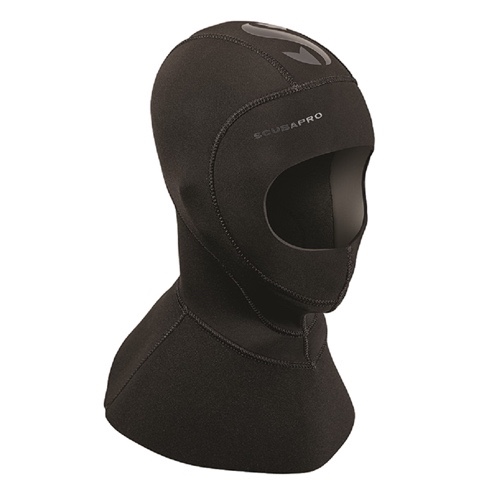
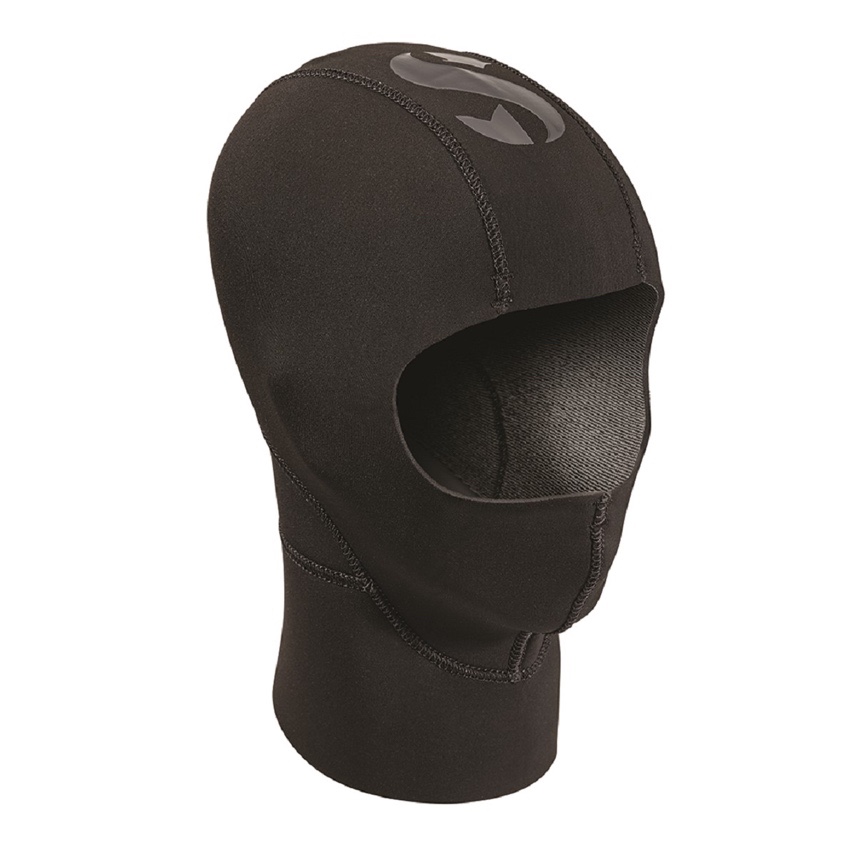
When diving in cold water, a thick neoprene hood that covers your head and neck will be the most practical. The thicker the neoprene, the warmer you head will be. Coldwater dive hoods typically have a sizable bib, which can be tucked into your wetsuit at the neck opening. The bib reduces the transfer of water and keeps the diver that much warmer. The bib comes down to cover the neck and some of the chest, like a bib for kids. There is also hooded vest, and those cover the head and the chest. Cold-water hoods cover some or all of the diver’s forehead and jaw/chin areas, and it also includes a good part of the diver’s cheeks. It tries to leave as little of the diver’s face exposed to the cold water as possible — ordinary just room for the mask and the regulator.

Warm-water dive hoods are much thinner and typically do not have large bib like cold-water hoods. Warm water hoods and vests are suitable for long-duration diving in warm water. It isn’t so thick that you overheat from the start, but with a long dive, you will start to get cold. If you are warm, you can also vent the hood/ vest, and as the dive goes on, you will be warmer. You can even sometimes start the dive without the hood, and then if you are cold, you can put it on. Hooded vests are good for that as you can just pull the hood up as you are diving.

The right fitting dive hood should not be too loose; if you’re going for a cold-water hood, it should feel snug around your cheeks and jaw and should cover most of your forehead. Still, it should not feel too tight – if it is uncomfortable around the throat or facial area, then you’ll need to go up a size. Basically, if the hood creates discomfort along the face or neck/throat, it is too small. If water freely flows in and out of the hood, it is too big. Too loose a hood will not protect you from the elements at all, as water will be able to flow in and out freely. Layering is the key to warmth when diving.

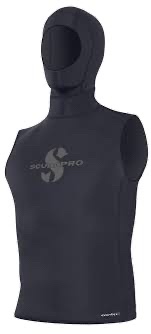
SCUBAPRO’s line of Hoods, Vest and Hooded Vest can provide that extra layer to help keep you warmer longer when diving. The SCUBAPRO 2.5/0.5mm Unisex Hooded Vest is just what you need for a little extra warmth on colder water dives. When you are in warm water locations, add a hooded vest over a spring suit or under a Shorty or Fullsuit, you add warmth and will be able to stay in longer. The vest is easy to don and doff and is fast drying for days that have multiple dives. The vest is 2.mm thick in the hood chest and back and 0.5mm thick on the ultra-stretch side panels.

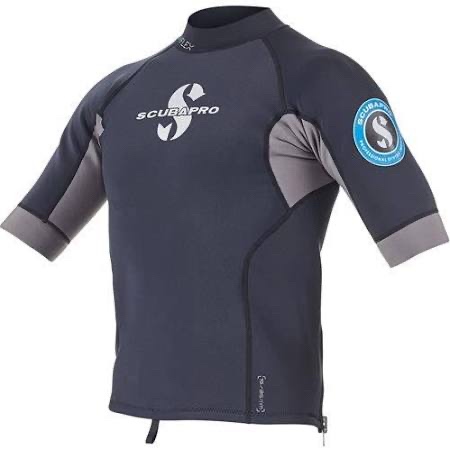
SCUBAPRO has also updated its popular Hybrid line, which includes a thermal long sleeve top, cargo shorts, and a sleeveless hooded vest. The line also consists of a full suit that is great for long-duration warm water dives or under cammies to help keep you warm. The Hybrid Hooded Vest‘s ultra-comfortable neoprene/nylon blend does a great job of protecting your torso and head, two critical areas for minimizing heat loss, providing comfort, warmth, and protection where you need it most. On the underside of the nylon panels, a micro-plush interior makes the vest warm and cozy.

This fleece fabric absorbs less water, which keeps heat against the body, increasing overall warmth. It also dries quickly. This hooded vest can be worn by itself or layered over a long-sleeve thermal rash guard to increase warmth and protection and built with a mix of quality 1.5mm X-Foam neoprene for warmth and durable nylon for stretch and comfort. Highly versatile ideal for divers, snorkelers, paddle boarders, swimmers, and anyone that needs more protection from the elements to include long boat rides. I have used pieces in this line for an Alcatraz swim (1.5mile), and it worked great. Unique styling keeps you warm, protected, and looking good — form-fitting for that sleek, hydrodynamic look and feel.

10th SFG(A) – Cold Weather Training Instructor Course

Sunday, February 6th, 2022

What does it mean to be a Winter Warfighting Expert?

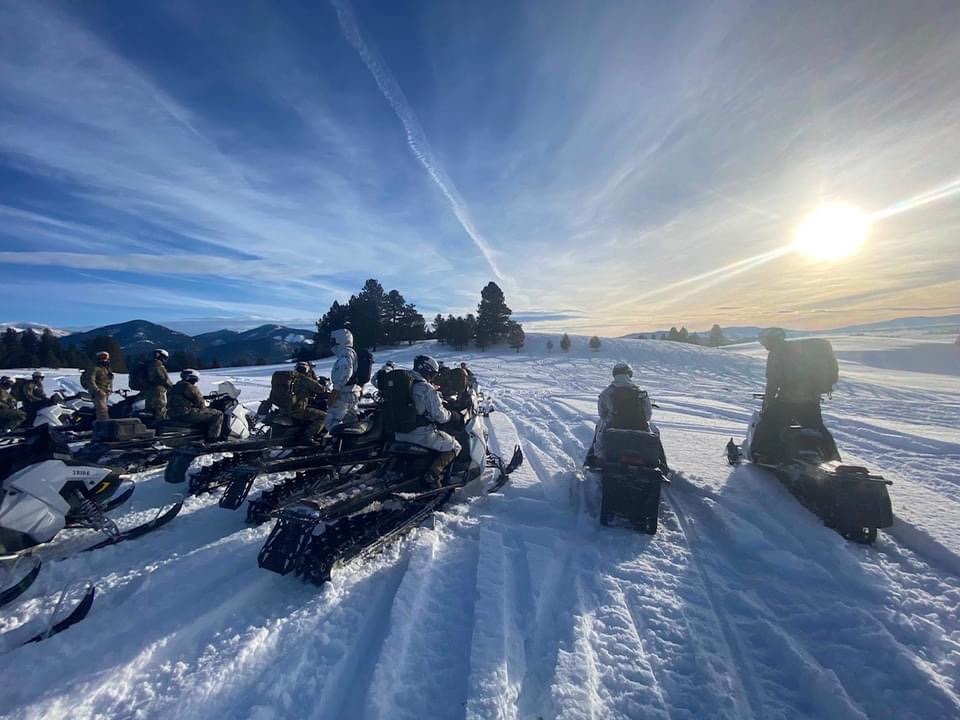
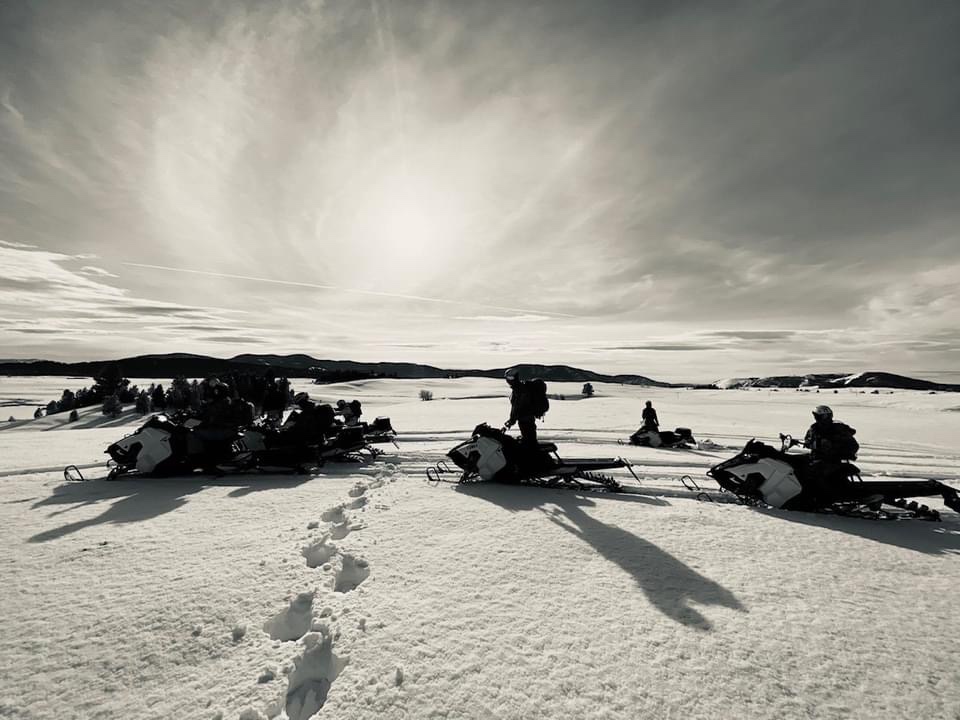
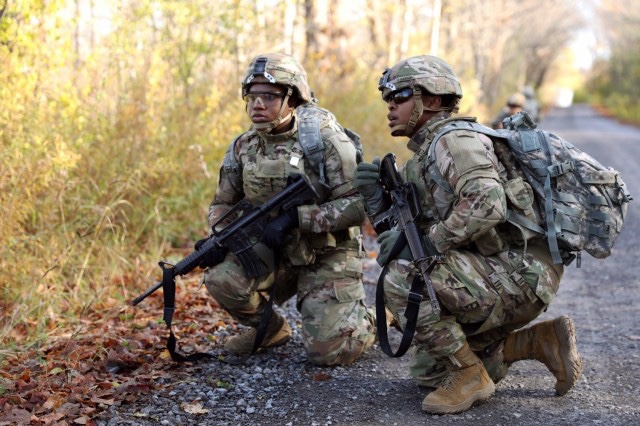
Currently, 10th SFG(A) Green Berets are in a frozen wilderness mastering the aptitude to train, plan and facilitate cold-weather training at the battalion level to meet our specific arctic warfare mandate.

CWT encompasses backcountry mobility, avalanche awareness and preparedness, winter survival, snowmobile operations and advanced riding techniques and special operations small unit tactics on skis or snowmobiles.

Accordingly, the Cold Weather Training Instructor Course is designed to develop professional instructors to return to their unit as skilled teachers and leaders for their unit’s CWT events.

Primary Focus – Are You Really Shooting Past 300 Yards with an AR?

Saturday, February 5th, 2022

Perhaps the title of this article is a bit out of place considering many of the readers are already taking shots at three hundred yards or more with an AR. Even with an AR-15, that doesn’t lend itself as well to long range precision shooting as the AR-10 or cloned versions of the .308 AR, shooters are consistently taking shots past 300 yards with an AR.
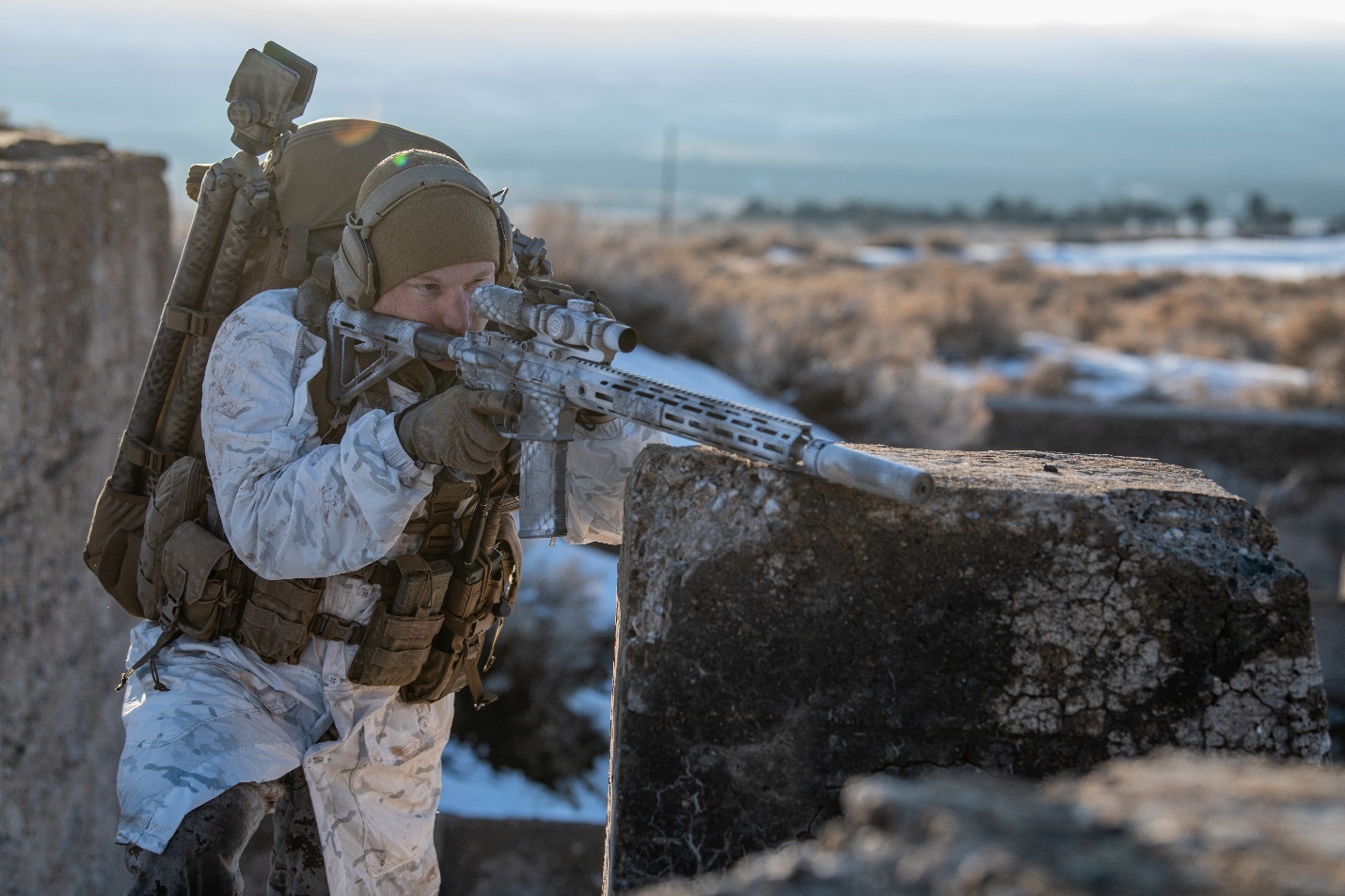
In fact, with a simple change like a bolt-on, drop-in AR-15 conversion upper, one could even reasonably expect to get to under a minute of angle at 300 yards shooting a popular mainstream cartridge.

Perhaps a better explanation of what this article is about is how one could take any regular AR-15, or AR-10 and put it in a consistent 300 yard range for anything within the spectrum of being capable of using an AR platform to accomplish.

The concepts we want to explore at some level in this article are:

• Can you take consistent shots at three hundred yards with your run-of-the-mill AR?

• Can the AR compete broadly against other platforms shooting at more than 300 yards on a regular basis?

• Can the AR be built to be a real competitor, and can it have multivariate use cases at more than 300 yards, consistently?

• What are the limits of the current AR spectrum of rifles, out of factory?

• What are the limits of bespoke builds based on the AR spectrum of rifles when absolute attention is paid to long-range precision accuracy?

• What should you focus on when building, or buying an AR capable of taking difficult shots at longer ranges and turning them into routine, easy to take shots?

In this article we’d like to explore the concept of the AR moving past the hurdle of 300 + yards of range with any kind of capability, into a Brave new world for the AR platform. What follows is a more in-depth discussion about how you can get ultra consistent performance out of an AR platform, far beyond where most normal shooters are pushing the firearm.

Can you really make the argument that the AR platform is suitable for a consistent shot taking on targets that matter past 300 yards?

This point is pretty much settled in stone at this time, with the AR platform having been proven to be a success hunting game animals, and shooting in mainstream competitions, where the AR may not have been a factor in the previous decades. So, the answer is already existent: the AR certainly can shoot past 300 yards with accuracy and lethality in pretty much any configuration.

Where it really becomes an issue, and where there is a real world application here, that needs further discussion is when defining what are the parameters at the extreme end of the spectrum that constrain the AR platform from an accuracy or lethality perspective. And this is not just a discussion that starts and ends with the 5.56 or the .223. The AR-15 is much more than the original AR-15 that came out in the sixties.
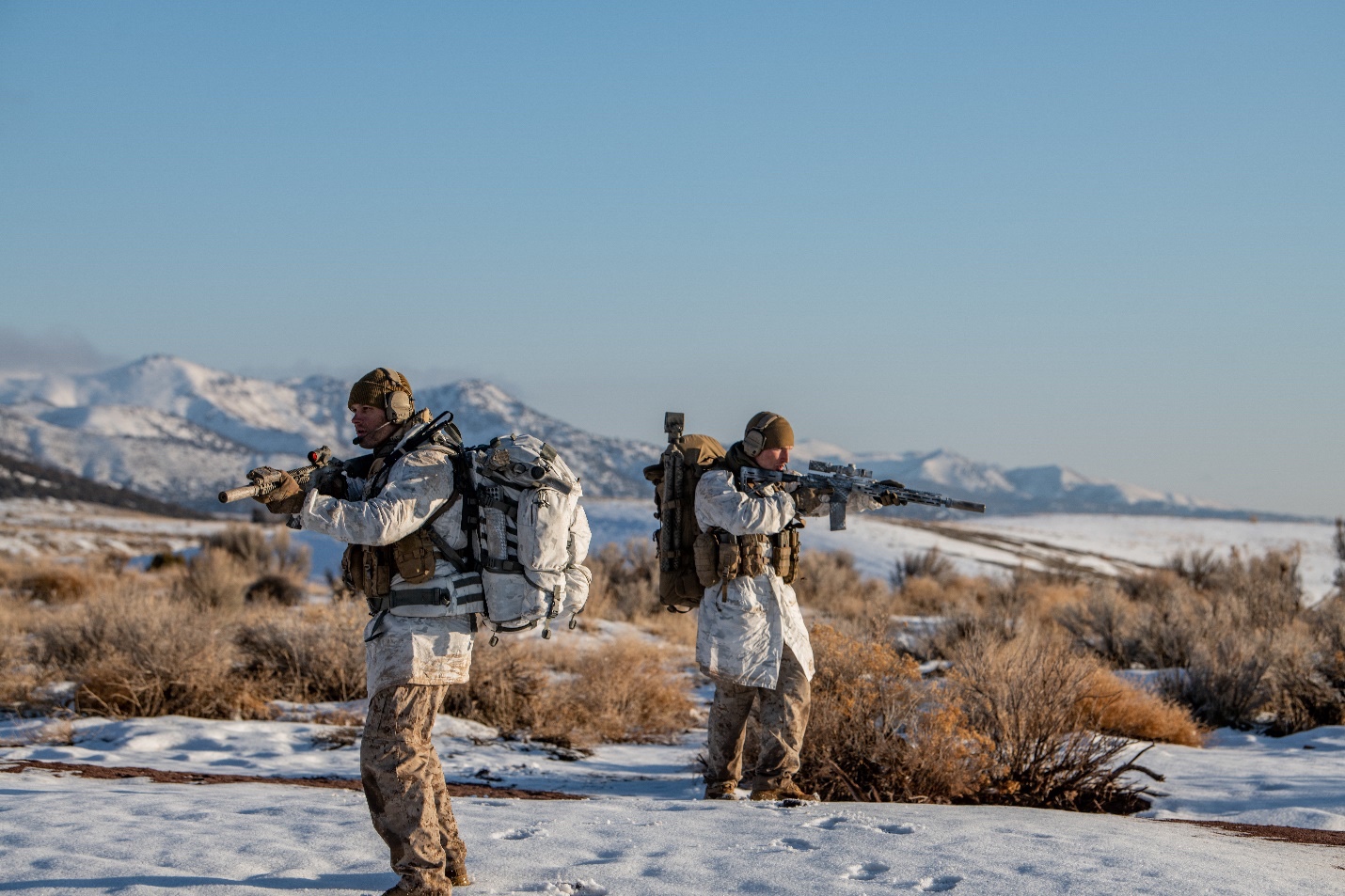
Given the plethora of options, loads, optics and other add-on components that now is extant in the AR arena, what can the AR do in the realm past 300 yards?

From a hunting perspective:

We’ve all got a friend that has a mythical story of taking a trophy game animal across a ridge, past a Valley, that’s probably more than 850 yards, and who knows how much of the truth got stretched in that story.

From the perspective of the AR, certainly it’s capable of being built into a rifle that can shoot and reliably take large game animals at 850 yards. However, this tends to be at the outer limits of what’s capable with a multi receiver build, like the AR platform.
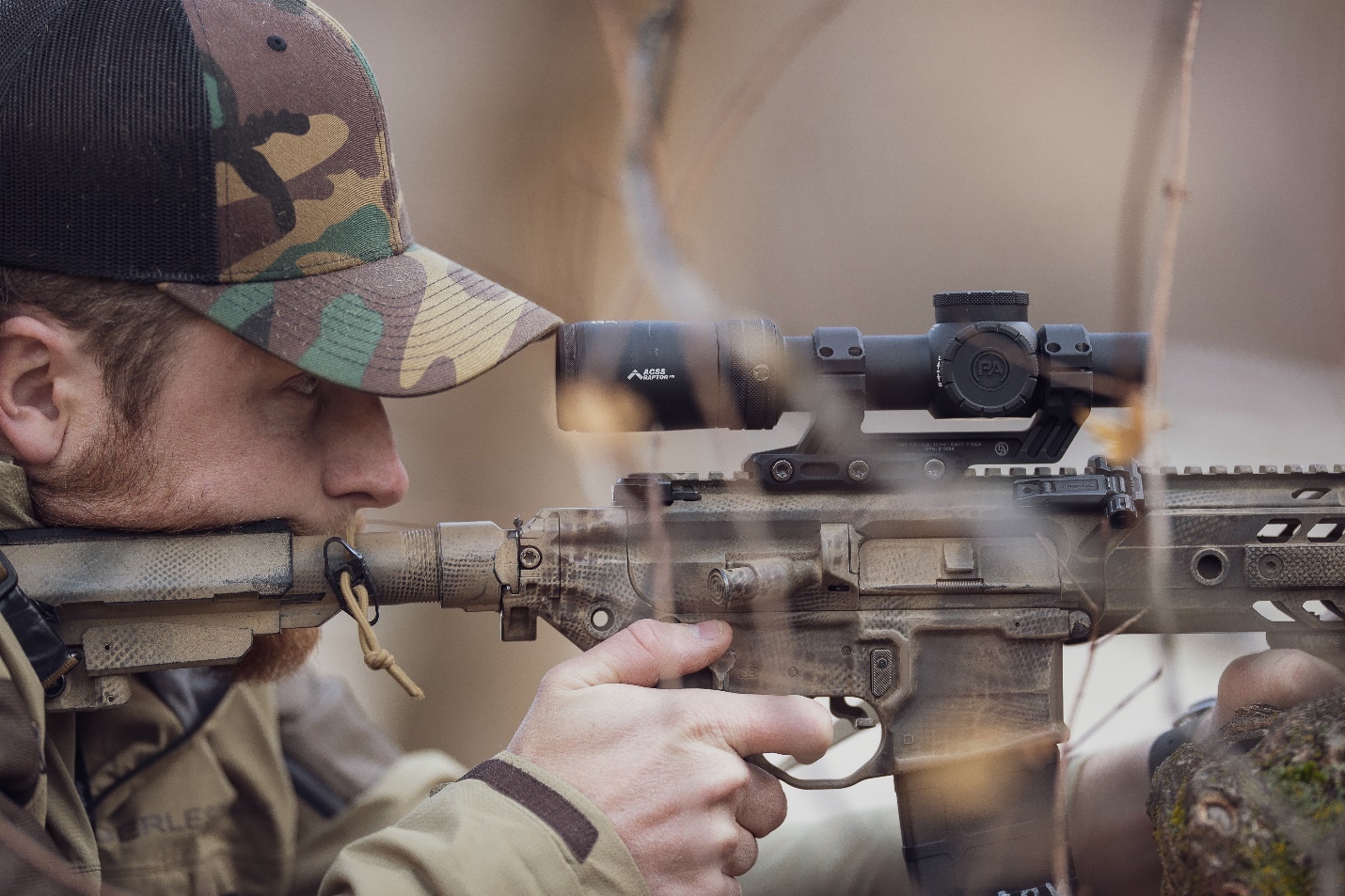
It is certainly not outside the realm of possibility to build an AR-15 that can shoot 650 yards or more, and dispatch a moderately sized game animal, or on the lowest end of the spectrum of the largest game animals.

Furthermore, it’s quite easy to build an AR-10, depending on the cartridge that can take a large game animal at 850 yards. Whether or not the shooter has the skill level to do so on a consistent basis, will be up to the shooter and their experience.

Certainly, these are at the limits of where the AR-15 and the component parts are currently on the market.

That isn’t to say that thousand-yard shots can be done or haven’t been taken, but to be consistent, and to be consistent with gamesmanship principles, especially when hunting an animal, it might not make sense to push the envelope past 650 yards unless you have absolute confidence that such a shot can be lethal, well-placed, and is a smart shot to take at that moment.

From a competition perspective:

For a 3-gun competition shooter, the realistic need to shoot up to 500 yards is even few and far between. Essentially, if you’ve built a gun that can handle 500 yards (which many out of the box factory rifles can handle, easily at minute of angle), you’ll be okay.

For a CMP sanctioned match, that is what most people know as “National Match Competitions” run by the Civilian Marksmanship Program with a lot of carryover into the military end of the spectrum. In these competitions, if you’ve built a gun that can handle 600 yd at a minute of angle, you’ll be more than prepared.

For the NRA’s competition “America’s Rifle Challenge”, for a level one match, anything that can shoot minute of angle at 100 yards is acceptable; and for a level two match, anything that can shoot at five hundred yards or closer at minute of angle is more than acceptable.

From a competition perspective, you’re going to be shooting at targets on average less than 350 yards away. Very rarely are you even looking at a 700 yd + shot. The sweet spot on the high end of the range spectrum is under 350 yards for the .223/5.56 – a shooter can compensate for beyond that quickly with a BDC type optic too.

From an anti-personnel or anti-materiel (or a general law enforcement) perspective:

Because a man sized target, and the threat level that a target like that might perpetuate, taking long distance shots on an AR platform, simply isn’t the best practice for law enforcement. This is especially true when the target has access to or is wielding a firearm or is in a hostage situation of any type. 

When law enforcement and military are utilizing an AR style rifle as an anti-personnel implementation, the range is reduced, and the projectile is increased in payload size.

This is to ensure a single shot kill. Most law enforcement agencies will not be shooting an AR style rifle at any distance more than 250 to 300 yards.

Even then, this is at the far end of the spectrum of where the liability concerns and difficulty in consistent shot placement become a factor. In today’s legal environment, law enforcement tried to avoid concerns like that.
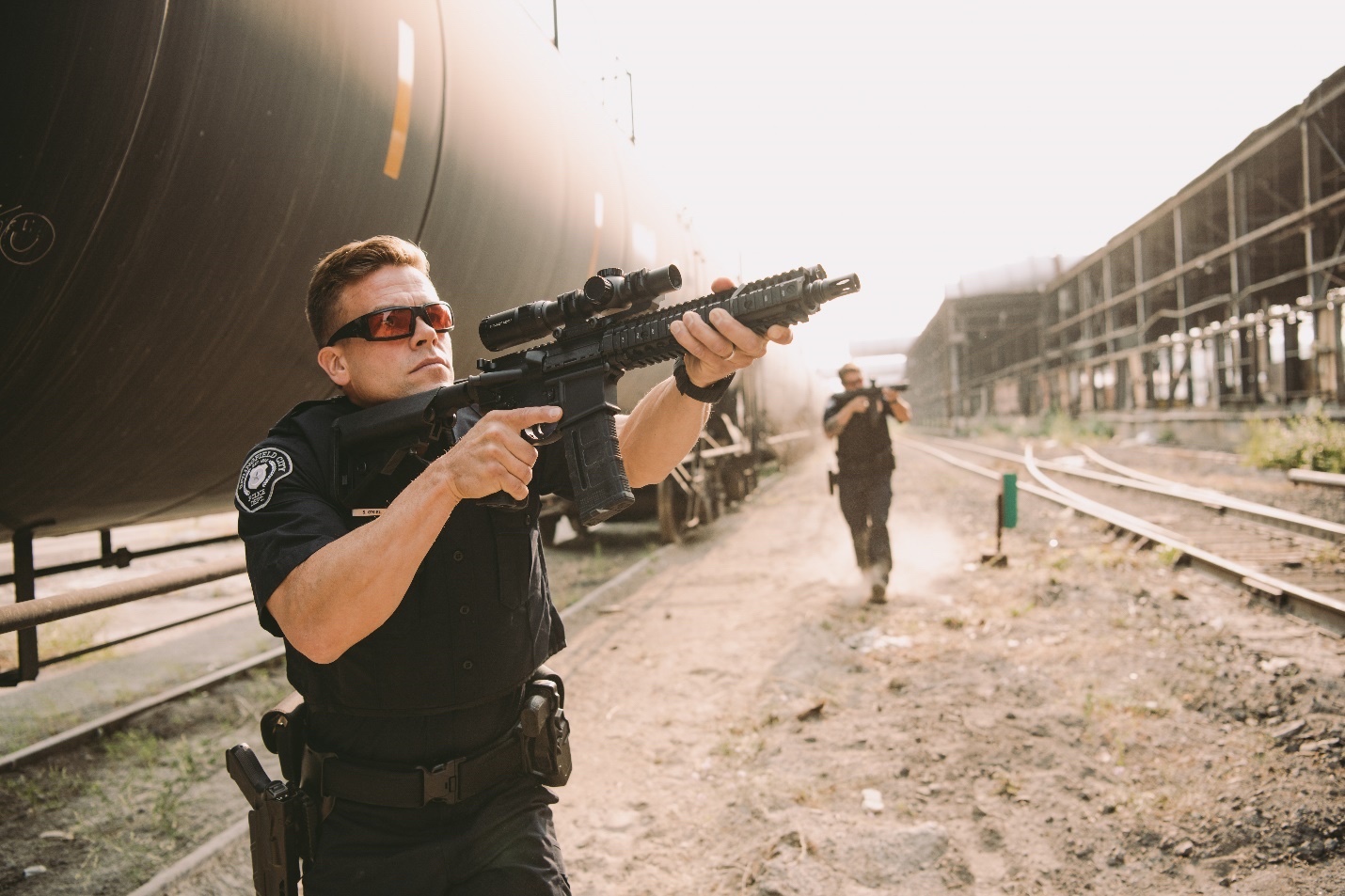
Rather than trust a basic beat cop and their basic rifle in their basic Police cruiser to be able to take shots past say, two hundred yards, in a situation that may even be time-sensitive, a department would likely opt for a long-range precision marksman on staff to take that shot, and likely with a different platform of rifle.

Now, speaking in the real world, many law enforcement agencies utilize the AR-10, or even the AR-15 for moderate ranges, and even into the long-range precision marksman category. Not everything is done with Remington 700’s or Winchester 70’s, or Steyr bolt actions.

There was a period where Walther WA-2000’s and HK PSG-1’s were coveted pieces of hardware for departmental use, but those days are over.

Many intermediate-range firearms can be built out of the AR platform nowadays and offer substantially similar accuracy to these “Crown Jewel” type semi-automatic anti-personnel rifles of the past.

Larger teams and even smaller organizations generally default to bolt action highly accurate rifles to ensure they have most of the hardware equation taken care of and spend significant resources on training sharpshooters within their law enforcement agencies how to handle those rifles at longer distances.

From a depredation perspective:

Looking at the big business of killing hogs, coyotes, or other predatory animals nowadays, the AR has become a bit of a superstar in that realm. The ability to take animals at anywhere from 30 ft to 500 yd using the same cartridge, load, and hardware sets up an interesting scenario.

Looking at the landscape of the newer cartridges online in the AR realm, one can see plenty of fantastic options for depredation. We’ll explore a bit of that in the next segment regarding calibers and cartridge options.
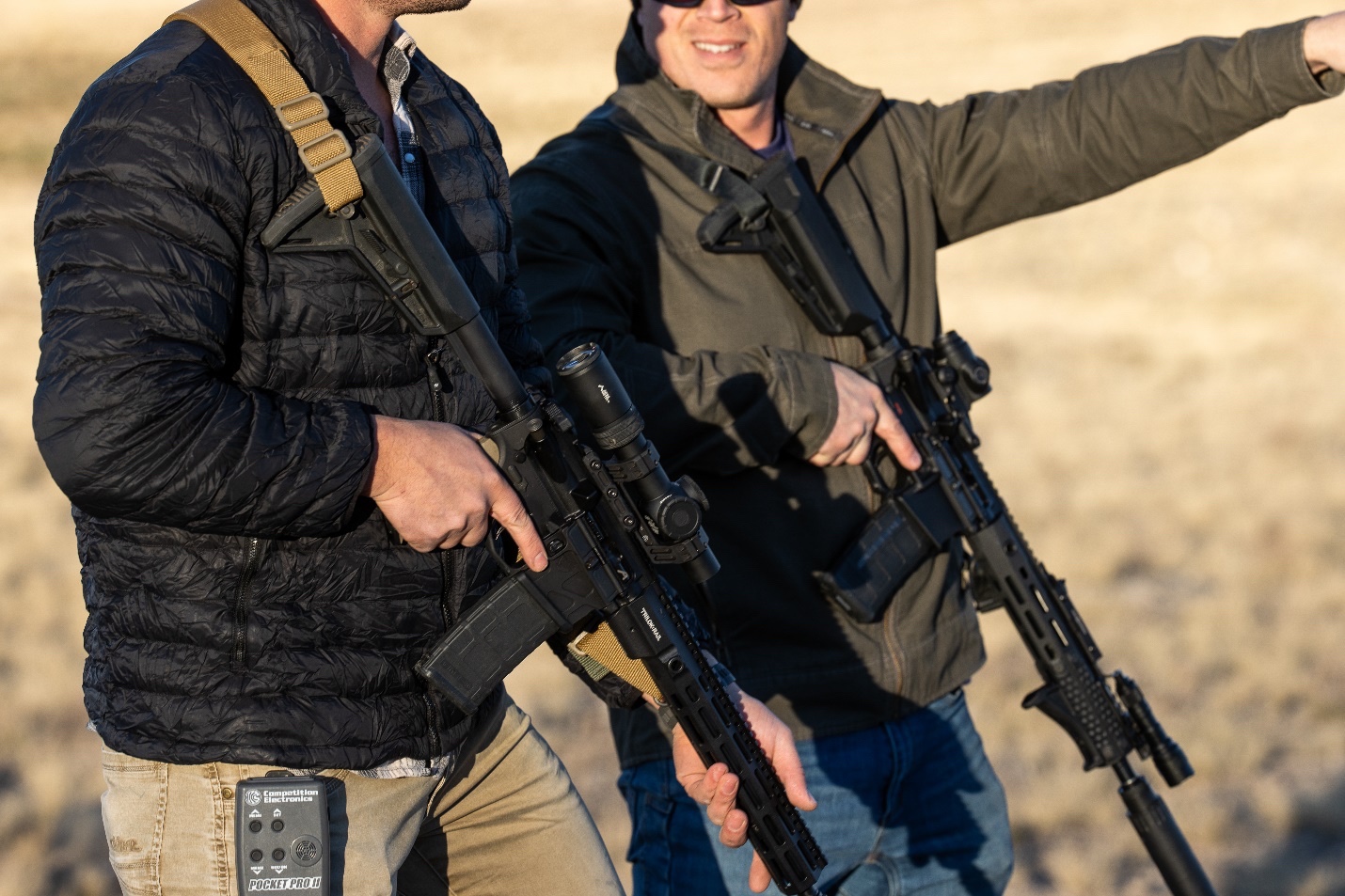
Suffice it to say there are plenty of standout options for the AR platform that can generally achieve any goals a depredation-specific AR build has set out to accomplish.

From a multi-use perspective – specifically with regards to more versatile cartridge options:

First and foremost, the AR-15 utilizing the 223 Remington, or the 5.56 x 45 is already quite a versatile firearm.

But the argument gets much more interesting when you start talking about the available cartridges, especially those introduced in the last 5-10 years or so. When you look at the availability to the AR-15 of cartridges like the 6.5 Grendel, the .224 Valkyrie, the 6.8 SPC, the 300 Ham’r, and the .300 Blackout, you start to see a significantly versatile group of cartridges that combines well with one of the most versatile firearms in history.

Piggybacking on the success of the cartridges that fit within the ecosystem of the AR-15, one might also look at the long-range capabilities that come from using the AR-10 or .308 Winchester platform of the AR. This system allows you to get into cartridges like the .308, of course, which is here to stay, and has significant ballistic advantages over smaller cartridges, and the 6.5 Creedmoor. Some builds utilizing the 6.5 Creedmoor can push 1000 yd + capabilities on game targets, shooting sub minute of angle, easily.

What variables are most important when trying to improve consistency and ballistics past three hundred yards on a rifle like the AR-15?

From a component perspective, one of the most important parts you’ll want to emphasize to get past 300 yards routinely, will be your barrel, and how that matches from a twist rate and length perspective to the actual load you’ve settled on for the specific task you’re trying to accomplish.

You can also design this aspect from a different perspective: instead of settling on a specific load, look at the capabilities of the barrel length and the twist rate and then dial in a load to ensure that you have the maximum performance out of the barrel.

All things considered, the largest Improvement in overall capabilities is going to be the cartridge in which you will be shooting, paired with the most robust and finely tuned barrel you can find for the cartridge that you choose to use.

This does not mean that you can discount barrel mounting stability and the importance of trying to lock-in the stability and monolithic nature of the barrel connection to the firearm. These are necessary features that must be paid attention to.

A significant trigger upgrade can also do wonders in keeping you consistently on target. But an even bigger variable may be your optics and how they factor into your ability to get on and stay on target., especially when you need to compensate for bullet drop or on-the-fly windage concerns.

Additionally, mating a high tolerance upper receiver to a high tolerance lower receiver, or buying a matched set that prioritizes tight tolerances and is built to mate together for the long term, can also improve overall strategic accurizing methodologies.

Balancing the rifle can also be incredibly important, especially if you’re shooting something like a bespoke 26 inch 6.5 Creedmoor barrel, which will cause the front end of the AR to get incredibly heavy, while the back end remains considerably lighter.

Having the correct systems in place to improve balance, including things like a bipod, an improved buffer system, or a significantly adjustable buttstock and pistol grip, will be important. Matching the right forend or other furniture will also help to build a more “monolithic” rifle in general.

Did we completely overlook the AR-10 and substantially similar cloned 308 pattern semi-automatic AR rifles?

While we only spoke briefly about the 6.5 Creedmoor, it has become the poster child for modern-day AR accuracy. This goes without saying, that the larger, more robust .308 Winchester based AR-10 platform is already more suitable to a more accurate firearm build.

The inherent accuracy bonuses of using a round like the 6.5 Creedmoor, and the component parts that come along with such an inherently accurate cartridge, only improve the platform further. And as touched upon earlier, it is a proven concept, that a cartridge can have one of the biggest impacts on accuracy of all the variables within the accuracy equation.

While this discussion was initially built around the idea of pushing the limits of accuracy, and usability beyond what was a normal envelope of performance for the AR-15, it would be ridiculous not to include the AR-10, and the 6.5 Creedmoor.
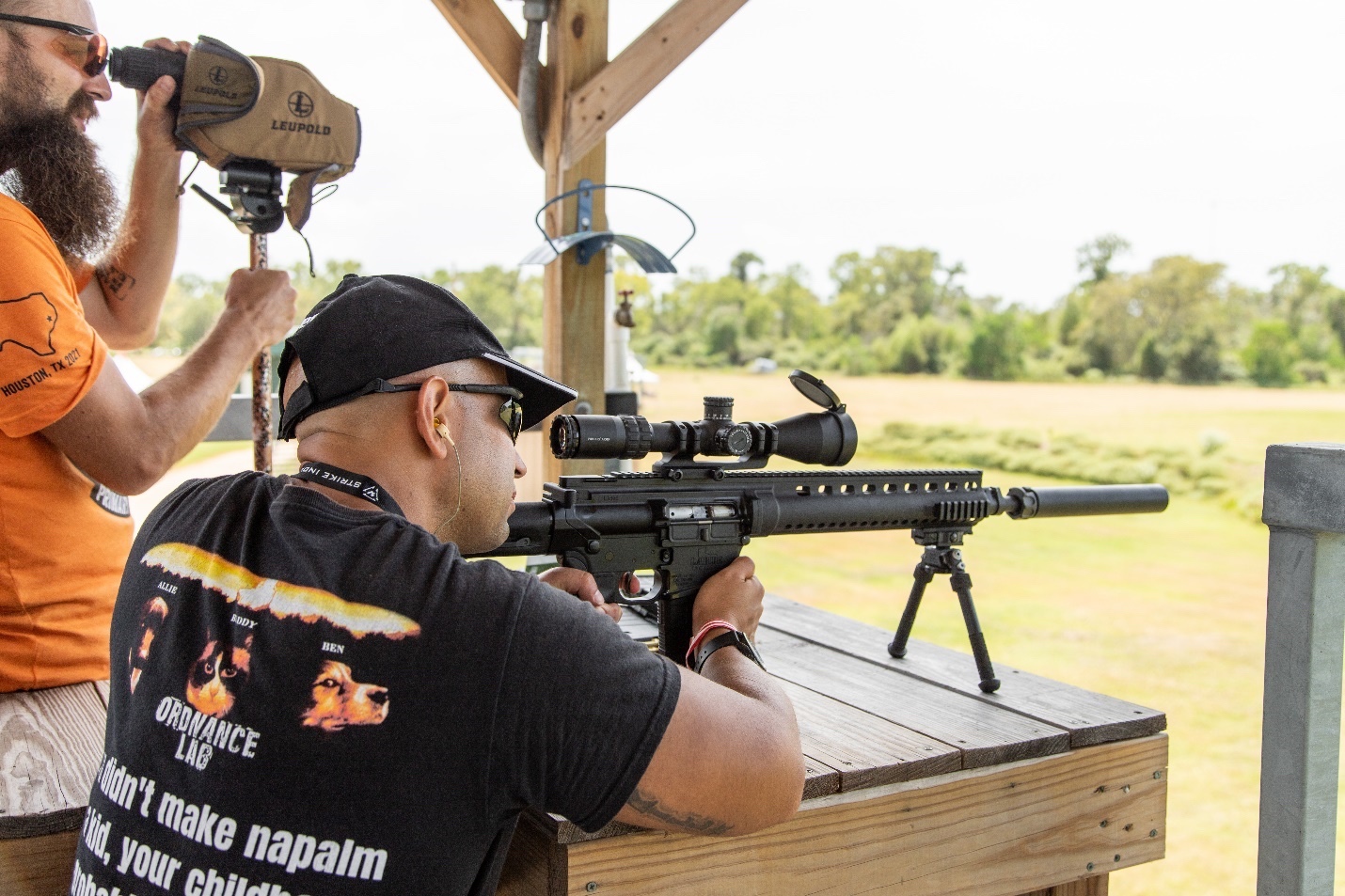
That is also not to mention the .308 Winchester, which offers double or triple the long-range capabilities of the .223/5.56 cartridge.

When you look at the capabilities of such a compact and lightweight firearm as the AR-15 however, it is a little more difficult to achieve huge range capabilities, while also having ballistic superiority to comparative marketable options in the size range.

All that said, it’s important to understand how much impact the newer, more ballistically viable loads can have on pushing the AR-15 beyond its normal limits.

Before we even started discussing the topic in this article, it was probably already a foregone conclusion that anyone who didn’t understand that the AR-15 was capable of shooting on a regular basis, past three hundred yards, was being a little unfair to such a versatile rifle. But it should also not be discounted, that most shooters generally are never going to take a shot beyond 300 yards with an AR-15.

In fact, most readers of this article are maybe just now, for the first time, exploring the idea of shooting for long-range precision with an AR-15.

Again, this is not to say that the AR-15 should forever be pigeon-holed into something that only utilizes the .223 Remington or the 5.56 x 45 and must stay within the 350 to 400 yd extended range of those cartridges.

With the introduction of cartridges like the .224 Valkyrie and the 6.5 Grendel, and even the 6.8 SPC, the .300 Blackout, and the .300 Ham’r, the AR-15 has become something of a jack of all trades. A rifle that’s capable of shooting in a native capacity out of a bone stock rifle with a drop-in conversion on the upper end, out past 450 yd and significantly further – even out into the 650 yard territory without many changes to the original configuration.
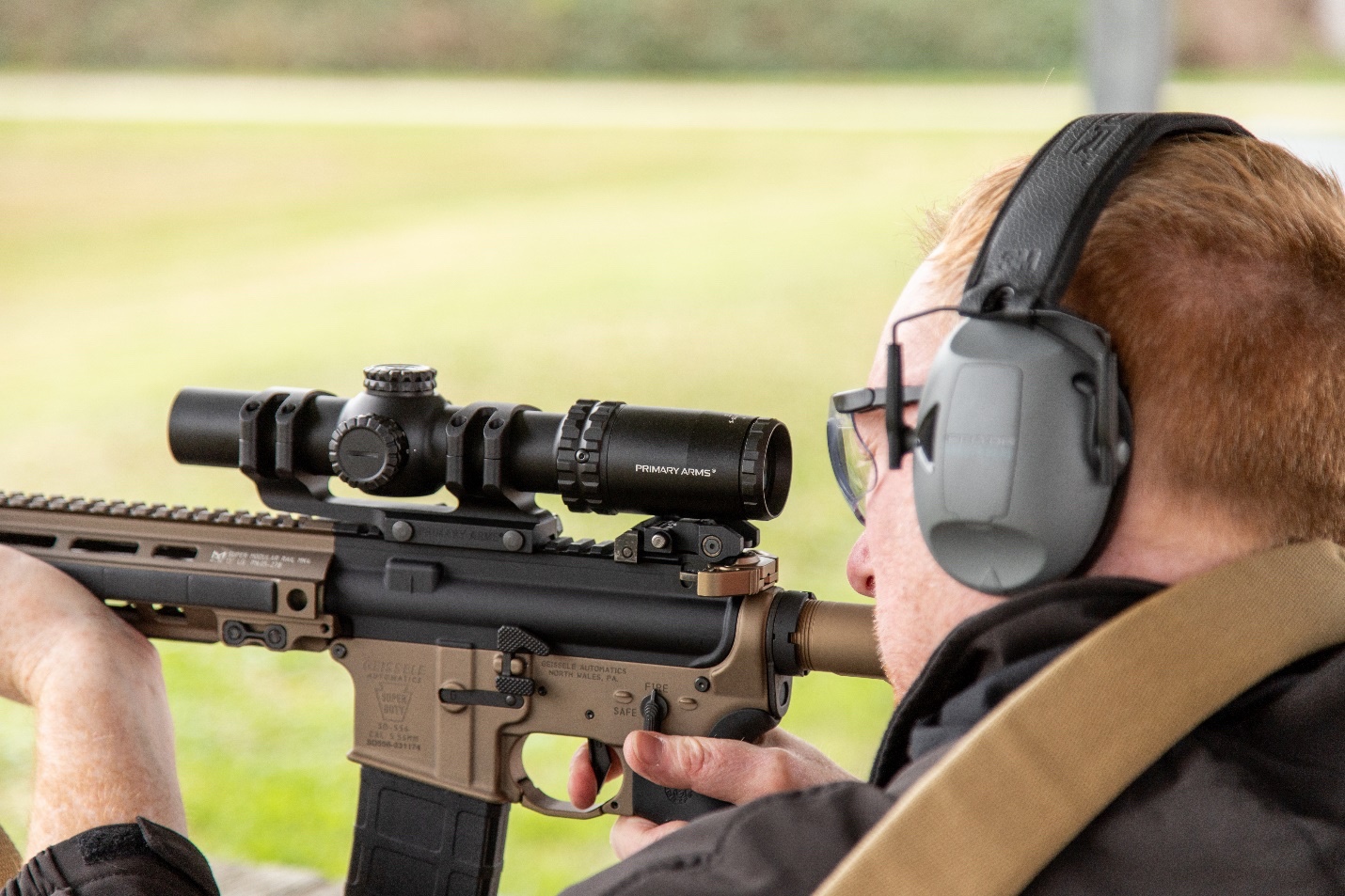
The 224 Valkyrie, for instance, probably shoots well beyond 650 yards given the right wind conditions. The 6.5 Grendel would be a fine round to use when you have difficulty shooting out past six hundred yards where the Grendel is still quite comfortable. If you need to get past that point you can move into the AR-10 platform and access the .308, or the 6.5 Creedmoor.

Even without getting into the AR-10 spectrum, you could still utilize the 6.5 Grendel or the 6.8 SPC out past the usable strategic range of mainstream mil-spec 7.62 x 51mm ammunition under ideal conditions.

Considering this is available on a smaller, lighter weight and easier to wield, lower recoiling AR-15 platform, instead of utilizing the .308 Winchester, or the 7.62 x51mm on the larger platform, there are a lot of options for the AR-15 to go past 300 yards.

Let’s draw some conclusions about shooting past 300 yards with an AR

Given the plethora of rounds, and the ability to customize the AR, one is not stuck within the relatively short-range provided by the original caliber of the AR-15. Given the ability to hop up into the next class level of AR, with the AR-10, the shooter now also has access to a nearly 1,000 yd firearm, out of factory, without much accuracy-tweaking necessary.

Part of the problem with many shooters never pushing the limits of their AR, is that many ranges don’t offer sufficient long-range shooting capabilities, and public lands don’t offer the clean environment full of safety considerations for them to shoot their rifle past the 300 yard mark.

Perhaps it was a little disingenuous to peg the .223 and a 5.56 x45 into a corner that establishes a mere 300 or 350 yard range as the extended operational range of the cartridge.

But, for the purposes of this discussion we believed it opened up the concept that one need not settle for arbitrary ranges, when one can custom build or custom-tailor a factory rifle built on an AR platform, to shoot far beyond, and even double or triple the average range of mainstream loads with mainstream factory battle rifles in the AR-15 platform.

Hopefully, with a bit of research and a little bit of effort, everyone who has read this article to this point, we’ll have the impetus to push their own personal comfort zone past the 300 or 350 yd range with the AR-15.

It may help push readers to contemplate building something capable of shooting double or even triple the range, with around the same “near minute of angle accuracy” that most factory rifles are coming to market with.

Given the high customizability of the AR-15 platform, building a one-off version of a highly competent and highly accurate, moderate to long range precision rifle is within the grasp of most users reading this article.

Primary Focus is a weekly feature from Primary Arms that covers various firearms related subjects.


Blunt Force: The Underreported Threat Of The Security Professional

Saturday, February 5th, 2022

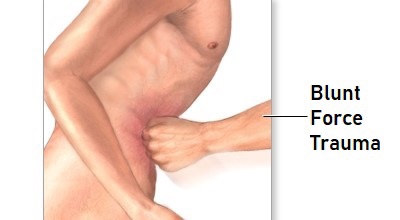
What is ‘blunt force’, and what type of injuries result from blunt force impact?

Please let me answer this question in the shortest possible way, without throwing some hyper intellectual medical terminologies at you, I don’t understand myself. Let me do it in reasonable simple and understandable terms, and more importantly, within context of this article.

Severe injuries and deaths resulting from blunt force trauma are some of the most common cases encountered by forensic pathologists. For instance, almost all transportation fatalities, including those involving road traffic collisions and pedestrians being hit by vehicles result from blunt force trauma.

Blunt force trauma is also the consequence faced by homeland and private security professionals after being hit by a solid object, such as a fist, foot, knee, elbow, iron bar, extendable baton, baseball bat, crowbar, brick, bottle, can, chair, fire extinguisher, to name but a few, or indeed after being pushed hard against another solid object e.g. door, wall, floor or car or down a flight of stairs etc.

Something that remains widely underreported since shootings and stabbings seem to make more dramatic headlines in the mainstream media.

When asking a couple of law firms how they would define ‘blunt force trauma injuries’ they responded with the following answers:

“A severe traumatic episode caused to the body (or head) with the sudden introduction of a blunt instrument used with great force.”

“Blunt force trauma is when the body is hit with an object that is blunt, or not sharp, with enough force to cause significant damage”.

According to Wikipedia, blunt abdominal trauma (BAT) comprises 75% of all blunt trauma and is the most common example of this injury.

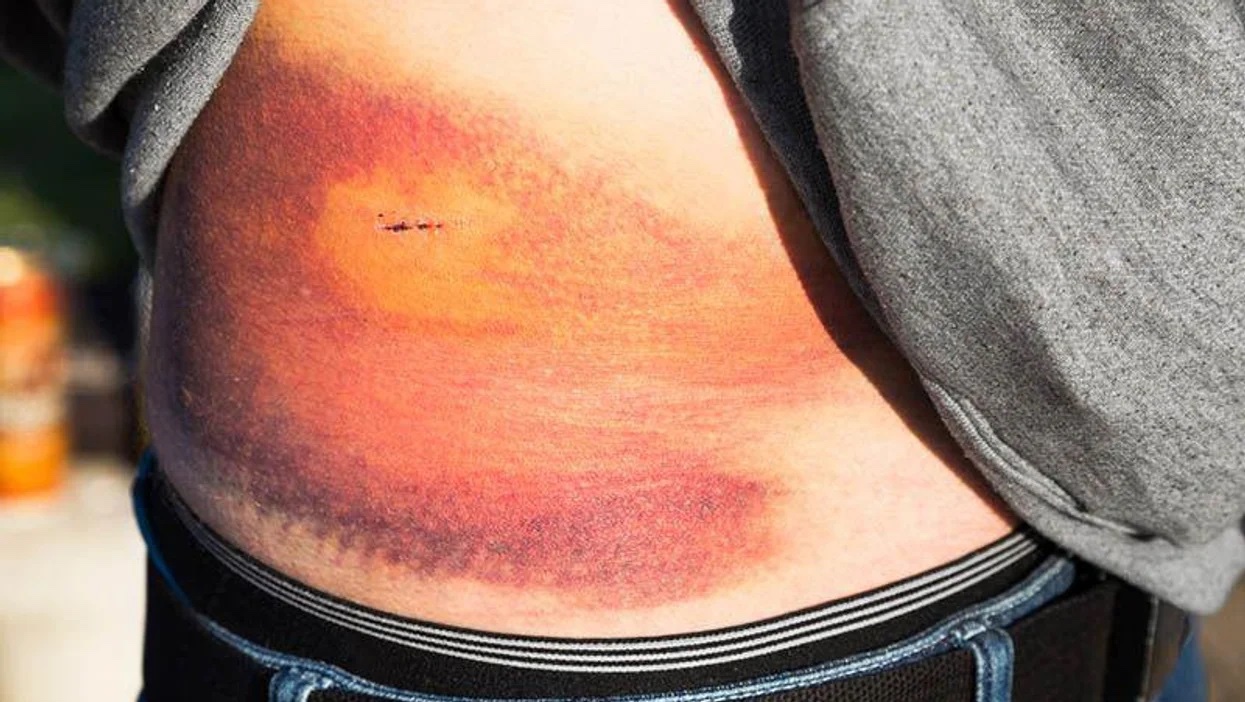
The severity of such injury is mostly determined by the speed, velocity, size and weight of the object, and can range in severity from a tiny bruise to internal haemorrhages, bone fractures, cardiac tamponade, airway obstructions/rupture, and in the worst-case scenario result in ruptured organs, rapid internal bleeding and ultimately your death.

I do believe most security professionals will be aware of the potential severity of injuries resulting from blunt force. But I don’t believe many will chose to document and report every incident of this nature. “Too much admin”, some may say, and “it’s part of the job”, others will state.

Many security professionals have a reasonable understanding of the most realistic risks and threats they face, and subsequently are either being issued, or they themselves invest in body armour.

However, it is worth noting that any type of flexible body armour made from either an aramid fibre (i.e. Kevlar®) or a polyethylene (i.e. Dyneema®) including the latest high performance body armour produced by top secret manufacturers at top secret locations for top secret agencies, do not offer anywhere near enough protection from this specific operational risk. 

On a domestic level (meaning homeland or private security, rather than military) the risk of being punched, beaten, kicked, or faced by someone throwing stuff at you is hundred times higher than being stabbed or shot.  Therefore, it is rather saddening to see that more than 99% of body armour issued to domestic homeland security professionals offer insufficient protection from this specific risk.

Again, in the context of a good body armour, the key objective must be to offer sufficient levels of protection from the most realistic threats and risks you faces whilst on duty.

I urge you to make a conscious decision when investing in such type of PPE.  Simply ask yourself the question, what is the most important criteria for YOU?  The concealability, the weight, the thickness, or the level of protection from the risks and threats you have identified?

If the concealability of a body armour is key for you (i.e. covert operations and surveillance) then you may well need to look for the thinnest body armour, and the ‘blunt force trauma’ protection may have to become of secondary importance.  

However, please understand that in general the most likely risk you face on a daily basis, is also the one you should seek protection from, and as I have stated earlier on in this article, the probability of you getting punched, hit, kicked or pushed around or have someone throwing stuff at you is far greater than the risk of being stabbed or shot.

To achieve the maximum level of protection from blunt force trauma injuries a body armour would have to be of a rigid structure, rather than a soft/flexible structure. Two diverse protective devices which highlight in a brilliantly understandable way the importance and the effectiveness of such protection are:

1. Motorbike Helmets: Never mind the fact that wearing a helmet is law when riding a motorbike. Wearing a helmet during a motorcycle crash significantly reduces the risk of damage to one’s skull, traumatic brain injury, and even death, countless studies have shown. We all know motorbike helmets are of a rigid/solid structure.  They would not offer the blunt force protection and perform to the level it is required if the structure would be soft or flexible.

2. Riot Shields:  A riot shield is a lightweight protection device, typically deployed and used by police in almost every country during riots, protests and mass disturbances. They are typically constructed from a rigid material to offer maximum levels of protection from attacks with blunt weapons and thrown projectiles.  The officers’ lives depend on the performance of this piece of equipment. Again, to offer this high level of blunt force protection, it is required for its structure to be rigid, not soft or flexible.


The most in-depth research study on ‘blunt force trauma injuries’ or in more tactical terms ‘backface signature injuries’ sustained while wearing such body armour was produced by Marianne Wilhelm back in 2008, and is titled “Injuries to law enforcement officers: The backface signature injury”. It really is worth a read.

This great piece has raised important questions regarding the protection afforded to officers wearing personal body armour, along with the current test methods used to assess the true performance of the equipment. Some test results showed that some revealed deformations exceeding the NIJ Standard’s backface signature limit. Such increased deformation can lead to serious injuries, including blunt force trauma or backface signature injuries, which have occurred in the field over and over again.

Although your body armour might be successful in containing the round fired by a weapon or the knife thrusted at you by a hostile individual, it might not protect you from the impacting energy during other types of assaults, unless it is offering you officially certified protection from this precise risk.  The most respected standard for body armour in relation to blunt force trauma protection is Germany’s VPAM (Vereinigung der Prüfstellen für Angriffshemmende Materialien und Konstruktionen) Standard, titled: “Testing of Impact Resistance against Throwing and/or Striking Objects” and its rating will be W1 (lowest) – W9 (highest).

It is also worth pointing out that our Technical Director Colin Mackinnon, a man who served 26+ years with the UK’s Police Forces, delivered an online presentation to a large audience of security professionals recently.  Following his presentation, he asked a question: “Does your armour protect against knife, spike, needle, and blunt force trauma?”

Out of those questioned 55% of people did not know what protection their vests provided.

About the Author

Robert Kaiser is the CEO and Founder of PPSS Group, a UK headquartered company specialising in design, production, and supply of high-performance body armour. Robert and his senior team all have significant level of operational frontline experience in military, law enforcement or homeland security.  His written word has been featured in several industry leading, international publications.

Arctic First Responder Course Preps Paratroopers for Extreme Conditions

Saturday, February 5th, 2022

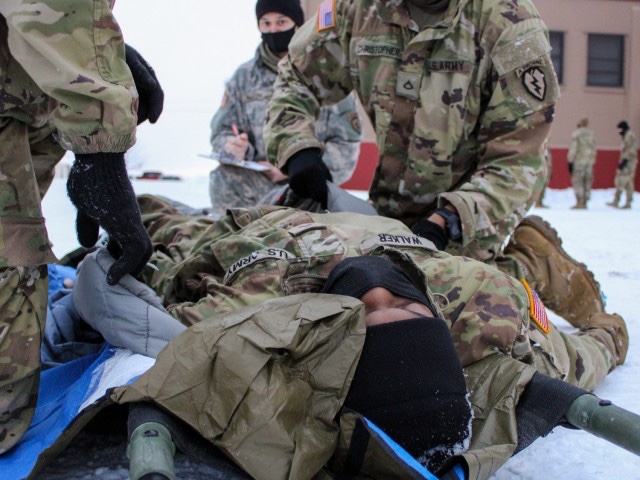
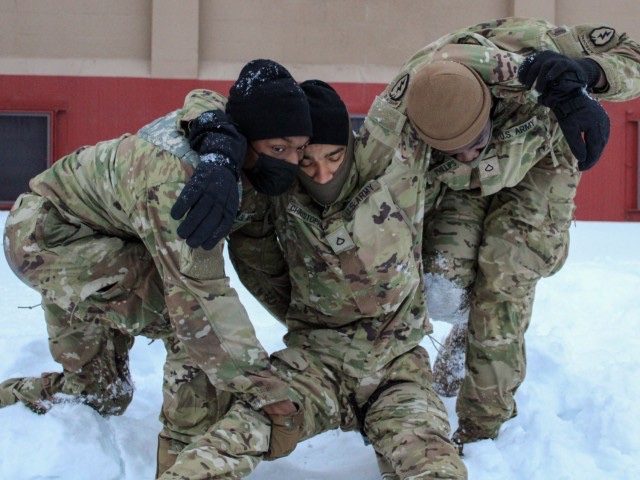
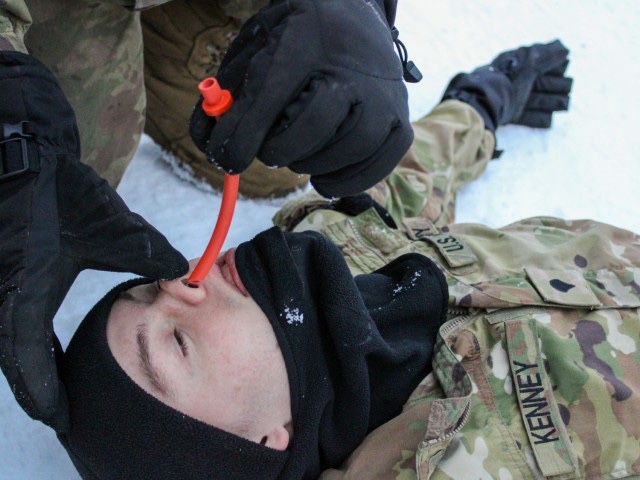
JOINT BASE ELMENDORF-RICHARDSON, Alaska — Jan. 10-14, 2022, Paratroopers with the 4th Infantry Brigade Combat Team (Airborne), 25th Infantry Division, “Spartan Brigade,” completed the inaugural Arctic First Responder Course held at Joint Base Elmendorf-Richardson, Alaska.

The Arctic First Responder Course is a prototype Combat Lifesaver Course that adapts Tactical Combat Casualty Care for operations in the Arctic environment. It was developed using lessons learned by medical personnel during exercise Arctic Warrior 21, where temperatures exceed -40F. The course prepares Arctic Paratroopers to provide lifesaving aid in any environment.

“Every Soldier should take part in an Arctic First Responder style training,” said Spc. Kenyi Foster from Avalanche Company, 725th Brigade Support Battalion. “This course has better prepared me for any combat situations I may face and helped me in being able to administer aid in any weather condition.”

Spartan Paratroopers from the 725th BSB learned cold weather injury identification, treatment and prevention. They also learned about and exercised patient transport and packaging in extreme cold weather environments.

The training comes as the 725th BSB prepares to support JPMRC 22-02 — a home station combat training center rotation in March that takes place in Central Alaska where winter weather can be unpredictable and dangerous.

“I now feel more comfortable if I’m ever under fire and know I have to administer aid whether that’s in the Arctic or the desert,” said Spc. Lisvette Vasquez from Avalanche Company, 725th BSB. “After taking this course I feel I could proficiently perform in medical lanes for ESB as well as know medical related questions for any Soldier of the month board.”

The Spartan Brigade is the only airborne infantry brigade combat team in the Arctic and Pacific theaters, providing the combatant commander with the unique capability to project an expeditionary force by air in both Arctic and Pacific environments.

Story by MAJ Jason Welch

Photos by 2LT Paul Campbell

FirstSpear Friday Focus— MultiPurpose Pack in Manatee & Woodland Camo

Friday, February 4th, 2022

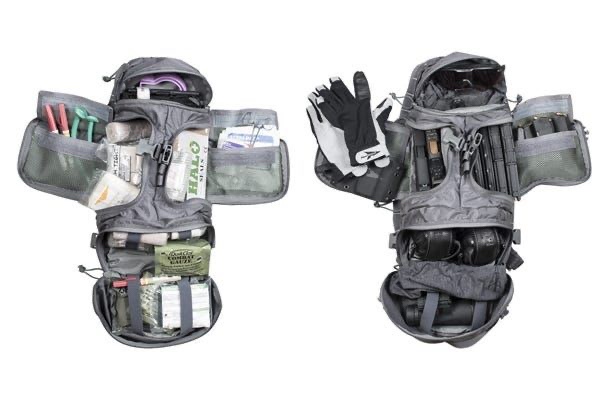
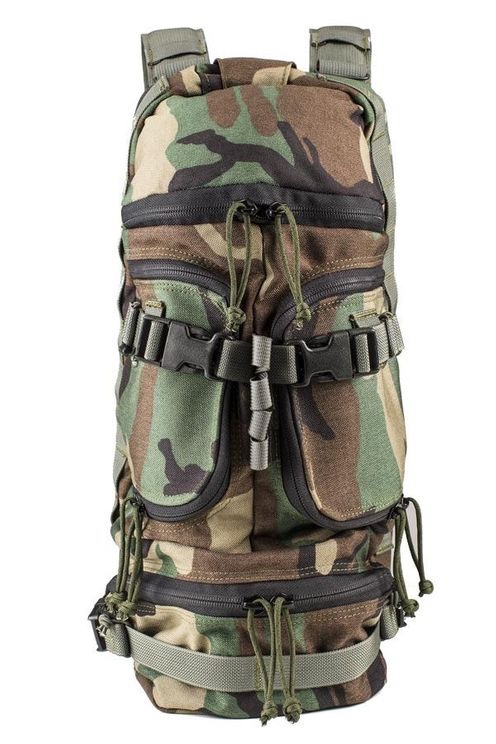
It’s here in Woodland & Manatee! The MultiPurpose Pack was originally developed as a medical pack for a U.S. Special Operations unit, this pack can easily be adapted for use as a range bag, E&E pack, or 1-day pack. Features include hydration compartment, padded shoulder straps, 5 external pockets and compression straps.

• 5 external pockets including large hydration compartment
• Low profile padded shoulder straps
• Exterior compression straps
• Exceptional low profile range bag
• Developed as a med bag for a US SOF element
• Made in the USA

Currently available in woodland, manatee and ranger green.

For more information check out, www.first-spear.com/multi-purpose-pack .

Consortium Partnered with Army Research Lab Completes 10-year Program to Advance Armor Materials

Friday, February 4th, 2022

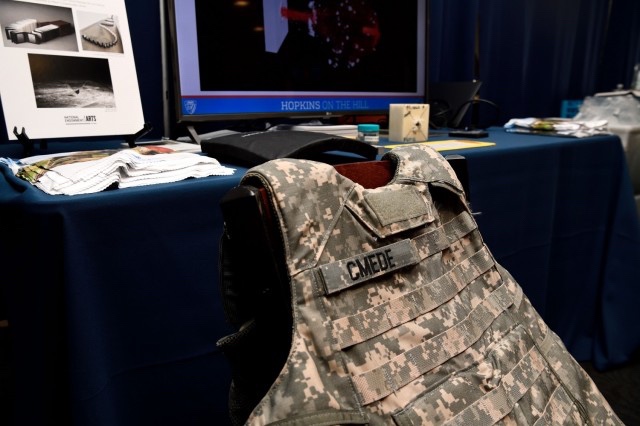
ABERDEEN PROVING GROUND, Md. — The Materials in Extreme Dynamic Environments Collaborative Research Alliance, or MEDE CRA, culminated its 10-year program with a virtual capstone event, co-hosted by the U.S. Army Combat Capabilities Development Command, known as DEVCOM, Army Research Laboratory and Johns Hopkins University.

More than 180 people participated in the event, including principal investigators, students from consortium universities, Army researchers and industry partners. Representatives from U.S. Army Futures Command, Office of the Assistant Secretary of the Army for Acquisition, Logistics, and Technology, Office of Naval Research, National Ground Intelligence Center, National Science Foundation, Department of Energy and other DEVCOM subordinate organizations participated as well.

The alliance is a basic research program led by Johns Hopkins University, which includes a consortium of 25 university and research partners located in 13 states and three foreign countries. MEDE has developed a materials-by-design strategy, which has resulted in innovative protection materials and computational design codes for armor applications. These new concepts will support the Soldier Lethality and Next Generation Combat Vehicle modernization priorities. According to DEVCOM ARL Director Dr. Patrick Baker, MEDE successfully achieved its mission by focusing on the three key elements of a basic research program: relevance, team, and science.

Maj. Gen. Edmond “Miles” Brown, DEVCOM commanding general, highlighted the capstone with a keynote address. He described a multinational force that was attacked while on patrol during a deployment to Afghanistan. The body armor they wore provided the necessary protection to survive the attack and make it back home safely. Additionally, Brown described the evolution of body armor from the time he entered the U.S. Army to present day, and the importance of basic research programs like the MEDE CRA.

Sen. Ben Cardin and Sen. Christopher Van Hollen of Maryland expressed their congratulations to the MEDE CRA. Cardin noted that MEDE has graduated 76 Ph.D. students and transitioned 55 postdoctoral fellows. More than 200 undergraduates participated in research activities; 62 of whom were from HBCUs and minority serving institutions. This highlights the program’s real dedication to inclusivity and diversity, he said. Van Hollen added that MEDE will help save American lives and keep troops safer for years to come.

Officials said a hallmark of the MEDE CRA is its impact on workforce development. Including the university faculty, students, postdoctoral fellows, and DEVCOM ARL researchers, over 600 individuals have been involved in the MEDE research. These individuals include high school and undergraduate student apprentices sponsored through DEVCOM’s Army Educational Outreach Program, and the Army Research Office’s partnered research initiative for HBCUs and minority serving institutions. The MEDE CRA ensured these valuable opportunities were incorporated into the core research program.

Prof. Lori Graham-Brady of Johns Hopkins and Dr. Sikhanda Satapathy, DEVCOM ARL, presented the numerous accomplishments of the MEDE CRA. According to Satapathy, the goal of the program was to look at the materials or different material classes at different scales, starting from the atomistic scale to the application scale. To achieve this, the MEDE program developed a rigorous mechanism-driven materials-by-design strategy that resulted in new magnesium alloys, boron carbide, and glass-epoxy composites.

In each material, MEDE was able to achieve a weight reduction and improved performance. These discoveries were translated into computational design codes which assisted in validating the experimental data. Industry partners were able to scale-up the laboratory produced materials for ballistic evaluation at DEVCOM ARL.

Graham-Brady said by improving these armor materials they will have a real impact on keeping people safe, which, she said, motivated much of the research.

The capstone included a MEDE CRA video, which provided an overview and successes of the program.

Awarded in April of 2012, the Materials in Extreme Dynamic Environments (MEDE) collaborative research alliance is a ten-year, basic research program which has developed a materials by design process which has improved protection materials for armor applications. Research activities were performed jointly amongst academia, the DEVCOM Army Research Laboratory (ARL), and industry.

This video highlights the tangible successes of the program.

Funding for MEDE created a center within HEMI. For more information, visit hemi.jhu.edu/cmede.

The impact of MEDE to the broader science community will be felt for years, Graham-Brady said. To date, MEDE university personnel and DEVCOM ARL researchers have authored 478 peer-reviewed journal articles. These articles have been cited over 8,000 times. To ensure the legacy of the MEDE CRA, special edition journals featuring MEDE research have been published.

Johns Hopkins University President Ronald Daniels expressed his appreciation to the U.S. Army for sponsoring the MEDE CRA. Johns Hopkins’ partnership with the Department of Defense was seeded in 1940 with the creation of the National Defense Research Committee. MEDE’s innovations will continue to shape the future of the government-university research through the doctoral students and postdocs now working in DOD and national laboratories, academia and global industry.

As the Army’s foundational research laboratory, ARL is operationalizing science to achieve transformational overmatch. Through collaboration across the command’s core technical competencies, DEVCOM leads in the discovery, development and delivery of the technology-based capabilities required to make Soldiers more successful at winning the nation’s wars and come home safely. DEVCOM Army Research Laboratory is an element of the U.S. Army Combat Capabilities Development Command. DEVCOM is a major subordinate command of the Army Futures Command.

By Dr. Victor Nakano, Johns Hopkins University

Photos by Jessica Ader, David Jordan, and Will Kirk

347 RQS Tests New Vehicle Drop for Lead Wing

Thursday, February 3rd, 2022

MOODY AIR FORCE BASE, Ga (AFNS) —  

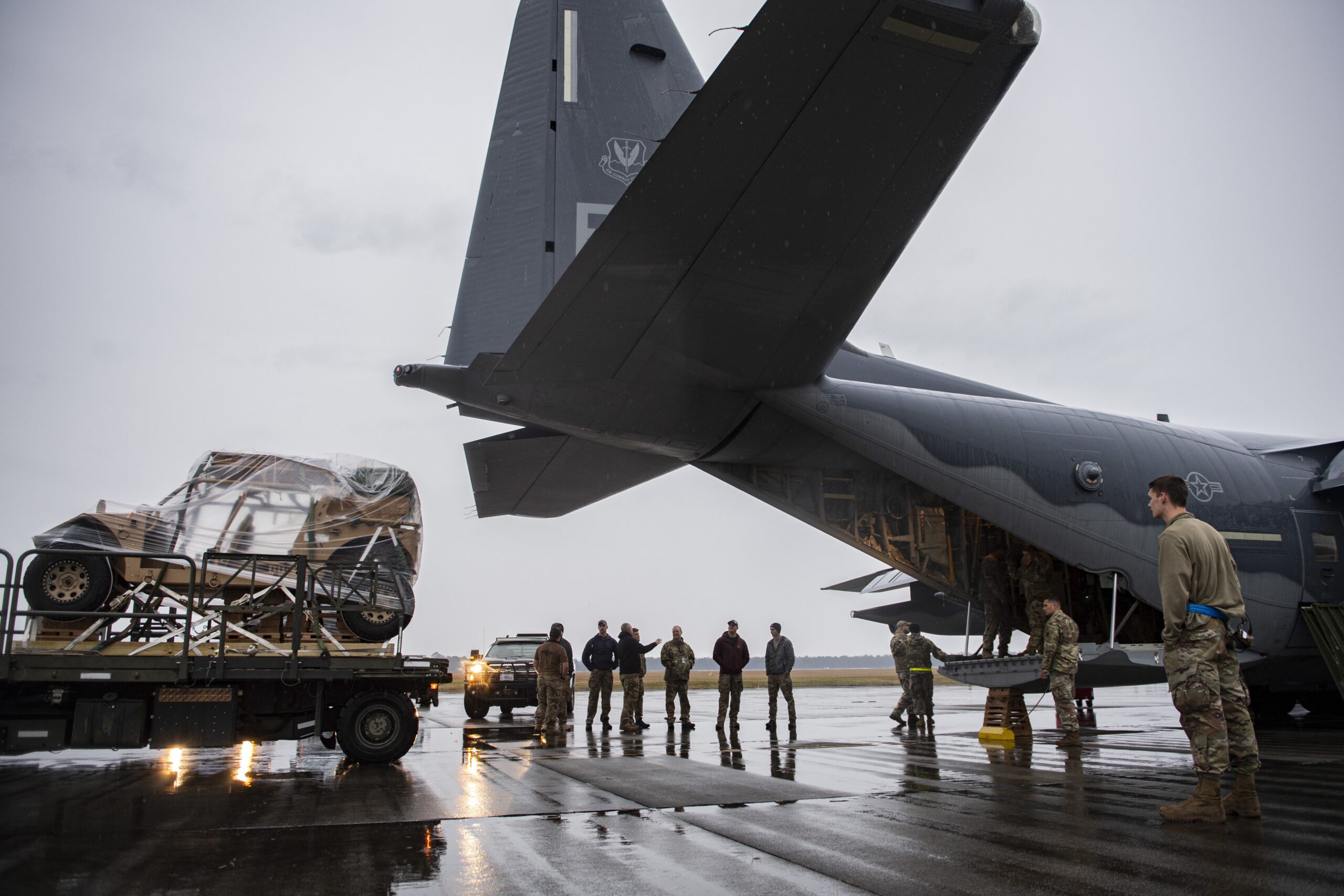
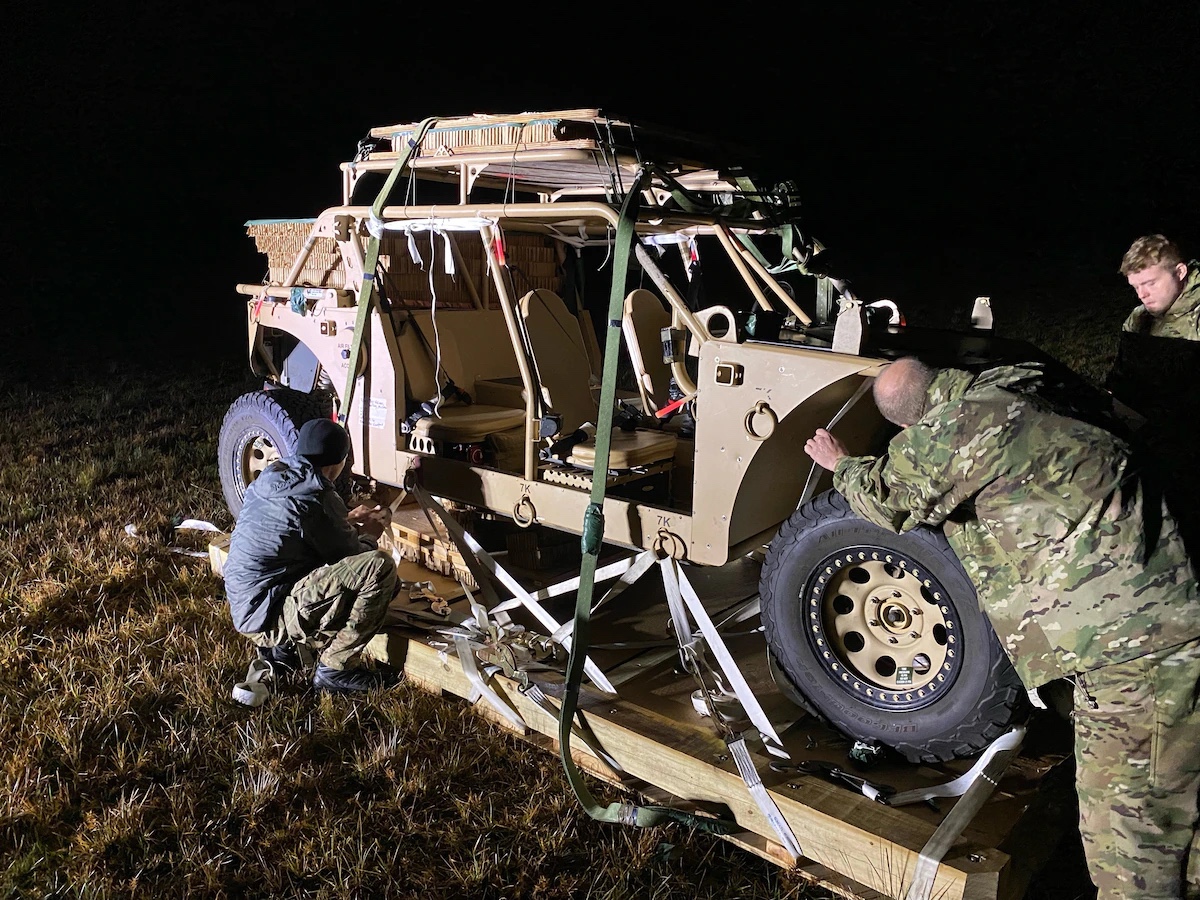
The Side by Vehicle (SXV) is the newest Search and Rescue Tactical Vehicle added to the 347th Rescue Group’s arsenal, bringing more firepower and range than other models.

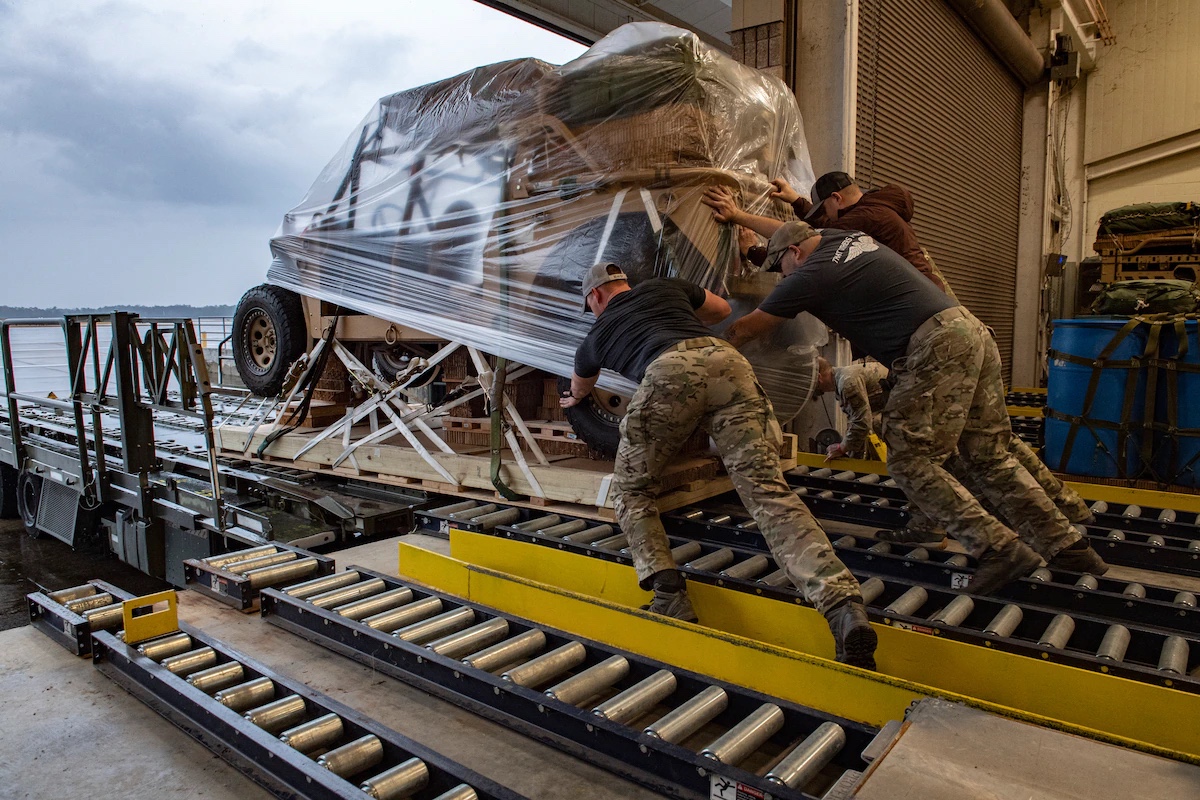
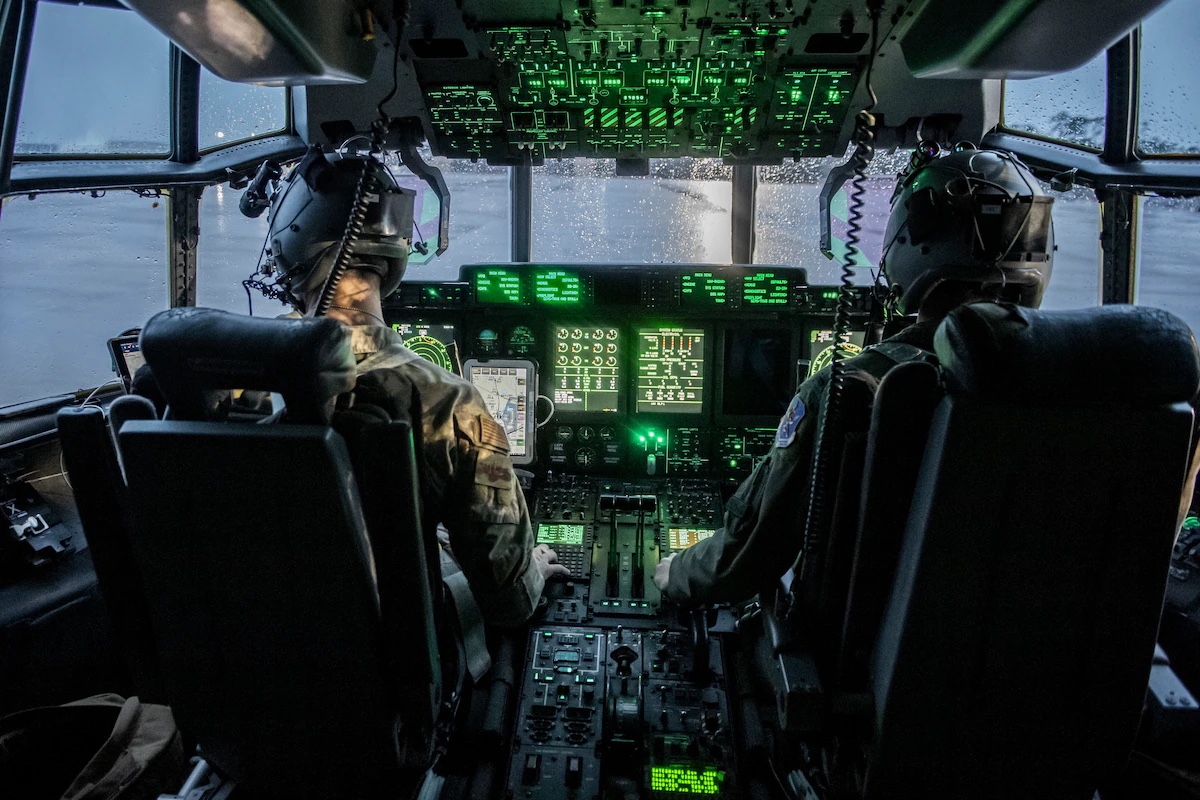
Although the 38th Rescue Squadron has been integrating the SXV into ground combat training scenarios, this was the first time they teamed up with the 71st RQS for an aerial delivery of an SXV, Jan. 20.

“This is the first step in building greater ground mobility options for the 38th Rescue Squadron and Air Force Special Warfare,” said Lt. Col. Michael Vins, 38th RQS commander. “Wherever paratroopers and combat rescue officers can land, we can potentially drop a (a lighter-weight tactical vehicle) or SXV to assist with ground mobility.

“For example, if an airfield is attacked and runway unusable, we could drop in a Guardian Angel team and pair of vehicles to consolidate survivors into a casualty collection point, treat life-threatening injuries, provide security and prepare for extraction,” Vins added.

The drop took roughly a year to execute because the vehicle – stripped of weapons, equipment and fuel – weighs 4,445 pounds and is near the parachute weight limit. Accommodating the increased load required additional preparation.

“In order to be one-hundred percent combat effective, we need to see what works with the aerial delivery package and what does not,” said Master Sgt. Daniel Lillis, 38th RQS pararescue flight chief. “Once the vehicle and team leave the aircraft there may be little to no outside support. We need to determine what is required to be self-sufficient for extended durations of time in multiple environments. Additionally, we’re testing the durability of the vehicle itself upon airdrop – confirming that falling from the sky will not render the vehicle inoperable.”

This vehicle can be used to move equipment, personnel or patients to different locations. Furthermore, it has potential to develop the ability to provide power and be used as a moving communication center. Employing the vehicle requires personnel to know its capabilities, durability and sustainability.

“Understanding capabilities and limitations of our equipment is vital prior to employing it on an actual mission,” Lillis said. “Constantly refining our rescue equipment and employment of the equipment is crucial to remaining effective as we look to the future of warfare and rescue.”

By adding an additional infiltration and exfiltration method, Moody Air Force Base hones their Lead-Wing capabilities. This allows rescue personnel to be more agile.

“The reality is Guardian Angel has a vast array of employment methods such as boats, vehicles, on foot, or any type of aircraft the (Department of Defense) has to offer,” Lillis said. “Preparing for a peer-to-peer, or near-peer threat requires us to think outside the box and train toward other methods of infiltration/exfiltration.”

This drop marks the beginning of solidifying standard operating procedures using the SXV, and although it may not be the primary method for each mission, it adds another option to the rescue toolkit.

“As we progress, we’ll integrate the drops into scenarios with derigging procedures, ground movements and recoveries,” Vins said. “If successful and safe, we’ll be able to show a proof of concept to senior leaders of another infiltration method to bring isolated personnel home.”

Story by Airman 1st Class Deanna Muir, 23rd Wing Public Affairs

Photos by MSgt Daryl Knee