RESEARCH TRIANGLE PARK, N.C. — A bird’s-eye view may take on new meaning thanks to Army-funded research. Scientists found that a protein in bird’s retinas is sensitive to the Earth’s magnetic field thus guiding its migratory patterns. That finding could be key to Army navigation of both autonomous and manned vehicles where GPS is unavailable.
For decades, scientists have been investigating how animals such as birds, sea turtles, fish and insects sense the Earth’s magnetic field and use it to find their way.
Researchers at the Universities of Oxford and Oldenburg, supported through a co-funded effort of the U.S. Army Combat Capabilities Development Command, known as DEVCOM, Army Research Laboratory and the Office of Naval Research Global, and Air Force Office of Scientific Research were the first to demonstrate that a protein in birds’ retinas is sensitive to magnetic fields and may be a long-sought sensor for biological navigation.
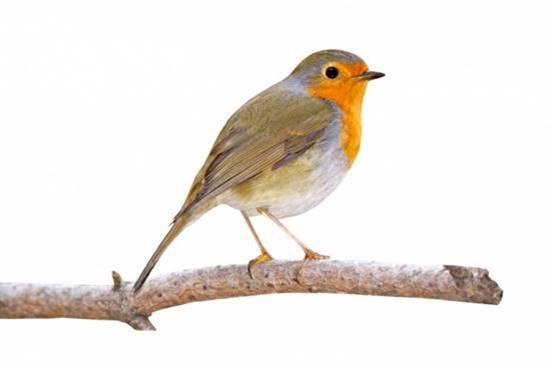
The team discovered that the magnetic sense of migratory birds such as European robins is based on a specific light-sensitive protein in the eye. The research, published in Nature, identified the protein that the scientists believe allows these songbirds to detect the direction of the Earth’s magnetic field and navigate their migration.
“This research not only demonstrated that cryptochrome 4 is sensitive to magnetic fields, but importantly also identified the molecular mechanism underlying this sensitivity,” Dr. Stephanie McElhinny, a program manager at the laboratory. “This fundamental knowledge is critical for informing future technology development efforts aimed at exploiting this mechanism for highly sensitive magnetic field sensors that could enable Army navigation where GPS is unavailable, compromised or denied.”
The researchers extracted the genetic code for the potentially magnetically sensitive cryptochrome 4 and produced the photoactive protein in large quantities using bacterial cell cultures. The team then used a wide range of magnetic resonance and novel optical spectroscopy techniques to study the protein and demonstrate its pronounced sensitivity to magnetic fields.
The team showed that the protein is sensitive to magnetic fields due to electron transfer reactions triggered by absorption of blue light. They believe that these highly-specialized chemical reactions give the birds information about the direction of the Earth’s magnetic field, which acts like a magnetic compass.
“While more research needs to be done to fully understand how cryptochrome 4 senses the weak magnetic field of Earth and how this is ultimately translated into signals that are understood by the migrating bird, this new knowledge is an exciting first step toward potential navigation systems that would rely only on the magnetic field of Earth, unaffected by weather or light levels,” McElhinny said.
Because the magnetic field modifies the cryptochrome protein in a measurable way, cryptochrome proteins or synthetic molecules that mimic the mechanism of cryptochrome’s magnetic sensing could be used in a future navigation device.
Detectable changes in the protein would be decoded to indicate the strength and direction of the magnetic field, and thus the navigational position on Earth.
Proteins like cryptochrome consist of chains of amino acids. Cyrptochrome 4 contains four tryptophan amino acids that are organized in series. According to the research team’s calculations, electrons hop from one tryptophan to the next through the series, generating so-called radical pairs which are magnetically sensitive.
To prove this experimentally, the team from Oldenburg University produced slightly modified versions of the robin cryptochrome, in which each of the tryptophans in turn was replaced by a different amino acid to block the movement of electrons.
Using these modified proteins, the Oxford University chemistry groups experimentally demonstrated that electrons move within the cryptochrome as predicted in the calculations and that the generated radical pairs are essential to explain the observed magnetic field effects.
The team also expressed cryptochrome 4 from chickens and pigeons, which do not migrate. The researchers found that the protein is more magnetically sensitive in the migratory birds than either the chickens or pigeons.
“We think these results are very important because they show for the first time that a molecule from the visual apparatus of a migratory bird is sensitive to magnetic fields,” said Professor Henrik Mouritsen, Institute of Biology and Environmental Sciences at Oldenburg University.
But, he adds, this is not definitive proof that cryptochrome 4 is the magnetic sensor the team is looking for. In all experiments, the researchers examined isolated proteins in the laboratory and the magnetic fields used were also stronger than the Earth’s magnetic field.
“It therefore still needs to be shown that this is happening in the eyes of birds,” Mouritsen said.
Such studies are not yet technically possible; however, the authors think the proteins involved could be significantly more sensitive in their native environment.
In cells in the retina, the proteins are probably fixed and aligned, increasing their sensitivity to the direction of the magnetic field. Moreover, they are also likely to be associated with other proteins that could amplify the sensory signals. The team is currently searching for these as yet unknown interaction partners.
“If we can prove that cryptochrome 4 is the magnetic sensor we will have demonstrated a fundamentally quantum mechanism that makes animals sensitive to environmental stimuli a million times weaker than previously thought possible,” said Peter Hore, professor of Chemistry at the University of Oxford.
Operation in a GPS-denied environment is a U.S. Army goal.
The Army has to be prepared to operate in environments where the technology has been degraded or denied by enemy action, officials said.
In additional to the Army, Navy, and Air Force, the European Research Council also supported this research. The collaboration is also a key part of a Collaborative Research Center funded by the German Research Foundation.