GORE-TEX Professional

Archive for the ‘Guest Post’ Category

Soldier Center Helmet Lab Technology Leads to Revolutionary New Combat Helmet

Saturday, March 27th, 2021

NATICK, Mass. – Research performed in the Helmet Laboratory at the U.S. Army Combat Capabilities Development Command, or DEVCOM, Soldier Center has led to a revolutionary new combat helmet.
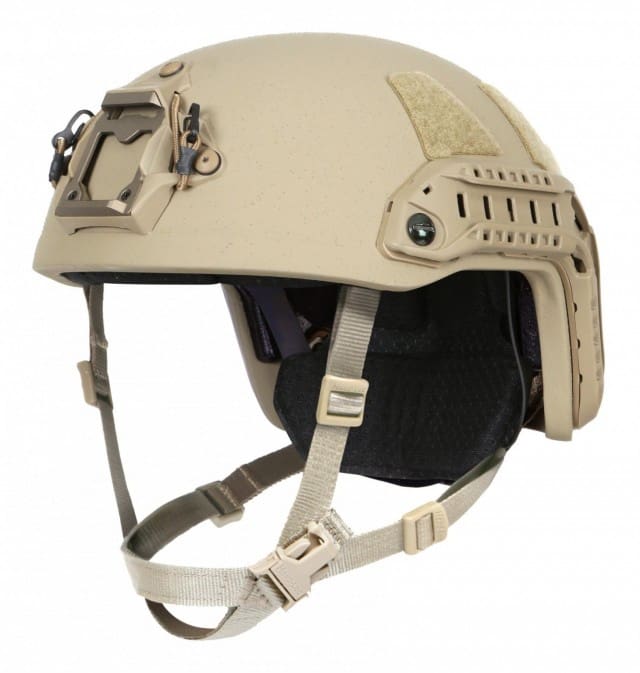
Due to the Soldier Center’s Helmet Lab technology, and subsequent efforts working with key industry partners, the new combat helmets will provide the warfighter protection against a higher level threat – protection that previously could only be accomplished with a much heavier applique/helmet combination.

Researchers in the DEVCOM Soldier Center Helmet Laboratory have spent the past decade working to optimize combat helmet performance by developing new modeling, design and processing techniques. Combat helmets are comprised of flat sheets of ballistic material pre-formed into a helmet shape and then processed at a high temperature and pressure.

“Wrinkling and folds occur as the flat fabric conforms to the three-dimensional shape” said Jason Parker, a DEVCOM Soldier Center mechanical engineer. “These seams, wrinkles, and folds seriously degrade the ballistic performance, requiring more material and more mass to protect against a given threat. Through our research, we determined how these defects are introduced, how they affect ballistic performance, and how to eliminate them. The culmination of this research is a novel machine and process which produces a seamless, uniform helmet, free from defects such as folds and wrinkles.”
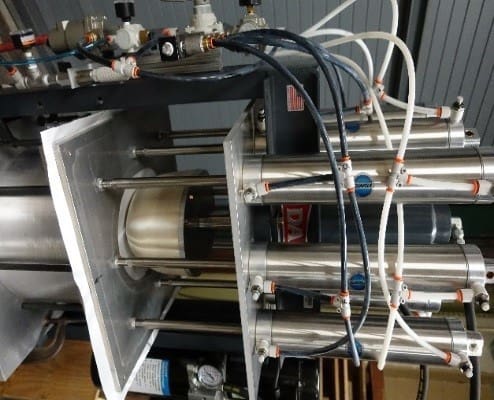
In 2015, the Helmet Laboratory developed a novel pre-form apparatus, process, and optimized helmet ply layup design. The Soldier Center used this technology to develop prototype helmets demonstrating breakthrough performance, providing a higher level threat protection that could previously only be achieved with the addition of a ballistic applique.

“In 2017, we tested prototype helmets targeting a higher level threat that were fabricated using our novel helmet preforming apparatus,” said Robert DiLalla, team lead of the Ballistic and Blast Protection Team in DEVCOM Soldier Center’s Soldier Protection Directorate. “The results far exceeded our expectation as we were getting stops well above the requirement and at 40 percent less weight than the current capability. The results were replicated with another batch of prototype helmets confirming that we had developed a new capability to significantly increase Soldier protection.”

Since 2017, the Helmet Laboratory, at the request of senior Army leadership, continued to mature and transition the technology to industry partners by establishing several Cooperative Research and Development Agreements, or CRADAs, and Research & Development contracts.

“After the Helmet Lab first demonstrated this breakthrough performance, the team worked diligently with our industry partners to rapidly transition this technology and contribute to the advancement from laboratory prototype to production ready helmets,” said David Colanto, PhD, who is the program manager for DEVCOM Soldier Center’s Integrated Multi-Threat Headborne System. “The collaborative effort with industry represents a successful technology transition and highlights the fact that Soldier Center applied research and technology demonstration efforts are critical to providing significant improvements to warfighter protection.”

In February 2021, Gentex Corporation announced that one of their Ops-Core® FAST Helmet Systems passed U.S. Government First Article Testing (FAT), a first for a helmet providing a higher level threat protection. This new helmet leverages helmet design and processing innovations transitioned through a CRADA with the DEVCOM Soldier Center’s Helmet Lab.

“This new FAST helmet is the culmination of a multi-year commitment to innovate the novel production processes necessary to manufacture helmets with next-generation ballistic materials,” said Des Walsh, vice president of Advanced Research and Development for Gentex Corporation. “It serves as an excellent example of successful, outcome-oriented government-industry collaborative development, resulting in the most advanced ballistically protective helmet shell ever qualified for production by Gentex and available to the warfighter.”

“It’s been a long road that started with an Army investment in science and technology which led to an invention,” said DiLalla. “That invention, when combined with industry knowledge, led to a finished product that offers a leap ahead level of protection. Today, the warfighter will benefit from that technological advancement. As a result of our efforts, we are currently undergoing a major renovation to our Helmet Lab having added new processing equipment to expand capabilities to help drive future research initiatives.”

By Jane Benson, DEVCOM Soldier Center Public Affairs
US Army Hoping to Field New Oxygen Generator

Saturday, March 27th, 2021

The Army is currently testing an oxygen generator that has a longer shelf life than the one currently in use and will meet the requirement of supplemental oxygen that medics provide to combat casualties.

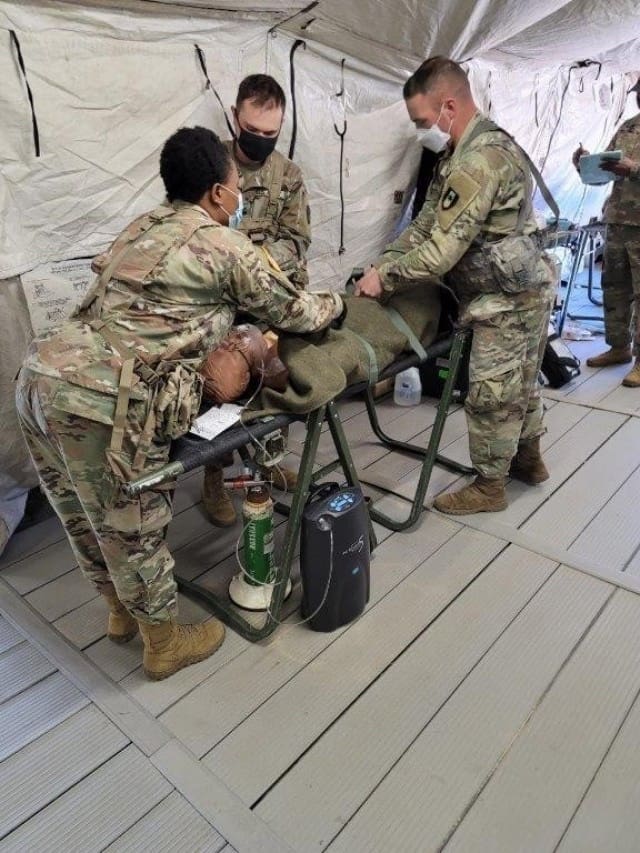
The Field Oxygen Generator Resource (FOGR) is being considered as a replacement for the Oxygen Generator, Field Portable (OGFP) that is currently used to supply supplemental oxygen to sick and wounded Soldiers in the field. In February, the U.S. Army Medical Department Board (USAMEDDBD) conducted an operational test using Soldiers from the 44th Medical Brigade during a field training exercise to test the effectiveness and suitability of the set up and operation of the FOGR to provide critical care.

According to Archie C. Kinnebrew Jr., lead test officer with USAMEDDBD, the success of the February test event will inform decisions that determine if and when the FOGR is fielded to Army units.

“There is truth in operational testing. Army leadership uses the results from test events to facilitate risk-reduction for product fielding,” Kinnebrew said. “The test articles under consideration will not only be evaluated by the testing community, but will also include input from the intended end-users on the battlefield. These test events ensure that Soldiers have a voice in the acquisition and deployment of new and improved systems.”

Kinnebrew had words of praise for the 44th Medical Brigade Soldiers who put the FOGR to the test through a series of exercises.

“The Soldiers of the 44th Medical Brigade – 36th Medical Company Area Support and the 240th Forward Resuscitative Surgical Team – were enthusiastic while putting the FOGR to use during the test,” Kinnebrew said. “They provided honest feedback, which greatly assisted the test team in capturing the data needed. Their participation was key to the success of this test event and is greatly appreciated. The professionalism and dedication displayed by these Soldiers really made me feel proud.”

Austin S. Langdon, assistant product manager with Warfighter Deployable Medical Systems, U.S. Army Medical Materiel Development Activity at Fort Detrick, Md., said the Army is replacing the OGFP because of sustainability issues.

“The old device was designed to operate 10-12 hours a day and 7 days a week. This is the case for most portable Oxygen Concentrators (POCs) on the market. However, when the device sits on a shelf, maintenance issues arise from lack of use, which are very costly,” Langdon said.

Langdon said that USAMMDA is currently testing two commercial off-the-shelf (COTS) products. One of the devices being tested has the ability to be placed on the shelf for up to three years without any need for maintenance, a bigger advantage over the current model in use.

“Since this is a COTS item, the devices being tested are already in production and can currently be purchased. However, the Army still needs to test it for airworthiness and also MIL-STD-810H testing,” Langdon said.

MIL-STD-810 is a United States Military Standard that emphasizes tailoring an equipment’s environmental design and test limits to the conditions that it will experience throughout its service life, and establishing chamber test methods that replicate the effects of environments on the equipment rather than imitating the environments themselves. Although prepared specifically for military applications, the standard is often used for commercial products as well.

The OGFP weighs 12 pounds and was an advanced development item that was specifically designed for the Army’s use. FOGR outweighs the current device by a few pounds, but has less maintenance issues.

Langdon said that the Army is looking to get quantitative data from the testing that will allow for informed decisions on these variants and if they will fit the end user’s needs.

When asked when FOGR will be available to the Army, he added, “These devices are both already in production. If one is selected, it will be fielded to the force later this year.”

By Jerome Mapp

FirstSpear Friday Focus: Limited Quantities Stratton Flannel Blowout

Friday, March 26th, 2021

Limited quantities, sizes and colors in stock of Stratton Flannels. This year’s flannels are 100% American made in heavier 9 ounce weight and there are also some of last year’s flannels in 4 ounce weight.

Act now before they’re gone. Limited time only— 10% Stratton Flannels use code FLANNEL10 at checkout.

Premium construction with oversized breast pockets, exterior hang loop, and two button closure on forearm and cuff. They are machine washable and oversized to accommodate 3% shrinkage after a few cycles in the wash. Please note that the Stratton Flannel is an oversized design, step down one size from your normal T-shirt size for a standard fit.

Promo Code expires March 28, 2021 at 11:59pm. Only orders using promo code will receive the discount.

For more information about FirstSpear, check out www.first-spear.com/stratton-flannel-7385.

Machine Learning Shows Potential to Enhance Quantum Information Transfer

Friday, March 26th, 2021

RESEARCH TRIANGLE PARK, N.C. – Army-funded researchers demonstrated a machine learning approach that corrects quantum information in systems composed of photons, improving the outlook for deploying quantum sensing and quantum communications technologies on the battlefield.

When photons are used as the carriers of quantum information to transmit data, that information is often distorted due to environment fluctuations destroying the fragile quantum states necessary to preserve it.

Researchers from Louisiana State University exploited a type of machine learning to correct for information distortion in quantum systems composed of photons. Published in Advanced Quantum Technologies, the team demonstrated that machine learning techniques using the self-learning and self-evolving features of artificial neural networks can help correct distorted information. This results outperformed traditional protocols that rely on conventional adaptive optics.

“We are still in the fairly early stages of understanding the potential for machine learning techniques to play a role in quantum information science,” said Dr. Sara Gamble, program manager at the Army Research Office, an element of U.S. Army Combat Capabilities Development Command, known as DEVCOM, Army Research Laboratory. “The team’s result is an exciting step forward in developing this understanding, and it has the potential to ultimately enhance the Army’s sensing and communication capabilities on the battlefield.”

For this research, the team used a type of neural network to correct for distorted spatial modes of light at the single-photon level.

“The random phase distortion is one of the biggest challenges in using spatial modes of light in a wide variety of quantum technologies, such as quantum communication, quantum cryptography, and quantum sensing,” said Narayan Bhusal, doctoral candidate at LSU. “Our method is remarkably effective and time-efficient compared to conventional techniques. This is an exciting development for the future of free-space quantum technologies.”

According to the research team, this smart quantum technology demonstrates the possibility of encoding of multiple bits of information in a single photon in realistic communication protocols affected by atmospheric turbulence.

“Our technique has enormous implications for optical communication and quantum cryptography,” said Omar Magaña?Loaiza, assistant professor of physics at LSU. “We are now exploring paths to implement our machine learning scheme in the Louisiana Optical Network Initiative to make it smart, more secure, and quantum.”

Visit the laboratory’s Media Center to discover more Army science and technology stories.

By US Army DEVCOM Army Research Laboratory Public Affairs

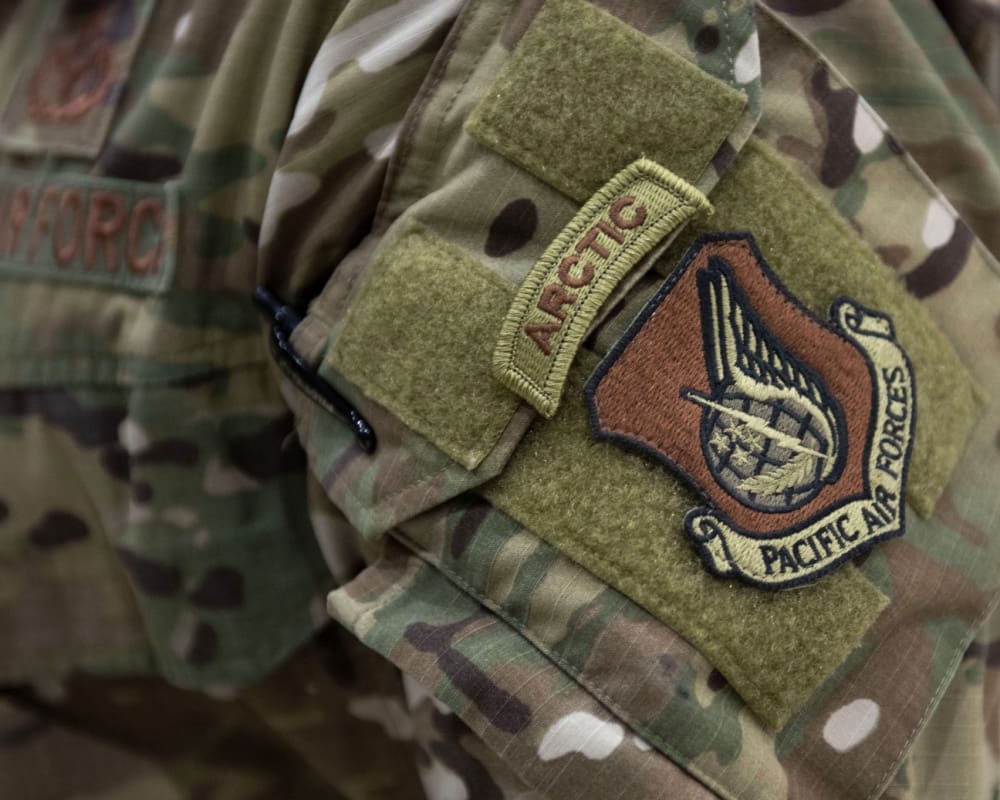
11th AF Establishes Special Experience Identifier and Wear of “Arctic” Tab for Arctic Leader Qualified Airmen

Wednesday, March 24th, 2021

In January, LT Gen David Krumm, the Commanding General of the 11th AF which is responsible for air operations in Alaska signed a memorandum creating the Arctic Leader Qualification program, awarding a Special Experience Identifier (3LA) and award of the Arctic tab for those qualified.

The 11th AF is responsible for 79% of DoD Arctic operations and the program is intended to support the 2019 DoD Arctic Strategy. The baseline training is conducted at Alaskan Command’s Arctic Defense Security Orientation. This three-day course covers Arctic history, Alaska Native history, threats from adversaries and provides an extensive big picture overview. After additional experience, the Arctic Leader SEI and tab may be awarded.

In addition to ADSO, Airmen must complete one of the following:

1 Year on station operating in cold weather environment

Fulfill leadership role in exercise Arctic Edge. Arctic Eagle, Navy ICEX, or similar

Deploy in support of contingency op north of 60deg N parallel

USAF Arctic Survival Training

USARAK Northern Warfare Training Center Cold Weather Leader/Orientation Course

USMC Mountain Warfare Training Center Cold Weather Leaders Course

Naval Special Warfare Training – Kodiak

Previously awarded the USAF Arctic “A” Device, Navy Arctic Service Ribbon, USCG Arctic Service Medal, or Antarctic Service Medal

Image by A1C Emily Farnsworth.

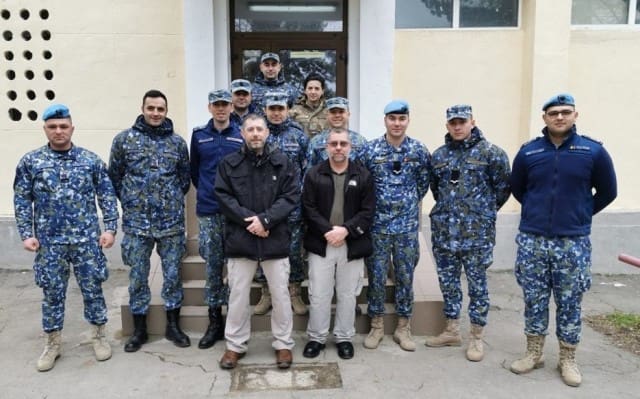
US Army Soldiers Provide Romanian Airmen New Equipment Training, Support Allied Readiness

Wednesday, March 24th, 2021

TOBYHANNA ARMY DEPOT, Pa. – Tobyhanna Army Depot personnel extended the organization’s reach last month when they traveled to a Romanian seaside community to train allies of the United States.

A two-person team traveled to Constanta, Romania last month to conduct Defense Advanced GPS Receiver (DAGR) New Equipment Training (NET) for Romanian Air Force artillery battalions. NET is an enduring workload for the depot and delivers training to military units after receipt of new assets, ensuring Warfighters across the globe know how to use lifesaving equipment on the battlefield.

Depot personnel spent a week instructing Romanian Airmen on the overall operations of the DAGR, typically used as part of the Patriot missile system. While NET missions often encompass a wide range of service members, this iteration of the training focused on a targeted group of 11 users, who were educated on the functionalities of DAGR. Students learned through classroom instruction as well as hands-on, practical exercises designed to ensure they could perform to Army Standards when operating the asset. Tobyhanna’s instructors gave the students rave reviews for their enthusiasm.

“The Romanian Airmen were very sharp and quick to learn. They made our job easy,” said Gregory Wirth, a training instructor in the Field Logistics Support directorate. Fellow training instructor Vincent Zuranski agreed.

“We had a great rapport with the class,” they said, adding that one highlight of the trip was the authentic Romanian food the Airmen treated them to every day. Wirth and Zuranski also noted the region’s rich history, home to many ancient Greek and Roman settlements.

The mission was the NET team’s first excursion out of Northeastern Pennsylvania since the onset of the COVID-19 pandemic. While travel into the country was relatively easy, returning home to Tobyhanna was a significant challenge, according to Wirth.

“Because COVID-related guidelines are always changing, there was uncertainty about what we’d need to do to get back to the U.S.,” said Wirth. “We ended up needing a negative COVID test for return travel through Germany – not something easy to navigate while in a foreign country where you don’t speak the language. Luckily, our students and personnel at the embassy helped us obtain the necessary information so we could get home.”

Despite the challenges, the duo said the opportunity to travel was more than welcome.

“As someone who travels for a living, I found it difficult to not be able to support our important missions across the world. It was extremely exciting to get back out on the road to support our Warfighters,” Zuranski said.

In addition to DAGR, Tobyhanna provides NET for military personnel on the Common Remotely Operated Weapons System (CROWS) and a variety of other systems. The mission is directly aligned with the depot’s long-range strategic plan, Toby 2028, specifically the C5ISR Readiness and Shape the Future lines of effort.

The program benefits all members of Team Tobyhanna, according to Eric Walker, who supervises the NET team.

“NET ensures Soldiers worldwide get the training they need to keep themselves, and the world, safe. When our NET instructors return home, they share any new knowledge with the depot employees who are responsible for repairing the equipment here on-post. It’s win-win and a program we’re proud very to support.”

Tobyhanna Army Depot is a recognized leader in providing world-class logistics support for command, control, communications, computers, cyber, intelligence, surveillance and reconnaissance (C5ISR) systems across the Department of Defense. Tobyhanna’s Corporate Philosophy, dedicated work force and electronics expertise ensure the depot is the Joint C5ISR provider of choice for all branches of the Armed Forces and industry partners.

Tobyhanna’s unparalleled capabilities include full-spectrum logistics support for sustainment, overhaul and repair, fabrication and manufacturing, engineering design and development, systems integration, post production software support, technology insertion, modification, foreign military sales and global field support to our joint warfighters.

About 4,000 personnel are employed at Tobyhanna, which is located in the Pocono Mountains of northeastern Pennsylvania. Tobyhanna Army Depot is part of the U.S. Army Communications-Electronics Command. Headquartered at Aberdeen Proving Ground, Maryland, the command’s mission is to empower the Soldier with winning C5ISR capabilities.

By Danielle E. Weinschenk, Lead Public Affairs Specialist

AMC Delivers Multi-capable Airmen During Exercise Mosaic Tiger

Tuesday, March 23rd, 2021

MOODY AIR FORCE BASE, Ga. (AFNS) —

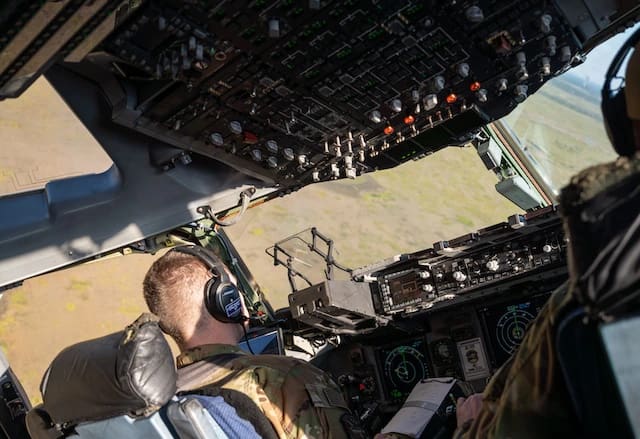
Aircrew from the 3rd Airlift Squadron at Dover Air Force Base, Delaware, and the 6th AS, at Joint Base McGuire-Dix-Lakehurst, New Jersey, participated in exercise Mosaic Tiger led by the 23rd Wing at Moody AFB Feb. 22-26.

The exercise tested Agile Combat Employment skills in a simulated deployed environment to train multi-capable Airmen for the future. Airmen from Air Mobility Command took part in the exercise to enhance readiness and reinforce AMC support to the joint warfighter as well as support of Air Combat Command.

ACE refers to the ability to launch, recover and maintain aircraft away from main air bases and employ the aircraft, as well as multi-capable Airmen from atypical locations. For this exercise, Moody AFB served as the headquarters, while Florida’s MacDill AFB, Patrick Space Force Base and Avon Park Air Force Range served as forward and contingency operating locations.

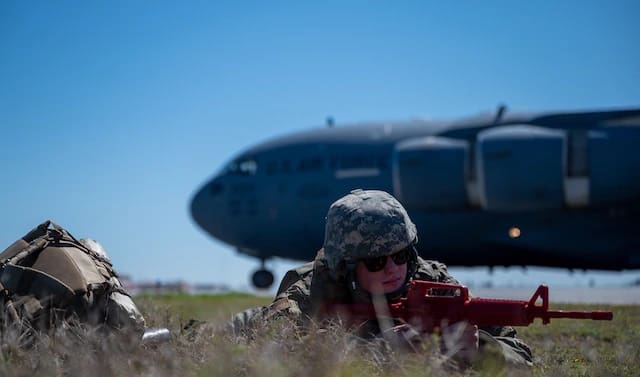
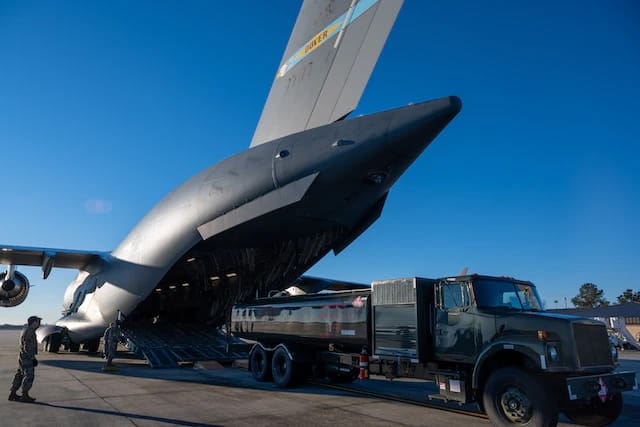
Multi-capable Airmen teams from a variety of Moody AFB units deployed to the locations across Florida. The Dover AFB C-17 Globemaster III provided passenger transportation and equipped Airmen downrange with necessary accoutrements.

“In order to create a realistic combat environment, you have to have logistical support to do so,” said Maj. Mike Gilpatrick, 6th AS chief of tactics. “In a realistic combat environment, the C-17 would be able to support ACE via delivering multi-capable Airman teams to various forward operating bases.”

Over the course of the five-day exercise, 13 AMC aircrew members transported over 244,370 pounds of cargo and 231 passengers to and from all exercise locations on the C-17. The cargo included vital equipment such as bomb-loading carts, aerospace ground equipment generators and a fuel truck.

“If you don’t have a C-17, you can’t accomplish as many objectives when you are trying to test out the capability,” Gilpatrick said. “We’re delivering multiple Airmen to multiple bases, and you can now have a more dynamic and challenging environment for the exercise to take place in. If you don’t have a C-17 there, you can’t deliver as many folks and stuff to places. Therefore, you can’t have as challenging of a problem set you have to solve.”

Moody AFB also supplied aircraft such as the A-10 Thunderbolt II, HH-60G Pave Hawk, HH-60W Jolly Green II and the HC-130J Combat King II. E-8 Joint Stars, belonging to Robins AFB, also provided support though ground surveillance.

“Our Airmen are performing at a very high and innovative level,” said Lt. Col. Kenneth Roberts, 23rd Mission Support Group deputy commander. “They’re looking for solutions, and the key in this new environment is finding those new solutions.”

Echoing Air Force Chief of Staff Gen. Charles Q. Brown, Jr.’s “Accelerate Change or Lose” strategy, Gen. Jacqueline Van Ovost, commander of AMC, said adaptive and agile Airmen, capable of accomplishing tasks outside their Air Force specialty code, are vital to delivering rapid global mobility in today’s operating environment.

“By operationalizing our innovate, execute and learn methodology, we will aggressively expand upon current capabilities to generate and project the force, defend installations and networks and keep the joint force informed and synchronized across the competition continuum,” Van Ovost said.

Capt. Reed Fleming, 3rd AS pilot said exercises such as Mosaic Tiger have helped mobility Airmen understand their role and skills necessary for the ACE concept.

“Through the implementation of the ACE concept, we’re going to see more integration and more cross talk, with ACC learning how they can use AMC effectively as well as AMC being willing to be flexible for the ACC assets,” Fleming said. “This (was) a great opportunity for us to come together to work (toward) a common goal.”

By A1C Faith Schaefer, 436th Airlift Wing Public Affairs

Advancement Creates Nanosized, Foldable Robots

Monday, March 22nd, 2021

RESEARCH TRIANGLE PARK, N.C. — Army-funded researchers created nanosized robots that could enable locomotion, novel metamaterial design and high-fidelity sensors.



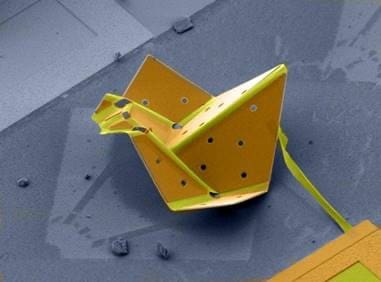
Cornell University researchers created micron-sized shape memory actuators that fold themselves into 3D configurations and allow atomically thin 2D materials with just a quick jolt of voltage. Once the material is bent, it holds its shape, even after the voltage is removed.


To demonstrate the technology, the team created what is potentially the world’s smallest self-folding origami bird.

“The research team is pushing the boundary of how quickly and precisely we can control motion at the micro- and even nano-scales,” said Dr. Dean Culver, program manager for Complex Dynamics and Systems at Army Research Office, an element of the U.S. Army Combat Capabilities Development Command, known as DEVCOM, Army Research Laboratory. “In addition to paving the way for nano-robots, the scientific advancements from this effort can enable smart material design and interaction with the molecular biological world that can assist the Army like never before.”

The research may result in future applications 10 to 20 years from now, he said.

In a peer-reviewed article published in Science Robotics, researchers said this work could make it possible for a million fabricated microscopic robots releasing from a wafer to fold themselves into shape, crawl free, and go about their tasks, even assembling into more complicated structures.

“We humans, our defining characteristic is we’ve learned how to build complex systems and machines at human scales, and at enormous scales as well,” said Prof. Paul McEuen, the John A. Newman Professor of Physical Science at Cornell University. “What we haven’t learned how to do is build machines at tiny scales.”

This is a step in that basic, fundamental evolution in what humans can do, of learning how to construct machines that are as small as cells, he said.

The researchers ongoing collaboration has generated a throng of nanoscale machines and components, each seemingly faster, smarter and more elegant than the last.

“We want to have robots that are microscopic but have brains on board,” said Prof. Itai Cohen, professor of physics at Cornell University. “That means you need to have appendages that are driven by complementary metal–oxide–semiconductor transistors, basically a computer chip on a robot that’s 100 microns on a side. The hard part is making the materials that respond to the CMOS circuits.”

This shape memory actuator developed by the research teams allows them to drive with voltage and make the materials hold a bent shape. The machines fold themselves fast–within 100 milliseconds. They can also flatten and refold themselves thousands of times and they only need a single volt to be powered to life.

“These are major advances over current state-of-the-art devices,” Cohen said. “We’re really in a class of our own.”

These actuators can bend with a radius of curvature smaller than a micron–the highest curvatures of any voltage-driven actuator by an order of magnitude. This flexibility is important because one of the bedrock principles of microscopic robot manufacturing is that the robot size is determined by how small the various appendages can be made to fold. The tighter the bends, the smaller the folds, and the tinier the footprint for each machine. It’s also important that these bends can be held by the robot, which minimizes the power consumption, a feature especially advantageous for microscopic robots and machines.

The devices consist of a nanometer-thin layer of platinum capped with a titanium or titanium dioxide film. Several rigid panels of silicon dioxide glass sit atop those layers. When a positive voltage is applied to the actuators, oxygen atoms are driven into the platinum and swap places with platinum atoms.

This process, called oxidation, causes the platinum to expand on one side in the seams between the inert glass panels, which bends the structure into its predesignated shape. The machines can hold that shape even after the voltage is removed because the embedded oxygen atoms bunch up to form a barrier, which prevents them from diffusing out.

By applying a negative voltage to the device, the researchers can remove the oxygen atoms and quickly restore the platinum to its pristine state. And by varying the pattern of the glass panels, and whether the platinum is exposed on the top or bottom, they can create a range of origami structures actuated by mountain and valley folds.

“One thing that’s quite remarkable is that these little tiny layers are only about 30 atoms thick, compared to a sheet of paper, which might be 100,000 atoms thick. It’s an enormous engineering challenge to figure out how to make something like that have the kind of functionalities we want,” McEuen said.

The team is currently working to integrate their shape memory actuators with circuits to make walking robots with foldable legs as well as sheet-like robots that move by undulating forward. These innovations may someday lead to nanorobots that can clean bacterial infection from human tissue, microfactories that can transform manufacturing and robotic surgical instruments that are 10 times smaller than current devices, according to Cohen.

The team is also researching the principles that need to change in order to design, manufacture and operate machines at this scale.

In addition to ARO, the National Science Foundation, the Cornell Center for Materials Research, the Air Force Office of Scientific Research, and the Kavli Institute at Cornell for Nanoscale Science funded the work.

By U.S. Army DEVCOM Army Research Laboratory Public Affairs