XC3 Weaponlight

Archive for the ‘Guest Post’ Category

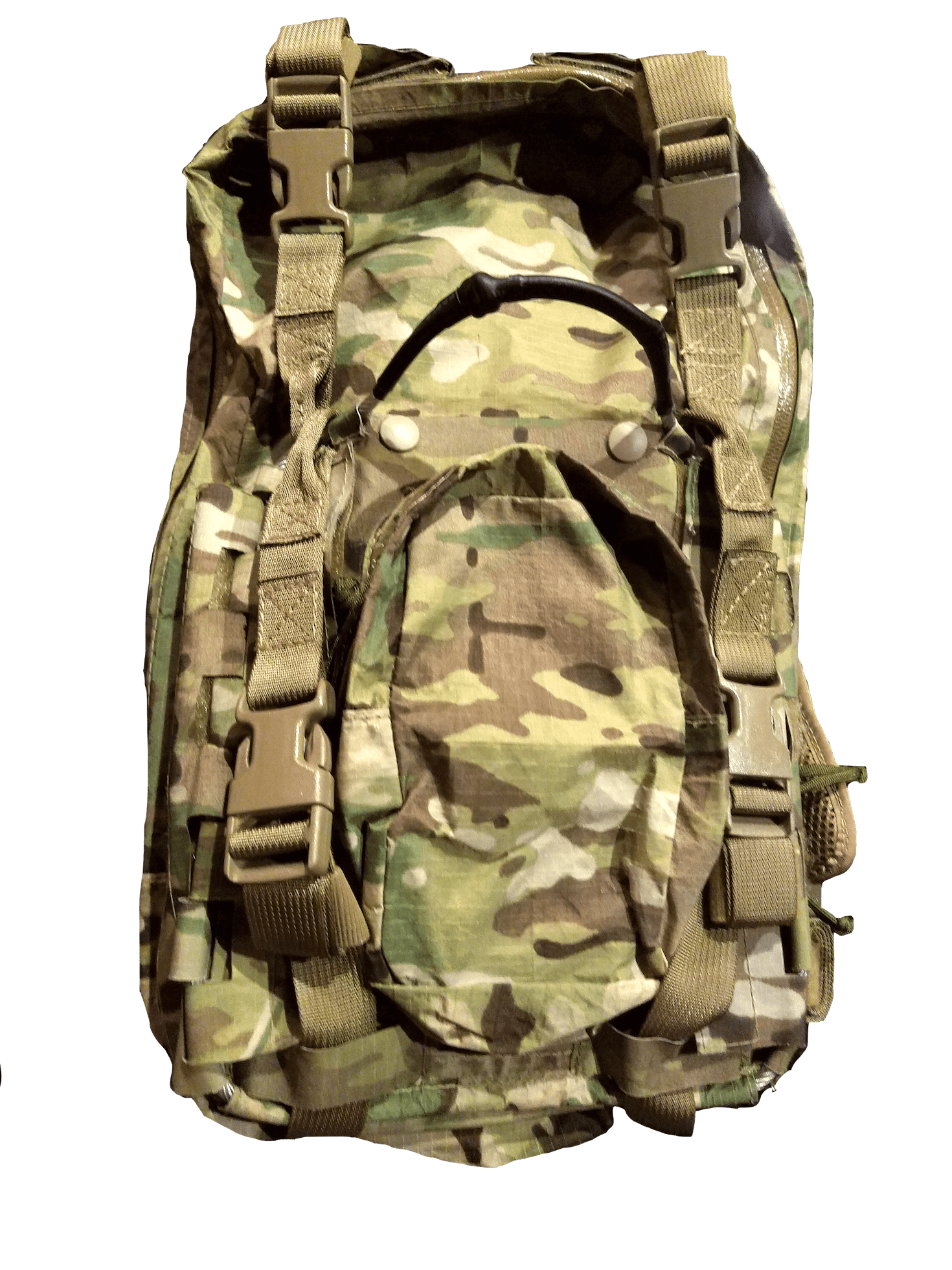
MATBOCK Monday Scepter Jump Assault Pack

Monday, May 18th, 2020

SCEPTER JUMP ASSAULT PACK

Good morning and Happy MATBOCK Monday,

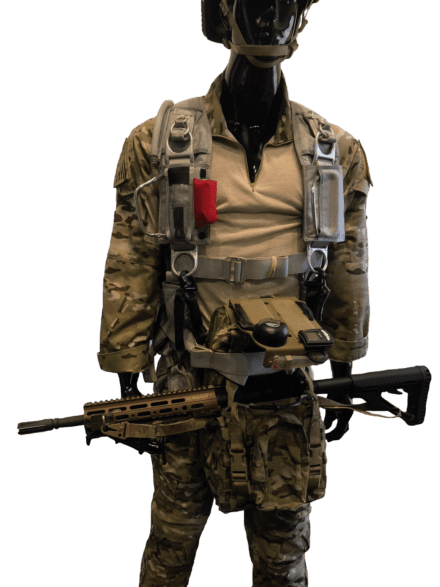
The Scepter Jump Assault Pack is specifically reinforced and designed for jump operations. All strapping is either continuous or connected in the backing of the pack to include the two connection loops meant for attachment to the parachute itself via release lines. Additionally, the system has a 1 pull release system for a primary weapon system. The weapon is mounted and jumped in the horizontal position and then can be released with one pull to give the jumper instant access to the primary weapon if necessary. The belly band of the parachute mounts across the top third of the pack, just above the primary weapon to keep it secure during the jump. The entire front flap of the containment system is released by this mechanism. For easy stowage, the flap can be snapped back into place instead of reweaving the pull handle. The pack also allows integration with the SS precision jump board across the back via webbing and Velcro.

Don’t forget to join Jim and Casey on Monday at 4:30 PM EST as they go live Instagram to demo the pack and answer all of your questions!

www.matbock.com/products/jump-assault-pack

SCUBAPRO Sunday – Nova Series Lights

Sunday, May 17th, 2020

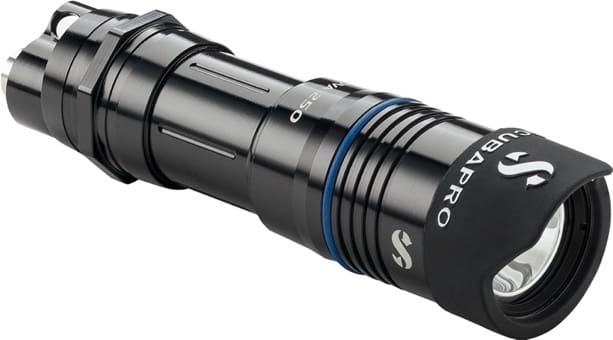
The SCUBAPRO Nova series of lights has long been a standard for recreational and professional divers around the world. SCUBAPRO has updated its range of underwater lights with the new Nova 850 and Nova 250 dive lights. All the lights in the series have been updated with new colors and features. All lights are available in a non-reflective matte black, blue accents aluminum body while still providing the same lightweight long-term durability.

The new Nova 250 is a versatile dive light that can be stored in the smallest BCD pocket or mounted on a helmet or the rail of a gun. It offers three modes: 100% power, 50% power, and Flash, it is also equipped with an over-pressure valve to release battery off-gassing, making it the safest small light on the market. Delivering 250 lumens of illumination, Double O-ring seals ensure watertight integrity. An extended light head shroud prevents the light beam from blinding other divers. They have over-pressure valve releases battery off-gassing – a safety feature not commonly found on dive lights of this size. A depth rating of 492ft/150m ensures worry-free lighting in virtually all diving conditions. It can be used with the Ops-Core single clamp. So, it can fit on any ACH Rail helmet.  

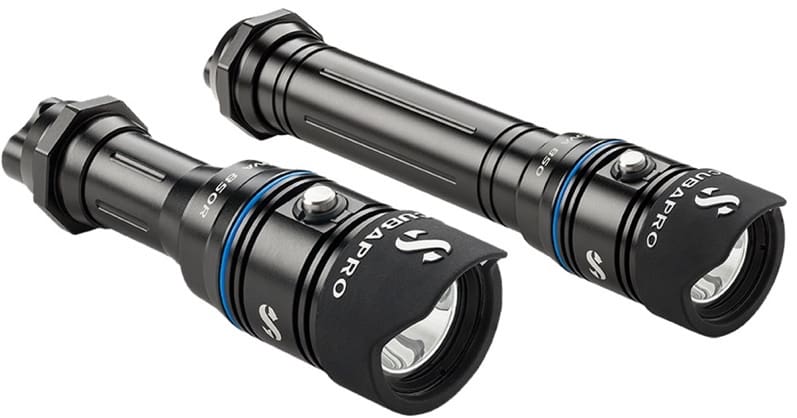
The Nova 850 series replaces the previous 720 models, with an updated lumen rating and brighter beam. The lights are available as either the Nova 850, which uses 3 C-cell batteries or the more compact 850R, which uses a single rechargeable lithium-ion cell. Both models are also available in a ‘Wide’ version, The Nova 850 Wide delivers the same illumination and offers the same features as the Nova 850 but is equipped with a wider 80° beam. All the models are constructed from heavy-duty aluminum, and depth-rated of 492ft/150m ensures worry-free lighting in virtually all diving conditions.

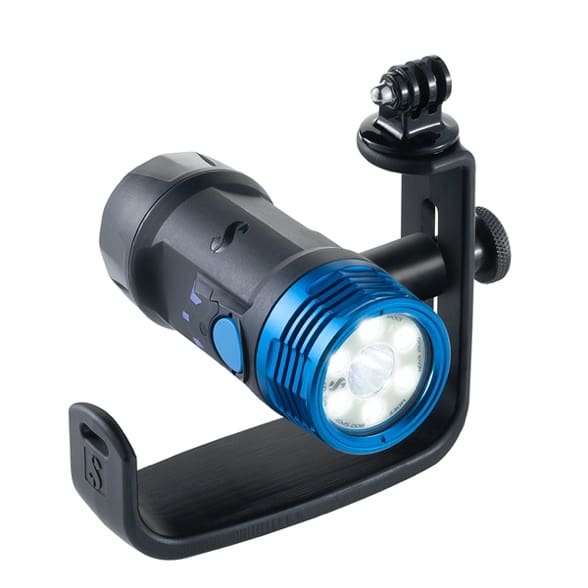
The powerful Nova 2100 SF (Spot Flood) multi-use dive light offers both a 65° wide beam and a 15° spot beam to perfectly match different diving situations. Five light modes plus an emergency signal mode provide lots of versatility, with one-button control for easy operation. Extremely reliable, the waterproof battery compartment is isolated, so even if the O-ring seal fails, water cannot reach the internal electronics. The Nova 2100 SF comes as a set with both a large and a small a Goodman handle, plus a pistol grip handle and a GoPro adapter. 

Dual beams include a powerful 2100 lumen 65° wide beam and 800 lumens 15° spot beam. Wide beam features 6 Cree XM-L2 LEDs; the spot beam features 1 Cree XPL LED. Five primary light modes: 100% Flood, 50% Flood, 100% Spot, 50% Flood + 75% Spot, and 25% Flood + 50% Spot. Hidden emergency signal mode offers a one-second blink interval or an SOS Morse code. Just push and hold the power button for four seconds to activate. Simple one-button control lets you power on and off, adjust brightness, and switch beam angle. It provides 55 minutes of burn time at full power and constant brightness. The light is depth tested to 328′ (100 meters). Corrosion-proof metal light head improves heat dispersion and increases durability.

AFRL Adapts PJ Tactics for COVID-19 Monitoring

Sunday, May 17th, 2020

WRIGHT-PATTERSON AIR FORCE BASE, Ohio – The Air Force Research Laboratory is leveraging tactics from the Air Force pararescue (PJ) community, employing a new tool that can monitor multiple patients’ vital signs, helping to alleviate the lean doctor-to-patient ratio that many medical facilities are facing amidst COVID-19.

“One of the struggles doctors and nurses are having in highly-affected hospitals right now is similar to what PJs deal with—a high ratio of patients assigned to a low ratio of medical personnel,” said Dr. Greg Burnett, Airman-Machine Integration Product Line lead in AFRL. “Add in the contagion element, and our team saw the emergent need to adapt our medical monitoring tool for widespread use so that multiple patients could be cared for remotely.”

So Burnett and his team have been hard at work adapting this agile technology, originally developed for PJs to use down range, for hospitals and other health care facilities so they too can monitor the vitals of more patients.

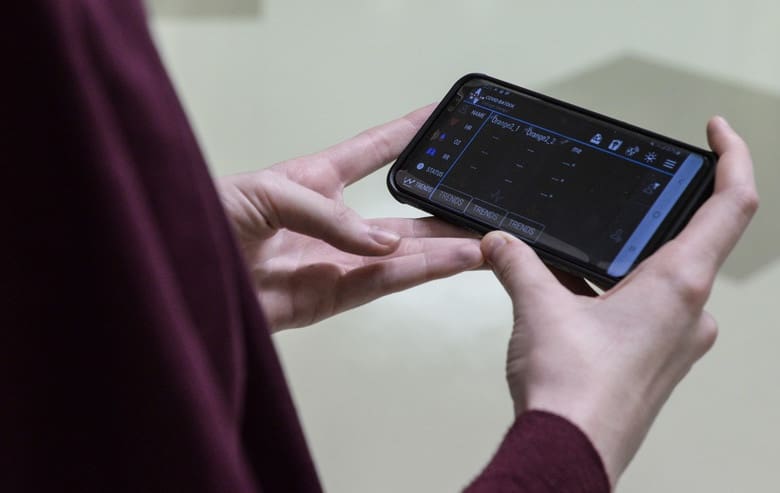
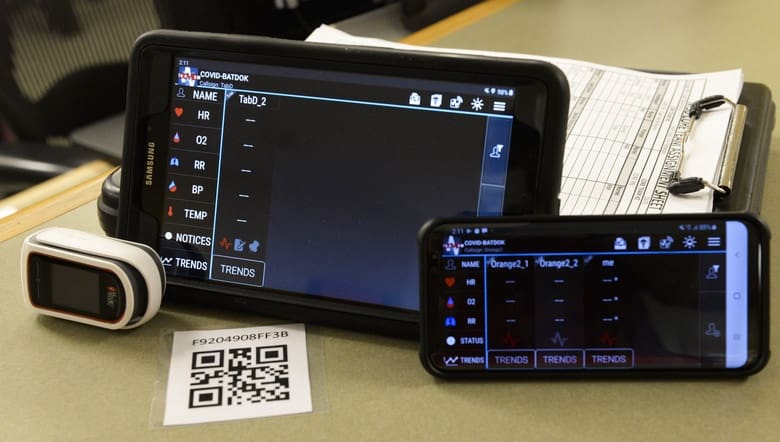
The solution is a medical monitoring tool called the Battlefield Assisted Trauma Distributed Observation Kit, or BATDOK. The original version of this tool has been under evaluation by military medics for about four years and was deployed operationally about a year ago. Developed in AFRL’s 711th Human Performance Wing, it is a smartphone-based medical information software tool that can take in sensor data for real-time health-status monitoring for multiple patients. The team has made improvements along the way to this Android application with the help of direct feedback from operators down range using the device.

This adapted version, however, removes the combat casualty care aspects of the medical monitoring tool, said Burnett, but still allows for the remote monitoring sharing of patient vitals and secured networked data dissemination. These features can help prepare doctors and nurses as they work to maintain situational awareness over multiple patients—while also working to maintain their own health and safety.

But with this newer, more streamlined vital-monitoring version of BATDOK, the AFRL team will collaborate and receive direct feedback from their new customers—healthcare providers at the Wright-Patterson Medical Center. AFRL began the first of three phases of testing with BATDOK at the base medical center in mid-April.

This first phase involves comparing data of a single patient who has agreed to have vitals monitored using both traditional methods as well as using BATDOK. The time required for each phase is unknown, but each phase will have increased patients and providers.

“Clinical practice guidelines for patients infected with COVID-19, released by the Department of Defense and the Defense Health Agency, strongly recommend continuous oxygen monitoring,” said Dr. Roger Shih, WPMC Internal Medicine director.

Shih said the ability to monitor multiple patients remotely also alleviates the need for medical personnel to change out personal protective equipment (PPE) for individual patient checks.

BATDOK’s tablet interface is user-friendly, Shih explained, and the software is straightforward and intuitive. It allows a single provider to monitor up to two dozen patients with real-time monitoring of their oxygen saturation and pulse.

The BATDOK team’s software development co-leads, 2nd Lt. Matthew Dickinson and 2nd Lt. Corey Mack, discussed how the data moves remotely.

“Monitoring the patients remotely is done through a sensor embedded in the pulse oximeter that is placed on the patient’s finger,” said Dickinson.

Mack added that the sensor transmits vitals remotely to tablets or to workstations that the nurses or other healthcare providers can then monitor.

From a nursing perspective, traditional practice is for the nurses to go to a single location, a telemetry station, to observe the patient’s heart rate, respiratory rate and oxygen saturation, explained Maj. Gary Webb, WPMC Medical Surgical Unit flight commander.

But with BATDOK, which is used through an app on a cell phone, Webb explained that nurses can monitor their patients wherever they are on the unit.

“The benefit of this,” Webb said, “is that if an alarm is going off, the nurse can immediately look at the BATDOK app to see which alarm has sounded and address it. It saves much needed time in this situation.”

All-in-all, BATDOK could allow Wright-Patterson Medical Center to rapidly scale up their ability to perform continuous oxygen monitoring for patients infected with COVID-19, while also keeping staff safer and decreasing use of PPE, said Shih.

The AFRL team, some who have family members in the hardest hit areas of this pandemic, are honored to put their skills to good use.

“It means a lot to the BATDOK team to be able to do our part in stemming the tide of the COVID-19 pandemic,” explained Mack. “Working directly with those who need and use the technology we build has always been a driving factor behind the success of BATDOK. So when we heard there was a need during this crisis, we started working on potential solutions.”

Story by Gina Marie Giardina, Air Force Research Laboratory

Photo by Wesley Farnsworth

A Lost History: 30 Years of the Eagle A-III

Saturday, May 16th, 2020

There are times when a backpack becomes a trendsetter because it is on the forward edge of a fashion trend, creating a bump for an entire industry of companies chasing the idea of “the perfect pack”.  They have cutting-edge styling and advertising campaigns that seem to push the boundaries of art.

Others meet at the intersection of a fitness craze and superb marketing techniques that hook the customer with an idea of quality and durability.

Then there are packs that are the sole survivor of gear purges because—as a veteran acquaintance said—they are like that favorite pair of jeans or broken-in jungle boots that you just can’t throw out.

Merrimack Webster defines the word icon as an emblem or symbol, and the Eagle Industries  A-III assault pack has become an icon of the tactical gear Wild West of the late 1980s, when the military began to veer away from designing equipment in-house and started to procure load-carrying solutions tailored to fit a broad range of requirements. Most veterans who have owned an A-III will tell you without hesitation that it falls into the same category as their favorite pair of jeans and jungle boots.

During prior research on the history of the military pack, I uncovered bits and pieces of the story surrounding the A-III, but it was complicated by so much conjecture, third-hand knowledge and “I know a guy” commentary that I did not make mention of the A-III in the article. I knew it would have to wait for another day, when its full story could be told.
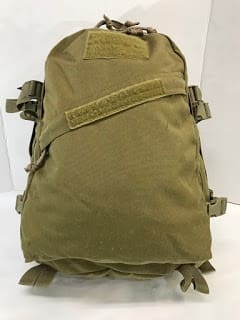

(Original version Eagle A-III. Photo by Steve S.)

I am a history junkie, so when I began the hunt for primary sources, it became difficult to discern the ground truth about a pack which was produced and sold in the hundreds of thousands over its lifetime. I’d come across chatter in tactical gear forums that the A-III was a knockoff of a Gregory design, so I’d spend time down that rabbit hole. Then I would hear whispers about the infancy of Eagle Industries and its relationship with the military, and drop into another rabbit hole for a while.

I caught my first break during a conversation with Kory Brown, product designer at Eagle Industries and owner of the tactical gear outfit Bergspitze Customs. He routinely interacts with some of the staff who were at Eagle when Carver was in charge.

He eventually walked out onto the sewing room floor one day in mid-2019 and spoke with one of the original seamstresses who had worked at the original 4,000 square foot facility in Webster Groves, MO. She told him that the first production model of the A-III was stitched up in November, 1989.

I had my first primary source!

Carver would eventually sell Eagle Industries to ATK/Vista after producing massive quantities of holsters, backpacks, rifle cases and assorted products for military and law enforcement customers during his stewardship of the company. It became the world leader in tactical gear and the industry standard for innovation, durability and functionality. He eventually moved on to other pursuits, opening a new company—Atlas 46—in Fenton, MO. This new venture produces tool storage, tool carriage, tool organization and personal workwear items, while also providing industrial design services. They even produce their own version of the A-III, the A3 Legacy, under the leadership of John’s son, Brian.
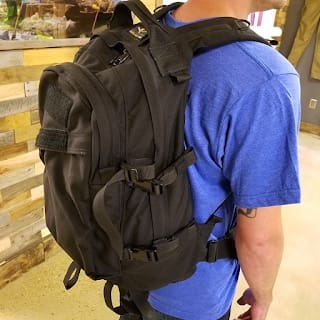

(Photo courtesy of Atlas 46)
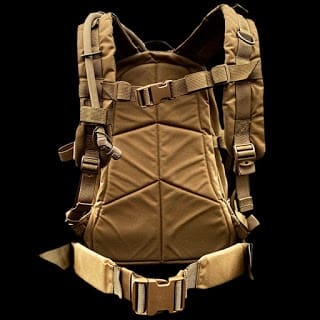

(Photo courtesy of Atlas 46)
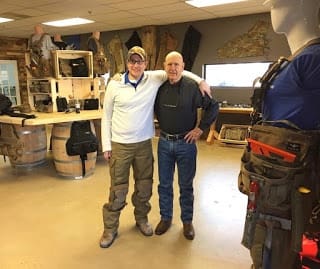

(Brian and John Carver – photo courtesy of Atlas 46)

The A-III was coming up on its 30th anniversary, but even armed with the date it was first stitched up, I wasn’t ready to write up a story about it. The online debates about the lineage of the A-III remained unresolved and this article missed the original publishing date, because I wanted to know the full story. A few knowledgeable folks in the industry had commented that the A-III actually evolved from a Lowe Alpine Systems design, but they could not remember what the original Lowe pack looked like, or how many modifications were made to make it meet military expectations. And there were still the folks who argued that it evolved from a Gregory pack.

The A-III is significant for being one of the first packs which were mass-produced for military customers without any design input from a military engineer, as was the process from years past. It is in fact a simple design, despite it sparking a revolution in load carriage across every branch of the military at the small unit level.

The key elements of the original are:

— A clamshell opening to the main compartment (approximately 16” x 20” x 7”) which allows it be opened about 3/4 of the way by dual zippers;

— A sturdy top carry handle;

— A 12” x 16” x 2” smaller front compartment which opens halfway down by its own dual zippers;

— Curved and padded shoulder straps;

— Side compression straps;

— Dual, covered openings on the sides of the carry handle which were sized to accommodate radio antennae (and eventually hydration bladder hoses)
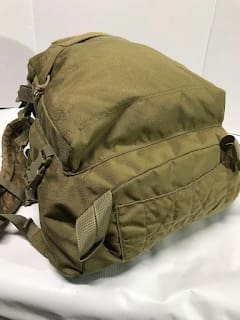

(Photo by Steve S.)
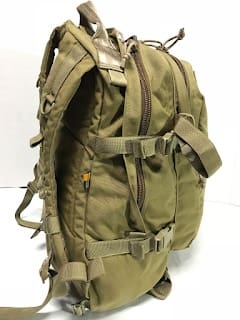

(Photo by Steve S.)
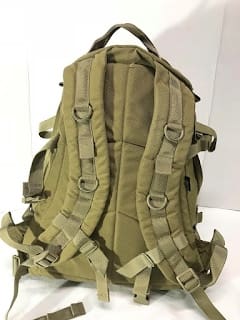

(Photo by Steve S.)

A slim, zippered slant pocket at the front measures 12” x 16” and is designed for quick access to maps, notebooks and writing instruments. A long strip of loop velcro runs along the upper edge of the pocket and can be covered with a velcro-backed nametape or luminous tabs. An accompanying square of loop velcro on the face of the pack and several inches above the slant pocket is sized for a flag or similarly-sized patch. The removable waist belt is not often seen on original examples of the pack, unless the user is trying to keep the pack original to full specifications or carries a lot of weight in it on a regular basis.

The back panel on an original is occupied by an elasticized pocket that can hold a frame sheet if the user requires a more rigid shape. It worked with varying degrees of success, depending on the role that the user employed the pack in.
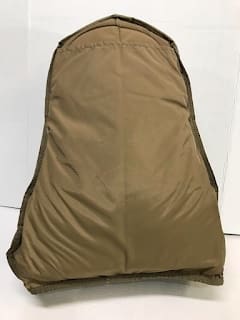

(Photo by Steve S.)

The original A-III was slick inside and out, but future iterations were produced with an internal webbing array to secure a long-range radio or similarly bulky item, along with side pockets and sections of webbing sewn to the outside to allow for canteens, binoculars, first aid kits, and ammunition to be attached by smaller pouches. More recent versions were updated with sections of Pouch Attachment Ladder System webbing, to accommodate Modular Lightweight Load-carrying Equipment pouches.
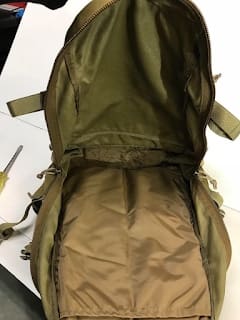

(Photo by Steve S.)

An oversized version was eventually developed with input from both Army and Marine Corps subject matter experts, resulting in an airborne version that could be rigged to a parachute harness. This capability required the design to meet a set of exacting safety certification standards, resulting in a pack that looks markedly different from the original version.
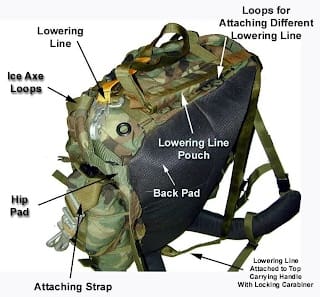

(Photo credit, Eagle Industries)

Kory Brown confirmed that the A-III is not currently available for retail sale at the Eagle website. However, SSD reported on a possible 3-day assault pack prototype at the Eagle booth during this year’s SHOT Show, so hopefully an updated version of the A-III will return to the retail sales lineup in the near future.

The A-III became a hit among the troops because it was available in subdued colors as well as the standard woodland pattern camouflage of the era. It had lashing points at the bottom and its side compression straps allowed for a wide range of accompanying gear to be attached, giving troops a capability to patrol with it for short-duration operations without dragging out a standard-issue pack. It also had a chest strap that was superior to anything on the issued packs of the day, making it at least marginally more comfortable when worn over body armor.

“The Hizara Province” by Elzie Goldman, illustrates use of A-IIIs in the opening years of Operation ENDURING FREEDOM in Afghanistan.

Even I owned an A-III, purchased from a postal exchange at Ft. Story when I was a junior member of the United States Marine Corps Fleet Antiterrorism (there is no hyphen) Security Team Company at Norfolk Naval Air Station in 1993. I eventually sold it some years later, either for beer or gas money and never acquired one again. The simplicity and clean lines of the pack stuck with me though and spurred me to learn the backstory behind this icon.

After almost a year of searching for contacts, nudging Mel Terkla (former lead designer at Kifaru and current owner of PocketUp) to make an introduction on my behalf to Carver, and multiple queries at the Atlas 46 website, I received an email out of the blue that Carver’s assistant would refer my queries to him at his Montana home. She forwarded my questions to John in the hopes that he could recall the A-III’s origins story, something created over 30 years ago.

I crossed my fingers and breathed a sigh of relief, even if ever so slightly.

I now had my second primary source, and what a goldmine of knowledge John Carver turned out to be! He sent me a document which laid out the history as best he could recall, and it filled in many of my gaps of knowledge about the A-III.

Over a series of emails, John laid out how the Eagle A-III came to life and I grew more excited that my search might be coming to an end. While he admitted that his memory has faded in patches, John distilled the information into a clear timeline, mentioning a few of the giants in the tactical gear world and the quiet professionals at the highest tier of American counterterrorism efforts who would use his packs.

John and his mother, Lorene Pyles, began operations in the basement of her St. Louis, Missouri home in 1974, where they produced nylon gear for motorcycle racing, including assorted bags, fanny packs, motocross pants, and a variety of other packs. By 1977, the company was building assault ladder covers for Arnold’s Welding Service (AWS) out of Fayetteville, NC for specialized Tier One military units and SWAT teams.

His memory gets a little less clear here, but as he recalls, Lowe Alpine Systems was a subcontractor to AWS for a pack which AWS in turn sold to satisfy equipment requirements for the 1st Special Forces Operational Detachment-Delta. I know there are going to be eye-rolls out there, but yes, THAT Delta. Because this branch of the Eagle story no longer influences his connections to military sales, I have no reason to doubt his statements.

As John recalled, Lowe had moved components of its manufacturing to Ireland and could not make their usual pack in the four or five colors that Delta required. They needed to be produced in black, olive drab, khaki and other subtle variants, so as to not resemble a full unit deployment when carried by the operators during parts of a mission. Lowe’s minimum order requirements were just too high for Delta to meet, because the unit only needed small batches.

Enter Bill Arnold at AWS, who contacted John about making modifications to the Lowe pack, in the colors which were required. John did that and the A-III was born. The first packs were made with an AWS logo on it, because Arnold didn’t want customers to take notice that he didn’t have the in-house sewing capability to fill the purchase order contracts. At John’s insistence, the classic Eagle logo eventually found its way onto the pack.
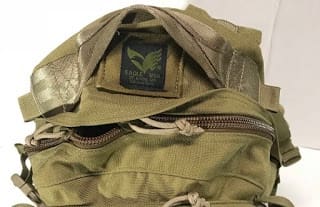
(Photo by Steve S.)

The Eagle A-III started showing up everywhere and Eric Graves (owner of SSD) recalls that in the early 1990s, the black A-IIIs were called “Ninja  Bags” by the members of U.S. Joint Special Operations Command who were issued them. Other U.S. Army Special Forces veterans have recounted to me that their teams were outfitted with one or more of the bags per each team member. It eventually made its way into the general purpose forces, post exchanges and base clothing sales stores, ultimately becoming a pack that a slew of other manufacturers emulated, putting their own slant on the design with side pockets and cosmetic changes.

With each email I exchanged with John, I sensed his pride swelling when he mentioned his staff at the original Eagle facility. He was happy to retell the story of an amazing symbol of American entrepreneurship and dedication to customer service. He was remembering the heydays of a good company and good people.

Unfortunately, the discussion sent me back down another rabbit hole because I was left with the core question which I still felt compelled to answer: what inspired the A-III 30 years ago?

Claims by outside observers that Eagle had copied the Lowe pack still nagged at me, so I reached out to Lowe Alpine to see what someone there could say on the matter. I was assisted by an enthusiastic gentleman who informed me that Lowe had fallen on hard times through mismanagement at several points and was purchased by the company he now worked for as a customer service representative. Unfortunately, the last standing Lowe Alpine System employee had left two years prior to our discussion and he might not have even had knowledge of Lowe’s relationship with special operations units from that era.

I ended the email exchange with the Lowe rep feeling a bit defeated and frustrated. I had come so far, discussing the history of the A-III directly with the former owner of Eagle Industries, but was now left standing at the base of a very high wall.

I went back to John Carver with several photos of 1970s and 1980s Lowe designs, but none of them jogged his memory. The bag he had been asked to modify by Bill Arnold looked very much like the first A-IIIs which Eagle eventually produced. None of the product pictures we talked about came close enough.

On a cold and rainy April day in 2020, I used the collaborative capability of an internet chat tool to have a discussion with three giants in the tactical gear world: Darin Talbot of Extreme Gear Labs, Stephen Hilliard of Blue Force Gear and Eric Graves of SSD.

They knew that I had been on the hunt for the full story behind the A-III and each had contributed a breadcrumb here and there along my three-year path to enlightenment. They also knew my frustrations and had often witnessed the moment when I hit a dead end in a backpack forum, while trying to elicit details on the pack.

As we chatted, I described my communication with the Lowe rep and Eric began digging into his computer to produce some really old catalogs that are now hosted on vintage outdoor gear websites. He linked in the Lowe catalog from 1988 and flashed an example of a blue pack that was rectangular, but only had a few features similar to the A-III. We looked at it for a moment but decided it was too different to have inspired the Eagle version.

We had a nice chat and I decided to take a nap, feeling a bit tired from once again concentrating so hard on the Lowe angle of my search that seemed like just another dead end. Before I shut down my iPad, I went back to the link Eric had provided and started browsing, intrigued by just how many bright blue packs Lowe used to make back in the day.

I flipped a few pages, pinched the screen and zoomed, then flipped another few pages. There were a lot of boxy packs made in the late 1980s, worn by young backpackers wearing tube socks and really shiny nylon shorts.

I yawned, flipped another page and then froze. It couldn’t be. But there it was, on page 15. Offered in black and gray and coming in at 2,190 cubic inches and a weight of 2 lbs, 14 oz, the unmistakable teardrop shape and slant pocket of the  “Adventure III” was staring back at me.

Lowe Adventure III…Eagle A-III. I felt a bit like Indiana Jones and went back to the chat to share my discovery. Everyone agreed that I had found the ancestor to the A-III, and the connection was now indisputable, settling all of the forum debates once and for all.
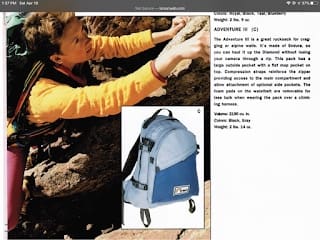
(Source:1988 Lowe Alpine catalog hosted at Larsonweb.com)

I emailed a picture off to John Carver immediately and he concurred that I had finally found it.

So what have I learned along the way during this three-year expedition into the history of a pack that became an icon, surviving for over 30 years and continuing to be held in the highest of regard by veterans who own one?

John Carver and his old Eagle team are another example of what I like to call “essential patriots”. They delivered a product that met the customer’s needs and became an example of American manufacturing along the way. Thousands of American warriors went to war with this pack slung over a shoulder, conducted combat missions and used it during their off-duty hours when they were safely back at home.

John closed one of our email conversations by adding a note that every modern soft goods manufacturer should follow:

“Listen to the customer, build what he asks for, build it to last and sell it at a fair price.”

The A-III lives on because an essential patriot listened to his customer.

I want to thank everyone who reads this article and knows that they assisted me along the way, even in what they may have thought was a minor aspect. It would not have been possible without your insight and patience.

Jon Custis is a veteran Marine infantryman who writes on a variety of tactical equipment, training, and leadership topics.

FirstSpear Friday Focus – Asset Technical Field Shirt

Friday, May 15th, 2020

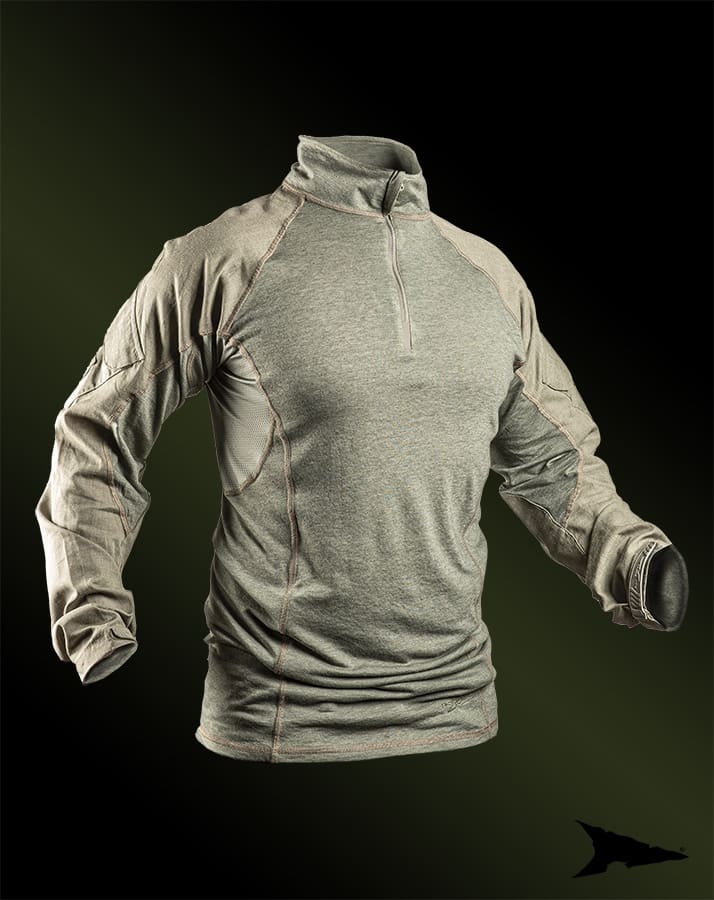
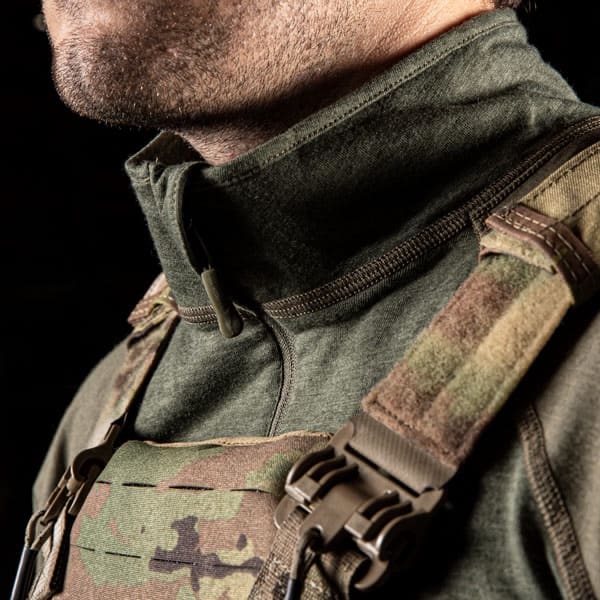
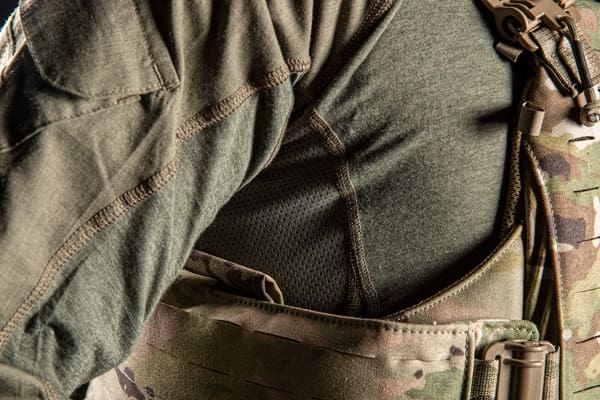
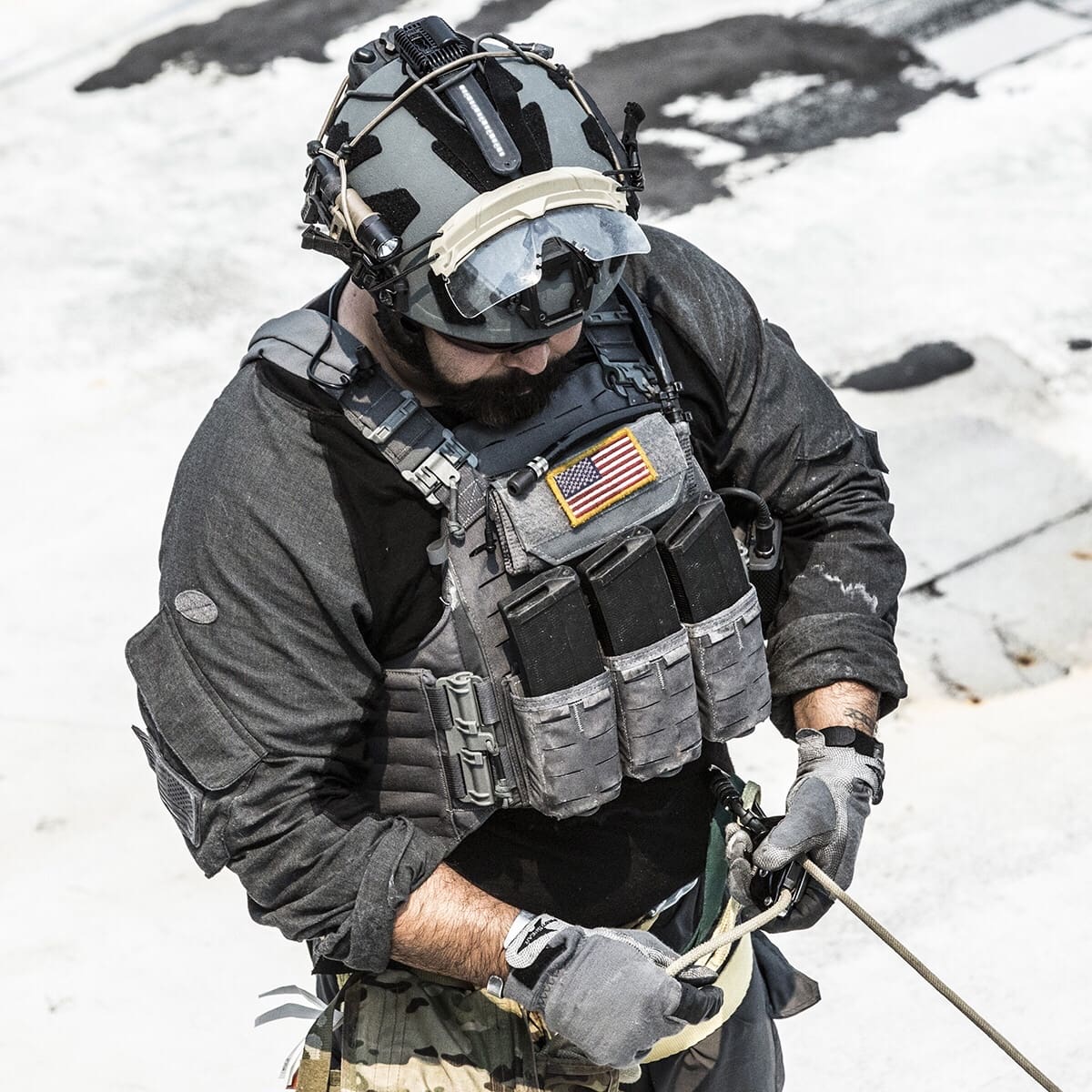
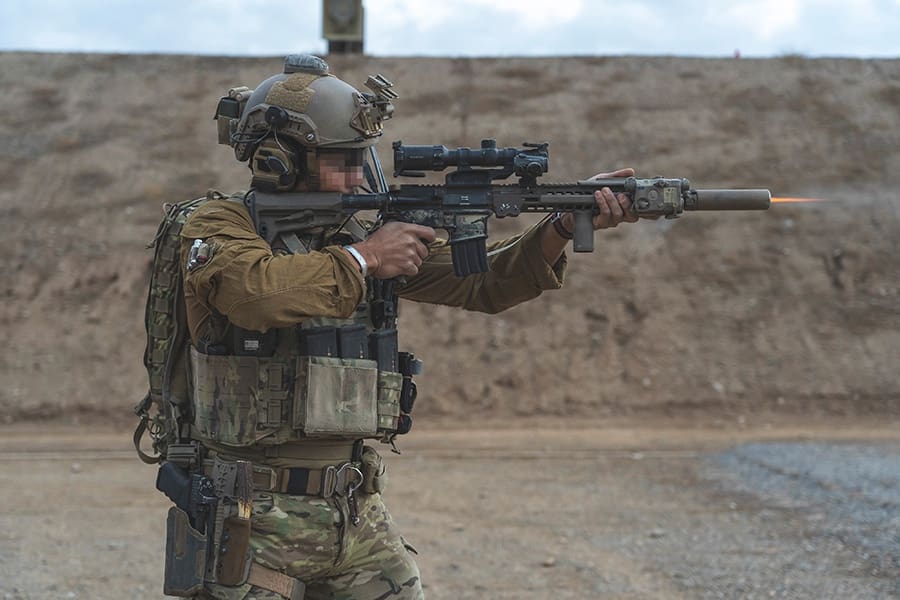
Today we are getting the first look at FirstSpear’s all new color way on the Asset Technial Field Shirt. Originally available in Black and Sand, FS has rolled out an all new Commando green now in-stock. Aside from the new color the Asset has garnered serious attention within US Special Operations thanks to a long list of performance features, materials, and overall comfort.

The torso is constructed from FirstSpear’s proprietary ACM 100 Merino wool and is not only extremely light and comfortable but also does an exceptional job at wicking moisture and offers the naturally inherent antimicrobial and flame resistance of wool.

The sleeves and shoulder yoke are built with a highly breathable Para-Arimid that is double reinforced at the elbows offering impressive heat and flame resistance. FirstSpear used an anti-friction NanoGlide mesh in the arm pits to help keep you cool in the hottest environments.

Adjustable cuffs and generous sleeves can easily be rolled up. The torso is longer than usual to help keep it tucked in during long days and exaggerated movement. Bicep pockets and loop fields for IFF attachment come standard. The high collar helps to save your neck from sling rub. Like most FirstSpear products the Asset is 100% Berry compliant, made in the USA with USA Materials. In-stock and now shipping in Commando, Sand, Black/ Graphite.

www.first-spear.com/the-asset-technical-field-shirt

In Modernization Push, Army Researches Integrated Power Cables for Soldiers

Wednesday, May 13th, 2020

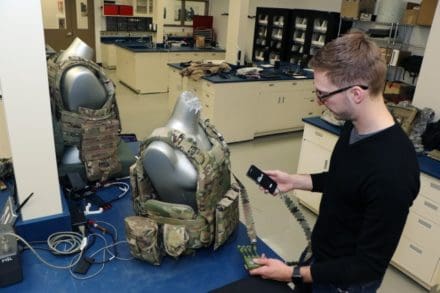
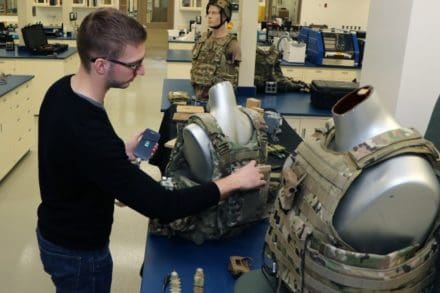
ABERDEEN PROVING GROUND, Md. — Army Futures Command (AFC) is bolstering dismounted Soldiers’ power capabilities by developing integrated, flexible cables for a new generation of modernization priorities.

Enhanced Soldier maneuverability and mobility on the battlefield are among the initial improvements resulting from new cables that will be incorporated into a tactical vest, according to Combat Capabilities Development Command (CCDC) researchers.

CCDC’s Command, Control, Communications, Computers, Cyber, Intelligence, Surveillance and Reconnaissance (C5ISR) Center partnered with the CCDC Soldier Center to investigate integrated power solutions in support of programs across the Army. These include Nett Warrior, Next-Generation Squad Weapons (NGSW) and Integrated Visual Augmentation System (IVAS).

As the Army increases the number of electronic devices that Soldiers need to carry, more cables are required to connect equipment to power sources and share data. In addition, the Army’s modernization initiatives will demand continually increasing rates of Soldier-worn power.

The integrated cables are one solution researchers are developing for a holistic approach.

“This new flexible cable is up to 50 percent lighter than the legacy version,” said Ethan Wise, a C5ISR Center electronics engineer who is leading the project. “It’s much more flexible, less bulky and removes cabling that encumbers a Soldier’s motion when connected to a Conformal Wearable Battery.

“It reduces snag hazards because it can be looped through a tactical vest several times. The new cable feels like the fabric of a standard Army uniform and blends in seamlessly with the camouflage pattern.”

A United Kingdom company initially developed the new cable, and the U.S. Army has been investigating its potential uses through the Foreign Comparative Testing (FCT) Program. The FCT works with Army science and technology organizations to find and evaluate solutions to meet the operational needs of U.S. Soldiers regardless of the technology’s country of origin.

The FCT Program initially focused on the Nett Warrior system, and the CCDC team is now leveraging that science and technology knowledge for high-priority programs such as NGSW and IVAS.

IVAS is a Microsoft-designed heads-up display that functions as a fight-rehearse-train system, among other roles. Its high-tech features, such as augmented reality and aided target recognition, will require continuous power loads for extended time. Flexible cables are a potential fit for IVAS power delivery, Wise said.

For the NGSW program, researchers are investigating a rifle sling composed of materials similar to those used in the new cables, according to C5ISR Center research mechanical engineer Dr. Nathan Sharpes. The benefits would include reduced battery weight on the weapon, more flexibility and greater run times.

In addition to the sling, Sharpes and his colleagues are prototyping new ways of storing energy and routing power on the weapon. These features collectively give the Soldier options to power weapon-mounted enablers to meet changing mission requirements.

“These new weapons will be equipped with sophisticated technologies, likely requiring more power,” Sharpes said. “The straight-forward solution would be to tether the weapon to a larger battery on the vest. However, this introduces a snag hazard and historically hasn’t been popular among Soldiers. Routing power through the sling should yield a more acceptable and familiar-feeling solution.”

C5ISR Center engineers will continue to work on prototypes throughout 2020 for potential use with IVAS and NGSW offices.

By Dan Lafontaine, C5ISR Center Public Affairs

DAF ACT Contracting Executes N95 Mask Production for DoD

Tuesday, May 12th, 2020

The Department of the Air Force’s Acquisition COVID-19 Task Force (DAF-ACT) executed a $126 million contract on May 1 for expanded production of N95 masks—26 million per month—starting in October. The contract, awarded to 3M, will increase the supply chain of N95 masks and resupply the Strategic National Stockpile following increased demand due to COVID-19.

Coordinated through the Office of the Under Secretary of Defense for Acquisition and Sustainment Joint Acquisition Task Force (JATF), and funded through the CARES Act, the contract increases N95 mask production by at least 312 million within the next twelve months. 

A team of contracting officers at the Air Force Life Cycle Management Center, Wright Patterson Air Force Base, Ohio, finalized the deal.

“As an Air Force contracting professional, it’s always a great feeling when you are able to help secure a critical investment in U.S. manufacturing capacity for items that will serve a greater good,” said Nathan Shrider, AFLCMC contracting officer. “It’s an honor to serve with such a dedicated team that is making a difference.”

3M has already placed orders for raw material and two new N95 manufacturing lines. To meet increased production capacity, 3M plans to expand its facility in Aberdeen, South Dakota, and also perform initial production in Wisconsin.

“The Air Force is pleased to execute recent contracts to expand N95 mask production for our nation,” said Dr. Will Roper, the Assistant Secretary of the Air Force for acquisition, technology, and logistics. “Our past initiatives to empower our acquisition workforce and to accelerate programs have put us in a good position to respond to the present crisis with speed and agility. We are proud to be an important part of the solution.”

Roper established the DAF-ACT across the service’s acquisition enterprise to execute requirements from the JATF and to collect and consolidate funding requests needed to recover programs from COVID-19 impacts.

“Our acquisition management and contracting professionals are working seamlessly as part of a whole-of-government response and with industry to ensure we effectively and expeditiously align resources with requirements,” said Maj. Gen. Cameron Holt, DAF-ACT director. “Our team is proud to support critical acquisition efforts that will continue to fortify our nation’s supply chain and resilience.”


MATBOCK Monday Berserker Plate Carrier

Monday, May 11th, 2020

BERSERKER PLATE CARRIER

Good morning and Happy MATBOCK Monday,

Weighing in at only 14 ounces the Berserker Plate Carrier is made from MATBOCK Ghost Material. This makes the carrier extramely lightweight, tough, 100% waterproof and quickly transfers heat away from the body keeping the operator cooler.

Carrier includes:

– Internal dual comms pouches
– Side armor plate pockets
– Shoulder pads
– Integrated reinforced drag handle
– 4-way stretch material around the front and back armor pockets allows for variety of plate cuts, like swimmer cut and ESAPI.

www.matbock.com/collections/berserker/products/berserker-carrier

Image B3

Don’t forget to tune in on Monday at 4:30 PM EST as we go live to demo the Berserker Plate Carrier and answer any questions you may have!