TYR Tactical

Archive for the ‘Guest Post’ Category

Disruptive Technology Levels the Battleground for US Space Force

Monday, November 30th, 2020

Catalyst Accelerator’s (Catalyst), Cyber for Space Applications, launched eight small businesses into the reaches of the U.S. Space Force, with its sixth accelerator Demo Day on November 19, 2020. Powered by Air Force Research Laboratory, Space Vehicles Directorate and sponsored by Booz Allen Hamilton, the cohort of small businesses concluded its 12-week accelerator, gaining traction into moving technology from commercial application to the military warfighter.

Cyber applications have long been the mainstay in the Department of Defense, but with the creation of the U.S. Space Force, a rigorous hunt for disruptive cyber technology has begun. No longer is the warfighter confined to air, land, sea and cyber. Space is now a contested domain, with near-peer adversaries with comparable capabilities, unsettling operations in both the public and private sectors. U.S. data exfiltration by malicious actors is staggering. In 2019 it was estimated that 6.5 million documents per day were stolen by U.S. adversaries, according to keynote speaker Brigadier General D. Jason Cothern, Vice Commander of Space and Missile Systems Center.

The U.S. Space Force is tasked with protecting America’s interests in space, deterring aggressive acts and sustaining operations in this far-off region. With this in mind, Catalyst’s Cyber for Space Accelerator invited small businesses to apply to become a cohort company and demonstrate how their technology might “secure the next generation of space operations and increase resiliency.” “We had a team of 19 people that helped us choose the best companies for this cohort and judging from the response of subject matter experts from Industry and the Department of Defense over the course of the Accelerator, our selection was excellent. I look forward to these companies gaining the traction they need to get their technologies into the hands of the United States warfighters, making the cyber-physical systems they rely on more relevant and secure in the 21st Century fighting domain!” says KiMar Gartman, Program Director of Catalyst Accelerator.

With the support of LinQuest, the platform sponsor, the twelve-week all-virtual accelerator helped cohort companies mature their messaging, understand the government space and pivot their technology to meet the needs of the warfighter. The cohort received guidance from industry and government Sherpas and subject matter experts like Pikes Peak Small Business Development Center; spoke to operational warfighters to determine their needs; were instructed on the acquisition process; and began building relationships with key personnel interested in their technology. Gentry Lane, CEO and Founder of ANOVA Intelligence explained her experience with Catalyst’s accelerator, “I’ve been through other accelerators but Catalyst was different.

They absolutely delivered on their promise to connect us [cohort companies] with people in the U.S. Space Force that make decisions about purchasing and using our technology.”

Demo Day, sponsored by Lockheed Martin, was the Accelerator’s culminating event in which government and industry scouts learned about the cohort’s dual-use technologies that will disrupt space cyber and place the U.S. in an even better position to dominate space. Cohort companies rose to the challenge and presented technologies that will improve warfighter capability today and well into the future. The cohort company pitches can be viewed at catalystaccelerator.space/cacsa
Special Warfare Preparatory Course Changes the Way Airmen Train

Sunday, November 29th, 2020

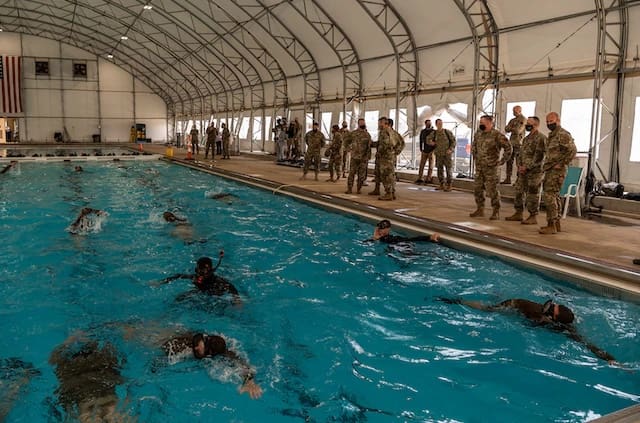
JOINT BASE SAN ANTONIO-CHAPMAN TRAINING ANNEX, Texas – The Air Force’s Special Warfare Training Wing has refined its training program for Airmen attempting to enter the Tactical Air Control Party, Special Tactics or Guardian Angel weapons systems, in an effort to create more well-rounded future operators.

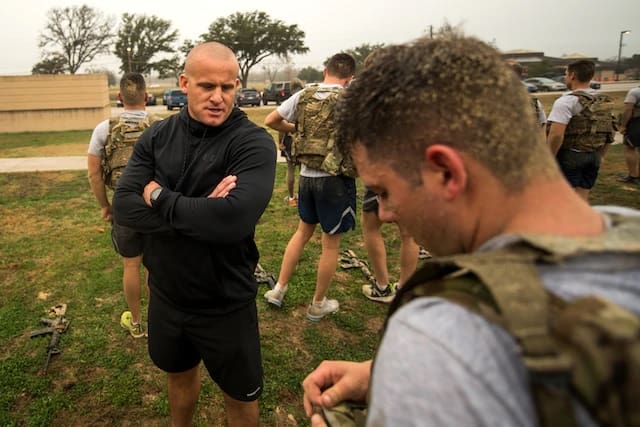
Following graduation from Basic Military Training, new enlisted Airmen interested in becoming a candidate for a career in special warfare must complete the eight week Special Warfare Preparatory Course (SWPC). In this course, training coaches, dieticians, counselors and other staff members expose Airmen to the tools needed to become successful within the various special warfare training pipelines. Upon completion of SWPC, Airmen enter into the course of initial entry for their particular career field.


“Our course is meant to better develop operators,” said Master Sgt. Michael Blout, Special Warfare Preparatory Course superintendent. “We are providing better, more well-rounded training, which provides the Air Force with more capable operators straight out of the training pipeline.”

This deliberate approach to training takes a more holistic edge involving multiple disciplines and modalities consisting of strength & conditioning, mental toughness, nutrition, sleep hygiene and active recovery. Additionally, the SWPC staff incorporates Human Performance monitoring to track conditioning throughout the 8 week course. This Human Performance capability informs the staff on the level of effectiveness for each of the SW candidates.

“In the past, candidates arrived unprepared both mentally and physically for the rigors of the special warfare pipeline, which drove historical levels of high attrition,” said Chief Master Sgt. Todd Popovic, Special Warfare Training Wing command chief. “However, this course provides a firm foundation to educate and prepare each Airmen for what’s ahead and has proven to decrease attrition in the follow-on courses.”

For more information on special warfare career fields visit www.airforce.com/careers/indemand-careers/special-warfare.

By 1st Lt Jeremy Huggins, Special Warfare Training Wing

Navy Sunday – The Navy First Jack

Sunday, November 29th, 2020

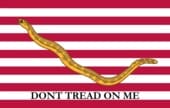
I wanted to write about the U.S. Navy’s first Jack and the history of “Don’t tread on me” in the U.S. Navy, to give people the history of it and to show where it came from and that it had nothing to do with anything other than to tell the King of England we don’t work for you no more. The Navy Jack is not to be confused with the Gadsden flag (yellow flag with a collided up snake, see below). Which possibly started as the flag of South Caroline and later the first Commodores of the U.S. Navy fleet.  

The rattlesnake (specifically, the Timber Rattlesnake) is especially significant and symbolic to the American Revolution. The rattle has thirteen layers, signifying the original Thirteen Colonies. Additionally, the snake does not strike until provoked, a quality echoed by the phrase “Don’t tread on me.”

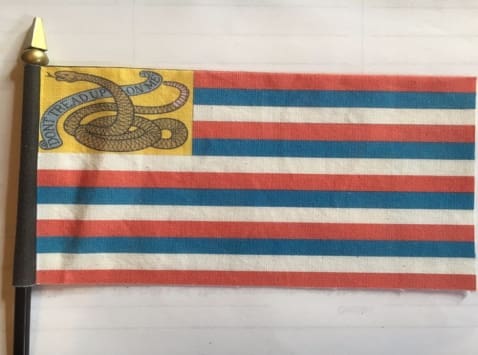
 The United States Navy originally started as the Continental Navy, established during the American Revolution by the Continental Congress by a resolution of 13 October 1775. There is a widespread belief that the Continental Navy ships flew a jack consisting of alternating red and white stripes, having the image of a rattlesnake stretched out across it, with the motto “Don’t Tread on Me.” That is actually hard to prove as “fact.” But there was a letter in 1778 that John Adams and Benjamin Franklin wrote to the Ambassador of the Kingdom of Sicily, thanking him for allowing entry of U.S. ships into Sicilian ports. The letter describes the U.S. flag according to the 1777 Flag Resolution but also tells a banner of “South Carolina, a rattlesnake, in the middle of the thirteen stripes.

It is well documented that the rattlesnake and the motto “Don’t Tread on Me” were used together on several flags during the War of Independence or The American war’ / ‘the war with America ‘as the British call it. The only question in doubt is whether the Continental Navy used a red and white striped flag with a rattlesnake and the motto “Don’t Tread on Me” as its Jack. The evidence is inconclusive, but there are a lot of reasons to think it was. There is reason to believe that the Continental Navy Jack was simply a red and white striped flag with no other adornment.

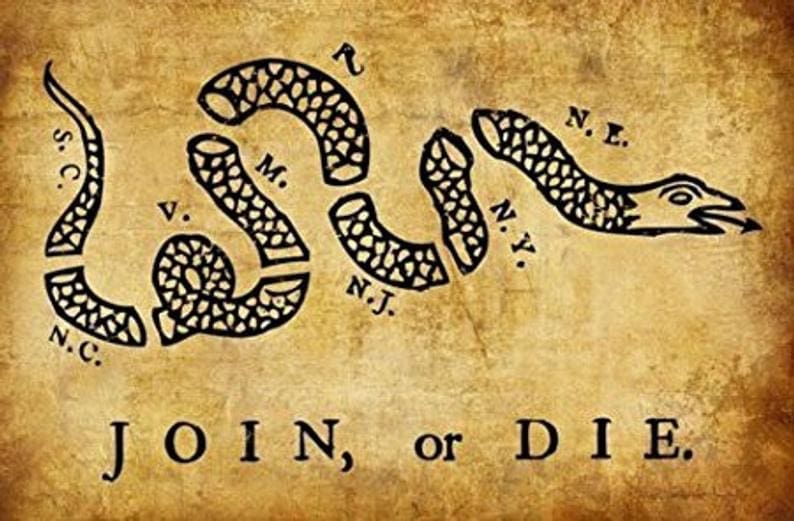
The rattlesnake emerged as a symbol of the colonies of North America about the time of the Seven Years War or the French and Indiana war( the Seven-year war was a global conflict that involved every great European power from 1756-1763 ) when the motto “Join or Die.” first appeared in Benjamin Franklin’s Pennsylvania Gazette in 1754, like a political cartoon reflecting on the Albany Congress. It was intended to get the Americans to join against the French during this time.

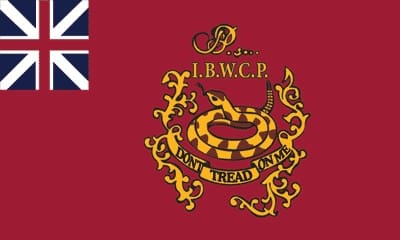
By the time of the War of Independence, the rattlesnake, frequently used in conjunction with the motto “Don’t Tread on Me,” was a common symbol for the United States, its independent spirit, and its resistance to tyranny. Two American military units of the Revolution are known to have used the rattlesnake and the “Don’t Tread on Me” motto: Proctor’s Independent Battalion of Westmoreland County, Pennsylvania, and Sullivan’s Life Guard during the Rhode Island campaign of 1777. The rattlesnake and the motto also appeared on military accouterments, such as drums, and state paper currency, during the Revolution.

The rattlesnake’s image and the motto “Don’t Tread on Me” certainly had associations with the Continental Navy.

On 27 February 1777, a group of Continental Navy officers proposed that the full-dress uniform of Continental Navy captains include a gold epaulet on the right shoulder with “the figure of a Rattle Snake Embroidered on the Strap . . . with the Motto don’t tread on me.” 

In early 1776 Commodore Esek Hopkins, the first and only commander in chief of the Continental Navy fleet used a personal standard (flag) designed by Christopher Gadsden of South Carolina. This flag consisted of a yellow field with a coiled snake and the motto “Don’t Tread on Me.” There is no doubt about the authenticity of Hopkins’s standard, usually referred to as “the Gadsden flag.”  

The only written description of the Continental Navy jack contemporary with the American Revolution appears in Commodore Hopkins’s “Signals for the American Fleet,” January 1776, described as “the striped jack.” No document says that the Jack had a rattlesnake or motto on it. Elsewhere, Hopkins mentions using a “striped flag” as a signal. Since American merchant ships often displayed a simple red and white striped flag, there is a good chance that the striped Jack to which Hopkins refers was the same striped flag used by American merchant ships.

An 18th-century portrait of Esek Hopkins shows him where several warships are displayed. One flies a white flag, with a tree, and the mottos “Liberty Tree,” and “An appeal to God.”(posable Massachusetts first flag, and as the U.S. Navy was started in Mass) Another warship flies a striped flag with a rattlesnake and the motto “Don’t Tread Upon Me.”

The flags in these prints are not at the bow, where a jack would go, but at the stern, the proper place for the national ensign. Again, the pine tree flag was the flag that Mass wanted as the Nation ensign and used by all ships from Mass, and again the Navy was born in Mass, so it goes to say that might have that flag on there. Also, let’s be clear that New England and South Caroline basally started the war. So it also goes to say they would be on our ships. The historical evidence makes it impossible to say whether the Continental Navy used the striped rattlesnake flag as its Jack.

Simultaneously, the evidence suggests strong connections between the symbol of the rattlesnake with the motto “Don’t Tread on Me” and the United States’ earliest naval traditions. Fast forward to 9/11/ 2002. The Navy authorized all active merchant and coast guard ships to fly the First Navy Jack on their bow in port. They did this on the first anniversary of 9/11. Before then, the longest servicing ship was the only ship that was allowed to use it to show they were the oldest commissioned ship still in service (not counting the USS Constitution). All U.S. Navy personal adopted it in the Persian Gulf to wear on their shoulder fighting in the War on Terroir. It is still allowed to be worn on the Navy Working Uniform. The Navy has since gone back to the tradition of only the oldest ship using the “don’t tread on me” flag. Now the USS Blue Ridge. I hate to think this is happening because people think it means something that it doesn’t. So, it is clear that the flag has a long history with the Navy and the U.S.

I wanted to write this because it is now apparently a racist symbol. I am tired of things being highjacked by groups, and, let say, someone who has served 26 years in the Navy can’t wear it, or people think they are a racist. I am not pollical (I say as I write this). If you are a racist, white, black, green, blue, whatever color you are, go out and make a shirt that says “I am a racist” stop taking things from our history that have nothing to do with race and saying that it does. Stop taking history and twisting it into something for yourself. Man, up if you want to be a racist, come up with your own symbol. Don’t make it complicated. Make hats, shirts, and stickers that just say you are a racist. That way, it won’t confuse you or your buddies, and everyone will know where you stand. But don’t use something that has meant so much to this great country’s history and claim it implies something that it never has.

Marines Prepare for European Deployment

Sunday, November 29th, 2020

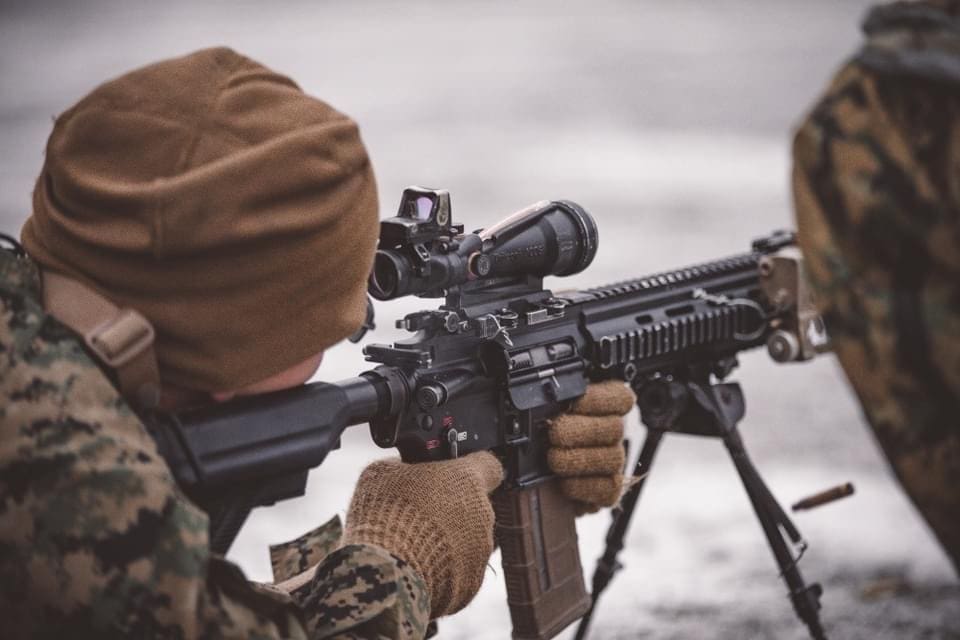
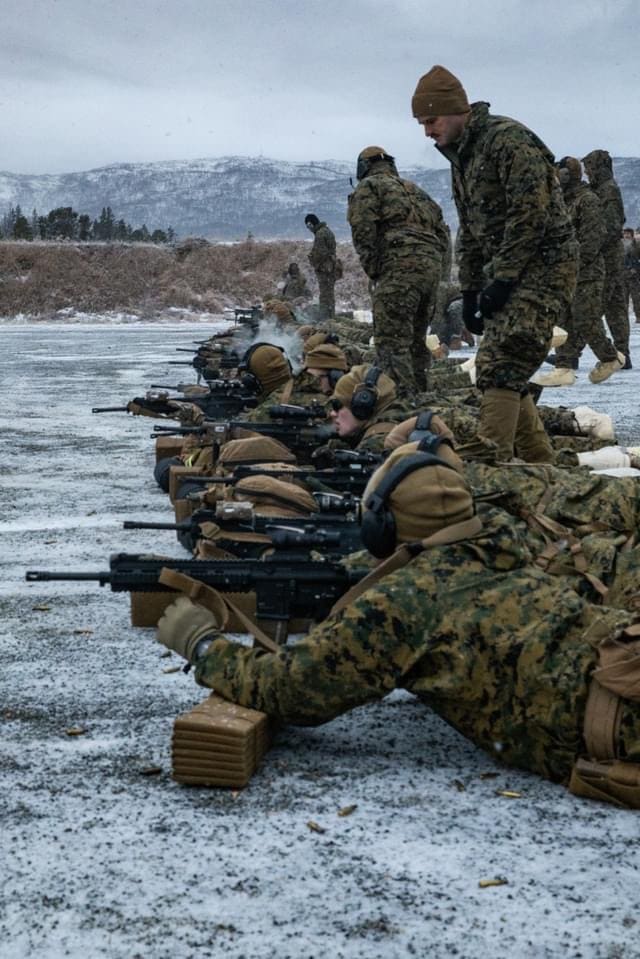
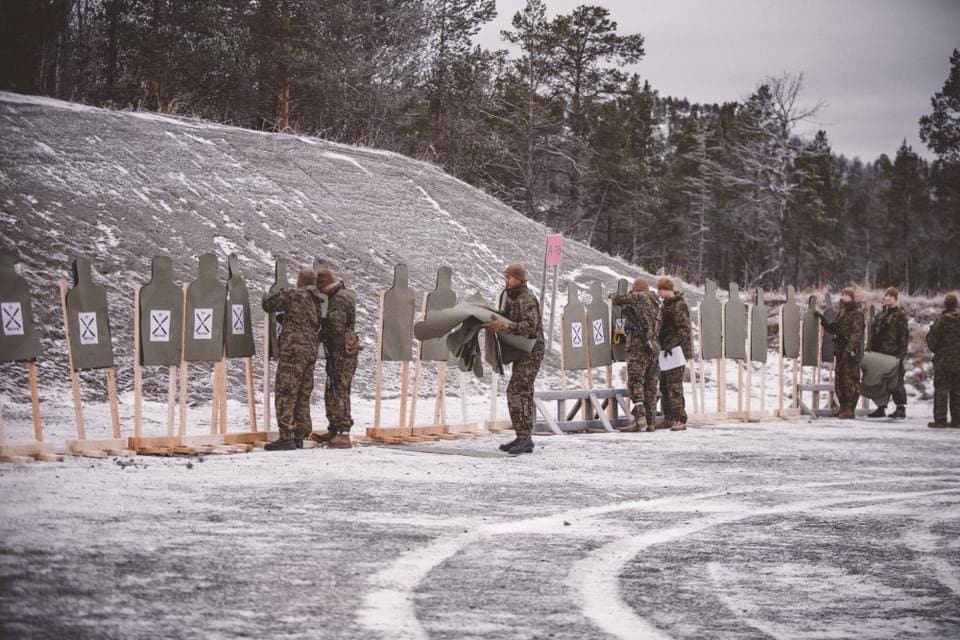
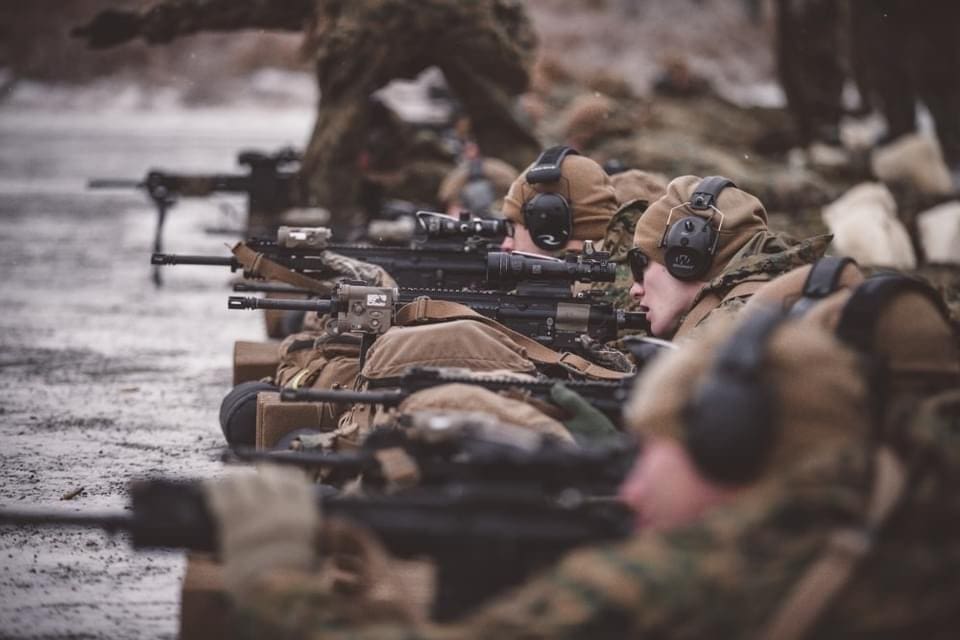
Marines with 3rd Battalion, 6th Marine Regiment zeroed their weapon optics as one of the first training exercises they will be conducting with Marine Rotational Force Europe 21.1. Marines are preparing for arctic cold weather, mountain warfare training, and enhancing interoperability with our Norwegian Allies.

U.S. Marine Corps photos by 2nd Lt. Kayla Olsen and Lance Cpl. Patrick King

FirstSpear Friday Focus – Black Friday Sales & X-RAY Episode 1 Launches

Friday, November 27th, 2020

FirstSpearTV presents X-RAY Team Episode 1.

Check out our nonstandard, nonstocking items page for our Black Friday and cyber Monday sales.

For FirstSpear sale items, go to:  www.first-spear.com/non-stocking-non-standard

Brigantes Presents – ECW/Winter Warfare Series – Shelter

Wednesday, November 25th, 2020

In this series, Brigantes brings you key products that offer the complete solution when working in the colder parts of the world. This week it is Hilleberg Keron 4GT Tactical.

When working in Arctic environments shelter, in what is the only environment where sitting still for a short period of time can lead to serious injury or even death, is absolutely critical. The Keron 4GT tactical provides the perfect solution to this problem.  

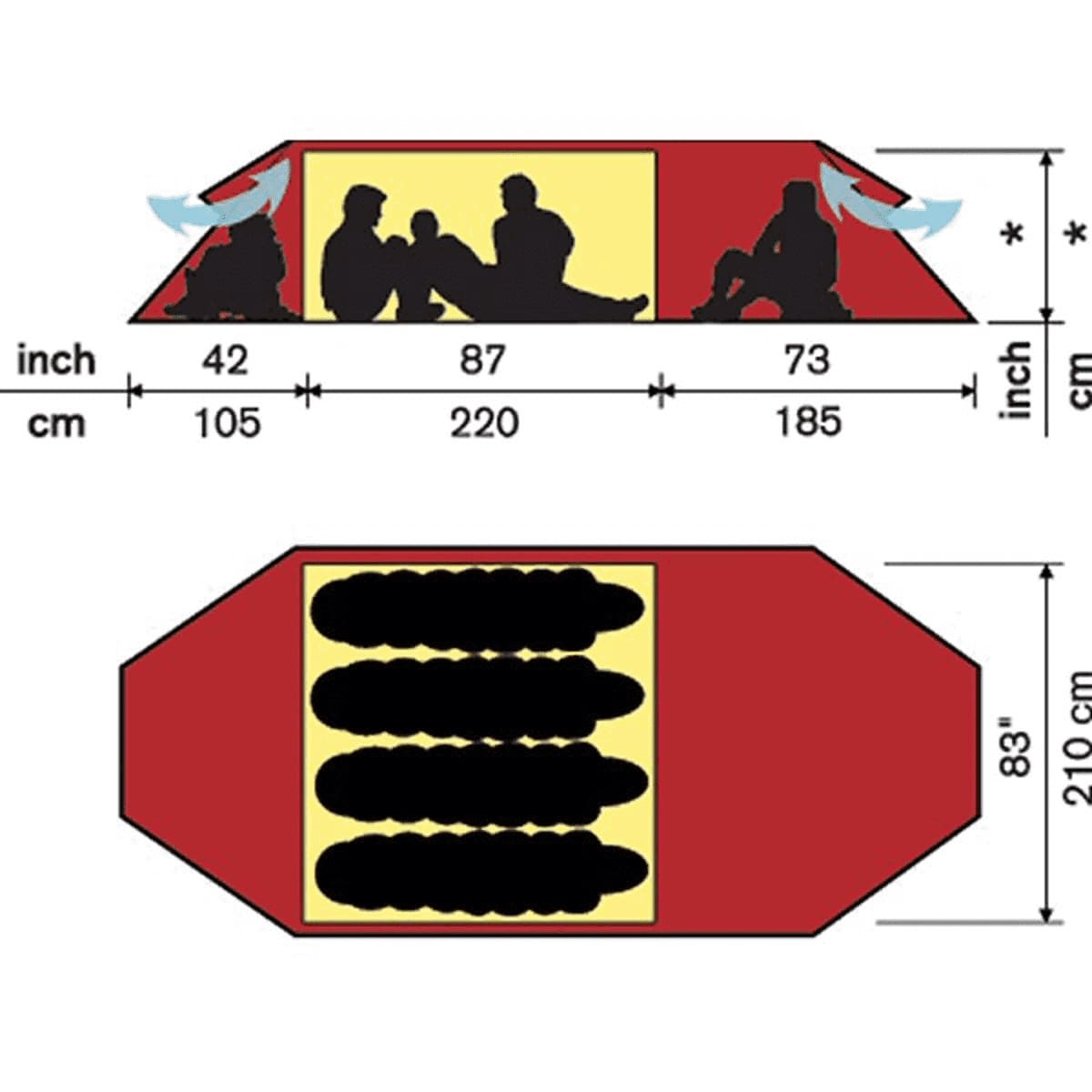
The construction of the Keron 4GT, like other Hilleberg tents, has the ability to leave the inner connected to the outer this makes it much quicker to erect and drop. Internally it is set out to allow for four adults to sleep alongside each other as well as small features such as well position mesh pockets and a drying line enable a better living and working environment.

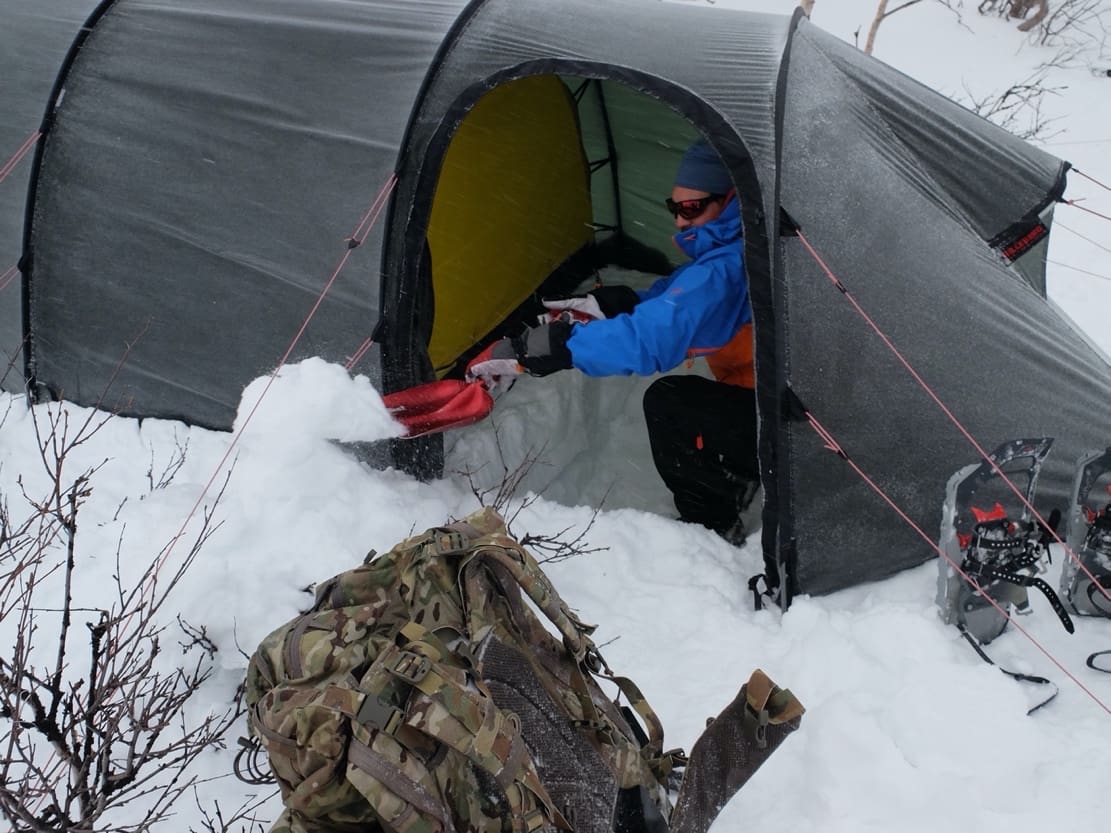
The large “porch area” (or vestibule) makes administration at the end of day and cooking within a tented environment, much easier. Provided that there is snow it also gives the user the ability to dig a cold trench, increasing the usable space, as well as increasing the warmth within the tent. The tactical version of the tent uses a light blocking fabric in order to maintain good light discipline and reduce signature whilst operating in a tactical environment. This also includes using black guy lines and with all reflective elements removed it is the best solution for this most challenging of environments.

The Hilleberg Keron 4GT is used extensively by Artic and Antactric explorers and has now been used by UK and the Scandinavian nations in the far north for several years now as their go to tactical tent.

For a more in depth look at essential for ECW and Winter warfare deployment visit our YouTube channel www.Youtube.com subscribe to get updates of new product reviews and technical discussions.

For the full specs visit our website brigantes.com

Or contact us:

UK – tribe@brigantes.com

Global – international@brigantes.com

First Basic Training Class Graduates Wearing Army Green Service Uniform

Wednesday, November 25th, 2020

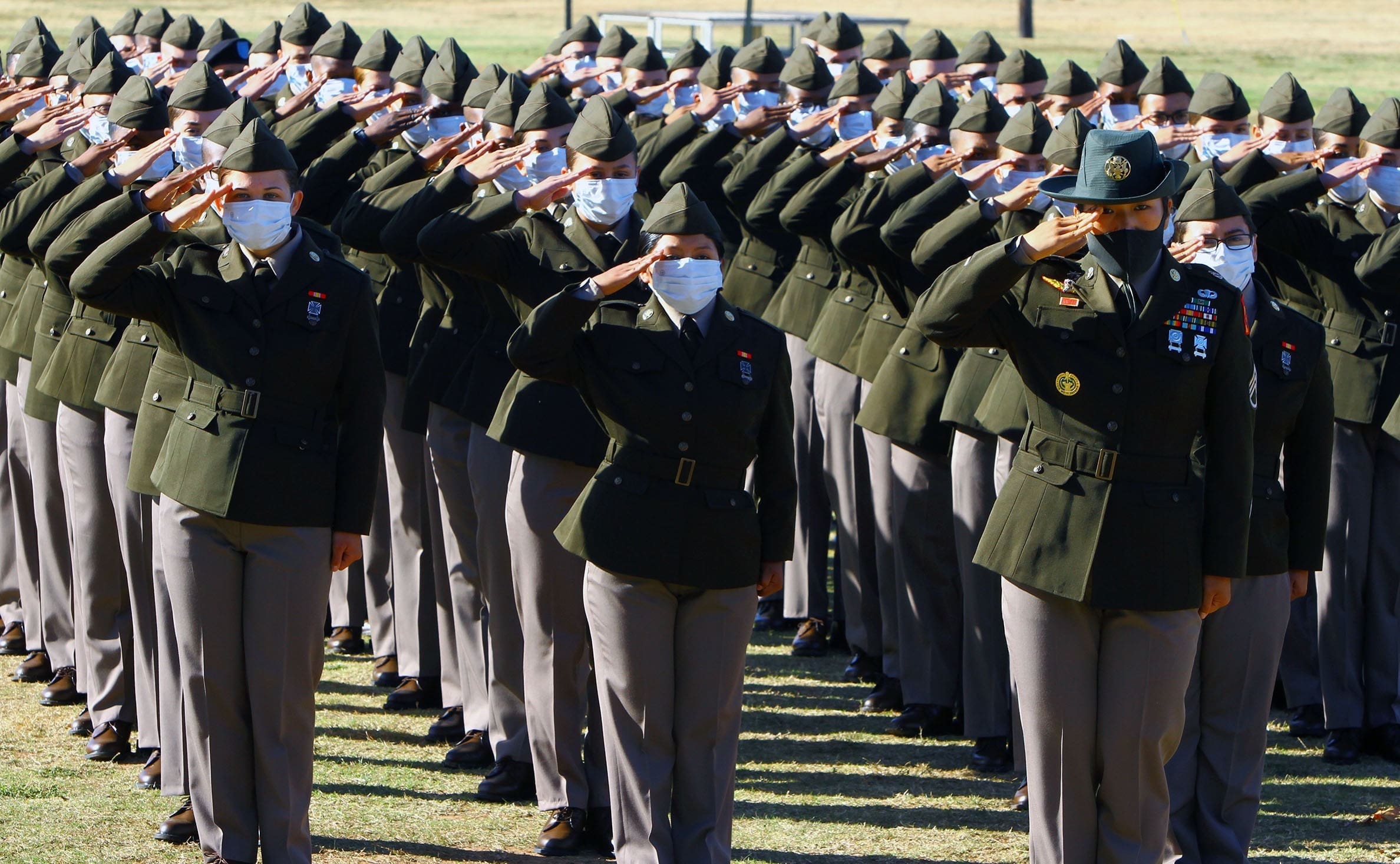
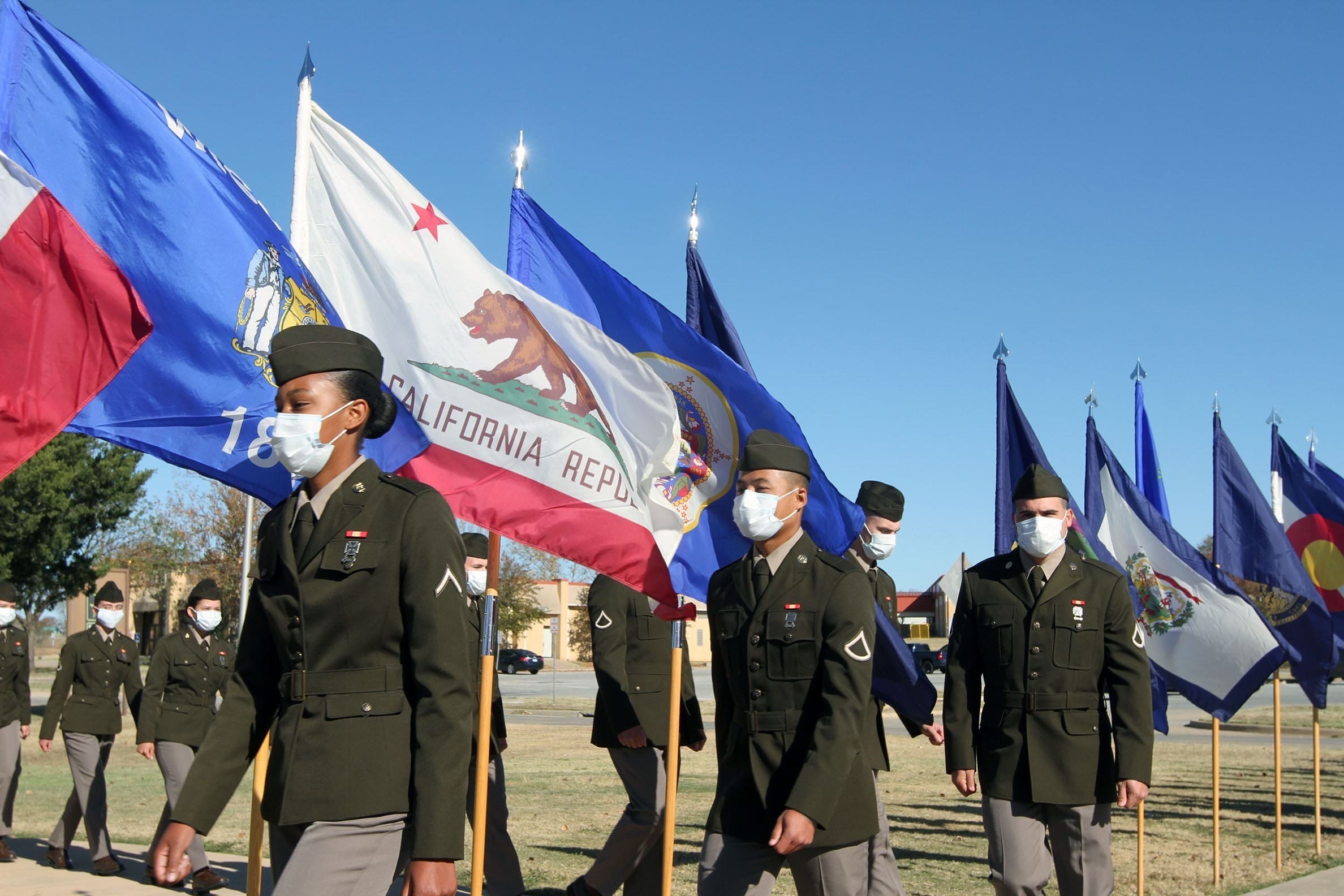
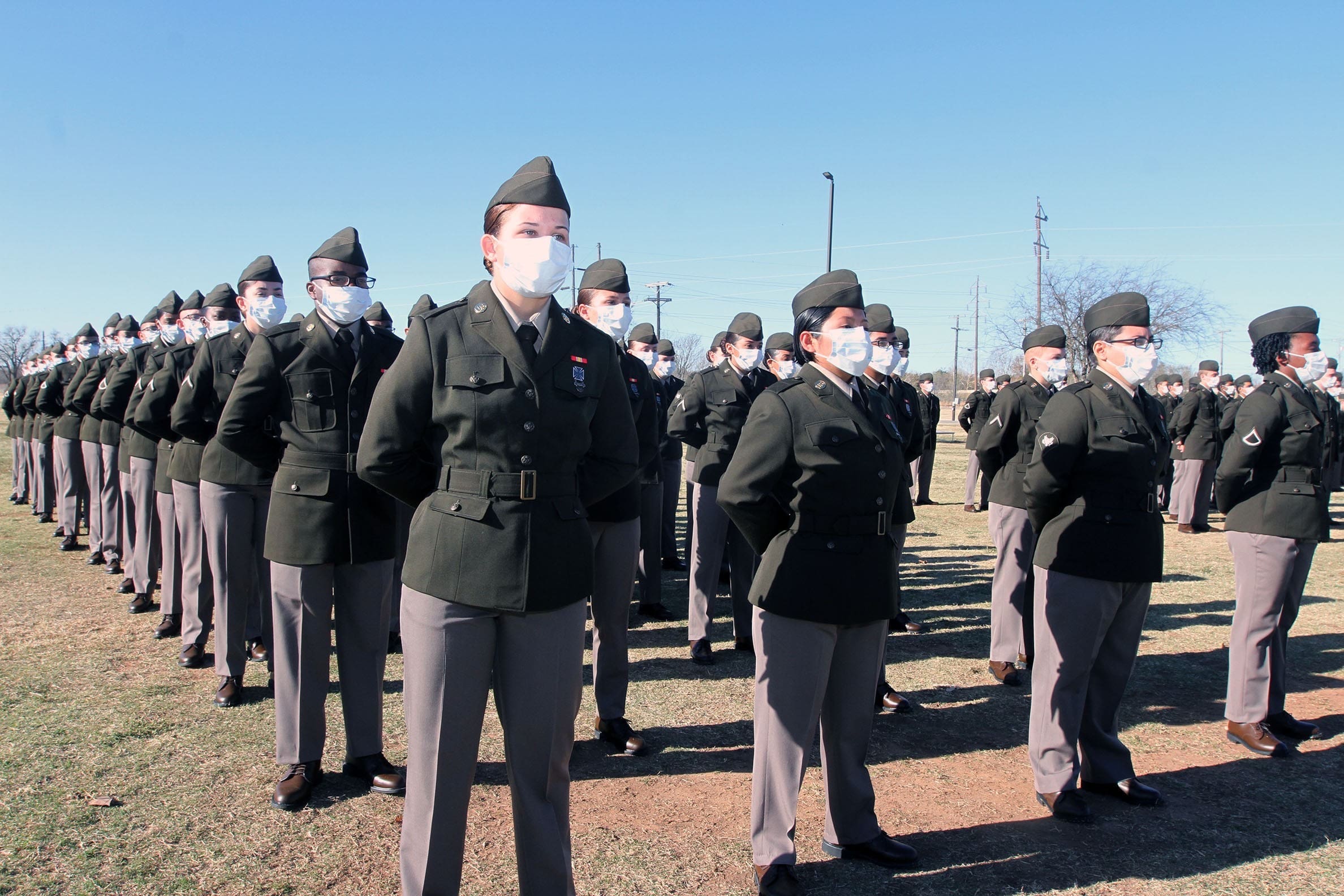
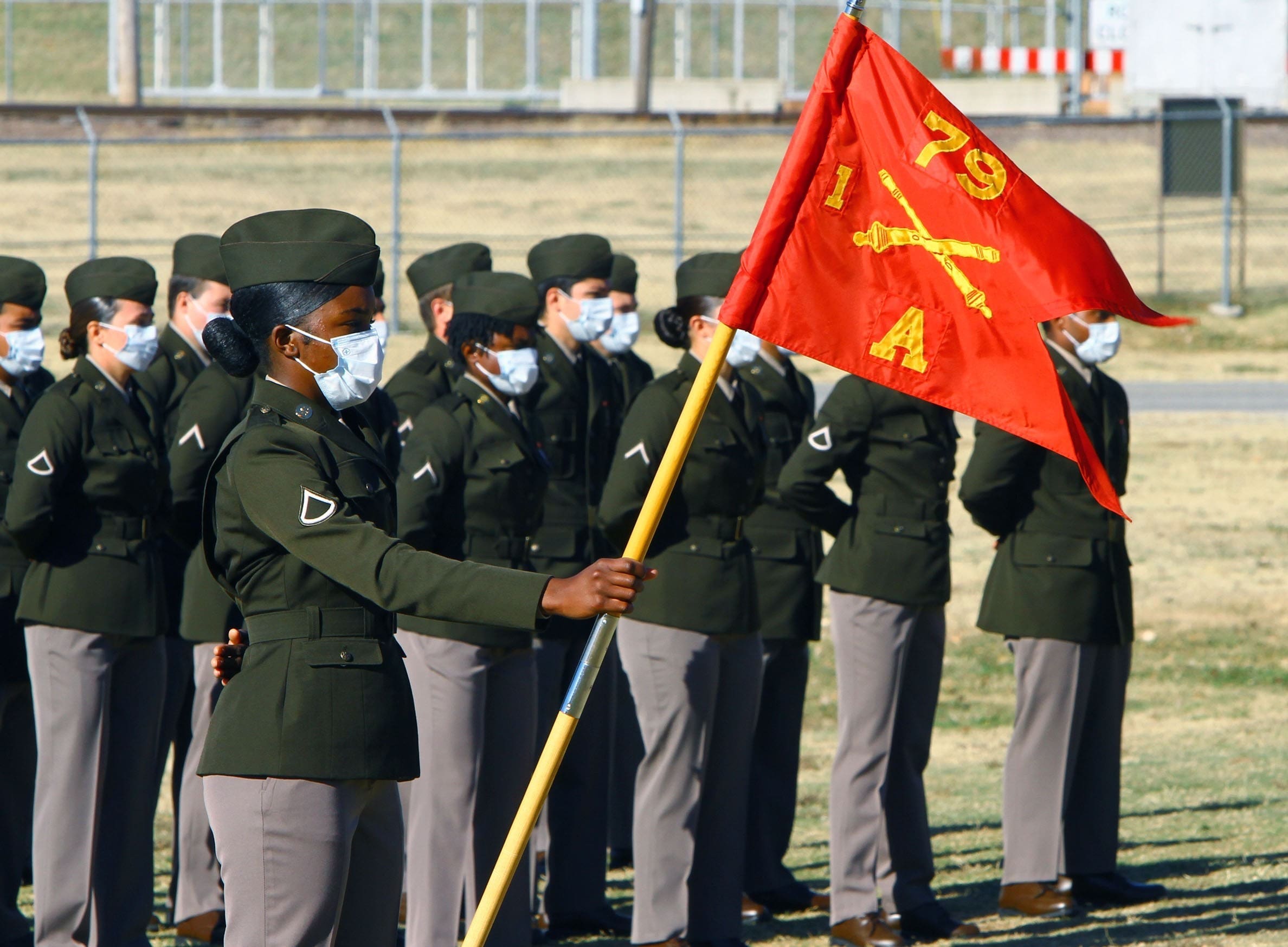
FORT SILL, Okla. — The first class of basic combat trainees to graduate wearing the new Army Green Service Uniform (AGSU) showed off their threads Nov. 16, during a ceremony at Fort Sill.

Almost 200 Soldiers from A Battery, 1st Battalion, 79th Field Artillery completed their 10-week basic combat training. The 434th Field Artillery command team and many of the drill sergeants also wore the AGSU.

Guest speaker Lt. Col. Jason Carter, Fires Center and Fort Sill Commanding General’s Planning Group director, highlighted the historical significance of the uniform.

“The Army’s greatest generation wore the iconic greens uniform when America was in the throes of World War II. Men like (generals of the Army Dwight) Eisenhower, (Omar) Bradley, and (George) Marshall wore it,” Carter said. “Now you, as our next great generation, are among one of the first in our United States Army to wear one of the most admired and recognizable uniforms in our history as it is being reinstituted to honor our heritage.

“While the Army Green Service Uniform invokes a feeling of nostalgia, it’s what’s under the uniform that counts,” Carter said. “The heart, the character, the grit, and the resolve of the American Soldier.”

Drill Sergeant (Staff Sgt.) Hayon Ju, A/1-79th FA, said the uniform links the greatest generation to millennials. She said she loved the practicality of the new dress uniforms.

“They’re a lot easier for females to set up our ribbons and badges,” Ju said. “We just go off our pocket flaps.”

Senior Drill Sergeant (Sgt. 1st Class) Antrell Bender, A/1-79th FA, said the trainees received the AGSU Oct. 14. They learned about the historical significance of the uniform. And, last week they were shown how to properly wear the uniform with adornments.

“On Saturday morning (Nov. 14), a final inspection was given to identify any deficiencies,” Bender said.

He noted that since it was the trainees’ first dress uniform they don’t have anything to compare it to, but for him, it’s the third dress uniform he has worn in his career.

“I’ve been in since we had the green dress uniform, then we switched over to the ASUs (Army Service Uniform),” Bender said.

Graduate Pvt. Rebeca Beaird, age 19, from Houston, recalled what she and some of her fellow trainees thought when they were first issued their AGSUs.

“A lot of us were thinking: Oh, Captain America, Like yea! We get to be there,” said Beaird, who will go on for further training at Fort Sam Houston, Texas, to become a behavioral health technician.

She said the AGSU is about building on the women’s legacy in the Army.

“Soldiers who wear this uniform are going to be honored to wear them,” she said. “Veterans who wore them will be happy to see us bring it back.”

Graduate Pfc. Tyree Smith, 20, of Indianapolis, said he was honored to be in the first class to graduate with the AGSUs. He said the uniform makes him feel like a man, ready to achieve.

Smith moves on to training at Fort Leonard Wood, Missouri.

Col. Daniel Blackmon, 434th FA Brigade commander, said the AGSU is special for him because his father and grandfather served in the Army and wore similar uniforms.

He said he’s heard a lot of positive comments when wearing his AGSU. “One, the history, and two, just the way it looks.”

By Jeff Crawley, Fort Sill Tribune

Next-Generation Headset Preps Soldiers for Future Battlefield

Tuesday, November 24th, 2020

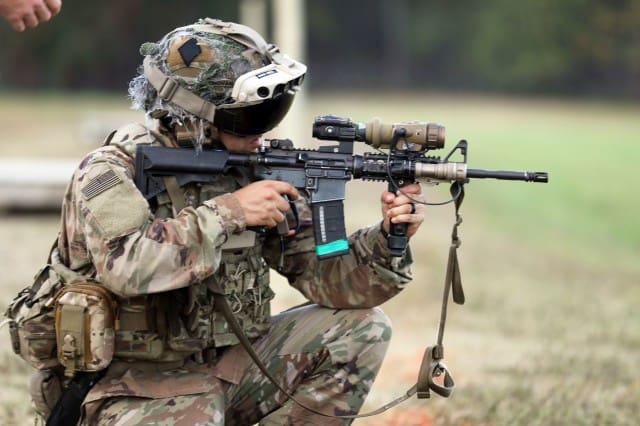
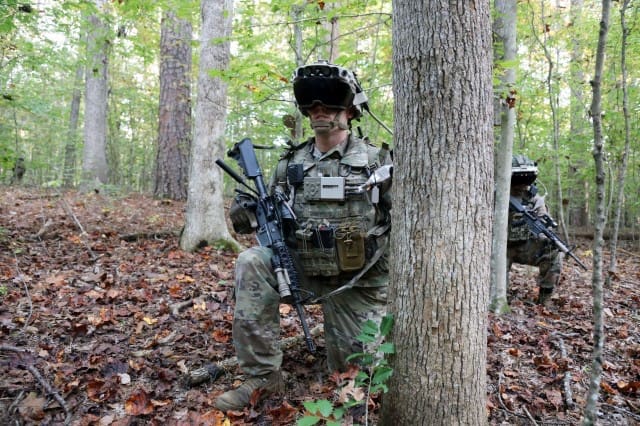
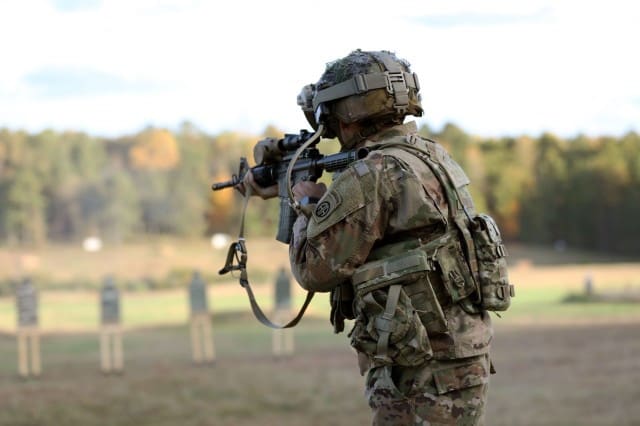
FORT PICKETT, Va. – The third Capability Set of the Integrated Visual Augmentation System (IVAS) was tested at Fort Pickett by 82nd Airborne Soldiers and 25th Marines during October 2020.

The project uses Soldier Centered Design (SCD) to evaluate the IVAS military fighting goggle through operational evaluations. Soldier involvement and engagement at every stage of prototype development has allowed the fast-paced rapid prototype effort to ensure that the final product will positively increase the situational awareness, lethality, mobility, and performance of the close combat force.

“When I look through the IVAS I see how we’re going to fight on the battlefield of the future,” said Staff Sgt. Kester, Weapons Squad Leader.

The Army is developing IVAS as a single platform that allows the Warfighter to Fight, Rehearse, and Train. It integrates next generation 24/7 situational awareness tools and high-resolution simulations to deliver a single platform that improves Soldier sensing, decision making, target acquisition, and target engagement. The visibility that it gives to higher command and control is unparalleled.

“With IVAS you now have the ability to paint a picture for higher ups, almost instantaneously,” said Sgt. Black, Combat Medic. “So now you have a Colonel who’s watching the battlefield like never before. That’s phenomenal, and that has the potential to increase our lethality in a way that we’ve never seen.”

IVAS also provides increased situational awareness for the leadership on the ground.

“In the field, a big part of my job is command and control,” said 1st Lt. Christopher, Platoon Leader. “I am basically moving my squads like pieces on a chessboard and maneuvering them into position and making sure that they’re in the right place at the right time. For me not only can I see where they are with IVAS, but I can actually go into the system and put a point here and say ‘Hey, you all need to go here’ or ‘Hey there are enemies over here watch out!’ I can also send messages non-verbally, so it is very, very critical for me for the command and control aspect.”

The first IVAS militarized form factor prototype was put through tactical exercise lanes, advance marksmanship, land navigation and squad reconnaissance, movement to contact with hasty attack, and enter and clear a trench to validate the military utility that the technology brings to the squad both day and night. The Soldiers and Marines spent a week learning the new equipment before using it in the various operational tests.

“It was extremely easy to pick up,” said Christopher. “It’s very simple in its controls, the menus and such are very easy to navigate, and they’re categorized in a way that if I want to do this function, easy over there, bring up the map, one button press away.”

Christopher also noted that the Microsoft data collectors had been receptive to their feedback and had already made progress and developments on the input given throughout the touchpoint event. Cpl. Sweckard, Team Leader, 25th Marines also expressed similar sentiments.

“Anytime we conduct any type of training with the IVAS, we immediately make contact with the [data collectors] from Microsoft and provide them with feedback, things that we’ve identified that could be an issue, things that we liked, and how we fixed the issue if we were faced with one,” he said. “That way they can put together the common things that are happening with the device and identify a resolution.”

Because of the similarities in operational responsibilities and as members of the collective close combat force, Marines were present to test the current IVAS capability set specifically during live fire execution.

“What it does for us mainly is combines a lot of things that we currently utilize, such as global positioning devices, or GPS’s, communication devices, as well as land navigation tools and mission planning tools,” said Sweckard. “Those are things that are commonly individual technologies that are now combined into this one system of IVAS.”

The project was initiated in response to an erosion in close combat capability relative to pacing threats identified in the 2018 National Defense Strategy. These capabilities will provide the increased lethality, mobility, and situational awareness necessary to achieve overmatch against our current and future adversaries in any domain.

“I think if it’s in the right hands it can be an effective tool, like an aid bag. An aid bag without a medic is nothing, but an infantry guy with IVAS is something much more,” said Black.

Though the Army is specifically developing this high priority modernization effort, the Marine Corps may also leverage the technology for their close combat operations.

“It will definitely be a force multiplier on the battlefield,” said Sweckard. “As a team leader I have three Marines that are under my charge and my basic mission is to employ those Marines in combat, make those three Marines look like 30. If I can do that, that’s going to make the Marine Corps more lethal. With the IVAS I can better achieve that mission, without a doubt.”

The integrated system is expected to be fielded to Soldiers next year.

“When Lieutenant Colonel Winn told us we want to field it next year I thought that was crazy. Then I looked and thought through it and I could see it, I can see the possibilities,” said Kester. “Some of my combat experiences made me pause for thought to look at it like Russia and China, they’ve been pushing technology like this for the last decade. And what have we been doing? Not that.”

Kester added that though he did not know about IVAS before coming to the third Soldier Touchpoint, as soon as he did, he was onboard with Team IVAS.

“I would say the only thing that’s going to hurt this program is people not being imaginative enough or trying to push the limits of what they think is possible, or what Soldiers want. I am really excited to see where this will go,” said Kester.