TYR Tactical

Archive for the ‘Guest Post’ Category

Study Shows How Microorganisms Survive in Harsh Environments

Saturday, May 9th, 2020

RESEARCH TRIANGLE PARK, N.C. — In northern Chile’s Atacama Desert, one of the driest places on Earth, microorganisms are able to eke out an existence by extracting water from the rocks they colonize.

An Army-funded project by researchers at the University of California, Irvine, Johns Hopkins University and University of California, Riverside gained an in-depth understanding of the mechanisms by which some cyanobacteria, an ancient group of photosynthetic microbes, survive in harsh environments.
The new insights, published in Proceedings of the National Academy of Sciences, demonstrate how life can flourish in places without much water in evidence – including Mars – and how people living in arid regions may someday be able to procure hydration from available minerals.

“The Army has a strong interest in how microorganisms well-adapted to extreme environments can be exploited for novel applications such as material synthesis and power generation within these harsh fielded environments,” said Dr. Robert Kokoska, program manager, Army Research Office, an element of U.S. Army Combat Capabilities Development Command’s Army Research Laboratory. “This study provides valuable clues for uncovering the evolved design strategies used by these native desert-dwelling microbes to maintain their viability in the face of multiple environmental challenges.”

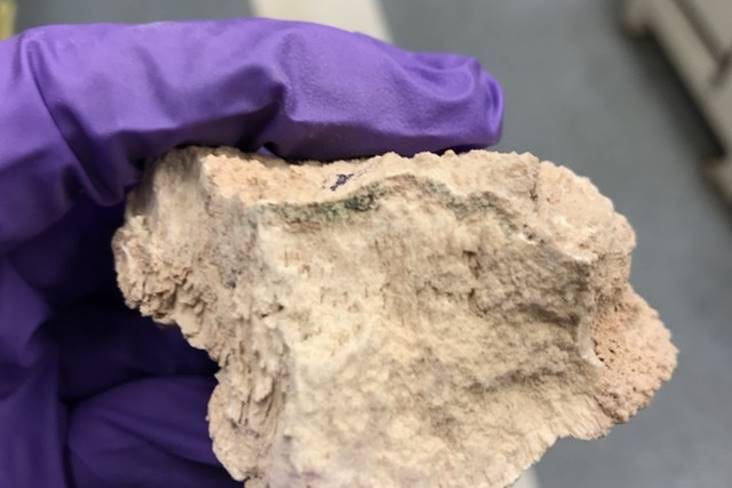
Through work in the field and laboratory experiments, the research team focused on the interactions of Chroococcidiospsis, a desiccation-resistant species of cyanobacteria that is found in deserts around the world, and gypsum, a water containing calcium sulfate-based mineral. The colonizing lifeforms exist beneath a thin layer of rock that gives them a measure of protection against the Atacama’s extreme temperature, high solar irradiance and battering winds.

Co-author Jocelyne DiRuggiero, JHU associate professor of biology, traveled to the remote desert to collect gypsum samples and brought them back to her labs in the United States. She cut small pieces, where microorganisms could be found, and sent them to UCI for materials analysis.

In one of the most striking findings of the study, the researchers learned that the microorganisms change the very nature of the rock they occupy. By extracting water, they cause a phase transformation of the material – from gypsum to anhydrite, a dehydrated mineral.

According to DiRuggiero, the impetus for the published work came when Wei Huang, a UCI post-doctoral scholar in materials science & engineering, spotted data showing an overlap in concentrations of anhydrite and cyanobacteria in the gypsum samples collected in the Atacama.

“Our analysis of the regions of rock where microbes were colonized revealed a dehydrated phase of calcium sulfate, suggesting that they extract water from the rock to survive,” said David Kisailus, lead author and UCI professor of materials science & engineering. “We wanted to do some more controlled experiments to validate that hypothesis.”

DiRuggiero’s team then allowed the organisms to colonize half-millimeter cubes of rocks, called coupons, under two different conditions, one in the presence of water, to mimic a high-humidity environment, and the other completely dry. In the midst of moisture, the gypsum did not transform to the anhydrite phase.

“They didn’t need water from the rock, they got it from their surroundings,” Kisailus said. “But when they were put under stressed conditions, the microbes had no alternative but to extract water from the gypsum, inducing this phase transformation in the material.”

Kisailus’ team used a combination of advanced microscopy and spectroscopy to examine the interactions between the biological and geological counterparts, finding that the organisms bore into the material like tiny miners by excreting a biofilm containing organic acids, Kisailus said.

Huang used a modified electron microscope equipped with a Raman spectrometer to discover that the organisms used the acid to penetrate the rock in specific crystallographic directions – only along certain planes where they could more easily access water existing between faces of calcium and sulfate ions.

Kisailus said the project was a great demonstration of interdisciplinary research between microbiologists and materials scientists that may, one day, open doors to other forms of scientific discovery.

“Scientists have suspected for a long time that microorganisms might be able to extract water from minerals, but this is the first demonstration of it,” DiRuggiero said. “This is an amazing survival strategy for microorganisms living at the dry limit for life, and it provides constraints to guide our search for life elsewhere.”

Researchers said this study can benefit the Army Research Lab’s efforts in synthetic biology.

“These findings have drawn the interest of our lab as microbial survival mechanisms can be leveraged for biomanufacturing or sensing platforms in harsh military environments,” said Dr. Matthew Perisin of the lab’s biotechnology branch.

In addition to the Army, NASA also provided funding for this project.
Kit Badger – Compact Carbine Deployment with Bill Rapier: Part – 1

Friday, May 8th, 2020

Ivan at Kit Badger spent some time with Bill Rapier, of AMTAC Shooting. Bill goes over some of the important parts of Compact Carbine Deployment from a vehicle.

MCSC, ONR and CD&I Collaborating to Inform ARV Path Forward

Friday, May 8th, 2020

MARINE CORPS BASE QUANTICO, Va. —

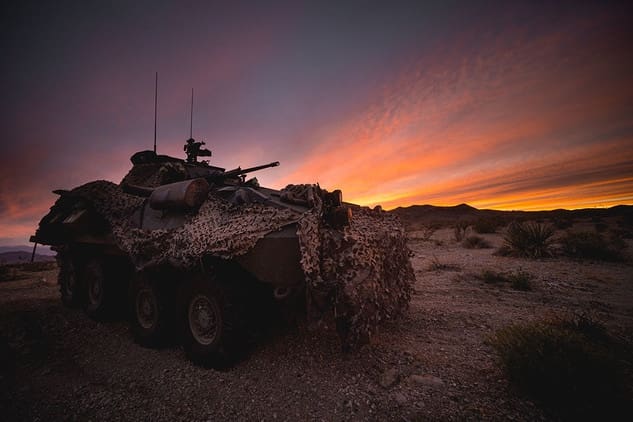
Marine Corps Systems Command is working toward the next phase of replacing the legacy Light Armored Vehicle with a modern Advanced Reconnaissance Vehicle.

Armored Reconnaissance was the subject of a Capability Based Assessment, the results of which were summarized in a 2019 Joint Requirements Oversight Council-validated Initial Capabilities Document produced by the Marine Corps’ Combat Development and Integration. The CBA pitted Light Armored Reconnaissance Battalions against a peer threat, and identified shortfalls and gaps in capability.

CD&I emphasized the need for a modern, purpose-built ARV. As the core-manned, next-generation system, ARV must possess transformational capabilities to enable LAR Battalions to gain contact with and collect on peer-threat forces. It must accomplish this goal without becoming decisively engaged, while also successfully waging the counter-reconnaissance fight.

After the analysis and various other supporting activities, the ARV concept emerged as a transformational required capability. The characteristics differentiating the ARV from current systems include the incorporation of a battle management system, enhanced vision technologies for increased situational awareness, and target tracking and engagement capabilities.

The Program Manager for Light Armored Vehicles is pursuing this capability to support LAR Battalions, provide them with additional capabilities and set the conditions to transform the way they fight.

“Any ARV path forward will continue to be informed by the ongoing [Office of Naval Research] Technology Demonstrator effort, the ARV Analysis of Alternatives, Phase III Force Design outputs, additional Government [Requests for Information], senior leadership direction and industry feedback,” said John “Steve” Myers, Program Manager for MCSC’s LAV portfolio.

A collaborative effort

In the early planning stages, the Marine Corps envisioned the ARV as a replacement combat vehicle for the LAV. Over time, officials began to view the ARV as a vehicle platform equipped with a suite of advanced reconnaissance capabilities, with an open system architecture that can sense, shoot, move, communicate and remain transportable as part of the Naval Expeditionary Force.

PM LAV is leading the acquisition planning effort to help realize this next-generation reconnaissance vehicle. The portfolio is collaborating with ONR and the Capabilities Development Directorate of Headquarters Marine Corps, CD&I.

Capitalizing on their Detroit Arsenal location, PM LAV is working with Combat Capabilities Development Command Ground Vehicle Systems Center to update the ARV concept as a tool to analyze impacts of capability changes. Recognizing commonalities exist among the ARV and the Optionally Manned Fighting Vehicle, the Army, Navy and Marine Corps are working together to ensure collaboration for those capability gaps.

ONR is conducting research on advanced technologies to inform requirements, technology readiness assessments and competitive prototyping efforts for the ARV.

In 2019, ONR selected two vendors to design, fabricate and test full-scale technology demonstration platforms. Both platforms are expected to be ready for government evaluation in the fourth quarter of fiscal year 2020.

Through ONR’s efforts, the Ground Combat Element Division of CDD has been refining a set of requirements for the ARV to meet the future reconnaissance mission of the Marine Corps. PM LAV will leverage this information in a performance specification to be released to industry partners to build the ARV.

The collaboration between PM LAV, ONR and CD&I is crucial to the success of the ARV.

“Effective collaboration between the materiel developer, technologist and combat developer is essential to achieving the next-generation capabilities required to transform legacy armored reconnaissance into a modern, combat credible force,” said Kurt Koch, GCE Division, CDD.

Koch noted how the strong partnerships forged over the last three years set the conditions to develop the core of a next-generation, combat vehicle system—mobile on land and water—to serve as a manned hub coordinating the actions of unmanned ground and aerial robotic sensor, and weapon systems.

The path forward

PM LAV has taken several steps to ensure the success of the ARV.

In 2019, PM LAV released a Request for Information to industry comprising a set of attributes for a transformational vehicle. Based on responses to the RFI, the program office met with several vendors interested in becoming a prime vendor for ARV.

PM LAV originally planned to hold an industry day in May 2020 for the Competitive Prototyping Phase. However, the ongoing COVID-19 pandemic caused the event to be rescheduled to the fourth quarter of fiscal year 2020.

“We still want to hold an industry day so we can have an open discussion with industry, provide more clarification and answer any questions from our industry partners,” said Maryann Lawson, MCSC’s project lead for ARV.

In addition to industry engagements, the evaluation of Science and Technology efforts as well as ongoing CDD and performance specification refinement should yield the information necessary to move into the Competitive Prototyping phase.

“PM LAV will focus efforts targeted on industry RFIs and strategic small group engagements,” said Myers.

The Marine Corps plans to use the Ground Vehicle Systems Other Transaction Agreement with the National Advanced Mobility Consortium to release a draft request for prototype proposal, or RPP, for the ARV base variant in the fourth quarter of fiscal year 2020.

The government is interested in industry feedback and collaboration to shape the requirement and statement of work for the final RPP release in spring 2021. Industry partners are encouraged to periodically check beta.sam.gov and engage with the NAMC for future RFIs and program updates.

Story by Matt Gonzales, MCSC Office of Public Affairs and Communication | 10th Marine Regiment

Photo by photo by Cpl. Corey A. Mathews

FirstSpear Friday Focus – Technical Woobie

Friday, May 8th, 2020

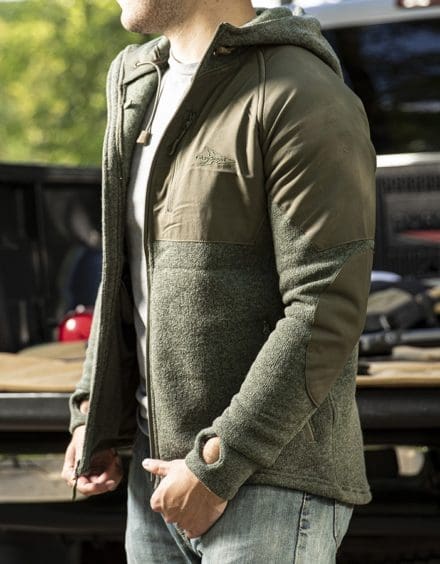
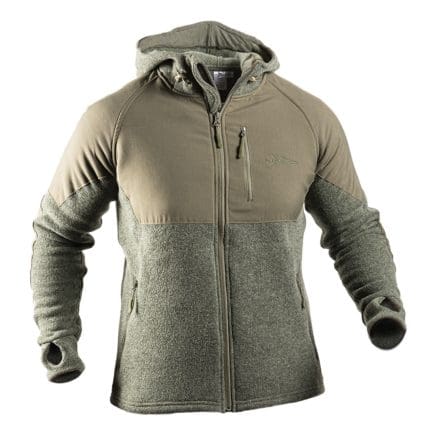
Today we are getting the first look at an all new garment from the FirstSpear American Merino Wool Line. Meet the Technical Woobie. Constructed with premium USA materials including FS ACM 600 Merino for warmth and FS signature apparel nylon accents which add abrasion and wind resistance. Features a modest tail, high collar with adjustable hood, thumb holes, as well as generous hand warmer pockets lined with FS ACM 100 Merino. The Full length zipper and pockets utilize premium zipper hardware and pulls.

A very cool feature FS incorporated are button holes inside the hand warmer pockets along with cord loops along your internal zipper seams which allow the user to route ear buds or communication cables for discreet cable management.

The Technical Woobie offers great everyday style matched with some of the most high performance material combinations and features available. It will quickly become the one piece you will want to take with you everywhere! 100% made in the USA with 100% USA materials.

Now shipping in Black, Sand, Commando, and Black/Heather Grey. Comes with FirstSpear’s standard lifetime warranty on materials and craftsmanship.

www.first-spear.com/technical-woobietm-acmtm-warm-600

Parachute Rigger School Jumpers Once Again Fly Skies Over Pickett

Wednesday, May 6th, 2020

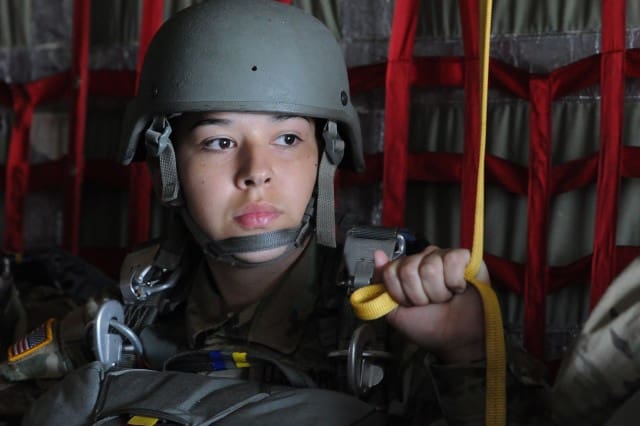
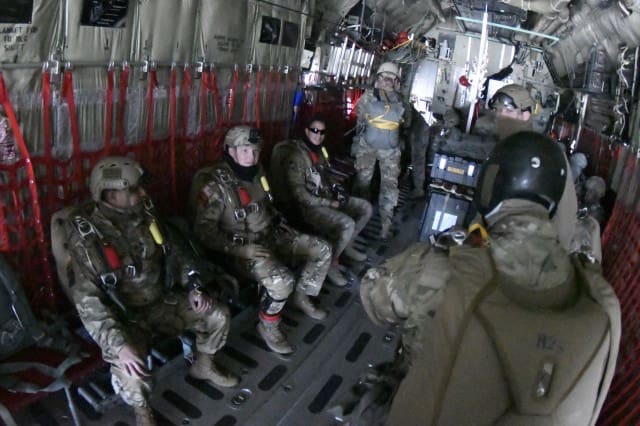
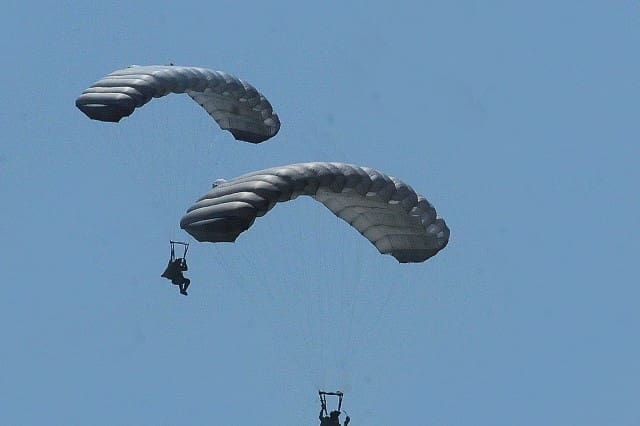
FORT PICKETT, Va. – The sky above this installation was once again filled with paratroopers dropping from aircraft as the Quartermaster School resumed airborne operations April 22.

The Virginia National Guard base – a 45-minute drive west of Fort Lee – is where the QMS Aerial Delivery and Field Services Department conducts airborne operations for parachute riggers.

Staff Sgt. Raymond Debusshere, an instructor, said his department last conducted jump training March 12. It has since undergone a thorough review and reassessment to determine how to best conduct such operations without putting paratroopers at risk for contracting COVID-19.

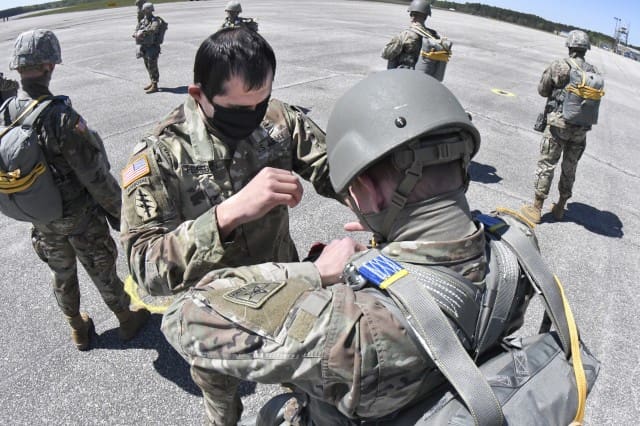
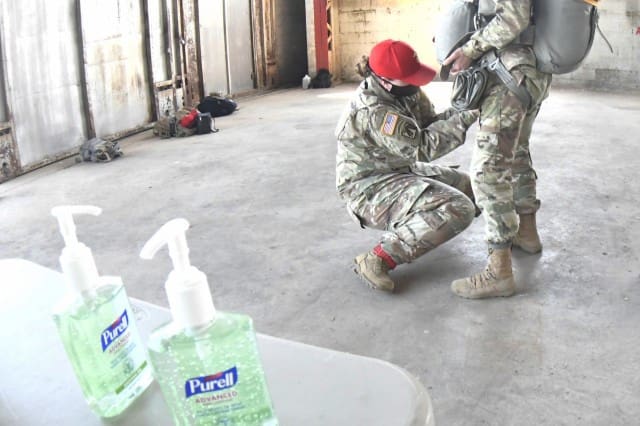
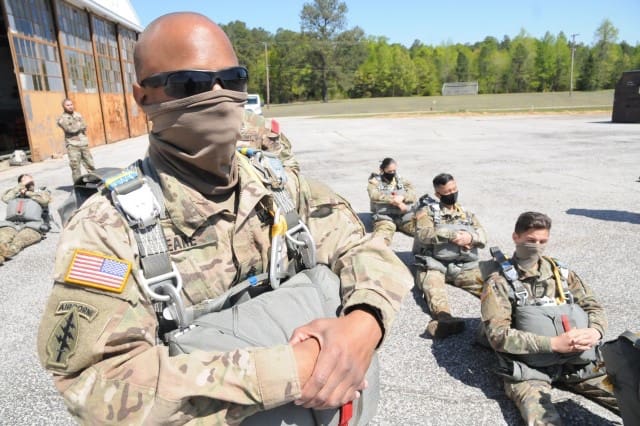
“We’ve added various safety precautions,” said the jumpmaster from a hangar skirting Pickett’s massive airfield. “We are practicing spacing, and every jumper out here has a face mask. In addition, we’re using hand sanitizer before and after every JMPI. We also added lifts (flights) to maintain spacing on the aircraft.”

JMPI, or Jumpmaster Personnel Inspections, is a safety process ensuring every paratrooper is prepared for the operation prior to boarding the aircraft. Jumpmasters meticulously check straps and equipment placement to ensure they’re secure and not likely to cause injury. With all the precautions taken, the operation took longer than usual, Debusshere admitted. “(It) added a lot to the process, but it was crucial and it worked out well.”

The QM School is one of the few Army entities outside of operational units that has resumed airborne operations. Not surprisingly, the task of securing aircraft through normal channels for the mission proved to be a challenge because the coronavirus pandemic has shifted air support functions across the Department of Defense.

“It was an undertaking calling different units and trying to get them to come in,” said ADFSD’s Kenneth Pygatt, airborne operations coordinator. “Some units have been willing, but their commands (are being highly selective in the approval of flights). It has been a task to bring it all together, but we got it done.”

There are no aircraft assets assigned to Fort Lee, thus, airborne operations must be coordinated through aviation units spanning the entire region. Active duty Marine aviators from Cherry Point, N.C., supported the April 22 drop. There are roughly 20 different aviation units that support the rigger course, Pygatt said.

Despite all that has taken place to resume training, parachute rigger students seemed oblivious to the changes. Many of them were in the first few weeks of the 92-Romeo course when the pandemic-necessitated measures such as social distancing became the “new normal.” It was apparent at the airfield they had become accustomed to it. They were focused on the day’s mission – jumping a parachute they packed themselves to demonstrate confidence in their abilities. It has always been a course graduation requirement. All of that seemed to overshadow even the pandemic precautions.

“I’m just excited to jump,” said a masked Pvt. Angelica Gonzalez while waiting for her lift. “It has been a while since I’ve been up there (all students complete the Basic Airborne Course at Fort Benning, Ga., before coming to Fort Lee), so it’s a refreshing moment for me.”

The Charlie Company, 262nd QM Battalion Soldier was one of 28 rigger students making their culmination jump. Numerous NCOs and officers also participated to keep their airborne-qualification status current.

More than 600 Parachute Rigger Course students graduate from ADFSD annually. The Fort Lee training is 14 weeks long.

By Terrance Bell

SureFire Field Notes Ep. 58 – Aaron Cowan Talks Handgun Manipulations with a Flashlight

Wednesday, May 6th, 2020

Aaron began his career in the United States Army (11M) in 1999, serving 3 years active duty and an additional 4 in the National Guard (11M). During his time in the military he served as a rifleman, squad automatic rifleman and designated marksman; receiving training in small unit tactics, close quarters combat and ballistic and mechanical breaching. After leaving active duty, Aaron worked as a private security contractor both CONUS and OCONUS; conducting convoy security, close protection details, static security and relief security during natural disasters. Aaron joined the ranks of federal law enforcement in 2009 with the Department of Defense; serving as a patrol officer. Within a year, Aaron assumed the position of In-Service training officer. Aaron held the collateral duty of Special Reaction Team member in 2009 and was promoted to Special Reaction Team Leader in 2011. Aaron was responsible for Special Reaction Team training and qualifications as well as instruction and control of the SRT Sniper Section. Aaron is a member of the National Tactical Officers Association and the International Association of Law Enforcement Firearms Instructors.

www.sagedynamics.org

www.surefire.com

Delivering an On-Demand Sensor to Shooter Warfighting Capability

Tuesday, May 5th, 2020

The Army Modernization Strategy describes the future battlefield as high-tempo and contested, with greater weapons lethality, persistent observation, increased speed of human interaction, and proliferation of weapons of mass effects. As the operating environment changes, U.S. military forces and coalition partners will be required to sense and engage enemy targets with greater speed, better accuracy and at longer ranges to ensure overmatch. Keeping up with this new operating environment is the responsibility of the Assured Positioning, Navigation and Timing (APNT) Cross-Functional Team (CFT), who is enhancing the Army’s ability to detect, identify, process, and engage targets at a more rapid pace.

To do this, the APNT CFT has initiated a Sensor to Shooter (S2S) Campaign of Learning (CoL), a process by which the Army will learn the best way to employ the S2S capabilities in an operationally relevant way. The S2S CoL will support the automation of the S2S process, to support the development of capabilities that are scalable, trainable, repeatable, and sustainable. This also gives the Army the opportunity to enhance and discover new capabilities so that processes and connections are fielded and implemented immediately as new sensors and shooters become available to the force.

“Working with our partners, we are finding ways to utilize innovative resources, such as machine learning and artificial intelligence, to automate sensor to shooter operations,” said Mr. Ben Pinx, S2S Lead for the APNT CFT.

“Doing this will shorten the time it takes to turn intelligence data into actionable targets, giving us the most accurate data and targeting information so that we can effectively disintegrate enemy forces.”

Reducing the S2S timeline will ensure the Army’s ability to prosecute more targets in a shorter time despite the complexity of future operating environments. To be successful, the Army must operationalize the S2S process to enable an “all sensor to all shooter” approach. Today, the APNT CFT is working closely with partners across the Army, to include the Army Futures Command, the Assistant Secretary of the Army for Acquisition, Logistics, and Technology, the Fires Center of Excellence, the Intel Center of Excellence, the Network, Long Range Precision Fires (LRPF), Future Vertical Lift, and Next Generation Combat Vehicle CFTs, the HQDA G2 Intelligence Surveillance and Reconnaissance Task Force, the Army Tactical Exploitation of National Capabilities Program, and the Artificial Intelligence (AI) Task Force to increase the S2S process in order to target more effectively and efficiently.

To assess the S2S CoL, the APNT CFT and its partners are performing a sequence of exercises in U.S. Army Europe (USAREUR) and U.S. Army Pacific (USARPAC) this year.

“Operationalizing S2S will not only shorten the time it takes a sensor to identify targets, select the appropriate effects platform, and generate a coordinated fire order,” said Mr. Nelson, APNT CFT Director. “It will also create a scalable, trainable, repeatable, and sustainable process that can be used at any echelon, on any network and any fires platform [lethal and non-lethal], within any operational environment.”

EXPLOITING THE TARGET

Multi-domain fires requires predictive, accurate, timely collection, sharing, and assessment of large amounts of data. Advanced technologies, such as machine learning and AI, have the power to drastically change the way Soldiers operate in the battlefield, reducing response time, simplifying or expanding cognitive processes, and enabling faster decision making, all of which are essential to create convergence and allow the joint force to achieve overmatch. The collective S2S process must detect and prioritize targets, conduct fires planning, and establish appropriate and permissive fire support coordination measures to enable a timely fire order to the shooter. Reaction time is critical, as this all takes place before the target moves or becomes stale. The more important the target, the more it will be protected. Deep or well protected targets in an anti-access and area-denial region will pose significant challenges to the ability to identify, track, and engage targets. All this in consideration, the CFT is finding new ways to employ deep sensing beyond the current reach of operational and tactical sensors.

The APNT CFT is integrating new space-based sensors as part of the S2S capability, which can enhance Soldier access to targets, providing responsive and resilient capabilities to the commander in the field. Additionally, the CFT is working closely with its partners to deliver a global, operationally relevant, space-based capability to provide deep sensing, which can be tasked at the operational and tactical level to produce prompt, accurate, and persistent data enabling precision fires at range.

“Space enables the processing, exploitation and dissemination of data at a rapid pace,” said Mr. Nelson. “It gives Army forces the ability to deliver accurate, effective, and predictive multi-domain fires in all areas of operational warfare.”

ASSESSING SENSOR TO SHOOTER

In February and March, the APNT CFT partnered with USAREUR personnel along with its CFT, military and Department of Defense partners, successfully conducted a series of S2S Live Fire Exercise (LFX) demonstrations in Grafenwoehr Germany.

The LFX consisted of three demonstration events. During these events the team successfully sensed and hit targets at ranges beyond line of sight using satellite capabilities that have not been responsive to ground forces until now. This shows the Army’s ability to leverage space-based sensors to pursue deep targets. As the LRPF CFT fields capabilities with far greater ranges than were previously capable, these types of sensors will be able to accurately and reliably find the targets for engagement.

“The success of the sensor to shooter live fire exercises with USAREUR shows the tactical benefit of an integrated sensor to shooter capability that can see beyond line of sight,” said Mr. Nelson. “This new capability will enable multi-domain operational forces to engage and defeat time sensitive targets and provide a robust and resilient reconnaissance, surveillance and target acquisition capability that will shorten S2S timelines for long-range precision fires.”

Mr. Pinx explained the benefits of the exercises. “The APNT CFT is looking for technologies in the ground, air, cyber, or space domains that will provide sensor to shooter as well as APNT, situational awareness and navigation warfare capabilities. During the live fire exercise we were able to use realistic conditions to show the readiness of a unit to conduct an operation using the weapons and ammunition associated with their mission.” These demonstrations gave insight to the current capabilities of the available sensors and shooters and their ability to link in novel ways to provide a capability down to the division operational level of combat.

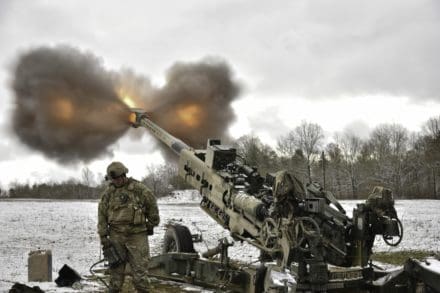
During the demonstrations, the CFT used high explosive rounds equipped with the precision guidance kit fuze. Soldiers used the M777 155 millimeter lightweight howitzer system as the fires platform and the Advanced Miniaturized Data Acquisition and Dissemination Vehicle to gain access to the various sensors.

Target data was transmitted through the Joint Automated Deep Operations Coordination System and the Advanced Field Artillery Database System for the technical and tactical fire direction processes.

“These demonstrations provide critical data and analysis as part of our sensor to shooter campaign of learning,” said Mr. Nelson.

“What we learn through these demos will influence how we introduce these new capabilities into larger exercises like Project Convergence and Defender Pacific 20. And eventually, we’ll understand how we can utilize machine learning and artificial intelligence to pair sensors and shooters in real time.”

The LFX demonstrations were a training exercise for Soldiers as they prepare for the upcoming Pacific 20 demonstration this summer and Project Convergence in the fall.

CONCLUSION

The LFX demonstrations exhibited the Army’s ability to engage and defeat time sensitive targets with timely and accurate fires anywhere on the battlefield. Through continued experimentation and prototyping of individual capabilities within the S2S construct and the connection of assets from across joint, interagency, and multi-national sensors to any shooter (kinetic and non-kinetic), the APNT CFT will enhance the Army’s ability to approach targets and effects at a more rapid pace, improving the S2S process to ensure effective and efficient targeting and overall overmatch. This unification is the goal of the APNT CFT S2S effort and is required for a targeting process multi-domain operational strategy.

Story by Caitlin O’Neill

Photos by Spc Denice Lopez

Army REF Deploys Thermal Imaging Sensors

Monday, May 4th, 2020

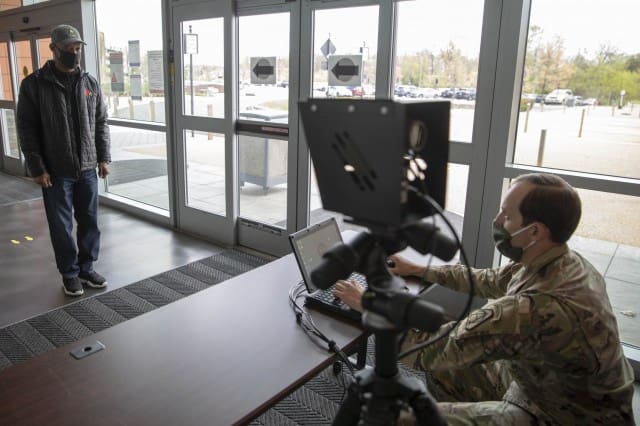
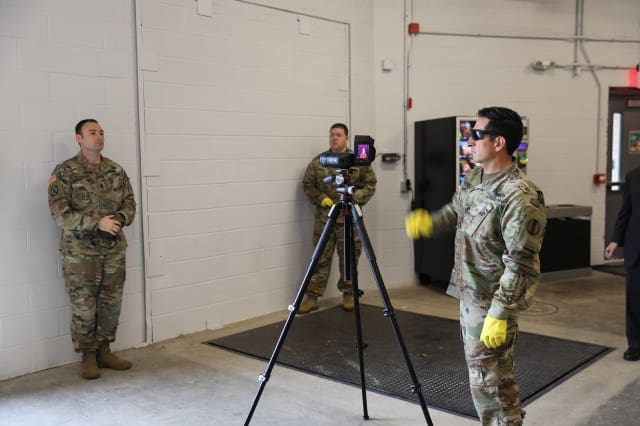
WASHINGTON – As part of the COVID-19 response, the U.S. Army Rapid Equipping Force, Program Executive Office Soldier and the C5ISR Center of U.S. Army Combat Capabilities Development Command led the initiative to use thermal-imaging devices to screen for potentially elevated body temperatures of personnel entering military facilities.

These stand-off thermal imaging capabilities provide significant advantages over hand-held thermometers as they provide a safe distance between the operators and subjects, and require less manpower. The technology, which does not require physical contact, processes information quickly, allowing a faster flow of traffic into buildings and facilities. Screening only takes a few seconds to measure temperature at a distance of 6-to-8 feet using a forward looking infrared sensor mounted on a tripod. If an elevated temperature is detected, individuals receive a secondary screening with a non-contact forehead thermometer. If a secondary screening confirms an elevated temperature, the individual will be encouraged to seek further screening with a medical provider.

Lt. Col. David Wilson, the lead for the REF’s rapid COVID-19 efforts, walked through the screening process at the Pentagon with Dr. Bruce Jette, Assistant Secretary of the Army for Acquisition, Logistics and Technology, and Dr. James A. Day, Executive Director of Security Integration and Technology for the Pentagon Force Protection Agency.

“This is a different adversary we are combating and, as always, it is our number-one priority to protect the force and community to ensure our safety, resilience and readiness,” Wilson said. “We are looking to the thermal-imaging sensors as one of many methods to prevent the spread and exposure of COVID-19.”

The REF worked closely with the Pentagon Force Protection Agency on employing thermal-screening capabilities, which began at the Pentagon Visitor’s Center April 22, 2020. Signs have been placed at various locations to inform personnel and visitors of the screening process. The Pentagon Force Protection Agency is looking to expand the thermal imagers to other areas of the facility, such as Metro entry points.

Also being deployed is the Thermal Imaging for Fever Screening Integrated Visual Augmentation System and the Future Weapon Sight-Individual. Through the close collaboration of government and industry, these systems were quickly modified for thermal-screening capability in a matter of days and put into pilot testing shortly thereafter. To date, thousands of people have been screened with these systems. The TIFS capability is currently deployed at Fort Benning, Georgia, and will expand to other military locations in the coming months.

All of the thermal-screening capabilities are set for broader distribution and use across the Army. Fort Belvoir, Virginia, was the first location to employ thermal-imaging devices for elevated body temperature screening at the installation’s hospital, exchange and commissary. The REF will deploy more thermal-imaging sensors throughout the National Capital Region, Army training centers and to U.S. Army North as one of the first measures of defense against COVID-19.

By PEO Soldier Public Affairs