Sam from TNVC created this video to explain the different variants of BE Meyers & CO‘s Modular Advanced Weapon Laser.


Sam from TNVC created this video to explain the different variants of BE Meyers & CO‘s Modular Advanced Weapon Laser.
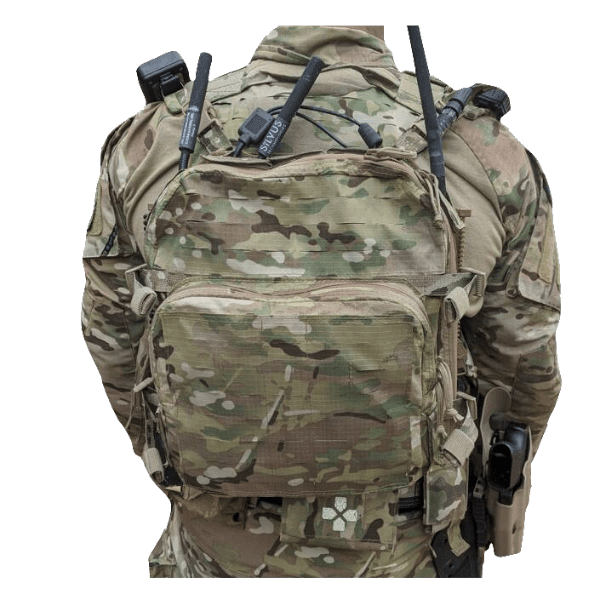
Good morning and Happy MATBOCK Monday,
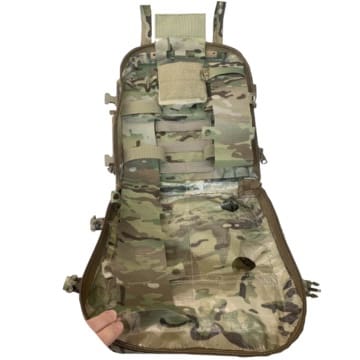
The Hive Comms Pack is made from MATBOCK’s Ghost material giving it superior strength, abrasion resistance, water and CBRN resistance and heat transfer capabilities in a lightweight package. It can house all individual soldier radio types, hubs, and battery types with internal routing channels for cables and MATBOCK’s exclusive water-seal external ports. The pack can be attached via MOLLE, worn as a backpack or zippered on to a compatible plate carrier.
www.matbock.com/products/hive-comms-pack
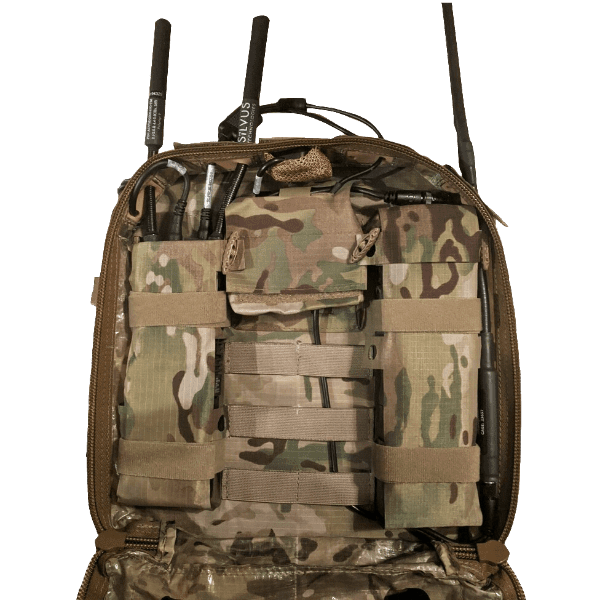
More Great Images
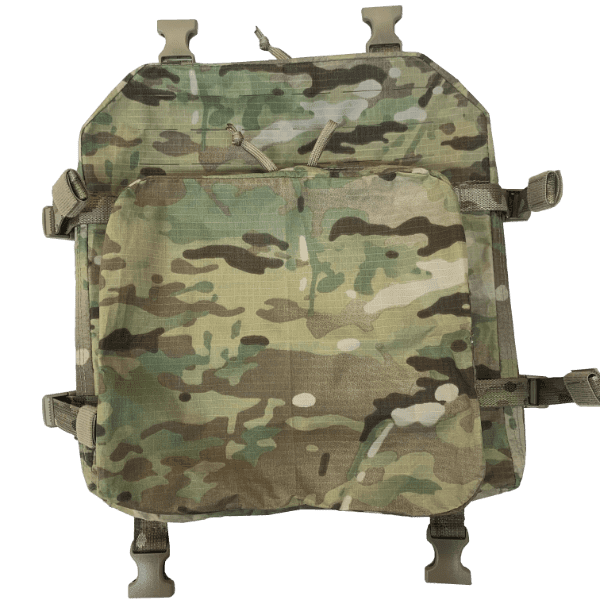
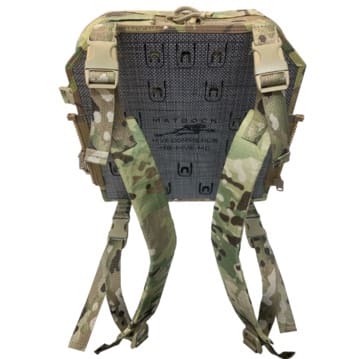
CABLE MANAGEMENT BOX
The MATBOCK CAB is designed to keep communications and other equipment accessories organized and accessible until needed. The semi-rigid bag with internal adjustable stowage loops keep gear protected and well organized. The bag can unfold completely to give access to all equipment without needing to dig through the pack. Made of MATBOCK’s Ghost Light material.
www.matbock.com/products/cable-management-box
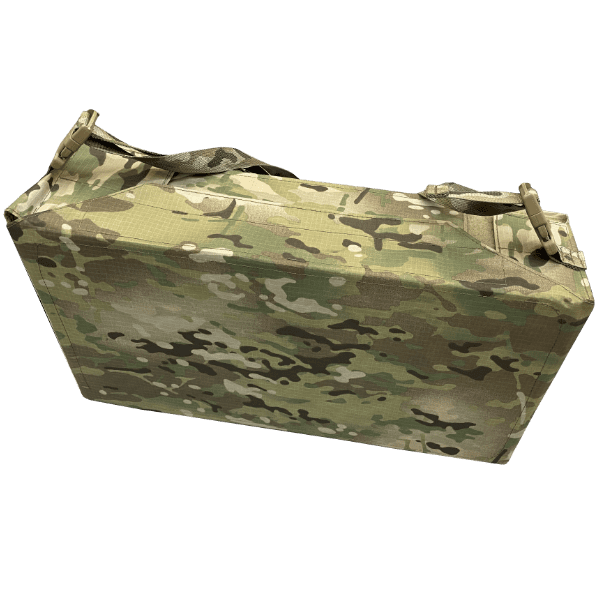
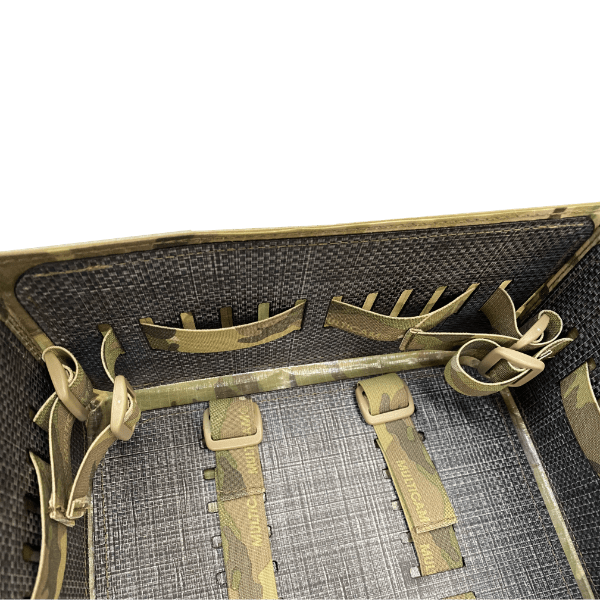
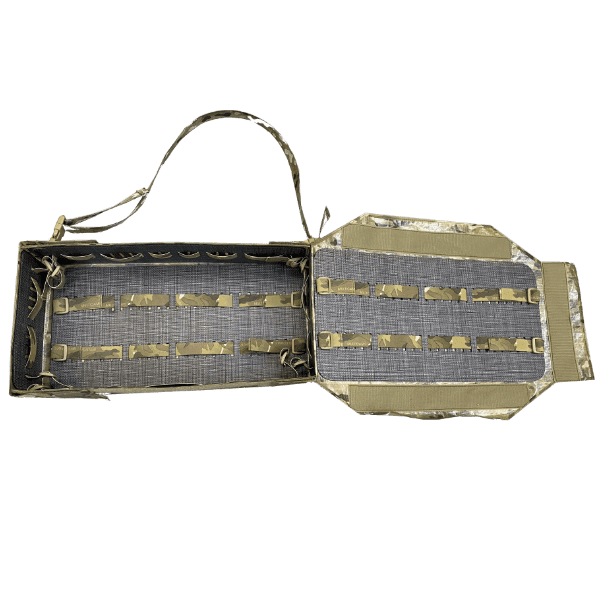
Don’t forget to tune in on Monday at 4:30 PM EST as we go live on Instagram to demo the HIVE and Cable Management Box and answer all your questions!
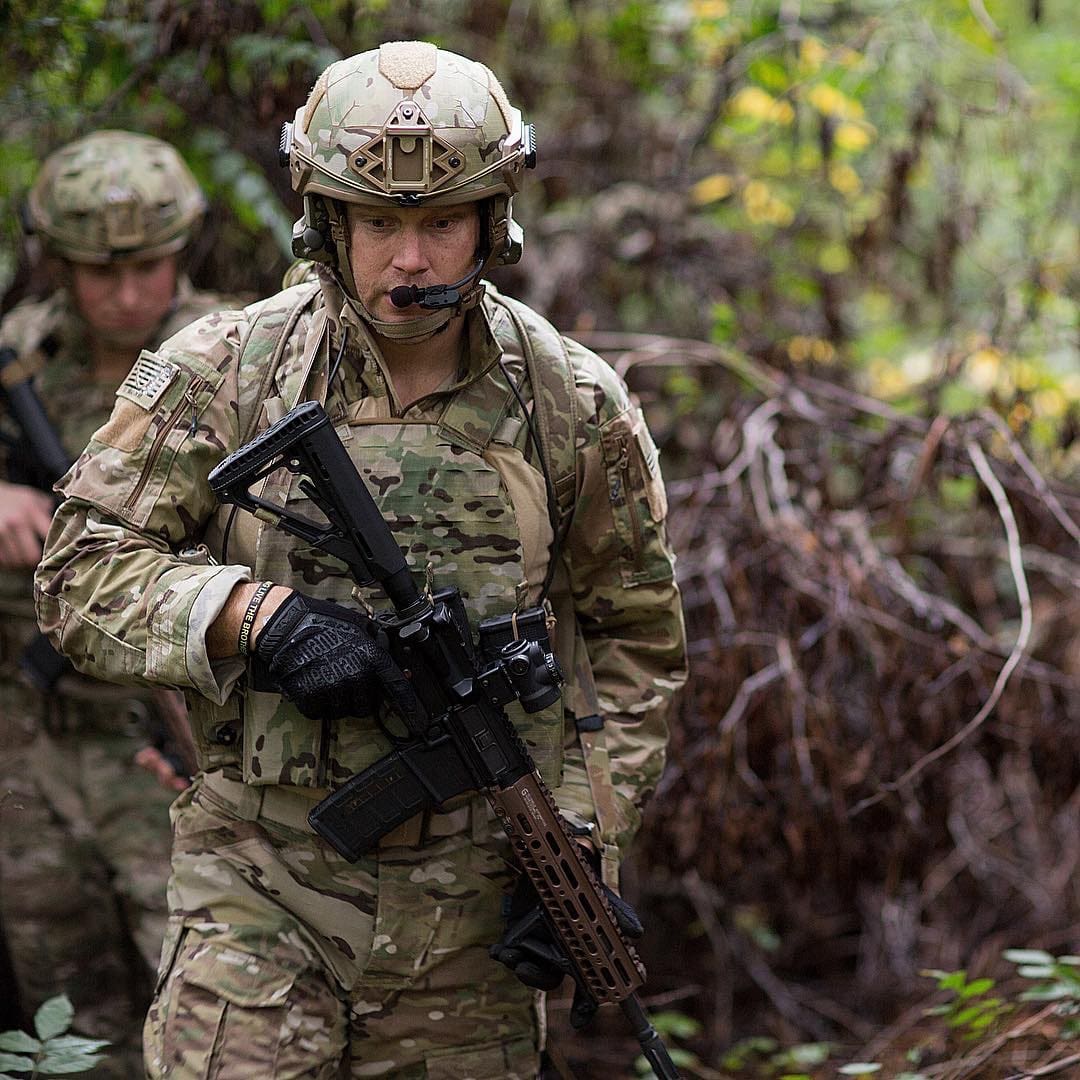
NATICK, Mass. – Dangerous times call for quick action, including rapid prototype development. With this reality in mind, the Combat Capabilities Development Command Soldier Center quickly designed face covering prototypes that comply with Department of Defense standards and meet Centers for Disease Control and Prevention requirements for protection against COVID-19, the disease caused by the Coronavirus.
The CCDC Soldier Center, or CCDC SC, quickly developed six prototypes for face coverings, tested the prototypes, and chose one prototype that was highly rated by Soldiers for immediate development. CCDC SC also selected a second prototype, also well received by Soldiers, that has been further developed, coordinated with PEO Soldier, and will be a more permanent Army solution.
CCDC SC efforts focus on the research, development, and early engineering of the solution and building a Technical Data Package. The designs developed at CCDC SC have transitioned to its partners at PEO Soldier – Project Manager Soldier Survivability for production efforts. CCDC SC is also partnering with PEO Soldier on future iterations.
“During the pandemic, we must ensure that our Soldiers remain ready for any mission and that they are protected” said Douglas Tamilio, director of the CCDC SC. “Our Soldier protection and human factors expertise, combined with our testing and prototyping capabilities, enabled us to quickly develop an Army acceptable solution to the urgent requirement for face coverings.”
CCDC SC is committed to discovering, developing, and advancing science and technology solutions that ensure America’s warfighters are optimized, protected, and lethal. CCDC SC supports all of the Army’s Modernization efforts, with the Soldier Lethality and Synthetic Training Environment Cross Functional Teams being the CCDC SC’s chief areas of focus. The center’s science and engineering expertise are combined with collaborations with industry, DOD, and academia to advance Soldier and squad performance. The center supports the Army as it transforms from being adaptive to driving innovation to support a Multi-Domain Operations Capable Force of 2028 and a MDO Ready Force of 2035. CCDC SC is constantly working to strengthen Soldiers’ performance to increase readiness and support for warfighters who are organized, trained, and equipped for prompt and sustainable ground combat.
Annette LaFleur, team leader for the Design, Pattern and Prototype Team in the Soldier Protection and Survivability Directorate at CCDC SC, explained that CCDC SC “designers quickly brainstormed, sketched, patterned, and fabricated prototypes in one weekend – while material scientists, textile technologists and engineers coordinated the test and evaluation of potential materials.”
“The materials selection was a collection of past and current clothing development efforts, as well as sourcing readily available materials from industry,” said Molly Richards, a research chemical engineer at CCDC SC.
LaFleur explained that clothing designers on the Design, Pattern, & Prototype Team worked with load carriage experts at CCDC SC to rapidly develop an array of potential prototype systems that included six potential designs. CCDC SC’s Human Factors Team assessed the prototypes on Human Research Volunteers stationed at CCDC SC. The designs were given to Soldiers for feedback, a key component of all design efforts at CCDC SC.
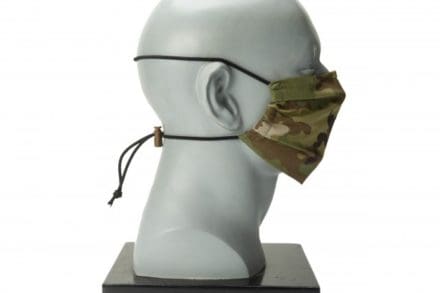
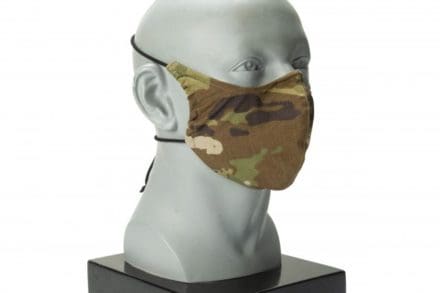
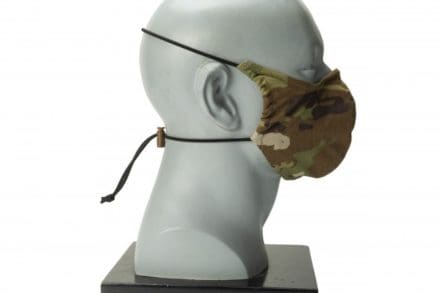
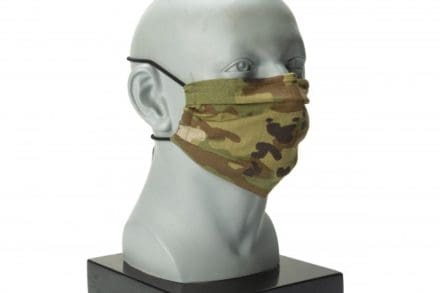
“CCDC SC items, including the face covering, are developed with the Soldier from the beginning stages, so we can say it is ‘Soldier tested and Soldier approved,’” said Richards.
“The design selected needed no improvements,” said LaFleur. “We down selected to designs with the highest Soldier acceptance while considering other factors such as integration with helmets and eyewear as well as ease of manufacturing.”
The first design developed by CCDC SC is being fabricated in-house. CCDC SC specializes in prototype creation and is not a production shop. However, due to unprecedented circumstances caused by the pandemic, CCDC SC personnel are fabricating the first design, which was chosen because of its high acceptance with Soldiers and because it is easy to produce.
Richards explained that a small team of employees across three directorates are busy fabricating the first design with an initial quantity of 10,000 face covers to outfit Soldiers in basic training at Fort Benning, Georgia.
A second design, also highly accepted, has been further developed rapidly as a more permanent Army solution.
CCDC SC knowledge and expertise played an important role in the rapid design and development of the face coverings.
“We have a team of 10 talented clothing designers who work daily to design new and/or improved combat clothing, uniforms and individual protective items,” said LaFleur. “They have the military specific knowledge, skills, ability and creative drive. We collaborated with other CCDC SC subject matter experts in materials/textiles, human factors, anthropology for sizing; engineering technicians in the machine shop; and so many others in various disciplines. We need our Soldiers to remain healthy so they can remain optimized and defend our nation. At CCDC SC our priority is for the Soldier to not to be burdened by what they are wearing, so they can focus on their mission. For the face coverings, the goal is to meet the intent of the CDC and DOD guidelines for use of cloth face coverings when in public.”
“This effort was a natural fit for the expertise in the Soldier Protection and Survivability Directorate,” said Richard Green, Ph.D., director of SPSD at CCDC SC. “We have expertise in materials that enabled smart choices on the selection of materials to ensure the safety of the users. We have expertise in design to make sure that the items fit, function, and durability are appropriate for the intended use, and we have the expertise to provide our PM partners with technical data packages for further production. Mainly, however, we have a dedicated team of true professionals who were willing to come to work under restrictive working conditions and speedily execute this project because they understand the importance of meeting this need expeditiously. I could not be prouder of their effort.”
“CCDC Soldier Center has the expertise from design and prototyping to materials and textiles to react and execute quickly for the need for face coverings for the Soldier,” said Richards. “It has taken a team of people across directorates with a variety of expertise to execute quickly. Protection for our Soldiers is our top priority and taking measures to limit the spread of COVID-19 is essential during this unprecedented time.”
The Battle of the Coral Sea is known for being the first Naval battle where the two opposing forces never met. It was the birth of the aircraft carrier. No surface ships sank another ship in this battle. It was also one of the allies’ first victories in the war in the Pacific. It did come at a hefty price for the Allies, at a loss of 1 aircraft carrier, the USS Lexington CV-2, 1 Destroyer USS Sims DD-409, 1 oiler USS Neosho AO-23, 69 aircraft and 656 people killed, the USS Yorktown was also significantly damaged. The Lexington was so severely damaged that the U.S. sank it with torpedo’s the day after the battle. The Japanese lost 1 Light strike carrier (Jeep Carrier), 1 destroyer, 3 small warships, 97 aircraft, and 966 people killed.
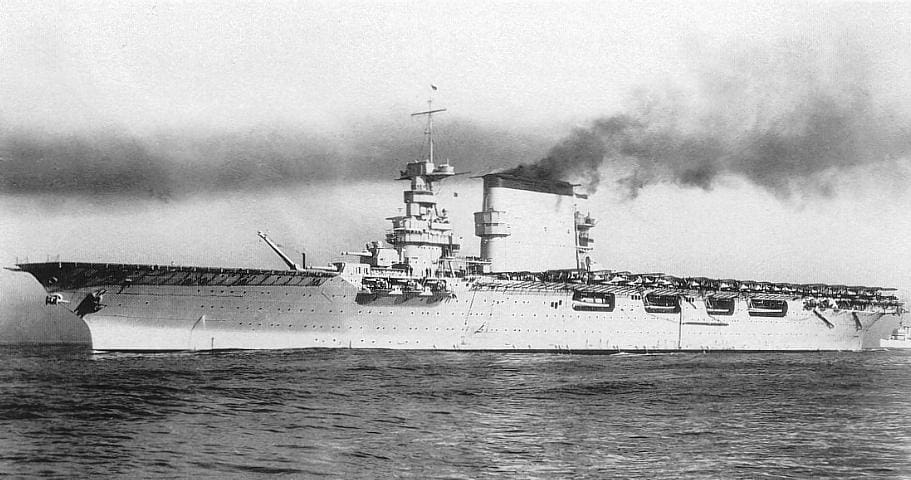
My Stepfather was on the Lexington during this battle. He was in a boiler room when a Japanese torpedo hit it. After he abandoned the Lady Lex, he spent the next month and a half making his way back to San Diego before he could get new clothes and a new sea bag. Like every good sailor, he went out and got drunk, losing his seabag and being arrested by shore patrol. He ended up in the brig and had to rent a seabag so he could get out because, if you didn’t have a full seabag, you had to stay in jail. He was one of the most significant people in my life and one of the biggest reasons I joined the Navy. He had great pride in being in the Navy and joined in 1939. He had left Pearl Harbor on December 6, 1941, so they could bring planes to Midway. He was supposed to get out in early 1942.
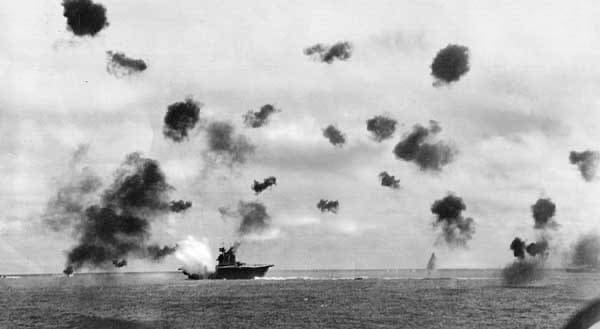
The allies learned of the intended plan of the Japanese to seize Port Moresby in New Guinea. The Japanese wanted to take control of the Coral Sea and use it as a staging base to invade Australia. When the Japanese landed at Tulagi on May 3, carrier-based U.S. planes from a Task Force 17 struck the landing group, sinking one destroyer and some minesweepers and landing barges. Most of the naval units covering the main Japanese invasion force that left Rabaul, New Britain, for Port Moresby on May 4 took a route to the east, where they clash with TF17.
On May 5 and 6, 1942, opposing carrier groups sought each other, and on the morning of May 7, Japanese carrier-based planes sank a U.S. destroyer and an oiler. Allied planes sank the light carrier Shoho and a cruiser. The next day Japanese aircraft crippled the U.S. carrier Lexington and damaged the carrier Yorktown. U.S. planes crippled the sizeable Japanese carrier Shokaku so bad that it had to retreat away from the battle. So many Japanese planes were lost that the Port Moresby invasion force, without adequate air cover and harassed by Allied land-based bombers, turned back to Rabaul. The four-day engagement was a strategic victory for the Allies. The battle, which U.S. Adm Ernest J. King described as “the first major engagement in naval history in which surface ships did not exchange a single shot,” foreshadowed the kind of carrier warfare that marked later fighting in the Pacific War.
A little over two years ago, the USS Lexington was found at the bottom of the Coral Sea, and she was seen for the first time since she was lost so long ago. God bless all the sailors and airman who are still interned in her and never had a chance to be someone’s Stepfather or live their lives.
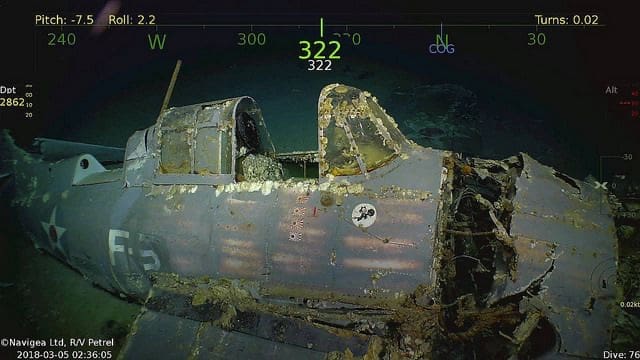
news.usni.org/2018/03/05/video-billionaire-paul-allen-finds-lost-world-war-ii-carrier-uss-lexington
JOINT BASE ELMENDORF-RICHARDSON, Alaska
Two 673d Medical Support Squadron (MDSS) Airmen refined their invention of a plastic barrier to protect medical providers treating patients with COVID-19, and airborne diseases in general, at Joint Base Elmendorf-Richardson, Alaska, April 7, 2020.
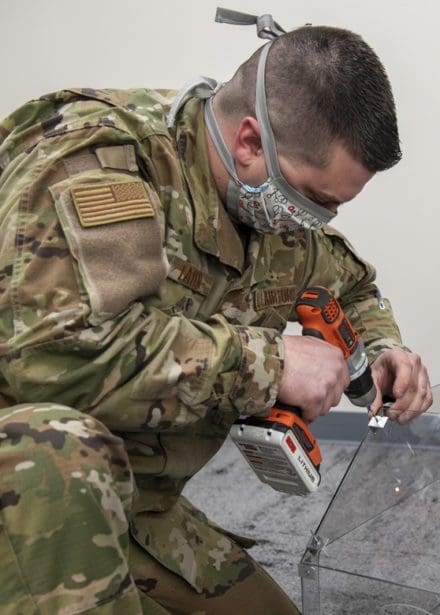
U.S. Air Force Senior Airman Michael Shoemaker, 673d MDSS biomedical equipment technician, and U.S. Air Force Staff Sgt. Andrew Taylor, 673d MDSS medical logistics noncommissioned officer in charge of acquisitions, designed and built a polycarbonate plastic enclosure to place over a patient’s head and upper torso with access for treatment via two holes at the head of the enclosure for a physician’s hands and arms, and two side doors for additional access.
“Ultimately, we wanted to create a mobile isolation room that could contain an infectious disease,” Shoemaker said. “This enclosure provides an extra layer of protection for medical staff because aerosol droplets can’t pass through it.”
Shoemaker said he got the idea after seeing the large, bubble-like ventilators medical providers in Italy and New York were using to treat patients with COVID-19. The ventilators had sufficient space around a patient’s head for a physician to reach inside and treat the patient from outside the barrier.
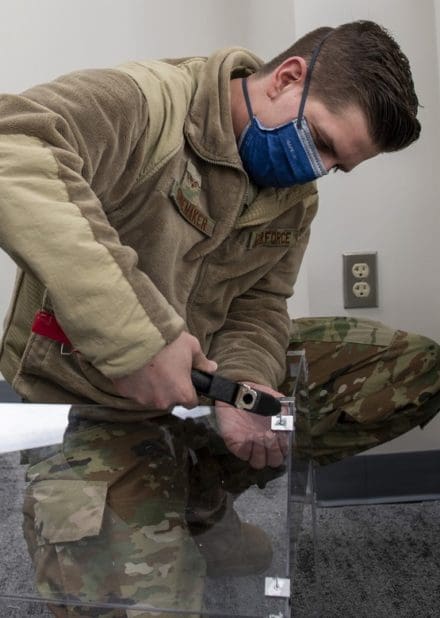
Shoemaker shared his idea for a sturdy, plastic barrier that could surround a patient’s head and upper torso with MDSS leadership, using a cardboard box for a visual. He said his leadership immediately gave him the go-ahead to build a prototype, and Taylor came on board to help with supplies and construction.
Taylor and Shoemaker built an acrylic prototype that same day, then invited medical professionals from infection control, respiratory therapy and anesthesiology to provide feedback and suggestions for improvements. A paramedic also intubated a medical manikin under the enclosure to assess its practicality.
“It was really cool to see the whole team excited about the idea, looking at the capability it could provide,” Shoemaker said. “Everybody was onboard. They pointed out shortfalls in the initial design and what we needed to change. For example, curving the front so there wasn’t a seam on the viewing platform, and making sure there were doors on the sides so medical technicians could support the physician.”
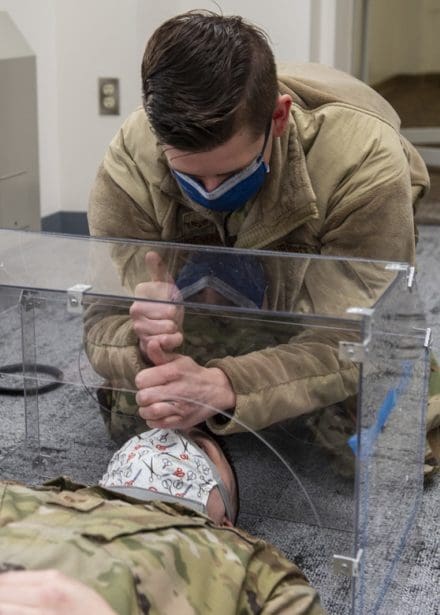
“Their recommendations made this enclosure a lot more functional than we originally anticipated,” Taylor said. “It could be used for more than the current situation with COVID-19. It could be used for almost any medical procedure needing an extra barrier for protection.”
To create the enclosure, polycarbonate plastic panels are cut with a waterjet, so they fit together almost like a puzzle. Thin brackets and rivets secure the panels together, and clear silicone seals the seams. The team is also working to create a single panel that can be folded into shape using heat, eliminating the need for brackets and rivets.
“It’s simplicity allows it to be quickly cleaned and sterilized after each use and ready for another patient in five to 10 minutes,” Taylor said.
“Working with the base innovation lab and the staff at the medical group, we’ve created something significant,” Shoemaker said. “If this is adopted and we’re able to make this a kit that can be sent out, it will outlast COVID-19 and go to any medical group with a need for it.”
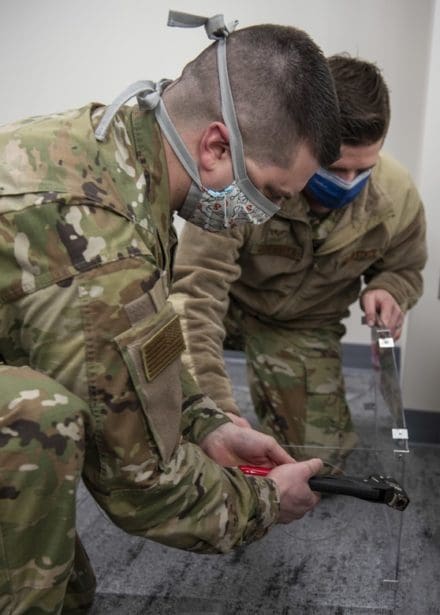
In less than a week, with help from the 673d Medical Group, the JBER Innovation Lab and support from across the installation, these two Airmen created a functioning, potentially life-saving device.
By Airman 1st Class Samuel Colvin | 673 ABW/PA
SureFire Spotlight videos are a high level rundown of specific products. This one focuses on the 3P Eliminator.
SureFire’s 3P Eliminator three-prong flash hider features a patent-pending design that greatly reduces muzzle flash — typically greater than 99%—when compared with a plain muzzle. Boasting robust tines built to withstand the rigors of combat, the SureFire 3P Eliminator duplicates the key functional design elements of the SureFire SF3P flash hider, but unlike the latter it cannot be used to mount SureFire SOCOM suppressors.
Precision machined from US mill-certified steel bar stock—including high-precision single-point cut threads for optimum thread interface—the SureFire 3P Eliminator muzzle brake has a black Melonite finish that provides maximum protection under harsh environmental conditions and facilitates cleaning even after extreme use.
WASHINGTON — Signature modernization programs remain on track to deliver capabilities to Soldiers, despite facing delays due to the coronavirus, Army leaders said Thursday.
Some of the more than 30 programs have already postponed tests, including Soldier-input events, as a result of safety concerns and supply chain challenges.
The service, though, plans to make up for lost time to stay on schedule, said Gen. John M. Murray, commander of Army Futures Command.
“What I believe is the most important thing is when we promised our Soldiers we would deliver that capability,” he said during a press briefing. “The current estimate is we will deliver the capability by the time we said we would deliver that capability to our Soldiers, which is first unit equipped.”
Soldier touchpoints, which have allowed Soldiers to play a critical role in the development of new equipment, have varied depending on the location of the event.
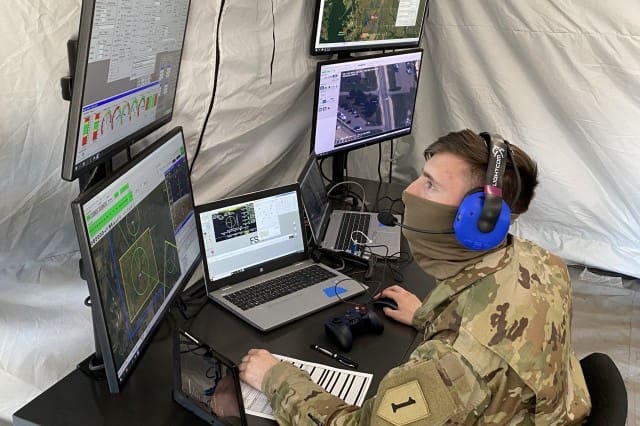
The 1st Infantry Division’s 1st Armored Brigade Combat Team is now conducting Soldier touchpoints at Fort Riley, Kansas, for the Future Tactical Unmanned Aerial System capability demonstration.
In order to do this, Soldiers are wearing personal protective equipment along with practicing social distancing and good hygiene, Murray said.
The demonstration consists of five brigades across the country that will test technology that may lead to a replacement for the RQ-7 Shadow.
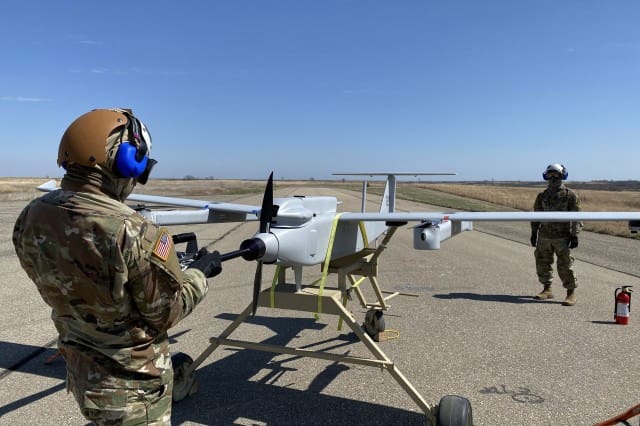
Later this month, the 101st Airborne Division’s 2nd Brigade Combat Team at Fort Campbell, Kentucky, is also slated to begin its touchpoints for the demonstration after a slight delay, he said, adding these events depend on local conditions.
“We consult, but ultimately we will defer to the local commander on the ground to make those types of decisions about the health of the force and what they can and cannot do,” he said.
The pandemic has led the Army to postpone similar events, particularly for the Integrated Visual Augmentation System, a heads-up display designed to increase situational awareness in combat and for training.
The device’s third iteration for Soldier input is a critical one since it will be the first time they will test hundreds of sets of the military form factor, a ruggedized version with integrated low light and thermal sensors.
While the tests had been scheduled for this summer, they were postponed to the fall after manufacturing delays, Murray said.
A subcontractor for Microsoft, which received the contract, should be operational again this week or early next week, he said.
“We have plans in place to make that time up and maintain first unit equipped like we promised all along,” he added.
Bruce D. Jette, assistant Army secretary for acquisition, logistics and technology, explained that companies may have to shut down for a 14-day quarantine if a worker tests positive for the virus.
BAE Systems, for example, had to briefly halt operations at their plant in York, Pennsylvania.
“You can’t do assembly of armored vehicles by telephone or computer; you’ve got to have welders and people in there and sometimes they’re in close proximity to each other,” he said. “They went back and rescrubbed their entire procedures and they took care of their people, as we encourage them [to do].”
Boeing also had to temporarily close a plant in Philadelphia until it was safe to reopen.
“Right now, all of the companies that were closed for any period of time have reopened,” Jette said.
Each priority program, Murray said, affords a bit of wiggle room for unforeseen circumstances, which the Army will now be able to use to meet timelines.
In “every individual program, there are little places where we’re massaging and working to make back time,” the general said. “We’re not really cutting anything out. We’re just moving faster than we originally planned to go from prototype delivery into the hands of Soldiers.”
An example is with the Next-Generation Squad Weapon, which currently faces a six-week delay for three vendors to deliver prototypes. Once they get delivered, the Army plans to speed up the time it takes to get them out to units for testing.
“We will get weapons into the hands of Soldiers, under current conditions, two weeks after we take delivery of the prototypes,” Murray said. “That used to be a longer process. We’ll get four of those six weeks back right away by accelerating the time.”
Army Secretary Ryan D. McCarthy said the Army was grateful for how resilient industry has been to keep programs moving.
“It’s amazing how quickly they’ve adapted, kept their workforce engaged and are protecting cost schedule and performance on these weapons systems,” he said at the briefing.
He also credited Army modernization and acquisition officials in working progress payments for manufacturers, helping with small business loans, and managing second- and third-tier suppliers.
“We’ve been very supportive of our industry base and their supply chains to ensure that they continue to go down the path of recapitalizing existing weapons systems, as well as the development of the new ones,” he said.
By Sean Kimmons, Army News Service
FirstSpear has announced their Berry compliant shooters glove is now available for commercial purchase.
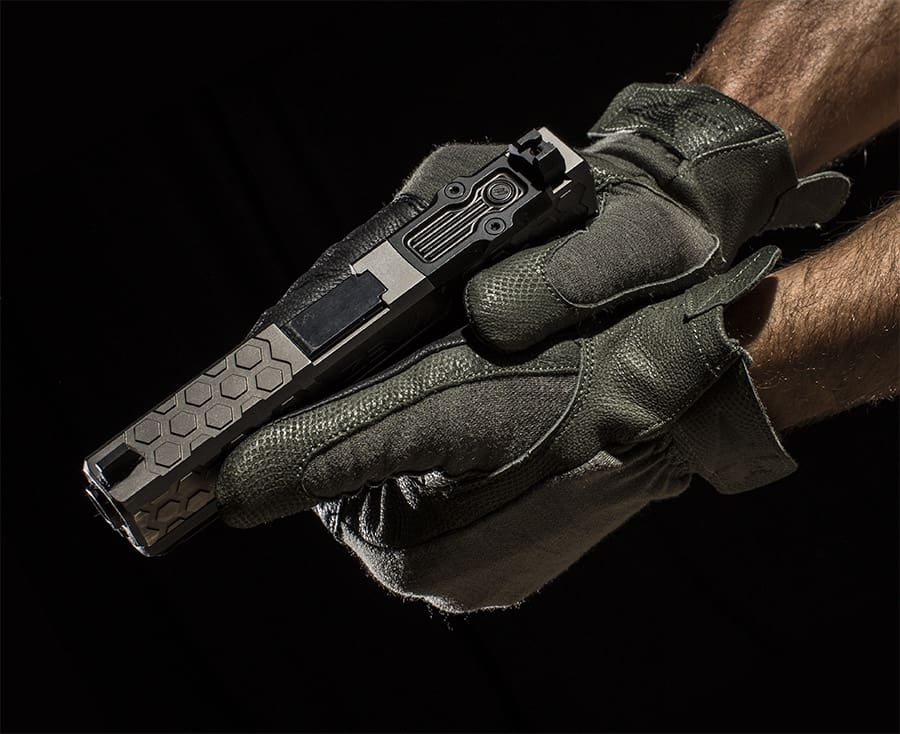
The Operator Glove was designed for and currently fielded by United States Special Operations teams who required a shooters glove that provides the balance between strength and protection vs weight and dexterity. The FirstSpear OG provides the end user a reliable solution to this common glove dilemma now available for the first time on the FS web store in Sand and Commando colorways.
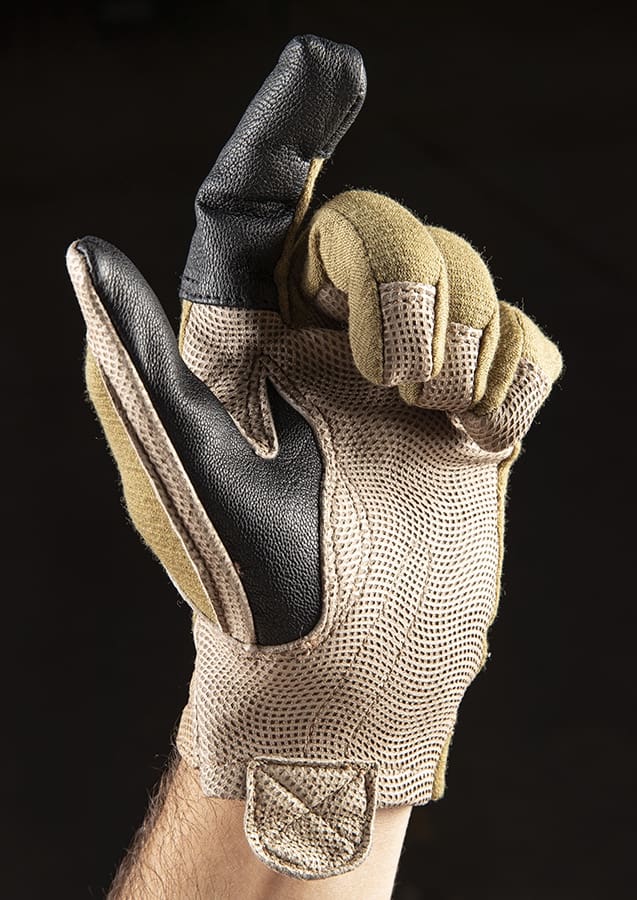
Built with the most technologically advanced materials and modern construction techniques it is inherently flame retardant with patterning and fit that makes it feel like you are not wearing a glove at all. This design allows for maximum manipulation and feel for fire control and other key weapon functions. The entire glove including the trigger finger itself has an advanced patent pending design to increase transmission of feedback to the user. Core spun merino wool, Pitards goat leather, touch screen compatibility, are just a few of the features found on the OG.
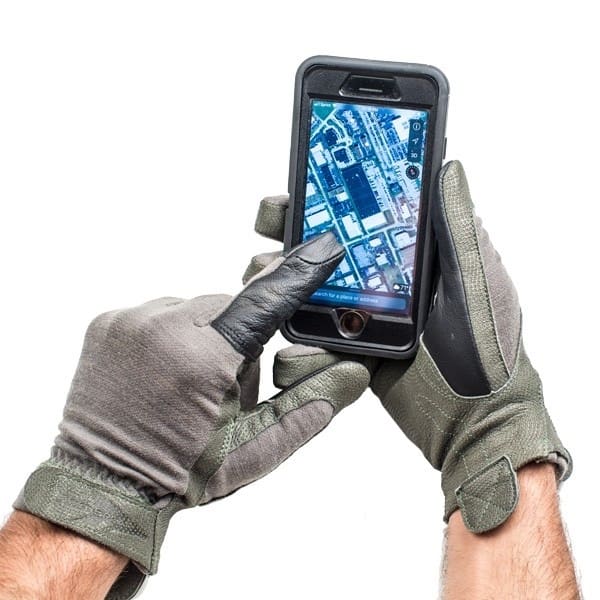
In order to achieve these levels of peak performance FirstSpear used materials and construction techniques that provide for the best in tactile responsiveness but by their very nature will not stand up to extremely long periods of hard abuse and should be expected to wear out. FS states that the these gloves were designed to perform exceptionally well through a standard train up and deployment and therefore do not come with the standard lifetime warranty commonly found on plate carriers, bags, packs, and other equipment.
Features:
Touch screen compatible thumb and index fingers
Core spun Merino wool with nylon core
FS-HDL Leather palm
No melt, no drip materials
Inherently anti-bacterial odor suppression
Enhanced breathability
Low water uptake / soft drying

NSNs are assigned to both Commando and Sand Colorways in sizes Small – 2X.
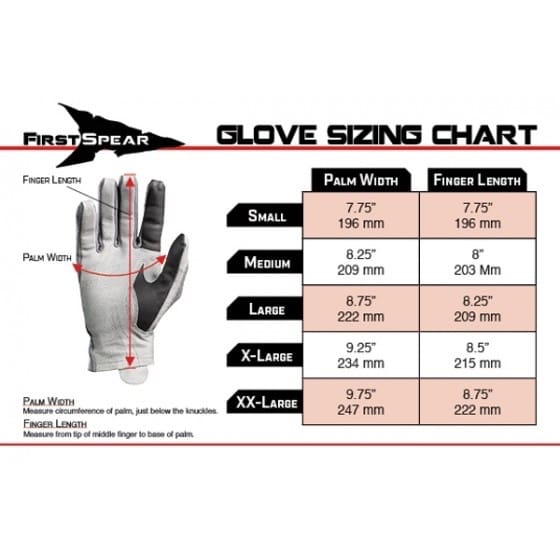
Available now. 100% American Made with US Materials.
www.first-spear.com/operator-glove-og