Phantom Lights

Archive for the ‘Guest Post’ Category

Air Force Special Warfare Career Fields Update Entry Requirements

Wednesday, August 5th, 2020

JOINT BASE SAN ANTONIO-CHAPMAN TRAINING ANNEX, Texas (AFNS) —

Air Force Special Warfare has refined its rich history of Assessment and Selection for entry into the special tactics and Guardian Angel career fields.
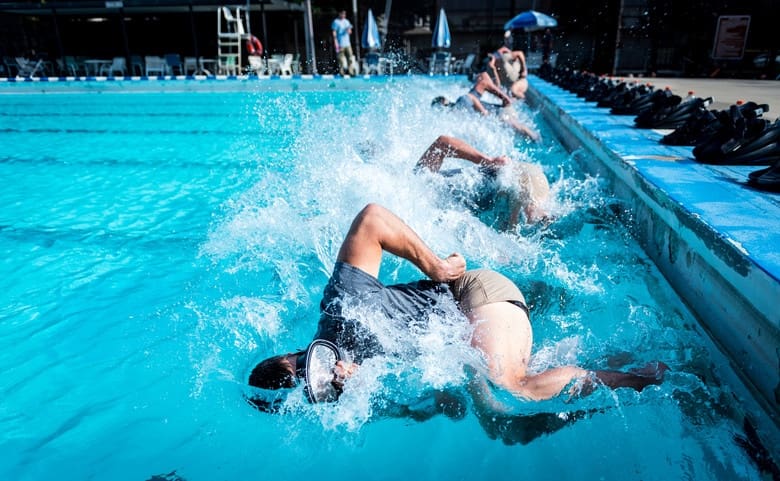
A&S is a character-based process that is indexed off of physical performance and mental fortitude, but fuses the cognitive domain to build a unit of action–an agile and adaptive operator. A&S is a high performance system designed to prepare operators for uncertainty, to embrace pressure and improve their crisis management abilities.

“No inflection point, we’ve been doing this for 65 years so this isn’t new to us,” said Chief Master Sgt. Jamie Clark, Special Warfare Training Wing command chief. “Our A&S has always been about developing the operator, a problem solver, not a specialty. Let’s not mince words though, it starts and ends with grit. At the very core, our A&S is a talent management process designed to build an Air Force joint leader to project airpower in combat, humanitarian and gray zone operations.”

In January of 2019, the wing revised its previous A&S into a single, more comprehensive process designed to push and test the upper limits of a candidate’s physical, mental and cognitive abilities. The course is four weeks long and aspiring attendees consist of pararescue, combat control, special reconnaissance, combat rescue officer and special tactics officer candidates. Previously, candidates of these career fields attended different initial entry courses such as the Pararescue Indoctrination Course or Combat Control Selection Course.

“In the past, combat control and pararescue candidates went through the Indoctrination Course together,” said Senior Master Sgt. Lopaka Mounts, A&S superintendent. “Bringing combat control, pararescue and now special reconnaissance back into the same A&S ensures candidates are evaluated along the same guidelines for trainability, suitability and durability.”

This A&S is no different than other special operations career fields across the Department of Defense. Its task and purpose is to ensure candidates have the requisite attributes to operate in any environment under extreme conditions, either individually or in small teams with limited to no support infrastructure. Stress is levied on candidates to simulate and inoculate them to high-risk, reduced signature and politically sensitive situations they will face in their careers, so attrition is expected.

“There is always going to be stress put on candidates in this course because we need to ensure they are able to perform. Therefore, attrition is unavoidable,” Mounts said. “The physical and mental tests throughout A&S is purposeful, anchored to and meant to ensure our candidates meet mission requirements. Candidates should come to the course ready to crush the standards that are in place.”

The goal has always been readiness and lethality while increasing operational placement and access, as well as range and maneuverability to operate in contested and noncontested environments. In essence, it’s about preparing the environment, which is what the Air Force envisioned when it created GA and ST. A&S is the mechanism to achieve this goal.

“We’re extremely proud of our GA and ST lineage and history. A&S is vital to what we represent, why wouldn’t it be? It’s the benchmark experience of who we are and fight for,” Clark said. “Our goal has and continues to be to position the Air Force to be successful, to create an unfair fight so we win. This is no more evident than the ultimate sacrifice paid by some of our heroes like William Pitsenbarger, John Chapman, Jason Cunningham, Scott Duffman, Scott Sather, Andy and Sean Harvell and Bill Schroeder.”

By 1st Lt Jeremy Huggins, Special Warfare Training Wing
Winter Is Coming! Wild Things Low Loft FR-G Jacket and Pants

Tuesday, August 4th, 2020

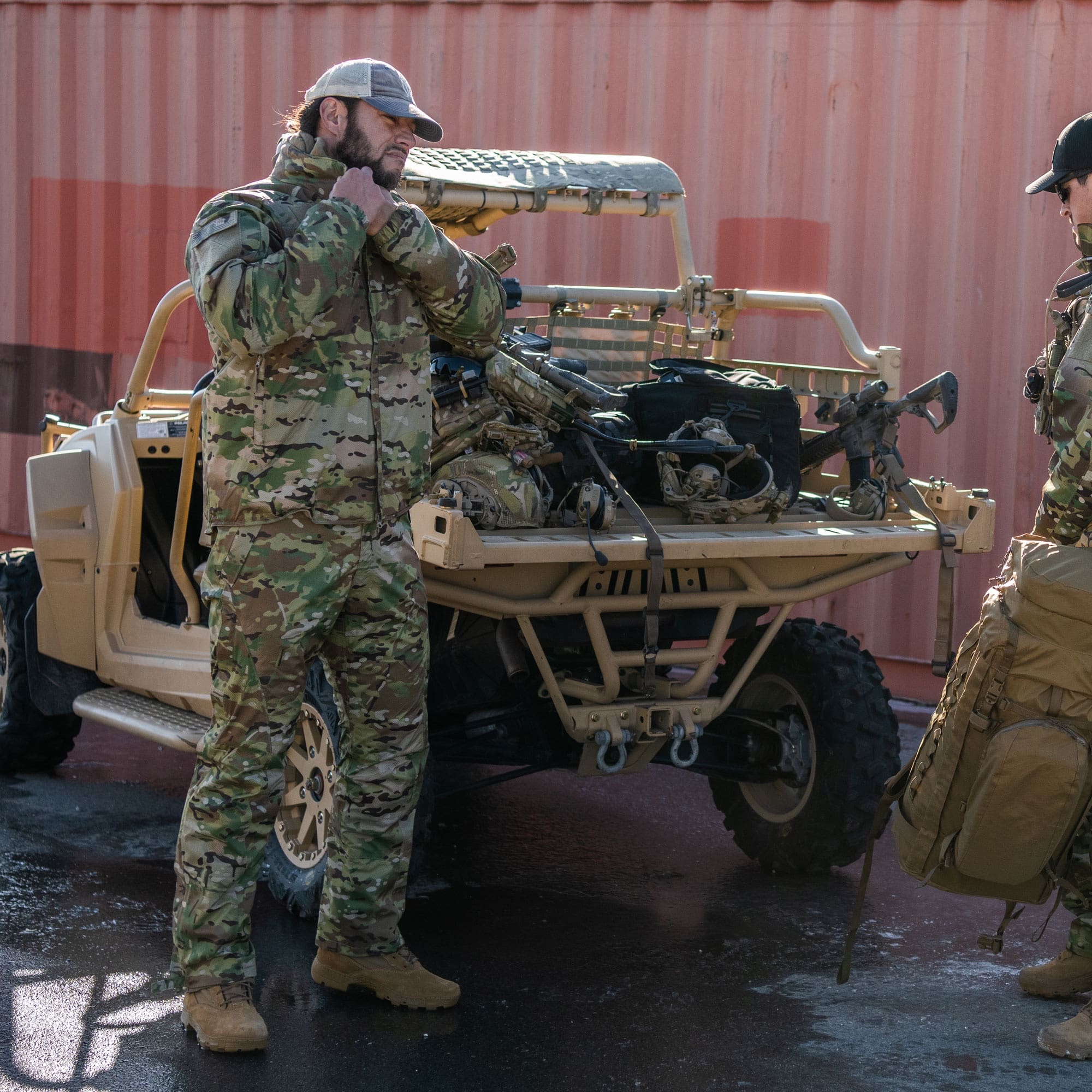
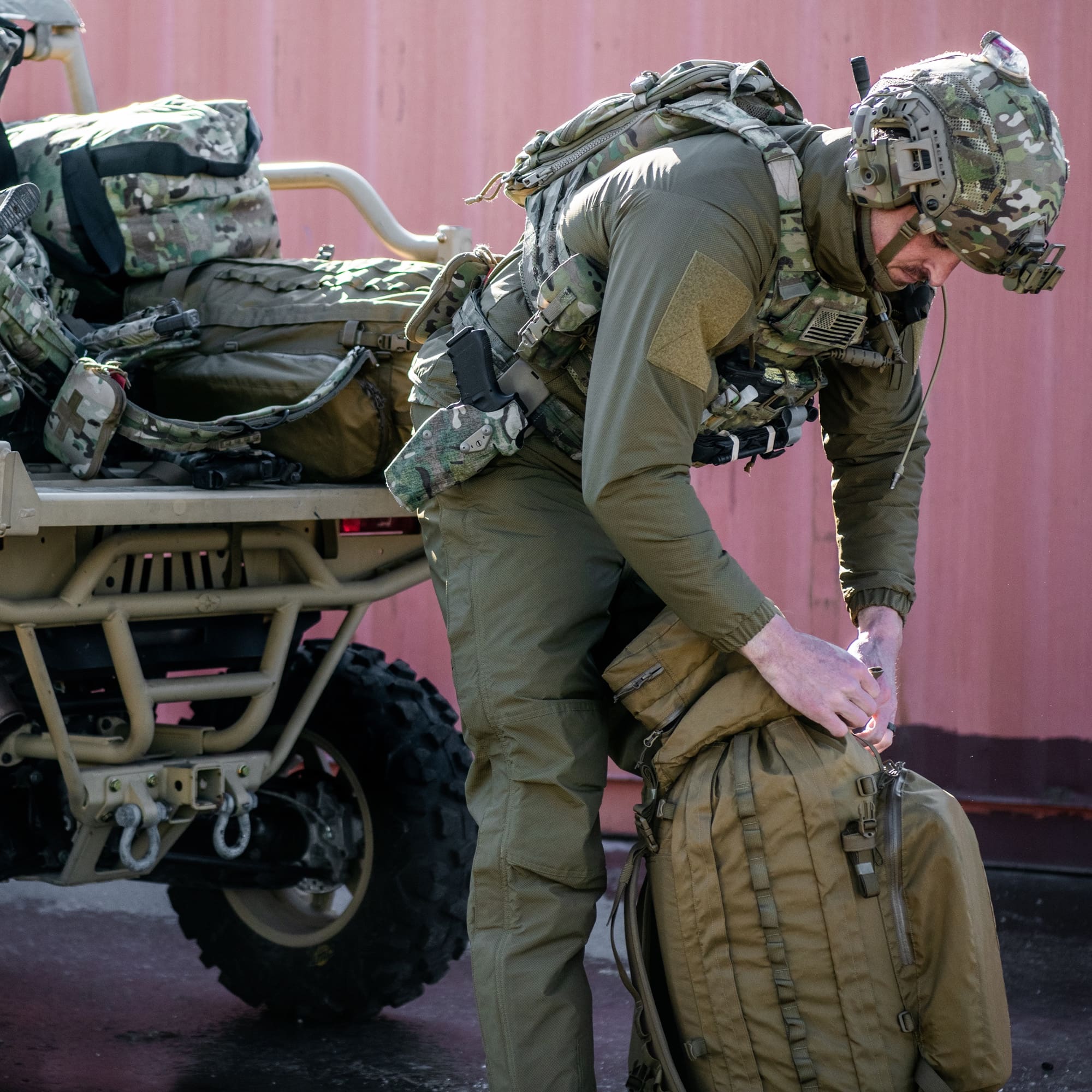
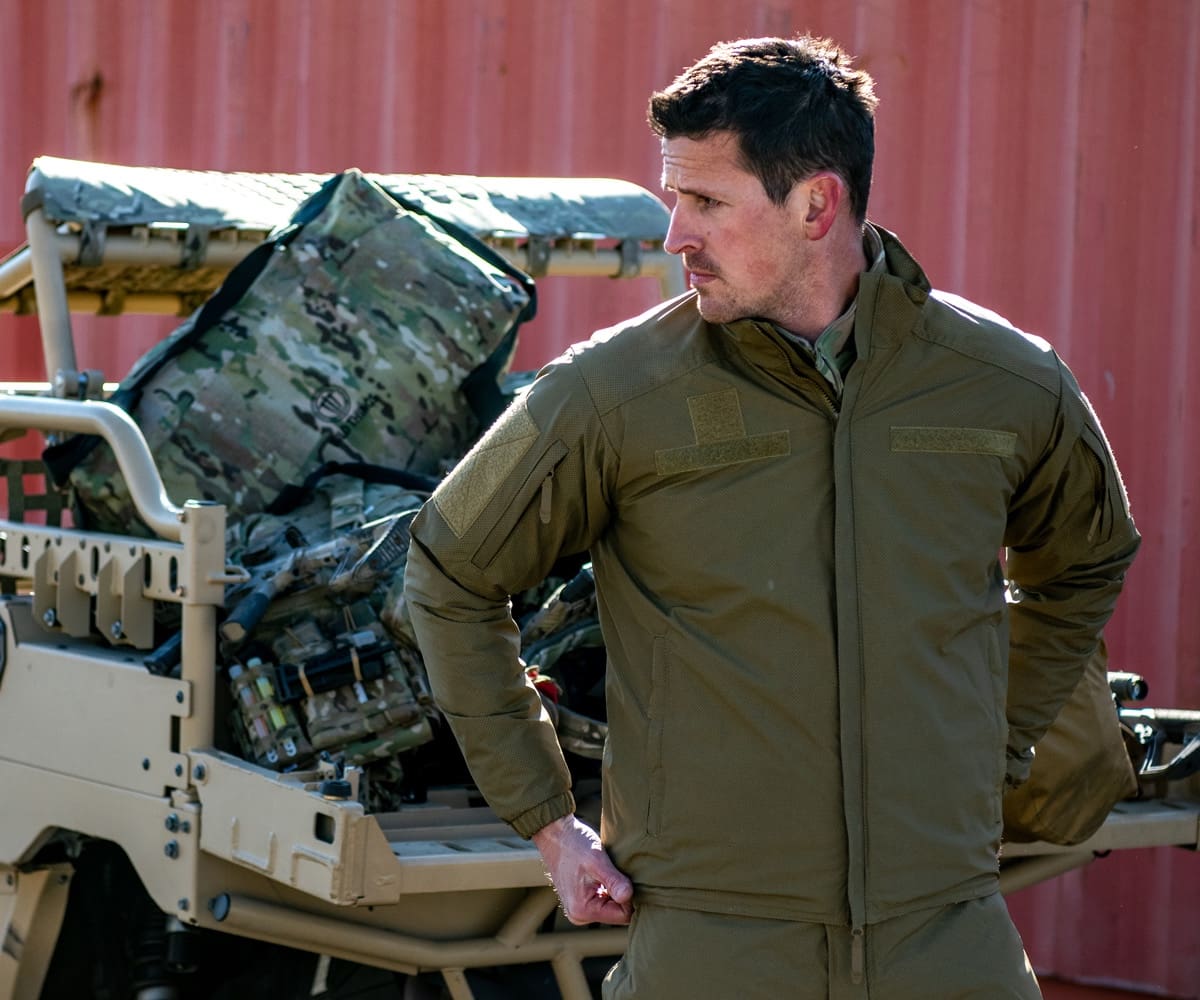
Wild Things Low Loft FR-G Jacket and Pant are an integral part of your FR layering solution. These premium cold weather layers have an incredible comfort range and incorporate FR with the outstanding performance in cold weather expected from Wild Things and Gore.

Low Loft FR-G layers use GORE® PYRAD® flame retardant hardshell fabric: a self-extinguishing technology that provides durable protection against flash fire exposure, while remaining highly breathable, water resistant, and windproof. PrimaLoft® Silver Active synthetic insulation helps you beat the cold in a packable and compressible garment.

Contact Wild Things today: we’re here to help you choose the right layers to meet your needs and your budget – from base layers to FR high loft – we can handle whatever weather Mother Nature throws your way. Fear No Element™.

Low Loft Jacket FR-G

Low Loft Pants FR-G

Low Loft FR-G Jacket & Pants Download:

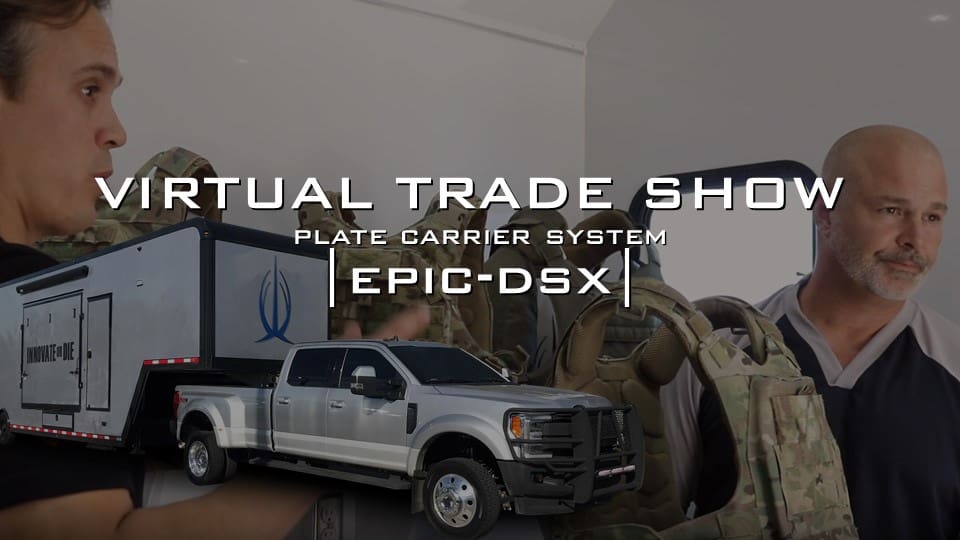
TYR Tuesday – IDTOUR VTS |Virtual Trade Show| EPIC-DSX Plate Carrier System

Tuesday, August 4th, 2020

Episode Six of Innovate or Die® Tour Virtual Trade Show #IDTOURVTS is here!

Episode Six:

IDTOUR VTS |Virtual Trade Show| PICO-MVW-DSX Plate Carrier System

New episode launching every Tuesday.

EP.6 New EPIC-DSX Plate Carrier System

Coming Soon: 2021

Available Now EPIC Male Carriers:

www.tyrtactical.com/products/list/epic-male/plate-carriers-body-armor

Available Now EPIC Female Carriers:

www.tyrtactical.com/products/list/epic-female/plate-carriers-body-armor

What is IDTOURVTS?

Our mission has always been about protecting those who run towards the threat.  To that end, we created the Innovate or Die® Tour and Mobile Showroom. Over the past couple years it has allowed us to meet you face-to-face, gather your feedback and answer your questions.

Life has been put on hold for many people around the world, but you have not stopped risking your safety and health against all the threats we face today.

We can’t wait to meet you on the road again.

Thank you to the men and women of the armed forces, first responders and health care professionals who continue to put their lives on the line.  You haven’t stopped working and neither will we.

Episode One:

IDTOUR VTS |Virtual Trade Show| PICO-DS & DSX Plate Carriers

Episode Two:

IDTOUR VTS |Virtual Trade Show| The Ultimate Range Bag

Episode Three:

IDTOUR VTS |Virtual Trade Show| Shield & Dolly System

Episode Four:

IDTOUR VTS |Virtual Trade Show| Huron™ Hot Weather Uniform

Episode Five:

IDTOUR VTS |Virtual Trade Show| PICO-MVW-DSX Plate Carrier System

SOLGW – Sage Dynamics 12.5 Workhorse

Monday, August 3rd, 2020

The Sage Dynamics 12.5 Workhorse. A properly tuned, over built, beautiful blaster…built by Sons of Liberty Gun Works.

MATBOCK Monday – BLS

Monday, August 3rd, 2020

Good Morning and Happy MATBOCK Monday!

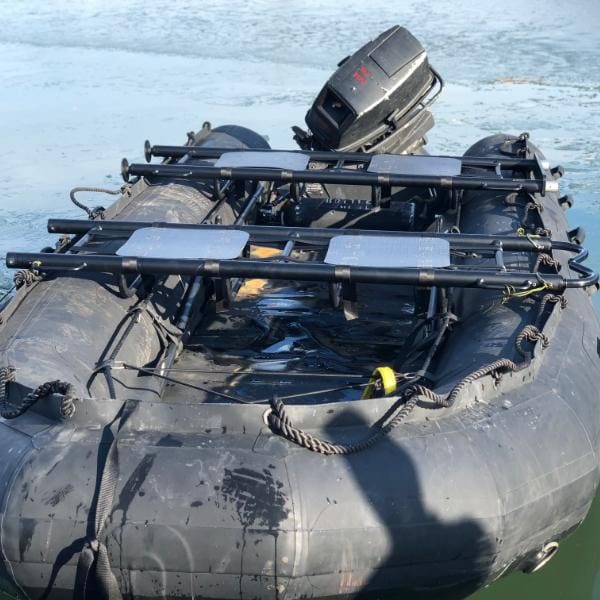
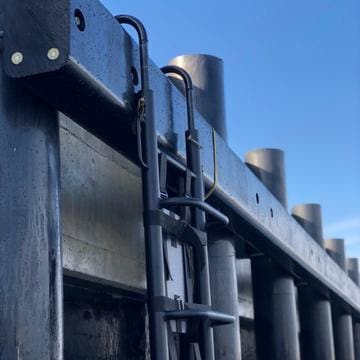
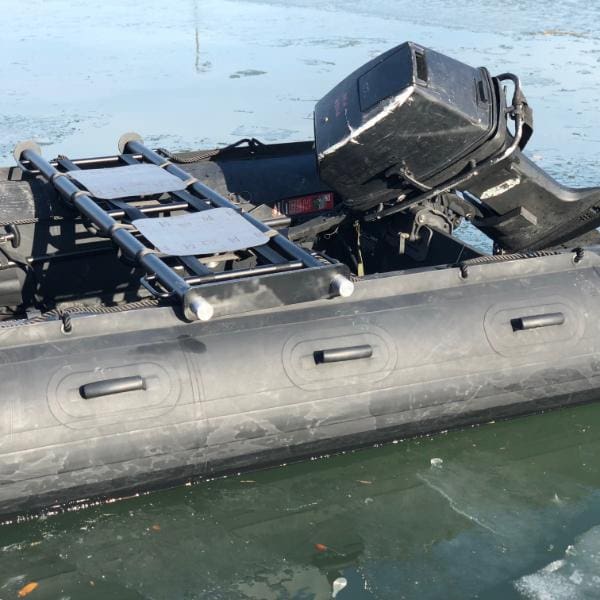
The BLS is a joint project between MATBOCK and MAS Special Ops Training. It’s a patent pending Bench, Ladder, Stretcher designed for Wing and Zodiac inflatable boats. The BLS is sold as a pair (bottom and upper sections) and designed to deploy as a unit. For the inflatables, it sits across the side tubes and can be secured to the floor with either ratchet straps or line (not included in the kit), giving space for 4 operators to sit forward facing during transit. When reaching the landing site or ship to be boarded, the sections can be attached together to create a 12 foot ladder with integrated shepherds hooks and offset ladder rungs. Additionally, the ladder rungs are coated on the top surface with nonslip to help prevent falls due to wet surfaces. If there is a casualty, a single section can be used as a stretcher to evacuate the individual as well. Four handles protrude from the sides to aid in transport as well as for positioning the ladder.

Each section is 69” tall, 17.5” wide, weighs 20.5 lbs and is made of aluminum with welded connections throughout the system. Additionally, the BLS comes with grip feet on the lower section to help prevent the bottom from kicking out while being used as a ladder.

www.matbock.com/products/bls

Don’t forget to tune in on Monday at 4:30 PM EST as we go live to demo our BLS system!

Special Tactics Airmen Integrate Combat Capabilities During Exercise Commando Crucible

Monday, August 3rd, 2020

HURLBURT FIELD, Fla. (AFNS) —

Air Force special tactics teams provide a wide range of core responsibilities and combatant commands rely on ST operators to hone their skills long before arriving at a deployed location.

To meet the standards required for deployment, special tactics teams completed exercise Commando Crucible, from June 18-July 3, at Hurlburt Field and in Kinston, North Carolina.

“Despite logistical frustrations due to COVID-19 restrictions, the exercise allowed special tactics flights and attachments to conduct critical training on global access, precision strike, personnel recovery and foreign internal defense capabilities,” said a special tactics officer and lead planner for the exercise.

Special tactics operators led the training, which consisted of 253 participants and leveraged 40 aircraft from across Air Force Special Operations Command and Air Combat Command. One team of participants included members from the 53rd Air Traffic Control Squadron assigned to Robins Air Force Base, Georgia. The 53rd ATCS members played the role of a simulated host nation force and special tactics operators were responsible for training them on fundamental tactical skills and guiding them through a direct action training mission.

“The ST flights did a great job providing a plan of instruction in only three days to effectively integrate with the teams conducting the raids,” the special tactics officer said. “This is extremely realistic for a lot of the different partner forces we integrate with in deployed areas of operation.”

Col. Matt Allen, 24th Special Operations Wing commander, Col. Allison Black, the 24th SOW’s new vice commander and Chief Master Sgt. Jeff Guilmain, 24th SOW command chief, were present for portions of the exercise to observe the tactical units hitting their training objectives.



“We saw really well-rehearsed combat capability,” Guilmain said. “It was really valuable to watch how operators’ skills, both as individuals and as teams, have been refined over the months of training to provide incredible capability to the forward commanders. I’m glad we have that process in place where commanders can validate those capabilities and ensure readiness.”

Another critical readiness component teams were evaluated on was their ability to plan and carry out agile combat employment concepts. Special tactics forces have made this a priority in response to near-peer competition as well as AFSOC’s strategic guidance.

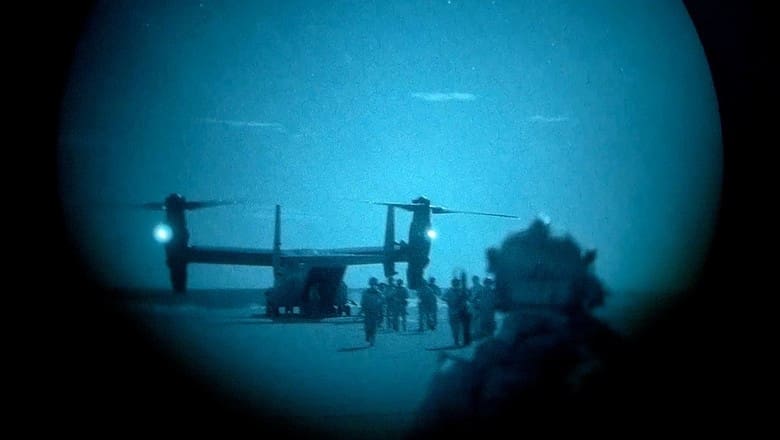
Special tactics operators traveled from Hurlburt Field to Kinston, N.C., to rapidly secure an airfield to use as a forward air refueling point, integrating combat Air Force assets such as F-15 Eagles, F-22 Raptors and AFSOC MC-130s.

“The ability for our aircraft to operate swiftly in contested areas improves U.S. Air Force lethality and presents strategic dilemmas for our adversaries. It also helps develop procedures to habitualize AFSOC and ACC units working together in support of the Air Superiority mission.” the special tactics officer said. “Overall, despite initial planning difficulties, the exercise execution went flawlessly and according to plan.”

Story by 1st Lt Alejandra Fontalvo , 24th Special Operations Wing

Photo by SSgt Rose Gudex

Quantum Chip Fabrication Paves Way for Scalable Processors, Producing the Largest Quantum Chip of its Type Using Diamond-Based Qubits and Quantum Photonics


Sunday, August 2nd, 2020

RESEARCH TRIANGLE PARK, N.C. — An Army-funded project marks a turning point in the field of scalable quantum processors, producing the largest quantum chip of its type using diamond-based qubits and quantum photonics.

Millions of quantum processors will be needed to build quantum computers, and new research at MIT and Sandia National Laboratories, funded and managed in part by the U.S. Army Combat Capability Development’s Command’s Army Research Laboratory’s Center for Distributed Quantum Information, demonstrates a viable way to scale-up processor production.

“Building large scale quantum devices will entail both the assembly of large numbers of high-quality qubits and the creation of reliable circuits for transmitting and manipulating quantum information between them,” said Dr. Fredrik Fatemi, Army researcher and CDQI co-manager. “Here, the research team has demonstrated exceptional progress toward reliably manufacturing complex quantum chips with both critical elements.”

Unlike classical computers, which process and store information using bits represented by either 0s and 1s, quantum computers operate using quantum bits, or qubits, which can represent 0, 1, or both at the same time. This strange property allows quantum computers to simultaneously perform multiple calculations, solving problems that would be intractable for classical computers.

The qubits in the new chip are artificial atoms made from defects in the diamond, which can be prodded with visible light and microwaves to emit photons that carry quantum information. The process, which the researchers describe in the peer-reviewed journal Nature, is a hybrid approach, in which carefully selected quantum micro-chiplets containing multiple diamond-based qubits are placed on an aluminum nitride photonic integrated circuit.

“In the past 20 years of quantum engineering, it has been the ultimate vision to manufacture such artificial qubit systems at volumes comparable to integrated electronics,” said Dirk Englund, an associate professor in MIT’s Department of Electrical Engineering and Computer Science. “Although there has been remarkable progress in this very active area of research, fabrication and materials complications have thus far yielded just two to three emitters per photonic system.”

Using their hybrid method, the researchers were able to build a 128-qubit system — the largest integrated artificial atom-photonics chip yet.

The artificial atoms in the chiplets consist of color centers in diamonds, defects in diamond’s carbon lattice where adjacent carbon atoms are missing, with their spaces either filled by a different element or left vacant. In the chiplets, the replacement elements are germanium and silicon. Each center functions as an atom-like emitter whose spin states can form a qubit. The artificial atoms emit colored particles of light, or photons, that carry the quantum information represented by the qubit.

Diamond color centers make good solid-state qubits, but “the bottleneck with this platform is actually building a system and device architecture that can scale to thousands and millions of qubits,” said Noel Wan, MIT research and the paper’s coauthor. “Artificial atoms are in a solid crystal, and unwanted contamination can affect important quantum properties such as coherence times. Furthermore, variations within the crystal can cause the qubits to be different from one another, and that makes it difficult to scale these systems.”

Instead of trying to build a large quantum chip entirely in diamond, the researchers decided to take a modular and hybrid approach.

“We use semiconductor fabrication techniques to make these small chiplets of diamond, from which we select only the highest quality qubit modules,” Wan said. “Then we integrate those chiplets piece-by-piece into another chip that wires the chiplets together into a larger device.”

The integration takes place on a photonic integrated circuit, which is analogous to an electronic integrated circuit but uses photons rather than electrons to carry information. Photonics provides the underlying architecture to route and switch photons between modules in the circuit with low loss. The circuit platform is aluminum nitride, rather than the traditional silicon of some integrated circuits.

Using this hybrid approach of photonic circuits and diamond chiplets, the researchers were able to connect 128 qubits on one platform. The qubits are stable and long-lived, and their emissions can be tuned within the circuit to produce spectrally indistinguishable photons, according to the researchers.

While the platform offers a scalable process to produce artificial atom-photonics chips, the next step will be to test its processing skills.

“This is a proof of concept that solid-state qubit emitters are very scalable quantum technologies,” Wan said. “In order to process quantum information, the next step would be to control these large numbers of qubits and also induce interactions between them.”

The qubits in this type of chip design wouldn’t necessarily have to be these particular diamond color centers. Other chip designers might choose other types of diamond color centers, atomic defects in other semiconductor crystals like silicon carbide, certain semiconductor quantum dots, or rare-earth ions in crystals.

“Because the integration technique is hybrid and modular, we can choose the best material suitable for each component, rather than relying on natural properties of only one material, thus allowing us to combine the best properties of each disparate material into one system,” said Tsung-Ju Lu, MIT researcher and the paper’s co-author.

Finding a way to automate the process and demonstrate further integration with optoelectronic components such as modulators and detectors will be necessary to build even bigger chips necessary for modular quantum computers and multichannel quantum repeaters that transport qubits over long distances, the researchers said.

“The team has made an incredible advance toward the large-scale integration of artificial atoms and photonics and, looking forward, we are very excited for increasingly complex testing of the devices,” said Dr. Sara Gamble, program manager at the Army Research Office, an element of CCDC ARL, and CDQI co-manager. “The modular approach so far successfully demonstrated by the team has enormous promise for the future quantum computers and quantum networks of high interest to the Army.”

By U.S. Army CCDC Army Research Laboratory Public Affairs

*Adapted with permission from an article by Becky Ham, MIT News.

SCUBAPRO Sunday – Draper Kaufman the Godfather of UDTs/SEALS

Sunday, August 2nd, 2020

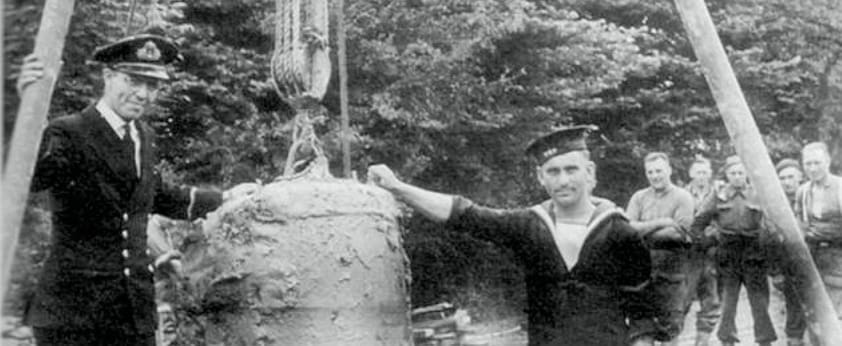
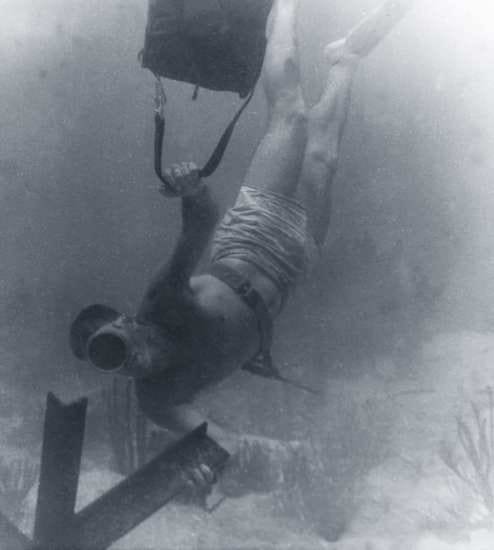
On August 4 we celebrate Rear Admiral (ret) Draper Laurence Kauffman birthday. Admiral Kauffman is credited with starting the Underwater Demolishing Teams and being the first U.S. frogman. He is called the father or Godfather of the SEALS teams.

He graduated from the US Naval Academy in 1933. But because he had bad eyesight, he was made a reserve officer. At the start of WWII, he volunteered for the America Volunteer Ambulance Corp in Paris. During the German blitz of London, he severed as a bomb disposal officer. One month before Pearl Harbor he returned to the U.S. and joined the Naval Reserve. He is credited with inventing Motivation week, better known as Hell Week in Basic Underwater Demolition / SEAL training (BUD/S). Just that last accomplishment is worthy of calling him the Godfather.

en.wikipedia.org/wiki/Draper_Kauffman

huckberry.com/journal/posts/the-godfather-of-the-navy-seals