SIG SAUER - Never Settle

Archive for the ‘Guest Post’ Category

FirstSpear Friday Focus – Leave a Review Get $300

Friday, July 24th, 2020

FirstSpear wants to hear from you! Through this weekend only go to first-spear.com and leave a review on your favorite FS product for 10% off your next order and a chance to win a $300 store credit! Winner will be chosen and notified next Friday the 31st.

First-spear.com

SOLGW Gas Block Overview

Thursday, July 23rd, 2020

This is a critical, yet often overlooked, part of building a fighting a gun.

If you’re hemorrhaging gas between the block and journal you have a less efficient system…which means you’ll need more gas…or the rifle will be more sensitive to conditions that are less than ideal.

These are some of the details that make SOLGW a more robust system. Our tolerance specifications are written specifically for this.

“But they don’t actually make anything…”

Yes we do. We make very reliable rifles…

www.solgw.com

US Army Leaders See Data as ‘Ammunition’ in Future Warfare

Wednesday, July 22nd, 2020

WASHINGTON — Every service member and platform will serve as a network sensor in future combat to expand what the Army undersecretary calls a “joint kill web” to support rapid decision making.

James E. McPherson and other Army leaders discussed Tuesday the role of “enabled joint overmatch” that describes how Soldiers will work alongside Airmen, Sailors and Marines to increase lethality across multiple domains.

“[The multi-domain force] has to be expeditionary and responsive at scale, bringing the right capabilities in the right place at the right time,” McPherson told a virtual audience during the Armed Forces Communications and Electronics Association’s Army Signal Conference.

By enabling overmatch, the Army can quickly achieve lethality through all sensors, with the best shooter in the right command and control node, he added.

The undersecretary said the Army’s network, communication and cloud capabilities must provide quick delivery of data to augment the effort in preparation for the future battlefield that will be contested in all domains.

“What we build now must be survivable in that fight,” McPherson said. “It must be mobile, it must support, see on the move and … it must be tailorable.”

Protecting data will be critical, he added, as it will be the ammunition used for success on the battlefield. The Army’s information and intelligence assets will provide an advantage over adversaries, and therefore must be protected by migrating data to hybrid and multiple cloud ecosystems and bolstering the service’s network.

He noted that the Army’s other modernization priorities depend upon its network, which is one of the six priorities, to operate successfully.

Using simplified training that is accessible to each military branch will increase readiness and lethality, he added, while delivering mission-ready troops capable of fighting in the multi-domain environment.

Providing real-time access to every communications center, weapons system and control node will also allow greater control of the service’s data.

“Data, the ammunition of the future fight, is a strategic asset of the Army,” McPherson said. “Our data provides us a competitive advantage over adversaries. As with any strategic asset, we must manage and protect our data.”

Lt. Gen. Bruce Crawford, the Army’s chief information officer and G-6, said that he and Lt. Gen. Stephen Fogarty, head of Army Cyber Command, have partnered to posture the Army’s network to enable communications centers worldwide to gain a firmer grasp on data.

“It goes back to this idea that data is the ammunition in the future fight for any shooter or weapons platform, in any command and control node, in near real time, in order to create a joint kill chain,” Crawford said.

Real-time access will provide critical convergence that will help win below the level of armed conflict.

“That’s a monumental lift, and a monumental task,” Crawford said. “But that’s our goal.”

The Army will take its next steps in strengthening its networks and protecting its data to Fort Gordon, Georgia, where ARCYBER plans to move into its new headquarters this month. The move will better connect the three-star command with the U.S. Army Cyber Center of Excellence.

The transition presents challenges as each unit member moving to Fort Gordon must undergo two weeks of quarantine to meet COVID-19 safety precautions, said Ron Pontius, deputy to the ARCYBER commanding general.

As of June 1, the Army Network Enterprise Technology Command, or NETCOM, now has full operational control of the Army’s five regional cyber centers as well as responsibility of the Army’s network.

Army Cyber Command transferred the responsibilities to NETCOM for greater efficiency and to balance risks to the network, said Col. Scott Bird, NETCOM defensive cyber operations chief, in a press release earlier this month.

The Army also recently announced to reassign its chief information officer role into two positions: CIO and G-6 deputy chief of staff. The change will be implemented by Aug. 31 to meet the demands of advancing technology and artificial intelligence.

Operating under pandemic conditions has also forced the Army to adapt how it does business. Crawford estimated about 2% of the Army accessed the virtual space to telework from home. That number jumped to about 90% during the pandemic.

Crawford said up to 400,000 Soldiers and Army civilians have signed up for the Microsoft Teams workplace platform and that number continues to grow.

By Joseph Lacdan, Army News Service
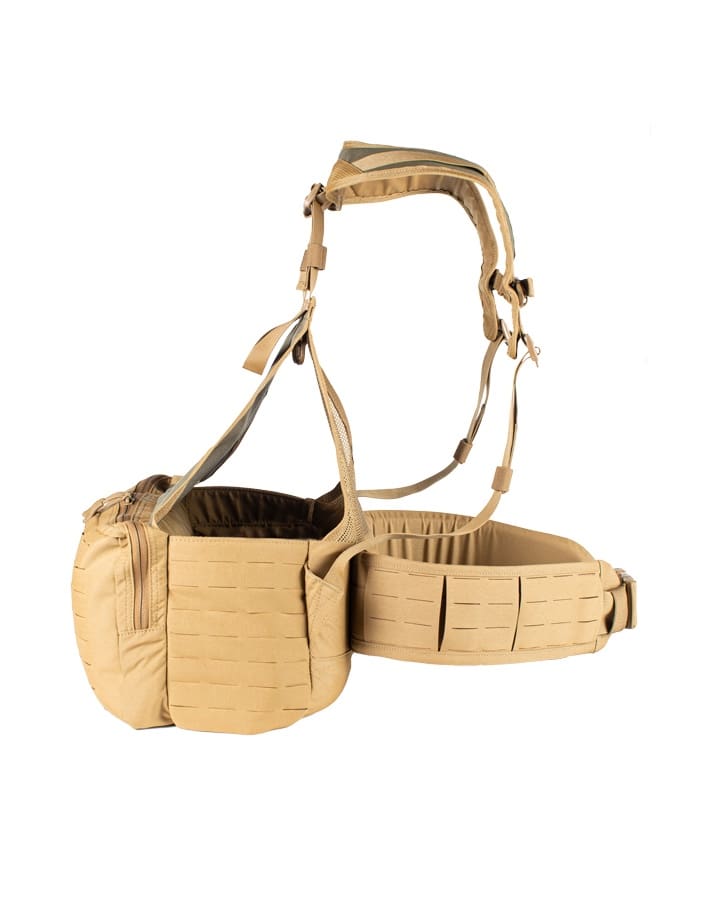
TYR Tuesday – IDTOUR VTS |Virtual Trade Show| Huron Hot Weather Uniform

Tuesday, July 21st, 2020

Episode Four of Innovate or Die® Tour Virtual Trade Show #IDTOURVTS is here!

Episode Four:

IDTOUR VTS |Virtual Trade Show| Huron™ Hot Weather Uniform

New episode launching every Tuesday.

Hot Weather Uniform Available Now:

www.tyrtactical.com/products/list/hot-weather-2018/tactical-clothing

What is IDTOURVTS?

Our mission has always been about protecting those who run towards the threat. To that end, we created the Innovate or Die® Tour and Mobile Showroom. Over the past couple years it has allowed us to meet you face-to-face, gather your feedback and answer your questions.

Life has been put on hold for many people around the world, but you have not stopped risking your safety and health against all the threats we face today.

We can’t wait to meet you on the road again.

Thank you to the men and women of the armed forces, first responders and health care professionals who continue to put their lives on the line.  You haven’t stopped working and neither will we.

Episode One:

IDTOUR VTS |Virtual Trade Show| PICO-DS & DSX Plate Carriers

Episode Two:

IDTOUR VTS |Virtual Trade Show| The Ultimate Range Bag

Episode Three:

IDTOUR VTS |Virtual Trade Show| Shield & Dolly System

MATBOCK Monday Rifle Mag Pouches

Monday, July 20th, 2020

Good morning and Happy MATBOCK Monday!

The Multi-Caliber Rifle Pouch is designed to accept any size magazine from single or dual 5.56, 7.62, .308 etc. Easy size adjustment, lightweight, MATBOCK Tabs on back and integrated belt loop are just a few of the additional features that make this the most versatile rifle mag pouch on the market.

The pouch is designed to hold 2 x 30 rd 5.56mm magazines. Both magazines, or only the back magazine, can be secured in place with the bungee retention lanyard for quick removal of the first mag without fear of losing the second.

The pouch is designed to hold 3 x 30 rd 5.56mm magazines, side-by-side. Specifically designed to be mounted to MOLLE or worn on an operator’s belt.

The pouch is designed to hold 1 x 30 rd 5.56mm magazines.

Don’t forget to tune in on Monday at 4:30 PM EST as we go live to demo our Mag pouches!

Army Futures Command Announces ‘Software Factory’ in Austin

Monday, July 20th, 2020

AUSTIN, Texas – U.S. Army Futures Command announced the establishment of the first Soldier-led Software Factory today.

The Austin-based Software Factory is a first-of-its-kind concept for the Army that will leverage a train-with-industry pipeline to empower Soldiers and Civilians to scope and solve problems with modern software practices.

This new capability will allow units to act faster and mitigate unforeseen risk inherent in multi-domain operations. It will teach Soldiers and Civilians how to solve Army problems with cloud technology and modern software, and to better prepare Soldiers for disconnected warfare in 2028 and beyond.

“The capability to develop software at the lowest tactical levels will help us provide better software products,” said Gen. John M. Murray, commanding general of Army Futures Command. “We anticipate long-term cost savings and expect the Software Factory to help us maintain a competitive advantage across Army modernization efforts.”

This new software factory complements the Army’s digital talent initiative based at Carnegie Mellon University in Pittsburgh, Penn. Army professionals will attend data science and engineering graduate programs, and 12 Soldiers will attend a boot-camp-style fellowship for cloud technicians to help solve Army problems through agile and secure software development processes.

“All of these efforts will develop and sustain the digital talent the Army needs for the future,” Murray said. “The CMU-trained engineers will build the data environment the Army needs. The technicians will maintain that environment. And the Software Factory will develop the skills to operate in that environment.”

By Army Futures Command

Purdue University – New Explosive Materials to Usher in Nontoxic Ammunition

Sunday, July 19th, 2020

WEST LAFAYETTE, Ind. — Every time a gun fires, lead leaches into the air. A scientific advancement could provide a comparable replacement for lead-based explosive materials found in ammunition, protecting soldiers and the environment from potential toxic effects.

Purdue University researchers, in collaboration with the U.S. Army Combat Capabilities Development Command’s Army Research Laboratory, developed two new lead-free materials that function as primary explosives, which are used to ignite powder inside a gun cartridge.

The work, funded by the Army Research Office, appears in a paper published in Chemistry – A European Journal.

“Right now, whenever you are shooting, you’re going to be spreading lead into the air around you,” said Davin Piercey, a Purdue assistant professor of materials engineering and mechanical engineering. “Any use of lead is going to end up polluting the environment in small amounts. The more lead you remove, the better it is for the environment.”

A past study found that people who have been shooting a lot could have elevated lead levels. But so far, the use of lead in explosives has been inevitable.


Matthew Gettings, a Purdue Ph.D. candidate, holds a cup containing silver salts, a new lead-free explosive. (Purdue University photo/Jared Pike)

When a gun trigger is pulled, a metal firing pin strikes a cup containing a primary explosive. The force from the firing pin deforms the cup, crushing the primary explosive and causing it to detonate. This explosion sets off a secondary explosive that burns and helps complete the rest of the firing sequence, accelerating the bullet out of the gun.


An experimental test shows the ability of silver salts to detonate just as well as commonly-used primary explosives. (Purdue University video/Jared Pike)

Because primary explosives are found in the cartridge of just about anything that fires a bullet, the Army has been searching for solutions for many years to develop lead-free versions of these explosives that satisfy environmental regulations associated with lead contamination.

“The development of these materials provides a potential pathway toward lead-free technology,” said Jesse Sabatini, an Army researcher who led the project’s investigation of which molecules to use for these new materials.

What enables the materials to be lead-free is a chemical structure that has not been used in primary explosives before. One material is made of silver salts while the other material contains no metal at all – just the basic ingredients for an explosive. These ingredients include carbon, hydrogen, nitrogen and oxygen.

“Toxicity-wise, silver is an improvement over lead, but it’s still a little toxic. So we also made a nonmetal material that does not have heavy metal toxicity associated with it. Metal is dead weight, energetically speaking, and doesn’t contribute much to an actual explosion,” Piercey said.

The chemical structure used in these materials makes them very dense, meaning that only a small amount of either material would be needed to create an explosion.

Researchers at the Army Research Laboratory modeled these materials to get a sense of how explosive they would be. Piercey’s lab at the Purdue Energetics Research Center (PERC) made the materials and conducted experimental tests demonstrating that they work as primary explosives.

According to the researchers’ calculations, the materials they created have a detonation performance similar to or higher than commonly-used primary explosives.

The CCDC-Armaments Center at Picatinny Arsenal, New Jersey, is interested in exploring these compounds for primary explosive-based applications for bullets and gun propellants. Purdue and Army researchers will continue to gather the data needed for determining which lead-based weapons systems these materials can replace.

“At PERC, our theme is ‘molecules to munitions.’ Our labs can do everything from designing and testing molecules to formulating and manufacturing those molecules into a useful compound,” said Steve Beaudoin, director of PERC and a Purdue professor of chemical engineering.

“Our partners can then take that useful compound and put it into a warhead, missile, rocket or whatever it needs to be.”

A provisional patent has been filed for this technology (track code 2020-PIER-69143) through the Purdue Research Foundation Office of Technology Commercialization.

SCUBAPRO Sunday – Twin Jet Fins

Sunday, July 19th, 2020

If you have been diving for a while now, you have come across the SCUBAPRO Twin Jet Split Fins. They have a unique patented split fin propeller technology, which provides maximum propulsion with minimal effort underwater. With those main features, they can enhance your dives while avoiding cramped leg muscles and strained ankles.


The revolutionary patented design of the SCUBAPRO Twin Jet Open Heel Split Fins was inspired by the dynamic propulsion of the humpback whale. The blades unique shape and angle provide symmetrical power to help you create a smoother, more stable kicks without wearing you out or causing drag. At the same time, it allows you to move more quickly and effortlessly while swimming at great depths, despite the long blade length—all without sacrificing control.

As a diving fin, the SCUBAPRO Twin Jet is made with both an open-heeled and a full-foot (closed heel) version. The Open Heel comes with a broader foot pockets and offers a more customizable fit for those wearing dive boots for use in colder, deeper waters or military style boots for over the beach operations/ VBSS. Having strapped fins gives you the chance to adjust the fit as your boots start to compress at greater depths when diving.


The fin straps come with quick-connect swivel buckles, which makes donning and doffing easier. You can also change the rubber heel strap out, to take advantage of the optional spring heel straps. The SCUBAPRO Twin Jet open-heeled fins are one of the most comfortable fins on the market.

They come in different Colors and Buoyancy Options. SCUBAPRO has kept different types of divers in mind when they designed the Twin Jet Fins line. You’ll find that the fins come in multiple color options—black, blue, gray, and yellow—but it’s also important to note that the different colors signify differences buoyancy also.

The black fins are the best, for military divers, as they are negatively buoyant and provide a more traditional fining experience with its rigid blades. But if you’re looking for more flexible blades and don’t mind having slightly positively buoyant fins.

Product Features:
• Monprene® Construction 
• Patented Split-Fin Propeller Technology
• Extra-Wide Foot Pocket
• Extended Soleplate
• Drag-Reducing Vents
• Quick-Connect Swivel Buckles
• Compatible with Spring Heel Straps

Key Benefits:
• Powerful Propulsion with Minimal Effort
• Smooth and Stable Kicks
• Preserves Energy
• Reduces Drag
• Fits Boots
• Easy Donning and Doffing
• Highly durable and Will Last a Lifetime

One of the only drawbacks for the Twin Jet fins is if you have to push something thru the water besides just you or you are fighting a current. But add something like pulling a buddy or ruck. Then you might want to go with a stiffer fin like the Jet fin’s, Seawing Nova Gorilla or the Go Sport. That being said the Spilt Fins are one of the most popular fins used by the military and countless divers around the world.