Our friend Ivan takes on Custom Bolt Guns in his latest video series. He goes over how to get one made.
It’s in two parts:
kitbadger.com/rifle-301-by-sawtooth-rifles-part-1
kitbadger.com/rifle-301-by-sawtooth-rifles-part-2
Here’s a taste.
Our friend Ivan takes on Custom Bolt Guns in his latest video series. He goes over how to get one made.
It’s in two parts:
kitbadger.com/rifle-301-by-sawtooth-rifles-part-1
kitbadger.com/rifle-301-by-sawtooth-rifles-part-2
Here’s a taste.
The US Army has awarded a $100 million (USD) contract to Saab for delivery of Carl-Gustaf ammunition and AT4 systems. It’s an “indefinite-delivery, “indefinite quantity” (IDIQ) contract, which EG will have to explain if you want details, but essentially the Big Army, the USMC, and JSOC can reportedly buy more than $400 million worth of them during a 5-year period.

Remember the testing in Sweden last year?
The advent of the new Carl-Gustaf munition ? assuming this is in fact the new laser-guided system ? will is probably more exciting news for more people than the new deal for AT4s. After all, the DoD has purchased well over half a million of them since the heady days of Rick Astley’s debuy album and the very first appearance of The Simpsons.
Back in 2018 the US Army announced it would be acquiring the latest version of the M4 “Goose”, the M3E1. Note that this is M4 is not that other M4 SSD readers might be thinking of. That one, which is much smaller and shoots 5.56mm instead of 84mm, is far more ubiquitous but not as much fun to use.

The Swedish Defence Materiel Administration also recently announced the approval of Carl-Gustaf systems to Latvia, Estonia, and other countries over a ten-year period.
Erik Smith, President and CEO of Saab in the US, says,
“The Saab family of shoulder-fired munitions provides the U.S. Armed Forces with effective capabilities against a wide area of targets. With these systems, soldiers and Marines gain reliable, easy-to-use technology optimized for complex environments and engagements.”
The Swedish Defence Materiel Administration also recently announced the approval of Carl-Gustaf systems to Latvia, Estonia, and other countries over a ten-year period.

The M3 MAAWS (Multirole Anti-armor, Anti-personnel Weapon System) has been in the US inventory for several years now. As with any weapon system, there is (or should be) an ongoing interest in increased lethality and more efficient use.
No immediate references could be found as to whether the new ammunition is thought to mitigate concerns of brain injury to those shooting the recoilless rifle, or if that was even a necessary or valid consideration. The most recent reference easily accessible was this report from the Blast Injury Research Program at Ft. Detrick. It’s nearly a decade old, and the helmet sensors formerly fielded to combat troops have since been withdrawn.

You can find additional details and confirmation at the Saab Group website.
From Defense Web TV:
By David Reeder
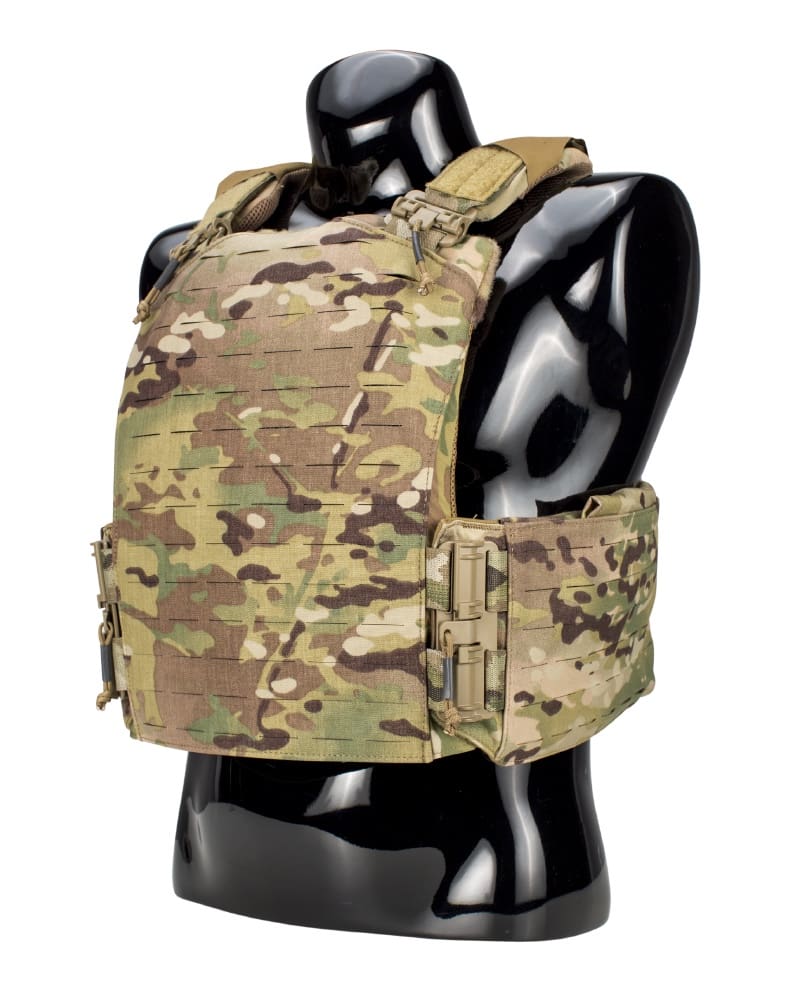
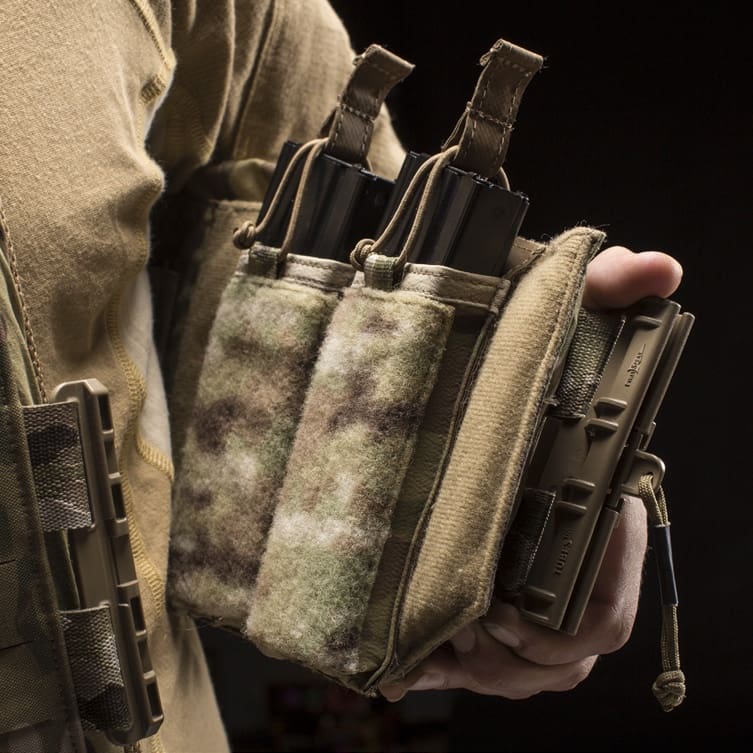
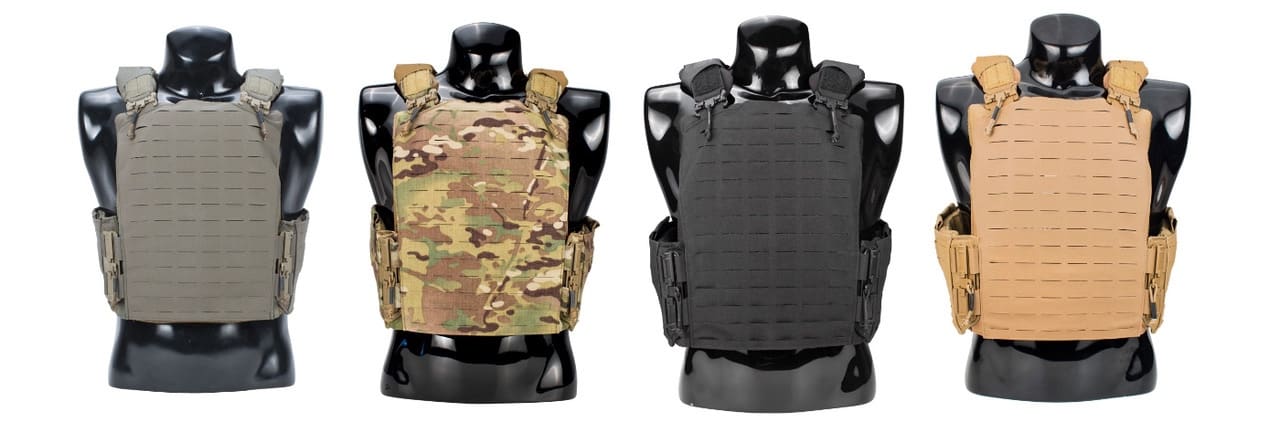
This Friday we are getting a look at a specialized pack from FirstSpear that offers an incredible amount of configurability to give operators one assault pack that can be tailored to meet their individual needs and rapidly changing mission sets. Meet the VEP Modular Panel featuring genuine 6/12 Laser Fused Platform and Quick-Release Tubes System.

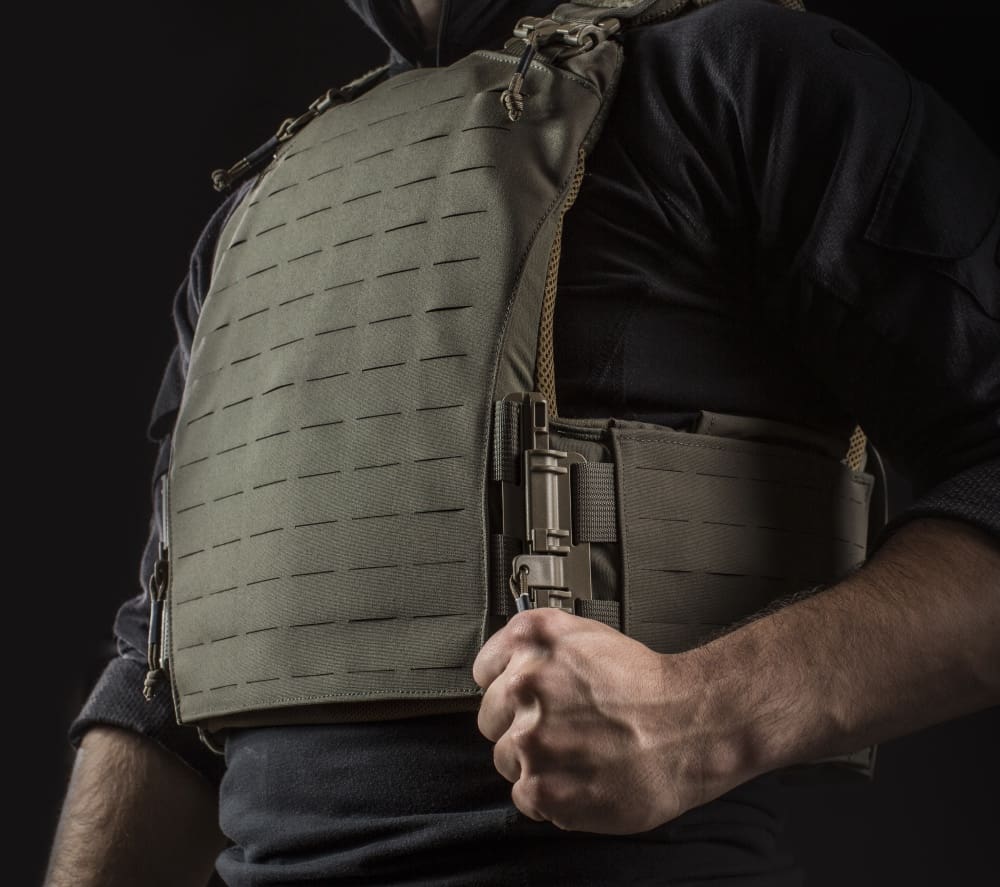
The VEP Panel can be set up and worn in multiple configurations and includes four 2” Tubes straps to attach directly to the plate carrier keeping the underarms clear. The advantage of using FS Quick-Release Tubes lets the user don / doff the pack in mere seconds and even quickly throw the pack over the head or around the side when riding in vehicles or to access the pack contents without a teammate.

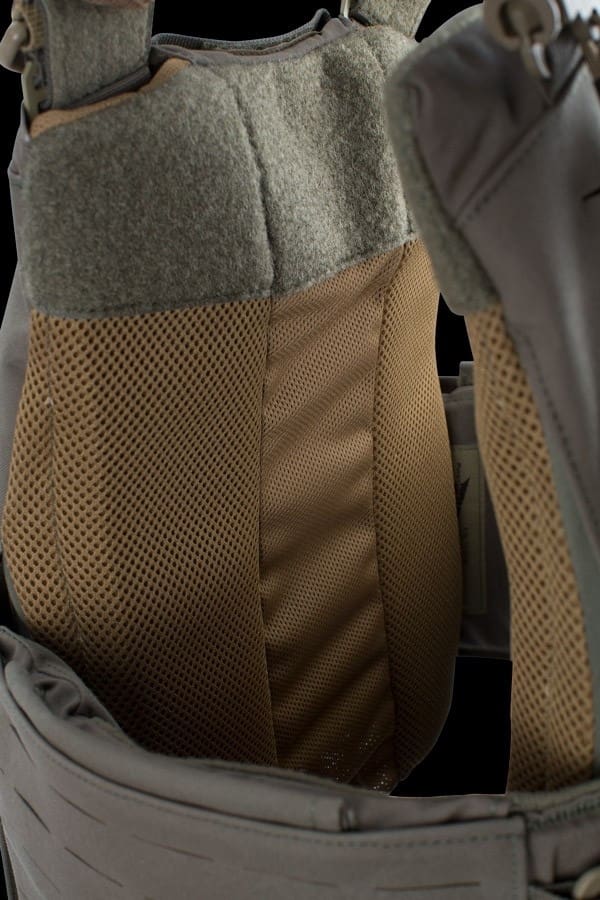
The entire system is remarkably thin, lightweight and configurable thanks to the 6/12 laser fused platform. Opposite of the 6/12 side is an adjustable mesh beaver tail pocket that is also removable. The panel is 100% user configurable and can be set up with the beaver tail side out or the 6/12 side out by simply adjusting a few buckles. The large 6/12 panel allows the operator to mount any style pocket or pouch where desired, perfect for the medic to the breacher and everyone in-between. There is one large internal zipper access the inside of the panel and works great for up to a 3L hydration bladder.

If all that was not enough FirstSpear also included two simple backpack straps you can quickly switch out and transform into a standard backpack worn with or without a plate carrier. Another innovative American made product from FirstSpear, available now in Multicam, Coyote Brown, Ranger Green, and Black. Pockets, hydration, and cell tag sold separately.

www.first-spear.com/platforms/vep-modular-panel
QUANTICO, Va. —
Marine Corps Systems Command recently launched an easy-to-use, Common Access Card-enabled website that allows fleet Marines to provide feedback on the command’s communication equipment.

Equipment Feedback Portal offers an avenue for Marines to virtually submit feedback on Command, Control, Communications, Computers, Intelligence, Surveillance and Reconnaissance gear in real-time. C4ISR equipment includes MCSC-fielded systems such as ground radios, tactical tablets, satellite systems and more.
“The website gives fleet Marines the opportunity to provide Marine Corps Systems Command program offices with insight into the equipment they use every day,” said Kenneth Hess, MCSC’s Manpower Personal Training lead for the Program Manager for Command and Control Systems, who spearheaded the project.
In addition to helping Marines, the website assists program offices in identifying, maturing and adopting key technical capabilities to advance and revolutionize C4ISR information and spectrum capabilities. The information gathered through the site can be leveraged to influence future system upgrades and enhancements.
How it works:
Equipment Feedback Portal fosters open communication between the maker and the user. The process of submitting information begins with Marines, who provide feedback ranging from technical difficulties to ideas for enhancing the gear.
MCSC’s Portfolio Manager for Command Element Systems receives and analyzes the feedback. Leveraging existing processes between the fleet and acquisition and requirements communities, PfM CES will make recommendations to Combat Development and Integration for potential updates to systems.
Timelines for action vary depending on the complexity of the idea, but the Marine who submitted the feedback will be updated throughout the process.
“When Marines submit a message, they will receive an automatic response explaining the next steps in the process and that the program office will be in touch if we need more information,” said Hess.
While Equipment Feedback Portal is currently limited to CES equipment, Hess said MCSC may expand the site’s options in the future to include technologies within other portfolios and programs. This would allow more Marines to offer critical feedback on gear.
“The success of the pilot will allow us to judge whether or not to open the site across all of SYSCOM.”
Discovering new capabilities:
The moment that sparked the idea for Equipment Feedback Portal occurred in 2018, when Hess attended a New Equipment Training exercise for Networking On-the-Move—a satellite communication system that enables Marines to communicate while mobile—aboard Marine Corps Air Station Miramar in San Diego, California.
While there, Hess learned that a young Marine discovered a way to connect a network cable from the NOTM server to the flight deck of a KC-130 aircraft, giving the flight crew internet access, including weather updates. It was a capability the crew did not have previously.
However, the unidentified Marine’s NOTM innovation did not become a widespread utility because no mechanism for sharing the idea existed for MCSC-fielded equipment. Hess felt the command should launch a site that encouraged creative ideas for enhancing system capabilities.
“As we continue to equip the warfighter, we must listen intently to the warfighter.”
Sgt. Maj. Robin Fortner,
MCSC command sergeant major
“That was the moment that led to this idea,” said Hess. “We should be taking good ideas from Marines who use these systems and implementing them across the Marine Corps.”
Each day, Marines are employing equipment in ways beyond the intended mission. They are discovering new capabilities not realized when CD&I developed the requirement. Because Marines continue to push the capabilities of equipment, the need for a proactive program that solicits their feedback is paramount, said Hess.
The MCSC-run website will enable Marines to provide ideas that could be implemented throughout the Marine Corps.
“In many cases, we’re not capturing good ideas from Marines before they leave the service,” said Hess. “This is a mechanism to capture those ideas.”
MCTSSA involvement:
In 2019, Hess travelled to the Marine Corps Tactical Systems Support Activity aboard Marine Corps Base Camp Pendleton, California, to support a NET exercise for Tactical Service Oriented Architecture. There, he shared his idea for creating a platform designed to solicit Marine feedback with Maj. Lucas Burke, the director of MCTSSA’s Warfighter Support Division.

Burke suggested the WSD host the site.
“He mentioned his idea of creating a portal for user input,” said Burke. “I told him MCTSSA could help him host that on our site, because any Marine with a CAC can get to our site.”
MCTSSA’s WSD is responsible for hosting, developing and supporting this initiative through their current self-help website. Their CAC-enabled platform provides 24/7 support to Marines using more than 65 tactical systems.
“The MCTSSA Support Center is the single point-of-contact for FMF issues with MARCORSYSCOM C4I equipment,” said Burke. “It provides a platform for the entire Marine Corps—from the MEFs to Training Command—to reach back to MARCORSYSCOM directly and engage with system analysts, engineers, logisticians and program offices in a highly efficient manner to solve their problems.”
Rick Bobst, information systems manager for the WSD, helped Hess create the new Equipment Feedback Portal.
“With subject matter experts and professional interoperability experts contributing to the site daily, warfighters throughout the DOD can access and solve their issues, without the need to call or chat,” said Bobst. “We felt this was the ideal location to hang a submission form for this equipment feedback project.”
Senior leadership support:
MCSC senior leaders have expressed support for a platform like Equipment Feedback Portal, including Sgt. Maj. Robin Fortner, the command’s sergeant major.
Fortner supported MCTSSA’s efforts to communicate with the Operating Forces prior to Fleet Feedback Portal. She and other senior officials have discussed at length how MCTSSA’s initial efforts should expand to more Programs of Record.
“I was very happy to hear about the equipment feedback project from PfM CES,” said Fortner. “This is essential to speed and relevancy.”
Fortner understands the value of Marine feedback and how their opinions can benefit the Marine Corps. Since she assumed her role with MCSC in 2018, Fortner has emphasized the need for steady communication between the program offices and Marines to enhance and sustain equipment.
Equipment Feedback Portal supports this vision.
“As we continue to equip the warfighter, we must listen intently to the warfighter,” said Fortner. “I hope this program can bridge some of those communication gaps and that the feedback provided can help increase the capability of the equipment. We owe it to the warfighter.”
Marines can submit feedback by visiting Equipment Feedback Portal at mceits.usmc.mil/sites/MCTSSA/innovation/Pages/Equipment-Feedback-Portal. The website requires a CAC and is optimized for use with Microsoft Edge and Google Chrome.
By Matt Gonzales, Marine Corps Systems Command

ABERDEEN PROVING GROUND, Md. — In the age of technology, the Army’s ability to dominate the electromagnetic spectrum can significantly influence the outcome of future conflicts on the battlefield.
The U.S. Army Combat Capabilities Development Command’s Army Research Laboratory designated several research programs as essential for future Soldier capabilities. Of these major flagship programs, the Foundational Research for Electronic Warfare in Multi-Domain Operations, or FREEDOM, Essential Research Program recognizes the value of electronic warfare competencies as a necessary requirement for success in large-scale combat and multi-domain operations.
During World War II, jamming missions conducted by Allied forces successfully disrupted German command and control systems and navigation capabilities. When adversaries used radio-controlled improvised explosive devices to attack ground forces in Afghanistan and Iraq, the U.S. Army defended its Soldiers with newly developed tools that jammed radio-activated triggers.
“The overall goal of the program is to drive a revolutionary change in the way that the Army uses electronic warfare from a single exquisite platform to a distributed, disaggregated and heterogeneous set of offensive and defensive capabilities,” said Dr. Matthew Higgins, FREEDOM program manager. “We are looking to demonstrate research prototypes that prevent the adversary’s ability to actively or passively find, classify and geo-locate U.S. forces.”
According to Higgins, Army researchers in the program examine a wide spectrum of complex issues, such as the need to optimize secure communication among allied forces and the development of techniques to evaluate the effectiveness of electronic attack techniques.
Researchers in the FREEDOM program also plan to unify electronic warfare with cyber technology, which typically remains separated in operations, research and system development.
The program aims to provide both basic and applied research to enable tactical dominance in an Army initiative called cyber electromagnetic activities, or CEMA. These efforts include the elimination of adversary threat capabilities, the surveillance of electromagnetic and cyberspace environments and the enhancement of mobility within the battlefield and cyberspace.
“Adversaries are contesting all domains, the electromagnetic spectrum, and the information environment,” Higgins said. “Future challenges require integrating electronic warfare and cyber technologies and activities as well as a shift for electronic warfare to a more surgical offensive posture against more advanced adversarial systems.”
In general, the FREEDOM Essential Research Program focuses on three core research areas:
· Adaptive/Cognitive: Developing the ability to effectively outpace adversary decision and technical options
· Distributed/Coordinated: Achieving spatially and temporally diverse responsiveness to dense and complex threat environments
· Preemptive/Proactive: Preventing or disrupting the adversary’s ability to find, fix, track, target and engage our forces
“In the long term, we are looking at multi-function RF capabilities from distributed platforms with research focused on adaptive filters, wide-band amplifiers and adaptive manufacturing-enabled antenna technology,” Higgins said. “The Soldier will have freedom to maneuver on the battlefield and to dynamically access the congested and contested electromagnetic spectrum.”
In order to achieve this goal, researchers leveraged the work from various collaborative research alliances, such as the Cyber CRA, the Internet of Battlefield Things CRA and the Distributed and Collaborative Intelligent Systems and Technology CRA.
The team also established partnerships with other government organizations, such as the Defense Advanced Research Projects Agency and the Air Force Research Laboratory, as well as with several universities, including the University of Notre Dame, Northeastern University and the University of Wisconsin-Madison.
Higgins explained that all these efforts serve to provide Soldiers with technologies that push the Army closer toward electromagnetic spectrum dominance. This research will ultimately help protect Soldiers from electronic warfare attacks by adversaries and create windows of opportunity for multi-domain operations.
“Electronic warfare is increasingly vital to Army preparations to defeat any potential threat,” Higgins said. “The Army’s focus on large-scale combat operations highlights the need for a robust ground electronic warfare force to support multi-domain operations and enable the Army to fight and win in a complex world.”

Higgins speaks about his research in the CCDC Army Research Laboratory’s What We Learned Today podcast, published July 9, 2020.
By U.S. Army CCDC Army Research Laboratory Public Affairs
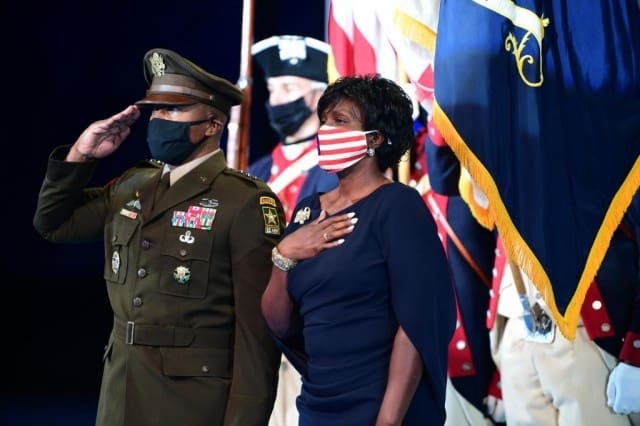
FORT KNOX, Ky. — A line formed inside the Fort Knox Military Clothing Sales store July 8 as several recruiting students anticipated being the first to be issued the Army’s newest uniform — the Army Green Service Uniform.

Considered a nostalgic nod to the greatest generation — who fought in World War II — the green and beige uniform has caused strong reactions in civilians and Soldiers alike.
“This is kind of cool, especially for these students, because they’re going to be the face of the Army when they go out there,” said Sgt. 1st Class Wesley Wills, career recruiter and Army Recruiter Course instructor. “To put them in the new uniform makes sense to me because they’re going to be engaging the public. It’s going to be good for the Army.”
In Week 4 of the six-week recruiter course, the 70 Soldiers attending were divided into two groups so Army & Air Force Exchange Service personnel could effectively issue all pieces of the uniform set. The set issued to the recruiters includes a service coat, two pairs of pants, a long-sleeve and short-sleeve shirt each, a pair of shoes, socks, tie, belt, gloves and the distinctive cap.


“This uniform goes back to our historical identity,” said Wills. “When I was out recruiting and wore the Army Service Uniform, a lot of times I was asked if I was in the Air Force. Whereas, I believe these are a little truer to who we are.”

Already a recruiter in Fort Smith, Arkansas, Sgt. Rochelle Walsingham said she was excited to be part of the class that gets the uniform. She noted some differences from other uniforms.
“It’s a little heavier than the other ones. The jacket’s a lot heavier and more durable than other jackets are,” she said. “But the AGSUs are more form-fitting for the females. That was a big problem for the ASU for the females. These actually fit more to your form, and we were told you are able to take them out more or bring them in more, so it helps a lot.”

She said when her unit found out she would be one of the first to get issued the new uniforms, they wanted her to take some pictures.
“They’re very jealous,” said Walsingham. “They said, ‘What?!? You already get yours?’ I said, ‘Yeah, and I don’t have to pay for it.’”
Uniforms will go on sale to other Soldiers who want to buy them beginning July 10. Drill sergeants are expected to be the next group to receive the uniforms, and new recruits are expected to be issued the uniforms in the fall. AAFES officials say other installations will begin receiving them shortly afterward.

Emmanuel Belt, the Fort Knox Military Clothing Sales store manager, said they found out in April that Fort Knox would become the first to receive the uniforms. Excitement at the installation has been building since.
“I’m really surprised at how much enthusiasm there is with this uniform,” said Belt. “I thought people wouldn’t want to spend any more money on uniforms, but they all really want this uniform. And it looks great, too.”
By Eric Pilgrim
??
DEVELOPMENT:

In 2012 we began developing our female body armor shape. We wanted to provide a system designed specifically for the female shape, rather than just putting a female in a smaller male style carrier.

The design needed to provide all the same qualities and attributes of the male TYR Tactical® carriers.

|1.| PROPER COVERAGE
• Issue: Protection of vital organs and breast tissue
• Solution: Lateral darts on the outer carrier have an inset/cut above the breast tissue to accommodate shoulder rotation and allow for shouldering weapon.

|2.| CARRIER SHAPE
• Issue: Focus on female anatomy driven by the need support and stability
• Solution: Two lateral darts, on the tactical outer carrier, contour around the females natural shape while still providing a full range of motion, support and eliminates excess compression on the breast tissue.

|3.| PLATE LOCATION
• Issue: Current female systems lacked the ability to provide proper plate pockets. The placement of the plate did not lay flat on the torso of female participants. It would lay at an angle, applying pressure to the breast tissue area. This ultimately took away from the ballistic performance of the plate and soft armor.
• Solution: The front of the female carrier incorporates a gusseted plate pocket. This pocket relieves tension and pressure that is normally placed on the body from the hard plate in typical plate pocket configurations. This enhances the users range of motion to allow for increased ergonomics and performance. It also provides decreased hot spots on the body by utilizing our airflow chamber technology.

|4.| LOAD CARRIAGE
• Issue: In the past, load carriage has typically been static and designed in a vertical alignment which does not self-adjust with the operator’s natural movements.
• Solution: Female shaped components such as the shoulders, yoke, collar and belt were created to enhance the overall female system.
UNIQUE TO TYR TACTICAL®:

|1.| PATENTED FEMALE SHAPE
US Patent No. 9,970,736, Patent Pending in Australia, Europe and Canada
Two lateral darts, on the tactical outer carrier, contour around the females natural shape while still providing a full range of motion, support and eliminates excess compression on the breast tissue.
|2.| GUSSETED PLATE POCKET
The front of the female carrier incorporates a gusseted plate pocket. This pocket relieves tension and pressure that is normally placed on the body from the hard plate in typical plate pocket configurations. This enhances the users range of motion to allow for increased ergonomics and performance. It also provides decreased hot spots on the body by utilizing our airflow chamber technology.
|3.| PATENTED PV®
Canada Patent No. 2812982, Patent Pending in Australia, Europe and US
It’s engineered utilizing our revolutionary PV® material which offers significant weight reduction with increased resistance to abrasion. PV® has been tested to have 7-10 times higher abrasion resistance than standard mil spec nylon. PV® also enhances the ballistic attributes of armor within the vest. Antimicrobial/FR treated padded spacer mesh is used internally for comfort.
|4.| PATENTED BALLISTIC VEIN®
US Patent No. 9,435,614, Patent Pending in Australia, Europe and Canada
It increases the overall load carriage performance and provides a more rigid platform improving the overall structure and capabilities of the carrier. It also, retains the soft armor panels in the proper configuration, prevents bunching and supports the plates to improve edge hit protection.
BIOMECHANICAL STUDY & ATHLETIC PERFORMANCE:

Existing male or unisex systems do not allow female users to properly perform basic tasks and still maintain comfort. The cause of this design flaw lies within the lack of ergonomically shaped ballistics and carriers that conform to the female anatomy. This coupled with our biomechanical findings lead to the development of the Patented Female Shape.

FEMALE CARRIER IN THE FIELD:
Mountain Home Air Force Base – CBS News
366 Security Forces Squadron
Luke Air Force Base
56 Security Forces Squadron


CURRENT FEMALE CARRIERS:
TYR Tactical Female EPIC Enhanced PICO Integrated Carrier
TYR Tactical Female EPIC Non-Cutaway Enhanced PICO Integrated Carrier
TYR Tactical Female PICO-MV Assaulters Plate Carrier
TYR Tactical Female EPIC Concealable Carrier

RESEARCH TRIANGLE PARK, N.C. (July 13, 2020) – Providing clean water to Soldiers in the field and citizens around the world is essential, and yet one of the world’s greatest challenges. Now a new super-wicking and super-light-absorbing aluminum material developed with Army funding could change that.
With funding from the Army Research Office, an element of the U.S. Army Combat Capabilities Development Command’s Army Research Laboratory, researchers at the University of Rochester have developed a new aluminum panel that more efficiently concentrates solar energy to evaporate and purify contaminated water.

“The Army and its warfighters run on water, so there is particular interest in basic materials research that could lead to advanced technologies for generating drinking water,” said Dr. Evan Runnerstrom, program manager at ARO. “The combined super-wicking and light-absorbing properties of these aluminum surfaces may enable passive or low-power water purification to better sustain the warfighter in the field.”
The researchers developed a laser processing technology that turns regular aluminum pitch black, making it highly absorptive, as well as super-wicking (it wicks water uphill against gravity). They then applied this super absorptive and super-wicking aluminum for this solar water purification.

The technology featured in Nature Sustainability, uses a burst of femtosecond (ultrashort) laser pulses to etch the surface of a normal sheet of aluminum. When the aluminum panel is dipped in water at an angle facing the sun, it draws a thin film of water upwards over the metal’s surface. At the same time, the blackened surface retains nearly 100-percent of the energy it absorbs from the sun to quickly heat the water. Finally, the wicking surface structures change the inter-molecular bonds of the water, increasing the efficiency of the evaporation process even further.

“These three things together enable the technology to operate better than an ideal device at 100 percent efficiency,” said Professor Chunlei Guo, professor of optics at University of Rochester. “This is a simple, durable, inexpensive way to address the global water crisis, especially in developing nations.”

Experiments by the lab show that the method reduces the presence of all common contaminants, such as detergent, dyes, urine, heavy metals and glycerin, to safe levels for drinking.


The technology could also be useful in developed countries for relieving water shortages in drought-stricken areas, and for water desalinization projects, Guo said.

Using sunlight to boil has long been recognized as a way to eliminate microbial pathogens and reduce deaths from diarrheal infections, but boiling water does not eliminate heavy metals and other contaminants.


Solar-based water purification; however, can greatly reduce these contaminants because nearly all the impurities are left behind when the evaporating water becomes gaseous and then condenses and gets collected.
The most common method of solar-based water evaporation is volume heating, in which a large volume of water is heated but only the top layer can evaporate. This is obviously inefficient, Guo said, because only a small fraction of the heating energy gets used.
A more efficient approach, called interfacial heating, places floating, multi-layered absorbing and wicking materials on top of the water, so that only water near the surface needs to be heated. But the available materials all have to float horizontally on top of the water and cannot face the sun directly. Furthermore, the available wicking materials become quickly clogged with contaminants left behind after evaporation, requiring frequent replacement of the materials.
The aluminum panel the researchers developed avoids these difficulties by pulling a thin layer of water out of the reservoir and directly onto the solar absorber surface for heating and evaporation.
“Moreover, because we use an open-grooved surface, it is very easy to clean by simply spraying it,” Guo said. “The biggest advantage is that the angle of the panels can be continuously adjusted to directly face the sun as it rises and then moves across the sky before setting – maximizing energy absorption.”
The Army and Guo are exploring transition opportunities to further develop this technology within DOD laboratories and private industry.
In addition to the Army, this research received funding from the Bill and Melinda Gates Foundation and the National Science Foundation.
By U.S. Army CCDC Army Research Laboratory Public Affairs
Photos courtesy of University of Rochester.