Salomon Forces Genesis MID GTX

Archive for the ‘Guest Post’ Category

MATBOCK Monday Ghost Material

Monday, July 13th, 2020

Good morning and Happy MATBOCK Monday!

Ghost Heavy

– 750 lbs/in Tensile Strength
– 450 lbs Tear Strength
– Used in R-LIFT, J-LIFT, D-LIFT and Cobra Sled

Ghost

– 460 lbs/in Tensile Strength
– 250 lbs Tear Strength
– Used in all laser cut MOLLE Panels and areas of increased strength requirement

Ghost Light

– 264 lbs/in Tensile Strength
– 110 lbs Tear Strength
– Used for backpacks and lower strength requirements for lighter products that outperform all others on the market

Tune in on Monday at 4:30 PM EST as we go live to show you our Ghost material!

www.matbock.com

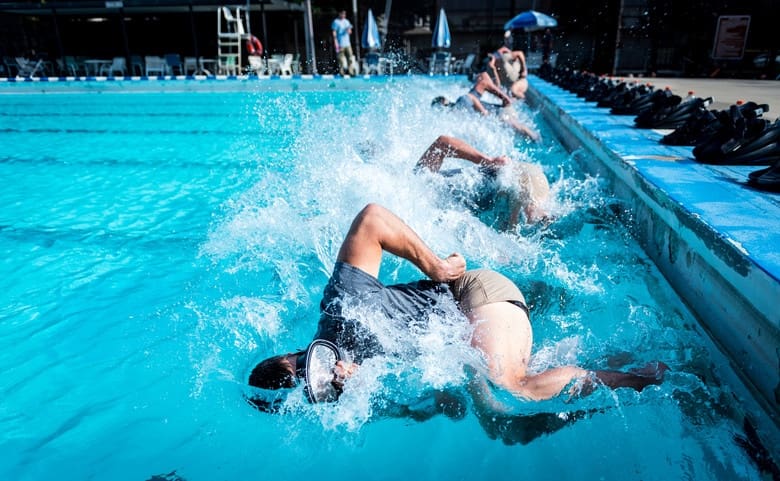
SCUBAPRO Sunday – Self Adjusting Fin Straps

Sunday, July 12th, 2020

Self-adjusting fin straps are one of the best ways to don and doff your fins. It also makes it easier to use different size booties. Steel spring straps are a relatively new product for fins. It was invented by cave divers that didn’t want their rubber straps breaking on them in the middle of a cave. So, they took screen door springs and made fin straps out of them. Typical rubber straps have a good chance of breaking at some point. If you are lucky, it will happen as you are putting them on before a dive, not in the middle of one. While you should always try and carry a spare strap on you, replacing a strap can be a pain in the middle of a dive.

The spring strap helps avoid most of these problems. Available for many open heel fins, spring straps permanently mount to the fin. The spring straps typically attach using rust-resistant metal hardware. SCUBAPRO Steel Spring Straps are available for SCUBAPRO Jet fins, Twin Jet Max, Veloce fins, and the Seawing Nova fins. They are made from a High-grade marine steel. These straps can replace the traditional fin strap with the added benefits of being easier to don and doff, and they will compensate at depth for the pressure underwater.  The flexible nature of the spring strap tightens as you descend to compensate for the crush on your boots, meaning your fins stay on at the exact tension you set them to at the surface. They are also a lot less likely to break when entering the water from a helicopter. The Steel Spring hele strap for the SCUBAPRO Jet fin has been added to 2020 Naval Aircrew Systems State of the Art Catalog. This allows SAR swimmers the ability to start using the Spring heels on their fins.

Spring straps are strong springs with a rubber or nylon heel cover for comfort. Instead of having to adjust the tension every time you put them on like with traditional straps, you simply stretch the spring over your heel.

This decreases your time and energy spent putting on and taking off your fins before and after a dive. Several models of fins now come with spring straps pre-installed, but they can also be added to many fin models.

The other type of self-adjusting straps is made from quality marine-grade bungee designed for years of reliable use. Marine grade bungee is design and construction, making it ideal for prolonged exposure to moisture, sunlight/UV radiation, and the general wear and tear that fins regularly go through. A denier Dacron polyester cover is thick and long-lasting, repelling water and resisting abrasion better than nylon. Made from a top-quality first extruded latex rubber, this bungee has a consistent 100% stretch and high modulus that won’t lose its elasticity as many others do. Bungee straps are depth compensating as they compress when your neoprene boots get thinner due to increased water pressure. Like the steel spring, the bungee is self-adjusting at depth. Upon ascent, they decompress keeping fin straps comfortable throughout the dive. Straps have a large rubber finger loop to aid in donning and doffing. Marine bungee is highly reliable and has a very low percentage of breaking. All this being said, I know you can break it if you “test it” to try and prove me wrong. They come standard on the SCUBAPRO Go (Barefoot fin) and GO Sport fins (Boot fin).

First Munitions Squadron in AFSOC History

Sunday, July 12th, 2020

HURLBURT FIELD, Fla —

Formerly with the 1st Special Operations Maintenance Squadron, the munitions flight distinguished themselves as a new squadron in the 1st Special Operations Wing.

The 1st Special Operations Munitions Squadron activated July 8, 2020, and is the first munitions squadron in Air Force Special Operations Command history.

U.S. Air Force Maj. Clayton Seiler, commander of the 1st SOMUNS, assumed command after serving as the 7th Munitions Squadron commander at Dyess Air Force Base, Texas.

“Our role is to provide the best munitions support to our warfighters in the most efficient, effective and professional manner,” said Seiler.

1st SOMUNS Air Commandos build, collect, package and distribute munitions to the 1st SOW’s inventory aircraft, directly maintaining the readiness and lethality of the wing.

“There is a recognition for munitions being a unique skill set required for our mission,” said Seiler. “It also allows us to be a right sized squadron to focus on our Airmen and their families.”

The 1st SOMUNS is composed of four flights with more than 250 personnel, creating a separate squadron allowing focused leadership capable of being there for every Airman and their families.

“My family does so much to support what I’m doing here so I can focus and support our squadron needs,” said Seiler. “They’re my rock.”

Similar to Seiler’s family supporting him, he wants to create the same type of support within his squadron.

“We can make this squadron a culture and climate people want to be a part of,” said Seiler. “This is a great opportunity for everyone to make this squadron what they want it to be.”

Seiler’s first priority is to understand his Airmen, talk to his leadership team and build the squadron together.

“Our role is to support warfighters and ensure we provide them with everything needed to complete the mission,” said Seiler.

1st SOW aircraft are lethal because of the combat capability provided by the 1st SOMUNS.

“Without munitions, we would just have a fleet of airliners,” said Seiler.

By Airman 1st Class Blake Wiles, 1st Special Operations Wing Public Affairs

New Special Operations Outdoor Training Facility Allows Safe Workouts

Saturday, July 11th, 2020

TAMPA, Fla. — U.S. Special Operations Command Central has opened a new outdoor human performance facility at MacDill Air Force Base, Florida, providing the opportunity for safe and socially distant workouts while allowing a venue to maintain personal wellness.

Officials deemed it necessary to open the outdoor facility during a time where most public fitness facilities were closed due to COVID-19.

Navy Rear Adm. H. Wyman Howard III, the Soccent commander, cut the ribbon to open the facility June 3.

”This is a great moment for us to be able to expand the [human performance] facilities,” Howard said. ”With this new workout area, our teammates will have ample room to perform workouts necessary to keep the team fit for the fight.”

The facility is nearly the length of an American football field; stretching 247 feet, with half of the flooring made of synthetic turf and the remainder made of rubber matting for the equipment workout area. New lighting and industrial fans were installed throughout the facility, which also includes a purified drinking station. The open-air, yet covered, space allows athletes to work out without being exposed to the direct sunlight.

After the ceremony, Mike Renteria, Soccent’s strength and conditioning coach, invited a small group of personnel to stay for the initial workout session at the new facility.

This workout area is the first expansion phase of the human performance facilities, with plans for two more buildings on the Soccent campus to be converted as indoor facilities.

”The expansion of our Human Performance Training Center is going to be a world-class facility, with the best trainers, for the best warriors in the world,” said Army Maj. Juan Salas, the headquarters commandant for Soccent. ”It will serve as the pinnacle for all special operations forces while stationed at MacDill Air Force Base.”

The expansion and renovation project for the workout areas, physical therapy and rehabilitation facilities will span three fiscal years: 2019, 2020 and 2021.

”The project is moving nicely,” Salas said. ”The gym equipment will be installed in the new buildings by September of this year.” The project is scheduled to be completed before the end of 2020.

By Staff Sgt. Steven Colvin for Defense.gov

(Army Staff Sgt. Steven Colvin is assigned to U.S. Special Operations Command Central.)

FirstSpear Friday Focus – Fast Rope Mit

Friday, July 10th, 2020

FirstSpear is at it again this Friday showing us the first look at an enhanced capability for the modern warfighter, the FRM – Fast Rope Mit. You might have seen prototypes and field samples at SHOT Show with the very distinctive lobster claw design, now we are getting to see what the final product will look like.

Right off the bat this glove is 100% Berry Compliant featuring all American “roper” cow leather and ultra high performance Kovenex providing greatly enhanced cut, tear, and thermal resistance for Fast Rope Insertions up to 90 feet (27.4 meters). Ultra soft on the hand and double layered in key points with a firmer grain and texture on the exterior of the palm. Reinforced button holes allow for quick and easy carabiner or snap hook attachment.

The FRM can be worn all on its own or over the top of your OG shooters glove for even greater protection. FirstSpear designed the Fast Rope Mit with several key features to increase the lethality of the operator. For example, the advanced two finger pattern allows the user to rapidly expose the trigger finger to engage a firearm with out removing the entire glove saving valuable seconds when coming off the rope. Additionally, the FRM can be flipped off the hand and retained further down the wrist with the second elastic strap allowing for total freedom from the glove without the possibility of losing it in rotor wash.

As you would expect, FS used overbuilt construction techniques with highly advanced materials, all balanced for weight and performance for the most demanding end users. The FRM is currently in production and delivery to FS Professional Users domestically and worldwide. Commercial availability for individual purchase is set for end of August. 100% American Made with USA materials.

www.first-spear.com

Army procedure goes digital for recovering lost, damaged property

Friday, July 10th, 2020

WASHINGTON – The procedure to recover lost or damaged property went digital on an Army-wide basis Monday, thanks to a Minnesota National Guard innovation to improve its property stewardship.

“We are moving from a 1977 Pontiac to a 2020 Ford,” said Col. Joe Ricker, Army G-4’s Deputy Director for Enterprise Systems. “It is certainly a big change.”

The change means all Soldiers can now initiate Financial Liability Investigation of Property Loss procedures electronically. The process, called eFLIPL, is similar to using online tax software programs through which users answer questions and forms are completed in the background.

The Army has billions of dollars of assets in inventories, and ensuring accountability and maintenance of it is not only important, but also a challenge. All Soldiers sign for individual equipment, but they don’t always realize just how expensive it is until it is lost or damaged.

The Army uses the investigations to determine if the proximate cause for the loss is based on negligence or willful misconduct, and if assessing financial liability is appropriate, explained Sgt. 1st Class Bobby Johnson, senior logistics Staff NCO in the G-4’s Property Accountability Division.

Johnson said the process includes several layers of review, can take months, and involves many people. “With the electronic system, it will reduce the burden on commanders,” he said. “They will be able to have better oversight. There will be uniformity among all commands. The process will be easier to audit. It will help anyone at any level initiate a FLIPL, and it will let us spot trends to see if policies need to be changed.”

Going digital also has several benefits in a COVID-19 environment, as everything will be paperless, and the system will be in a secure cloud. In fact, the pandemic helped speed the process of getting the digital version in place.

eFLIPL also is a great example of the Secretary of the Army’s initiative to employ technology to reform the way the Army works. Army Secretary Ryan McCarthy said last October at the Association of the U.S. Army’s annual conference, “The intent is to move the Army from industrial-age processes to the information age of leveraging data as a strategic asset and utilizing private sector technology.”

Ricker said “eFLIPL drives at the secretary’s intent. It is using Microsoft’s Azure Cloud for FLIPL data availability and making data accessible in a multitude of systems to include Army Vantage.”

Army Vantage, which has been a great help in the COVID-19 response, enables the Army to see itself by providing a common integrated data platform for visualizing current and future states of the Army. The FLIPL team will establish a Vantage Data Connector order to automatically populate the Vantage Commanders’ Dashboard. This will allow commanders the opportunity to review the units’ eFLIPL actions while reviewing readiness and other important items.

Like many great inventions eFLIPL started out as a simple idea by one Soldier – Maj. Chris Larson – who wanted to streamline a manual process. He had a team from the Minnesota Guard help him build the automated system and implement it. The team included Master Sgt. Keith Toenies, Jason Spillum and Master Sgt. Jeremy Fish.

Their results were immediate. They found it cut administrative errors and inconsistent packets, and reduced the time it took to process the FLIPL.

The system received such good reviews that the entire Army National Guard implemented it in October 2018. It has had a positive impact on how lost, damaged or destroyed property is assessed.

According to Chief Warrant Officer 5 Eric Crow, the Army G-4’s Division Chief for Property Accountability and Policy, the benefits of eFLIPL also spread to the Army Reserve, where 75 percent of its commanders have been trained to use it.

“Everyone has been anticipating the release for some time,” he said, “and a lot of active component Soldiers have reached out to their guard and reserve counterparts to help them train on how to use the system.”

This past year, Army G-4 conducted pilot programs with Soldiers from III Corps units at Fort Hood, Fort Carson, Fort Riley and Fort Bliss; the 101st Airborne Division, Fort Campbell; and the United States Army Special Operations Command, Fort Bragg. Based on their feedback, system managers improved the eFLIPL system so the process can be done seamlessly and without errors.

So far more than 20,000 people have registered to use eFLIPL. Over the course of the next few months, there will be video training for Soldiers, especially for commanders, judge advocates and financial liability officers. All Army organizations need to be on the system by October 1.

“In an era when more things are becoming digital, so too are eFLIPLs,” Johnson said. “Today is a great day for property accountability reform.”

– Army G-4

New Research Shows Promising Future for Warfighter Communication

Wednesday, July 8th, 2020

ADELPHI, Md. — Soldiers operate in remote wireless environments with limited bandwidth and unpredictable connectivity, making it challenging to receive timely and reliable information. Using novel communications software, Army researchers prove that a reliable data delivery system can be created that survives adverse network environments.

One of the capabilities in the U.S Army’s Multi-Domain Operations is rapid convergence of cross-domain capabilities, said Dr. Jade Freeman, a researcher with the U.S. Army Combat Capabilities Development Command’s Army Research Laboratory.

“Future operations against a threat require the joint force to conduct continuous and rapid integration of multi-domain capabilities to gain cross-domain overmatch,” Freeman said. “The Army strategy’s operating environment is a battlespace with congested, degraded and wireless networks, and the warfare dynamics and complexities are constantly changing at a fast pace.”

A report recently published by the lab proves that timely and reliable data delivery under adverse tactical network environments is possible.

Army researchers conducted a study on the communication technology that supports optimized information interoperability, mediation and convergence – the ability to rapidly converge effects from multiple domains – under the contested network environment.

In the study, the researchers show that Mockets technology-enabled Integrated Sensor Architecture, or ISA, achieved superior performance in data transaction in terms of timeliness and volume, compared to using the Transmission Control Protocol, or TCP, based communication method under both stressed and wireless network settings.

ISA is the Army’s interoperability solution for sharing information between sensors and systems developed by the lab’s sister organization, the CCDC Command, Control, Computers, Communications, Cyber, Intelligence, Surveillance and Reconnaissance Center. ISA uses the TCP communication method to transmit data between sensors and devices.

Mockets (Mobile Sockets) is a novel communications library developed by the lab, specifically designed for wireless networking scenarios to improve communications in mobile ad hoc network environments.

According to Freeman, Mockets design and implementation meets the needs of tactical military information networks, which are typically wireless, and ad hoc with low bandwidth, intermittent connectivity and variable latency.

“Tactical networking environments are often characterized as Denied, Intermittent and Limited, or DIL, bandwidth,” Freeman said. “Systems and applications linking sensors and tactical devices in operations can produce constant data stream. Such dissemination of information across domains and echelons is constrained by these challenges of network conditions, and a potential consequence can be a missed opportunity or an action based on outdated messages or even cost of lives due to the loss of mission-critical information.”

The primary objective of this experimentation, Freeman said, was to evaluate the performance of ISA data transfer with Mockets under various network settings.

The data transmission rates from the Mockets protocol were evaluated and compared to those from the traditional TCP in ISA under the wired networking environment (Ethernet Local Area Network), which provides the baseline results, and then in the Extensible Mobile Ad-hoc Networking Emulator, simulating a stressed wired communication.

Additionally, the protocols were experimented using military tactical radios simulating radio communications in a wireless environment.

The results show that the Mockets protocols outperformed TCP on ISA under every wireless setting in addition to stressed wired networking environments, Freeman said. On average, the latency using Mockets was reduced by more than one third of the transmittal speed of TCP on the stress network. Likewise, Mockets-enabled ISA achieved two-fold increase in throughput from TCP in a wireless setting.

For Freeman and her fellow researchers, the continuation of this study is crucial to the future operating environment and protection of our Soldiers in combat.

“We want ensure that our Soldiers are supported with communication tools so that they can conduct missions with vital information at the edge uninterrupted,” Freeman said. “Soldiers operate in remote, harsh and hostile locations, and we believe that Mockets middleware is an innovative communication technology that will ensure network resiliency and adaptability.”

Additionally, she said, this research will contribute to the Army’s pursuit in strategy “Information Dominance” against its adversaries, rapid convergence of cross-domain capabilities on seamless machine-to-machine, man-machine interface, and artificial intelligence.

As for next steps for this research, Freeman said it still remains to understand and evaluate many other functionalities of Mockets with command, control, communication, and information, or C3I, technology integration.

For example, she said, Mockets has a variety of tuning parameters adapting to network condition, optimizing the bandwidth and mobility support, as well as message tagging, prioritization and cancellation features to control network congestion.

The lab will continue Mockets evaluations as well as further enhancement with automated performance optimization according to message context and network conditions, which will benefit the Army’s Network Modernization effort.

By U.S. Army CCDC Army Research Laboratory Public Affairs

TYR Tuesday – CQB3A Shield Launch

Tuesday, July 7th, 2020

TYR TACTICAL® LEVEL 3A RAPID RESPONSE BALLISTIC SHIELDS HAVE ARRIVED.

• ULTRA LIGHTWEIGHT – LIGHTEST 3A SHIELD ON THE MARKET

• ENHANCED LEVEL 3A PROTECTION

• PURPOSE BUILT

FEATURES & SPECIFICATIONS:
• NIJ 0108.01 Level 3A Compliant
• Forearm Pad
• Carry Bag
• Fixed Handle

SPECIAL THREATS:
• 9mm, 127 gr SXT
• 5.7 x 28mm, 40 gr SS197SR-Hornady
• 5.7 x 28mm, SS192
• 9mm, 127 gr SXT
• 5.7 x 28mm, 40 gr SS197SR
• .40-cal., 95 gr S&W (HP)
• 9mm Fiocchi, 115 gr (FMJ)
• 5.7 X 28mm, 27 gr SS195 (LFHP)
• 7.62 x 25mm, 95 gr Tokarev (FMJ)
• .357 SIG, 115 gr (JHP)
• .357cal, 125 gr SIG Gold Dot Hollow Point
• .357-cal, 125 gr SIG FMJ FN

LEARN MORE:
TYR Tactical® 18”x32” CQB3A Rapid Response Ballistic Shield – Viewport (TYR-RBS/CQB3A-VP)
• Shield Weight: 12.3 lbs.
• Viewport Dim: 9.75″W x 3.75″H

MSRP:$2495.95

Link: www.tyrtactical.com/products/details/shield-systems/tyr-tactical-18×32-cqb3a-rapid-response-ballistic-shield-viewport

TYR Tactical® 18”x32” CQB3A Rapid Response Ballistic Shield (TYR-RBS/CQB3A-NV)

• Shield Weight: 8.3 lbs.

MSRP:$1695.95

Link: www.tyrtactical.com/products/details/shield-systems/tyr-tactical-18×32-cqb3a-rapid-response-ballistic-shield

WATCH THE VIDEO:

IDTOUR VTS |Virtual Trade Show| CQB3A Shields & Dolly System

Innovate or Die® Tour Virtual Trade Show #IDTOURVTS returns next Tuesday.