GORE-TEX Professional

Archive for the ‘Guest Post’ Category

FirstSpear Friday Focus – ACM MID 400 – Hoodlum Hoodie

Friday, December 27th, 2019

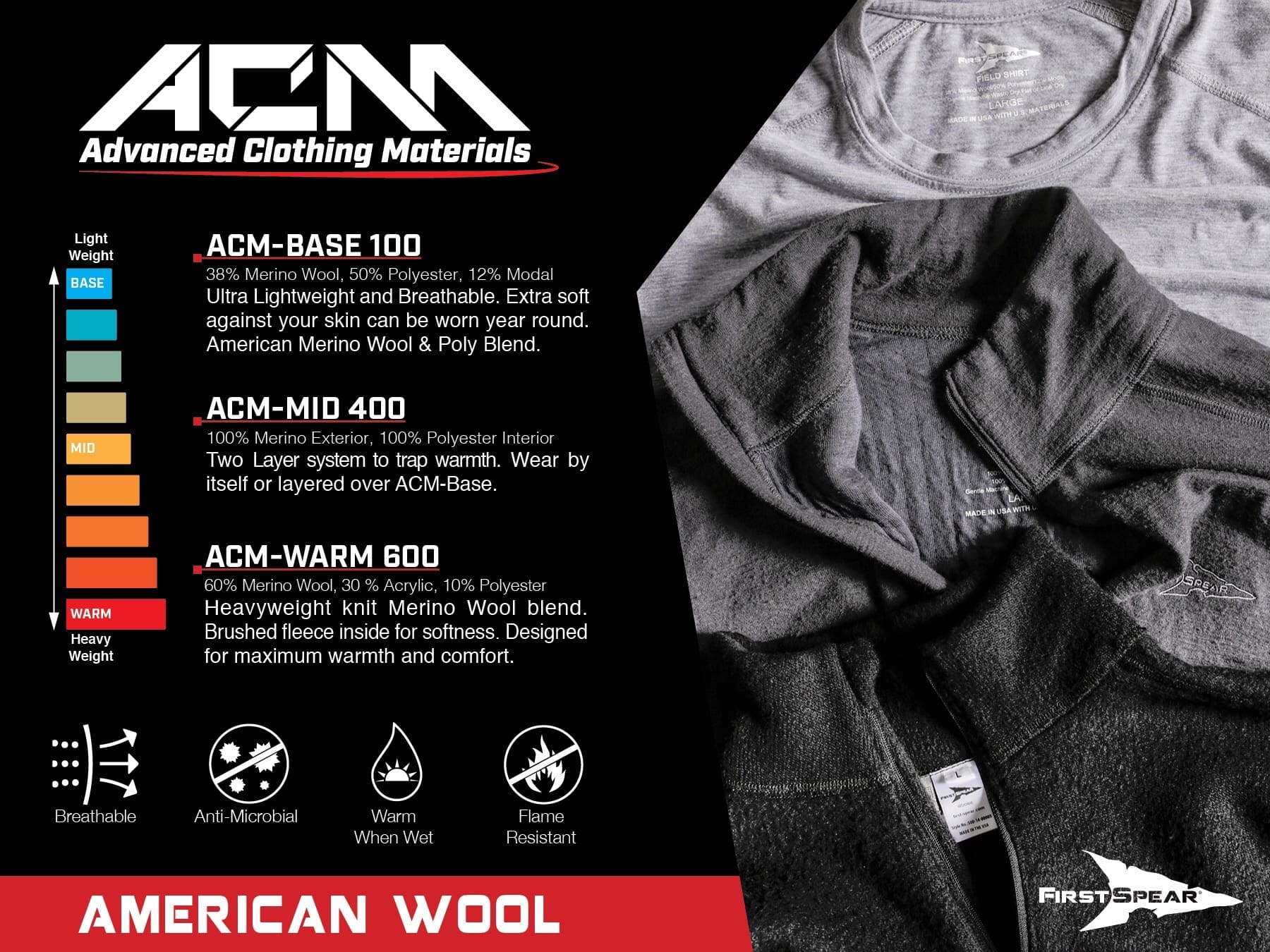
Today we are taking a look at another item in the FirstSpear American merino wool series. We started off with the lightest base layer package, ACM BASE 100, and we have since moved into the ACM MID 400 weight.

This package is particularly unique because it is double layer fabric, not a blend. Constructed from a fine polyester and merino wool, this material combo will quickly wick away moisture from the body and transfer it into the absorbent wool layer. This allows the poly layer to dry quickly and avoid the typical stink found in 100% synthetic apparel.

FirstSpear uses ACM MID 400 in several items, the Mid Shirt we saw several weeks ago and Today we are getting a look at the Hoodlum Hoodie. The Hoodie features a full zip front, thumb holes, low profile hood, and two zippered pockets in the front. The Hoodlum Hoodie is an exceptional standalone item that can be worn all its own or if you find yourself in particularly cold temps use it as mid layer to really keep you warm.

100% American Made with American Merino Wool. Available in black, charcoal, commando, manatee grey, and sand. Check out all of FirstSpear’s USA Merino wool Line Here.

Hoodlum Hoodie

SureFire Field Notes Ep 52 with Kerry Davis

Friday, December 27th, 2019

In this episode, Kerry Davis discusses the importance of not only carrying an IFAK, but having solid medical training.

Kerry Davis founder of Dark Angel Medical, has been taking care of people more than half of his adult life. Born and raised in Mississippi, he joined the US Air Force in 1991 and trained as a medic, working in an ER, then moving on to special duty with the only Tac Evac unit in the active USAF. In that station he was a flight medic and an Aircrew Training instructor.

That duty station gave Kerry the opportunity to go to the U.S. Army’s Airborne school and work with Airborne units at Pope AFB and Ft. Bragg.  After leaving North Carolina, he moved to Maxwell AFB, AL, where he instructed several thousand new Air Force officers at Officer Training School’s Medical Readiness Indoctrination Course at Gunter AFB Annex over a two and a half year period.

Kerry also taught, during his tenure in the USAF, ACLS, PALS, BCLS and Paramedic Cardiology. During that time he worked as a paramedic and after separation from the Air Force, he completed his training and certification as an RN.  He has now been in the Critical Care and ER field since 2003. He separated from the Reserves in 2007. He is an avid shooter and has instructed with Magpul Dynamics.  Today he is currently an adjunct instructor with SIG Sauer Academy where he teaches weapons manipulation as well as “Bullets and Bandages”.

darkangelmedical.com

www.surefire.com

A Kitbadger Christmas Story

Wednesday, December 25th, 2019

Ivan says it’s “A Christmas Story, minus anyone getting their eye shot out.” But this time, it’s shotguns!

For the full story, visit kitbadger.com/2019-christmas-special-shotguns

Air Force Names Newest Helicopter ‘Grey Wolf’

Tuesday, December 24th, 2019

DUKE FIELD, Fla. (AFNS) —

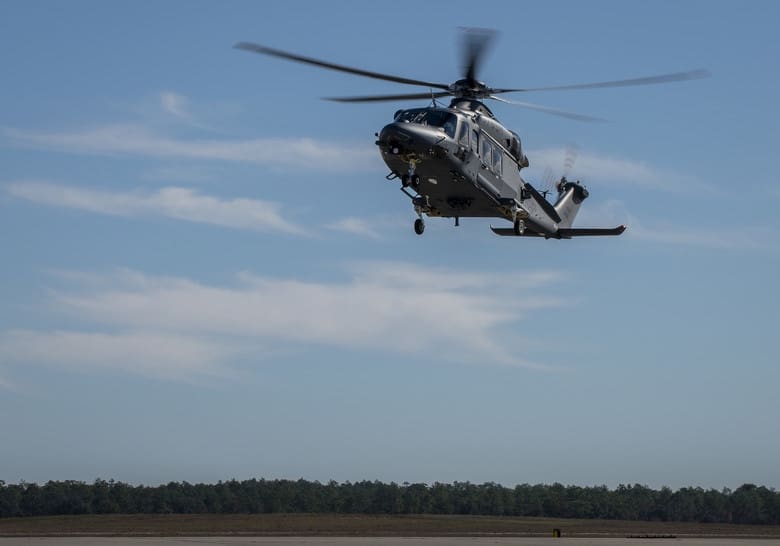
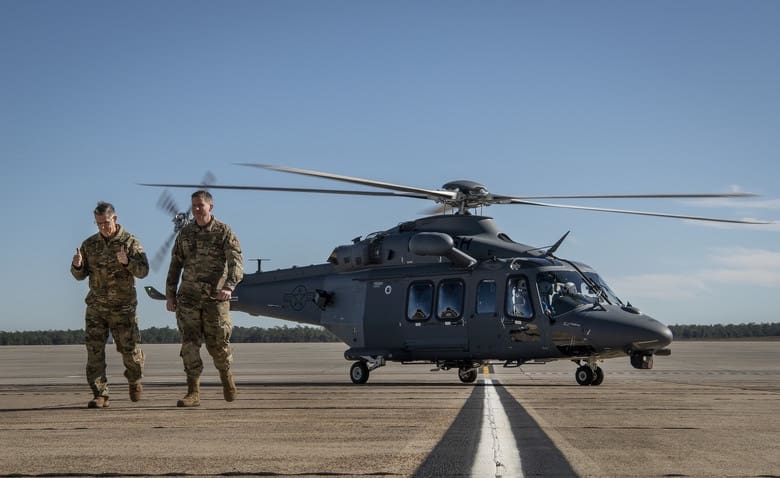
Air Force Global Strike Command named the MH-139A helicopter “Grey Wolf” during a naming ceremony at Duke Field, Dec. 19.

Gen. Timothy Ray, AFGSC commander, made the announcement, comparing it to the wild animal that bears the same name.

The Grey Wolf is the command’s first major acquisition in its 10-year history. The name Grey Wolf is derived from the wild species that roams the northern tier of North America, which also encompasses the intercontinental ballistic missile bases in AFGSC.

“It strikes fear in the hearts of many,” Ray said. “Its range is absolutely inherent to the ICBM fields we have.”

“As they hunt as a pack, they attack as one, they bring the force of many,” he continued. “That’s exactly how you need to approach the nuclear security mission.”

The helicopters will provide security and support for the nation’s ICBM fields which span Wyoming, Montana, North Dakota, Colorado and Nebraska. The new helicopter closes the capability gaps of the UH-1N Huey in the areas of speed, range, endurance, payload and survivability in support of the command’s ICBM missions. Other mission capabilities include civil search and rescue, airlift support, National Capital Region missions, as well as survival school and test support.

The roll out of the new helicopter demonstrates an asset providing ICBM security in support of U.S. Strategic Command’s nuclear deterrence operations aligned with the National Defense Strategy. The acquisition was contracted through Boeing during a full and open competition at a cost of $2.38 billion for up to 84 aircraft — $1.7 billion under budget. It is the command’s first commercial “off-the-shelf” purchase, adding military-unique modifications.

The Air Force will procure up to 84 MH-139A Grey Wolf helicopters, training devices and associated support equipment from Boeing.

“When I think about the issue in front of us, about moving forward in nuclear deterrence, when I stare down a wave of acquisition for essentially everything we do, I hope this particular program is a harbinger of very successful stories to follow not just for our command but for the good of the nation and for the good of our allies and partners,” Ray said.

The Grey Wolf will replace the UH-1N, which entered the operational Air Force in 1970.

The MH-139A Grey Wolf will provide vertical airlift and support the requirements of five Air Force major commands and operating agencies: AFGSC, Air Force District of Washington, Air Education and Training Command, Air Force Materiel Command and Pacific Air Forces. AFGSC is the lead command and operational capability requirements sponsor.

By TSgt Mike Meares, Air Force Global Strike Command Public Affairs

New Procurement Practice Saves US Army $1.2B for Modernization

Tuesday, December 24th, 2019

ARLINGTON, Va. — The Army has saved about $1.2 billion over the past year using a process called “category management” for purchasing goods and services, a top acquisition official said, adding those savings will be redirected toward modernizing the force.

“This is one of the ways we’re funding the Army’s priorities,” said Rebecca Weirick, executive director of services acquisition in the Office of the Deputy Assistant Secretary of the Army for Procurement. She spoke Wednesday as part of a panel at the Association of the U.S. Army’s “Hot Topics” forum on Army acquisition and contracting.

The panel, titled “Revolutionizing Industrial Age Thinking with Category Management,” pointed out that the concept is a relatively new one for the Defense Department and borrows best practices from the private sector.

A new course, titled “Contracting Efficiencies,” will debut early next year at the Army Logistics University to teach category management concepts to non-acquisition personnel, Weirick said. While the pilot course will be taught at ALU on Fort Lee, Virginia, the curriculum is being put together by the Army’s Office of Business Transformation at the Pentagon.

Under category management, the Army divides purchases into 19 categories, said James H. Lewis, panel chair, who also works in the Army’s procurement office.

Ten of the 19 categories are “common” categories used by all federal agencies, he said, like “professional services” or “security and protection.” The other nine are DOD-centric such as “weapons and ammunition, electronic and communication equipment, or research and development.”

Category management aligns purchases into groups of similar or related products in order to gain efficiencies and save money, Lewis said. The key is a “robust market intelligence capability,” he added.

Sometimes it’s smarter to use a small business, depending on the commodity being purchased, because the overheads are so much lower, Weirick said. Other times it’s smarter to use a large business and buy in bulk, she added. Category management has provided the ability to discern the best acquisition approach using data-driven decision making, she explained.

Weirick gave another example of how analyzing the market data can save money. The 2018 data showed that 26% of the Army’s information technology equipment purchased in the last weeks of the fiscal year were generally more expensive than purchases made outside of this period. This represents a loss in Army buying power. Reducing fourth-quarter purchases to only mission-essential requirements will yield a potential annual savings of about $10 million. This may not seem like much when compared to the defense budget, she said, but all these savings initiatives add up.

The Army began implementing category management last year, she said. The Air Force had already been doing it for a couple of years, so the Army was able to take advantage of data the Air Force had collected, she explained.

While the Army leveraged work the Air Force had already done, the Army took a bit of a different tack, Weirick said. “I’d say it’s sort of like a pincher move,” she added — strong leadership emphasis from the top empowers the teams executing the work to think and do business differently, which creates the momentum for real change.

The secretary of the Army directed implementation of category management, and assigned the under secretary the role of senior official responsible for category management within the Army.

The under secretary named co-category managers at the three- and four-star level both at the major commands, and in the Pentagon. Those same individuals are also responsible for approving budgets, she said.

The Army has set a goal of saving 5% year over year using category management and will reinvest those funds in higher Army priorities, Weirick said.

Steve Benson, director of category management for the DOD Office of the Chief Management Officer, said for every dollar the department has invested in category management, it has realized a return of $160 for a ratio of 1:160.

PEO Soldier Supports Big Red One Leader Professional Development

Monday, December 23rd, 2019

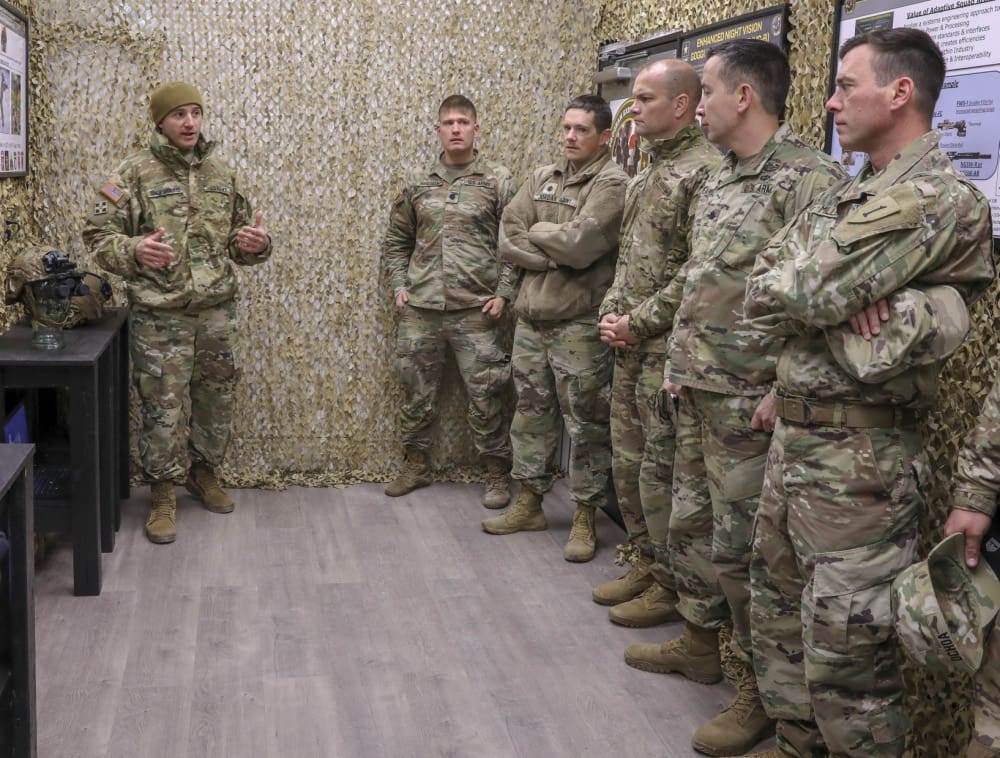
FORT BELVOIR— Members of Program Executive Officer Soldier (PEO Soldier) and Soldier Lethality Cross Functional Team (SL CFT) supported a 1st Infantry Division Leadership Professional Development (LPD) session at Fort Riley, Kan. on Dec. 11, 2019.

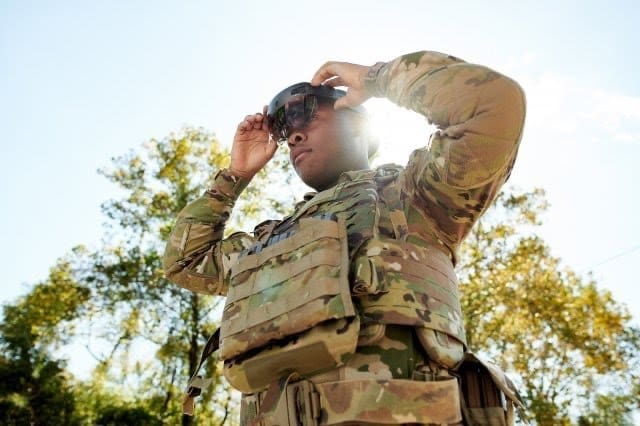
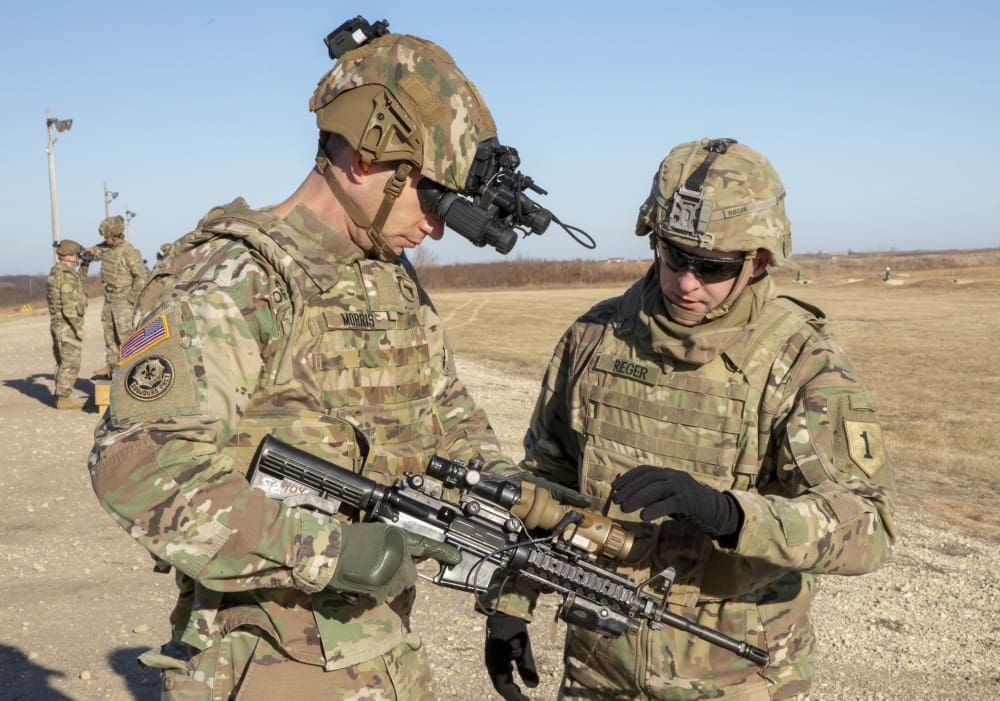
The LPD offered a rare opportunity for senior leaders to receive a hands-on capability set brief on the U.S. Army’s most advanced night vision goggle, the Enhanced Night Vision Goggle-Binocular (ENVG-B), Family of Weapon Site-Individual (FWS-I), Nett Warrior, and Next Generation Improved Head Protection System, as well as an overview of PEO Soldier.

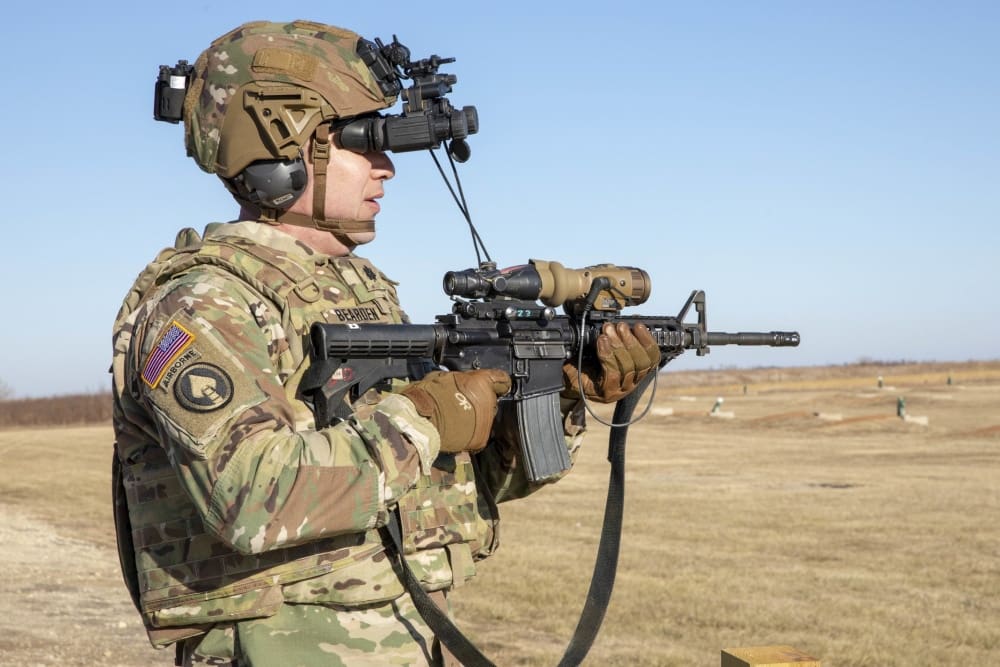
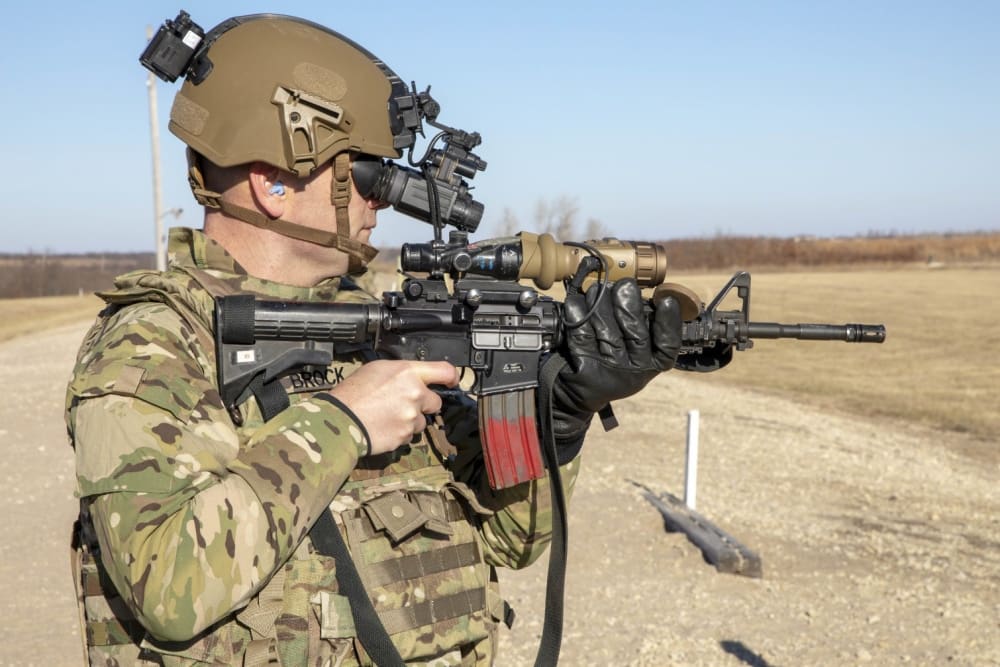
The ENVG-B provides the U.S. Army’s close combat forces with the capability to observe and maneuver in all weather conditions, through obscurants, during limited visibility, and under all lighting conditions. This system signifies an evolution in technology that stems from innovative and collaborative efforts between PEO Soldier, Soldier Lethality Cross Functional Team (SL-CFT), and Army Futures Command (AFC).

Additionally, it successfully demonstrates the rapid prototyping process to meet the Army’s modernization priorities and is the first program to deliver an AFC capability set.

“We received a lot of interest during the initial fielding of the ENVG-B in September,” said Maj. John Nikiforakis, Assistant Program Manager, ENVG-B, PEO Soldier, “1st Infantry Division leadership requested that we return and provide a capabilities demonstration to senior leaders from across the division.”

Following the brief, leaders were able to engage in a hands-on demonstration of the ENVG-B and FWS-I. Each leader was given a 30-round magazine and an ENVG-B and FWS-I equipped rifle to become familiarized with the capability set.

They were able to execute Rapid Target Acquisition (RTA) through the synergistic capability derived from ENVG-B and FWS-I via the Intra-Soldier Wireless (ISW) connection to quickly acquire and engage thermal targets.

ISW is a short-range encrypted wireless technology that enables wireless interoperability amongst devices worn by a Soldier. Employed with the ENVG-B and FWS-I, it enables the two devices to interface with each other in order to obtain RTA.

Events like this LPD session with the 1st Infantry Division are an important element of capability set fielding as they provide leaders a firsthand look at the equipment and capabilities that their Soldiers use to plan and execute their missions.

“This is instrumental to capability set fielding because it provides a very different experience than reading or receiving a brief on the ENVG-B and RTA,” said Nikiforakis, “They actually get to handle the equipment and experience RTA by firing rounds downrange.”

Fielded to them earlier this year, 1st Infantry Division Soldiers will be taking this capability set with them on an upcoming deployment to Korea in 2020.

Sgt. Adam Rieger of B Co., 1st Battalion, 18th Infantry Regiment, 2nd Brigade Combat Team, 1st Infantry Division, deploying to Korea, described the many advantages of the ENVG-B compared to legacy night vision systems.

“The white phosphorous and dual tubes give us a better depth perception than previous goggles,” said Rieger, “We ran with them at the range and found that we navigate hazards much easier.”

Rieger also noted increased picture clarity when zooming and a much longer battery life than previous systems.

“This capability is going to be amazing in Korea,” said Rieger, “Being able to use thermal in tunnels and to see around a corner without having to physically turn it will be a huge advantage.”

Program Manager Soldier Maneuver and Precision Targeting’s mission is to equip the Soldier with sensors, lasers, and precision targeting devices to dominate the battlefield through improved lethality, mobility, situational awareness, and survivability in all operational environments.

PEO Soldier rapidly delivers agile and adaptive, leading edge Soldier capabilities in order to provide combat overmatch today and be more lethal tomorrow.

Story by Timothy Ahearn, PEO Soldier

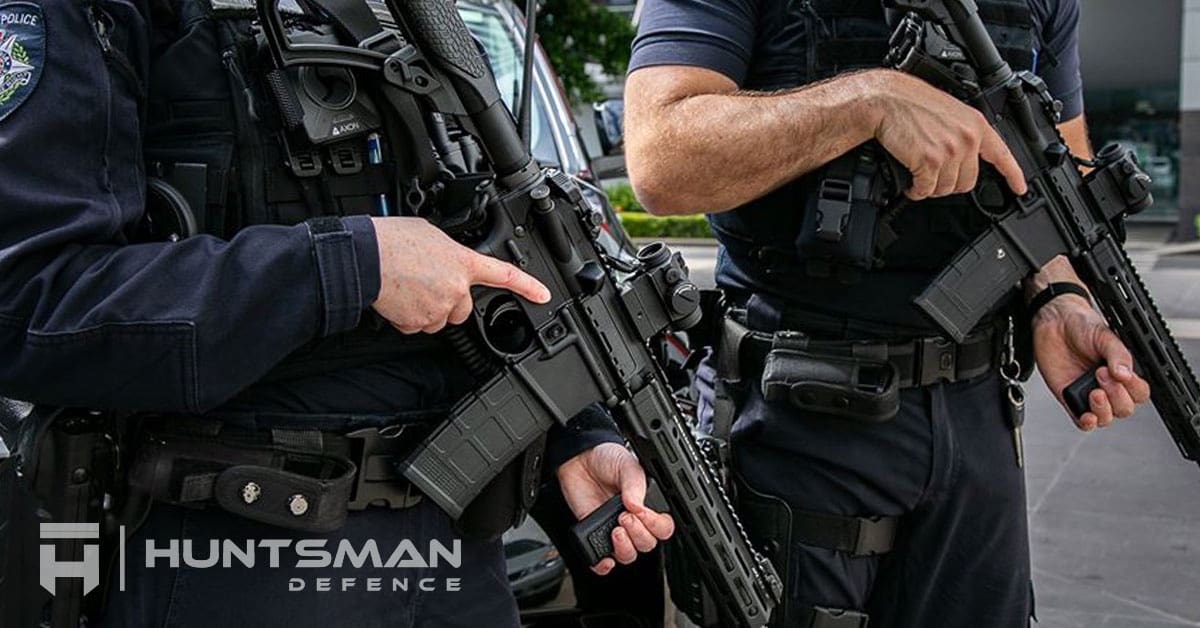
Australia’s Victoria Police Select Daniel Defense Carbines

Monday, December 23rd, 2019

This release is from Huntsman, the company who will fulfill the contract.

VICTORIA POLICE AWARDS CONTRACT TO SUPPLY 300 DANIEL DEFENSE COMPLETE RIFLE SYSTEMS

Townsville, QLD – December 2019 – Huntsman Aus Pty Ltd (Huntsman) is pleased to confirm the award of a contract to supply 300 semi-automatic Daniel Defense rifle systems to be used by Victoria Police throughout the state from mid-2020.

The new contract followed a comprehensive tender process and the Daniel Defense rifle systems, supplied by Huntsman, were selected to expand Victoria Police’s capability to respond to critical incidents.

Huntsman managing director Rob Woods said it was an honour to be selected to supply the Daniel Defense rifle systems to Victoria Police.

“To be given the opportunity to play a small role in the broader Victorian Government investment in the Community Safety Statement 2018/19 is significant,” Mr Woods said.

“To have the complete system that we submitted extensively assessed against other companies within the Australian Defence industry is always a great test.”

“The contract win acknowledges the reliability, durability and accuracy of the Daniel Defense rifle and demonstrates the exceptional value for money of the assembled package.”

“Each component within the package is world class and most importantly proven through operational use.”

“The delivery of these rifles marks the continued growth of the national Daniel Defense fleet that Huntsman supports.”

“I am confident that officers who are issued the rifle now have the very best tool for the protection of the community and their own life.”

Recently the Australian Federal Police announced that the Daniel Defense rifle was selected for employment by first responders at designated Australian Airports. Other state police agencies also have Daniel Defense carbines in service.

Mr Woods said all Daniel Defense rifles were built using the latest in design and manufacturing processes.

“We are confident the police officers who will carry the new rifles will appreciate working with such a lightweight, reliable and accurate rifle,” he said.

“The rifle functions flawlessly with a broad range of ammunition, which will provide a degree of future proofing as law enforcement ammunition technology continues to develop.

“We are conscious of the enormous responsibility that the supply of equipment to law enforcement represents, especially when that equipment will be employed for the protection of life.

“We look forward to continuing a strong relationship with Victoria Police and supporting them into the future.”

Huntsman will provide Victoria Police Armourers with certified Daniel Defense Armourer training.

Huntsman will also provide Instructor Training through our partner Nexus Training Solutions, an Australian-owned training provider delivering world class equipment integration training to global government end-users.

www.huntsmandefence.com

-———

This release is from the Victoria Police:

Following a comprehensive tender process, Victoria Police has signed a new contract that will deliver 300 semi-automatic rifles to be used by uniform and frontline support police throughout the state from mid-2020.

The new weapons will be supplied by Huntsman Aus and will expand Victoria Police’s capability to respond to active armed offender and terrorist attacks outside of Melbourne.

More than 700 police officers from the Public Order Response Team (PORT) and four 24-hour regional uniform stations – Geelong, Ballarat, Morwell and Shepparton – will be trained to use the rifles in response to critical incidents.

PORT have been selected to receive the semi-automatic rifles as they are a frontline support unit which can be deployed anywhere in Victoria in response to major events, issues and high-risk times. The four regional stations have been selected to ensure there is a strengthened response in key regional areas

The rifles will not be personally issued and will instead be assigned to the relevant areas to be delegated each shift.

Deputy Commissioner Shane Patton, Regional Operations, said the introduction of the new weapons follows the rollout of active armed offender training to all police officers and the release of the new hostile vehicle policy; all of which are designed to uplift officer capability when responding to critical incidents.

“Let me be clear, it will be a very sad day if the rifles are used, but the reality is we need to be prepared if an active armed offender or terrorist attack was to occur in regional Victoria,” Deputy Commissioner Patton said.

“By expanding this capability to four key regional hubs and PORT the community can be reassured we have trained officers who can respond to these incidents in a timely manner.

“I also want to reassure the community that police officers will not be patrolling the streets with the rifles as part of general duties. Unless they are responding to a critical incident, the rifles will be securely stored at the police station or in vehicles and the community won’t see them.”

All members across the organisation will be provided with awareness training specific to the deployment of semi-automatic rifles from March 2020. The training of more than 700 officers will then progressively be rolled out from June next year until the end of 2021.

The rollout of the semi-automatic rifles is due to a $25 million investment from the Victorian Government as part of the Community Safety Statement 2018/19

– ends –

Beck Angel

Victoria Police Media Unit

New Algorithm Could Mean More Efficient, Accurate Equipment For Army

Sunday, December 22nd, 2019

RESEARCH TRIANGLE PARK, N.C. (Dec. 19, 2019) –  Researchers working on an Army-funded project have developed an algorithm to simulate how electromagnetic waves interact with materials in devices to create equipment more efficiently and accurately. The algorithm could be used in a wide range of fields – from biology and astronomy to military applications and telecommunications.


Electromagnetic waves exist as radiation of energies from charges and other quantum processes. They include radio waves, microwaves, light and X-rays. Mobile phones communicate by transmitting radio waves.


It takes a tremendous amount of computer simulations to create a device like an MRI scanner that images the brain by detecting electromagnetic waves propagating through tissue. Those simulations can take days or months to identify how the electromagnetic waves will react when they encounter the materials in the device. Because of the cost, there is a limit to the number of simulations typically done for these devices.

 

With funding from the Army Research Office, in a study, published in the SIAM Journal on Scientific Computing, SMU (Southern Methodist University) researchers revealed a faster algorithm for these simulations. It is a more efficient and less expensive way to predict the behavior of waves.

 

“We can reduce the simulation time from one month, to maybe one hour,” said lead researcher Wei Cai, SMU Clements Chair of applied mathematics. “We have made a breakthrough in these algorithms.”


“Electromagnetic waves are central to many important applications in sensing, power, and communication. Being able to conduct related simulations faster and less expensively will have many military applications,” said Dr. Joseph Myers, Army Research Office Mathematical Sciences Division chief. ARL is an element of the U.S. Army Combat Capabilities Development Command’s Army Research Laboratory. “For example, this work will help create a virtual laboratory for scientists to simulate and explore quantum dot solar cells, which could produce extremely small, efficient and lightweight solar military equipment.”


The new algorithm modifies a mathematical method called the fast multipole method, or FMM, which was considered one of the top 10 algorithms in the 20th century.


Using this new algorithm, the computer simulations map out how materials in a device like semiconductor materials will interact with light, in turn giving a sense of what a particular wave will do when it comes in contact with that device.


 

An engineer or mathematician would be able to use this new algorithm to test a device whose job is to pick out a certain electromagnetic wave. For instance, it could be used to test designs for a solar light battery that lasts longer and is smaller than currently exists.


“To design a battery that is small in size, you need to optimize the material so that you can get the maximum conversion rate from the light energy to electricity,” Cai said. “An engineer could find that maximum conversion rate by going through simulations faster with this algorithm.”


The algorithm could also help an engineer design a seismic monitor to predict earthquakes by tracking elastic waves in the earth, Cai noted.


“These are all waves, and our method applies for different kinds of waves,” he said. “There are a wide range of applications with what we have developed.”


The computational system used for this project, the SMU MANEFRAME II, is descended from the Army high-performance computing system “Mana,” formerly located at the Maui HPC Center in Hawaii, and donated and physically moved to SMU through the efforts of ARO and SMU.

By US Army CCDC Army Research Laboratory Public Affairs