Tropo Performance

Archive for the ‘Guest Post’ Category

Marine Corps to Deploy Counter-Drone Systems Across Units in 2025

Monday, April 28th, 2025

MARINE CORPS BASE QUANTICO, Va. —

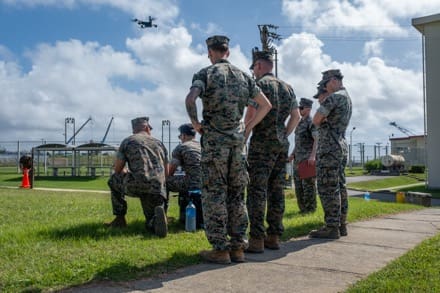
The proliferation of small Unmanned Aircraft Systems presents a significant tactical challenge for modern military forces. As adversaries across the globe increasingly mature and employ low-cost sUAS for reconnaissance, surveillance, and attack missions, it is imperative for the Marine Corps to enhance its capability to counter these threats in a dynamic, contested, and distributed environment.

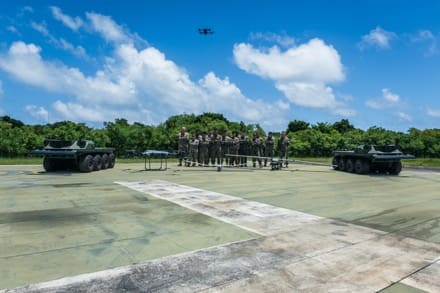
This year, the Marine Corps will field dismounted counter-sUAS capabilities across the entire MAGTF, which will allow deployed Marines to effectively conduct self-defense against threat sUAS. The Marine Corps will maintain operational superiority and safeguard Marines, maritime forces, and the Joint Force against this evolving threat in diverse operational environments.

The technologies being fielded will allow Marines to detect, track, identify, and defeat adversary sUAS with both kinetic and non-kinetic means.

These systems will be lightweight, easy-to-use, easy-to-train, military occupational specialty agnostic, and to the maximum extent possible use weapon systems organic to individual units. 

Small UAS pose significant risks due to their agility, low signature, and ease of employment. These systems can disrupt operations, compromise security, and destroy critical assets, and result in loss of life. The Marine Corps must therefore prioritize the development and integration of organic CUAS solutions, consisting of both mounted and dismounted capabilities, that provide a comprehensive protection against these emerging threats. Effective countermeasures are essential for safeguarding personnel and critical assets ensuring mission success. 

Current Ground Based Air Defense capabilities that are being fielded today predominantly focus on mounted platforms organic to the Low Altitude Air Defense Battalions and the Littoral Anti-Air Battalions, which encompass the entire air defense continuum up to and including defeating manned aircraft and cruise missile threats. Those dedicated air defense assets are not always practical or available at scale to support individual unit operations. The fielding of organic-CUAS capabilities will address this gap by providing essential self-defense equipment while not detracting from the operator’s primary duties. 

This decentralization of defensive measures aligns with the Marine Corps’ emphasis on maneuver warfare and dispersed operations, ensuring that all elements of the MAGTF can operate effectively in all environments. 

Furthermore, continuous evaluation and adaptation of these systems will be crucial to keep pace with evolving sUAS technologies and tactics. By addressing this need, the MAGTF will enhance its defensive posture, safeguard its operational integrity, and ensure mission success in an increasingly complex threat environment. 

By CD&I Staff | Marine Corps Combat Development Command

HunterSeven – Cancer Screening at SOF Week

Sunday, April 27th, 2025

MILITARY VETERANS – HAVE YOU SIGNED UP FOR CANCER SCREENING? Time is running out cause slots are filling up!

We’ve gotten many questions lately—“Are you guys going to SOF Week this year?”

And the answer is: Absolutely.

But we’re doing it our way.

This year, we’re flipping the script.

Instead of getting tangled in the red tape, we’re staying laser-focused on what matters most:

PREVENTING AS MANY PREVENTABLE CANCER DEATHS AS POSSIBLE.

You’ll find us down by the waterfront alongside our excellent partners— Crye, Arc’teryx, and a lineup of other badass companies—where we’ll be spreading the word about health promotion, early cancer detection, and what it means to take care of our own.

But the real magic? Wednesday night.

That’s when it all comes together.

At the DuckCancer Happy Hour—hosted and sponsored by: Black Rifle Coffee – Crye Precision – Arc’teryx – We will be running on-site blood-based cancer screenings for at-risk post-9/11 military veterans, right in the middle of the action!

We’re talking great people, amazing raffles, tactical ducks, and literal lives being saved in real-time.

Spots for screening are extremely limited, so if you’re a post-9/11 veteran—or you know one—don’t wait.

Let’s party with a purpose and keep pushing forward in the fight against cancer.

REGISTER via www.HunterSeven.org/DuckCancer

Modern AFE Capabilities Coming to Cannon DRACO Fleet

Sunday, April 27th, 2025

CANNON AIR FORCE BASE, N.M. —

The Steadfast Line continues to adapt for relevancy, most recently with the U-28A Draco fleet adopting new aircrew flight equipment (AFE) in the near future at Cannon Air Force Base, New Mexico.

The M69 Joint Service Aircrew Mask (JSAM) replaces the Mask Breath Unit-19P Aircrew Eye and Respiratory Protection assembly and is designed to provide ocular and respiratory protection from Chemical, Biological, Radiological and Nuclear hazards.

“This new mask allows improved mobility and enhanced protection,” said an AFE specialist assigned to the 27th Special Operation Wing. “The reliability of this new equipment will be critical for our U-28A crews if they find themselves operating in a contested environment.”

The JSAM is already in service on other non-ejection seat, fixed-wing aircraft, including the MC-130J Commando II and AC-130J Ghostrider fleets at Cannon AFB. Once approved for use on the U-28A, the JSAM will join the growing ensemble of next-generation AFE available to the Draco community. This includes the Viking Suit, which improves survivability of aircrew members if they ever are forced to egress in maritime environments, and the Skull Mounting System, which aligns headgear with night vision goggles and other accessories.

“This new protective equipment will enable our U-28 crews to be prepared for tomorrow, adapting for relevancy,” said Col. Robert Johnston, 27th Special Operations Wing commander. “We must maintain our competitive advantage, and this new mask is one more way we are staying ready.”

Air Commandos lead the way in delivering innovation – it’s in our DNA.

Alaska-Based Explosive Ordnance Disposal Team Earns All-Army EOD Team of the Year

Saturday, April 26th, 2025

FORT WALKER, Va. — U.S. Army Explosive Ordnance Disposal techs from the Fort Wainwright, Alaska-based 65th Ordnance Company (EOD) “Far North EOD” took top honors in the all-Army EOD Team of the Year competition on Fort Walker, Virginia, April 7-11, 2025.

Staff Sgt. Seth Harper, Sgt. Brandon Grimes and Pfc. Landon Lowrance from the 65th EOD Company, 8th Theater Sustainment Command, U.S. Army Pacific, came in first place during the all-Army EOD competition.

Staff Sgt. Isaac Klein, Sgt. Michael Trevino and Sgt. Michael Lavely from the Fort Stewart, Georgia-based 38th EOD Company, 184th EOD Battalion, 52nd EOD Group, took second place.

Staff Sgt. Kyle McLaughlin, Sgt. Justin Hansen and Sgt. Camden Resinger from the Joint Base Lewis-McChord, Washington-based 707th EOD Company, 3rd EOD Battalion, 71st EOD Group, came in third place.

The other top EOD teams in the all-Army competition were Staff Sgt. Ronald Helsel, Pfc. Caelan Stanley and 1st Lt. Joseph Hunter from the Baumholder, Germany-based 720th Ordnance Company (EOD) and 702nd Ordnance Company (EOD) in U.S. Army Europe and Africa.

The Massachusetts National Guard was represented by Staff Sgt. Christopher Liberty, Staff Sgt. Raphael Riordan and Sgt. Gerald Harris from the 387th EOD Company, 48th EOD Group.

During the five-day competition, the five Army EOD teams took on challenging training lanes that were built from real-world EOD missions in large-scale combat operations that included joint forcible entry, expanding the lodgment and night operations.

The teams were tested on their ability to both enable lethality and safeguard U.S. forces on battlefields around the world and to support domestic response missions across the nation.

Coming from the much colder climes of the 49th state, Lowrance said the 65th EOD Company team had to overcome many obstacles to prevail in the competition.

“The biggest challenge of this competition was falling in on equipment that was not our own in an environment that we were unfamiliar with,” said Lowrance, who is originally from Valliant, Oklahoma. “It required adaption and overcoming the gaps that we faced with equipment that we may or may not have and try to do our job as best as possible utilizing the tools and equipment we had.”

Grimes said his team fully leveraged the expertise of the 65th EOD Company’s more seasoned EOD techs to hone their lifesaving and mission-enabling skills prior to the competition.

“We prepared for this competition through a structured training program facilitated by the NCOs in our company who have a vast array of experience to include 1st Sgt. Forrest Hull and Sgt. 1st Class Matthew Carr who brought a multitude of real world and training experiences to enhance our ability,” said Grimes, a former Army Combat Engineer and Iraq War veteran from Hemet, California.

“The training received at the U.S. Army Pacific Team of the Year allowed us to enhance our training and skills and prepare for the all-Army Team of the Year competition,” said Grimes.

From Fort Wainwright and Fort Greely, Alaska, the 65th EOD Company supports the 11th Airborne Division and other organizations requiring EOD support while using the 870,000 acres of training land available in Alaska.

The 65th EOD Company also supports civilian and federal law enforcement across the northern half of Alaska.

Harper, the EOD team leader, said the lessons learned from the all-Army competition will make the 65th EOD Company even stronger.

“We will use what we learned here at this Team of the Year to bring a wide variety of problem sets to our home station and utilize the scenarios we’ve done here to bring experience to the other EOD techs in our unit. This will ensure our unit can prepare and train for a large-scale combat operations environment, said Harper, a native of Wildomar, California.

A former infantry Soldier who deployed to Cameroon in Africa, Harper was inspired to serve as an Explosive Ordnance Disposal technician by his brother who served as an EOD tech.

The all-Army EOD Team of the Year competition was hosted by the 52nd EOD Group and 20th Chemical, Biological, Radiological, Nuclear, Explosives (CBRNE) Command. The 52nd EOD Group and 71st EOD Group are part of the 20th CBRNE Command, the U.S. military’s premier multifunctional and deployable CBRNE formation.

Headquartered on Aberdeen Proving Ground, Maryland, in Northeast Maryland’s science, technology and security corridor, the 20th CBRNE Command is home to 75 percent of the active-duty U.S. Army EOD techs and Chemical, Biological, Radiological, Nuclear (CBRN) specialists, as well as the 1st Area Medical Laboratory, CBRNE Analytical and Remediation Activity, Weapons of Mass Destruction Coordination Teams and Nuclear Disablement Teams.

Soldiers and Army civilians from the 20th CBRNE Command deploy from 19 bases in 16 states to confront and defeat the world’s most dangerous hazards in support of joint, interagency and multinational operations.

Brig. Gen. W Bochat, the commanding general of the 20th CBRNE Command, and Command Sgt. Maj. Dave Silva, the senior enlisted leader of the 20th CBRNE Command, attended the award ceremony.

Lt. Gen. Heidi J. Hoyle, the U.S. Army deputy chief of staff (G4) and the senior EOD officer in the U.S. Army, spoke at the awards ceremony.

Hoyle previously commanded the 71st EOD Group, and she served as the 41st U.S. Army Chief of Ordnance and commandant for the Army Ordnance School. She also previously served as the executive officer of the 242nd EOD Battalion in support of Joint Task Force Paladin. The combined task force had the critical mission of locating and defeating improvised explosive devices in Afghanistan.

Command Sgt. Maj. Dave Silva, the senior enlisted leader for 20th CBRNE Command and the senior U.S. Army EOD technician, said the competition strengthened the entire EOD profession.

“The 2025 all-Army EOD Team of the Year Competition was more than just a battle of skill. It was a proving ground for the indomitable spirit of the U.S. Army’s Explosive Ordnance Disposal warriors. In the face of adversity, these Soldiers displayed unmatched intelligence under pressure, relentless determination and the teamwork that defines our force,” said Silva.

A native of Long Beach, California, Silva has deployed seven times and served in Iraq and Afghanistan. He has served on protection missions for presidents and the Pope. He has also been to all 50 states and five of the seven continents.

Silva said the all-Army EOD Team of the Year competition showcased the strength, ingenuity and adaptability of the U.S. Army EOD techs who confront and defeat explosive threats.

“Every competitor in this year’s event showed what it means to be an EOD Soldier: the ability to rise, adapt and lead under pressure,” said Silva. “The winning team has earned their place at the top, but every Soldier who stepped into this competition has proven their worth, reinforcing that our Army is built on a foundation of excellence.”

As the U.S. Army’s explosives experts, EOD Soldiers take on dangerous and complex explosive devices that harm people and hinder missions.

Silva said EOD techs operate in a world where precision is essential, and the competition demonstrated the absolute commitment of the EOD techs to their profession.

“It requires a level of composure and frankly, sheer grit that few could comprehend. The focus is not on winning, but on executing flawlessly,” said Silva. “To hone those fundamentals, they lean on their teammates and trust the rigorous training they received.”

Silva said he was inspired by the EOD techs who participated in the competition.

“Your commitment strengthens our Army and safeguards our nation. Let this competition serve as a reminder that greatness is not achieved alone but forged through teamwork, discipline and a shared dedication to the mission. Keep pushing forward. Keep leading. And never stop striving for excellence,” said Silva.

“This wasn’t just another competition,” said Silva. “It was a demonstration of everything we embody as EOD technicians — the courage to face the unthinkable, the technical mastery to neutralize the threat and the unwavering commitment to protecting those who serve.”

Silva said Army Explosive Ordnance Disposal technicians save lives, protect property and enable operational success every day.

“EOD is not just a job — it’s a mission, a calling. It demands precision, resilience and the ability to act decisively when lives hang in the balance,” said Silva, adding that the Army EOD teams had lived up to the highest standards of the profession.

“I had absolute faith in their capabilities. I told them to go out there, be bold, be disciplined, and show the Army — and the world — what it means to be an Army EOD technician – to leave everything on the range, and that they did,” said Silva. “I couldn’t possibly be prouder. Liberty, We Defend!”

By Walter T. Ham IV

Hill People Gear Unveil New Bookcliff Lumbar Pack

Friday, April 25th, 2025

I’ve been following Hill People Fear since they launched 15 years ago. As many of you know, The Hill brothers cut their teeth as wildland firefighters in the Forest Service and consequently, they’ve long been fans of belted lumbar packs. The new Bookcliff is the latest in their lineup, joining the Umlindi and the M2016.

The Bookcliff is sized in between the other two and at 1237ci (dimensional) is the largest lumbar pack that can be effectively carried with just a belt. In keeping with HPG’s modularity, the Bookcliff can be used with the Recon Belt, Prairie Belt, and Shoulder Harness. It is sold with a simple shoulder strap so folks need only purchase the suspension component(s) they want, or use HPG components they already have.

This lumbar pack will appeal to a wide range of users, including wildland firefighters looking for a Berry Compliant commercially produced “jumper pack”, which the Bookcliff is very close to in size. It is designed to accept the fire shelter case for line use. 

The Bookcliff is made in the USA out of US materials by FirstSpear, Hill People Gear’s primary manufacturing partner. Zippers are both YKK #10s for longevity and the material is all 500d Cordura. There is an attached rear pocket with a slot pocket behind it and an internal mesh slot pocket. There is a slant style wand pocket on each side large enough to accept a Nalgene silo or any 1qt canteen. Compression straps top, bottom, and sides round out this purpose built pack.

For more information, you can check out the Bookcliff on HPG’s website.

FirstSpear Friday Focus: Laserframe Primary Pocket Panel (PPP)

Friday, April 25th, 2025

The FIRSTSPEAR LASERFRAME PRIMARY POCKET PANEL is a versatile tactical accessory designed for efficient gear organization and customization.

It features a hooked-back exterior and a loop interior, allowing secure attachment to compatible carriers. This design ensures stability while providing flexibility for various loadout configurations.

The PPP can be worn alone or paired with the Admin Placard or Friction Inserts (M4, G17/19, and G20/21 – sold separately), offering users adaptable carrying options. Its modularity makes it ideal for quickly integrating additional magazines or mission-critical accessories. The durable construction makes it suitable for demanding tactical environments. Its lightweight design minimizes bulk without sacrificing functionality. The Primary Pocket Panel’s hook-and-loop compatibility ensures a secure fit, preventing unwanted movement during use.

With its customizable configuration, the panel offers improved flexibility for both short and long missions. Overall, it is a valuable addition to any tactical loadout, providing convenience and reliability in the field.

FirstSpear is the premier source for cutting edge-tactical gear for military, law enforcement and those who train.

For more information visit First-Spear.com.

Foreign Intel Job Scams Target Current, Former DoD Employees

Thursday, April 24th, 2025

QUANTICO, Va. (AFNS) —

When a social media message pops up offering a high-paying consulting job from an unknown recruiter, it’s easy to be intrigued.

But before you accept this too-good-to-be-true offer, think twice.

For many current and former members of the Department of the Air Force, and increasingly, across the entire U.S. government workforce, this is the first step in a recruitment scheme by foreign intelligence entities, officials warn.

“Our adversaries are exploiting personal freedoms and online platforms to target our people,” said a counterintelligence analyst assigned to the AFOSI Center. “These aren’t random messages. They’re calculated attempts to exploit trust.”

The analyst could not be named for operational reasons. However, their concern was echoed at the highest levels of the agency.

“These aren’t just job offers, they’re intelligence operations in disguise,” said Special Agent Lee Russ, executive director of AFOSI Office of Special Projects. “Our adversaries are targeting the very people who’ve kept this nation secure.”

According to an April 2025 memo from the National Counterintelligence and Security Center, hostile foreign intelligence entities have targeted U.S. government personnel by posing as consulting firms, headhunters and think tanks.

“This isn’t a new tactic, it’s just become more aggressive and more refined,” the analyst said. “Adversaries have figured out how to blend into legitimate spaces online.”

According to the NCSC release, which operates under the Office of the Director of National Intelligence, these schemes are part of a broader campaign to collect sensitive information from individuals with U.S. government backgrounds, often under the guise of employment opportunities.

“Recruiters often appear friendly and credible, offering flattery and emphasizing your government experience,” Russ said. “They may pose as representatives of legitimate, even allied-nation companies, making their approach seem trustworthy.”

These outreach efforts often begin with what appears to be a professional opportunity, like a message from a recruiter or a inquiry that aligns with the target’s background, the analyst said.

That sense of normalcy is what lowers defenses and allows the interaction to progress unnoticed.

“The sophistication is what makes it dangerous,” the analyst said. “Adversaries are using professional norms and targeting people who’ve let their guard down because the interaction seems normal.”

These increasingly advanced attempts often appear via social media, email, or job platforms, making them difficult to detect.

“Foreign actors reach out to service members privately, which means there’s no institutional oversight,” the analyst added. “What someone does on their personal account doesn’t necessarily have the same safeguards as an official one, and adversaries are taking advantage of that.”

Over time, those conversations can shift subtly from general networking to probing questions. Then, what started as a casual dialogue quietly shifts into something more serious.

“These schemes have evolved into long-term social engineering campaigns designed to appear professional and legitimate,” Russ said.

What makes these campaigns particularly effective, officials say, is how gradually they unfold.

“In many cases, targets are asked to provide commentary on general policy issues or draft seemingly harmless reports, usually in exchange for generous compensation and flexible remote work,” Russ said. “But over time, these requests escalate, which helps foreign adversaries refine their military tactics and strategic operations.”

The shift is rarely abrupt. Instead, foreign actors rely on building a sense of trust, normalizing the exchange of information before introducing more sensitive requests.

“They’re not going to ask for secrets right away,” the analyst said. “They build credibility first, then slowly shift the conversation. By the time it feels suspicious, a relationship has already been established and that’s exactly what they’re counting on.”

Several red flags can signal malicious intent behind a job offer, he added. These include unusually high pay for minimal work, pressure to move conversations off trusted platforms like LinkedIn, and use of encrypted messaging apps.

“Urgency tactics, such as limited-time offers, exclusive opportunities or unusually fast hiring and payment cycles, are all designed to bypass due diligence and rush targets into compromising decisions,” Russ said. “In some cases, individuals are promised immediate payment upon task completion to encourage quick participation without proper vetting.”

In many cases, recruiters will push for increasingly detailed and potentially restricted information, often under the pretense that it is needed for strategic insights or market research.

“The reality is, if you’ve ever had access to sensitive material, classified or not, you’re a potential target,” the analyst said. “Foreign adversaries are not just chasing secrets; they’re after any information that could give them a strategic edge.”

These hostile adversaries aren’t limiting their outreach to active military or intelligence personnel, either. Everyone from uniformed service members and reservists to civilian employees, contractors and retirees are within scope, the analyst said.

Engaging with these recruitment attempts can carry serious consequences. U.S. security clearance holders are legally bound to protect classified information, even after leaving government service.

“One of the problems we have is people just ignore the messages and forget about it,” the analyst said. “But even if you ignored it, that interaction can still help us. We’re not looking to punish someone for being contacted, we want to understand the tactics being used so we can protect the rest of the force.”

“If you believe you’ve been targeted, or know someone who has, report it,” Russ said. “Whether you’re still in uniform or long since retired, stay sharp. In today’s fight, vigilance online can be just as vital as readiness on the battlefield.”

As the analyst explained, as adversaries exploit the freedoms of digital platforms to target individuals, the lines between counterintelligence and force protection are increasingly blur.

“We’re not going to investigate our way out of this,” the analyst said. “The scope is too broad, and it crosses too deeply into personal privacy. The most powerful weapon we have is self-reporting. When people flag suspicious outreach early, it gives us a fighting chance.”

By Thomas Brading, AFOSI Public Affairs

Releasing agency note:

That is why early reporting, no matter how minor, can play a critical role in preventing adversary access. For example, programs like Eagle Eyes have supported this effort by encouraging both military personnel and civilians to report any suspicious behavior.

For more information on Eagle Eyes or to find your local AFOSI detachment, submit a tip directly with AFOSI at www.osi.af.mil/Contact-Us or the FBI at tips.fbi.gov.

Additional resources are available from the National Counterintelligence and Security Center at www.ncsc.gov, the Defense Counterintelligence and Security Agency at www.dcsa.mil, and the FBI at www.fbi.gov.

Forging the Future of Combat: Inside CALFEX with the Next Generation Squad Weapon

Thursday, April 24th, 2025

FORT CAMPBELL, Ky. — In Fort Campbell, Soldiers from 1st Mobile Brigade Combat Team, 101st Airborne Division (Air Assault), recently conducted a Combined Arms Live-Fire Exercise, utilizing the M7 rifle and M250 automatic rifle — marking a critical step in validating the Next Generation Squad Weapon platform.

Designed to replace the long-serving M4 and M249, NGSW brings new assurance to reshape small-unit tactics with enhanced range, improved lethality and advanced optics. The CALFEX set a high-tempo environment to assess the system’s performance under realistic conditions with combined arms elements, including dismounted infantry, aviation and indirect fire support.

“My first impression was how reliable the M7 was — we didn’t experience any malfunctions throughout the entire CALFEX,” said Staff Sgt. Caleb Harris, serving as a Platoon Sergeant from 2nd Battalion, 327th Infantry Regiment.

“That level of performance gave us the confidence to push the weapon to its limits,” he added.

This reliability allowed teams to maintain tempo throughout training, adjusting fire and maneuver without the disruptions commonly associated with older platforms. Additionally, fire teams explored new bounding techniques and sectors of fire, ensuring the improved stopping power of the M7 and M250 was effectively applied in both offense and defense. These tactical evolutions highlight the importance of early and continuous integration of emerging capabilities into mission planning at the lowest echelons.

The enhanced range and improved ergonomics of the M7 allowed for greater flexibility in small-unit leadership and fire team control. “As team leader, I was able to direct my guys to engage targets at extended distances while taking a brief tactical pause myself — not off the line completely, but just enough to reposition and get more accurate shots from better cover,” said Spc. Brandon Horvath, 1st Battalion 506th Infantry Regiment.

He emphasized the rifle’s design contributed directly to improved combat flow, especially in high-pressure scenarios. “I really like the side-charging handle. Internally, with the buffer system, it’s a lot easier for me to charge the weapon from the side when repositioning — it just makes transitions smoother,” said Horvath.

The NGSW’s integration into team-level tactics reinforced the need for adaptable employment strategies, particularly in open terrain or against fortified positions by giving Soldiers the ability to shape the battlefield from a distance.

Spc. Tristan Mann, 2nd Battalion, 327th Infantry Regiment, observed the practical benefits of increased range during tactical movements. “Being able to engage from farther out gave us more control over the fight. It changed how we moved, when we closed in, and how we set our fields of fire,” he said.

Cpt. Evan Myers from 1st Battalion, 327th Infantry Regiment, highlighted a new level of control and effectiveness with the M250 during the exercise. “The 250 has semi, which makes it easier to control a single shot or two rounds instead of doing 6-8 rounds,” he noted. “The suppressor reduces the muzzle flash, which is a huge advantage for maintaining concealment in low-light engagements.” His observations further emphasize how the system enhances both precision and survivability on the modern battlefield.

While the NGSW’s firepower and ergonomics were widely praised, Soldiers also noted the importance of evaluating how the system integrates with current loadouts and sustainment practices.

The M7’s slightly increased weight compared to the M4 — particularly when paired with the larger 6.8mm magazines. “It definitely feels a bit heavier on the kit, especially once you’re carrying a full combat load,” said Mann. “But the extra weight didn’t slow us down — if anything, it made every shot count more.”

Despite the strong initial impressions, leaders recognize time and sustained training are essential to fully validate the weapon system’s long-term value. “The more time we get to train with it, the more we will get to see how it really works,” said 1st Sgt. William Melko from 1st Battalion, 327th Infantry Regiment.

His comments reflect a balanced perspective shared by many senior leaders: while the NGSW shows great promise, true validation will only come with sustained exposure, data and experience across formations.

The integration of the NGSW into the CALFEX marked a significant milestone in the Army’s ongoing modernization efforts. Across planning, employment, execution, and sustainment, the M7 and M250 proved to be reliable, lethal and tactically transformative. Looking ahead, 1MBCT is preparing for its upcoming rotation at the Joint Readiness Training Center, where the NGSW will be further implemented and evaluated in a simulated operational environment. This continued use will provide valuable forward feedback. Exercises like this ensure the system is not only technologically sound but also operationally effective under realistic combat conditions

By SGT Marisol Romo Franco