GORE-TEX Professional

Archive for the ‘International’ Category

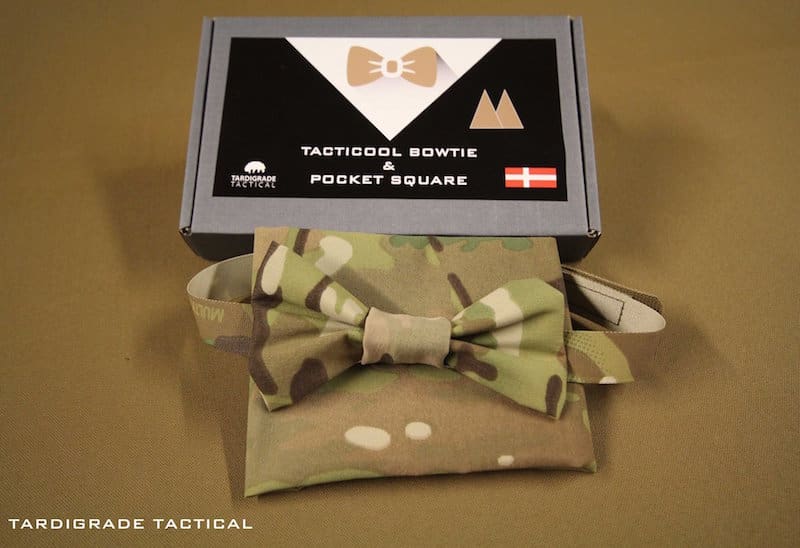
SPARTANAT – Do It With Style: MultiCam Bow Tie

Saturday, December 9th, 2017

Tardigrade Fliege 1

Danish, you have to melt on your tongue: Taktisk Butterfly og Lommetørklæde fra Tardigrade Tactical. This means “Tactical black bow tie and matching handkerchief from Tardigrade Tactical”. Great idea, so you can also send a small tactical signal during the opera visit in a tuxedo. Or in civilian professional life. Ideally you have to wear it in front of the Christmas tree. Extremely tacticool! HERE are black bow tie and handkerchief to have: inf-wear.dk/da/gaveideer-og-gavekort/3407-tardigrade-tactical-tacticool-bow-tie

TARDIGRADE TACTICAL im Internet: www.tardigradetactical.dk
INF WEAR im Internet: inf-wear.dk
SPARTANAT. www.spartanat.com

QinetiQ Emulates Drone Threat for Royal Canadian Navy

Sunday, December 3rd, 2017

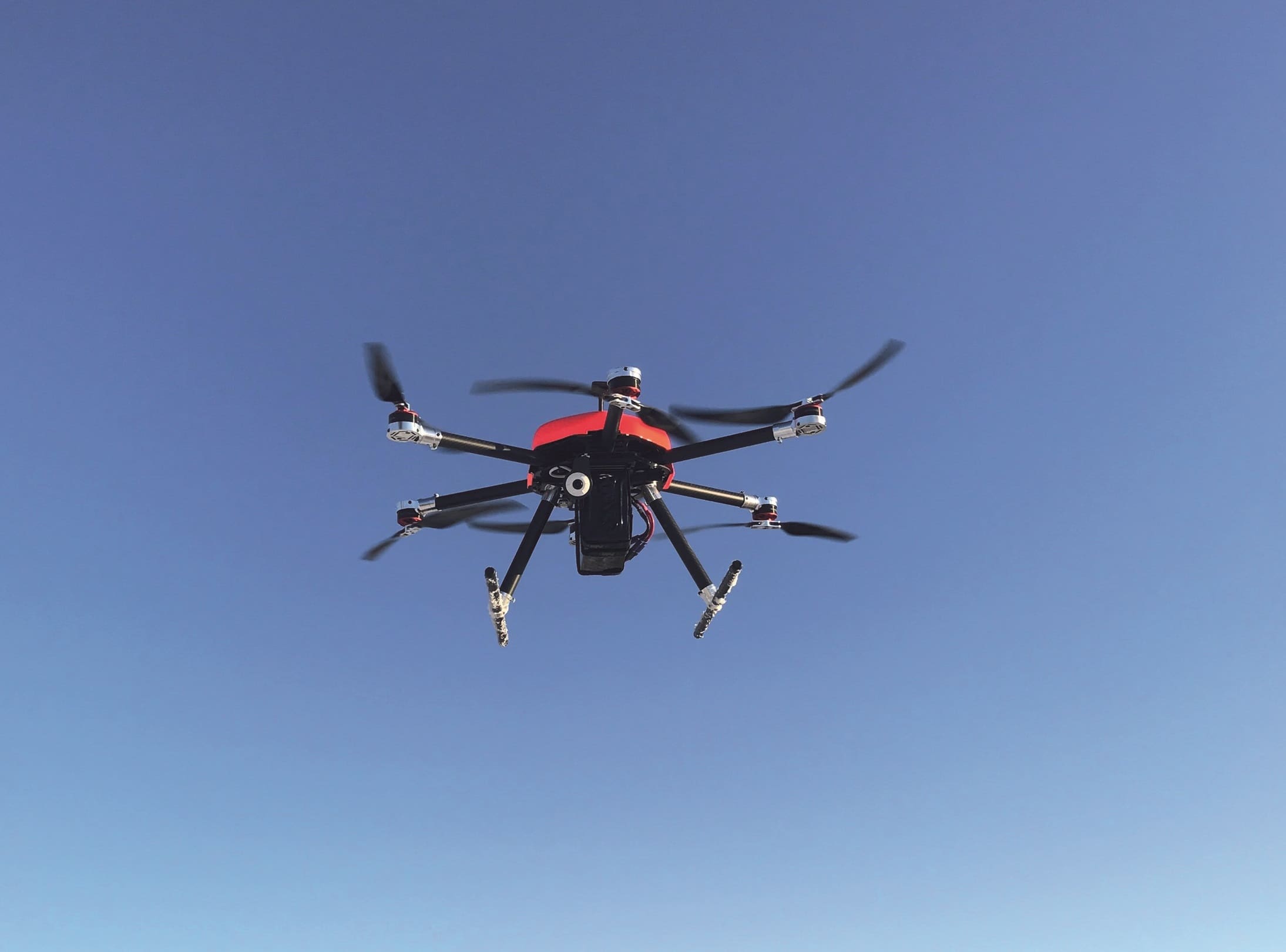
30 November 2017 – QinetiQ Target Systems (QTS) has introduced a new service to the Royal Canadian Navy (RCN) by emulating the threat posed to large naval vessels by small multi-rotor drones.

550102E7-CF69-4BFB-8463-23581B4E0C5D

The live demonstration was carried out in November 2017 from a Halifax-class frigate under the C$8.5M Unmanned Targets Repair, Overhaul and Engineering contract, awarded to QTS in 2015.

QTS flew its Snyper multi-rotor target alongside Lockheed Martin’s Indago quadcopter using QinetiQ’s Universal Target Control Station (UTCS), which facilitates the operation of multiple unmanned systems from a single command centre.

The RCN has operated fixed wing aerial targets and marine surface targets using QinetiQ’s UTCS for more than 20 years, but the introduction of rotary wing targets is a first for the service.

Peter Longstaff, Managing Director, QTS, said: “Commercially available technologies, like off-the-shelf drones, are becoming more advanced and more accessible to those who wish to use them to cause harm. QinetiQ simulates these new and emerging threats to help the armed forces understand how to protect their people and assets. This is part of our global strategy to modernise test and evaluation by introducing innovative and advanced capabilities that help nations maintain their advantage over potential adversaries. In Canada, we are committed to supporting the Department of National Defence in achieving its vision of being strong at home, secure in North America, and engaged in the world.”

Simon Nadeau, DNR-2 Unmanned Systems Section Head Commander, RCN, said: “The information and results obtained during the demonstration are vital for the RCN’s development of remotely piloted systems use at sea, and the evaluation of ships’ critical defence systems. We are very pleased with the support that QinetiQ Target Systems provided to us during this demonstration.”

The Snyper target is one of several QinetiQ technologies designed to help customers tackle threats from small unmanned aircraft, including the Obsidian detection system and the laser weapon currently in development by the Dragonfire consortium that will be capable of destroying drones mid-flight.

Mobile Weapon Turret Delivery

Thursday, November 30th, 2017

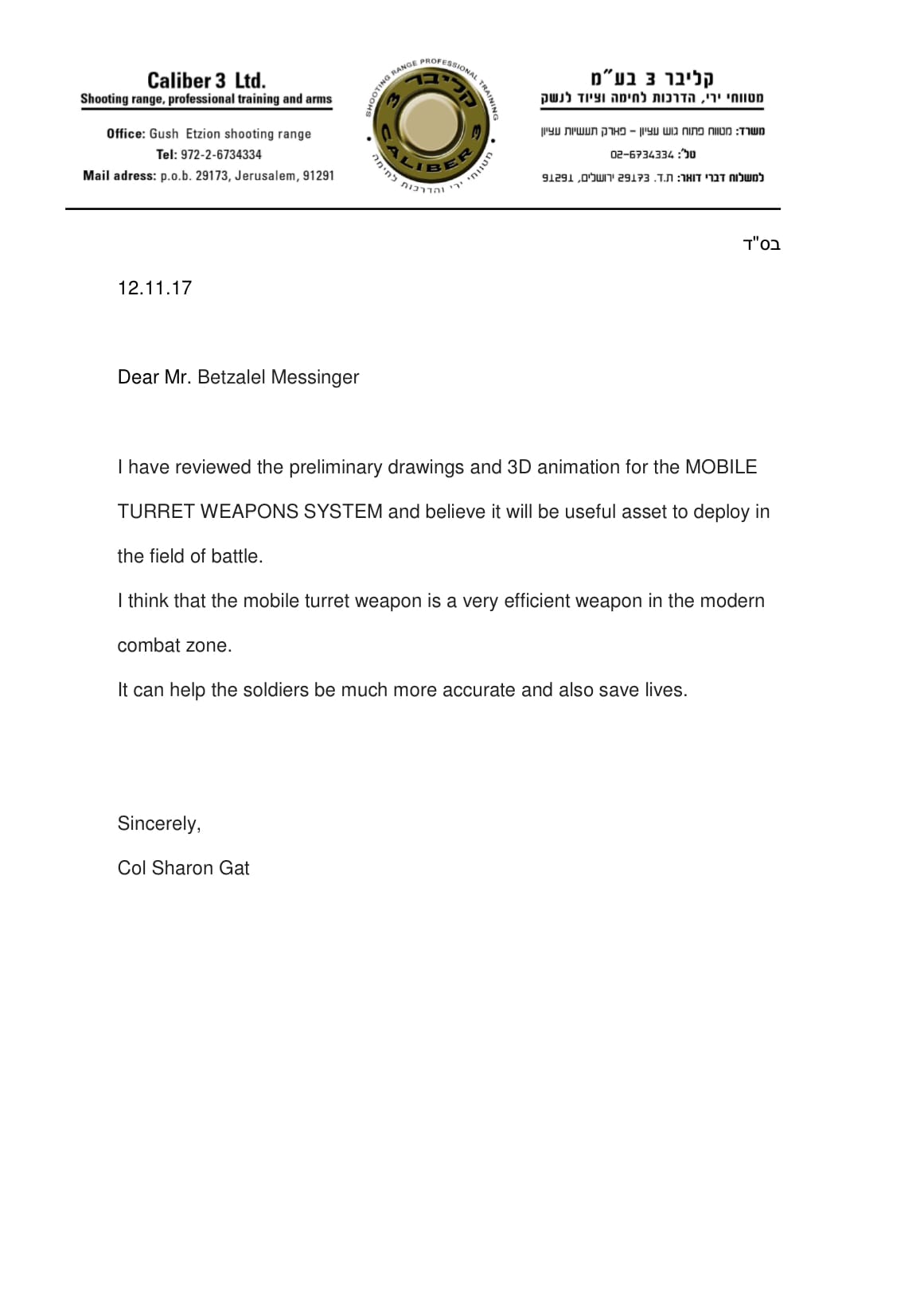
We have a unique invention to turn each soldier into an awesome manual or wireless firepower resource. It weighs 7 pounds and sets up in 20 seconds. No longer is the soldier exposed to direct enemy fire. The tables are turned. The soldier is out of harms way targeting and firing at will automatic or semiautomatic weapon. We have a letter of endorsement from Caliber 3 the premier counter terrorist training facility in Israel. The device can also be wireless operated and may alleviate the need for building walls at our domestic boarder as images are relayed to HQ for asset deployment.

28B5A8AE-2DE6-444D-87C7-736CCB9CDC06

www.israel-patents.com

All reply to samuelmessingerm@icloud.com

Milipol 17 – Hagor Industries

Wednesday, November 29th, 2017

Israel’s Hagor Industries displayed examples of their ballistic protective clothing during Milipol, integrating armor into the unlikeliest of garments.

img_0250.jpg

www.hagor.com

Supacat Exhibits at the NIDV Symposium and Exhibition in Rotterdam, 30 November 2017

Wednesday, November 29th, 2017

Supacat, the acclaimed UK designer and manufacturer of special forces vehicles, is exhibiting at the Netherlands Industries for Defence and Security (NIDV) Symposium and Exhibition on Thursday 30 November 2017. Having recently been awarded the Queen’s Award for Enterprise (International Trade, for Outstanding Short-Term Growth), the NIDV event forms part of a global marketing effort aimed to capitalise on recent export successes.

F66E2421-2A82-4EA9-ADEE-A3AB9BA7DB0A

Supacat will be exhibiting their Light Reconnaissance Vehicle 400 (LRV 400) at the event. The LRV 400 provides a highly versatile tactical capability for special forces; it can be transported centrally inside a CH-47 Chinook fully equipped and loaded, making it immediately and rapidly deployable. Also, it has the unique feature of being convertible from 4×4 to 6×6 to provide a flexible alternative configuration that increases payload, capacity and range to meet different operational requirements. Supacat intends to offer the LRV into a number of vehicle procurement programmes in the region and the NIDV show is seen as an ideal platform to showcase the capabilities on offer. Supacat has teamed with Rheinmetall MAN Military Vehicles Nederland B.V. to offer the LRV 400 into upcoming procurement programmes in the Netherlands. If an order is received, then RMMV will assemble Supacat vehicles in-country.

With over 1000 specialist, battle-proven vehicles in service across the globe, Supacat designed the LRV400 to fill the gap in the market for an agile off-road vehicle sized between its HMT 400 Series (GVW 7600kg) and quad bikes. It carries a crew of 3 or 4 supported by an operational payload of 1700kg with a GVW under 5000kg. It can achieve high speeds on or off road and can operate up to 800km from the point of insertion, offering special forces a true long-range capability.

Phil Applegarth, Head of Supacat said “we have been very successful in winning a number of major export orders for our special forces vehicles in recent years and we would like to capitalise on that success by offering our products more widely”. He added “there are a number of European procurement programmes emerging for vehicles in our capability space and we feel sure our battle-proven products will be highly attractive to the users. Supacat vehicles have already been sought out and purchased by some of the world’s finest units and we would like to add more nation’s armed forces to that list”.

www.supacat.com

Milipol 17 – Good Guys In Bad Lands

Tuesday, November 28th, 2017

At last week’s Milipol Exposition in Paris, I met the founders of the Italy-based international military/LE chaity, Good Guys in Bad Lands.

8AAA8ACB-8F4A-40D4-B3BC-82EF4B10FD5B

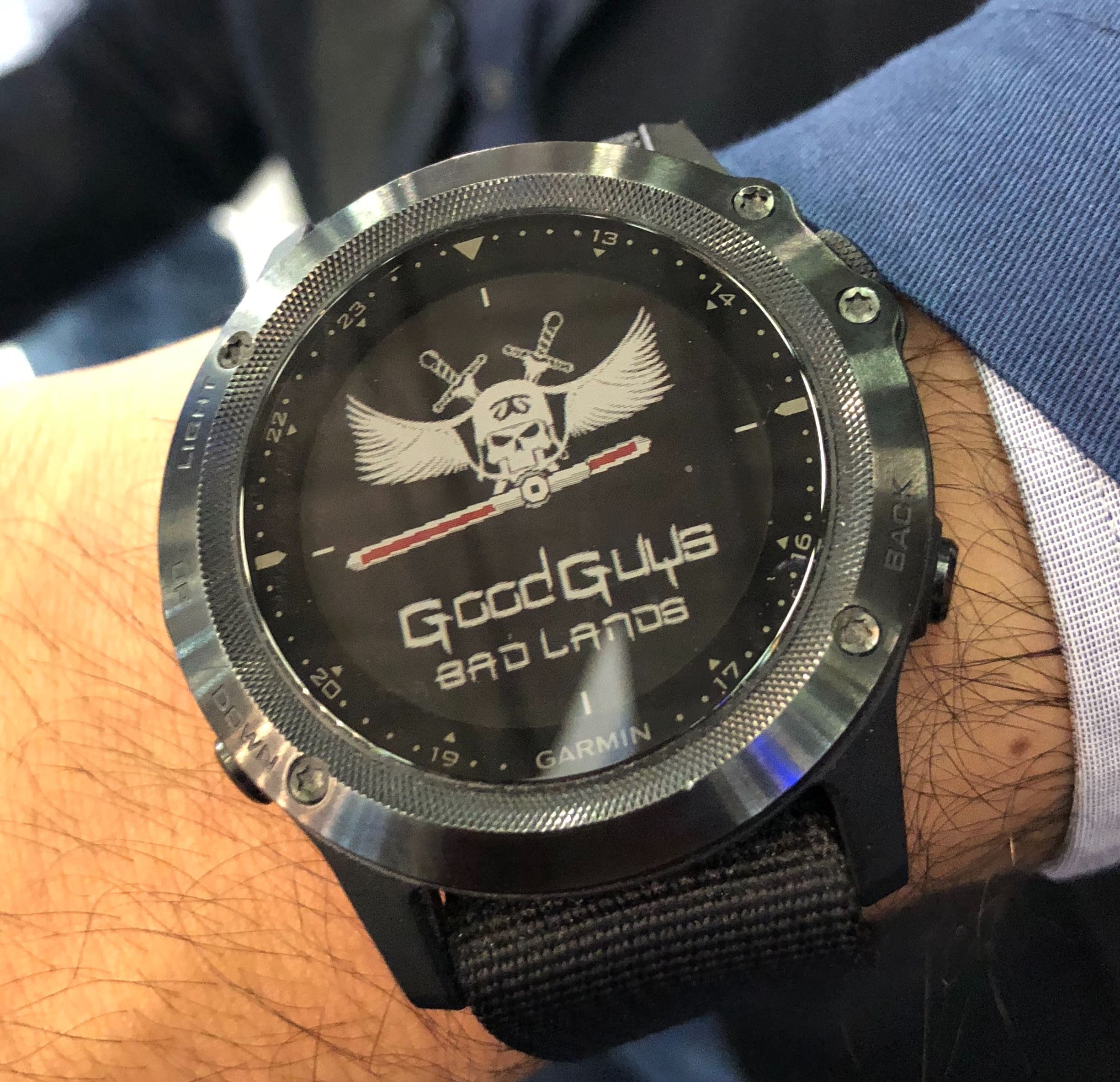
Good Guys in Bad Lands was born in 2012 on Facebook by an Afghanistan Veteran as a page to commemorate Fallen Soldiers worldwide. These days they are a charity, raising funds via auctions and the sale of memorabilia to train local agencies, provide support to the survivors of fallen service and LE members, and support those with service related PTSD. They have several industry partners such as Garmin, which is offering a special version of their tactix Bravo.

959451CA-EC64-47C0-BF6B-E482D05E7A82

To learn more, visit goodguysinbadlands.com.

“GSG 9 The special operations unit of the Federal Police: Germany’s spearhead in the fight against terrorism”

Sunday, November 26th, 2017

My friend Dr Jan-Phillipp Weisswange has teamed up with Sören Sünkler to present the new book, “GSG 9. The special operations unit of the Federal Police – Germany’s spearhead in the fight against terrorism”, available from k-isom.com.

img_0425.jpg

The photographs are excellent and the book includes English text, so don’t shy away because of language concerns.
A384CC69-2625-4665-A653-2DBBEE4B8055

He offered me this description of the book:

Producing an illustrated volume aimed at introducing today’s GSG 9 to a wider public is undoubtedly among the highpoints in any specialized journalist’s career. It has been an honour and a pleasure to turn this project into reality. On 16th October 2017, Sören Sünkler (my publisher, producer and co-author) and me have had the great honour to presenting the very first copy of our book “GSG 9. The special operations unit of the Federal Police – Germany’s spearhead in the fight against terrorism” to the unit’s commander, Colonel Jerome Fuchs. Now the book is available on the market finally!

The core task of GSG 9 is the fight against terrorism and other forms of serious and violent crime. In performing this mission, protecting human lives has always been GSG 9’s utmost priority.
Ever since its foundation in 1972, this has been its raison d’être – around the clock and around the world.

Throughout its 45-year history, continuity and change have been GSG 9’s constant companions. Founded on 26 September 1972 as “Grenzschutzgruppe 9”, or Border Guard Group 9, of the former Bundesgrenzschutz (BGS), or Federal Border Guard, it is one of the world’s oldest police special operations units. Following the transformation and renaming of the BGS to the Bundespolizei, or Federal Police, in July 2005, GSG 9 was the only unit to retain its traditional nomenclature. Since then, the special operations unit has been officially known as “GSG 9 der Bundespolizei”.

Evolving “modi operandi” and the emergence of new threats as well as the ever-changing global political situation have confronted the GSG 9 with fresh challenges right from the start – challenges which GSG 9 has invariably met with matchless resolve.

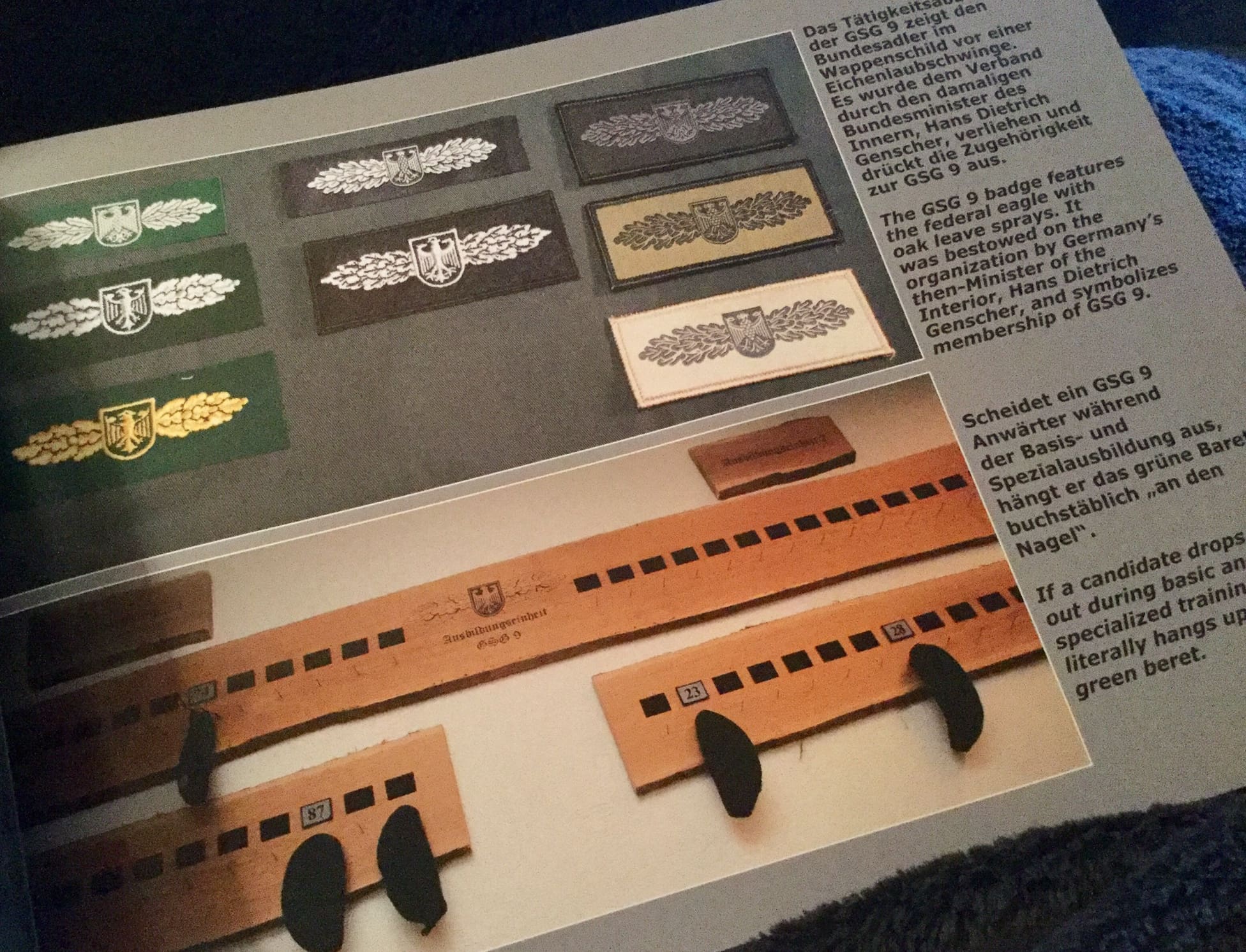
Featuring 208 pages, the lavishly illustrated book offers a unique look at today’s GSG 9, the ultramodern special operations unit of the German Federal Police, and its 45-year history. Short texts in German as well as in English language provide further information about GSG 9’s tasks, organization, selection and training, operational units, special skills, missions, national and multinational cooperation, weapons and equipment as well as history.

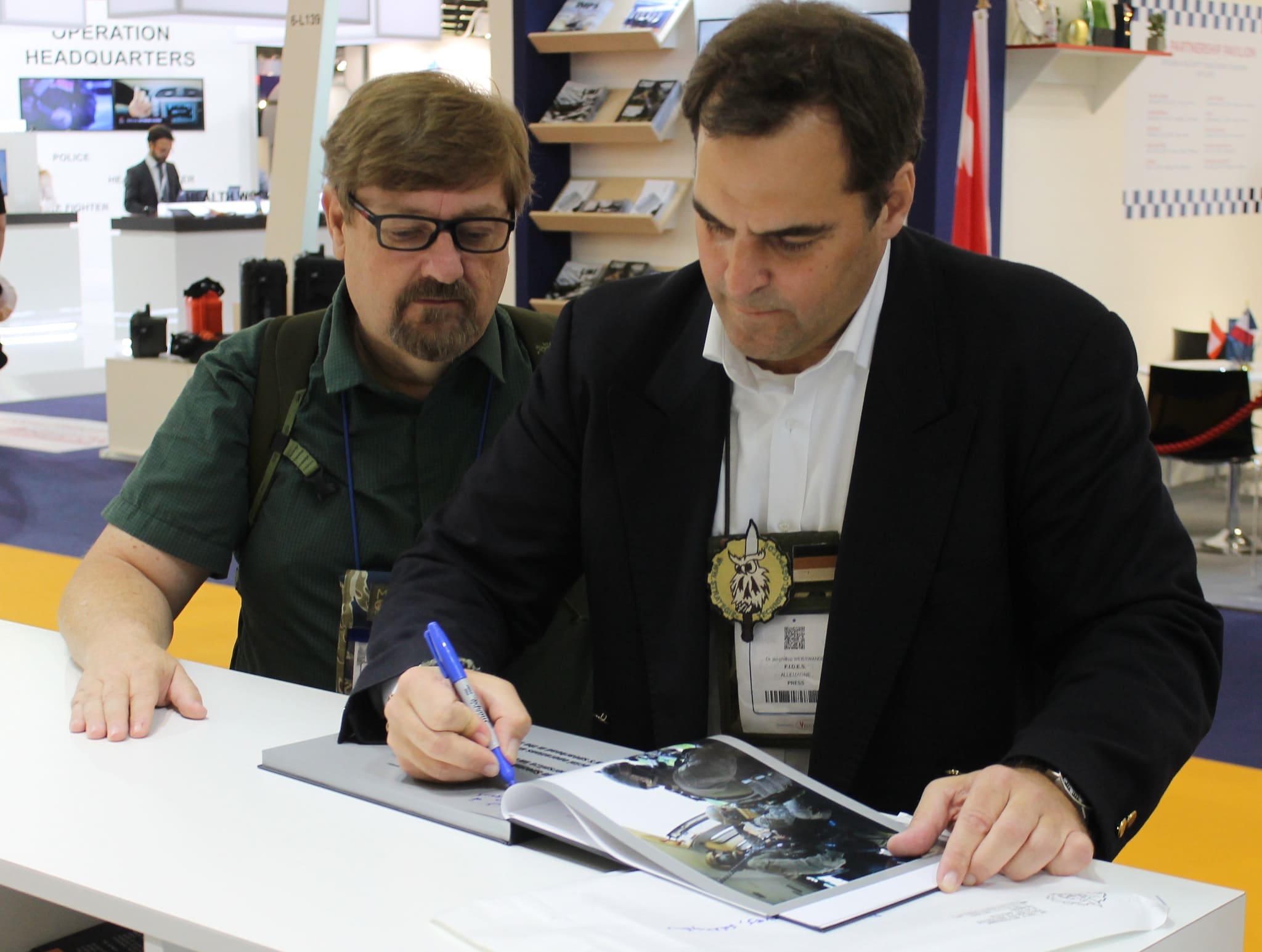
I was fortunate to meet with Jan-Phillipp at Milipol where he presented me with a copy.
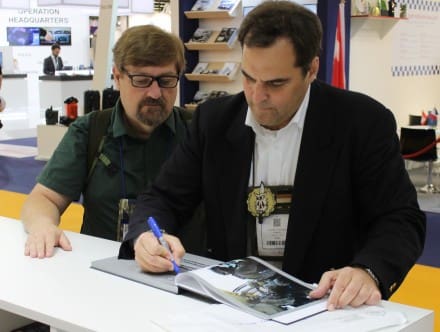
CC30AF21-07E5-4128-AD55-101114ABB741

The first edition of the book is strictly limited to 2.000 copies for the public book trade. When ordering (bestellung@k-isom.com), a number between 1001 and 3000 can be chosen and will be delivered if still available. I already have number 1776.

Jan-Phillipp Weisswange and Sören Sünkler: GSG 9. The special operations unit of the Federal Police – Germany’s spearhead in the fight against terrorism. Nuremberg/Germany 1/2017: S.Ka-Verlag. ISBN: 978-3-9815795-4-3. 208 pages, Hardcover. Price: 49,00 € plus shipping. Contact: bestellung@k-isom.com


QinetiQ Launches UK ‘Centre of Excellence’ For Laser Technology

Sunday, November 26th, 2017

24 November 2017 – QinetiQ has opened a new ‘centre of excellence’ for the development and testing of advanced laser technology at its headquarters in Farnborough, UK.

The new facility, named Dragonworks, will serve as a test bed for all technologies associated with high-energy lasers for military or commercial applications. It includes a clean-room to enable work with sensitive optical equipment to be conducted away from contaminants, and the UK’s only Reflective Hazard Assessment Tool (RHAT), designed to examine how laser energy is reflected from different surfaces. Further additions to the building over the coming months will create an environment in which customers can conduct full-scale testing of high-energy lasers.


Steve Wadey, QinetiQ CEO, said: “Dragonworks introduces a brand new sovereign capability, which will significantly enhance the UK’s ability to operate and characterise high energy lasers. It will help our customers to understand the opportunities and challenges associated with this disruptive technology, informing their critical strategic and tactical decisions. We are investing in this asset as part of our strategy to modernise the UK’s test and evaluation services, which will ensure our customers can keep pace with rapid technological advances and maintain their competitive edge.”

The first project to be undertaken at Dragonworks will be the assembly and testing of the laser directed energy weapon (LDEW) currently in development by the UK’s Dragonfire consortium, led by MBDA. Components will arrive in early 2018, when QinetiQ will begin building the weapon’s laser source in the purpose-built clean room. Over the following months, the laser source will undergo a process of evaluation and adjustment before being integrated with Leonardo’s beam director. The project will culminate in operation at full-power under test conditions inside the facility in summer 2018, before it is transported to MOD Shoeburyness for long-range outdoor trials later in the year. Data collected using the RHAT will inform the safety case for these and future trials, ensuring the reflectivity of targets is fully understood and any risk mitigated accordingly.

Peter Cooper, the Project Technical Authority in Dstl, which manages the Dragonfire contract on behalf of the UK MOD, said: “This facility is a key step in delivering the Dragonfire project and reflects the continuing UK MOD investment, supported and enabled by industry funding, amounting to tens of millions of pounds in UK industrial skills and capabilities and underpinning UK prosperity.”

Dragonworks and associated projects currently support 27 full-time jobs at QinetiQ, with additional expertise provided by over 50 of the company’s scientists and engineers. The Dragonfire programme contributes millions of pounds to the UK supply chain, which includes a number of innovative small and medium enterprises.

www.qinetiq.com