Pirata Series from OTB Boots - Coming March 2026!

Archive for the ‘SOF’ Category

SOFWERX – Innovation Foundry Event

Monday, March 7th, 2022

SOFWERX, in collaboration with USSOCOM’s Directorate of Science and Technology (S&T), will host the tenth Innovation Foundry (IF10) Event 03-05 May 2022. S&T Futures seeks to bring together U.S. and International Special Operations Forces (SOF), Industry, Academia, Government and futurists in an exploration design thinking facilitated event to assist USSOCOM in decomposing future scenarios and missions to develop concepts for future SOF operator skillsets and traits in a 2040 timeframe. The theme of IF10 is “Future SOF Teams: Diversity of Skillsets and Traits.”

IF10 participants will explore the impact of future missions, operating environments, and social and technological changes to SOF Operators, the people who are the core of the SOF enterprise.

To ground the discussion, IF10 participants will use a fictional mission scenario that reflects the complex interplays of social, technological, political, and cultural factors as they might play out in 2040 to explore the human dimensions of the challenge, the skillsets and traits needed for SOF operators in 2040 and beyond.

U.S. Citizens Only

Submit NLT 27 March 11:59 PM ET. Visit events.sofwerx.org/if10 for details.

AFSOC’s 137th CTF Teaches Land Nav Skills During MST Training

Thursday, March 3rd, 2022

WILL ROGERS AIR NATIONAL GUARD BASE, Okla. —  

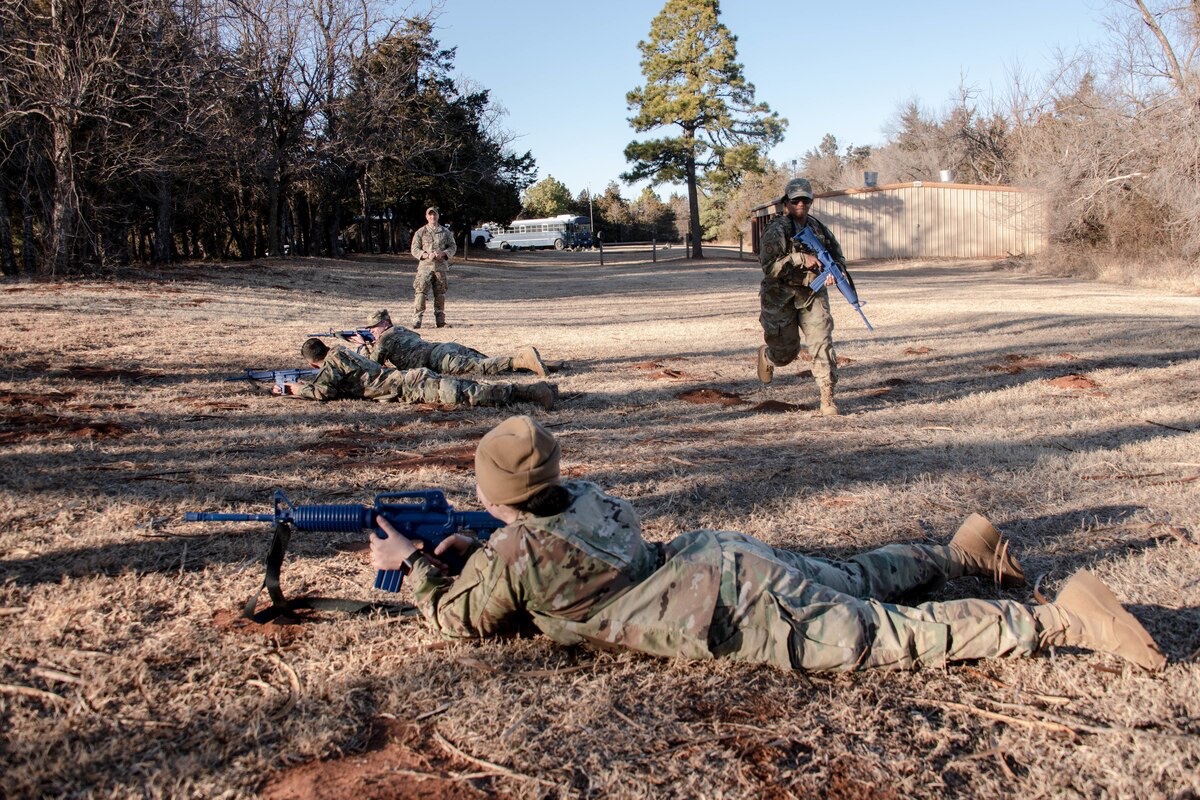
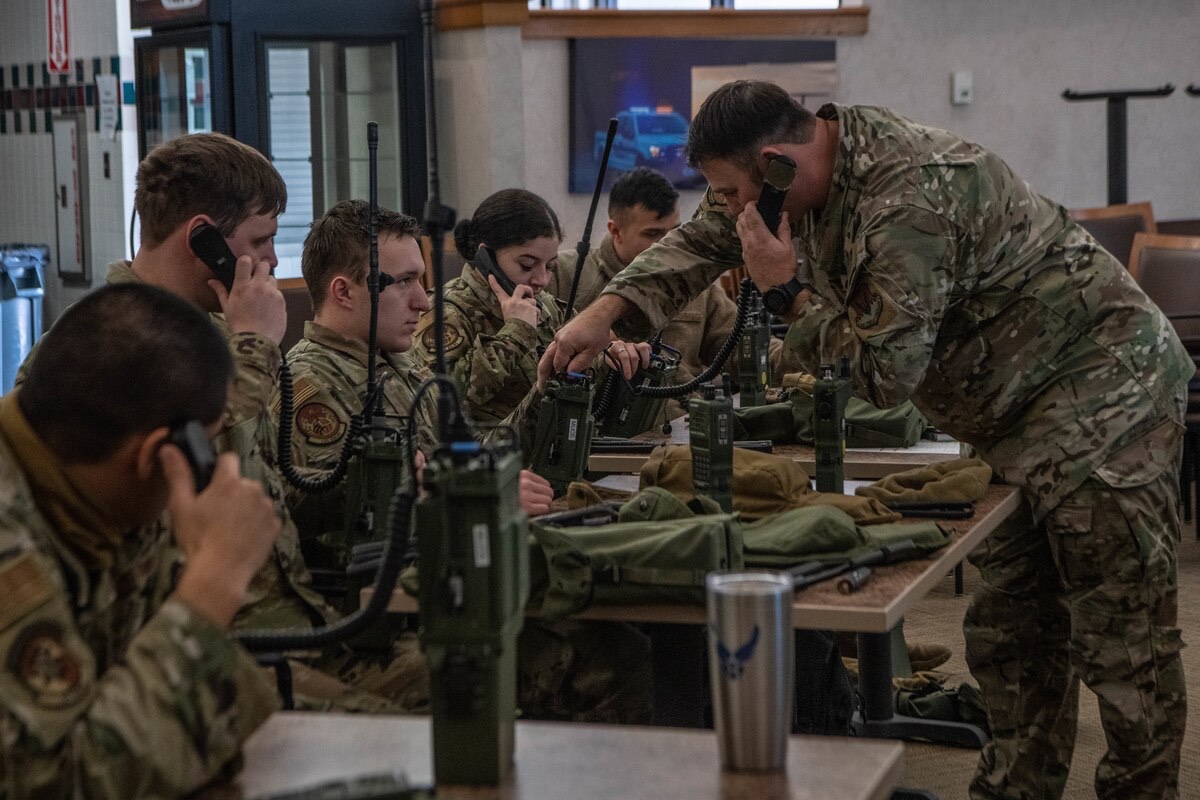
The 137th Combat Training Flight (CTF) taught 33 students land navigation, radio communication and radio programming skills during Mission Sustainment Team (MST) training held at Will Rogers Air National Guard Base, Oklahoma City, Feb. 7-10, 2022.

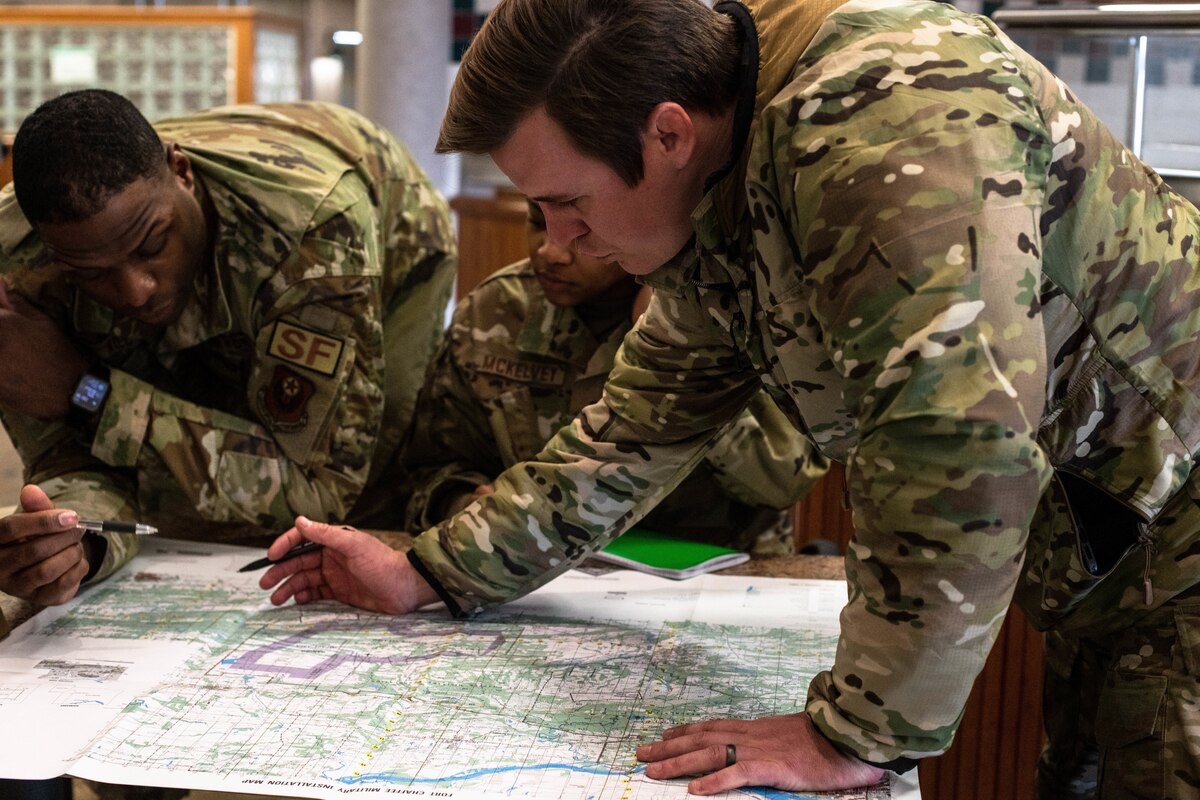
The students, from squadrons around the base, were divided into two teams and learned from four 137th CTF instructors throughout the week. The MST members worked with specialized equipment and learned how to read maps, find a grid coordinate, and use compasses to navigate over terrain.

“With this training we are taking a skill set we have built specifically for joint terminal attack controller qualification and are transferring that to the rest of the force,” said Maj. Jeffrey Hansen, 137th CTF director of operations. “Using our instructors’ teaching experience means we are more effectively tailoring the classes to the students, who range from tactical backgrounds like security forces members to technical backgrounds like civil engineers.”

Learning skills outside of regular training will ensure long-term mission sustainment in austere locations, making Airmen more capable to operate in diverse deployed environments. 

“It was good going back to basics as far as land navigation, moving as a team with a weapon and pulling security,” said Tech. Sgt. Justin Davis, 137th CTF joint terminal attack controller (JTAC) qualification course manager. “These skills — for our Air Force specialty — are some of the first we learn because they are how we get to work. It was interesting finding the cutoff of what we needed to teach these students to help them understand basic land navigation and radio operation without getting into the weeds of the specific skills we instruct that help a JTAC drop bombs.”

One day of training consisted of land navigation skill development in the field. Instructors set up points and gave students a grid location. Students then plotted a trail to find and report those points using maps, compasses and protractors. Once they reported their first checkpoint, the Airmen were given the location for the next one. 

“All of the skills we learned were brand new to me, so it was difficult to learn it all in the span of a week,” said Senior Airman Andrea Kuzilik, a services specialist with the 137th Special Operations Force Support Squadron. “The instructors were great, and super hands-on. It definitely got better the more we ran through it, and the field day really helped put everything together.” 

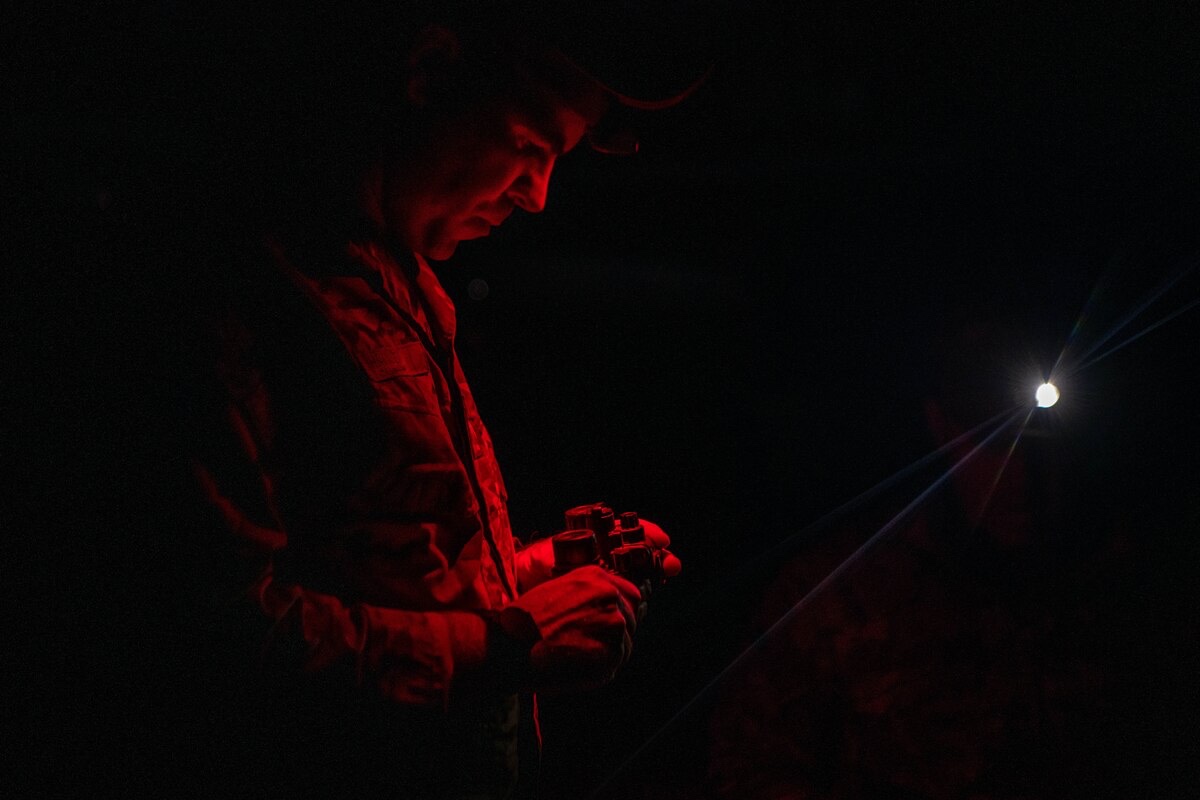
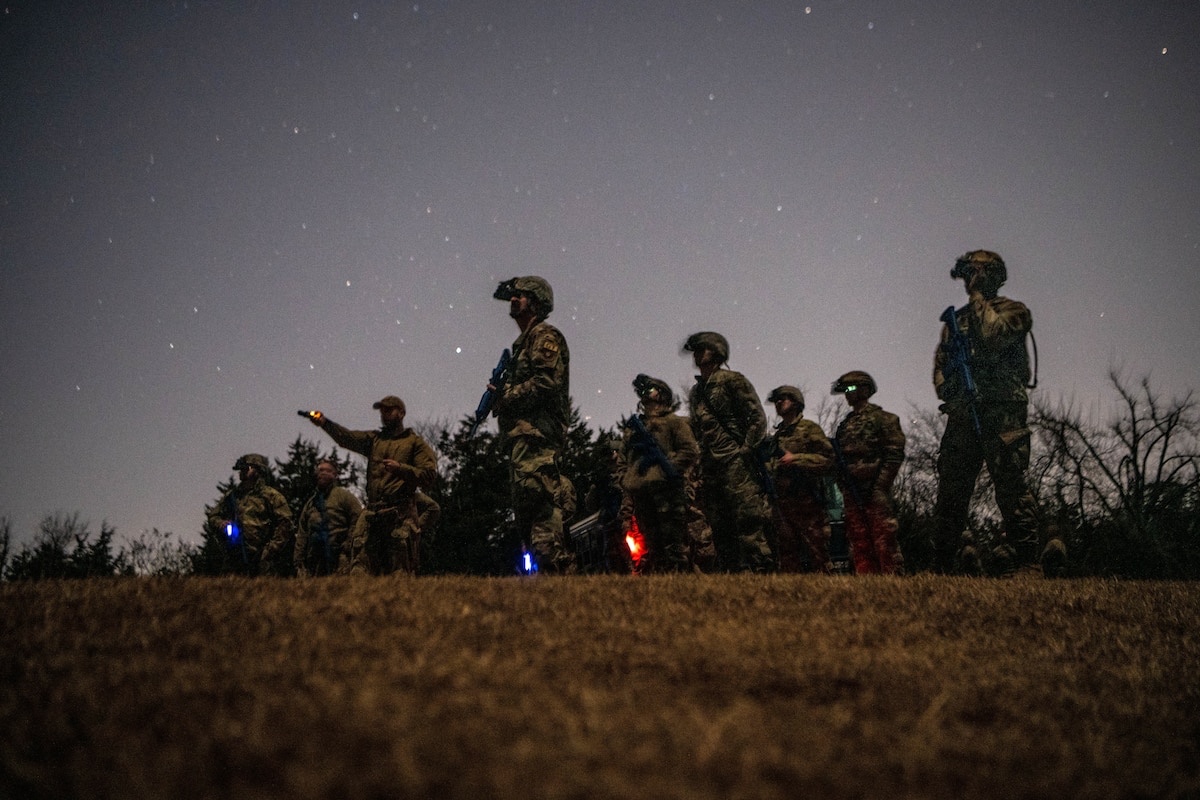
This exercise tested students’ radio programming and communication skills in addition to navigation. Students also learned how to move in a formation, react as a team to a direct contact with an adversary, and use night vision goggles to move in the dark and drive a Humvee.

“It was good to see the different Air Force specialties come together for a common purpose during the training,” said Davis. “I think we as instructors are also excited to improve and streamline the course with each training iteration, especially because we saw a successful end result with this initial class using these skills in a practical setting versus a classroom setting.”

By TSgt Brigette Waltermire, 137th Special Operations Wing

10th SFG(A) Invites Warriors Heart to Discuss Matters Held Close to an Operator’s Chest

Wednesday, February 23rd, 2022

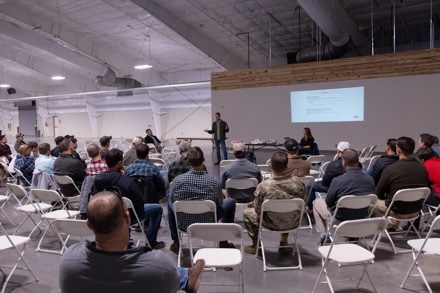
COLORADO SPRINGS, Colo. – 10th Special Forces Group (Airborne) invited speakers from Warriors Heart to speak candidly about the effects of post-traumatic stress disorder and traumatic brain injury (TBI) at the Norris Penrose Event Center Dec. 9, 2021.
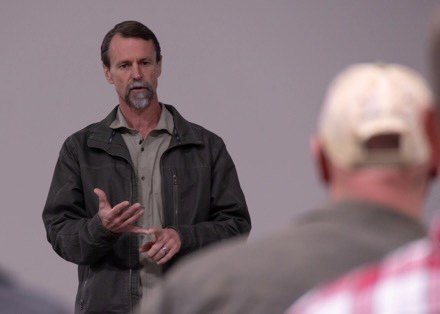
Warriors Heart is a treatment center in Bandera, Texas, which provides inpatient care to active-duty service members, veterans and first responders for chemical dependency, alcohol abuse and psychological disorders related to PTSD or mild TBI.

The event was put on by Trojan Legacy—a 10th SFG(A) program that promotes resiliency, recovery and respect within the unit—to help shed light on what undiagnosed PTSD and TBI can look like and lead afflicted Soldiers to medical treatment.

“I almost killed myself,” said Tom Spooner, Warriors Heart co-founder and retired Delta Force Operator. “‘How do I get this noise to stop?’ I was getting lost all the time; I wouldn’t know where I was when I was driving down the road. I just kept going…I had damage to the decision-making part of my brain that I didn’t know of.”

In 2006, Spooner experienced his third mass-casualty event and suffered a traumatic brain injury from an exploded mortar round while deployed which ultimately resulted in an incident where he used the military decision making process (MDMP) to plan his suicide.
“What’s going to stop this noise?,” he continued. “I started going through MDMP on utilizing my Glock and putting a bullet in my brain to stop the noise as a valid course of action. I was doing constraints, limitations, other courses of action, second and third order effects.”

Throughout Spooner’s 21 years of service, he volunteered for Airborne duty, Special Forces and Delta Force.

“Volunteers can’t complain,” he said. “The [Special Forces] selection process guarantees a lot of things. Up front, selection guarantees I will never quit…and I have never asked for help. The selection process guarantees I will not ask for help, and I only do it when I’m off the road.”

Nevertheless, Spooner had a buddy whom he confided in about what was going on in his mind as he veered off course.

“He was my everything guy,” Spooner said. “I would always tell him the truth. He stayed on me, stayed on me and stayed on me. He told me to get help. I had undiagnosed TBI, unprocessed trauma, PTSD and grief going on.”

Spooner finally sought treatment and received cognitive, psychological and vestibular therapy in conjunction with medication. Through medical testing, Spooner found that he was operating at a processing speed of 50 percent and had verbal memory of 50 percent.

“How could I honor the guys who sacrificed their lives,” he said. “Me wrecking my family and my military career is dishonoring them.”
Along with a keen sense of honor, Spooner has a keen sense of regret which, in fact, prompted him to volunteer for Delta Force assessment and selection after serving with 7th Special Forces Group (Airborne) for six years.

“There are things in life worse than death, and that’s regret,” he said. “Not having those hard conversations with people I care about. I could’ve said something but I didn’t because I thought it’d jam up my relationship. I don’t know if it would’ve changed the circumstances…but it’s one of my greatest regrets in life.”

Spooner’s own experiences acted as a looking glass as to how TBI and PTSD can manifest.

“If you have a buddy and you’re seeing these same things going on, you can talk to them and refer them to treatment,” said Sgt. Maj. Doug Lane, 10th SFG(A) Trojan Legacy senior enlisted adviser. “We want to create that peer-to-peer network and have candid conversations with our friends to ensure that if there are these issues, we steer them to the right resources.”

Story by SSGAnthony Bryant, 10th Special Forces Group (Airborne)

SOFWERX – Personnel Recovery Prototype Virtual Assessment Event

Friday, February 18th, 2022

SOFWERX, in collaboration with SOF Acquisition, Technology, and Logistics (SOF AT&L) Special Reconnaissance (PEO-SR) Program Management Technical Collection and Communications (PM TCC), will host a Virtual Assessment Event (AE) 05-07 April 2022 to identify technologies and techniques for a Personnel Recovery (PR) device for miniaturized and wearable capabilities.


The ideal prototype PR device should be able to function standalone without any local infrastructure (i.e.: no WIFI/Mesh networks/Cellular architectures, etc.), though there could be a version that relies on local infrastructure to provide alternate transport means.

Submit NLT 11 March 2022 11:59 PM ET

Visit events.sofwerx.org/tcc for full details.

USSOCOM Buys Additional Special Operations Forces Tactical Communications Next Generation Manpack, AN/PRC-167 Radios

Wednesday, February 16th, 2022

The Department of Defense recently announced:

L3Harris Technologies Inc., Rochester, New York, received a modification (P00019) in the amount of $297,200,000 on indefinite-delivery/indefinite-quantity contract H92222-17-D-0021 to allow for the continued purchase of the Special Operations Forces Tactical Communications Next Generation Manpack, AN/PRC 167 radios and ancillary equipment. This modification increases the maximum contract ceiling value from $255,000,000, to $552,200,000. No funds are being obligated via this modification. The majority of the work will be performed in Rochester, New York. This contract modification was awarded through other than full and open competition under 10 U.S. Code 2304(c)(1). U.S. Special Operations Command Headquarters, Tampa, Florida, is the contracting activity.

24 SOW DET 1 Conducts First Readiness Exercise Under AFSOC

Friday, February 11th, 2022

MACDILL AIR FORCE BASE, Florida. —  

MACDILL AIR FORCE BASE, Florida. – Airmen from the 24th Special Operations Wing, Detachment 1, participated in their first joint deployment exercise since transitioning from United States Special Operations Command to Air Force Special Operations Command Jan. 31 – Feb. 1, 2022, at MacDill Air Force Base, Florida.

The 24th SOW, Det. 1 conducted the exercise to validate their ability to provide short-notice civil engineering, force protection and logistics support toward a wide variety of special operation missions across the globe.

During the exercise, Airmen secured their cargo, prepared it for loading, and ensured it was ready for safety inspection.

“This is our first deployment exercise under AFSOC,” said Tech. Sgt. Ismael Hayes, the noncommissioned officer in charge of Air Transportation for the 24th SOW, Det. 1. “We wanted to get an understanding of some of our new roles and how we would proceed with our missions from here on out.”

Hayes added that although the transition from SOCOM to AFSOC did not entirely change their mission, it would actually help them get it done faster.

“We’re all about time,” said Hayes, “Now that we’re working with AFSOC, we’re able to work seamlessly with other units across the 6th Air Refueling Wing.”

Alongside the 24th SOW, Det. 1, were Airmen from the 6th Logistics Readiness Squadron, conducting safety inspections and providing cargo loading support throughout the exercise.

“Working with the 24th SOW was definitely interesting,” said Staff Sgt. Nasya Didomenico, a passenger terminal representative with the 6th LRS. “We ensured that all the cargo was prepared for loading, conducted the safety inspections to prevent any hazardous situations, and exchanged feedback with the Airmen conducting the exercise.”

Didomenico added that the 24th SOW Airmen were extremely efficient during the exercise and the 6th LRS is looking forward to a higher operations tempo now that the 24 SOW, Det. 1 is under AFSOC.

“We definitely still have the same mentality when it comes to doing our job,” said Hayes. “However, we’re very much looking forward to what the future has in-store for us being able to work under AFSOC and with the support of the 6th ARW.”

By Airman 1st Class Hiram Martinez

6 Air Refueling Wing Public Affairs

SOFWERX – Semi-autonomous Precision Robotic Application Industry Demonstration Day

Tuesday, February 8th, 2022

SOFWERX, in collaboration with USSOCOM J5 (Strategy, Plans, and Policy), the joint Accelerator for Innovative Minds (AIM), and US Army Combat Capabilities Development Command (DEVCOM) Chemical Biological Center (CBC), will host an Industry Demonstration Day 29-30 March 2022 to explore Commercial Off-The-Shelf (COTS) and Independent Research and Development (IR&D) technology applications with the potential to inform the concept of a semi-autonomous robotic spraying capability.

This effort will also include a discussion of related attributes and known limitations. Features to be demonstrated include the ability to spray a layer of paint from predesignated point to point, to map the area to be painted, painting of elevated surfaces, painting equal to or faster than humans, with a user friendly remote work station, and the capability to store mission information. Topics to be discussed include future challenges and human factors engineering.

RSVP NLT 01 March 2022 11:59 PM ET to participate.

Get full details at events.sofwerx.org/spra.

First Marine Selected As SOCCENT’s Senior Enlisted Leader

Tuesday, February 8th, 2022

HOMESTEAD AIR RESERVE BASE, Fla. —

Master Gunnery Sgt. Andrew D. McCurry is the first Marine to be selected as the command senior enlisted leader of U.S. Special Operations Command Central and the second Marine to be selected as the senior enlisted leader for a Theater Special Operations Command. Master Gunnery Sgt. Jerome N. Root served as the first Marine CSEL for U.S. Special Operations Command South.

“Being selected to serve in a nominative CSEL position was something I strived to achieve,” said McCurry. “To serve as the first Marine to represent the Marine Corps as the command senior enlisted leader at Special Operations Command Central is an honor, and I feel very humbled to have this magnificent opportunity.”

A senior enlisted leader acts as an advisor to the commanding officer; as the unit’s senior most noncommissioned officer, they serve as the link between the commander and the enlisted service members under their charge. As the CSEL, McCurry will be able to advise the commanding officer on all matters regarding special operations that include issues regarding welfare, readiness, morale, proper utilization of forces and progress within the USSOCOM enterprise.

“The most effective way I can give back to the Marine Corps is through the illumination of my experiences and exposures within the SOF enterprise while simultaneous looking for opportunities to enhance service and SOF integration,” said McCurry. “Given my past and current position, I have the chance to share SOF ideas and perspectives while simultaneously bringing the Marine Corps’ assets viewpoint to certain situations.”

Being selected as the CSEL for a USSOCOM command is among the highest positions an enlisted Marine Raider can obtain external to the Marine Forces Special Operations Command due to the limited number of positions available within USSOCOM. To be considered for selection as a CSEL for USSOCOM, you must first serve a successful tour as the senior enlisted leader in an O-6 level command, graduate from the Joint Special Operations University Summit and hold a Special Operations Forces identification code or Military Occupational Specialty.

 “To serve as the first Marine to represent the Marine Corps as the command senior enlisted leader at Special Operations Command Central is an honor…”

-!Master Gunnery Sgt. Andrew D. McCurry, CSEL of SOCCENT

“SOF, by its nature, is inherently joint,” said McCurry. “A task force normally comprises all branches of services, from other SOF organizations, conventional forces, and sometimes allied partners. What makes Marine Raiders unique to the SOF enterprise is our Marine ethos and understanding. Although some might consider that cliché, it is no secret that Marines are known for their attention to detail and dedication to their mission.”

Prior to being selected as CSEL, McCurry was assigned to 3rd Battalion, 6th Marine Regiment in 2002 after completing embassy duty. In June 2006, he was screened and selected for duty at MARSOC. McCurry has held billets such as the senior enlisted advisor of Marine Raider Support Group and the command senior enlisted leader for the Special Operations Joint Task Force – Operation Inherent Resolve.

“Every Marine Raider came from somewhere in the Marine Corps,” he continued. “That means he/she must have proven themselves as a highly competent NCO or officer before even attending selection. Consequently, we get seasoned well-rounded Marines before they even attend SOF-specific training. This is the core foundation of a Marine Raider, which makes us unique.”

McCurry has deployed all over the world including deployments in support of Operation Enduring Freedom, Operation Iraqi Freedom and Operation Inherent Resolve. McCurry also holds a Bachelor of Science in Organizational Leadership and Master of Science in Strategic Leadership with honors from the University of Charleston.

“Being a CSEL as a Marine Raider is a mixture of science and art,” McCurry concluded. “Our experiences and culture allow us to apply both [science and art] effectively and appropriately. Thus, we provide the commander the opportunity to capitalize on our Marine background while still gaining years of SOF experience.”

Sgt Jesula Jeanlouis, Marine Corps Forces Special Operations Command