Aquaterro

F-35C Brings Advanced Strike Capabilities to Jungle Warfare Exercise

May 31st, 2022

SAN DIEGO – As 3rd Marine Division recently commenced Jungle Warfare Exercise 22 (JWX 22), a large-scale, joint force exercise, Marine Wing Fighter Attack Squadron (VMFA) 314 integrated the capabilities of the F-35C Lightning II. VMFA-314 supported ground operations from their position deployed onboard the Nimitz-class aircraft carrier USS Abraham Lincoln (CVN-72), displaying their ability to deliver long-range strike capabilities and close air support from an aircraft carrier.

VMFA-314, the first Marine squadron to deploy the F-35C, continued to demonstrate its proficiencies during JWX 22 by conducting simulated offensive and defensive air support, as well as air-to-ground support training missions alongside the Marines of 1st Marine Air Wing, Japanese Air Self-Defense Forces and the Abraham Lincoln Carrier Strike Group in support of Expeditionary Advance Base Operations (EABO).

“The opportunity to work alongside Navy and Japanese Air Self-Defense Forces allows us to demonstrate our forward presence and to showcase our readiness to support real world operations,” said Lt. Col. Brendan M. Walsh, VMFA-314 Commanding Officer. “Leveraging the Marine Corps’ decade of experience with the F-35B, we have spent the last two years working with the Navy to ensure the successful integration of the F-35C into the Carrier Air Wing and are now able to provide improved battlespace awareness and unmatched lethality.”

The integration of VMFA-314 and the F-35C into the Carrier Air Wing enables U.S. naval forces the ability to launch and recover fifth-generation aircraft from nearly anywhere in the world and to relocate to new strategic locations. The employment of the F-35C provides Marine ground units stealth capabilities and combat power to create the conditions for follow-on operations within key maritime terrain.

Exercises such as JWX 22 allow squadrons operating the F-35C to integrate tactics in conjunction with ground forces to help advance expeditionary capabilities such as EABO. These rehearsals of engagements will serve to reduce response times of forward-deployed units and support the continued prosperity, security and promise of a free and open, rules-based order for the U.S. and its alliances and partnerships.

With continued deployments of fifth-generation fighters onto highly mobile aircraft carriers, the F-35C is able to provide precision long-range strike capabilities to allies while also garnering valuable intelligence from areas of operation, all while operating from at-sea or shore-based austere environments.

VMFA-314 was the first Marine Corps squadron to transition to the F-35C variant of the joint strike fighter after retiring its legacy F/A-18A/C aircraft and receiving its first F-35C on Jan. 21, 2020. Now as the Marine Corps continues to develop as a modernized naval force, deploying squadrons such as VMFA-314, to key strategic maritime locations demonstrates the Marine Corps’ capability to deter adversary aggression, and if required, decisively win in conflict.

Written by Capt Charles Allen, 3rd MAW Communication Strategy and Operations Office. 

FN 509 Midsize Tactical

May 30th, 2022

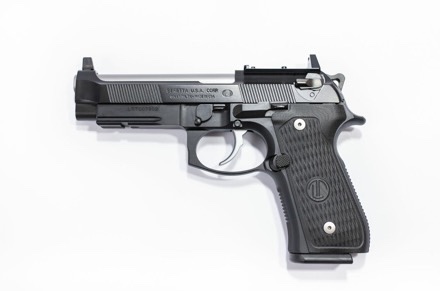
FN America unveiled their new FN 509 variant, the Midsize Tactical during last weekend’s NRA Annual Meeting in Houston.

It combines their full size tactical slide cut with the Low-Profile Optics-Mounting System and midsize grip frame. The 4.5″ barrel is cold hammer forged and threaded.

Offered in Flat Black and FDE, it comes with a 15-round magazine but FN also offers a 24-round magazine.

www.fnamerica.com

What Memorial Day Means To Me

May 30th, 2022

At its heart, I find Memorial Day a rather somber occasion. I dwell on thoughts of those who aren’t with us anymore except in spirit; but it’s their spirit I cherish in spite of the feeling of loss. It’s not just the buddies I have who’ve paid the ultimate sacrifice. I think of others who succumbed to the “other”…some service related and some of old age. Regardless, they all served something bigger than themselves, at least for a time. And for that, I raise a toast.

God bless and keep them all for their sacrifice.

DEVCOM, Army Special Forces Collaborate with International Partner to Test Additive Manufacturing Technology

May 30th, 2022

ABERDEEN PROVING GROUND, Md. — On a battlefield in the future, Soldiers deployed to remote areas around the world will use sophisticated additive manufacturing printers to ‘print’ virtually everything they need, from food to shelter to weapons. The Army has made additive manufacturing a priority and Combat Capabilities Development Command, or DEVCOM, is supporting the effort with Project Prime, a collaboration with U.S. Army Special Forces and an international industry partner.

The Project Prime team consists of the U.S. Army 7th Special Forces Group (Airborne), or 7th SFG (A); DEVCOM’s International Technology Center — United Kingdom, or ITC-UK; DEVCOM’s Command, Control, Communications, Computers, Combat systems, Intelligence, Surveillance and Reconnaissance Center, or C5ISR; and Defend3D, a company based in the United Kingdom that enables secure transmission of remote 3D printing.

Special Forces Soldiers tested the technology by repeatedly adding and printing additive manufacturing files using Defend3D’s Virtual Inventory Communication Interface, or VICI. VICI provides a server application that manages the virtual inventory, assigns rights to remote manufacturers and provides the product in a ‘one-click-print’ format with minimal training for the end-user to securely stream.

“Despite a network connection categorized commercially as having low to no connection, VICI facilitated speedy, secure and accurate printing. Based on expectations set at the beginning of the project, VICI did everything we needed it to do, and 7th SFG (A) was satisfied with the system performance and endorsed the capability for further development and implementation,” said Dr. Patrick Fowler, DEVCOM Global Technology advisor at ITC-UK.

Each DEVCOM ITC has a Global Technology advisor who scouts technology in their area of operation. Project Prime began when a DEVCOM global technology advisor was scouting additive manufacturing technology in the Atlantic region, which includes London, United Kingdom; Paris, France; Frankfurt, Germany; and Tel Aviv, Israel. The ITCs, which are part of DEVCOM’s global enterprise, serve as the forward-deployed ‘eyes and ears’ of the Army Science and Technology Enterprise. Other DEVCOM ITCs include: North America; South America; Northern Europe; Southern Europe; Northeast Asia; Southeast Asia and the Southern Hemisphere.

VICI ensures end-to-end encryption by enabling organizations to store their designs locally and use the virtual inventory to manufacture parts in remote locations. For example, a deployed Soldier communicates a need, such as a spare part or a modification to an existing part, to the computer-aided design, or CAD, element at 7th SFG (A). The CAD element either designs the part from scratch or selects from a database of commonly used parts. This is then streamed to the Soldier in the field, who prints the part. Because the file is never sent, VICI prevents adversaries from accessing the information and identifying vulnerabilities in equipment and capabilities.

“We made it a priority to pursue avenues that will allow us to operate in environments that are not conducive to regular resupply efforts. For detachments to stay in the fight in these environments, we explored systems that operate outside the conventional supply chains. Project Prime’s deployable 3D printer and VICI software enables secure transmission and an easy-to-use interface,” said Chief Warrant Officer 2 Jesse Peters, Innovation Cell, 7th SFG (A).

Other benefits of the technology include:

The 3D printer operator does not need to be an expert in 3D printing to print the required files.

The interface prevents overloading the network since forward-deployed Soldiers only see objects they have requested for their mission.

It securely stores files in a sharable repository, including files created by the Department of Defense and coalition networks.

“Imagine this scenario — a clever Green Beret on a remote base develops a novel attachment for an existing Unmanned Aircraft System, which is stored in VICI. Then, a clever Airman across the world at a remote airfield sees it and adds his/her twist. Next, a British Soldier prints it and starts using it in his/her own operations,” Fowler said.

During the training event, feedback was gathered in real-time as the deployed Soldiers communicated with the 7th SFG (A) Innovation Cell. Other information was collected after the training, including the pros and cons of the system, software interface, training requirements and long-term durability.

7th SFG (A) plans to train more of their Soldiers on the technology to support a U.S. Army Southern Command deployment. Once the deployment is completed, ITC-UK will document all of the activities and achievements of Project Prime and make it available to the broader Department of Defense community. The information will benefit other DEVCOM centers and research laboratory, particularly the C5ISR Center, which focuses on securing communications to the tactical edge. The technology may also fill gaps with other Army units.

“We’re looking for funding to further develop VICI to make it operable on a cell phone or a small device, including a Raspberry Pi, which is a very small computer that plugs into a computer monitor, TV, or similar small end-user devices. This will make the solution, which is currently used on a laptop, even more deployable,” Fowler said.

By Argie Sarantinos, DEVCOM HQ Public Affairs

Milrem Robotics Launches an Autonomous ISR UGV, the THeMIS Observe

May 29th, 2022

The European leading robotics and autonomous systems developer Milrem Robotics will launch a newly developed autonomous Intelligence, Surveillance and Reconnaissance (ISR) unmanned ground system THeMIS Observe that will be showcased during the fourth iMUGS project demonstration in Belgium.

“A UGV based ISR system significantly increases a tactical unit’s reaction speed on targets as well as the stand-off distance from enemy units,” explained Cpt (res) Jüri Pajuste, Defence Research Director at Milrem Robotics. “Thanks to that the capability and survivability of tactical reconnaissance units will increase considerably,” Pajuste said, adding that this type of capability is usually not available on one platform for light infantry units.

The THeMIS Observe is based on Milrem Robotics’ THeMIS UGV and integrated with ISR equipment from various leaders in their fields. The system includes the Z:Sparrowhawk camera from HENSOLDT, the Squire radar by Thales, Metravib Defence Pearl acoustic shot detection and the ROSY (Rapid Obscuring System) by Rheinmetall. The system can also be equipped with a light remote weapon station.

“The combination of those systems allows units to do multi-sensor identification on one platform and react faster on emerging targets,” Pajuste added.

Additionally, the THeMIS Observe is equipped with Milrem’s Intelligent Functions Kit that enables autonomous functions such as follow-me, waypoint navigation with obstacle detection and avoidance.

The THeMIS Observe will be demonstrated during the European Commission’s European Defence Industrial Development Programme (EDIDP) funded iMUGS project’s fourth demonstration in Belgium in June. The iMUGS project aims to develop a European standardized unmanned ground system (EUGS). During the project, modular and scalable architecture for hybrid manned-unmanned systems will be developed to standardize a European wide ecosystem.

The system will also be on display at Eurosatory on Milrem Robotics’ stand in Hall 6 K 253.

SCUBAPRO Sunday – SEALs Birthday

May 29th, 2022

On 25 May 1961, President John F. Kennedy, addressing a joint session of Congress, delivered a speech that most people remember as his challenge to the country to put an American on the moon before the end of the decade. The most important part of that speech you seldom hear about. But, it mandated that the military broaden its numbers and the use of Special Operation in all branches of service: “I am directing the secretary of defense to expand rapidly and substantially … the orientation of existing forces for the conduct of … unconventional wars. … In addition, our special forces and unconventional warfare units will be increased and reoriented. …


The East Coast and West coast teams have always joked about what team is older, Team One, or Team Two. Team Two says they are because of the 3-hour time difference, and the west coast says they are because they supposal received their message to commission first.  But this isn’t really about that. The SEAL Teams use 01 Jan 1962, the day the teams were commissioned as their birthday. But if you look through old messages, you can find about different dates that you could say should or could be the birthday of SEAL Teams. Before Kennedy gave his speech, the Navy and all the other branches had already started to plan for a new kind of warfare and a new group to fight it. The U.S. has just ended significant involvement in Korea and sent advisers to Vietnam around 1955, so we had an idea of what the next generation of warfare might look like.  

To augment present naval capabilities in restricted waters and rivers with particular reference to the conduct and support of paramilitary operations, it is desirable to establish Special Operations teams as a separate component within Underwater Demolition Units One and Two. An appropriate cover name for such units is “SEAL” being a contraction of SEA, AIR, LAND.

– Vice Adm. Wallace M. Beakley,
Deputy Chief of Naval Operations, 05 Jun 1961

I love that the name “SEAL” started as a cover name, I am sure they never thought of what that name would come to mean. I say that in a good way and also a little wrong. I miss the days of being quiet professionals.

The Chief of Naval Operations, Adm. Arleigh Burke, in a memo dated 11 Jul 1960, tasked Vice Adm Beakley with studying how the Navy could contribute to unconventional warfare. Beakley responded to that tasking in a memo dated 12 Aug 1960, saying, “Navy Underwater Demolition Teams and Marine reconnaissance units were the logical organizations for an expanded naval capability in unconventional warfare.” Beakley further recommended that a working group be formed to study how the Navy could “assist or participate” in covert operations. Then, on 13 Sept 1960, an Unconventional Activities Working Group was formed. Like the military now, the progress was slow, and on 10 Mar 1961, when the Navy’s Unconventional Activities Committee presented a mission statement for the new special operations unit and officially used for the first time the acronym “SEAL.”

Beakley sent another memo saying, “If you agree in the foregoing proposals, I will take action to establish a Special Operations Team on each coast.” Burke wasted no time in giving the green light. On 05 Jun 1961, the CNO issued a letter notifying the commanders in chief U.S. Atlantic, U.S. Pacific, and U.S. Naval Forces Europe about the Navy’s intentions regarding SEAL units. So, if you look at all the about dates, you can choose 25 May, 05 Jun, 13 Sept, 10 Mar or 01 Jan.  I do not really care about what date that it happened on; I am just glad that it did, and I think it is good to look back at the process that went from idea to a finished product.

Oh, and Team Two is the Oldest Team.

Remington Ammunition Helps Families Nationwide with Gun Club Cure

May 29th, 2022

Lonoke, Arkansas – May 24, 2022 – The newest addition to Remington Ammunition’s Gun Club product family, Gun Club Cure, is destined to help families nationwide. A portion of the proceeds from the sale of this Gun Club line will benefit children’s hospitals and disease research. Proudly loaded in the U.S. with Remington components, Gun Club Cure delivers the trusted performance Remington is known for while giving back to those in need.

Features:

• Top-quality Unibody Hull, in a unique new hull color, Remington Blue.

• Made with trusted Remington components, including Gun Club Shot, carefully chose primer/propellants, the Remington Power Piston Wad® and premier hull construction.

• Available in two 12GA loads, including low recoil

“We are thrilled to bring Gun Club Cure to the 2022 new product lineup, and we couldn’t be more excited to help out such a good cause,” said Joel Hodgdon, Remington’s Director of Marketing. “These loads give Remington shooters a great opportunity to give back to those in need and the beautiful color of Remington Blue will stand out when you’re at the range showing your support of families in need.”

PRODUCT DETAILS

Gun Club Cure 12GA / 2-3/4IN 8 Shot 1100 FPS Managed Recoil / $11.99

Gun Club Cure 12GA / 2-3/4IN 8 Shot 1145 FPS / $11.99

More information about Gun Club Cure and all Remington Ammunition can be found at www.remington.com.

Rheinmetall Supplies Austrian Armed Forces with Counter-sUAS System for Evaluation

May 29th, 2022


The Austrian armed forces have selected Rheinmetall’s C-sUAS system for a six-month period of testing and evaluation. In May 2022 Rheinmetall Air Defence AG shipped the latest version of its rapidly deployable counter-small unmanned aerial system (C-sUAS) to the Austrian military. The system comprises two shelter units, enabling rapid deployment on standard trailers and trucks. The sensor unit elevates automatically and can be equipped with various detection technologies, including X-band and S-band radar, passive emitter locator, ADS-B receiver and others if required. An integrated, stabilized 360° electro-optical PTZ sensor provides state-of-the-art verification and tracking capabilities.

Based on the tried-and-tested Oerlikon Skymaster command and control system, the separate C2 shelter is a fully fledged operator workstation. Skymaster delivers an outstanding level of sensor data fusion and multiple operational functions, including scalability to integrated target cueing devices and effectors for different countermeasures as well as links to higher echelons.

The Austrian armed forces will put the Rheinmetall C-sUAS system through its paces at several locations in Austria, gaining valuable expertise and experience by simulating air base protection, integration into other military units and providing C-sUAS protection in urban areas – a wise approach give the proliferation of emerging aerial threats. A major highlight will be a public demonstration of the C-sUAS at the renowned AIRPOWER 2022 air show at Hinterstoisser Air Base, home of the Eurofighter, near Zeltweg, Austria.

Rheinmetall Air Defence will lend its support throughout the next six months to ensure that Austria gets the maximum benefit out of the project.