SIG SAUER - Never Settle

Medal of Honor Recipients Offer Insights at SOF Week

May 15th, 2025

TAMPA, Fla. — Of the 3,536 Medals of Honor presented since its establishment in 1861, only 61 recipients are alive today, and only a handful of them come from the U.S. special operations forces community.

Yesterday, three of those SOF recipients attended a panel discussion at Special Operations Forces Week 2025 in Tampa, Florida.

Retired Army Sgt. Maj. Thomas P. Payne, retired Army Master Sgt. Earl D. Plumlee and Army Command Sgt. Maj. Matthew O. Williams shared experiences and lessons learned from their heroic actions during an hourlong conversation that emphasized the importance of trust, mentorship and resilience in leadership.

All three men explained what being a Medal of Honor recipient means to them on a personal level.

“Every time we put the medal on, it’s a gracious gift to sit here and talk about it,” said Williams, who received the medal for his actions of valor during Operation Commando Wrath in Afghanistan in 2008.

He added that a surprising number of people are unaware of the medal’s significance.

“And that significance has nothing to do with the guy wearing it, or the action that they took; but it’s the idea that you’re willing to put yourself and your life on the line for the guys [to the] left and [to the] right of you,” he said.

Plumlee, who received his medal for saving numerous lives by mounting a successful counterattack under heavy fire against Taliban insurgents in Afghanistan in 2013, explained that he shared his ceremony with two other recipients, both of whom received the medal posthumously.

“That really brought some gravity,” he said.

He also explained that, with credible eyewitness testimony being a requirement for receiving the medal, many SOF personnel may be just as deserving of such an award but will never receive the recognition.

“I know a lot of guys who have done very heroic things, but it’s not captured and provable, [so] there’s no medal for it,” Plumlee said.

“It’s humbling, and I like to say that I’m wearing [the medal] for [the U.S. Special Operations Command] and vast amounts of operators who have done very heroic things for very little recognition, and [who] just went back to work the next day,” he added.

“Just letting the medal be a part of my life [has] required me to grow up,” said Payne, who received his MOH for saving 70 hostages with little regard for his own life during a 2015 rescue operation in Iraq.

“It’s just a process to live up to the standard of wearing the Medal of Honor, which is hard — every single day — and so, it’s a ‘beautiful burden,'” Payne added, quoting his friend and fellow recipient, retired Marine Cpl. Kyle Carpenter.

The three men also spoke about their shared passion for continued service following their time in uniform.

Plumlee said he gets the most out of inspiring others to serve their country.

“I love talking to people [who] were not thinking about serving — or if they’re dabbling in it — and really, you know, mentoring [them] and lighting that fire,” Plumlee said, adding that the country is always in need of men and women to sign up for military service and “take ownership of the country.”

“Every politician’s speech and every successful business is built on the bedrock of the security that the [Defense Department] provides,” he said.

Williams also said he enjoys encouraging others to serve, if not in the military, then in some other manner that benefits the country.

“One thing that really shocked me when I received the medal … was how much I enjoyed talking to other people about it and just perpetuating the values that we stand for … especially service, and how important service actually is,” Williams said.

“I like just talking about that — engaging specifically with kids and students — and going to schools and hoping to provide a little bit of a glimmer of hope for our country,” he added.

Payne said SOF operators like himself and the others on stage have lots of friends buried at Arlington National Cemetery in Virginia, and that he and his fellow SOF veterans are fortunate to be alive.

“I’ve just tried to live an extraordinary life in honor of my teammates … We’re on ‘plus time’ now,” he said, adding that, despite having been medically retired from the Army, he continues to find ways to serve his country.


“There’s a passion to serve still [and] I’m going to continue to serve in different ways,” Payne said.


By Matthew Olay, DOD News

SOF Week 25 – Transcend Robotics

May 14th, 2025

Transcend Robotics exhibited their Vantage Mil and Vantage Mini systems in the ADS Inc booth.

The Mini is a great throw-bot option, offering 8-inch automatic obstacle climbing, 2-hour runtime with swappable batteries, and up to 250ft communications NLOS.

Vantage MIL, an under 40 pound multi-mission ISR UGV is deployable in under one minute. Based on patented mobility technology, no operator intervention is required to overcome cluttered areas, barriers up to 16 inches, and international stairs.

These systems are IP-based allowing you to use Silvus, Persistent Systems, or other approved radios as required, that can also serve as comms relays (currently comes standard with Silvus). The robots come with tracks as well as wheels, allowing you to select which drive setup best suits your mission, and you can easily swap between them in the field. You can integrate with ATAK directly, or by utilizing Tomahawk’s Kinesis Ecosystem and S20 Grip controller.

SOF Week 25 – Crossfire Packs

May 14th, 2025

Australia’s Crossfire Packs has gained quite a following in the US. Recently, they introduced a couple of new PALS compatible pouches for use with their DZ rig, a classic belt kit.

The Juice Box is intended to be attached to the yoke as a hydration carrier (2L reservoir). It will also work with their packs, or the kit you already own. It includes matching removable Ciabatta slice which will accept a broken down MRE.

The Butter Bar is a commander’s pouch with three removable dividers so you can keep everything organized from notebooks to headlamps to magazines.

These are currently available in MultiCam, Ranger Green, and Woodland. My DZ Rig is Tigerstripe so maybe I can talk them into making one of each for me and my friend @Prepared_Pathfinder.

Gear ships from their warehouse in Charlotte, NC.

SOF Select 25 – Strategic Sciences

May 14th, 2025

This photo, taken in the Strategic Sciences booth, combines two things that readers find fascinating: the Knight’s Armament Co Light Assault Machine Gun in 5.56mm and Strategic Science’s Multi Function Muzzle Device, a new suppressor technology developed in conjunction with the Irregular Warfare Technology Support Directorate.

The Canadian arm of the company, Millbrook Strategic Sciences Inc, has signed a deal with CANSOFCOM for the devices and here in the US they’ve been trying them out on every NATO weapon (including those under development) they can get their hands on. Available in multiple calibers from 5.56 up to 50 BMG, expect to see a lot of these floating around soon.

SOF Week 25 – GoTAK Trackers

May 14th, 2025

GoTAK exhibited their GoTAK Trackers. Offered in three variants, these low-cost tracking devices are designed to operate globally and integrate directly with Tactical Awareness Kit servers. They feature low power requirements and a compact form factor.

Personnel Tracker

Track your personnel with a key-fob sized device with a 24 hour battery life with 3 second interval updates. Charge easily with the included USB C dock.

Vehicle Tracker

Track your vehicles with the GoTAK Tracker ODB2 that powers and connects to vehicles over the diagnostic port (ODB2). Simply plug it in and the vehicle charges the internal battery for constant operation even with the vehicle is stationary or parked.

Asset Tracker

Track your assets or personnel with the GoTAK Tracker V1 or the XL with the optional magnetic base that fits in the palm of your hand with up to 7 years on a single charge with daily interval updates. Charge easily with the included USB C dock.

getgotak.com

Cubic Digital Intelligence Expands TAKTICS Platform With New Intelligence Feeds for Enhanced Situational Awareness

May 14th, 2025

Delivering powerful radio frequency (RF) intelligence directly to the tactical edge

SAN DIEGO, May 12, 2025 -Cubic Digital Intelligence (CDI), a leader in geospatial and full-motion video software solutions, has announced the integration of advanced RF data and analytics from HawkEye 360 into its TAKTICS platform. These capabilities provide mission-critical insights directly to Tactical Assault Kit (TAK) users, strengthening decision-making at the tactical edge.

“This integration reflects our commitment to delivering powerful, real-time intelligence tools that support the operational needs of modern defense missions,” said Paul Sartorius, VP and General Manager at CDI. “By adding these advanced RF analytics to TAKTICS, we’re giving users the ability to act faster, with greater precision and context.”

TAKTICS is a trusted, web-based hub that rapidly delivers geospatial intelligence (GEOINT) data to users operating in time-sensitive and bandwidth-constrained environments. With the addition of HawkEye 360’s advanced RF data and analytics, TAKTICS now offers enriched intelligence derived from space-based RF signal detections, streamlining access to high-value insights through a single, integrated platform.

Enhanced Domain Awareness

HawkEye 360’s RF geolocation data enhances situational understanding across land and maritime environments by continuously detecting and analyzing emissions from signals of interest. This data supports daily updates to the TAKTICS platform and enables users to identify strategic threats without needing access to classified sources. By providing only the most relevant detections, it supports tip-and-cue workflows that allow analysts to efficiently direct additional sensors, such as EO or SAR, for further investigation. The result is persistent, unclassified insight that reduces analyst workload and strengthens mission planning in high-risk and contested areas.

A Unified Tactical Picture

Through these integrations, TAKTICS continues to evolve as a comprehensive intelligence dissemination platform, enabling secure access to critical GEOINT and RF-derived intelligence across desktop and mobile environments.

With TAKTICS, CDI reinforces its mission to get the right data to the right place at the right time – empowering tactical edge users with superior situational awareness, mission planning, and execution capabilities.

Soldier-Driven Tactical Innovation: Empowering the Warfighter and Shaping Modern Warfare

May 14th, 2025

Introduction

In an era of rapid technological advancement and evolving global threats, the ability of military forces to adapt swiftly and effectively is paramount. Soldier-driven tactical innovation—where ideas and solutions are sourced directly from the warfighters on the ground—has emerged as a critical mechanism for maintaining a strategic edge. Unlike top-down approaches that often prioritize long-term, large-scale modernization, Soldier-driven innovation focuses on immediate, practical solutions to real-world challenges faced in the field. This approach emphasizes enhancing operational effectiveness, fostering adaptability, and bridging the gap between military needs and technological development.

The Importance of Soldier-Driven Tactical Innovation

Soldier-driven tactical innovation is rooted in the unique perspective of those closest to the fight. Soldiers possess intimate knowledge of the operational environment, equipment limitations, and tactical demands—insights that higher echelons or distant research institutions may overlook. This ground-up approach empowers warfighters to identify problems and propose solutions tailored to their immediate needs., In doing so, it fosters a culture of adaptability, encouraging creativity and problem-solving at all ranks.

The strategic imperative of this approach is evident in modern warfare, where adversaries leverage low-cost, rapidly deployable technologies—such as commercial drones—to challenge conventional military advantages. Soldier-driven innovation counters this by enabling rapid prototyping and deployment of countermeasures, often at a fraction of the cost and time required by established systems. Moreover, it enhances morale and ownership among troops, as they see their ideas directly impacting mission success. This democratization of innovation ensures that the military remains agile, responsive, and capable of addressing asymmetrical threats in real-time.

Case Study: 5th SFG(A) and Partner Force Operational Needs

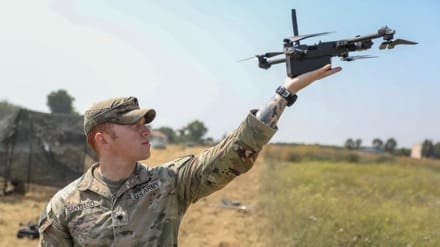
The 5th Special Forces Group’s (5th SFG(A)) Innovation Detachment showcased Soldier-driven tactical innovation by addressing the limitations of existing drone systems—cost-prohibitive, inflexible, and unrepairable in the field. Needing a capable platform to use with Partner Nation forces that could be configured for various mission sets, 5th SFG(A)’s Innovation Detachment partnered with the Civil-Military Innovation Institute (CMI2) and U.S. Combat Capabilities Development Command (DEVCOM)’s Catalyst-Pathfinder program, who sought out a key innovator in unmanned systems to assist in facilitating the prototype.

EchoMAV emerged as a linchpin in this effort, bringing specialized expertise to address the Soldiers’ identified pain points. Rather than adapting existing platforms, EchoMAV crafted a unique sUAS from the ground up, leveraging additive manufacturing to prioritize agility and mission-specific functionality. Labeled the MONARK (Modular Observational Networked Aerial Robotics Kit), this system includes impressive features, like a 40-minute flight time and compatibility with the Android Team Awareness Kit (ATAK), a vital tool for real-time battlefield awareness.

Tailored to handle short-range reconnaissance for conventional and Special Operations units, the MONARK provides a lightweight, affordable option for short range reconnaissancethat boosts tactical adaptability, allowing units to conductvarious missions more efficiently. While 3D printing is not the most efficient manufacturing option for the body of a drone, the ability of Soldiers to fix their drones in theater at minimal cost makes this decision superior to alternatives. The modular design also allows for National Defense Authorization Act (NDAA) compliance and American-made parts, while simultaneously offering an alternative, non-NDAA-compliant cheaper alternative based on the unit’s needs.

A key facet of the Catalyst-Pathfinder program is scalability. Tactical innovation, by its definition, is the solving of problems directly related to warfighters, and although each unit faces different missions around the world, many share commonalities in purpose. The MONARK initiative began as a U.S. Special Operations Forces (USSOF) need for a versatile, rapidly deployable sUAS to enhance USSOF and Partner Nation Forces operations overseas. The idea began to proliferate across the force through the Catalyst-Pathfinder’s work with conventional and USSOF elements. Now, units like the 101st Airborne Division have embraced the concept, acquiring MONARK to fulfill their short-range reconnaissance requirements. The modular drones are now being integrated into exercises such as Operation Lethal Eagle, a 21-day Division field training exercise, and mark a critical step forward in revolutionizing battlefield reconnaissance. This partnership and collaboration not only accelerate the development and fielding of cutting-edge technology but also strengthens the interoperability between conventional and USSOF units, setting a precedent for future collaborative efforts.

The project’s rapid timeline—spanning just six months from concept to production—underscores the power of Soldier-driven innovation when paired with the right partners. 5th SFG(A) provided operational insights, CMI2 facilitated collaboration, and DEVCOMCatalyst-Pathfinder program supplied the framework for the Soldier-academic-industry partnership.

The Role of Supporting Institutions

The success of such initiatives relies heavily on collaborative ecosystems that connect Soldiers with technical expertise and resources. CMI2 and DEVCOM’s Catalyst-Pathfinder program played pivotal roles in this process.

CMI2, a nonprofit organization based in Morgantown, WV, facilitates direct collaboration between service members, academia, and industry by bridging the gap between Soldier-identified problems and actionable solutions by providing infrastructure and contractor support. In the case of the 3D-manufactured drones, CMI2’s involvement through its partnership with EagleWerx and the 5th SFG(A)’s Innovation Detachment as part of the Catalyst-Pathfinder ecosystem, ensured that Soldiers’ ideas were paired with advanced manufacturing capabilities and external expertise, accelerating development timelines.

The Catalyst-Pathfinder program, a congressional initiative managed by DEVCOM’s Army Research Laboratory, connects Soldiers with academic institutions and industry partners to co-develop technologies. Launched in FY21, the program has empowered units, like the 101st, to work with universities and small industries, producing innovations like the Soldier Assistive Bionic Exosuit for Resupply (SABER) and the Advanced Dynamic Spectrum Reconnaissance Sensor Network (ADSR – SN). For the 3D-printed drones, Catalyst-Pathfinder provides a framework for Soldier-researcher teams to refine designs, leveraging cutting-edge research to meet operational needs. This structured yet flexible approach ensures that Soldier-driven ideas are conceptualized, scaled, and fielded effectively.

DEVCOM ARL is the scientific backbone of these efforts. ARL’s expertise in materials science, additive manufacturing, and unmanned systems supports the technical feasibility of programs like Catalyst-Pathfinder. By operationalizing science, ARL enables tactical units to transition prototypes into deployable assets, ensuring they meet rigorous military standards. ARL’s role in Catalyst-Pathfinder amplifies its impact, creating a partnership that transforms Soldier ingenuity into tangible battlefield advantages.

Eaglewerx, one of the Catalyst-Pathfinder program’s innovation labs, is located at Fort Campbell, Kentucky, and serves all units on post, including both the 5th SFG(A) and the 101st Airborne Division. This lab is home to full-time CMI2 staff, including project managers and innovation engineers to support tactical innovation and modernization efforts for Soldiers. In addition, there is a team of Army officers and non-commissioned officers who work at Eaglewerx full-time to both source and manage Soldier’s innovative ideas from curation to completion. This central hub for innovation is pivotal in the innovative process, providing expertise, equipment, and resources for Soldier’s to prototype their ideas. On top of more than 60 ongoing projects, Eaglewerx coordinated the procurement and Soldier-assembly of 100 NDAA-compliant MONARK drones in just four months.

EchoMAV Technologies Inc. is a U.S.-based company specializing in advanced UAS and is known for its innovativeavionics and edge computing solutions and its MK1 group II aircraft. Designed for simplicity and durability, the MK1leverages a unique hybrid power plant and caters to defense, security, and large-area mapping and surveillance needs.EchoMAV has demonstrated a commitment to cutting-edge, American-made UAS technology. Their ability to rapidly shift focus solely from the MK1 to a 3D-printed sUAS showcases the company’s flexibility and their desires to support the warfighter.

Broader Implications and Future Directions

The 5th SFG(A) 3D-printed drone initiative illustrates the transformative potential of Soldier-driven tactical innovation. It demonstrates how empowering warfighters to design and refine their tools can yield agile, cost-effective solutions that enhance lethality and adaptability. The involvement and collaboration of Soldiers, industry and researchers underscores the importance of institutional support in scaling these efforts, ensuring that grassroots ideas reach operational maturity.

Looking forward, this model could reshape military modernization. As threats evolve—exemplified by the proliferation of cheap drones in current conflicts —the ability to innovate at the tactical level will be a decisive factor. Expanding innovation hubs like EagleWerx and 5th SFG(A)’s Innovation Detachment and increased investment in programs like Catalyst-Pathfinder could institutionalize this approach across the Army. However, challenges remain, including balancing rapid prototyping with safety and testing standards, all the while seeking to integrate these innovations into broader doctrinal frameworks. Addressing these will require continued collaboration between Soldiers, researchers, and policymakers.

Conclusion

Soldier-driven tactical innovation is not merely a supplement to traditional military research and development but a strategic necessity. By harnessing the insights of those on the front lines, as seen with EchoMAV’s 3D-printed drones, the military can respond swiftly to emerging challenges. The Catalyst-Pathfinder program provides the critical support needed to turn Soldierideas into reality, fostering a culture of innovation that keeps pace with modern warfare. This powerful example exemplifies how empowering warfighters can drive meaningful change, ensuring the U.S. Army remains poised for success in a world of disruption.

Robert Leach currently works for the Civil-Military Innovation Institute as an innovation chief on DEVCOM’s Catalyst-Pathfinder program. He served twenty-one years in the United States Army, retiring as a master sergeant from 5th Special Forces Group in 2023, with three combat deployments and seven additional operational deployments throughout the Middle East.

The views and opinions expressed in this document are solely those of the author and do not necessarily reflect the official position or policy of the Civil-Military Innovation Institute, the Combat Capability Development Command Army Research Laboratory, the Department of Defense or the U.S. Government.

Avon Protection Commences MITR-M1 Deliveries

May 14th, 2025

13 May 2025, Cadillac, Michigan, US: Avon Protection has begun first deliveries of the MITR-M1 Half Mask units to customers, including select military users.

Ahead of deliveries beginning, Casey Galligan, Senior Director, U.S. DoD, Avon Protection, opted to personally put the MITR-M1 through its paces in a controlled Chloroacetophenone (CN) test. CN gas is the active ingredient in riot control/tear gas agents. When released as fine particulate smoke, vapor or liquid spray (aerosol), it causes irritation of the gastrointestinal tract and respiratory tract, posing a threat to tactical operators in fast-evolving environments.


Casey Galligan, Avon Protection’s Senior Director, U.S. DoD, wearing the MITR-M1 during a controlled Chloroacetophenone (CN) test.

“Having spent two decades as a Green Beret, I have personally known many colleagues who have had to deal with the ongoing health consequences of working in environments where respiratory threats exist, such as the elevated lead blood levels of SOF operators running shoot houses as far back as 2012,” Galligan said. “This experience has been a major driver in my determination to leverage Avon Protection’s expertise to give operators the ability to protect themselves against the unknown, which we have done with the development of the MITR-M1.

“MITR-M1 has undergone rigorous independent testing, and now that we are about to begin deliveries I wanted to confirm the performance of the kit in real-world scenarios for myself, to doubly ensure that this tactical mask provides the level of protection and comfort these operators need – and I can emphatically say that it does.”

“During the test the mask was easy to put on, comfortable to wear and it did not hinder my ability to undertake tactical tasks throughout, while my respiration stayed steady and my oxygen levels remained within normal limits,” Galligan said. “At Avon Protection we take great pride in our products, and this test allowed me to personally ensure the MITR-M1 works and delivers on every design point before we put it into the hands of our end users.”

Avon Protection introduced the MITR-M1 Half Mask in January 2025 as a tactical quick-don respiratory protection solution for tactical and fast-evolving low- to mid-level threat environments. Weighing in at 250g/0.5lb, MITR-M1 was developed to be carried in cargo pockets or gear pouches, and can be worn via head harness or quickly clipped onto the user’s helmet rail in seconds.

The low-profile half mask is designed to meet the specific requirements of tactical operators, with a sleek flush-fitting curved profile that ensures compatibility with other tactical gear and maintains weapons sighting ability while protecting against a variety of respiratory hazards, including very fine dust, fumes, biological agents, and oil- and water-based mists. Later in 2025 the MITR system will grow to include a power-sealed goggle apparatus to allow users to scale their protection as required.

The results of the testing have been released in this video: