GORE-TEX WINDSTOPPER

18X Hits Major Milestone: Command Pilot Rating

December 21st, 2025

CREECH AIR FORCE BASE, Nev. —  

In 1913, the first two military aviation badges, silver wings, were issued to members of the U.S. Army Air Corps. As time went on, pilots of all airframes have been awarded their silver wings and given the rating of pilot, senior pilot and command pilot. Since then, the Air Force has grown rapidly by constantly adapting to new playing fields and integrating technology into everyday operations while preparing for the future fight. 

This innovation led to a new class of airframe, remotely piloted aircraft. They perform a multitude of missions including intelligence, surveillance, reconnaissance and precision strike. However, it was not until 2025 that remotely piloted aircraft pilots or the 18X career field could be awarded the rating of command pilot on just their airframe.


There have been pilots in the RPA career field who have obtained this rating, but only if they had been on other airframes prior to being an RPA pilot.

Pilots of all airframes must have 15 years of service as a rated pilot, and 3000 total hours of flight time for the rating of command pilot, which is the highest rating a pilot can receive.

Compared to other career fields, they are relatively new, and their history began a little over 15 years ago. In 2008, Air Force Chief of Staff Gen. Norton Schwartz brought attention to the shortage of pilots for the RPA mission.

To combat the shortage, it was initially decided that 100 graduates from standard undergraduate pilot training each year would learn to fly RPA’s instead of manned aircraft, but an official career field was not established.

“When I first started in the career field in 2009, we were just this test group,” said Lt. Col. Eric Baldock, 15th Attack Squadron director of operations. “The command pilot rating for us signifies how mature our career field has gotten and shows that it was needed to meet the Air Force’s mission requirements.”

In 2009, the 18X career field was established to create professional RPA pilots to meet joint warfighter requirements. It officially began in 2010 by Air Staff officials institutionalizing it with undergraduate RPA training and rolling out the first class of trained RPA MQ-1 Predator pilots.

In 2010, Lt. Gen. Philip Breedlove, then-Deputy Chief of Staff for Operations, plans and Requirements at Headquarters Air Force, stated that the formalized training signified the Air Force’s commitment to RPAs and the importance of the aircraft to the joint community.

“I have been in the 18X career field since 2013, and I always saw the potential of what this career field could be,” said Lt. Col. Justin Storm, 489th Attack Squadron director of operations. “This career field fits into the Air Forces overall mission, and I see that growing with mission planning, intelligence and how we contribute to air power overall.”

Since 2010, the RPA mission has grown to the size of two wings entirely dedicated to it, including the 432nd Wing/432nd Air Expeditionary Wing and the 25th Attack Wing.

The RPA community have continually changed and adapted, honing their skills while innovating their technology such as the recent change to Automatic Takeoff and Landing Capability-enabled Satellite Launch and Recovery. Additionally, they continue to adapt by re-designating their squadrons such as the 489th ATKS becoming the 42nd ATKS sometime in 2026 and 11th Attack Squadron returning to combat operations from being a training squadron.

“Our career field has such an innovative spirit,” said Lt. Col. Ahmed Nelson, 17th Attack Squadron commander. “We have always been adapting and integrating technology into how we operate, and I think we will see more of that as time goes on. We have also over time been integrated in multiple domains and I think that, along with our sister services, that will expand as well.”

Additionally, they have performed combat and ISR operations 24/7/365 in multiple Areas of Responsibility around the globe over the last fifteen years.

“We have changed so much over the years since I have been in,” said Nelson. ”We have had a greater emphasis on our standardized training in how we get our young officers to be full-fledged pilots. Additionally, there was no such thing as dwell time or the Air Force Generation model which is better for our airmen, and they now have time to rest, repair and to certify before going to deploy. We also have huge/tremendous support from organizations like the Human Performance Team, which is read into our missions and can provide us appropriate mental health care.

As time goes on, the 18X career field will continue to grow their operations and conquer even more milestones. The 18X career field being able to obtain the command pilot rating without being on any other airframe is a testament to the pilots’ dedication to the future fight as  the Air Force continues to adapt to obstacles as they come with new innovation.

“Our career field has experienced so much, and we still have so much more to come,” said Nelson. “I, myself, am the first 18X squadron commander for the 17th ATKS and it is an honor to be one of the firsts.”

The 18X career field being able to obtain the command pilot rating without being on any other airframe is a testament to their career field’s dedication to the future fight as the Air Force continues to adapt to obstacles as they come with innovation. They will continue to grow as MQ-9 Reapers and other RPAs continue to take to the skies piloted by the vital 18X pilots.

By Senior Airman Victoria Nuzzi, 432nd Wing/432nd Air Expeditionary Wing Public Affairs

Textron Systems’ Tsunami Autonomous Maritime Surface Vessel Sold To NIWC PAC

December 21st, 2025

TSUNAMI™ Vessel Provides Capability for Scale, Maturity and Capacity

HUNT VALLEY, Md., Dec. 17, 2025 – Textron Systems Corporation, a Textron Inc. (NYSE:TXT) company, announced today that it has sold a 21-ft. TSUNAMI™ USV to the Naval Information Warfare Center (NIWC) Pacific (PAC) to support the testing of the Maritime Digital Experimentation Federation (MDEF) – an Australia, United Kingdom, and United States (AUKUS) testing initiative to distribute testing of interoperability standards with uncrewed vehicles. The order includes the state-of-the-art TSUNAMI craft and engineering and training support.

The TSUNAMI family of autonomous maritime surface vessels are designed to meet the needs of the U.S. Navy and its allies for a readily available, versatile portfolio of multi-mission uncrewed assets to team effectively across the fleet. Utilizing Brunswick Corporation’s reliable, high-performance vessels, Textron Systems developed the TSUNAMI family of products with its trusted CUSV® vessel-based autonomy control system. The TSUNAMI family of vessels offer several variants to meet diverse mission requirements, including size, speed and range. Our solution leverages mature commercial technologies to deliver increased capacity and immediate scale.

“The TSUNAMI craft provide the Navy with a rapidly deployable, fully autonomous solution to support their missions,” said Senior Vice President, Air, Land and Sea Systems David Phillips. “Our expertise in designing and fielding trusted autonomous solutions results in a family of small, uncrewed surface vehicles (sUSVs) that are scalable, modular in design and globally sustainable, allowing for maximum mission flexibility in an attritable system.”

The order follows the recent sale of a 24-ft. vessel to the Naval Surface Warfare Center (NSWC) Dahlgren Division. The TSUNAMI family is a low-cost, rapidly deployable solution that pairs Textron Systems’ 40+ years of multi-domain autonomous vehicle experience with the capacity and maturity of the U.S. commercial shipbuilding industry’s manufacturing and design capabilities.

Scarlet Dragon Links Military, Industry to Test Artificial Intelligence for Warfighters

December 21st, 2025

FORT BRAGG, N.C. — On a cold, December day deep in Fort Bragg’s training area, Soldiers, Airmen, Marines and civilian industry partners came together to test the latest drone and counter unmanned aircraft systems technology, while rapidly sharing targeting data through the National Geospatial-Intelligence Agency’s Maven Smart System.

Scarlet Dragon is the XVIII Airborne Corps’ premier innovation exercise, where new ideas and technologies are tested to solve current issues on the battlefield. “We’re focused on bringing new technologies and approaches to solve operational capability gaps and requirements that we identify from operational plans around the globe,” said Rob Braun, XVIII Airborne Corps chief technical officer.

The Scarlet Dragon exercise series started in 2020 as a table-top exercise in the basement of the XVIII Airborne Corps’ headquarters and has evolved into a triannual innovation event where joint services, government agencies, and industry partners come together to test and integrate the latest technology for the modern warfighter.

During this iteration, known as Scarlet Dragon 26-1, the XVIII Airborne Corps tested several initiatives. The 18th Field Artillery Brigade trained with the U.S. Air Force to rapidly load and deploy an M142 High Mobility Artillery Rocket System from a C-17 Globemaster III, all while simultaneously receiving targeting data through the National Geospatial-Intelligence Agency’s Maven Smart System. The streamlined data-sharing allows the HIMARS unit to rapidly deploy anywhere in the world and quickly set up for offensive or defensive engagements. “We’re doing cold-load training with a C-130, putting the HIMARS on the aircraft, driving it off, executing a rapid-fire mission, and getting back on quickly,” said 2nd Lt. Ryan Mitchell, 18th Field Artillery Brigade, HIMARS platoon leader. “Through Scarlet Dragon, we are doing advanced targeting with data received through Maven, rapidly getting that information to the launcher so we can deploy and shoot faster.”

Another initiative included real time data sharing and tracking between AH-64 Apache helicopters from the 82nd Airborne Division’s Combat Aviation Brigade, drones and small UAS with the XVIII Airborne Corps Air and Missile Defense team, Sentinel radars from the 82nd Airborne Division, and newly fielded SGT STOUT systems from the 108th Air Defense Artillery Brigade. The Sentinel radars and SGT STOUTs tracked Apaches and drones, pushing data to the Corps headquarters to validate faster early warning systems for troops on the ground. Apache pilots tested their ability to identify and track small drones, while the SGT STOUT Short Range Air Defense system teams validated their tracking and targeting capabilities.

The integration of the SGT STOUT into the maneuver force is a critical step in providing protection against short-range air threats. “What I like about Scarlet Dragon is how I push, not just the Soldiers, but also the equipment that we have to our limits and to see what we are capable of and how we can improve our system capabilities,” said Spc. Daniel Rosas, XVIII Airborne Corps air defense battle management system operator. “With the way the world is currently moving, especially when it comes to UAS or drones, it is a big threat and it helps for us to push forward on what we can adapt when it comes to gauging and tracking these threats.”

Scarlet Dragon gives service members and industry partners the opportunity to test new ideas and innovations in an open and minimum-risk environment. “That’s what I really like about Scarlet Dragon,” said CW4 Sean Benson, XVIII Airborne Corps Senior Geo-Intelligence Imagery Technician. “It’s not an exercise with defined timelines or deliverables. It’s whatever we want to try to get to the outcome we need. If you have an idea and it sticks when you throw it on the wall, we’ll give it a shot.”

The Future of Scarlet Dragon

With every iteration of Scarlet Dragon, the integration process is refined and the technology improves. In the future, the Scarlet Dragon exercise series will be tied in with Fort Bragg and XVIII Airborne Corps’ new Lt. Gen. James M. Gavin Joint Innovation Outpost, which will officially open on Jan. 23, 2026.

“During Scarlet Dragon 26-1, the XVIII Airborne Corps and Fort Bragg held a soft opening for our new Joint Innovation Outpost, or JIOP,” said Lt. Gen. Greg Anderson, commanding general of the XVIII Airborne Corps. “With the JIOP and our Scarlet Dragon series of exercises, we will be able to develop and test Soldier-driven, rapid innovation and technical transformation while providing the Army a model to revolutionize the acquisition process. It is making us more lethal at the tactical and operational levels of war.”

The JIOP will allow Soldiers to bring innovative solutions to the facility to work with civilian industry and academic partners to refine and produce new technology that can then be tested in Scarlet Dragon exercises and eventually shared across the Joint Force.

In 2026, Scarlet Dragon will shift to the Indo-Pacific theater and U.S. Army Japan for their annual combined exercise with the Japanese Ground Self Defense Forces, Yama Sakura.

By MAJ Matthew St Clair, XVIII Airborne Corps Public Affairs

Long-Range Hypersonic Weapon System Battery activates on Joint Base Lewis-McChord

December 21st, 2025

JOINT BASE LEWIS-MCCHORD, Wash — In a significant advancement of its military capabilities today, the U.S. Army activated the Bravo Battery, 1st Battalion, 17th Field Artillery Regiment, 3d Multi-Domain Task Force, a unit fully designated to operate the Dark Eagle, the services Long-Range Hypersonic Weapon (LRHW) system.

Soldiers and Families gathered in the overcast (location/1-17 FA motor pool) for a ceremony to stand up the battery that will utilize the Dark Eagle system. The ceremony represents a pivotal moment in the Army’s ability to deliver decisive effects in support of the Joint Force across the Indo-Pacific.

“The environment we face is complex and fast evolving,” said Lt. Col. Jeffrey M. Orban, the 1-17th FAR commander. “The Indo-Pacific is vast, dynamic, and critically important to global stability. Our allies, our partners, and our nation depend on our ability to deter aggression.”

Hypersonic systems, capable of flying at speeds greater than five times the speed of sound (Mach 5) provide a combination of speed, range, maneuverability, and altitude that enables highly survivable and rapid defeat of time-critical and heavily defended targets.

”1st. Sgt. Davenport and I are committed to building the formation and ensuring every Soldier within it pursues excellence,” said Capt. Adam Donlan, the Bravo Battery commander. “We must be ready once we receive the TELs [transporter erector launcher] to deploy to the Pacific and deter our adversaries.”

In July 2025 the 3d Multi-Domain Task force successfully deployed the Dark Eagle system for the first time, demonstrating the unit’s ability to project long-range fires capability.

Adm. Samuel Paparo, commander, U.S. Indo-Pacific Command said, “The deployment of the LRHW system to Australia marks a significant achievement for U.S. Indo-pacific Command, as it validates the Army’s ability to deploy, position, and exercise command and control (C2) of the system in a forward environment.”

By 1LT Junelle Sweitzer

2026 Retired Soldier Handbook

December 20th, 2025

Knowing all the benefits and entitlements you’ve earned as a Retired Soldier is important not only for you, but for your family. The Retired Soldier Handbook is your guide to keeping updated on new or changing laws, regulations, and more from many government agencies specifically impacting Retired Soldiers, their families, and surviving spouses.

Get your copy of the 2026 Retired Soldier Handbook online at soldierforlife.army.mil/Army-Retirement/Post-Retirement.

Gun Tote’n Mamas Launches its Classic Clutch in New Distressed Buffalo Caramel Color

December 20th, 2025

NORTHBROOK, Ill. – December 16, 2025 – Award-winning Gun Tote’n Mamas® (GTM), the leading provider of women’s protection solutions, is excited to announce the new GTM-CZY/22CRML Clutch. Crafted from exclusive distressed full-grain buffalo leather designed by GTM, this purse blends rugged luxury, durability and function in a timeless GTM silhouette. Available now in the long awaited rich Distressed Buffalo Caramel color.

GTM does more than make bags. As a champion of women’s protection, the brand creates essential tools that help women live boldly and stay prepared without sacrificing personal style. The new GTM-CZY/22 is built for women who want protection and style in a form that fits seamlessly into everyday life.

“Our classic clutch is designed to give women the confidence and readiness they count on,” said Claudia Chisholm, president of Gun Tote’n Mamas. “We are ecstatic to have our long awaited new Distressed Buffalo color in Warm Distressed Caramel! This leather adds a distinctive touch while delivering the strength, security and beautiful style women expect from GTM.”

Product Features:

  • Ambidextrous design with flapover closure, magnetic snap and secure top-entry zipper
  • Removable chained tassel that marks the firearm draw side for fast access
  • Distressed full-grain buffalo leather that softens with use
  • Front zippered organizer compartment
  • Main compartment with one open pocket and one zippered pocket
  • Khaki GTM logo lining for clear interior visibility
  • Padded gun compartment
  • Three-sided zipper opening for top, side or angled draw
  • Standard GTM holster included
  • Slash-resistant shoulder strap reinforced with 11-ply wire
  • Adjustable strap for crossbody or shoulder wear with quick clip-on/off design
  • Overall bag size – 10? (W) × 8? (H) × 3.5? (D)

MSRP: $169.95

The GTM-CZY/22 Distressed Buffalo Clutch is in stock and ready to ship at gtmoriginal.com.

GTM remains committed to prioritizing women’s protection. For more information, visit gtmoriginal.com or call 847-446-0700 Ext. 105.

EOTG holds Close Quarters Tactics Course for Recon Marines

December 20th, 2025

OKINAWA, Japan —

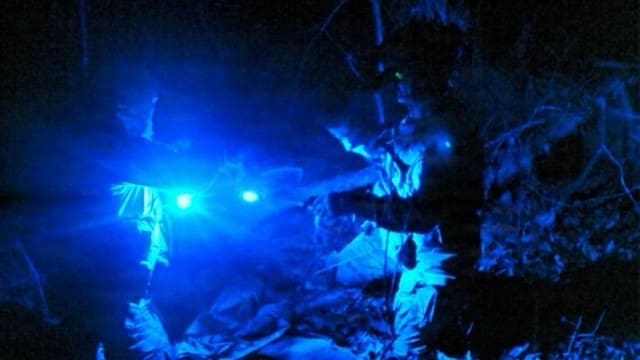
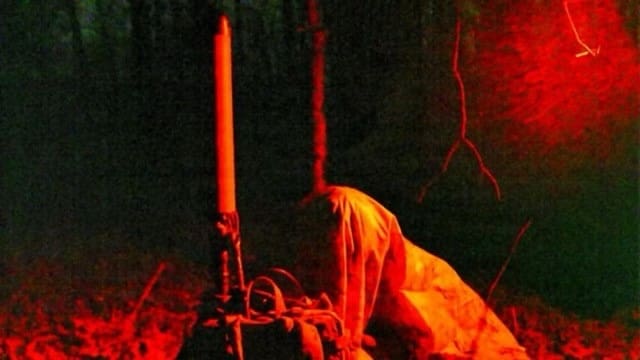
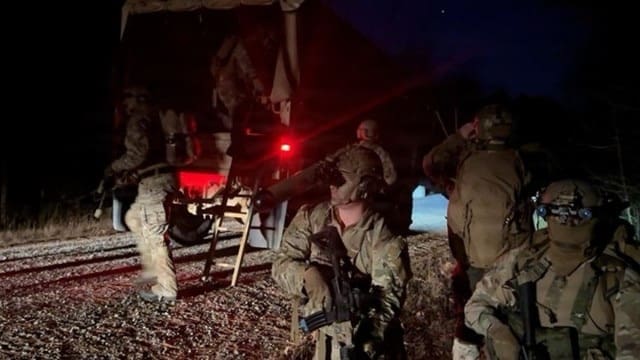
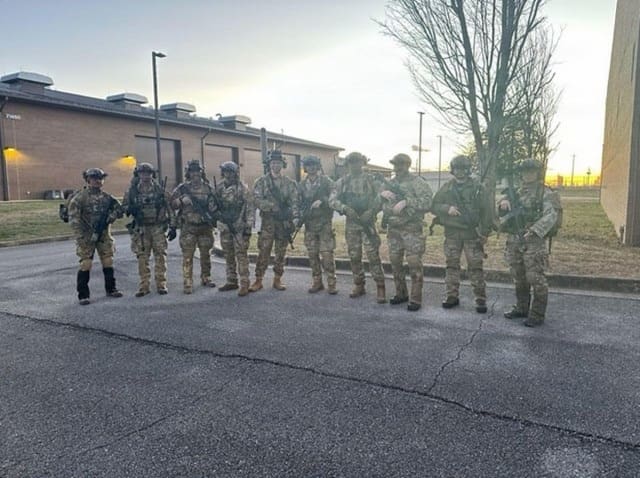
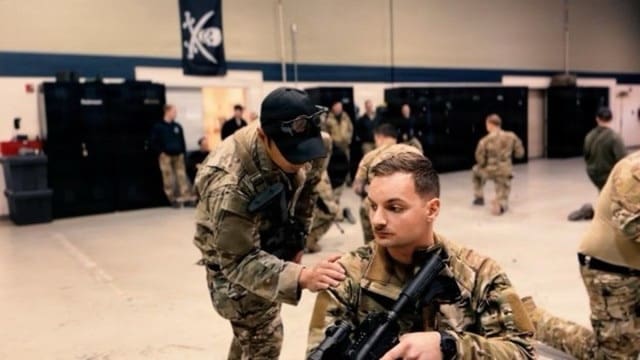
CAMP HANSEN, Okinawa, Japan?– U.S. Marines with Force Reconnaissance Company, 3rd Reconnaissance Battalion, 3rd Marine Division completed a Close Quarters Tactics Course from Sept. 15 to Nov. 5, across Camp Hansen. This training, hosted by the III Marine Expeditionary Force’s Expeditionary Operations Training Group, aimed to enhance their lethality as small unit leaders during high-paced, close-quarters combat.

“Close quarter tactics is probably the most dangerous thing that we can do. It is extremely high risk. We’re shooting very close to one another in a confined space.”

– Capt. Christopher Ori Jr., an infantry reconnaissance officer with Force Reconnaissance Company

The Marines started their three-week course by conducting ranges simulating various urban scenarios of escalating complexity. They practiced transition drills from rifle to pistol during both static and dynamic ranges.

After these ranges, the Marines moved on to house qualification. This event consisted of teams of four navigating a shoot house to clear doors and hallways to secure a building. The evaluation began with a briefing on the scenario, followed by dry runs with no ammunition, and then the Marines were tested in a live-fire qualification. This event tested their ability to work together in close quarters while safely firing in proximity to one another.

The Marines then entered the platoon tactics portion of the course, conducting limited scale raids on specific target objectives. Using civilian vehicles to blend into their environment, a group of Marines scouted the objective area while other Marines moved to their objective point to complete an assigned mission, where they were required to distinguish threats from non-threats.

The culminating event of the course was an aerial sniper vehicle interdiction. The Marines fired from helicopters to engage and halt a target vehicle. Then other Marine reinforcements moved in to secure and extract the target personnel and equipment.

For the majority of the course, Marines used non-lethal live ammunition, known as Special Effects Small Arms Marking System rounds. These paintball-like rounds enhanced the realism of the training while maintaining a safe environment. The course also included live role players to simulate opposing forces and non-threat personnel.

On Nov. 5, the Marines graduated the CQTC course, completing their required training to carry out their duties effectively in support of the 31st Marine Expeditionary Unit.

“It’s a huge capability for the 31st MEU and for III MEF, having a well-trained, professional, and capable maritime raid force that we can bring to the fight,” Ori said. “Whether it’s limited scale raids or striking a specific target, that’s where we come into play.”

Story by U.S. Marine Corps story by Lance Cpl. Eadan Avramidis, PEO Land Systems with images by LCpl Justin Cledera.

Quantum Systems Acquires FERNRIDE

December 19th, 2025

As part of its expansion into a multi-domain provider, Quantum Systems acquires FERNRIDE and integrates solutions for ground autonomy.

Gilching, 17 December 2025: Quantum Systems, Europe’s market leader in AI-powered unmanned systems, today announced the acquisition of FERNRIDE. With the acquisition of FERNRIDE, Quantum Systems is expanding its leadership position from air and software intelligence to autonomous ground mobility, creating a connected, cross-domain offering for intelligent unmanned systems.

FERNRIDE offers an industry-proven software platform for ground autonomy in the areas of container terminals, defence logistics, yard operations and autonomous driving. The technology is already in use by well-known customers. In 2025, FERNRIDE became the first company to obtain TÜV approval for autonomous trucks in Europe, has already used them in initial tests with the German Armed Forces and expanded its portfolio to include defence logistics.

‘FERNRIDE has developed one of the most advanced and scalable autonomous ground platforms,’ said Martin Karkour, Chief Revenue Officer of Quantum Systems. ‘By integrating their technology into MOSAIC UXS, we are consistently implementing our vision of creating a connected ecosystem in which unmanned systems think, move and act as a single entity across different dimensions.’

‘Europe urgently needs sovereign autonomy solutions. By joining forces with Quantum Systems, we can take our technology to a new level,’ said Hendrik Kramer, CEO and co-founder of FERNRIDE. ‘Together with Quantum Systems, we are accelerating the deployment of our platform in the European defence sector, which is currently the most urgent environment globally for scaling autonomous ground systems. In the future, this experience will also be transferred back to civilian logistics applications,m making our society safer and more resilient.’

Quantum Systems’ operational experience in Ukraine has demonstrated the relevance of the interaction between air and ground robotics. The integration of FERNRIDE solutions into MOSAIC UXS, Quantum Systems’ autonomous mission software, is intended to enable multi-domain operations that improve situational awareness and decision-making. Quantum Systems’ operational experience in Ukraine has demonstrated the relevance of the interaction between air and ground robotics. The integration of FERNRIDE solutions into MOSAIC UXS, Quantum Systems’ autonomous mission software, is intended to enable multi-domain operations that improve situational awareness and decision-making.

No details regarding the financial aspects of the acquisition will be disclosed.